Skip to content
Artwork for Let's Talk Development
ScienceSocial Sciences

Let's Talk Development

Consortium for Development Policy Research

The Consortium for Development Policy Research (CDPR) and the International Growth Centre (IGC) are excited to launch their podcast series ‘Let’s Talk Development’.

This is a podcast about understanding Pakistan’s crucial economic and development problems. We engage experts in exploring critical development issues and trends in Pakistan. New episodes come out every two weeks.

The views and opinions expressed in the podcast are those of the speakers and do not necessarily reflect the views or positions of CDPR or any of its affiliates.

Play
  • 20 episodes
  • monthly
  • Avg 39 min
  • English
  • S3 · E14
    August 20 · 41 min

    Beyond Aid: Rethinking Development in Pakistan

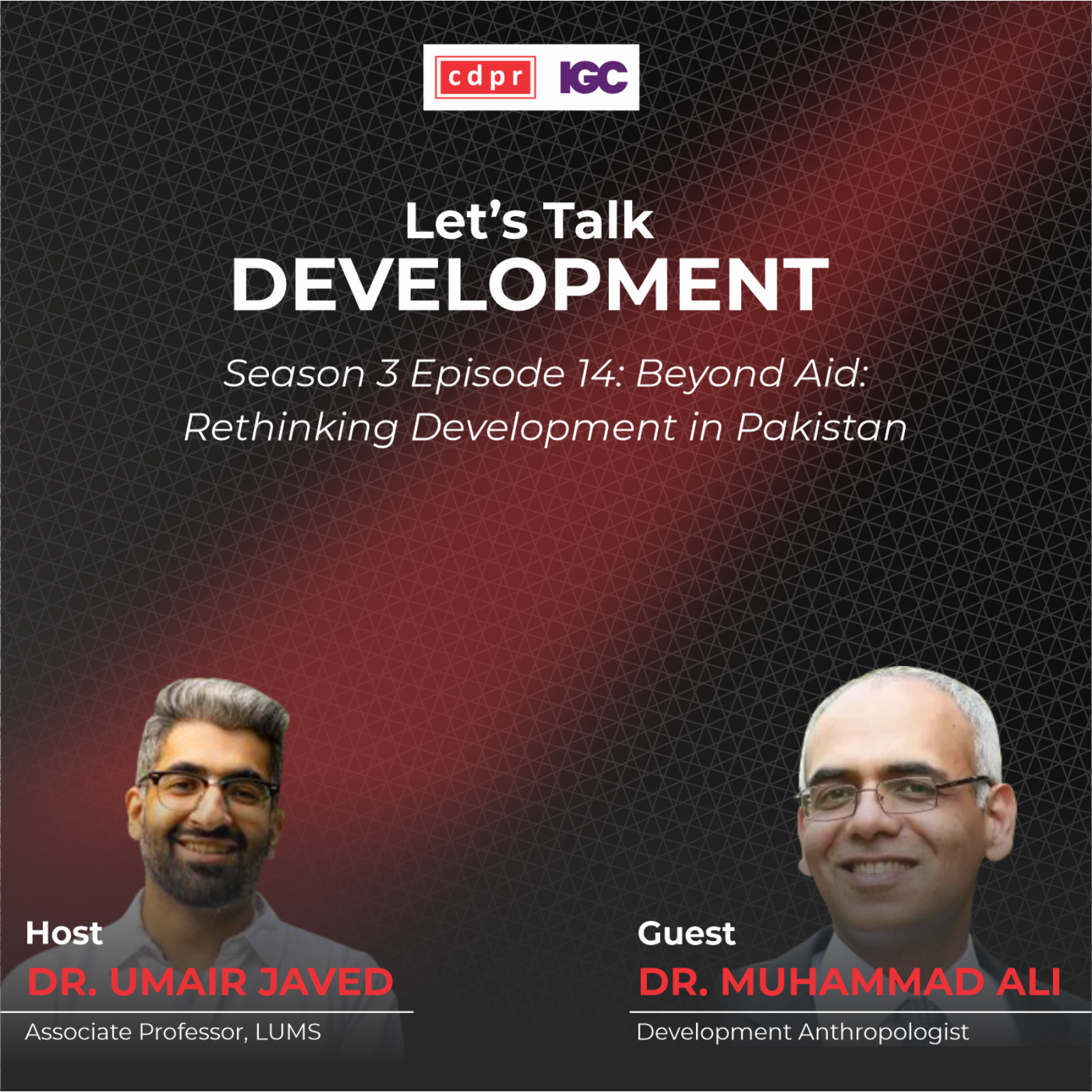
    As the era of abundant foreign aid comes to an end, developing countries are being forced to rethink how development is financed and delivered. In this episode of Let's Talk Development, Dr. Umair Javed sits down with development anthropologist Dr. Muhammad Ali to unpack the changing global aid architecture, the politics behind shrinking donor support, and what these shifts mean for Pakistan. Together, they examine the promises and pitfalls of aid, its impact on state capacity and knowledge production, and what needs to be done to contend with this new era of dwindling aid.
  • S3 · E13
    July 3 · 43 min

    Land Rights for Women: The Promise and the Paradox

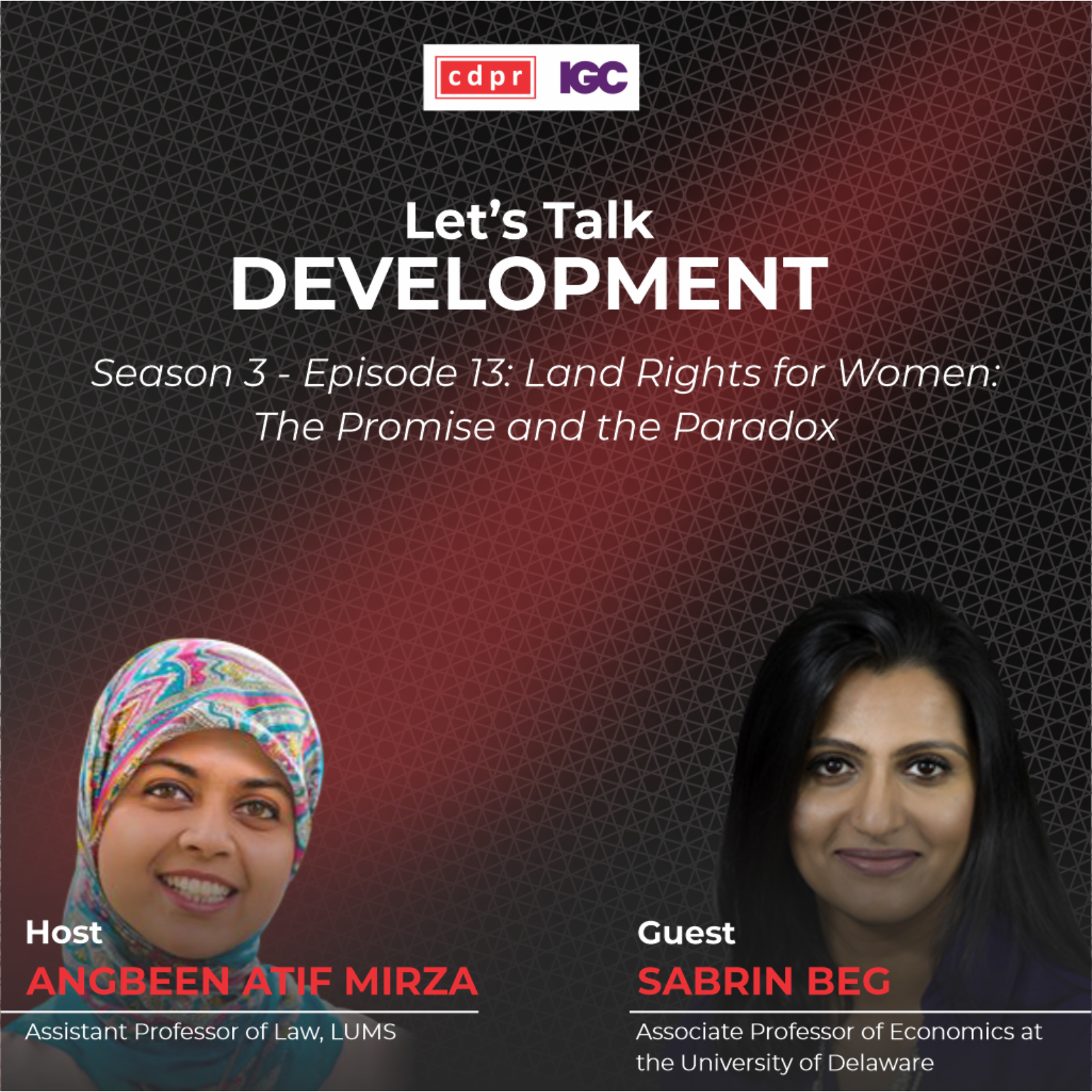
    Drawing on IGC’s new research, Dr. Sabrin Baig discusses how digitising land records in Punjab increased women's access to inherited land, while also reshaping marriage decisions, education investments, and family dynamics. This conversation in our upcoming episode of Let’s Talk Development explores the complex relationship between legal reform, social norms, and women's economic empowerment.

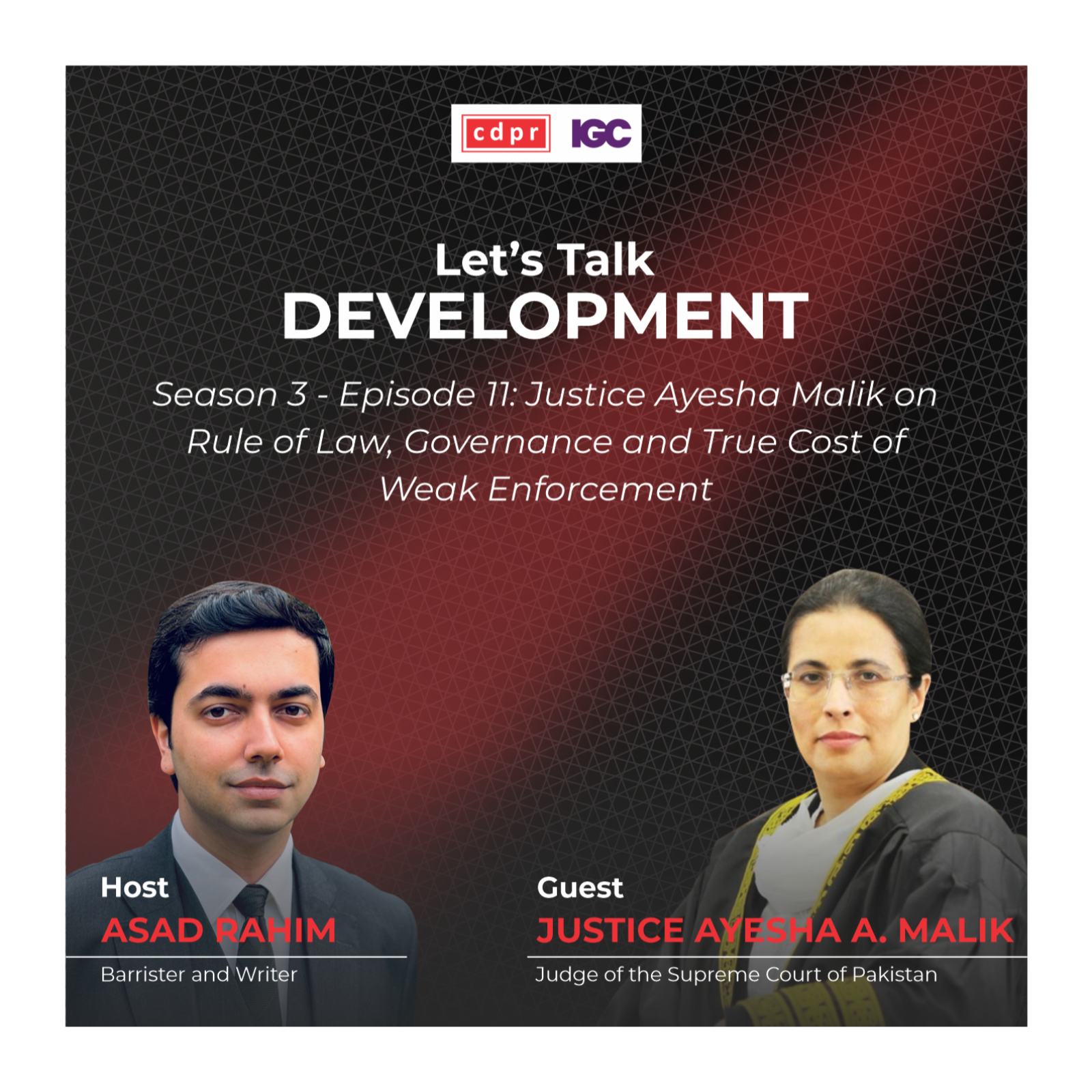
  • S3 · E11
    April 29 · 1 hr

    Justice Ayesha Malik on Rule of Law, Governance and True Cost of Weak Enforcement

    Drawing on IGC’s new research, Dr. Sabrin Beg (Associate Professor of Economics at the University of Delaware) and Ms. Angbeen Mirza (Assistant Professor of Law at LUMS) discuss how digitising land records in Punjab increased women's access to inherited land while also reshaping marriage decisions, education investments, and family dynamics. This conversation also explores the complex relationship between legal reform, social norms, and women's economic empowerment.

  • S3 · E10
    March 31 · 35 min

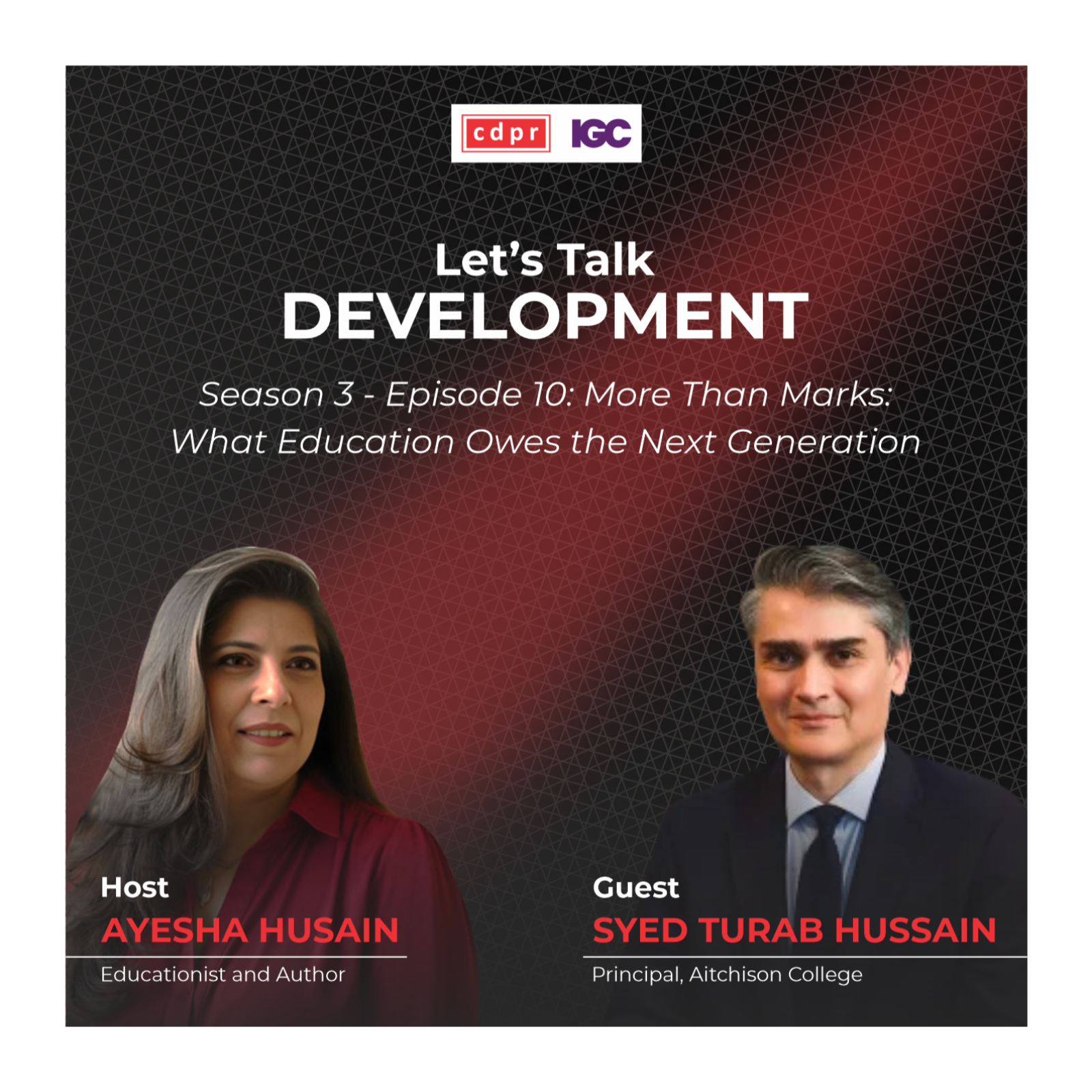
    More Than Marks: What Education Owes the Next Generation

    In this episode of Let’s Talk Development, Ayesha Hussain (Educationist and Author) sits down with Dr. Syed Turab Hussain (Economist, Educator and Principal of Aitchison College) to discuss one of the most important questions of our time: is education in Pakistan keeping up with the fast-evolving world? From the overemphasis on grades in classrooms across Pakistan to the quiet erosion of deep thinking, Dr. Hussain draws on his extensive teaching experience at institutions like LUMS, and now heading Aitchison College, to make a compelling case for returning to the basics: critical thinking, strong writing and, above all, building character. The conversation also explores where AI fits in, and where it does not, why good teachers remain irreplaceable and what it will take to prepare Pakistan’s younger generation for a rapidly shifting world.

  • S3 · E9
    February 23 · 47 min

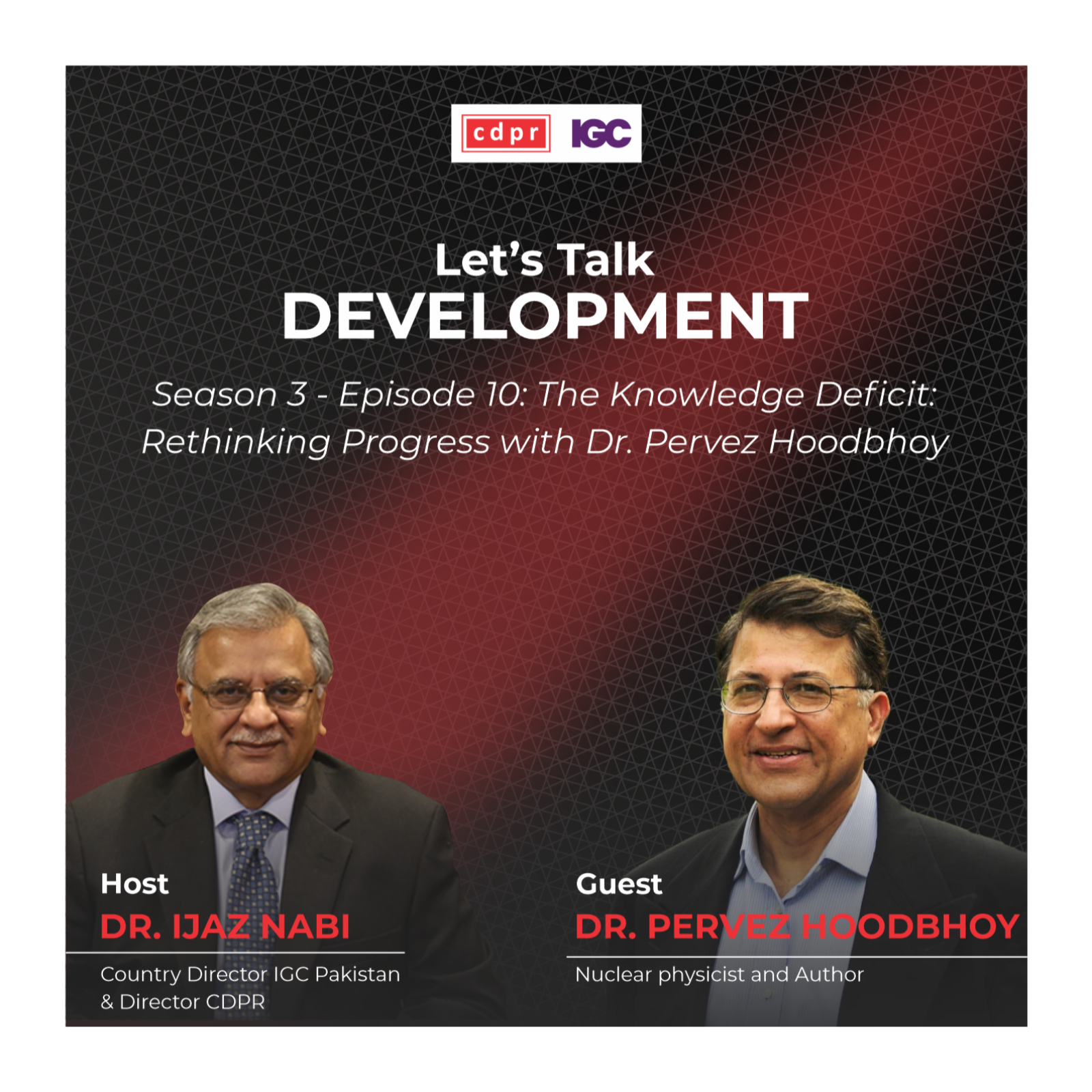
    The Knowledge Deficit: Rethinking Progress with Dr. Pervez Hoodbhoy

    In this episode Dr. Pervez Hoodbhoy joins Dr. Ijaz Nabi to explore the roots of Pakistan’s current economic and social challenges. Moving beyond fiscal policy, Dr. Pervez argues that the real barriers to progress lie in our culture, education system and collective mindset as a society. He draws comparisons with India, Bangladesh and China to highlight how societies that value science, hard work and equality have managed to transform their future, while Pakistan remains trapped in cycles of poor governance, weak education and misplaced priorities. From the collapse of higher education to the lack of work ethic and scientific curiosity, the conversation assesses what it would take to realign Pakistan’s path toward meaningful development. At its heart lies a simple but urgent question: can a nation rise without investing in knowledge, truth and learning?

  • S3 · E8
    January 13 · 35 min

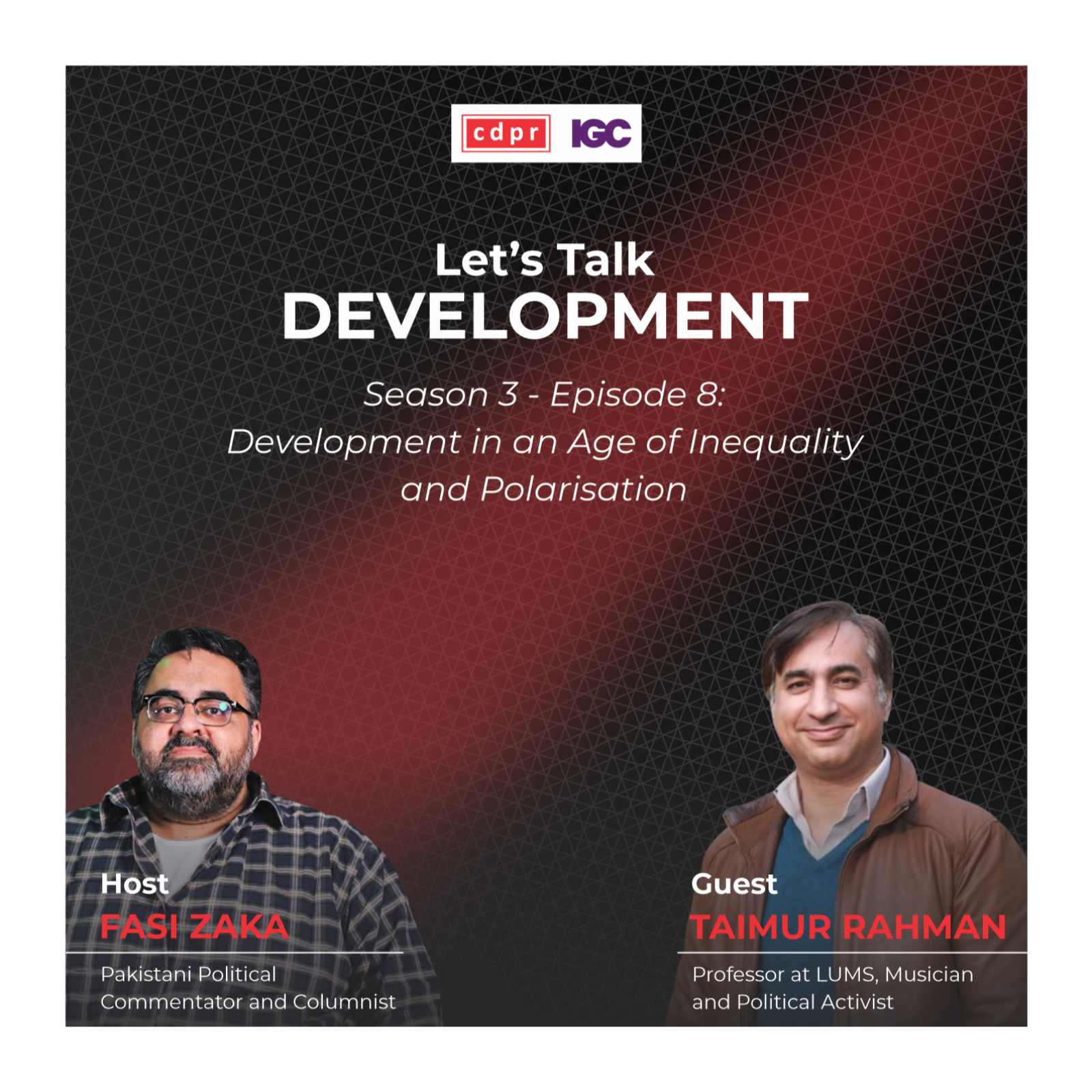
    Development in an Age of Inequality and Polarisation

    In this episode, Dr. Taimur Rahman joins Fasi Zaka for a wide ranging conversation on growth, inequality and inclusion in Pakistan. The discussion assesses the dominant development models, elite capture and the limits of neoliberalism. The conversation also reflects on the political economy of social media examining how digital platforms shape narratives, intensify polarization and influence who gets to speak and be heard. From global political economy to social media, identity politics and class, this episode offers a sharp and reflective take on the challenges shaping Pakistan and the world's development trajectory today.

  • S3 · E7
    Dec 16, 2025 · 28 min

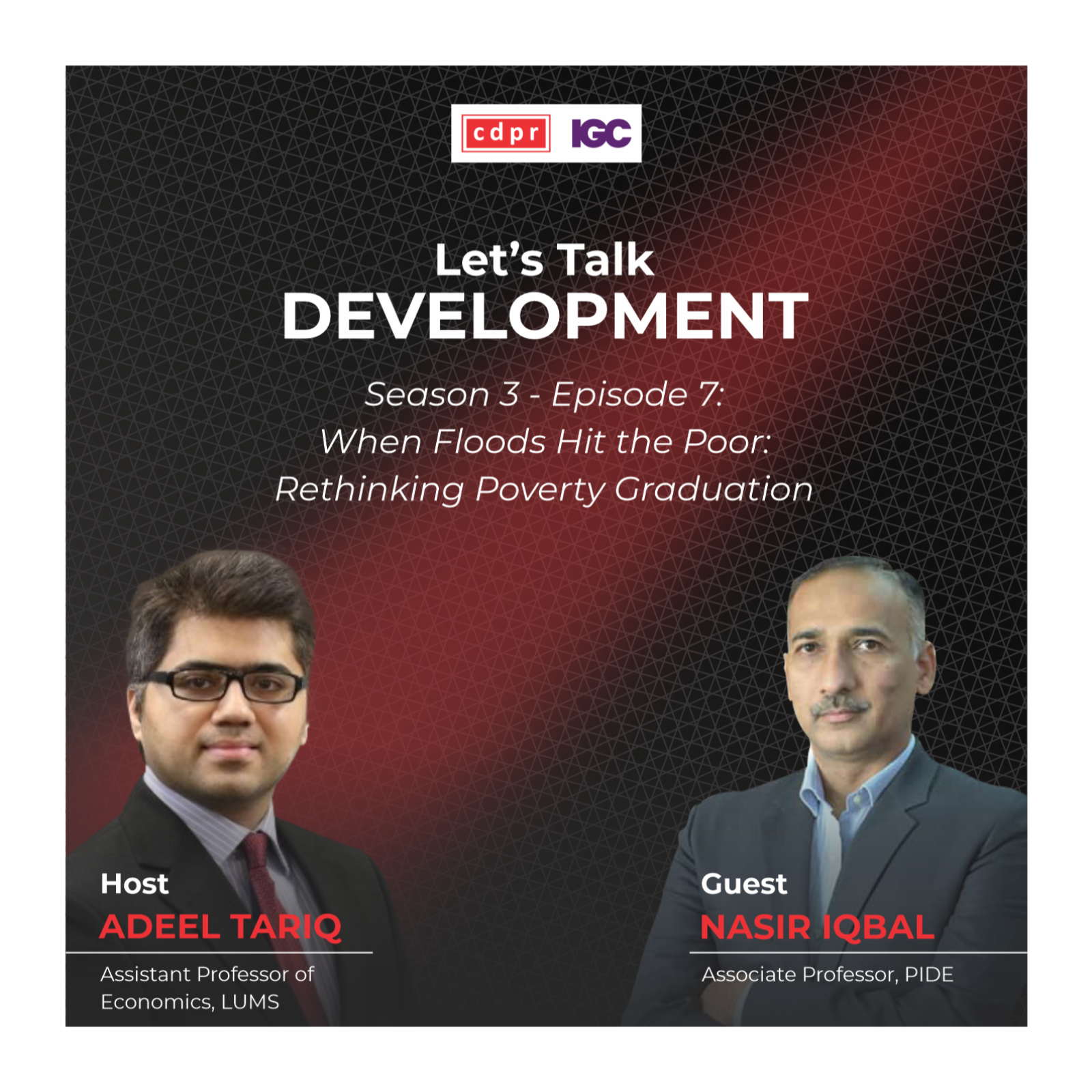
    When Floods Hit the Poor: Rethinking Poverty Graduation

    When climate shocks hit the poorest, what happens to the programmes meant to lift them out of poverty? In this episode, Dr. Nasir and Dr. Adeel explore the National Poverty Graduation Programme (NPGP) - a flagship initiative aimed at moving households beyond short-term cash transfers toward sustainable livelihoods through asset transfers and skills. Drawing on his fieldwork in South Punjab, Dr. Nasir shares how beneficiaries coped during high inflation, why the 2022 floods turned assets like livestock into liabilities and what all this means for building resilience. This timely conversation offers lessons for policymakers in Pakistan and beyond on designing poverty programmes that can withstand an era of rising climate vulnerability.

  • S3 · E6
    Nov 10, 2025 · 28 min

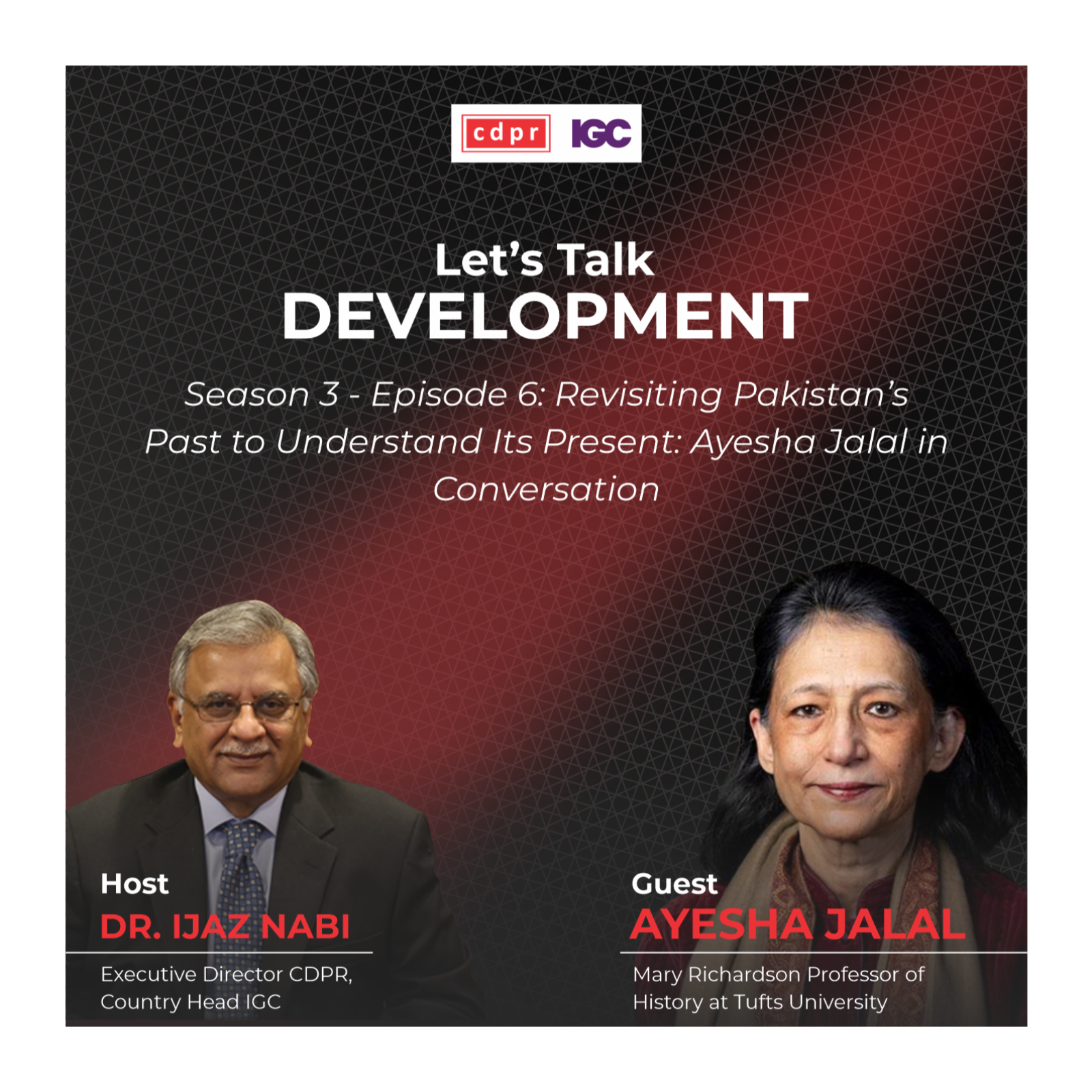
    Revisiting Pakistan’s Past to Understand Its Present: Ayesha Jalal in Conversation

    What can history teach us about Pakistan’s current economic dilemmas and its future? In this episode, Ayesha Jalal joins Ijaz Nabi to reflect on the country’s enduring political and economic challenges.The conversation touches on Jinnah's constitutional vision, the fractured nature of Pakistan’s federal politics, the recurring cycles of aid inflows during military regimes and the missed opportunities for building sustainable growth through trade and taxation. Jalal also emphasizes the importance of reclaiming history as a discipline rather than an ideological tool to better understand identity, regional connections and the possibilities for Pakistan’s future within South Asia.

  • S3 · E5
    Oct 20, 2025 · 38 min

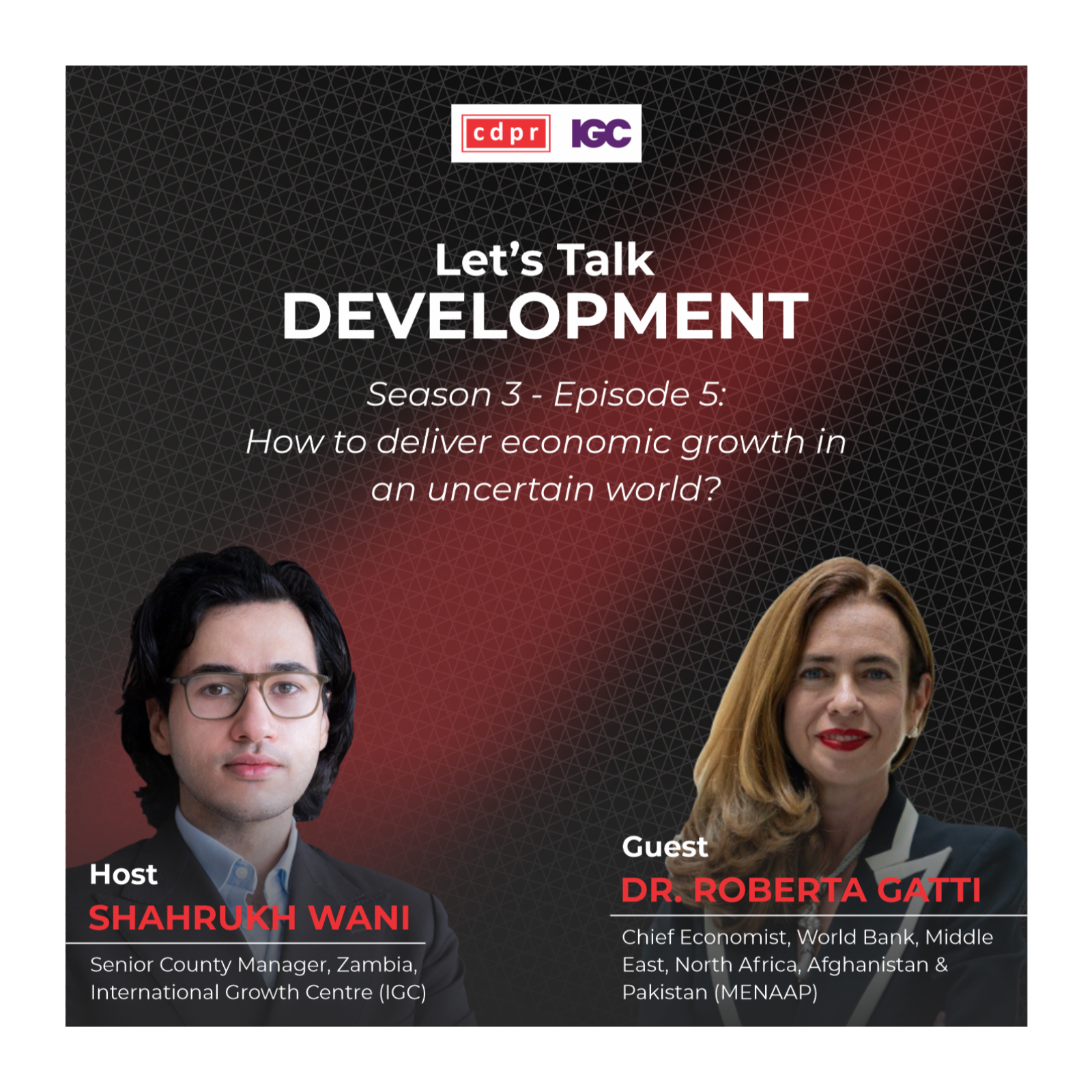
    How to deliver economic growth in an uncertain world?

    Global growth is slowing, debt burdens are rising and climate pressures are intensifying, what does this mean for the future of economies? In this episode, Dr. Roberta Gatti from World Bank and Shahrukh Wani from IGC explore some of the most pressing questions shaping growth today: the changing role of industrial policy, how governments can promote stronger business environments and why data and evidence are crucial for effective policymaking. They discuss the MENAAP region’s debt challenges, the risks and opportunities from trade realignment, and the importance of measuring what works - and admitting what does not. With insights from one of the World Bank’s leading economists, this conversation offers valuable perspectives for policymakers, researchers and anyone interested in the future of growth.

  • S3 · E4
    Sep 9, 2025 · 41 min

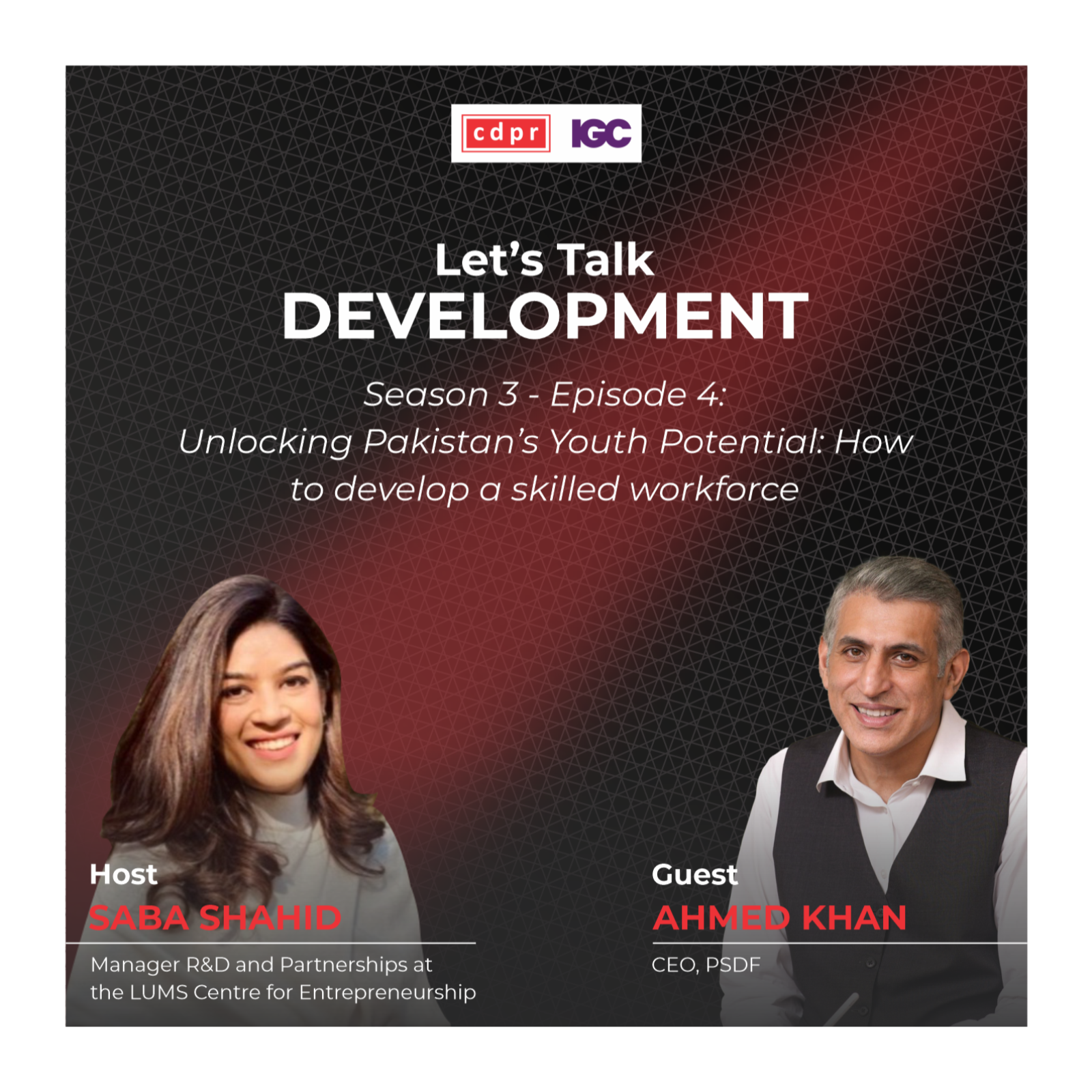
    Unlocking Pakistan’s Youth Potential: How to develop a skilled workforce

    64% of Pakistan’s population is under the age of 30. This “youth bulge” holds immense promise if equipped with the right skills. In this episode, Ahmed Khan and Saba Shahid discuss how Pakistan can turn its growing youth population into a productive economic force. They discuss how PSDF is addressing this challenge through industry aligned, digitally delivered and outcome focused training programs across urban and rural locations in the country. They shed light on initiatives taken by PSDF for women, the transgnder community and other marginalized groups aiming to improve job opportunities at the grassroot level.

  • S3 · E3
    Aug 21, 2025 · 39 min

    Cities on the Brink: Climate Risks and Urban Realities in Pakistan

    Pakistan is facing a dual burden of rapid urbanisation and increasing climate vulnerability, with low-income and marginalised communities bearing the greatest impact. In this episode, Hina Shaikh and Nausheen Anwar discuss the lived realities and politics of urban transformation in Pakistan’s cities. They unpack the complex relationship between urban development and climate challenges, examining how issues such as air pollution, urban flooding and heatwaves manifest differently across cities, shaped by each city’s unique geography, infrastructure, and inequalities.

  • S3 · E2
    Jun 30, 2025 · 42 min

    Mapping Karachi: Spatial Vulnerability and Climate Change

    The impact of climate change in cities is highly dependent on spatial factors. Within a sprawling and metropolitan city like Karachi, examining its topographic and geographic spatiality in terms of its unique location by sea, desert and forest is key in determining the negative effects of climate change on its twenty million residents. In this episode, Maha Qasim and Yasir Hussain dive into the historiography of Karachi’s spatial vulnerabilities to discuss problems of climate change linked to heat, water and agriculture, and examine solutions ranging from planting urban forests to strengthening disaster management systems and institutions.

  • S3 · E1
    Jun 4, 2025 · 26 min

    Gateway to Growth: Export Policy as a Catalyst for Pakistan’s Economy

    Pakistan’s economy is known for its volatile ‘boom-and-bust’ framework. When it experiences bouts of growth and stability, trade and industrialisation imbalances force it two steps backwards, trapping it in a cycle that relies on imports to sustain Pakistan in an increasingly polarising and unpredictable global context. In this episode, Usman Khan and Hamed Yaqoob Sheikh talk about trade solutions ranging from tariff reforms, non-tariffs and locally-based solutions, export-oriented growth, and diversification of the textile industry. They discuss how Pakistan's industrialisation should be supported by Governmental bodies and relevant stakeholders to ensure its long-term economic security and success.

  • S2 · E12
    Apr 30, 2025 · 42 min

    Sri Lanka's Economic Recovery: Lessons for Pakistan

    Sri Lanka suffered a great economic crisis 2019 onwards, however in the late 2024, it's economy demonstrated significant signs of recovery. In this episode, Dr. Shantayanan Devarajan and Dr. Ijaz Nabi talk about Sri Lanka's economic crisis, comparing it to Pakistan's situation, and exploring potential solutions. They discussed the stabilization measures, structural reforms, debt restructuring, and the role of the IMF in supporting developing economies.

  • S2 · E11
    Mar 19, 2025 · 31 min

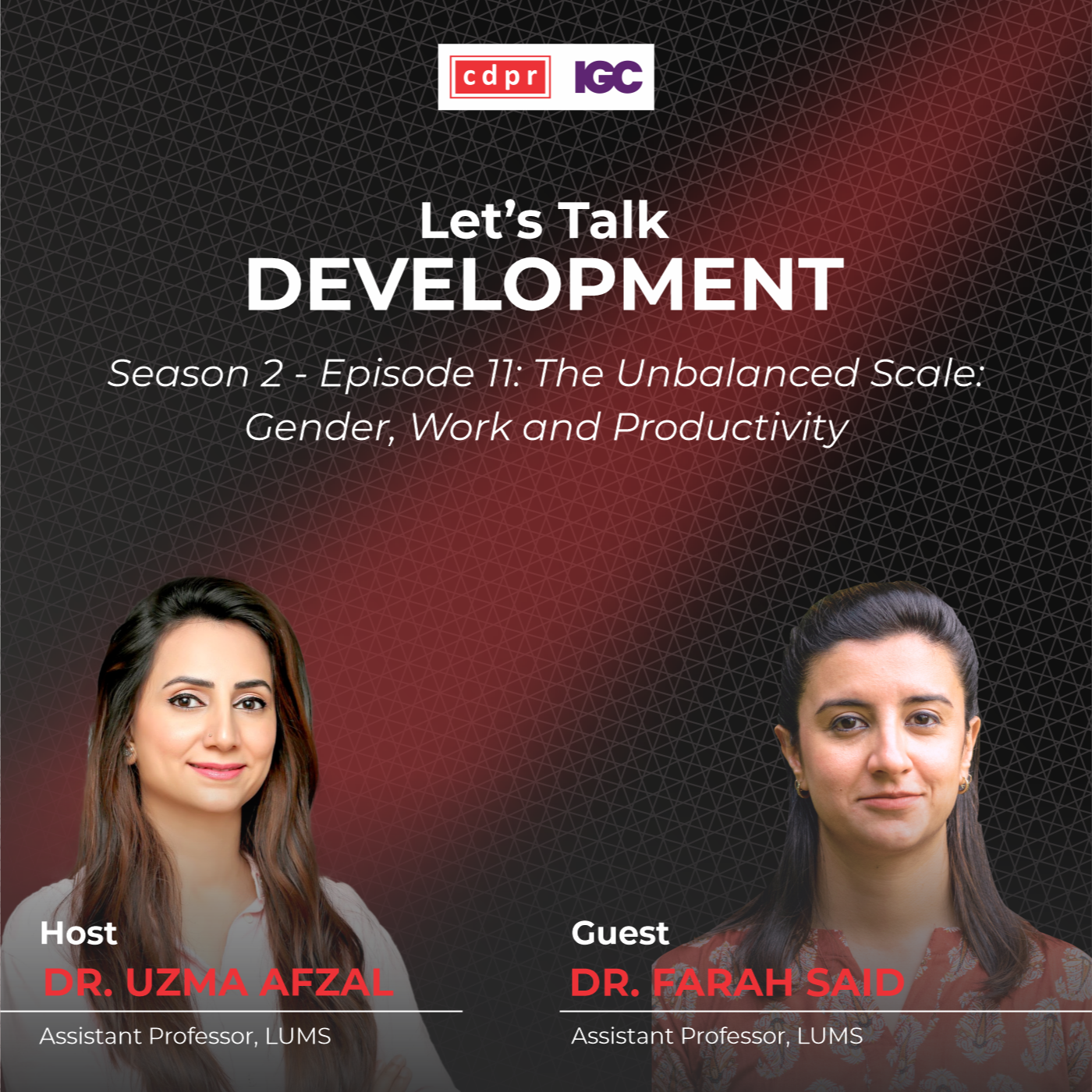
    The Unbalanced Scale: Gender, Work and Productivity

    Pakistan has one of the lowest female labour force participation rates in the South Asian region (22%), compared to 35% in Bangladesh and 37% in India. This means half of Pakistan’s population remains largely untapped in formal employment, as women are predominantly involved in informal or home-based work. In this episode, Dr. Farah Said and Dr. Uzma Afzal talk about the gender dynamics affecting productivity and the impact on overall productivity levels on marginal communities because of the male/female gender ratios.

  • S2 · E10
    Feb 10, 2025 · 43 min

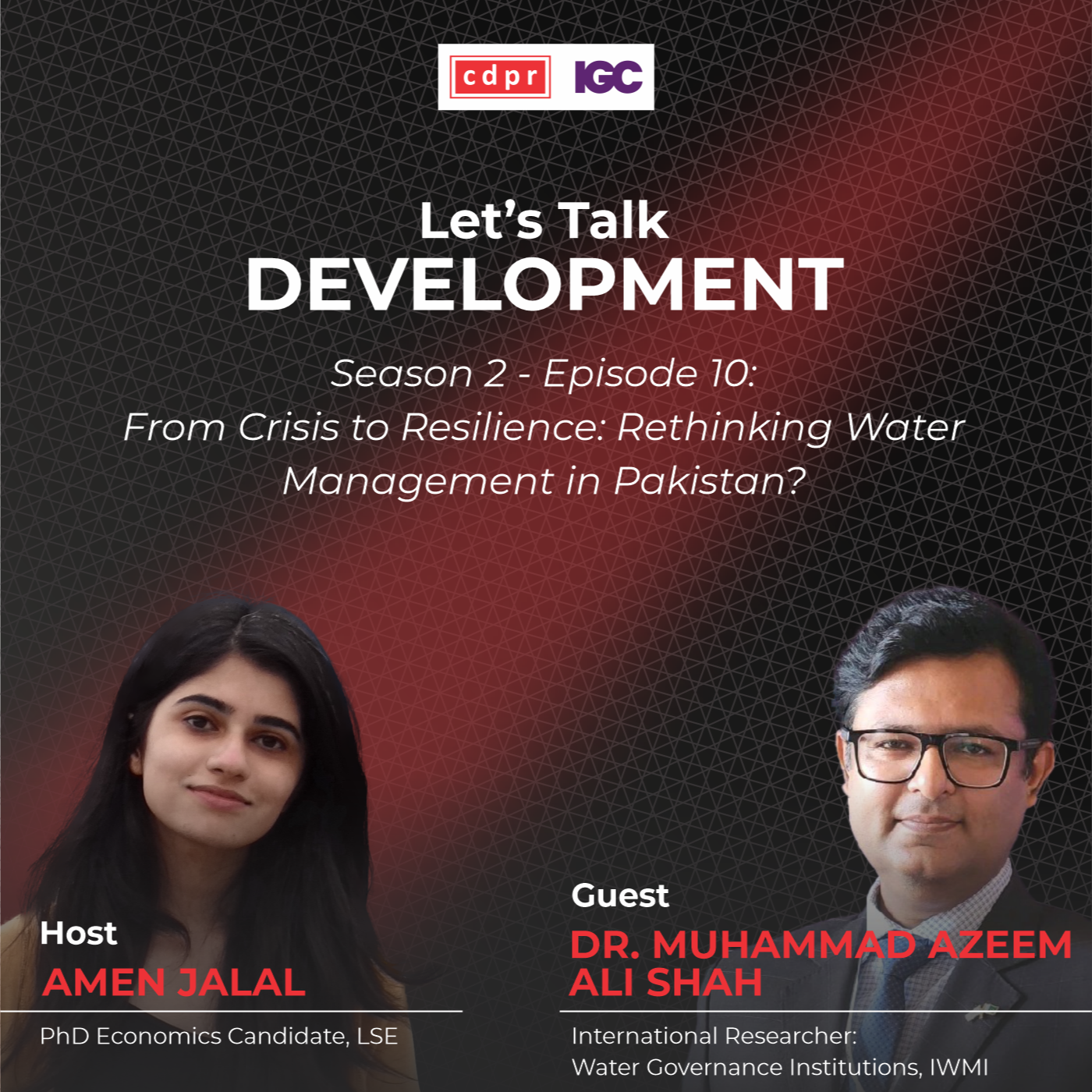
    From Crisis to Resilience: Rethinking Water Management in Pakistan

    In Pakistan, poor water management coupled with climate change has severely intensified the frequency and intensity of floods. The unpredictable rainfall patterns and inadequate infrastructure has further worsened Pakistan’s water calamity. In this episode, Dr. Azeem Ali Shah and Amen Jalal discuss water management issues prevailing in the country, recurring floods as a result of the climate crisis as well as climate smart agricultural interventions to improve water productivity.

  • S2 · E9
    Dec 30, 2024 · 31 min

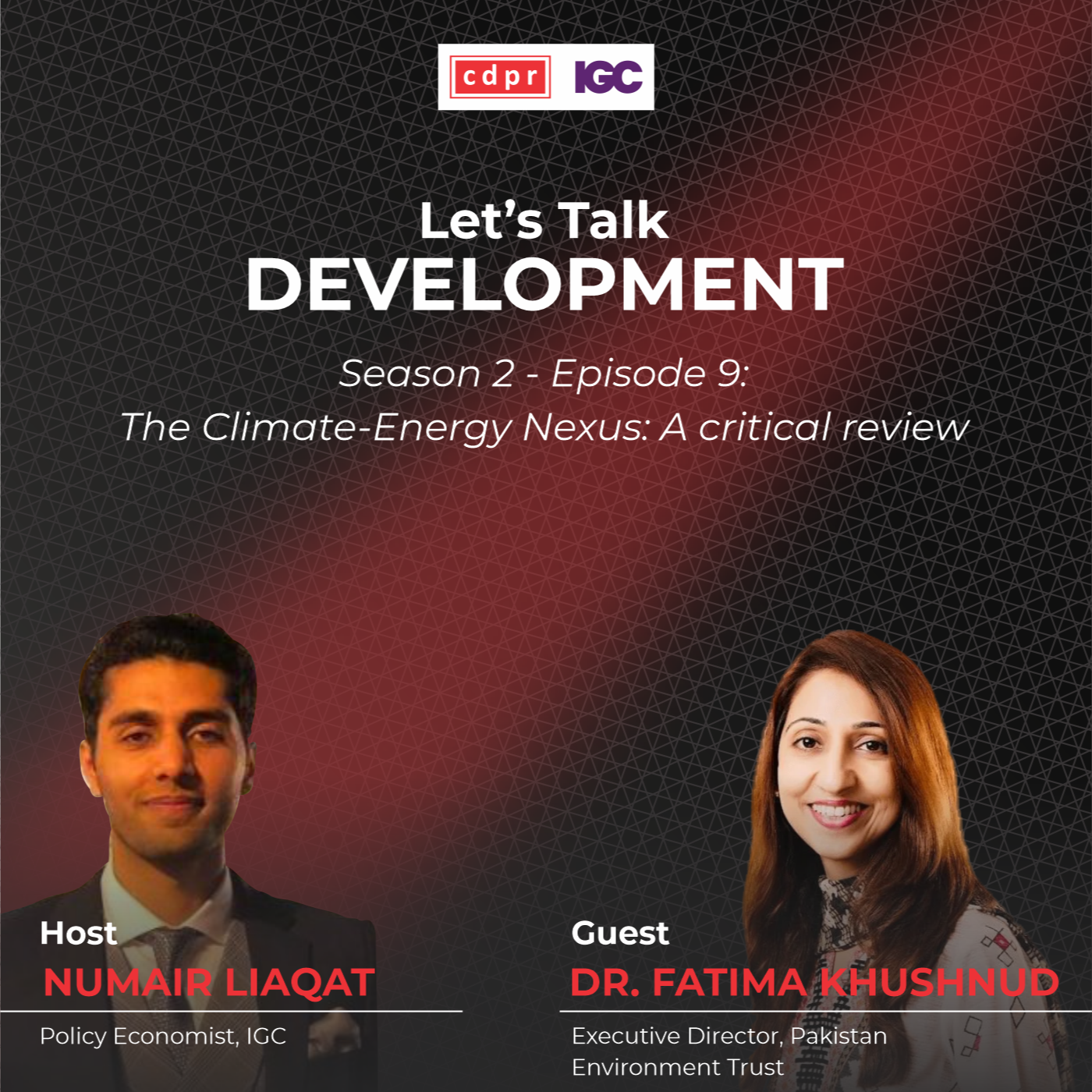
    The Climate-Energy Nexus: A critical review

    For a country like Pakistan, it has become increasingly critical to focus on the climate-energy nexus as it grapples with climate vulnerability and escalating energy insecurity. Navigating this intersection presents formidable challenges as well as foreseeable opportunities. In this episode, Dr. Fatima Khushnud and Numair Liaqat explore the climate-energy nexus and examine its implications for the general public. They discuss Pakistan’s energy policies, pricing strategies and the ongoing energy crisis.

  • S2 · E8
    Nov 5, 2024 · 30 min

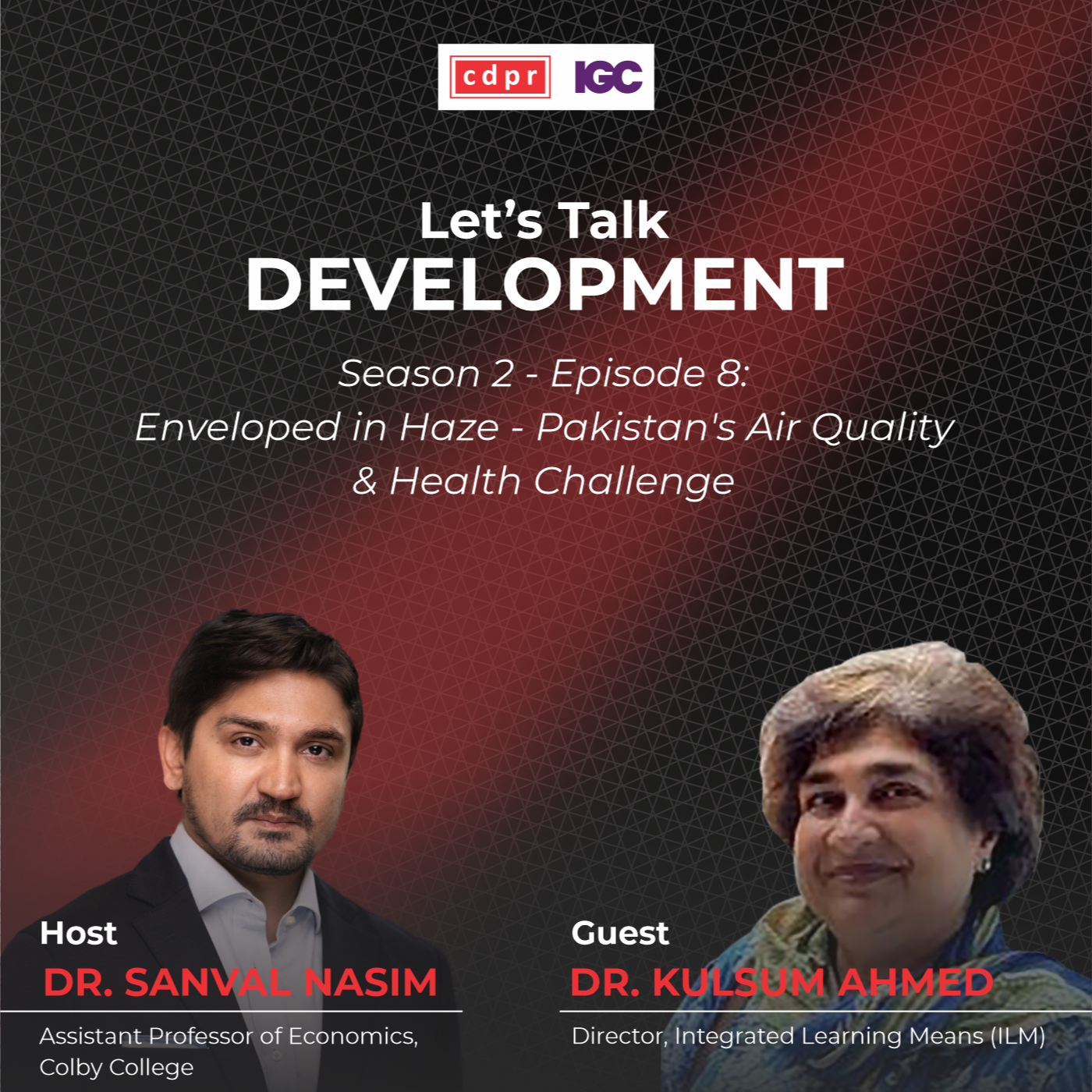
    Enveloped in Haze - Pakistan’s Air Quality & Health Challenges

    Every year as summer descends, Lahore observes a drastic change in air quality. The PM2.5 concentration in Lahore is currently 53.2 times greater than the WHO required level of air quality. Hence, air pollution remains a critical issue with serious health consequences specifically in Lahore. However, there is an overlap between concerns regarding climate change as a contributor to global warming and air pollution as a local health problem. Dr. Kulsum Ahmed and Dr. Sanval Nasim distinguish between the emissions that cause global warming and emissions that cause local health problems and navigate through the policy-related aspects of bringing air pollution down.

  • S2 · E7
    Sep 12, 2024 · 46 min

    Greening Pakistan’s Energy Sector

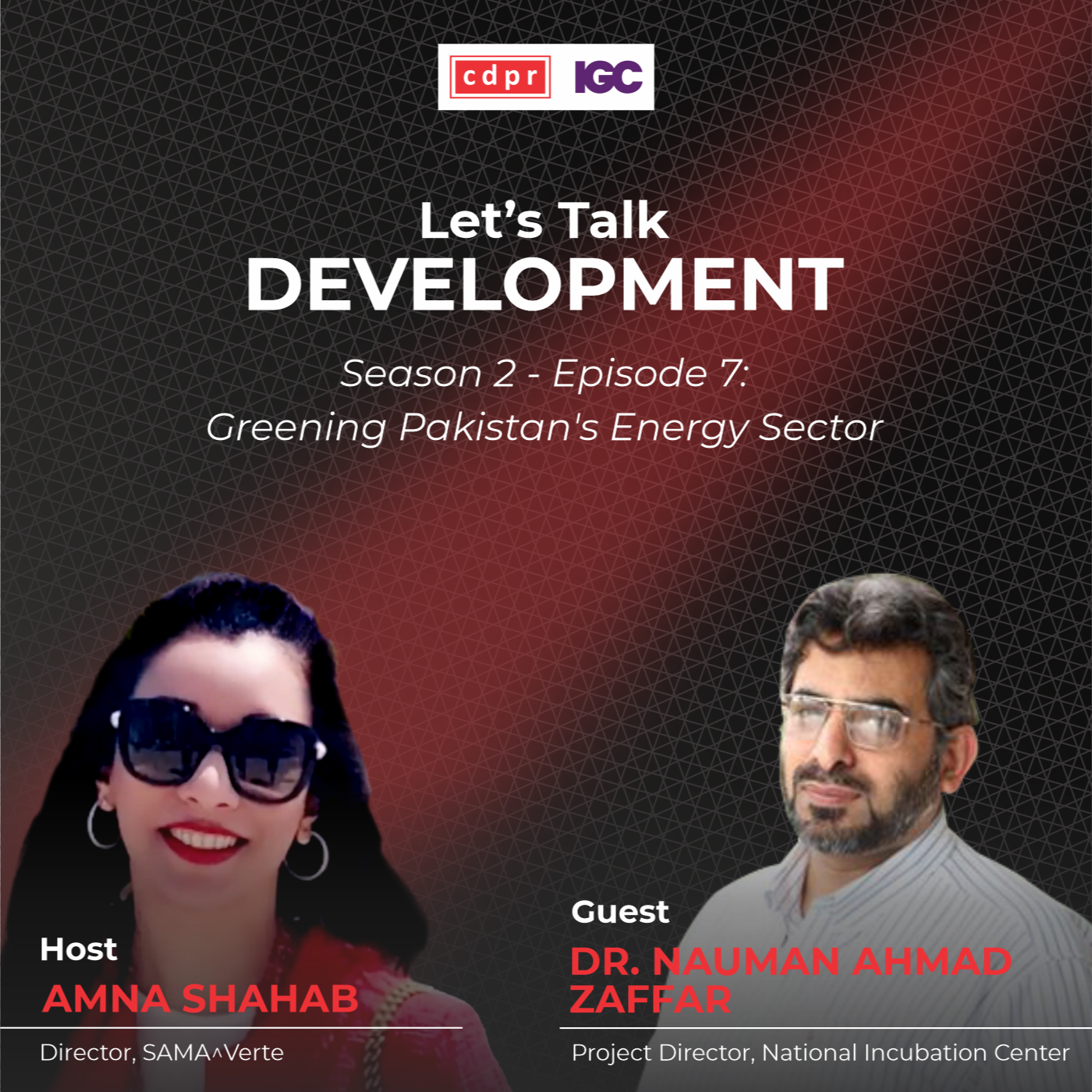
    Pakistan is one of the most impacted countries by climate change, consistently ranking among the top ten countries on the vulnerability scale. Yet it relies heavily on fossil fuels for its energy consumption, which globally contributes to about 75% of the total GHG emissions. Hence, it has become essential to switch to renewable energy. In this episode, Dr. Nauman Ahmad Zaffar and Amna Shahab explore climate change and the energy sector in Pakistan, discuss the path towards greening Pakistan's energy sector, and examine the challenges and the potential solutions associated with the transition towards renewable energy.

Showing 1–20 of 20 episodes