Skip to content
Artwork for Lead to Soar
BusinessCareersEducationSelf-Improvement

Lead to Soar

Michelle Redfern & Mel Butcher

Lead to Soar is the podcast where ambitious women get strategic, evidence-based guidance to reach their full potential and reshape the systems that hold them back. Each episode delivers practical leadership insights grounded in Business, Emotional and Social Intelligence so women can lead with impact and advance their careers on their own terms.

leadtosoarpodcast.substack.com
Play
  • 31 episodes
  • weekly
  • Avg 33 min
  • English
Counted on this page — what you have heard stays on this device, so it is not something the list can be paged by.
  • #244
    Today · 29 min

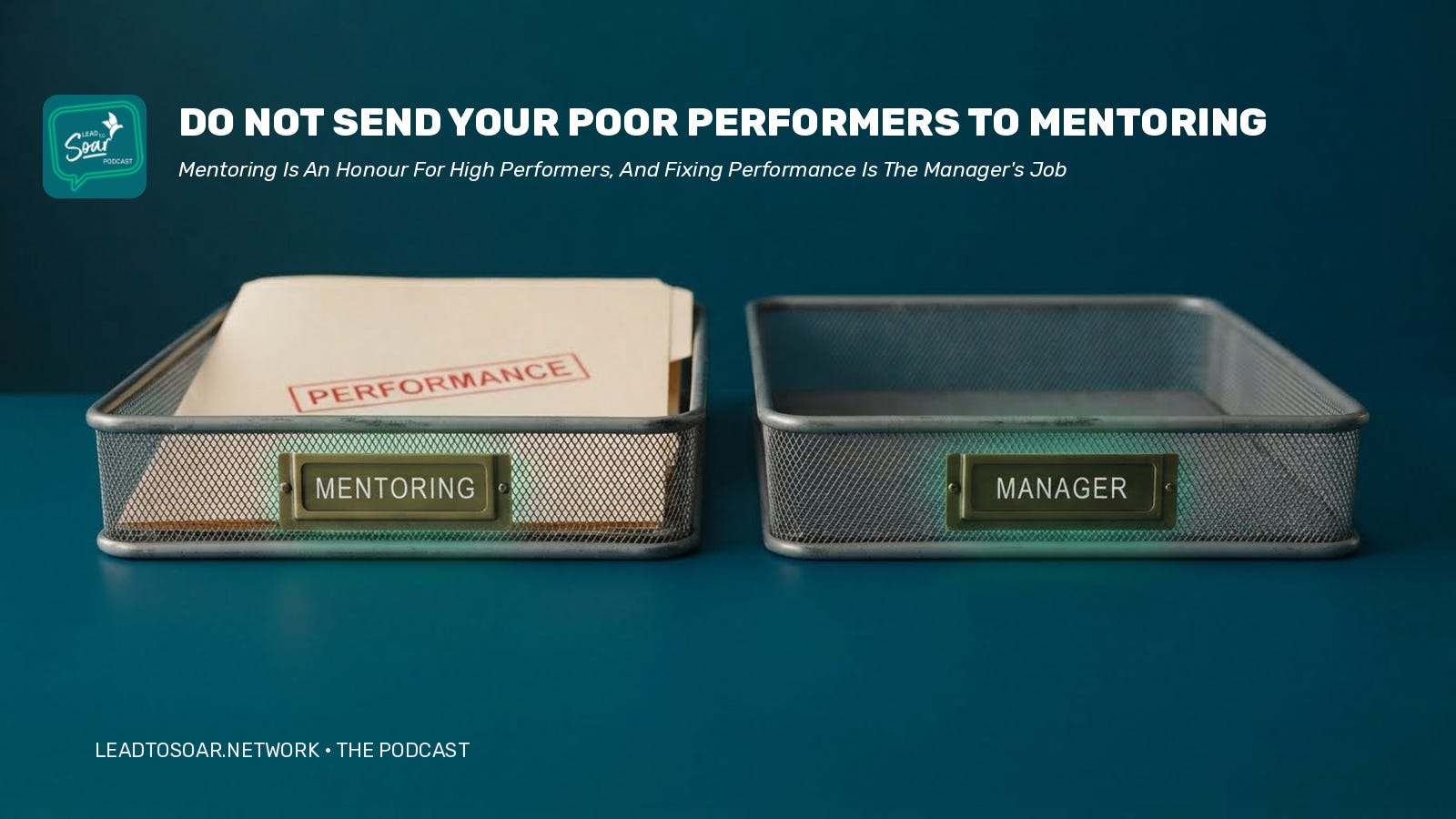
    Do Not Send Your Poor Performers To Mentoring

    Reverse mentoring isn't performance management, and poor performers don't belong in mentoring. In this episode Mel Butcher and Michelle Redfern respond to a Lead to Soar Network member who was asked to fix a more senior colleague's performance under the label of reverse mentoring. Michelle explains why mentoring is for high performers, why performance management belongs to the manager, and how to design a reverse mentoring relationship that works. Truth Bomb "Your manager's job is to manage your performance." Michelle Redfern What you'll learn Why mentoring programs need high performers on both sides, and what happens to participants when a poor performer is placed in one. How a manager can open a performance conversation: describe what is observed, show the indicators, ask what is going on. How to build a skills matrix for a team in a spreadsheet, and use it before hiring. Three questions to settle before a reverse mentoring relationship starts: the outcome, the mentor's authority and the guidance for the senior mentee. How to manage up when a performance problem lands with the wrong person. About the hosts Michelle Redfern is a gender equity strategist, author of The Leadership Compass and founder of Advancing Women in Business and Sport. She co-founded Lead to Soar. Mel Butcher is a multidisciplinary strategist and consultant who helps leaders turn complexity into clarity. She has an engineering background across the public and private sectors. Go Deeper with the Network https://leadtosoar.network/landing Get full access to Lead to Soar Podcast at leadtosoarpodcast.substack.com/subscribe

    • Transcript
  • #243
    November 1 · 39 min

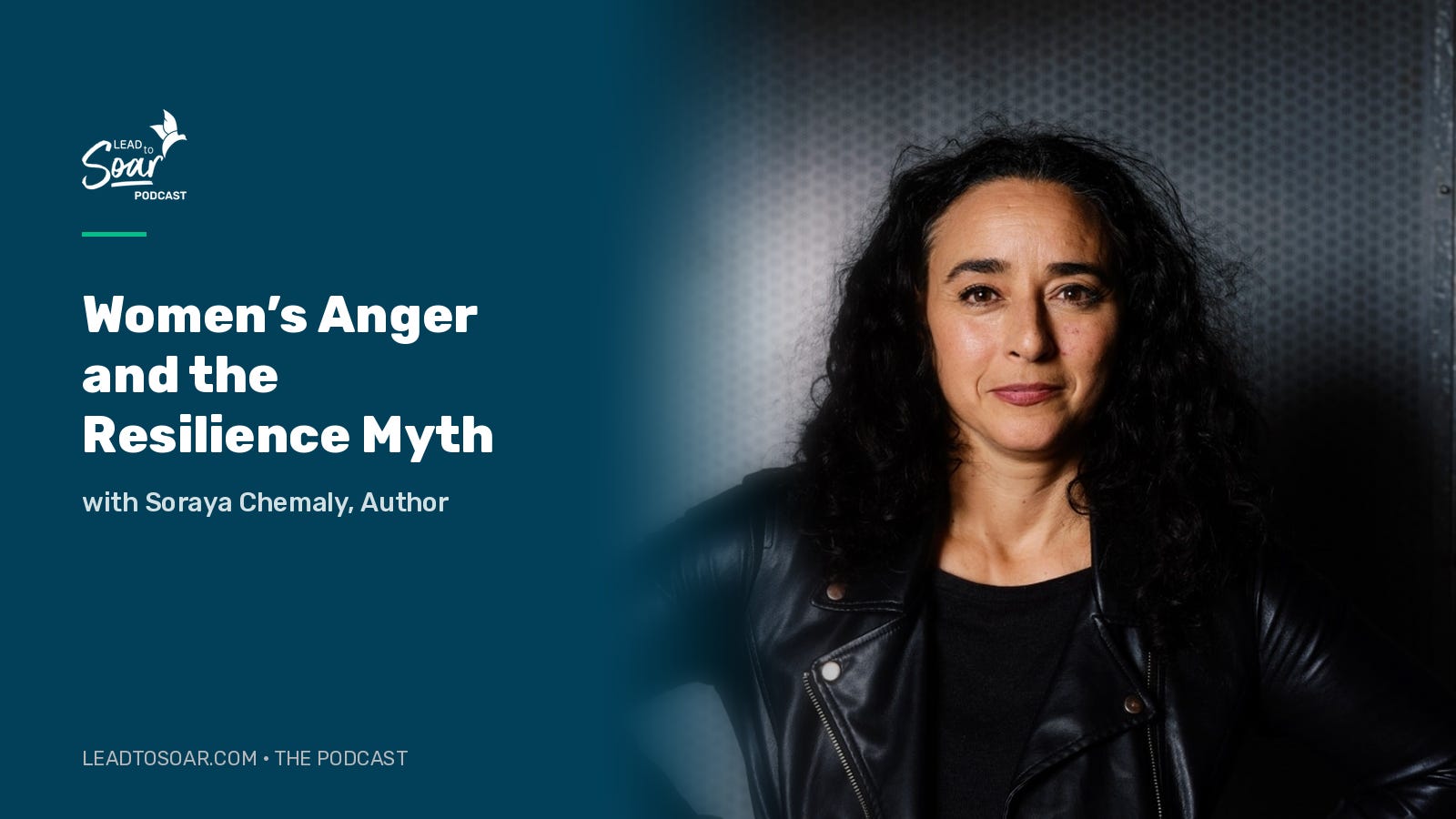
    Soraya Chemaly on Women’s Anger and the Resilience Myth

    Soraya Chemaly, author of Rage Becomes Her, on women’s anger, tone policing and why resilience training lets organisations off the hook. In this episode Mel talks with Soraya Chemaly about Rage Becomes Her, The Resilience Myth and All We Want Is Everything. Soraya explains why women are taught that anger is not theirs, what anger tells us about need, and what to do with it when you cannot take it into work. What you’ll learn Anger is information about what a woman needs, and women are taught not to need for themselves. Tone policing turns a conversation from what a woman says to how she says it, and a sponsor in the meeting can turn it back. The dominant idea of resilience is individualistic and masculinised, and it puts the responsibility on the individual instead of the institution. Fixing the system takes change across policy, law, education and culture together, so tweaking one workplace falls short. Creativity gives anger an outlet and connects you to other people. About the guest Soraya Chemaly is an award-winning author and activist, and the former Executive Director of The Representation Project. She is the Director and co-founder of the Women’s Media Center Speech Project. Her book Rage Becomes Her was named a Best Book of 2018 by the Washington Post, Fast Company, Psychology Today and NPR. Website: sorayachemaly.com About the hosts Lead to Soar is hosted by Mel Butcher and Michelle Redfern. It is a multi-platform resource for ambitious women on a leadership journey and for organisations serious about closing the leadership gender gap. Go Deeper with the Network Join the Lead to Soar Network Get full access to Lead to Soar Podcast at leadtosoarpodcast.substack.com/subscribe

    • Transcript
  • #242
    October 25 · 32 min

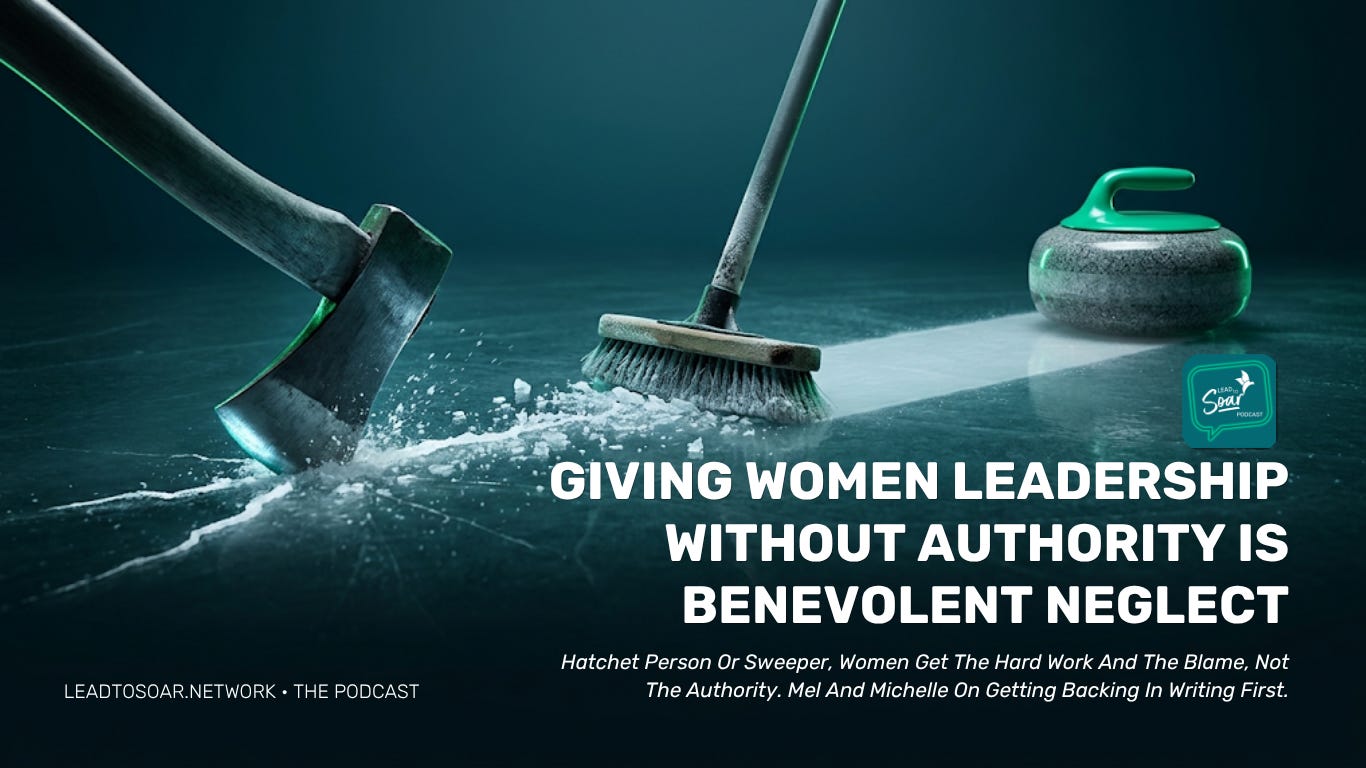
    Giving Women Leadership Without Authority Is Benevolent Neglect

    Women are asked to lead hard change without authority, pay, or backing. Mel and Michelle on benevolent neglect. In This Episode Mel and Michelle look at shadow leadership: stretch roles, acting roles, and employee resource groups that bring visibility and responsibility without documented authority, budget, or air cover. Michelle shares a time she assumed her boss had her back, only to find out otherwise. A Lead to Soar member's stand-in negotiation shows what asking looks like. Truth Bomb "Don't do what I did and just assume you've got the air cover. Make sure you've got it." Michelle Redfern What You'll Learn Ask what you are expected to deliver, how success is measured and whether you will be backed before you say yes to a visible role Get the title, decision-making authority and pay for an acting or stand-in role in writing Spot whether you are the shadow preparing the ground or the sweeper clearing up afterwards Give an employee resource group a charter, authority and funding, and keep problems like the gender pay gap with the executive team Leaders: design the role, write the position description and delegate authority, rather than handing the hard things to the same woman each time About The Hosts Michelle Redfern is a gender equity strategist, author of The Leadership Compass and founder of Advancing Women in Business and Sport. She co-founded Lead to Soar. Mel Butcher is a multidisciplinary strategist and consultant who helps leaders turn complexity into clarity. Her background is in engineering, across the public and private sectors. Go Deeper With The Network https://leadtosoar.network/landing Get full access to Lead to Soar Podcast at leadtosoarpodcast.substack.com/subscribe

    • Transcript
  • #241
    October 18 · 46 min

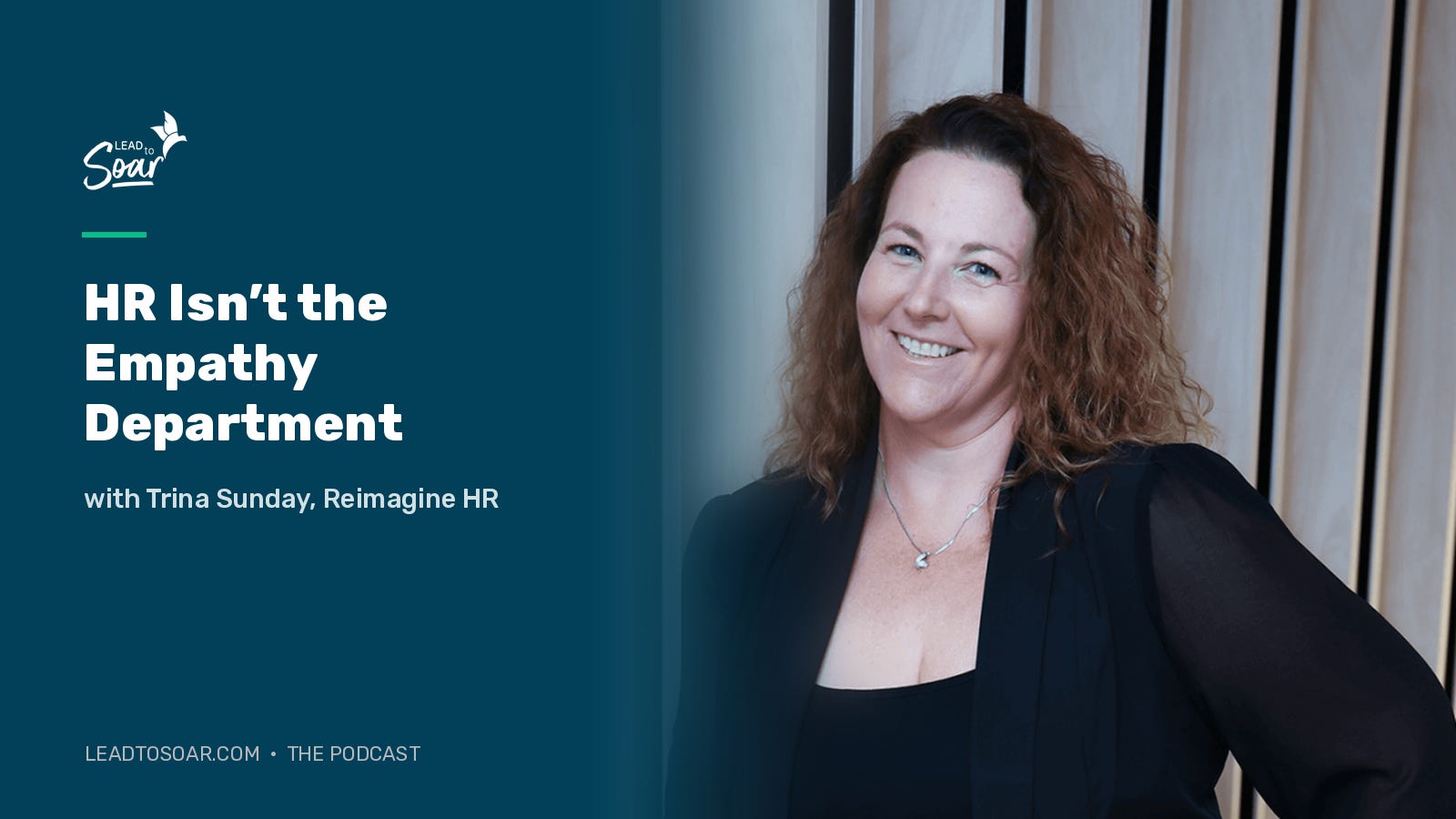
    HR Isn’t the Empathy Department, with Trina Sunday

    HR keeps getting scapegoated for executive decisions. Trina Sunday, founder of Reimagine HR, explains why HR isn’t the empathy department and why capability isn't neutral. Mel and Michelle talk with Trina Sunday, creator of the HEART Work™ Model, about why equity and empathy are leadership capabilities that sit alongside decision intelligence and system design. Trina argues that HR leaders, and the CEOs they work with, need a clear answer to one question: what are we using our intelligence, credibility, and influence to serve? Truth Bomb: Fix the system, don’t fix women. What you’ll learn Why HR so often gets scapegoated by executive teams that don’t take accountability for their own decisions Why a seat at the table gives you proximity to power without automatically giving you influence Why leadership carries a different price depending on who is doing it, and what organisations need to examine as a result How Trina defines a boundary, and what holding hers has cost her Why Trina tells HR leaders who won’t use their influence to get out of the game About the guestTrina Sunday is a human-first leadership strategist, founder of Reimagine HR and creator of the HEART Work™ Model. She works with HR and people and culture leaders through her Game Changer HR Leader coaching program, and hosts the People Unconference (PUNC) in Perth, Western Australia. About the hostsMichelle Redfern is a gender equity strategist and author of The Leadership Compass. Mel Butcher is a consultant and facilitator with an engineering background and more than 15 years of experience. Both women are mission-driven to teach women the business, strategic and financial acumen it takes to reach leadership. Go DeeperIf this conversation put language to something you’ve been navigating without it, that’s exactly the work Lead to Soar Network members do together: https://leadtosoar.network/landing Get full access to Lead to Soar Podcast at leadtosoarpodcast.substack.com/subscribe

    • Transcript
  • #240
    October 11 · 25 min

    Nothing Left to Lose: When It’s Safe to Speak Up

    A colleague decides to act on a workplace bully everyone else has been too afraid to challenge, after management’s own attempt to fix things made the problem worse. Michelle and Mel use the story to ask a harder question: how do you work out whether you’re actually safe enough to speak up, and what should you be asking for when you do? In this episode Mel and Michelle discuss a true story from Michelle’s network: a long-tenured bully in a 20- to 25-person team, protected for years by management inaction and then by a badly designed intervention that asked the whole team, bully included, to speak freely. A colleague, weighing their own employability and financial security against what their more vulnerable teammates stand to lose, decides to file a formal complaint and back the newly appointed manager who is trying to fix things. Truth Bomb: leadership shows up at every level of an organisation, in acts like this one, using whatever power, safety and privilege you already have on behalf of people who have less. What you’ll learn * Why sitting an entire team down together, including the person accused of bullying, and asking everyone to “be honest” is a psychological safety failure, not a fix * Why are some employees structurally unable to speak up, even when the misconduct is obvious to everyone else * How to work out whether you have enough positional power, financial security or professional standing to act safely, and why that differs from person to person * Why a woman is so often the one parachuted in to clean up a mess that several managers before her failed to address, and what that costs her * The difference between alerting someone to a problem and asking for a specific outcome, and why “what outcome are you seeking” changes the conversation * What a proper workplace investigation looks like, and why standing someone down while it happens protects everyone, not just the person who complained About the hosts Michelle Redfern is a gender equity strategist and author of The Leadership Compass. Mel Butcher is a consultant and facilitator with an engineering background and more than 15 years of experience. Both women are mission-driven to teach women the business, strategic and financial acumen it takes to reach leadership. Go Deeper If you’re weighing up whether it’s safe to speak up in your own workplace, that’s exactly the kind of decision Lead to Soar Network members work through together: Get full access to Lead to Soar Podcast at leadtosoarpodcast.substack.com/subscribe

    • Transcript
  • #239
    October 4 · 33 min

    Who Gets to Speak Their Mind at Work, and Who Gets Called Abrasive?

    Years ago, Michelle Redfern told her manager at one of Australia's big banks that the team had a politeness problem. He told her to keep speaking up. A couple of years later she had a reputation, and one of the words attached to it was "abrasive." Mel Butcher and Michelle look at who gets to speak their mind at work and who pays for it. They cover the question every leader needs to ask (am I consulting people for better ideas, or collecting yeses?), how psychological safety works in a team, and why women receive more vague, personality-based feedback than men. Textio's 2022 research found that women are 11 times more likely to be described as "abrasive" in performance feedback. You'll also get three tools you can use this week: the "mad, sad, glad" team check-in, the "play the ball, not the player" approach from Susan Colantuono's The Language of Power, and a "more of, less of, and why" structure for feedback that is specific and actionable. Related: Episode 161, Career Compass: Mastering Actionable Feedback and Overcoming Gender Bias. Michelle's self-paced course on giving, receiving and asking for feedback is coming soon inside the Lead to Soar Network What evidence do you see in your own workplace? Tell us in the comments. Get full access to Lead to Soar Podcast at leadtosoarpodcast.substack.com/subscribe

    • Transcript
  • #238
    September 27 · 34 min

    No One Should Care About Your Career As Much As You Do

    Career pathing is rarely as linear as it looks, and in Michelle's organisational diagnostic work, the single biggest gap women report is that their manager isn't giving them useful career advice. In this episode, Mel and Michelle pull apart why the traditional career ladder is a scarcity game, why leaving your progression in your manager's hands is a risk you can't afford, and what to do instead. They walk through a four-move framework for evaluating what's next: stay, reshape, shift, go, and cover salary benchmarking, strategic networking inside and outside your organisation, why women are so often asked to prove readiness that men get handed on potential alone, and what leaders owe the people they're meant to be developing. Get full access to Lead to Soar Podcast at leadtosoarpodcast.substack.com/subscribe

    • Transcript
  • September 20 · 34 min

    You Read the Book. Nothing Happened

    A listener wrote in with a question anyone with a shelf of half-read leadership books will recognise. She reads good books. She underlines the useful parts. Nothing changes. Mel and Michelle did not script an answer. They worked it out in real time, and the diagnosis arrives fast. If your life is already full, work stacked on caregiving stacked on more work, there is nowhere to put the advice. Truth Bomb: The quality of the book is irrelevant. When women still carry 75%+ of the world’s unpaid labour, getting advice to “just make time to reflect” will probably not hit the mark as great life advice! The most useful example in the episode is also the smallest. Michelle read Atomic Habits years ago and took one thing from it: reduce the friction. Her walking shoes lived on the top floor of a three-storey house and she rarely walked, so she moved them to the door. She now keeps her bike, helmet and gloves ready to go wherever she is living. One idea, acted on. Mel read the same book twice, came away with a better grasp of habit theory, and changed no behaviour. The other point made by Mel, after reading “You Can Do Hard Things” by Cate Hall, is that not everything has to be hard won. So thinking that a pile of TBR books is a failure is not, there might be an easier way to consume the content (audiobooks for example!) Truth Bomb: stop trying to solve everything with a book. Take the one thing. Write it down. Do something with it this week. Are you thriving or just surviving? Take Michelle’s life audit quiz. Get full access to Lead to Soar Podcast at leadtosoarpodcast.substack.com/subscribe

    • Transcript
  • #236
    September 14 · 54 min

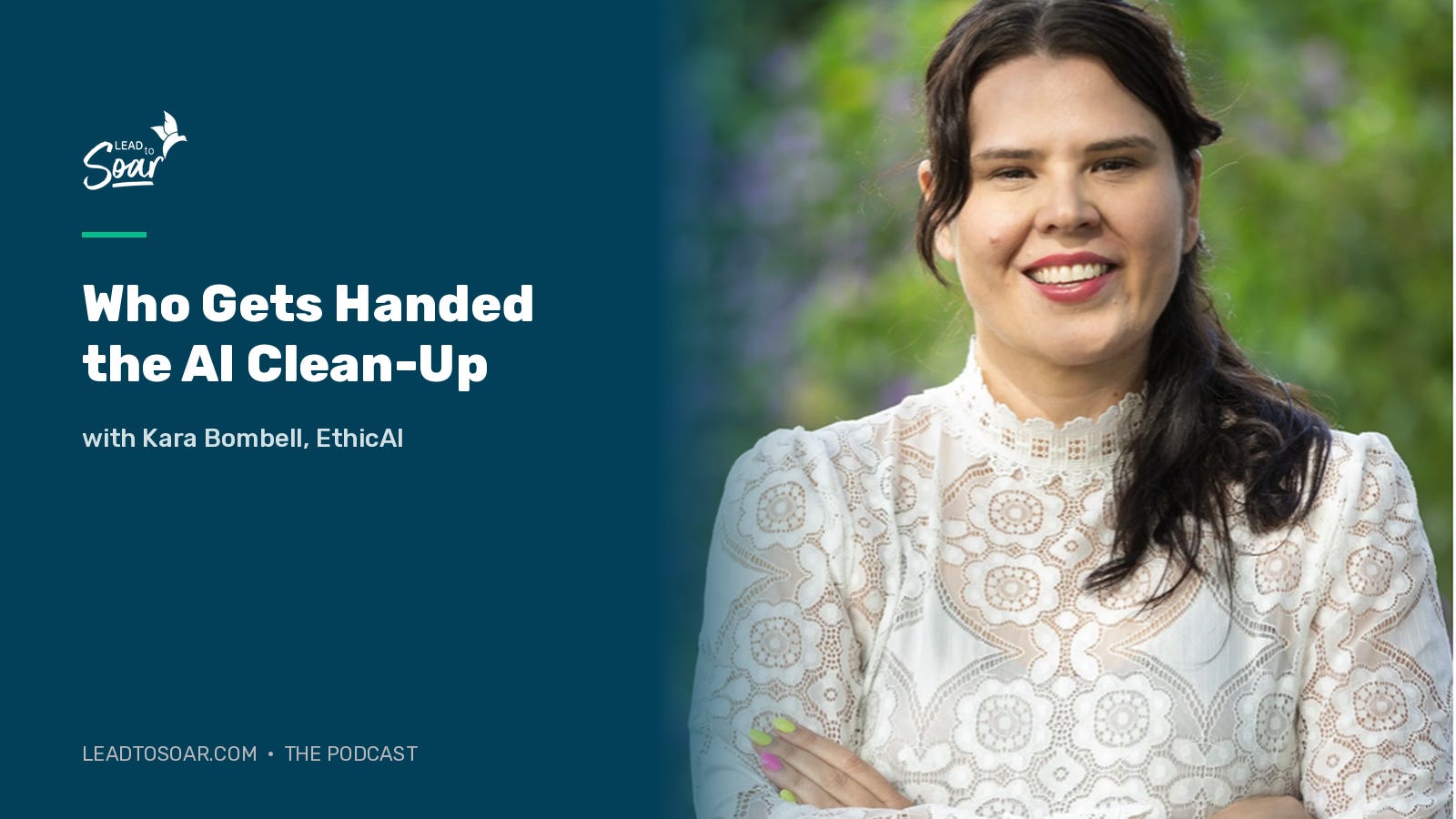
    Women Are Cleaning Up AI's Mess For Free, with Kara Bombell

    Somebody has to clean up after a technology moving faster than the people responsible for it can manage, and that job keeps landing on women, unpaid and uncredentialed. Kara Bombell, co-founder of Ethic AI and a former chief operations officer, joins Michelle and Mel to unpack the difference between a company genuinely disrupted by AI and a poorly performing company using AI as cover, why caution about AI got read as women falling behind rather than paying attention, and the shift from "human in the loop" to "human at the helm" as a better way to think about your own authority over these tools. They also cover two things you can build with AI in your own role this month, no technical background required. About Kara: Kara Bombell spent years inside large corporates and consulting for blue-chip companies before co-founding Ethic AI, where she works with resource-constrained organisations, including not-for-profits, government and child safety services, to embed AI responsibly. Get full access to Lead to Soar Podcast at leadtosoarpodcast.substack.com/subscribe

    • Transcript
  • #235
    September 6 · 34 min

    What Would Happen if a World-Class CEO Took Over Your Life?

    This episode takes the "world-class CEO" conversation personal: what does it look like if a CEO with that calibre of judgement took over your life the way they'd take over a business? Mel puts herself forward as the test case, and Michelle runs the exercise live, on air. Mel's life gets mapped the way she'd map it herself: her career and finances under BQ, her relationships under SQ, and her emotional wellbeing and health under EQ. Michelle opens the way she'd open any real engagement, not with advice, but with the same first question: where are you now, and where do you want to get to? Inside this episode: the design thinking chronology exercise Michelle built during her MBA and still uses today; the positional purpose question, what are you actually paid to do, and why it applies to every role, not just the ones with a sales target; the four things every CEO tracks, cash, growth, return and customer; a concrete way to set a financial goal and close the gap to it; and the disease to please, and why being liked and being respected are not the same test. A version of the positional purpose exercise is running in the Lead to Soar Network this month, tracking a week's worth of hours against the same question Michelle asks Mel on the show. Get full access to Lead to Soar Podcast at leadtosoarpodcast.substack.com/subscribe

    • Transcript
  • #234
    August 30 · 40 min

    What Makes a CEO World Class?

    Are we actually looking at CEOs the right way? No, we're not. We're doing it inside a patriarchal context, inside a capitalist system, and calling the result "world-class." Mel and Michelle went looking for a definition that holds up outside that frame and couldn't find one, so this episode builds one from scratch: BQ as the floor, EQ and SQ as the accelerant, and the safe-pair-of-hands test every leader claiming the title should have to pass. Get full access to Lead to Soar Podcast at leadtosoarpodcast.substack.com/subscribe

    • Transcript
  • #233
    August 24 · 23 min

    The Good Girl Tax

    Being praised as a good team player feels rewarding. Michelle Redfern and Mel Butcher call out what it actually costs this episode: a tax on women who’ve been socialised to say yes, one that rarely shows up in your pay or your title. Two women in engineering consulting were asked to take on more work without extra pay. One agreed to become the “office manager,” took on the workload, and ended up stuck. The other said no, in writing, calmly and clearly, and protected her progression instead. From there, Michelle walks through her “stop, breathe, reflect” framework: three questions to run before you agree to anything new. In this episode: * Why women pay the good girl tax, and what it costs in the long term * Two stories: one costly yes, one considered no * Three questions to test whether new work builds your career or just your workload A script for buying time before you answer Free resource: The Career Progression Evidence Test. Take it, then let Mel and Michelle know what came up for you. The Lead to Soar Network Lead to Soar equips women with the Business (BQ), Emotional (EQ), and Social (SQ) intelligence required to be recognised, trusted, and promoted. We do not fix women. We build capability and redesign systems so talent rises. How We Drive Impact A global leadership accelerator for ambitious women. Members gain: • Weekly group coaching that solves real business challenges • Practical tools to strengthen BQ, EQ, and SQ • Strategic networking with women who are serious about outcomes • Direct access to globally recognised experts in women’s advancement Result: women negotiate pay raises, secure executive roles, strengthen commercial credibility, and become visible for strategic impact. For organisations, the Network functions as a scalable, cost-effective leadership pipeline solution. Paid subscribers get a 3-month guest pass - message Michelle to access your pass. Get full access to Lead to Soar Podcast at leadtosoarpodcast.substack.com/subscribe

    • Transcript
  • #232
    August 16 · 23 min

    Your AI Has a Default Setting, and It Isn't You

    Michelle ran an experiment. She asked Gemini and Claude the same question, at the same time: how do I ask my manager for a pay rise? Gemini's answer was generic and gendered: just be bold, ask for what you want. No mention of the barriers women navigate to be heard as credible in the first place. Claude's answer looked completely different, but not because one platform beats the other. Michelle's Claude carries months of her own directives about what a business-savvy, woman-first answer actually looks like. That's the real subject of this episode: what your AI defaults to when you don't intervene, and what to do about it. Michelle and Mel cover how to prompt for advice that accounts for structural barriers rather than erasing them, a practical exercise for turning technical work into an executive-ready summary, and a warning for leaders: AI is already shaping pay, performance and promotion decisions in your organisation, mostly without anyone checking how. Leaders: read the paper, then take the audit, both linked in the show notes. Lead to Soar Network members get Michelle's full prompt library, including the exercises mentioned above. Get full access to Lead to Soar Podcast at leadtosoarpodcast.substack.com/subscribe

    • Transcript
  • #231
    August 9 · 49 min

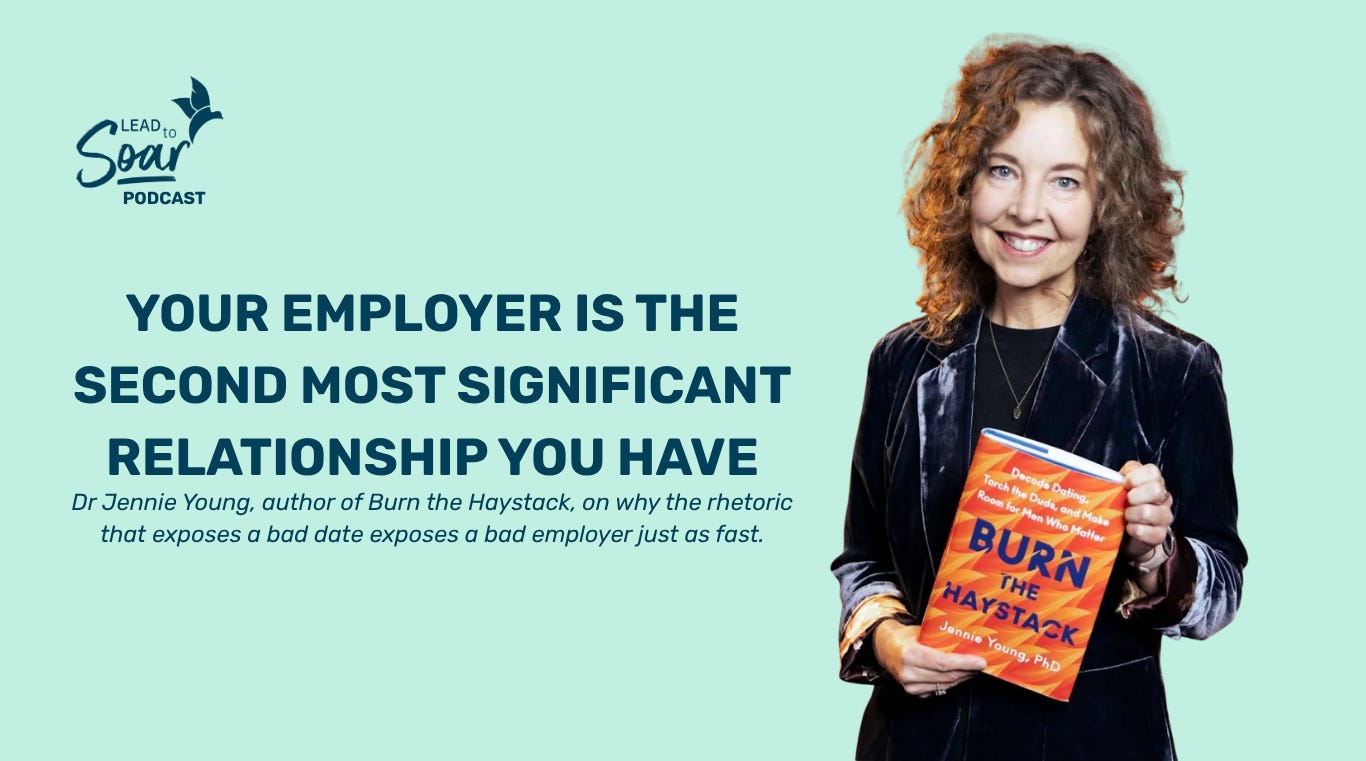
    Your Employer Is the Second Most Significant Relationship You Have

    Mel sits down with English and rhetoric professor Dr Jenny Young, whose Burn the Haystack method teaches women to read the language men use on dating apps for what it actually reveals. This conversation goes well past dating: toxic rhetorical patterns, the "test and apologise" tactic, and why a boss who lowered everyone else's chair three inches is doing the same thing as a man who glares down at the camera in his profile photo. Contains direct discussion of dating apps, sexual testing tactics and abusive relationship dynamics. Get full access to Lead to Soar Podcast at leadtosoarpodcast.substack.com/subscribe

    • Transcript
  • #230
    August 2 · 32 min

    The Leadership Double Bind: Why Executive Women Still Can’t Win

    Executive women are still judged against a narrow idea of what credible leadership looks and sounds like. Warmth can be mistaken for a lack of commercial acumen, authority can be interpreted as aggression, and likeability can become part of an assessment that should be about capability and results. In this episode of Lead to Soar, Michelle Redfern and Mel Butcher explore what happens when women refuse to assimilate into workplace cultures built around hard-coded gender stereotypes. They discuss why warm, energetic and relational women are so often underestimated, how BQ, EQ and SQ shape leadership credibility, and how women can read the room and make their value unmistakable while staying connected to who they are. Truth Bomb: organisations keep mistaking warmth for a lack of business acumen, then lose commercially capable women to competitors with better judgment. Michelle and Mel also share practical language women can use when feedback starts sounding more like a style preference than a serious assessment of leadership. Get full access to Lead to Soar Podcast at leadtosoarpodcast.substack.com/subscribe

    • Transcript
  • #229
    July 26 · 23 min

    Clean Up on Aisle Seven: How Executive Women Get Assigned Other Peoples Work

    The conversation about non-promotable tasks does not end when women reach the executive table. It just gets more expensive. In Episode 229, Mel and Michelle take the office housework conversation somewhere it rarely goes: into the C-suite and executive tier, where the stakes are higher, the patterns are harder to see, and the costs show up in titles, salary bands, and what you actually spend your days doing. Michelle shares her own experience of being the only woman on an executive team of eight, holding a lesser title than all seven of her male peers, and becoming the unofficial coaching hub for the entire organisation because her male colleagues sent her their problems and kept the interesting (aka promotable) work for themselves. The episode covers two layers of this problem: women being structurally channelled into enabling roles with no P&L responsibility, and the informal offloading of people management and emotional labour onto the woman who said yes once and never quite stopped. It also delivers a practical BQ gap analysis to help you name what is happening and have a fact-based conversation with someone who can do something about it. And there is a direct word for decision-makers. If you are tolerating senior leaders who abdicate their people responsibilities onto the nearest woman, this one is also for you. Get full access to Lead to Soar Podcast at leadtosoarpodcast.substack.com/subscribe

    • Transcript
  • #228
    July 19 · 30 min

    Women of Consequence: What Women Leaders Who Are Respected Do Differently

    There's a question Michelle puts to every group of women she works with on leadership reputation: what would your boss say about you? The answers are almost always the same. Helpful. Dependable. Reliable. Great team player. And then silence where strategic, consequential, and trusted with outcomes should be. This episode is about that silence and what breaks it. Mel and Michelle dig into three things women leaders need to get right to change how they're seen at work: knowing your no, delegation as a financial and strategic skill rather than a management preference, and understanding your positional purpose what do they actually pay you to do around here? The gap between being liked and being a woman of consequence is not a confidence problem. It's a clarity problem. This episode addresses it directly. Self-assessment link below.https://www.research.net/r/WhatsYourRep Get full access to Lead to Soar Podcast at leadtosoarpodcast.substack.com/subscribe

    • Transcript
  • July 12 · 27 min

    Should I Stay or Should I Go? Neither. Here's a Third Option.

    The answer most women get when they've outgrown their role is one of two things: be patient, or go find something better. Mel and Michelle don't buy either as a default response. In this episode they work through the third option. Using the real story of a CFO-ready executive who's been blocked by an incumbent boss for two years, they break down three practical moves: closing your readiness gap through targeted professional development, lifting your team so you can operate above your current level, and extending your influence well beyond your immediate lane. This is a career strategy conversation for women who are delivering, have capacity, and are ready for the role above. The actual moves to make while the door above you stays closed. Get full access to Lead to Soar Podcast at leadtosoarpodcast.substack.com/subscribe

    • Transcript
  • #226
    July 5 · 38 min

    Radical Transparency: Why It Can Be a Winner for Women at Work

    Radical transparency is not just a leadership style. For women at work, it is a structural advantage. When leaders commit to genuine transparency, the conditions that have historically worked against women start to shift. Pay gaps narrow when salaries are visible. Promotion processes become fair when the criteria are clear. Information networks open up when knowledge is shared, not hoarded. In Episode 226, Mel and Michelle explore what radical transparency actually looks like in practice, what it produces for teams and organisations, and why women are among its greatest beneficiaries regardless of the gender of the leader practising it. This one came directly from the Lead to Soar community. A member shared her CEO's approach to radical transparency in Hour of Power, and the conversation was too good to stay in the room. Get full access to Lead to Soar Podcast at leadtosoarpodcast.substack.com/subscribe

    • Transcript
  • June 28 · 46 min

    Tired of Being Tired? What Mel and Michelle Actually Do

    This one is a little different. No frameworks. No research papers. Just Mel and Michelle getting real about what actually sustains them when life is heavy, and the load is relentless. They cover sleep as serious infrastructure, not a lifestyle indulgence. The quiet shift away from alcohol and what that has actually changed. Movement that brings genuine joy rather than punishing obligation. And the particular exhaustion of being a woman who was raised to cope and never to ask. Honest, warm, and genuinely useful. Sometimes the most feminist thing you can do is take care of yourself so you can keep showing up. Books referenced: The Future of Sleep by Catherine Ball, Quit Like a Woman by Holly Whitaker, The Sleep Revolution by Arianna Huffington. Get full access to Lead to Soar Podcast at leadtosoarpodcast.substack.com/subscribe

    • Transcript
Showing 1–20 of 31 episodes