Skip to content
Artwork for Lazar Focus
NewsNews CommentaryReligion & SpiritualityJudaism

Lazar Focus

The Times of Israel

Diplomatic correspondent Lazar Berman explores what's behind the news that spins the globe

Play
  • 24 episodes
  • weekly
  • Avg 37 min
  • English
Counted on this page — what you have heard stays on this device, so it is not something the list can be paged by.
  • October 23 · 44 min

    Tamir Hayman: We should be worried about Israel's post-Oct. 7 security doctrine

    Welcome to The Times of Israel's Lazar Focus. Each Friday, join host diplomatic correspondent Lazar Berman for a deep dive into what's behind the news that spins the globe. On Sunday, Prime Minister Benjamin Netanyahu did something rare -- he convened a group of Israeli journalists to give a briefing on his new national security concept. A national security concept is no trivial matter. It affects how armies build their forces, how they fight wars, and how they think of core ideas like war and peace. Gen. (res.) Tamir Hayman, the head of the Institute for National Security Studies in Tel Aviv, argues that there is a new, unofficial national security concept that has emerged after the Hamas attacks on October 7, 2023 and the subsequent wars. He says that peace is no longer the goal in this new concept, and instead there is openness to unending wars as the best way to guarantee security. Moreover, Jewish superiority is becoming a dominant belief, Hayman warns, in violation of Israel's Declaration of Independence. Hayman also cautions that Israel has no way of replacing its relationship with the US, not with other countries nor through autarky. It makes sense to be more self-sufficient, but Israel doesn't have a "diversification path." Hayman was the IDF's chief of military intelligence before Aharon Haliva, the general in office on October 7. He says that only a commission of inquiry will be able to truly provide answer on what went wrong in the leadup to the attack, and acknowledges that he should appear before the commission as well. He lays out several failures in intelligence during his tenure -- Israel never thought the Palestinians could lead the Iranian axis, it didn't take Hamas's attack plan seriously enough once it gained access to it, and there were 9 pieces of intelligence from October 4 that should have been evaluated in a more comprehensive manner. On Iran, Hayman doesn't see many paths that don't lead to another military confrontation. "We are in a no-deal, no-strike situation," he says. "The conclusion unfortunately, is you need to do something." Lazar Focus is available on all podcast platforms. This episode was produced by Gabriella Jacobs and video edited by Ari Schlacht. See omnystudio.com/listener for privacy information.

  • October 16 · 54 min

    Natasha Hausdorff: International law itself under attack by anti-Israel NGOs

    Welcome to The Times of Israel's Lazar Focus. Each Friday, join host diplomatic correspondent Lazar Berman for a deep dive into what's behind the news that spins the globe. Israel is doing well on the battlefield since October 7, but has lost significant ground in the information war. Much of that discourse is rooted in legal language -- war crimes, arrest warrants, illegal settlements, charges of genocide. International law and the conversation around international law is a central battlefield for Israel. Natasha Hausdorff is one of Israel's most prominent advocates, especially around questions of international law. Hausdorff is a barrister in London with law degrees from Oxford and Tel Aviv University. She is the legal director of UK Lawyers for Israel Charitable Trust, and is the founder of the Center for International Rule of Law. She argues that there is an ecosystem of international organizations, NGOs, and foreign governments "promoting a particular agenda against Western civilization" and using the phraseology of international law to vilify Israel. Hausdorff says Israel takes measures to protect civilians that go beyond those of any other army in the world. That includes the delivery of leaflets, phone calls to individual householders, evacuation corridors to humanitarian zones, and yes, estimates of collateral damage before strikes. She also argues that the International Committee of the Red Cross does not have a clear mandate to access terrorist combatants in Israeli prisons. Turning to the genocide question, she says the UN Commission of Inquiry that ruled Israel was committing genocide in Gaza was "essentially a copy and paste" of the Amnesty International report, which relied on a Human Rights Watch report. Hausdorff calls it "a cycle of disinformation laundering... Hamas propaganda getting that stamp of UN authority." She also laments Navi Pillay's Nobel Peace Prize, saying she is part of the effort to lower the threshold for genocide in order to find Israel guilty. Lazar Focus is available on all podcast platforms. This episode was produced by Gabriella Jacobs and video edited by Yitzchak Ledee. See omnystudio.com/listener for privacy information.

  • October 9 · 41 min

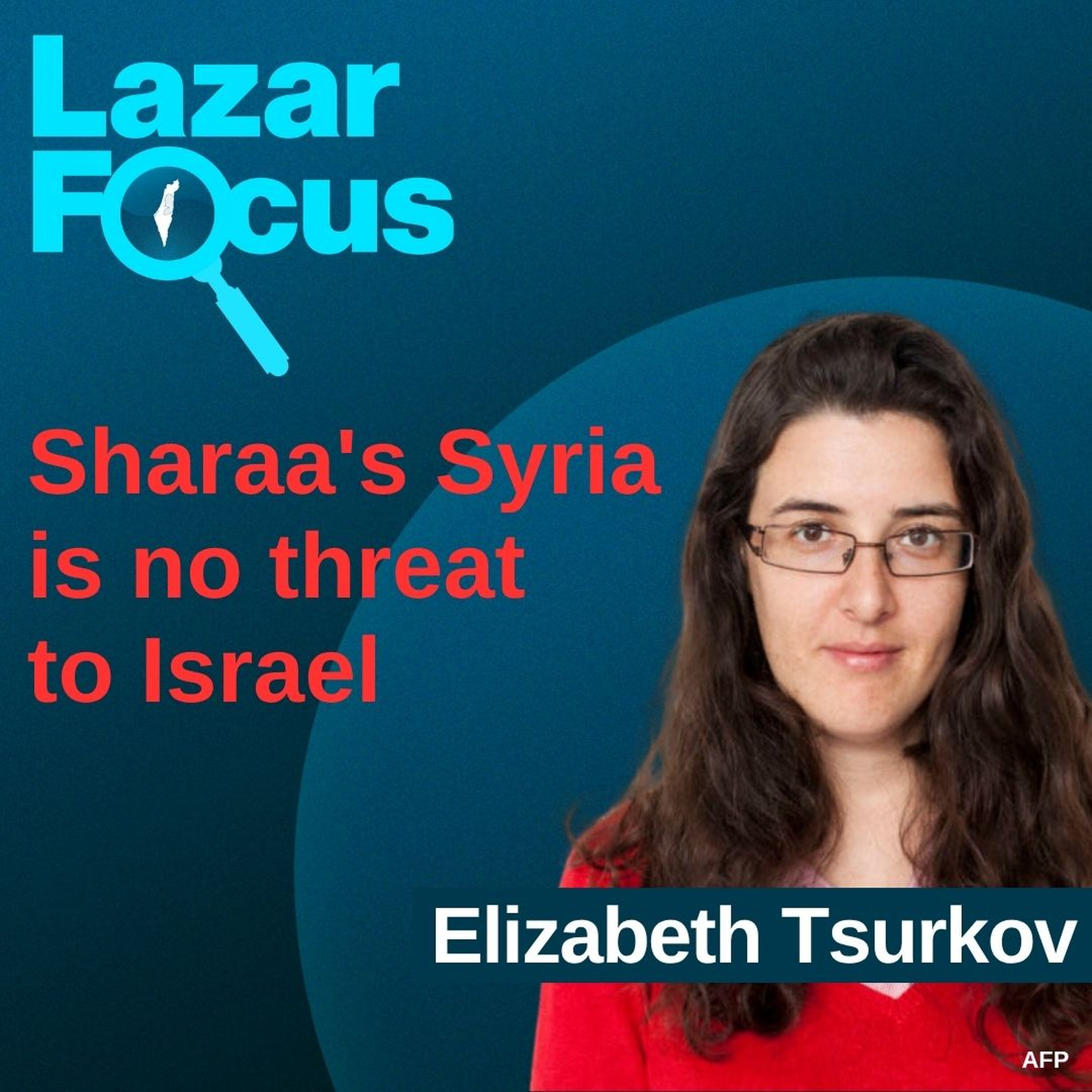
    Elizabeth Tsurkov: Sharaa's Syria is no threat to Israel

    Welcome to The Times of Israel's Lazar Focus. Each Friday, join host diplomatic correspondent Lazar Berman for a deep dive into what's behind the news that spins the globe. Israel and Jews around the world marked three years since the October 7 attacks this week. It was a time to remember the fallen and the survivors. It was also an opportunity to take stock of Israel's conflicts and what Israel should do next. Elizabeth Tsurkov, a PhD student at Princeton and Middle East scholar, says that Israel's approach to Syria and Lebanon needs to be recalibrated. Israel thinks it has a "panacea" in its buffer zones in Lebanon, Syria, and Gaza, she argues. But it's not clear how that solves Israel's challenges, and at least in Syria, it is making Israel less safe. She notes that Hezbollah is a badly weakened force and has lost a lot of legitimacy inside Lebanon. But the Joseph Aoun government is not about to risk domestic tension and even civil war by actually trying to disarm Hezbollah. Israel remaining in Lebanon only weakens the Aoun government further, Tsurkov argues. In Syria, she says, decisions are made by a group of five people, led by President Ahmed Al-Sharaa. They are "deeply, deeply pragmatic," says Tsurkov. They have sacrificed much to reach a position of power, and are not about to throw it away by picking a fight with Israel. However, she warns, Israel is making a major mistake with its buffer zone in Syria. Instead of making the border safer, the IDF presence is antagonizing the locals and will eventually push some toward guerrilla warfare against Israel. Lazar Focus is available on all podcast platforms. This episode was produced by Gabriella Jacobs and video edited by Yitzchak Ledee. See omnystudio.com/listener for privacy information.

  • October 2 · 41 min

    Alan Shatter: Palestine 'cult' endangers future of Irish Jews

    Welcome to The Times of Israel's Lazar Focus. Each Friday, join host diplomatic correspondent Lazar Berman for a deep dive into what's behind the news that spins the globe. It was a stormy week politically in Ireland. It wasn't over an attempted terrorist attack like we had here in Israel this week. It wasn't over the rising cost of energy or immigration, like elsewhere in Europe. It was a soccer match against Israel. That was enough to dominate the country's headlines. How did Ireland become so focused on Israel, and so hostile to the Jewish state? Alan Shatter, a leading Jewish figure in the country and former justice and defense minister, says a pro-Palestine 'cult' has taken over the country's politics. The country has always had a checkered past with its Jews, he said. The Provisional IRA had deep ties with Palestinian terrorists, and their political movement Sinn Fein 'contaminated' Irish politics by putting the Palestinian cause front and center. That obsessive focus has spread from politics across Irish society, Shatter lamented, and now trade unions, teachers, artists, and athletes have significant pro-Palestinian movements. The angst over the soccer match against Israel a new "level of complete and utter absurdity," he said. Now, he said, many Jews are asking whether they have a future in the country in the face of daily abuse online and a toxic environment around Israel. "There's a deep problem here," Shatter said. "It's one the government refuses to recognize. It's one the government is contributing to." Lazar Focus is available on all podcast platforms. This episode was produced by Gabriella Jacobs and video edited by Ari Schlacht. See omnystudio.com/listener for privacy information.

  • September 18 · 32 min

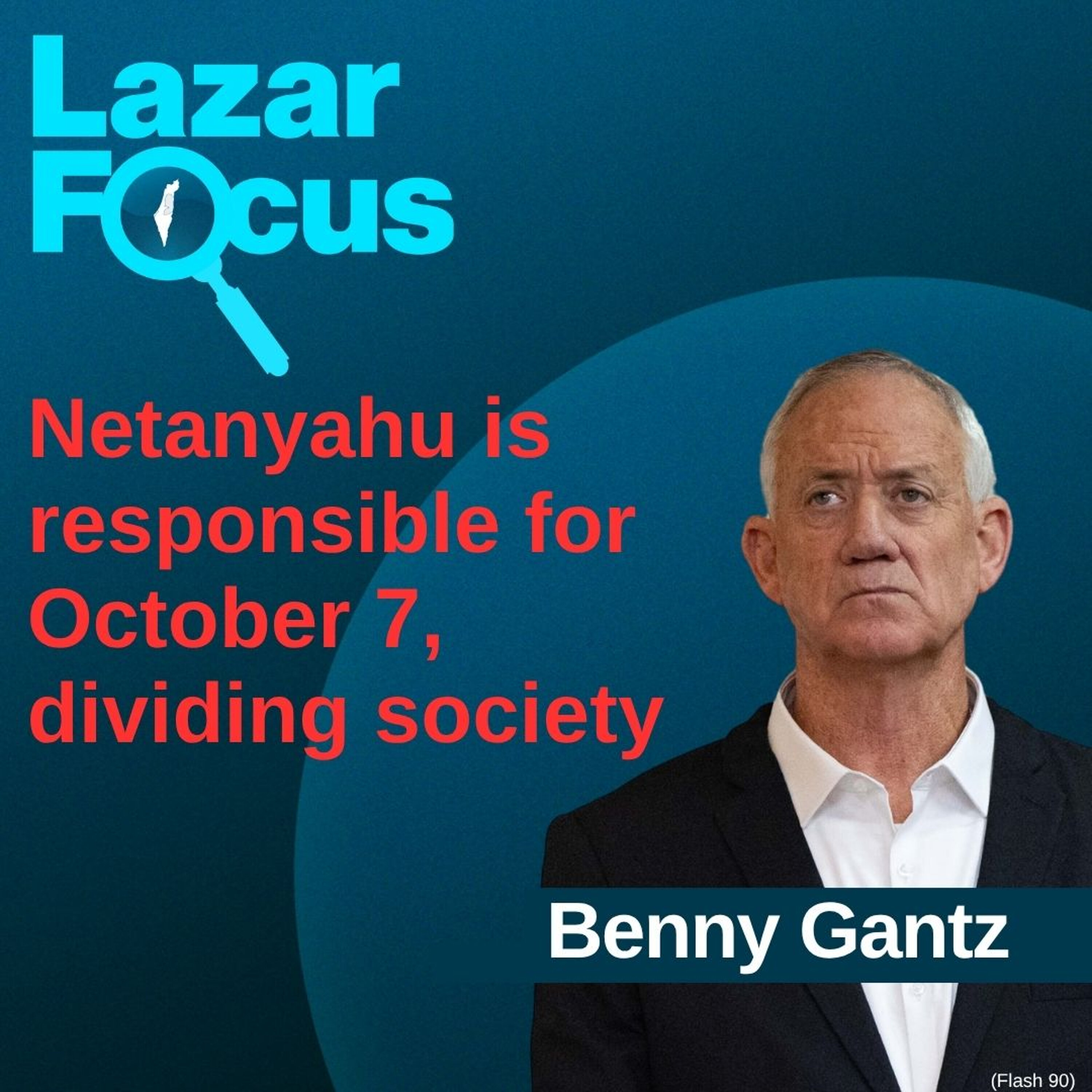
    Benny Gantz: Netanyahu is responsible for October 7, dividing society

    Welcome to The Times of Israel's Lazar Focus. Each Friday, join host diplomatic correspondent Lazar Berman for a deep dive into what's behind the news that spins the globe. Benny Gantz was in the headlines in Israel and often across the globe for the better part of two decades. He was the 20th IDF chief of staff during two major operations against Hamas, was opposition leader, served as defense minister, and for the eight months after October 7, was a senior member in the war cabinet. His fortunes have changed, however, His party is polling well below the electoral threshold, and there are no signs that is about to change. Opposition figures are calling for Gantz to drop out, warning he will waste tens of thousands of votes that could prove decisive in replacing Prime Minister Benjamin Netanyahu. But Gantz insists he is in the race for the long run. Gantz said that he doesn't owe anything to anyone except his own voters. He acknowledges that he won't be prime minister, but says that he can be the bridge between the camps in a broad Zionist unity government. Everything is possible for Israel with a unity government, he said, while no problem can be addressed without one. Netanyahu, he said, needs to be replaced. October 7 was his responsibility, said Gantz, and Netanyahu has also divided Israeli society. He was fairly optimistic about Israel's operations in Gaza, Lebanon, and Iran, saying that Israel cannot allow radical forces to build up capabilities that could be used to attack Israel. Gantz stressed that Israel is not taking revenge in Gaza, but is securing its own future by working to defeat Hamas. Lazar Focus is available on all podcast platforms. This episode was produced by Gabriella Jacobs and video edited by Yitzchak Ledee. See omnystudio.com/listener for privacy information.

  • September 11 · 33 min

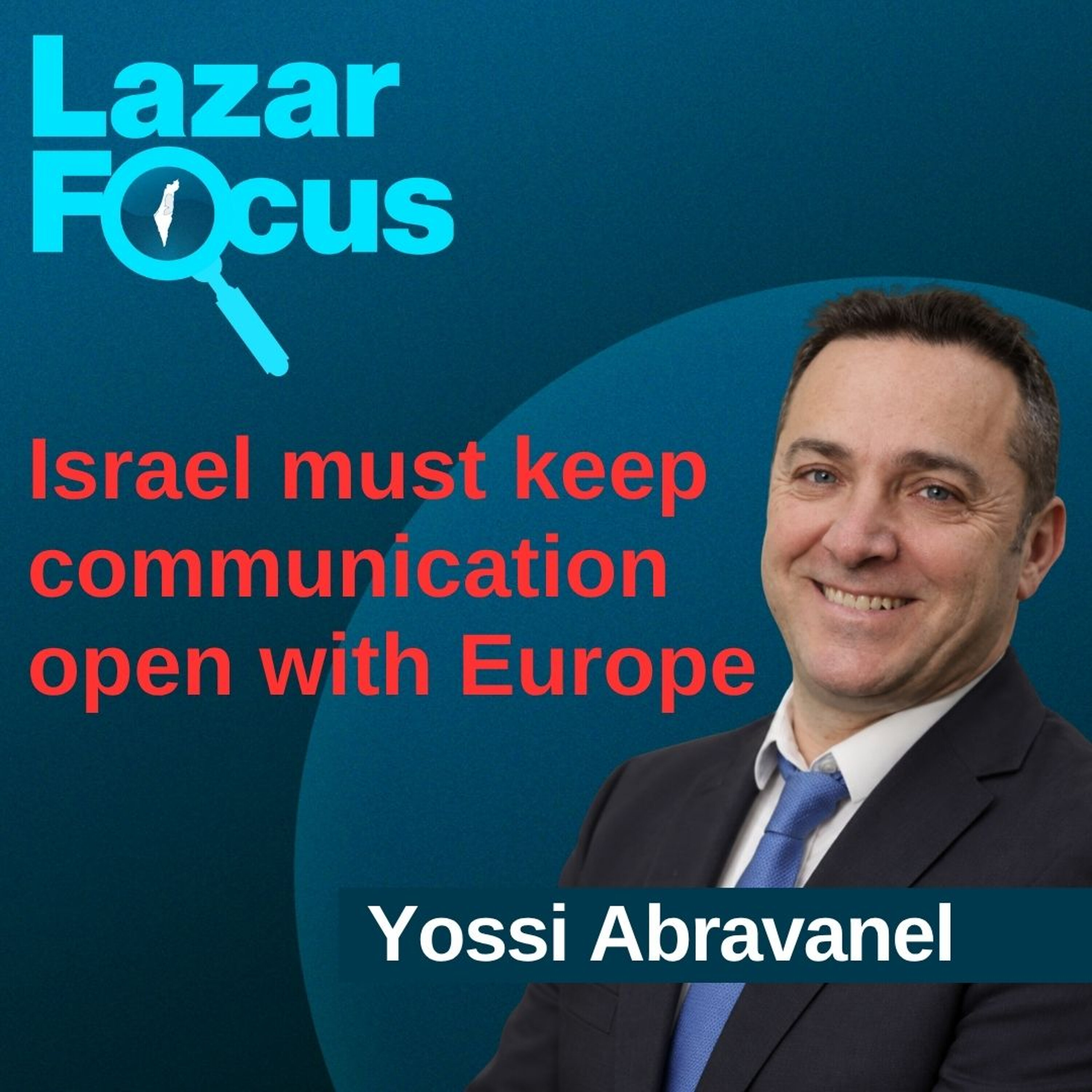
    Yossi Abravanel: Despite sanctions, Israel must keep communication open with Europe

    Welcome to The Times of Israel's Lazar Focus. Each Friday, join host diplomatic correspondent Lazar Berman for a deep dive into what's behind the news that spins the globe. Israel's relationship with the West, especially Europe, took an unhappy turn this week, as UK Foreign Secretary Ed Miliband announced that his country would be imposing widespread sanctions on Israel's settlements. France and Canada said they would impose similar penalties, while other European countries called for EU measures against Israeli settlements. The European Leadership Network, or ELNET, works to improve ties between Israel and Europe. Yossi Abravanel, ELNET Israel's deputy director, joined Lazar Focus to explain why countries are announcing sanctions now, and how Israel should respond. According to Abravanel, domestic politics is the main driver of the decision to impose sanctions on Israeli settlements. He said that countries are willing to harm their own interests to appease anti-Israel voters, and that an advisor to the previous British prime minister Keir Starmer told him as much. He said that Israel should not "go too far" in its response to the sanctions. Europe is Israel's largest trade partner, he stressed. Israel must keep lines of communication with European countries open, and stress that Israel is a democracy fighting for shared values. Encouragingly, Abravanel noted that opposition parties in many countries considered hostile to Israel, including in Spain, pledge that they will overturn anti-Israel moves by sitting left-wing governments. He emphasized that Germany, which opposed the sanctions, works to protect Israel in the EU every day, and Israelis should recognize the lengths to which Germany goes for the Jewish state. Lazar Focus is available on all podcast platforms. This episode was produced by Gabriella Jacobs and video edited by Ari Schlacht. See omnystudio.com/listener for privacy information.
  • August 14 · 33 min

    Bjorn Lomborg: Energy, climate, and the fight for a better world

    Welcome to The Times of Israel's Lazar Focus. Each Friday, join host diplomatic correspondent Lazar Berman for a deep dive into what's behind the news that spins the globe. The US-Israeli war against Iran was initially about military capabilities -- Iran's nuclear program, its ballistic missiles, its armed proxies -- but very quickly became a war about energy. It was Iran's ability to choke global energy supplies that forced US President Donald Trump to effectively stop the war. We also saw how central the flow of natural gas has been to the Ukraine war, as European countries scrambled to replace Russian gas to heat their homes and power their economies. These complex challenges take place as the world tries to come up with a coherent climate policy, something it has struggled to do for decades. Danish political scientist Dr. Bjorn Lomborg, president of the Copenhagen Consensus Center, is one of the world's most original thinkers on these issues. "Energy is prosperity," he stressed. Affordable, available energy has led to humanity's flourishing over the past two decades. Prosperity means you get less sick, you live longer, there is less child mortality, education is better, and you have more personal opportunities. Global warming, he said, is a problem and will have mostly negative impacts. But we must ask ourselves whether we are pushing solutions that will end up doing more harm than the problem we are trying to solve. The conversation, he stressed, must be based on what the UN climate panel actually says. It does not predict the demise of the human race. It does say it can cost 2-3% of global GDP by 2100, meaning it is a problem that needs addressing. But if your solution brings down GDP by 15%, then that is not the correct solution. Climate innovation is the key, which is a low-cost way of getting green energy to be cheaper than fossil fuels. For the foreseeable future, however, we are going to keep relying on fossil fuels. If current trends from 1971 remain the same, we are on track to get off fossil fuels in 1,000 years. The point of public policy, he stressed, "is to leave the world better off in the future. Lazar Focus can be found on all podcast platforms. This episode was produced by Gabriella Jacobs and video edited by Ari Schlacht. See omnystudio.com/listener for privacy information.
  • August 7 · 31 min

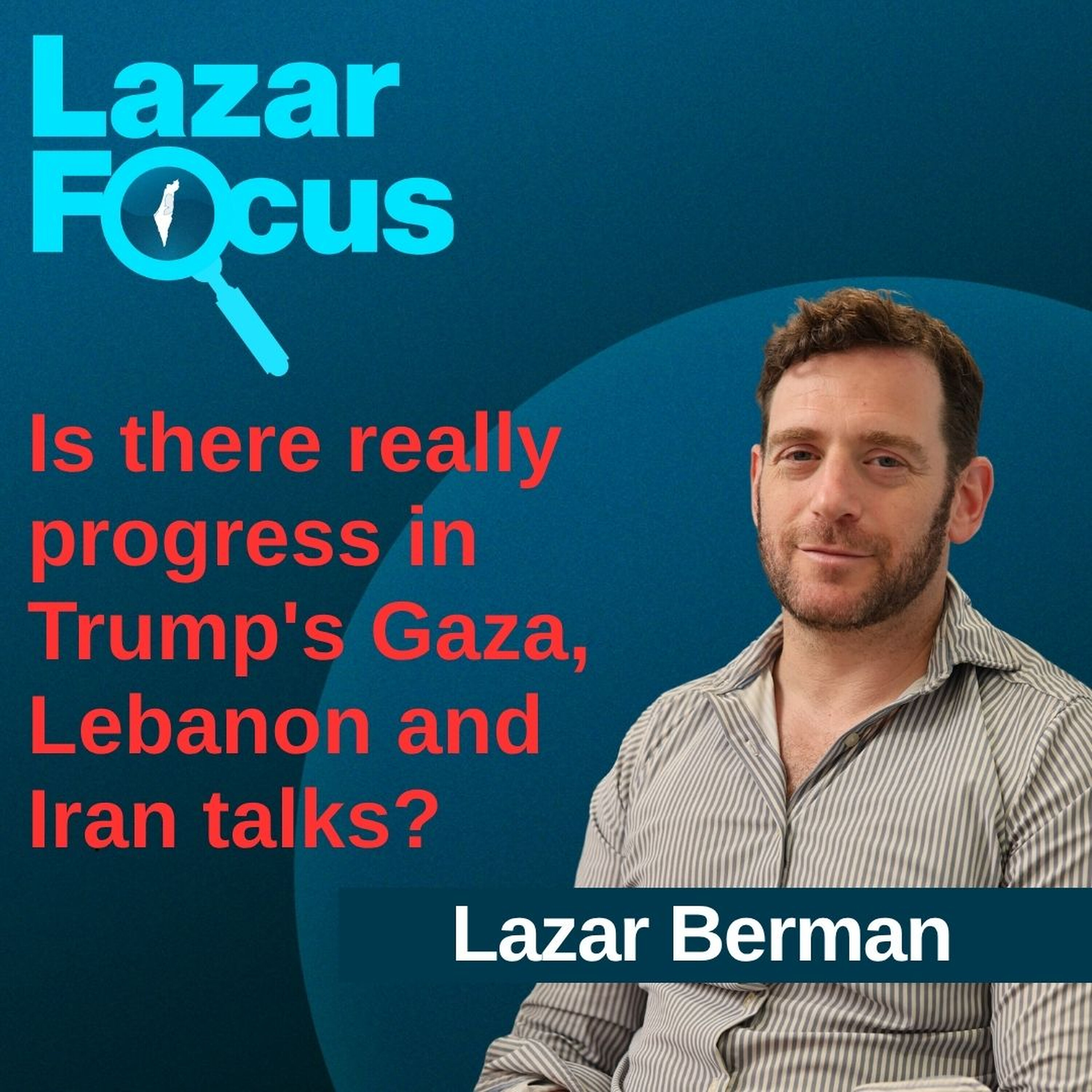
    Is there really progress in Trump's Gaza, Lebanon and Iran talks?

    Welcome to The Times of Israel's Lazar Focus. Each Friday, join host diplomatic correspondent Lazar Berman for a deep dive into what's behind the news that spins the globe. On the three major fronts with which Israel is contending, there has been some progress on the diplomatic front -- with the caveat that not everyone believes that is a good thing. Lazar and Gabriella Jacobs look at the latest in each of the three theaters -- Iran, Lebanon, and Gaza. On Monday, President Donald Trump -- having called off a major joint strike with Israel -- said the US and Iran were in the midst of talks that could see the Strait of Hormuz fully reopened. Lazar argued that because of the November midterms and pressure from Gulf allies, Trump clearly doesn't want to go back to war, and Iran knows it. Tehran is not afraid of another major US campaign, and continues to raise its demands. The diplomatic process in Lebanon is more promising. Israel and Lebanon met in Rome for the seventh round of direct talks this week. Though Lebanon wants Israel to pull its troops back more quickly, the US is not about to pressure Israel to do so. Despite a bloody week in southern Lebanon in which two Israeli soldiers were killed, as well as several Lebanese, the two sides still met. At the same time, Lazar said, this process isn't about to disarm Hezbollah across the country. Major changes will need to take place within Lebanon for Hezbollah to decide that it has failed in its four-decade-long quest to destroy Israel through violence. The Trump Administration and Board of Peace are claiming progress in Gaza, as they convince Hamas to sign on to a new disarmament roadmap. Israel has not ratified it, and insists it will continue to confront active threats. Indeed, Israeli strikes early in the week clearly frustrated mediators. Still, Lazar noted, officials tell him that noticeable restraint from the IDF is helpful, and there is cautious optimism coming from the Board of Peace. Gabriella asked if the three diplomatic processes are linked. Lazar explained that Iran has been trying to unify the fronts against Israel, and situate itself as the arbiter of what happens in Lebanon, and maybe someday, in Gaza. Israel has successfully de-linked the fronts, while stressing that if the Islamic Republic falls, Hezbollah and Hamas are likely to follow. Lazar Focus can be found on all podcast platforms. This episode was produced by Gabriella Jacobs and Yitzchak Ledee and video edited by Ari Schlacht. See omnystudio.com/listener for privacy information.

  • July 31 · 50 min

    Victor Davis Hanson: Trump must set up an Iranian government-in-exile

    Welcome to The Times of Israel's Lazar Focus. Each Friday, join host diplomatic correspondent Lazar Berman for a deep dive into what's behind the news that spins the globe. This week, we want to take a broad look at the direction of US foreign policy. How does domestic politics affect America's ability to wage war? Is a moderate bump in gas prices enough to keep US President Donald Trump from achieving his goals against Iran? What changes after the midterms? We also want to examine the nose-dive in support for Israel among Democrats, and the rise in antisemitism on the right wing of the Republican Party. Prof. Victor Davis Hanson is one of the most prolific and well-known American historians. Trained as a classicist, he has written extensively on ancient and modern warfare. He also has unique insights into the currents driving US politics. Hanson said that midterm elections often warp foreign policy. The incumbent party almost always loses, and with the Republicans holding a thin lead in the House of Representatives, they are in serious danger of losing the House. If that happens, said Hanson, Trump will face two years of impeachment hearings. In addition, said Hanson, Americans are willing to support military action, but run out of patience quickly. "They don't mind the violence," he said. "They don't mind, to be frank, how many people you kill. They don't want to lose any Americans, but they want it short, and out of the Middle East especially." Hanson pointed out that Democratic Socialists have only won a few elections in deep blue states thus far, and they are not the inevitable future of the Democratic Party. Both parties have had fringe outliers that damage their chances, only to have course corrections in subsequent cycles. What is unique about the Democratic Socialists phenomenon, he says, is that it is combined with an Islamist element: "What unites them is they hate Western civilization. They hate capitalism, even though they do quite well by it. They hate Israel. And I'll be candid. I think they hate Jews as well." He argued that on the right, the Republican Party and broader conservative movement are pushing back on their antisemitic fringe. Vance, said Hanson, is "brilliant." He sees that Marco Rubio's star is rising and is trying to find a way to position himself as the party's frontrunner. Vance's way to do so, said Hanson, is to appeal to the disaffected working-class whites he grew up around. On Iran, Hanson stressed that the people leading the regime are fanatics. What the US should do is create a transitional government in exile in a nearby Arab country and send frozen regime funds to that body. "Sow the seeds of dissension and let it work like that," Hanson urged. "But I don't think we need to talk to them anymore. It's completely futile." Overall, he said Israel is in a strong position diplomatically and militarily, while Iran is weaker than many realize. Russia and China are also slipping economically and demographically, while the US is squeezing them out of places like South America. Hanson argued that prioritizing the Palestinian cause is a "Western elite fetish in Europe and the United States." Finally, with one of the world's leading classics scholars on the show, how could we not discuss Christopher Nolan's The Odyssey? Hanson called it "a spectacularly produced film, special effects, and he encouraged people to take an interest in Homer. But "it's really not Homer's Odyssey. I would call it a diverse, equitable and inclusive Odyssey, a DEI Odyssey." Lazar Focus can be found on all podcast platforms. This episode was produced by Gabriella Jacobs and video edited by Ari Schlacht. See omnystudio.com/listener for privacy information.
  • July 24 · 31 min

    Israel should worry about Saudi deal, but there is good news in Lebanon

    Welcome to The Times of Israel's Lazar Focus. Each Friday, join host diplomatic correspondent Lazar Berman for a deep dive into what's behind the news that spins the globe. Even for Israeli standards, it's been a pretty wild week in Israel's neighborhood. The ceasefire war between the US and Iran continues to escalate. The threats from US President Donald Trump against Iran grow ever more bombastic, but there is a real feeling that he might carry out a significant attack soon that goes well beyond the limited strikes that we have seen over the past two weeks. Of course, Iran is hitting back, primarily at Kuwait, Bahrain, and Jordan, saying it is targeting US bases in those countries. The Iran-backed Houthis struck two Saudi oil tankers, as that conflict begins to heat up. Houthi threats to the Bab al-Mandeb would mean the Iranian axis is closing the two waterways connecting the Middle East and Europe to Asian markets. There was slightly better news to the north. After six rounds of direct talks and an agreement that envisions peace between Israel and Lebanon, Lebanese forces began moving into the first pilot zone vacated by Israeli forces. Joined by Times of Israel colleague Nava Freiberg, Lazar made sense of the interconnected but distinct theaters that Israeli leaders and citizens are paying close attention to. He explained what Iran is trying to do with its attack on Arab countries. It is determined to impose its reading of the MOU on the world, especially as it comes to control over the Strait of Hormuz. That is why it hasn't hit Israel. Iran knows that Israel, Lazar said, isn't about to run to Trump and ask him to give in to Iran's demands to get it stop firing. Instead, Israel would relish the opportunity to carry out some of the attacks that it had to call off in April, and would likely go well beyond what the Americans are doing. It doesn't make sense for Israel to go out of its way to get involved either. For now, Iran is being degraded, it isn't getting economic relief, and Trump is becoming increasingly frustrated with his Iranian interlocutors. Meanwhile, life is fairly normal in Israel, with flights returning to Ben Gurion Airport and citizens focusing on the election fight. Lazar also shed light on alternative energy pathways being developed in the wake of Iranian threats to the Strait of Hormuz. Israel might have an opportunity to be key element of some of these plans, but it has to change the tenor of relations with some of its Arab partners. Lazar explained why the Saudi-US nuclear deal is a problem for Israel. First of Israel, it shows that Israel is not being consulted by the White House on strategic decisions. In addition, it represents a potential proliferation risk, especially if the current regime in Riyadh is replaced. Turning to Lebanon, Lazar said that progress on the first pilot zone is undoubtedly a positive step. Still, the Lebanese army is incapable of taking on Hezbollah at this stage, and a lot will have to happen before disarming Hezbollah is a likely outcome. It will be important to help the Lebanese government show the public that negotiations with Israel achieve results, especially the return of some civilians to their homes. Lazar Focus can be found on all podcast platforms. This episode was produced by Gabriella Jacobs and video edited by Ari Schlacht. See omnystudio.com/listener for privacy information.

  • July 17 · 28 min

    Nicholas Carl: US and Iran are now in the Battle of Hormuz

    Welcome to The Times of Israel's Lazar Focus. Each Friday, join host diplomatic correspondent Lazar Berman for a deep dive into what's behind the news that spins the globe. The ceasefire war between the US and Iran continues to expand. Instead of making do with a wildly favorable memorandum of understanding signed by US President Donald Trump, Iranian leaders want more -- especially recognition of their control over the vital Strait of Hormuz. Nicholas Carl, assistant director for the American Enterprise Institute's Critical Threats Project, said that the current fighting should be understood as the next stage in the US-Iran war -- namely, the Battle of Hormuz. Carl noted that the US and Israel achieved extensive military success in their campaign against Iran's ballistic missiles, nuclear program, conventional forces, defense industry, and leadership. But that military success has not been translated into enduring strategic success. "We haven't compelled the Iranians to accept a positive political outcome for us yet," said Carl. "They're still willing to fight." The Iranians came dangerously close to imposing their will on Trump, and winning the war, he argued, as the president halted the campaign and signed an MOU that came under withering criticism even from his allies. Iran is now trying to make its victory permanent, said Carl, and is working to press its advantage and end the war with its maximalist demands met. Iran is seeking to destabilize energy markets sufficiently to convince Trump that ongoing war is too costly, both economically as well as politically, and that he should accept a permanent agreement that is even more advantageous to Iran. If the war ends with Iran receiving significant financial relief and in formal control of Hormuz, he said, it will have won the war. That would certainly contribute to regime stability, but it is impossible to predict how long it will last. Something must give, argued Carl -- either the regime or the people. The regime might fall under ongoing cycles of mass protest. But it could also become even more repressive, turning into a Middle Eastern North Korea. Alternatively, it might fracture into ethnic enclaves, much like Syria. Carl said the reported Mossad plan to install former Iranian president Ahmadinejad as the leader of a new Iran is a bit far-fetched in terms of its chances for success. On the US-Israel partnership, there are certainly new forces in American politics challenging the relationship, but both countries must recognize that they're stronger together against actors like Iran. In the meantime, he said, the war between the US and Iran "is going to keep on going until one side has outlasted the other." Lazar Focus can be found on all podcast platforms. This episode was produced by Gabriella Jacobs and video edited by Ari Schlacht. See omnystudio.com/listener for privacy information.
  • July 10 · 38 min

    Eyal Hulata: What’s next in the fight against Iran

    Welcome to The Times of Israel's Lazar Focus. Each Friday, join host diplomatic correspondent Lazar Berman for a deep dive into what's behind the news that spins the globe. A few short weeks ago, US President Donald Trump signed a memorandum of understanding with Iran that was widely panned, especially in Israel. The bizarre agreement met none of the US or Israel war aims, extracted no concessions from Iran, and even gave it effective control over the fighting in Lebanon. Predictably, the MOU hasn't led to anything like peace. This week, Iran launched attacks on civilian ships in the Strait of Hormuz, leading to US strikes, followed by Iran launching drones and rockets at Kuwait, Bahrain, and Jordan. Is the Trump MOU dead? If it's not, how should Israel ensure that its goals are met, even if returning to war in the short term is not possible? And what does this mean for Israel's fight against Iranian proxies on its borders? Dr. Eyal Hulata, a veteran of Israel's security services, served as National Security Adviser in the previous government under Naftali Bennett and Yair Lapid. As the figure who led Israel's inter-agency effort to confront the Iranian threat, Hulata is uniquely positioned to discuss Israel's long fight against the Islamic Republic. He said that Israelis should be proud of the effectiveness and accomplishments of the two air campaigns against Iran, which pushed back the Iranian nuclear program significantly. However, said Hulata, as long as the regime controls Iran, it will be almost impossible to solve the Iranian problem. Even though the US and Iran failed to topple the regime, Hulata stressed that the country is being led by new figures, and it is too early to say whether they will be more hardline than their predecessors. Regardless of the disappointing way the campaign ended, Hulata noted, what is important now is to look toward the next phase of the struggle against the Iranian threat. Iran's military and defense industry were badly degraded, but those achievements will be temporary if they are not followed up by ongoing pressure, sanctions, and intelligence operations. Israeli intelligence must remain intensely focused on Iran's nuclear sites, he said, in order to detect any attempts to return to nuclear enrichment. Israel will have to respond to such a development, Hulata emphasized. Ballistic missiles will continue to not only be a threat to Israel, but also to Iran's Arab neighbors. Israel must ensure that Iran's missile stockpile doesn't become too large for Israeli multi-layered air defenses, said Hulata. Any deal reached between Trump and Iran, even if that is unlikely, must not give Iran anything they don't have right now, said Hulata. Iran has not been able to enrich uranium for over a year, he noted, and should not be given permission to do so in an agreement. However, Iran will not make any concessions unless they are pressured into doing so, Hulata emphasized. "We shouldn't buy into this narrative that they have won in this military conflict," said Hulata. "They've suffered unprecedented amounts of of of damage, direct losses and indirect losses. The only way that they can recover from this is through the waivers that an American president will give them in exchange for a negotiated agreement." "This is why it is important that this negotiated agreement demands substantial outcomes," he continued. "Otherwise will be just kicking the can down the road and this will not be good in the long term." Turning to Lebanon, Hulata said the agreement signed with Beirut is the right approach, though Israel should not give anything up that compromises its security. The Lebanese government understands the Hezbollah threat, he said, but lacks capacity. In order for it to succeed, Beirut needs to commit to pushing back militarily against Hezbollah, with the firm backing of international partners. At the same time, Iran's financial support for Hezbollah must be cut off. On Syria, Hulata said that while Ahmed al-Sharaa is a jihadist, he shares the Israeli interest in reducing Iran's influence in Syria. At the same time, Turkish influence there is a serious problem, and Israel needs to keep a close eye on a growing threat from Ankara. Hulata said that while Israel could have done much more to break Hamas rule in Gaza, its best move now is to stick with Trump's 20-point plan, while bringing in partners like the UAE and Saudi Arabia. "Hamas is way weaker than it was before," Hulata said. "Hamas is disconnected from external lifelines of support. There is an ability to have a civilian rule in Gaza that would take power from Hamas and push it away." That would take creating safe civilian areas in the Israeli-controlled parts of Gaza in order to create new conditions in Gaza. Lazar Focus can be found on all podcast platforms. This episode was produced by Gabriella Jacobs and video edited by Ari Schlacht. See omnystudio.com/listener for privacy information.
  • July 3 · 30 min

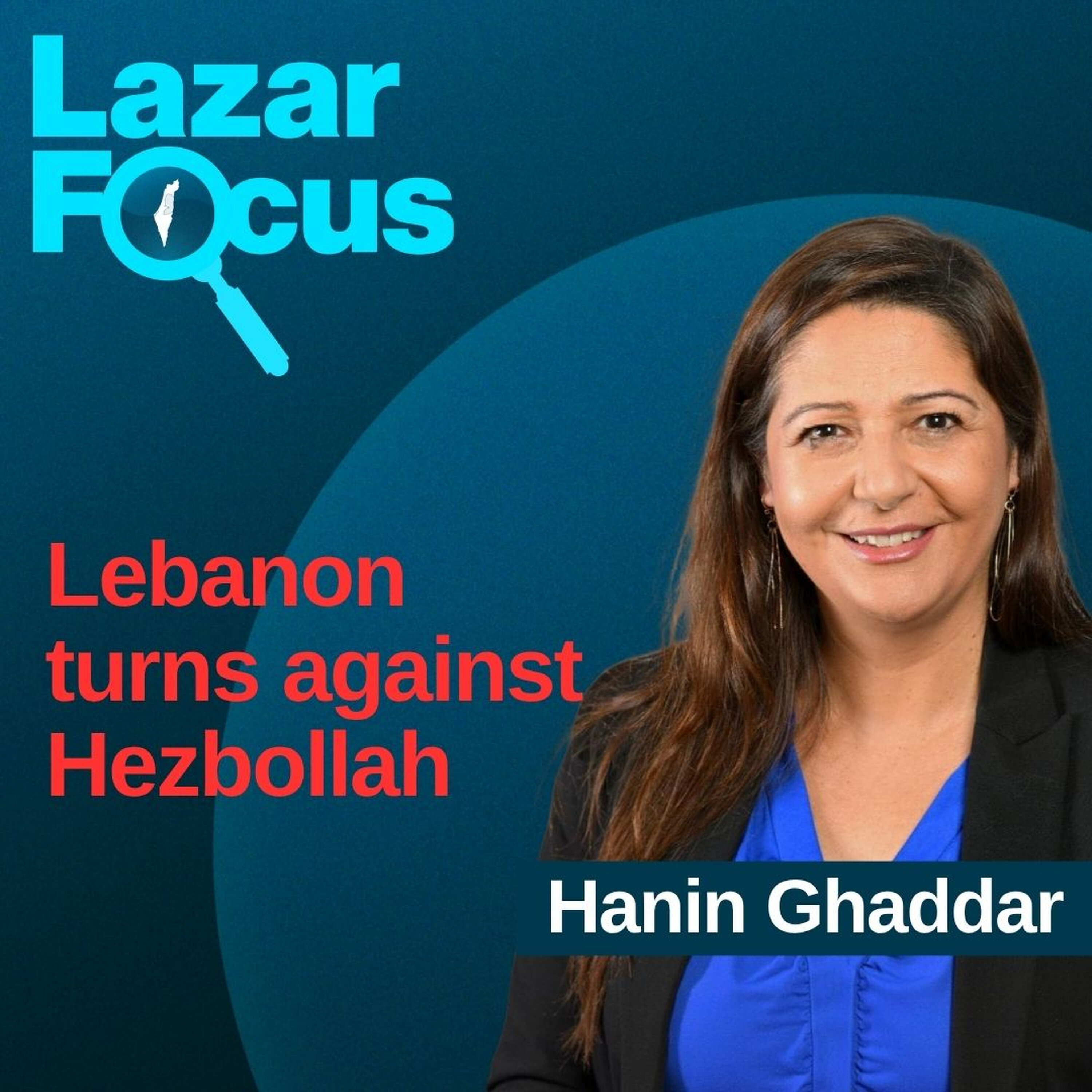
    Hanin Ghaddar: Lebanon turns against Hezbollah

    Welcome to The Times of Israel's Lazar Focus. Each Friday, join host diplomatic correspondent Lazar Berman for a deep dive into what's behind the news that spins the globe. Israelis and many Americans -- not to mention Gulf Arabs -- were stunned by the Memorandum of Understanding signed between the Trump administration and the Iranians last month. There was much to criticize in the MOU, but one of the most egregious elements was the inclusion of Lebanon in the ceasefire deal. Although neither Israel nor the Lebanese government were signatories to a deal between Washington and Tehran, it specifically mandated a halt to Israel's campaign against Hezbollah, Iran's most powerful proxy. Then, last Friday, a reason for some hope. As a beaming US Secretary of State Marco Rubio looked on, the Israeli and Lebanese ambassadors to Washington signed an agreement envisioning peace between the neighbors and the staged disarming of Hezbollah by the Lebanese army. Could this be the beginning of the end for Hezbollah, the tool of Iranian control of Lebanon? Can we expect a real peace deal that would see Israelis and Lebanese moving across the border? Or is this another half-baked Trump agreement that will lead nowhere, and will allow Israel's enemies to rebuild and keep their weapons? Hanin Ghaddar, a Shiite Lebanese scholar who grew up in southern Lebanon, says that even her community is sick of Hezbollah. The turn against the organization -- which claims to represent and protect the Shia -- began a decade ago, as they sided against anti-government protestors. With the country in a deep economic crisis and political stalemate, the organization dragged the country into war on October 8, 2023, in support of Hamas. The majority of Shiites in Lebanon, said Ghaddar, are done with Hezbollah. "The resistance is dead as a solution to everything," she posited. There's no belief in the resistance anymore. Hezbollah is still there with its arms, and people relate to it because of the factor of fear, not loyalty." Hezbollah dragged Lebanon into a war in support of Iran again this year. Lebanese citizens want Israel out, but see an agreement as the way to accomplish that goal. Ghaddar offered the possibility that the notoriously ineffective Lebanese military is actually more capable than Hezbollah after the Shiite militia was severely degraded by years of war with Israel. However, to disarm Hezbollah, she said, the Lebanese army must be willing to engage in armed conflict if necessary, with the backing of the US, Europe and Saudi Arabia. She made the point that while Israel's relationships with Arab countries are with their governments, the public continues to disdain the Jewish state. In Lebanon's case, the public wants an end to the conflict with Israel, while governments have been loath to act. "Lebanese are ready," she said. "Lebanese are definitely ready for peace." Lazar Focus can be found on all podcast platforms. This episode was produced by Gabriella Jacobs and video edited by Ari Schlacht. See omnystudio.com/listener for privacy information.

  • June 12 · 34 min

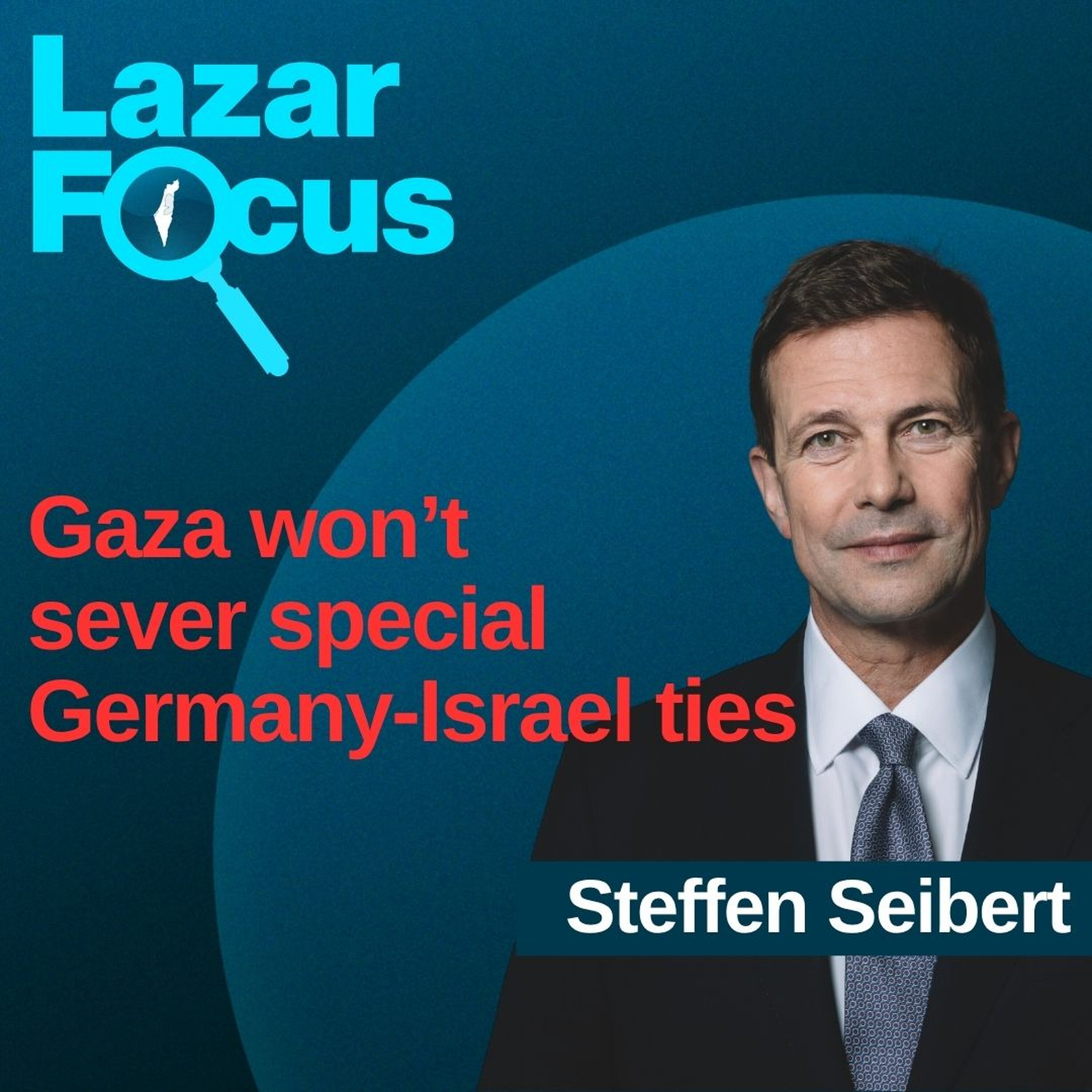
    Steffen Seibert: Gaza won’t sever special Germany-Israel ties

    Welcome to The Times of Israel's Lazar Focus. Each Friday, join host diplomatic correspondent Lazar Berman for a deep dive into what's behind the news that spins the globe. Last week, Germany failed to secure a temporary seat on the powerful United Nations Security Council. There were several theories about the reason for Berlin's failure, but Foreign Minister Johann Wadephul offered a striking one — that it could be that Germany's support for Israel cost it the coveted seat. Germany is indeed one of Israel's closest allies in the world, and has been for decades. At the same time, the special relationship Israel enjoys with Berlin -- like its ties with other key allies -- has come under strain in the wars it has pursued in the wake of the October 7, 2023, Hamas attacks. In August 2025, Germany announced a partial arms embargo on Israel over its decision to conquer Gaza City. To discuss the roots and the state of the Germany-Israel relationship, German Ambassador Steffen Seibert joined the podcast, weeks before he wraps up his four-year tenure and returns to Berlin. He rejects the idea that Germany's approach to Israel is guided by "Holocaust guilt." Instead, he says that the Shoah is a compass for Germany, which has the responsibility to learn the appropriate lessons from that dark period and let them guide its foreign policy. Seibert stresses that the Germany-Israel relationship is also rooted in shared democratic values and common interests. At the same time, he emphasizes that the special relationship exists within the pre-1967 borders, and that it sees Israel's presence in the West Bank as a violation of international law. On the war in Gaza, Seibert calls Israel's military response "inevitable and logical." Still, he says, there are questions over "how it was fought, how long it was fought." Still, he says that Hamas bears the main responsibility for the plight of Gazans. Seibert explains that Germany's decision not to intervene on Israel's behalf in the ICJ genocide case against Israel is a tactical move, as Berlin faces its own charges over its support for Israel: "It changes the assessment that we took at the beginning of the conflict. It's to do with the court case that we find ourselves in." Turning to the Iran war, Seibert says the Israeli-US campaign was "definitely understandable," but that continued fighting won't achieve much, and that it is now time to turn military gains into a political arrangement. Seibert, who learned Hebrew during his tenure, says that he is not sure what he will do next, but intends to continue spending time in Israel while he works to "reinvent" himself in the next phase of his career. Lazar Focus can be found on all podcast platforms. This episode was produced by Gabriella Jacobs and video edited by Ari Schlacht. See omnystudio.com/listener for privacy information.
  • May 15 · 30 min

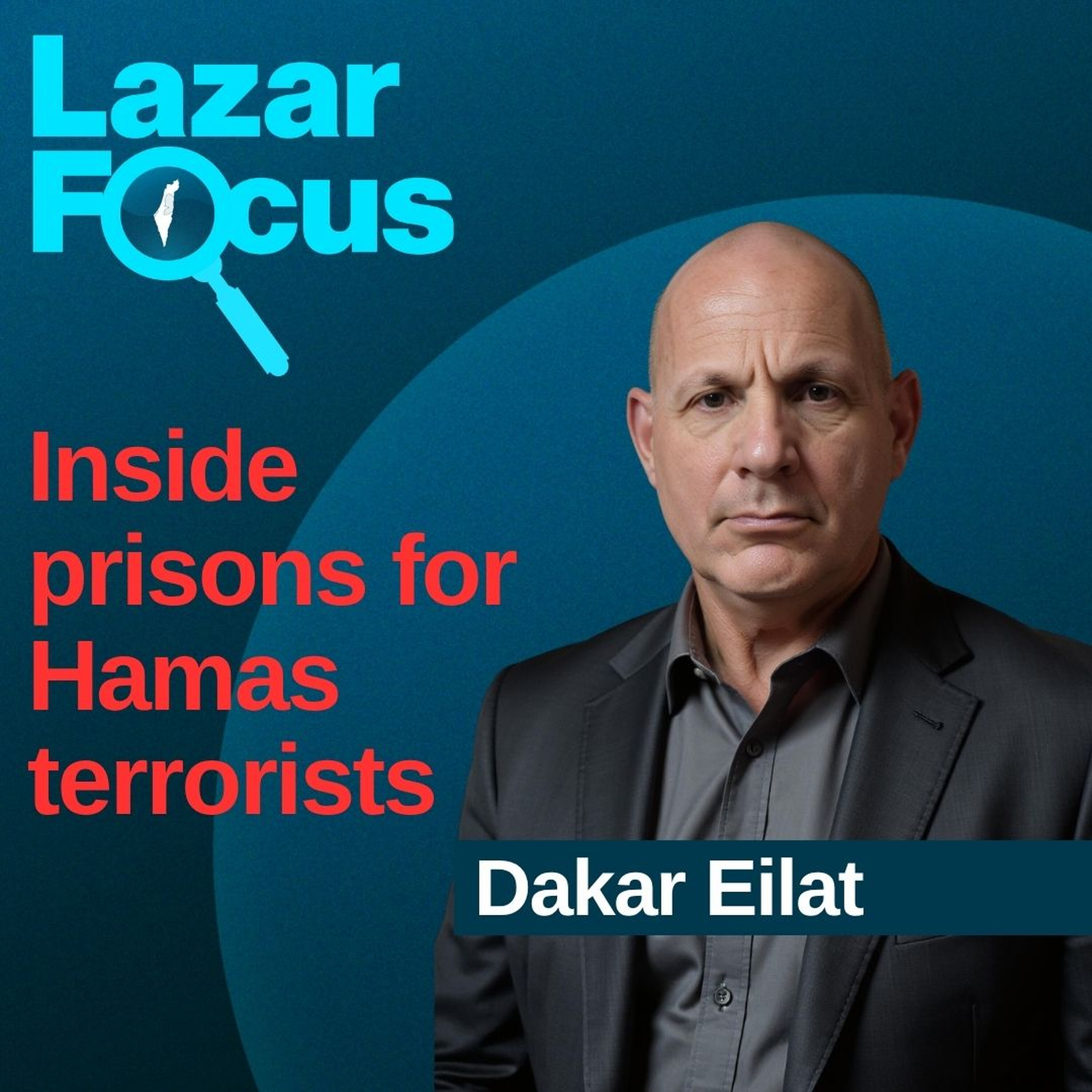
    Dakar Eilat: Inside prisons for Hamas terrorists

    Welcome to The Times of Israel's Lazar Focus. Each Friday, join host diplomatic correspondent Lazar Berman for a deep dive into what's behind the news that spins the globe. The New York Times printed a bombshell accusation against Israel this week. An op-ed by columnist Nicholas Kristof alleged widespread sexual abuse and rape against Palestinian prisoners. The column alleged “a pattern of widespread Israeli sexual violence against men, women and even children — by soldiers, settlers, interrogators in the Shin Bet internal security agency and, above all, prison guards.” Palestinians quoted in the piece said they’d even been mounted and raped by specially trained dogs. Israel called the article “one of the most hideous and distorted lies ever published against the State of Israel," and promised to sue the NYT. Some of the more extreme claims seem highly unlikely, to say the least, but could a group of guards -- or a prison commander -- be abusing prisoners in violation of the law? Israel's Prison Service is not a well-understood security organization, as bodies like the IDF, the Shin Bet, Mossad, and police garner far more attention. But IPS holds thousands of hardened terrorists from groups like Hamas and Palestinian Islamic Jihad, and is an important part of the fight against those organizations. To better understand the IPS, its oversight, and how prisoners are treated, we speak to Col. Dakar Eilat, who ran two prisons in Israel. He explains the changes in the prison service's approach to terrorist prisoners that took place two decades ago, removing their ability to order terror attacks from inside prison, and then again after the October 7, 2023, Hamas terrorist attacks. There is no question that after October 7, conditions for terrorists have been reduced to the minimum required by law, he says. But guards can't do whatever they want. Everything that happens in prison is recorded by cameras, says Eilat, with footage then sent to prison service headquarters. Eilat shares some of his personal experiences as a prison commander and the use of force. He says that one of his predecessors had been caught using illegal force on prisoners, and the prison commissioner brought him in to end the phenomenon. That doesn't mean that prisoners were treated lightly. There were strip searches of prisoners, and if they resist with force, "they will be met with force," says Eilat. Still, there are multiple oversight mechanisms, he says. Some 130 organizations -- both Israeli and international -- carry out inspections and oversight of prisons, and during some weeks, he had 5 snap inspections of his prisons. As for the NYT allegations, he calls them "bullsh*t". He says that -- beyond the cameras -- doctors in prisons have an independent chain of command and reporting mechanism, and they would catch signs of abuse. Dog training is overseen by animal rights groups, and official investigations of the prison service are carried out by the Justice Ministry and the police. Covering up systematic abuse like that described in the Kristof piece would take hundreds of conspirators, says Eilat. Lazar Focus can be found on all podcast platforms. This episode was produced by Gabriella Jacobs and video edited by Ari Schlacht. See omnystudio.com/listener for privacy information.
  • May 8 · 42 min

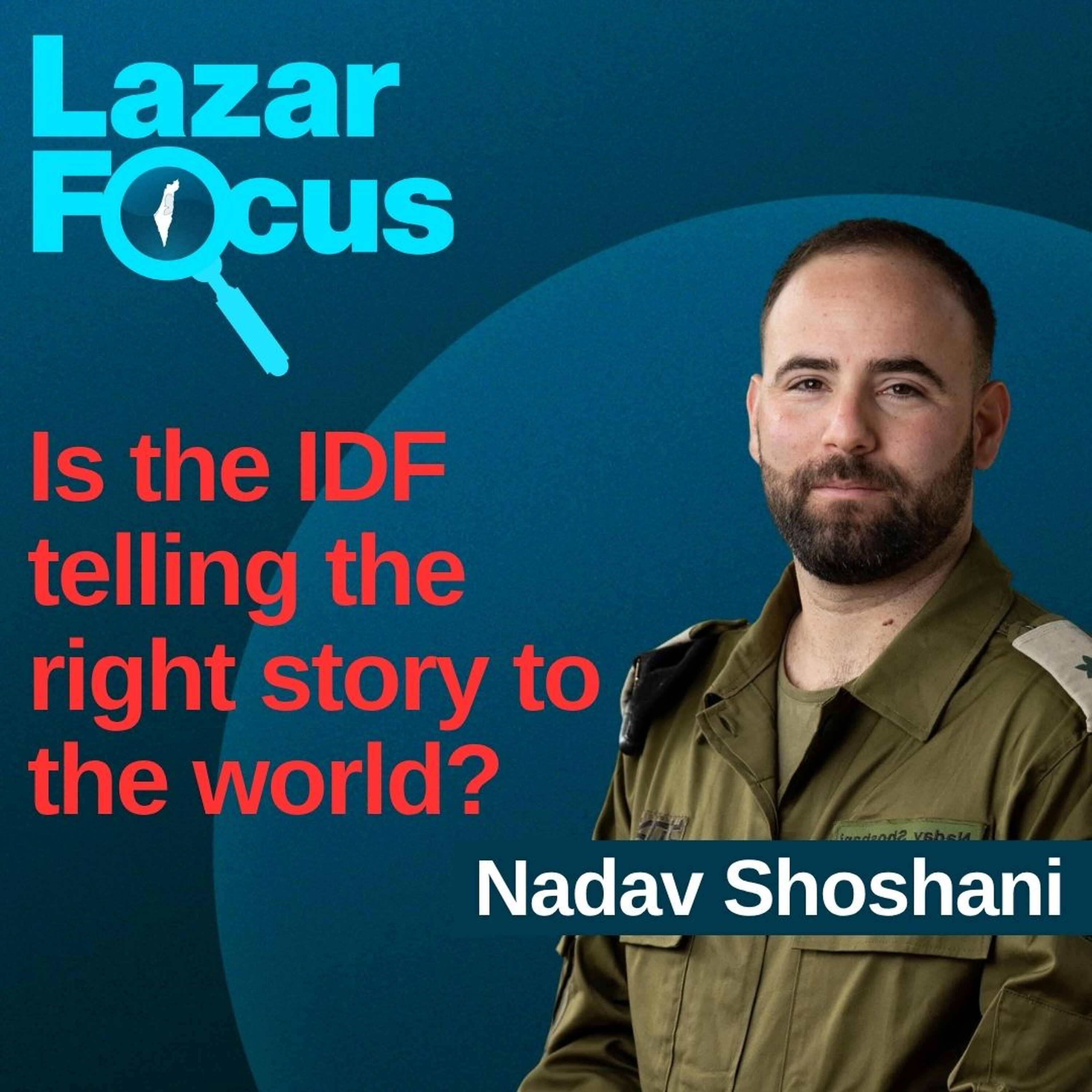
    Is the IDF telling the right story to the world ?

    Welcome to The Times of Israel's Lazar Focus. Each Friday, join host diplomatic correspondent Lazar Berman for a deep dive into what's behind the news that spins the globe. Israel has had a rough time of it on the international stage since the Hamas invasion of October 7, 2023 and the subsequent wars. Allegations of collective punishment, genocide, and targeting of religious sites have been made by some of Israel's closest allies, and support for the Jewish state is plummeting in the West. Much of the criticism leveled at Israel, justified or not, revolves around what the world sees from the battlefield. The IDF has a large, well-oiled public communications machine. The IDF Spokesperson's Unit does things other militaries can only dream of. At the same time, there is a feeling in Israel and among its friends that the IDF is too slow and bureaucratic to effectively get its message out in the age of social media and AI. LTC Nadav Shoshani, who returned to active duty in the wake of October 7, argues that despite Israel's inherent disadvantages, the IDF is effectively communicating to the world. In an interview the day before he steps down as the IDF's international spokesman, Shoshani reveals his approach to speaking to the world about the war in Gaza. He admits that Israel's reputation is at a nadir and that the problem must be dealt with. Yet he stresses that Israel is facing structural disadvantages. Much of the world simply doesn't like war. Israel's enemies aren't held to the same standard of truth and accuracy, which allows them to quickly spread lies while Israel is still carrying out investigations. Shoshani lays out some of the lessons he's learned in the position. Israel has to fill information vaccuums, he says, even if it is a message that the country is investigating the incident at hand. He also opened many new social media accounts, in order "to be everywhere and to be active everywhere." Pressed on the persistent problem of IDF soldiers posting problematic content on social media, Shoshani says that he has invested significant effort into confronting the problem, with tangible results. "They understand what's happening," says Shoshani. "They're more sensitive. It's still not where we want it to be, but it is much better." Shoshani takes listeners back to key episodes in the Gaza war like the 2025 announcement by Defense Minister Israel Katz that nothing would be going into Gaza, and the GHF aid site fiasco in which Gazans were killed nearly daily around the food distribution sites. He says that the IDF has acted properly around prisoners taken from Gaza. Shoshani visited the Sde Teiman base, and says Hamas terrorists there are receiving food and medical care, and that there are lawyers on site to make sure the guards adhere to the law. Shoshani also argues that the IDF is doing everything it can to combat settler violence in the West Bank: "We see this as a core mission. Our mission in Judea and Samaria is to keep stability and to keep safety for all the people living in that area, to make sure there is no violence." The military recognizes the problem, he says, and is dealing with it, but that it takes time. Lazar Focus can be found on all podcast platforms. This episode was produced by Gabriella Jacobs and video edited by Ari Schlacht. See omnystudio.com/listener for privacy information.
  • April 24 · 41 min

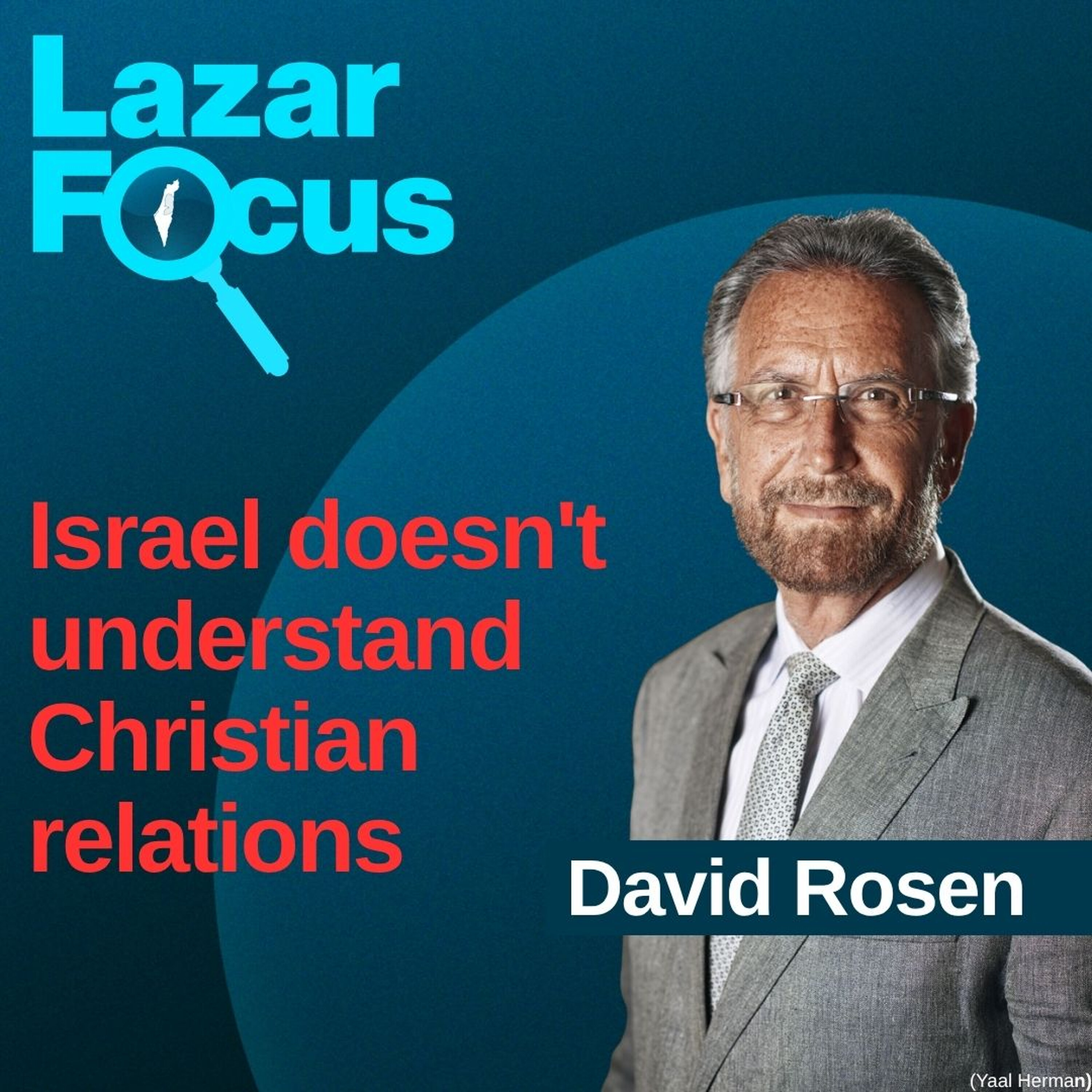
    David Rosen: Israel doesn't adequately understand Christian relations

    Welcome to The Times of Israel's Lazar Focus. Each Friday, join host diplomatic correspondent Lazar Berman for a deep dive into what's behind the news that spins the globe. The world, and most Israelis, were horrified this week as a photo of an IDF soldier smashing a statue of Jesus in Lebanon spread across social media. The act was roundly condemned by the army and by Israel's leaders. Yet, it happened. And it wasn't the first time Israeli soldiers had disrespected Christian sites in Lebanon, nor was it the only instance of Israel drawing the ire of Christians around the world. Rabbi David Rosen is a leader in Israeli and Jewish ties with Christians, especially the Catholic Church. Drawing on decades of experience, including numerous meetings with popes, he lays out the moral reasons for investing in ties with the Christian world, and why it is in Israel's national interest to get these relations right. He calls the modern Catholic Church a "loyal friend to the Jewish people," marking the "most dramatic transformation in the course of human history." The vast majority of the Christian world does not want to be seen as antisemitic, and sees itself as an ally of the Jewish people. But there is much to be done. Israel still has not concluded its decades-long talks with the Vatican, despite promising to wrap them up in the 1990s. Moreover, Israeli society doesn't understand the Christian world. Most religious Israelis have had no meaningful relationships with Christians, and see them through shallow stereotypes of historical antisemitism -- "almost a reverse image of some of the anti-Semitic cartoon images." Even worse, extremists continue to harass Christians in the Old City of Jerusalem and beyond. Rosen points at urgent tasks Israel must complete undertake if it is to get ties with Christians right. It must fix the "fundamental and enormous educational flaw" in schools by creating curricula to familiarize Israeli students with contemporary Christians, including their communities inside of Israel. Police must crack down on harassment of Christians in order to stamp out the phenomenon. Finally, he says, a senior official position must be created to build Israel's strategy toward churches and the broader Christian world. "There is no strategic thinking, no strategic approach whatsoever on the part of sequential governments of government after government in Israel," he laments, "because basically there has not been an understanding that this needs to be a priority in any way." Lazar Focus can be found on all podcast platforms. This episode was produced by Gabriella Jacobs and video edited by Ari Schlacht. See omnystudio.com/listener for privacy information.
  • April 17 · 37 min

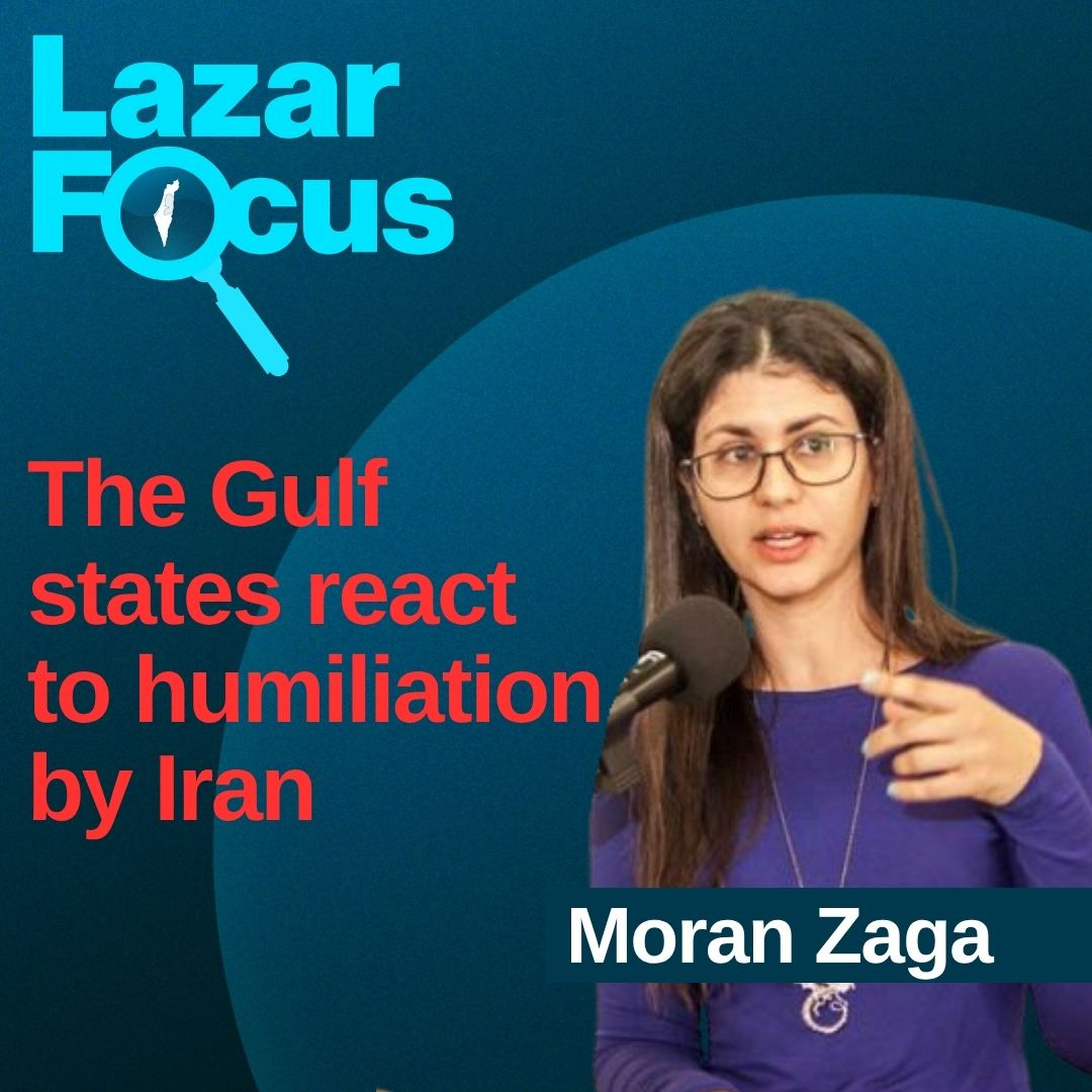
    Moran Zaga: The Gulf states react to humiliation by Iran

    Welcome to The Times of Israel's Lazar Focus. Each Friday, join host diplomatic correspondent Lazar Berman for a deep dive into what's behind the news that spins the globe. The shorthand term "Gulf states" doesn't describe a monolith. The Arab states along the Persian Gulf -- Saudi Arabia, Oman, the UAE, Qatar, Kuwait, and Bahrain -- all have unique internal dynamics, and approach their relationships with both Israel and Iran in different ways. Yet they do share a common threat -- the Shiite regional heavyweight just across the water, Iran. Placing a priority on stability and prosperity, the Gulf states have sought to prevent a war between the US and Iran. And if that war did break out, they hoped to secure immunity from Iranian attacks by maintaining diplomatic channels with the Islamic Republic and by showing that they were working for a ceasefire. That effort failed spectacularly. All the Gulf states were targeted by Iran, and the UAE was the country hardest hit by Iran in the war that began on February 28. The war made the countries look weak, as none of them hit back, nor were they able to put together a unified diplomatic initiative to end the war. Moran Zaga, expert on the Gulf states at the University of Haifa and at MIND Israel, explains how each of the countries is rethinking its approach to the Iran threat, and whether they are open to deeper ties with Israel. For now, she says, they are facing new and pressing challenges that threaten their economic well-being -- the closure of the Strait of Hormuz, the possibility that the Houthis will shut down the approaches to the Red Sea, and Iran's insistence that it should decide who gets to enter the Persian Gulf. Lazar Focus can be found on all podcast platforms. This episode was produced by Gabriella Jacobs and video edited by Ari Schlacht. See omnystudio.com/listener for privacy information.
  • April 10 · 45 min

    John Spencer: US can force open Strait of Hormuz if it decides to

    Welcome to The Times of Israel's Lazar Focus. Each Friday, join host diplomatic correspondent Lazar Berman for a deep dive into what's behind the news that spins the globe. The fledgling ceasefire between the US and Israel on the one hand, and Iran on the other, is holding. Even before it went into effect, a pointed debate began over who won, and whether US President Donald Trump and Prime Minister Benjamin Netanyahu achieved what they set out to accomplish 41 days ago. John Spencer, chair of war studies at the Madison Policy Forum, says that it is way too early to determine the outcome of the war, as it is impossible to know what the outcome will be. Negotiations on a long-term settlement have not even begun yet. Moreover, Spencer argues, wars should be judged based on the stated goals of the campaign. Both Trump and Netanyahu made clear on multiple occasions that, though they would love to see the regime in Tehran fall, regime change is not a goal of the campaign. And, he says, there is no guarantee that the regime survives. It often takes time for the public to rise up and topple oppressive rulers. Spencer also notes that Israel is clearly stronger than it was on October 6, 2023, and Iran and its axis are much weaker. As for the Strait of Hormuz, which emerged as a central factor in the war, Spencer does not doubt that the US spent plenty of time and resources planning for the possibility that Iran would close the waterway. He recalls war-gaming such a scenario 15 years ago as a US officer, and stresses that there is a permanent task force in the Pentagon to think about keeping the Strait open. There are plenty of possible reasons for the US to decide not to force Hormuz open at this point, including global markets, diplomatic openings, and the potential costs of an operation. Spencer says that in his eyes, Iran's strategy failed, in that it validated all the fears about it in the region, and is likely to push Arab states further into the arms of the US and its regional alliance. Lazar Focus can be found on all podcast platforms. This episode was produced by Gabriella Jacobs and video edited by Ari Schlacht. See omnystudio.com/listener for privacy information.
  • April 3 · 35 min

    What does history of air power tell us about Iran war?

    Welcome to The Times of Israel's Lazar Focus. Each Friday, join host diplomatic correspondent Lazar Berman for a deep dive into what's behind the news that spins the globe. The US and Israel are trying to drastically weaken Iran, and maybe even bring down the regime, entirely from the air. They are certainly not the first combatants to strive for far-reaching goals through air power. In fact, countries have tried to win wars from the air for over a century. Airpower has a tendency to capture the imagination of civilian and military planners, leading them to believe that this time, new technology will give them the edge needed to transform warfare and avoid long, costly ground campaigns. But strategic air campaigns almost always fall short of their goals. They do not topple regimes, do not cause the public to rise up (and often create solidarity among the enemy public), and achieve results that are anything but decisive. Airpower certainly has its place, especially in destroying specific targets and supporting ground forces. Israel has taken that further, eliminating layers of Iranian, Hezbollah, and Hamas leadership from the air. Can the two most capable air forces in the world win the war against Iran from the air? Or will this be the latest case study that shows how difficult it is to achieve strategic goals from the air? Joined by diplomatic reporter Nava Freiberg, Lazar walks the listener from the 18th century, through the world wars, Vietnam, and Kosovo to explain what air power can accomplish -- and what mistakes overoptimistic planners continue to make. Lazar Focus can be found on all podcast platforms. This episode was produced by Gabriella Jacobs and video edited by Ari Schlacht. See omnystudio.com/listener for privacy information.
Showing 1–20 of 24 episodes