Skip to content
Artwork for It's Better When You're Here!
Religion & SpiritualityChristianityReligion

It's Better When You're Here!

Michael LeBlanc

Listen to the weekly teachings of Shepherd's Community United Methodist Church in Lakeland, Florida. Led by Reverend Michael LeBlanc, Shepherd's Community is a church designed for you and your family to connect, grow & serve! To learn more, visit https://www.shepherdsumc.com/

Play
  • 20 episodes
  • weekly
  • Avg 29 min
  • English
  • S4 · E17
    Wednesday · 27 min

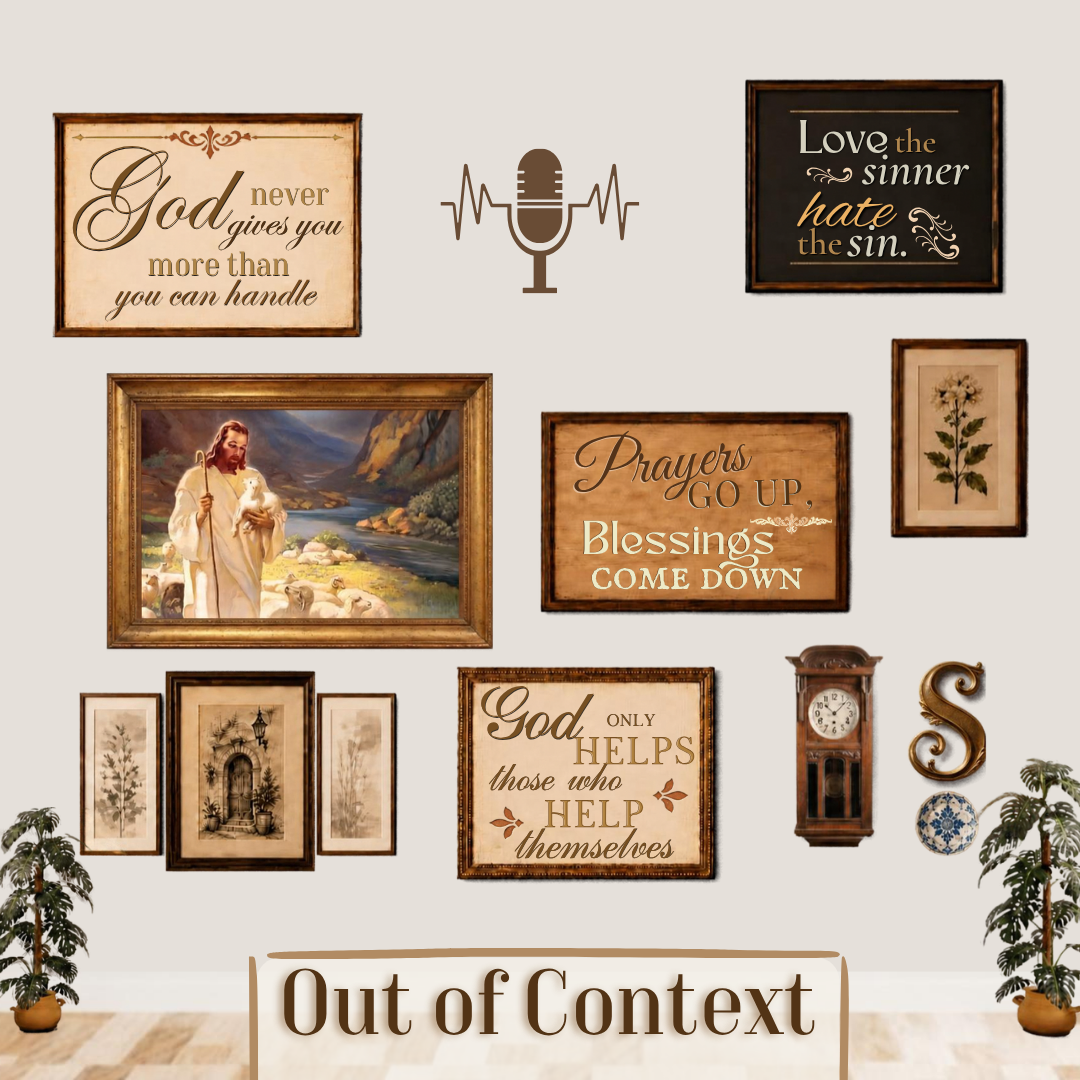
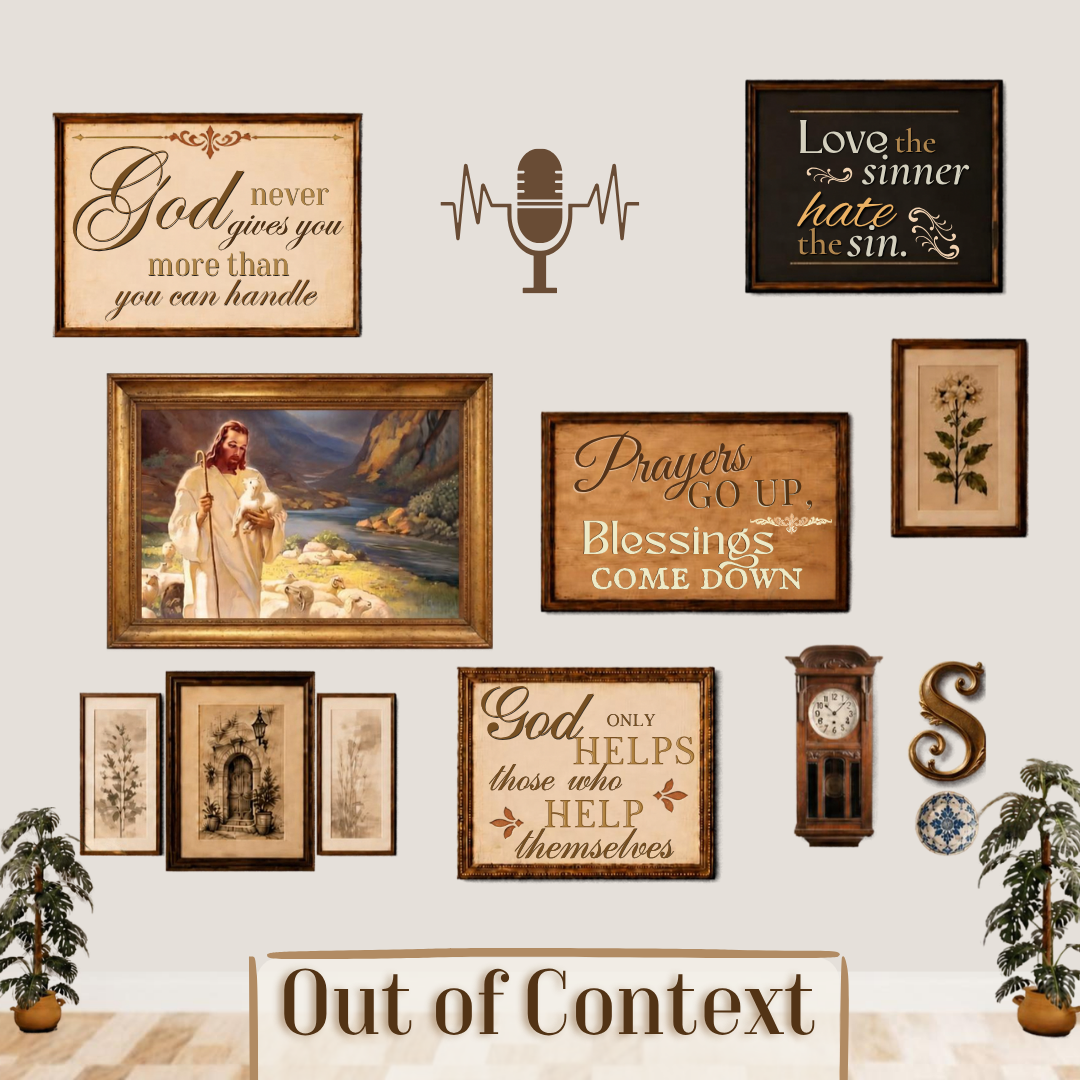
    Out of Context: Praises Go Up, Blessings Come Down

    I hope you’ve enjoyed this series at least half as much as I have. Taking the things we often accept as truth and holding them up to Scripture has challenged my faith, and I hope it has challenged yours too. As we close Out of Context, we turn to a phrase that has become increasingly popular: “Praises go up, blessings come down.” It sounds encouraging, but it can quickly drift into the prosperity gospel—the idea that if we have enough faith, pray the right prayers, or praise hard enough, life will go our way. But the prosperity gospel is neither prosperity nor Gospel. As we look at Job 4, and as we prepare to begin a series on generosity next week, we need to be clear: our level of blessedness is not a reflection of how well we praise God. So instead of saying, “Praises go up, blessings come down,” maybe we say this: Praises go up. God has come down. Passage: Job 4:7-9, 12-14, 17 CEB
  • S4 · E16
    October 21 · 29 min

    Out of Context: Love the Sinner, Hate the Sin.

    This series is all about the sayings we treat like Scripture—even when they are not. Some are meant to comfort. Others just look good on a coffee mug. This week, we are firmly in coffee mug territory: “Love the sinner, hate the sin.” In Matthew 7, Jesus warns us about focusing on what is wrong with someone else while ignoring what needs attention in ourselves. So maybe we need a simpler alternative: Love the person. Put the love into action. Not from a distance. Not with an asterisk. Put the love into action. Today, let’s take this one Out of Context. Passage: Matthew 7:1-5 NRSVUE

  • S4 · E15
    October 14 · 33 min

    Out of Context: God Won't Give You More Than You Can Handle

    This week feels strongest if we emphasize that the phrase is usually well-intentioned, but can quietly place an impossible burden on people. Last week, we began our Out of Context series by looking at one of those phrases that sounds biblical, even though it is not: “God helps those who help themselves.” This week, we turn to another saying that usually shows up when life is at its hardest: “God won’t give you more than you can handle.” It is often spoken with love. It is meant to comfort someone who is hurting, overwhelmed, or afraid. But when life becomes an overwhelming sequence of events and we already feel scared and alone, those words can sound less like good news and more like another responsibility we are somehow failing to carry. Because what happens when life actually is more than we can handle? 1 Corinthians 10 is often used to support this saying, but the passage is not promising that we will never face more than we can bear. And when we live as though God has given each of us some hidden superpower to endure everything on our own, we take on a responsibility that was never ours to carry. We end up exhausted. Beaten up. Isolated. And sometimes stuck in the very places from which Christ came to set us free. So today, I have a replacement. It may be a little less quippy, but I think it is a whole lot more biblical: God won’t leave you when life is more than you can handle. Because the promise of our faith is not that life will always be manageable. The promise is that we will never have to face it alone. Let’s take this one Out of Context. Passage: 1 Corinthians 10:12-17 CEB

  • S4 · E14
    October 7 · 36 min

    Out of Context: God Only Helps Those Who Helps Themselves

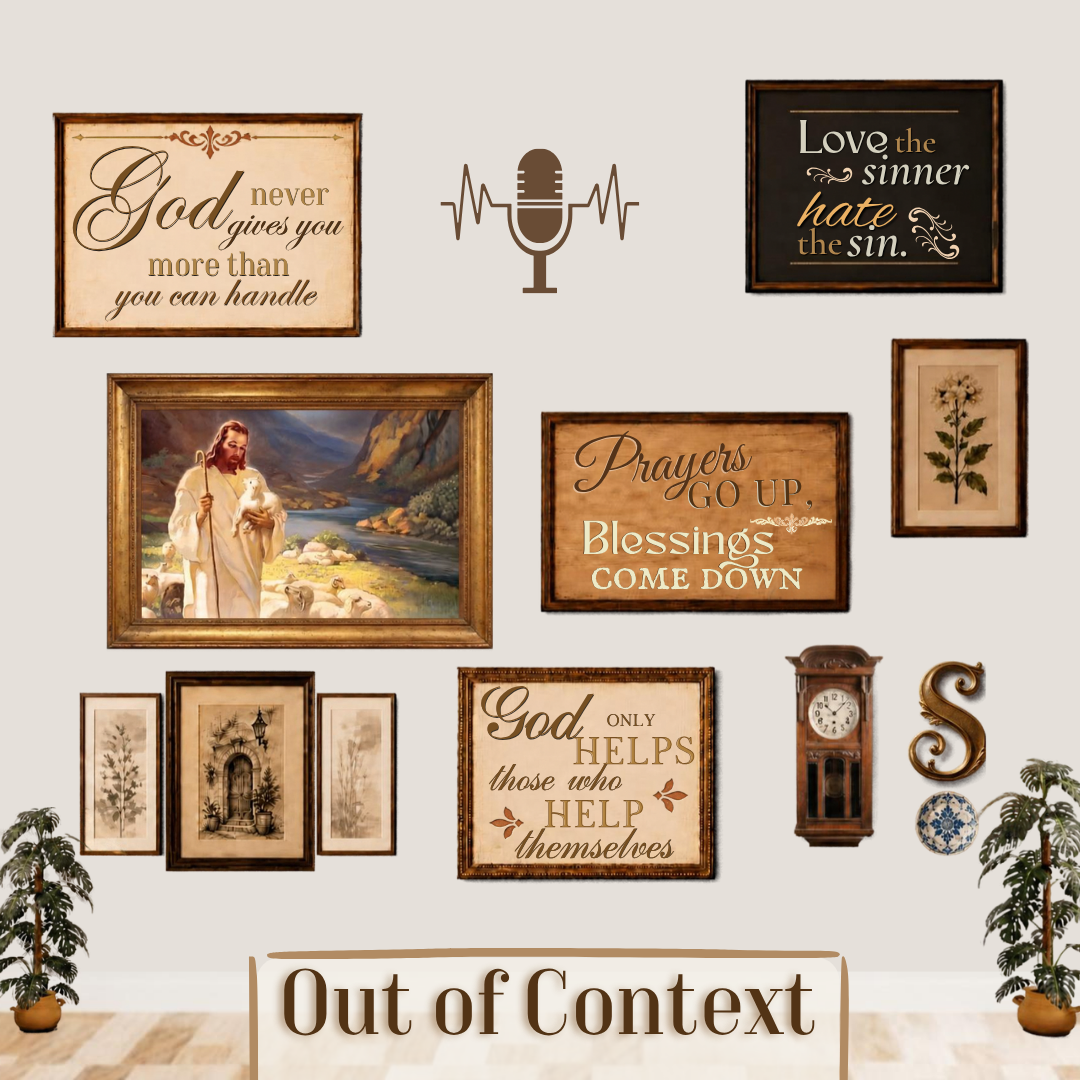
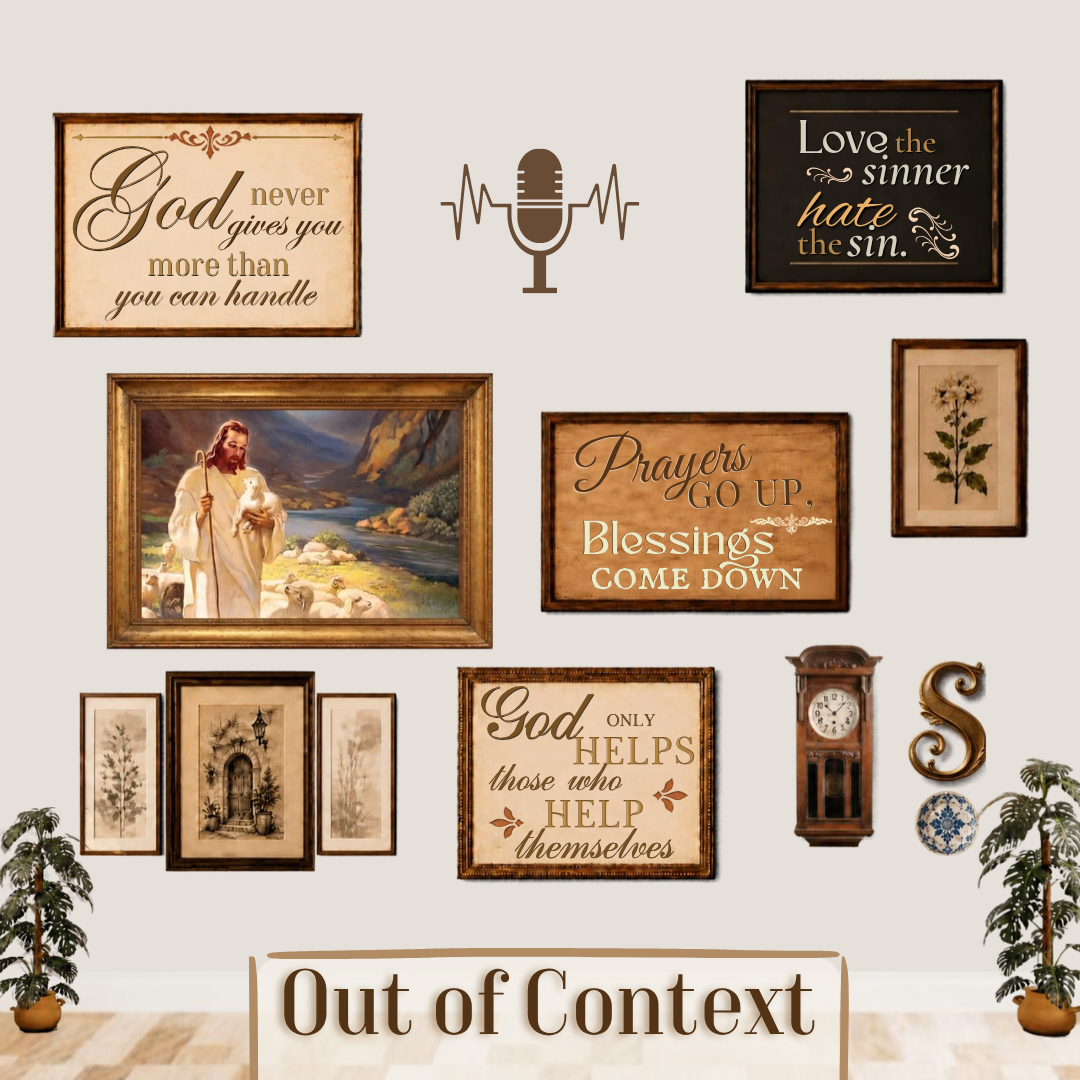
    The Bible gets blamed for a lot of things it never actually says. Some sayings are meant to comfort us. Some are supposed to sound wise. And some are just Christian-sounding enough that we assume they must be somewhere in Proverbs. Over the next several weeks, in our new series Out of Context, we are going to take some of these familiar phrases off the Hobby Lobby wall, dust them off, and ask: Is this actually Scripture? And more importantly, is this actually good news? We begin with a classic: “God helps those who help themselves.” It sounds responsible. It sounds motivational. It even sounds vaguely biblical. There is just one problem. It is not in the Bible. And Galatians 6 gives us almost the opposite picture. The Christian life is not about proving that we can carry our own weight. We are told to carry one another’s burdens. To show up. To help. To be honest enough to need one another. Because sometimes the help of God looks a whole lot like the people of God. Passage: Galatians‬ 6‬:‭1‬-‭10‬ CEB‬‬

  • S4 · E13
    September 30 · 33 min

    Defined I Week Three

    Over the last two weeks, we have been asking what truly defines us as the people called Shepherds. We began with Hope—an audacious, active hope in Jesus Christ that we are called to share with the world. Then last week, we turned to Light and asked what it means to be a lighthouse: a people who point others away from the darkness of sin and death and toward the life we find in Christ. And now, we come to the heart of it all: Love. At Shepherds, we say, “With God’s help, we embrace and connect with all people and together experience the Love, Light, and Hope of Jesus Christ.” But the love Jesus describes in John 15 is not greeting-card love. It is not simply being nice, saying the right thing, or feeling warmly toward someone. This is a love that sacrifices. A love that shows up. A love that stays. A love willing to lay itself down for someone else. We have been given that kind of love by Jesus Christ. So the question as we close this series is not whether Christ loves us. The question is: What will this church do with the Love Christ has given us? Passage: John 15: 9-13 CEB

  • S4 · E12
    September 23 · 30 min

    Defined I Week Two

    Last week, as we began our Defined series, we talked about the hope we have in Jesus Christ—and how that hope is not something we simply hold onto for ourselves. It is something we actively share with the world. At Shepherds, we say: “With God’s help, we embrace and connect with all people and together experience the Love, Light, and Hope of Jesus Christ.” This week, we turn to the Light. Romans 6 reminds us of a hard truth: sin leads to death. Sin pulls us into darkness, convinces us that there is no way out, and leaves us stumbling through places we were never meant to stay. But the light of Christ leads to life. God does not shine that light into our lives simply so that we can see. God shines it so that we can find our way out of the darkness—and then help others find their way too. So what if the church became a lighthouse? A people who stand in the darkness and boldly point toward life. A people whose words, actions, and presence shine with the Love, Light, and Hope of Jesus Christ. May we be a lighthouse. Passage: Romans 6: 1-11 CEB

  • S4 · E11
    September 16 · 29 min

    Defined I Week One

    We are coming out of a series on evangelism, where we have talked about what it means to share good news in a world that desperately needs it. And now, we are turning the question inward. What defines us? At Shepherds, we say: “With God’s help, we embrace and connect with all people and together experience the Love, Light, and Hope of Jesus Christ.” That is our mission statement—but over the next three weeks, we are going to ask what those words really mean. What does it look like for that mission to shape who we are, how we live, and how we show up in the world? This week, in Romans 12, we begin with hope. We are a hopeful people. Not because life is always easy, and not because everything always works out the way we want, but because our hope is rooted in Jesus Christ. And if we have been given that kind of hope, then we have something worth sharing. So as we begin this new series, Defined, let us ask again: Who are we? What defines us? And what would it look like for the Love, Light, and Hope of Jesus Christ to truly define everything we do? Passage: Romans 12: 11-17 CEB

  • S4 · E10
    September 9 · 23 min

    Evangelism Week 3

    This is our final week in this series on Evangelism, and I hope over these last few weeks we’ve learned a little more about what it actually means to be an evangelist—what it means to tell good news in a world that desperately needs some. But the truth remains: it can feel a little different when the invitation becomes specific. It is one thing to talk about Jesus. It is another thing to look someone in the eye and say, “Come with me to my United Methodist Church.” And yet, that kind of invitation might be more powerful than we realize. In John 9, we meet a man whose life has been changed by Jesus. He does not have every theological answer. He cannot explain every detail. He simply knows what happened to him. “I was blind, and now I see.” That is evangelism. Not proving that we know more. Not winning an argument. Not having every answer. It is caring enough about another person to tell the truth about what Jesus has done in us—and then inviting them to come and see for themselves. Because no one will care about what you know until they know how much you care. And if we learn to live that kind of evangelism, I really do believe it can change the world. Passage: John 9:7-17, 25 CEB

  • S4 · E9
    September 2 · 30 min

    Evangelism: Week 2

    ast week, I shared with you the crazy vision I believe God has given us for Shepherds: a network of churches, never larger than 300 people, connected across neighborhoods by one common message—the Love, Light, and Hope of Jesus Christ. But if that vision is going to become reality, then we have to learn how to tell that story. Because we live in a world filled with doubt, pain, cynicism, and more bad news than we know what to do with. And honestly, people are not looking for another argument. They are looking for something true. Something hopeful. Something worth listening to. In John 1, Philip doesn’t give Nathanael a perfect theological explanation. He simply says, “Come and see.” Maybe that is where evangelism begins. Not with pressure. Not with having every answer. But with an invitation to encounter the Jesus who has changed us. So today, as we continue our series on evangelism, may we learn how to speak into a skeptical world with humility, honesty, and hope. Because in a world filled to the brim with bad news, let us tell a story worth hearing. Passage: John 1:43-49 CEB

  • S4 · E8
    August 27 · 32 min

    Evangelism: Week 1

    Welcome to a brand-new series here at Shepherds: Evangelism. I think evangelism is having a bit of an identity crisis. On one side, we see people shouting on street corners or commandeering the attention of an entire airplane to spout Christian talking points—and calling it evangelism. On the other, we see Christians becoming so quiet about their faith that following Jesus starts to feel like some top-secret part of their personality. Surely there has to be another way. In Matthew 28, Jesus sends his followers into the world—not to be obnoxious, and not to disappear, but to go. To make disciples. To share what they have seen and experienced. My prayer for this series is that we might discover a new and middle way of evangelism: one marked by courage, humility, relationship, and grace, so that everyone—and I do mean everyone—might come to know the whole and complete love of Jesus Christ. Passage: Matthew 28: 16-20 CEB

  • S4 · E7
    August 19 · length unknown

    People of Prayer I Week Three

    Today we come to the final week of our People of Prayer series—and this series has challenged me. Prayer takes the faith of our minds and hearts and brings it into our everyday lives. For some of us, it takes something we practice only on Sunday and turns it into something that disrupts our “normal.” In Matthew 6, Jesus reminds us that prayer is not simply something we say—it is a way of living that helps us recognize where God is already at work. Today, we’ll explore the disruptive power of prayer and how this one simple practice can transform our lives, our churches, and even our neighborhoods. May we be people of prayer who look for God at work in all things. Passage: Matthew 6:5-13 CEB

  • S4 · E6
    August 12 · 29 min

    People of Prayer I Week Two

    As we continue exploring the People of Prayer series, we must face an uncomfortable truth: sometimes it feels as though our prayers have fallen on deaf ears. Any series on prayer that ignores unanswered prayer misses a profound part of the human experience—the pain of asking without receiving, seeking without finding, and waiting without understanding. Yet in Luke 11, Jesus invites us to keep asking, keep seeking, and keep knocking. Today, may we look boldly at the pain of prayers that feel unanswered—and discover the life and hope waiting on the other side. Passage: Luke 11:1-10 CEB

  • S4 · E5
    August 5 · 29 min

    People of Prayer I Week One

    “Our Father who is in heaven, uphold the holiness of your name. Bring in your kingdom so that your will is done on earth as it’s done in heaven.” Prayer is a mystical union between the Church and the Trinity. We pray to the Father, through the Holy Spirit, in the words Jesus taught us. Yet just because prayer is mystical does not mean it must remain mysterious. Jesus brings prayer back to three simple movements: acknowledging who God is, who we are, and how things could be. As we begin People of Prayer, may we grow confident in our prayers, participate in God’s Kingdom, and see those prayers come to life. May our prayers be as faithful as our actions. Passage: Matthew 6:9-13 CEB

  • S4 · E4
    July 29 · 37 min

    Summer at the Movies: Zootopia

    Today we are wrapping up our Summer at the Movies series, and for this final week, we are stepping into the world of Zootopia. At first glance, Zootopia looks like a colorful city full of every kind of animal imaginable. Different species, different backgrounds, different instincts, different stories—all trying to live together in one place. But as the story unfolds, we begin to see that even in a place that looks diverse, not everyone is fully seen, fully heard, or fully welcomed. In Luke 14, Jesus is at a table. But as always with Jesus, the table is never just about food. The table becomes a picture of the Kingdom of God. It becomes a place where status is challenged, pride is exposed, and invitation becomes holy. A church that lacks a kaleidoscope of experiences and stories will not look like the Kingdom of God. Our diversity and our differences do not weaken the Church. They make us stronger. They help us see more clearly, love more deeply, and reflect the heart of God more faithfully. The Kingdom table is not complete until the forgotten, the overlooked, and the unexpected have a seat. Passage: Luke 14: 1-10 CEB. Used with Permission. Streaming License Number: 1535932.

  • S4 · E3
    July 22 · 28 min

    Summer at the Movies: Star Wars

    The Summer at the Movies series continues this week, and we are stepping into one of the most iconic stories ever told on screen: Star Wars. At its heart, Star Wars is a story about light and darkness, good and evil, hope and redemption. And one of the most powerful moments comes when everyone else sees Darth Vader as a monster, but Luke Skywalker still sees something more. Everyone else sees judgment. Luke looks for light. And that brings us to one of the most familiar stories Jesus ever told: the story of the prodigal son. So today, we are asking: Who are we in the story? Are we the younger son? Are we the older brother? Or are we being invited to become more like the Father? Because when people encounter the Church, may they encounter people who look like Jesus: full of truth, full of grace, and ready to run toward the ones God has never stopped loving. Maybe the Church is called to be the love they were looking for. Passage: Luke 15: 11-32 CEB. Used with Permission. Streaming License Number: 1535932.

  • S4 · E2
    July 15 · 31 min

    Summer at the Movies: Avengers Assemble

    Last week, we talked about our true identity and why it really matters. I said often that who you are—who you truly are—matters to God. This week, I want to zoom out a little. Because who we are does not only matter personally. It matters communally. It matters because we belong to one another. We need one another. In 1 Corinthians 12, Paul reminds us that the church is not simply a room full of individuals. The church is a body. And a disconnected body will never thrive. So as we continue our Summer at the Movies series with Avengers Assembled, we are asking what it means to be part of the team God has called together. Because every super needs a team. And the church exists to be that team. Passage: 1 Corinthians 12:12-14 CEB. Used with Permission. Streaming License Number: 1535932.

  • S4 · E1
    July 8 · 30 min

    Summer at the Movies: Toy Story

    The Summer at the Movies sermon series has begun, and it is always one of my favorites. It gives us the chance to dive deeply into our faith while also giving us permission to laugh, wonder, and hold lightly some powerful lessons. Sometimes the stories that seem the most familiar can help us see the truth of the Gospel in a fresh way. This week, we are stepping into the world of Toy Story and asking a question that matters deeply to every single one of us: Who am I, really? Because who you are—who you truly are—matters to God. So often, we chase identity in what we do, what people think of us, what we accomplish, or where we feel like we belong. But Ephesians reminds us that our truest identity is not something we earn. It is something we receive in Christ. You are loved. You are chosen. You are redeemed. You are a child of God. So grab your popcorn, pull up a seat, and let’s head to infinity and beyond—toward the truth of who God says we are. Passage: Ephesians 1:3-14 CEB. Used with Permission. Streaming License Number: 1535932.

  • S3 · E54
    July 1 · 8 min

    Piety in the Community

    It's my privilege to serve as the summer pastoral intern here at Shepherd's. This season has given me the opportunity to learn and grow alongside our incredible staff, and it has also given me the chance to spend a lot of time with Michael LaBlanc. When we hear the word *piety*, we often think about personal spiritual disciplines—prayer, reading Scripture, fasting, worship, and personal devotion. All of these are essential to the Christian life. Yet Christian piety was never meant to be lived in isolation. The Christian life is both personal and communal. We are called to grow in our relationship with God, but we are also called to help one another grow. The writer of Hebrews reminds us not to neglect gathering together, but to encourage one another and spur one another on toward love and good deeds. Jesus reinforces this truth in Luke's Gospel. When He sends out His disciples into the mission field, He doesn't send them out alone—He sends them in pairs. From the beginning, the work of God's Kingdom has been a shared mission. Today, we're reminded that piety is not simply about becoming holy by ourselves; it's about becoming holy together. Hebrews 10:24-25 CEB

  • S3 · E53
    June 24 · 31 min

    Pie + Tea

    It's Father's Day, a day when we celebrate not only our dads but also one of the many ways Scripture speaks about God—as Father. But here at Shepherds, it's also Pie + Tea Sunday. Why Pie + Tea? Well, because one Sunday I wanted to preach about piety, and "piety" sounds a little bit like "pie and tea." That's the honest answer. But there's a deeper reason too. At Shepherds, we aspire to be slightly odd, a little different from the norm. We believe faithfulness sometimes looks strange to the world around us. And that's exactly where today's passage takes us. It invites us into a way of life that may seem unusual, even countercultural—a life shaped by God's kingdom rather than the expectations of everyone else. So happy are we who seek to live a little strangely, a little differently, and a little more faithfully. Passage: Matthew 5: 3-11 CEB

  • S3 · E52
    June 17 · 20 min

    The Good Shepherd

    This week, we're excited to share a message from our guest preacher, Reverend Emily Hotho. As we listen, we pray that God will encourage, challenge, and strengthen us through His Word. So wherever you're listening from, let's lean in together and hear what the Lord has for us today. Passage: John 10: 11-16 CEB

Showing 1–20 of 20 episodes