Skip to content
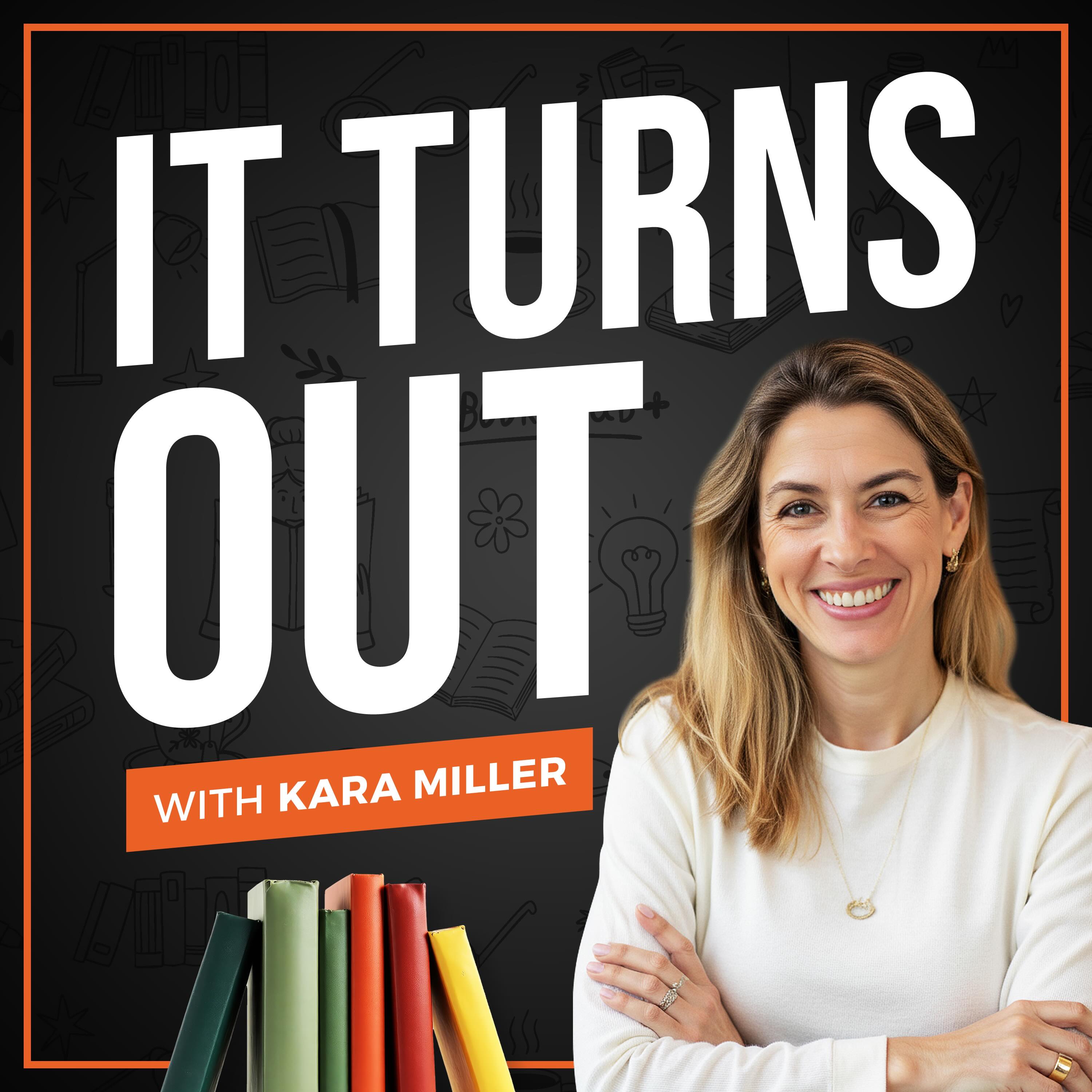
Artwork for It Turns Out

It Turns Out

Kara Miller

"It Turns Out" reveals the hidden realities reshaping our world—from how marriage impacts inequality to the way that the tax code has transformed wealth.

Through conversations with experts who challenge conventional wisdom, award-winning journalist Kara Miller focuses each episode on groundbreaking research, changing how listeners see society, economics, technology, and human behavior. “It Turns Out” delves into data that directly impacts your life—whether you know it or not.

You can reach us at info@itturnsoutshow.com

We gratefully acknowledge the support of the Alfred P. Sloan Foundation. This work was done under Grant No. G-2025-79141.

Play
  • 20 episodes
  • fortnightly
  • Avg 40 min
  • English
  • S1 · E23
    Friday · 34 min

    How do you get rich in America? Not the way you think.

    There's a big spotlight - and a lot of resistance to - billionaires, from Elon Musk to Larry Ellison. But we’re missing an under-the-radar revolution in American wealth. The country is minting far more multimillionaires than it used to: People who make money in ways you might never think about, in amounts you can barely dream of. And these folks tend to be anonymous - but incredibly influential - urging politicians to shift the tax burden away from them. Will that pull the ladder up for the next generation? Princeton’s Owen Zidar, co-author of the new book The Everywhere Millionaire, joins Kara to talk about what we miss about wealth in America (plus, renting out Versailles for your wedding). Subscribe to our newsletter on Substack for more about this show - and every show. Did you know you can also watch the show? Subscribe to the show on YouTube!

  • S1 · E22
    August 21 · 37 min

    How the rich escaped taxation. Ray Madoff’s argument, revisited.

    Over the last 40 years, many of the wealthiest Americans have effectively seceded from taxation. While regular Americans - from teachers to surgeons - often pay between 25 and 50% of their income in taxes, lots of billionaires pay 5% (or less) in taxes each year. And their heirs can inherit fortunes tax free. How have we let this happen? And why don't more people know about it? Boston College scholar Ray Madoff - author of The Second Estate - talks about what's going on. Did you know you can also watch the show? Subscribe to the show on YouTube! Subscribe to our newsletter on Substack!

  • S1 · E21
    August 7 · 44 min

    How marriage divides us. Melissa Kearney’s case, revisited

    Why do affluent suburbs in Boston and Houston vote completely differently, yet share one surprising thing in common? Economist Melissa Kearney, author of The Two-Parent Privilege, reveals that one of America's most consequential divides isn't about red states versus blue states. It's about whether you're raising kids with a partner, and the economic advantages are stark and surprising. Subscribe to our newsletter on Substack, for more on Kearney and her work. Did you know you can also watch the show? Subscribe to the show on YouTube!

  • S1 · E20
    July 24 · 39 min

    How to extend life - and where the science stands

    What do scientists know about how to live longer - and maximize the number of years that you're healthy? Princeton molecular biologist Coleen Murphy explains what you can do now, which pharmaceutical is having an unexpected effect on longevity, and why the next few years are so promising. Murphy also talks about the science of predicting how long we'll live. But she has deep concerns about the Trump administration's cuts to the National Institutes of Health, and how those cuts will set back longevity research. Which may mean that the next big breakthrough comes from China. Did you know you can also watch the show? Subscribe to the show on YouTube! Sign up for our Substack!

  • S1 · E19
    July 10 · 38 min

    Miami, Mamdani, and the War over Wealth

    Are the ultra-wealthy playing a high-stakes game of dodgeball with American cities? As states float the idea of heavy wealth taxes, billionaires are increasingly moving their addresses—and their yachts—to tax havens like Miami. But does this wealth migration spell doom for blue cities? In this episode of It Turns Out, Kara sits down with renowned urban scholar Richard Florida to decode the new geography of extreme wealth. And Florida explains why politicians like NYC Mayor Zohran Mamdani - who famously picked a fight with billionaire Ken Griffin - may herald a new progressivism, an era in which the pendulum swings against the Trumpian embrace of mega fortunes. Did you know you can also watch the show? Subscribe to the show on YouTube! Subscribe to our Substack!

  • S1 · E18
    June 26 · 39 min

    Why have kids left public school?

    Since 2020, more than a million kids have left American public schools. Meanwhile, enrollment in private schools and homeschooling has risen. What's going on? Have parents lost faith in public schools? And which sorts of kids are most likely to leave? Kara speaks with Thomas Dee, a professor at Stanford Graduate School of Education, who has tracked students' movement out of public schools. How do fights over advanced math - and challenging content - affect schools' ability to retain students? How will a fast-growing school choice movement further reshape schools? Did you know you can also watch the show? Subscribe to the show on YouTube! Subscribe to our Substack!

  • S1 · E17
    June 12 · 35 min

    Longevity: What we get wrong

    For two decades, the global phenomenon of "Blue Zones" has shaped how we eat, live, and invest in our health. But what if the data behind these longevity hotspots doesn't quite stack up? In this episode of It Turns Out, Kara Miller sits down with Dr. Saul Justin Newman, a senior research fellow at Oxford and University College London and author of Morbid (MIT Press). Dr. Newman exposes the staggering reality behind world-famous longevity claims—from pension fraud and missing records that inflated centenarian counts in Japan, Greece, and Italy, to the commercial conflicts driving the industry. Tune in as we talk about purple sweet potatoes and anti-aging supplements to reveal what medical science actually says about living a longer, healthier life. Did you know you can also watch the show? Subscribe to the show on YouTube! Sign up for our newsletter on Substack!

  • S1 · E16
    May 29 · 39 min

    Being social scares us. It also makes us happier.

    What if being more social could change your life? University of Chicago behavioral scientist Nicholas Epley talks with Kara about the surprising bump in happiness we get from being a little more social. Being less lonely also has huge health benefits that often go unrecognized. But, as Epley points out, people routinely overestimate how unpleasant it will be to reach out to others. And they almost always underestimate how enjoyable the discussions will be. Why do we put up these barriers to our own happiness? And how can introverts and extroverts effectively change their behavior? Epley is the author, most recently, of A Little More Social (Knopf). Subscribe to our Substack for Kara's take on each show! Did you know you can also watch the show? Subscribe to the show on YouTube!

  • S1 · E15
    May 15 · 40 min

    Is College Worth It? (Plus, waitlists and marriage markets)

    Is a college degree actually worth it, or do universities simply accept students who were already destined for success? Using a clever natural experiment - in an era when lots more folks doubt the usefulness of a college degree - University of Chicago economist Jack Mountjoy tries to figure out whether college really pays off. And for who? Plus, how does your life change when you get off a waiting list from an elite college? And how are your marriage prospects altered depending on your major? Subscribe to our Substack! Did you know you can also watch the show? Subscribe to the show on YouTube!

  • S1 · E14
    May 1 · 43 min

    What we get wrong about weight and nutrition

    Former NIH researcher Kevin Hall explains the science of why we eat what we eat, and debunks persistent myths about willpower, metabolism, and protein. He shares his startling findings from studying The Biggest Loser contestants—revealing why extreme exercise doesn’t prevent metabolic slowing—and explains how our modern food environment is engineered to override our conscious control. Plus, why MAHA has some good ideas, but isn’t on track to make America much healthier. Hall is a co-author of Food Intelligence, published by Avery Books. Did you know you can also watch the show? Subscribe to the show on YouTube! Subscribe to our Substack!

  • S1 · E13
    April 17 · 47 min

    Should Americans have more kids?

    The fertility rate in America has fallen more than 20 percent in the last two decades. Why is this happening, and should we try to turn it around? The drop is even more stark, if you look back several decades, to a time when women were having - on average - close to four kids each. Kara is joined by Notre Dame economist Kasey Buckles, who argues that the numbers aren't what they seem. She explains why the post-war "Baby Boom" was actually a historical anomaly, and discusses whether the Trump administration's proposed $5,000 baby bonuses might actually move the needle. Plus, could increasing political divisions between men and women be slowing family formation? And which segments of society are most likely to say they aren’t having the number of children they want? Did you know you can also watch the show? Subscribe to the show on YouTube! Sign up for our Substack!

  • S1 · E12
    April 3 · 35 min

    Why white collar jobs are heading to China

    A generation ago, a "China Shock" decimated American manufacturing. Today, a second wave is looming—and this time, it’s coming for engineers, scientists, and tech professionals. In this episode, Kara sits down with MIT economist David Autor to discuss why the U.S. is uniquely unprepared for China Shock 2.0. From the "apex predators" of the Chinese EV market to the rapid migration of biotech innovation to the East, Autor explains why American "chauvinism" and a political attention span he describes as being similar to "a squirrel on cocaine" are putting our most strategic industries at risk. We explore the existential threat to companies like Ford, the potential hollowing out of hubs like Cambridge and Silicon Valley, and the "callous" myth that displaced workers can simply re-train for a new career. Did you know you can also watch the show? Subscribe to the show on YouTube! Sign up for our Substack!

  • S1 · E11
    March 20 · 32 min

    The Real Reason Billionaires Want to Go to Space

    What happens when the world’s most powerful tech leaders decide they are the architects of humanity's future? Astrophysicist Adam Becker, author of More Everything Forever, takes a hard look at the "Plan B" visions of Silicon Valley’s elite. From Elon Musk’s mission to colonize a "poisonous" Mars to Jeff Bezos’ dream of trillion-person space colonies, Becker argues that these blueprints are often more science fiction than scientific fact. Did you know you can also watch the show? Subscribe to the show on YouTube! Subscribe to our Substack!

  • S1 · E10
    March 6 · 46 min

    The Betting States of America

    What happens when a culture is suddenly engulfed by 24/7 betting, wagering, and prediction markets? In this episode of It Turns Out, host Kara Miller sits down with Dr. Timothy Fong, a psychiatrist and co-director of the UCLA Gambling Studies Program, to explore the hidden costs of America's new favorite pastime: "solitude entertainment." From the staggering story of a student who drained his $180,000 college fund in just 18 months, to the psychological traps of treating apps like DraftKings and Polymarket as second jobs, Fong explains how the normalization of digital gambling is rewiring our brains and deepening the wealth gap. Discover the science behind addiction, the reality of why the house always wins, and what this unprecedented surge in financial risk-taking means for society's future. For more on the massive growth of sports gambling, check out the work of The Journalist's Resource at Harvard's Shorenstein Center. You can sign up for our newsletter here. Did you know you can also watch the show? Subscribe to the show on YouTube!

  • S1 · E9
    February 20 · 39 min

    This is how we fix traffic

    Traffic isn’t just an inconvenience; it’s a thief. It robs you of time, health - and sometimes sanity. But the "obvious" fixes, like widening freeways or upgrading subways, often leave us stuck in the exact same spot. In this episode of It Turns Out, Kara Miller talks with UCLA urban planning expert Michael Manville about how to really fix traffic (it’s doable). Discover why the one scientific solution to gridlock is uniquely "uncontagious" among politicians, but quite popular among those who’ve experienced it. How do you get traffic to move at 50mph? Here’s your answer. Did you know you can also watch the show? Subscribe to the show on YouTube!

  • S1 · E8
    February 3 · 54 min

    Why boys and men are struggling in America

    Why have so many boys and men fallen behind in America? Boys are behind girls in K-12 education. They are behind girls in getting to college - and staying in college. Millions of prime-age men are missing from the labor force. And men die deaths of despair - suicide and overdoses - at much higher rates than women. Richard Reeves talks about what has shifted culturally for men. How do you turn this around? Why do these issues affect even upper-class boys? How has this issue hurt Democrats - and what can they do about it? Reeves is the author of "Of Boys and Men," the founding president of the American Institute For Boys and Men, and a senior fellow at Brookings. Did you know you can also watch the show? Subscribe to the show on YouTube!

  • S1 · E7
    January 26 · 45 min

    How economic thinking can transform your biggest choices

    Why do we prioritize larger homes over shorter commutes, even when it costs us our happiness? Redfin's Chief Economist and author Daryl Fairweather joins host Kara Miller to reveal how applying economic research can help you optimize your home, your career, and your relationships. In this episode of It Turns Out, Fairweather breaks down the complexities of the 2026 housing market, explains how to free yourself from psychological biases like "anchoring,” and explains how Beyoncé - and Destiny’s Child - can help you understand workplace power dynamics. From her own move out of a high-pressure tech hub, to the surprising data behind the "coin-flip" method for making life-altering choices, Fairweather shares how to challenge the status quo and use data to design a life that aligns with your values. Fairweather is author of the book Hate the Game: Economic Cheat Codes for Life, Love, and Work Did you know you can also watch the show? Subscribe to the show on YouTube!

  • S1 · E6
    January 9 · 31 min

    Americans have long moved South. Get ready for the move North.

    For decades, Americans have gravitated to the southern US - from Florida to Arizona. But that may be about to change. This change will also shuffle our finances - and create enormous winners and losers. In this eye-opening interview, ProPublica’s Abrahm Lustgarten, author of On the Move, exposes the "Great American Climate Scam" that is artificially propping up real estate values in high-risk zones like Florida and California. And he talks about how a collapse in one market could become a contagion that spreads across the country. We break down the looming insurance crisis that threatens to bankrupt entire states, why millions of Americans may soon be forced to migrate to northern "climate havens" like Cincinnati and Buffalo, and how extreme heat is widening the economic gap between the rich and the poor. If you want to understand the future of property values, the hidden financial risks of climate change, and who will be the winners and losers of the next great migration, don't miss this deep dive into the shifting US economy. Did you know you can also watch the show? Subscribe to the show on YouTube!

  • S1 · E5
    Dec 20, 2025 · 32 min

    Is healthcare eating the economy?

    Is healthcare eating the US economy? Affordable Care Act architect Jon Gruber explains why healthcare became the issue that keeps employees - and employers - up at night. And how it came to paralyze the government. Why does an MRI cost $1,500 in the US but only a fraction of that in Japan? Why is the idea of "competition" a talking point, not a solution? Gruber also explains why Democrats moved to the right on healthcare, only to see Republicans move further to the right. Plus, hear Gruber’s "magic wand" solution for fixing the broken American system. Gruber co-edited the book Long-Term Care around the World from The University of Chicago Press. Did you know you can also watch the show? Subscribe to the show on YouTube!

  • S1 · E4
    Dec 12, 2025 · 48 min

    Is this how AI mania ends?

    For the last three years, we've been making an enormous bet on AI. It's woven into our investments, our pension funds, even the stability of our economy. But, the bet hasn't paid off yet - and many aren't sure it ever will. AI expert Gary Marcus - who’s been excited about the technology for a long time - explains why society's all-in wager on large language models could be far riskier than we realize. Marcus is author of the book Taming Silicon Valley from MIT Press. MIT Sloan Management Review and Boston Consulting Group recently took a close look at how companies are using agentic AI - one of the most discussed topics in AI right now. Check it out here: sloanreview.mit.edu/ai2025 Did you know you can also watch the show? Subscribe to the show on YouTube!

Showing 1–20 of 20 episodes