Artwork for Innovate and React
Science

Innovate and React

Kevin Hares

Talking to scientist about their innovations in chemistry

  • 20 episodes
  • Updated July 28

Episodes20

  • July 28 · 37 min

    Replacing chemical plants with methanol-eating bacteria

    Contributors: Dr. Ronja Rappold LinkedIn Dr. Kevin Hares LinkedIn Thanks for considering to support the show on buymeacoffee.com/innovateandreact ☕️ In this episode of Innovate and React, I welcome Dr. Ronja Rappold, co-founder of TENO Bioworks, to explore how microorganisms and synthetic biology can transform alternative carbon sources into high-value chemicals. While biological manufacturing is well known for producing life-saving pharmaceuticals like insulin or traditional fermented goods, shifting base and fine chemical production away from fossil fuels presents a unique challenge. Relying solely on agricultural sugars introduces significant “food vs. fuel” conflicts and risks breaching critical planetary boundaries, including land use, freshwater consumption, and nutrient cycles. Ronja and her team address this by targeting C1 feedstocks—specifically green methanol derived from captured CO₂. How do you teach an industrial workhorse to live on a completely foreign feedstock? Ronja explains TENO Bioworks’ approach to performing a metabolic “heart transplant” on Escherichia coli (E. coli). They successfully rewired E. coli to utilize methanol as its primary carbon and energy source. We also dive into the downstream engineering required to produce target chemicals like lactic acid, the advantages of using raw, unpurified methanol over traditional metal catalysts. 01:07 – Introduction to Biotechnology: Ancient Fermentation & Modern Molecular Tools 05:19 – The Limits of Sugar Feedstocks & The Planetary Boundaries Framework 12:02 – Metabolic Rewiring: Teaching E. coli to Live on Methanol 16:36 – Adaptive Laboratory Evolution (ALE) in Bioreactor Systems 26:19 – Process Advantages of Utilizing Unpurified Raw Methanol Here you can find the fluorescence microscopy image: https://innovateandreact.com/fluorescence-microscopy-image/ Here you can learn more about TENO and their research: P. Keller, E. Hegedis, B. Jäger, S. H. Rüdisser, H. Schultz, L. A. Büchel, A. M. Ochsner, T. Bradley, M. A. Reiter, D. Hilvert, J. A. Vorholt, “Identification of overoxidizing and non-overoxidizing NAD-dependent methanol dehydrogenases and implications for synthetic methylotrophy” Nat Commun 2025, 16, 10967. https://doi.org/10.1038/s41467-025-65949-9 M. A. Reiter, T. Bradley, L. A. Büchel, P. Keller, E. Hegedis, T. Gassler, J. A. Vorholt, “A synthetic methylotrophic Escherichia coli as a chassis for bioproduction from methanol” Nat Catal 2024, 7, 560–573. https://doi.org/10.1038/s41929-024-01137-0 P. Keller, M. A. Reiter, P. Kiefer, T. Gassler, L. Hemmerle, P. Christen, E. Noor, J. A. Vorholt, “Generation of an Escherichia coli strain growing on methanol via the ribulose monophosphate cycle” Nat Commun 2022, 13, 5243. https://doi.org/10.1038/s41467-022-32744-9 About Teno: https://ethz.ch/en/news-and-events/eth-news/news/2026/06/bacterial-factories-a-key-to-climate-friendly-chemistry.html About the technology: https://ethz.ch/en/news-and-events/eth-news/news/2024/04/bacteria-for-climate-neutral-chemicals-of-the-future.html 🔔 To not miss an new episode join my newsletter (just notifications for new episodes nothing more): Newsletter 📩 Got a topic, guest idea, or want to talk about your research? Email me at contact@innovateandreact.com 💬 Connect on LinkedIn | ⭐ Follow & Review the podcast to help others discover it! ☕️ Consider to support the shows production and keep me caffeinated www.buymeacoffee.com/innovateandreact Have questions about this episode? Leave a comment and I’ll get back to you.

  • July 9 · 40 min

    Defying Markovnikov: A New Spin on the Wacker Oxidation

    Contributors: Thomas Bouveyron LinkedIn Dr. Kevin Hares LinkedIn Thanks for considering to support the show on buymeacoffee.com/innovateandreact ☕️ In this episode of Innovate and React, I welcome back Thomas Bouveyron from and TH Köln to explore how we can make conventional petrochemical pathways more sustainable. We look into the synthesis of n-decanal, which is a crucial molecule in the fragrance industry and a key scent in Chanel No. 5. Thomas’ gaol is to shift from crude oil- to bio-based building blocks. How do you bend the rules of classical Wacker oxidation to favor the usually unfavored anti-Markovnikov product? Thomas shares his methodology, combining statistical Design of Experiments (DOE) and computational Density Functional Theory (DFT) calculations to unravel more of the catalytic mechanism. We also discuss the practical engineering hurdles of catalyst fatigue, solvent participation, and the tricky business of separating decanal from decanone. Chapters 04:34 Defying the Markovnikov Rule in Wacker Oxidation 08:20 Design of Experiments (DOE): Optimizing with Statistics 15:43 Unraveling Reaction Mechanisms and DFT Calculations 32:31 The Real-World Engineering and Scale-Up Hurdles More to read about the topic: Bouveyron, T.; Bratenberg, P.; Bell, P.; Eisenacher, M. Design of Experiments for Process Optimization of the Direct Wacker-Type Oxidation of 1-Decene to n-Decanal. Catalysts 2024, 14, 360. https://doi.org/10.3390/catal14060360 🔔 To not miss an new episode join my newsletter (just notifications for new episodes nothing more): Newsletter 📩 Got a topic, guest idea, or want to talk about your research? Email me at contact@innovateandreact.com 💬 Connect on LinkedIn | ⭐ Follow & Review the podcast to help others discover it! ☕️ Consider to support the shows production and keep me caffeinated www.buymeacoffee.com/innovateandreact Have questions about this episode? Leave a comment and I’ll get back to you.

  • June 15 · 55 min

    The Perfect Compromise: Unlocking the Future of Green Hydrogen with AEM

    Contributors: Miriam Hesse Bastian Kaufmann Dr. Kevin Hares LinkedIn Thanks for considering to support the show on buymeacoffee.com/innovateandreact ☕️ In this episode of Innovate and React, I met with Miriam Hesse and Bastian Kaufmann, researchers at the Hydrogen and Fuel Cell Center (ZBT) to discuss the rising potential of Anion Exchange Membrane (AEM) water electrolysis. We explore how AEM serves as the perfect compromise between traditional alkaline systems and proton exchange membrane (PEM) electrolysis, offering high efficiency without the reliance on expensive precious metals like platinum and iridium. Miriam and Bastian share their journey into hydrogen research and how ZBT acts as a crucial bridge between fundamental chemistry and applied industrial engineering across the entire hydrogen value chain. The conversation dives deep into the specific challenges and innovations within AEM technology, from navigating the historical bottlenecks of polymer membrane stability to the intricate process of fabricating homogeneous catalyst layers directly onto porous transport layers (PTLs). We discuss the promising use of nickel-based catalysts to optimize the oxygen and hydrogen evolution reactions. Furthermore, we examine the complexities of scaling this technology for industry, emphasizing the need for long-term degradation data, accelerated stress tests, and advanced analytical methods like electrochemical impedance spectroscopy (EIS) and the distribution of relaxation times (DRT) to pinpoint exactly where performance losses occur in real-world systems. 01:35 – Introductions and ZBT’s Role in Applied Hydrogen Research 09:31 – The Basics of Water Electrolysis and Green Hydrogen 12:15 – AEM Explained: Combining PEM Efficiency with Alkaline’s Cheap Materials 17:15 – Fabrication Hurdles: Membranes, Ionomers, and Porous Transport Layers (PTLs) 26:35 – Catalyst Innovation: Replacing Precious Metals with Nickel, Iron, and Sulfur 37:52 – The Scale-Up Gap: Real-World Degradation and Accelerated Stress Tests 48:15 – Advanced Diagnostics: Using Impedance Spectroscopy to Map Cell Losses 52:11 – Favorite Discoveries in Chemistry and Engineering More on the topic: M. Manolova, M. Hesse, J. Lieb, I. Radev, Ş. Sörgel, H. Kaßner, T. E. Müller, U.-P. Apfel, “Enhancing anion exchange membrane water electrolysis: A study of electrodeposited nickel-based anode materials” International Journal of Hydrogen Energy 2025, 184, 151511; https://doi.org/10.1016/j.ijhydene.2025.151511 ZBT research on AEM: https://zbt.de/forschung/elektrolyse/aem-wasserelektrolyse-2/ 🔔 To not miss an new episode join my newsletter (just notifications for new episodes nothing more): Newsletter 📩 Got a topic, guest idea, or want to talk about your research? Email me at contact@innovateandreact.com 💬 Connect on LinkedIn | ⭐ Follow & Review the podcast to help others discover it! ☕️ Consider to support the shows production and keep me caffeinated www.buymeacoffee.com/innovateandreact Have questions about this episode? Leave a comment and I’ll get back to you.

  • May 22 · 27 min

    Stopping PFAS at the Source: Innovating Industrial Wastewater Treatment

    Contributors: Dr. Rhea Machado LinkedIn Dr. Kevin Hares LinkedIn Thanks for considering to support the show on buymeacoffee.com/innovateandreact ☕️ In this episode of Innovate and React, I met with Dr. Rhea Machado, the CEO and co-founder of Porelio, to discuss their solution for removing forever chemicals from our drinking water. We explore the widespread issue of PFAS accumulating in our water, our food, and even unborn children, and how short-chain PFAS remain a massive challenge because traditional methods like activated carbon and ion exchange resins fail to capture them. Rhea shares Porelio’s journey as a spinoff from the Technical University Berlin, where they took highly efficient but traditionally hard-to-produce functionalized ordered meso-porous silica and successfully scaled it for industrial use. The conversation dives deep into Porelio’s innovative approach, which uses an ordered pore structure equipped with engineered functional groups to quickly and selectively catch specific target molecules, whether that is toxic PFAS in industrial wastewater or valuable precious metals. We discuss the multifaceted challenges of scaling a B2B chemistry startup, from defining unit economics to simultaneously scaling production and navigating regulatory pathways like REACH, all while trying to find innovative R&D partners in a conservative industry. 03:08 – The Threat of PFAS and Why Traditional Filtration Fails 07:13 – Solution: Engineered Meso-Porous Silica 11:14 – Scaling Up: Unit Economics and Industry Partnerships 15:07 – Capturing Precious Metals and Acting as an Industry “Painkiller” 17:16 – Green Chemistry Startups, Public Funding, and University Hubs 25:20 – Advice for Future Founders: Finding Allies and Talking to Customers If you got interested in PFAS removal and water treatment visit Porelio’s website (https://www.porelio.com), or contact Rhea on LinkedIn. 🔔 To not miss an new episode join my newsletter (just notifications for new episodes nothing more): Newsletter 📩 Got a topic, guest idea, or want to talk about your research? Email me at contact@innovateandreact.com 💬 Connect on LinkedIn | ⭐ Follow & Review the podcast to help others discover it! ☕️ Consider to support the shows production and keep me caffeinated www.buymeacoffee.com/innovateandreact Have questions about this episode? Leave a comment and I’ll get back to you.

  • April 28 · 1 hr 9 min

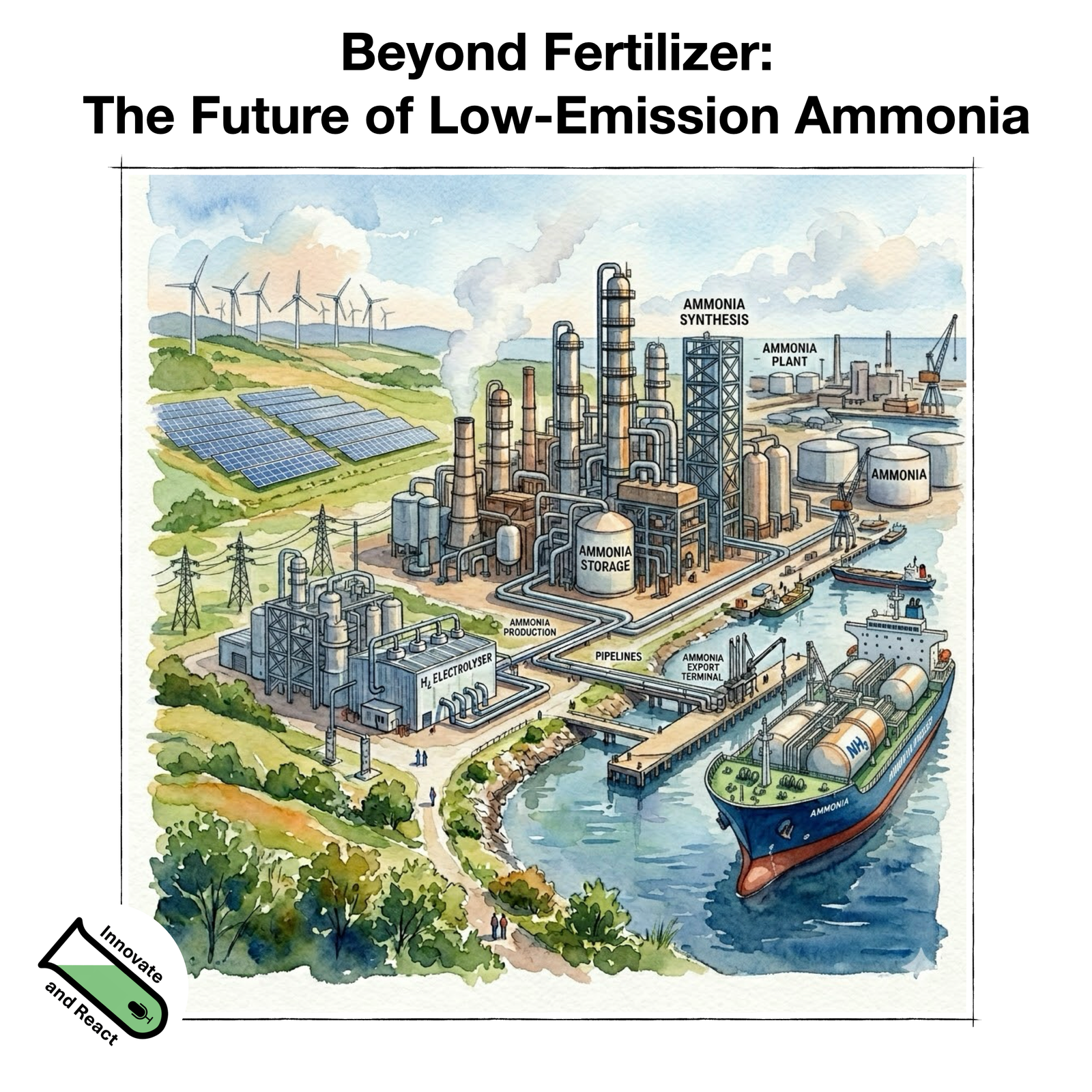
    Beyond Fertilizer: The Future of Low-Emission Ammonia

    Contributors: Kevin Rouwenhorst, PhD Linkedin Dr. Kevin Hares LinkedIn Thanks for considering to support the show on buymeacoffee.com/innovateandreact ☕️ In this episode of Innovate and React, I met with Kevin Rouwenhorst, the technology manager at the Ammonia Energy Association, to discuss the future of sustainable ammonia synthesis. We explore his journey into the clean molecule space, which ultimately led him to write a comprehensive book on low-emission ammonia technologies. Kevin clarifies a common misconception about the traditional Haber-Bosch process, explaining that over 90% of its CO2 emissions actually stem from hydrogen production, such as steam methane reforming or coal gasification, rather than the ammonia synthesis loop itself. The conversation dives deep into the challenges of decarbonizing this massive industry, focusing on the high costs of scaling green electrolytic hydrogen and the complexities of retrofitting existing plants for carbon capture. We discuss the engineering hurdles of designing flexible ammonia plants that can adapt to the variable loads of renewable energy sources. Beyond its traditional use in fertilizers, we explore exciting emerging use cases for low-emission ammonia, including its adoption as a zero-carbon maritime fuel, and its potential for power generation, such as co-firing in thermal plants and fueling combined cycle gas turbines. The episode concludes with a look at safety standards, the geopolitical implications of localizing energy production, and the fascinating history behind the Haber-Bosch process and Alwin Mittasch’s catalyst discovery. 07:27 – Clarifying the Haber-Bosch Process and its True Emission Sources 14:16 – The Cost and Infrastructure Challenges of Low-Emission Ammonia 24:17 – Designing Flexible Ammonia Plants for Renewable Energy 33:04 – Emerging Markets: Maritime Fuel and Power Generation 38:29 – Safety, Standardization, and Training for New Applications 01:00:50 – The Fascinating History of the Haber-Bosch Process You can find Kevins book on low emission ammonia here: https://books.rsc.org/books/monograph/2486/Low-emission-Ammonia-Production-and-Utilization And here are related episodes which also cover ammonia: https://innovateandreact.com/why-reversing-the-haber-bosch-process-requires-a-new-catalyst/ https://innovateandreact.com/one-chemical-reaction-to-feed-them-all-the-synthesis-of-ammonia/ 🔔 To not miss an new episode join my newsletter (just notifications for new episodes nothing more): Newsletter 📩 Got a topic, guest idea, or want to talk about your research? Email me at contact@innovateandreact.com 💬 Connect on LinkedIn | ⭐ Follow & Review the podcast to help others discover it! ☕️ Consider to support the shows production and keep me caffeinated www.buymeacoffee.com/innovateandreact Have questions about this episode? Leave a comment and I’ll get back to you.

  • April 14 · 43 min

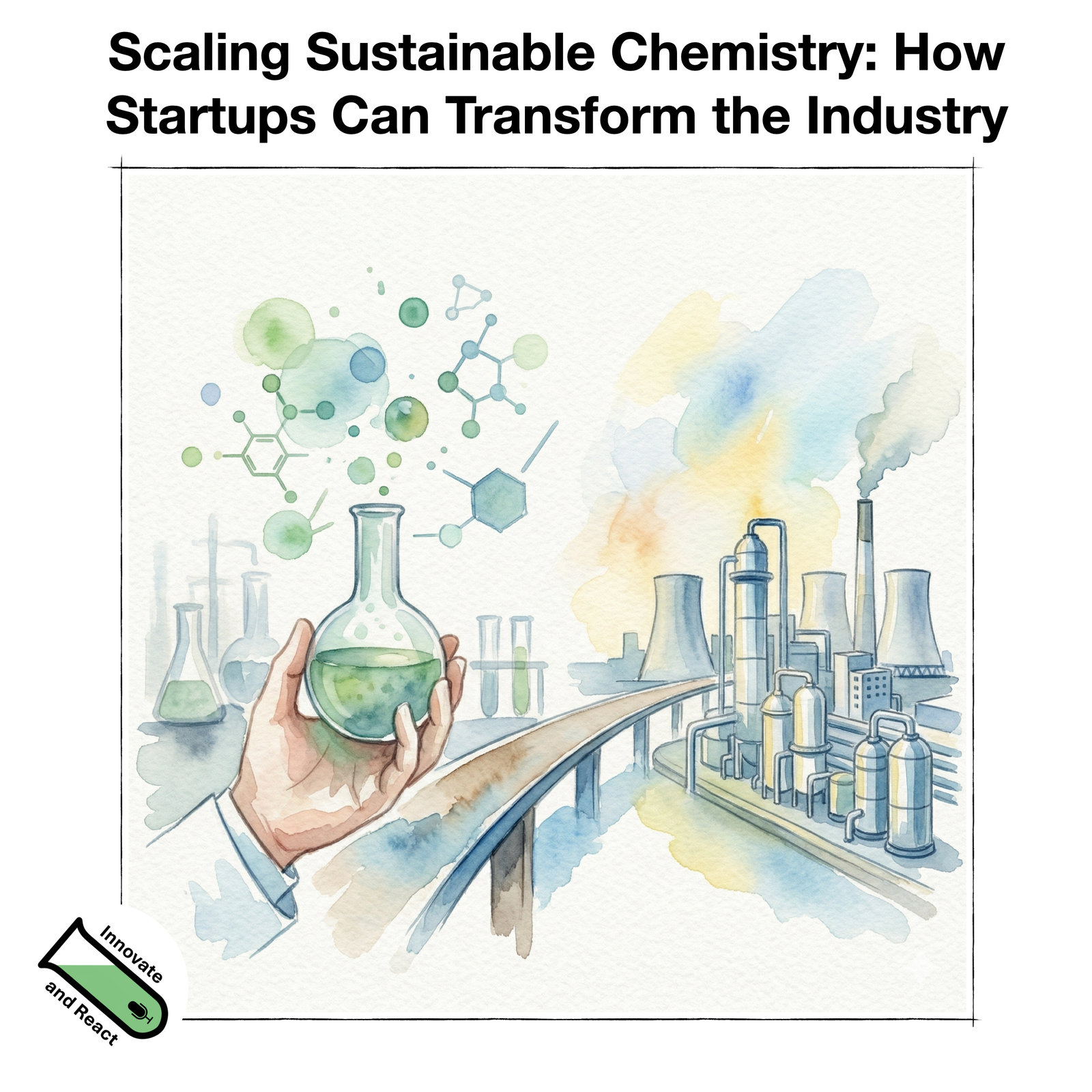
    Scaling Sustainable Chemistry: How Startups Can Transform the Industry

    Contributors: Stefan Weber LinkedIn Martin Bellof LinkedIn Dr. Kevin Hares LinkedIn Thanks for considering to support the show on buymeacoffee.com/innovateandreact ☕️ In this episode of Innovate and React, I met with Stefan Weber and Martin Bellof, the founders of Chemstars, to discuss how to overcome common hurdles for founders in the chemical space. We explore the massive transformation currently underway in the chemical industry. Startups are a vital missing puzzle piece to help the industry move toward circularity, climate neutrality, and industrial resilience. Stefan and Martin explain how they help connect the startup ecosystem with the chemical industry to bring scientific innovations from the lab to the market. The conversation dives deep into the specific challenges chemistry founders face, such as lacking industry know-how, navigating a highly regulated market, and securing the capital needed to scale technical processes from the lab to industrial facilities. The episode concludes with actionable advice on the importance of getting out of the lab to validate ideas with potential customers. We also discuss the need to simplify complex science through storytelling and how to leverage early-stage networks. 00:00 – Introduction and the Mission of Chemstars 03:41 – Why Now is the Time for Deep Tech and Chemistry Startups 09:46 – Sparking Innovation with the “From Lab to Market Challenge” 17:00 – The Three Biggest Challenges for Chemical Startups 22:00 – Financing the Scale-Up with the Exist Transfer of Research Grant 31:07 – Real-World Examples of Startups Scaling Up If you got interested in starting your own startup and bringing your research from lab to marked check out https://www.chemstars.de and feel free to connect with Stefan and Martin on LinkedIn. They offer advice on how to get started and connect you with the right people. On their website you can also find their network and many interesting startups in the chemical space to get inspiration. 🔔 To not miss an new episode join my newsletter (just notifications for new episodes nothing more): Newsletter 📩 Got a topic, guest idea, or want to talk about your research? Email me at contact@innovateandreact.com 💬 Connect on LinkedIn | ⭐ Follow & Review the podcast to help others discover it! ☕️ Consider to support the shows production and keep me caffeinated buymeacoffee.com/innovateandreact Have questions about this episode? Leave a comment and I’ll get back to you.

  • March 31

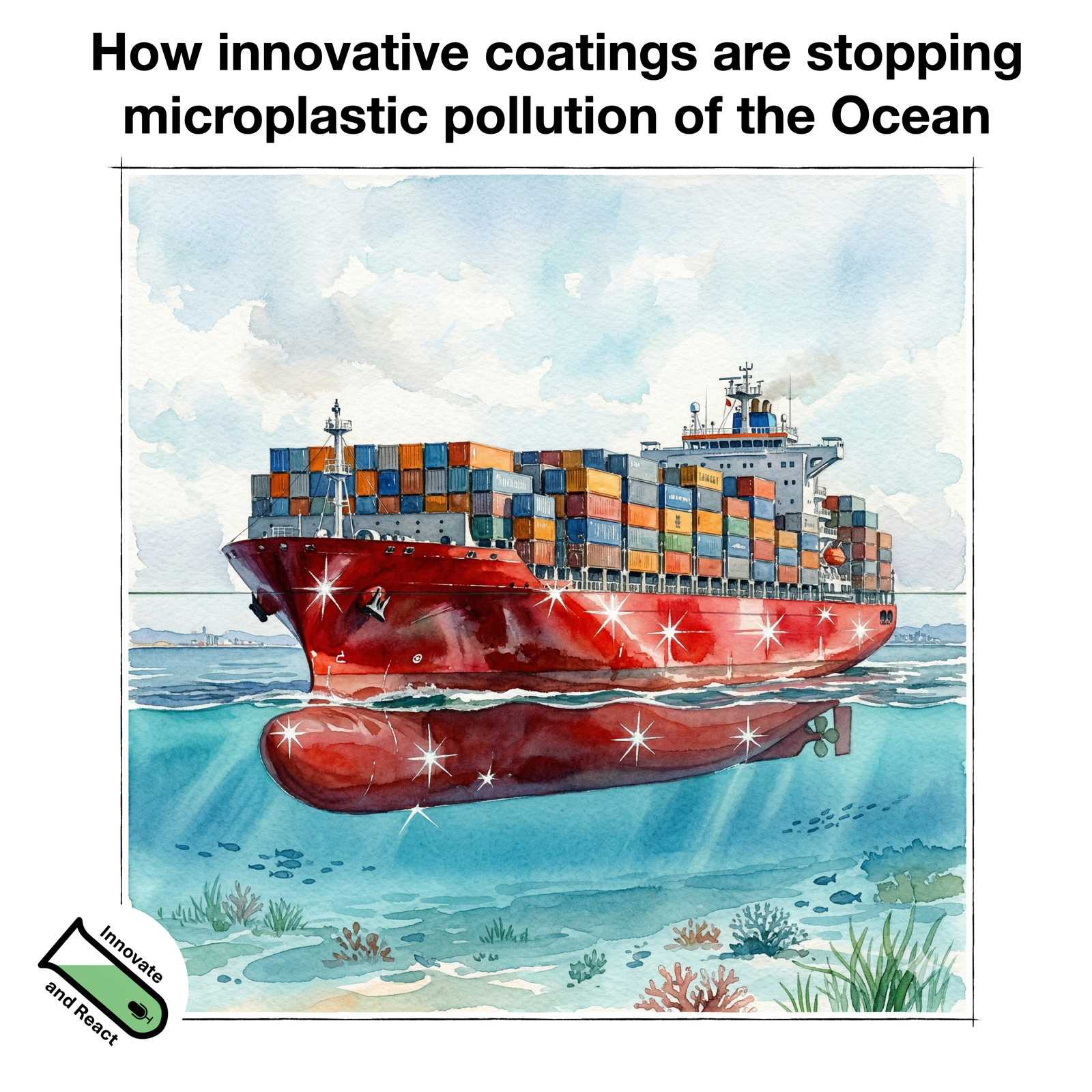
    How innovative coatings are stopping microplastic pollution of the Ocean

    Contributors: Dr. Christina Linke LinkedIn Dr. Kevin Hares LinkedIn Thanks for considering to support the show on buymeacoffee.com/innovateandreact ☕️ In this episode of Innovate and React, I met with Dr. Christina Linke, a co-founder of Clean Ocean Coatings, to discuss how innovative chemistry can solve the pressing issue of biofouling in the shipping industry. We explore the massive environmental and economic costs of marine organisms attaching to ship hulls, which increases drag and leads to an estimated $150 billion in annual damages. Christina shares her journey from being a food scientist to discovering a nanostructured material, ultimately leading her to launch the startup during the COVID-19 lockdowns. The conversation dives deep into the devastating effects of traditional self-polishing coatings, which intentionally wash off over time to leach toxic biocides and microplastics into the oceans. To solve this, Clean Ocean Coatings developed a completely biocide-free, solvent-free hard coating that creates a super smooth surface, allowing for easy cleaning and generating significant fuel savings. The episode concludes with a look at the conservative nature of the maritime industry, the flawed regulatory challenges surrounding the cleaning of ship hulls, and actionable advice for scientists looking to bring their research to market through university startup hubs. 00:00 – Introduction and the Cost of Biofouling 04:53 – Clean Ocean Coatings: A Biocide-Free Solution 09:15 – Discovering the Technology and Founding in Lockdown 25:13 – Market Challenges and the 5-Year Docking Cycle 34:08 – The Regulatory Hurdles of Hull Cleaning 46:29 – Startup Advice for Scientists and the Wonders of Biochemistry More informations about Clean Ocean Coatings on their website: https://www.cleanoceancoatings.com/ or on their LinkedIn page: https://www.linkedin.com/company/cleanoceancoatings/ Here they shared their recent success with test patches on an ocean vessels to proof the durability of their coating: https://www.linkedin.com/feed/update/urn:li:activity:7437819375941906432 🔔 To not miss an new episode join my newsletter (just notifications for new episodes nothing more): Newsletter 📩 Got a topic, guest idea, or want to talk about your research? Email me at contact@innovateandreact.com 💬 Connect on LinkedIn | ⭐ Follow & Review the podcast to help others discover it! ☕️ Consider to support the shows production and keep me caffeinated buymeacoffee.com/innovateandreact Have questions about this episode? Leave a comment and I’ll get back to you.

  • March 17 · 53 min

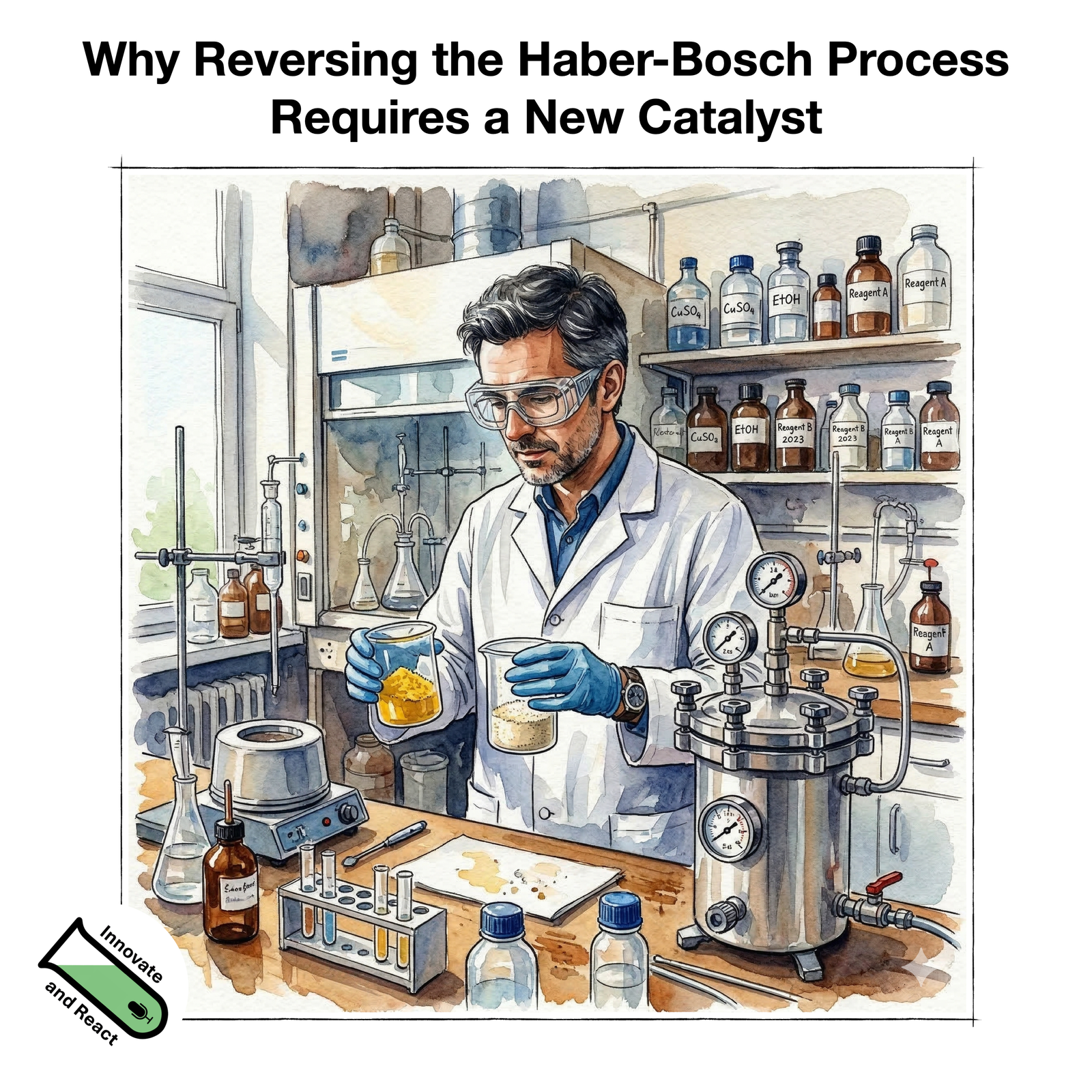
    Why Reversing the Haber-Bosch Process Requires a New Catalyst

    Contributors: Prof. Malte Behrens Dr. Kevin Hares LinkedIn Thanks for considering to support the show on buymeacoffee.com/innovateandreact ☕️ In this episode of Innovate and React, I met with Malte Behrens, a professor of inorganic solid-state chemistry at the University of Kiel, to discuss ammonia as a vital carrier for the hydrogen economy. We explore the challenges of transporting pure hydrogen and how converting it into ammonia offers a more practical, carbon-free solution due to its ease of liquefaction and higher volumetric energy density. Malte shares his journey from solid-state chemistry to heterogeneous catalysis. The conversation dives deep into the necessity of discovering effective and scalable catalysts to decompose, or “crack” ammonia back into hydrogen gas for energy use and nitrogen. The discussion highlights the limitations of using traditional iron catalysts, as well as the economic barriers of using highly active but expensive ruthenium. To solve this, Malte’s research focuses on alloying iron with cobalt to prevent bulk nitridation, effectively finding the optimal balance of binding energy on the Sabatier volcano curve. The episode concludes with a look at the future of green ammonia, emphasizing the need for renewable energy-driven electrolysis to power a sustainable global energy trade. 00:00 – Introduction and Journey into Catalysis 11:13 – Ammonia as a Hydrogen Carrier 18:32 – Catalyst Challenges in Ammonia Decomposition 28:49 – Optimizing with Iron-Cobalt Alloy Catalysts 36:34 – Co-Precipitation Synthesis and Green Ammonia’s Future More to read on the topic including the discussed publications: M. Behrens, “Coprecipitation: An excellent tool for the synthesis of supported metal catalysts – From the understanding of the well known recipes to new materials” Catalysis Today 2015, 246, 46–54. https://doi.org/10.1016/j.cattod.2014.07.050 S. Chen, J. Jelic, D. Rein, S. Najafishirtari, F.-P. Schmidt, F. Girgsdies, L. Kang, A. Wandzilak, A. Rabe, D. E. Doronkin, J. Wang, K. Friedel Ortega, S. DeBeer, J.-D. Grunwaldt, R. Schlögl, T. Lunkenbein, F. Studt, M. Behrens, “Highly loaded bimetallic iron-cobalt catalysts for hydrogen release from ammonia” Nat Commun 2024, 15, 871. https://doi.org/10.1038/s41467-023-44661-6 S. Perego, M. Purcel, Y. Baum, S. Chen, A. S. Müller, M. Parrinello, M. Behrens, M. Muhler, L. Bonati, “No Time for Nitrides: How Cobalt Alloying Promotes Iron Catalysts for Ammonia Decomposition” ACS Catal. 2025, 15, 16690–16702. https://doi.org/10.1021/acscatal.5c04795 B. Friedrich, D. Hoffmann, J. James, “One Hundred Years of the Fritz Haber Institute” Angewandte Chemie 2011, 123, 10198–10225. https://doi.org/10.1002/ange.201104792 T. Kandemir, M. E. Schuster, A. Senyshyn, M. Behrens, R. Schlögl, “The Haber–Bosch Process Revisited: On the Real Structure and Stability of ‘Ammonia Iron’ under Working Conditions” Angewandte Chemie International Edition 2013, 52, 12723–12726. https://doi.org/10.1002/anie.201305812 W. Shin, H. Lai, G. Ibrahim, G. Zang, “Toward a sustainable energy future using ammonia as an energy carrier: global supply chain cost and greenhouse gas emissions” Energy Environ. Sci. 2026, 19, 162–188. https://doi.org/10.1039/D5EE05571G More about Maltes group: Homepage: https://www.ac.uni-kiel.de/de/behrens Mastodon-Profile: https://fediscience.org/@SolidStateChemCatal_Kiel 🔔 To not miss an new episode join my newsletter (just notifications for new episodes nothing more): Newsletter 📩 Got a topic, guest idea, or want to talk about your research? Email me at contact@innovateandreact.com 💬 Connect on LinkedIn | ⭐ Follow & Review the podcast to help others discover it! ☕️ Consider to support the shows production and keep me caffeinated buymeacoffee.com/innovateandreact Have questions about this episode? Leave a comment and I’ll get back to you.

  • March 4 · 48 min

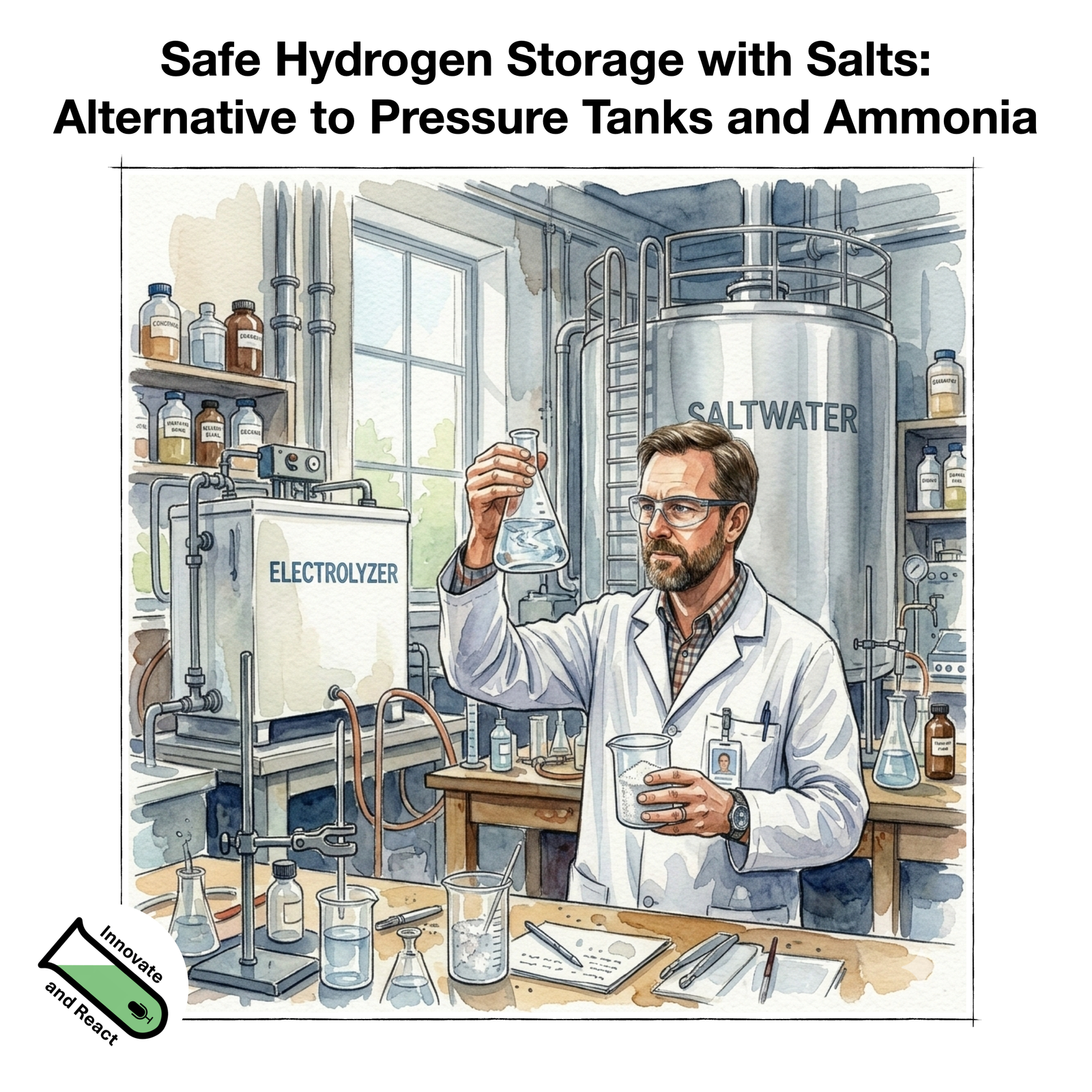
    Safe Hydrogen Storage with Salts: Alternative to Pressure Tanks and Ammonia

    Contributors: Jonas Massa LinkedIn Dr. Kevin Hares LinkedIn Thanks for considering to support the show on buymeacoffee.com/innovateandreact ☕️ In this episode of Innovate and React, host I sit down with Jonas Massa, co-founder of AKROS Energy, to tackle the pressing challenges of hydrogen storage and transportation. While green hydrogen is a promising energy carrier for fluctuating renewables, its highly flammable nature poses significant safety and regulatory hurdles, especially for decentralized applications involving non-specialist personnel. Jonas breaks down why conventional storage methods, like highly pressurized vessels or toxic ammonia, fall short for widespread, small-scale use. To solve this, AKROS Energy is developing a revolutionary method that stores hydrogen in everyday, non-toxic salts, namely potassium bicarbonate and potassium formate. Jonas explains their streamlined, low-temperature catalytic process and they want to scale it up. A great alternative to Ammonia and LOHC. Episode Timestamps 02:20 The Hydrogen Bottleneck: Discussing the primary obstacles in storing and transporting renewable energy as hydrogen, including safety and fluctuation challenges. 08:52 A Salty Solution: Introducing AKROS Energy’s innovative approach to storing hydrogen safely using non-toxic potassium bicarbonate and potassium formate. 12:35 Under the Hood: A deep dive into the low-temperature catalytic reactor process and how it efficiently stores and releases the hydrogen. 22:33 Scaling Safely: How pairing a standard flat bottom tank with a containerized chemical plant makes decentralized hydrogen storage drastically safer for end-users. 40:27 From Lab to Market: Jonas’s essential advice for researchers on the importance of leaving the lab, talking to customers, and testing technologies early. Got interested in this technology? Here is more: Sang, R., Wei, Z., Hu, Y. et al. Methyl formate as a hydrogen energy carrier. Nat Catal 6, 543–550 (2023). https://doi.org/10.1038/s41929-023-00959-8 Sang, R., Stein, C.A.M., Schareina, T. et al. Development of a practical formate/bicarbonate energy system. Nat Commun 15, 7268 (2024). https://doi.org/10.1038/s41467-024-51658-2 Carolin A. M. Stein, Jonas Massa, Katja Neubauer, Stephan Bartling, Carsten Kreyenschulte, Hanan Atia, Lorenz Dittrich, Hung Mac, Rui Sang, Volkan Turan, Peter Sponholz, Ali M. Abdel-Mageed, Sebastian Wohlrab, Henrik Junge, and Matthias BellerACS Sustainable Chemistry & Engineering; 2026 14 (2), 1195-1206. https://doi.org/10.1021/acssuschemeng.5c11492 Also find out more about AKROS energy on their website: https://akros-energy.com 🔔 To not miss an new episode join my newsletter (just notifications for new episodes nothing more): Newsletter 📩 Got a topic, guest idea, or want to talk about your research? Email me at contact@innovateandreact.com 💬 Connect on LinkedIn | ⭐ Follow & Review the podcast to help others discover it! ☕️ Consider to support the shows production and keep me caffeinated buymeacoffee.com/innovateandreact Have questions about this episode? Leave a comment and I’ll get back to you.

  • February 3 · 53 min

    How to bring chemical innovations from research to application

    Contributors: Dr. Petra Ryl Linkedin Dr. Kevin Hares LinkedIn Thanks for considering to support the show on buymeacoffee.com/innovateandreact ☕️ In this episode of Innovate and React, i am talking with Dr. Petra Ryl, innovation and talent lead at greenCHEM Berlin. We explore how innovation is transforming the chemical industry and how research from universities can be applied practically. Petra shares her journey from academic biochemical research to working at greenCHEM, explaining the importance of sustainable materials and the transition from fossil-based to regenerative resources. They discuss the role of disruptive innovation, the advantages of startups in driving change, and how greenCHEM supports entrepreneurs through various programs, including technology transfer, academic partnerships, and a robust network. Highlights include specific examples of pioneering startups within the greenCHEM network and advice for researchers considering entrepreneurial pathways. 00:34 Meet Dr. Petra Ryl: From Academia to Industry 03:39 The Principles and Potential of Green Chemistry 06:30 Challenges and Opportunities for Startups 09:32 Success Stories from the greenCHEM Network 12:53 Bridging the Gap: From University Research to Market 26:23 The Path to Commercialization 37:31 Infrastructure and Scaling Up A recommend read for this episode are the 12 principles of green chemisty, which lay the foundation of green innovation in chemistry. Find out more about greenCHEM and the innovate! call on their website greenchem.berlin. If you are interested in bringing your reasearch to the market get in touch. Here you can find more about the mentioned star up: mujō – alternatives to plastic packageing Clean Ocean Coatings – sustainable ship coatings Ucaneo – carbon capture Spark e-fuels Kalz utilization of CO2 for construction marterials Porelio PFAS removal 🔔 To not miss an new episode join my newsletter (just notifications for new episodes nothing more): Newsletter 📩 Got a topic, guest idea, or want to talk about your research? Email me at contact@innovateandreact.com 💬 Connect on LinkedIn | ⭐ Follow & Review the podcast to help others discover it! ☕️ Consider to support the shows production and keep me caffeinated buymeacoffee.com/innovateandreact Have questions about this episode? Leave a comment and I’ll get back to you.

  • Dec 30, 2025 · 25 min

    The beginning and challenges of Natural Products in cancer treatments

    Contributors: Dr. Kevin Hares LinkedIn Thanks for considering to support the show on buymeacoffee.com/innovateandreact ☕️ This episode of Innovate and React explores the fascinating history of natural product research and its pivotal role in developing life-saving cancer treatments. The journey begins in the 1950s and 60s with the National Cancer Institute’s efforts to screen thousands of plant extracts for biological activity. Through the stories of landmark compounds like camptothecin and Taxol, Kevin illustrates the complex collaboration required between botanists and chemists to isolate active ingredients from nature and transform them into viable medical therapies. The episode delves into the origins of Taxol, originally discovered in the bark of the Pacific Yew tree. You will learn about the significant hurdles researchers faced. From the tedious workup to supply chain restrictions caused by harvesting bark from slow-growing trees. Find out how chemists made Taxol a marketable drug and overcame these problems. 00:00 Introduction 03:11 Discovery of Camptothecin 09:02 Discovery of the Pacific Yew and Taxol 18:45 The Shift to Semi-Synthesis Molecular Structure of Taxol: https://innovateandreact.com/taxol/ Source: “The Discovery of Camptothecin and Taxol” commemorative booklet produced by the National Historic Chemical Landmarks program of the American Chemical Society in 2003; https://www.acs.org/content/dam/acsorg/education/whatischemistry/landmarks/camptothecintaxol/discovery-of-camptothecin-and-taxol-commemorative-booklet.pdf More about the natural products: Dias DA, Urban S, Roessner U. A historical overview of natural products in drug discovery. Metabolites. 2012 Apr 16;2(2):303-36. https://doi.org/10.3390/metabo2020303 📩 Got a topic, guest idea, or want to talk about your research? Email me at contact@innovateandreact.com 💬 Connect on LinkedIn | ⭐ Follow & Review the podcast to help others discover it! ☕️ Consider to support the shows production and keep me caffeinated buymeacoffee.com/innovateandreact Have questions about this episode? Leave a comment and I’ll get back to you.

  • Nov 26, 2025 · 39 min

    Turning Methane into Value-Chemicals via Photocatalysis

    Contributors: Dr. Andrés Álvarez Constantino Dr. Kevin Hares LinkedIn Thanks for considering to support the show on buymeacoffee.com/innovateandreact ☕️ In this episode we discuss a novel and sustainable approach to converting methane into valuable chemicals. Currently light hydrocarbons like methane are often simply burned for energy, despite their potential as a carbon source for the chemical industry. Traditional conversion methods like natural gas cracking are energy-intensive, and other functionalization routes require harsh conditions and often toxic chemicals. Dr. Andrés Constantino sharess his research focusing on photocatalysis to achieve the direct functionalization of methane under milder conditions. The key to this method is a supramolecular catalytic system using FeCl3•6H2O and collidine. When irradiated, the catalyst generates a highly active chlorine radical that efficiently abstracts hydrogen from the inert alkane (methane) to form an alkyl radical. The collidine plays a crucial dual role, acting as a base to quench the resulting HCl and as a ligand that stabilizes the iron tetrachloride core. The radicals were used for allylation chemistry, which retains a useful olefin group in the product. 00:47 Why Methane to Value Chemicals? 04:17 Limitations of Existing Methods 07:40 Allylation vs. Giese Addition 10:57 Photocatalysis and the Role of Collidine 27:32 Application Link to the publication: Andrés M. Álvarez-Constantino et al., Attenuated LMCT photocatalysis enables C─H allylation of methane and other gaseous alkanes.Sci. Adv.11, eaea0783(2025). DOI:10.1126/sciadv.aea0783 📩 Got a topic, guest idea, or want to talk about your research? Email me at contact@innovateandreact.com 💬 Connect on LinkedIn | ⭐ Follow & Review the podcast to help others discover it! ☕️ Consider to support the shows production and buy me coffee buymeacoffee.com/innovateandreact Have questions about this episode? Leave a comment and we’ll get back to you.

  • Nov 9, 2025 · 36 min

    Sustainable Chemistry and Advances in Catalysis

    Contributors: Dr. Soumyadeep Chakrabortty LinkedIn Dr. Kevin Hares LinkedIn Thanks for considering to support the show on buymeacoffee.com/innovateandreact ☕️ In this episode we discuss sustainable chemistry and the replacement of critical materials like platinum group elements with guest Dr. Soumyadeep Chakrabortty from the Max-Planck-Institute for Kohlenforschung. We delve into the importance of sustainability in chemical reactions, the role of catalysis, and the development of more benign and cost-effective catalysts. Soumyadeep shares his experiences with asymmetric hydrogenation and the creation of a new ligands for pharmaceutical applications. The conversation also touches on collaboration between academia and industry and the impact of high-throughput screening and AI on future catalysis research. 00:48 The Importance of Sustainable Chemistry 04:02 Catalysis and Its Role in Chemistry 05:59 Asymmetric Hydrogenation Explained 15:45 Challenges in Replacing Precious Metals 20:31 Academia vs. Industry in Chemical Research 27:54 Future of Catalysis Research Further reading on the topic: Iron‐Catalyzed trans‐Hydrostannation of Terminal Alkynes, DOI: 10.1002/anie.202514794 A Homogeneous Nickel Catalyst for Reductive Amination of γ‐Keto Acids using Hydrogen, DOI: 10.1002/cctc.202400987 Cobalt‐Catalyzed Asymmetric Hydrogenation: Substrate Specificity and Mechanistic Variability, DOI: 10.1002/anie.202315773 Rh-Catalyzed Enantioselective Hydrogenation of Di- and Tri-Substituted Enamides Enabled by Easily Tunable P-Stereogenic N-Phosphinyl Phosphoramidite Ligands, DOI: 10.1021/acscatal.3c03336 📩 Got a topic, guest idea, or want to talk about your research? Email me at contact@innovateandreact.com 💬 Connect on LinkedIn | ⭐ Follow & Review the podcast to help others discover it! ☕️ Consider to support the shows production and buy me coffee buymeacoffee.com/innovateandreact Have questions about this episode? Leave a comment and we’ll get back to you.

  • Oct 7, 2025 · 14 min

    One chemical reaction to feed them all: The synthesis of ammonia

    Contributors: Dr. Kevin Hares LinkedIn Thanks for considering to support the show on buymeacoffee.com/innovateandreact ☕️ In this episode of Innovate and React, I delve into the groundbreaking discovery of the Haber-Bosch process, which revolutionized agriculture and the chemical industry by synthesizing ammonia from atmospheric nitrogen and hydrogen. Starting with a historical perspective from the 19th, the episode explores the pivotal contributions of Fritz Haber and Carl Bosch to the invention of the Haber-Bosch process. It covers the scientific challenges, innovations, and controversies surrounding Haber’s research, and how Bosch made the reaction viable for industrial scale. The episode also discusses the modern impact and future applications of ammonia in renewable energy systems. Key topics: 00:10 The Nitrogen Crisis of the 19th Century 02:09 Fritz Haber’s Breakthrough 05:59 Scaling Up: Carl Bosch’s Contributions 09:00 The Impact and Controversy of the Haber-Bosch Process 11:47 Ammonia’s Role in Future Energy Systems 📩 Got a topic, guest idea, or want to talk about your research? Email me at contact@innovateandreact.com 💬 Connect on LinkedIn | ⭐ Follow & Review the podcast to help others discover it! Thanks for considering to support the show on buymeacoffee.com/innovateandreact ☕️ Have questions about this episode? Leave a comment and I’ll get back to you.

  • Sep 4, 2025 · 41 min

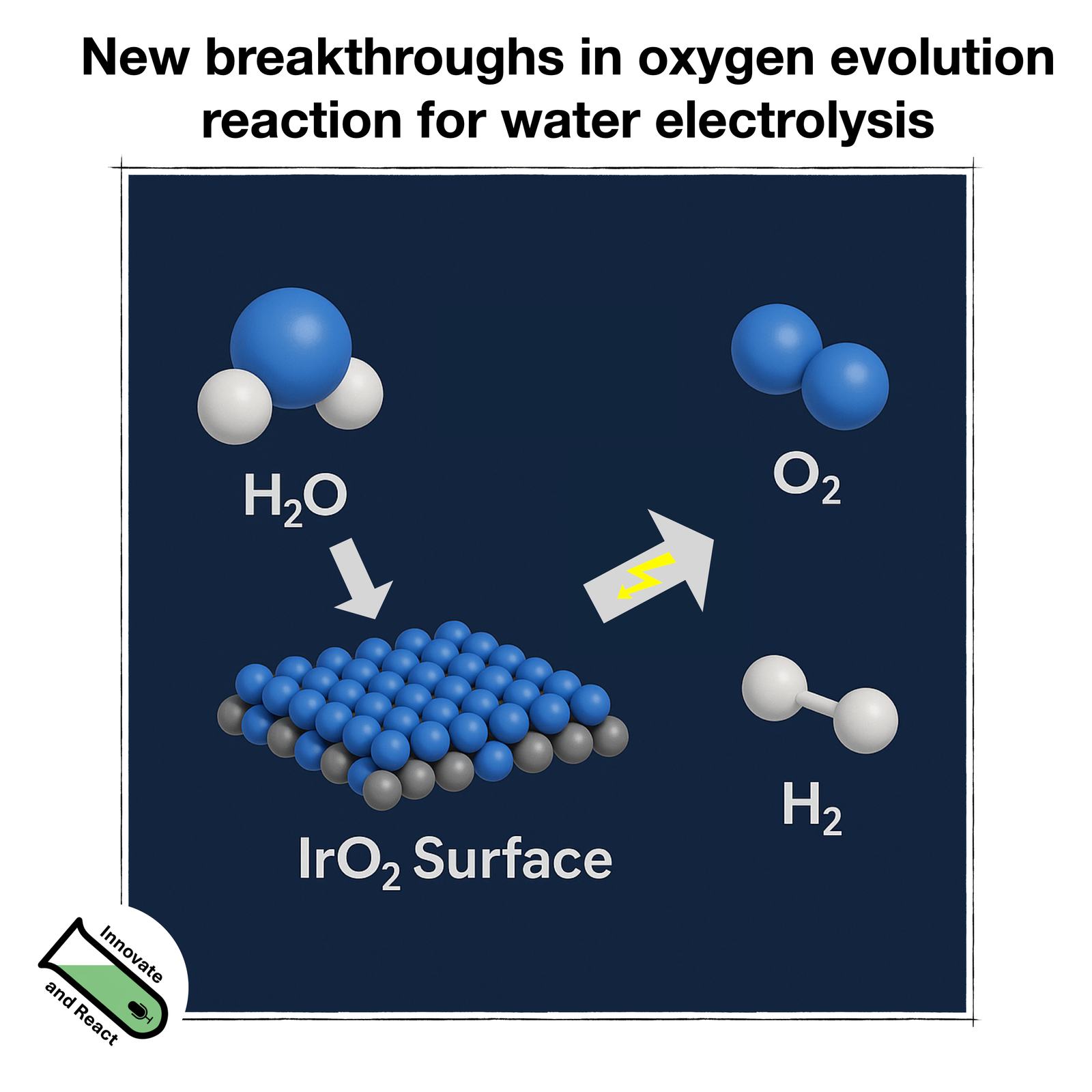
    New breakthroughs in oxygen evolution reaction for water electrolysis 

    Contributors: Usama Muhammad LinkedIn Dr. Kevin Hares LinkedIn Thanks for considering to support the show on buymeacoffee.com/innovateandreact ☕️ In this episode of Innovate and React, we dive into the world of water electrolysis and how theoretical chemistry can help design better catalysts for clean hydrogen production. Mohammad Usama, a PhD researcher at the University of Duisburg-Essen, shares his unconventional journey from mechatronics and automotive engineering to electrochemistry and catalysis. We discuss his work on iridium dioxide surfaces for the oxygen evolution reaction (OER)—the bottleneck in water electrolysis—and the discovery of a novel Walden-type pathway. This finding helps us to better understand the reaction mechanism and could lead to the discovery of enhanced catalysts. We also touch on how AI and data-driven approaches are transforming catalyst discovery, from nitrogen oxidation research to the future of digital twins and automated labs. Key Topics: 04:45 Why Hydrogen is the “Glue” of the Future Energy System 07:15 Current Challenges in Electrolysis and Catalyst Costs 10:36 Theoretical Chemistry: From DFT to Machine Learning 16:12 Iridium Dioxide and the Oxygen Evolution Reaction 22:13 The Walden-Type Pathway in Catalysis 28:26 Data-Driven Approaches for Nitrogen Oxidation Reaction 33:29 AI, Automated Labs, and the Future of Catalyst Discovery Further reading on the topic: Usama, M., Razzaq, S., Hättig, C. et al. Oxygen evolution reaction on IrO2(110) is governed by Walden-type mechanisms. Nat Commun 16, 6137 (2025). https://doi.org/10.1038/s41467-025-61367-z Usama, M., Razzaq, S. & Exner, K. S. Design Criteria for Active and Selective Catalysts in the Nitrogen Oxidation Reaction. ACS Phys. Chem Au 5, 38–46 (2025). https://doi.org/10.1021/acsphyschemau.4c00058 Exner, K. S. A Universal Descriptor for the Screening of Electrode Materials for Multiple-Electron Processes: Beyond the Thermodynamic Overpotential. ACS Catal. 10, 12607–12617 (2020). https://doi.org/10.1021/acscatal.0c03865 📩 Got a topic, guest idea, or want to talk about your research? Email me at contact@innovateandreact.com 💬 Connect on LinkedIn | ⭐ Follow & Review the podcast to help others discover it! Have questions about this episode? Leave a comment and we’ll get back to you.

  • Jul 31, 2025 · 1 hr 17 min

    How solid state NMR works and how it helps to understand proteins 

    Contributors: Anne Mayer Dr. Kevin Hares LinkedIn Thanks for considering to support the show on buymeacoffee.com/innovateandreact ☕️ In this episode of Innovate and React Anne Mayer, a PhD researcher at Goethe-Universität Frankfurt, explains how solid-state nuclear magnetic resonance (NMR) spectroscopy works and how she uses this analytical method for protein studies. We dive into the fascinating world of NMR—from the basics of nuclear spins and magnetic fields to the complex hardware challenges of solid-state NMR. Anne shares how she investigates membrane proteins and microbial rhodopsins, revealing how solid-state NMR provides insights into protein dynamics and optogenetics. We also discuss the importance of fundamental research, future developments in solid-state NMR, and the interdisciplinary collaboration behind cutting-edge chemical research. Key Topics (with timestamps): Introduction to NMR and Anne’s journey into the field – [00:00:01] How NMR works: spins, magnetic fields, and Fourier transformation – [00:04:35] Solid-state NMR: magic angle spinning, sample preparation, and challenges – [00:21:12] Anne’s research on microbial rhodopsins and optogenetics applications – [00:44:46] Future of NMR: hardware improvements, AI in analysis, and interdisciplinary science – [01:06:20] Further reading to dig deeper into NRM: James Keeler, Understandin NMR Spectroscopy (ISBN: 978-0470746080) Malcolm H. Levitt, Spin Dynamics: Basics of Nuclear Magnetic Resonance (ISBN: 978-0470511176) If you speak German, then check out Annes Podcast “Darf’s ein bisschen Chemie sein?” to learn about a broad variety of chemistry related topics. For more about proteins in this podcast checkout Mitochondrial Biogenesis – How mitochondria get their spare parts. 📩 Got a topic, guest idea, or want to talk about your research? Email me at contact@innovateandreact.com 💬 Connect on LinkedIn | ⭐ Follow & Review the podcast to help others discover it! Have questions about this episode? Leave a comment and we’ll get back to you.

  • Jul 18, 2025 · 47 min

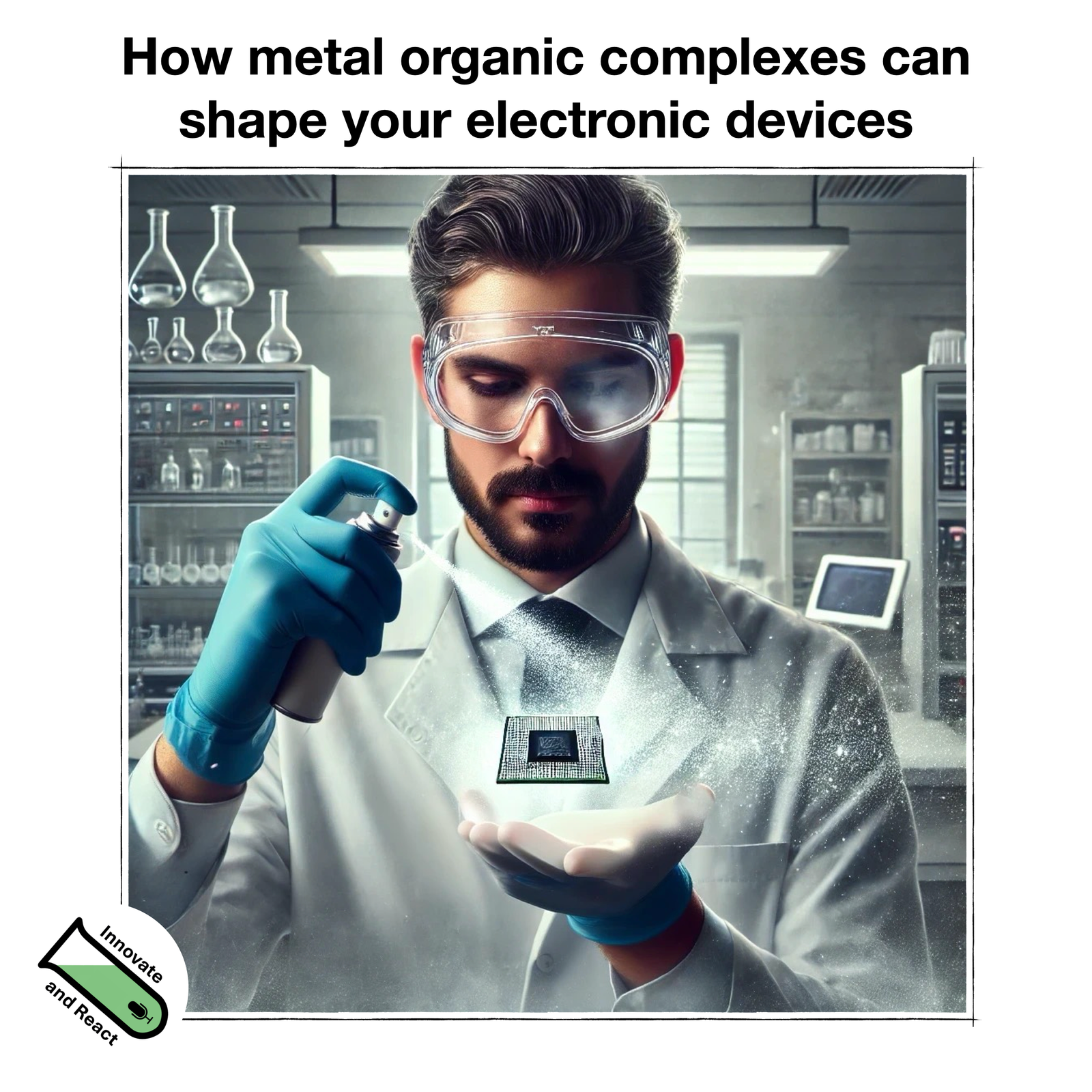
    How metal organic complexes can shape your electronic devices

    Contributors: Dr. Leonardo Santoni Dr. Kevin Hares LinkedIn Thanks for considering to support the show on buymeacoffee.com/innovateandreact ☕️ Summary: In this episode of Innovate and React, Dr. Leonardo Santoni, a postdoctoral researcher at UCL and a science content creator, shares his insights into the fascinating world of metal-organic precursors for low-temperature metal deposition. He presents his PhD research on aluminum complexes for printed electronics, highlighting the challenges of precursor design, deposition techniques, and the potential of sustainable and user-friendly alternatives to pyrophoric materials. In the second part Leonardo gives his opinion on science communication how short form videos can make chemistry accessible for a broader audience. 03:00 From Membranes to Metals: Leonardo’s Research Journey Leonardo introduces his academic background, from filtration membranes to metal-organic complex synthesis for metal deposition in electronics. 07:00 Printed Electronics and Sustainable Conductive Layers A look into how aluminum can be used as a cheaper, recyclable alternative to silver and copper in printed electronics, and why low-temperature deposition is key. 12:00 Designing the Ideal Precursor The importance of ligand design, aluminum-ligand bonding, and balancing stability vs. reactivity for efficient deposition on heat-sensitive substrates like plastics. 28:00 Industry Applications and the Path Ahead How this research can lead to safer, scalable solutions for the electronics industry—and the group’s recent breakthrough with a non-pyrophoric aluminum precursor. 31:00 Communicating Chemistry on Social Media Leonardo shares his journey as a science communicator on TikTok and Instagram, and why he believes pure chemistry deserves more attention online. 38:00 Better Science Storytelling Tips for effective science communication at conferences and online, from simple slide design to authentic video storytelling. 🔗 Resources & Further Reading: Check out his website https://theschlenkchemist.com for all his research and upcoming events “A non-pyrophoric precursor for the low temperature deposition of metallic aluminium” in Nature Communications https://doi.org/10.1038/s41467-025-60786-2 Follow Leonardo on Instagram and TikTok for entertaining chemistry 📩 Got a topic or guest idea? Email me at contact@innovateandreact.com 💬 Connect on LinkedIn | ⭐ Follow & Review the podcast to help others discover it! Have questions about this episode? Leave a comment and we’ll get back to you.

  • Jul 7, 2025 · 59 min

    Fischer-Tropsch: From Waste to Fuel

    Contributors: Theresa Köffler Dr. Kevin Hares LinkedIn Thanks for considering to support the show on buymeacoffee.com/innovateandreact ☕️ Summary: In this episode of Innovate and React, Theresa Köffler from BEST – Bioenergy and Sustainable Technologies in Vienna is talking about how to turn waste into fuel. We explore the fascinating role of Fischer-Tropsch synthesis for producing sustainable fuels. From the development of demonstration plants to the integration of syngas from biogenic feedstocks, Theresa shares insights into the future of sustainable aviation fuel (SAF) and decentralized energy systems. The episode covers both the technical challenges and the broader implications for climate-friendly energy independence. 03:00 The Role of BEST in Bridging Research and Industry Theresa explains BEST’s mission to connect fundamental research with industrial application, and the collaborative ecosystem involving universities, government, and businesses. 14:00 Introduction to Fischer-Tropsch Synthesis A deep dive into the 100-year-old Fischer-Tropsch process, its modern revival for sustainable fuel production, and how biogenic feedstocks make it carbon-neutral. 23:00 Syngas from Biomass and Waste Theresa explains syngas production from diverse feedstocks such as wood chips, sewage sludge, and coconut shells, and why gas cleaning is a crucial step before synthesis. 33:00 Fuel Processing and Product Fractions Learn how different hydrocarbon products (diesel, waxes, naphta) are separated and refined, including insights into catalyst types and downstream processing. 53:00 Future Pathways: CO Electrolyzers and Power-to-Liquid The discussion turns to integrating renewable electricity via CO₂ electrolysis, potentially enabling localized and scalable fuel production directly from electricity and waste. 🔗 Resources & and further reading: BEST – Bioenergy and Sustainable Technologies Publications by BEST More info on: BEST SlurryFTS4XtL Project 📩 Got a topic or guest idea? Email to contact@innovateandreact.com or 💬 Connect on LinkedIn | ⭐ Follow & Review the podcast to help others discover it! If you have questions regarding the episode feel free to leave a comment and we will answer it.

  • Jun 19, 2025 · 1 hr 6 min

    Green Methanol: Old Chemistry Meets New Energy

    Contributors: Dr. Kevin Hares LinkedIn Florian Nestler Thanks for considering to support the show on buymeacoffee.com/innovateandreact ☕️ In this episode we discuss the critical role of methanol synthesis and hydrogen carriers in the energy transition. Florian, a scientific advisor at Fraunhofer ISE, explains his work in sustainable synthesis processes and the significance of hydrogen as a renewable energy carrier. We delve into the technical challenges of methanol synthesis using CO2 and hydrogen, the importance of dynamic operation and the purity of the syngas feedstock. Florian also highlights the strategic advantages of utilizing green methanol and advanced synthesis processes for industrial applications and future energy systems, as well as the potential for power-to-X technologies. 00:32 Overview of Fraunhofer ISE and Its Divisions 01:20 Hydrogen Technologies and Their Applications 04:07 Methanol and Its Role in Energy Transition 20:27 Dynamic Operations in Methanol Synthesis 34:25 Reactor Design Challenges 34:56 Catalyst Activity and Stability 41:22 Side Products in Methanol Synthesis 56:19 Future of Green Technology 01:01:42 DME as an alternative Hydrogen Carrier Find out more about Florians publication about how the syngas composition influences the methanol synthesis here (Link) and more informations on Sustainable Synthesis Products department at Fraunhofer ISE here (link). If you have any questions regarding this episode or want to talk about your research and want to be part of a future episode find mit on LinkedIn or contact me via email Contact. Many thanks to aloc for providing the music.