Skip to content
Artwork for Hyperfocus with Rae Jacobson
Health & FitnessMental HealthEducationSelf-ImprovementSociety & CultureRelationships

Hyperfocus with Rae Jacobson

Rae Jacobson, Understood.org

Hyperfocus is a show that zeroes in on what fascinates us about ADHD, mental health, and learning.

Big questions like, “Does ADHD make you more likely to have postpartum depression?” Little nitpicks (TikTok was wrong about something?!), and personal conversations with everyone from old bosses and hilarious comedians, to leading researchers.

Because on this show, hyperfocus isn’t the distraction — it’s the assignment.

Play
  • 20 episodes
  • fortnightly
  • Avg 26 min
  • English
  • #52
    August 13 · 22 min

    Is your ADHD brain fog actually CDS?

    Many people with inattentive ADHD feel like something is missing from their diagnosis. That missing piece might be cognitive disengagement syndrome, or CDS: a cluster of symptoms including daydreaming, confusion, daytime sleepiness, and more. CDS isn’t officially its own disorder. But scientists and clinicians are beginning to recognize it as something distinct from ADHD — though it often overlaps. Pediatric psychologist Melissa Miller explains how CDS differs from ADHD, what it looks like, an

  • #51
    July 30 · 24 min

    “Hope is not a plan:” How to manage ADHD at work (classic)

    ADHD can create all kinds of challenges in the workplace. Like a list of infinite things to do and to remember. A busy, ever-changing schedule. And co-workers who don’t always know what’s going on in your mind.  There’s a lot to figure out. But recently, Rae Jacobson found herself wondering what it's like on the other side — to manage someone who’s neurodivergent and still figuring it out.  So, Rae called her former boss, Caroline Miller, the editorial director of the Child Mind Institute.

  • #50
    July 16 · 17 min

    What the rise of fidget toys means for neurodivergence

    Fidget toys, like NeeDohs, are sold out and  banned in classrooms. Journalist Anna North joins us to unpack how fidget toys went from gag gifts to a generational obsession, and what that shift reveals about neurodivergence, attention, and play. Plus, fidget toys are not just for kids. We look at how they are destigmatizing fidgeting for neurodivergent adults. And we dig into the science behind fidgeting, the history of the fidget spinner, and whether this wave of acceptance for sensory needs wil

  • #49
    July 2 · 15 min

    Why people with ADHD quit therapy

    Finding a therapist is hard. Finding one who actually understands ADHD? That’s a different problem entirely. Clinical psychologist Dr. Michelle Frank, who has ADHD herself, breaks down why people with ADHD struggle to stick with therapy. She looks at everything from the executive function demands of just getting there, to sensory issues, to the rejection sensitivity that makes you think “Does my therapist hate me?!” Plus: How to advocate for yourself in the room, even when your provider doesn’t

  • #48
    June 18 · 27 min

    Head, heart, hormones: Why women’s ADHD care should treat the whole person (classic)

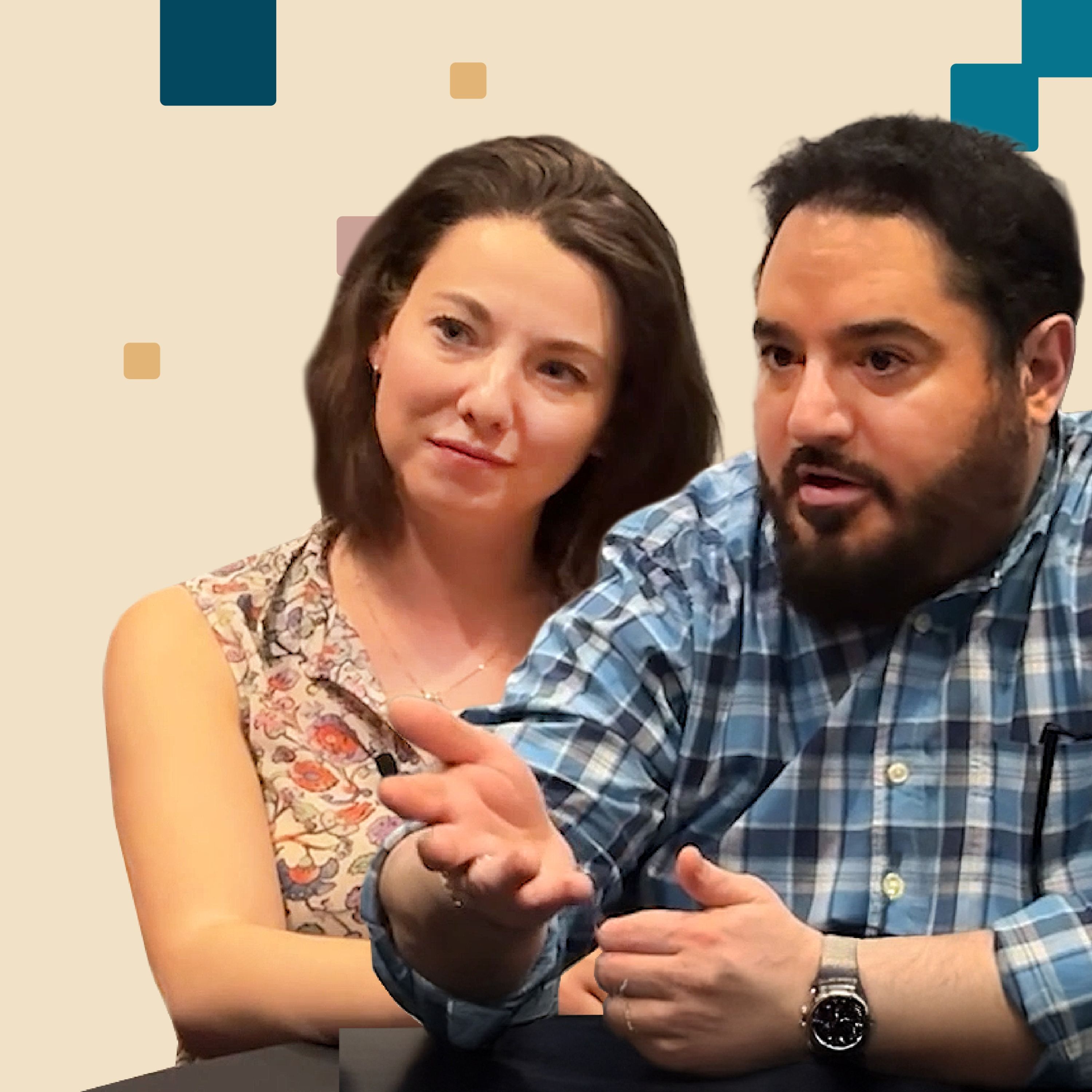
    Last year, Hyperfocus took a field trip to San Diego for an ADHD conference called APSARD, which stands for the American Professional Society of ADHD and Related Disorders (quite a mouthful). A conference of ADHD professionals might not sound fascinating, but it was — and we learned a ton. But there was one person and one talk I really wanted to find: A keynote speech about how ADHD affects women’s bodies by Dr. Sandra Kooij. What Sandra is doing is something so sensible and radical: Looking at ADHD as a whole-body issue. Digging into how it can affect women’s hormones, our health, and especially our hearts. I find Sandra’s research fascinating and was thrilled when she agreed to sit down for a conversation with me. We didn’t waste any time and quickly set up a makeshift studio for this week’s episode of Hyperfocus. Also, a quick note on the audio this week: We had to record this episode outside the conference hotel, on a bustling patio full of ADHD professionals and some noisy birds. So, please forgive the extraneous sounds. Note: We originally published this episode on March 6, 2025. Related resources MissUnderstood: The ADHD in Women Channel Did my ADHD make me more likely to have postpartum depression? ADHD Powerbank: Sandra’s video platform The Head, Heart, Hormones foundation (in dutch with translations) Prevalence of hormone-related mood disorder symptoms in women with ADHD The heart health and ADHD connection For a transcript of this episode and more resources, visit the Hyperfocus page on Understood.org. We’d love to hear from you. Email us at hyperfocus@understood.org As kids head back to school, it's a good time to remember: not every student experiences the classroom the same way. Through My Eyes, a free interactive experience from Understood, lets you step into a day in the life of a kid with ADHD, dyslexia, or dyscalculia. See their strengths and challenges in a whole new way. Try it out here. Understood is a nonprofit organization dedicated to empowering people with learning and thinking differences, like ADHD and dyslexia. If you want to help us continue this work, donate at understood.org/give Hosted by Simplecast, an AdsWizz company. See pcm.adswizz.com for information about our collection and use of personal data for advertising.

  • #47
    June 4 · 25 min

    Why people with ADHD can’t sleep (and what actually helps)

    If you have ADHD, you’re probably exhausted — and there’s a real neurological reason for it. Sleep expert Marlee Boyle, co-founder of Sleep Works, joins us to explain why ADHD brains are wired against a good night’s rest. Plus how perimenopause can make it worse. She walks us through CBT-I techniques, the truth about melatonin, and some surprisingly low-tech tools that can fix your circadian rhythm. If you have trouble falling asleep or staying asleep, this one is for you.

  • #46
    May 21 · 24 min

    I’m an ADHD expert. My kid still can’t get help.

    Today’s episode is a crossover with Understood’s new podcast, Everyone Gets a Juice Box. Host Jessica Shaw interviewed Rae about something she rarely discusses on Hyperfocus: Being a mom to a fabulous kid with ADHD. Even with Rae’s 20 years of experience studying and writing about ADHD, getting help for her child in school has been really challenging. Here’s how she’s supporting her daughter while they wait for school services.

  • #45
    May 7 · 18 min

    The gene that could change how we treat ADHD

    What if your brain had a volume knob? Researcher Dr. Zachary Gershon joins Rae to explain Homer1a, a gene variant that may hold the key to how we focus. When levels are lower during development, the brain gets better at filtering out distractions, or what scientists call “neural noise.” This discovery could one day lead to non-stimulant treatment options for ADHD. And it started with one scientist’s very personal question.

  • #44
    April 23 · 27 min

    Can I get rid of my adult sensory issues?

    Rae puts on her most uncomfortable pants (on purpose!) to ask a fashion designer and former special ed teacher whether adults can actually get over sensory issues. Julia DeNey, founder of sensory clothing brand Sense-ational You, breaks down why tactile sensitivity doesn’t disappear at 18, what adaptive fashion can (and can’t) fix, and why telling yourself “today’s the day I get over it” is the worst possible strategy.

  • #43
    April 9 · 20 min

    PMDD: Why women with ADHD are 4x more likely to struggle

    Hyperfocus listener Jenna Plonsky opens a raw conversation about ADHD, late diagnosis, and the mental health struggles many women face in silence. From postpartum depression to PMDD, this episode explores how hormonal shifts intersect with neurodivergence — and why so many go undiagnosed for decades. It’s an honest look at shame, self-perception, and the turning point that comes with finally understanding your brain.

  • #42
    March 26 · 26 min

    Is “ring of fire” ADHD real?

    Our team has been seeing something called “ring of fire” ADHD spreading across the internet. It’s a supposed subtype of ADHD promoted by Daniel Amen, a celebrity psychiatrist with clinics in multiple states and a huge online following. But in reporting this episode, we found that “ring of fire” ADHD isn’t recognized by mainstream science. Nor are brain scans approved by the FDA as a diagnostic tool for ADHD. Our guest today, clinical psychologist Roberto Olivardia, PhD, explains why he believe

  • #40
    February 26 · 26 min

    Why there’s no “gold standard” for adult ADHD tests

    Last fall, I heard something that floored me: The tests we have for ADHD in adults don’t work very well. As an adult with ADHD, I think about this all the time because our diagnosis is so stigmatized and so misunderstood. It’s overdiagnosed. It’s underdiagnosed. Everybody has it. Nobody has it. If only there were a silver bullet or some test that could definitively say yes or no. So, I asked the two Chicago School faculty members who got me thinking about this after their presentation at the

  • #39
    February 12 · 25 min

    Conduct disorder: A controversial diagnosis with lifelong consequences

    Diagnoses are meant to help people access care, but some diagnoses carry far more consequences than others. Conduct disorder is one of them. Diagnosing someone with conduct disorder can be like placing a lifelong label on them — a label that can shape how educators, clinicians, and institutions interpret behavior long after the diagnosis is made. Studies show that Black, brown, and low-income children are far more likely to be diagnosed with conduct disorder. And the stigma attached to that lab

  • #38
    January 29 · 41 min

    The ADHD content economy: How algorithms and incentives turn help into grift

    The ADHD internet is crowded — and not all content is created equal. From unlicensed coaches to miracle cures and viral “hacks,” misinformation spreads fast and wide. The problem is that many prominent voices have little to no formal training. And algorithmic incentives encourage creators to bait their audience. Cate Osborn, known online as @catieosaurus, joins Hyperfocus to explain how the ADHD content economy works. She looks at why grifting thrives and how power, profit, and trust in online

  • #37
    January 15 · 41 min

    Kids are at a breaking point, and school policies might be to blame

    U.S. kids are more depressed, stressed, and anxious than ever. ADHD and autism diagnosis rates are steadily rising. What’s going on? In this episode of Hyperfocus, journalist Jia Lynn Yang joins Rae to examine how major school policy shifts in the U.S. have changed what’s expected of kids, often with unintended — and serious — consequences. Drawing from her New York Times reporting and her personal experience as a parent, Jia Lynn explores whether school itself may be contributing to the cri

  • #36
    Dec 18, 2025 · 26 min

    How are ADHD and chronic pain connected?

    If you have ADHD or autism, research shows you’re at a much higher risk for developing chronic pain — a connection many doctors and patients still don’t know about. In this episode of Hyperfocus, we talk with a doctor who’s trying to change that. Dr. Michael Lenz, a Wisconsin-based pain specialist, explains what the medical community is discovering about the connection between ADHD, autism, and chronic pain, including conditions like fibromyalgia and migraines. He also shares stories from his p

  • #35
    Dec 4, 2025 · 48 min

    The over-pathologizing of ADHD (From Hacking Your ADHD)

    This week on Hyperfocus, Rae is in the guest seat for an appearance on Hacking Your ADHD, a podcast hosted by William Curb. Listen for a fascinating conversation on a topic that’s really common in ADHD circles: the tendency to attribute everyday behaviors to ADHD.

  • #33
    Nov 20, 2025 · 21 min

    Trans with ADHD: Finding good care shouldn’t be this hard

    One of the most urgent ADHD research gaps has to do with ADHD and trans people. We know there are lots of trans folks with ADHD. But when it comes to understanding how best to treat them, it’s a whole different story. That’s why we wanted to talk to someone who knows this experience well. Ivan Hsiao is the founder of Trans Health HQ. He joined this week’s Hyperfocus to share his own diagnosis story and to talk about what we do (and don’t) know about being trans with ADHD.

  • #34
    Nov 6, 2025 · 37 min

    The uncertain future of special education in the United States

    Last month, the Trump administration laid off over 460 people in the U.S. Department of Education. It included nearly everyone in the Office of Special Education Programs (OSEP), which enforces federal special education laws. A federal judge has temporarily halted the layoffs, but it’s unclear what will happen next. For people who work in or rely on special education services — including 7.5 million kids — the chaos and worry have already begun. So on this week’s Hyperfocus, we wanted to talk

Showing 1–20 of 20 episodes