Skip to content
Artwork for From the MLJ Archive on Oneplace.com

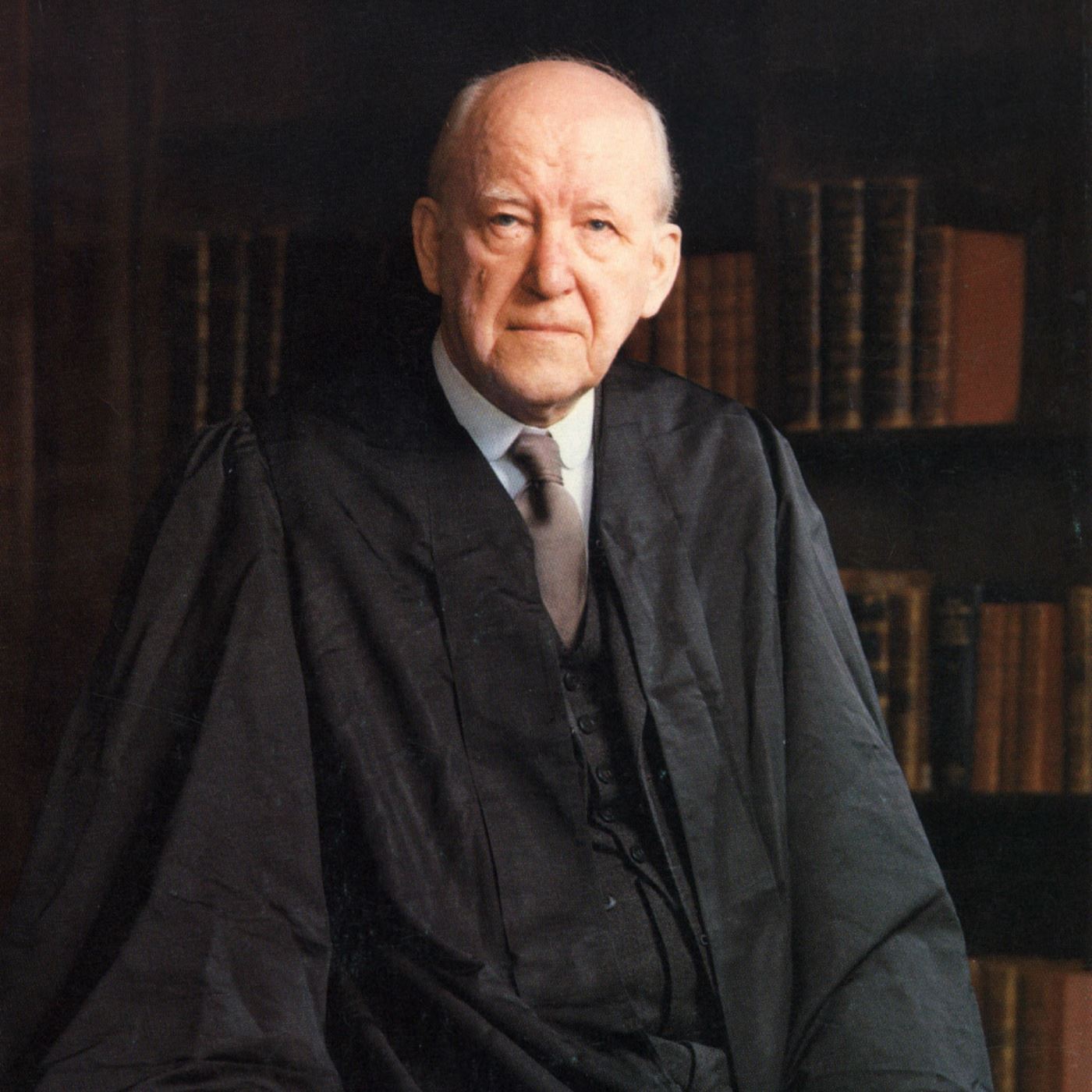
From the MLJ Archive on Oneplace.com

Dr. Martyn Lloyd-Jones

From the MLJ Archive is the Oneplace.com hosted ministry of the MLJ Trust. Our mission is to promulgate the audio ministry of Dr. Martyn Lloyd-Jones.

Play
  • 79 episodes
  • daily
  • Avg 44 min
  • English
Counted on this page — what you have heard stays on this device, so it is not something the list can be paged by.
  • Yesterday · 46 min

    Hope for the World

    Is there hope for the world? Is there a purpose and plan for the Christian? In this sermon on Ephesians 3:9–11 titled “Hope for the World,” Dr. Martyn Lloyd-Jones addresses the question of hope amidst the seeming chaos and pointlessness of life on earth. The only hope is in the gospel of Jesus Christ. In the darkness of the world and in the minds of men and women, Christ is the light of the world. The world is God’s creation and He has had a plan and purpose for His creation since before the foundations of the earth were formed. This plan is revealed in God’s word, the Bible. The ultimate hope that is found in Christ does not, however, mean that the end of war, evil, and darkness will end in this age. The end of these things will come with the return of Christ. Rather, the Christian’s hope is the hope of salvation in Christ that points to the eternal home and reward, not a temporary peace in the circumstances of humanity. To support this ministry financially, visit: https://www.oneplace.com/donate/603/29?v=20251111

  • Saturday · 48 min

    The Minister - Task and Calling

    In this sermon on Ephesians 3:7–8 titled “The Minister – Task and Calling,” Dr. Martyn Lloyd-Jones lays out the calling and job of the minister as addressed here by Paul. The minister is called and appointed by God alone. He is called to preach the unsearchable treasures of Christ, that is Christ himself. Dr. Lloyd-Jones goes on to show that the treasures of Christ are for all believers. In Christ all that is needed is found, including wisdom, knowledge, and understanding. When one has understanding and realizes their sin, how can they possibly approach the holy God they know they need? He can be approached only in Christ who clothes Christians with His righteousness. Christians can continue their lives with God when they face sin and evil only through sanctification in Christ. Christ sanctifies through the power of the Holy Spirit. Dr. Lloyd-Jones ends with an encouragement – knowing the unsearchable treasures of Christ, that is, knowing Christ, is the greatest treasure. It is a great privilege and responsibility to take that treasure and show it to the unbelieving world. To support this ministry financially, visit: https://www.oneplace.com/donate/603/29?v=20251111

  • Friday · 47 min

    Two Mysteries - Jew, Gentile

    True unity can exist within the church. Since Christians are fellow heirs, members of the same body, and partakers of the promise, harmony can be found between Jew and Gentile. In this sermon on Ephesians 3:2–7 titled “Two Mysteries – Jew, Gentile,” Dr. Martyn Lloyd-Jones discusses the general mystery of Christ that is the glorious story of the gospel and the particular mystery of the Gentiles now being fellow heirs, members of the same body, and partakers of the promise just as the Jews. Dr. Lloyd-Jones stresses here the importance that there now is no difference as to membership in the family of God between Jews and Gentiles. There is no longer a need for a Gentile to become a Jewish proselyte since they are now members of the same body. This is important because this mystery had not always been known to the people of God. Paul, here in this text, is pointing out that this mystery has now been revealed and Jew and Gentile are members of the same body. Amidst this glorious message of salvation Dr. Lloyd-Jones also takes time to address a particular fallacy that is believed by some regarding this text and the biblical evidence against it. To support this ministry financially, visit: https://www.oneplace.com/donate/603/29?v=20251111

  • Thursday · 44 min

    The Mystery of Christ

    What is the mystery of Christ? Why did God wait so long for Him to be revealed? In this sermon on Ephesians 3:2–7 titled “The Mystery of Christ,” Dr. Lloyd-Jones explores the importance and uniqueness of the apostles and the glorious message not revealed until the New Testament. The mystery of the gospel has been revealed and can now be understood. It is not the vague feelings found in mysticism but the one true gospel. Through the recounting of Paul’s imprisonment to the Ephesians, Paul encourages them to stay strong in the faith. That the mystery that has been revealed is true, marvelous, and worth believing above all else. It is worth the imprisonment that Paul is joyfully enduring. They needn’t worry about present circumstances and his imprisonment but should rather glory in their salvation and in the gospel. God’s plan of salvation is a wondrous thing and worth contemplating. No one’s intelligence could ever unravel this wondrous mystery. Dr. Lloyd-Jones soberly reminds the listener that they must be enlightened by the Holy Spirit in order to understand. To support this ministry financially, visit: https://www.oneplace.com/donate/603/29?v=20251111

  • Wednesday · 46 min

    Suffering as Christ's Prisoner

    Is there something worth giving up one’s life for? In this sermon on Ephesians 3:1 titled “Suffering as Christ’s Prisoner,” Dr. Martyn Lloyd-Jones contends with Paul that Jesus is worth it. Paul was concerned because he knew his suffering would trouble the Ephesians because suffering is confusing. However, he also gives the Ephesians the principles by which to process his suffering and theirs. According to Dr. Lloyd-Jones, Paul examined his situation in light of the gospel, Jesus, and his salvation, and came to several pivotal conclusions. First, suffering is worth rejoicing in. He knows that he is following in the footsteps of Christ. Paul states that he is “Christ’s prisoner,” implying that he is suffering on behalf of Jesus. He was there because he preached the gospel and specifically he preached it to the Gentiles. Paul also argues that his suffering should be an encouragement to the Ephesians (verse 13). Dr. Lloyd-Jones notes that Paul said this because he knew that his suffering would encourage them as to the truthfulness of the gospel. To support this ministry financially, visit: https://www.oneplace.com/donate/603/29?v=20251111

  • Tuesday · 47 min

    Two Mysteries - Jew, Gentile

    True unity can exist within the church. Since Christians are fellow heirs, members of the same body, and partakers of the promise, harmony can be found between Jew and Gentile. In this sermon on Ephesians 3:2–7 titled “Two Mysteries – Jew, Gentile,” Dr. Martyn Lloyd-Jones discusses the general mystery of Christ that is the glorious story of the gospel and the particular mystery of the Gentiles now being fellow heirs, members of the same body, and partakers of the promise just as the Jews. Dr. Lloyd-Jones stresses here the importance that there now is no difference as to membership in the family of God between Jews and Gentiles. There is no longer a need for a Gentile to become a Jewish proselyte since they are now members of the same body. This is important because this mystery had not always been known to the people of God. Paul, here in this text, is pointing out that this mystery has now been revealed and Jew and Gentile are members of the same body. Amidst this glorious message of salvation Dr. Lloyd-Jones also takes time to address a particular fallacy that is believed by some regarding this text and the biblical evidence against it. To support this ministry financially, visit: https://www.oneplace.com/donate/603/29?v=20251111

  • October 12 · 44 min

    The Mystery of Christ

    What is the mystery of Christ? Why did God wait so long for Him to be revealed? In this sermon on Ephesians 3:2–7 titled “The Mystery of Christ,” Dr. Lloyd-Jones explores the importance and uniqueness of the apostles and the glorious message not revealed until the New Testament. The mystery of the gospel has been revealed and can now be understood. It is not the vague feelings found in mysticism but the one true gospel. Through the recounting of Paul’s imprisonment to the Ephesians, Paul encourages them to stay strong in the faith. That the mystery that has been revealed is true, marvelous, and worth believing above all else. It is worth the imprisonment that Paul is joyfully enduring. They needn’t worry about present circumstances and his imprisonment but should rather glory in their salvation and in the gospel. God’s plan of salvation is a wondrous thing and worth contemplating. No one’s intelligence could ever unravel this wondrous mystery. Dr. Lloyd-Jones soberly reminds the listener that they must be enlightened by the Holy Spirit in order to understand. To support this ministry financially, visit: https://www.oneplace.com/donate/603/29?v=20251111

  • October 11 · 46 min

    Suffering as Christ's Prisoner

    Is there something worth giving up one’s life for? In this sermon on Ephesians 3:1 titled “Suffering as Christ’s Prisoner,” Dr. Martyn Lloyd-Jones contends with Paul that Jesus is worth it. Paul was concerned because he knew his suffering would trouble the Ephesians because suffering is confusing. However, he also gives the Ephesians the principles by which to process his suffering and theirs. According to Dr. Lloyd-Jones, Paul examined his situation in light of the gospel, Jesus, and his salvation, and came to several pivotal conclusions. First, suffering is worth rejoicing in. He knows that he is following in the footsteps of Christ. Paul states that he is “Christ’s prisoner,” implying that he is suffering on behalf of Jesus. He was there because he preached the gospel and specifically he preached it to the Gentiles. Paul also argues that his suffering should be an encouragement to the Ephesians (verse 13). Dr. Lloyd-Jones notes that Paul said this because he knew that his suffering would encourage them as to the truthfulness of the gospel. To support this ministry financially, visit: https://www.oneplace.com/donate/603/29?v=20251111

  • October 10 · 44 min

    Personal Evangelism

    “How can we have unity without uniformity?” In this sermon on evangelism from Ephesians 2:20–22 , Dr. Martyn Lloyd-Jones seeks to answer this question. Titled “Personal Evangelism,” His desire is to look at the application of the passage, namely the work of the Holy Spirit in building the church. First, according to Dr. Lloyd-Jones, Christians must not let others dictate their callings. As he states, there is a danger to just doing “the thing to do.” Each Christian has a responsibility before God to obey Him and Him only. Even the thing that seems like a reasonable call for a person may not be their call at all. By way of illustration, he uses his own call. After leaving his profession as a doctor for ministry, he was pressured by an executive in a missionary organization to become a medical missionary instead of a pastor. Dr. Lloyd-Jones found this to be a biblically ignorant action because the calling of God is between God and the person being called. Dr. Lloyd-Jones also discusses evangelism and several ways that Christians can be faithful. First, he notes that evangelism should an overflow of the Holy Spirit’s presence, not an endeavor to simply know all the answers. Second, faithfulness can be seen in being a good listener, faithful church attendance, and other such “small” tasks. To support this ministry financially, visit: https://www.oneplace.com/donate/603/29?v=20251111

  • October 9 · 45 min

    Parts of the Whole

    If an employee of a company decides that they are not going to consider the good of the company when making decisions, the employee is not going to last long. In humanity’s natural state, this selfish attitude will invade all of life. How can the church be different? In this sermon on Ephesians 2:20–22 titled “Parts of the Whole,” Dr. Martyn Lloyd-Jones examines the startling reality of unity and diversity in the church because of the work of the Holy Spirit. The church is composed of many different stones and Dr. Lloyd-Jones asserts that it is the job of each stone to think of itself in relation to the rest of the building. He argues that many people are not grounded enough in their identity as a member of the church and tend to be too subjective. Also, many become selfish and claim aspects of the church (such as ministries, churches, and denominations) as their own, rather than focusing on serving for the glory of Christ. Each stone has a specific part to play in the wall, not with meaningless activity, but serving in whatever way God calls them to serve. Also, Dr. Lloyd-Jones notes that a dangerous mistake is when people start “doing without being.” To support this ministry financially, visit: https://www.oneplace.com/donate/603/29?v=20251111

  • October 8 · 45 min

    Built Together by the Holy Spirit

    How can something be one and yet many different things? This is the nature of the church where each member is different, but part of one body. In this sermon on Ephesians 2:20–22 titled “Built Together by the Holy Spirit,” Dr. Martyn Lloyd-Jones probes into how this can happen and who produces it. First, Dr. Lloyd-Jones makes a distinction between individuals and being individualistic. The former is, as he notes, a beautiful aspect of the church. Each stone is hewn differently—every Christian is different—but each stone does not pursue isolation. Each stone needs the others to be a temple. The differences in the church, according to Dr. Lloyd-Jones, spotlights the nature of a living God. However, who is the one responsible for the unity in the diversity? As he observes from Ephesians, the builder of the temple is the Holy Spirit (vs 22). As Dr. Lloyd-Jones notes, the church is a miracle. The Holy Spirit must bring all to the conviction of their depravity and sin in order to shape and mold them into stones for the temple. Also, the Holy Spirit is the one who opens eyes to the truth of the gospel, gives understanding, produces the same fruit, and gives different gifts to members of the church. No one is able to do anything apart from Him. To support this ministry financially, visit: https://www.oneplace.com/donate/603/29?v=20251111

  • October 7 · 44 min

    Personal Evangelism

    “How can we have unity without uniformity?” In this sermon on evangelism from Ephesians 2:20–22 , Dr. Martyn Lloyd-Jones seeks to answer this question. Titled “Personal Evangelism,” His desire is to look at the application of the passage, namely the work of the Holy Spirit in building the church. First, according to Dr. Lloyd-Jones, Christians must not let others dictate their callings. As he states, there is a danger to just doing “the thing to do.” Each Christian has a responsibility before God to obey Him and Him only. Even the thing that seems like a reasonable call for a person may not be their call at all. By way of illustration, he uses his own call. After leaving his profession as a doctor for ministry, he was pressured by an executive in a missionary organization to become a medical missionary instead of a pastor. Dr. Lloyd-Jones found this to be a biblically ignorant action because the calling of God is between God and the person being called. Dr. Lloyd-Jones also discusses evangelism and several ways that Christians can be faithful. First, he notes that evangelism should an overflow of the Holy Spirit’s presence, not an endeavor to simply know all the answers. Second, faithfulness can be seen in being a good listener, faithful church attendance, and other such “small” tasks. To support this ministry financially, visit: https://www.oneplace.com/donate/603/29?v=20251111

  • October 6 · 45 min

    Parts of the Whole

    If an employee of a company decides that they are not going to consider the good of the company when making decisions, the employee is not going to last long. In humanity’s natural state, this selfish attitude will invade all of life. How can the church be different? In this sermon on Ephesians 2:20–22 titled “Parts of the Whole,” Dr. Martyn Lloyd-Jones examines the startling reality of unity and diversity in the church because of the work of the Holy Spirit. The church is composed of many different stones and Dr. Lloyd-Jones asserts that it is the job of each stone to think of itself in relation to the rest of the building. He argues that many people are not grounded enough in their identity as a member of the church and tend to be too subjective. Also, many become selfish and claim aspects of the church (such as ministries, churches, and denominations) as their own, rather than focusing on serving for the glory of Christ. Each stone has a specific part to play in the wall, not with meaningless activity, but serving in whatever way God calls them to serve. Also, Dr. Lloyd-Jones notes that a dangerous mistake is when people start “doing without being.” To support this ministry financially, visit: https://www.oneplace.com/donate/603/29?v=20251111

  • October 5 · 45 min

    Built Together by the Holy Spirit

    How can something be one and yet many different things? This is the nature of the church where each member is different, but part of one body. In this sermon on Ephesians 2:20–22 titled “Built Together by the Holy Spirit,” Dr. Martyn Lloyd-Jones probes into how this can happen and who produces it. First, Dr. Lloyd-Jones makes a distinction between individuals and being individualistic. The former is, as he notes, a beautiful aspect of the church. Each stone is hewn differently—every Christian is different—but each stone does not pursue isolation. Each stone needs the others to be a temple. The differences in the church, according to Dr. Lloyd-Jones, spotlights the nature of a living God. However, who is the one responsible for the unity in the diversity? As he observes from Ephesians, the builder of the temple is the Holy Spirit (vs 22). As Dr. Lloyd-Jones notes, the church is a miracle. The Holy Spirit must bring all to the conviction of their depravity and sin in order to shape and mold them into stones for the temple. Also, the Holy Spirit is the one who opens eyes to the truth of the gospel, gives understanding, produces the same fruit, and gives different gifts to members of the church. No one is able to do anything apart from Him. To support this ministry financially, visit: https://www.oneplace.com/donate/603/29?v=20251111

  • October 4 · 47 min

    The Growth of the Church

    According to Dr. Martyn Lloyd-Jones, every Christian is a part of “something more”—the church. This church is described as a “temple” in Ephesians 2:21. In this sermon on Ephesians 2:20–22 titled “The Growth of the Church,” Dr. Lloyd-Jones dives deeper into this illustration given by Paul and helps the Christian understand the privilege and responsibility that comes with being a part of the church. He notes that in temple construction the stones would be hewn before they were brought to the temple structure and from this he draws several principles. One, there is work done by the Holy Spirit prior to entrance to the church—the Holy Spirit saves the soul. Each Christian has been fashioned spiritually by God and in a way that won’t make sense to the watching world. According to Dr. Lloyd-Jones, this is not because Christianity is irrational but because it is supra-rational. Also, the church is not simply a group of stones thrown together but a group of stones fashioned together by the builder. The church consists of believers and Dr. Lloyd-Jones argues that God is not interested in a big church, but a holy church. He’s not interested in how many are on the church rolls, but how many “believe right doctrine and live accordingly.” To support this ministry financially, visit: https://www.oneplace.com/donate/603/29?v=20251111

  • October 3 · 46 min

    Fitly Framed Together

    What is the most important part of a building? Some may think the walls or the floor, but it is always the foundation. In the church, it is no different. In this sermon on Ephesians 2:20–22 titled “Fitly Framed Together,” Dr. Martyn Lloyd-Jones continues teaching a further understanding of the nature of the church and the application that truth has for the Christian. Previously, Dr. Lloyd-Jones expounded on the importance of the foundation (apostles, prophets, and Christ being the cornerstone), but he turns to the stones being placed on the foundation—the church. First, each stone must be “truly and rightly related to that foundation” and to each other. Each stone (or church member) is different, but is still inseparably tied to the rest of the building. Also, each stone must be connected to the foundation. Ultimately God is the builder, but as Dr. Lloyd-Jones notes, God uses pastors (1 Cor 3:10-15). Dr. Lloyd-Jones issues a warning for pastors that they are careful what they build the church with. Ploys can be used to build big churches, but only those who have a “vital union” with the foundation—Jesus—will last. God is building His church to be “harmoniously fitted together” with true believers of every type of person. To support this ministry financially, visit: https://www.oneplace.com/donate/603/29?v=20251111

  • October 2 · 44 min

    The Only Foundation

    If a foundation is bad, the building will collapse. Therefore, one must ask, “What is the foundation of the church?” By the grace of God, the church has a stable foundation in the apostles and prophets, with Christ as the chief cornerstone. In this sermon on the foundation of the church from Ephesians 2:20–22 titled “The Only Foundation,” Dr. Martyn Lloyd-Jones preaches on the nature and importance of that foundation. He argues that the church is a miracle. Paul argues that the unthinkable has happened: Jews and Gentiles are brought together in Christ. The foundation of the church is found in two statements: 1) “the apostle and prophets,” and 2) “Jesus Christ himself being the cornerstone” (verse 20). According to Dr. Lloyd-Jones, the first is referring to the people themselves, but also the doctrines that they set forth. The second refers to Jesus and means that everything is held together by Him. Dr. Lloyd-Jones argues that nothing can be added to or taken away from that foundation and there can be no unity apart from this foundation. One cannot be a Christian if they deny the person and work of Christ. Therefore, Dr. Martyn Lloyd-Jones challenges the listener to question what they believe about Jesus, if they know Him, and if they are in Him. To support this ministry financially, visit: https://www.oneplace.com/donate/603/29?v=20251111

  • October 1 · 47 min

    An Habitation of God

    In his continued exposition of the analogies that are used for the church, Dr. Martyn Lloyd-Jones comes to what he views as the deepest analogy of them all—a temple of God. In this sermon on building the temple of God from Ephesians 2:20–22 titled “A Habitation of God,” Dr. Lloyd-Jones points to the two themes of unity and privilege. Unity can be seen by the closeness and necessity of each brick of a building. Each brick can be different, but if one begins to take away bricks, the building will start to fall apart. The privilege of the church can be seen by the nearness to God. “God dwells within her” and this is the greatest privilege. Also, this is a temple being built by God, not by people, and it is a vital building. He exhorts grabbing hold of the nature of the church because a false view leads, and has lead, to issues in the church. To support this ministry financially, visit: https://www.oneplace.com/donate/603/29?v=20251111

  • September 30 · 46 min

    Of the Household of God

    How would one’s life change if they knew that not only were they a citizen of a country, but they were a child of the king? This question is posed in a much deeper way by Dr. Martyn Lloyd-Jones in this sermon on Ephesians 2:19 titled “Of the Household of God.” In his continued sermon series on Ephesians 2:19, he plunges further into the depths of the Christian’s position and privilege. Paul uses the metaphors of a kingdom, the family, and the temple of God. Being part of the kingdom entails unity as a people, along with the rights and privileges of being under the king. Being part of the household of God entails the intimacy and depth of relationship with God. The second is much deeper than the first. By way of application, Dr. Lloyd-Jones points out that understanding the familial relationship of the church should promote deep relationships in the church. Also, according to Dr. Lloyd-Jones, these two descriptors point to the bewildering facets of the love of God towards the Christian, but also demand the responsibility to represent God well. To support this ministry financially, visit: https://www.oneplace.com/donate/603/29?v=20251111

  • September 29 · 44 min

    Privileges and Responsibilities

    Many people vie for the opportunity to be a citizen of a great nation, but Dr. Martyn Lloyd-Jones dives into the reality that Christians have a far greater privilege and responsibility as citizens of the kingdom of God. In this sermon on Ephesians 2:19 titled “Privileges and Responsibilities,” Dr. Lloyd-Jones explains the magnificent realities that entail being made a citizen of the kingdom. God is actively pursuing the good of each and every member of the kingdom. As Dr. Lloyd-Jones notes, “All the resources of the Godhead are for us.” Accordingly, Christians have been given all the spiritual blessings in the heavenly places and find their pinnacle in access to God Himself. Dr. Lloyd-Jones turns the sermon to discuss some of the responsibilities of the Christian. By way of illustration, if a person is in the army, they are going to be expected and required to live, look, and act a certain way, and it will be the greatest joy to do so. They want to represent their king and kingdom well. How much greater is the weight of responsibility for the Christian who was brought into the kingdom by the blood of their King? To support this ministry financially, visit: https://www.oneplace.com/donate/603/29?v=20251111

Showing 1–20 of 79 episodes