Skip to content
Artwork for Foojay.io | Friends of OpenJDK and Java Programming
TechnologyExplicit

Foojay.io | Friends of OpenJDK and Java Programming

Foojay.io | Java and Programming Community

Foojay.io is your go-to programming community podcast, connecting developers with the latest in Java, OpenJDK, JVM, and open source tools. We bring together Java professionals worldwide to share insights, tools, and news in the vibrant Java programming ecosystem.

Play
  • 23 episodes
  • fortnightly
  • Avg 49 min
  • English
Counted on this page — what you have heard stays on this device, so it is not something the list can be paged by.
  • S5 · E84
    Nov 29, 2025 · 46 min

    Developing Performant, Cost Efficient, and Eco-friendly Code (#84)

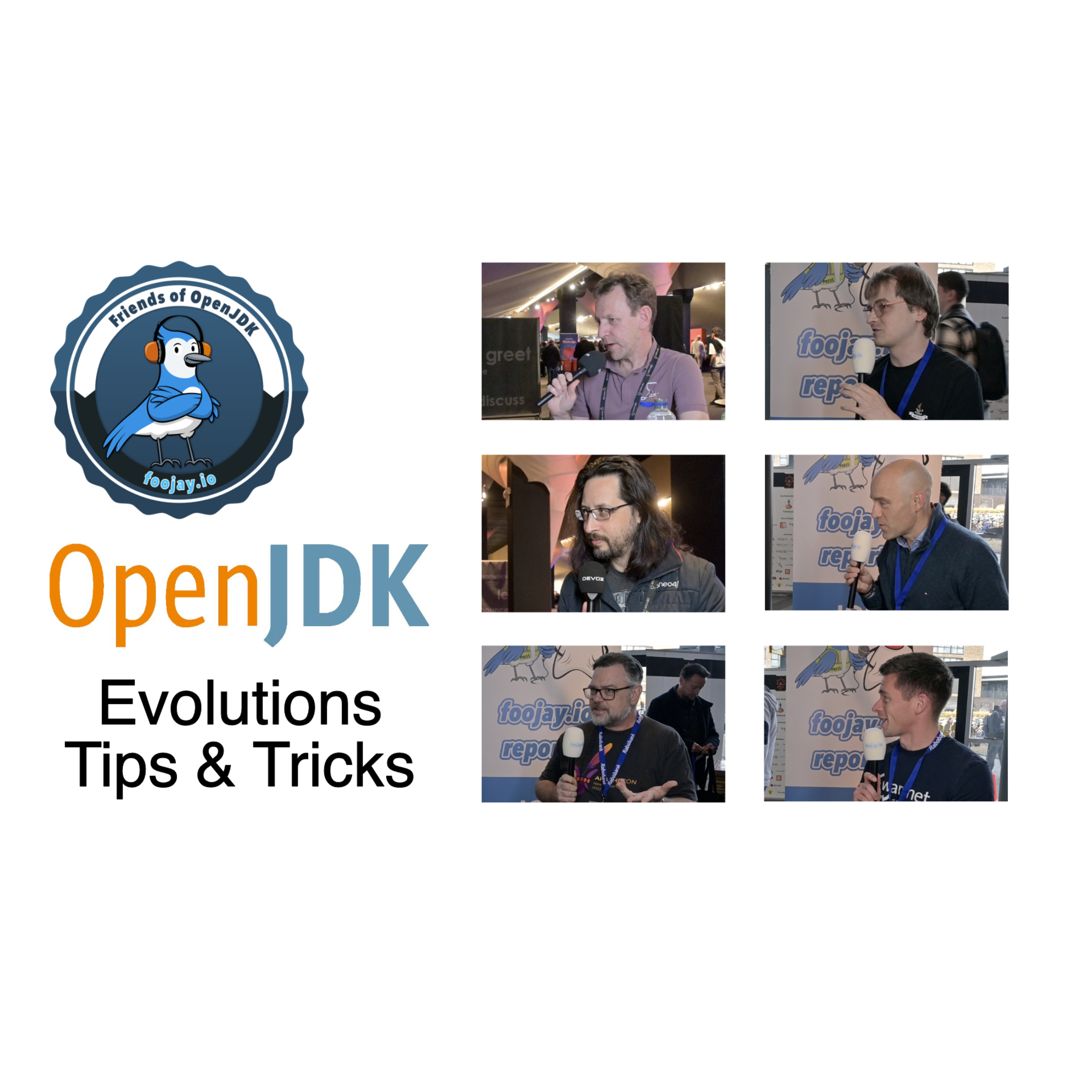
    In this Foojay Podcast, we're exploring a critical topic that's becoming increasingly important in our industry: developing sustainable software that is both performant and environmentally friendly. At the Devoxx and JFall conferences, I had fascinating conversations about how we as Java developers can make a real impact on both our cloud costs and our carbon footprint. And it's interesting to learn how these two goals are often perfectly aligned: what's good for your budget is usually good for the planet too. We start with Daniel Witkowski. He published an article on Foojay that takes us on a deep dive into performance tuning. He explains why optimizing your code can have a thousand times more impact than saving 30% on cloud costs, and walks us through his journey of turning a simple integer validation challenge into a masterclass on Java performance optimization. Next, I caught up with Ko Turk, who shares his passion for sustainable engineering and space exploration. He introduces us to Kepler, a tool for monitoring the energy consumption of your applications, and explains how performance optimization naturally leads to sustainability improvements. Then Ronald Dehuysser, founder of JobRunr, reveals how his open-source job-scheduling library now enables carbon-aware job processing. He explains how JobRunr can automatically schedule non-time-critical jobs to run when renewable energy is most available. And finally, Jan Ouwens joins us to discuss practical strategies for reducing both costs and CO2 emissions in your applications. He explains why cloud spending is actually a good proxy for your carbon footprint. 00:00 Introduction of topic and guests 02:07 Daniel Witkowski https://www.linkedin.com/in/danielwitkowski https://foojay.io/today/the-art-of-performance-tuning-why-saving-30-in-the-cloud-means-nothing-if-your-code-wastes-1000x-more/ https://foojay.io/today/foojay-podcast-83/ Why Saving 30% in the Cloud Means Nothing if Your Code Wastes 1000× More Performance tuning is less about syntax and more about craftsmanship. 29:46 Ko Turk https://www.linkedin.com/in/ko-turk-b271b929/ https://github.com/sustainable-computing-io/kepler Sustainable engineering Kubernetes Efficient Power Level Exporter (Kepler) 32:46 Ronald Dehuysser https://www.linkedin.com/in/ronalddehuysser/ https://www.jobrunr.io/en/ Carbon-aware job processing with JobRunr Growing from an open-source project to a company 37:36 Jan Ouwens https://www.linkedin.com/in/janouwens/ https://jqno.nl/ Reducing the cost and CO2-emissions of your application Private cloud versus cloud providers 45:14 Outro
  • S5 · E83
    Nov 22, 2025 · 47 min

    OpenJDK Evolutions plus Tips and Tricks (#83)

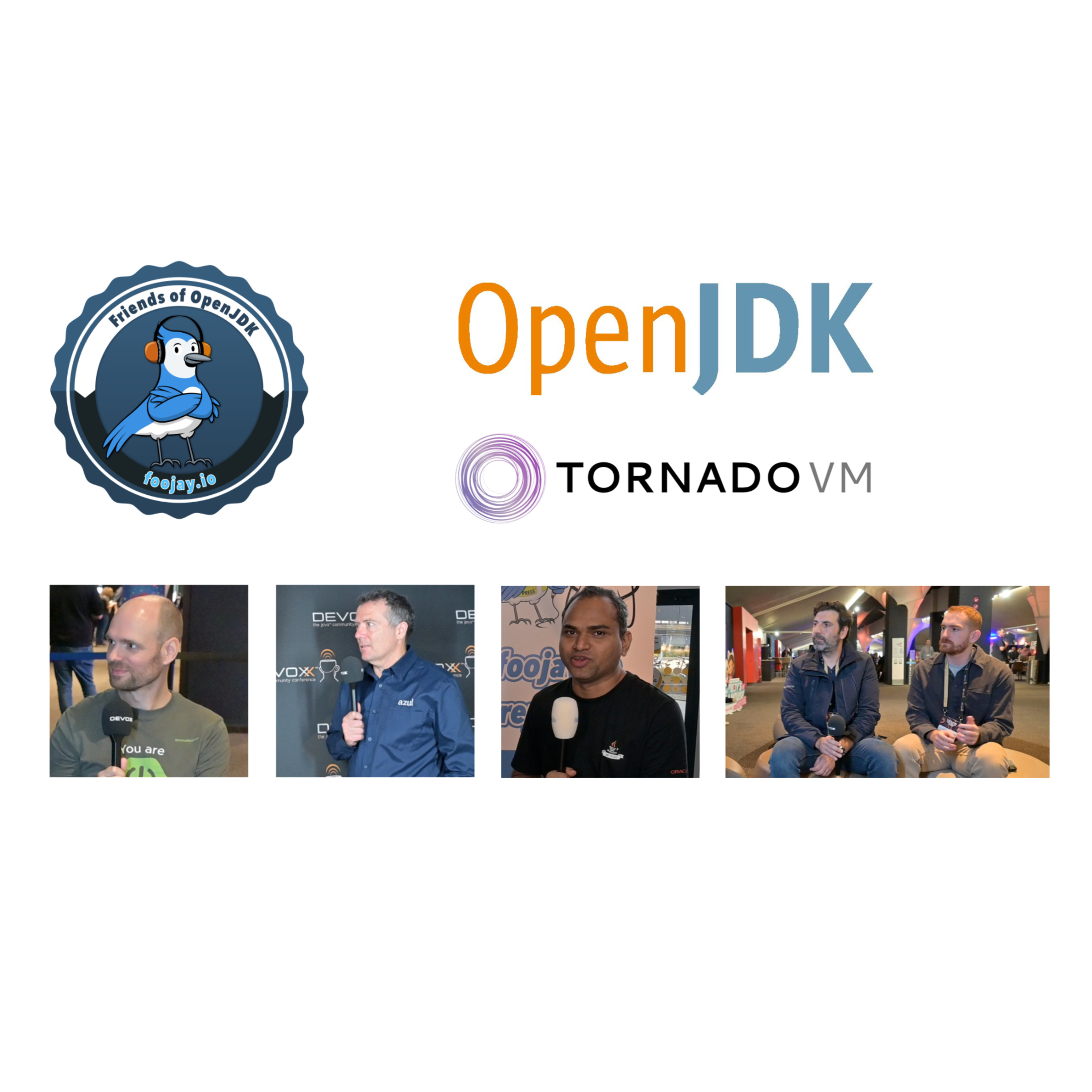
    Welcome to another episode of the Foojay Podcast! Just like in the previous episode, I bring you conversations from two of Europe's premier Java conferences - Devoxx in Belgium and JFall in the Netherlands. At these conferences, I had the opportunity to speak with members of the Java community about topics ranging from the evolution of Java itself to mobile development, performance optimization, and even automotive security. My first guest is Johan Vos, a Java Champion who takes us on a journey through Java's history - from porting Java to Linux in 1995 to his current work on bringing Java and JavaFX to mobile and embedded devices through the Java On Mobile project. Then we'll hear from Stephen Chin, author of "The Definitive Guide to Modern Java Clients with JavaFX," who shares insights on building cross-platform client applications and reflects on how his daughter has followed in his footsteps to become a published author and technology educator. From JFall, Joseph Phillips joins us to discuss Java's evolution, the differences between REST and gRPC, and whether virtual threads have replaced the need for async implementations in modern Java applications. Next, François Martin walks us through the world of Java performance benchmarking with JMH - the Java Microbenchmark Harness - and explains why it's so valuable for comparing different implementations and optimizing code. Wouter De Geus shares his inspiring journey from finance and mathematics into Java development, and how his employer, the Dutch Tax Authority, supports open-source contributions and the Java community. And finally, Roald Nefs demonstrates something truly unique - using Java and the Foreign Function & Memory API to hack into automotive systems, revealing important security considerations for both hardware and software. Content 00:00 Introduction of topics and guests 02:11 Johan Vos https://www.linkedin.com/in/johanvos/ History of Java on Linux How the Java language and runtime are stable and evolving at the same time Looking at the future of Write-Once-Run-Everywhere with Java(FX) on Mobile https://openjdk-mobile.github.io/ 19:04 Stephen Chin https://www.linkedin.com/in/steveonjava/ Author of "The Definitive Guide to Modern Java Clients with JavaFX" Cassandra Chin: https://www.linkedin.com/in/cassandra-chin-developer/ Her book: https://www.amazon.nl/Raising-Young-Coders-Teaching-Programming/dp/B0DVBQZ483 23:22 Joseph Phillips https://foojay.social/deck/@infosec812 Java evolutions, community REST versus gRPC Do we still need async or are virtual threads a better solution? 27:49 François Martin https://www.linkedin.com/in/fran%C3%A7oismartin Java performance micro benchmarks with jmh https://github.com/openjdk/jmh 33:30 Wouter De Geus https://www.linkedin.com/in/wadegeus/ Moved from finance to software development Contributing back to the open-source community 39:33 Roald Nefs https://www.linkedin.com/in/roaldnefs/ Hacking cars with the FFM API Hardware and software security concerns What you can learn from the Java community 46:29 Outro

  • S5 · E82
    Nov 15, 2025 · 34 min

    OpenJDK Projects (Leyden, Babylon, Panama) and TornadoVM (#82)

    In this Foojay Podcast, we're diving deep into some of the most exciting developments happening within the OpenJDK and TornadoVM projects. At the Devoxx and JFall conferences, we spoke with several speakers and visitors about some of the major themes that are shaping the future of Java development. The first guest is Moritz Halbritter from the Spring Engineering team. He provides us with more insights into Project Leyden and how it's improving Java startup times through ahead-of-time compilation and profiling. We'll learn how Spring Boot developers can already take advantage of these improvements today. Next, we'll hear from John Cecerralli at Azul about performance optimizations, the evolution from x86 to ARM64 architectures, and how OpenJDK Projects bring improvements to the JVM itself at levels we couldn't achieve before. Then, Balkrishna Rawool will guide us through the world of vector databases and explain how Java's Vector API from Project Panama is perfectly positioned for AI use cases, despite its development beginning years before the current AI boom. And finally, we'll meet some of the team members behind TornadoVM - Christos Kotselidis and Michalis Papadimitriou from the University of Manchester - who will explain to us how Java developers can now harness the power of GPUs for AI workloads, running large language models in pure Java without leaving the Java ecosystem. They also explain the connection between TornadoVM and the OpenJDK Project Babylon. 00:00 Introduction of topics and guests 01:58 Moritz Halbritter * https://www.linkedin.com/in/moritz-halbritter-9301a1b1/ * Project Leyden and how it can already be used with Spring * Difference between the approach of Project Leyden and CRaC 11:02 John Cecerralli * https://www.linkedin.com/in/john-ceccarelli-95b7041/ * OpenJDK evolutions in Project Leyden * Startup time improvements in Azul Prime * Java performance * ARM Graviton 17:08 Balkrishna Rawool * https://www.linkedin.com/in/balkrishnarawool/ * Vector API, project Panama 22:44 Christos Kotselidis, Michalis Papadimitriou * https://www.linkedin.com/in/michalis-papadimitriou/ * https://www.linkedin.com/in/kotselidis/ * https://www.tornadovm.org/ * https://www.tornadovm.org/gpullama3 * https://github.com/beehive-lab/TornadoVM * TornadoVM status update, Java on GPU * How TornadoVM relates to Project Babylon and Project Panama 33:42 Outro

Showing 21–23 of 23 episodes