Skip to content
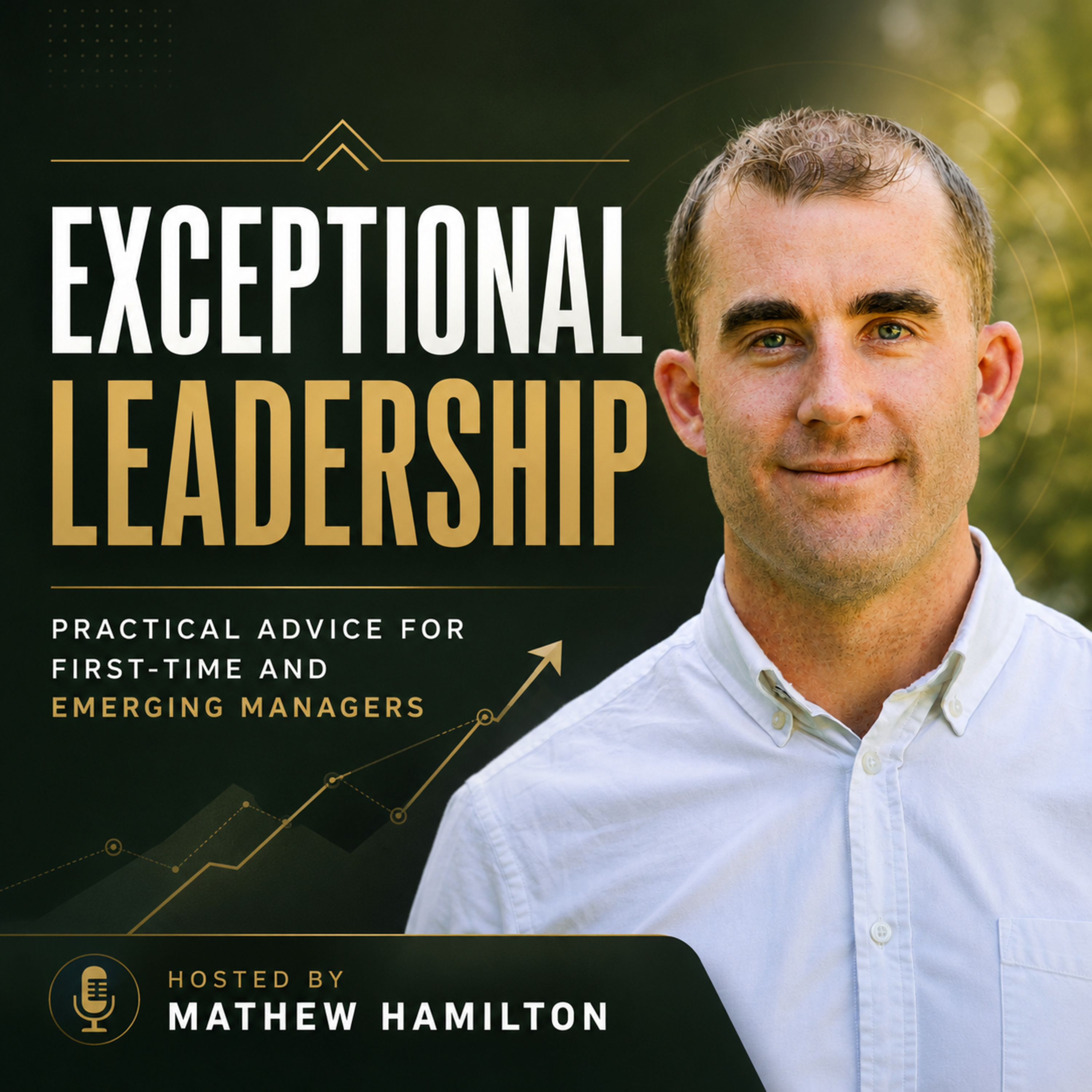
Artwork for Exceptional Leadership: Practical Advice for First Time and Emerging Managers
BusinessManagement

Exceptional Leadership: Practical Advice for First Time and Emerging Managers

Mathew Hamilton

Exceptional Leadership is the podcast for first-time and emerging managers who want practical guidance on leading people with confidence.

If you’ve recently stepped into leadership and find yourself managing former peers, handling difficult conversations, running meetings, or trying to earn trust from your team - this show is for you.

Each fortnight we breakdown the real challenges new managers face: giving feedback, setting expectations, building trust, and dealing with underperformance.

Mathew is an experienced people leader and holds an MBA from the Australian Institute of Business.

Play
  • 21 episodes
  • fortnightly
  • Avg 19 min
  • English
Counted on this page — what you have heard stays on this device, so it is not something the list can be paged by.
  • #73
    August 16 · 15 min

    #73 Don’t Just Ask for It. Prove It.

    Don’t Just Ask. Build the Case. As leaders, we regularly need our bosses to approve funding, resources, strategic initiatives or changes in direction. But too often, the request is simply: “I want X.” The problem is that a good idea isn’t enough. Decision-makers need confidence that the request is based on evidence, that the problem is real, that the proposed solution makes sense, and that the investment is justified. In this episode, I explore how leaders can build that confidence by preparing a concise briefing note before making a significant request. We look at the evidence you should gather, the questions your briefing should answer, and how to present the problem, options, risks, costs and expected benefits so your boss can make an informed decision. Because effective leaders don’t just make requests. They make it easy for others to say yes.
  • #72
    August 2 · 25 min

    #72 Resilience Starts With Meaning: Lessons from Viktor Frankl

    Every leader will face setbacks, criticism, uncertainty, and failure. The difference isn’t whether adversity arrives—it’s how we choose to respond. In this episode, I explore one of the most important qualities a leader can develop: resilience. Why do some people recover quickly from challenges while others become overwhelmed? What role do mindset, purpose, and meaning play in our ability to endure difficult circumstances? Drawing on the work of psychiatrist and Holocaust survivor Viktor Frankl, we discuss the powerful idea that while we can’t always control what happens to us, we can choose the meaning we give it. That choice shapes our resilience, our leadership, and ultimately the example we set for those around us. If you’re leading a team, navigating a difficult period, or simply looking to become mentally stronger, this episode offers practical insights into building resilience that lasts. In this episode you’ll learn: Why resilience is a defining leadership capability. Why some people appear more resilient than others. Viktor Frankl’s philosophy of meaning and choice. Practical ways to build resilience before adversity strikes. How resilient leaders create stronger, more confident teams.

  • July 19 · 18 min

    #71 Can Leaders Be Too Empathetic? The Importance of Boundaries

    Discover more leadership content at the shows website here Empathy is one of the most celebrated leadership qualities—but can there be too much of it? In this episode of the Exceptional Leadership Podcast, I explore why empathy without healthy boundaries can become a leadership liability. Using the fascinating historical story of Tsar Alexander II, Tsarina Alexandra, and Rasputin, we examine how compassion, vulnerability, and emotional decision-making can sometimes cloud judgment and lead to unintended consequences. I then share two real leadership experiences from my own career where balancing empathy with accountability required difficult, nuanced decisions. These situations reinforced an important lesson: great leaders don’t abandon empathy—they apply it within clear boundaries. You’ll learn: Why empathy is essential for effective leadership. How excessive empathy can undermine good decision-making. The difference between caring for people and avoiding difficult conversations. Practical ways to establish healthy leadership boundaries. How to make tough decisions while maintaining trust, respect, and compassion. Whether you’re a first-time manager or an experienced leader, this episode will help you strike the balance between being compassionate and being effective. If you’re enjoying the podcast, please consider following, leaving a review, and sharing the episode with someone who wants to become a stronger leader.

  • #70
    July 5 · 12 min

    #70 Leadership Presence: Why the Best Leaders Listen First

    In this episode, I explore one of the most underrated leadership skills: listening first. Using Dwight Eisenhower as a reference point, I break down how he deliberately structured meetings to let others speak before he did—and why that simple behaviour created a major strategic advantage. I also share how I’ve been applying this approach in my own leadership practice, and the impact it’s had on the quality of conversations and decisions. We unpack four key benefits of leading this way: It reduces authority bias, so people are less likely to just agree with the leader It surfaces more honest, accurate insight into what people actually think and feel It creates space for better ideas to emerge, helping identify real talent It increases the impact of your own voice when you do choose to speak This isn’t about staying quiet for the sake of it—it’s about being intentional with when and how you speak so that your leadership carries more weight when it matters.

  • #69
    June 21 · 23 min

    #69 Performance & Development Plans: Retain Talent and Build Better Teams

    Visit: https://www.exceptionalleadershippodcast.com for more valuable leadership content! Performance and Development (P&D) Plans are far more than a compliance exercise—they’re one of the most valuable leadership tools available. In this episode, I explain why informal conversations alone aren’t enough as your team grows, and how structured performance and development discussions create meaningful opportunities for feedback, career development, and employee engagement. You’ll learn: Why leaders struggle to remember important feedback without a structured process. How formal P&D conversations lead to deeper, more honest discussions. Why making time for your people sends a powerful message that they matter. How to identify and develop high-potential employees. Why strong performance management improves employee retention and saves businesses money. Whether you’re leading a small team or an entire organisation, effective Performance and Development Plans help build trust, develop future leaders, and keep your best people engaged.

  • #68
    June 7 · 21 min

    #68 Strategic Workforce Planning: Building Tomorrow’s Team Today

    Visit https://www.exceptionalleadershippodcast.com for more leadership insights via the podcast blog, and get The Brief delivered to your inbox each fortnight. Great leaders don’t wait for workforce challenges to arrive before acting—they prepare for them in advance. In this episode, I explore the principles of Strategic Human Resource Management and why workforce planning is a critical leadership responsibility. Using Google as a real-world example, I discuss how recruitment strategies can be deliberately aligned to an organisation’s mission, values, and long-term objectives. We also examine the importance of keeping one eye on the future by monitoring industry trends, labour market conditions, and emerging workforce demands. Finally, I discuss how leaders can build a compelling, evidence-based business case for recruitment and workforce investment, using data and analysis to make decision-making easier for senior leaders. Whether you’re managing a small team or leading a large organisation, this episode will help you think more strategically about attracting, developing, and retaining the talent needed for future success.

  • #67
    May 24 · 20 min

    #67 Show Them: The Leadership Principle That Builds Trust

    Visit the show’s website for more podcast content: https://www.exceptionalleadershippodcast.com In this episode, we explore one of the most fundamental principles of leadership: actions over words. Leadership is not built through slogans, speeches, or corporate messaging alone. It is built through visible action, consistency, and example. People watch what leaders do far more closely than what they say. Using the extraordinary story of Ernest Shackleton and his leadership during impossible circumstances, we examine how trust is earned when leaders step forward, share hardship, and demonstrate the standards they expect from others. We also discuss why this matters especially in Australian culture. Australians have historically been sceptical of authority, and leaders are often placed under intense scrutiny. Teams quickly identify leaders whose behaviour doesn’t align with their words. This episode explores: Why action is a non-negotiable part of leadership How leaders build or destroy trust through behaviour The psychology behind why people scrutinise leaders Why “show them” is more powerful than “tell them” Leadership lessons from Shackleton that still apply today If you want to lead people effectively, your actions must speak first.

    • Transcript
  • #66
    May 10 · 24 min

    #66 Why Change Fails: The Leadership Lessons of New Coke

    In this episode of The Exceptional Leadership Podcast, we unpack one of the most infamous business decisions in corporate history — The Coca-Cola Company’s launch of “New Coke” — and the leadership lessons it still offers organisations today. Change is inevitable in every workplace, but poorly managed change can damage morale, create resistance, and erode trust. The reality is that your responsibility during a change process depends heavily on where you sit within the organisation. Senior leaders must do more than simply design the change — they must anticipate the human response to it, communicate clearly, and create stability during uncertainty. Middle managers, meanwhile, are often tasked with implementing decisions they didn’t make, while keeping teams focused, calm, and productive through disruption. In this episode, we explore: Why the New Coke rollout became a cautionary tale in leadership and organisational change The different responsibilities leaders carry at senior, middle, and frontline management levels Why communication and emotional awareness matter just as much as strategy How resistance to change is often predictable — and manageable Practical leadership lessons that apply from large corporate restructures right down to everyday workplace changes Whether you’re leading enterprise-wide transformation or managing small operational changes within your own team, this episode will help you navigate the human side of leadership when certainty disappears and pressure rises.

    • Transcript
  • #65
    April 26 · 21 min

    #65 Conflict Resolution for Leaders: How to Mediate Team Conflict Without Losing Authority

    In this episode, I break down one of the most important, and often uncomfortable skills in leadership: conflict mediation. Using the famous dynamic between Scottie Pippen and Michael Jordan as a backdrop, we explore how even elite teams can struggle with internal conflict, and what leaders can learn from it. I also share examples of practical mediation techniques to get a team working effectively again. You’ll learn: How to approach team conflict resolution without escalating tension When a leader should step in—and when to stay out Practical mediation techniques that build trust and alignment Why great leaders don’t solve every conflict—but coach their team to handle it themselves We also dive into the critical role leaders play in creating a psychologically safe environment, where people feel confident to challenge each other, resolve differences, and grow through conflict rather than avoid it. If you’re a new or experienced leader looking to improve your conflict management skills, build stronger teams, and handle difficult conversations with confidence, this episode is for you.

    • Transcript
  • #64
    April 12 · 23 min

    #64 Psychological Safety at Work: What Leaders Must Do (Not Say) to Prevent Harm

    Most organisations say they care about psychological safety — but when it actually matters, do the actions tell a different story? In this episode, we cut through the feel-good slogans and awareness days to focus on what truly defines a psychologically safe workplace: how we as leaders should respond when something goes wrong. Because psychological safety isn’t built through posters, policies, or good intentions — it’s built through decisions, behaviours, and accountability in real moments of risk. You’ll learn: Why psychological safety is fundamentally about risk management, not comfort How job design can either create or eliminate psychosocial hazards What supportive leadership looks like when someone is struggling — beyond surface-level empathy The critical role of hazard identification and elimination in preventing harm Why job fit is one of the most overlooked drivers of workplace stress and failure When and how to make reasonable adjustments that actually protect people and performance This episode reframes psychological safety as a leadership responsibility, not an HR initiative — and challenges you to move from intention to action. If you want to lead a workplace where people can perform, speak up, and stay well under pressure, this is where it starts.

    • Transcript
  • #63
    March 29 · 19 min

    #63 The Growth Trap: When Momentum Turns Against You

    In this episode of The Exceptional Leadership Podcast, we explore a counterintuitive reality of business: growth isn’t always a good thing—especially when it outpaces your foundations. Using Uber as a case study, I unpack how one of the fastest-growing companies in the world experienced the consequences of scaling at speed—where momentum began to expose cracks in leadership, culture, and operational control. From there, we break down the three critical pillars every organisation must get right to scale sustainably: Vision at the top – Why founders and C-suite leaders must stay relentlessly aligned on direction, priorities, and what success actually looks like People and structure – How rapid growth can dilute accountability, blur roles, and create internal friction if your organisational design doesn’t keep up Systems – The often-overlooked backbone of scale, and why weak processes will always fail under pressure This episode is a reminder that scaling a business isn’t just about growing faster—it’s about growing stronger. If you’re leading a team, building a business, or navigating growth, this will challenge how you think about success—and what it really takes to sustain it.

    • Transcript
  • #62
    March 16 · 15 min

    #62 The Power of Storytelling in Leadership: How Great Organisations Build Belief

    Why do the most powerful organisations in the world all seem to rally around a story? In this episode, we explore the power of storytelling in leadership and why narrative is one of the most important tools leaders have for building culture, alignment, and long-term performance. Drawing on insights from Yuval Noah Harari in the book Sapiens: A Brief History of Humankind, we examine the idea that humans are uniquely capable of building large cooperative systems through shared stories. Nations, corporations, and institutions all rely on narratives that help people believe in something bigger than themselves. From the idea of the American Dream to the reputation for reliability built by Toyota, powerful organisations understand that culture is not built by policies alone—it is built through stories that people believe and repeat. For leaders, the lesson is clear: If you don’t shape the story of your organisation, one will form without you. In this episode, we discuss how leaders can consciously craft and reinforce narratives that strengthen culture, align teams, and give people a clear sense of purpose.

    • Transcript
  • #61
    March 8 · 19 min

    #61 The Two Meetings Every Leader Must Master: 1-on-1s and Team Meetings

    Strong leadership often comes down to how you communicate with your team and two meeting formats matter more than most: 1-on-1 meetings and team meetings. In this episode, I break down how leaders should approach one-to-one meetings with staff, particularly as teams grow larger. While 1-on-1s are valuable, it’s simply not sustainable for managers to sit down individually with every team member once the team reaches a certain size. Instead, I discuss why leaders should prioritise regular 1-on-1s with key staff and direct reports, while maintaining accessibility to the wider team through an open-door policy and optional one-to-one conversations. We also explore an often overlooked dynamic: many junior staff can find formal 1-on-1 meetings intimidating, especially with senior leaders. Understanding this can help managers create a more approachable and supportive leadership environment. The conversation then shifts to team meetings, which remain one of the most powerful tools for building connection, alignment, and a sense of shared purpose within a team. However, effective team meetings must be structured and outcome-driven. That means starting on time, logging actions, assigning clear owners, and ensuring meetings lead to real progress rather than becoming routine calendar fillers. Finally, I discuss an important leadership reality: as teams grow larger, sub-teams naturally emerge. In these situations, leaders may need to support multiple team meetings across different groups to ensure communication and accountability remain strong. If you’re a new or emerging leader, this episode will help you run more effective meetings, build stronger team engagement, and lead in a way that is both structured and sustainable.

    • Transcript
  • #60
    February 22 · 20 min

    #60 You’re the Boss — Now What? Managing People Older Than You

    Stepping into your first leadership role is challenging enough — but what happens when you’re suddenly managing people with 20+ more years of experience than you? In this episode, we break down exactly how to lead experienced, older team members with confidence, credibility, and emotional intelligence — without pretending to know everything. If you’re a new team leader dealing with imposter syndrome, authority anxiety, or subtle resistance from senior staff, this episode will give you practical leadership strategies you can apply immediately. You’ll learn: How to establish authority as a young manager without overcompensating The biggest mistake new leaders make when managing experienced employees How to earn respect from senior team members through competence and consistency The difference between positional authority and earned influence How to leverage experience on your team instead of competing with it What to say (and not say) when leading people older than you How to manage insecurity when you feel “under qualified” Leading people who are older and more experienced doesn’t require arrogance — it requires clarity, humility, and strength. The best new managers don’t try to out-experience their team; they out-lead them. Whether you’re a first-time manager, emerging leader, or recently promoted supervisor, this episode will help you build confidence, create psychological safety, and lead with maturity beyond your years. If you’re serious about becoming an exceptional leader early in your career, this episode is essential listening.

    • Transcript
  • February 8 · 15 min

    #59 How Michael Jordan and Andy Murray Handle Failure - The Ritual of Elite Performers

    How do elite performers respond to failure and what can leaders learn from it? In this episode, we examine how some of the world’s greatest competitors—Michael Jordan, Kobe Bryant, Serena Williams, and Andy Murray—respond to loss, mistakes, and setbacks. Rather than avoiding failure, these elite performers follow deliberate failure response rituals that allow them to extract lessons, reset emotionally, and return sharper. We then bring those insights out of elite sport and into the boardroom, exploring how leaders can build their own failure response rituals to improve decision-making, resilience, and performance under pressure. Importantly, this episode challenges the idea that rumination is always bad. We discuss why you don’t want rumination eliminated completely, how short, structured reflection can be productive, and where the line is crossed into unhelpful mental looping that damages confidence and leadership presence. If you’re a leader, executive, or high performer who wants to fail better, recover faster, and lead more effectively, this episode provides practical, transferable lessons you can apply immediately.

    • Transcript
  • #58
    January 16 · 15 min

    #58 David Goggins’ Cookie Jar Theory: Building Mental Strength & Calm Leadership in Times of Change

    In this episode, we break down David Goggins’ Cookie Jar Theory and why it’s such a powerful mental framework for leaders navigating stress, uncertainty, and organisational change. The Cookie Jar Theory is about deliberately storing past wins, hard moments, and personal proof of resilience — then drawing on those experiences when pressure rises. For leaders, this isn’t about motivation or hype. It’s about maintaining calm clarity, emotional control, and long-term vision when others are looking to you for direction. We’ll explore how this concept helps leaders: Build mental strength and emotional resilience Stay grounded and focused during high-stress periods Lead with clarity and stability instead of reactivity Maintain confidence and perspective when change feels overwhelming If you’re leading a team through uncertainty, transformation, or sustained pressure, this episode offers a practical way to strengthen your internal leadership — so you can show up with calm, consistency, and conviction when it matters most.

    • Transcript
  • #57
    Dec 3, 2025 · 24 min

    #57 2025 in Review: Hiring Smarter, Developing Leaders, Managing Stress & Protecting Culture

    We wrap up 2025 with a recap of the year’s most important leadership lessons. This episode brings together four critical themes every modern leader needs to master if they want to build high-performing teams and sustain long-term success. We start by unpacking how great leaders interview effectively, including how to look past nerves, ask the right behavioural questions, and identify key red flags. You’ll learn why a conflict-management question is non-negotiable and how to create an interview environment where candidates can genuinely show their best selves. Next, we explore the importance of properly appointing and developing new leaders. We outline why motivation matters, what happens when organisations promote without training, and how poor leadership appointments can erode performance, culture, and morale. We then revisit our conversations on self-optimisation and stress management, discussing why leaders must avoid “red lining” and how unmanaged stress can damage decision-making, wellbeing, and relationships outside of work. Finally, we dive into the role leaders play in protecting organisational culture, highlighting why you can never avoid difficult conversations with problematic employees—and how timely, honest dialogue preserves standards, performance, and team trust. Whether you’re a seasoned executive or an emerging leader, this episode offers practical insights to help you hire better, lead smarter, operate sustainably, and strengthen your workplace culture.

    • Transcript
  • #56
    Oct 24, 2025 · 25 min

    #56 The Fire Within - Turn Adversity into Fuel

    In this episode of The Exceptional Leadership Podcast, we explore how strong leaders turn adversity, suffering, and challenge into growth, resilience, and purpose. Adversity is inevitable — but great leaders use it as fuel. Drawing powerful lessons from Neil Danaher’s inspiring response to his MND diagnosis, this episode dives into how to build resilience, lead through hardship, and develop a mindset of strength and determination. Learn how adversity can become your greatest teacher, why resilience is a core leadership skill, and how to cultivate perseverance, emotional intelligence, and courage when everything feels against you. Perfect for anyone interested in leadership development, personal growth, overcoming adversity, motivation, mindset, and resilience, this episode will help you turn life’s toughest challenges into your greatest leadership advantage.

    • Transcript
  • #55
    Oct 18, 2025 · 16 min

    #55 Sometimes You Have to Let Them Fail — A Hard Truth About Leadership

    As leaders, our instinct is to step in, protect our people, and prevent failure. But sometimes, the most powerful growth happens when we don’t intervene. In this episode of The Exceptional Leadership Podcast, we explore why great leaders must occasionally let their team members fail — and how those moments can lead to deeper accountability, resilience, and long-term success. You’ll learn: Why protecting people from failure can actually hold them back How to recognise when to step in — and when to step back The psychology of learning through mistakes How to turn failure into lasting growth within your team If you’ve ever struggled with watching someone make a mistake you could’ve prevented, this episode will challenge your instincts and strengthen your leadership mindset. 🎧 Tune in to The Exceptional Leadership Podcast for practical leadership insights every week — built for modern leaders who want to grow, inspire, and perform at their best. 🔗Links to Socials: Instagramhttps://www.instagram.com/exceptional_leadership_podcast?igsh=MXh0bWk1ZGgyMXduaA%3D%3D&utm_source=qr Facebook https://www.facebook.com/share/1Adr7WJa8o/?mibextid=wwXIfr LinkedIn https://www.linkedin.com/in/mathew-hamilton-35a392ba?utm_source=share&utm_campaign=share_via&utm_content=profile&utm_medium=ios_app YouTube https://youtube.com/@exceptionalleadershippodcast?si=pYEO5MjAJ4xwV-6v Mathew Hamilton leads a high performing team of professionals and has worked across numerous industries in both the public and private sector. He holds an MBA from the Australian Institute of Business.

    • Transcript
  • Oct 5, 2025 · 20 min

    #54 Direct vs Indirect Leadership: Applying Sun Tzu’s Energy Principle to Business

    Send us a text In this episode of The Exceptional Leadership Podcast, we explore Sun Tzu’s “Energy” chapter from The Art of War — and how its ancient wisdom applies to modern corporate leadership. Discover how mastering the balance between direct and indirect energy can transform the way you lead your team, make decisions, and drive results. We’ll unpack what “energy” means in a business context — from the direct approach of leading meetings, negotiating deals, and having tough conversations, to the indirect approach of delegation, influence, and strategic empowerment. Learn how great leaders know when to act and when to guide from behind the scenes, using momentum and leverage instead of force. If you’ve ever wondered how to lead with precision, efficiency, and strategic intent, this episode offers practical insights drawn from Sun Tzu’s timeless leadership philosophy — reimagined for today’s fast-moving corporate world. 🔗Links to Socials: Instagram https://www.instagram.com/exceptional_leadership_podcast?igsh=MXh0bWk1ZGgyMXduaA%3D%3D&utm_source=qr Facebook https://www.facebook.com/share/1Adr7WJa8o/?mibextid=wwXIfr LinkedIn https://www.linkedin.com/in/mathew-hamilton-35a392ba?utm_source=share&utm_campaign=share_via&utm_content=profile&utm_medium=ios_app YouTube https://youtube.com/@exceptionalleadershippodcast?si=pYEO5MjAJ4xwV-6v Mathew Hamilton leads a high performing team of professionals and has worked across numerous industries in both the public and private sector. He holds an MBA from the Australian Institute of Business.

Showing 1–20 of 21 episodes