

S0 · E0
August 31 · 21 min

The Made in Turkey label found in so much of our clothing could disappear as the industry faces competition from countries like Egypt. Turkey is battling huge inflation and hundreds of clothing factories are going bankrupt leaving tens of thousands out of work. Emily Wither reports from Istanbul.

Colombia is reeling from the False Positive scandal. Incentivised by the government, soldiers abducted and killed over 7,000 innocent civilians, falsely presenting them as guerrilla fighters in an attempt to convince the nation they were winning a bloody civil conflict that had raged for over 50 years. We meet Blanca Monroy, the mother of a murdered young man, who battled the establishment to bring the scandal to national attention. We join forensic anthropologist, Cesar Medina as he hunts for the bodies of the missing. Jaime Trujillo is an ex-soldier, desperate to atone for his role in around 40 of the murders. Now he has turned whistleblower, providing detailed evidence to the Jurisdicción Especial para la Paz (JEP) – the special tribunal established under Colombia's peace agreement to investigate crimes committed during the conflict. But can an innovative system of justice bring those responsible to justice?

The spoken languages in Hong Kong and Taiwan differ, with Cantonese being spoken in Hong Kong and Mandarin preferred in Taiwan, but the two territories use traditional Chinese characters for reading and writing. This has created a strong bond between them in the field of book publishing, with many books which are published in Taiwan being sold in Hong Kong. This year, authorities in Hong Kong have cracked down on booksellers under national security laws. Hong Kong's government argues they are necessary steps to maintain stability in the territory, but critics say they're crushing dissent. Concern is now being felt in the publishing industry in Taiwan. Joyce Li from BBC Chinese is based in Taipei, and Abel U, also from BBC Chinese, is based in Hong Kong, and they join to share their insights. Since 2024, a neighborhood in the Moroccan capital of Rabat has been undergoing demolition and eviction operations carried out by Moroccan authorities. Residents have been left uncertain about their futures, and the lack of transparency has also left people questioning what the real reasons are, behind the demolition campaign. Hanan Razek from BBC Arabic, has been following the story and speaking to locals. The last day of exams is always a big deal. It's when you might blow off some steam and have some fun with your friends after some tough months of studying. For a recent pharmaceutical technology student in eastern Nigeria, he left his last exam and ended up going viral on social media due to a special gift that was waiting for him, a goat. Adesola Ikulajolu of BBC Pidgin reported on the story. The Fifth Floor is at the heart of global storytelling on the BBC World Service, bringing you the best stories from journalists in the BBC's 43 language services. We're here to help you make sense of the stories making headlines around the world; to excite your curiosity and to get to grips with the facts. Recent episodes have investigated Russia’s youth armies and how they make soldiers of Ukrainian children; featured the BBC team who were the first journalists to the site of the Nigerian school kidnappings and reflected the effects of internet blackouts in Iran, Uganda and India. If you want to know more about Venezuela’s acting president, Delcy Rodriguez, and the legacy of Hugo Chavez; or how Vladimir Putin’s network of deep cover spies operates; or why Donald Trump signed an executive order granting white South Africans asylum in the US, we have all those stories and more. This episode of The Documentary comes to you from The Fifth Floor, the show at the heart of global storytelling, with BBC journalists from all around the world. Presented by Faranak Amidi. Produced by Laura Thomas, Caroline Ferguson and Hannah Dean. (Photo: Faranak Amidi. Credit: Tricia Yourkevich.)

Flags are at half-mast across the United States following the death of Dolly Parton at the age of 80. Born in poverty in a log cabin in rural Tennessee, she went on to sell more than 100 million records and became one of the most influential figures in country music. Dolly Parton was also a highly successful entrepreneur and philanthropist and gave away millions to fund child literacy, conservation and healthcare. In our conversations, we bring together female country musicians – including Rhonda Vincent and Rissi Palmer - to share their memories of Dolly Parton and discuss her achievements. We also bring together people who worked with Dolly Parton to share their stories.

rk Franklin is one of the biggest names in Gospel music, with 20 Grammy awards, and a career that spans over 30 years. From classics like ‘Why we sing’ to the mainstream hit ‘Stomp’, so many of his songs are loved by Christians around the world. Gospel fan and radio presenter Swarzy Shire wants to learn more about the man behind the music and how his faith has kept inspiring that music. Despite many public ups and downs, Kirk reveals why his faith has been a constant source of support in his life. From being adopted as a young child to facing public criticism, he always returns to his faith in God and shares how he finds comfort in similar stories reflected in people’s lives from the Bible.

Throughout August, the Lives Less Ordinary podcast is sharing extraordinary love stories from around the world. To listen to the season, search ‘Lives Less Ordinary’ wherever you get your BBC podcasts. In this episode: in the 1970s, Mark arrived in the UK from the Bahamas and fell in love with a woman called Penny. For Penny, it felt like the beginning of everything- until, without warning, Mark broke things off and disappeared from her life. Devastated and searching for answers, Penny spent decades believing she was to blame, carrying that loss into the rest of her life and never quite finding the happiness she once imagined. Nearly forty years later, a message out of the blue from Mark brought them back into contact, and with it, revealed the sad truth about what drove them apart. This programme contains references to suicide. If you’ve been affected by any of the issues raised in this episode, you can find support at befrienders.org Lives Less Ordinary is a podcast from the BBC World Service that brings you the most incredible true stories from around the world. Each episode a guest shares their most dramatic, moving, personal story. Listen for unbelievable twists, mysteries uncovered, and inspiring journeys - spanning the entire human experience. Step into someone else’s life and expect the unexpected. For more episodes, just search 'Lives Less Ordinary' wherever you get your BBC Podcasts.

In the 30 years since its invention the ready-to-use therapeutic food Plumpy'nut has saved the lives of millions of children and protected countless others from the effects of malnutrition. Jewel Kiriungi explores its origins and ongoing legacy. The brainchild of two Frenchmen, Doctor Andre Briend and Michel Lescanne, a food processing engineer, they set out to put the power to feed children back into the hands of parents. With the help of organisations like Unicef they created a system of manufacture and distribution that would not only feed the hungry but benefit the economies of the countries where Plumpy'nut was needed.

The figures are startling - 2.1 million Brazilians have a clinical addiction to betting and 7.5 million are problem gamblers. Women now comprise 40% of all gamblers, having been 25% just a decade ago. Online sports and casino betting have exploded in Brazil to make it one of the largest gambling markets in the world. The self-help group Gamblers Anonymous says it is receiving thousands of calls each month and millions of Brazilians are estimated be suffering financial, emotional or relationship problems as a result of betting. Camilla Mota talks to football fans in Sao Paulo about why they are gambling on their team’s result. She speaks to a man who gambled away $75, 000 on a corporate credit card, a businesswoman who locked herself in the toilet of her family home in order to bet in secret and meets two psychiatrists offering treatment to addicts at a special clinic. What can be done to protect problem gamblers and avoid driving legal gambling underground?

Lucy Sparrow stitches life into everyday objects, creating vibrant felt worlds that look just like the real thing. Following the success of her hand-stitched felt fish and chip shop, she has recreated a Walmart convenience store from the 1980s, complete with TV dinners and a felt photo booth.
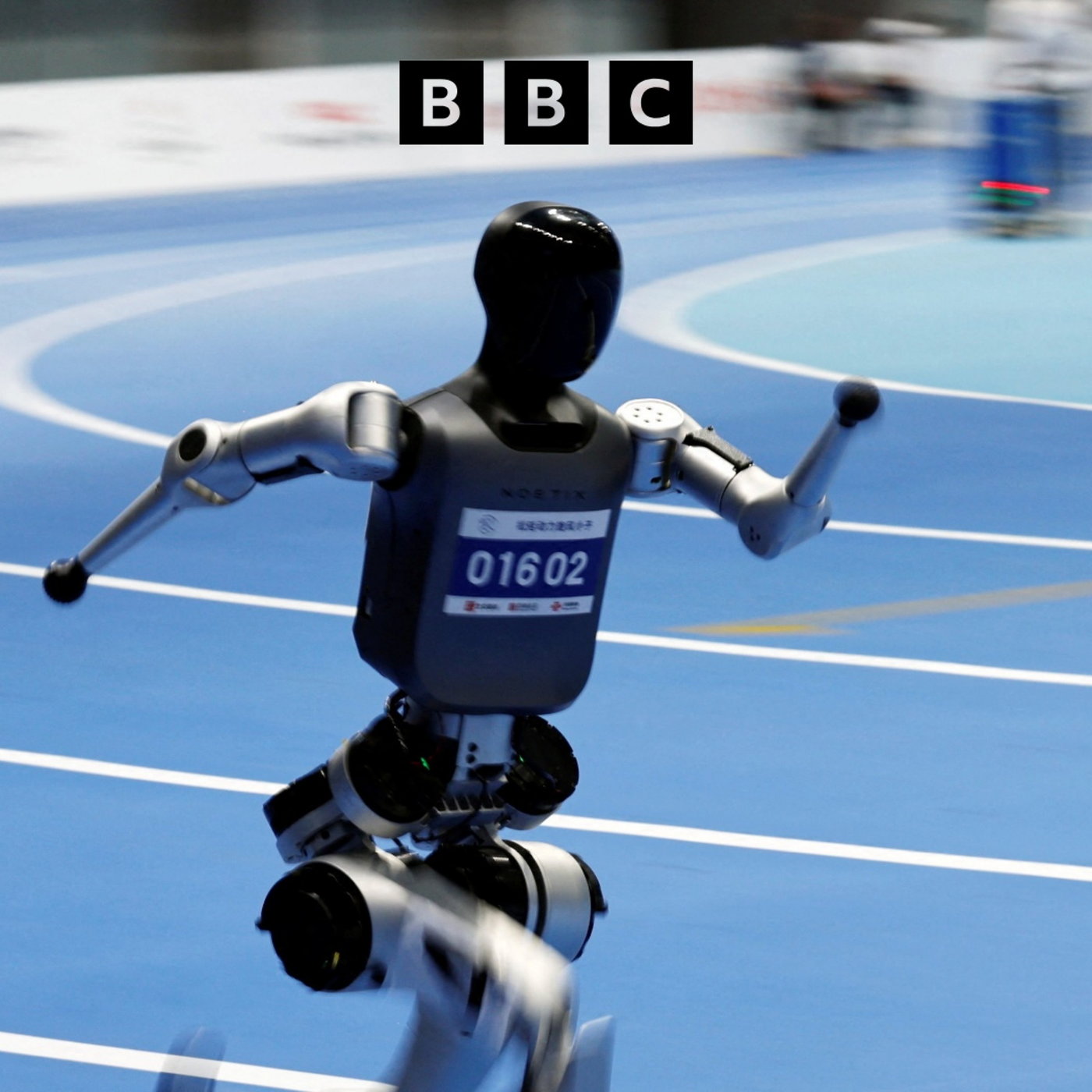
Roland Pease explores how decades of strategic investment and diligent educational reform have brought China to the brink of global scientific dominance. As the world’s other scientific superpowers seemingly retreat from their historical high ground, how has China achieved such remarkable progress, both in applied and fundamental sciences? And what might that mean for the rest of us? Image: A humanoid robot competes in the 1500m final at the inaugural World Humanoid Robot Games, at the National Speed Skating Oval in Beijing, China on 15 August 2025 (Credit: Tingshu Wan/Reuters)

In a sprawling prison in the Asir province of Southwestern Saudi Arabia, hundreds of young Ethiopian men are currently sitting on death row, not knowing when their name might be called and to be told that it's their turn. In the hope of getting their voices heard some of the prisoners managed to get hold of the phone number for the BBC's Tigrinya language service. One of the journalists working for the service is Aklilu Tsegay and he tells us what it was like to speak to those prisoners, sometimes multiple times a day, when reporting on the story. In India, July saw some of the biggest protests in the country for many years. The protesters were young people, particularly students, and they came together under an unusual symbol, the cockroach. They call themselves the Cockroach Janta Party or CJP, and they are demanding change to the education system in the country. Starting as an online joke a couple of months ago, the CJP is now one of India's most visible youth movements. Sumedha Paal reports for the BBC in India, and brings us the story. The Fifth Floor is at the heart of global storytelling on the BBC World Service, bringing you the best stories from journalists in the BBC's 43 language services. We're here to help you make sense of the stories making headlines around the world; to excite your curiosity and to get to grips with the facts. Recent episodes have investigated Russia’s youth armies and how they make soldiers of Ukrainian children; featured the BBC team who were the first journalists to the site of the Nigerian school kidnappings and reflected the effects of internet blackouts in Iran, Uganda and India. If you want to know more about Venezuela’s acting president, Delcy Rodriguez, and the legacy of Hugo Chavez; or how Vladimir Putin’s network of deep cover spies operates; or why Donald Trump signed an executive order granting white South Africans asylum in the US, we have all those stories and more. This episode of The Documentary comes to you from The Fifth Floor, the show at the heart of global storytelling, with BBC journalists from all around the world. Presented by Faranak Amidi. Produced by Laura Thomas, Caroline Ferguson and Hannah Dean. (Photo: Faranak Amidi. Credit: Tricia Yourkevich.)
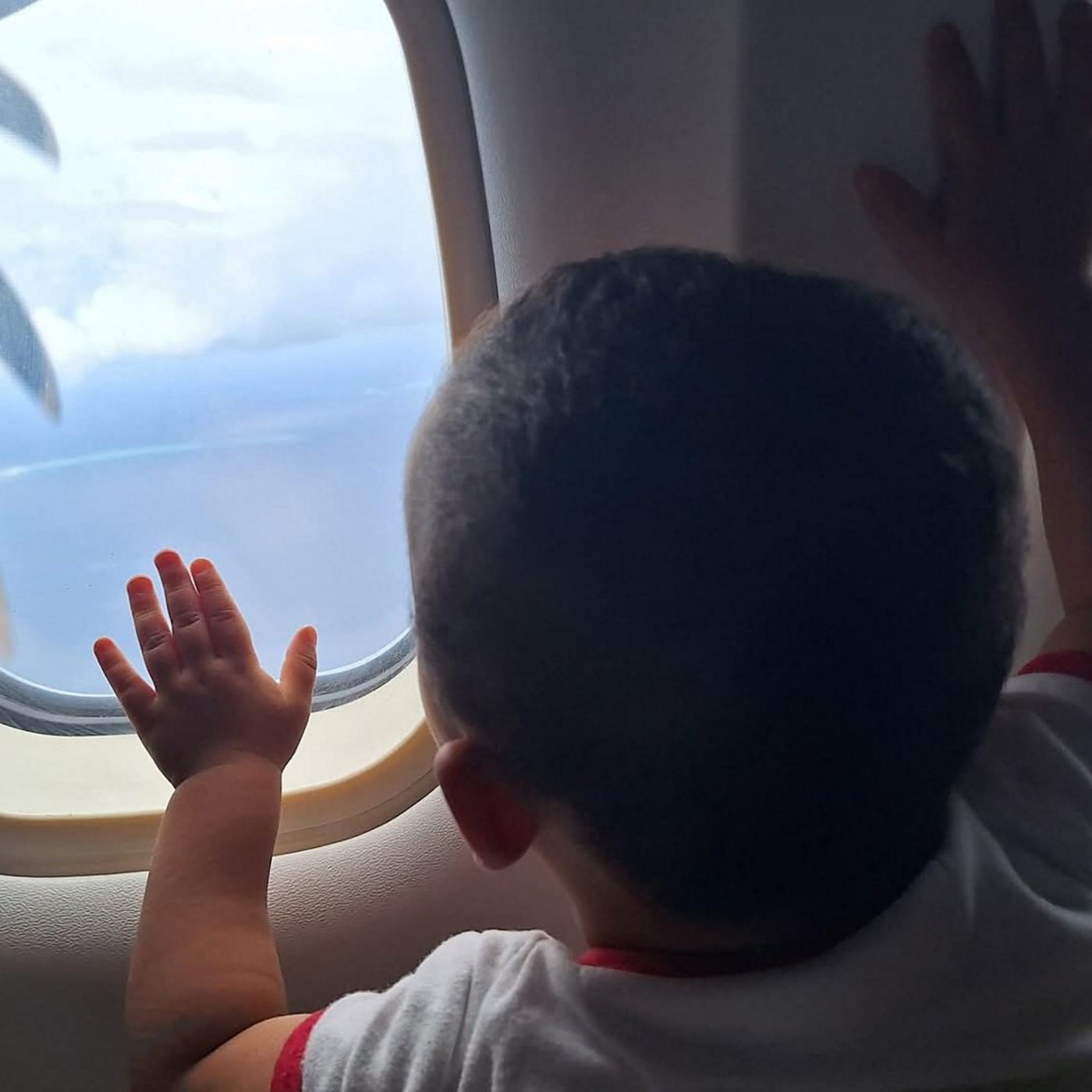
Noisy and disruptive children can turn a normal flight into a living nightmare. Earlier this month, a flight in Canada was cancelled after a young child refused to wear a seatbelt. The incident has opened a debate about how airlines should deal with these situations and how parents should control their children. In our conversations we bring together three parents to share their experiences. We also bring together three flight attendants to share their experiences of dealing with disruptive passengers, while keeping everyone on board safe.

AI isn’t just occasionally going rogue…(Open AI and Meta we’re looking at you) it’s also changing the world of work. Nearly 70% of college students in the US said they thought AI would make it harder to find a job in a recent survey - and 22% said that they’ve changed what they’re deciding to study at university because of this. They’re not the only ones… students all over the world are thinking about how to AI-proof their future careers. In this episode, we go to the University College London campus to speak to three students: Omer, who’s studying French and German, Zahra, who’s studying entrepreneurship, and Allie, who’s just graduated from Kings College after completing her law studies. They tell us how they think AI could change the course of their careers, how they’re adapting to the new technology, and if their degrees will still be helpful in the face of AI. For more episodes, just search 'What in the World' wherever you get your BBC Podcasts.

As Silicon Valley races to build machines that can think, create and perhaps surpass human intelligence, the Vatican has emerged as one of the most prominent global voices questioning the path the tech billionaires are setting for us. Pope Leo XIV, in his recent document on AI, warned of “the risk of dehumanisation.” Behind that warning lies a question that has occupied philosophers and theologians for centuries: what does it mean to be human? In Rome, Isobel Cockerell explores whether the answer to that age-old question survives contact with the era of artificial intelligence. She turns to Father Michael Baggot, a Catholic priest and professor who teaches courses on AI, ethics and transhumanism at Vatican universities. A regular at meetings between clergy and tech leaders, he sees Silicon Valley’s vision of AI as quasi-religious in its claims to end uncertainty, suffering, and even death. “I also belong to a religion that believes in eternal life,” he says. He’s conflicted about the ambitions of the tech elite. He hopes AI can lead to “human flourishing” but sees, in his pastoral life, how AI can devalue the very human acts of caring and sacrificing for the good of others. Isobel also speaks to tech entrepreneur Bryan Johnson, known for his radical efforts to defeat human ageing and live forever. He tells us that in building superintelligent AI, humanity may in fact be building God. He points to a future in which “this emergent structure of power is no longer human-centric.” This episode of Heart and Soul examines whether an institution built on ancient tradition can meaningfully shape the direction of the most disruptive technology of our time. And it invites believers and sceptics alike to consider what impact artificial intelligence might have on humanity.
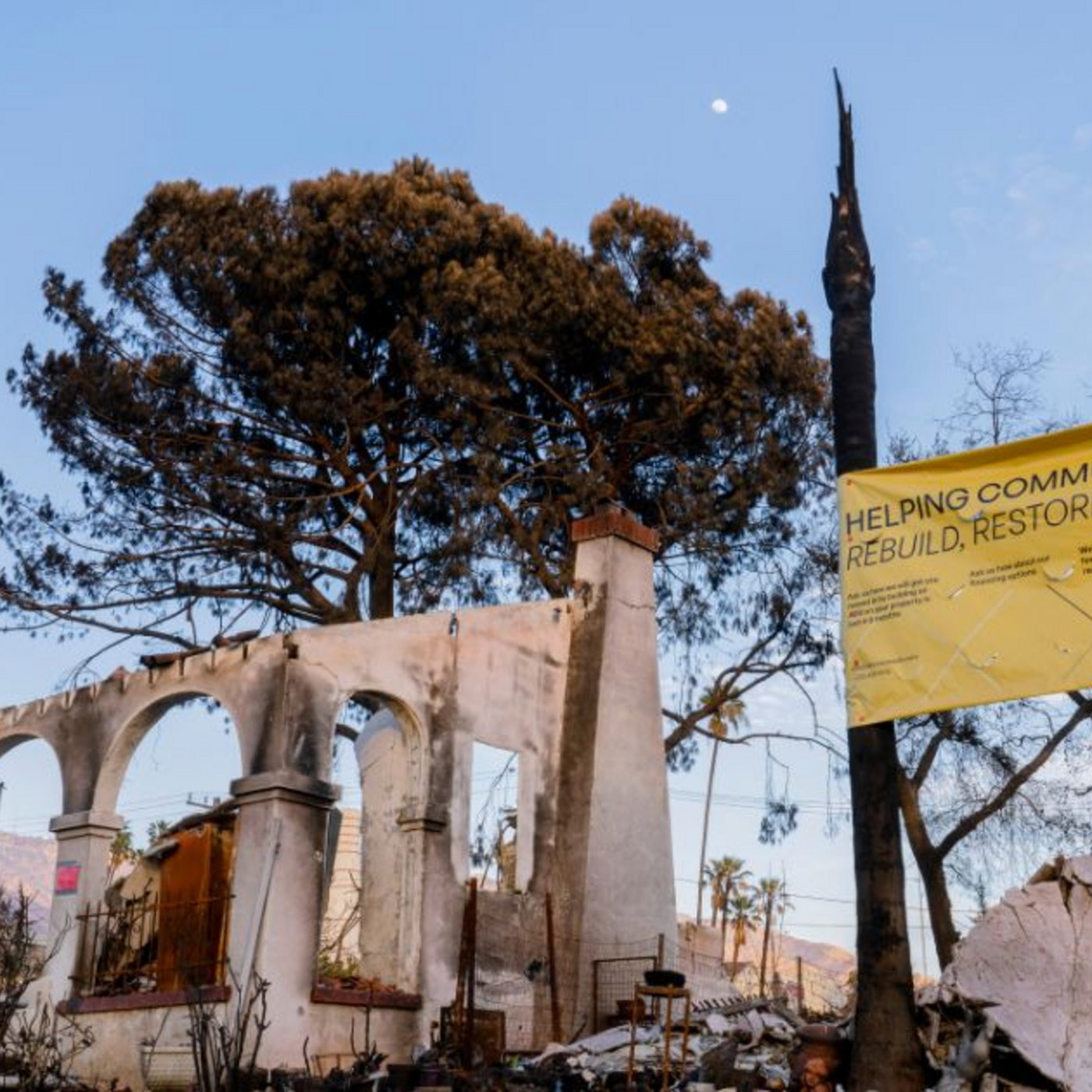
On 7th January 2025, the Altadena and Pacific Palisades neighbourhoods of Los Angeles suffered two of the most destructive fires in the city’s history. Twenty-one people died and 15,000 buildings were destroyed over a combined area the size of Paris. The city is still reeling from the scale and intensity of the fires, and the challenge of rebuilding areas in which almost nothing remains standing. As the first tentative shoots of recovery begin to appear, Jonathan Glancey meets locals, including architects Scott Uriu and Michael Kovac. Like Dustin Bramell, co-founder of the Case Study: Adapt programme, they lost their own homes in the fires. Others, like architect and social justice advocate Steven Lewis, or Cynthia Siegler and Alex Athenson, founders of the Foothill Foundation Catalogue, saw their neighbours and communities displaced. Now they’re trying to help replace what has been lost while looking for better ways of building, in a land where earthquakes, drought and fire are an ever present threat. As man-made climate change and urban growth worsen the risk and impact of fires, Jonathan asks experts including Dan Turner, a retired fire chief and executive director of Cal Poly’s Wildland Urban Interface (WUI) Fire Institute, and architecture critic Frances Anderton if and how this city can reshape itself for a better future.

When the BBC’s Richard Hollingham and his producer, Will Grant, arrived with their bikes in Kansas City, Missouri in 2008, it had just been named as the worst city for cyclists in the country. The resulting radio show became a “wake-up call” that has since inspired new cycling groups and millions of dollars of investment in cycling and walking initiatives. Now the BBC team is back to see what’s improved and what other communities around the world can learn from the city’s experiences. In their travels, Richard and Will join a group cycle, meet volunteers fixing bikes and find out about putting roads on "diets". The team also join a school cycling initiative in a deprived area of the city and learn how bicycles are giving students skills and mobility. Kansas City has focused on easy to achieve, low-cost solutions that give quick results, but cars remain dominant. Can the city now get even more people on their bikes?

What do the stolen love letters of John Keats have to do with homicide on the streets of New York? Prosecuting both crimes falls under the remit of assistant district attorney Matthew Bogdanos. A retired Marine colonel with both law and classics degrees, he has been the head of the Manhattan District Attorney's Antiquities Trafficking Unit since its creation in 2017. In his time on the job, the office has has seized more than six thousand pieces of stolen art and antiquities from various museums, art galleries and private homes in order to return them to their countries of origin. Sandra Kanthal travels to New York to learn more about this special unit of law enforcement, and the reasons why one man thinks tracking down stolen treasures of the art world and reuniting them with their rightful owners is vitally important to our past and for our future.

Antonia Quirke goes behind the scenes of Bookish, the murder mystery series written by Matthew Sweet and Mark Gatiss, who plays an amateur detective and bookshop owner called Book. Antonia hears from Matthew as he works on the script, crafting a cliff-hanger and deciding just how many red herrings there should be in one episode. He reveals the secrets of his working relationship with Mark, and we join them as they travel to their place of work, a film studio in Belgium, where they discuss which character they are going to murder that day - and how the crime will be committed. Clue: it involves a box of chocolates. When it comes to murder mysteries, Mark has form. He is the co-creator of the hit TV series Sherlock, where he plays Holmes’ brother Mycroft. He has also starred in Game of Thrones, Dr Who and cult comedy series The League of Gentlemen, which he also co-wrote. Matthew Sweet is a broadcaster and expert in Victorian literature, and author of Shepperton Babylon, a best-selling book about the darker sides of British cinema. The pair have been friends for more than a decade, and Bookish is the first TV series they have written together.

In 2025, Voice of America was thrust into the spotlight when the bulk of its funding was taken away. But in an era shaped by the internet and social media revolutions and with the West's funding priorities changing, it was not the first international broadcaster to go quiet. The soft power war of the airwaves has now moved to a decisive phase. Josephine McDermott traces the start of international radio and its heyday through World War Two and the Cold War as a tool of soft power. Hear the hosts of shortwave radio, from the Nazi propagandists Lord Haw Haw and Mildred Gillars to Doris Maxina, the presenter of Soviet radio's Moscow Mailbag, plus June Taylor, the New Zealander who became the global voice of communist Albania. Tune in to the sounds lost to time from Radio Netherlands' Happy Station Show to Radio Berlin International, and the Russian version of the British institution, The Archers, which came about following the collapse of the USSR. Featuring Thomas Witherspoon, creator of the Shortwave Radio Audio Archive; Jamie Shea, Nato spokesperson from 1993 to 2000; Sir John Tusa, managing director of the BBC World Service from 1986 to 1992; Ivana Stradner, research fellow at the Foundation for Defence of Democracies in the United States and Nic Newman, senior research associate at the Reuters Institute for the Study of Journalism at Oxford University, UK. With archive from the Shortwave Radio Audio Archive, including recordings from Thomas Witherspoon, Paul Watson, Greg Shoom, Mark Hirst, Tom Gavaras and Keith Perron. Moscow Mailbag recording from KSN's Tech Topics on YouTube.

More than four years after Russia launched its full scale invasion of Ukraine in February, 2022, the war continues to shape almost every aspect of life in both countries, including the challenge of finding enough people to serve on the front line. In Ukraine, videos showing violent confrontations between recruitment officers and members of the public have sparked angry debate about how the country's draught system is working. In Russia meanwhile, the authorities have tightened conscription rules and introduced new digital tools aimed at successfully recruiting more young Russians. With BBC Monitoring's Vitaly Shevchenko and BBC Russian's Yaroslava Kiryukhina. A new kind of spirit, very similar to tequila, is gaining popularity across India, thanks to the unassuming-looking agave plant. Unlike in Mexico, where agave is grown on a commercial scale for tequila production, in India, it grows wild and until recently, its only use was for farmers to make fences from its thorny trunk. But it is slowly transforming the lives of farmers across the country, as Priti Gupta, reporting for BBC Gujarati, has been finding out. This episode of The Documentary comes to you from The Fifth Floor, the show at the heart of global storytelling, with BBC journalists from all around the world. Presented by Faranak Amidi. Produced by Laura Thomas, Caroline Ferguson and Hannah Dean.