Skip to content
Artwork for Divergent Menopause (previously The Autistic Perimenopause)
Health & FitnessMental HealthSociety & CulturePersonal Journals

Divergent Menopause (previously The Autistic Perimenopause)

Sam Galloway

Fiercely advocating to raise awareness on temporary fluctuations and regressions in capacity during our neurodivergent menopause transition. A safe space for our community to unmask, co-regulate, and share knowledge to self-advocate.

samgallowayaudhd.substack.com
Play
  • 21 episodes
  • Avg 29 min
  • English
Counted on this page — what you have heard stays on this device, so it is not something the list can be paged by.
  • August 27 · 19 min

    🎧 Dear Menopause: Thank You for Saving My Life

    One year ago, Sam Galloway entered surgical menopause following a hysterectomy and oophorectomy. After years of debilitating perimenopause, she expected menopause to be another battle. Instead, hormonal stability brought unexpected gifts: stability, certainty, clarity and the beginnings of cognitive recalibration. In this deeply personal follow-up to “Dear Perimenopause: F**k You”, Sam reflects on the first year of surgical menopause, neurodivergence, sensory overload, mood stability, cognitive changes, self-advocacy and what it means to stop trying to become the person you were before perimenopause. This is not a story about menopause being universally positive. It is one neurodivergent woman's story about finding unexpected relief after years of hormonal chaos. Content note: This episode discusses suicidal ideation, reproductive loss, miscarriage, ectopic pregnancy, medical trauma and mental health. Hello and welcome to Divergent Menopause, previously known as The Autistic Perimenopause: A Temporary Regression. I am Sam Galloway (she/her), an autistic ADHDer (AuDHDer), and a surgical menopause survivor. I write Divergent Menopause to share what many of us are never told until we have to find out the hard way. Thanks for joining me on this wild midlife ride! 🎢 Dear Menopause, One year ago today we became acquainted with each other when I emerged from my elective gynaecological surgery that gifted you to me. Even though I told my doctor last month that I think the honeymoon period between you and I has now worn off, I am still utterly enamoured by you! Happy First Anniversary to us! If you hadn’t arrived when you did, I am not sure I would still be here. Not only have yo usaved my life, but you have given me so many precious gifts that, now combined, vastly improve my quality of life. Stability. Thank you, Menopause, for the gift of stability. During the surgery, my uterus, cervix, one remaining Fallopian tube and - best of all - my ovaries were all removed. Yes, you are a medical and surgical Menopause and I know that many people see that as a bad thing, but I think you are The Best Thing that could have happened to me. Before we made things permanent between us, I had dallied with you. My hormone blockers induced a temporary, reversible chemical menopause was a great trial, but nothing else even comes close to you. Temporary ovarian suppression gave me some relief of my turbulent perimenopausal pre-menstrual dysphoria disorder (PMDD), but when you came along after my surgery I knew you were the real deal. My dear Menopause, you have stabilised my mood so that I am no longer at the mercy of my hellish hormonal flux. No more “good week” versus “bad week”, and no more rapid mood de-escalation. No more waiting to find out just how low I will go, this time. It is no exaggeration to tell you that you have saved my life. No more intrusive thoughts nor threats of harming myself or my family. No more suicidal ideation. My mental health and mood stability are at an all time high. Well, my mood itself is not at an all time high, but nor would I want it to be. Instead it stays within a narrower range of “safe” for the first time in my life. Does that feel boring sometimes? Yes, a bit. But it’s about time my ovarian hormones weren’t running the show. Certainty. Thank you, Menopause, for the gift of certainty. One of the worst things about Perimenopause for me (and there were so many horrendous things to choose from!) was the chronic uncertainty. It spiked my anxiety just wondering how long it was going to take. Would I be one of the lucky ones who has a shorter 8 year perimenopause, or would my transition have taken a lengthier 14 years? There was no way of ever knowing. It was a waiting game, and, as a neurodivergent ADHD woman with absolutely no sense of the passage of time, it had already felt like a lifetime of peri had consumed me. How I hated the changes that were occurring during The Change. I never knew what whack-a-mole symptom was going to ruin my day next. The sheer horror of having no control over my symptoms was abhorrent to me. My Autism makes me want to call the shots, or at least have a copy of the manual memorised. But there is no manual for neurodivergent perimenopause. No manual either for neurodivergence, nor for the menopause transition. What a sick joke to put us through all this prolonged uncertainty without a roadmap nor with the reassurance that we would survive the journey. My dear Menopause, you gave me the roadmap. All signs were pointing to you by the end. If my exhausting self-advocacy for my elective hysterectomy and oophorectomy (ovary/ies removal) hadn’t gone to plan, I had no hope of continuing on that road for the long haul. The certainty you have given me is multi-layered. The relief from being certain that I will no longer experience menstrual bleeding is enormous. Sensory overload came with every bleed I had ever had, and that s**t accumulated beyond belief over my three decades of menstruation. No more menstrual cramps ever. Now whenever I get a pelvic twinge, I can be pretty confident that I will find relief in using the bathroom - that my bladder or bowel is the culprit and that my lagging interoception won’t lead to me sitting on the sofa in a puddle of blood because Taskmaster hasn’t finished yet. As for the blood itself - the always shocking vibrancy, the smell, and its viscosity as it pooled then poured - I can’t even… Every perimenopausal bleed triggered me. After my five pregnancies, all planned and wanted, with only two children to show for it, every bleed I had in my thirties took me straight back in my mind to a time when I was losing a baby. Two early miscarriages and an ectopic pregnancy. When I met you, Menopause, it was my second major gynaecological surgery. Both saved my life. One ended a pregnancy, the other ended my fertility. I know that so many women are saddened by the loss of their fertility when you reach them, Menopause, regardless of their status as parents or not. But I needed you. You healed me from the medical trauma that had come before you. The first time I had woken up after in recovery, my abdomen covered in freshly sutured incisions where the laparoscopic camera and surgical tools had shortly before accessed my innards, I was screaming at the nurses to give me my baby back. Thus I was heavily sedated in my secede surgery when you arrived, Menopause, and I was glad of it. There was no question that I had wanted my reproductive organs removed, because it gave me the certainty of never losing a baby or a pregnancy again. Clarity. Thank you, Menopause, for the gift of clarity. The certainty you gifted me was accompanied by the clarity that the way I could see things from then on, no longer tainted by the highs and lows of my ovarian hormones. No more uterus after surgery meant no more progesterone needed to maintain the health of my uterine lining which meant no more progesterone intolerance which meant no more suicidal ideation. Yes, I could rephrase that dreadful sentence but now I have the clarity that what is left of my lifetime is short. My finite time and precious energy therefore hold greater value, and I need to stop wasting it with my formerly pedantic ways. Although I still do not sense the passing of time (Menopause, you have not cured my neurodivergence as I gratefully knew you would not), I now fully grasp the value of it. And that is why I still spend hours on the sofa watching Taskmaster and building LEGO sets. Not because I am in too much pain to move and need something else to focus on, which was the case over a year ago, but because I have now survived Perimenopause and, in my mighty wisdom and clarity, I know that the mighty Taskmaster Greg Davies and his assistant little Alex Horne are worthy of my valuable time and attention. Knowing where to spend and invest my time now is only half the story though. My dear Menopause, you now tell me when we are rapidly approaching a waste of our time, and we swerve it together. (Although, alas, my doom scrolling habit has not yet evaded me…) These days it is so much easier to ignore the b******t that surrounds us. Your gift of clarity comes with a wonderful capacity to moderate my tolerance for others. Namely, I have lowered my tolerance threshold so we can avoid anyone who doesn’t like this unmasked Menopausal version of me. Conversely, your presence brings with you an improvement of my rational responsiveness. I am less likely to meltdown, shutdown or become mute during times of stress and confrontation. My responses are more deliberate, and I can take a pause before I speak. My impulsivity is better moderated and, as and when I lose my s**t, I know it was deserved and not just a hormonal reaction. Recalibration. Thank you, Menopause, for the gift of recalibration. Perimenopause absolutely tore my highly masked undiagnosed neurodivergent self to shreds. I was already struggling to function in this world, when peri was established I was in tatters. No part of me was untouched by the hormonal flux. I regressed significantly, losing independence and self-care skills, reduced mobility, disengagement from everyone around me. It was jarring and terrifying, and many times I felt as though I was losing my mind. My cognitive regressions felt enormous, although they went largely unnoticed by others. Perhaps a combination of my residual masking capacity and the fact that most of my intellect was experienced in my inner world and had gone unseen for so long, I no longer felt like the same person anymore. My sensory calibration was wrecked, and I had no energy left to pretend everything was fine. And so I hid away at home, and kept my disturbing difficulties to myself. There I could control the sensory inputs and just about cope with them. It shrunk my world beyond belief. After surgery, the constant uniformity of my hormone levels caused my brain and body to operate on a steadier trajectory. In this last year I have been able to adjust to the constancy, giving my drained brain a chance to recalibrate. Although slight, the small regains to my cognition and information processing feel vast. I am beginning to picture where I left things again. When I use a multi-storey car park now, my vehicle is no longer inadvertently abandoned as I can visualise where I left it. When I am hungry, I can now visualise what is in the fridge, freezer and pantry, and make an informed decision to eat chocolate for lunch (even though I am supposed to be mainlining protein these days). I can remember how many pumps of oestrogen gel I applied in the morning and where, and whether or not I have taken my medication. I can’t remember the punchlines in the Taskmaster banter, but we can’t expect miracles. There are 21 series and counting that have already been aired so far. Plus I love finding jokes funny every time I hear them! My dear Menopause, this recalibration is perhaps the greatest of gifts. I am not chasing the version of myself I was before Perimenopause stepped into the scene and tried to throttle me. She was thin but thought she was fat, and she was depressed and thought that was acceptable. She naively thought that one day she could chase her Masters degree with a tasty PhD. Ha! I wouldn’t even have the attention span to fill in the application form these days, never mind test one hypothesis for years on end and defend a thesis. Yawn. (Not really, I would f*****g LOVE to do a PhD. Sigh…) But having a glimmer of hope that my perimenopause-induced cognitive and information processing regressions may now be reversing is inspiring. Shortly after my surgery, during my blissful month in bed where I could do nothing but manage my pain relief schedule, sleep off the general anaesthetic and build LEGO (Concorde, Botanical Gardens and Tuxedo Cat sets!) whilst obviously watching Taskmaster repeats, I renamed my publication and community. Previously The Autistic Menopause: A Temporary Regression, I held on to the hope that my regressions were indeed temporary. Divergent Menopause was birthed from my still raw pelvic bowl, honouring both my transition from perimenopause to surgical Menopause, and becoming inclusive of all my neurodivergence and my neurokin. Time has dragged on rapidly this past year whilst I waited to see if my brain would regain lost and lagging skills. It hasn’t fully, but I know now with clarity and certainty that my hormonal stability is nurturing my menopausal recalibration. Today holds enormous significance to me, but I know it is still very early days in my Menopause. Please know that I am grateful for the gifts of stability, certainty, clarity and recalibration(ity) that all compound to enhance my quality of life. I am looking forward to spending the rest of our lives together, Menopause. Cheers, Get full access to Divergent Menopause at samgallowayaudhd.substack.com/subscribe
  • August 20 · 14 min

    Dear Perimenopause: F**k You

    In this episode of Divergent Menopause, Sam Galloway reads her brutally honest “f**k you” letter to perimenopause. A decade of rage, grief, chronic pain, cognitive changes, suicidal ideation and medical uncertainty, ending with the decision that finally changed everything: surgical menopause. This is not a tidy menopause success story. It's a story about surviving a menopause transition that nearly broke her, and finding something unexpected on the other side. Why write a “f**k you” letter? It is so cathartic to rage onto the page all of that pent up anger, frustration and grief caused by a certain person or event. You can get all those things you wish you had said, the ones that are still keeping you up at night, out of your system which can feel like an enormous relief and release. I would not recommend sending it to the person though! You don’t want to invite more emotional harm or rekindle past conflict into your world. Some people like to ceremoniously burn their “f**k you” letters so that they are never discovered or read by anyone else. Take good care of yourself in the process, if it doesn’t feel like a helpful tool for you, or the right time to write a “f**k you” letter, it’s best avoided. This one flowed for me though! Let me know in the comments if you have ever written a “f**k you” letter. If so, did you found the process therapeutic, triggering or something else? Dear Perimenopause, I love to hate you. You were the bane of my assistance for too long, and still you are all I can talk about. Everyone is sick of hearing about you. When you first showed up, I knew it was inevitable. You arrived much sooner than I expected, and nobody believed me when I said you were here. Apparently I was too young for you or some b******t. You clearly didn’t give a f**k that I was in my mid 30s with two tiny kids, acclimatising to life in a new hemisphere. I thought I’d fallen on my feet arriving here in Aotearoa New Zealand in 2016, but out of nowhere you crept up on me, tripped me up, kicked me to the ground and shat all over me. Thanks for that, Perimenopause. I honestly thought I would eventually learn to live with you, but you wanted me dead. Now I see right through you. You are a dangerous and insidious silent killer. You choose the most vulnerable victims. Yes, Perimenopause, I know there are many people who love you, but they don’t know you like I do. They are the lucky ones. Why couldn’t I have had the version of you that other people revere? You’re supposed to be transformative, illuminating and empowering. What the f**k did I ever do to you to deserve this? The first sign of you was the burning inflicted upon my eyes. They were dry as f**k. The pain was so intense that I mistook you for sunburn, for hayfever, for eye cancer even. You frightened the life out of me. I had to pay to see an eye specialist. Do you know you’ve cost me a f*****g fortune in healthcare over the years, Perimenopause? Anyway, the eye specialist told me that my eyes were dry because of my age (whatever that means) at only aged 36 or so. My eyes are still dry nearly a decade later, and I apply lubricating eye drops all the time. All The Time. You cause me to cry tearlessly, you still put my family at risk when my eyes drive out and throb whilst driving, and you have stopped me from painlessly watching my children grow up. Perimenopause, you cost me their childhoods. My boys are now 14 and 11, and they still often ask me, “Why are you so grumpy, Mummy?” Every time, I blame you. Yes, you, Perimenopause. You have stolen years from me that I’ll never get back. You stopped me from being the calm mother I was born to be, and morphed me into this depleted, shambolic husk of my former self. Did you know I used to be a nursery/kindergarten teacher before I homeschooled my own kids? Together my students and I explored this magnificent world with curiosity and joy. But then you came along and turned me into hateful, shameful woman who frequently dissociates from those I hold most dear just to make it through each day. Until I met you for myself, I knew nothing about you, except that people avoided talking about you for some reason. When I was a child, you were only mentioned in hushed whispers and euphemisms like “women’s problems” and “the change”. I think it’s because they were scared of you, and too many people still are. Your medical demands have cost me the money I could have spent exploring this not-so-magnificent-anymore world with my own children: shaping their futures and building them up. Instead because of you, Perimenopause, I can’t even even sit on a f*****g bike saddle and explore our neighbourhood with them because you, you f*****g b***h, have lacerated my vulva and shrunken my labia, thus rendering me unable to rest for long, unless sat crosslegged on a soft sofa cushion, TV remote in hand, with Taskmaster playing on repeat. Perimenopause, you have shrunken my world (and my labia). And what the actual f**k have you done to my metabolism?! First you wrecked my sleep, spiked my cortisol, and turned my appetite up to 11. Now I can only stay awake when aided by sugar by day, yet I can’t sleep at night. That doesn’t even make sense. Why don’t you make any f*****g sense?! All this sugar you’re making me eat has fucked me sideways. Whilst I am consuming it I can feel my vagina turning thrushy, and my boobs get itchy. You really are getting on my tits. I feel like I’m a size of a house. One of those red brick suburban outer London houses that my husband and I were lucky enough to buy when we were newlyweds. The type of house you can extend out the back and up into the loft space to make extra room. Rather than expand the house, we left London, before moving back to his home of Aotearoa New Zealand. Regarding my metaphorical house of a body (please forgive me, Peri, if I am none too articulate, only you have completely fucked over my cognition, my working memory and my vocabulary, you beastly b***h) and my actual house: I am now residing inside a house I cannot manage to upkeep without a dedicated team of support workers, because you’ve brought so many compounding and devastating regressions to my ability to function as a parent. And just when I was getting used to my cognitively reduced, yet physically expansive self, and feeling like I could accept myself under the Health at Every Size paradigm, the zeitgeist turned on me. Now, thanks to advances in weight loss medications and their widespread popularity, we are back in the heroin chic years that I thought were behind me. Every time I even look at a chocolate biscuit now, I can hear the tiny top model Kate Moss telling me that “nothing taste as good as skinny feels” and hey presto, Perimenopause, you push me off the disordered eating cliff with both hands, laughing at me as I crash up on the rocks. Just like your little sister Puberty did back in the 1990s, when Kate Moss was huge (culturally, not in size nor stature). Do you know what was the worst thing was about you? You gave me chronic uncertainty. I had no idea how long I would be suffering from you. How bad things might get. No idea how much more I could take. My mood was in constant flux. Chronic pain, energy depletion, rage. You frightened the life out of me and I see you are still busy doing it to others. What about everyone else who is suffering like I did? Why do you show us some of us no mercy? How do you decide who will be your next victim and whose life you will give meaning to? How are you still so unknown to people, Perimenopause? Why don’t doctors see you for what you really are? Healthcare professionals should be warning us about you. We should all see you coming. You should be declaring your arrival, red flags in hand. Yes, Perimenopause, I do know that many other people see your advent as a sacred rite of passage. And I agree that you are an inevitable life stage for those of us who are fortunate enough to survive beyond our youth. But my experience also tells me that you are far from benign. You can be lethal. The mood crashes and suicidal ideation you brought pushed me to my limits, yet I refused to become a statistic. I would not let you win. Because of you, I have had my entire reproductive system removed. I elected to undergo major surgery, consenting to the risk of medical complications or possible death, to end your hold over me. One of us had to go. I fought so hard for what was my only chance left at life. Drastic measures were crucial, and I was running out of time and options. The suicidal ideation you gifted me showed no reprieve so, Perimenopause, your termination was necessary. You had to be stopped! So to get rid of you once and for all, almost one year ago to this day, both my ovaries, my one remaining fallopian tube, my cervix and my uterus were surgically excised. And do you know what? It’s the best thing I’ve ever done! Now that I’m rid of you though, I’m stuck with your big sister for life. Menopause, dear Menopause. Early, surgical Menopause, to be precise. Compared to you, I love and adore her! Yes, you gave me my neurodivergent understanding of myself, Perimenopause. And for that I am grateful. But for everything else you burdened me with, you can go f**k yourself. You shall never darken my door again. Stay away from my friends. Perimenopause is dead! Long live Menopause! Cheers, If this letter spoke to you… You don’t have to agree with every word I’ve written here. You don’t even have to like perimenopause as much as some people seem to. But if you’ve ever needed somewhere to put the rage, grief, confusion or sheer f*****g exhaustion of navigating menopause in a neurodivergent body, I hope Divergent Menopause can be that place. Everything here remains free to read and listen to. If you’d like to help me keep making it, you can become a paid patron or founding patron. You’re not paying to unlock the work but you’re helping me continue to make it. 💐 And if you can’t pay, that’s absolutely okay. Read. Listen. Share. Comment. Tell someone who needs it. That all helps too. Thanks! 💕 Get full access to Divergent Menopause at samgallowayaudhd.substack.com/subscribe
  • July 23 · 31 min

    Why Menopause Sleep Isn't "Just Anxiety": Neurodivergent Women, Hormones, Misogyny and the Cost of Exhaustion

    What happens when menopause, neurodivergence and chronic sleep deprivation collide? In this live recording, Sam Galloway explores why menopausal insomnia is often dismissed as anxiety, how hormones affect sleep, why women carry so much invisible labour at night, and practical strategies that have helped her navigate surgical menopause. Topics include HRT, vaginal oestrogen, sleep apnoea, bladder health, executive dysfunction, neurodivergent sleep, pelvic floor physiotherapy, melatonin, Calm sleep stories and the importance of community. Resources mentioned Medical professionals: Dr Kelly Casperson on Substack - Vaginal Estrogen Show and Tell video Dr Megan Neff on Substack Books / Workbooks: Neurodivergent Sleep Workbook: Restoring Sleep for Busy and Sensitive Brains — Dr Megan Neff Assessment tools: MENO-D (Menopause Depression Rating Scale) Get full access to Divergent Menopause at samgallowayaudhd.substack.com/subscribe
  • April 26 · 30 min

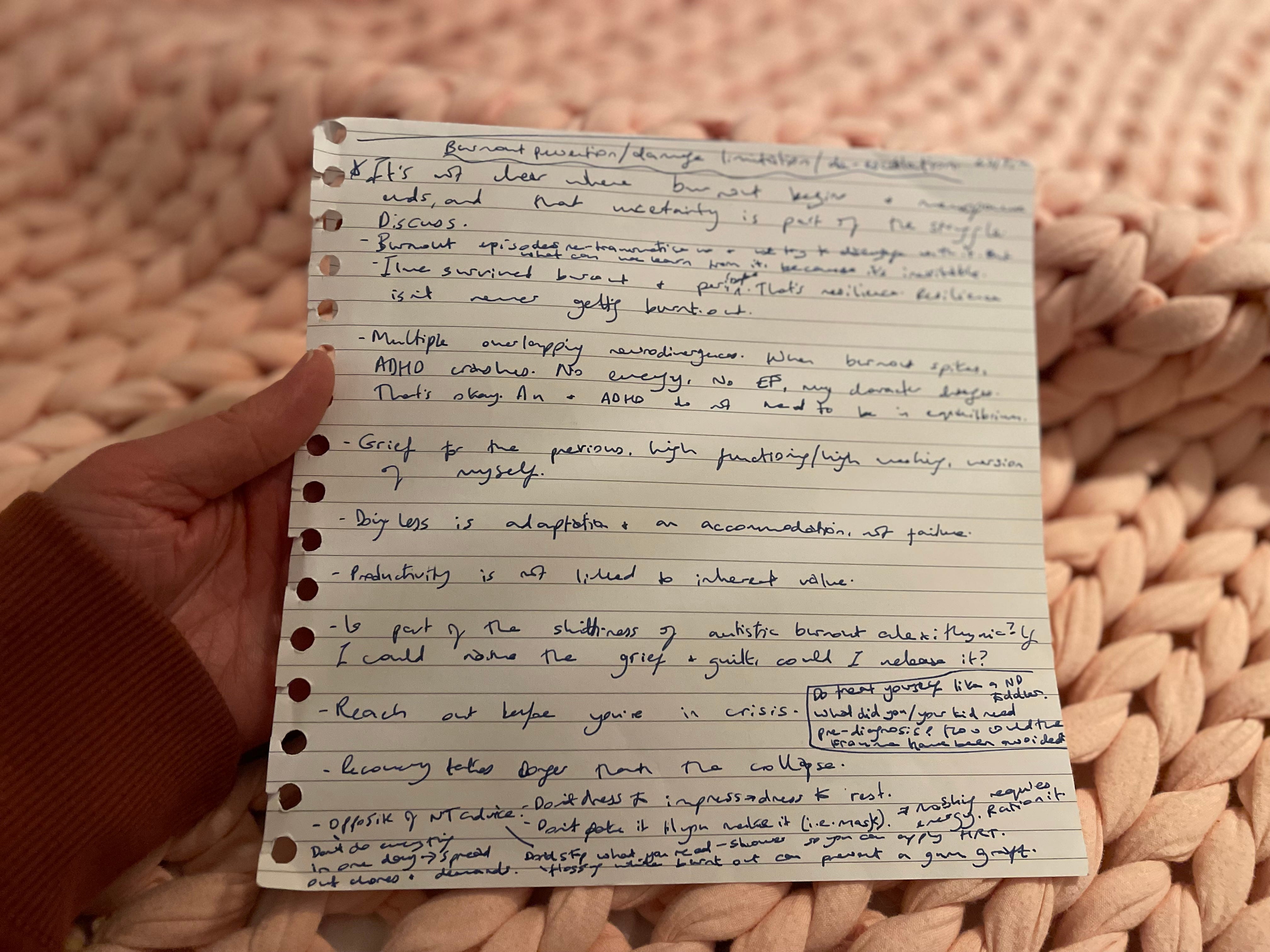
    Burnout De-escalation and Damage Limitation in Neurodivergent Menopause 💐 🎥 🎧

    This episode is a real-time check-in from autistic burnout, recorded from bed under a weighted blanket. Sam shares: Early warning signs of burnout (pain, posture collapse, sensory overwhelm, urinary urgency) How menopause, hormones, burnout, autism and ADHD overlap Why burnout can feel cyclical and retraumatising The grief of losing your “high-functioning” self Why doing less is not failure How internalised ableism worsens burnout Practical ways to stabilise instead of “fix” burnout Why neurodivergent burnout recovery is the opposite of neurotypical advice This is not a polished recovery guide. It’s what burnout actually looks like while you’re in it. Get full access to Divergent Menopause at samgallowayaudhd.substack.com/subscribe
  • April 17 · 13 min

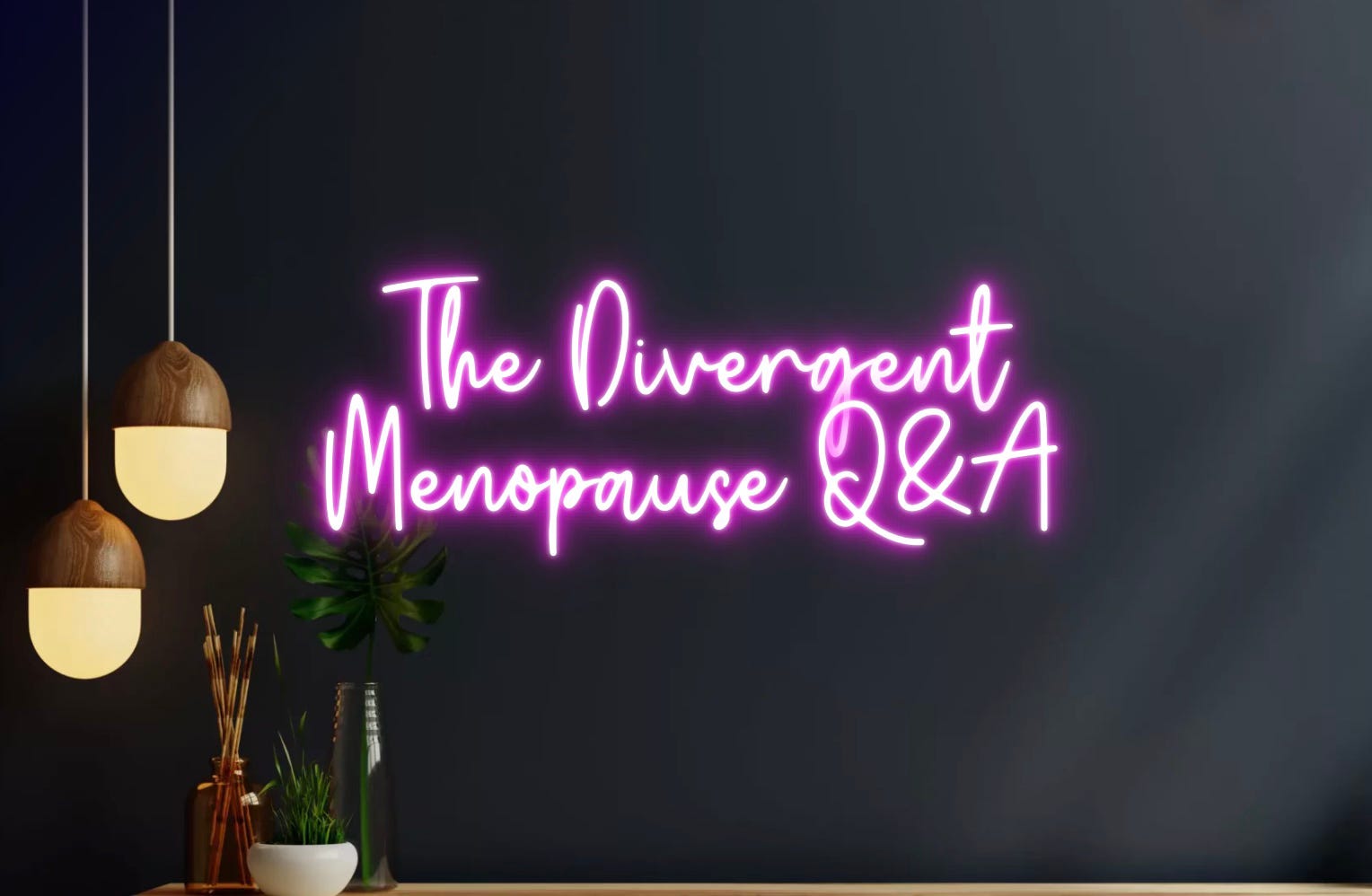
    The Divergent Menopause Q&A: Tell Us Your Story!

    In this episode, I’m relaunching The Divergent Menopause Q&A: a community-driven series sharing real lived experiences of neurodivergent menopause. This is an open invitation to contribute your story. We talk about: Why neurodivergent menopause is so underrepresented The risks of silence and lack of support The importance of lived experience alongside research What to expect if you take part If you’ve ever felt unseen, dismissed, or alone in this stage of life this space is for you. Take part in the Q&A: The Divergent Menopause Q&A Content note: Mentions of mental health and suicide risk. Hello and welcome to Divergent Menopause, previously known as The Autistic Perimenopause: A Temporary Regression. I am Sam Galloway (she/her), an autistic ADHDer (AuDHDer), and a surgical menopause survivor. I write Divergent Menopause to share what many of us are never told until we have to find out the hard way. Thanks for joining me on this wild midlife ride! 🎢 The Divergent Menopause Q&A Tell us your story! Hi All, If you have been here a while you might remember that I used to host an interview series called Auti Peri Q&A. You can find all the interviews here. When I changed the name of my publication to Divergent Menopause I knew that I would want to share the voices of others because if you’ve met one menopausal neurodivergent person, you’ve met one menopausal neurodivergent person. My own menopause story is uniquely bleak, and I want us all to know about other ways our neurokin are surviving this often challenging life phase. My goals are always to share experiences and build community around neurodivergent menopause. I am now relaunching the Q&A series under the name The Divergent Menopause Q&A, and am opening it up to all people who identify as neurodivergent with lived experience of the menopause transition! Completed Q&As will be published here and, emailed out to my subscribers. Respondents can be anonymised when it goes online, although I will need an email address to contact you and make sure you are happy with the final edit. Your email address will not be shared in the post, nor shared with any third parties. Without a contact email address to reach out to you, I will be unable to publish your Q&A. I would LOVE to share your neurodivergent menopause story! It doesn’t need to be remarkable or dramatic. We already know from research that the rate of suicide is higher for neurodivergent midlife people transitioning through menopause compared to the neurotypical population. We have no time to waste in sharing our experiences, and getting the message across that perimenopause and hormonal fluctuations can affect neurodivergent people in a more extreme and potentially harmful way than the neurotypical population. Whilst also showing that this isn’t the case for all neurodivergent people. I want this feature to be inclusive of all races and genders of people who experience the menopausal transition. White cisgender women dominate the narrative, so if you or someone you know from a minority demographic group would like to participate in The Divergent Menopause Q&A Series, please reach out to me. I aim to diversify the message and be representative of all neurodivergent peri/menopausal people. Below is the information you will find directly on The Divergent Menopause Q&A when you click this link, followed by the 12 questions, so you know what to expect. Thank you for being here. This Q&A is part of a series sharing the lived experiences of neurodivergent people going through menopause and perimenopause. You may already be familiar with my previous interview series, The Auti Peri Q&A. Neurodivergent perimenopause is a highly individual, dynamic and sometimes prolonged life stage represented by fluctuations in physical, psychological and cognitive symptoms that can be different for everyone. None of us should have to feel alone at this time of our lives. By sharing your story, you are helping to: 💕 Raise self-advocacy as a community effort, not just an individualised responsibility 💕 Contribute meaningfully and anecdotally to the growing body of work and research into neurodivergent menopause 💕 Empower our unified voice We have no time to waste in sharing our lived experiences, and getting the message across that perimenopause and hormonal fluctuations can affect neurodivergent people in a more extreme and potentially harmful way than the neurotypical population. Whilst hopefully also showing that this isn’t the case for all neurodivergent people. On the next page I will explain my Q&A process. Thank you for trusting me with your story. How to Q&A By sharing your experience, you are helping to build understanding, challenge silence, and make this transition more visible for others. On the next page you will be asked to provide some information about yourself, and to upload a photo that you would like to accompany your published Q&A post. On the following pages there are twelve open ended questions and prompts where you are invited to share your neurodivergent menopause experience in your own words. There is no right way to answer these questions. You can write as much or as little as feels manageable. But please do provide as much detail as possible because this is not a survey. The more information you share, the richer your published Q&A post will be, and the more other people can learn from your lived experience. Your responses will be treated with care and respect. I may lightly edit for clarity and flow, while keeping your voice and meaning intact. Nobody else has access to your responses, and I will be notified when you submit the completed Q&A. I will then go through a formatting process to prepare your post on Substack, invite you to be a guest writer, and send you the draft link for your approval. When we are both happy with it we will decide when to schedule its release. On that day, your Q&A post will be emailed to my subscriber list, and published on Divergent Menopause as part of an ongoing series. If answering the questions all feels like too much, please stop. You are under no obligation to complete the Q&A once you start, and I will totally understand if you change your mind. There is no time limit, so you can return to it in the future if now is not a good time for you. Please prioritise your own mental wellbeing at all times. Any questions, insights or feedback? You are welcome to contact me via Substack DMs or email me at: divergentmenopause@gmail.com Let’s go! The Questions: Q1. Your perspectiveWhat does “neurodivergent menopause” mean to you?Take your time, there’s no need to summarise. Q2. When things changedWhen did your neurodivergent menopause symptoms start and what were/are they? You can include physical, emotional, sensory, cognitive, social, and/or sexual changes. Q3. Menopause healthcareWhat happened if/when you presented with neurodivergent menopause to a healthcare professional? Q4. Treatment and symptom managementWhat has your treatment protocol been in managing your neurodivergent menopause?You can include medical, alternative, herbal, therapeutic, surgical, spiritual, diet, exercise etc. Q5. Daily impactHow has your everyday life and sense of self been impacted by neurodivergent menopause? You can include your caring/employment responsibilities, hobbies, relationships etc. Q6. ChallengesAre there things that make or have made your menopause transition especially difficult for you as a neurodivergent person? If so, what kinds of things? Q7. What has helpedWhat kinds of services, treatments, resources or supports have you found most helpful? Q8. Treatment and symptom managementAre there things that could make or could have made your menopause transition easier for you as a neurodivergent person? If so, what kinds of things? Q9. What’s been hardestWhat has felt most difficult or overwhelming? Q10. Support where you liveWhat support, services or resources exist where you are?How accessible are they? Q11. What you want people to understandWhat do you wish more people understood about neurodivergent menopause? Q12. Anything elseIs there anything else you’d like to share? Get full access to Divergent Menopause at samgallowayaudhd.substack.com/subscribe
  • March 31 · 17 min

    You’re Not “Dry.” You’re Underinformed.

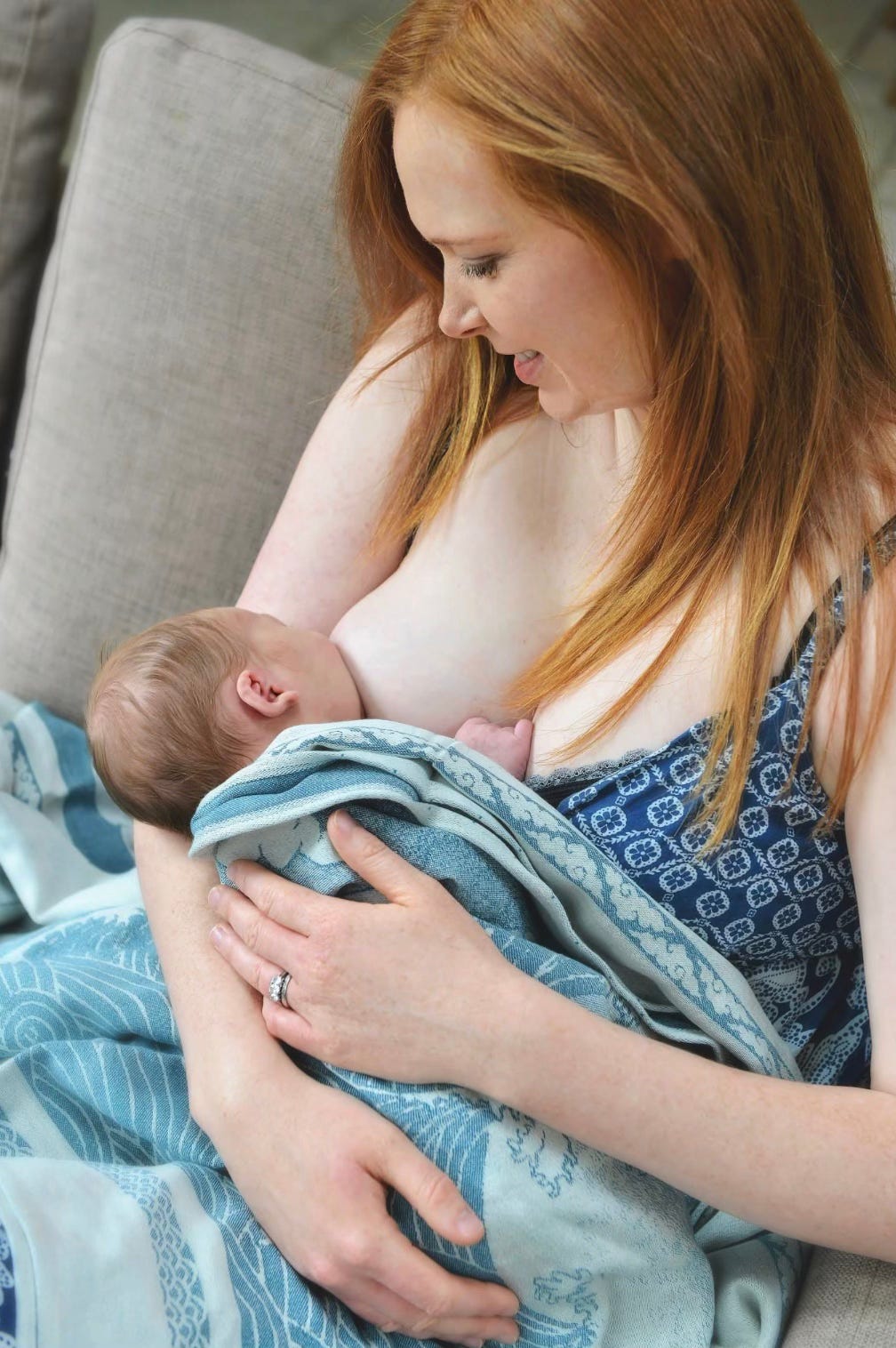
    There is a common menopause-related condition that can cause tearing, burning, recurrent urinary tract infections(UTIs), loss of sexual function and many other symptoms. And it does not improve with time. Yet most people have never heard of it. Even our doctors! If you’ve ever been told it’s “just thrush,” “just dryness,” or “just part of getting older”, then this is for you. Hello and welcome to Divergent Menopause, previously known as The Autistic Perimenopause: A Temporary Regression. I am Sam Galloway (she/her), an autistic ADHDer (AuDHDer), and a surgical menopause survivor. I write Divergent Menopause to share what many of us are never told until we have to find out the hard way. Thanks for joining me on this wild midlife ride! 🎢 TL;DR:Genitourinary Syndrome of Menopause (GSM) is a common but underdiagnosed condition that can cause tearing, burning, recurrent UTIs, and loss of sexual function. And it does not improve with time. Many people (including doctors) mistake it for infections or “normal ageing.” Effective treatment exists but most of us are never told. 2025 changed everything for me For me personally, it was the year of my life saving gynaecological operation that immediately put me into surgical menopause, aged 44. If you have been here a while you may already know that I had a total hysterectomy with bilaterel salpingo-oopherectomy i.e. my uterus, cervix, fallopian tubes and ovaries were removed. YAY!! This was for several reasons including thickening of my endometrium (lining of the womb), progesterone intolerance, premenstrual dysphoric disorder (PMDD), chronic pelvic pain, and prolonged mental health issues caused by the hormonal flux of perimenopause. After the initial recovery time, which was blissful bedrest on Codeine, building LEGO and binge watching Taskmaster for a couple of months, I am glad to report that my mood is finally stable. And now with the use of systemic add-back hormone replacement therapy (HRT)/menopause hormone therapy (MHT), my life is back on track, and my hormonal flux has been eliminated. But my surgery was just the beginning of my menopause. It surgically ended my horrendous perimenopause, but I have sadly not been spared the full post-menopausal array of hormonally depleted horrors. Yes, I am 44. No, I am not too young to have Genitourinary Syndrome of Menopause (GSM). Genitourinary syndrome of menopause isn’t all about dryness, and “dryness” isn’t even what we think it is. It isn’t wiping after using the toilet, and shredding the paper on your sandpaper-like skin. Dryness is more like labial tears that don’t heal, burning that can’t be soothed, and an itch that isn’t thrush. And that is only for starters… I am not judging anyone for thinking that dryness only means that your vulva feels parched and sex hurts. Lubricating might offer temporary relief but it is no cure. This is a lot and it has all been a steep learning curve for me. There is so much I didn’t know. I didn’t know even after I had shown to my own labial tear to my usual doctor when I was 39 or so, and he had prescribed an antifungal and antibacterial cream that I diligently applied. Even after I then went back because it hadn’t healed, and showed it to yet another doctor at the surgery, and she described the skin as “friable” (which I learned meant extremely fragile skin), and prescribed the same medication, on the wrong assumption that it must have been a particularly stubborn fungal infection. I was still none the wiser about GSM. And neither were the doctors treating me. Has anything like this ever happened to you? I would genuinely like to know how many of us were persistently treated for infections that never existed. It wasn’t until I first saw my menopause specialist doctor months, perhaps even a couple of years, later that I began to learn what was really happening to my body. As we live in distant parts of Aotearoa New Zealand, appointments with my menopause doctor are usually remote via telemedicine video or phone calls, and graphic anatomical photos are sent over a secure medical online portal to inform assessments. So when my tear wasn’t healing I eventually sent a photo of it to my menopause doctor. She reported that the tissues looked pale and inflamed. Immediately I was prescribed the correct treatment (and I hurriedly deleted the photos from my phone before anyone else saw them..!) Although my doctor didn’t call it “genitourinary syndrome of menopause”, it didn’t take me long to bolt down the dry, pale and friable rabbit hole of doom. 🕳️ And what was the miracle cream that I still use twice a week, and will need to be prised from my cold dry dead hands? Vaginal oestrogen cream! Here is a post from the Divergent Menopause (formerly The Autistic Perimenopause: A Temporary Regression) archives way back in 2024 when GSM was a agonisingly brand new and thrilling concept to me: What else happened in 2025? On a much more significant scale than my hysterectomy, a groundbreaking step was made by the United States medical authorities. Yet this news completely went under my radar until a few weeks ago, when I listened to a podcast episode from April 2025, where urologists Kelly Casperson, MD and Rachel Rubin excitedly announced the new guidelines on genitourinary syndrome of menopause. I learn more from this discussion with every listen. Feeding off their energy, I went straight into hyper ADHD mode and developed an intense interest in this little known, painfully taboo, yet extremely common syndrome that has been affecting me - and possibly you too? - for years. Last year, the American Urology Association (AUA), Society of Urodynamics, Female Pelvic Medicine & Urogenital Reconstruction (SUFU) and American Urogynecologic Society (AUGS) jointly published the Genitourinary Syndrome of Menopause: AUA/SUFU/AUGS Guideline (2025). Six years in the making, this guideline was written to provide clinicians with the necessary information to identify, diagnose, counsel and treat GSM. So what symptoms count as GSM? Probably not what you think, and you may already have some of them. Brace yourself… Vulvovaginal symptoms * Dryness * Burning * Irritation Urinary symptoms * Urgency * Frequency * Dysuria (pain, discomfort or burning whilst urinating) * Recurrent urinary tract infections (UTIs) Vulvovaginal and urinary effects of menopause combined cause the sexual symptoms: * Dyspareunia (painful intercourse) * Bleeding during intercourse * Broader impacts on sexual function: reduced libido, reduced arousal and reduced orgasm Physical changes of GSM: * Labial atrophy * Reduced moisture * Introital stenosis (narrowing/shortening/closing/loss of flexibility of vagina and vaginal opening due to scar tissue) leads to pain in sex, discomfort during pelvic exams and difficulty using tampons * Clitoral atrophy. CLITORAL ATROPHY!!?? Vaginal surface may be: * Friable (tissue that is easily irritated and more prone to inflammation, bleeding and tearing) * Hypopigmented (pale skin) * Petechiae (pinprick sized red or purple spots on the skin from fragile capillaries bursting) * Ulcerations * Tears in the skin (from personal experience, I can report that this burns like a biatch, and doesn’t heal without vaginal oestrogen) Urethral (the hole you pee from) findings: * Caruncles (benign vascular growth on outside of the urethra) * Prolapse (a pelvic organ loses it’s support and falls down into the urethra) * Polyps This list is not comprehensive, there are other symptoms that I don’t know about yet. Please share in the comments if you know of others that I have missed. Did you know that the term “Genitourinary Syndrome of Menopause” doesn’t even cover the entirety of this issue, nor the time in your lifespan when these GSM symptoms can occur? Genitourinary symptoms occur during other life stages of hormonal flux including pregnancy, postpartum, when taking hormonal contraceptives, and whilst breastfeeding. I am still quaking from this news. I breastfed both my boys until they were four years old because, before my perimenopause tried to kill me and I needed a medical treatment pathway to preserve my life, I was a super crunchy, all natural, hippie Mama. Now in hindsight I think that my fellow woke lefty greeny attachment parenting Mama and baby community were all undiagnosed neurodivergents too. I wouldn’t have wanted it any other way! And before I 100% wanted babies I 100% didn’t want babies, and so I spent decades on the contraceptive pill, contraceptive injections and contraceptive implants. Is it any wonder that my poor vag is now utterly wrecked due to a lack of oestrogen through so many years of my life? Yet we get told that the stitches, tears and birth injuries are the worst issues of early motherhood and that, whatever happens, we are lucky as long as we have birthed a “healthy” baby. If only I knew then what I know now… Someone should have handed me a prescription for vaginal oestrogen there and then! Imagine if the midwives handed it out immediately after birth? It would have soothed my tattered vagina stitches, I reckon. This is our time to get informed. When we know better, we can take better care of ourselves. During the ‘You Are Not Broken’ podcast episode, recorded on the day of release of the new (at the time) GSM guidelines in 2025, Dr Rachel Rubin said: “… it is bold, it is simple, it is unapologetic, it is evidence-based, and it is very, very clear that vaginal hormones are absolutely preventative of urinary… tract infections, help with pain with intercourse, help with overactive bladder and urinary urgency. They are safe to take if you have breast cancer history, family history of breast cancer, history of blood clots. “They are safe, and they are… lifelong therapies. They are chronic therapies that should be used… “… This is urinary frequency and urgency, recurrent urinary tract infections which kill people. It is pain with sex, dryness, muted orgasms, absent arousal. It is, it is, and it doesn’t get better with time. “Sometimes hot flashes get better. But as your audience knows, the genitourinary symptoms do not get better for most people.” From You Are Not Broken: 315. BONUS - Genitourinary Syndrome of Menopause Guidelines released today!, 29 Apr 2025 If you aren’t already using vaginal oestrogen, then why not? There is so much to be gained. It is so much better to prevent GSM than to have to suffer with insidious symptoms unnecessarily. If you recognise yourself in this, you are not broken, you are underinformed. And you deserved to know all this sooner. This is the kind of information I wish I had had years earlier! If this post helped you understand something about your body that no one has explained before, you can support this work becoming a patron as a paid subscriber. Cheers, Paid subscribers make it possible for me to keep researching, writing, and sharing the information many of us are missing. Get full access to Divergent Menopause at samgallowayaudhd.substack.com/subscribe
  • March 27 · 1 hr 40 min

    (Live) Perimenopause as a Burnout Accelerant 🎥🎧💕

    If you’ve ever felt like your brain stopped working in neurodivergent midlife, this discussion may explain why. Hello and welcome to Divergent Menopause, previously known as The Autistic Perimenopause: A Temporary Regression. I am Sam Galloway (she/her), an autistic ADHDer (AuDHDer), and I have recently had a hysterectomy. As a neurodivergent perimenopause and PMDD survivor, I offer peer support and share knowledge on how to make it through the hard times. Thanks for joining me on this wild midlife ride! 🎢 Thank you to Marie-Christine Oliver for this is fascinating and enriching chat! So many brilliant people joined us live and we are so grateful for your contributions in the chat, as well as having you all there with us. It was intense so people dipped in and out. For accessibility, the video has closed captions, the transcript is available within this post, and you can listen to an audio only version if preferred. It was a long one (we went 40 minutes over our scheduled hour - ADHD much?), but we covered all the things. Well, we tried to! We even completed the Meno-D rating scale to detect depression in menopause together which is one of my favourite supports in my menopausal transition, along with my cats, and my vaginal oestrogen cream. And yes, I mentioned clitoral atrophy because we should know about these things! ⚠️ Content warning for talk of suicidality, disordered eating, mental health hospital stays, early menopause, IVF, medical gaslighting, misdiagnosis, loss of career/function/sense of self, involuntary unmasking, and clitoral atrophy. TL;DRead/Watch/Listen (AI generated) Perimenopause can act as a burnout accelerant for neurodivergent women—especially those with ADHD and autism—because hormonal changes destabilise already overworked nervous systems. This often leads to: * Sudden loss of masking ability * Cognitive decline and emotional dysregulation * Misdiagnosis and medical gaslighting * Identity collapse and increased suicidality risk The conversation highlights a critical gap: research, language, and clinical understanding are lagging far behind lived experience. ⏱️⏱️ Full Timestamped Summary (AI generated) 00:00 – Intro (chaotic, human start) Live recording begins; Sam introduces the topic and guest Marie-Christine Oliver. 02:00 – Core concept Perimenopause as a burnout accelerant for neurodivergent nervous systems. 03:30 – Lived experience IVF, early perimenopause, nervous system collapse, career loss, suicidality, late diagnosis. 06:30 – The biology Estrogen supports dopamine + serotonin → drop creates a double neurological hit. 07:00 – Masking collapse Sudden loss of ability to cope → meltdowns, shutdowns, dysregulation. 08:00 – Cognitive decline Brain fog, memory loss, speech issues → often mistaken for dementia. 10:00 – HRT explained A buffer, not a cure; reduces extremes but doesn’t fully restore capacity. 13:00 – Mental health risks High rates of suicidality; symptoms often misunderstood or misdiagnosed. 15:00 – Research gaps Little to no research on ADHD + menopause or AuDHD. 20:00 – Key insight Menopause = point where masking becomes impossible. 22:00 – Quadruple empathy problem Breakdown between patient + doctor + neurotype + menopause context. 26:00 – Medical gaslighting Symptoms dismissed or mislabelled → confusion + self-doubt. 28:00 – Identity collapse Loss of career, function, and sense of self. 31:00 – Compounding pressures Parenting, aging parents, chronic illness, hormones—all at once. 33:00 – Diagnosis aftermath Labels accumulate; identity becomes deficit-based. 36:00 – Menod tool introduced A scale for identifying menopausal depression. 40:00 – Why the tool matters Captures real-life impact; useful for self-advocacy. 42:00 – Energy depletion Extreme fatigue; even basic tasks feel impossible. 43:00 – Paranoid thinking Workplace anxiety, social fear; blurred line between perception and reality. 45:00 – Irritability / rage Outbursts, meltdowns → nervous system overload, not personality. 47:00 – Self-esteem collapse Ranges from self-doubt to suicidality. 49:00 – Hospitalisation Can help or harm; highlights systemic inequalities. 50:00 – Social isolation Disconnection even when not alone. 52:00 – “What is normal?” Tools often based on neurotypical assumptions. 54:00 – Anxiety escalation Chronic nervous system dysregulation. 56:00 – Physical symptoms Pain, illness, unexplained issues tied to hormones + stress. 58:00 – Sleep disruption Creates worsening feedback loops. 60:00 – Body changes Weight, metabolism, physical identity shifts. 62:00 – Libido changes Under-discussed but significant impact. 64:00 – Memory + focus issues Deeply distressing; often misinterpreted as cognitive decline. 66:00 – Symptom accumulation Multiple high scores = severe functional impact. 68:00 – Whole-life impact Work, relationships, parenting all affected. 70:00 – Why systems fail Healthcare treats symptoms separately, not holistically. 72:00 – Forced self-advocacy Individuals must piece everything together themselves. 74:00 – Grief Loss of self, identity, and capacity. 76:00 – Burnout cycles Push → crash → partial recovery → repeat. 78:00 – Lifelong overcapacity Perimenopause exposes unsustainable patterns. 80:00 – Lack of prevention No warning, no preparation, no roadmap. 82:00 – What could have helped Earlier diagnosis, awareness, and reduced pressure. 84:00 – Systemic gaps Research, healthcare, and workplaces all lagging. 86:00 – Community importance Peer conversations filling the gap. 88:00 – Reframing Not failure → biological + neurological reality. 90:00 – What’s needed next Research, integrated care, recognition. 92:00 – Hope (with nuance) Improvement possible, but not full restoration. 94:00 – Ongoing vulnerability Need for pacing, boundaries, nervous system care. 96:00 – Final reflections This is widespread and under-recognised. 98:00 – Closing Validation, connection, and shared understanding. 100:00 – End Resources: Meno-D: A rating scale to detect depression in menopause The conversations we’re having here are filling a gap that research and healthcare still haven’t caught up with. If this work matters to you, consider becoming a paid subscriber to support it. Thank you to everyone who tuned into my live video! Join me for my next live video in the Substack app. Get full access to Divergent Menopause at samgallowayaudhd.substack.com/subscribe

  • March 17 · 19 min

    Who Taught Us Not to Know Our Bodies? 🎥💕🗝️

    Episode Title Why So Many Women Don’t Know Their Own Anatomy Episode Description In this conversation, Sam Galloway from Divergent Menopause speaks with Amber Horrox, creator of Warrior Within, about body literacy, menstrual shame and the long shadow of medical misogyny. Many women grow up knowing the names of internal reproductive organs — uterus, ovaries, fallopian tubes — yet struggle to name the external anatomy of their own bodies. Euphemisms, silence and shame mean that even describing symptoms to a doctor can be difficult. Sam and Amber explore: • Why women are rarely taught accurate anatomical language • How euphemisms create barriers in healthcare • The messaging around menstruation and “pushing through” pain • The impact of religious and fear-based sex education • Surgical menopause and chronic pelvic pain • Integrating medical, holistic and embodied approaches to healing • Reclaiming safety and agency in our bodies A note on language This conversation uses the word "women" in places when discussing anatomy, menstruation and menopause. These experiences are not limited to one gender, and people of multiple genders may share them. The language here reflects the conversational nature of the discussion rather than an attempt to exclude anyone whose body or lived experience is part of this topic. Get full access to Divergent Menopause at samgallowayaudhd.substack.com/subscribe
  • March 13 · 30 min

    The Autism Establishment Has a Problem

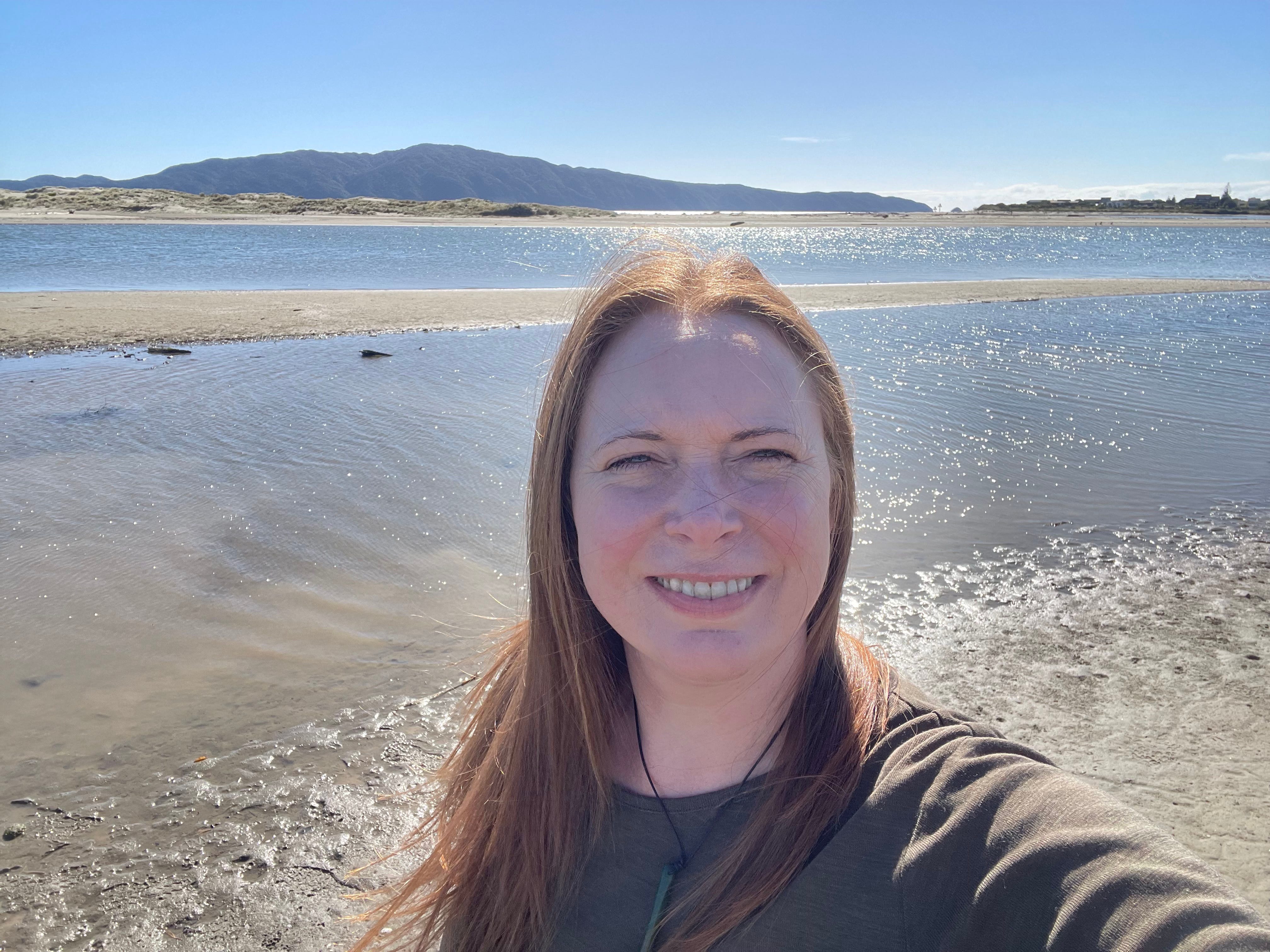
    The recent debate sparked by autism researcher Uta Frith has exposed a growing divide between traditional autism research and autistic lived experience. As more adults identify as autistic and the autism spectrum continues to expand, an increasingly urgent question emerges: Who gets to define autism? Researchers? Clinicians? Or autistic people ourselves? Read the full article on Substack: Divergent Menopause Direct link to the essay post In this episode, I unpack the controversy surrounding recent interviews with Professor Dame Uta Frith and reflect on what the debate reveals about the past, present, and future of autism research. Drawing on my own experiences as an autistic ADHDer (AuDHDer), parent of autistic children, and survivor of perimenopause, PMDD and surgical menopause, I explore why many autistic people feel triggered by this discussion, and why autistic voices must be central in conversations about autism. In this episode • The controversy surrounding recent interviews with autism researcher Uta Frith • Why some researchers believe the autism spectrum has become “too wide” • The growing divide between traditional autism research and autistic lived experience • Why masking, sensory needs, and late diagnosis are still debated • How generational views of disability shape autism discourse • The rise of autistic-led research and advocacy • Why many autistic people feel distrustful of traditional research models • The urgent need for research that improves autistic quality of life • Future research questions that could genuinely help autistic people Topics discussed Autism research, Neurodivergence, Late autism diagnosis, Masking and autistic burnout, Medical misogyny, Self-diagnosis, The social model of disability, The double empathy problem, Neurodivergent mental health, Autistic menopause About the host Sam Galloway (she/her) is an autistic ADHDer (AuDHDer), writer, and creator of Divergent Menopause. Following her own experiences of neurodivergent perimenopause, PMDD, and surgical menopause, Sam writes and speaks about the intersections of autism, neurodivergence, hormones, and midlife mental health. Her work focuses on peer support, advocacy, and helping neurodivergent people navigate difficult transitions. Content note This episode includes discussion of: • medical gaslighting• medical misogyny• mental health services• suicide and suicidal ideation Please take care while listening. Discussion questions This topic has sparked huge debate online, and I’d love to hear where listeners land: • What do you think the biggest gap is between autism research and autistic lived experience? • Have you ever encountered professionals who dismissed masking or sensory needs? • What areas of autism research do you think deserve more attention? Support the publication If this episode resonated with you, consider becoming a paid supporter of Divergent Menopause. This publication runs on a patron membership model, and paid subscribers help fund independent writing and advocacy centred on neurodivergent lived experience. Get full access to Divergent Menopause at samgallowayaudhd.substack.com/subscribe
  • February 14 · 25 min

    The Quadruple Empathy Problem

    Hello and welcome to Divergent Menopause with Sam Galloway. Today I'm going to read to you the quadruple empathy problem. Autism, ADHD, menopause, and why we are still the ones expected to adapt. Empathy. According to the Cambridge Dictionary, the definition of empathy is the ability to share someone else's feelings or experiences by imagining what it would be like to be in that person's situation. Empathy the ability to share someone else’s feelings or experiences by imagining what it would be like to be in that person’s situation Source: Cambridge Dictionary This Elder Millennial vividly recalls standing in front of the bathroom mirror in my locked family bathroom, aged 7 or 8 or so. Forcing tears to stream from my eyes, my crying voice rasping, feeling the hot slime from my sinuses dripping down the back of my throat, I didn’t feel sadness. Perhaps we can grow out of alexithymia, but the act of crying on cue did not prompt emotion. Reflected back to me in the mirror was a girl who cried, smiled, and laughed at all the wrong times. Many hours were spent alone learning to morph my face to look how it was expected of me. “Too much”, “not enough”, “too sensitive” and “insensitive”, were some of the labels attached to me whenever my childhood response was perceived to be misaligned with the social expectation. Learning the rules of emotional expression was arduous and exhausting. Watching the neurotypical girls whisper about me, then trick me into thinking they were my friends before not long later calling me fat, ugly and ginger, was my daytime schooling. Where was their empathy for me? Burnout regularly ensued. Life was endlessly confusing. For reasons still unclear to me, as a girl screaming and crying in pain when I was injured and hurting was deemed over the top. Yet silently sobbing myself to sleep was apparently fine. I learnt that as long as I could hide my emotions from others, I was safe. The agonising intensity of my emotions was not for public consumption, and my pain and anguish was supposed to be kept private. Crying into the mirror, was an instinctual exercise in social masking. Self-set homework was studied only by the special girls like me, in secret, whilst everyone else got on at home with learning more traditionally academic subjects, and playing with easily found and kept friends. My social skills learning was autodidactic in my early years, but would pay off in time when I took it upon myself to achieve an upper second-class honours degree Bachelor of Science in Psychology. The classic Psychology undergrad degree A.K.A. the neurodivergent thinking woman’s endeavour to cognitively grasp concepts behind individual and collective human thoughts, motivations, neurology and behaviours. Including (neurotypical) empathy. Using our strengths of curiosity, pattern recognition and intellect, we endeavour to compensate for the neurodevelopmental lagging skills that made too many of our childhoods a misery. The unrelenting stereotype of neurodivergent people is that we cannot comprehend the emotions of others, never mind be able to empathise with them. It would still be two decades before my autism and ADHD were identified. Despite our extreme efforts to performatively show our emotions in a dignified, standardised and socially acceptable manner, many female and AFABs pre-diagnosed autistic, ADHD and AuDHD can also gaslight ourselves into thinking that we can’t be neurodivergent. How can we be neurodivergent when we show too much emotion, rather than none at all? Our emotional dysregulation can trigger us to weep, and seeing such intense public displays of empathy can make other people uncomfortable. Neurodivergent empathy looks different. But our late identification has prompted family members and society at large to think that we are just jumping on the “latest trend” of autism and ADHD. For those of us who are exquisitely high masking and often with co-occuring giftedness, the assumption is that we can empathise in a neurotypical way, but we choose not to. Too often, we are regarded as arrogant, manipulative, and over- or under- performative. When we eventually receive a diagnosis, having fought a lifelong battle to fit in with the people who love us the most yet understand and accept us the least, it becomes clear that neurotypicals also have difficulty showing us empathy. Our emotions look different. Our empathy looks different. Many late diagnosed neurodivergent women and AFABs, consider ourselves to be deep empaths. For decades, we have masked our emotional intensity, and yet we are often the first to donate to worthy causes and to cry at distressing world news stories. The challenge for us isn’t whether or not we can respond emotionally to others. The challenge for us is self-regulating our emotional responses. When the intensity of our emotional responses is socially unacceptable, we are labelled “too much” and/or “not enough”. Sobbing in work meetings. Melting down during minor disagreements. Shutting down when newly bereaved. Our emotional intensity sets us apart from the majority. To me, this is an advantage to being neurodivergent. But we hide it, moderate our emotional responses, and stop our faces from giving us away, in order to avoid rejection. When the societal norm is to visibly empathise swiftly then move on, our deep empathy is feared and misunderstood. Public crying is deemed shameful, and being told to “grow up” as kids really meant “keep it to yourself”. Hiding our pain doesn’t stop us from feeling it. We made it our mission to pass for normal, and we were picked apart regardless. Our natural response as neurodivergents is pathologised as emotional dysregulation, and we are medicated, therapised and/or shunned to obscure our differences from the world. Many of us learn to shield ourselves from our emotional triggers, for example, by actively avoiding live footage broadcasts of global catastrophes, and the effects of their aftermath. Other neurodivergents may enter politics, education and other influential institutions to try and change systems from the inside in a bid to improve life chances for all, reverse the climate crisis and drive other social justice causes that they empathise with deeply. By midlife, we have learnt to mask and moderate our neurodivergent empathy and emotional responses. Repeated rejections, perceived “failings” on our part and collapsed relationships have taught us to hold it all inside whatever the cost. Lived experience tells us that we are not safe acting as ourselves in the world at this time. It can be hard to know where the line is between who we inherently are, and who we are pretending to be. We may know when we are okay to be around other people, scheduling our social engagements around our menstrual cycle. Some days and weeks we can’t be trusted to people. As highly sensitive people, we respond to our hormones with the entirety of our minds and bodies, and so we may avoid certain people and activities when hormonal volatility is predicted. Hormonal flux becomes unpredictable as we approach the menopause transition. We no longer possess the self-regulatory capacity to moderate our every word, action and facial response. Regressions in functioning occur, and our second nature skills of masking are lost. It can be terrifying to go into meltdowns from triggers that you have coped with masked for decades. In perimenopause, this can trigger the sense of intense loss of self. But there is light at the end of the tunnel. In the later stages of neurodivergent perimenopause and beyond, fewer f***s are given. Literally and metaphorically. We can come back to ourselves, find our neurotribe, and settle into a lifestyle that lends itself to managing our energy expenditure. We align the generous gift that is our empathy where it is validated, wanted and most needed. Neurodivergent-driven research on the topic of empathy in the menopasue transition is developing, and what follows is a selection of the work on empathy so far. The Double Empathy Problem Many of us late diagnosed neurodivergent adults will have come across the theory of the double empathy problem whilst trying to figure out why we have felt so misunderstood for much of our lives. Often attributed as an issue for autistic people when communicating (or trying to) with neurotypicals, the double empathy problem originates from a much wider concept. First coined “the double empathy problem” by autistic researcher and sociologist Dr. Damian Milton in 2012, Milton drew on the notion that people of different cultures may often struggle to find some common ground, and experience communication breakdowns in the process. ‘Simply put, the theory of the double empathy problem suggests that when people with very different experiences of the world interact with one another, they will struggle to empathise with each other. This is likely to be exacerbated through differences in language use and comprehension.’ UK National Autistic Society: The double empathy problem Misunderstandings in mixed neurotype relationship dynamics have for too long been considered the fault of the neurodivergent partner. And this goes for all types of neurodivergence, despite the strong link the autistic community has with the double empathy problem. It is just as likely to be an issue for a stereotypically enthusiastic and energetic ADHDer or AuDHDer to be brushed off as “annoying” and “too much”. The double empathy problem theory provides reassurance that we are not the problem. Our supposed social deficits and communication differences are only apparent and obstructive when we are communicating with people who do not share our neurotype. This is why finding our neurotribe is invaluable to adults who self-identify as or are diagnosed neurodivergent. “I don’t understand you” is too frequently said to neurodivergents by their neurotypical partners, as though they are just not trying hard enough to make themselves understood. There is often very little flexibility from the neurotypical to try to understand their partner, who may already be struggling and exhausted from every single interaction, every single day. The time it takes for this awareness to occur can cost us our self-compassion, self-esteem and even our sense of self. Not wanting to face rejection after rejection, we learn from every social exchange with neurotypicals, and tweak our responses accordingly. It is not uncommon for later in life self-identified and diagnosed neurodivergents to have adopted another persona entirely. Masters of mimicry, and driven by a biological human instinct to be accepted, too many of us spent our formative years studying (and failing) how to appear acceptable, on the social periphery studying peers in the playground, obsessive book character analysis, copying soap opera stars’ mannerisms and so on. Hopefully our younger neurokin no longer need to do this because surely all the teachers, SENCOs, practitioners and parents are clued up about the double empathy problem by now..? The Triple Empathy Problem Have you ever visited a healthcare practitioner and felt like you have not been understood, validated and treated appropriately? Unfortunately, this has been the norm for neurodivergent patients for all too long. Sometimes complicating factors make us seem too hard for the average doctor to want to work collaboratively with us. Finding healthcare providers who are willing to learn about nuances in health profiles, such as differing cultural and ethnic groups, co-occuring chronic health conditions, mental health conditions and increased likelihood of gender dysphoria and/or being trans can make medical visits feel harder than they need to be. On average, autistics and ADHDers have shorter life expectancy than neurotypicals. This may be because we do not experience pain and report symptoms in the manner medical professionals are used to. Sensory overload in clinical settings may reduce our capacity to engage. Executive functioning challenges make it a struggle to book and attend appointments, collect prescriptions, and remember to take our meds. There is a myriad of reasons why our life expectancy is shorter due to our neurodivergence, but it is unacceptable and shouldn’t be our burden to carry alone. Why is this not widely known, and managed as a systemic health crisis? In 2023, Shaw et al. took the double empathy problem theory, situated it within the medical context, and coined the term the triple empathy problem. ‘Patients struggle to see their doctor’s perspective, and doctors can also struggle to see their patients’ perspectives. For example, when doctors are patients themselves, they experience healthcare with their own medical knowledge. The difficulty is seeing the perspective of a patient without any medical knowledge. Similarly, autistic people struggle to see non-autistic people’s perspectives and vice versa. So, it proves even harder for autistic patients to see their (non-autistic) doctor’s perspective, and even harder for (non-autistic) doctors to see autistic patients’ perspectives… This triple empathy problem may also be at play when autistic people interact with other professions and services, such as education, social care or the justice system.’ Barriers to healthcare and a ‘triple empathy problem’ may lead to adverse outcomes for autistic adults: A qualitative study by Shaw et al. (2023) In my experience, working collaboratively on my medical issues has been best achieved when my healthcare providers are neurodivergent themselves. Unfortunately, it is not always safe for doctors and health practitioners to disclose their own neurodivergence in the workplace. Proactively seeking neuro-affirming medical staff throughout our lifespan to support us could be most effective, giving us the best possible health outcomes. Yet self-advocacy can still be extremely challenging, especially when we are already feeling depleted and sick. Training is essential for this travesty to be corrected, and there are recommendations for healthcare practitioners to adopt in order for our neurodivergent cultural differences in social communication, pain response and identification plus other variations to be best accommodated. Building on Shaw et al’s findings, Doherty et al. (2023) developed Autistic SPACE: a novel framework for meeting the needs of autistic people in healthcare settings. ‘This (the Autistic SPACE framework) encompasses five core autistic needs: Sensory needs, Predictability, Acceptance, Communication and Empathy. Three additional domains are represented by physical space, processing space and emotional space. This simple yet memorable framework encompasses commonalities shared by autistic people.’ Autistic SPACE: a novel framework for meeting the needs of autistic people in healthcare settings by Doherty et al. (2023) The Doherty et al. paper is packed full of great information on neurodivergent inclusivity that should be compulsory reading for all patients, medical staff, therapists, holistic practitioners and health boards. I strongly encourage you to take a look at the table of Recommendations for supporting Autistic SPACE in practice, because I think you will feel totally validated. (Screenshots of the table are below, with credit to Doherty et al., 2023). Sensory processing disorder is a form of neurodivergence that co-occurs extremely highly with autism and ADHD, and we all have differing sensory sensitivities and tolerance levels. Hormonal fluctuations during perimenopause and beyond exacerbate these differences, and can make day to day life feel torturous. Temperature dysregulation can worsen, joint pain may feel agonising, and menstrual cramps can combine, putting us into a sedentary lifestyle. Shutdowns, meltdowns and periods of inertia may increase, forcing our functioning to plummet to a debilitating extent. Spiralling hormones drive our mood, cognition and energy levels to spiral too. Just when we have the least capacity to understand what is going on for ourselves and self-advocate, we need to do so more than ever before. The Quadruple Empathy Problem Widespread symptoms of the menopause transition may affect neurodivergent people to the extreme. The mind and body effects of fluctuating oestrogen, progesterone and testosterone production can lead to regressions and an inability to function. This was certainly the case for me, but I hope you are faring better! Midlife burnout for neurodivergent women and AFABs is often misattributed to factors other than hormonal flux, and therefore we are prone to being misdiagnosed and medical gaslit, resulting in inappropriate treatment. In their 2024 study “A perfect storm”: Autistic experiences of menopause and midlife, Brady et al. identified menopause as the fourth dimension of the empathy problem. Shaw et al. (2023) described a triple empathy problem where autistic people struggle to make themselves understood and understand those of other neurotypes in the context of medical settings. We found an added dimension where communication challenges were even more profound for some autistic participants transitioning through menopause, combined with what we would characterize as medical misogyny; this could be seen as creating a quadruple empathy problem. Some participants indicated that menopause was reminiscent of former experiences of hormonal transition like puberty and menarche, transitions in which they had also struggled with communication… … A key takeaway is the importance of person-centred, autism-informed healthcare that considers intersectionality and accessibility needs. We encourage healthcare professionals to recognize autistic communication styles and the various symptoms of menopause, including those that are less widely discussed, and to be receptive to the fact that menopause may start earlier than is commonly expected. Brady et al. (2024) “A perfect storm”: Autistic experiences of menopause and midlife Medical gaslighting of neurodivergent menopause is still prevalent, with women and AFABs being told we are too young to be experiencing symptoms. When neither the practitioner nor the patient are well informed about menopause and/or neurodivergence, the chances of appropriately treating her symptoms are extremely unlikely. There is also some emerging research into ADHD and menopause, such as the academic paper ADHD in females: Survey findings on symptoms across hormonal life stages by Osianlis et al. (2026). Their results showed that 97.5% of participants perceived a worsening of ADHD symptoms during menopause, but as it was self-reported data, there are limitations in extrapolating these findings. However it does suggest that more research is needed in this area. As an AuDHDer, I find it concerning that research continues to polarise women and AFABs by their neurodevelopmental conditions. Surely we don’t need to continue studying ADHD and autism separately when both co-occur so strongly. I cannot separate the effects of menopause on my ADHD versus my autism as they are equally integral to my human experience. If widely applied in medical settings, the Autistic SPACE framework shared above could transform our interactions within the healthcare system, and improve our life chances. With so many multipliers to the empathy problem, neurotypical people need to take equal responsibility in understanding how neurodivergents perceive and cope in this world which rarely has our best interests at heart. Children should be accepted as they are, without having to waste their childhoods fawning “normal”, regardless of their neurotype. By the time the younger generation growing up today reach midlife, this all needs to be understood and standard practice within all healthcare institutions. Neurodivergent friendly medical settings and neuro-affirming practitioners will enhance our life chances, whilst providing the validation and supports we have lacked for so long. I would love to hear from you in the comments! * Do you relate more to the double, triple or quadruple empathy problem? * Do you feel the biggest empathy breakdowns happen in your relationships, healthcare, workplace or family? * Has your menopause transition affected your experience of giving and receiving empathy? Cheers, P.S. Please excuse typos and general nonsensical grammar. This essay taken me hours and hours and hours to write, edit, review, rewrite, edit, record the audio voiceover and upload to publish. Whilst I can report an astonishing improvement in my quality of life now that I am in surgical menopause, the lingering effects of the heavy sedation and general anaesthetic from August 2025 are still with me. 😵‍💫 If this resonated, you are not alone — and you deserve spaces where your empathy isn’t pathologised. Paid subscribers help sustain this work and gain access to deeper dives, research breakdowns, and a community that empathises with you. Get full access to Divergent Menopause at samgallowayaudhd.substack.com/subscribe
  • January 16 · 10 min

    This Barbie Has No More F***s Left 💕 🌸 🎧

    For anyone who’s ever silently lost their s**t at doctors, hormones, or Ken: this is your AuDHD Barbie, finally done pretending. Originally titled. "Introducing AuDHD Barbie". Hello and welcome to Divergent Menopause, previously known as The Autistic Perimenopause: A Temporary Regression. I am Sam Galloway (she/her), an autistic ADHDer, and I have recently had a hysterectomy. As a neurodivergent perimenopause and PMDD survivor, I offer peer support and share knowledge on how to make it through the hard times. Thanks for joining me on this wild midlife ride! 🎢 This is a snapshot in time of Barbie in midlife, who is late diagnosed Autistic, with co-occuring ADHD (AuDHD), in the throes of hormonal flux and she does not have enough f***s left to give. In this spoof piece, let me take you into Barbie’s messy Dream House where our protagonist can safely self-regulate and drop her social mask… AuDHD Barbie - or just “Barbie” to her friends - ignored her ringing phone, as Ken came through to her voicemail message: “Hi, it’s Barbie. Please do not leave a message. Text me, but only if it is important. Bye.” “For f**k’s sake, Ken”, Barbie muttered under her breath finally picking up as Ken rang through yet again. “This had better be important”, Barbie seethed down the line. “No, I don’t want to go to the beach party. I already told you! None of my clothes fit me anymore and my stupid period just started. How can I be bleeding again? It is only sixteen days since my last - hello? Ken?!” The dead phone line was the most soothing sound Barbie had heard all day. Barbie high fived herself. Period talk always made Ken cut his conversations short. Barbie believed that sand was cursed, and a cold shiver coursed through her body at the thought of ever having to go to another beach party again. This gave some light relief to her otherwise 24/7 hot flush. It was all right for Ken to go, he wasn’t experiencing hormonal mania making him rapidly lose muscle mass, bone density and his entire sense of self. Yes, things were just fine for Ken as always. Whilst he grinningly pumped iron and mainlined a creatine and protein powder blend on the daily, Barbie was forgetting to eat. Her only exercise was to burn calories through hanger-induced meltdowns. Her lifelong body dysmorphia was now at its peak. Looking down at her bloated meno belly, Barbie felt that she was retaining more water these days than there was in the entire ocean. ‘Calorie deficit diets’ were no longer working for her. Nor was intermittent fasting, the 5-2, Mediterranean, Paleo, Keto, Whole30, low FODMAP, low histamine, or eating only even numbered quantities of beige foods during even numbered hours of the day. Barbie collapsed into her sensory swing, kicked off her high heels and threw them across the room. They had been digging into her cankles, and she applied an ice pack to the ankle she had badly rolled earlier that day. Not for the first time, she dry heaved at the sight of the thick dark hairs growing at right angles out of her once dainty feet and toes. What is wrong with me? she wondered to herself. I used to love beach parties and hanging out with Ken. Now I just want to kill him every time he comes near me! God, he is such a dick. Barbie excavated the teetering mountain of hot pink dirty laundry to find the remote control for her cooling fan, trying not to disturb her sleeping cats. Turning her fan on to the max helped redistribute the air flow, which was currently carrying the unmistakable odour of the cat s**t in the nearby litter box. For f**k’s sake, Ken! Barbie thought to herself again, as rage filled every fibre of her being faster than any number of mindful deep breaths could diffuse. Scooping the cats’ s**t is a blue job. Why haven’t you f*****g done it? Even if she had wanted to, Barbie couldn’t scoop the litter boxes; not with her tennis elbow, frozen shoulder and splinted hypermobile wrist that her doctor had said in no uncertain terms were not symptoms of perimenopause. “Well, Ms AuDHD Barbie, you are in the prime of your life”, the doctor had told her earlier that day, whilst attempting to look both up her itchy short skirt and down her scratchy scoop neck top. Barbie could feel hives emerging across her chest, but she resisted agitating them with her brittle nails. She would wait until she got home, and then rub them raw until they bled. Bliss! “Allow me to assure you that you are too young to be experiencing menopause symptoms”, her doctor went on. “And, might I add, that you do not look autistic, and you are far too successful to have ADHD. Your lab results are fine. Your estradiol is at normal levels. You are still a very fertile young woman.” His lack of eye contact was now vexing her, ironic given that her own reported discomfort at holding a gaze was flagged in her recent autism assessment. Yes, for decades she had masked endlessly, with her iconic plastic moulded smile rouged to constant perfection. But now she felt ready to tear off the mask and stamp on it right there and then in the doctor’s office. “Look,” the doctor had gone on, “I will note your concerns but, for the record, I am of the professional opinion that you have nothing at all to worry about. You are seeking diagnoses unnecessarily. There is no cure nor treatment for neurodivergence or perimenopause anyway. This trend of over diagnosing autism and ADHD is getting out of hand! We all know that males are 1,000,000 times more likely to be neurodivergent than females. Not to mention the fact that women cope with it. Why would a woman of your standing want a diagnosis when you have managed fine all your life until now?” Barbie was mute. Situationally, not selectively. Despite scripting the discussion in advance over and over in her head, she could feel her neck and face burning, hot tears pricked her eyes. She sniffed them back. A thousand retorts would fire around her mind like pinballs in the hours and days that would follow, yet for now she froze in despair and panic. Her ever saggier face remained static, fixed with a wry smile. Barbie’s now unfocused eyes were blurring off into the distance, as she wished she could be anywhere else. “This is all in your pretty little head. How does Ken feel about all of this?”, the doctor went on. “I can increase your SSRI dose but I cannot offer you hormonal therapy because the significant risks are not worth the supposed benefits. You are fine. Keep doing what you are doing. I am here any time you need to see me for support and advice.” Barbie was already so f*****g sick of being objectified and patronised, but medical gaslighting was a new one on her. She decided not to tell this professional pervert all the other worries she had noted down to prompt the consultation. Bleeding gums. Loose teeth. Itchy ears. Cognitive decline. Urinary incontinence. Insomnia. Losing all her stuff. Suicidal thoughts. And that the sight of Ken in all his so-called glory did nothing for her anymore, and that she was feeling dead inside. Particularly ‘downstairs’. Her vagina was rapidly becoming nothing short of warped, and some prolific Googling of the mind-blowing symptoms of perimenopause had led to a self-diagnoses of vaginal atrophy and pelvic organ prolapse. If Ken only knew that my vag feels like someone has taken a cheese grater to it, and that my kamikaze uterus is doing it’s best to sacrifice itself, Barbie thought, he might stop calling me all the time and let me live in peace. No. Despite feeling broken, Barbie hadn’t mentioned her more sensitive gynaecological ailments to this doctor, and instead made a mental note to find a neuro-affirming menopause specialist doctor, and develop her self-advocacy skills. Back in the sensory sanctuary of her Dream House, Barbie slipped into something a little more comfortable to see her through her impending shutdown. A black hoodie, compression tights that covered her multitude of coffee table bruises, and her noise cancelling earbuds. She zoned out listening to a perimenopause podcast to help her feel sane, informed and less alone. Barbie took off her shiny sleek blonde wig to free her own matted, unwashed hair, doused her hair in dry shampoo then tied it back out of her face. The regular intrusive thought of shaving her head returned, and she blinked and cleared her throat ten times whilst humming to try to make it stop, whilst pulling out tangled clumps of fallen hair from between her fingers. Barbie was alarmed at the amount of hair she was losing, and her male pattern hair loss and receding hair line made her cry in secret most days. The wig was just easier now than dealing with her own hair, and facing questions about it. Until she found a better doctor, she didn’t have the right answers anyway. 🩷 How are you feeling about Mattel’s announcement of the new Autistic Barbie? 🩷 Let me know in the comments! Cheers, and Thanks for reading Divergent Menopause. Paid subscribers make this work possible. 💕🐈 Get full access to Divergent Menopause at samgallowayaudhd.substack.com/subscribe
  • January 3 · 1 hr 1 min

    (Live) Perimenopause, Medical Gaslighting and Estrogen Patch Inefficacy

    Hello and welcome to Divergent Menopause, previously known as The Autistic Perimenopause: A Temporary Regression. I’m Sam Galloway (she/her) and I am an AuDHD woman four months into surgical menopause (hysterectomy and oopherectomy). If you are interested about why I needed the surgery, you can read more here. Thanks for joining me on this wild midlife ride! 🎢 Thank you to everyone who tuned into my live video with Sonia Voldseth, the creator of Menopause & Misogyny! TL;DR * This advocacy-focused conversation documents real harm caused by estrogen patch failures and loss of choice in Aotearoa New Zealand. * When menopausal and neurodivergent women aren’t believed, symptoms escalate into cognitive, emotional, and physical crises. * Menopause care is essential healthcare. It is not optional, not cosmetic, and not something women should have to fight this hard to access. Sonia and I are both fortunate enough to live in Aotearoa New Zealand. Sonia, originally from the United States, lives surrounded by mountains in Queenstown on the South Island, and I, London Irish in origin, enjoy beachside life on the Kāpiti Coast near the bottom of the North Island. Unfortunately Sonia and I have both been affected by the ongoing oestrogen patch debacle. In 2024, we saw a global shortage of oestrogen patches, which I wrote about here. Currently there is laboratory testing underway in response to many people reporting that their menopause symptoms have returned despite staying on the same dose and brand. This has coincided with a new formulation of this vital hormone therapy treatment. My fellow pedants may notice that today I can’t decide whether to spell it “oestrogen” (UK and NZ) or “estrogen” (US), but please know that I am referring to the same hormone, regardless of the spelling used. Remarkably, the sedatives and general anaesthetic still have lasting effects on my capacity to write articulately, now four months after my total hysterectomy with bilateral salpingo oopherectomy (cervix, uterus, ovaries and Fallopian tubes removed). Surgical menopause has been life saving to my mental health, energy capacity and general functioning, so I am not complaining. But, rather than feeling able to summarise our discussion myself, instead I include ChatGPT’s offering below. As ever, for accessibility, you have the options to watch the video (with or without closed captions), listen to the audio and/or read the transcript. AI-Generated Timestamped Summary 00:00 — Why this conversation matters 02:31 — Progress made… then undone 05:31 — Estrogen patch shortages & loss of choice (NZ) 09:01 — Symptoms returning on the same dose 12:01 — Collective patterns, individual gaslighting 15:31 — Neurodivergent risk & mental health impacts 18:31 — Estrogen as a brain hormone 22:01 — Why “just switch to gel” isn’t simple 25:31 — Sleep collapse as the red flag 28:31 — Admin, advocacy & exhaustion 32:57 — Suspected formulation change (mid-2025) 34:31 — Medsafe reporting & deflection 36:05 — User-error narratives & systemic gaslighting 37:42 — Absorption differences & dosing reality 39:58 — Brain fog, language loss & regression 41:25 — Estrogen receptor saturation explained 44:19 — Menopause is serious, not “just hot flushes” 45:37 — Generational harm & WHI fallout 47:03 — Surgical menopause & compounded harm 48:37 — Aging with quality of life 49:30 — Vaginal estrogen, bladder health & prolapse prevention 52:35 — Prolapse, gatekeeping & specialist care 54:38 — Medical training gaps (global) 55:10 — Vaginal estrogen & cancer-risk reassurance 56:07 — Solidarity over infighting 56:56 — Closing reflections, access & hope Thank you to fellow AuDHDer and PMDD survivor Kim Pitts for chatting with us in the comments about her personal experience of menopause and medical misogyny. Kim and I have previously chatted live (link below) and here is Kim’s Auti Peri Q&A. Cheers, Sam This work exists through collective care. A paid subscription is a meaningful way to support Divergent Menopause in 2026. Thank you! 💕 Get full access to Divergent Menopause at samgallowayaudhd.substack.com/subscribe
  • January 2 · 19 min

    Anti-Goals: When Goal-Setting Makes Things Worse

    Hello and welcome to Divergent Menopause, previously known as The Autistic Perimenopause: A Temporary Regression. I’m Sam Galloway (she/her) and I am an AuDHD woman four months into surgical menopause (hysterectomy and oopherectomy). If you are interested about why I needed the surgery, you can read more here. Thanks for joining me on this wild midlife ride! 🎢 Hello and Happy New Year to you! And just like that we are in 2026. Hooray, we made it! Ageing is a privilege, but it isn’t easy. All we can do some days is take one step at a time, one breath at a time, and keep on keeping on. And that is more than enough. Around this time last year I wrote an article about Anti-Goals, and it is still being read and shared daily! It is by far my most popular post so far, and it captures the spirit of those of us who reject and repel the January conventions of self-improvement. Demand avoidance is running high in my life and I have long been wanting to write a follow up article. My brain has forbidden it though, so I have compromised with myself and recorded this follow up video on the topic for now instead. As always, the video is optional and is accompanied by an audio only podcast alternative, and/or a transcript. For accessibility’s sake, I also include below a timestamped summary provided by ChatGPT. What’s helping you get through right now? What do you wish you had more support with? If you want to share in the comments, you’re welcome to. One word or an emoji is more than enough. ⏱️ AI-Generated Timestamped Breakdown 00:00 – New Year’s resolutions are nonsense (for many of us)Why January pressure is unrealistic, especially during hormonal flux, and why time is a social construct anyway. 00:01 – Why goal-setting can fail demand-avoidant brainsIntroducing anti-goals and why avoiding harm can be more useful than striving for achievement. 00:02 – When survival becomes the goalWhat anti-goals looked like at my lowest point: reducing pain, anxiety, depression, and suicidal ideation. 00:03 – You can’t reverse a spiral aloneWhy support and a plan matter — and why “starting from scratch” isn’t possible when you’re already overwhelmed. 00:04 – Different baselines, different needsWhy comparing yourself to people “optimising” their lives is harmful when you’re just trying to get through the day. 00:05 – Redefining success at homeFrom magazine-perfect homes to hygienic and safe: using tools (like a robot vacuum) to reduce energy drain. 00:06 – Pain management over fitness goalsWhy “I don’t want to be in pain” is a valid goal — and how medical support, warmth, medication, and pacing mattered more than exercise plans. 00:08 – Addressing the root causeHow hormonal instability drove pain, mood changes, and loss of self-care capacity — and why treating that came first. 00:09 – Hormonal treatment and surgeryMy path through HRT, chemical menopause, and ultimately hysterectomy/oophorectomy — and how stability changed everything. 00:11 – Survival before self-improvementWhy health span matters more than optimisation, and why there is still no clear medical model for neurodivergent menopause. 00:12 – Don’t waste energy on unachievable goalsChoosing meds, blood tests, and basic care over gyms, meal prep, or “doing it properly”. 00:14 – Accepting support is not failureWhy masking through struggle is dangerous — and how getting help allows us to later help others. 00:15 – Hormones as a buffer, not a cureMedication, therapy, cleaners, junk food, respite — whatever helps you get through now is valid. 00:16 – Incremental change, not January transformationsWhy progress is slow, nonlinear, and includes regression — and why that’s not shameful. 00:18 – Spending energy and money wiselyLooking at root-cause support (pelvic physio, hormone care, surgery pathways) rather than short-term coping fixes. 00:19 – What do you need right now?An invitation to reflect, share in the comments, and focus on getting through 2026 and beyond. 💛 Key Takeaway If you are neurodivergent and navigating perimenopause or menopause, your job is not to optimise yourself. Your job is to stay alive, reduce suffering, and be kind to yourself while you transition through this phase. Everything else can wait. That’s all for now. It is bedtime here and I am delighted to report that my menopausal sleep is phenomenally better than my perimenopausal sleep was this time last year! I hope that whatever you have planned for today, that you can afford yourself some peaceful time to rest. Cheers, Sam If this post helped you feel a little less alone, a paid subscription is how you support this work and help keep it going. No pressure! Just here if and when it feels right. 😊 Get full access to Divergent Menopause at samgallowayaudhd.substack.com/subscribe
  • Nov 25, 2025 · 21 min

    🎧 4: Can your creativity change as you change?

    Hello and welcome to Divergent Menopause, previously known as The Autistic Perimenopause: A Temporary Regression. I am Sam Galloway (she/her), an autistic ADHDer, and I have recently had a hysterectomy. As a neurodivergent perimenopause and PMDD survivor, I offer peer support and share knowledge on how to make it through the hard times. Thanks for joining me on this wild midlife ride! 🎢 I am delighted to be joined again by Allegra Chapman (she/her) from Creative Fix in the final episode of Divergent Creativity in Menopause! Together Allegra and I have created this four part mini series on the importance of creativity during the menopause transition and beyond. 🎧 1) What is creativity is and why does it matter? 🎧 2) How can creativity fit your needs? 🎧 3) Can you be creative by accident? 🎧 4) Can your creativity change as you change? In this fourth and final part we talked about: 💕 Creativity shifts as our needs change throughout fluctuating capacity in neurodivergent perimenopause and beyond. Our creative practices can adapt and may become slower, smaller, or look entirely different. 💕 Creativity is a tool for unmasking and self-understanding. It helps us process our emotions (even when alexithymia makes them hard to name), recognise our needs, and navigate a world not built for neurodivergent, disabled or midlife women. 💕 There is no “right way” to be creative. We don’t need to follow neurotypical or traditionally masculine productivity advice. Creativity can look like writing novels or doodling, resting, or simply daydreaming. Whatever works for you is the right way. Writing an autism adapted suicide safety plan is creative because you’re thinking about what are your triggers, what do you need, and what needs to be on hand. And then also about having a toolkit you know to keep you regulated, regulate your nervous system and then that that’s also creative to meet your needs. You don’t always have to be doing something. Sam Galloway Further reading and resources Allegra’s inspiring book ‘Creativity is your self-care: 52 creative therapy exercises exercises to support your emotional wellbeing all year round’ is available to buy here! If you would like to immerse deeper into Allegra’s creative wisdom, you can sign up to her course, Divergent Creatives. The online programme to enable neurodivergent or disabled people to build a sustainable and joyful creative practice. If you’re a writer or artist who has more ideas than you know what to do with, but you struggle to finish things, or even to get started, then this course is going to help you get sh*t done! A group of autistic menopause researchers based in the UK and Canada invited creative submissions reflecting people’s lived experience of this often challenging life transition. They wrote a paper on the submissions called ‘Stepping into who I fully am: A creative exploration of Autistic menopause.’ Creative exploration of Autistic menopause encouraged emotional catharsis, self-understanding, and activism/artivism. Autistic Community Researchers noted transcendent, almost “magical” dimensions of connecting with other Autistic people’s lived experiences. Our creative emancipatory approach enabled Autistic, multimedia responses which traditional research methods would not have elicited… … Traditional research methods have limitations in capturing lived experiences of the Autistic menopausal transition. In this study creative, multimodal, arts-based approaches enhanced understanding by capturing nuanced interpretations and meanings. The ability to communicate through creative submissions facilitated participants’ self-expression and they recognised the potential therapeutic value of the creative process, as a “remedy” for Autistic menopause related difficulties. This study adopted a novel approach to data analysis in which Autistic community researchers used creative, reflexive approaches to respond to arts-based submissions rather than relying on traditional academic methods. For both Autistic research participants and Autistic researchers, creative methods had the potential to act as a catalyst for activism, artivism, and self-actualisation, encouraging personal transformation and magical transcendence through a process of (to paraphrase one of our participants) “stepping into” who we fully are. Stepping into Who I Fully Am: A Creative Exploration of Autistic Menopause Author(s): Mx Rose Matthews , Christine A. Jenkins , Margaret Janse van Rensburg, Miranda J. Brady, Rachel L. Moseley, Julie M. Gamble-Turner Publication date (Electronic, pub): 27 June 2025 This concludes our series, and we hope you have enjoyed it! Thanks so much again to Allegra for recording this great chat with me, and thanks also to you for reading and listening! Cheers, If Divergent Menopause has helped you feel seen, understood, or a little less alone, please consider becoming a paid subscriber. Your support helps me keep this space accessible, and funds time to create more honest writing, Q&As, and resources for our neurodivergent menopause community. Get full access to Divergent Menopause at samgallowayaudhd.substack.com/subscribe
  • Nov 18, 2025 · 11 min

    🎧 3: Can you be creative by accident?

    Hello and welcome to Divergent Menopause, previously known as The Autistic Perimenopause: A Temporary Regression. I am Sam Galloway (she/her), an autistic ADHDer, and I have recently had a hysterectomy. As a neurodivergent perimenopause and PMDD survivor, I offer peer support and share knowledge on how to make it through the hard times. Thanks for joining me on this wild midlife ride! 🎢 I am delighted to be joined again by Allegra Chapman (she/her) from Creative Fix in the third episode of Divergent Creativity in Menopause! Together Allegra and I have created this four part mini series on the importance of creativity during the menopause transition and beyond. 🎧 1) What is creativity is and why does it matter? 🎧 2) How can creativity fit your needs? 🎧 3) Can you be creative by accident? 🎧 4) Can your creativity change as you change? In this third part we talked about: 💕 Taking natural seasonal items home to curate our own arrangements. 💕 Finding beauty in dried flowers over fresh flowers these days as my skin and body become increasingly dry in menopause! 💕 Noting down your accidental creativity using the downloadable sheet in this post from Allegra. It’s time to reclaim your creative nature and take note of just how much creativity you bring to the world without even realising it. Then, hopefully, you can give yourself permission to explore your creativity further, with more intention, and see where else it wants to take you! Allegra Chapman What natural treasures can you find where you live? 🍁🐚🌸 Further reading and resources Allegra’s inspiring book ‘Creativity is your self-care: 52 creative therapy exercises exercises to support your emotional wellbeing all year round’ is available to buy here! If you would like to immerse deeper into Allegra’s creative wisdom, you can sign up to her course, Divergent Creatives. The online programme to enable neurodivergent or disabled people to build a sustainable and joyful creative practice. If you’re a writer or artist who has more ideas than you know what to do with, but you struggle to finish things, or even to get started, then this course is going to help you get sh*t done! A group of autistic menopause researchers based in the UK and Canada invited creative submissions reflecting people’s lived experience of this often challenging life transition. They wrote a paper on the submissions called ‘Stepping into who I fully am: A creative exploration of Autistic menopause.’ Creative exploration of Autistic menopause encouraged emotional catharsis, self-understanding, and activism/artivism. Autistic Community Researchers noted transcendent, almost “magical” dimensions of connecting with other Autistic people’s lived experiences. Our creative emancipatory approach enabled Autistic, multimedia responses which traditional research methods would not have elicited… … Traditional research methods have limitations in capturing lived experiences of the Autistic menopausal transition. In this study creative, multimodal, arts-based approaches enhanced understanding by capturing nuanced interpretations and meanings. The ability to communicate through creative submissions facilitated participants’ self-expression and they recognised the potential therapeutic value of the creative process, as a “remedy” for Autistic menopause related difficulties. This study adopted a novel approach to data analysis in which Autistic community researchers used creative, reflexive approaches to respond to arts-based submissions rather than relying on traditional academic methods. For both Autistic research participants and Autistic researchers, creative methods had the potential to act as a catalyst for activism, artivism, and self-actualisation, encouraging personal transformation and magical transcendence through a process of (to paraphrase one of our participants) “stepping into” who we fully are. Stepping into Who I Fully Am: A Creative Exploration of Autistic Menopause Author(s): Mx Rose Matthews , Christine A. Jenkins , Margaret Janse van Rensburg, Miranda J. Brady, Rachel L. Moseley, Julie M. Gamble-Turner Publication date (Electronic, pub): 27 June 2025 Next week Allegra and I will be sharing the fourth and final part of our podcast mini series with you. Have a great week! Cheers, Enjoying Divergent Menopause? Become a paid subscriber to support independent writing on neurodivergent midlife and menopause. Get full access to Divergent Menopause at samgallowayaudhd.substack.com/subscribe
  • Nov 10, 2025 · 12 min

    🎧 2: How can creativity fit your needs?

    Hello and welcome to Divergent Menopause, previously known as The Autistic Perimenopause: A Temporary Regression. I am Sam Galloway (she/her), an autistic ADHDer, and I have recently had a hysterectomy. As a neurodivergent perimenopause and PMDD survivor, I offer peer support and share knowledge on how to make it through the hard times. Thanks for joining me on this wild midlife ride! 🎢 “Care for your needs as a priority, rather than leaving them at the bottom of the list.” I am delighted to be joined again by Allegra Chapman (she/her) from Creative Fix in the second episode of Divergent Creativity in Menopause! Together Allegra and I have created this four part mini series on the importance of creativity during the menopause transition and beyond. 🎧 1) What is creativity is and why does it matter? 🎧 2) How can creativity fit your needs? 🎧 3) Can you be creative by accident? 🎧 4) Can your creativity change as you change? In this second part we talked about: 💕 how societal expectations and internalised ableism combine to make us de-prioritise our creativity 💕 giving ourselves permission to meet our needs, and pacing our creative endeavours around our menstrual cycles/menopause stage 💕 being unable to do our best creative work if we are in neurodivergent burnout. Everyday creativity can be free, low key and take place both in the home and out and about. Resources and further reading Allegra’s inspiring book ‘Creativity is your self-care: 52 creative therapy exercises exercises to support your emotional wellbeing all year round’ is available to buy here! If you would like to immerse deeper into Allegra’s creative wisdom, you can sign up to her course, Divergent Creatives The online programme to enable neurodivergent or disabled people to build a sustainable and joyful creative practice. If you’re a writer or artist who has more ideas than you know what to do with, but you struggle to finish things, or even to get started, then this course is going to help you get sh*t done! Dr Samantha Newman AKA Female GP Monthly Cycling “Your menstrual cycle is a natural process made up of four key stages: Menstruation, Follicular, Ovulation, and Luteal. Knowing how these stages work helps you better understand your body and mind.” Kate Codrington Menopause facilitator, speaker and author (Moon and Menopause tracking) Red School Menstrual cycle and menopause awareness A group of autistic menopause researchers based in the UK and Canada invited creative submissions reflecting people’s lived experience of this often challenging life transition. They wrote a paper on the submissions called ‘Stepping into who I fully am: A creative exploration of Autistic menopause.’ Creative exploration of Autistic menopause encouraged emotional catharsis, self-understanding, and activism/artivism. Autistic Community Researchers noted transcendent, almost “magical” dimensions of connecting with other Autistic people’s lived experiences. Our creative emancipatory approach enabled Autistic, multimedia responses which traditional research methods would not have elicited… … Traditional research methods have limitations in capturing lived experiences of the Autistic menopausal transition. In this study creative, multimodal, arts-based approaches enhanced understanding by capturing nuanced interpretations and meanings. The ability to communicate through creative submissions facilitated participants’ self-expression and they recognised the potential therapeutic value of the creative process, as a “remedy” for Autistic menopause related difficulties. This study adopted a novel approach to data analysis in which Autistic community researchers used creative, reflexive approaches to respond to arts-based submissions rather than relying on traditional academic methods. For both Autistic research participants and Autistic researchers, creative methods had the potential to act as a catalyst for activism, artivism, and self-actualisation, encouraging personal transformation and magical transcendence through a process of (to paraphrase one of our participants) “stepping into” who we fully are. Stepping into Who I Fully Am: A Creative Exploration of Autistic Menopause Author(s): Mx Rose Matthews , Christine A. Jenkins , Margaret Janse van Rensburg, Miranda J. Brady , Rachel L. Moseley , Julie M. Gamble-Turner Publication date (Electronic, pub): 27 June 2025 It is a pleasure to continue sharing my conversation with Allegra with you. I hope you are enjoying it, and that you are able to fit some crucial creativity around your current needs and within your fluctuating capacity. Cheers, If you enjoy these posts and want to fuel more of them, think of a paid subscription like buying me a coffee each month. It’s a small gesture that makes a big difference to keeping Divergent Menopause going strong. Get full access to Divergent Menopause at samgallowayaudhd.substack.com/subscribe
  • Nov 5, 2025 · 27 min

    ADHD Meets Menopause: A Volatile Mix

    Hello and welcome to Divergent Menopause, previously known as The Autistic Perimenopause: A Temporary Regression. I’m Sam Galloway (she/her) and I am an AuDHD woman ten weeks into surgical menopause (hysterectomy). If you are interested about why I needed the surgery, you can read more here. Thanks for joining me on this wild midlife ride! 🎢 October was World ADHD Awareness Month and World Menopause Awareness Month As you are here, chances are that you are already aware of both Attention Deficit Hyperactivity Disorder (ADHD) and menopause. I wish I had known about them sooner… but better late than never. We still don’t know enough about how the two intersect, but early research suggests that hormonal flux in neurodivergent brains and bodies may be suboptimal for our mental and physical health. To say that perimenopause sent me absolutely batshit cray cray would be a gross understatement. Why is awareness still the goal in 2025? Acceptance and gold standards of care should be where we are already at. Yet awareness it must be, since many of us have friends, family members and even healthcare teams who are not yet aware of the potential for volatility during the neurodivergent menopause transition. Why is ADHD affected by hormonal flux? Well, we don’t know yet. But Behrman and Crockett explain in their 2024 research paper, Severe mental illness and the perimenopause, that: Executive dysfunction and other cognitive problems are commonly reported during the perimenopause; these which can appear very similar to the constellation of symptoms seen in attention-deficit hyperactivity disorder (ADHD)32 and, like ADHD, can respond to stimulants.33 It is unclear whether this is an unmasking of underlying pre-existing ADHD or entirely de novo symptoms. Given the overlap, it can be hypothesised that those with pre-existing ADHD may experience a worsening of their ADHD symptoms with perimenopause, and it has been shown that people with comorbid ADHD are also more vulnerable to perimenopause-associated psychological symptoms.34 There is much hypothesising in the field, whilst those of us deep in the trenches are falling daily on the battlefield. We may not know why menopause is such a challenging transition for many neurodivergent people, but we need to be alert to the risks. This is not a “Yay for ADHD !” article. Yes, there are advantages to having this condition, as there are also disadvantages. My ADHD wasn’t diagnosed until I was 39 - two years after my later in life autism diagnosis. I thought naively that by 40 I had all the answers, and would be able to live my best years going forward. I could not have been more wrong! I was only too glad to finally be aware of my neurotype, yet awareness is only the beginning. Forty five minutes into my hour long Zoom consult with an Auckland-based psychiatrist, my ADHD assessment was over and it was a done deal. He diagnosed me with ADD (which is an out of date diagnosis now, but whatevs). He hung up and spent the remainder of my allocated session writing up notes for my diagnostic report and filing the pharmaceutical admin to process the special authority number required for me to trial controlled stimulant drugs. Meanwhile, I sat alone in floods of tears weeping for Little Sam who had never stood a chance. Tears are welling up now (or trying to) in my menopausally dry eyes just from thinking back on it. As an AuDHDer (autistic and ADHD), I have learnt the long and hard way that the impact ADHD can have on our menopause transition can be catastrophic, isolating and feel deeply shameful. 1 in 4 ADHD women have attempted suicide. Things are already hard for us during times of hormonal flux but we often make exceptions for people’s hormonal changes in puberty, pregnancy, postpartum and during menstrual periods and premenstrual dysphoria disorder (PMDD). Menopausal people also need accommodations and support. Knowing what to expect is crucial in then dealing with it. You aren’t broken and you don’t need to be fixed. You are enough and not too much. You deserve acceptance not awareness. To save you the time and energy on obsessively compulsively meticulously researching characteristics of adult ADHD, and the implications perimenopause has on ADHD, I am here to share the low highlights in no particular order: * It’s not called ADD (attention deficit disorder) anymore. ADD is no longer diagnosable. There are three types of ADHD: hyperactive, inattentive, and combined type. Combined means you are both hyperactive and inattentive. * Lagging skills versus inability. Neurodevelopment is slower for us. Immature behaviour and executive dysfunction do not determine intellect, regardless of our age. Remember that you have strengths. Play to them when and where you can. * You might see ADHD in your kids - especially boys - first, because their external hyperactive symptoms can manifest as “disruptive” in the classroom, and the teachers want to shut them down support them. * Your energy is exceptional and feels abundant, but you can crash hormonally. We can’t run on empty. Those of us who are exceptionally sensitive to hormonal flux will know all too well that we have had “good weeks” and “bad weeks” in our menstruating years. When those changes are catastrophic, it may indicate that we have premenstrual dysphoria disorder (PMDD). Previous patterns of mental health implications caused hormonally such as during menses, menstruation, pregnancy, postpartum, during IVF treatment etc. are indicators of future challenges during perimenopause. * Hyperactivity can be cerebral, not always physical. Overthinking, anxiety, rumination, sleep issues, scripting phone calls, imagining other worlds and embarking on new and illicit relationships in your head are allways it can manifest. We create these elaborate situations in our minds because our physical surroundings are understimulating or triggering. What’s more interesting than deciding what to cook for dinner yet again? Alternative lives, sliding doors, reimagined reality. When we are externally presenting as inattentive often it’s accompanied by internal hyperactivity which means that we are often combined type, even when diagnosed ADD, as I was. * Inattentiveness can be painful and shameful. We aren’t mishearing and daydreaming on purpose to annoy others - although they rarely see it that way. Part of the assessment process for ADHD includes presenting our old school reports to inform the diagnostic process. Proof that we have always been considered not good enough. Annually and without fail my end of year reports read, “Must try harder. Could do better. Not reaching potential.” Yet nobody in a classroom is trying as hard as a girl/AFAB who is endlessly having to suppress her rich and stimulating inner world and pass for normal. * People will tell you you’re wrong about ADHD, especially those with the least amount of experience or knowledge about it. They won’t want you to talk about it with them so, unless it is imperative to the safety of yourself or someone else, don’t waste your finite energy. Find your neurotribe, because they may want to talk about nothing else, and we can all geek out together on the wonders of being neuromagnificent! ⭐️ * We see ADHD in others, usually long before they wish to accept it. They refuse the label, as if you are branding them like cattle, or trying to insult them. Bide your time, realisations can take a while and denial is real. Try to protect your own rejection sensitivity dysphoria (RSD) being triggered when they seem supportive of you being ADHD, yet when it comes to their own identity they are appalled at the suggestion. * RSD is painful and overwhelming. Rejection sensitivity occurs when we have been rejected, insulted, gaslit, dismissed or any manor of things by someone, whether they did so intentionally or not. We can really stew on it, and then be consumed by it. It feeds our negativity bias and need for cerebral stimulation until we have broken ourselves. I have found the best way to manage this is to recognise it, and stop myself from spiralling. Do what you can to stop building on the idea that you have been slighted. Even if they meant to upset you, screw them. Instead you can: stim, listen to a favourite song that uplifts you and takes you to another time or place, journal it then burn the page, get outside. As I was writing this around Halloween, you may also like to curse them and/or make a voodoo doll and inflict pain on them. Whatever you do, keep it short then move on. If it comes up in your head again, tell yourself you have already dealt with it, and that it is just the hungry RSD looking for your attention. * Boredom is our kryptonite and our brains will do anything to avoid it. * Hyperfocus can be productive or not, and it is hard to channel it. Unless it is harming someone, once you get into flow, lean into it. Hyperfocus is a beautiful process and don’t feel bad if you don’t end up with a completed project at the end. Just go to the toilet, drink some water and have something to eat, because you are likely to have forgotten that the concept of time exists, and that you live in human bodily form. * So-called hard things are easy for us: entrepreneurship; picking up and dropping new hobbies and interests as though our lives depend on it; changing careers; earning multiple degrees; pulling all nighters; spotting neurodivergence in others. These are not superpowers though, and we should not be made to excel beyond our capacity to meet other people’s expectations. Exploiting neurodivergent people’s strengths whilst ignoring our struggles puts us at risk of burnout and abuse. * So-called easy things are hard for us: sensing the passage of time, and thus punctuality; booking appointments; small talk; meal planning; remembering to take the meds that help us do all of the above. Basically anything requiring executive functioning can become increasingly difficult in perimenopause, not helped by increasing midlife demands of parenting, caring for ageing parents, managing a household, employment and so on. * Now/not now. Having no sense of time is a common issue. Rather than feeling time pass, I know I either need to do the thing in my calendar now or not now. Dopamine elicited from extreme time pressure is a huge motivator for me, which is why I am finally finishing this article that I intended to publish “for the start of October” a week into November. Time is but a social construct. Again: better late than never… * Dopamine isn’t always scrolling. Impulsivity means we often get caught speeding or we may overspend (I did both cyclically throughout my twenties). Not thinking through the longer term consequences of our actions is pretty common. When things feel bad, it feels like they’ll never change. Is this why our suicide rate is so high? 1 in 4 women have attempted suicide, and I worry that this is too often down to extreme impulsivity driven by hormonal flux. * Hormonal flux can drive us downhill rapidly, so be prepared. Some people are sensitive to changing hormone levels - the ups and downs - rather than the levels themselves. Prior to my chemical menopause and now my surgical menopause, my mood, executive functioning and capacity dropped faster than I could sense any internal changes. Rage would escape me unprovoked. Masking was impossible. I couldn’t recognise who I was any more in those moments and within a few short years I had become a husk of my former self. * ADHDers are rescuers. We can also be naive, easily taking advantage of, trusting and gullible. As change makers and trailblazers, we think we can change others too. We may hone in on a wrong’un and believe we are able to save them from themselves. Sometimes this can end up with us becoming abused, bankrupt and at risk. * A special interest/hyperfocus can be a person. We can be obsessed for an unknown length of time and all in our head, until it burns out and we are no longer interested. We may then never talk or think about that person ever again. * Object permanence. We aren’t vindictively ignoring loved ones, but out of sight means out of mind. We can forget people we have known for years even exist. That upsets us as much as it upsets them. If only we had the executive functioning to print, frame and hang photos, seeing their faces might jog our memory… * Can OCD (obsessive compulsive disorder) mask ADHD? Does hyperactivity plus productivity equal OCD? I’m jealous of ADHDers who also have just enough OCD to keep everything clean and tidy and be consistent. Without that I live in clutter, hoarding and tripping over my own stuff, yet remain unmotivated and disinterested in picking it all up. Add in two neurodivergent kids who take after me, and it’s a wonder we can walk around our home at all! Goblin mode is real. It’s not laziness, it’s different priorities, lagging executive functioning skills and an inability to motivate and mobilise myself. Stimulant medication helps with all of that to some degree, in my case. * We can be introverted or extroverted, and we will often appear to oscillate between the two. How much of this is masking versus exhaustion? ADHD can be an energy mismatch. Imagine yourself entertaining and running around at home looking after everybody (unless you get hit by a car and get to spend Christmas with your feet up, as I did last year), then you’re exhausted when everyone wants to go out and they wonder why you don’t want to go. You have enabled everyone else to rest, chat and chill whilst you have burnt yourself out. Just say you have a migraine and wave them off at the door. Surely you are due a good solo doom scrolling session now to re-boot? Enjoy! * When we can make it out of the house, we are first to read the room. We are instinctive and perceptive about events and behaviours before anyone else feels it. We may want to leave before everyone else does when things feel too intense. In our youth, and even into midlife, we might stay out and self-medicate with booze, drugs and/or chocolate fountains to dampen the sensory overload and stress. These are understandable ways of masking and self-soothing, but can be hard habits to break long after they stop serving us. If they ever did. * Sensory processing disorder (SPD) co-occurs strongly with ADHD, autism and other forms of neurodivergence. This can be tricky to self-identify because we mask so strongly and have decades of unlearning uncomfortable compensatory habits. Sensory seeking and sensory avoiding shapes our world view and capacity to go out into an uncontrollable world. Squinting in bright rooms because we were told wearing sunglasses indoors made us weird, and getting told squinting is weird, and no it’s not too bright. Sticking our fingers in our ears during fireworks displays, being scared of balloons popping at parties and dogs barking (just me?). Swigging cod liver oil from the bottle in my Nan’s cupboard because I sought out strong flavours. You know, normal stuff. 👀 Do yourself a favour and read up on sensory processing difficulties and challenges, which includes interoception and proprioception (see below). If it is accessible to you, work with a neuro-affirming occupational therapist to create a personalised sensory diet, where you include movement snacks and tools such as weighted blankets, safe foods, noise cancelling headphones etc. on hand to regulate your sensory inputs. If it is inaccessible to you, then take a look on YouTube for ideas. * Interoception refers to interpreting our inner states such as hunger, thirst, pain etc. Some of us have heightened interoception and may feel pain to an extreme, whereas someone with a reduced interoception may report having a high pain tolerance. Sometimes we may not be aware of our interoceptive states, especially whilst we are in hyperfocus mode. To buffer this, it can be useful to set timers to remind us when to eat, go to the bathroom and drink water. Visual prompts are also useful, such as keeping snacks and your water bottle next to you. * Proprioception refers to interpreting our movements, force and position in space. Have you ever had days where you feel like you walk into every possible obstacle, even when you see them? (No, just me again?) Or sometimes you drop your cutlery whilst using it? Or your cat bites you because you are stroking them a bit harder than usual? Sometimes we can feel a bit off during the luteal phase (after ovulation until the bleed starts) of our menstrual periods, and that can stretch out into perimenopause and beyond. Chances are you are not imagining it, and that hormonal flux is affecting your mind and body in ways you didn’t think possible. You might feel like you are literally losing your grip on life, as well as losing your mind. * Menopause is here to show us that we matter - we did all along - but now we can channel our energy into ourselves. I know how scary it is to not feel like yourself any more, to have spiralling cognitive limitations and to think these changes are irreversible. They aren’t, and you will adapt to them, learn new accommodations and, I am assured, come out the other side post-menopausally realising that pre-perimenopause, you were dealing with too many responsibilities, were people pleasing to the max, and put your own needs at the bottom of the list, if at all. * Your brain fog is hormonal, not dementia. There are similarities in symptoms between hormonal brain fog and young onset dementia and, if you are like me, you are likely to make the leap to assume you are on a path of cognitive decline. Neurodivergent people experiencing hormonal flux and decline often feel like they are losing self-care and communication skills. If you are worried about perimenopause, menopause and dementia, you might like to read more here. * Stimulant medications have been shown to help with brain fog in new onset executive difficulties in menopause. For those of us who become overtly symptomatic of ADHD around midlife, trialling stimulants - the first line treatment - may be beneficial. However, access to psychiatric assessment is a major prohibitive factor. * Stimulant medication works for 70 to 80% of ADHDers. Many people find them life changing. They are the most effective medication available in all of psychiatry. It’s now believed to rewire neural pathways and strengthen executive functioning skills longer term, rather than only having the short term effects previously thought of. Here is an informative discussion on ADHD medications. * Non-stimulants can be prescribed whilst awaiting an assessment for ADHD. You will need a doctor who is confident that you present as ADHD based on their professional evaluation in order to trial non-stimulants prescribed off-label. This is useful when a diagnosis is inaccessible, or you are struggling whilst on a long waiting list for assessment. Non-stimulants are the second line treatment for ADHD, and many people who don’t tolerate stimulants do well on them. * All is not lost. Other things that can optimise our executive functioning in challenging times include coaching, body doubling, energy management, pacing and lifestyle factors such as improving sleep. That last one is sometimes the hardest of all, and insomnia can be an early symptom of perimenopause. Often though, ADHD medication and/or HRT/MHT are needed first to boost your executive functioning, energy levels, sleep and mood before lifestyle changes can be made. * Hormone replacement therapy (HRT) can provide a buffer. HRT is not a great name since replacing hormones in most people’s case is not the goal, which is why a preferred term for it is menopause hormone therapy (MHT). Rather, HRT/MHT can provide a buffer to support you from hormone levels dropping so low whilst in flux that they cause unbearable symptoms. Transdermal hormones are safe for most people, and life saving for many. When used alongside other necessary medications and lifestyle optimisation, you can begin to feel like your former self again. Whilst many neurotypicals shout on the socials about how they went from a perimenopausal wreck to a goddess in 24 hours, that is not often the case for those of us who are hormonally sensitive and/or complex. Re-saturating oestrogen receptors (which are located in the brain and every part of the body, which is why menopause symptoms are widespread) can take some time. It is not a miracle cure. HRT/MHT needs tweaks and adjustments to dose and delivery system (e.g. patches, pills, gels or pessaries) under the guidance of a knowledgeable and neuro-affirming menopause doctor. * Taking medication for ADHD and HRT/MHT for menopause isn’t weakness. A so-called natural approach isn’t optimising what your brain can do for itself. We won't receive medals for getting through neurodivergent menopause without appropriate supports, and too many of us don’t make it through alive. We need an individualised toolkit to survive intact, complete with knowledgeable healthcare providers, self-advocacy skills and a network of people who understand, empathise and want to help us. More on self-advocacy and finding the right doctor for you here. What nuggets of wisdom can you share that may benefit us all? I would love to read them in the comments! Click on the ‘view in browser’ at the top of your email and log in if you haven’t already. Behrman and Crockett conclude in their 2024 research paper, Severe mental illness and the perimenopause, that: Discussion of symptoms through the prism of the perimenopause may be helpful for patients in understanding their experiences, and lifestyle advice may help with symptoms, which will have a positive impact on mental and physical health; the same is true for new presentations of perimenopause-related mental health difficulties. If oestrogen levels are balanced with HRT, patients are likely to respond more consistently to medication, perhaps requiring lower doses or less complex regimes and ultimately enjoying better physical and mental health outcomes. Hang in there You are already doing your best and, yes, you are good enough! Even when it all feels too hard and all the jobs are unsurmountable, give yourself credit for keeping on keeping on. Then take a break because, if neurodivergent menopause has taught me anything, it’s that most of the expectations placed on me aren’t worthy of my time and energy. So go and have a rest. All $hit good things come to an end, including perimenopause. And thank f$ck for that. Resources, Further Reading and Listening * Professor Russell Barkley’s two episodes (#199 and #200) on the I have ADHD podcast * ADHD for Smart Ass Women podcast * Jessica McCabe’s How to ADHD YouTube channel * Kate Moryoussef’s podcast and webinars https://www.additudemag.com/webinar/adhd-burnout-chronic-stress-women/ * ADDitude magazine online and webinars Divergent Menopause is on a mission to empower, educate and reframe the narrative. Want to support me? The best way is to become a paid subscriber. Your support means the world to me! Get full access to Divergent Menopause at samgallowayaudhd.substack.com/subscribe
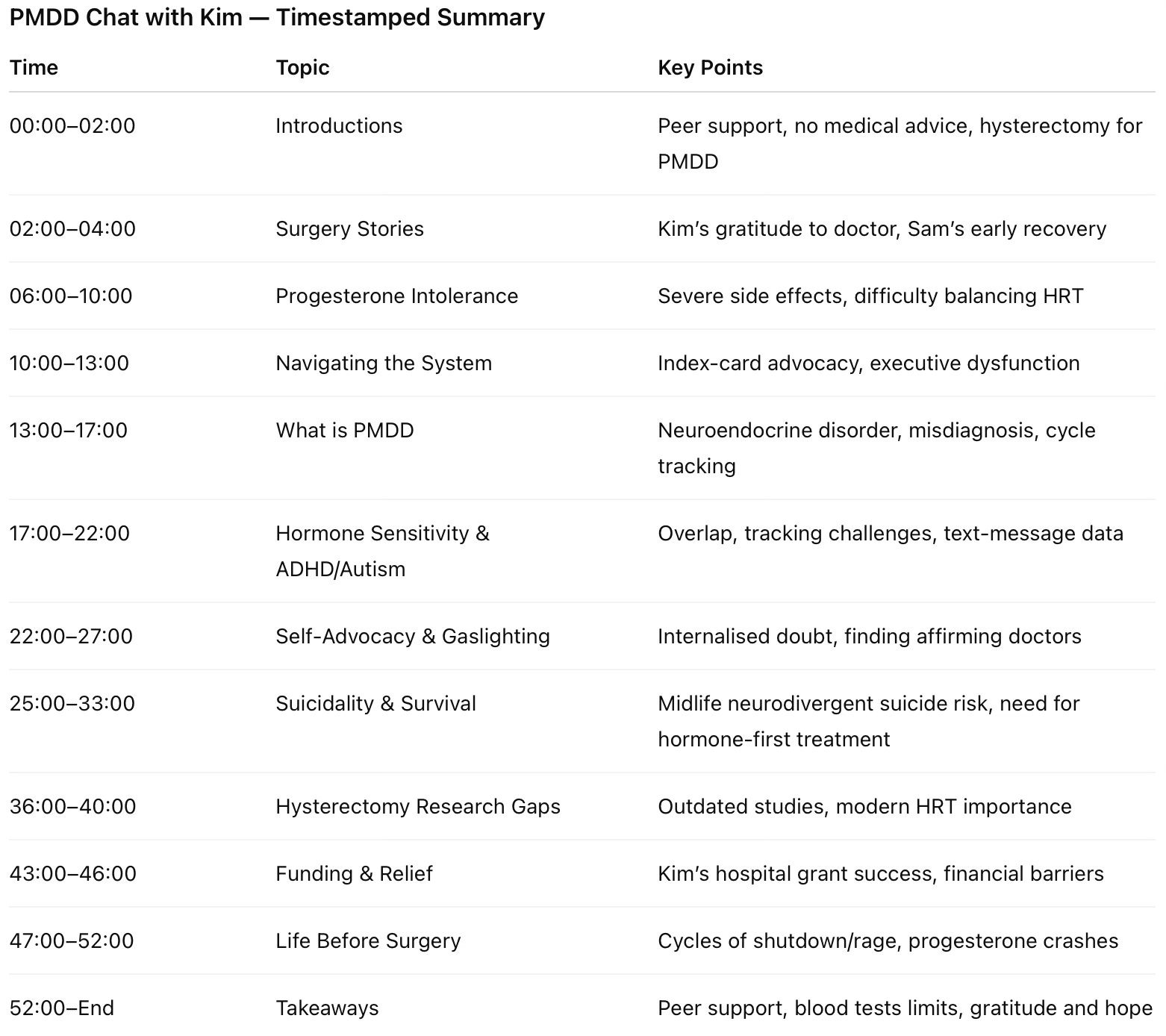
  • Nov 4, 2025 · 12 min

    🎧 1: What is creativity and why does it matter?

    I am delighted to be joined by Allegra Chapman (she/her) from Creative Fix! Together Allegra and I have created this four part mini series on the importance of creativity during the menopause transition and beyond. 1) What creativity is and why it matters, 2) How to fit it in around needs and what activities work for different needs 3) Special interests and “accidental” creativity and stuff that’s creative that you don’t think about 4) How your creative practice changes as your needs change... or how creativity can help with unmasking Resources: https://www.scienceopen.com/hosted-document?doi=10.13169/intljofdissocjus.5.1.0004 Allegra’s book Allegra’s course Previous articles by Allegra? Get full access to Divergent Menopause at samgallowayaudhd.substack.com/subscribe
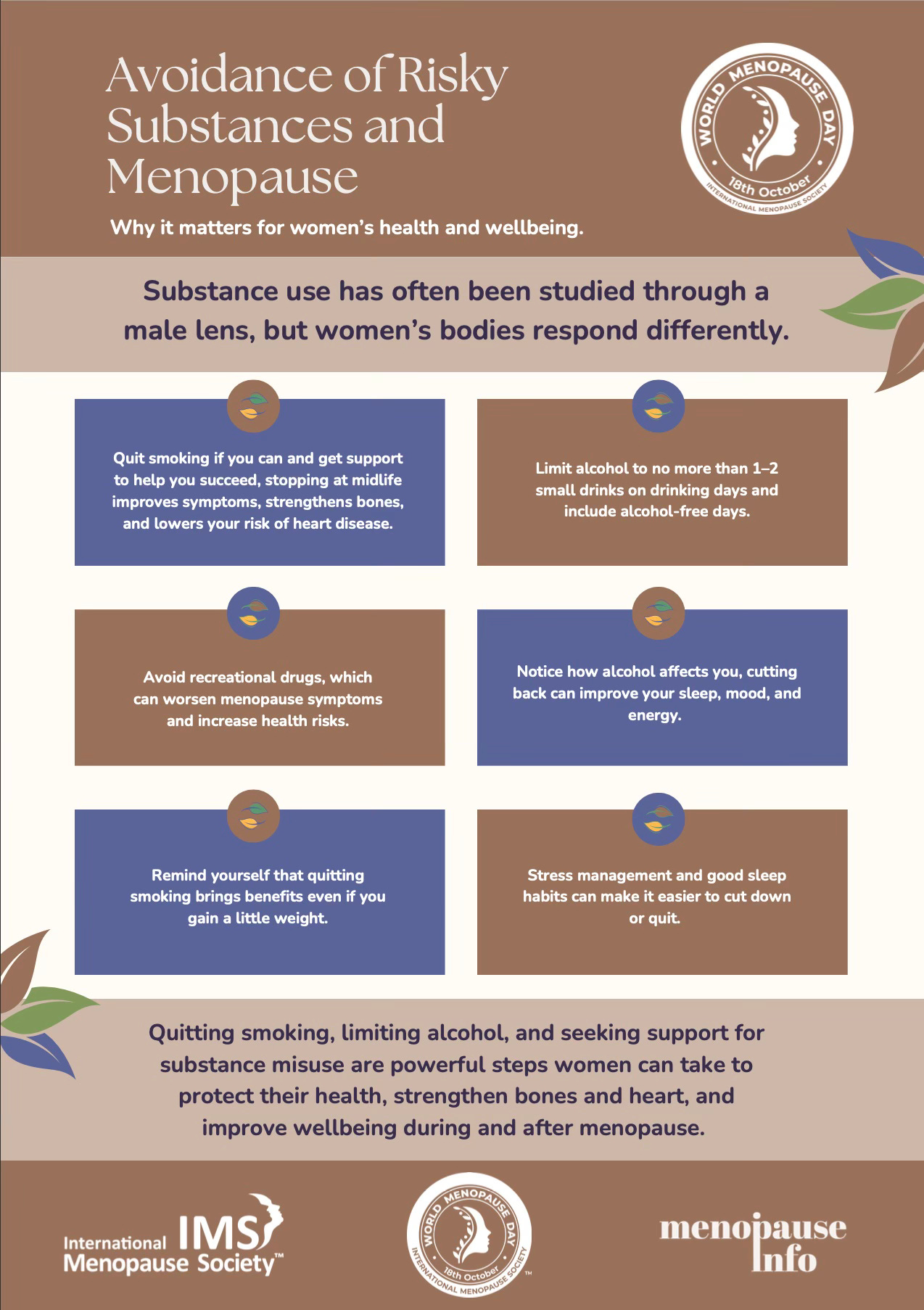
  • Oct 20, 2025 · 1 hr 11 min

    Neurodivergent peri/menopause, PMDD and hysterectomies with Kim Pitts

    Content warning: Discussion of suicidal ideation. Themes 💕Hormonal literacy | Mental health | Neurodivergent self-advocacy | Medical gaslighting | Access inequality | Post-surgical recovery | PMDD symptom improvement “When I try to raise awareness — what IAPMD does — their mission is awareness and education. And I think that’s really where any woman or uterus owner should begin: with knowing. I know that’s hard — it’s executive function all over the place — but truly, information is everything. I’ll never forget reading The New Menopause; in it, she says ‘Information is your foot in the door.’ And we just — we have to be able to get that foot in the door. Whether you do that through peer support or whatever means you can, that’s one of the only ways right now to really start the conversation. It’s unfortunate, and so tragically unfair. But just know that there’s always a conversation that can be had. We just have to — unfortunately — sometimes be the ones to start it, which is such b******t. But still, there’s always a way to begin.” Kim Pitts If this conversation helps you feel seen, please share or comment below. Your story could help someone else survive their PMDD too. Kim and I have been planning to discuss PMDD and our resulting hysterectomies for a while now, and we finally figured out the timezones between her location of Oregon, US and mine in Wellington, Aotearoa New Zealand. Links to all the resources and further reading we discussed are at the end of this post. Our chat is available in multiple formats for accessibility: * Video with subtitles/closed captions available * Podcast/audio only * Transcription * Plain timestamped summary table* * Substack-formatted timestamped summary* * Generated by ChatGPT as an executive functioning tool on my part. Sorry, Kim! I know you gave AI the finger during our chat! 🩸 PMDD, Hysterectomy & Neurodivergent Menopause A Conversation with Kim Pitts ⏱️ 00:00 – 02:00 | Introductions Sam (Aotearoa NZ) and Kim (US) open the chat.Both are neurodivergent women who chose surgical menopause (hysterectomy) to stop PMDD symptoms and save their mental health.This is peer support, not medical advice. 🩺 02:00 – 04:00 | Surgery Stories Kim shares how her US doctor fought for her right to a hysterectomy despite insurance barriers.Sam reflects on recovery, her four laparoscopic scars, and the strange post-op moment of thinking, “Where’s the baby? Oh wait — no more uterus!” 💊 06:00 – 10:00 | Progesterone Intolerance Sam explains how progesterone caused bloating, digestive pain, and depression.Kim agrees—progesterone can be lifesaving or intolerable depending on the body.They unpack the delicate HRT balancing act and how mental health depends on getting the right dose and delivery. 🧠 10:00 – 13:00 | Medical Gatekeeping Sam details the challenge of navigating public vs. private healthcare, using index cards to remember key points at appointments.They talk about executive dysfunction, prescription chaos, and how neurodivergence complicates healthcare admin. 💬 13:00 – 17:00 | What Is PMDD? Kim defines Premenstrual Dysphoric Disorder (PMDD) — a neuroendocrine disorder where hormonal fluctuations trigger severe mood symptoms.Often mistaken for PMS, it requires careful tracking, but that’s hard for ADHD and autistic women. 📝 17:00 – 22:00 | Hormones, Neurodivergence & Tracking They discuss multiple hormone sensitivity theory, links between ADHD/autism and PMDD, and why symptom tracking is often impossible.Kim used old text messages as evidence to identify her cycles. ⚖️ 22:00 – 27:00 | Self-Advocacy & Self-Gaslighting Sam shares how she doubted her own symptoms right up to surgery.Both reflect on medical gaslighting, the exhaustion of self-advocacy, and the relief of being believed.Finding the right doctor = survival. ⚠️ 25:00 – 33:00 | Suicidality & Survival Content warning: Discussion of suicidal ideation.They discuss how PMDD, autism, and ADHD overlap with high suicide rates for midlife women (ages 44-58).They stress the need for hormonal treatment first, not just SSRIs, and for open peer conversation. 🫀 36:00 – 40:00 | Hysterectomy Research & HRT Myths Kim explains how outdated studies scared women — early hysterectomy patients weren’t given HRT, so they suffered bone and heart issues.Modern practice should include immediate hormone replacement for safety and quality of life. 💸 43:00 – 46:00 | Funding Barriers Kim shares how she accessed surgery through a hospital financial-assistance program in the US.The approval felt like “relief and disbelief.”They dream aloud of a nonprofit fund to help others afford lifesaving PMDD surgeries. 🔄 47:00 – 52:00 | Before Surgery: Life in Cycles Sam recalls living between inertia, shutdown, and rage, with shrinking windows of good days.After constant bleeding and progesterone crashes, surgery brought instant hormonal stability and mental clarity. 🩺 52:00 – End | Takeaways & Solidarity * Blood tests are a snapshot, not the full story. * Lived experience matters more than lab numbers. * Peer advocacy can bridge dangerous medical gaps. * Both women close with gratitude — for surviving, for community, and for being heard. Resources and Further Reading * International Association for Premenstrual Disorders (IAPMD) website * PMDD Symptom tracker from IAPMD website (above) * The New Menopause - Navigating Your Path Through Hormonal Change with Purpose, Power and the Facts book by Dr Mary Claire Haver * Your Periods, ADHD & the Multiple Hormone Sensitivity Theory Dr Nighat Arif video * MENO-D A rating scale to detect depression in menopause by Professor Jayashari Kulkarni * Progesterone intolerance Dr Loiuse Newson article Please take good care of yourself. Want to support me? The best way to support my advocacy and peer support work at Divergent Menopause is to become a paid subscriber. Thank you again for your support! It means the world to me. 💕 P.S.: That was intense, so here’s a photo of Harry! I have invested my paid subscriber contributions on some equipment to make my desk more ergonomically accessible post-hysterectomy. Huge thanks to my paid subscribers for making this possible! Get full access to Divergent Menopause at samgallowayaudhd.substack.com/subscribe

  • Oct 17, 2025 · 43 min

    Happy World Menopause Day 2025!

    Hello and welcome to Divergent Menopause, previously known as The Autistic Perimenopause: A Temporary Regression. I am Sam Galloway (she/her) and I am an AuDHD woman seven weeks into surgical menopause (hysterectomy). If you are interested, you can read more on why I needed the surgery here. Thanks for joining me on this wild midlife ride! 🎢 October 18th marks the annual event that is World Menopause Awareness Day! In this video and podcast episode, I take you through the advice (see the six posters below and here) provided by the World Menopause Society for 2025’s theme of Lifestyle Medicine in Menopausal Health! Closed captions and transcript available too. 🎥 Prepare yourself for much brain fog, sarcasm and despair as I explore the multiply astonishing ways in which this mainstream advice is, at best, inaccessible and, at worst, detrimental to neurodivergent people going through this life transition. 🎧 Here is last year’s World Menopause Day post from me. Some resources referenced in the video/podcast today: I wrote this article on Blue Zones earlier in the year, because I have always been obsessed with longevity research. However, I am now extremely scornful on the topic as you will find out if you read this, or listen to the podcast episode link in the following post: This is a great read on the narrow minded push for Mediterranean style diets: The six (!) International Menopause Society posters I share in the video, brimming with unreachable targets for so many of us who don’t and can’t conform to neuro-normative expectations: Below is my viral 2024 post, which shows that our way of being in the world is totally valid and important. Maybe we need anti-goals for menopause lifestyle advice. What would yours be? I would love to know in the comments. Take good care of yourself. 💐 And be realistic about it, the above International Menopause Society goals were not written with neurodivergence, chronic illness and disability in mind. Cheers, Divergent Menopause is a labour of love. Each article takes hours to research, write and edit. If you have found my ongoing advocacy work valuable, please consider becoming a paid subscriber if you are able to. Thank you 💕 Get full access to Divergent Menopause at samgallowayaudhd.substack.com/subscribe

Showing 1–20 of 21 episodes