246: The pulmonary boat against INTERNAL DROWNING #Pranayama
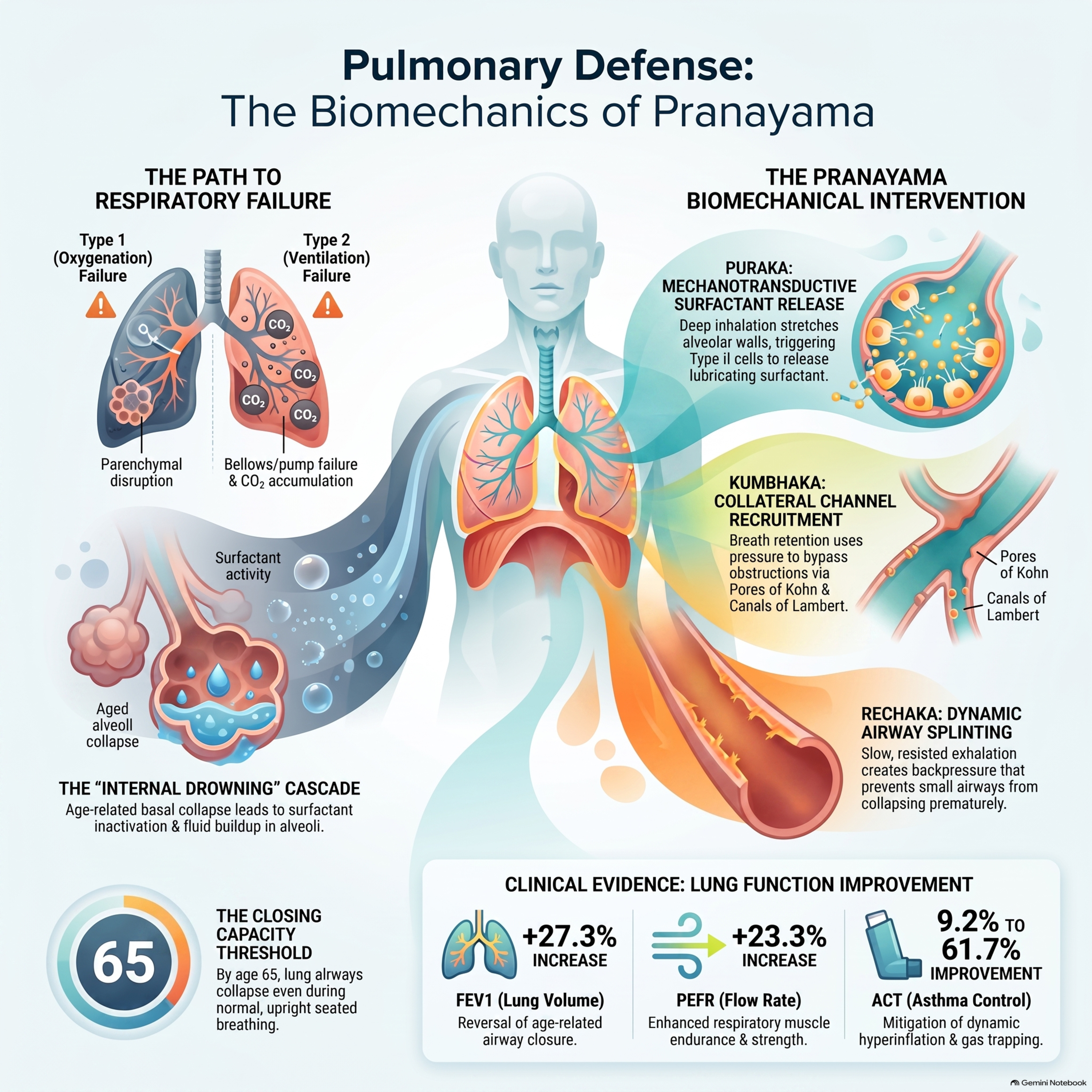
Reference research #Pranayama : ancient breathwork, yoga, and mindfulness, providing a direct link between classical practices and modern physiology. The Ancient Structure: Classical Indian respiratory science structures the breathing cycle into three distinct phases: Puraka (slow, conscious deep inhalation), Kumbhaka (sustained breath retention), and Rechaka (prolonged, resistive exhalation). The Target Practice: The research focuses primarily on Anulom Vilom (Alternate Nostril Breathing) and Nadi Shodhana. Rather than treating these as abstract or purely spiritual exercises, the paper provides a ground-up mechanical analysis of how each phase acts on the physical tissues of the respiratory system. The Golden Metaphor: Under this tag, the research positions these structured phases as the ultimate physiological "boat" to navigate the mechanical breakdown of the aging respiratory system. #PulmonaryScience : scientific authority, targeting medical professionals, students, and science-curious listeners who want to understand the exact biomechanics of respiration. Mechanotransduction during Puraka: The deep inhalation of Puraka subjects the alveolar walls to uniform radial stretch, which opens calcium channels in Type II pneumocytes. This triggers the exocytosis of pulmonary surfactant, which lowers alveolar surface tension, increases static lung compliance, and prevents alveolar collapse. Collateral Aeration during Kumbhaka: Holding the breath during Kumbhaka builds sustained transpulmonary pressure gradients. This forces air through secondary pathways—such as the Pores of Kohn and Canals of Lambert—allowing inspired air to bypass obstructed bronchioles and re-inflate collapsed dependent zones of the lung. Dynamic Airway Splinting during Rechaka: Exhaling slowly through a partially occluded nostril introduces downstream expiratory resistance. This keeps intraluminal pressure high and shifts the Equal Pressure Point (EPP) centrally into cartilaginous airways, preventing the dynamic collapse of fragile, non-cartilaginous peripheral airways. Perfusion Matching via Nitric Oxide: Single-nostril laminar breathing entrains gaseous nitric oxide (NO) from the paranasal sinuses. Because this NO is selectively delivered to ventilated alveoli, it triggers local vasodilation, directing capillary blood flow to active airspaces and optimizing ventilation-perfusion (\(V/Q\)) matching. #LungHealth: healthy aging, and avoiding chronic disease, aligning perfectly with the core preventive theme of your show. The Threat of Pulmonary Senescence: As we age, our terminal respiratory health is severely threatened by Closing Capacity (CC) exceeding Functional Residual Capacity (FRC). This causes the small, dependent airways in the basal regions of the lung to collapse during normal resting expiration. Anatomy of "Internal Drowning": This cyclic collapse deprives the lung of surfactant and causes mechanical shear stress. High surface tension then creates a subatmospheric suction vector, pulling fluid across the alveolar-capillary barrier. This fluid accumulation creates a barrier to gas diffusion, leading to a physiological cascade colloquially termed "internal drowning". The Preventive Shield: Paced diaphragmatic breathing strengthens vagal tone via the Hering-Breuer reflex, which lowers pulmonary capillary hydrostatic pressure and directly limits this fluid leakage. Clinical trials validate that daily Alternate Nostril Breathing significantly reverses age-related spirometric decline by boosting key lung function parameters like FEV1 (Forced Expiratory Volume in 1 second) and FVC (Forced Vital Capacity). It has also been shown to accelerate vital capacity recovery and reduce basal atelectasis in post-CABG cardiac rehabilitation patients.