Skip to content
Artwork for Chasing Consciousness

Chasing Consciousness

Freddy Drabble

The curious person’s guide to all things mind!
Have you ever wondered how it is that your thoughts and feelings relate to the grey matter in your head? How space and time came to be out of nothing? How what life means to us influences our day-to-day struggles with mental health?
In conversation with experts in physics, psychology, neuroscience and philosophy, Chasing Consciousness will take you to the very fringes of reality and share with you the groundbreaking discoveries that are dramatically changing the way we relate to the world, the future, and our own minds.

Play
  • 21 episodes
  • fortnightly
  • Avg 1 hr 28 min
  • English
Counted on this page — what you have heard stays on this device, so it is not something the list can be paged by.
  • S6 · E91
    Yesterday · 1 hr 3 min

    FUNGI & SYMBIOSOS IN LIFE - Merlin Sheldrake PhD #91

    Why were fungi so important to the evolution of life on earth? How do they collaborate with plants to help them communicate? What does the difficulty separating individual fungi from the collective of a mycelial network teach us about collective intelligence and interconnected co-dependence in ecosystems? In this episode we discuss how fungi are a brilliant example of symbiosis in nature. We get into their importance to evolution; how they facilitate plant communication; how they exhibit both collaboration and competition simultaneously; how they can solve problems without brains; and how they confound our ideas of ‘self’ and ‘other’. Fortunately to decode these ideas we have biologist, ecologist, mycologist and award winning author Merlin Sheldrake as our guide. He is a research associate at Oxford University and Vrije University in Amsterdam. He has written 20 scientific papers and his 2020 book “Entangled life - How Fungi make our worlds, change our minds, and shape our futures”, has sold more than a million copies in over 30 languages. The book received the 2021 Royal Society Science book award and the Wainwright prize for writing on Global Conservation. What we discuss: 00:00 Intro 05:00 Entangled Life Book. 06:40 The difference between the plant and fungal kingdoms. 08:00 Mycelium Networks: shapeshifting, sprawling networks. 09:55 Fungi’s symbiotic role in early evolution of land plants. 13:15 Mychorrhizal fungi: plant partners. 14:00 Katie Field - Re-creating early earth conditions in the lab. 15:50 Plant-Fungi electrical and chemical signalling. 19:40 Mutual vs parasitic simbiosis. 22:15 Inherent intelligence in fungi behaviour. 27:15 The skin and gut microbiome. 31:45 The enteric nervous system - possible mood changer. 33:00 The dance of competition and cooperation in evolution. 37:30 Climate Change innovations with fungi - Carbon cycling. 39:50 Writing Fungi into conservation targets with better data. 42:00 Fungal problem solving and distributed intelligence. 46:00 The blurring of self and other - fungi make us reconsider our separateness. 48:00 Individuality is a convenient concept but over emphasised. 50:00 The wood wide web over romanticised concept. 52:00 Fungal communication studies. 55:00 Sound communication in plants & fungi. 58:00 Implications of plant and mushroom memory. References: Merlin Sheldrake, “Entangled Life: How Fungi Make Our Worlds, Change Our Minds & Shape Our Futures”. Dr. Katie Field, ‘How fungi helped create life as we know it’ article. Justin D. Stewart et al, ‘Global density and biomass of arbuscular mycorrhizal fungal networks’ Paper. Loteto Galvez et al, ‘A travelling-wave strategy for plant–fungal trade’.
  • S6 · E90
    July 14 · 1 hr

    A NEW NUTRITION PARADIGM - Dr. Federica Amati PhD #90

    How has new research changed the way we see nutritional health? What role do ultra-processed foods, fibre, gut microbes, inflammation and insulin resistance play in the new paradigm? Why does the gut microbiome affect our mental health? How can simply diversifying the quantity of plants in your diet change health outcomes radically? In this episode we have the complex topic of nutrition to get up to date on. There’s been so much research over the last 20 years that has contradicted some of our most deep seated preconceptions about food, so today we clarify science’s new take. We discuss the rise of lifestyle medicine as a solution to western health crises; individualised diet; ultra processed foods; fibre; glycemic index issues; the gut microbiome; inflammation; a variety of foods over restrictive diets; how to support the use of new GPL-1 weight loss drugs; and what the nutritional organisation Zoe is doing to make this all easier for the public to put into practice. Fortunately our guest is a master at untangling all this nuance in a way that’s so easy for us Joe public to understand - medical scientist and clinical nutritionist, senior lecturer and researcher at Imperial College London and King’s College London, Dr. Federica Amati. She’s also Head Nutritionalist at ZOE and Head of Nutrition Science at WellFounded Health. She’s written 12 scientific papers and 3 books, “EveryBODY should know this”, “Recipes for better menopause”, and her brand new book “The Appetite reset”, which we discuss today. What we discuss: 00:00 Intro 06:30 Worldwide pandemic of previously western-only diet related chronic diseases. 07:00 Western diet, exported to the rest of the world is a big part of the problem. 08:45 Sedentary lifestyle is also part of the metabolic dysfunction crisis. 09:15 The “Diabesity” crisis. 10:15 Dysfunctional food environments. 10:55 One size dos NOT fit all for diet. 11:45 Influencers are confusing the public. 16:25 Personalised diet issues: more required from the patient, more expensive. 18:00 Ultra-processed foods damage 1: quick energy uptake. 20:30 U.P.F. damage 2: High palatability - more delicious, harder to stop eating. 21:45 U.P.F. damage 3: Synthetic additives - unknown consequences & cocktail effect. 23:35 Processed food risk scale from Zoe nutrition can help people consider. 24:15 %60 of Uk calories are coming from ultra processed food. 30:45 Fibre - How much do we eat and should we eat? 32:45 Plant diversity: 30 per week, leads to Intestinal microbe diversity. 35:15 Mapping the microbiome. 39:05 Microbiome and mental health - Vagus gut-brain axis, 42:55 Inflammation theory of depression - withdraw from society to heal. 43:50 Chronic inflammation caused by western diet and stress. 46:45 Your habits are more important than exceptions. 48:15 Restrictive calorie-counting diets aren’t sustainable for losing weight because of metabolic adaptation. 52:05 “The Appetite Reset” book - GLP1 weight loss drugs. 56:45 Adult obesity has doubled, adolescent obesity has quadrupled. References: Federica Amati, “The Appetite reset”. Federica Amati, “EveryBODY should know this”. Francesco Asnicar et al.,’Gut micro-organisms associated with health, nutrition and dietary interventions’ paper. Zoe Nutrition - microbiome testing, glycemic monitoring, and personalised diet guidance. The microbiome, mental health & rethinking hygiene - Dr. Graham Rook episode Mood Food: The gut, diet and inflammation - Alex Laird episode Not all U.P.F’s are equal - Zoe Nutrition article

  • S6 · E89
    June 30 · 1 hr 41 min

    EXTENDED COGNITION & PARTICIPATORY SENSE-MAKING - Rebecca Todd PhD #89

    How separate is the cognition in our heads from cognition with our bodies, our tools, our communities and our ecosystems? What is participatory sense making and why is our world becoming less and less disposed to doing it? What does connecting cognitively with the world beyond our own bodies do for our sense making, and so for the future of our species? In this episode we have the intriguing topic of extended cognition to explore, and in particular the field of participatory sense-making. So we get into the extended component of the 5E’s model of embodied cognition; how our technologies, including AI, are much more influential on our cognition than mere tools that we set aside after use; we talk about our co-dependence on the natural world, and what happens to cognition and our society when our sense of “kinship” with it is lost; And we get into detail on the crucial process of participatory sense making, and how important it is to arrive to consensus rather than getting bogged down in polarisation, which in turn allows us to decide on urgent solutions as a species. Fortunately these are the exact specialisations of our guest, psychologist, cognitive scientist and philosopher at the University of British Columbia, Rebecca Todd. With a background also in neuroscience, she’s authored nearly 100 academic papers, whilst her substack hosts her much loved writings for the general What we discuss: 00:00 Intro. 06:05 Extended cognition defined. 08:45 Distributed cognition - Edward Hutchins. 09:00 Attention, learning and memory are all distributed. 10:00 Can we identify the cognitive boundary between self and other? 14:30 Heidegger’s warning about undermining the influence of technology. 17:00 We give our tools too much credit. 19:00 Large Language Model’s effect on extended cognition. 23:00 Individualistic, extractive, competitive motivations for technology. 24:00 Self AS relationship rather than IN relationship - Dr. Yuri Celidwen. 28:10 Non-verbal communication. 29:46 Feedback loops between nature and our minds. 33:50 Connection to nature and mental health. 37:20 Belonging and ‘kinship’ with the natural world. 39:45 Objects can have personality - Object personality Synesthesia. 44:20 Risk of appropriation, when applying indigenous ideas of ‘belonging’. 46:50 The ‘Trim Tab’ analogy — small interventions can lead to big changes in direction, Greg Watson. 53:15 Participatory Sense-making explained. 57:30 Shifts happen before and after moments of synchrony. 59:30 Conditions required for participatory sense-making. 01:02:20 The 4 R’s: Reciprocity, Respect, responsibility and relevance. 01:03:05 Neurodivergence: bridging the way we see the world differently. 01:12:15 The new lack of bandwidth for complexity and nuance - information overload. 01:15:30 Creating the time and space needed to do participatory sense-making. 01:19:30 Food together is a magical ingredient. 01:23:30 Openness and listening can be trained. 01:24:20 Is consensus necessary. 01:29:10 Tolerance of diversity rather than unified consensus. References: Beck Todd Substack, “Towards an ecology of mind” Andy Clarke and David Chalmers, “Extended Cognition” paper Edward Hutchins - Distributed Cognition paper. Fernando Rosas - Statistical boundaries between agents. Karen McClean - SPIN Lab (human-robot interactions through the sense of touch) Shirley Turcotte - Indigenous Focusing-oriented Therapy (IFOT) “Participatory Sense-making with the More than Human World” With Yuri Celidwen. An interview with Dr. Greg Watson - Ex US agricultural minister Hannah De Jaegher & Ezequial Di Poalo, “Participatory Sensemaking, An enactive approach to social cognition”. V.J .Kirkness, “First Nations and Higher Education: the four 4’s” “The Multiplicity of Worlds” with Penijean Gracefire et al. Ed Young, “An immense world” “Community Out of the Ashes” with Eli Oda Shina. Gabor Mate, “In the realm of hungry ghosts - Encounters with Addiction”

  • S6 · E88
    June 15 · 3 hr 3 min

    SPACE PSYCHOLOGY EXPLAINED - Iya Whiteley PhD #88

    What can psychologists do the make pilots and astronauts’ decision making better under duress? Can we anticipate the psychological issues of planned long distance space missions to Mars? How can we shift the shame culture for pilots and astronauts around reporting unidientified anomolous phenomena? In this episode we have the unique field of Space psychology to look into; So we discuss the psychology of military pilots and astronauts working under such extreme conditions; and the intuitive skill sets developed under such high pressure, split second decision situations; we discuss the cognitive engineering required to match the design of instruments to the cognitive needs of the pilots and astronauts; we get into alternatives methods of expertise exchange apart from the usual text book approach which have had extraordinary decision making results for pilot and astronaut performance. We also discuss the issues for pilots around reporting of UFO encounters, and the implications for space psychology of the new bout of main stream interest following the New York Times 2017 expose of military incidents. So who better to help us understand the minds of pilots and astronauts than space psychologist, cognitive engineer, astronaut instructor and Director of the Centre of Space Medicine at UCL in London, Dr. Iya Whitely. She’s helped design training programs and conducted studies for the European Space Agency, The Gagarin Cosmonaut Training Centre in Russia, and presented he research for the USAirforce and Nasa. Dr. Whitely is also a pilot, rescue scuba diver and competitive sky diver! She’s written 11 scientific papers, and three books, “Toolkit of a Space Psychologist, to support astronauts on exploration missions to the moon and mars”, “Earth Designs” for toddlers, and her new book “Born Knowing”, which we get onto at the end. What we discuss: 00:00 Intro. 05:30 Iya’s path into Cognitive Engineering. 18:35 Decision making research. 28:00 Iya’s method led to 200/cent increase in decision making speed. 21:40 Professional intuition. 43:00 Surgeon expertise transmission study 55:45 Astronaut psychology - Alexei Leonov, first space walk near-disaster, 1965. 01:06:00 ESA human, long-distance space flight study. 01:13:00 Nature solves problems using resources available locally - Biomimetics, Dr Olga Bogatyreva. 01:27:10 Mars 500: 520 day simulated Mars mission trial. 01:31:30 Space colonisation psychology. 01:40:40 Difficulty reintegrating with terrestrial society after missions to space. 01:43:00 “The Overview Effect” when earth is seen from space. 01:50:30 Taboo around reporting of anomolous phenomena for pilots and astronauts. 01:53:15 Ryan Graves is speaking out in congress about repeated UFO safety concerns. 02:01:00 Astronauts can’t risk to speak about this as it will affect their careers. 02:13:00 Navy have implemented a new reporting protocol and office, AARO. 02:21:30 Iya at the Sol Foundation: Garry Nolan & Diana Pasulka. 02:29:30 Pilot Jake Baba - reporting issue with the phenomena. 02:39:10 Telepathic autistic children, called ‘spellers’. Diane Hennessy Powell research. 02:47:00 These telepathic kids are also interracting with non-human intelligences. 02:51:15 Non-verbal communication with toddlers. References: Iya Whiteley, “Born Knowing”. Iya Whiteley & Olga Bogatyreva, “Toolkit for a space psycholgist”. Iya Whiteley, “Earth designs” toddlers book. Gary A. Klein - professional intuition book “The Power of Intuition". Dr Olga Bogatyreva - ‘Biomimetics - its practice and theory’. Frank White, “The Overview Effect”. Whitley Strieber, “Communion”. Rick Srassman, “DMT The Spirit Molecule”. All domain Anomoloy Resoltions Office, AARO. 2024 Paper on the UAP reporting system Occupational Safety and Reporting Guidance: Reviewing UAP ... Sol Foundation of Garry Nolan at Stanford, Scientific UAP research. Ky Dickens, Telepathy Tapes podcast and documentary film.

  • S6 · E87
    May 31 · 1 hr 12 min

    REIMAGINING OUR POST-COLONIAL PSYCHOLOGY - Bayo Akomolafe PhD #87

    How has colonialism shaped our western psychology? How can we reimagine our post-colonial psychology, before we wipe ourselves out? What is the role of the trickster archetype in the disruption of such a well-established and dominant world view? In this episode we have the tricky topic of trying to re-orientate our post-colonial psychology. So we’re going to be looking into the reasons why we might need to do that, following the influence of the west’s military-industrial rise to power over the last 250 years, and the post scientific revolution’s predominantly reductionist, philosophy of science; we’re going to be considering the consequences of such a view of humanity and the natural world; and crucially what elements we might invite back into our psychology, to perhaps set humanity back onto a path of harmony with its own species and its habitat, before it destroys itself. To do this we’re going to be exploring the possibility that the dualistic, black and white separation of ideas into binary truth or falsehood; and right or wrong, is a big part of the problem; exploring how the complexity of systems, and the nuance of their relations goes far beyond the simplified duality of human thought; and we’ll get into how when seen in that simplified binary way, the debate often degenerates into a mud slinging distraction from the underlying issues that continue to thrive un-checked and often grow worse. Fortunately, our guest today is a master of this topic: professor of psychology, philosopher, writer, post-activist and executive director of the Emergence Network, Bayo Akomolafe. He is the author of the books, “These wilds beyond our fences”, “We will tell our own story”, and many beautiful essays which you can find on his website. A new book on his work, “Selah: A Bayo Akomolafe Reader” is out now. What we discussed: 00:00 Intro. 07:10 The importance of mythopoetry. 08:15 The story of Goddess Freya obsessively protecting her son Baldur. 11:15 The imperviousness of modernity: Artificial control, order and optimisation. 13:00 The trickster as chaos in the order, the inevitable impossibility within possibility. 12:45 Accomodation theory - counter logic is baked in to logic. 15:15 Our safety delusion and the impossibility of control. 16:15 Antiseptism - our sterilising divorce from the world. 17:20 Noticing the ‘disability’ of western psychology. 18:20 Psychology is colonial policeman, but it’s breaking down. 21:30 Therapy is not the only way to face dysfunctionality. 21:55 Trauma is a good example of unity within opposites: Old shame tag swings to become an accolade of status. 23:30 In pushing against the wall you become the wall. 26:40 A third way bursting out of the opposites: The Gods of the fault-lines. 31:00 Post activism: moving beyond the action/reaction duality. 35:00 Move from speaking truth to power, to opening up to “power with”. 40:15 White guilt will not make up for whiteness. 43:50 Whiteness is a practice we do, not a biological trait: Fred Moten. 44:10 Privilege is not a thing you have, it has you. 50:20 How post enlightenment reductionism combined with leveraging fear of the unknown forms neo-colonial psychology. 50:30 The coddling of the western mind: control, optimise and complete. 54:15 Fear of death, disconnection from ancestry, and the west’s “sickness of the soul”. 01:00:00 We need new sacralities and rituals. 01:01:45 A warning not to oversubscribe too much to our conceptual constructs and images. 01:04:40 If we can language things too easily we might be missing the point. 01:08:00 A mass disabling event: the handles of white modernity are collapsing. 01:08:45 The myth of Erysicthon, and the hunger curse. References: Bayo’s website of writings “Selah: A Báyò Akómoláfé Reader” Bayo Akomolafe, “These Wilds Beyond Our Fences”, Wendy Holloway quote: “Psychology is the policeman of capitalism”. Fred Moten idea, “Whiteness is a practice”. Malidoma Patrice Somé, “Of Water and the Spirit”.

  • S6 · E86
    May 14 · 1 hr 11 min

    THE TEEN BRAIN EXPLAINED - Jennifer Pfeifer #86

    Are our preconceptions about teen behaviour true? What can we learn from the psychology and neuroscience of teen development to help support them rather than blame them? Are mobile phones and social media responsible for the jump in youth mental health issues? In this episode we have the topic of the adolescent brain to get the up to date science on. So we’re going to be testing our preconceptions about teenagers, and comparing the evidence base from research, to what we’ve come to believe through friends, family and heresay. So, we get into the development of the brain during puberty; just what behaviour hormones are and aren’t responsible for; whether the late completion of the frontal cortex, responsible for self control and reasoning, affects their ability to make important decisions; the consequences of social connection circuits developing for their sense of belonging or exclusion; the alarming rise in mental health issues among young people over the past 15 years, and whether the research supports recent claims that digital devices and social media are largely responsible. Fortunately to navigate these choppy waters we have the co-director for Center for Translational Neuroscience at the University of Oregon and the co-director of the National Scientific Council on Adolescence, Jennifer Pfeiffer. She is the author of over 150 scientific papers on the neuroscience and Psychology of adolescence, puberty, social cognition and teen mental health and self regulation. She is on a mission to use science to change our narratives about the adolescent brain which she explains in her excellent new TED X talk, “The surprising science of adolescent brains”. https://www.youtube.com/watch?v=wr8VVJRcRSg What we discuss: 00:00 Intro 06:11 Need to shift the narrative about teens. 12:10 Puberty Vs Adolescence. 16:25 Preconceptions about teen development. 17:00 Impulsive and risk taking (1st preconception). 17:50 Frontal cortex not complete before 21/22 yo. (Executive reasoning) 19:50 So called “Bad decisions” could be just from an adult point of view. 21:40 Environmental factors deeply influence teen cognitive function. 26:00 Interested only in friends, not in family relations, (2nd preconception). 30:40 Teen brains mirror adults in the home. 35:45 They love to break rules and push boundaries, (3rd preconception). 36:40 Testing limits and failing integrates learning. 39:50 Hormones make them emotionally vulnerable and erratic, (4th preconception). 46:22 Trivialise fear of fitting in, missing out, and exclusion, (5th preconception). 49:30 Fear of exclusion research. 51:10 They’re more likely to become addicted to persuasive technologies, (6th preconception). 55:10 Metanalyses show a %15 increase risk from social media. 56:25 %300 increased risk when there are parents with mental health problems. 57:25 %150-200 increased risk from bullying. 59:25 Factors in doubling of youth mental health issues. 01:03:00 Recommendations for technology and young people. 01:08:00 Advice to avoid blaming and shaming teens. References: Jennifer Pfeifer, TED X talk, “The surprising science of adolescent brains”. BJ Casey, Kristina Cause, ‘The Teenage Brain: Self Control’. Laurence Steinberg, ‘Cognitive and affective development in adolescence’ Roy Baumeister, “Negativity Bias” CC Interview. Jonathan Haidt - “The Anxious Generation”. National Scientific Council on Adolescence report “What science tells us adolescents need online”.

  • S6 · E85
    April 30 · 1 hr 57 min

    THE NEUROSCIENCE OF DMT - Andrew Gallimore PhD

    How are DMT experiences neurologically different to hallucinations? How does DMT alter the world modelling of our brains? What evidence is there that the brain is receiving information on DMT rather than modelling it? In this episode we have the extraordinary neuroscience of DMT to discuss, one of the most powerful mind altering substances on the planet. We discuss the history of research into its effects; relevant neuroscience; research into the mystical experiences it induces; the statistical significance of repeated, highly specific yet unearthly places and entities reported by experiencers across eras and cultures; experiments that extend the DMT experience for longer periods of time; the metaphysical implications if any; and finally we consider the mind bending possibility that the otherworldly creatures and realities experiencers repeatedly encounter could be actual realities connecting with our brains via DMT. Fortunately to navigate these mysterious results and ideas, we have chemist, computational neuroscientist and author Andrew Gallimore as our guide. Gallimore has written 16 scientific papers and three books including, “Reality Switch Technologies: Psychedelics as Tools for the Discovery and Exploration of New Worlds”, “Alien Information Theory: Psychedelic Drug Technologies and the Cosmic Game”, and his brand new book, “Death By Astonishment, confronting the mystery of the world’s strangest drug” which we’ll be focussing on in this episode. What we discuss: 00:00 Intro. 08:30 How DMT binds to the brain. 09:50 Receptors are like a cell’s perception organs. 14:25 The cascading of electrical patterns across neurones. 16:50 The big differences between DMT and 5meoDMT. 18:50 Hierarchical structure of model processing. Wilder Penfield, 1950’s. 26:20 Primary visual cortex stimulated even with eyes closed - fMRI DMT research. 32:20 Hallucinating schizophrenics don’t have the same activity in the primary visual cortex. 34:25 Evidence that DMT users are accessing information rather than hallucinating. 42:50 DMT forms and entities are not like the terrestrial biosphere. 50:00 High DMT levels in neo-natal rats. 52:30 Sasha Shulgin - Chemist inventor of 230 psychedelics. 59:30 Mystical experiences and their effects. 01:09:00 The default mode network and self/other distinction. 01:14:00 Extended state DMT intravenously - experiments. 01:19.00 Mental health applications of DMT. 01:25:30 Is DMT a communication technology? 01:28:26 The science of ayahuasca brew recipes. 01:32:30 The possibility that non-human intelligence is the source of these experiences. 01:38:00 Common messages and themes in DMT experiences. 01:40:00 Similarities between DMT and non-human entity experiences? 01:48:00 A cosmic game - Andrew’s metaphysical model. 01:53:00 Can we test these information theoretic approaches? References: Andrew Gallimore, “Death by Astonishment, Confronting the Mystery of the World's Strangest Drug”. Andrea Alamia, Chris Timmermann et al, “DMT alters cortical travelling waves" Jordi Riba et al.- “Effects of the South American psychoactive beverage ayahuasca on regional brain electrical activity” David Lawrence - DMT Entity quantitive study, CC interview. Stephen Szára - Hungarian chemist DMT experiments David Foulkes - Children’s dreams evolve in complexity as they get older. Alexander “Sasha” Shulgin - Chemist, inventor of 230 psychedelics. Mystical Experience and improved mental health meta analysis Extended State DMTx - Noonautics Psychelic retreat centre - Eleusis

  • S5 · E84
    Dec 1, 2025 · 1 hr 34 min

    THE QUEST FOR CONSCIOUSNESS - Christof Koch PhD #84

    What are the best competing theories of consciousness? Can we isolate where it arises and measure how complex it is? How do 5meo DMT mystical or non-separation experiences shift worldviews on consciousness? In this episode we have the very theme of the podcast’s title to delve into, the quest to understand the nature of consciousness. So we discuss mind and self, and what kind of substrate you need to allow for subjective experience; we look at the various philosophical positions on the nature of consciousness and ways to move beyond the unwinnable argument around the hard problem; we talk about extended cognition and cellular cognition; how integrated information theory attempts to quantify consciousness; the origin of meaning; psychedelics and the implications of mystical experiences of non-separation; whether AI will ever become conscious; and the implications of plant intelligence and memory. There’s only one person who can speak about such a wide range of topics this well, one of the most passionate consciousness researchers in the world for over 40 years, physicist and neuroscientist, Christof Koch. He’s Chief Scientist at the BlueDot Foundation, and has authored and co-authored over 1000 scientific papers and 6 books, including “The Quest for Consciousness”, “Confessions of a Romantic Reductionst” and “Then I am myself the World”, which we’ll be focussing on today. What we discuss: 00:00 His migration from physics to neuroscience. 06:10 “Take no one’s word for it”. 07:50 His long-term Francis Crick collaboration. 10:00 The signatures, footprints and correlates of consciousness. 17:50 The empirical approach to the philosophical ‘Hard problem’. 21:00 Metaphysics isn’t empirical. 21:40 The issues along the spectrum from materialism to idealism. 29:00 “The great divide of being” - quotidian vs dissociated states. 33:15 Is the self an illusion? 34:15 The difference between self consciousness and subjective experience. 38:00 “Confessions of a romantic reductionist”. 41:00 Meaning is not an empirical subject. 44:30 Integrated information theory explained - existence as casual power. 52:50 The placebo effect is consciousness causally influencing the world. 01:00:00 Computational theories of consciousness. 01:03:10 The connectome: an exact brain replica in a simulation. 01:05:10 Extended cognition & the blurred boundaries between selves. 01:09:30 Michael Levin: the hierarchy from cellular to collective cognition. 01:13:50 ‘Then I am myself the world’ Book. 01:14:40 5meoDMT: His mystical & NDE experiences. 01:21:40 Lowering of the DMN in non-self like experiences like flow, meditation, day-dreaming, or psychedelics. 01:24:00 To be real, experiences must have causal power. 01:27:25 Perspective shift after psychedelics. 01:30:50 Plant consciousness, intelligence, communication & memory. References: www.christofkoch.com Scientific Papers Christof Koch, “Then I Am Myself the World: What Consciousness Is and How to Expand It the world”. Christof Koch, “Consciousness: Confessions of a romantic reductionist.”

  • S5 · E99
    Nov 15, 2025 · 1 hr 21 min

    HIGH-DOSE INTRAVENOUS VITAMIN C TRIALS - Dr. Richard Z. Cheng PhD #83

    Do the many clinical trials into high-dose vitamin C prove it can actually treat the common cold and cancer, rather than just boost the immune system? Why is there ongoing scepticism? Why are multifactorial chronic diseases so hard to study in clinical trials? What is the right dosage to get the best results from vitamin C?In this episode we have the often misunderstood topic of Vitamin C as an antioxidant to get clear on, particular the high-dose approach and particularly delivered intravenously. Despite a very clear consensus that Vitamin C is a great booster to immune function, research that shows that it helps fight the common cold or flu have been dismissed by doctors and medical researchers; as well as claims that higher doses can increase its efficacy. Other claims that Vitamin C can help fight cardio-vascular disease and even cancer have been with even greater scepticism. So what exactly can vitamin C do to assist our immune function to fight disease, and why is there so much confusion about the answer given the high quantity of clinical trials data?Fortunately today’s guest has exactly the right skill set and research knowledge to separate the science from the here-say, medical doctor and orthomolecular medicine researcher, Dr. Richard Z Cheng. Dr. Cheng has a PhD in biochemistry and molecular biology; he’s served as a doctor in the US military; he has consulted for the National Cancer Institute, and presented at the National Institute of Health (NIH); he has conducted clinical trials; He is the editor in Chief of the Orthmolecular Medicine New Service; He is also a fellow of the American Academy of Anti- Aging medicine; and has run anti-aging and regenerative medicine clinics in both China and the US for over 20 years.What we discuss:00:00 Intro05:15 Most animals produce Vitamin C in the body, but not primates.06:00 Oxidation & Redox: Giving or receiving an electron.11:00 After reducing oxidation the body recycles it back into vitamin C.14:00 Teamwork: sharing electrons between nutrients and vitamins.18:20 Conventional consensus: good for prevention but not treatment.21:00 Over 80K papers on Vit C on Pub Med!21:30 Linus Pauling Intravenous Vitamin C for cancer and heart disease.27:00 Shortening of common cold and lowering of symptoms - Harri Hemila.29:00 Low dose studies dilute the data on the efficacy of the high dose studies.31:00 Intravenous treatment allows much higher doses safely.33:00 Differences in absorption between IV and oral application.35:20 Pro-oxidant effect only possible at IV high dose.36:30 IV clinical trials.39:20 Cytokine storm cascades in acute respiratory distress.44:00 High Dose IV Vitamin C saved lives in China during Covid 19.50:00 Attacks following Richard’s NIH presentation on Vitamin C during covid.57:00 Cardio vascular disease - Vit. C research history.01:01:00 Collagen Synthesis for vascular walls & Vitamin C deficiency.01:07:20 Is the taboo for life style medicine lifting?01:09:30 Issues of gold standard RCT trials not working for multifactorial integrative interventions.01:16:00 Recommendations for preventative use of Vitamin C for listeners. References:E Cameron & Linus Pauling - 'Supplemental ascorbate in the supportive treatment of cancer: Prolongation of survival times in terminal human cancer', 1976E.T. Creagan, 'Failure of high-dose vitamin C (ascorbic acid) therapy to benefit patients with advanced cancer', 1979Harri Hemilä - over 200 meta-analyses and clinical trialsPing Chen et al. 'Pharmacokinetic Evaluation of Intravenous Vitamin C'Richard Z Cheng, ‘Can early and high intravenous dose of vitamin C prevent and treat coronavirus disease 2019 (COVID-19)?’KU Cancer Center researchers announce study of high-dose intravenous vitamin C to treat muscle-invasive bladder cancer, 2024National Cancer Institute overview of IV Vitamin C cancer research.

  • S5 · E82
    Nov 1, 2025 · 1 hr 32 min

    WILL AI ROBOTS BE SENTIENT & THE QUANTUM FOUNDATIONS OF CONSCIOUSNESS - Suzanne Gildert PhD #82

    Will artificial intelligence robots have subjective experience? What are the ethical and safety implications of such entities? Which quantum physics theory can accommodate consciousness? In this episode we have the extraordinary possibility of subjective experience and feelings in artificial intelligence robotic systems to think about. So we look at experiments to try and prove if it’s even possible; the quantum building blocks from which both living and artificial systems are made up; the ethical and safety implications of advanced intelligence instantiated in robots, and we get into the controversial search for a quantum physics theory that can accommodate consciousness. Fortunately, my guest today is not only one of the first pioneering scientists to really devote themselves to the creation of sentient human-similar robot minds and bodies, but is also an experimental physicist working with quantum computing systems. She is of course the quantum engineer, consciousness researcher and AI computer scientist Suzanne Gildert. She has written over 80 scientific papers, founded several successful AI companies and has dozens of US patents for her inventions. What we discuss: 00:00 Intro. 04:25 Her move to AI & robotics from quantum computing. 06:45 Something missing from materialism. 11:00 The what, how and why of consciousness. 12:20 Remembering quantum fields are the base level of reality. 15:50 Quantum Biology - John Joe McFadden. 18:20 ‘Protecting’ quantum coherence environments. 20:00 The Penrose-Hameroff microtubules quantum consciousness theory. 24:40 The risks of the “two mysteries” argument. 30:10 Looking for subjective experience in AI robots. 33:55 “Reward function”, purpose led, agential behaviour doesn’t emerge naturally in AI. 36:25 Limitations to building sentient AI robots. 39:25 Iain McGilchrist’s left-right hemisphere interpretation of split brain data. 41:40 How similar are AI minds to human ones? 43:40 Will Ai become conscious one day? 44:40 The generalisation problem. 47:50 The anthropomorphism problem. 50:05 Ethical implications - Regulations, rights and protections. 53:20 Survival instinct research in AI. 57:20 Brain activity mapping to subjective experience, AI decoder research. 50:20 Biological robots: Different emergent possibilities? 01:01:50 Cellular material re-purposing itself spontaneously. 01:04:10 Could the biosphere be a technology? 01:07:40 Quantum Conscious Agency Theory. 01:14:05 Quantum Annealing. 01:21:03 Can you test for panpsychism? 01:25:10 Buddhism: the dissociated agent approach. References: www.SuzanneGildert.com Quantum Conscious Agent theory presentation - Suzanne Gildert. Jeff Hawkins, Sandra Blakeslee, “On Intelligence“. John Joe Mcfadden, CC Quantum Biology episode Roger Penrose, Orch OR (Orchestrated objective reduction) theory. Erwin Shrodinger, “What is Life?”. ‘In Tests, Open AI’s New Model Lied and Schemed to Avoid Being Shut Down’ article ‘Brain activity decoder can reveal stories in people’s minds’ article Jerry Tang et al. ‘Semantic reconstruction of continuous language from non-invasive brain recordings’ paper Tristan Harris & Aza Raskin, “The AI Dilemma” presentation, March 2023

  • S5 · E81
    Oct 14, 2025 · 1 hr 7 min

    EXERCISE INTERVENTIONS FOR MENTAL HEALTH - Dr. Brendon Stubbs #81

    Is there evidence that even light exercise can improve mental health and help treat severe mental illness? How easy is it to prove the effects? Are our ever more sedentary lifestyles putting us at risk? How easy is it to apply in the current mental health treatment system? In this episode we have the revealing research on the use of exercise and movement to treat mental health to get up to date on. This is the third episode out of three in this series on the theme of life-style medicine, the other two being on Sleep for mental health (Episode #72 with Roxanne Prichard) and on diet for mental health (Episode #70 with Felice Jacka), so please check those out as all 3 interrelate in term of mental health outcomes. In this episode though we get into the reasons why even a little movement has a radical effect on our mental health; that movement can be used in association with talky and drug therapies to effectively treat even serious mental health disturbances like schizophrenia; we also get into the huge host of improvements across the board when exercise is applied; the impressive bulk of clinical trials that have proved this in the last 15 years; and we hear about the faster than usual uptake of this data by international policy makers, and the difficulties of practically integrating these protocols into the mental health care system. Now fortunately for us, our guest today is one of the world’s leading researchers in this field, mental health physiotherapist and Kings College London researcher, Brendon Stubbs. He is the co-author of over 800 highly cited scientific papers, and the book “Exercise-Based Interventions for Mental Illness: Physical Activity as Part of Clinical Treatment”. What we discuss: 00:00 Intro 06:40 Early attempts on the mental illness ward as a physio. 09:28 The rise of life-style research into mental health in the early 2000s. 12:00 Sedentary lifestyle issues. 13:24 The benefits of being both therapist & researcher. 15:50 Resistance to the word ‘exercise’. 19:00 Rise in sedentary lifestyle correlates with rise in mental health issues and stress. 23:45 Higher inflammation in sedentary populations. 26:30 Endorphins are not the only reason it feels good. 30:15 15% drop in depression risk. 33:10 Muscle, heart and lung strength is a marker for lower depression risk. 35:30 Even genetic predispositions to depression can be 25% less at risk. 36:30 Equally successful to CBT therapy. 38:30 Hippocampus size variations with just 10 mins of light movement. 41:45 Sleep, diet & movement increase hippocampus size & reduce inflammation. 42:30 Schizophrenia & Psychosis studies. 46:00 Difficulty with continuity of exercise when patients return to society. 49:15 The body likes routine & reduced friction. 50:00 Limitations of randomised control trials on life style interventions. 54:15 The faster than usual integration of this into the consensus. 56:30 Policy creation at national and world health level. 58:00 Pharmaceutical funded researchers pushing back against these results. 59:00 Difficulty applying this for family doctors and mental health professionals. 01:01:15 Socio-economic mental health risk and difficulty of access. 01:03:00 The national health money saving motivation is hard to prove. 01:05:00 Main tips for movement for mental health. References: ‘Physical Activity and Incident Depression: A Meta-Analysis’ paper, Felipe Shuch et al. ‘Strength training has antidepressant effects’ paper, Fabricio Rossi et al. ‘Physical activity offsets genetic risk for incident depression’ paper, Karmel Choi et al. ‘Exercise and internet-based cognitive–behavioural therapy for depression’ paper, Mats Hallgren et al. ‘Light-exercise-induced dopaminergic and noradrenergic stimulation in the dorsal hippocampus’ paper, T. Hiragana et al. The Lancet Psychiatry Commission: a blueprint for protecting physical health in people with mental illness

  • S5 · E80
    Sep 30, 2025 · 1 hr 24 min

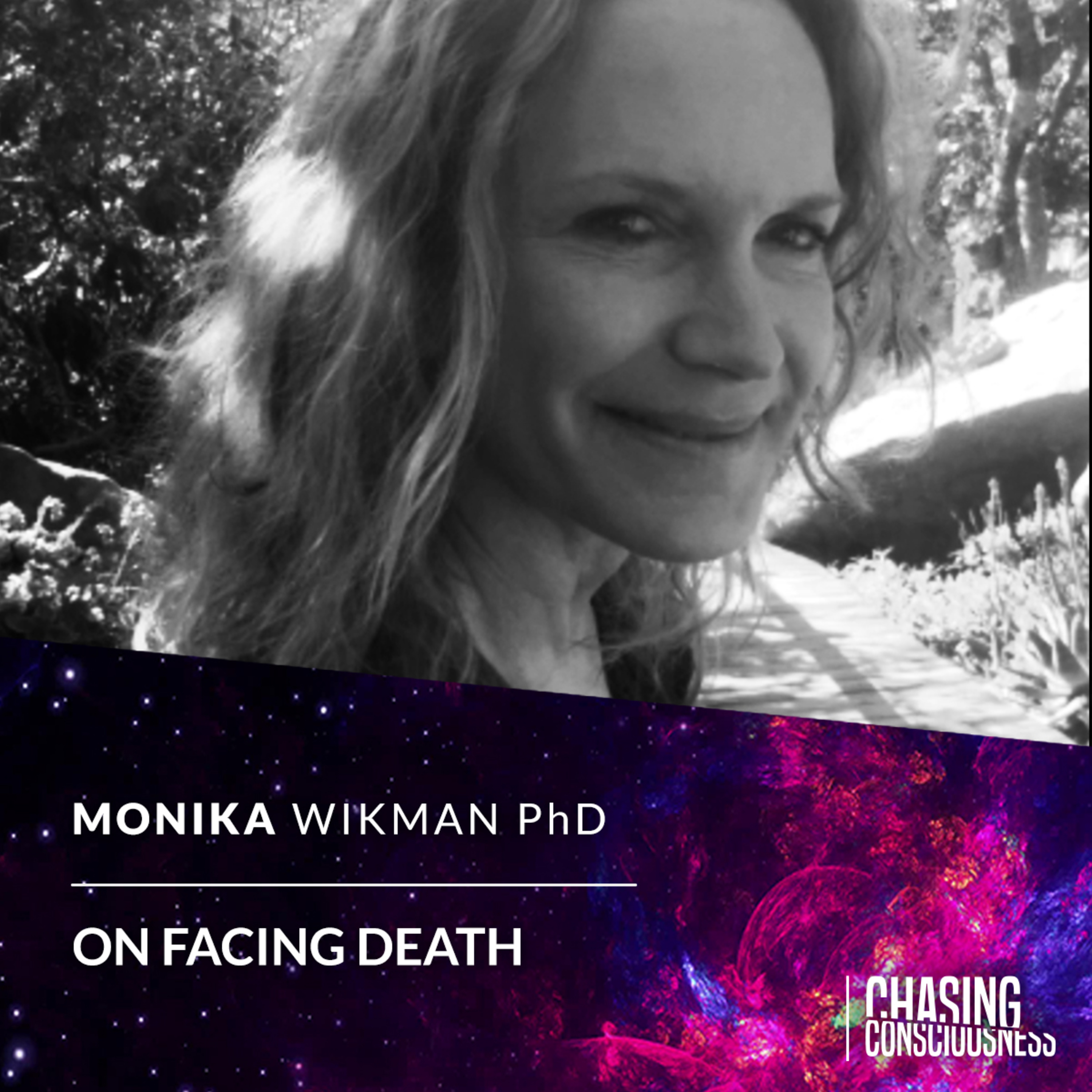
    ON FACING DEATH, according to C.G.Jung - Monika Wikman PhD

    How should we support the dying, and how should we approach death itself? What is conscious dying? What does Carl Jung’s work say about facing death? In this episode we have the complex topic of how to face Death, through the lens of psycho analyst Carl Jung. I’m sure that some of you will have found this episode because you’re facing death during this time, either your own or of a loved one; and to those of you I offer my condolences and healing prayers, and hope dearly that what we discuss today will offer some perspective and assistance, and my apologies in advance if any of our ideas cause you pain: death and mourning are extremely personal topics. But I also hope that many others of you are here simply to try and form a healthier relationship with death.The inspiration for this episode came not only from my own experience facing my own parent’s mortality, but also from my intuition that our modern, consumeristic, aestheic and individualistic society has made us more afraid of death than ever; perhaps because of our modern societies focus on material well-being, and the power of technology to guarantee it. My gut feeling is that we need to become aware of this unconscious taboo, as it seems to be hindering a deeper and perhaps more wholesome acceptance of mortality in general. And that’s why I wanted to speak to a specialist like my guest psychoanalyst Monika Wikman. Monika received her PhD in clinical psychology from the California School of Professional Psychology and then qualified as a Jungian psychoanalyst at the Jung-Von Franz Center for Depth psychology in Zurich. She is an expert on topics including archetypal phenomena surrounding death, dreams, active imagination and alchemy. Her work with the dying culminated in a research project called ‘Dreams of the Dying’ at UC San Diego Medical Center. She is also the author of the book, “Pregnant Darknesss: Alchemy and the rebirth of consciousness”. What we discuss: 00:00 Intro. 04:30 How to support the dying. 07:05 Death informs us. 09:00 Facing our own mortality - the history of Conscious dying. 13:18 The Osiris Myth. Dismemberment and rememberment. 16:45 Death is the ultimate goal, an achievement, according to Jung. 19:15 Death duellers. 21:45 The last step of individuation. 24:45 Symbolic death, according to Jung. 30:00 ‘The wound is where the light enters you’. Rumi 33:00 The religious function - Jung. 34:00 Monika’s 2nd NDE - a relationship with the darkness.44: 00 Life after death and the subtle body. 46:00 Prayer and connecting with the eternal. 50:00 Only through limitation can we connect with the eternal. 51:00 The subtle body - uniting psyche and matter. 56:10 The Divine wedding - the marriage between opposites. 57:45 Synchronicities around the dying. 01:07:00 Studying the dreams of the dying. 01:11:30 Dead friends and family often come for them in dreams. 01:15:20 Common motifs of crossing rivers, thresholds and initiations. 01:17:00 How we mourn. 01:29:20 If you didn’t serve someone well you’ll regret it after they die. 01:22:00 Grief transforms. References: Monika Wikman, “Pregnant Darkness - Alchemy and the rebirth of consciousness” Wendell Berry poem - Rising Mircea Eliade, “Yoga: immortality & Freedom” Chiron, the wounded healer. C.G.Jung, “Memories Dreams and Reflections”. Ram Dass quote, ‘Dying is absolutely safe’ Leonard Cohen quote, 'We are so lightly here'. (Not William Blake).

  • S5 · E79
    Sep 14, 2025 · 1 hr 48 min

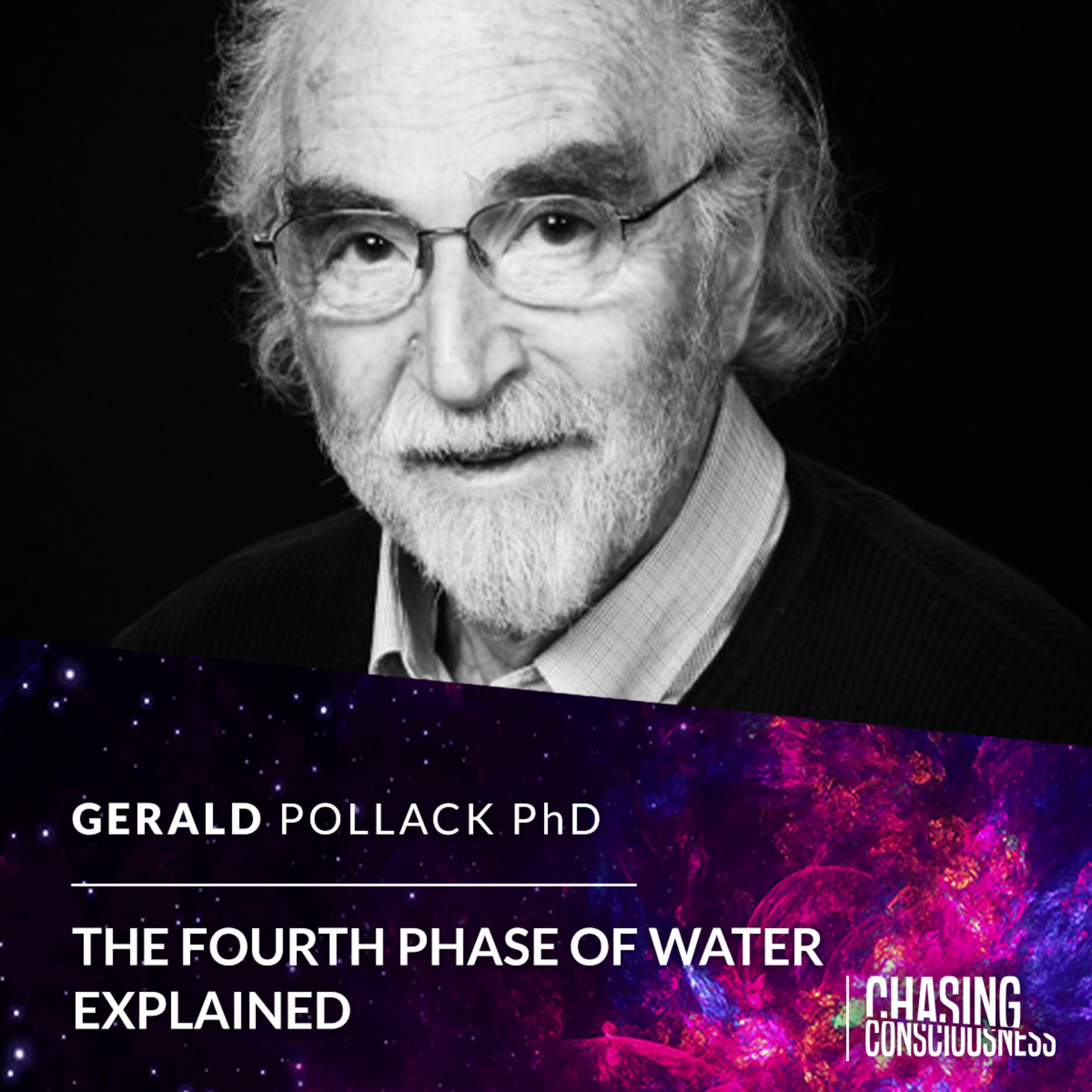
    THE 4th PHASE OF WATER EXPLAINED - Gerald Pollack #79

    What are the implications of the discovery of the chemical variation of water, nicknamed “The 4th phase”? What does the new structured chemical composition mean for the storage of energy and information? What can we learn from the discovery that electrical charge plays a role in the way water moves and transports other molecules? In this episode we have the fascinating new science of water to get into, particularly the research around the discovery of the gel-like chemical variation of water, nicknamed the “4th phase”. It occurs when water gets close to water friendly surfaces, and as it changes chemical structure, it separates into positive and negatively charged components. So we find out how this particular form of water is used by nature; how its structure can be ‘charged’ by infrared energy from the sun like a solar cell, becoming an energy source that can do work. We also separate the wheat from the chaff on the controversial ‘memory of water’ claims of Maseru Emoto and Nobel prize winner Luc Montagnier; and we discuss why there is so much resistance to this research despite the ubiquity and importance of water in biological systems. Fortunately to navigate this cutting edge research and avoid wishful thinking, we have the director of Pollack Labs at the University of Washington, one of the most established lab’s studying water in the world, Bioengineer, professor Gerald Pollack. He is the author of over 300 scientific papers, and four books for the general public including ‘Cells, Gels and the Engines of Life’, ‘The 4th Phase of Water’ and his new book just out ‘Charged - the unexpected role of electricity in the workings of nature’. What we discussed: 00:00 Intro. 10:00 The role of electricity in nature. 15:25 The Earth has a negative charge & the ionosphere positive. 19:00 The old consensus on water. 23:00 Gilbert Ling - cellular water is charged and so the molecules stack. 26:15 The transition of chemical structure when in contact with hydrophilic surfaces. 27:45 Exclusion-Zone Water = Liquid Crystal Water. 32:45 Changes chemical structure and electrical charge. 35:00 Add light or electrons to build EZ Water. 37:30 Grounding - is there any evidence? 38:20 It’s an energy source, a battery charged by infared light. 42:15 The difficulty raising money for ideas that go against the consensus. 46:15 The threat to an old world view. 48:30 The Brownian motion criticism of the data. 49:00 Electrical energy generation in cells. 56:00 The cardio vascular, blood flow energy issue. 01:05:45 We’ve misunderstood membranes. 01:13:00 The gel itself might be a barrier. 01:14:00 Purification of water using the exclusion process. 01:19:00 Difficulty getting business funding for the applications. 01:24:00 Cancer cells have a lower negative charge. Perhaps a lack of EZ water. 01:26:00 How information is stored in structured water. 01:31:00 Luc Montagnier - water claims confirmed in 3 studies. 01:39:00 Jacques Benveniste - dubbed ‘water memory’. 01:40:30 Masero Emoto - Dean Radin confirmed his result. 01:44:45 Non-verbal communication. References: Gerald Pollack, “Charged: The Unexpected role of electricity in the workings of nature” Gerald Pollack, “The Fourth Phase of Water” Earth’s negative charge, Richard Feynman Volume II, Chapter 9 of The Feynman Lectures on Physics, titled "Electricity in the Atmosphere”. Gilbert Ling - Polarised-Oriented Multilayer Theory Harold Hillman - ‘A radical reassessment of the cellular structure of the mammalian nervous system’

  • S5 · E78
    Sep 1, 2025 · 1 hr 21 min

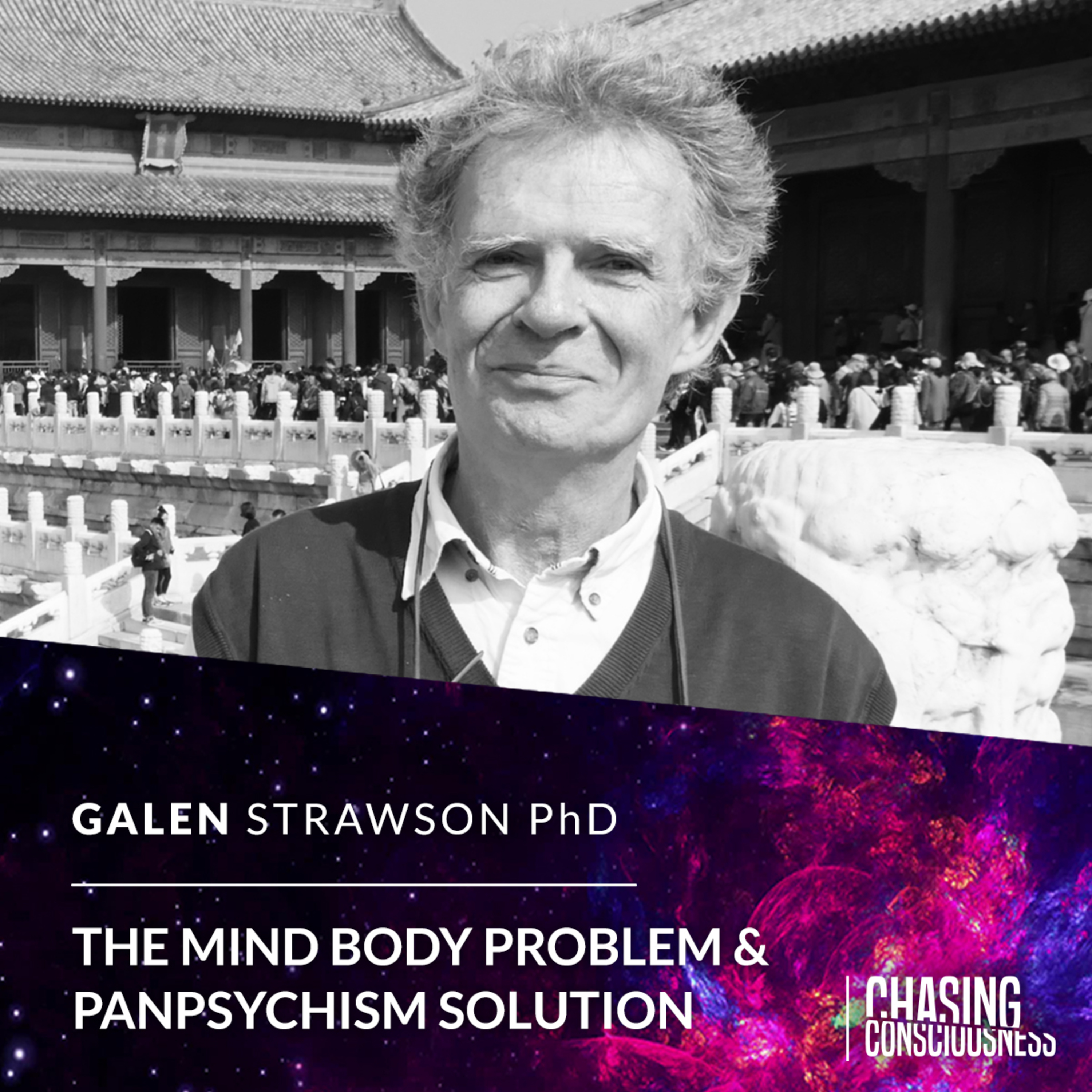
    THE MIND BODY PROBLEM & THE PANPSYCHISM SOLUTION - Galen Strawson PhD #78

    How can consciousness emerge from non-conscious material? If there is only one type of stuff, how is the potential for consciousness encoded in the building blocks of the universe? In this episode we have the ancient philosophical mind-body problem to get our heads around, and the ever more popular solution, panpsychism: That is, the belief that everything material, no matter how small, has always had a component of consciousness in it. We get into what consciousness is, why it’s not an illusion; into subjective experience; we cover the rich history of the mind-body problem in philosophy, and we also confront the apparently magical emergence of consciousness from non-consciousness by exploring the arguments for panpsychism, and how new understandings from the last 100 years of science might change preconceptions about a panpsychist solution. Fortunately, to understand this we have the hugely experienced author and analytical philosopher of mind, for many years at the university of Oxford and now at the university of Texas, professor Galen Strawson! Alongside over 140 papers, he has also written 12 books including “Consciousness and its place in nature”, “Things that bother me: Death, Freedom, the self etc” and his new book “Stuff, Quality and Structure”. What we discuss: 00:00 intro 05:30 ‘Naturalism’ as a position. 07:00 Qualia explained. 09:30 There’s only one kind of stuff: identity metaphysics. 12:00 A criticism of life as narrative story. 14:30 what is the self? 17:20 There is no mystery of consciousness. 19:15 Locke’s Primary and Secondary Qualities clarified. 21:45 The history of the mind-body problem. 27:30 The interaction problem VS the combination problem. 30:30 Radical emergence of consciousness from non-consciousness is impossible. 32:30 The arguments for panpsychism. 34:00 Psychophysical laws - David Chalmers. 35:00 The rise of panpsychism. 36:30 Different types of panpsychism. 41:30 Separating between conscious stuff, and subjects of consciousness. 48:30 Cosmopansychism - patterns of excitation in the quantum field. 50:00 Cellular cognition - Agential behaviour is not proof of experience. 54:00 ‘Matter is energy’ assists panpsychist intuitions. 56:15 Who demands evidence is begging the question. 01:02:30 “A Global Replace” of consciousness in matter. 01:03:30 How would a world of panpsychist science look?01:06:30 Neuroscience: neural correlate reductionism. 01:09:30 Feelings evolved before reasoning. 01:11:30 Being is energy; being is becoming; being is qualititivity; being is mind. 01:13:15 A cosmological mind. 01:16:15 Teleology and Meaning. Quote:Lee Smolen, “Qualia must be understood as aspects of nature, that is our commitment to naturalism, the philosophy that asserts that all that exists is part of the natural world science studies.” References: Galen Strawson, “Mental Reality”, 1994 Galen Strawson, “Against Narrativity” paper. 2004 Galen Strawson, “Realistic monism - why physicalism entails panpsychism”, 2006 Galen Strawson, “Mind and Being, The Primacy of panpsychism”, 2017

  • S5 · E77
    Jul 31, 2025 · 1 hr 1 min

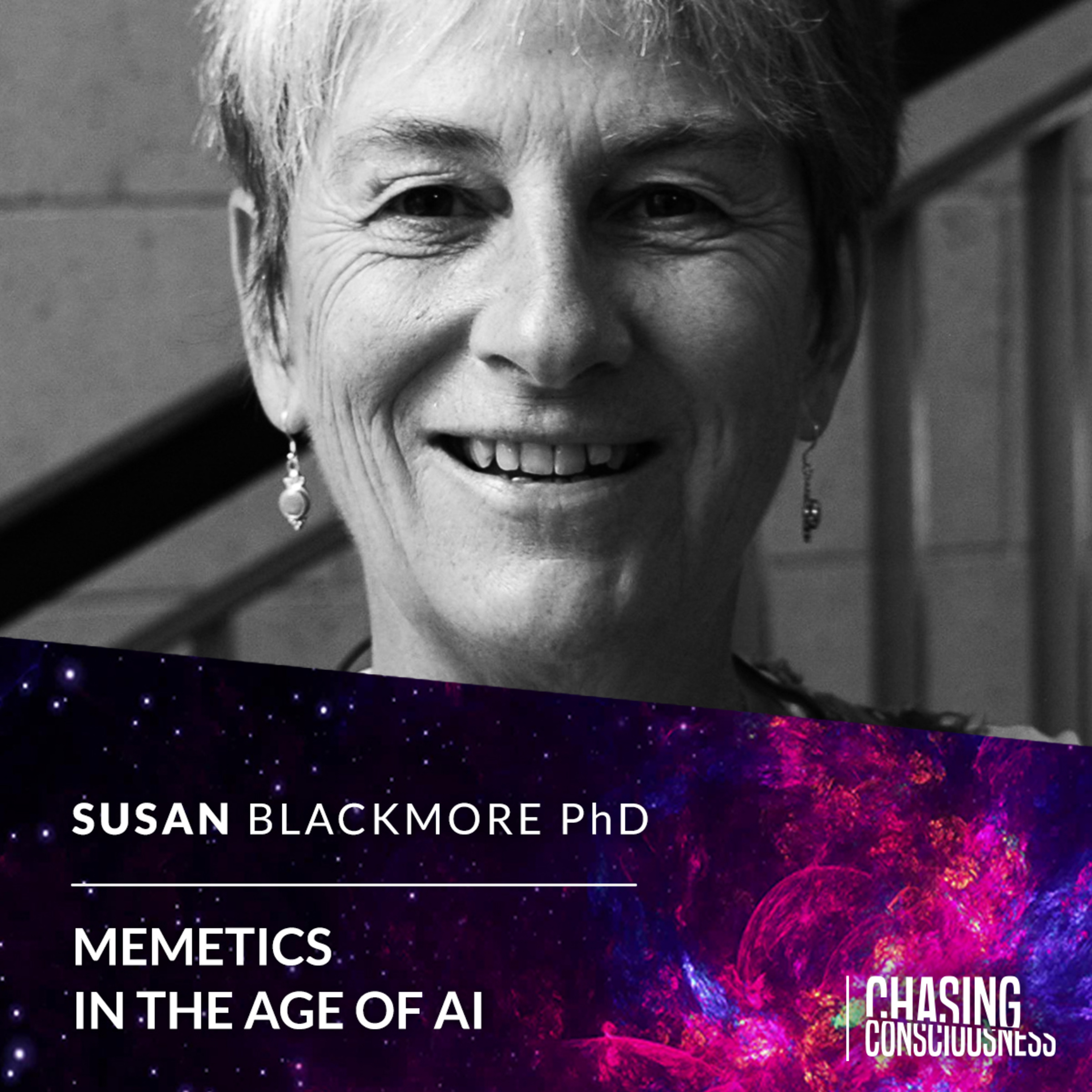
    MEMETICS IN THE AGE OF ARTIFICIAL INTELLIGENCE- Susan Blackmore PhD

    What are memes and why do some replicate while others disappear? Are the memes selected for always for the benefit of the host culture? How are our new technologies changing the way memes feedback into our cultural evolution? In this episode we have the slightly disconcerting ideas of Memetic theory to get our heads around; as we learn how successful ideas and information are replicated by humans before being re-transmitted back out into world. We’ll see how these memes evolve our culture and minds over time, similarly to how our genes evolve through natural selection. But concerns will arise when we realise that this replication is not only selected for memes that are good for human evolution, and so memes seem to take on some type of evolutionary survival of their own. So when we now find ourselves in an internet era, with AI algorithms replicating ideas in an artificially amplified feedback loop with our own human memes, we get a cultural run away train, in which we are not really in control of our own culture and ideas. So fortunately, to get our head around this tough topic we have one of the inventors of the field, author of the 1999 book “The Meme Machine”, and by now, in her third appearance on Chasing Consciousness, our in-house sceptic - psychologist, philosopher, broadcaster and author Susan Blackmore. She’s best known for her books "Zen and the Art of Consciousness, Consciousness: An Introduction", and "Seeing Myself". Susan’s work spans across hundreds of publications in over 20 different languages, making huge contributions in the fields of psychology, memetics, religion, philosophy of mind, supernatural experiences, and anomalous experiences. What we discuss: 00:00 Intro. 04:00 Using Natural Selection to apply to the imitation and thus survival of ideas. 06:35 Successful imitation of behaviours came first. 07:35 The ideas that get copied more, for whatever reason, survive longer. 08:40 Language allowed better copying and feedback. 12:10 Memplexes: an analogy of co-adaptive gene-complexes. 14:20 Sue’s scepticism of quantum theories of consciousness. 14:40 Ideas are memes but experiential knowledge is not. 19:05 Concern: Memes themselves are the beneficiary of selfish replication, not the host culture or minds. 22:50 Human rights memes run against genetic replication needs. 26:05 The taboo around memetic theory. 32:40 “Tremes” - technological imitations independent of humans - a third replicator. 40:00 Social media algorithms as super-treme replicators.43:50 Too fast turn around of ideas, hyper vigilance and negativity bias. 47:50 Over stimulated, fast societies - Negative mental health outcomes. 48:20 The implications of artificial general intelligence in terms of Tremes. 53:05 Technology as an extension of our culture. 57:40 Max Tegmark’s “Moloch” allegory. References: Susan Blackmore, “The Meme Machine”. Richard Dawkins - “The Selfish Gene”

  • S5 · E76
    Jul 14, 2025 · 1 hr 40 min

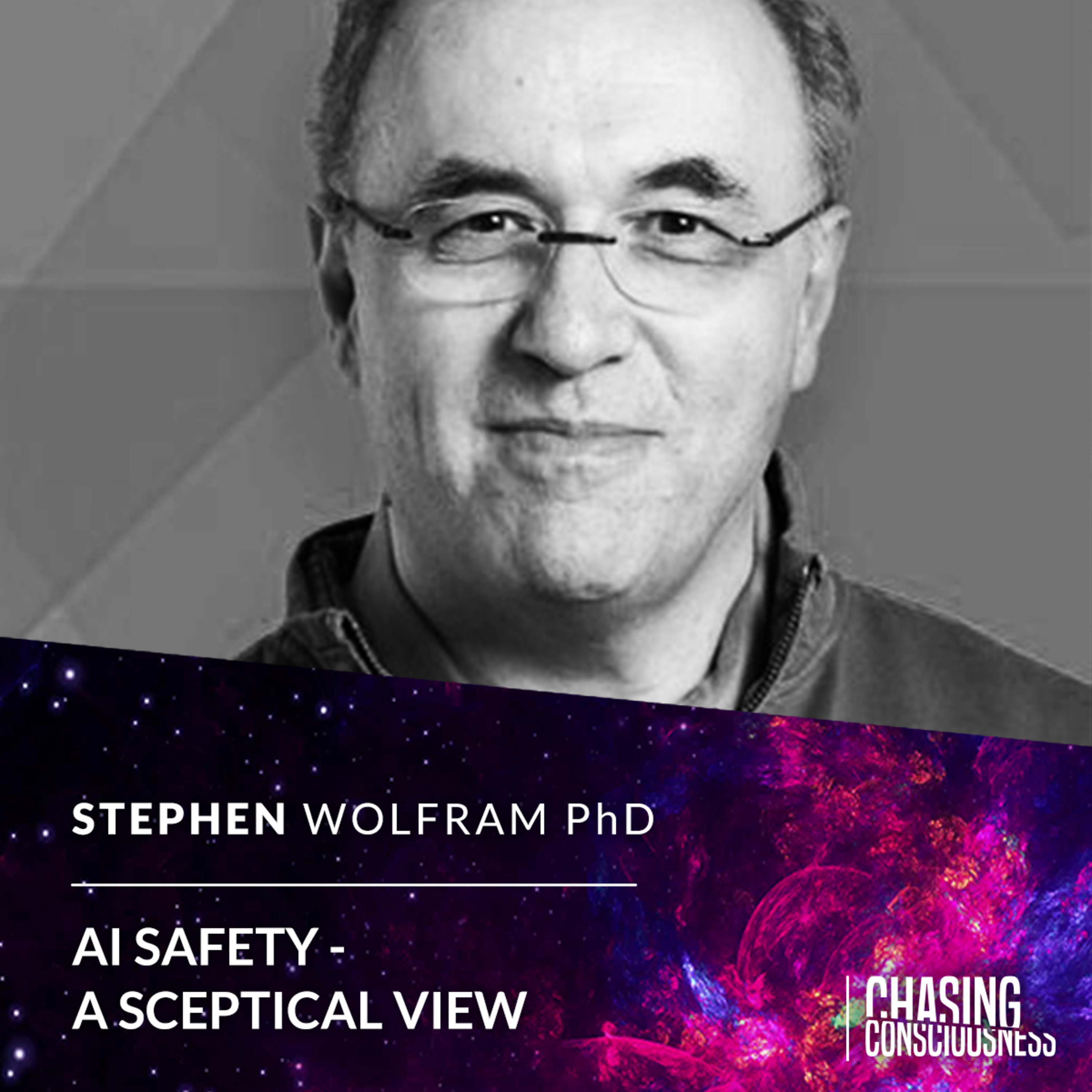
    AI SAFETY - A SCEPTICAL VIEW - Stephen Wolfram PhD #76

    What are the benefits and risks of developing advanced AI? What kind of safety precautions could we take? Could we risk never making future discoveries, by over-limiting today’s AI in pre-emptive safety regulations? In this episode we get a sceptical evaluation of the complex debate that’s currently raging on artificial Intelligence safety, aiming to get a balanced view of the extremely useful applications versus the currently hugely publicised existential risks, and evaluate the safety measures and legislative frameworks that are being considered to help avoid risk to humans. To do this we trace the path from today’s artificial intelligence right up the ever steeper curve towards artificial super intelligence; we risk risk assess the unpredictability of emergent properties of such systems; we assess the future of work, and the potential loss of control of our culture as AI starts to outnumber us and generate more and more of the media we consume. My guest today has a unique take on these issues which took me by surprise, as he disagrees with the alarmism and call for harsh regulation, whilst openly predicting that emergent properties will more or less guarantee safety hazards. The fact that he has been at the cutting edge of computer science for over 40 years, creating computer language and Ai solutions, makes him well placed to provide a counterpoint to the AI safety campaigners calling for collective action. He is of course physicist, computer scientist and tech entrepreneur Stephen Wolfram. In 1987 he left academia at Caltech and Princeton behind and devoted himself to his own computer systems at his company Wolfram Research. He’s published many blog articles about his ideas, and written many influential books including “A new kind of science”, “A project to find the fundamental theory of physics”, and “Computer modelling and simulation of dynamic systems”, and most recently “The Second law” about the mystery of Entropy. What we discussed: 00:00 Intro. 06:30 Stephen’s first forays into neural nets in the early 80s. 09:30 Cellular Automata. 11:00 Can you make the knowledge of the world available via computers? 13:00 Wolfram Alpha: A non-AI AI. 17:45 Can AI solve science? 22:00 AI is great at rough answers, worse at the detail. 33:00 Artificial General intelligence, A.G.I. 42:00 The pros & cons of super intelligence. 47:40 Chat GBT’s unpredicted peculiarities. 54:00 The spread of mistruth. 58:00 AI and the future of work. 01:05:20 Businesses leading automation push. 01:09:00 AI will outnumber us and network, changing our culture. 01:11:00 AI will follow a banal ‘mean’. 01:16:30 The AI Safety debate. 01:21:00 We have no choice, it will be developed anyway. 01:22:00 Ai systems may have feelings, we don’t know. 01:25:00 Stephen’s non-interventionist safety approach. References: Stepehn Wolfram, “A project to find the fundamental theory of physics”, Stephen Wolfram, “The Second Law” The History of “Neural Nets” since 1943, (Warren McCulloch and Walter Pitts paper) Stephen Wolfram, “Can AI solve science?” article

  • Jun 30, 2025 · 1 hr 29 min

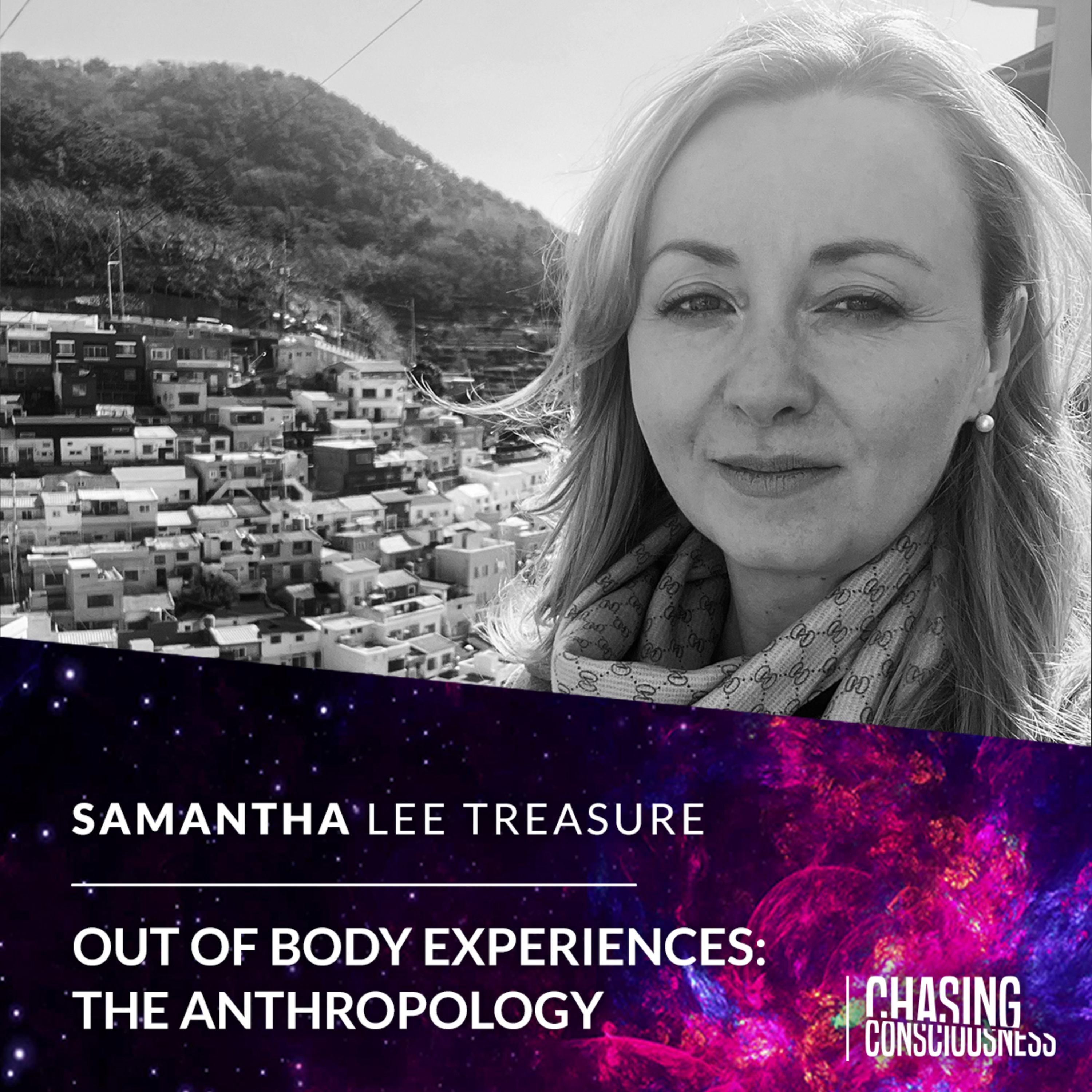
    OUT OF BODY EXPERIENCES: THE ANTHROPOLOGY - Samantha Lee Treasure #75

    What are the contents of Out of Body Experiences? How closely do they map the actual physical world? Is it possible to induce them purposefully? How do modern practices compare to indigenous shamanic ones? In this Episode we look at the scientific, religious, cultural and historical contexts of Out of Body Experiences, also known as astral projection - so the experience in which an individual appears to leave their body and be able to travel around the world and into other dimensions, often meeting other worldly entities, similarly to DMT psychedelic experiences, (see Episode #73, “DMT Entity Experiences”). So, we get into the phenomenology- the various things people experience; potential neurobiological explanations; and the possibility of inducing the experiences on purpose and of exploring alternate realities; we get into indigenous traditions of ‘Shamanic flight’ and which people might be predisposed to these alternate states of consciousness; and we end up talking about a potential connection between OBE, sleep paralysis and ludic dreaming. To discuss this slippery topic, we have a researcher who is also a lifelong experiencer, who has devoted her career to trying to understand these phenomena, the medical anthropologist and author Samantha Lee Treasure; she has an MA in Medical Anthropology from SOAS university in London, has been a brain science research assistant at the University of Liege, and has just released her first book on the topic, “Out of Body experiences”, the release of which this episode is timed to coincide with. What we discuss: 00:00 Intro. 11:30 What is medical anthropology? 16:00 OBE entity research. 22:15 Samantha’s New Book - getting beyond preconceptions. 25:50 OBE vs Astral projection - bypassing the taboo. 30:00 Common reported OBE experiences. 33:00 Mental body schemas and projected models of the world. 37:00 Do OBE’s map the real world accurately? 45:00 Olaf Blanke - the Temporoparietal junction discovery. 48:45 No sense of smell during OBE nor processed by the TPJ. 49:40 Techniques to induce OBE’s intentionally. 53:45 Bob Monroe’s perspective switching technique. 55:30 Shamanic flight practices in Tuva, Siberia. 59:35 The sonezen - the perceiving mind self. 01:01:00 This is not for everyone, it can be scary. 01:05:00 The predisposition for some to have these experiences. 01:10:45 Crossovers between NHI Contact and OBE entity experiences. 01:14:20 Genealogical predispositions. 01:18:25 “Reality Shifting” and the role of intention in OBE. References: Samantha Lee Treasure, “Out-of-Body Experiences: Explorations and encounters with the astral plane”. Stephen Le Berge, “Pre-sleep treatment with Galantamine stimulates lucid dreaming” paper Olaf Blanke, “Linking out-of-body experience and self processing to mental own-body imagery at the temporo-parietal junction” paper. Charles T Tart - 6 Studies of OBE. Graham Nicholls, “Navigating out of body Eperiences”. Yurgan Zeiwe - “Multi-Dimensional Man”. RosalieYoga, Monroe Sound science guided meditations,You tube channel. “Out-of-body experience in vestibular disorders – A prospective study of 210 patients with dizziness” paper. Celia Green & Charles Mc Reery, “Lucid Dreaming: The Paradox of Consciousness during Sleep”. Anthony Peake, “Near Death Experiences”.

  • S5 · E72
    Jun 14, 2025 · 1 hr 17 min

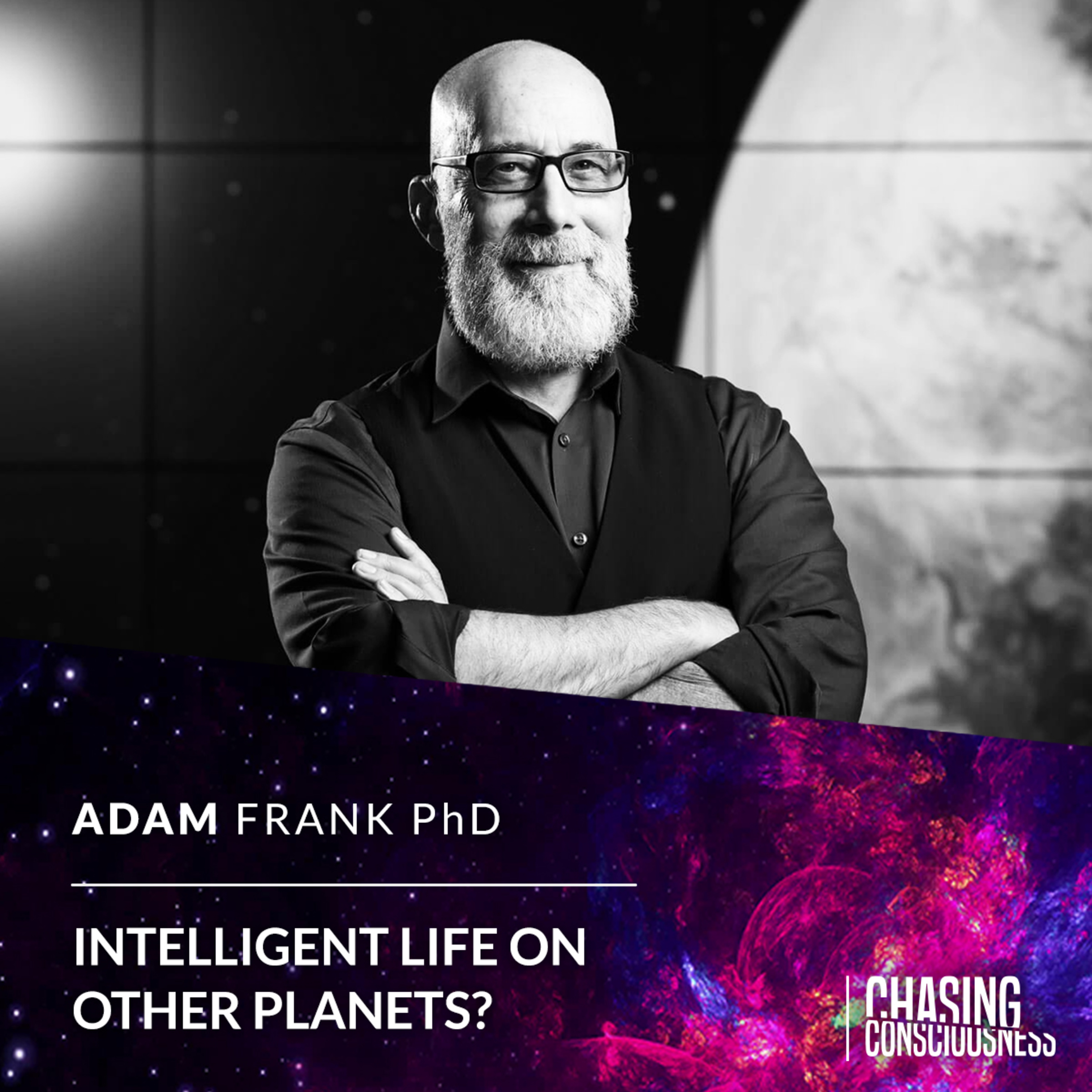
    INTELLIGENT LIFE ON OTHER PLANETS, WHAT ARE THE CHANCES? - Adam Frank PhD #74

    How do astronomers detect the conditions for life and techno-signatures on exoplanets many lightyears away? What conditions on earth give us clues to how life might have formed elsewhere? How do intelligent civilisations evolve to technomaturity before they destroy themselves? So in this episode we have the mysterious arising of life and eventually intelligent life on our planet to try and explain, to then apply that to our search for other intelligent life in the cosmos. So to explain that we’re going to be getting into the co-evolution of the geosphere and the biosphere on earth and their corresponding feedback loops; the possibility of planetary level intelligence; the difficulty of laying a technosphere on top of the geo and biosphere, and the risk of civilisations wiping themselves out before learning how to harmonise the technosphere with the biosphere; We’ll be looking at the changes in the field of SETI (the Search for Extraterrestrial Terrestrial Intelligence), since we can now identify potentially life sustaining exo-planets in nearer parts of the galaxy; we’re going to get into the newly funded search for techno signatures from advanced civilisations, and potential space junk from the many civilisations that presumably didn’t make it; lastly we’re going to discuss recent claims of ancient and alleged present visitations to earth by extra terrestrial intelligence. Fortunately to face these tough and complex issues, our guest is a world specialist in astrobiology, with a talent for making these topics fun and imaginative, an astrophysics professor at the University of Rochester, Professor Adam Frank. He’s the author of over 200 scientific papers and 6 books for the general public including, “The Blind Spot: why science cannot ignore human experience” and “The Little book of Aliens” which we’ll be focussing on today. He’s also an award winning science communicator, on a mission to raise public awareness about existential risk and science in general. What we discussed: 00:00 Intro. 05:20 The importance of experience. 07:00 The limits between the expressible and the inexpressible. 09:10 Semantic Information: life as self organising, autonomous agents. 15:00 There’s stuff you can’t talk about - there’s only the silence 16:20 The Basian probability of other life in the universe. 20:00 The ingredients for life on this earth. 22:30 The codependence between Geo and Biosphere. 22:60 Gaian feedback loops. 27:00 The earth is not conscious but it is an agent. 29:45 Mind is a process, it’s not just in the head. 33:25 The fluidity of individuality. 34:30 Distributed Cognition - bacteria, fungal networks etc. 38:30 A fundamental reimagining of what we mean by ‘Nature’. 39:30 There is no disembodied perspective. 41:00 Geosphere to Biosphere to technosphere maturity. 47:30 The biosphere offers a model for what planetary intelligence looks like. 48:00 The history of search for extra terrestrial Intelligence, SETI 49:00 The Drake equation - 7 requirements for intelligence life. 53:45 We’ve never looked - a tiny amount of the sky has been studied. 54:00 Exoplanets: searching for biosgnatures and techno signatures. 56:00 Technospheres: Kardeshev scale and Dyson Spheres. 59:00 Techno junk from dead civilisations. 01:02:30 UFO’s need more data to be taken seriously. 01:08:20 UFO’s could be surveilling their spy tech. 01:10:00 Pros and Cons of solar system settlement. References: Adam Frank, Evan Thompson, Marcelo Gleiser, “The Blind Spot: Why science cannot ignore human experience”. Adam Frank, “The Little Book of Aliens” Adam Frank, David Grinspoon, Sarah Walker - Intelligence as a planetary scale process. Lynn Margulis - Evolutionary Biologist. David Krakauer et al, An information theory view of individuality Frank Drake - ⁠Project Ozma⁠ Jason Wright - SETI meta-analysis Exoplantets.org Adam Frank - New York Times ‘I’m a Physicist Who Searches for Aliens. U.F.O.s Don’t Impress Me’ article "The Expanse", Apple TV series

  • S5 · E73
    May 31, 2025 · 1 hr 19 min

    DMT ENTITY ENCOUNTERS, A QUANTITATIVE STUDY - Dr David W Lawrence #73

    What’s the architecture of a DMT experience, who are the entities that regularly interact and what’s their message? How can DMT therapy facilitate positive mental health outcomes? In this episode we’re going to learn about the bizarre types of experience that users of DMT have; DMT being the most powerful hallucinogenic molecule on the planet. So we’ll be getting into the background of psychedelics for mental health; and the particularities of DMT, the active ingredient in Ahyuasca and the psychedelic that most often presents entities that interact meaningfully with the experiencer; we’re going to discuss the different types of entities: from mythological creatures, to Gods and Demons, to machine elves and aliens, and the significance of these same characters appearing significantly often without an obvious primer; we’ll also discuss the importance of mystical experience and teacher /guide experiences to positive mental health outcomes. Fortunately our guest was the head researcher on a 2022 paper that looked at exactly this topic, the medical doctor and sports scientist professor at the University of Toronto, Dr. David Wyndham Lawrence. He’s published over 35 scientific papers across sports science and psychedelics for medical use. What we discussed: 00:00 Intro 05:20 Concussion, sports mental health & psychedelic therapy. 08:10 Bringing in Robin Carhartt-Harris on the gaps in sports mental health treatment. 12:06 Why psychedelics for those already in psychological difficulty? 14:04 Serotonin receptor - neuro-protective mitochondria function. 15:00 DMT is endogenous to the brain. 18:20 Medical institution meets shamanism. 23:50 David’s DMT phenomenology paper. 30:10 The architecture of the DMT world. 32:60 Mostly positive, interactive entity encounters. 37:05 Occasionally negative encounters. 38:40 Negative psychedelic experiences study - Jules Evans. 40:05 How much “Primers” from pop culture influence experiences. 44:00 Alien encounters in %16 of participants. 45:30 Medical procedures by entities in 9% of participants. 47:05 Mystical experiences in %70 of participants. 49:00 Familiarity/ sense of home in the experiences. 52:20 Default Mode Network is less active during altered states. 48:35 Ego dissolution Vs mystical experience. 01:00:00 5meoDMT Vs DMT. 01:03:20 Wise teacher experience in 32% of participants. 01:05:20 Death bed palliative doses to alleviate fear of death. 01:09:50 ‘You’re not ready for this experience’ message. 01:11:05 Theories of DMT experiences evaluated. 01:12:20 ”All models are false but some are useful”, anonymous statistician. References: David Lawrence, “Phenomenology and content of inhaled DMT” David Wyndham Lawrence and Robin Carhart-Harris, “Sports Medicine, Mental Health & Well-Being, and Psychedelics” Benny Shanon, “Antipodies of the Mind” Matthew W. Johnson - Johns Hopkins Andrew Gallimore - “Death by Astonishment” Jules Evans et al, “Extended difficulties following the use of psychedelic drugs” Similarities between DMT and Alien encounters paper David W. Lawrence, “DMT Occasioned Familiarity and the Sense of Familiarity Questionnaire” Roland Griffiths, “Psilocybin produces substantial and sustained decreases in depression and anxiety in patients with life-threatening cancer”

  • S5 · E72
    May 14, 2025 · 1 hr 13 min

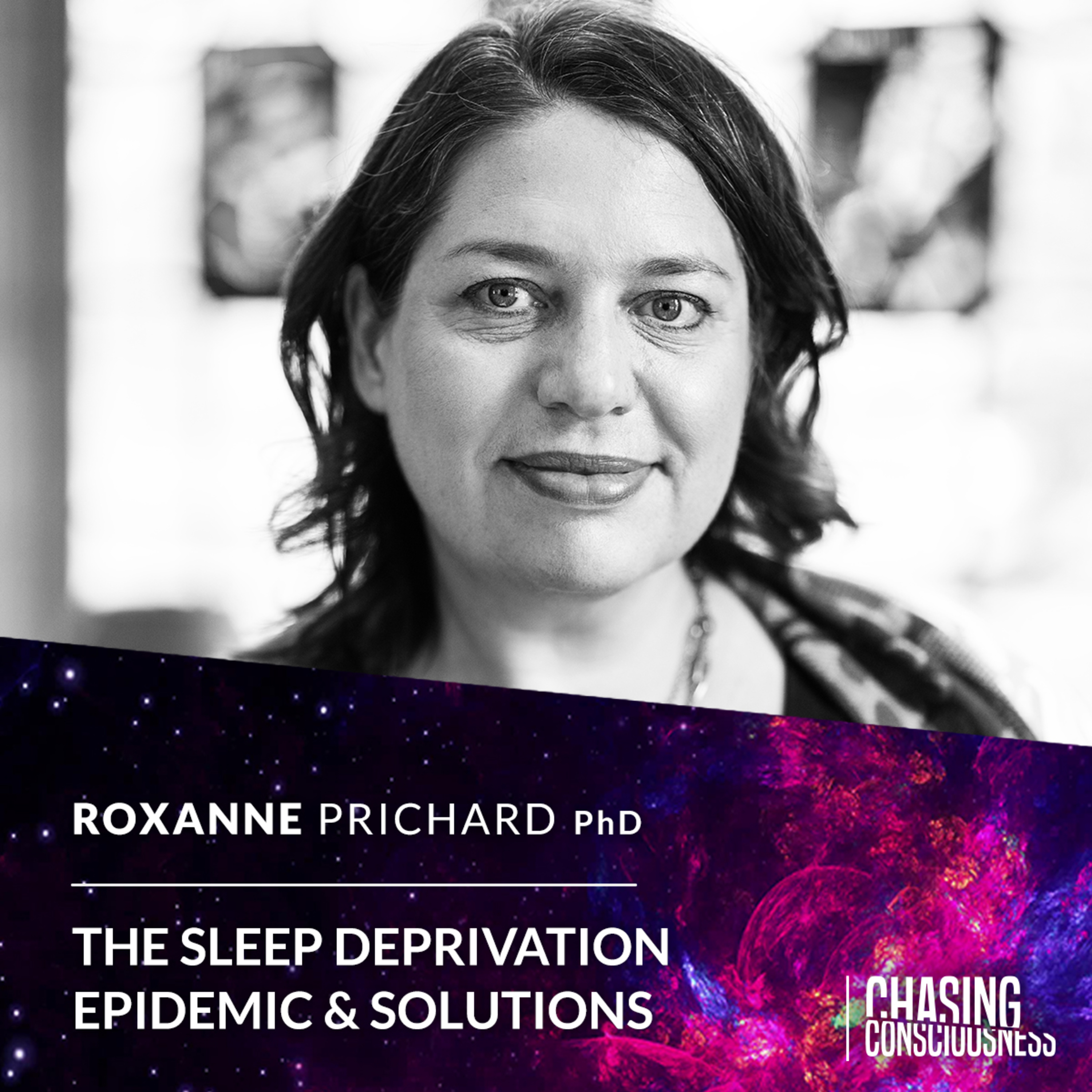
    THE SLEEP DEPRIVATION EPIDEMIC & SOLUTIONS - Roxanne Prichard PhD

    What are we sleeping less and less? What are the benefits of getting a good nights sleep and the risks if we consistently don’t? How is sleep linked to memory, cognitive performance, blood sugar regulation & stress hormones? How is young people’s development affected by sleep? In this episode we have the surprising data on the science of sleep to get up to date on; so, why there’s a sleep deprivation epidemic; how sleep works and what it’s required for; dreams; and importance of sleep for learning and for immunity. We’re also going to discuss the wide range of serious health issues that arise with even a small sleep deficit, and the vast benefits of getting sleep right; and the lifestyle tips we need to consistently get the sleep we need. And of course, sleep and mental health, and the importance of sleep for development in young people. Gratefully our guest today is a psychologist and neuroscientist that specialises in sleep, mental health and dream research, particularly in young people. She’s the Scientific Director of Psychology at the University of St. Thomas, Minnesota, Roxanne Prichard! She’s the author of over 40 highly citied scientific papers, and her TEDx talk “Addressing our Childrens Sleep Debt” was featured in the lecture series: Transforming Education. She’s quoted regularly in the press, inlcuding the New York Times, Wall Street Journal, Teen Vogue, and USA Today. What we discussed: 00:00 Intro. 05:00 The Sleep deprivation epidemic. 07:15 Shaking off prejudice about resting being laziness. 08:31 Glymphatic system for toxin removal. 10:00 Synaptic plasticity: Learning & unlearning. 11:10 Learning & memory require sleep. 14:00 The hippocampus processes memory during sleep. 15:00 Late night cramming for exams blocks learning. 15:50 Lack of sleep appears to the body as a threat out in the world. 17:40 Blood sugar regulation is affected by sleep. 18:00 “Sleep! Like diet and exercise only easier!” 19:10 Immunity and sleep deprivation. 21:00 Cancer & regularity of circadian rhythms. 22:00 Evolution, daylight, circadian rhythms & learning. 23:45 Sleep delay of morning stress hormones in teens. 26:15 Light Vs Deep ‘Slow Wave’ Vs REM sleep. 30:00 REM Sleep explained. 33:00 Dreams: The top theories. 36:30 The electrical nature of sleep & brain waves. 40:00 Alpha Waves and biofeedback for insomnia. 42:00 Insomnia & the health risks of sleep deprivation. 46:00 Sleep is within our control. 47:15 The inflammation link with sleep. 49:30 The mental health risks of sleep deprivation. 50:00 Catastrophising and attention deficit. 50:45 College students mental health & sleep as a crucial marker. 57:30 Persausive technology, screens & sleep. 01:02:30 How much sleep do we need? 01:04:25 Avoid external stimulants & go to low light. 01:06:00 Avoid internal stimulants like caffeine and alcohol. 01:07:40 Sleep and wake at regular times every day. 01:08:40 Core temperature dropping signals sleep. 01:10:00 Roxanne’s campaign points. 01:12:00 The shame around rest. References: Ya Chai at al, ‘Two nights of recovery sleep restores hippocampal connectivity but not episodic memory after total sleep deprivation’ paper.https://www.nature.com/articles/s41598-020-65086-xN.I.H. article, 'Sleep on it - How snoozing strengthens memories' (40% drop in learning after sleep deprivation)https://newsinhealth.nih.gov/2013/04/sleep-itU. Chicago Medicine article, 'New study helps explain the link between sleep loss and diabetes'. Trisha Hershey, ‘the Nap’ Bishop. - “Rest is Resistance” book.

Showing 1–20 of 21 episodes