Skip to content
Artwork for Beginner's Mind
BusinessEntrepreneurshipInvestingTechnology

Beginner's Mind

Christian Soschner

Blueprints for Builders and Investors

Hosted by Christian Soschner


From pre-seed to post-IPO, every company—especially in deep tech, biotech, AI, and climate tech—lives or dies by the frameworks it follows.


On Beginner’s Mind, Christian Soschner uncovers the leadership principles behind the world’s most impactful companies—through deep-dive interviews, strategic book reviews, and patterns drawn from history’s greatest business, military, and political minds.


With over 250 interviews, panels, and livestreams, the show ranks in the Top 10% globally—and is recognized as the #1 deep tech podcast. 


With 35+ years across M&A, company building, board roles, business schools, ultrarunning, and martial arts, Christian brings a rare lens:


What it really takes to turn breakthrough science into business—how to grow it, lead it, and shape the world around it.


🎙 Expect each episode to deliver:

  • Founder & Investor Blueprints: How breakthrough technologies scale from lab to IPO
  • Historical & Biographical Frameworks: Timeless playbooks from the world's great builders
  • Leadership & Communication Mastery: Tools to inspire, persuade, and lead at scale


Whether you're building the next biotech success, investing in AI, or leading a climate tech company through hypergrowth—this podcast gives you the edge.


Listen in. Apply what matters. Build companies that last.


📬 Join the newsletter & community: https://lsg2g.substack.com/

Play
  • 21 episodes
  • fortnightly
  • Avg 1 hr 19 min
  • English

Support the show

Goes straight to the publisher. podnod takes nothing.

Counted on this page — what you have heard stays on this device, so it is not something the list can be paged by.
  • S7 · E15
    Tuesday · 58 min

    #182 - How to Lead When You Don't Know Where You Are Going: 4 Lessons from Ben Horowitz (Part 2 of 2)

    What does it mean when the most respected adviser in Silicon Valley tells you that you are the best chief executive he works with, while your company is heading straight into a wall? Bill Campbell said exactly that to Ben Horowitz. Campbell was advising Steve Jobs, Jeff Bezos and Eric Schmidt at the time, so Horowitz assumed the compliment was absurd. Campbell explained himself: there are plenty of good peacetime chief executives and plenty of good wartime ones, and almost nobody who can do both. Horowitz's own accounting of his career: peacetime chief executive for three days, wartime chief executive for eight years. This is the second half of a review of The Hard Thing About Hard Things. Part one covered how to survive the worst weeks. This half is about the job itself, and the way it changes underneath you while you are busy doing it. [AFFILIATE LINK TO THE BOOK] Four lessons, and two places where I part company with the book. Wartime CEO, peacetime CEO. Two situations that reward opposite behaviour, and the sixteen contrasts Horowitz draws between them. My first disagreement: his wartime leader is loud, and the ones I have watched save companies are calm, well dressed and listening. Volume is not decisiveness, and a generation of founders read that list and concluded otherwise. My second: Horowitz treats wartime as an episode. In deep tech and life science it is the standing condition, for decades. Moderna, BioNTech and Katalin Karikó are the evidence, and the numbers are in the episode. Ones and Twos. The chief executive's job splits into knowing what to do and getting the company to do it, and founders reliably come apart on the second one. Where I push back: at scale, the first skill is not knowing the answers. It is judging who has them, and holding one story that points a hundred expert answers in the same direction. Horowitz's own book says so in two passages he files under a different heading. Why the impressive senior hire produces nothing. Three new initiatives a quarter in a large company. Eight to ten a day in a small one. Rhythm mismatch, skill mismatch, the three interview questions that expose both, and what Berkshire Hathaway did when it faced the biggest succession in modern corporate history. Look for a market of one. Thirty investors say no and one says yes, and the round is closed. Why most of those thirty were never a judgment about your company, how to tell a fit rejection from a real one, and the discipline that keeps this from becoming permission to stop listening. This is a practical review for founders, chief executives, board members, investors and senior executives who build or finance hard companies, particularly in deep tech and life sciences. Part one is the previous episode, and it stands on its own if you want to start there. Chapters (00:00) Introduction: Two Chief Executives, Two Different Jobs (01:30) Lesson 4: Wartime CEO, Peacetime CEO, and Why Running the Wrong One Kills Companies (16:38) Lesson 5: Ones and Twos, and the Half of the Job Founders Get Wrong (28:26) Lesson 6: Why the Impressive Hire From the Big Company Produces Nothing (40:26) Lesson 7: Look for a Market of One, and What a Rejection Really Means (50:16) Key Takeaways and Wrap Up Follow Beginner's Mind for long-form conversations on leadership, capital, technology, and the people shaping what comes next. Ranked in the global top 10% of all podcasts, named #1 Deep Tech Podcast in 2025, and #8 Deep Tech Podcast in 2026 Send us Fan Mail Join Christian Soschner for expert coaching. 50% Off - With 35+ years in deep tech, startups/scaleups, and public companies, Christian offers power video sessions. Elevate strategy, execution, and leadership. Book Now. Support the show Join the Podcast Newsletter: Link

    • Transcript
  • S7 · E14
    August 30 · 49 min

    #181 - When Things Fall Apart: 3 Lessons from Ben Horowitz on Leading Through the Struggle (Part 1 of 2)

    What do you do on the morning when there are no good moves left? In March 2001, Ben Horowitz took Loudcloud public in the middle of the dot-com collapse. The bankers cut the price from ten dollars a share to six in the week of the offering. The day before the deal, Yahoo announced its chief executive was stepping down. Neither of the two banks that took the company public offered the traditional closing dinner. On the plane home, Horowitz turned to his director of finance and said they had done it. The reply was that the company was still in very serious trouble. He was right. What followed was a share price of thirty-five cents, three rounds of layoffs, four hundred people gone, and business magazines running cover stories on the collapse. Six years later the same company sold to Hewlett-Packard for 1.6 billion dollars. The distance between those two moments is The Hard Thing About Hard Things, and it is the rare book about building companies written from inside repeated near-death rather than reconstructed afterwards from the winner's chair. [AFFILIATE LINK TO THE BOOK] Horowitz opens by attacking the genre he is writing in. Most management books offer a recipe. He argues that the situations which decide a company have no recipe, and that hunting for one is itself the failure. He then organises the book around that claim, putting the endgame material first, and explains the choice by quoting the first principle of the Bushido: keep death in mind at all times. Part one of this review covers the three lessons that belong together. The Struggle. Horowitz names the psychological state every founder recognises and almost nobody describes out loud, and then refuses to sell a way out of it. What he offers instead is a set of survival habits and one instruction: find the move. CEOs should tell it like it is. Shielding a team from bad news feels like leadership and works like sabotage. Trust is communication bandwidth. A brain cannot solve a problem it does not know about. And a healthy culture is one where bad news travels faster than good news. Lay people off yourself. The hardest act in the book, executed as a written procedure rather than improvised on the day. Why the manager has to do it rather than HR, why a layoff and a performance firing are two different acts that companies constantly blur, and why the message is always for the people who stay. Along the way: what Jensen Huang at Nvidia and Roland Busch at Siemens have in common, why Dale Carnegie's most famous principle has aged into something he never intended, and where Reed Hastings and Ben Horowitz disagree about what you owe the person you are letting go. This is a practical review for founders, CEOs, board members, investors and senior executives who build or finance hard companies, particularly in deep tech and life sciences, where the conditions Horowitz calls wartime are the default rather than the exception. Part two covers the remaining four lessons: wartime and peacetime leadership, the two halves of the chief executive's job and the half where founders reliably come apart, why the impressive executive you hire out of a large company so often produces nothing, and the rule about raising money that changes what a rejection means. Chapters (00:00) Introduction: The Least Celebratory IPO in History (02:26) The Big Idea: Keep Death in Mind at All Times (04:16) Who Is Ben Horowitz, and Why Trust Him (08:55) Lesson 1: The Struggle, and Why No Formula Exists (20:37) Lesson 2: CEOs Should Tell It Like It Is, and Why Trust Is Bandwidth (32:26) Lesson 3: Lay People Off Yourself, Because the Message Is for the People Who Stay (45:21) What Comes in Part Two Follow Beginner's Mind for long-form conversations on leadership, capital, technology, and the people shaping what comes next. Ranked in the global top 10% of all podcasts, named #1 Deep Tech Podcast in 2025, and #8 Deep Tech Podcast in 2026 Send us Fan Mail Join Christian Soschner for expert coaching. 50% Off - With 35+ years in deep tech, startups/scaleups, and public companies, Christian offers power video sessions. Elevate strategy, execution, and leadership. Book Now. Support the show Join the Podcast Newsletter: Link

    • Transcript
  • S7 · E13
    August 3 · 1 hr 3 min

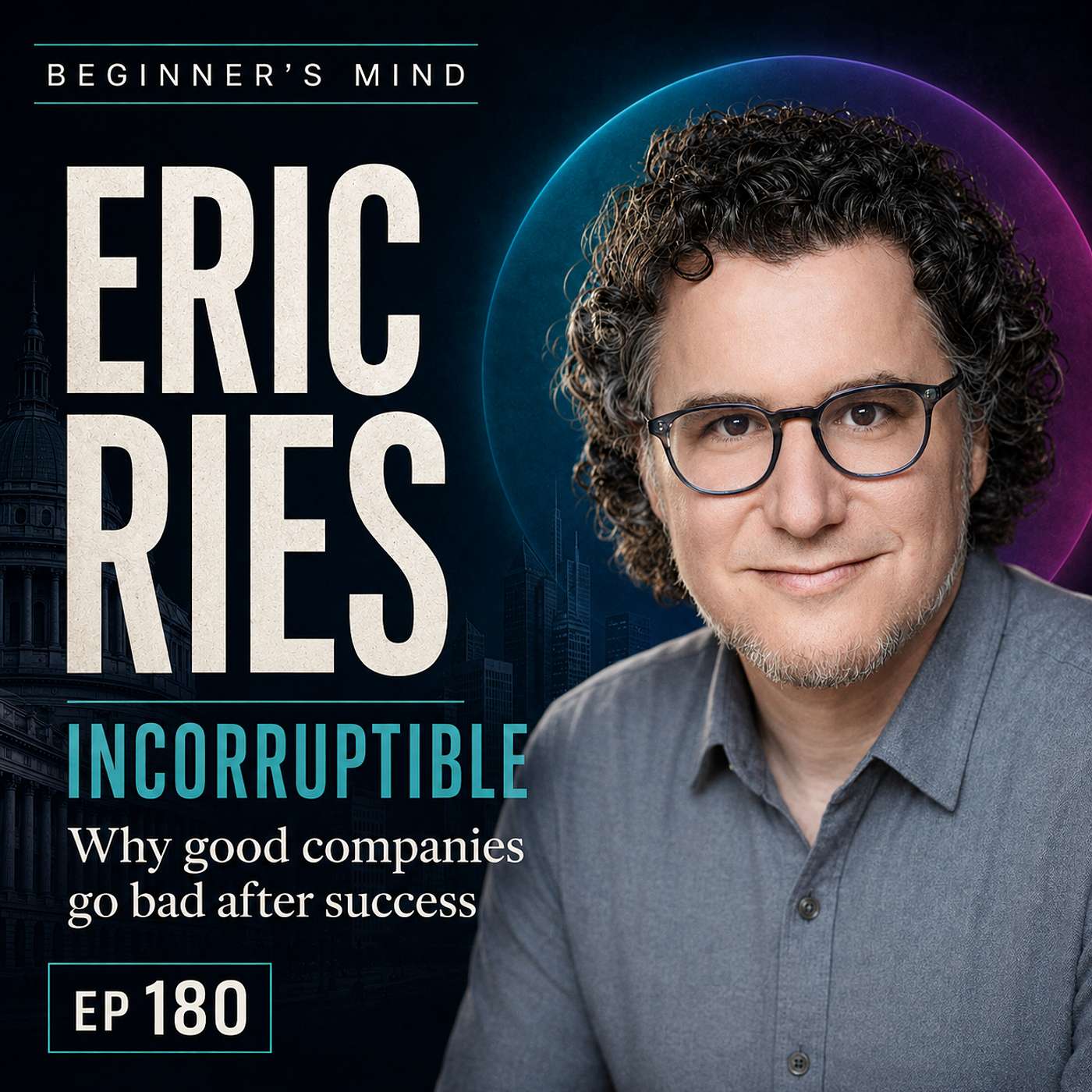
    EP 180: Eric Ries | Why Good Companies Go Bad After Success

    What happens when the moment a company finally succeeds is the moment it becomes most likely to be destroyed? Most founders assume the market rewards the better product and protects what they built. The legal reality runs the other way. The dominant theory of the corporation treats a company as a financial instrument designed to enrich its shareholders, and treats everything else as optional. That theory has a name, shareholder primacy, and nobody voted for it. It hardened in courtrooms and boardrooms about forty years ago. Founders sign it into their own charter on day one without reading the line, and by the time the gap between the mission statement and the legal purpose becomes visible, the exit has been engineered. Eric Ries, founder of the Long-Term Stock Exchange and author of The Lean Startup, explains how corporate purpose disappeared out of the legal documents and what can be put back in its place. He shows why protection alone makes an extractive company worse, why independent directors are not neutral, and why a mission guardian belongs above the board rather than inside it. Beginning with the pattern he watched destroy company after company, the conversation becomes a practical guide to governance: the three-legged stool of 19th century corporate law, what actually killed Sears, why Novo Nordisk, Patagonia, IKEA and Grundfos outlive their competitors, and how the Public Benefit Corporation restores something far older than it looks. It ends on the question neither of us could fully answer. If a guardian protects the mission, who guards the guardian? WHAT LISTENERS CAN EXPECT TO LEARN Why shareholder primacy is a recent legal theory rather than a permanent feature of capitalism How the phrase "any lawful act or activity" removed purpose from corporate charters, and what quietly replaced it Why structure protects an ethos but cannot create one, and what has to be real before the protection is added How industrial foundations, purpose trusts and public benefit corporations keep a mission alive across generations Why independent directors have incentives of their own, and what to look for in a board instead BEST QUOTES (00:04:10) "A company is just a financial instrument, designed to enrich itself and its shareholders." — Eric Ries (00:14:12) "If you go to your local park, you'll find trees older than shareholder primacy." — Eric Ries (00:25:28) "Somebody took over Sears and managed to extract for himself $1.5 billion, at a time when the company lost $11 billion." — Eric Ries (00:40:09) "Who would you rather die than betray?" — Eric Ries (00:48:12) "Being a leader is much more like being a mother than a slave owner. We birth these things. We do not own them." — Eric Ries TIMESTAMPS (00:00:00) Why Good Companies Go Bad After Success (00:02:43) What Made Eric Ries Write Incorruptible (00:04:10) A Company Is Just a Financial Instrument (00:07:03) The Pill You Swallow and the Shareholder Calculation (00:15:48) The Three-Legged Stool of Corporate Law (00:19:31) How "Any Lawful Act or Activity" Erased Purpose (00:25:28) What Actually Happened to Sears (00:30:38) Stainless Steel for Organizations That Last (00:34:39) Why Foundation-Owned Companies Outlive the Rest (00:37:59) The Public Benefit Corporation Explained (00:44:40) Why Every Company Needs a Mission Guardian (00:50:22) Why Independent Directors Are Not Neutral (00:53:11) Who Guards the Mission Guardian (00:56:18) What AI Changes for Governance (00:59:58) Closing Thoughts Eric's book, Incorruptible: https://amzn.to/3S4n4BN If you'd like to keep talking about these topics, you're welcome to join Eric's free Incorruptible community here: https://community.incorruptible.co/ Follow Beginner's Mind for long-form conversations on leadership, capital, technology, and the people shaping what comes next. Ranked in the global top 10% of all podcasts, named #1 Deep Tech Podcast in 2025, and #8 Deep Tech Podcast in 2026 Send us Fan Mail Join Christian Soschner for expert coaching. 50% Off - With 35+ years in deep tech, startups/scaleups, and public companies, Christian offers power video sessions. Elevate strategy, execution, and leadership. Book Now. Support the show Join the Podcast Newsletter: Link

    • Transcript
  • S7 · E12
    July 25 · 2 hr 19 min

    EP 179: Joško Bobanović | Why Venture Capital Fights Human Instinct

    What happens when the instinct to help a struggling company is exactly what prevents the strongest companies from succeeding? Venture capital forces investors to make decisions that can feel deeply uncomfortable: stop rescuing the weakest, concentrate scarce capital behind the most promising, and accept that most investments will fail. Deep tech intensifies this conflict. Investors must commit capital while the technology remains unproven, customers are still uncertain and the eventual exit may be more than a decade away. The wrong team, an inflated valuation or a fund timeline that does not fit the technology can destroy an otherwise promising company. Joško Bobanović, Partner at Sofinnova, explains how experienced investors make these decisions without ever receiving complete information. He reveals why people matter more than patents, why founders must start selling before they have a product and why investors should support management from the back seat—without trying to drive the company themselves. Beginning with a destructive storm Joško predicted but could not prevent, the conversation develops into a practical guide to risk, patience and capital allocation. It also confronts Europe’s central deep-tech challenge: the continent produces exceptional science, but without sufficient scale-up capital, specialist investors and corporate buyers, much of the value will be created elsewhere. WHAT LISTENERS CAN EXPECT TO LEARN Why successful venture investing requires resisting the instinct to rescue struggling portfolio companies How investors make consequential decisions with partial information—and recognize when it is time to stop researching Why the team, storytelling and customer conversations can matter more than exceptional technology alone How inflated valuations, ten-year fund structures and limited exit opportunities affect deep-tech companies What Europe must change to scale its best companies instead of watching them industrialize elsewhere BEST QUOTES (00:20:04) “The nature of venture capital decisions is very counter to human instincts.” — Joško Bobanović (00:41:05) “Investment in a startup is like a marriage that is predetermined with a divorce at some point in time in the future.” — Joško Bobanović (00:54:25) “Nothing validates what you’re doing better than cash.” — Joško Bobanović (00:57:35) “A B team will probably destroy exceptional technology, but an A team will make a success even of average technology.” — Joško Bobanović (01:56:22) “Otherwise we become a museum. And I don’t think we want to be a museum.” — Joško Bobanović TIMESTAMPS (00:00:00) Why Venture Capital Fights Human Instinct (00:03:08) The Storm Joško Predicted but Could Not Stop (00:09:11) How the Early Internet Changed Access to Opportunity (00:16:49) If You Do Not Play, You Cannot Win (00:20:04) Why Investors Must Resist the Rescue Instinct (00:29:33) Scientists Must Learn to Decide with Partial Information (00:35:58) Can Founders Make Themselves Replaceable? (00:41:05) A Marriage with a Predetermined Divorce (00:47:45) Why Storytelling Is a Critical Deep-Tech Skill (00:52:03) Start Selling from Day One (00:57:03) Why Venture Capital Is a People Business (01:00:11) Investors Belong in the Back Seat (01:10:50) Better Decisions Require Broader Comparisons (01:18:00) When a Higher Valuation Becomes Dangerous (01:27:15) Why Every Venture Investment Needs 10× Potential (01:37:29) Deep Tech’s Missing Exit Opportunities (01:45:05) Why VCs See IPOs as a Necessary Evil (01:52:49) Europe’s Scientific Strength and Scale-Up Weakness (02:05:01) What Europe Gets Wrong About Failure (02:13:13) Get Involved Instead of Complaining from the Sidelines Follow Beginner's Mind for long-form conversations on leadership, capital, technology, and the people shaping what comes next. Ranked in the global top 10% of all podcasts, named #1 Deep Tech Podcast in 2025, and #8 Deep Tech Podcast in 2026 Send us Fan Mail Join Christian Soschner for expert coaching. 50% Off - With 35+ years in deep tech, startups/scaleups, and public companies, Christian offers power video sessions. Elevate strategy, execution, and leadership. Book Now. Support the show Join the Podcast Newsletter: Link

    • Transcript
  • S7 · E11
    July 12 · 56 min

    #178 - The Elon Musk Method: 7 Rules for Building What the Market Thinks Is Impossible

    How can a company have the right numbers and still reach the wrong strategic conclusion? In 2017, Volkswagen’s chief executive mocked Tesla as one of the “world champions of big announcements.” At the time, Volkswagen sold roughly eleven million cars a year, while Tesla sold fewer than eighty thousand. The facts supported the criticism, but the conclusion missed the change already underway. That moment explains why Elon Musk remains worth studying. Most public discussion focuses on his personality, political views, wealth, or communication style. This episode takes a different approach and examines the methods that allowed him to enter industries dominated by governments and large corporations, pursue ideas that initially appeared uneconomic, and force entire markets to reconsider what could be built. The starting point is Eric Jorgenson’s The Book of Elon, which brings together more than two decades of Musk’s interviews, speeches, podcasts, and public writing. Jorgenson has already done the first stage of the work by reducing a vast archive to the statements that best explain how Musk thinks about purpose, engineering, talent, production, and company building. Because the book is itself a quote summary, I treated it as raw material rather than as a conventional biography. I selected seven recurring principles and tested them against more than 25 years of my own company-building experience. That includes six years in public-market M&A and two decades building biopharma and medtech companies from Series A toward IPO across more than seven company journeys. I also draw on several Musk biographies, years of long-form podcast interviews, and his public writing on X. The result is not another biography, and it is not an argument that every founder should copy Elon Musk. It is a practical framework for founders, CEOs, board members, investors, scientists, and senior executives who build or finance hard companies. The central question is straightforward: What can you copy from Elon Musk without copying the personality? The episode examines why utility matters more than glory, why important companies often have to build before market permission arrives, and how first-principles thinking exposes opportunities that remain hidden when an industry accepts precedent as fact. It also explains why strong teams delete complexity before they automate it, why positive-sum founders enlarge markets instead of fighting over a fixed share, and why talent density matters more than headcount. The final principle brings everything together. A prototype may attract attention and capital, but the company only creates lasting value when it can produce, learn, improve, and scale faster than its competitors. This distinction matters in life sciences and deep tech, where strong science can still fail during translation. A molecule may work while manufacturing, clinical execution, reimbursement, financing, or commercialization remain underdeveloped. The same problem appears in industrial technology, energy, AI, and robotics, where an impressive demonstration can conceal a production system that will never support scale. Three statements from the book frame the discussion: “How many people you helped, and how much. That’s the total utility.”“The most common mistake of smart engineers is to optimize a thing that should not exist.”“What really matters is the machine that builds the machines, the factory.” Taken together, the seven principles form a founder test. For investors, they provide a structured way to assess mission, judgment, cost discipline, team quality, and the ability to scale. For company builders, they offer practical questions that belong in financing discussions, board meetings, and leadership offsites. Are you building something useful enough to change customer behavior? Does the team reason from fundamental constraints, or does it repeat the industry’s assumptions? Are you simplifying the company, or automating bureaucracy? Can the organization turn promising technology into a repeatable system that produces real customer value? Whatever your opinion of Elon Musk, dismissing the method because you dislike the man can become an expensive mistake. The personality remains optional, while the principles deserve serious examination. Choose one of the seven and bring it into your next board meeting. Chapters (00:00) Introduction: Why the market keeps underestimating Elon Musk (03:31) The Big Idea (08:13) Eric Jorgenson and why he is the right author (10:47) Lesson 1: Build for Utility, Not Glory (16:39) Lesson 2: Missionary Courage Beats Market Permission (21:28) Lesson 3: First Principles Reveal Hidden Upside (25:59) Lesson 4: The Algorithm: Delete Before You Optimize (31:09) Lesson 5: Grow the Pie: Reject Zero-Sum Thinking (35:57) Lesson 6: Talent Density Is the Company (40:54) Lesson 7: Production and Speed Are the Real Moat (45:46) The Seven Practical Takeaways (51:55) Personal Reflection, Critique, and Closing Send us Fan Mail Join Christian Soschner for expert coaching. 50% Off - With 35+ years in deep tech, startups/scaleups, and public companies, Christian offers power video sessions. Elevate strategy, execution, and leadership. Book Now. Support the show Join the Podcast Newsletter: Link

    • Transcript
  • S7 · E10
    June 22 · 1 hr 43 min

    EP 177: Alberto Chalon | Liquidity Before the IPO Window Opens

    Private companies are staying private longer, and that changes who gets liquidity, when, and why. Founders, employees, and early investors can wait a decade or more for an IPO or acquisition. Meanwhile, venture funds face growing pressure to return capital, and many of Europe's best companies struggle to access the growth capital needed to scale. In this conversation, Christian Soschner speaks with Alberto Chalon, Co-Founder of Giano Capital, about the rise of single-asset secondary investments and why they have become an important part of the European innovation ecosystem. Topics include: • What secondary transactions are and why they matter • Why many companies now stay private far longer than before • How founders, employees, and early investors can access liquidity before an exit • The differences between venture capital, private equity, and late-stage secondary investing • Europe's challenge with risk capital, fragmentation, and scaling companies • Lessons from investments such as Revolut, GetYourGuide, and Deliveroo • The role of resilience, sport, and long-term thinking in business and investing Alberto also shares his personal journey from entrepreneurship and building businesses with his brother to launching Giano Capital and creating a new asset class focused on late-stage technology investments. 5 OUTSTANDING QUOTES / LESSONS 1. "Failure in America is part of the learning process. In Europe, failure is a disaster." Lesson: Europe's challenge may be cultural as much as financial. 2. "The due diligence is the beginning of the journey, not the end." Lesson: Great investors keep working after the deal closes. 3. "Everything has to be already tested before we invest." Lesson: Giano seeks to eliminate execution risk before investing. 4. "The loneliness of the entrepreneur is real. I lived that." Lesson: The best investors bring empathy, not only capital. 5. "You need to reach the top, and then you have the descent." Lesson: Investing and endurance sports both reward patience and resilience. TIMESTAMPS (00:00:00) Intro (00:03:00) Why secondaries suddenly matter (00:07:19) Why IPOs are no longer enough (00:12:44) Where Giano fits between VC and PE (00:17:06) Why private information changes returns (00:21:41) How Giano helps founders beyond capital (00:26:19) Not pre IPO but three years earlier (00:31:23) Europe must think beyond countries (00:37:56) Alberto Chalon on loss and entrepreneurship (00:42:12) From search engines to professional investing (00:46:21) How fashion arbitrage shaped his investing (00:53:47) Building a privacy search engine in Europe (01:00:51) Ruthless focus without forcing others (01:07:38) What late-stage governance requires (01:11:50) Why Giano chose late-stage secondaries (01:15:32) Inside Giano Capital's deal funnel (01:19:07) Why community matters in secondaries (01:24:29) GetYourGuide and Revolut as examples (01:27:29) How long a secondary deal takes (01:29:11) Cycling as leadership training (01:36:23) Giano Capital's ten-year ambition Send us Fan Mail Join Christian Soschner for expert coaching. 50% Off - With 35+ years in deep tech, startups/scaleups, and public companies, Christian offers power video sessions. Elevate strategy, execution, and leadership. Book Now. Support the show Join the Podcast Newsletter: Link

    • Transcript
    • Chapters
  • S7 · E9
    May 25 · 25 min

    Alasdair Milton, KPMG | Why Precision Medicine Still Fails Patients (SPARK20 – 168)

    Only one in three eligible lung cancer patients receives the targeted therapy they should get. That is not a failure of science. It is a failure of delivery. After more than two decades of precision oncology, biopharma has never had better tools: cell and gene therapy, in vivo CAR-T, antibody-drug conjugates, AI-enabled diagnostics, organoids, multi-omics, and global clinical data. Yet too many breakthroughs still fail to reach the bedside. Patients fall through fragmented systems. Data does not move cleanly. Community oncologists are overloaded. Tests are missed, delayed, or misread. Promising assets die in quarterly portfolio reviews. And healthcare systems built for pills, tablets, and chronic disease management are now being asked to deliver personalized medicine at scale. In this SPARK20 highlight episode, Alasdair Milton, PhD, Principal at KPMG and leader of the firm’s Precision & Advanced Therapies practice, explains why the future of biopharma will not be decided by science alone. It will be decided by translation. From lab bench to boardroom. From data to decisions. From treatment to prevention. Alasdair brings more than 20 years of experience across life sciences strategy, commercial due diligence, precision medicine, advanced therapies, cell and gene therapy, biopharma M&A, diagnostics, and global healthcare transformation. This conversation moves from the precision medicine delivery crisis to China’s biotech acceleration, from AI and organoids to trapped pharma assets, from lifelong wellness to the one skill every future biotech leader needs: The ability to translate complex science into business strategy, capital allocation, and patient impact. What You’ll Learn in 22 Minutes Why only one third of eligible lung cancer patients receive targeted therapy (00:01:53) And why precision medicine still breaks in everyday clinical practice. Why science keeps compounding even when systems fail (00:04:33) Including in vivo CAR-T, functional cures, gene therapy, and antibody-drug conjugates. Why innovation does not move in a straight line (00:05:20) How technologies can look dead for years before suddenly changing the market. Why China’s biotech speed matters (00:07:36) How AI, organoids, scale, and execution are changing the global innovation map. Why great science dies inside Big Pharma (00:09:20) And how deprioritized assets can become billion-dollar companies when externalized properly. Why the industry must move from sickness to lifelong wellness (00:10:03) Alasdair’s vision for a more proactive, preventive, data-driven healthcare system. Why pharma needs better ways to rescue shelved assets (00:13:06) Including examples such as SpringWorks, Cerevel, and new models for unlocking trapped value. How a 400-person Scottish island shaped Alasdair’s worldview (00:15:07) The personal story behind his resilience, discipline, and leadership style. Why careers and companies are never linear (00:17:19) What Alasdair learned after moving to Boston and losing his role within weeks. Why the future belongs to translators (00:20:06) The most valuable skill in biotech: explaining complex science to business leaders, investors, and boards. How to connect with Alasdair Milton and the KPMG Precision & Advanced Therapies team (00:21:47) Quotes to Carry With You 📌 “We’ve been doing precision medicine in lung cancer for decades, over two decades, and we’re still not getting it right.” (00:01:53) 📌 “This is where this incredible world of genomic science bumps up against the realities of everyday clinical practice.” (00:03:31) 📌 “When I was doing my PhD 28 years ago, the idea that you could even have a targeted cell therapy was almost like science fiction.” (00:04:41) 📌 “The speed was just astonishing.” (00:07:47) 📌 “We’ve been a sickness industry. We’ve treated disease, chronic disease. But can we move more towards lifelong wellness and preemptive health?” (00:10:03) 📌 “There’s not a systematic way to collect all of the incredible science and incredible assets that go on the shelf every quarter.” (00:13:06) 📌 “There’s great science that never sees the light of day because it’s killed in a quarterly portfolio review.” (00:15:00) 📌 “Your career is never linear.” (00:17:19) 📌 “You have to be able to build the bridge between the lab and the business world.” (00:20:06) Why This Conversation Matters Precision medicine is often described as the future of healthcare. But the future does not arrive because the science is ready. It arrives when diagnostics, data, reimbursement, clinical workflows, manufacturing, capital, leadership, and incentives finally work together. That is the real challenge now facing biopharma. Not whether innovation can happen. It already is. The question is whether leaders can build the systems that allow innovation to reach patients. Alasdair Milton is one of the rare voices who can explain that challenge across science, strategy, capital, and execution. If you are a founder, investor, operator, scientist, board member, policymaker, or family office looking at the future of biotech, precision medicine, advanced therapies, pharma M&A, AI in healthcare, or China’s rise in biopharma, this episode is worth your time. 👉 Listen now. Share it with someone building the future of medicine. Follow Beginner’s Mind for more conversations with the people shaping biotech, capital, and healthcare. Topics: precision medicine, biopharma, biotech, KPMG, Alasdair Milton, cell and gene therapy, in vivo CAR-T, targeted therapy, lung cancer, oncology, AI in healthcare, organoids, China biotech, pharma M&A, SpringWorks, Cerevel, advanced therapies, diagnostics, translational science, venture capital, healthcare strategy. Send us Fan Mail Join Christian Soschner for expert coaching. 50% Off - With 35+ years in deep tech, startups/scaleups, and public companies, Christian offers power video sessions. Elevate strategy, execution, and leadership. Book Now. Support the show Join the Podcast Newsletter: Link

    • Transcript
  • S7 · E8
    May 17 · 1 hr

    #176 - Why Smart People Say Yes: 7 Lessons from Influence by Robert Cialdini

    Some books explain how the world works. Influence explains why people move. Why someone takes the meeting. Why an investor leans in. Why a customer trusts. Why a team follows. Why a board stays stuck. Why a founder keeps defending a decision that stopped making sense months ago. Robert Cialdini’s Influence: The Psychology of Persuasion is one of those books that becomes more valuable the longer you build, invest, sell, negotiate, hire, and lead. Because at some point, you realize something uncomfortable: Most decisions are not made after perfect analysis. They are made under pressure. With incomplete information. With too many options. Too little time. And a nervous system looking for shortcuts. That is where Cialdini’s work becomes powerful. He shows that human beings rely on recurring decision triggers: reciprocation, liking, social proof, authority, scarcity, commitment and consistency, and unity. These are not tricks. They are part of the operating system of human behavior. And if you build or invest in companies from Series A to IPO and beyond, these forces are everywhere. They show up in fundraising. In sales. In hiring. In pricing. In board meetings. In investor updates. In partnerships. In leadership. And in the quiet signals people read before they ever say yes or no. A founder can have the better product and still lose because nobody trusts the signal. A CEO can have the right strategy and still fail because the team never feels real unity. An investor can see the data and still follow the crowd because social proof feels safer than independent judgment. A service provider can have rare expertise and destroy their own value by being too available. A board can keep supporting a flawed decision because everyone wants to stay consistent with what they already said. That is why this book matters. Not because it teaches manipulation. But because it teaches respect for human nature. The best builders do not work against psychology. They work with it. They understand that a small act of generosity can open a door. That people need to like you before they seriously negotiate with you. That visible proof often matters before deep proof gets examined. That authority begins before you speak. That scarcity protects value. That commitment can create momentum — or trap you. And that the strongest companies often feel less like transactions and more like “we.” In this episode, I translate Cialdini’s seven principles into practical lessons for founders, CEOs, investors, and operators building companies in the real world. Not as abstract psychology. As boardroom practice. As fundraising practice. As sales practice. As leadership practice. As reputation practice. And as a defense system against being influenced by people who understand these principles better than you do. What We Cover Reciprocation Why small, right-sized generosity works better than aggressive asking. Liking Why manners, presence, and positive repeated contact still matter more than most people admit. Social Proof Why people judge you by the company you keep — and why markets often follow visible signals before they examine fundamentals. Authority Why titles, suits, posture, calmness, and credibility shape decisions before logic enters the room. Scarcity Why unlimited availability destroys value — and why thoughtful limits can increase demand. Commitment and Consistency Why small yeses become large decisions, and why founders must learn to ask: “Knowing what I know now, would I still choose this?” Unity Why the deepest form of influence is not persuasion, but the feeling that “we are in this together.” Timestamps (00:00) Introduction (02:05) Big Idea – Instant Influence: Primitive Consent for an Automatic Age (05:35) Author’s Background (07:38) Reciprocation – The Old Give and Take… and Take (13:34) Liking – The Friendly Thief (18:55) Social Proof – Truths Are Us (24:41) Authority (32:10) Scarcity – The Rule of the Few (38:00) Commitment and Consistency – Hobgoblins of the Mind (45:00) Unity – We-Ness and the Power of Shared Identity (51:19) Key Takeaways (53:53) Personal Reflection (56:18) Final Words Why This Episode Matters If you raise capital, this episode helps you understand why investors lean in before they fully understand the deck. If you sell, it helps you see why trust is often built before the formal pitch begins. If you lead, it helps you design cultures where people commit because they identify with the mission, not because they were told to comply. If you invest, it helps you protect yourself against false signals: fake authority, fake scarcity, fake social proof, and beautifully packaged nonsense. And if you build companies, it reminds you of something simple: Human nature is not a side issue. It is the terrain. The best founders, investors, and leaders learn to read it. Because capital does not move only toward logic. People do. Send us Fan Mail Join Christian Soschner for expert coaching. 50% Off - With 35+ years in deep tech, startups/scaleups, and public companies, Christian offers power video sessions. Elevate strategy, execution, and leadership. Book Now. Support the show Join the Podcast Newsletter: Link

    • Transcript
    • Chapters
  • S7 · E7
    April 25 · 1 hr 56 min

    EP 175: Stefanie Schubert | Why Smart People Lose Negotiations Before They Start

    Most leaders think negotiation begins when both sides sit down to talk numbers. By then, trust, incentives, timing, internal alignment, and first impressions have already shaped the outcome. That is why smart founders, executives, investors, and board members can have the right facts and still walk away with the wrong result. In this episode of Beginner’s Mind, Stefanie Schubert explains why negotiation is not a last-minute performance at the table. It is a leadership capability that starts much earlier, in the way people prepare, build trust, frame value, listen, manage emotions, and understand what the other side truly needs. Stefanie is a Professor of Economics at SRH University Heidelberg, a Negotiation Advisor, Keynote Speaker, and ICF-certified Executive Coach. Her work combines behavioral economics, game theory, negotiation, executive coaching, and real-world business practice, with experience in complex business environments, alliance management, and biopharma. This conversation moves from the practical to the profound: why intelligent people still make weak decisions, why preparation often matters more than persuasion, why pushing people creates resistance, how ballroom dancing explains negotiation better than many textbooks, and why investors, scientists, founders, and corporate leaders often speak past each other without realizing it. We also explore John Nash, A Beautiful Mind, first offers, anchoring, emotional decision-making, AI-driven profiling, trust in virtual environments, and why rejection in fundraising is not necessarily the end of the negotiation. As Stefanie puts it: (01:50:33) “You bring in something. It’s not that you beg for money with the investor.” That may be the core lesson of the episode. Good negotiation is not domination. It is not theatre. It is not a bag of tricks. It is the discipline of understanding value, shaping the game, and entering the room with enough clarity to build something useful with another person. Selected moments (00:00:00) Why smart people lose negotiations early (00:04:24) Negotiation starts before the table (00:07:57) Why smart people still decide poorly (00:13:25) Influence creates value not manipulation (00:18:21) Human shortcuts quietly kill opportunities (00:25:08) Ballroom dancing reveals negotiation resistance (00:28:44) Active listening creates leadership leverage (00:34:06) Authenticity beats dominance in leadership (00:37:05) How to de-escalate emotional negotiations (00:45:05) Game theory without mathematical intimidation (00:52:57) A Beautiful Mind and collaboration traps (01:00:47) First offers and anchoring pressure (01:06:37) Internal alignment before external negotiation (01:12:25) Why emotions can be rational (01:17:20) Fast thinking versus sustainable judgment (01:32:25) AI profiling can poison first impressions (01:40:59) Trust building before formal deals (01:45:04) Why investor rejection is not final (01:47:24) Designing negotiations from first contact (01:48:11) Create value before dividing value (01:50:28) Confidence before asking for capital Follow Beginner’s Mind for long-form conversations on leadership, capital, technology, negotiation, and the people shaping what comes next. Send us Fan Mail Join Christian Soschner for expert coaching. 50% Off - With 35+ years in deep tech, startups/scaleups, and public companies, Christian offers power video sessions. Elevate strategy, execution, and leadership. Book Now. Support the show Join the Podcast Newsletter: Link

    • Transcript
    • Chapters
  • S7 · E6
    April 11 · 2 hr 5 min

    EP 174: Wanwipa Siriwatwechakul | Funding the Next Industrial Era

    Most people still treat climate solutions as a cost. Wanwipa Siriwatwechakul argues that this is exactly why so many leaders miss the real opportunity. The next industrial era will not be built by patching old systems, but by redesigning them from the ground up. In this episode of Beginner’s Mind, Wanwipa explains why industrial decarbonization is not mainly about sacrifice, compliance, or adding expensive fixes to yesterday’s infrastructure. It is about building better systems, stronger companies, and entirely new categories of value creation. A chemical engineer trained at MIT and Princeton, former professor, and Partner at Vectors Capital, Wanwipa works at the intersection of climate tech, synthetic biology, industrial innovation, and early-stage venture capital. Her perspective is grounded in both science and scale: what matters is not only whether a breakthrough works in the lab, but whether it can survive the journey from one gram to one ton, from prototype to product, from curiosity to adoption. We talk about why the strongest climate companies redesign industries instead of decorating old ones, why synthetic biology is emerging as a new industrial toolkit, how startups like Huue Bio, Ingrediome, and Solidec reveal very different scale-up strategies, and why the best founders treat breakthroughs as hypotheses to test rather than theories to defend. As Wanwipa puts it: (01:57:02) “See climate solutions not as cost, but as funding the next industrial era.” What you’ll hear in this episode Why decarbonization becomes far more powerful when industries are redesigned, not merely optimized How synthetic biology can replace toxic, waste-heavy industrial chemistry with cleaner production models Why great science is only the starting point, and why scale is where most companies really live or die What founders can learn about resilience, coachability, timing, and relentless customer discovery How climate tech can create competitive advantage, new revenue streams, and distributed industrial resilience Why Southeast Asia may become a powerful region for the next wave of climate and bioindustrial growth Selected moments (00:00:56) From Professor to Climate Tech Venture Capital (00:09:27) Why Climate Change Became Personal in Thailand (00:14:11) From Pure Discovery to Real Market Impact (00:23:00) Decarbonization by Redesigning Industry (00:30:06) The Climate Tech Mistake Costing Investors Money (00:34:17) Solidec and the Future of Distributed Manufacturing (00:38:50) Why Big Companies Resist Industrial Reinvention (00:46:21) How Great Founders Turn Pivots Into New Markets (00:50:50) Customer Discovery in Deep Tech and Climate Startups (00:53:08) Great Science Must Become Products People Use (01:00:39) Synthetic Biology as the New Industrial Toolkit (01:10:15) How Climate Startups Find Early Adopters (01:13:19) Founder Resilience and the Stomach of Steel (01:21:15) Venture Capital and the Crucial Why Now (01:57:02) Climate Solutions as Funding the Next Industrial Era Follow the show for more long-form conversations on technology, capital, leadership, and the people shaping what comes next. Send us Fan Mail Join Christian Soschner for expert coaching. 50% Off - With 35+ years in deep tech, startups/scaleups, and public companies, Christian offers power video sessions. Elevate strategy, execution, and leadership. Book Now. Support the show Join the Podcast Newsletter: Link

    • Transcript
    • Chapters
  • S7 · E5
    March 28 · 1 hr 3 min

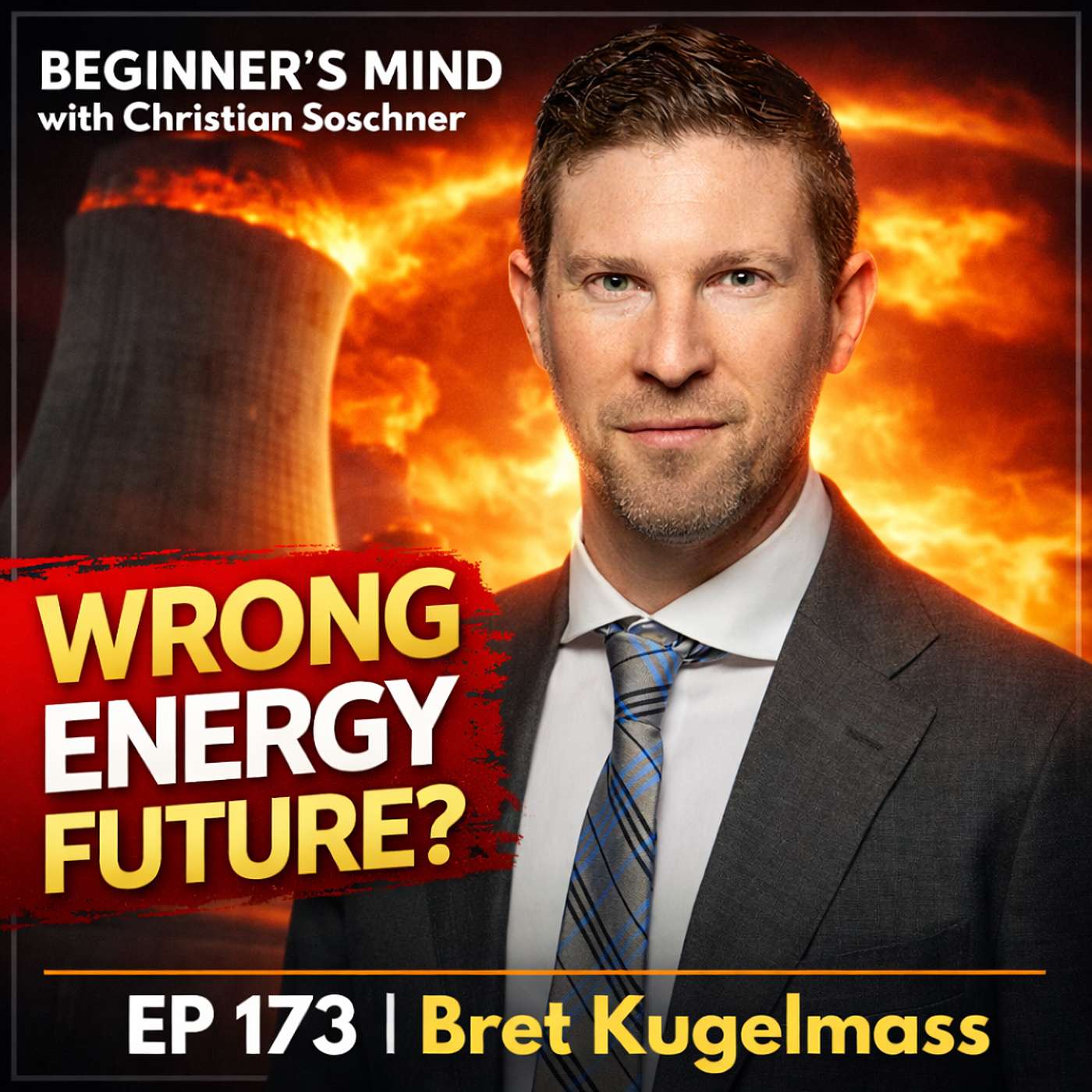
    EP 173: Bret Kugelmass | The West Bet on the Wrong Energy Future

    Power demand is rising faster than the systems meant to support it. AI, electrification, and industry all need stable energy, but the dominant story sold to the public was far simpler than reality. In this episode, Bret Kugelmass explains why the real bottleneck was never just climate ambition, but how the West misunderstood energy itself. For years, nuclear was framed as too dangerous, too slow, too expensive, and politically untouchable. Meanwhile, electricity demand kept rising, industrial resilience became strategic again, and the gap between energy ambition and physical reality widened. This conversation gets underneath the narrative. (Recorded November 2023) Bret Kugelmass, Founder and CEO of Last Energy, argues that the nuclear debate was never only about science or safety. It was also about incentives, regulation, public perception, delivery models, and the failure to distinguish what is inherent to the technology from what is imposed by the system around it. Drawing on his path from Silicon Valley entrepreneurship into deep energy infrastructure, Bret explains why he believes the West solved for the wrong variables, why wind and solar alone cannot carry modern industrial societies in many regions, and why the real breakthrough in nuclear may not come from reinventing the reactor, but from reinventing how power plants are built, sold, and deployed. As he puts it: (00:33:11) “Solve the wrong problem brilliantly and you’ll be the only one who cares.” This episode is not just about nuclear energy. It is about first-principles thinking, product-market fit in deep tech, and the kind of contrarian founder logic required to build where politics, infrastructure, and capital collide. What You’ll Learn in This Episode 1️⃣ Why Bret says the West misunderstood the real energy bottleneck 2️⃣ Why net zero may be the wrong framing for climate ambition 3️⃣ What most people still get wrong about nuclear waste, safety, and Fukushima 4️⃣ Why nuclear’s real challenge is cost and construction, not physics 5️⃣ How Last Energy reframed the business by selling electricity, not reactors 6️⃣ What founders can learn from solving the right problem before scaling Selected Timestamps (00:04:29) Introduction (00:04:29) Defining climate goals beyond net zero (00:13:46) Bret discovers nuclear mission and truth (00:19:44) Chernobyl versus Fukushima what truly matters (00:21:39) Nuclear's unmatched physics for abundant energy (00:30:08) Ideal world nuclear plants in 18 months (00:36:02) Solving the right problem before building (00:42:58) First principles simplicity as Last Energy’s edge (00:51:16) Securing 30 billion through true product market fit (00:54:05) Last Energy vision for tens of thousands of gigawatts (00:56:12) Taking ultimate responsibility to drive massive global progress 🎙️ Beginner’s Mind Top 10% globally. Conversations for founders, investors, executives, and policymakers shaping biotech, deep tech, energy, and industrial transformation. Follow the show for more long-form conversations on technology, capital, and the people building what the future will actually run on. Send us Fan Mail Join Christian Soschner for expert coaching. 50% Off - With 35+ years in deep tech, startups/scaleups, and public companies, Christian offers power video sessions. Elevate strategy, execution, and leadership. Book Now. Support the show Join the Podcast Newsletter: Link

    • Transcript
    • Chapters
  • S7 · E4
    March 8 · 59 min

    #172 - Fast Forward Thinking: Why Most Investments Fail — And How Elite VCs Think Differently

    Most investors think they’re rational. Most founders think they’re disciplined. Most boards think they’re strategic. They’re usually wrong. In this episode, we unpack Fast Forward Thinking by Luis Pareras — a physician turned deep-tech venture capitalist who distilled decades of investing under scientific uncertainty into 40 brutally structured rules. This is not a summary. It’s a decision upgrade for founders, operators, board members, and capital allocators navigating the high-stakes terrain from Series A to IPO and beyond — where bias compounds, capital misallocates, and timing determines survival. Across seven tightly structured lessons, we explore how elite investors actually think: Why consensus is often a red flag Why opportunity abundance demands ruthless selectivity Why the first meeting should never close Why innovation compounds through milestones — not miracles Why exit logic must exist from day one Why managing error asymmetry beats being “right” And why teams — not ideas — determine survival under pressure This episode translates Pareras’ venture logic into executive practice — with direct applications for capital allocation, hiring, governance, and strategic design. You’ll walk away with frameworks, sharper filters, and board-level questions that immediately improve judgment. Key Takeaways Bias Is the Silent Capital Killer Consensus feels safe. It often destroys upside. Selectivity Is Survival Abundance demands disciplined rejection. Curiosity Beats Closure The first meeting earns the second. Innovation Is Staged Breakthroughs are milestone-based progressions. Exit Thinking Is Structural Capital is deployed against time horizons. Error Asymmetry Shapes Returns Managing Type I and Type II errors defines long-term performance. Teams Outperform Ideas Execution discipline and cognitive flexibility win under uncertainty. Timestamps (00:00) Introduction (04:17) The Big Idea (08:33) Who Is Luis Pareras (12:03) Takeaway 1: Cognitive Bias Is the Hidden Enemy of Good Decisions (18:55) Takeaway 2: Deal Flow Is Abundant — Selectivity Is the Real Skill (24:16) Takeaway 3: The First Meeting Is Not About Closing (29:04) Takeaway 4: Innovation Is a Process (35:20) Takeaway 5: Exit Awareness Shapes Investment Logic (39:59) Takeaway 6: Error Types Matter More Than Individual Outcomes (44:38) Takeaway 7: Teams and Judgment Matter More Than Ideas (49:15) Key Takeaways: The Fast Forward Operating System (54:25) Personal Reflection and End Why Listen Upgrade how you evaluate opportunities — before committing capital. Sharpen how you structure innovation — before chasing breakthroughs. Design decision systems that reduce catastrophic error. And build organizations that survive uncertainty. If this episode sharpens your thinking: Follow the show. Share it with someone who allocates capital. And bring these questions into your next board meeting. Because in venture, public markets, and corporate strategy alike — returns are rarely accidental. Send us Fan Mail Join Christian Soschner for expert coaching. 50% Off - With 35+ years in deep tech, startups/scaleups, and public companies, Christian offers power video sessions. Elevate strategy, execution, and leadership. Book Now. Support the show Join the Podcast Newsletter: Link

    • Transcript
  • S7 · E3
    February 3 · 1 hr 6 min

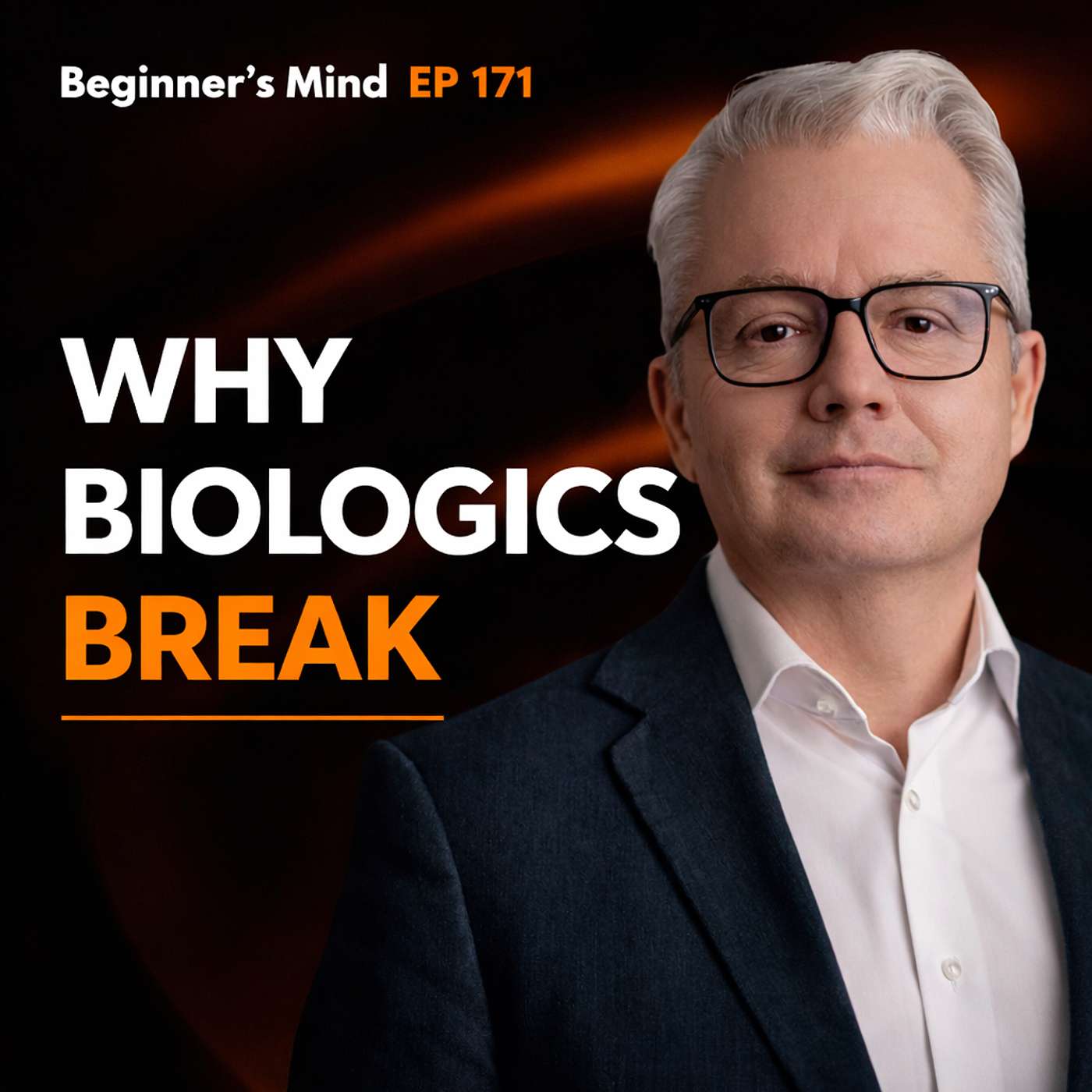
    EP 171 - Björn Cochlovius: Why Brilliant Biotech Breaks at Manufacturing

    Most biotech breakthroughs don’t fail in the lab. They fail when science meets manufacturing reality. And by the time this bottleneck appears, tens of millions are already sunk. This episode examines the most under-discussed failure point in modern biotech: the gap between scientific discovery and scalable, usable healthcare solutions. While science has never been stronger—and big pharma excels at market access—companies that can translate breakthrough biology into industrialized medicines remain rare. Manufacturing, regulation, clinical design, usability for patients and physicians, and global scalability still form a narrow bottleneck where most value is lost. In this conversation, Björn Cochlovius, CEO of Eleva, explains why so many promising biologics fail late—and how Eleva deliberately built a platform designed not to replace existing systems, but to rescue projects that would otherwise be abandoned. Drawing on decades across immunology, biotech leadership, and translational medicine, Björn offers a grounded, operator-level view on what it actually takes to move from elegant science to real-world impact. As he puts it: (00:28:59) “In biotech, courageous decisions often look wrong—until years later.” This discussion goes beyond manufacturing alone. It explores why turning scientific concepts into ready-to-deploy healthcare solutions—complete with clinical data, regulatory pathways, scalable production, and high usability—remains one of the hardest industrial challenges of our time. What You’ll Learn in This Episode 1️⃣ Why biologics often fail late—after science already worked 2️⃣ Why manufacturing is only one part of a deeper industrial bottleneck 3️⃣ How Eleva approaches risk when others walk away 4️⃣ Why courage, not optimization, drives breakthrough biotech decisions 5️⃣ How AI supports discovery—without replacing human judgment 6️⃣ What Europe gets right—and still gets wrong—about scaling biotech 🧭 Selected Timestamps (00:03:00) Why biotech breakthroughs fail at manufacturing (00:07:18) Three takeaways for founders and investors short on time (00:08:36) Why biologics production breaks at scale (00:11:41) Salvaging proteins that standard systems cannot produce (00:15:27) The hidden opportunity in “failed” proteins (00:17:21) Why late-stage manufacturing failure destroys value (00:19:35) Why Eleva builds its own pipeline, not just a platform (00:22:46) Glycosylation as a source of better efficacy (00:27:03) Courageous decisions when everyone else has failed (00:30:04) Risk management through parallel scientific bets (00:32:08) Why similar proteins behave differently in patients (00:37:08) AI as a tool, not a replacement for human judgment (00:41:02) Why humans must remain accountable in drug discovery (00:44:25) The tension between basic research and development (00:46:01) Managing the handover between scientific universes (00:50:38) The CEO’s real job: building teams smarter than yourself (00:53:11) Leadership humility and protecting the team (00:56:11) How leaders recharge under long-term pressure (00:59:13) Europe’s biotech bottleneck and why there is still hope (01:02:20) Final reflection: turning science into systems that scale 🎙️ Beginner’s Mind Top 10% globally. Conversations for founders, investors, executives, and policymakers shaping the future of biotech, deep tech, and healthcare. Follow the show for more episodes where science meets strategy—and leadership determines what actually scales. Send us Fan Mail Join Christian Soschner for expert coaching. 50% Off - With 35+ years in deep tech, startups/scaleups, and public companies, Christian offers power video sessions. Elevate strategy, execution, and leadership. Book Now. Support the show Join the Podcast Newsletter: Link

    • Transcript
  • S7 · E2
    January 25 · 1 hr 56 min

    EP 170 - Jim Pulcrano: Why Most Venture Capital Fails And What Europe Still Gets Wrong

    Nine out of ten startups fail, yet Europe keeps funding them the same way. Governments replace judgment with bureaucracy, capital replaces experience, and failure is misunderstood instead of learned from. This conversation exposes why venture capital is a profession, not a policy tool — and why getting this wrong quietly kills innovation. In this episode, Jim Pulcrano, Adjunct Professor at IMD and longtime venture investor, explains why most venture capital systems fail before capital is even deployed. Drawing on four decades across Silicon Valley, Europe, and academia, Jim dismantles the myth that VC success comes from spreadsheets, credentials, or government programs. Instead, he shows why pattern recognition, lived experience, and exposure to failure are the real differentiators. As Jim puts it: (01:13:27) “Silicon Valley is the world’s capital of failure — and also the capital of learning.” That mindset difference explains why Europe struggles to scale founders, why governments unintentionally create zombie companies, and why operators consistently outperform theorists when backing the next generation of companies. This is not a motivational episode. It’s a structural diagnosis of how innovation ecosystems actually work — and where Europe still gets in its own way. 💡 What You’ll Learn in This Episode 1️⃣ Why most venture capital fails long before money is invested 2️⃣ Why governments cannot replace judgment, experience, or risk-taking 3️⃣ Why operators outperform bankers as investors 4️⃣ Why failure is data — not stigma — in high-performing ecosystems 5️⃣ What Europe must change to unlock its next innovation cycle 👤 About Jim Pulcrano Jim Pulcrano is an Adjunct Professor at IMD with over four decades of experience across venture capital, entrepreneurship, and executive education. He has worked extensively in Silicon Valley and Europe, advising founders, investors, and institutions on scaling companies, leadership development, and venture capital as a professional discipline. 💬 Quotes (01:13:27) “Silicon Valley is the world’s capital of failure — and also the capital of learning.” (01:33:58) “You have to be there at midnight when you’re trying to make a decision on Sunday night.” (01:40:14) “I’ve never met a successful entrepreneur who hasn’t been weeks from running out of money.” (01:23:21) “A government purchase order is worth more than the same amount in cash.” 🧭 Timestamps (00:04:25) Why most startups fail — and why that’s not the real problem (00:09:55) Why Europe still misunderstands venture risk (00:16:42) Why founders matter more than ideas (00:24:13) Why governments create zombie startups (00:32:34) Why operator VCs outperform financial engineers (00:40:14) Failure as data, not disgrace (00:48:26) Why venture capital cannot be taught without simulation (01:04:48) What LPs should really look for in fund managers (01:19:46) Government as customer vs government as controller (01:30:10) Why young people should not rush into VC (01:32:38) Why empathy separates great investors from average ones (01:45:13) Leadership shifts from startup to scale-up (01:50:06) Three changes Europe must make now 🎙️ Beginner’s Mind Top 10% globally. The leading podcast for founders, investors, and policymakers shaping the future of biotech, deep tech, and innovation. Follow the show to explore more conversations like this one — where science meets strategy and leadership builds the future. Send us Fan Mail Join Christian Soschner for expert coaching. 50% Off - With 35+ years in deep tech, startups/scaleups, and public companies, Christian offers power video sessions. Elevate strategy, execution, and leadership. Book Now. Support the show Join the Podcast Newsletter: Link

    • Transcript
  • S7 · E1
    January 11 · 36 min

    EP 169 - Why New Year’s Goals Fail by February - Even for Disciplined People

    Most goals don’t fail because of laziness or lack of ambition. They fail quietly — buried under daily noise, competing priorities, and forgotten intentions. By March, even the most meaningful goals have slipped down the list… replaced by urgency, meetings, and excuses. In the last years, whenever I work with companies or people in my executive coaching a pattern showed up frequently. In private life: marathons abandoned, educations postponed, mountains left unclimbed. In business: bold visions diluted, priorities scattered, companies losing momentum — not because the goal was wrong, but because it was never protected. This Year in Review 2025 episode is my answer to that problem. After working with founders, executives, and teams throughout the year, one truth became unavoidable: Big goals don’t fail because people stop caring. They fail because they lose daily contact. So I stripped goal-setting down to what actually works. To make it memorable, I revisited the conversations of 2025 and selected six voices — from politics, investing, entrepreneurship, and professional sport — each illustrating one essential principle for achieving meaningful goals. No hype. No motivational slogans. Just a clear, calm framework you can apply immediately to your most important goal for 2026. 🧭 What You’ll Learn in This Episode 1️⃣ Why discipline and motivation are overrated — and what replaces them 2️⃣ How goals quietly disappear without friction or resistance 3️⃣ Why choosing one goal is the highest-leverage decision you can make 4️⃣ How to keep goals present without pressure or obsession 5️⃣ Why process builds identity — and outcomes don’t 6️⃣ What real commitment looks like when nobody is watching ⏱️ Timestamps (00:00) Why New Year’s Resolutions Collapse — and What Actually Works (02:57) Karl Nehammer — “Sometimes there is no guidebook” (04:19) How Goals Quietly Disappear (07:56) Alex Dang — Focus, Selection, and Knowing When to Fold (11:45) Hack Away the Unessential — Choosing One Goal (14:05) Fabrizio Conicella — Skills Entrepreneurs Need in 2026 (17:54) Why You Must Review Goals Daily (19:43) Jason Foster — Setting Big Goals and Chipping Away (20:48) Process Over Outcome (22:48) Alasdair Milton — Doing the Work When Nobody Is Watching (26:05) Start Now — Before It Feels Comfortable (27:50) Vadim Fedotov — What Commitment Really Means (30:54) Before You Leave — Ed Sheeran’s Approach to Progress 🎙️ About This Episode This episode isn’t about setting more goals. It’s about protecting one goal that actually matters — whether you’re building the next NVIDIA, scaling a company, or working toward a personal milestone. If 2025 taught us anything, it’s this: Clarity beats intensity. Direction beats urgency. Process beats motivation. May 2026 be the year your most important goal doesn’t get lost. I’m glad you’re here. Send us Fan Mail Join Christian Soschner for expert coaching. 50% Off - With 35+ years in deep tech, startups/scaleups, and public companies, Christian offers power video sessions. Elevate strategy, execution, and leadership. Book Now. Support the show Join the Podcast Newsletter: Link

    • Transcript
  • S6 · E23
    Dec 30, 2025 · 2 hr 42 min

    EP 168 - Alasdair Milton: The Innovation Inflection Point: Why 70% of Cures Never Reach Patients

    Breakthrough science has never been stronger — yet patients still miss life-saving therapies. Despite decades of innovation, most precision medicines fail at the last mile of healthcare delivery. The problem isn’t discovery. It’s how science, capital, and systems are aligned — or not. Possessing elite science is no longer enough to win in the multi-trillion-dollar biopharma ecosystem. As innovation shifts from West to East and from treatment to prevention, leadership teams struggle to bridge scientific depth with incentives, execution, and real-world delivery. Capital follows speed and scale — not intention — and healthcare systems built decades ago are failing to keep up. In this episode, Alasdair Milton, Principal at KPMG, explains where innovation actually breaks — and what must change for cures to reach patients at scale. From diagnostics and data silos to capital allocation and prevention models, this conversation reframes the next decade of precision medicine. 💡 What You’ll Learn in This Episode 1️⃣ Why only a fraction of eligible patients receive precision therapies 2️⃣ How delivery systems — not science — kill innovation outcomes 3️⃣ Why prevention is the next major value shift in healthcare 4️⃣ How capital allocation decisions quietly determine patient access 5️⃣ What leaders must change now to compete in the next biopharma cycle 👤 About Alasdair Milton Alasdair Milton is a Principal at KPMG advising global biopharma leaders on strategy, transactions, and innovation models. With a PhD in cancer biology and two decades at the intersection of science and capital, he works with executives navigating precision medicine, prevention, and large-scale healthcare transformation. 💬 Quotes That Reframe the Debate (01:00:20) “Great science only creates value when translated into clear commercial decisions.” (01:37:24) “Power has swung decisively to pharma, with biotechs now starved for capital and leverage.” (01:36:10) “Markets shift fast, but leverage always follows capital, data, and disciplined execution.” (02:26:30) “Life sciences must move from treating sickness to predicting risk and sustaining lifelong wellness.” (01:46:24) “China is catching up fast, and by the 2030s, truly innovative molecules may originate there.” 🧭 Timestamps (00:04:04) Shifting from treating disease to preventing it (00:05:32) Turbulent markets, steady scientific progress (00:07:03) In-vivo CAR-T and the next leap in cellular medicine (00:11:00) From chronic disease management to functional cures (00:20:20) Bridging specialized science with corporate strategy (00:21:55) Translating lab precision into business language (00:22:07) Bridging scientific depth to business acumen (00:57:40) Turning complex science into decisive commercial implications (01:08:46) Why in-person collaboration still drives leadership and learning (01:11:48) Navigating the $200B biopharma patent cliff through M&A (01:17:25) Capital concentrates on de-risked teams with proven leadership (01:18:17) Interpreting the biotech market recovery and tailwinds (01:28:26) Long-term capital returns as pharma reclaims deal leverage (01:38:03) Navigating IRA impacts and macro headwinds (01:43:39) China’s rapid ascent in the global monoclonal pipeline (01:46:24) China accelerates the eastward shift in global innovation (02:07:31) Precision medicine redefines individualized healthcare outcomes (02:09:03) Standardized data transforms healthcare delivery (02:16:57) AI across the precision medicine continuum (02:26:30) From reactive treatment to proactive lifelong wellness Send us Fan Mail Join Christian Soschner for expert coaching. 50% Off - With 35+ years in deep tech, startups/scaleups, and public companies, Christian offers power video sessions. Elevate strategy, execution, and leadership. Book Now. Support the show Join the Podcast Newsletter: Link

    • Transcript
    • Chapters
  • S6 · E22
    Dec 15, 2025 · 47 min

    #167: Pattern Breakers — 7 Laws Behind Category-Defining Companies

    Most founders obsess over ideas. Breakthrough companies obsess over inflections, conviction, and structure. This episode unpacks Pattern Breakers by Mike Maples Jr.—a book that quietly explains why most startups never break out… and why a small minority reshape entire categories. But this isn’t a book summary. It’s a thinking upgrade for founders, operators, board members, and investors navigating the most fragile phase of company building: Series A to IPO, where timing, conviction, and structure matter more than features or pitch decks. Across seven tightly structured lessons, this episode explores how pattern-breaking companies are built before the world is ready for them—and why success is rarely about genius ideas, and almost always about seeing the future early and designing for it deliberately. You’ll hear why: breakthroughs start with external inflections, not internal brainstorming winning companies are non-consensus and right, long before they’re popular movements outperform products when markets get noisy MVPs test interest, but prototypes test desperation productive disagreeableness protects insight when pressure rises corporate success quietly creates biases that kill innovation and why structure—not culture—is the hidden lever behind breakthroughs Each lesson is grounded in real company examples, translated into today’s market reality, and finished with coaching questions you can use immediately—in leadership meetings, boardrooms, or investment decisions. Key Takeaways Inflections Beat Ideas Breakthrough timing comes from external change, not creativity. Non-Consensus Is the Signal If everyone agrees, upside is already gone. Movements Outrun Products Identity compounds longer than features. Test Desperation, Not Interest Scalability starts with craving, not curiosity. Protect Conviction Consensus feels safe. It rarely creates breakthroughs. Design for Breakthroughs Small, protected, fast teams outperform bureaucracy every time. Timestamps (00:00) Intro (02:58) The Big Idea Behind Pattern Breakers (05:19) Who Is Mike Maples — and Why His Perspective Matters (07:35) Lesson 1: Start With Inflections, Not Ideas (12:36) Lesson 2: Be Non-Consensus and Right (17:31) Lesson 3: Prototype the Future, Not the MVP (21:31) Lesson 4: Recruit, Lead, and Scale Through Movements (26:20) Lesson 5: Master Productive Disagreeableness (30:04) Lesson 6: Break the Corporate Biases That Kill Breakthroughs (35:00) Lesson 7: Structure for Breakthrough Execution (39:41) Key Takeaways — The Lenses and Habits That Matter (42:21) Personal Reflection & Critique Why Listen Learn how category-defining companies are built before markets open Upgrade how you evaluate startups, strategies, and leadership teams Replace product thinking with inflection, conviction, and structure Walk away with questions that immediately sharpen decisions Found this valuable? Like, share, and follow. Every signal helps grow the show—and brings you more thinking frameworks from people and companies who didn’t follow patterns… they broke them. Send us Fan Mail Join Christian Soschner for expert coaching. 50% Off - With 35+ years in deep tech, startups/scaleups, and public companies, Christian offers power video sessions. Elevate strategy, execution, and leadership. Book Now. Support the show Join the Podcast Newsletter: Link

    • Transcript
  • S6 · E21
    Nov 23, 2025 · 26 min

    SPARK20 – 156: Janos Pasztor | The Climate Diplomat Who Refuses to Give Up on Humanity

    The world has grown quiet about climate change. Too quiet. We scroll past floods, fires, droughts… and move on with our day. As if the problem solved itself. As if we’ve earned the luxury to look away. Janos Pasztor (full episode) has spent 40 years inside the rooms where climate decisions are made — from serving as UN Assistant Secretary-General for Climate Change to advising presidents, prime ministers, and global institutions. And in this SPARK20 highlight episode, one truth stood out: We are not done with climate change. We are only entering its most consequential chapter. This is not a doom story. It is the story of a man who still believes humanity can choose a better future — if we’re willing to face the questions we’ve been avoiding. What You’ll Learn in 20 Minutes Why global warming accelerates even as we reduce emissions (00:01:15) And why governments are still “not addressing the issue sufficiently.” Why adaptation alone cannot save us (00:01:54) And what the real limits of adaptation look like. Why Janos believes we may need to cool parts of the planet (00:02:32) And why no political leader wants to say it out loud. How climate diplomacy changed since the 1980s — and why it matters now (00:03:32) Including the rise of China in global negotiations. Why capitalism itself may need to evolve (00:08:05) And what this means for investors, innovation, and global stability. What geoengineering really is (and is not) (00:09:16) Forget the internet myths — this is the factual explanation. Why volcanic eruptions hold a clue to future climate solutions (00:12:04) Why SRM is scientifically feasible — and politically dangerous (00:17:11) The technology is simple. The governance is not. Why the biggest risk of SRM is not cost — but consent (00:17:44) And what happens when societies don’t get a say. What a unilateral climate intervention could trigger (00:20:33) A scenario every policymaker should hear. Why Janos still believes in a brighter future (00:21:07) A rare moment of optimism from someone who has seen every side of the crisis. Quotes to Carry With You 📌 “Global temperatures continue to rise — and the world is not ready.” (00:01:15) 📌 “We must consider whether the time has come to start cooling parts of the planet.” (00:02:32) 📌 “Three degrees of warming is cuckoo land. You simply cannot adapt to that.” (00:18:23) 📌 “Technology is not the issue. It’s cheap. The real question is: do societies want this?” (00:17:11) 📌 “I wouldn’t be here if I didn’t believe we can still get this right.” (00:21:07) Why This Conversation Matters Because climate change isn’t a chapter we finished. It’s the foundation on which every other chapter of the future will be written — our economies, our food systems, our borders, our investments, and the lives of our children. And while Elon Musk may one day take humans to Mars, no one alive today will move there. This planet is the one we must keep habitable. Janos Pasztor is a reminder that realism and hope are not opposites — they’re partners. 👉 Listen now. Share it forward. Keep the conversation alive. Send us Fan Mail Join Christian Soschner for expert coaching. 50% Off - With 35+ years in deep tech, startups/scaleups, and public companies, Christian offers power video sessions. Elevate strategy, execution, and leadership. Book Now. Support the show Join the Podcast Newsletter: Link

    • Transcript
  • S6 · E20
    Nov 6, 2025 · 20 min

    EP 166 - Karl Nehammer: Why Europe Fails to Scale – And How the EIB Plans to Fix It

    Europe leads the world in discovery — yet too often, its breakthroughs never become global companies. Billions in research funding turn into patents, not products. While others build empires from ideas, Europe risks becoming the world’s laboratory — brilliant, but broke. That’s the paradox at the heart of this conversation. In this episode, Karl Nehammer, Vice-President of the European Investment Bank (EIB) and former Chancellor of Austria, joins Christian Soschner live at BIO-Europe 2025 to discuss how Europe can turn its world-class science into world-class companies. He shares how leadership forged in crisis can rebuild confidence, competitiveness, and growth — and why every crisis hides an opportunity to start thinking differently. 💡 What You’ll Learn in This Episode 1️⃣ Why Europe’s innovation system struggles to turn discovery into scale 2️⃣ How the EIB can bridge the gap between science, capital, and market impact 3️⃣ Lessons from leading through COVID-19, the energy crisis, and diplomatic challenges 4️⃣ Why changing culture and regulation is key to Europe’s competitiveness 5️⃣ The mindset Europe needs to move from surviving to building 💬 Quotes from Karl Nehammer (00:03:33) “Every crisis is also maybe a chance — you learn a lot, decide quickly, and think in totally new ways.” (00:07:00) “We have the knowledge now of what we must change — it’s a window of opportunity.” (00:20:03) “Empower yourself. Don’t wait for another person — you can do it yourself.” 🧭 Timestamps (00:00:00) Opening – Why Europe Struggles to Scale (00:03:33) Karl Nehammer – Leadership Lessons from Crisis (00:06:21) Europe’s Innovation Challenge – Science vs. Commercialization (00:09:17) Life-Science Resilience – Lessons from COVID-19 (00:12:52) A Realistic Vision for Europe’s Future (00:17:05) Inside the European Investment Bank – Building Bridges Between Capital and Innovation (00:18:59) Empowering Founders – Karl Nehammer’s Message to Europe’s Builders (00:20:14) Closing – Optimism, Collaboration, and Confidence 🎙️ Beginner’s Mind Top 10% globally. The leading podcast for founders, investors, and policymakers shaping the future of biotech, deep tech, and innovation. Follow the show to explore more conversations like this one — where science meets strategy and leadership builds the future. Send us Fan Mail Support the show Join the Podcast Newsletter: Link

    • Transcript
    • Chapters
  • S6 · E19
    Oct 28, 2025 · 2 hr 7 min

    EP 165 – Jason Foster: 153 Rejections Later — What Every Founder Must Learn About Resilience

    Most founders dream of raising millions. Few survive the 153 “no’s” it takes to get there. Behind every biotech breakthrough lies exhaustion — late-night calls, failed rounds, and investors who walk away at the finish line. What separates the ones who make it isn’t luck or timing — it’s resilience built into process. In this episode, Jason Foster, CEO of Ori Biotech, shares how he transformed relentless rejection into a billion-dollar trajectory. From rebuilding cell-therapy manufacturing to leading global teams through economic storms, Jason reveals how founders can systematize grit, master storytelling, and survive when everything seems to fall apart. You’ll learn how to navigate fundraising winters, why leadership begins with self-care, and how to build companies that endure long after the hype fades. If you’ve ever doubted your path as a builder, this conversation will remind you that resilience is not a trait — it’s a practice. 💡 What You’ll Learn in This Episode 1️⃣ The real reason most founders fail long before capital runs out 2️⃣ How to turn rejection into momentum using process and habit 3️⃣ Why storytelling is the most underrated skill in biotech leadership 4️⃣ How resilience and self-care directly drive performance and valuation 5️⃣ The mindset that separates enduring companies from short-term success 👤 About Jason Foster Jason Foster is the CEO of Ori Biotech, a leading innovator transforming cell and gene therapy manufacturing. With 20+ years in global health, he has raised over $140M, led companies through IPO-level growth, and serves as a mentor and investor to emerging founders in life sciences. His mission: make advanced therapies accessible to every patient, everywhere. 💬 Quotes That Might Change How You Think (00:14:09) “There are cures for cancer today, but patients can’t reach them — access must change.” (00:37:22) “The science is extraordinary — but if we can’t make it at scale, it means nothing.” (01:22:17) “Purpose, not money, drives talent to transform lives through innovation.” (01:46:17) “Fundraising is a war of attrition — constant rejection tests your resilience more than your idea.” (02:02:16) “You only have to get up one more time than you’re knocked down.” 🧭 Timestamps to Explore (00:02:00) Embracing Hard Challenges — How Biotech Founders Build Resilience That Lasts (00:13:40) The Unacceptable Truth: Cures Exist, Yet Patients Still Can’t Access Them (00:26:23) Navigating Cultures — What European and American Biotech Leaders Can Learn From Each Other (00:32:52) Why Great Science Isn’t Enough Without Commercial Viability (00:39:19) Revolutionizing Cell Therapy Manufacturing — The Seven-Day Bottleneck Explained (00:50:11) Automation and Digitization — Unlocking Scalable Patient Access in Cell and Gene Therapy (01:09:30) Rethinking Capacity Utilization — Making Regional Biotech Manufacturing Centers Work (01:14:27) Mass Personalization — The Future Delivery Model for Advanced Therapies (01:23:00) Purpose-Driven Talent — The Secret to Retaining Top Biotech Performers (01:32:18) Fundraising as a War of Attrition — Building Vision Alignment With Investors (01:39:14) Building Investor Trust Before You Need It — A Founder’s Long Game (01:47:23) Resilience Transforms Rejection Into Triumph — Lessons From 153 Investor “No’s” 🎙️ Beginner’s Mind Top 10% globally. The leading podcast for founders, investors, and policymakers shaping the future of biotech and innovation. Send us Fan Mail Join Christian Soschner for expert coaching. 50% Off - With 35+ years in deep tech, startups/scaleups, and public companies, Christian offers power video sessions. Elevate strategy, execution, and leadership. Book Now. Support the show Join the Podcast Newsletter: Link

    • Transcript
Showing 1–20 of 21 episodes