Skip to content
Artwork for Be Smart.
EducationScienceNatural Sciences

Be Smart.

Joe Hanson

We give you deep answers to simple questions about science and the rest of the universe. And also dad jokes. Be Smart is hosted by Joe Hanson, PhD. He's a molecular biologist and an award-winning science communicator and journalist

Play
  • 374 episodes
  • daily
  • Avg 10 min
  • English
Counted on this page — what you have heard stays on this device, so it is not something the list can be paged by.
  • Today · 7 min

    Why Are There As Many Males As Females?

    Evolution doesn’t pick a side! Don’t miss our next video! SUBSCRIBE! ►► http://bit.ly/iotbs_sub ↓↓↓ More info and sources below ↓↓↓ Uploaded 22-02-18 In almost every animal species on Earth, equal numbers of males and females are conceived. Why is that? Especially in populations like lions or elephant seals, where most males don’t get to mate? That’s survival of the laziest, not survival of the fittest. It turns out that in most cases, an equal balance of the sexes is the evolutionary stable strategy. From Charles Darwin to Ronald Fisher to W.D. Hamilton to Richard Dawkins, the question of why there’s as many males as females has fascinated biologists. Today, we’ll explain why that is the way it is. READ MORE: Fisher, R. A. “The genetical theory of natural selection” Dawkins, Richard “The Selfish Gene” http://amzn.to/2omkuFr Hamilton, W. D. (1967). Extraordinary sex ratios. Science, 156(3774), 477-488. ----------- FOLLOW US: Merch: https://store.dftba.com/collections/its-okay-to-be-smart Facebook: http://www.facebook.com/itsokaytobesmart Twitter:@DrJoeHanson @okaytobesmart Tumblr: http://www.itsokaytobesmart.com Instagram: @DrJoeHanson ----------- It’s Okay To Be Smart is hosted by Joe Hanson, Ph.D. Director: Joe Nicolosi Writer: Stephanie Keep Creative Director: David Schulte Editor/animator: Karl Boettcher and Derek Borsheim Producer: Stephanie Noone and Amanda Fox Produced by PBS Digital Studios Music via APM Stock images from Shutterstock http://www.shutterstock.com ------ Learn more about your ad choices. Visit megaphone.fm/adchoices Learn more about your ad choices. Visit megaphone.fm/adchoices

  • Today · 6 min

    Clarifying Lunar Eclipses and the SUPER BLOOD MOON!

    Viewers like you help make PBS (Thank you 😃) . Support your local PBS Member Station here: https://to.pbs.org/PBSDSDonate This episode is brought to you by Dropbox https://www.dropbox.com/ Don’t miss our next video! SUBSCRIBE! ►► http://bit.ly/iotbs_sub ↓ More info and sources below ↓ We’ve got t-shirts! Get yours here: http://store.dftba.com/collections/its-okay-to-be-smart Special thanks to: Rob Pettengill, Ph.D. http://www.robpettengill.org and the Austin Astronomical Society http://www.austinastro.org/ for helping me photograph the lunar eclipse timelapse Have an idea for an episode or an amazing science question you want answered? Leave a comment or check us out at the links below! Follow on Twitter: http://twitter.com/okaytobesmart http://twitter.com/jtotheizzoe Follow on Tumblr: http://www.itsokaytobesmart.com Follow on Instagram: http://instagram.com/jtotheizzoe Follow on Snapchat: YoDrJoe ----------------- It’s Okay To Be Smart is written and hosted by Joe Hanson, Ph.D. Follow me on Twitter: @jtotheizzoe Email me: itsokaytobesmart AT gmail DOT com Facebook: http://www.facebook.com/itsokaytobesmart For more awesome science, check out: http://www.itsokaytobesmart.com Produced by PBS Digital Studios: http://www.youtube.com/user/pbsdigitalstudios Joe Hanson - Creator/Host/Writer Joe Nicolosi - Director Amanda Fox - Producer, Spotzen Inc. Kate Eads - Producer Andrew Matthews - Editing/Motion Graphics/Animation Katie Graham - Camera John Knudsen - Gaffer Theme music: “Ouroboros” by Kevin MacLeod Other music via APM Stock images from Shutterstock, stock footage from Videoblocks (unless otherwise noted)​ Learn more about your ad choices. Visit megaphone.fm/adchoices

  • Today · 6 min

    Can Coral Reefs Adapt to Climate Change?

    This episode is brought to you by Dropbox https://www.dropbox.com/ ↓ More info and sources below ↓ We can’t afford to wait any longer to act on climate change. Check out #OursToLose: https://www.youtube.com/watch?v=UgOV1dYdYVk References/Links: Coral/Zooxanthellae symbiosis: https://en.wikipedia.org/wiki/Zooxanthellae Global coral bleaching event is underway in 2015: http://www.noaanews.noaa.gov/stories2015/100815-noaa-declares-third-ever-global-coral-bleaching-event.html Learn more about the effects and extent of coral bleaching: http://www.globalcoralbleaching.org/ Could we ever lose all our corals? http://phenomena.nationalgeographic.com/2013/01/21/will-we-ever-lose-all-our-corals/ Coral reef ecosystem species density: http://www.unesco.org/new/en/natural-sciences/ioc-oceans/priority-areas/rio-20-ocean/blueprint-for-the-future-we-want/marine-biodiversity/facts-and-figures-on-marine-biodiversity/ Oceans absorb half of global CO2: http://news.nationalgeographic.com/news/2004/07/0715_040715_oceancarbon.html Oceans absorb 90% of excess heat: http://e360.yale.edu/feature/how_long_can_oceans_continue_to_absorb_earths_excess_heat/2860/ Extent of coral loss: http://wwf.panda.org/about_our_earth/blue_planet/coasts/coral_reefs/coral_facts/ Coral reef accelerated evolution: van Oppen, Madeleine JH, et al. "Building coral reef resilience through assisted evolution." Proceedings of the National Academy of Sciences 112.8 (2015): 2307-2313. http://www.pnas.org/content/112/8/2307.full Have an idea for an episode or an amazing science question you want answered? Leave a comment or check us out at the links below! Follow on Twitter: http://twitter.com/okaytobesmart Follow on Instagram: http://instagram.com/okaytbesmart ----------------- It’s Okay To Be Smart is written and hosted by Joe Hanson, Ph.D. Joe Hanson - Creator/Host/Writer Joe Nicolosi - Director Amanda Fox - Producer, Spotzen Inc. Kate Eads - Producer Andrew Matthews - Editing/Motion Graphics/Animation Katie Graham - Camera John Knudsen - Gaffer Theme music: “Ouroboros” by Kevin MacLeod Other music via APM Stock images from Shutterstock, stock footage from Videoblocks (unless otherwise noted) Learn more about your ad choices. Visit megaphone.fm/adchoices

  • Today · 9 min

    Your Microbiome: The Microscopic Creatures That Keep You Alive!

    Viewers like you help make PBS (Thank you 😃) . Support your local PBS Member Station here: https://to.pbs.org/PBSDSDonate Try Audible today: http://www.audible.com/ok “I Contain Multitudes” by Ed Yong http://amzn.to/2aE5rlf ↓ More info and sources below ↓ Get yourself an awesome IOTBS shirt! http://dftba.com/besmart Learn more/references: Fujimura, Kei E., et al. "House dust exposure mediates gut microbiome Lactobacillus enrichment and airway immune defense against allergens and virus infection." Proceedings of the National Academy of Sciences 111.2 (2014): 805-810. Strachan, David P. "Family size, infection and atopy: the first decade of the 'hygiene hypothesis'." Thorax 55.Suppl 1 (2000): S2. Gerrard, J. W., et al. "Serum IgE levels in white and metis communities in Saskatchewan." Annals of allergy 37.2 (1976): 91-100. Kuleshov, Volodymyr, et al. "Synthetic long-read sequencing reveals intraspecies diversity in the human microbiome." Nature biotechnology 34.1 (2016): 64-69. Li, Junhua, et al. "An integrated catalog of reference genes in the human gut microbiome." Nature biotechnology 32.8 (2014): 834-841. Elahi, Shokrollah, et al. "Immunosuppressive CD71+ erythroid cells compromise neonatal host defence against infection." Nature 504.7478 (2013): 158-162. Gibbons, Deena, et al. "Interleukin-8 (CXCL8) production is a signatory T cell effector function of human newborn infants." Nature medicine 20.10 (2014): 1206-1210. German, J., et al. "Human milk oligosaccharides: evolution, structures and bioselectivity as substrates for intestinal bacteria." Personalized Nutrition for the Diverse Needs of Infants and Children. Vol. 62. Karger Publishers, 2008. 205-222. Sela, D. A., et al. "The genome sequence of Bifidobacterium longum subsp. infantis reveals adaptations for milk utilization within the infant microbiome."Proceedings of the National Academy of Sciences 105.48 (2008): 18964-18969. C-section statitics: http://www.oecd-ilibrary.org/social-issues-migration-health/health-at-a-glance-2015_health_glance-2015-en Kroiss, Johannes, et al. "Symbiotic streptomycetes provide antibiotic combination prophylaxis for wasp offspring." Nature Chemical Biology 6.4 (2010): 261-263. Zaneveld, Jesse, et al. "Host-bacterial coevolution and the search for new drug targets." Current opinion in chemical biology 12.1 (2008): 109-114. ---------------- It’s Okay To Be Smart is written and hosted by Joe Hanson, Ph.D. Have an idea for an episode or an amazing science question you want answered? Leave a comment or check us out at the links below! Facebook: http://www.facebook.com/itsokaytobesmart Twitter: http://twitter.com/okaytobesmart http://twitter.com/jtotheizzoe Tumblr: http://www.itsokaytobesmart.com Instagram: http://instagram.com/jtotheizzoe Snapchat: YoDrJoe Produced by PBS Digital Studios Music via APM Stock images from SciencePhoto http://www.sciencephoto.com/ and Shutterstock http://www.shutterstock.com Stock footage from Videoblocks (unless otherwise noted) http://www.videoblocks.com Learn more about your ad choices. Visit megaphone.fm/adchoices

  • Today · 10 min

    Why Are We The Only Humans Surviving?

    Viewers like you help make PBS (Thank you 😃) . Support your local PBS Member Station here: https://to.pbs.org/PBSDSDonate Try 23andMe at: http://www.23andme.com/okay Part 2 of our special series on Human Ancestry. Watch it all: http://bit.ly/OKTBSHuman ↓↓↓More info and sources below ↓↓↓ In part 2 of our special series on human ancestry, we ask why we are the only surviving branch on the human evolutionary tree. Just 50,000-100,000 years ago, Earth was home to three or four separate human species, including our most famous cousins: the Neanderthals. New research has shown that Neanderthals were not the brutish, unintelligent cavemen that cartoons make them out to be. They were creative, smart, social, and perhaps even had complex language. So why did they go extinct as soon as Homo sapiens moved into their territory? Does any trace of them live on today? Why don’t we have Neanderthal neighbors? ----------- REFERENCES: Papagianni, Dimitra, and Michael A. Morse. The Neanderthals Rediscovered: How Modern Science Is Rewriting Their Story. Thames & Hudson, 2015. http://amzn.to/2oov6GG (Library: http://www.worldcat.org/oclc/923279213) Stringer, Chris. “Lone survivors: How we came to be the only humans on earth.” Macmillan, 2012. http://amzn.to/2oIFg3q (Library: http://www.worldcat.org/oclc/855581724) Tattersall, Ian. “Masters of the planet: the search for our human origins.” Macmillan, 2012. http://amzn.to/2pOZrKS (Library: http://www.worldcat.org/oclc/733231407) Walter, Chip. “Last ape standing: the seven-million-year story of how and why we survived.” Bloomsbury Publishing USA, 2013. http://amzn.to/2pP2liy (Library: http://www.worldcat.org/oclc/872121723) ----------- FOLLOW US: Merch: https://store.dftba.com/collections/its-okay-to-be-smart Facebook: http://www.facebook.com/itsokaytobesmart Twitter: @okaytobesmart @DrJoeHanson Tumblr: http://www.itsokaytobesmart.com Instagram: @DrJoeHanson Snapchat: YoDrJoe ----------- It’s Okay To Be Smart is hosted by Joe Hanson, Ph.D. Director: Joe Nicolosi Writer: Joe Hanson Producer/editor/animator: Andrew Matthews Producer: Stephanie Noone and Amanda Fox Produced by PBS Digital Studios Music via APM Stock images from Shutterstock http://www.shutterstock.com Learn more about your ad choices. Visit megaphone.fm/adchoices

  • Today · 9 min

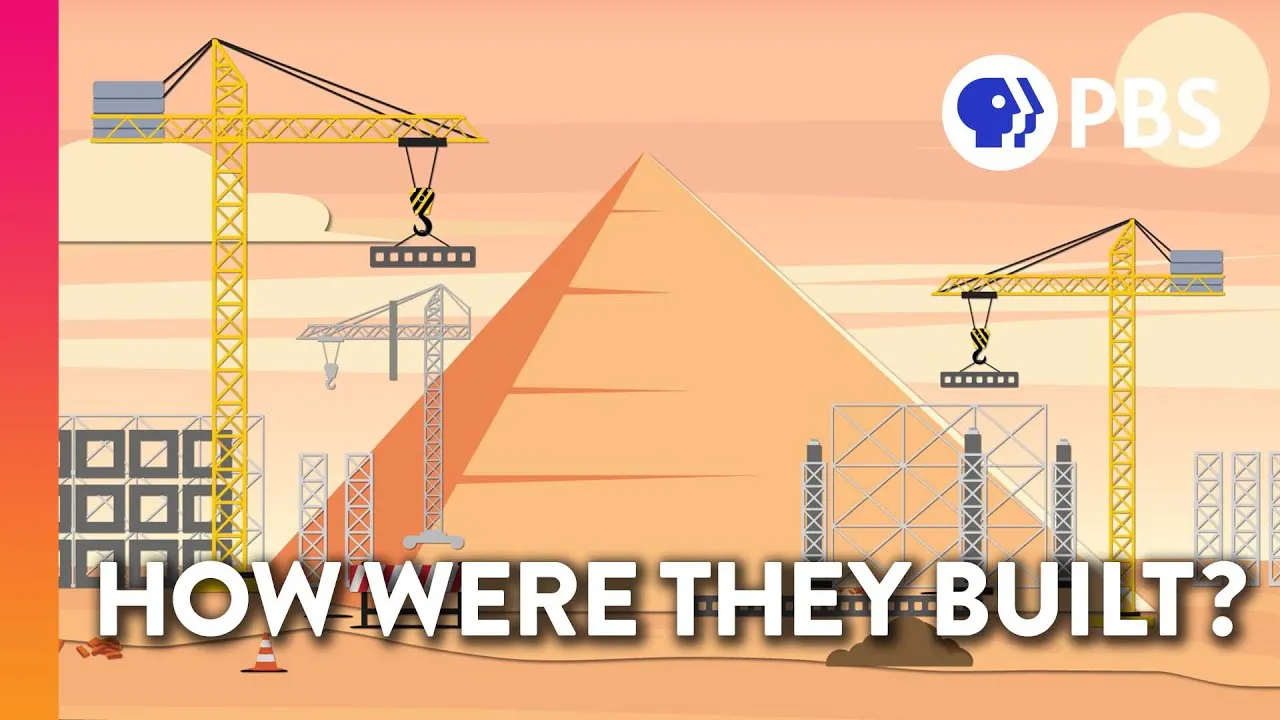
    The INCREDIBLE Ancient Engineering That Built the Pyramids

    Try Skillshare at http://skl.sh/besmart Help us build something great and SUBSCRIBE! ►► http://bit.ly/iotbs_sub ↓↓↓More info and sources below ↓↓↓ Uploaded 30-06-17 You asked for it, so here’s the follow-up! Just because something is difficult doesn’t mean it’s impossible. Over the past centuries, archaeologists, historians, and engineers have reconstructed a great deal of the technology and science used to build the Egyptian pyramids. This week we look at ancient Egyptian mathematics, building techniques, tools, and culture to reconstruct the Great Pyramid’s construction. REFERENCES: Fall, Abdoulaye, et al. "Sliding friction on wet and dry sand." Physical review letters 112.17 (2014): 175502. Lehner, M. (1997). The complete pyramids. Thames and Hudson. Parry, D. (2005). Engineering the pyramids. The History Press. Smith, Craig B., Zahi Hawass, and Mark Lehner. How the great pyramid was built. Harper Collins, 2006. Verner, M. (2003). The pyramids: their archaeology and history. Atlantic. Verner, M. (2007). The Pyramids: The Mystery, Culture, and Science of Egypt's Great Monuments. Grove/Atlantic, Inc.. ----------- FOLLOW US: Merch: https://store.dftba.com/collections/its-okay-to-be-smart Facebook: http://www.facebook.com/itsokaytobesmart Twitter/Instagram: @okaytobesmart @DrJoeHanson Tumblr: http://www.itsokaytobesmart.com ----------- It’s Okay To Be Smart is hosted by Joe Hanson, Ph.D. Director: Joe Nicolosi Writer: Joe Hanson Producer/editor/animator: Andrew Orsak Producer: Stephanie Noone and Amanda Fox Produced by PBS Digital Studios Music via APM Stock images from Shutterstock http://www.shutterstock.com ------ Learn more about your ad choices. Visit megaphone.fm/adchoices Learn more about your ad choices. Visit megaphone.fm/adchoices

  • Today · 9 min

    Asteroid Mining Will Change Everything About Our Future In Space

    Viewers like you help make PBS (Thank you 😃) . Support your local PBS Member Station here: https://to.pbs.org/PBSDSDonate Uploaded 07-11-17 Don’t miss our next video! SUBSCRIBE! ►► http://bit.ly/iotbs_sub Read “Soonish” by Kelly and Zach Weinersmith! https://smbc-comics.com/soonish/ ↓↓↓ More info and sources below ↓↓↓ Try 23andMe at: http://www.23andme.com/okay Asteroid mining sounds like something out of a bad space movie, but harvesting materials from space rocks might be our ticket to building space colonies or living on Mars. Most of Earth’s precious and rare metals are locked too far in the crust for us to get at them, and launching them to space is too expensive for us to supply large colonies off Earth or explore far off worlds. How do we get our hands on the planetary resources inside asteroids? Let’s find out! Special thanks to Kelly and Zach Weinersmith for working with us on this video. Check out their new book “Soonish” for a hilarious and science-filled look at future technologies: https://smbc-comics.com/soonish/ SOURCES/EXTRAS: Badescu, Viorel, ed. Asteroids: Prospective energy and material resources. Springer Science and Business Media, 2013. Crawford, Ian A. "Asteroids in the service of humanity." arXiv preprint arXiv:1306.2678 (2013). Kleine, Thorsten. "Geoscience: Earth's patchy late veneer." Nature 477.7363 (2011): 168-169. ----------- FOLLOW US: Merch: https://store.dftba.com/collections/its-okay-to-be-smart Facebook: http://www.facebook.com/itsokaytobesmart Twitter: @okaytobesmart @DrJoeHanson Tumblr: http://www.itsokaytobesmart.com Instagram: @DrJoeHanson ----------- It’s Okay To Be Smart is hosted by Joe Hanson, Ph.D. Director: Joe Nicolosi Writer: Dr. Shaena Montanari Editor/animator: Andrew Orsak Producer: Stephanie Noone and Amanda Fox Produced by PBS Digital Studios Music via APM Stock images from Shutterstock http://www.shutterstock.com ----------- Learn more about your ad choices. Visit megaphone.fm/adchoices Learn more about your ad choices. Visit megaphone.fm/adchoices

  • Today · 20 min

    I Can't Believe We're Making Another COVID Video

    Check out PBS Vitals ►► https://youtu.be/xus08qnUxPE We’re on PATREON! Join the community https://www.patreon.com/itsokaytobesmart ↓↓↓ More info and sources below ↓↓↓ Uploaded 08-10-21 I guess we’re still doing this. References: https://docs.google.com/document/d/1-xoLMZfumSmb1v7B3QmFD5pTC87GYeGEnlSXKg0bCk0/edit SUBSCRIBE so you don’t miss a video! ►► http://bit.ly/iotbs_sub ----------- Special thanks to our Brain Trust Patrons: Joseph Spencer Barbora Bei Ken Board Clinger-Hamilton Family Attila Pix Burt Humburg DeliciousKashmiri Brian Chang Roy Lasris Javier Soto dani bowman David Johnston Salih Arslan Baerbel Winkler Robert Young Amy Sowada Eric Meer Dustin Marcus Tuepker Karen Haskell AlecZero Join us on Patreon! https://patreon.com/itsokaytobesmart Twitter http://www.twitter.com/DrJoeHanson http://www.twitter.com/okaytobesmart Instagram http://www.instagram.com/DrJoeHanson http://www.instagram.com/okaytobesmart Merch https://store.dftba.com/collections/its-okay-to-be-smart Facebook https://www.facebook.com/itsokaytobesmartpbs/ Learn more about your ad choices. Visit megaphone.fm/adchoices Learn more about your ad choices. Visit megaphone.fm/adchoices
  • Today · 6 min

    Are You Cleverer Than A Slime Mold?

    Slime molds are intelligent, but they are single-celled creatures with no brains. How is that possible? ↓ More info and sources below ↓ I really hope you guys check out Deep Look, it’s one of my favorite channels, full of great 4K, micro-world goodness! http://goo.gl/8NwXqt Many thanks to Prof. Andy Adamatzky (UWE Bristol) for slime mold culturing advice. Special thanks to the following for providing Dictyostelium microscope footage: Prof. John Bonner (Princeton) Prof. David Knecht (Univ. of Connecticut) Prof. Richard Firtel (UCSD) Prof. Jeremy Pickett-Heaps (Univ. of Melbourne) References/further reading: “Intelligence in Nature” by Jeremy Narby http://amzn.to/23HvtKG “The Social Amoebae - The Biology of Cellular Slime Molds” by John Bonner http://amzn.to/1MEmmCR Nakagaki, Toshiyuki. "Smart behavior of true slime mold in a labyrinth."Research in Microbiology 152.9 (2001): 767-770. Nakagaki, Toshiyuki, Hiroyasu Yamada, and Masahiko Hara. "Smart network solutions in an amoeboid organism." Biophysical chemistry 107.1 (2004): 1-5. Adamatzky, Andrew. Physarum machines: computers from slime mould. Vol. 74. World Scientific, 2010. Have an idea for an episode or an amazing science question you want answered? Leave a comment or check us out at the links below! Like us on Facebook: http://www.facebook.com/itsokaytobesmart Follow on Twitter: http://twitter.com/okaytobesmart http://twitter.com/jtotheizzoe Follow on Tumblr: http://www.itsokaytobesmart.com Follow on Instagram: http://instagram.com/jtotheizzoe Follow on Snapchat: YoDrJoe ----------------- It’s Okay To Be Smart is written and hosted by Joe Hanson, Ph.D. Follow me on Twitter: @jtotheizzoe Produced by PBS Digital Studios: http://www.youtube.com/user/pbsdigitalstudios Music via APM Stock images from Shutterstock http://www.shutterstock.com Stock footage from Videoblocks (unless otherwise noted) http://www.videoblocks.com Learn more about your ad choices. Visit megaphone.fm/adchoices

  • Today · 9 min

    Where Did Mankind Emerge From?

    Viewers like you help make PBS (Thank you 😃) . Support your local PBS Member Station here: https://to.pbs.org/PBSDSDonate Ready to untangle the branches of the human family tree? Part 1 of our special series on Human Ancestry. Watch it all: http://bit.ly/OKTBSHuman ↓↓↓More info and sources below ↓↓↓ In part 1 of our special series on human ancestry, we tour through our family tree to meet our ancestors and distant cousins, and to find out what made us human along the way. The story of human ancestry is not a simple progression from primitive apes to us, with all the ape/human intermediates in between. The real human story is much richer and more complex, full of branches, gaps, and shadowy parts. A century and a half of fossil finds tells us perhaps two dozen human species lived on Earth between now and the time when our ancestors split from chimpanzee ancestors. The new era of DNA and genetics is upending that story yet again. ----------- REFERENCES: Stringer, Chris. “Lone survivors: How we came to be the only humans on earth.” Macmillan, 2012. http://amzn.to/2oIFg3q (Library: http://www.worldcat.org/oclc/855581724) Stringer, Chris, and Peter Andrews. “The complete world of human evolution.” London: Thames & Hudson, 2005. http://amzn.to/2opOrlN (Library: http://www.worldcat.org/oclc/953422224) Tattersall, Ian. “Masters of the planet: the search for our human origins.” Macmillan, 2012. http://amzn.to/2pOZrKS (Library: http://www.worldcat.org/oclc/733231407) Walter, Chip. “Last ape standing: the seven-million-year story of how and why we survived.” Bloomsbury Publishing USA, 2013. http://amzn.to/2pP2liy (Library: http://www.worldcat.org/oclc/872121723) “Evolution: The Human Saga.” Scientific American 311.3 (2014): 4-100. Strait, David, Frederick E. Grine, and John G. Fleagle. "Analyzing Hominin Hominin Phylogeny: Cladistic Approach." Handbook of paleoanthropology. Springer Berlin Heidelberg, 2015. 1989-2014. Wood, Bernard, and Eve K Boyle. "Hominin taxic diversity: Fact or fantasy?." American journal of physical anthropology 159.S61 (2016): S37-S78. ----------- FOLLOW US: Merch: https://store.dftba.com/collections/its-okay-to-be-smart Facebook: http://www.facebook.com/itsokaytobesmart Twitter: @okaytobesmart @DrJoeHanson Tumblr: http://www.itsokaytobesmart.com Instagram: @DrJoeHanson Snapchat: YoDrJoe ----------- It’s Okay To Be Smart is hosted by Joe Hanson, Ph.D. Director: Joe Nicolosi Writer: Joe Hanson Producer/editor/animator: Andrew Matthews Producer: Stephanie Noone and Amanda Fox Produced by PBS Digital Studios Music via APM Stock images from Shutterstock http://www.shutterstock.com Learn more about your ad choices. Visit megaphone.fm/adchoices

  • Today · 7 min

    A Brief History Of (Keeping) Time

    Viewers like you help make PBS (Thank you 😃) . Support your local PBS Member Station here: https://to.pbs.org/PBSDSDonate Uploaded 17-10-17 A brief history of time… Don’t miss our next video! SUBSCRIBE! ►► http://bit.ly/iotbs_sub ↓↓↓ More info and sources below ↓↓↓ How did we come up with our system of telling time? Why do we divide the day into 24 hours of 60 minutes each, and put 60 seconds in each minute? Where does the definition of a second come from? And who decides what clock shows the correct time? There’s clearly a lot of questions when it comes to time. READ MORE: “Galileo’s Pendulum” - Roger Newton http://amzn.to/2yQri5E “Revolution in Time” - David Landes http://www.worldcat.org/oclc/890167780 ----------- FOLLOW US: Merch: https://store.dftba.com/collections/its-okay-to-be-smart Facebook: http://www.facebook.com/itsokaytobesmart Twitter: @okaytobesmart @DrJoeHanson Tumblr: http://www.itsokaytobesmart.com Instagram: @DrJoeHanson ----------- It’s Okay To Be Smart is hosted by Joe Hanson, Ph.D. Director: Joe Nicolosi Writer: Matt Caplan, Ph.D. and Joe Hanson, Ph.D. Editor/animator: David Schulte Producer: Stephanie Noone and Amanda Fox Produced by PBS Digital Studios Music via APM Stock images from Shutterstock http://www.shutterstock.com Learn more about your ad choices. Visit megaphone.fm/adchoices Learn more about your ad choices. Visit megaphone.fm/adchoices

  • Yesterday · 6 min

    Why Your Brain Calls Your Head Home

    Viewers like you help make PBS (Thank you 😃) . Support your local PBS Member Station here: https://to.pbs.org/PBSDSDonate Check out BrainCraft: http://youtu.be/aucscX191vQ Subscribe to It's Okay To Be Smart: http://bit.ly/iotbs_sub ↓ More info and sources below ↓ Part 1 of 3 in my series about why our bodies are shaped the way they are. Stay tuned for part 2 and 3 later this week! Make sure you head over BrainCraft and check out the rest of our collaboration! More info: Still of that crazy face comes from FKA twigs' "Water Me": http://youtu.be/kFtMl-uipA8 Evolution of the nervous system: http://en.wikipedia.org/wiki/Evolution_of_nervous_systems Step by step along the evolutionary tree: http://tolweb.org/Bilateria/2459 http://en.wikipedia.org/wiki/Bilateria http://en.wikipedia.org/wiki/Deuterostome http://en.wikipedia.org/wiki/Protostome http://en.wikipedia.org/wiki/Urochordata http://en.wikipedia.org/wiki/Chordate http://en.wikipedia.org/wiki/Cephalochordata http://en.wikipedia.org/wiki/Craniate http://en.wikipedia.org/wiki/Gnathostomata Evolutionary timeline of vertebrates: http://www.utexas.edu/news/2008/03/03/tree/ How old are Hox genes: http://www.nature.com/nrg/journal/v8/n5/full/nrg2114.html Hox genes in development: The Hox Code http://www.nature.com/scitable/topicpage/hox-genes-in-development-the-hox-code-41402 Joe Hanson - Host and writer Joe Nicolosi - Director Amanda Fox - Producer, Spotzen IncKate Eads - Associate Producer Katie Graham - Director of Photography Motion Graphics and Editing - Arts+Labor Stephanie Noone - Producer, Arts+Labor John Knudsen - Gaffer Music: "Ouroboros" by Kevin MacLeod Stock images via Shutterstock Produced by PBS Digital Studios: http://www.youtube.com/user/pbsdigitalstudios ----------- Join us on Patreon! https://patreon.com/itsokaytobesmart Twitter http://www.twitter.com/DrJoeHanson http://www.twitter.com/okaytobesmart Instagram http://www.instagram.com/DrJoeHanson http://www.instagram.com/okaytobesmart Merch https://store.dftba.com/collections/its-okay-to-be-smart Facebook https://www.facebook.com/itsokaytobesmartpbs/​ Learn more about your ad choices. Visit megaphone.fm/adchoices

  • Yesterday · 5 min

    Does The Moon Really Orbit The Earth?

    Viewers like you help make PBS (Thank you 😃) . Support your local PBS Member Station here: https://to.pbs.org/PBSDSDonate Uploaded 18-05-15 What holds the moon up? Moonbeams! Don’t miss our next video! SUBSCRIBE! ►► http://bit.ly/iotbs_sub ↓ More info and sources below ↓ According to Newton's law of gravitation, the sun should "pull" way harder on the moon than the Earth does. So does the moon actually orbit the Earth? Why? Special thanks to Ariel for submitting this awesome question to our Facebook page! Hill Spheres and lunar orbit: http://blogs.discovermagazine.com/badastronomy/2008/09/29/the-moon-that-went-up-a-hill-but-came-down-a-planet/#.VULLHq1Viko True shape of moon's orbit: http://www.math.nus.edu.sg/aslaksen/teaching/convex.html Newton's law of gravitation vs. Hill Sphere: https://van.physics.illinois.edu/qa/listing.php?id=18501 http://en.wikipedia.org/wiki/Hill_sphere Have an idea for an episode or an amazing science question you want answered? Leave a comment or check us out at the links below! Follow on Twitter: http://twitter.com/okaytobesmart http://twitter.com/jtotheizzoe Follow on Tumblr: http://www.itsokaytobesmart.com Follow on Instagram: http://instagram.com/jtotheizzoe ----------------- It's Okay To Be Smart is written and hosted by Joe Hanson, Ph.DFollow me on Twitter: @jtotheizzoe Email me: itsokaytobesmart AT gmail DOT com Facebook: http://www.facebook.com/itsokaytobesmart Google+ https://plus.google.com/+itsokaytobesmart For more awesome science, check out: http://www.itsokaytobesmart.com Produced by PBS Digital Studios: http://www.youtube.com/user/pbsdigitalstudios Joe Hanson - Creator/Host/Writer Joe Nicolosi - Director Amanda Fox - Producer, Spotzen IncKate Eads - Associate Producer Stephen Bohls - Editing/Motion Graphics/Animation Katie Graham - Director of Photography John Knudsen - Gaffer Theme music: "Ouroboros" by Kevin MacLeod Other music via APM Stock images from Shutterstock, stock footage from Videoblocks French subtitles by Alessandro Dal Cero ----------------- Last week's video: What's The Loudest Possible Sound? https://www.youtube.com/watch?v=wi_aawsChqA More videos: Why Does February Have 28 Days? https://www.youtube.com/watch?v=AgKaHTh-_Gs Why Vaccines Work https://www.youtube.com/watch?v=3aNhzLUL2ys Why Are Some People Left-Handed? https://www.youtube.com/watch?v=NPvMUpcxPSA Where Does the Smell of Rain Come From? https://www.youtube.com/watch?v=lGcE5x8s0B8 Learn more about your ad choices. Visit megaphone.fm/adchoices Learn more about your ad choices. Visit megaphone.fm/adchoices

  • Yesterday · 6 min

    How Humans Spoiled and Reclaimed an Ocean Paradise

    Viewers like you help make PBS (Thank you 😃) . Support your local PBS Member Station here: https://to.pbs.org/PBSDSDonate Check out #BigBlueLive! http://pbs.org/bigbluelive Share on FB ⇒ http://bit.ly/OKTBSriseFB ↓ More info and sources below ↓ Before people came to Monterey Bay to watch fish, they came here to catch them. And they caught a LOT of one fish: the sardine. But when you empty one species out of the ocean, bad things can happen. Learn how one Monterey Bay scientist, with the help of his friend John Steinbeck, changed how we view our relationship with nature and helped give birth to the field of ecology Why are we in Monterey? PBS and BBC are teaming up to bring you an incredible LIVE nature broadcast direct from Monterey Bay, California called BIG BLUE LIVE. In late summer, thousands and thousands of ocean animals come together here, in one of the richest ecosystems on Earth. We'll be bringing you a week of videos direct from Monterey Bay all about this incredible place and the biology it holds (some footage courtesy of Monterey Bay Aquarium) Big Blue Live airs nightly on PBS 8/31-9/2 at 8 PM ET Big Blue Live airs on BBC One 8/23 (7PM), 8/27 (8 PM), 8/30 (7 PM) More info here: pbs.org/bigbluelive facebook.com/PBS facebook.com/BBCBigBlueLive Follow Joe during Big Blue Live! Twitter/Periscope: @jtotheizzoe @okaytobesmart Snapchat: YoDrJoe Instagram: @jtotheizzoe Facebook: facebook.com/itsokaytobesmart Have an idea for an episode or an amazing science question you want answered? Leave a comment or check us out at the links below! Follow on Twitter: http://twitter.com/okaytobesmart http://twitter.com/jtotheizzoe Follow on Tumblr: http://www.itsokaytobesmart.com Follow on Instagram: http://instagram.com/jtotheizzoe Follow on Snapchat: YoDrJoe ----------------- It's Okay To Be Smart is written and hosted by Joe Hanson, Ph.DFollow me on Twitter: @jtotheizzoe Email me: itsokaytobesmart AT gmail DOT com Facebook: http://www.facebook.com/itsokaytobesmart For more awesome science, check out: http://www.itsokaytobesmart.com Produced by PBS Digital Studios: http://www.youtube.com/user/pbsdigitalstudios Joe Hanson - Creator/Host/Writer Joe Nicolosi - Director Amanda Fox - Producer, Spotzen IncKate Eads - Producer Andrew Matthews - Editing/Motion Graphics/Animation Katie Graham - Camera John Knudsen - Gaffer Theme music: "Ouroboros" by Kevin MacLeod Other music via APM Stock images from Shutterstock, stock footage from Videoblocks (unless otherwise noted)​ Learn more about your ad choices. Visit megaphone.fm/adchoices

  • Yesterday · 7 min

    How Many Trees Are Growing?

    Viewers like you help make PBS (Thank you 😃) . Support your local PBS Member Station here: https://to.pbs.org/PBSDSDonate Tweet this ⇒ http://bit.ly/OKTBStree Share on FB ⇒ http://bit.ly/OKTBStreeFB Try Squarespace: http://squarespace.com/itsokaytobesmart ↓ More info and sources below ↓ Crowther, T. W., et al. "Mapping tree density at a global scale." Nature 525.7568 (2015): 201-205. http://www.nature.com/nature/journal/... Learn more about forest habitats: http://www.worldwildlife.org/habitats... And let’s hear it for John Denver… https://www.youtube.com/watch?v=YBEkj... Have an idea for an episode or an amazing science question you want answered? Leave a comment or check us out at the links below! Follow on Twitter: http://twitter.com/okaytobesmart http://twitter.com/jtotheizzoe Follow on Tumblr: http://www.itsokaytobesmart.com Follow on Instagram: http://instagram.com/jtotheizzoe Follow on Snapchat: YoDrJoe ----------------- It’s Okay To Be Smart is written and hosted by Joe Hanson, Ph.D. Follow me on Twitter: @jtotheizzoe Email me: itsokaytobesmart AT gmail DOT com Facebook: http://www.facebook.com/itsokaytobesmart For more awesome science, check out: http://www.itsokaytobesmart.com Produced by PBS Digital Studios: http://www.youtube.com/user/pbsdigita... Music via APM Stock images from Shutterstock, stock footage from Videoblocks (unless otherwise noted) Learn more about your ad choices. Visit megaphone.fm/adchoices

  • Yesterday · 5 min

    How Dogs Became Our Dearest Friends (ft. MinuteEarth!)

    Viewers like you help make PBS (Thank you 😃) . Support your local PBS Member Station here: https://to.pbs.org/PBSDSDonate Are you more of a cat person? Follow me to MinuteEarth to discover the origin of our feline friends! https://youtu.be/LWB0-tGwb_E ↓↓↓More info and sources below ↓↓↓ Of all the species that humans have domesticated, dogs are our oldest animal friends. But how did a group of wolves become the furry pup at the end of the bed? New research is finally unlocking the paw-in-hand evolution of dogs and humans. In this episode we’re answering one big question: Did we domesticate dogs, or did dogs domesticate us? Special thanks to our friends from MinuteEarth! ----------- REFERENCES: Frantz, Laurent AF, et al. "Genomic and archaeological evidence suggest a dual origin of domestic dogs." Science 352.6290 (2016): 1228-1231. Freedman, Adam H., and Robert K. Wayne. "Deciphering the Origin of Dogs: From Fossils to Genomes." Annual Review of Animal Biosciences 0 (2016). Freedman, Adam H., et al. "Genome sequencing highlights the dynamic early history of dogs." PLoS Genet 10.1 (2014): e1004016. Thalmann, Olaf, et al. "Complete mitochondrial genomes of ancient canids suggest a European origin of domestic dogs." Science 342.6160 (2013): 871-874. Wang, Guo-Dong, et al. "Out of southern East Asia: the natural history of domestic dogs across the world." Cell research 26.1 (2016): 21-33. ----------- FOLLOW US: Merch: https://store.dftba.com/collections/its-okay-to-be-smart Facebook: http://www.facebook.com/itsokaytobesmart Twitter: @okaytobesmart @DrJoeHanson Tumblr: http://www.itsokaytobesmart.com Instagram: @DrJoeHanson Snapchat: YoDrJoe ----------- It’s Okay To Be Smart is hosted by Joe Hanson, Ph.D. Director: Joe Nicolosi Writer: Sarah Keartes Producer/editor/animator: Andrew Matthews Producer: Stephanie Noone and Amanda Fox Produced by PBS Digital Studios Music via APM Stock images from Shutterstock http://www.shutterstock.com Learn more about your ad choices. Visit megaphone.fm/adchoices

  • Yesterday · 11 min

    What This Chart Actually Means for COVID-19

    PBS Member Stations rely on viewers like you. To support your local station, go to: http://to.pbs.org/DonateOKAY ↓ More info and sources below ↓ Uploaded 17-03-20 We're on PATREON now! Join the community ►► https://www.patreon.com/itsokaytobesmart SUBSCRIBE so you don't miss a video! ►► http://bit.ly/iotbs_sub Stay informed. Stay cautious, but not scared. Listen to scientists and public health officials and follow their guidance. By protecting yourself, you're protecting the most vulnerable among us. Together we can flatten the curve on COVID-19 and SARS-CoV-2. More resources below! #COVID-19 #SARS-CoV-2 #FlattenTheCurve 3Blue1Brown on exponential growth: https://www.youtube.com/watch?v=Kas0tIxDvrg Get info from trusted sources: https://www.cdc.gov/coronavirus/2019-ncov/index.html https://www.who.int/emergencies/diseases/novel-coronavirus-2019 https://ourworldindata.org/coronavirus References used: https://sites.google.com/view/covid-19-flattenthecurve/home Special thanks to our Brain Trust Patrons: AlecZero Brent M. Diego Lombeida Dustin Ernesto Silva George Gladding Marcus Tuepker Ron Kakar vincbis ----------- Join us on Patreon! https://patreon.com/itsokaytobesmart Twitter http://www.twitter.com/DrJoeHanson http://www.twitter.com/okaytobesmart Instagram http://www.instagram.com/DrJoeHanson http://www.instagram.com/okaytobesmart Merch https://store.dftba.com/collections/its-okay-to-be-smart Facebook https://www.facebook.com/itsokaytobesmartpbs/ Learn more about your ad choices. Visit megaphone.fm/adchoices Learn more about your ad choices. Visit megaphone.fm/adchoices

  • Yesterday · 10 min

    Will You Still Eat Raw Fish After Watching This Video?

    You can learn more at https://curiositystream.com/smart Stay curious and SUBSCRIBE! ►► http://bit.ly/iotbs_sub ↓↓↓ More info and sources below ↓↓↓ Uploaded 11-09-18 Have you ever noticed that warning about raw or undercooked seafood at the bottom of restaurant menus? Ever wondered why it’s there? Because fish carry a ton of parasites, and if they aren’t prepared correctly then those parasites can make it into your body. But it turns out, this fishy intersection with the wild world of parasites can teach us a lot about how these moochers help keep ecosystems healthy, and why we should protect them. REFERENCES: Parasite Evolution https://www.livescience.com/55483-wei... The World’s Parasites Are Going Extinct. Here’s Why That’s a Bad Thing https://www.smithsonianmag.com/scienc... History of Human Parisitology https://www.ncbi.nlm.nih.gov/pmc/arti... Parasites in Seattle Sushi http://agris.fao.org/agris-search/sea... Dramatic evolution within human genome may have been caused by malaria parasite http://www.sciencemag.org/news/2017/0... Parasite Rex by Carl Zimmer https://www.amazon.com/Parasite-Rex-B... Interviews and conversations with: Colin J. Carlson (National Socio-Environmental Synthesis Center) Chelsea L. Wood (University of Washington) ----------- FOLLOW US: Twitter: @DrJoeHanson @okaytobesmart Instagram: @DrJoeHanson Merch: https://store.dftba.com/collections/i... Facebook: http://www.facebook.com/itsokaytobesmart SEND US STUFF: It’s Okay To Be Smart PO Box 303356 Austin, TX 78703 USA BOOKS WE’VE FEATURED: http://smart-books.tumblr.com/ ----------- It’s Okay To Be Smart is hosted by Joe Hanson, Ph.D. Director: Joe Nicolosi Writer: Shaena Montanari, Ph.D. Creative Director: David Schulte Editor/animator: Sara Roma Producers: Stephanie Noone and Amanda Fox Produced by PBS Digital Studios Music via APM Stock images from Shutterstock http://www.shutterstock.com Learn more about your ad choices. Visit megaphone.fm/adchoices Learn more about your ad choices. Visit megaphone.fm/adchoices

  • Yesterday · 8 min

    Why Are Certain Creatures Venomous?

    Viewers like you help make PBS (Thank you 😃) . Support your local PBS Member Station here: https://to.pbs.org/PBSDSDonate Check out “Venomous” by Christie Wilcox: http://bit.ly/VenomousBook Help us translate this video! http://www.youtube.com/timedtext_video?ref=share&v=Qd92MuVZXik ↓ More info and sources below ↓ Get yourself an awesome IOTBS shirt! http://dftba.com/besmart Learn more: LD50’s of various venomous snakes: http://snakedatabase.org/pages/LD50.php Lynne Isbell’s “The Fruit, the Tree, and the Serpent” http://amzn.to/2afXQ91 Fry, Bryan G., et al. "Early evolution of the venom system in lizards and snakes." Nature 439.7076 (2006): 584-588. http://www.nature.com/nature/journal/v439/n7076/abs/nature04328.html Reyes-Velasco, Jacobo, et al. "Expression of venom gene homologs in diverse python tissues suggests a new model for the evolution of snake venom." Molecular biology and evolution 32.1 (2015): 173-183. http://mbe.oxfordjournals.org/content/32/1/173.short Drabeck, Danielle H., Antony M. Dean, and Sharon A. Jansa. "Why the honey badger don't care: Convergent evolution of venom-targeted nicotinic acetylcholine receptors in mammals that survive venomous snake bites."Toxicon 99 (2015): 68-72. http://www.sciencedirect.com/science/article/pii/S0041010115000690 Opossum venom resistance: https://www.acs.org/content/acs/en/pressroom/newsreleases/2015/march/opossum-based-antidote-to-poisonous-snake-bites-could-save-thousands-of-lives.html Reddit AMA with Steve Ludwin, a snake venom self-immunizer: https://www.reddit.com/r/IAmA/comments/17hzhk/iama_guy_whos_been_injecting_deadly_snake_venom/ Van Le, Quan, et al. "Pulvinar neurons reveal neurobiological evidence of past selection for rapid detection of snakes." Proceedings of the National Academy of Sciences 110.47 (2013): 19000-19005. http://www.pnas.org/content/110/47/19000.short Thrasher, Cat, and Vanessa LoBue. "Do infants find snakes aversive? Infants’ physiological responses to “fear-relevant” stimuli." Journal of experimental child psychology 142 (2016): 382-390. http://www.sciencedirect.com/science/article/pii/S0022096515002179 ---------------- It’s Okay To Be Smart is written and hosted by Joe Hanson, Ph.D. Have an idea for an episode or an amazing science question you want answered? Leave a comment or check us out at the links below! Facebook: http://www.facebook.com/itsokaytobesmart Twitter: http://twitter.com/okaytobesmart http://twitter.com/jtotheizzoe Tumblr: http://www.itsokaytobesmart.com Instagram: http://instagram.com/jtotheizzoe Snapchat: YoDrJoe Produced by PBS Digital Studios Music via APM Stock images from SciencePhoto http://www.sciencephoto.com/ and Shutterstock http://www.shutterstock.com Stock footage from Videoblocks (unless otherwise noted) http://www.videoblocks.com Learn more about your ad choices. Visit megaphone.fm/adchoices

  • Yesterday · 22 min

    Trying to Land a Plane (to Prove the Dunning-Kruger Effect)

    SUBSCRIBE so you don’t miss a video! ►► http://bit.ly/iotbs_sub We’re on PATREON! Join the community https://www.patreon.com/itsokaytobesmart ↓↓↓ More info and sources below ↓↓↓ Uploaded 06-07-22 You may not be an expert, but perhaps you feel pretty confident that you could ride a motorcycle, or give someone a decent haircut - if you absolutely had to - right? Not so much, according to the psychological phenomenon known as the Dunning-Kruger Effect. Turns out we’re all at risk of being overconfident about something. Watch Joe put this theory to the test as he tries to land a 737 (in a simulator, of course). Oh, did we mention Joe's not a pilot? References: https://sites.google.com/view/be-smart-dunning-kruger-effect/home ----------- Special thanks to our Brain Trust Patrons: Mark Littlehale Ali Freiburger Mehdi Damou Barbora Bei Ken Board Clinger-Hamilton Family Attila Pix Burt Humburg Roy Lasris dani bowman David Johnston Salih Arslan Baerbel Winkler Robert Young Amy Sowada Eric Meer Dustin Karen Haskell Join us on Patreon! https://patreon.com/itsokaytobesmart Twitter http://www.twitter.com/DrJoeHanson http://www.twitter.com/okaytobesmart Instagram http://www.instagram.com/DrJoeHanson http://www.instagram.com/okaytobesmart Merch https://store.dftba.com/collections/its-okay-to-be-smart Facebook https://www.facebook.com/itsokaytobesmartpbs/ Learn more about your ad choices. Visit megaphone.fm/adchoices Learn more about your ad choices. Visit megaphone.fm/adchoices

Showing 21–40 of 374 episodes