Skip to content
Artwork for Be Smart.
EducationScienceNatural Sciences

Be Smart.

Joe Hanson

We give you deep answers to simple questions about science and the rest of the universe. And also dad jokes. Be Smart is hosted by Joe Hanson, PhD. He's a molecular biologist and an award-winning science communicator and journalist

Play
  • 384 episodes
  • daily
  • Avg 11 min
  • English
Counted on this page — what you have heard stays on this device, so it is not something the list can be paged by.
  • Today · 6 min

    The Surprising Places We Squander Power

    Viewers like you help make PBS (Thank you 😃) . Support your local PBS Member Station here: https://to.pbs.org/PBSDSDonate Check out our whole series on ENERGY! http://bit.ly/1BnH5zu Subscribe: http://bit.ly/iotbs_sub Twitter: @okaytobesmart ↓ More info and sources below ↓ We use a LOT of energy, but we waste a lot too. Where that waste happens might surprise, you though. We don't just waste energy when we leave the lights on or the thermostat cranked down too low. It happens at the dinner table and the water faucet as too! LEARN MORE: Special thanks to Sheril Kirshenbaum and the Webber Energy Group at the University of Texas at Austin for their help with this series. http://www.webberenergygroup.com/ Check out their awesome online course "Energy 101" to learn about energy and energy policy from A to Z! http://www.energy101.com/ And to find out what people think about energy, check out the UT Energy Poll: http://www.utenergypoll.com/ Have an idea for an episode or an amazing science question you want answered? Leave a comment or check us out at the links below! Follow on Twitter: http://twitter.com/okaytobesmart http://twitter.com/jtotheizzoe Follow on Tumblr: http://www.itsokaytobesmart.com Follow on Instagram: http://instagram.com/jtotheizzoe ----------------- It's Okay To Be Smart is written and hosted by Joe Hanson, Ph.DFollow me on Twitter: @jtotheizzoe Email me: itsokaytobesmart AT gmail DOT com Facebook: http://www.facebook.com/itsokaytobesmart Google+ https://plus.google.com/+itsokaytobesmart For more awesome science, check out: http://www.itsokaytobesmart.com Produced by PBS Digital Studios: http://www.youtube.com/user/pbsdigitalstudios Joe Hanson - Creator/Host/Writer Joe Nicolosi - Director Amanda Fox - Producer, Spotzen IncKate Eads - Associate Producer Andrew Matthews - Editing/Motion Graphics/Animation Katie Graham - Director of Photography John Knudsen - Gaffer Theme music: "Ouroboros" by Kevin MacLeod Other music via APM Stock images from Shutterstock, stock footage from Videoblocks ----------------- Last week's video: Does the Moon Orbit the Earth? https://www.youtube.com/watch?v=3cJ3AemeUFM More videos: Why Does February Have 28 Days? https://www.youtube.com/watch?v=AgKaHTh-_Gs Why Vaccines Work https://www.youtube.com/watch?v=3aNhzLUL2ys Why Are Some People Left-Handed? https://www.youtube.com/watch?v=NPvMUpcxPSA Where Does the Smell of Rain Come From? https://www.youtube.com/watch?v=lGcE5x8s0B8​ Learn more about your ad choices. Visit megaphone.fm/adchoices

  • Today · 12 min

    Is This A NEW SPECIES?!

    Viewers like you help make PBS (Thank you 😃) . Support your local PBS Member Station here: https://to.pbs.org/PBSDSDonate Uploaded 17-01-17 Order my Maker Box from Quarterly ►► http://on.qrtr.ly/ItsOKtoMake Don’t miss the next video! SUBSCRIBE! ►► http://bit.ly/iotbs_sub ↓ More info and sources below ↓ This is the first-ever video of what we’re calling the "hermit crab caterpillar"! We’re pretty sure this strange caterpillar is a NEW SPECIES. We went to the Peruvian Amazon to see amazing things, but we never expected this :) But that makes me wonder: What *is* a species anyway? And how do you know if you’ve found a new species? These people helped make this episode happen: Aaron Pomerantz https://www.instagram.com/nextgenscientist/ Daniel Couceiro: https://www.instagram.com/danicouceiro21/ Ryan St. Laurent - Florida Museum of Natural History Dr. Andy Warren - Florida Museum of Natural History Dr. Daniel Janzen - University of Pennsylvania Special thanks to our hosts Rainforest Expeditions: http://www.perunature.com/ LEARN MORE: Mayden, R. L. (1997). A hierarchy of species concepts: the denouement in the saga of the species problem. In M. F. Claridge, H. A. Dawah and M. R. Wilson (eds.), Species: The units of diversity,. Chapman and Hall. pp. 381–423. Sutton, G., and Dickson, G. (1965). Interbreeding of the Eastern and Western Meadowlarks in Central Oklahoma. The Southwestern Naturalist, 10(4), 307-310. doi:10.2307/3669307 FOLLOW US: It’s Okay To Be Smart is hosted by Joe Hanson, Ph.D. Director: Joe Nicolosi Editor/animator/producer: Andrew Matthews Producer: Stephanie Noone and Amanda Fox Facebook: http://www.facebook.com/itsokaytobesmart Twitter: @okaytobesmart @DrJoeHanson Tumblr: http://www.itsokaytobesmart.com Instagram: @DrJoeHanson Snapchat: YoDrJoe Produced by PBS Digital Studios Music via APM Stock images from Shutterstock http://www.shutterstock.com Learn more about your ad choices. Visit megaphone.fm/adchoices Learn more about your ad choices. Visit megaphone.fm/adchoices

  • Today · 24 min

    How Your Brain Makes Its Own Electricity

    We’re on PATREON! Join the community ►► https://www.patreon.com/itsokaytobesmart Follow me to Animal IQ: https://youtu.be/yPrQ3Pl-iEM ↓↓↓ More info and sources below ↓↓↓ Uploaded 02-06-21 Here’s a thought: What IS a thought? I know it involves my brain, and my brain is made of neurons. And my brain’s neurons are listening to other neurons all over my body. But how do those neurons actually work? Maybe you’ve heard that it involves electricity, but does that mean you’ve got little zaps and lightning bolts running through your veins like Pikachu? Don’t worry, I’m here to set you straight on what a neuron is, what an action potential is, and how fast your nervous system really communicates. Neuron spiker box from Backyard Brains (they didn’t sponsor this video in any way, but their kits are very educational!) https://backyardbrains.com/ References: https://sites.google.com/view/galvani-nerve-brain/home SUBSCRIBE so you don’t miss a video! ►► http://bit.ly/iotbs_sub ----------- Special thanks to our Brain Trust Patrons: Andrew Campbell Brian Chang Roy Lasris Javier Soto dani bowman David Johnston Zenimal Salih Arslan Baerbel Winkler Robert Young Amy Sowada Benjamin Teinby Eric Meer Peter Ehrnstrom Dustin Marcus Tuepker Karen Haskell AlecZero Join us on Patreon! https://patreon.com/itsokaytobesmart Twitter http://www.twitter.com/DrJoeHanson http://www.twitter.com/okaytobesmart Instagram http://www.instagram.com/DrJoeHanson http://www.instagram.com/okaytobesmart Merch https://store.dftba.com/collections/its-okay-to-be-smart Facebook https://www.facebook.com/itsokaytobesmartpbs/ Learn more about your ad choices. Visit megaphone.fm/adchoices Learn more about your ad choices. Visit megaphone.fm/adchoices

  • Today · 4 min

    Why I ♥ PBS

    Viewers like you help make PBS (Thank you 😃) . Support your local PBS Member Station here: https://to.pbs.org/PBSDSDonate Here’s how you can get involved: 1. Tell us what you love about public media using #IlovePBS 2. Learn more about public media at http://pbs.org/value. 3. Find your representative at https://www.govtrack.us/congress/members Learn more about your ad choices. Visit megaphone.fm/adchoices

  • Today · 7 min

    Is Big Data Getting Out of Hand?

    Viewers like you help make PBS (Thank you 😃) . Support your local PBS Member Station here: https://to.pbs.org/PBSDSDonate Try Lynda.com: http://lynda.com/okay Best experienced in 240p or lower ↓ More info and sources below ↓ Check out Stanford’s “Raw Data” podcast: https://soundcloud.com/rawdatapodcast https://itunes.apple.com/us/podcast/r... Most numbers in the video are from this book: Big Data: A Revolution That Will Transform How We Live, Work, and Think - Viktor Mayer-Schönberger and Kenneth Cukier http://amzn.to/1Vhc3Ei Sources: DNA Storage: http://cen.acs.org/articles/93/i35/Sc... Square kilometer array (and other data scales): http://highscalability.com/blog/2012/... How much data does ___ store? http://techexpectations.org/2015/03/2... Have an idea for an episode or an amazing science question you want answered? Leave a comment or check us out at the links below! Follow on Twitter: http://twitter.com/okaytobesmart http://twitter.com/jtotheizzoe Follow on Tumblr: http://www.itsokaytobesmart.com Follow on Instagram: http://instagram.com/jtotheizzoe Follow on Snapchat: YoDrJoe ----------------- It’s Okay To Be Smart is written and hosted by Joe Hanson, Ph.D. Follow me on Twitter: @jtotheizzoe Email me: itsokaytobesmart AT gmail DOT com Facebook: http://www.facebook.com/itsokaytobesmart For more awesome science, check out: http://www.itsokaytobesmart.com Produced by PBS Digital Studios: http://www.youtube.com/user/pbsdigita... Music via APM Stock images from Shutterstock, stock footage from Videoblocks (unless otherwise noted)​ Learn more about your ad choices. Visit megaphone.fm/adchoices

  • Today · 15 min

    Why Are So Many People Allergic To Food?

    You can learn more at https://curiositystream.com/smart Go check out Sound Field! http://bit.ly/2HH9sG1 SUBSCRIBE so you don’t miss a video! ►► http://bit.ly/iotbs_sub Uploaded 20-03-19 More people have food allergies than ever before. Peanuts, tree nuts, shellfish, eggs, and even milk… the list of possibly dangerous foods seems to get longer every day. But why do some people’s bodies have deadly reactions food? And why are food allergies on the rise? In this video we explain what food allergies really are, and what the difference is between food allergy and food intolerance. Some fellow YouTubers tell us their stories of what it’s like to live with food allergies, and we bring you the best current science on how to prevent food allergies in kids and adults. It’s a tough nut to crack. #FoodAllergy #Allergies #FoodScience Special thanks to WheezyWaiter and Emily Graslie for sharing their food allergy stories with us! https://www.youtube.com/user/wheezywaiter https://www.youtube.com/user/thebrainscoop Want to learn more about allergies? Watch this: https://www.youtube.com/watch?v=sqrnShjM4II ----------- REFERENCES: Anagnostou, Katherine, and Andrew Clark. "Oral immunotherapy for peanut allergy." Annual review of medicine 67 (2016): 375-385. Sathe, S. K., Liu, C., and Zaffran, V. D. (2016). "Food allergy." Annual review of food science and technology, 7, 191-220. Tyagi, Nidhi, et al. "Comparisons of allergenic and metazoan parasite proteins: allergy the price of immunity." PLoS computational biology 11.10 (2015): e1004546. Willits, Erin K., et al. "Food Allergy: A Comprehensive Population-Based Cohort Study." Mayo Clinic Proceedings. Vol. 93. No. 10. Elsevier, 2018. Wong, L., Huang, C. H., and Lee, B. W. (2016). "Shellfish and house dust mite allergies: is the link tropomyosin?." Allergy, asthma and immunology research, 8(2), 101-106. ----------- FOLLOW US for more curiosity: Twitter http://www.twitter.com/DrJoeHanson http://www.twitter.com/okaytobesmart Instagram http://www.instagram.com/DrJoeHanson http://www.instagram.com/okaytobesmart Merch https://store.dftba.com/collections/its-okay-to-be-smart Facebook http://www.facebook.com/itsokaytobesmart Books from our episodes: http://smart-books.tumblr.com/ Learn more about your ad choices. Visit megaphone.fm/adchoices Learn more about your ad choices. Visit megaphone.fm/adchoices

  • Today · 14 min

    Why You See Faces in Things

    SUBSCRIBE so you don’t miss a video! ►► http://bit.ly/iotbs_sub ↓↓↓ More info and sources below ↓↓↓ Uploaded 01-08-24 Have you ever looked at the front of a car and seen a face? Or an electrical outlet and seen a face? You definitely have. We all see faces everywhere we look thanks to a fun quirk of the human brain called facial pareidolia. Here's the neuroscience and psychology of how this weird brain phenomenon works! References: https://sites.google.com/view/facial-pareidolia-references/home 0:00 Intro 1:33 What is facial pareidolia? 2:26 How your brain "sees" stuff 4:10 What is a "face" anyway? 5:29 Are we born this way? 7:08 Why recognizing faces is important, according to evolution 9:09 Dog faces, and some closing thoughts 10:05 Support us on Patreon! ----------- High fives to all our Brain Trust Patrons: Ed Eyden Jennifer Burton Charles Horton, Jr Holly, Brett, and Ashe Bullion Jaap Westera Mehdi Damou Barbora Bei Burt Humburg dani bowman David Johnston Baerbel Winkler Eric Meer Karen Haskell Join us on Patreon! https://patreon.com/itsokaytobesmart Instagram http://www.instagram.com/DrJoeHanson http://www.instagram.com/okaytobesmart Facebook https://www.facebook.com/itsokaytobesmartpbs/ Merch https://store.dftba.com/collections/its-okay-to-be-smart Learn more about your ad choices. Visit megaphone.fm/adchoices Learn more about your ad choices. Visit megaphone.fm/adchoices

  • Today · 6 min

    The Odds of Discovering Life and Romance

    PBS Member Stations rely on viewers like you. To support your local station, go to: http://to.pbs.org/DonateOKAY ↓ More info and sources below ↓ A cosmic love story, starring a guy named Carl Sagan Click here to SUBSCRIBE, it's FREE! -- http://bit.ly/iotbs_sub Love is a complicated combination of brain chemicals and behavior that scientists are only just beginning to figure out. And it's remarkable that in every society that we have looked at on Earth, romantic love exists. So if love is so universal, and there are 7 billion other people out there looking for it, why can it seem like it's so hard to find? In this episode, we'll look at what we can learn about the search for love from the search for extraterrestrial life. We'll start with Enrico Fermi's paradox of why we haven't been contacted by any extraterrestrials yet, and then at Frank Drake's equation to estimate the number of civilizations that might exist in our galaxy (updated with current numbers). Finally, we'll meet a young lady named Ann and see if we can calculate how many special someones there might be out there for her. It's a cosmic love story! References for this episode: http://dft.ba/-4bBW Have an idea for an episode or an amazing science question you want answered? Leave a comment below! Written and hosted by Joe Hanson Produced by Painted On Productions (http://www.paintedon.com/) Clips from this episode: Carl Sagan - All the -illions: http://www.youtube.com/watch?v=HZmafy... Music from this episode: Johnny Ripper's "Family." http://freemusicarchive.org/music/joh... ----------- Join us on Patreon! https://patreon.com/itsokaytobesmart Twitter http://www.twitter.com/DrJoeHanson http://www.twitter.com/okaytobesmart Instagram http://www.instagram.com/DrJoeHanson http://www.instagram.com/okaytobesmart Merch https://store.dftba.com/collections/its-okay-to-be-smart Facebook https://www.facebook.com/itsokaytobesmartpbs/​ Learn more about your ad choices. Visit megaphone.fm/adchoices

  • Today · 15 min

    Why No One Can See the Stars Anymore

    PBS Member Stations rely on viewers like you. To support your local station, go to: http://to.pbs.org/DonateOKAY ↓ More info and sources below ↓ Uploaded 14-07-19 SUBSCRIBE so you don’t miss a video! ►► http://bit.ly/iotbs_sub It never gets dark anymore. Not REALLY dark, anyway. Not like it used to. Light pollution is not only making it more difficult to see the night sky, but it's also affecting our health. For the past century and a half, since the dawn of electric light, we’ve been losing our connection to the night. We need artificial light for modern society, of course. The problem is, we need darkness for our health, and for the health of wildlife and ecosystems, and we’re not getting enough of it. I traveled to McDonald Observatory in far west Texas, one of the darkest places in North America, to learn what people are doing in order to preserve dark skies, and to see truly dark skies for myself (and so I could show them to you!). This video features time lapse night sky images that I’ve been collecting for the past few years, and I hope they make you feel something special. Turn out the lights, keep looking up, and don’t be afraid of the dark. #lightpollution #darkskies #astronomy SOURCES/MORE INFO: https://sites.google.com/view/light-pollution-sources/home ----------- FOLLOW US for more curiosity: Twitter http://www.twitter.com/DrJoeHanson http://www.twitter.com/okaytobesmart Instagram http://www.instagram.com/DrJoeHanson http://www.instagram.com/okaytobesmart Merch https://store.dftba.com/collections/its-okay-to-be-smart Facebook https://www.facebook.com/itsokaytobesmartpbs/ Books from our episodes: http://smart-books.tumblr.com/ Learn more about your ad choices. Visit megaphone.fm/adchoices Learn more about your ad choices. Visit megaphone.fm/adchoices

  • Today · 11 min

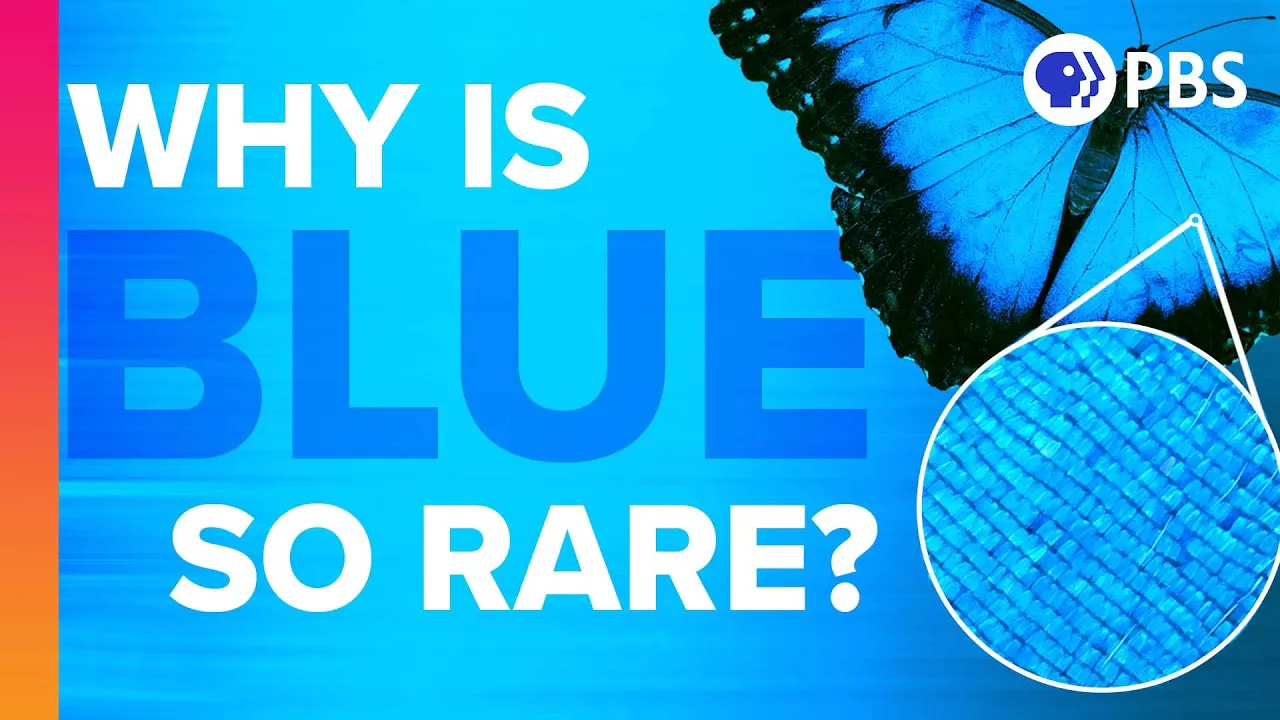
    Why Is Blue So Rare In Nature?

    Duh, except for the sky… and the ocean… Don't miss our next video! SUBSCRIBE! ►► http://bit.ly/iotbs_sub ↓↓↓ More info and sources below ↓↓↓ Uploaded 09-01-18 Among living things, the color blue is oddly rare. Blue rocks, blue sky, blue water, sure. But blue animals? They are few and far between. And the ones that do make blue? They make it in some very strange and special ways compared to other colors. In this video, we'll look at some very cool butterflies to help us learn how living things make blue, and why this beautiful hue is so rare in nature. SPECIAL THANKS: Smithsonian Institution - National Museum of Natural History Bob Robbins, Ph.D. - Curator of Lepidoptera Juan Pablo Hurtado Padilla - Microscope Educator Richard Prum, Ph.D. - Yale University Vinothan Manoharan, Ph.D. - Harvard University SOURCES: Bagnara, J. T., Fernandez, P. J., and Fujii, R. (2007). On the blue coloration of vertebrates. Pigment Cell and Melanoma Research, 20(1), 14-26. Cuthill, I. C., Allen, W. L., Arbuckle, K., Caspers, B., Chaplin, G., Hauber, M. E., ... and Mappes, J. (2017). The biology of color. Science, 357(6350), eaan0221. Kinoshita, S., Yoshioka, S., and Miyazaki, J. (2008). Physics of structural colors. Reports on Progress in Physics, 71(7), 076401. Kinoshita, S. (2008). Structural colors in the realm of nature. World Scientific. Prum, R. O., Quinn, T., and Torres, R. H. (2006). Anatomically diverse butterfly scales all produce structural colours by coherent scattering. Journal of Experimental Biology, 209(4), 748-765. Vukusic, P., and Sambles, J. R. (2003). Photonic structures in biology. Nature, 424(6950), 852-855. Vukusic, P., Sambles, J. R., Lawrence, C. R., and Wootton, R. J. (1999). Quantified interference and diffraction in single Morpho butterfly scales. Proceedings of the Royal Society of London B: Biological Sciences, 266(1427), 1403-1411. ----------- FOLLOW US: Merch: https://store.dftba.com/collections/its-okay-to-be-smart Facebook: http://www.facebook.com/itsokaytobesmart Twitter:@DrJoeHanson @okaytobesmart Tumblr: http://www.itsokaytobesmart.com Instagram: @DrJoeHanson ----------- It's Okay To Be Smart is hosted by Joe Hanson, Ph.D. Director: Joe Nicolosi Writer: Joe Hanson, Ph.D. Producer/editor/animator: Jordan Husmann Producer: Stephanie Noone and Amanda Fox Produced by PBS Digital Studios Music via APM Learn more about your ad choices. Visit megaphone.fm/adchoices Learn more about your ad choices. Visit megaphone.fm/adchoices

  • Today · 9 min

    Is Your Brain Too Worn Out For Video Games?

    Viewers like you help make PBS (Thank you 😃) . Support your local PBS Member Station here: https://to.pbs.org/PBSDSDonate Get your #ididascience shirt here! http://dftba.com/besmart ↓ More info and sources below ↓ Vintage arcade footage courtesy of: http://patrickscottpatterson.com/ Special thanks to Dreamhack Austin 2016: http://dreamhackaustin.com/ Thank you to our commentators: @Totalbiscuit https://www.youtube.com/cynicalbrit @EGiNcontroL https://www.facebook.com/GeoffRobinsoniNcontroL References: Thompson, Joseph J., Mark R. Blair, and Andrew J. Henrey. "Over the hill at 24: persistent age-related cognitive-motor decline in reaction times in an ecologically valid video game task begins in early adulthood." PloS one 9.4 (2014): e94215. Thompson, Joseph J., et al. "Video game telemetry as a critical tool in the study of complex skill learning." PloS one 8.9 (2013): e75129. Lewis, Joshua M., Patrick Trinh, and David Kirsh. "A corpus analysis of strategy video game play in starcraft: Brood war." Proceedings of the 33rd annual conference of the cognitive science society. 2011. ESA Essential Facts About the Computer and Video Game Industry 2016 http://essentialfacts.theesa.com/ ---- Have an idea for an episode or an amazing science question you want answered? Leave a comment or check us out at the links below! Like us on Facebook: http://www.facebook.com/itsokaytobesmart Follow on Twitter: http://twitter.com/okaytobesmart http://twitter.com/jtotheizzoe Follow on Tumblr: http://www.itsokaytobesmart.com Follow on Instagram: http://instagram.com/jtotheizzoe Follow on Snapchat: YoDrJoe ----------------- It’s Okay To Be Smart is written and hosted by Joe Hanson, Ph.D. Follow me on Twitter: @jtotheizzoe Produced by PBS Digital Studios: http://www.youtube.com/user/pbsdigitalstudios Music via APM Stock images from SciencePhoto http://www.sciencephoto.com/ and Shutterstock http://www.shutterstock.com Stock footage from Videoblocks (unless otherwise noted) http://www.videoblocks.com​ Learn more about your ad choices. Visit megaphone.fm/adchoices

  • Today · 15 min

    Are Humans Still Evolving?

    Follow me to @pbsorigins! https://www.youtube.com/c/pbsorigins We’re on PATREON! Join the community https://www.patreon.com/itsokaytobesmart ↓↓↓ More info and sources below ↓↓↓ Uploaded 19-05-22 We’re living longer. Dying less. Human life expectancy has doubled in just a couple centuries. Machines and meals and medicines keeping us alive long past the age where we can make babies. Does this mean our species is no longer under the influence of natural selection? Have humans stopped evolving? ----------- Special thanks to our Brain Trust Patrons: Ali Freiburger Mehdi Damou Barbora Bei Ken Board Clinger-Hamilton Family Attila Pix Burt Humburg DeliciousKashmiri Roy Lasris dani bowman David Johnston Salih Arslan Baerbel Winkler Robert Young Amy Sowada Eric Meer Dustin Karen Haskell Join us on Patreon! https://patreon.com/itsokaytobesmart Twitter http://www.twitter.com/DrJoeHanson http://www.twitter.com/okaytobesmart Instagram http://www.instagram.com/DrJoeHanson http://www.instagram.com/okaytobesmart Merch https://store.dftba.com/collections/its-okay-to-be-smart Facebook https://www.facebook.com/itsokaytobesmartpbs/ Learn more about your ad choices. Visit megaphone.fm/adchoices Learn more about your ad choices. Visit megaphone.fm/adchoices

  • Today · 7 min

    The Science of Rainbows

    PBS Member Stations rely on viewers like you. To support your local station, go to: http://to.pbs.org/DonateOKAY ↓ More info and sources below ↓ Uploaded 01-07-13 Dorothy went over one. LeVar Burton read to us under one. In a song, Kermit the Frog connected us to one. Even Mork's suspenders were made of them. Our culture, and our skies, are full of rainbows, but do you know how they form? Do we all see the same rainbow? Could cyborg-enhanced mantis shrimp eyes someday see a bigger rainbow? The answer to all these questions involves a little physics, and the number 42. Written and hosted by Joe Hanson Produced by Painted On Productions (http://www.paintedon.com/) ----------- Join us on Patreon! https://patreon.com/itsokaytobesmart Twitter http://www.twitter.com/DrJoeHanson http://www.twitter.com/okaytobesmart Instagram http://www.instagram.com/DrJoeHanson http://www.instagram.com/okaytobesmart Merch https://store.dftba.com/collections/its-okay-to-be-smart Facebook https://www.facebook.com/itsokaytobesmartpbs/ Learn more about your ad choices. Visit megaphone.fm/adchoices Learn more about your ad choices. Visit megaphone.fm/adchoices

  • Yesterday · 20 min

    Why the Plastic Pollution Problem Is So Much Worse Than You Think

    Can we really clean our way out of this problem? We’re on PATREON! Join the community https://www.patreon.com/itsokaytobesmart ↓↓↓ More info and sources below ↓↓↓ Uploaded 06-01-22 There’s been a lot of talk on YouTube lately about ocean plastic pollution and #TeamSeas. But there hasn’t been enough talk about the **ridiculously unthinkable scale of the ocean plastic pollution problem** or how it intersects with other environmental issues like climate change. And here’s a big spoiler alert: Nearly all environmental scientists agree that ocean plastic pollution isn’t a problem we can clean our way out of. So what CAN we do? That’s what this video is about. Detailed references and annotations: https://sites.google.com/view/besmart-plasticpollution/home We’d like to thank the following researchers for helpful interviews and background materials for this episode: Winnie Lau - Pew Charitable Trusts Dr. Max Liboiron - Civic Laboratory for Environmental Action Research (CLEAR) Dr. Miriam Goldstein 0:00 Intro 1:21 History of plastic 2:59 How much plastic are we making? 4:28 Plastic is petroleum 5:29 How much plastic is in the ocean? 7:38 How plastic gets to the ocean 9:09 Can we clean our way out of this? 10:30 The ACTUAL solutions 13:09 Final thoughts ----------- Special thanks to our Brain Trust Patrons: Barbora Bei Ken Board The Clinger-Hamilton Family Attila Pix Burt Humburg DeliciousKashmiri Brian Chang Roy Lasris dani bowman David Johnston Salih Arslan Baerbel Winkler Robert Young Amy Sowada Eric Meer Dustin Karen Haskell AlecZero Join us on Patreon! https://patreon.com/itsokaytobesmart Twitter http://www.twitter.com/DrJoeHanson http://www.twitter.com/okaytobesmart Instagram http://www.instagram.com/DrJoeHanson http://www.instagram.com/okaytobesmart Merch https://store.dftba.com/collections/its-okay-to-be-smart Facebook https://www.facebook.com/itsokaytobesmartpbs/ Learn more about your ad choices. Visit megaphone.fm/adchoices Learn more about your ad choices. Visit megaphone.fm/adchoices

  • Yesterday · 11 min

    Why Is Sleep Necessary?

    Viewers like you help make PBS (Thank you 😃) . Support your local PBS Member Station here: https://to.pbs.org/PBSDSDonate …and how did it evolve in the first place? Tweet ⇒ http://bit.ly/OKTBSsleep Share on FB ⇒ http://bit.ly/OKTBSsleepFB ↓ More info and sources below ↓ Why do we sleep? We spend a third of our lives in slumber, but science has yet to determine exactly why we have do it. Here’s a look at how sleep works, why we’re not getting enough sleep, what happens if you DON’T sleep, and an idea about where sleep came from in the first place. Follow me to The Good Stuff’s sleep playlist: https://youtu.be/RHCcM7LyZdc?list=PLsRLUurFnvvUCysDQrFvGL0nxN6Eha93s Also check out BrainCraft: https://youtu.be/yv-XNKK9laE https://youtu.be/ZPpvS9wDOcA For more, read: “Dreamland: Adventures in the Strange Science of Sleep” by David K. Randall http://amzn.to/1MB38dt "The Universal Pastime: Sleep and Rest Explained" by Dr Richard Horner http://amzn.com/B00NT9O60O Cool research on melatonin in sea worm larvae: http://www.nytimes.com/2014/10/02/science/the-evolution-of-sleep-700-million-years-of-melatonin.html Have an idea for an episode or an amazing science question you want answered? Leave a comment or check us out at the links below! Follow on Twitter: http://twitter.com/okaytobesmart http://twitter.com/jtotheizzoe Follow on Tumblr: http://www.itsokaytobesmart.com Follow on Instagram: http://instagram.com/jtotheizzoe Follow on Snapchat: YoDrJoe ----------------- It’s Okay To Be Smart is written and hosted by Joe Hanson, Ph.D. Follow me on Twitter: @jtotheizzoe Email me: itsokaytobesmart AT gmail DOT com Facebook: http://www.facebook.com/itsokaytobesmart For more awesome science, check out: http://www.itsokaytobesmart.com Produced by PBS Digital Studios: http://www.youtube.com/user/pbsdigitalstudios Joe Hanson - Creator/Host/Writer Joe Nicolosi - Director Amanda Fox - Producer, Spotzen Inc. Kate Eads - Producer Andrew Matthews - Editing/Motion Graphics/Animation Arts & Labor - Motion Graphics Katie Graham - Camera John Knudsen - Gaffer Theme music: “Ouroboros” by Kevin MacLeod Other music via APM Stock images from Shutterstock, stock footage from Videoblocks (unless otherwise noted)​ Learn more about your ad choices. Visit megaphone.fm/adchoices

  • Yesterday · 9 min

    Why Do We Smile?

    Viewers like you help make PBS (Thank you 😃) . Support your local PBS Member Station here: https://to.pbs.org/PBSDSDonate Several jokes were harmed in the making of this video Don’t miss our next video! SUBSCRIBE! ►► http://bit.ly/iotbs_sub ↓ More info and sources below ↓ T-SHIRTS! http://dftba.com/besmart Laughing is a universal human behavior, one that transcends borders of language and culture. But it's also REALLY WEIRD. Why do we do it? The answer has less to do with humor than you might think Learn more: "Laughter: A Scientific Investigation" by Robert Provine http://amzn.to/1fzZQLy "Ha! The Science of When We Laugh and Why" by Scott Weems http://amzn.to/1etLLyv Have an idea for an episode or an amazing science question you want answered? Leave a comment or check us out at the links below! Follow on Twitter: http://twitter.com/okaytobesmart http://twitter.com/jtotheizzoe Follow on Tumblr: http://www.itsokaytobesmart.com Follow on Instagram: http://instagram.com/jtotheizzoe ----------------- It's Okay To Be Smart is written and hosted by Joe Hanson, Ph.DFollow me on Twitter: @jtotheizzoe Email me: itsokaytobesmart AT gmail DOT com Facebook: http://www.facebook.com/itsokaytobesmart Google+ https://plus.google.com/+itsokaytobesmart For more awesome science, check out: http://www.itsokaytobesmart.com Produced by PBS Digital Studios: http://www.youtube.com/user/pbsdigitalstudios Joe Hanson - Creator/Host/Writer Joe Nicolosi - Director Amanda Fox - Producer, Spotzen IncKate Eads - Producer Andrew Matthews - Editing/Motion Graphics/Animation Katie Graham - Camera John Knudsen - Gaffer Theme music: "Ouroboros" by Kevin MacLeod Other music via APM Stock images from Shutterstock, stock footage from Videoblocks ----------------- More videos: Why Does February Have 28 Days? https://www.youtube.com/watch?v=AgKaHTh-_Gs Why Vaccines Work https://www.youtube.com/watch?v=3aNhzLUL2ys Why Are Some People Left-Handed? https://www.youtube.com/watch?v=NPvMUpcxPSA Where Does the Smell of Rain Come From? https://www.youtube.com/watch?v=lGcE5x8s0B8​ Learn more about your ad choices. Visit megaphone.fm/adchoices

  • Yesterday · 7 min

    Why Are Cicadas So Excellent At Math?

    Viewers like you help make PBS (Thank you 😃) . Support your local PBS Member Station here: https://to.pbs.org/PBSDSDonate Subscribe so you don't miss any cool science ►► http://bit.ly/iotbs_sub Follow me to Gross Science: http://youtu.be/IDBkj3DjNSM ↓ More info and sources below ↓ Do periodical cicadas "know" how to calculate prime numbers? One of the strangest life cycles in all of biology, explained! Special thanks to Samuel Orr (www.motionkicker.com) for the beautiful cicada footage! Learn more about magicicadas at http://www.magicicada.org/ Have an idea for an episode or an amazing science question you want answered? Leave a comment or check us out at the links below! Our website: http://www.itsokaytobesmart.com Follow on Instagram: http://instagram.com/DrJoeHanson http://instagram.com/okaytbesmart ----------------- It's Okay To Be Smart is written and hosted by Joe Hanson, Ph.D Email me: itsokaytobesmart AT gmail DOT com Facebook: http://www.facebook.com/itsokaytobesmart For more awesome science, check out: http://www.itsokaytobesmart.com Produced by PBS Digital Studios: http://www.youtube.com/user/pbsdigitalstudios Joe Hanson - Creator/Host/Writer Joe Nicolosi - Director Amanda Fox - Producer, Spotzen IncKate Eads - Producer Andrew Matthews - Editing/Motion Graphics/Animation Katie Graham - Camera John Knudsen - Gaffer Theme music: "Ouroboros" by Kevin MacLeod Other music via APM Stock images from Shutterstock, stock footage from Videoblocks ----------------- More videos: Why Does February Have 28 Days? https://www.youtube.com/watch?v=AgKaHTh-_Gs Why Vaccines Work https://www.youtube.com/watch?v=3aNhzLUL2ys Why Are Some People Left-Handed? https://www.youtube.com/watch?v=NPvMUpcxPSA Where Does the Smell of Rain Come From? https://www.youtube.com/watch?v=lGcE5x8s0B8 Learn more about your ad choices. Visit megaphone.fm/adchoices

  • Yesterday · 10 min

    Why Do Disney Princesses All Look Like Babies?

    Thanks to Wix for supporting PBS Digital Studios. To learn more: https://Wix.com/go/OKAY Help us out and complete the 2018 PBS Digital Studios survey! https://to.pbs.org/2018YTSurvey ↓↓↓ More info and sources below ↓↓↓ Uploaded 07-08-18 I noticed something weird about Disney Princesses lately. Naturally, I had to examine it through the lens of science. The answer led me to new knowledge about human development, the domestication and taming of animals, and why we find things cute in the first place. You’ll never look at cartoons the same way again Siberian silver fox footage courtesy of Lee Alan Dugatkin and Lyudmila Trut. Check out their book “How to Tame a Fox (and Build a Dog)” to learn more, it’s great! https://press.uchicago.edu/ucp/books/book/chicago/H/bo25568406.html Skull reproductions courtesy of Boneclones: https://boneclones.com/ REFERENCES: Gould, Stephen Jay “Biological Homage to Mickey Mouse” https://faculty.uca.edu/benw/biol4415/papers/Mickey.pdf Bogin, B. (1990). The evolution of human childhood. Bioscience, 40(1), 16-25. PDF: http://bit.ly/2vDb3Vy Somel, M., Franz, H., Yan, Z., Lorenc, A., Guo, S., Giger, T., ... and Webster, M. J. (2009). Transcriptional neoteny in the human brain. Proceedings of the National Academy of Sciences, 106(14), 5743-5748. ----------- FOLLOW US: Twitter: @DrJoeHanson @okaytobesmart Instagram: @DrJoeHanson Merch: https://store.dftba.com/collections/its-okay-to-be-smart Facebook: http://www.facebook.com/itsokaytobesmart BOOKS WE’VE FEATURED: http://smart-books.tumblr.com/ ----------- It’s Okay To Be Smart is hosted by Joe Hanson, Ph.D. Director: Andrew Matthews Writer: Andrew Matthews Creative Director: David Schulte Editor/animator: Derek Borsheim Producers: Stephanie Noone and Amanda Fox Produced by PBS Digital Studios Music via APM Stock images from Shutterstock http://www.shutterstock.com Learn more about your ad choices. Visit megaphone.fm/adchoices Learn more about your ad choices. Visit megaphone.fm/adchoices

  • Yesterday · 7 min

    Barrage of the Cosmic Space Junk!

    Viewers like you help make PBS (Thank you 😃) . Support your local PBS Member Station here: https://to.pbs.org/PBSDSDonate No Sandra Bullocks were harmed in the making of this video. Tweet this video ⇒ http://bit.ly/OKTBSjunk Share on FB ⇒ http://bit.ly/OKTBSjunkFB ↓ More info and sources below ↓ Window chip in the ISS: http://www.esa.int/spaceinimages/Images/2016/05/Impact_chip The extent of space debris: http://www.esa.int/spaceinvideos/Videos/2013/04/Space_debris_story Where did all that debris come from? http://blogs.scientificamerican.com/guest-blog/where-did-all-that-space-debris-come-from/ USSTRATCOM space surveillance fact sheet: https://www.stratcom.mil/factsheets/11/Space_Control_and_Space_Surveillance/ This is cool: http://stuffin.space/ Every satellite orbiting Earth, visualized: http://qz.com/296941/interactive-graphic-every-active-satellite-orbiting-earth/ 8 weird pieces of space junk: http://www.wired.com/2009/02/spacestuff/ Project West Ford: http://www.wired.com/2013/08/project-west-ford/ STK animation courtesy of Analytical Graphics, Inc. Get yourself an awesome IOTBS shirt! http://dftba.com/besmart ---------------- It’s Okay To Be Smart is written and hosted by Joe Hanson, Ph.D. Have an idea for an episode or an amazing science question you want answered? Leave a comment or check us out at the links below! Facebook: http://www.facebook.com/itsokaytobesmart Twitter: http://twitter.com/okaytobesmart http://twitter.com/jtotheizzoe Tumblr: http://www.itsokaytobesmart.com Instagram: http://instagram.com/jtotheizzoe Snapchat: YoDrJoe Produced by PBS Digital Studios Music via APM Stock images from SciencePhoto http://www.sciencephoto.com/ and Shutterstock http://www.shutterstock.com Stock footage from Videoblocks (unless otherwise noted) http://www.videoblocks.com Learn more about your ad choices. Visit megaphone.fm/adchoices

  • Yesterday · 6 min

    When Will We Stop Consuming Oil?

    Viewers like you help make PBS (Thank you 😃) . Support your local PBS Member Station here: https://to.pbs.org/PBSDSDonate Check out our whole series on ENERGY! http://bit.ly/1BnH5zu Subscribe: http://bit.ly/iotbs_sub Twitter: @okaytobesmart ↓ More info and sources below ↓ We've heard news of "peak oil" and "the end of the oil age" for years now, but we keep coming up with ways to find and pump more of it to the surface. Rising CO2 levels and the changing climate that results from burning fossil fuels mean that we should probably stop using oil sooner rather than later, though Let's take a look at history and see how we've used different fuels, so that we might figure out when and how to make oil a thing of the past LEARN MORE: Special thanks to Sheril Kirshenbaum and the Webber Energy Group at the University of Texas at Austin for their help with this series. http://www.webberenergygroup.com/ Check out their awesome online course "Energy 101" to learn about energy and energy policy from A to Z! http://www.energy101.com/ And to find out what people think about energy, check out the UT Energy Poll: http://www.utenergypoll.com/ Have an idea for an episode or an amazing science question you want answered? Leave a comment or check us out at the links below! Follow on Twitter: http://twitter.com/okaytobesmart http://twitter.com/jtotheizzoe Follow on Tumblr: http://www.itsokaytobesmart.com Follow on Instagram: http://instagram.com/jtotheizzoe ----------------- It's Okay To Be Smart is written and hosted by Joe Hanson, Ph.DFollow me on Twitter: @jtotheizzoe Email me: itsokaytobesmart AT gmail DOT com Facebook: http://www.facebook.com/itsokaytobesmart Google+ https://plus.google.com/+itsokaytobesmart For more awesome science, check out: http://www.itsokaytobesmart.com Produced by PBS Digital Studios: http://www.youtube.com/user/pbsdigitalstudios Joe Hanson - Creator/Host/Writer Joe Nicolosi - Director Amanda Fox - Producer, Spotzen IncKate Eads - Associate Producer Andrew Matthews - Editing/Motion Graphics/Animation Katie Graham - Director of Photography John Knudsen - Gaffer Theme music: "Ouroboros" by Kevin MacLeod Other music via APM Stock images from Shutterstock, stock footage from Videoblocks ----------------- Last week's video: Does the Moon Orbit the Earth? https://www.youtube.com/watch?v=3cJ3AemeUFM More videos: Why Does February Have 28 Days? https://www.youtube.com/watch?v=AgKaHTh-_Gs Why Vaccines Work https://www.youtube.com/watch?v=3aNhzLUL2ys Why Are Some People Left-Handed? https://www.youtube.com/watch?v=NPvMUpcxPSA Where Does the Smell of Rain Come From? https://www.youtube.com/watch?v=lGcE5x8s0B8 Learn more about your ad choices. Visit megaphone.fm/adchoices

Showing 1–20 of 384 episodes