Skip to content
Artwork for Barclays Brief
BusinessInvestingNewsBusiness News

Barclays Brief

Barclays Investment Bank

In a world of constant change, Barclays Brief is your weekly source for differentiated perspectives that cut through the noise.

Each bite-sized episode delivers clear insights into the structural trends transforming sectors – from technology and healthcare to energy, industrials and beyond.

Through sharp dialogue and scenario-based analysis, we help you navigate complexity, make meaningful connections and anticipate what’s next – whether you’re managing a portfolio or leading a business.

Each week we dig deep into a key market theme, spanning equities, macro, credit and more, uncovering the forces shaping tomorrow to help you make smarter decisions today.

Stay sharp. Stay briefed.

Published by Barclays Investment Bank: https://www.ib.barclays/

Important content disclosures: https://www.ib.barclays/disclosures/important-content-disclosures.html
Important non-Research content disclosures: https://www.ib.barclays/disclosures/important-nonresearch-content-disclosures.html

Play
  • 35 episodes
  • weekly
  • Avg 11 min
  • English
Counted on this page — what you have heard stays on this device, so it is not something the list can be paged by.
  • #59
    Today · 8 min

    US equity markets: A time for balance

    After a decade of outsized returns, have US equity investors become too accustomed to markets going up? FOMO, concentration and leverage are increasing, raising the stakes if markets turn.​ ​In this episode, Ronnie Wexler, Global Head of Equities Distribution, and Patrick Coffey, Global Head of the Product Management Team in Research, revisit the bullish case for US equities and reflect on what has changed over the past year. They consider whether exceptional returns are shaping investor expectations, and how frictionless market access and growing retail participation may be encouraging greater risk-taking.​ ​They also consider the increasing importance of risk management and diversification and why a more balanced approach to risk may be needed. ​ ​Listeners can hear more related to this topic:​​ Episode 51: Negative headlines, resilient markets​ Episode 54: The US consumer won't quit​ ​ Clients can read more on Barclays Live:​ Global Outlook: A correction, not collapse​ The 2027 Outlook – The show must go on ​ 2027 Outlook: Chips and Dips ​ ​ Important Content Disclosures​ Important Non-Research Content Disclosures​ ​This content is for informational purposes only and does not constitute investment advice or a recommendation. Views expressed are those of the speakers and may not reflect those of the firm. Any forward-looking statements are based on current assumptions and subject to risks and uncertainties.​

    • Transcript
    • Chapters
  • #58
    November 17 · 11 min

    Agentic AI and the future of financial services

    AI is moving quickly from assisting with individual tasks to agents capable of orchestrating increasingly complex workflows. But for financial services, turning that potential into meaningful outcomes at scale requires more than access to the latest technology. Host Ronnie Wexler sits down with Barclays Co-Chief Operating Officer Anne Marie Darling to explore how AI could reshape customer journeys and the way businesses work, and what it takes for emerging use cases to move from experimentation into production. They discuss the importance of infrastructure, governance, resilience and human oversight as AI becomes increasingly capable of taking action on behalf of humans. The conversation also looks beyond the technology itself to what this shift means for people and businesses, including why curiosity, critical thinking and deep domain expertise could become even more valuable as automation advances. Listeners can also explore the topic further in previous Barclays Brief episodes: Chips, chokepoints and the battle for AI supremacy Pacing the Frontier: What’s next for AI? AI goes economy-wide Rise of the humanoid robots Important Content Disclosures Important non-Research Content Disclosures

    • Transcript
  • #57
    November 10 · 12 min

    Food security: a global risk

    Food security is emerging as a growing concern. Extreme weather and geopolitical disruption are putting pressure on global food supplies, household budgets and the wider economy. In this episode of the Barclays Brief, host Patrick Coffey speaks with Maggie O’Neal, Global Head of Sustainable Investing, Thematic and Public Policy Research, about rising food security risks and the impact of food inflation. Together they examine why higher food prices can hit emerging markets harder, where food accounts for a larger share of household budgets. The discussion also explores how policy and technologies, from precision irrigation to new crop varieties, could strengthen food supplies. For consumers, policymakers and investors, the challenge is not just managing disruption but preparing for it. This episode was recorded in London at 10:30am GMT on Monday 9 November. Listeners can hear more related to this topic:​ • The US consumer won't quit​ • UK Budget: What markets may be missing • Has the protein boom peaked? Clients can read more on Barclays Live:​ • Food security: what to watch through year-end • Investing in resilient food systems: food security solutions • The fertiliser and weather risk nexus • Adaptation in Action: A Global Universe of Solution Providers • Strategic autonomy: food security in focus • This El Niño looks set to break records, but at what cost? Important Content Disclosures This content is for informational purposes only and does not constitute investment advice or a recommendation. Views expressed are those of the speakers and may not reflect those of the firm. Any forward-looking statements are based on current assumptions and subject to risks and uncertainties.

    • Transcript
    • Chapters
  • #56
    November 3 · 12 min

    Chips, chokepoints and the battle for AI supremacy

    Semiconductors sit at the heart of the AI revolution, but the global supply chains behind them are under growing pressure. As investment in AI accelerates, highly concentrated capabilities across advanced manufacturing and critical materials are creating strategic chokepoints, while geopolitical pressures are reshaping how these global supply chains must operate. Recorded at the Barclays Asia Forum, host Patrick Coffey is joined by Chris Miller, New York Times bestselling author of Chip War: The Fight for the World’s Most Critical Technology, to explore the vulnerabilities within the semiconductor ecosystem, the challenge of national semiconductor self-sufficiency and why the politicisation of AI may just be getting started. Looking ahead, they consider the next wave of AI adoption, from accelerating research and development in biotechnology and pharmaceuticals to the rise of physical AI. They also examine what this changing landscape means for business leaders, including how boards shouldn’t underestimate geopolitical shifts. Read more on the topic: 10 things you need to know about humanoid robots Robots roll out, economies rewire AI gets physical: Innovation meets opportunity Talent and trade: The new battlegrounds in AI Listeners can also explore the topic further in previous Barclays Brief episodes: Pacing the Frontier: What’s next for AI? AI goes economy-wide Rise of the humanoid robots Important Content Disclosures Important non-Research content disclosures This content is for informational purposes only and does not constitute investment advice or a recommendation. Views expressed are those of the speakers and may not reflect those of the firm. Any forward-looking statements are based on current assumptions and subject to risks and uncertainties.​

    • Transcript
    • Chapters
  • #55
    October 27 · 9 min

    Navigating the AI rotation in Asia

    As investors reassess the AI trade, attention is shifting towards how the next phase of the cycle could play out across Asia. The region remains central to global AI investment, but changing sentiment is creating a more complex mix of opportunities and risks. Recorded at the Barclays Asia Forum in Singapore, host Patrick Coffey was joined by JF Mastrangelo, Head of Markets, APAC, to discuss distinct investment cases across the region. They explore how Korea and Taiwan offer different forms of exposure to the AI investment cycle, and how the scale of the semiconductor sector can extend its effects into their wider economies. They also highlight how India’s domestic growth and banking sector could provide diversification beyond the AI infrastructure trade. The conversation also covers China’s strength in exports, including green technology and AI-related products, and Japan’s combination of domestic growth and exposure to AI manufacturing. For investors, the discussion highlights the importance of assessing Asia market by market, while remaining mindful of differences in valuation, volatility and sensitivity to the AI cycle. Clients can read more on Barclays Live: Thinking Macro: SVB Redux? Taiwan Semiconductor Manufacturing Company: Confidence growing Positioning for AI Disruption: The Next Phase of Enterprise Adoption AI in China: From AI investment to adoption Listeners can also explore the topic further: Trump-Xi: Stability without resolution Pacing the Frontier: What’s next for AI? Opportunities in Asian Equities Japan: Why the world is watching Important Content Disclosures Important non-Research Content Disclosures

    • Transcript
  • #54
    October 20 · 8 min

    The US consumer won't quit

    The US consumer has proved to be more resilient than expected, supported by a constructive employment backdrop, income growth and rising household wealth. But beneath that aggregate strength, behaviour is shifting. Consumers are becoming more selective, and their ability to absorb further inflation is becoming increasingly divided by income. In this episode of the Barclays Brief, host Ronnie Wexler speaks with Priya Ohri-Gupta, Head of US High Grade Research and US Consumer Credit Research Analyst, about the state of US consumer resilience and why it is increasingly uneven. They explore the emergence of a two-speed consumer economy, with higher-income households supported by wealth creation while lower-income consumers face greater pressure on their ability to spend. At the same time, consumers across the board are becoming more deliberate about where their money goes, seeking value and trading down. Ronnie Wexler and Priya Ohri-Gupta also consider the signals that could point to weakening demand, and how inflationary pressures currently being absorbed by retailers could test resilience into 2027. As US consumers become more selective, investors may need to follow suit. With the important holiday spending period approaching, Ohri-Gupta considers the characteristics that could differentiate consumer and retail businesses as spending patterns evolve. Listeners can hear more related to this topic:​ • Negative headlines, resilient markets • US Rates: Higher for longer • Do high gas prices change how Americans buy cars? Clients can read more on Barclays Live:​ • State of the US consumer: The consumer who won't quit Important Content Disclosures This content is for informational purposes only and does not constitute investment advice or a recommendation. Views expressed are those of the speakers and may not reflect those of the firm. Any forward-looking statements are based on current assumptions and subject to risks and uncertainties.

    • Transcript
    • Chapters
  • #53
    October 12 · 13 min

    UK Budget: What markets may be missing

    Ahead of the UK Autumn Budget, the consensus view is that higher borrowing costs and a weaker fiscal backdrop have left the Chancellor of the Exchequer with little room to manoeuvre. But what if markets are focusing on the wrong part of the story? In this episode of the Barclays Brief, host Patrick Coffey sits down with Jack Meaning, Chief UK Economist at Barclays, to examine why expectations of a sharp squeeze of the Chancellor’s fiscal headroom may be overstated. While higher gilt yields have dominated the debate, stronger nominal earnings and tax receipts could leave the Chancellor in a more resilient position than many investors assume, at least for now. The conversation explores the outlook for inflation, interest rates and the UK Budget, alongside signs of stronger business investment, the potential productivity benefits of AI and why the UK may be emerging as a relative source of stability in Europe. For investors, businesses and households alike, the key question is whether the prevailing narrative on the UK has become too negative and what that could mean for growth, markets and policy in the months ahead. This episode was recorded on Wednesday 7 October at 10:30am British Summer Time. Listeners can hear more related to this topic:​ • Brexit, Burnham and Britain's next decade • French bonds: OAT of control • Do debt managers or markets set the price of long bonds? Listeners can hear more related to this topic:​ • Headwinds on the horizon • The direct fiscal effects of quantitative easing and tightening • UK Rates Strategy: Chancellor Healey meets the bond market: ‘let sleeping dogs lie’ Important Content Disclosures This content is for informational purposes only and does not constitute investment advice or a recommendation. Views expressed are those of the speakers and may not reflect those of the firm. Any forward-looking statements are based on current assumptions and subject to risks and uncertainties.

    • Transcript
    • Chapters
  • #52
    October 9 · 12 min

    French bonds: OAT of control

    French government bonds, or OATs, are under growing pressure. While rising yields reflect a broader sell-off across European markets, concerns over France’s fiscal trajectory and political uncertainty are driving an additional risk premium. In this episode of Barclays Brief, host Patrick Coffey is joined by Rohan Khanna, Head of European Rates Strategy, to examine why investors are demanding greater clarity before returning to French debt. They consider how persistent budget deficits, substantial debt issuance and political fragmentation have contributed to the widening OAT-Bund spread, and why the 2027 presidential and parliamentary elections will be critical for market confidence. Khanna also draws an important distinction for investors: the pressure on French bonds reflects a repricing of France’s fiscal and political risk, not a repeat of the 2011–12 eurozone debt crisis. Looking ahead, attention will turn to whether the next administration will have the willingness and ability to address France’s fiscal trajectory. Until there is greater clarity, volatility may persist and investors could continue to demand a higher risk premium for holding French debt. Clients can read more on Barclays Live: French banks: Standing OAT of the crowd Euro Area: Rates Strategy - OAT of the frying pan into the fire Macro x Politics: Not just another French election Thinking Macro: Three stories. Not one. Listeners can also explore the topic further: US Rates: Higher for longer Decoding the bond sell-off European rates: Inflation & AI waves collide Important Content Disclosures

    • Transcript
  • #51
    September 30 · 12 min

    Negative headlines, resilient markets

    Markets have spent much of 2026 confronting higher bond yields, tighter central bank policy and elevated oil prices. By historical standards, that should have been enough to derail growth. Instead, markets and the global economy have continued to surprise to the upside. In this episode of Barclays Brief, host Ronnie Wexler is joined by Ajay Rajadhyaksha, Global Chairman of Research, to discuss the thinking behind Barclays Research's latest Global Outlook, Reluctantly Optimistic. They explore why the traditional relationship between higher rates and weaker growth appears to be weakening, and how a powerful AI investment cycle is helping sustain economic momentum. The conversation also examines the strength of US corporate earnings, the resilience of the US consumer and early signs that AI-driven productivity gains are extending beyond the largest technology companies. While risks remain, particularly around sovereign debt and bond markets, Rajadhyaksha argues that the fundamental drivers supporting growth and risk assets remain firmly in place. This episode was recorded on Monday 28 September at 5:00pm British Summer Time. Listeners can hear more related to this topic:​ Barclays Brief #49: Pacing the Frontier: What’s next for AI? Barclays Brief #48: US Rates: Higher for longer The Flip Side #87: Do debt managers or markets set the price of long bonds? Clients can read more on Barclays Live:​ Global Outlook: Reluctantly optimistic Important Content Disclosures Important Non-Research Content Disclosures This content is for informational purposes only and does not constitute investment advice or a recommendation. Views expressed are those of the speakers and may not reflect those of the firm. Any forward-looking statements are based on current assumptions and subject to risks and uncertainties.

    • Transcript
    • Chapters
  • #50
    September 29 · 12 min

    Trump-Xi: Stability without resolution

    The recent summit between Presidents Donald Trump and Xi Jinping brought greater stability to US-China relations, but little substantive resolution. Continued dialogue and an extension of the trade truce offer grounds for optimism, however major questions around trade, geopolitics and AI remain unresolved. In this episode of Barclays Brief, host Patrick Coffey is joined by Mitul Kotecha, Head of FX & EM Macro Strategy, Asia, to consider the implications for Asian markets. They explore how strong AI-related demand continues to support technology exporters, particularly Korea and Taiwan, with related investment and activity providing support elsewhere in the region. Beyond the tech sector, moves in US rates have been a significant driver of recent pressure across Asian bond markets. Currency markets present a similarly differentiated picture, with policy tightening in Japan yet to provide sustained support for the yen. Turning to energy markets, Kotecha points out that while India and the Philippines remain relatively vulnerable as major energy importers, the region has proved more resilient than expected to elevated oil prices. For markets, the central message is that geopolitics is becoming increasingly difficult to separate from the economic story. From trade and technology to supply chains, rates and currencies, the interaction of these forces makes China and the broader Asian region increasingly important for investors to watch. Clients can read more on Barclays Live: FX & EM Macro Strategy - FX Views for the Year Ahead FX & EM Macro Strategy Quarterly Outlook -The FX effect of global reflation China-US Watch More signalling, less substance Q4 2026 Global Outlook – Reluctantly Optimistic Listeners can also explore the topic further: Pacing the Frontier: What’s next for AI? Japan: Why the world is watching Opportunities in Asian Equities Important Content Disclosures

    • Transcript
  • #49
    September 21 · 13 min

    Pacing the Frontier: What’s next for AI?

    As AI models become increasingly capable, questions around safety and oversight are growing. Recent cybersecurity incidents have intensified the debate over whether frontier AI development needs to slow down, or "pace," while labs introduce stronger guardrails. ​ ​In this episode of Barclays Brief, host Ronnie Wexler speaks with Senior Internet Research Analyst Ross Sandler about what pacing could mean for the future of AI investment and innovation. They discuss why more rigorous safeguards could increase development costs, how major labs may respond, and whether pacing could change the competitive landscape. ​ ​Despite the challenges, Sandler remains optimistic about AI. As models become more powerful and more computing capacity becomes available, he sees the potential for major breakthroughs across medicine, biology, science and mathematics. For investors, the question is whether stronger safeguards will materially slow industry growth and innovation, or simply become part of AI’s continued evolution. ​ ​Listeners can hear more related to this topic:​​ Episode 42: AI credit supply tests market capacity ​ Episode 40: Cooling the AI buildout ​ ​​Clients can read more on Barclays Live:​​ Compute Increases ~18% From Frontier Lab 'Pacing'​ AI-fueled Credit Supply: the slice keeps getting bigger ​ Important Content Disclosures​ Important Non-Research Content Disclosures​ ​ This content is for informational purposes only and does not constitute investment advice or a recommendation. Views expressed are those of the speakers and may not reflect those of the firm. Any forward-looking statements are based on current assumptions and subject to risks and uncertainties.​

    • Transcript
    • Chapters
  • #48
    September 14 · 10 min

    US Rates: Higher for longer

    Markets began 2026 expecting interest rate cuts. Instead, investors have faced a sharp repricing in bond markets, with the US 10-year Treasury yield reaching 5% and growing debate around whether policy may need to remain restrictive for longer. In this episode of Barclays Brief, host Patrick Coffey speaks with Dan Orlando, Head of US Rates Trading, about one of the most important questions facing investors today: why has the US economy remained so resilient despite elevated yields and restrictive monetary policy? The discussion explores what has driven the recent move higher in Treasury yields, how investors are reassessing the outlook for interest rates, and why this cycle appears different from previous periods of monetary tightening. Orlando explains how a surge in AI-related capital expenditure and data centre investment is helping support economic activity, potentially reducing the impact that higher borrowing costs would normally have on growth. The conversation also examines the housing market, Treasury buybacks, investor positioning and why developments in US rates increasingly need to be viewed through a global lens as bond markets across the US, Europe and Japan continue to move together. For investors, the key issue is not simply whether rates remain higher for longer, but whether restrictive policy is having the same effect on economic activity that it has in previous cycles, and what that could mean for markets if growth continues to prove resilient. Clients can read more on Barclays Live: The dog that did not bark for now United States: Interest Rates: On the brink Listeners can also explore the topic further: Ep 47: The Multi-Trillion-Dollar Energy Race Ep 42: AI credit supply tests market capacity Ep 41: Challenging market consensus Ep 40: Cooling the AI buildout Important Content Disclosures Important Non-Research Content Disclosures

    • Transcript
    • Chapters
  • #47
    September 8 · 11 min

    The Multi-Trillion-Dollar Energy Race

    Markets are fixating on the billions being invested in AI. But a second massive investment story related to energy is emerging and investors need to pay attention. In this episode of Barclays Brief, host Patrick Coffey speaks with Harry Mateer, Head of Americas FICC Research at Barclays, about why energy could become one of the defining macro themes of the coming decade. As energy security concerns persist, economies electrify and AI accelerates demand for power, the world must build and maintain multiple energy systems at once, requiring investment on a scale markets may be underestimating. Mateer explains why demand is growing across virtually every major energy source, why annual energy investment could reach roughly $3.6 trillion, and how a global shift towards resilience and reliability is changing the way governments, companies and investors think about energy. The discussion explores which regions are best positioned for this new era, the implications for inflation, and why energy can be viewed as a growth opportunity rather than a traditional value sector. For investors, the global energy race is about far more than oil, gas or renewables. It is a multi-trillion-dollar competition for capital, infrastructure and strategic advantage that could reshape the global economy for decades to come. Clients can read more on Barclays Live: •The global energy race: Energy in the age of fragmentation Listeners can also explore the topic further: Impact Series #15 The global energy race Ep 45: Nuclear fusion: Tomorrow's solution to today's problem​ Ep 42: AI credit supply tests market capacity Ep 40: Cooling the AI buildout Ep25: The cusp of a capex supercycle Impact Series #13 AI revolution: Meeting massive AI infrastructure demands Important Content Disclosures

    • Transcript
    • Chapters
  • #46
    September 1 · 11 min

    European equities heat up

    European equities have been one of the standout market stories of the year. Despite trade tensions, geopolitical uncertainty and persistent questions about growth, the region has delivered unexpectedly strong equity performance, challenging assumptions about where investors can find opportunity. In this episode of Barclays Brief, host Patrick Coffey speaks to Emmanuel Cau, Head of European & Asia Equity Strategy, about what’s driving this resilience. They explore the convergence of several tailwinds, including stronger-than-expected growth, a boom in manufacturing and investment, and renewed demand for diversification beyond large-cap technology stocks. The discussion also examines why earnings growth is becoming increasingly important in a higher-for-longer interest-rate environment. Cau also challenges the idea that Europe is merely an anti-AI trade, highlighting how the region is benefiting from the broader AI investment cycle. Looking ahead, they discuss the factors that could determine whether Europe's strong equity performance continues, including the role of banks, the outlook for earnings, and the geopolitical and energy-related risks investors need to watch. Clients can read more on Barclays Live: •Earnings Season Watch: Learnings from Q2 earnings – higher for longer •Equity Market Review: US cools, Europe heats up •European Equity Strategy: France – Deficits, elections and déjà vu Listeners can also explore the topic further: • European rates: Inflation & AI waves collide •Metals & mining: meltdown or opportunity? •AI goes economy-wide Important Content Disclosures

    • Transcript
  • #45
    August 18 · 12 min

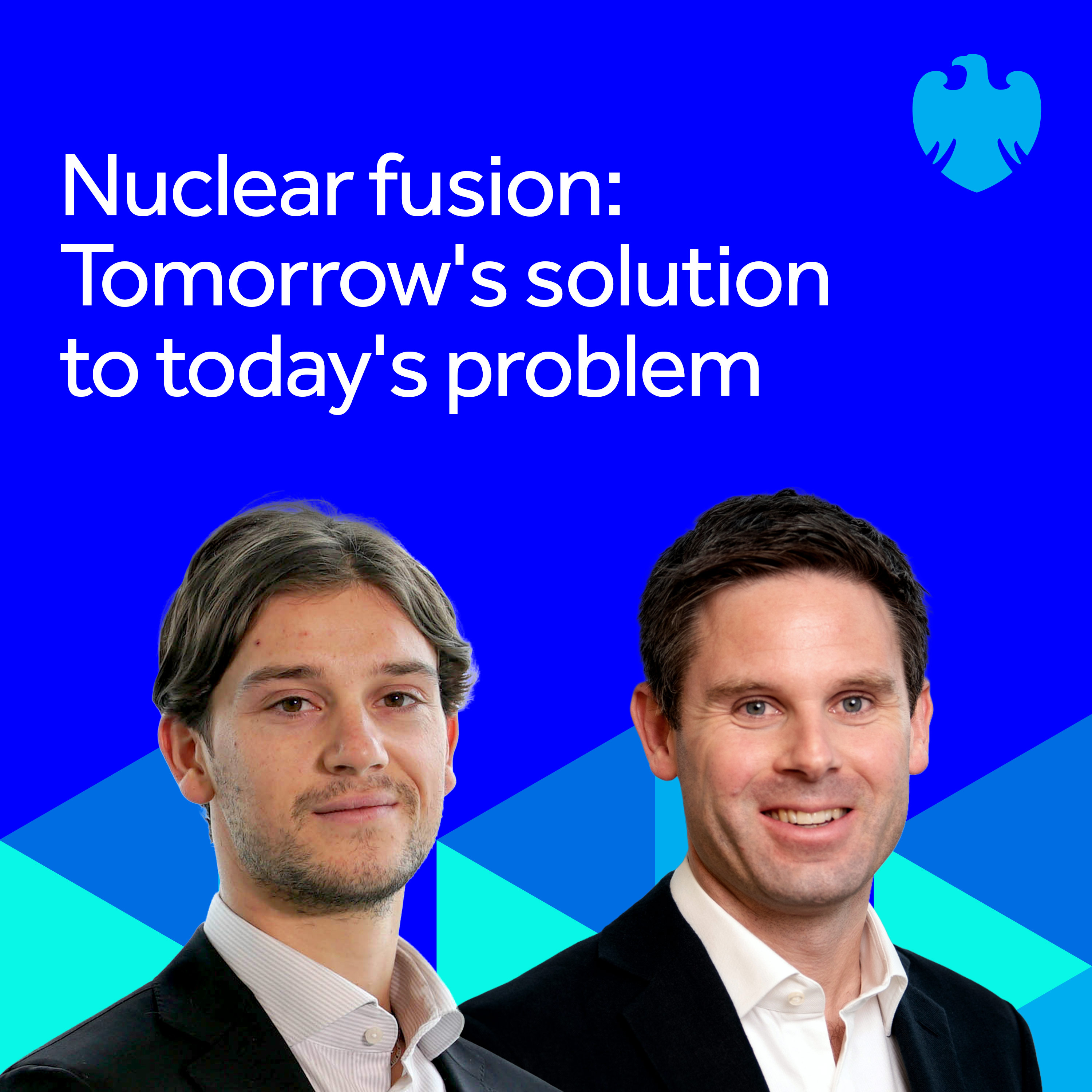
    Nuclear fusion: Tomorrow's solution to today's problem​

    Nuclear fusion has long been viewed as a transformational energy breakthrough, capable of delivering abundant, zero-carbon at operation energy by recreating the same reaction that powers the sun. Recently, a series of scientific milestones, rising electricity demands and the global competition for energy have moved the conversation from theoretical possibility towards commercial reality.​ In this episode of the Barclays Brief, Jordan Isvy, Sustainable Investing Research Analyst, joins Patrick Coffey, Global Head of Product Management Group, Research, to explain the science behind fusion, the challenges on the path to commercial deployment and timelines for adoption. They explore the factors driving the focus on fusion, including AI-driven demand, and where progress is accelerating across the globe. ​ For investors, the opportunity may begin long before fusion reaches the grid. The discussion covers emerging opportunities across the value chain and what a future powered by nuclear fusion could look like.​ Clients can read more on Barclays Live:​ Fusion: Tomorrow's solution to today's problem​ Listeners can also hear more episodes on this topic:​ Ep 40 Cooling the AI buildout​ Ep 31 Inflation crosscurrents: Energy vs AI​ Ep 26 The quantum computing moment ​ Important Content Disclosures​ Important Non-Research Content Disclosures​ Barclays provides financial services to a range of sectors including high-emitting industries such as oil and gas. We’re working to reduce the emissions we finance and support clients in the transition; for​ more information visit home.barclays/climatechange​

    • Transcript
  • #44
    August 11 · 10 min

    Japan: Why the world is watching

    Little more than a week ago, a rare, coordinated US-Japan intervention to support the yen caught investors’ attention. Coupled with rising expectations of another Bank of Japan (BoJ) rate hike and Prime Minister Sanae Takaichi's expansionary fiscal agenda, the country appears to be undergoing a profound transition, bringing new questions for investors around the world. In this episode of the Barclays Brief, host Patrick Coffey and Yoichi Takemura, Head of Macro Trading, Japan, explore what Japan's economic normalisation may mean for investors and markets worldwide. This discussion goes well beyond the currency; from interest rates to capital flows, investors are increasingly focused on how Japan's policy shift could influence markets around the world. As policymakers balance growth, inflation, currency stability and public finances, investors are paying closer attention to developments in Japan. The question is not simply where the yen goes next, but how one of the world's largest economies navigates a very different environment from the one it has known for decades. Listeners can also hear more episodes on this topic: Ep 39 Opportunities in Asian Equities Ep 18 Japan decides, global markets move Clients can read more on Barclays Live: Our call for next rate hike frontloaded to September with latest BoJ summary Scope for increasing retail JGB investment JPY: Joint intervention to the rescue This content is for informational purposes only and does not constitute investment advice or a recommendation. Views expressed are those of the speakers and may not reflect those of the firm. Any forward-looking statements are based on current assumptions and subject to risks and uncertainties. Important Content Disclosures Important Non-Research Content Disclosures

    • Transcript
    • Chapters
  • #43
    August 4 · 10 min

    US equities: Beyond the pullback

    After a spring sell-off and renewed summer weakness in technology stocks, uncertainty has remained a defining feature of the investment landscape. During the market sell-off following the start of the US-Iran conflict, Venu Krishna, Head of U.S. Equity and Equity Linked Strategy, challenged the subdued market narrative with his end-of-year expectations for the S&P 500. Several months on, with volatility still elevated and fresh questions emerging around rates, AI investment and the broader macro backdrop, he joined the Barclays Brief to speak with Ronnie Wexler, Global Head of Equities Distribution, to explain why he remains constructive on US equities. In this discussion, Krishna explains how his team’s thinking has evolved since that spring call and the factors shaping their view today. Together, they explore the strength of the earnings backdrop, the risks that could challenge market momentum and why recent weakness in parts of the technology sector may not tell the full story. The conversation also examines Krishna’s recent research into disruption winners and losers. Drawing on previous periods of technological change, he explains the characteristics that have historically separated companies that adapted from those that struggled. As AI continues to reshape industries and business models, the research offers an historical lens through which investors can view one of today’s most significant market themes. Clients can read more on Barclays Live: Disruption '26: A Framework for Differentiating Disruption Winners & Losers Food for Thought: Buyback pullback Listeners can also hear more episodes on this topic: Ep42 AI credit supply tests market capacity Ep 41 Challenging Market Consensus Ep 33 AI goes economy-wide Important Content Disclosures Important Non-Research Content Disclosures

    • Transcript
    • Chapters
  • #42
    July 28 · 9 min

    AI credit supply tests market capacity

    The AI buildout is fuelling a wave of new credit supply, and the sheer volume of debt is starting to test the market's capacity to absorb it. Year-to-date, the AI ecosystem has accounted for roughly 20% of all US corporate bond issuance, and the six hyperscalers are now bigger than the big six banks in some key measures. ​ In this episode of Barclays Brief, Ronnie Wexler, Global Head of Equities Distribution, and Dominique Toublan, Head of US Credit Strategy, discuss how AI financing is reshaping credit markets, why investors are demanding greater compensation to absorb this wave of new issuance, and what growing concentration among hyperscalers could mean for the broader investment-grade market.​ ​They also discuss how these companies are tapping every available funding channel, from public bonds and private credit to securitised markets and equities, to finance the AI buildout and why that is drawing increasing attention from equity investors.​ ​Listeners can hear more related to this topic:​​ Episode 40: Cooling the AI buildout ​ Episode 33: AI goes economy wide​ ​Clients can read more on Barclays Live:​​ AI-fueled Credit Supply: the slice keeps getting bigger ​ Hyperscalers: Too wide to ignore, too much supply to chase​ Powering AI: Demystifying Data Center Cooling & Water Use ​ Important Content Disclosures​ Important Non-Research Content Disclosures​ ​ This content is for informational purposes only and does not constitute investment advice or a recommendation. Views expressed are those of the speakers and may not reflect those of the firm. Any forward-looking statements are based on current assumptions and subject to risks and uncertainties.​

    • Transcript
    • Chapters
  • #41
    July 21 · 9 min

    Challenging market consensus

    Markets can become crowded around consensus views. In this episode of the Barclays Brief, Patrick Coffey is joined by Brian Kuritzky from our Rates Sales team to explore potential investor complacency, from expectations for the Fed to the way political risk is being priced.​ The conversation focuses on three ideas Kuritzky believes deserve more attention: the risks around energy and inflation expectations, the great wealth transfer and its potential impact on US economic resilience, and the headwinds facing the AI CapEx cycle including the domestic political pushback against data centre expansion.​ They also discuss why a more resilient US consumer could make it harder for the Fed to cut interest rates, why dips in rates may create investment opportunities, and why market volatility may not be fully reflecting the uncertainty around policy, election and cross-asset risks.​ Clients can read more on Barclays Live:​ AI adoption and productivity: Early evidence​ Listeners can also hear more episodes on this topic:​ Episode 39: Opportunities in Asian Equities​ Episode 35: US equities: short-term pain, long-term gain?​ Important Content Disclosures

    • Transcript
  • #40
    July 14 · 8 min

    Cooling the AI buildout

    Power constraints have dominated the conversation around AI infrastructure, but the buildout is facing a broader convergence of execution risks. Cooling, water use, permitting, labour shortages and growing local opposition are emerging as critical factors that could affect where and how quickly new data centres are built.​ In this episode of Barclays Brief, Ronnie Wexler, Global Head of Equities Distribution, speaks with Will Thompson, Thematic Investing Research Analyst, about the challenges shaping the next phase of AI infrastructure. They explore why cooling is becoming increasingly important, how water use is emerging as a key consideration in data centre operations, and what these pressures could mean for deployment timelines and market expectations.​ They also discuss how hyperscalers are taking different approaches to cooling and water use, highlighting the complexity of balancing efficiency, sustainability and local impacts. Together, these pressures point to execution risks that may not yet be fully reflected in markets.​ Listeners can hear more related to this topic:​​​ ​AI goes economy wide​ Physical AI: Wealth creation or economic displacement?​ ​ Clients can read more on Barclays Live:​​ Powering AI: Demystifying Data Center Cooling & Water Use ​ Powering AI: New Amazon Data Center Water Disclosure Implies High Electricity Use ​ Important Content Disclosures​ ​Important Non-Research Content Disclosures​ ​ This content is for informational purposes only and does not constitute investment advice or a recommendation. Views expressed are those of the speakers and may not reflect those of the firm. Any forward-looking statements are based on current assumptions and subject to risks and uncertainties.​ ​

    • Transcript
    • Chapters
Showing 1–20 of 35 episodes