
Attachment-Informed Therapy for Neurodivergent Parents: Why “Good Parenting” Can Look Different
Streams straight from the publisher. podnod never proxies or re-hosts episode audio.
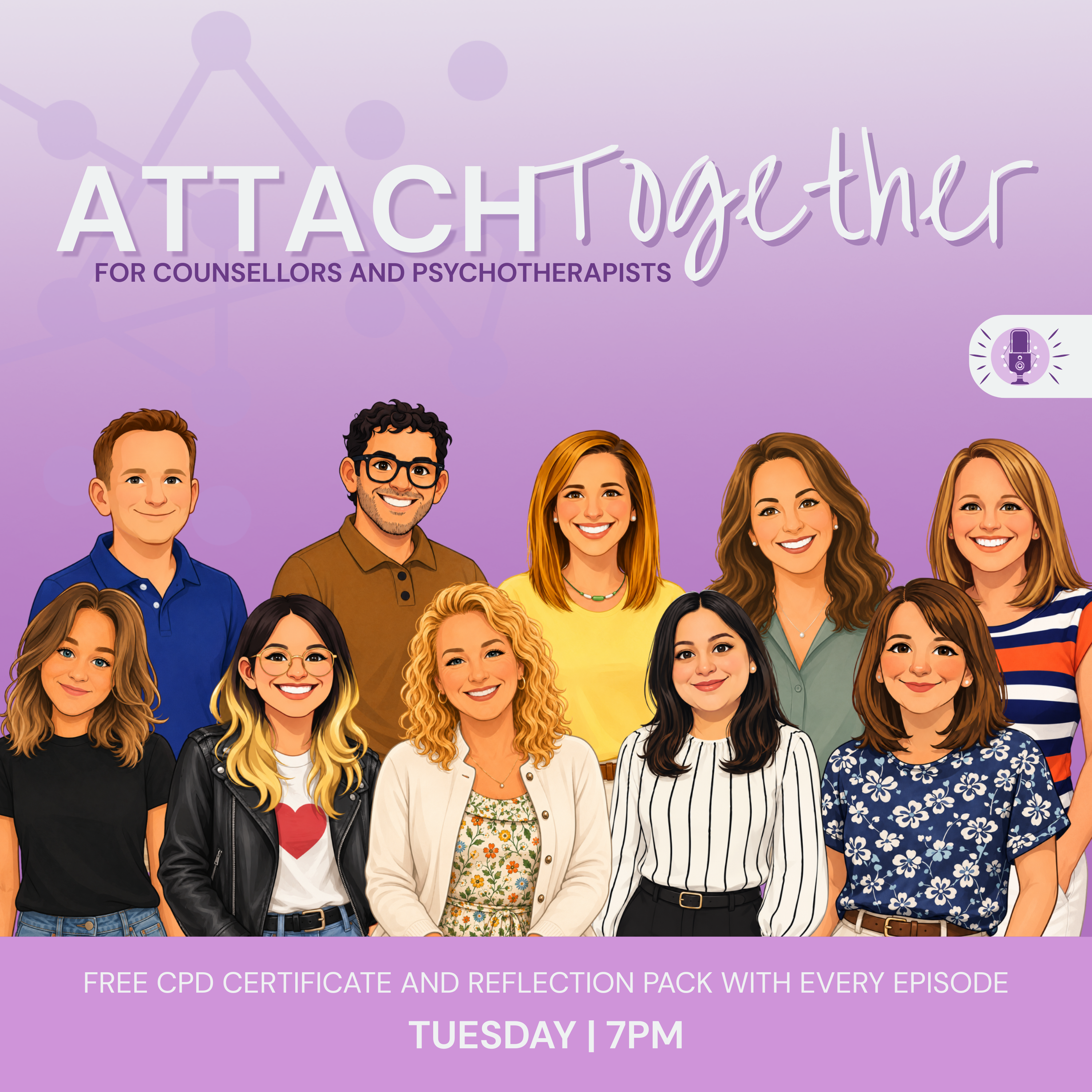
In this episode of Attach Together, Joanne Kay is joined by Lyn Coombs and Alison Cunningham to explore what therapists need to understand when working with parents of neurodivergent children.
Attachment-informed therapy for neurodivergent parents is an approach that offers relational safety, curiosity and non-judgement while helping parents explore their own emotional needs, attachment responses and experiences of caregiving.
The conversation considers how parents can become highly attuned to sensory, emotional and behavioural cues that others may not notice. This attunement can become a strength, but it may also leave parents feeling as though they are constantly anticipating difficulties, managing risk or “firefighting”.
In this episode, you will hear about:
- Why believing a parent’s experience is clinically important
- How societal judgement can become internalised as shame
- The difference between loving a child and enjoying every part of parenting
- Why parents may grieve expectations without rejecting their child
- How neurodivergent parenting can affect partners, siblings and wider relationships
- Why talking about the child may be a necessary starting point in therapy
- How therapists can notice body language, dysregulation and unspoken emotion
- The importance of allowing anger, guilt, pride, grief and love to coexist
- How attachment-informed therapy for neurodivergent parents can provide a secure, accepting base
Guests
Lyn Coombs is an attachment-based and person-centred counsellor specialising in bereavement, domestic abuse and work with parents of neurodivergent children and carers.
Alison Cunningham is an integrative counsellor who works with young people, including those with care experience, and with neurodivergent people.
Common questions
How can therapy support parents of neurodivergent children?
Therapy can offer a place where parents do not need to minimise, edit or justify their experiences. It can help them identify their own feelings, needs and attachment responses while remaining compassionate towards their child.
Can parents love their child and still feel angry or overwhelmed?
Yes. Love, pride, grief, frustration and exhaustion can exist at the same time. Conflicting emotions do not make someone a bad parent.
Why might a parent spend therapy talking mainly about their child?
Talking about the child may help the parent process experiences they have not previously felt safe enough to express. As trust develops, their own feelings and needs may become more accessible.
Chapters
00:00 Introduction to Attach Together
01:07 Meet Lyn Coombs and Alison Cunningham
02:27 Why parents need to be believed
04:43 Societal judgement and parenting blame
05:44 ADHD medication and the “marbles” analogy
07:43 Parenting styles, attachment and research
09:56 External pressures and parental guilt
11:31 Isolation and the shrinking village
13:00 Rethinking secure attachment in neurodivergent families
15:38 Parental self-doubt and intense attunement
18:00 Clinical dilemma: keeping therapy focused on the parent
19:30 Creating space for mixed emotions
22:30 Reading what is not being said
23:38 Shame, anger, grief and love
25:23 Effects on partners and siblings
26:13 Closing reflections
FREE CPD Certificate & Reflection Pack
You can download the FREE CPD Certificate for this episode via our website www.optimahealthservices.co.uk and join our listener list to receive the Reflection Pack for future episodes.
www.optimahealthservices.co.uk
optimahealthservices.co.uk