Attachment Ruptures in Therapy: What If Getting It Wrong Is Where Healing Begins?
Streams straight from the publisher. podnod never proxies or re-hosts episode audio.
Attachment rupture and repair sits at the heart of attachment theory, attachment styles, relationships and therapy. But what happens when a client feels misunderstood, rejected or even judged by their therapist?
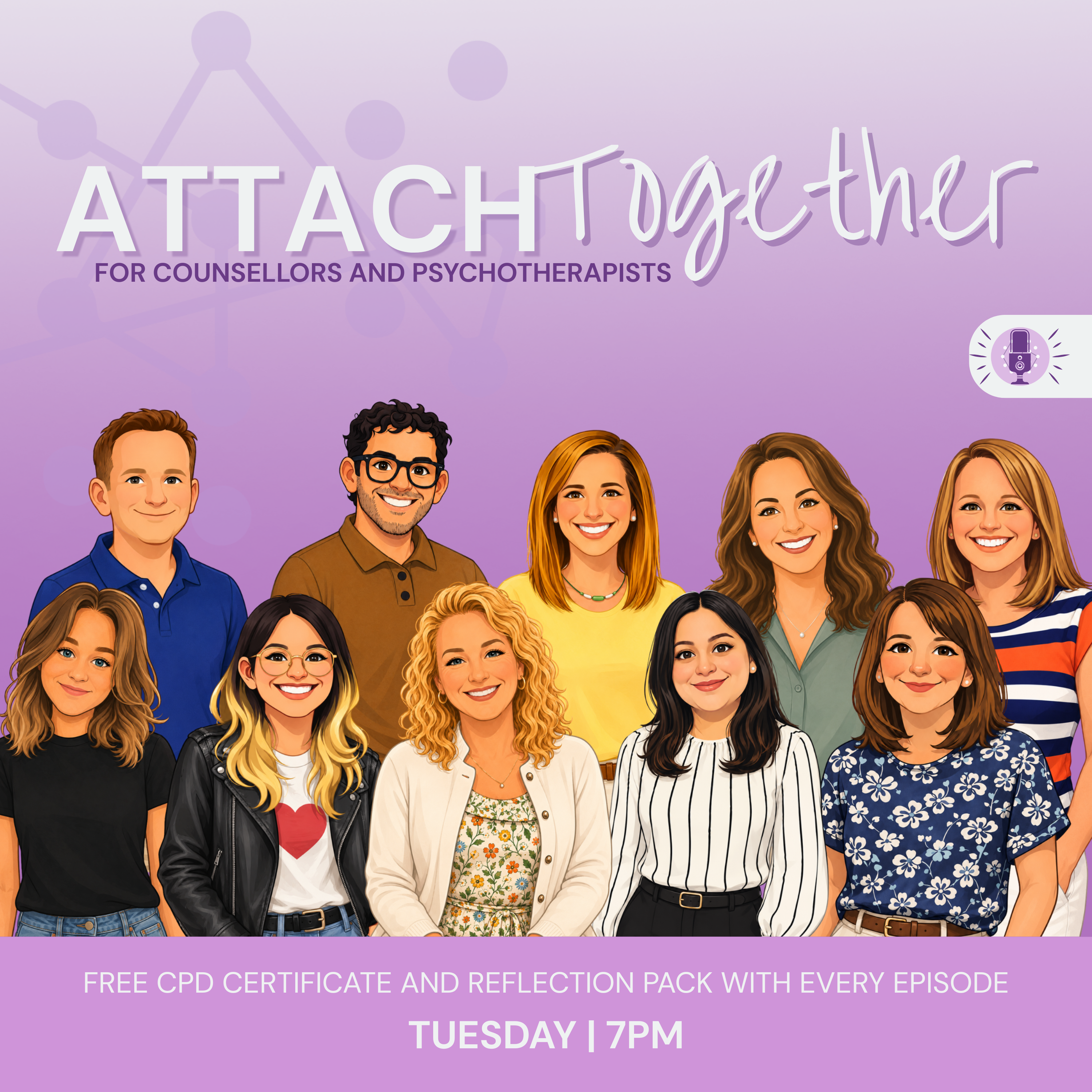
In this episode of Attached Together, attachment-based psychotherapist Uruj Anjum is joined by Gav, an attachment-based and IFS-trained therapist, to explore why ruptures are not a sign that therapy has failed. In fact, when they are recognised and repaired, they can become some of the most meaningful moments in the therapeutic relationship.
A missed detail. A difficult question. A cancelled session. A boundary that feels like rejection.
These moments may seem small, but for a client with a history of abandonment, criticism or emotional disconnection, they can reactivate much older attachment wounds.
Together, Uruj and Gav discuss how therapists can notice these shifts, stay present when things feel uncomfortable, and respond without becoming defensive or rushing to make everything feel better.
Attachment rupture and repair is the process of recognising a break in emotional connection and working together to restore safety, trust and understanding.
You will hear why secure attachment is not built through perfect attunement, but through repeated experiences of disconnection followed by repair. The conversation also explores how clients may internalise shame when conflict has never been safely resolved, and how therapy can offer a different experience: one in which hurt can be expressed without the relationship ending.
The episode includes a powerful ethical dilemma:
What do you say when a client tells you, “I felt judged by you last week”?
Gav considers how therapists can hold two truths at once: that they may not have intended to judge the client, while also taking the client’s experience seriously.
In this episode
- Why rupture is inevitable in meaningful therapeutic relationships
- How attachment styles shape responses to boundaries and misunderstanding
- The link between unrepaired conflict, shame and self-blame
- How to recognise withdrawal, anger and disconnection in the room
- Why therapist defensiveness can deepen a rupture
- How supervision and personal therapy support relational work
- How attachment rupture and repair can contribute to earned secure attachment
Common questions explored
Does a rupture mean therapy has gone wrong?
No. Ruptures are a natural part of close relationships. What matters is whether they can be recognised and explored.
How does attachment affect rupture in therapy?
A client’s attachment history may shape how they experience mistakes, boundaries, absences and changes in the therapist’s tone or availability.
How can a therapist begin repair?
By noticing the shift, regulating their own response, acknowledging the client’s experience and becoming curious about what happened between them.
Chapters
00:16 Introduction
02:04 Gav’s background
03:10 Why rupture and repair matters
04:07 How secure attachment develops
06:42 Rupture in the therapeutic relationship
08:58 Why ruptures are inevitable
12:55 What repair looks like
14:16 When repair is a new experience
16:47 Working with shame
18:47 Supporting the therapist
20:46 Earned secure attachment
23:06 “I felt judged by you”
26:05 Final reflections
FREE CPD Certificate & Reflection Pack
You can download the FREE CPD Certificate for this episode via our website www.optimahealthservices.co.uk and join our listener list to receive the Reflection Pack for future episodes.
www.optimahealthservices.co.uk
optimahealthservices.co.uk