Artwork for ASH CLOUD
Science

ASH CLOUD

Ash Sweeting

This is series of conversations discussing global food sustainability with guests who bring a deep understanding of the environmental and cultural challenges facing our society and creative ideas on how to address them.

  • 20 episodes
  • Updated June 16

Episodes20

  • June 16 · 43 min

    Feed efficiency and methane emissions with Ermias Kebreab, UC Davis

    The poultry and swine industries have transformed feed efficiency over the past two decades. Through systematic improvement in nutrition, enzyme utilization, and animal genetics, they now produce vastly more protein from fewer resources. The challenge is not simply reducing methane emissions from cows, but reducing methane per unit of milk produced while maintaining farmer profitability and food security. But here's the complexity: feed intake in dairy cattle is difficult to measure in controlled research facilities; in pasture-based systems where 88% of global cattle graze, measurement becomes extraordinarily challenging. Yet without precise data, researchers cannot translate laboratory findings into reliable commercial recommendations. This measurement gap between what science discovers and what farmers can practically implement represents agriculture's critical bottleneck. When you combine this with the variability in dairy systems—roughly 20% natural variation in methane emissions even among genetically similar control animals—the path forward requires nuanced, system-level analysis rather than simple silver bullets. Today we are joined by Ermias Kebeab from UC Davis, whose research demonstrates that genetic selection offers a permanent, cumulative, and heritable pathway to improved feed efficiency. Kebeab's recent work evaluated the EcoFeed index developed by STgenetics, a genomic breeding value tool based on over 10,000 animals—7,623 growing Holstein heifers and 2,538 lactating cows. Results showed that selecting for improved residual feed intake (RFI) reduces lifetime emissions without compromising productivity. A one-standard-deviation improvement in genomic RFI decreased feed consumption by 2.73% and reduced lifetime CO2 equivalent emissions by 2.42% per animal—equivalent to 868 kg CO2e savings per cow. A three-standard-deviation improvement showed even greater potential, reducing feed intake by 8.2% and emissions by 7.31%, while simultaneously lowering feed costs by $199 per female. Ermias's research bridges research discovery with practical implementation across both the Global North and Global South. Kebeab's work on grape pomace byproducts—incorporated at 10-15% of dairy rations—demonstrates milk yield improvements alongside methane intensity reductions, while pre-fermenting almond hulls shows additional potential when economic trade-offs are favorable. Crucially, he emphasizes that the Global South's emissions reduction challenge differs fundamentally from the North. Where dairy systems produce less than 2,000 kg milk annually, the priority must be productivity improvement rather than limiting animal numbers. Rising energy and fertilizer costs disproportionately impact low and middle-income countries, making locally-adapted tropical breeds and resilient farming systems more viable than input-intensive Western genetics. Send us Fan Mail

  • May 27 · 54 min

    Artificial Intelligence, the need for reliable data, and where it will have the greatest impacts on agriculture with Aidan Connolly, Agritech Capital

    Artificial intelligence is advancing at an astonishing pace—improvements measured in five-thousand-fold increases from week to week according to AI researchers at Singularity University. Yet in agriculture, most farmers remain largely disconnected from these advances, using AI only at the most basic level for administrative tasks like finance, report writing, and form filling. This widening gap threatens to leave the agricultural sector further and further behind as the world accelerates into what might be called the "bullet train moment" of AI adoption. Today we are joined by Aidan Connolly, CEO of Agritech Capital, who has spent the past years advising agricultural organizations on AI readiness. Aidan joins Ash Cloud to discuss how to restructure agricultural businesses for AI-driven decision-making without waiting for others to lead the way. The big challenge is that AI systems can only work with the data available to them. In agriculture, that data is fundamentally flawed. Most farm information is still captured by humans in notebooks, then transcribed into databases. Each step introduces errors, misinterpretation, and gaps that make datasets unsuitable for the sophisticated decision-making AI promises to deliver. Meanwhile, the major AI companies racing forward at incomprehensible speeds won't wait for agriculture to catch up. When you consider that farmers are constantly gathering sensory information through sight, sound, and observation while working in the field, data that never enters any database, the informational chasm becomes even more apparent. Yet animal production systems offer unique opportunities. Dairy cows milked three times daily provide recurring windows to assess milk quality, animal health, fertility, and nutrition. Hens laying eggs daily, pigs weighed multiple times, animals with collars and sensors, these continuous data streams contain vastly more untapped value than the sector has realized. Send us Fan Mail

  • May 4 · 43 min

    Building a company that leverages biological complexity to improve livestock productivity with a reduced climate impact - Tom Williams Number 8 Bio

    “I’m yet to meet a grazier that doesn’t want a 5-15% feed conversation ratio improvement.” says Tom Williams, CEO of Number 8 Bio. Producers motivated by not losing 10% of their feed to the atmosphere. Enteric methane from livestock represents one of the rare climate challenges where environmental impact aligns with economic opportunity. Methane is a potent greenhouse gas and it also represents wasted nutrition. Approximately 10% of feed energy consumed by ruminants escapes as methane rather than supporting growth or milk production. Few climate solutions offer both emissions reduction and immediate productivity gains for those implementing them. But here's the challenge: the rumen contains billions of microorganisms competing, collaborating, and interacting across complex metabolic pathways. Human knowledge of this biological complexity remains incomplete. Finding molecules that reduce methane without compromising animal health or performance requires casting an extraordinarily wide net. Today we are joined by Tom Williams, founder and CEO of Number 8 Bio, a synthetic biology company developing feed additives to reduce enteric methane emissions. Number 8 Bio's journey demonstrates rapid adaptation to scientific reality. Initially engineering yeast to produce bromoform and seaweed molecules, the team quickly recognized cost barriers for feed additive markets. They pivoted entirely, developing an automated in vitro rumen screening system processing approximately 100 tests weekly. Over several years, they screened thousands of potential products—peptides, enzymes, probiotics, natural extracts, small molecules, and combinations—seeking winners through systematic trial rather than theoretical prediction. The company now focuses on a single organic molecule showing methane reductions and productivity improvements in grazing systems. Initial feedlot trials revealed hydrogen buildup and intake reductions, so Williams followed the science toward pasture-based applications first. The discovery platform—now enhanced with bioreactors predicting live animal productivity outcomes—positions Number 8 Bio to develop additional molecules for different markets and stacking strategies as regulatory pathways allow. Send us Fan Mail

  • April 6 · 59 min

    Building resilient agrifood systems across conflict zones and climate stressed regions with Bram Govaerts, CIMMYT

    The green revolution resulted in unprecedented improvements in the efficiency and productivity of food production. Recent decades of increasingly globalized free trade has further imporved efficiecies across the supply chain. These improvements that have benefited millions have done so largely at the expense of resiliance and the shock waves of this vulnerability are starting to be felt as fertilizer and energy prices rise. Today I am joined by Bram Govaerts, Director General of the International Maize and Wheat Improvement Center (CIMMYT), to his efforts to build resilient agrifood systems across conflict zones and climate-stressed regions. Seventy percent of food consumed in the Gulf states of Bahrain, Kuwait, Qatar, UAE, Saudi Arabia, and Iraq, flows through the Strait of Hormuz. Twenty percent of global nitrogen-based fertilizer exports through this same chokepoint. For decades, global food systems have been optimized for efficiency. Nitrogen fertilizer plants positioned beside oil fields and shipped on demand. This efficiency created abundance and affordability, but at a cost. But here's the challenge: we have become victims of our own success. Pursuit of efficiency without resilience has created dangerous choke points in systems we depend upon for survival. Food system fragility is never just about production disruptions. In Sudan, fertile soils along the Nile could feed the Gulf region, yet conflict has collapsed production systems that previously supplied the area. Across the globe, 60% of countries most affected by climate change also face armed conflict. Food insecurity drives migration and instability that compound the original crisis. CIMMYT's approach operates across three pillars: discovery, system development, and humanitarian response. Current research on biological nitrification inhibition could enable crops to utilize nitrogen fertilizer 30% more efficiently. In conflict zones like Sudan, CIMMYT works alongside internally displaced communities to maintain food production even during active warfare, embedding drought-tolerant seeds and recovery mechanisms directly into humanitarian interventions to reduce the traditional seven-year post-conflict rebuilding timeline. Send us Fan Mail

  • March 17 · 1 hr 1 min

    Leading US beef sustainability with Steve Wooten, Beatty Canyon Ranch

    The journey toward sustainable beef production in the United States began before the term "sustainability" entered common usage. Today we are joined by Steve Wooten, a rancher in southeastern Colorado's shortgrass prairie and a founding member of the U.S. Roundtable for Sustainable Beef. Wooten manages Beatty Canyon Ranch in a region receiving 11-14 inches of annual rainfall, where the same perennial grass species documented in Native American archaeological sites continue thriving today under rotational grazing systems. Steve approach to grazing and sustainability changed when he met Alan Savory and learned of his work on holistic management. Eleven years ago, the National Cattlemen's Beef Association established the U.S. Roundtable for Sustainable Beef, bringing together the entire beef supply chain—from cow-calf producers through feedlots, packers, processors, and retailers—alongside civil society organizations and universities. This unprecedented collaboration addressed a critical reality. Only 85% of the nation's cows currently brings a calf to weaning. No major corporation would accept a 15% efficiency loss before year-end, yet the beef industry has operated at this level while simultaneously wrestling with climate concerns and supply chain pressures. Steve's approach integrates multiple data streams, Agriwebb and Pasture Map for grazing tracking, Enriched Ag camera systems capturing images every six seconds for vegetation analysis, and soil carbon sampling. His drought management plan includes trigger dates in March, June, and October for adjusting stocking rates, early weaning protocols, and strategic culling based on meteorological projections. The ranch maintains ungrazed pastures as drought mitigation, ensuring forage reserves for subsequent years while varying grazing timing to provide near-full growing season rest between grazing events—defined in his environment as March through October. Send us Fan Mail

  • March 10 · 48 min

    Data driven livestock production for feed efficiency with Andrew Freshwater Clear Creek Pastoral Co.

    Feed efficiency remains one of the biggest gray areas and least understood aspects of livestock production. Yet understanding how much grass a cow consumes to produce a calf or a ewe to produce a lamb is critical not only to farmer and ranch profitability, but also to the sustainability of the industry. At 19 cents per kilogram to grow dry matter, inefficiency compounds rapidly. The difference between efficient and inefficient animals can determine whether operations generate profit or struggle to cover overhead costs. Today we are joined by Andrew Freshwater, who has spent over 30 years using data to drive efficient breeding decisions across his sheep and cattle production enterprises in northeastern Victoria. Freshwater's family brought Angus cattle and Romney sheep to Australia in 1849, establishing a multi-generational commitment to livestock genetics. Recent heifer trials demonstrated dramatic efficiency differences between groups run as contemporary cohorts. Through Zoetis genomic testing, Freshwater documented that genetically inferior heifers showed poor feed conversion efficiency and marginal annual returns, while superior genetics in the same management system generated excellent profitability. The lesson is clear: breeding animals is neither pure art nor pure science, but rather a data-informed approach that acknowledges biological complexity while leveraging technology—from genomics to artificial intelligence—to optimize resource utilization across diverse farming systems. Beginning performance recording in 1989 as a teenager, Freshwater has accumulated over 80,000 sheep records representing approximately 3.5 million data points through long-term progeny testing programs. Rather than relying on static estimated breeding values, he has developed proprietary software that runs Monte Carlo simulations incorporating local climate data, grass types, and historical weather patterns to identify the most profitable animals for specific environmental conditions and management systems. Send us Fan Mail

  • March 3 · 53 min

    Cow feed efficiency, the greatest area of untapped potential for beef production, with Matt Wilson West Virginia University

    Feed efficiency, despite its importance from both an environmental sustainability and farm profitability perspective, remains one of the biggest gray areas and least understood aspects of livestock production. Today we are joined by Matt Wilson from West Virginia University, who has spent his career studying how efficiently cattle convert grass into food. In 2003, Wilson installed the first individual feed intake system at a central U.S. performance test facility. Since 2019, his team has collected daily individual feed intake, water intake, and body weight data on 600-900 animals annually, building machine learning approaches to determine intakes of grazing animals at scale. Wilson's research has revealed dramatic variation in resource efficiency. Two similar bulls in his performance tests gained at identical rates, yet one consumed 50% more feed—approximately 7,000 pounds annually—for no additional performance. This difference represents $600 per animal per year at conservative feed costs. For breeding females in the herd for ten productive years, such inefficiency compounds across their lifetime. Unlike feed additives that only work in formulated rations, genetic improvements in resource utilization are permanent, cumulative, and applicable across both feedlot and grazing systems globally. Of the 90 million beef cattle in the United States, approximately 88% spend their lives grazing on pastures or consuming harvested forages. The remaining 12% are finished in feedlots. Understanding what these grazing animals are actually consuming is critical for accurately assessing the environmental footprint of the beef industry. Grazing animals produce approximately 23 grams of methane per kilogram of dry matter intake compared to 10-13 grams for feedlot cattle—nearly twice as much per kilogram consumed. Since 88% of U.S. cattle and an even higher proportion globally are in pastoral systems where methane intensity is greatest, accurate measurement of grazing intake is essential. Send us Fan Mail

  • February 6 · 51 min

    Investing in regenerative agriculture, the food system, and metabolic health with Carter Williams - iSelect Fund

    There is a huge amount we can learn from understanding the connections between soil health, food production, and human metabolic health. Over the last 50-60 years, modern agricultural systems have become increasingly reliant on synthetic inputs that boost yields but degrade soil microbiomes and reduce micronutrient density in our food. This degradation contributes to the chronic disease epidemic costing the United States trillions of dollars annually. The impact of regenerative agriculture on both environmental and human health cannot be understated. Healthier soils with robust microbiomes produce crops with superior nutritional profiles—more micronutrients and beneficial phytochemicals that express through the soil-plant-human pathway. When people consume these nutrient-dense foods, they show reduced appetite for processed foods and better metabolic outcomes, though randomized controlled trials remain limited. Today we are joined by Carter Williams from iSelect Fund, a 10-year-old investment firm focused on reducing chronic disease by transforming food systems. Williams coordinates investments across the food value chain—from row crop biologics to novel sweeteners and soil health monitoring. iSelect Fund targets decommoditizing 5-10% of conventional agriculture rather than wholesale transformation, creating price premiums for regenerative producers while stabilizing markets for conventional farmers. The fund prioritizes nutrient density over yield maximization. Williams identifies cognitive load as agriculture's fundamental transformation challenge. Farmers with 20 years of conventional experience face learning entirely new systems. This extends throughout supply chains: CPG companies have infrastructure optimized for current grain varieties; input companies have systems built around synthetic fertilizer. Even willing stakeholders face substantial cognitive and financial investment requirements. The conversation explores modernizing Bureau of Land Management grazing practices. Research showing $200-300 million in upstream regenerative interventions could have prevented $10 billion in European flood insurance losses demonstrates how regenerative livestock management delivers net carbon-positive outcomes while improving rancher economics. Emerging feedback mechanisms accelerate adoption. Companies like Diatious provide data showing how feeding practices affect omega-3/omega-6 ratios, enabling evidence-based practice changes. Companies like Brightseed build in-silico models mapping how growing practices affect phytochemical expression and human metabolism. Williams argues consumer voice—amplified by influencers—now drives change more effectively than the previous decade's farmer-led push. As retailers stock out of cottage cheese due to GLP-1 diet trends rather than label-reading, market dynamics shift faster than Nielsen surveys suggested possible. Send us Fan Mail

  • January 30 · 47 min

    Breeding for profitable, efficient, locally adapted and sustainable cattle with Troy Rowan University of Tennessee

    Currently beef cattle production faces a profitability challenge driven by rising feed costs and efficiency gaps. For cow-calf operations, particularly where producers operate on forage-based systems, the biggest variable cost is cow feed, yet geneticists lack precise selection tools for measuring and improving forage intake and conversion efficiency. Today we are joined by Troy Rowan from the University of Tennessee, where he investigates economically important traits in beef cattle with particular emphasis on cow efficiency, local adaptation, and genetic approaches to increasing sustainability. His research focuses on developing novel measurement approaches to create practical selection tools for grazing efficiency. The opportunity lies in emerging technologies. While decades of work developed feed efficiency tools for concentrate-fed feedlot environments, these measurements don't translate to grazing systems. Rowan's team explores indicators serving as stand-ins in genetic evaluations, using emissions as metabolic proxies, leveraging precision technologies like AI and computer vision to capture phenotypes previously impractical to measure on large animal groups. Methane and CO2 are important because they are the best indicator of metabolism currently available. Even though they are imperfect metabolism needs to be included to provide an indicator for cow feed costs. Looking forward, epigenetics and other "omics" technologies promise to revolutionize individual animal management. Rather than just predicting genetic potential passed to offspring, these tools could enable phenotypic predictions based on epigenetic marks, gene expression, or metabolomics. A feedlot receiving heterogeneous cattle could place animals in appropriate pens and management protocols based on predicted disease resistance, growth potential, or feed efficiency—filling in the 70% of trait variation that genetics alone doesn't capture. After measuring 10,000-plus animals to develop robust genetic evaluations, the next frontier is translating that knowledge into practical tools that work across the one the billion plus cattle worldwide, from intensive North American operations to pastoral African systems where data recording infrastructure remains the primary bottleneck. Send us Fan Mail

  • January 22 · 36 min

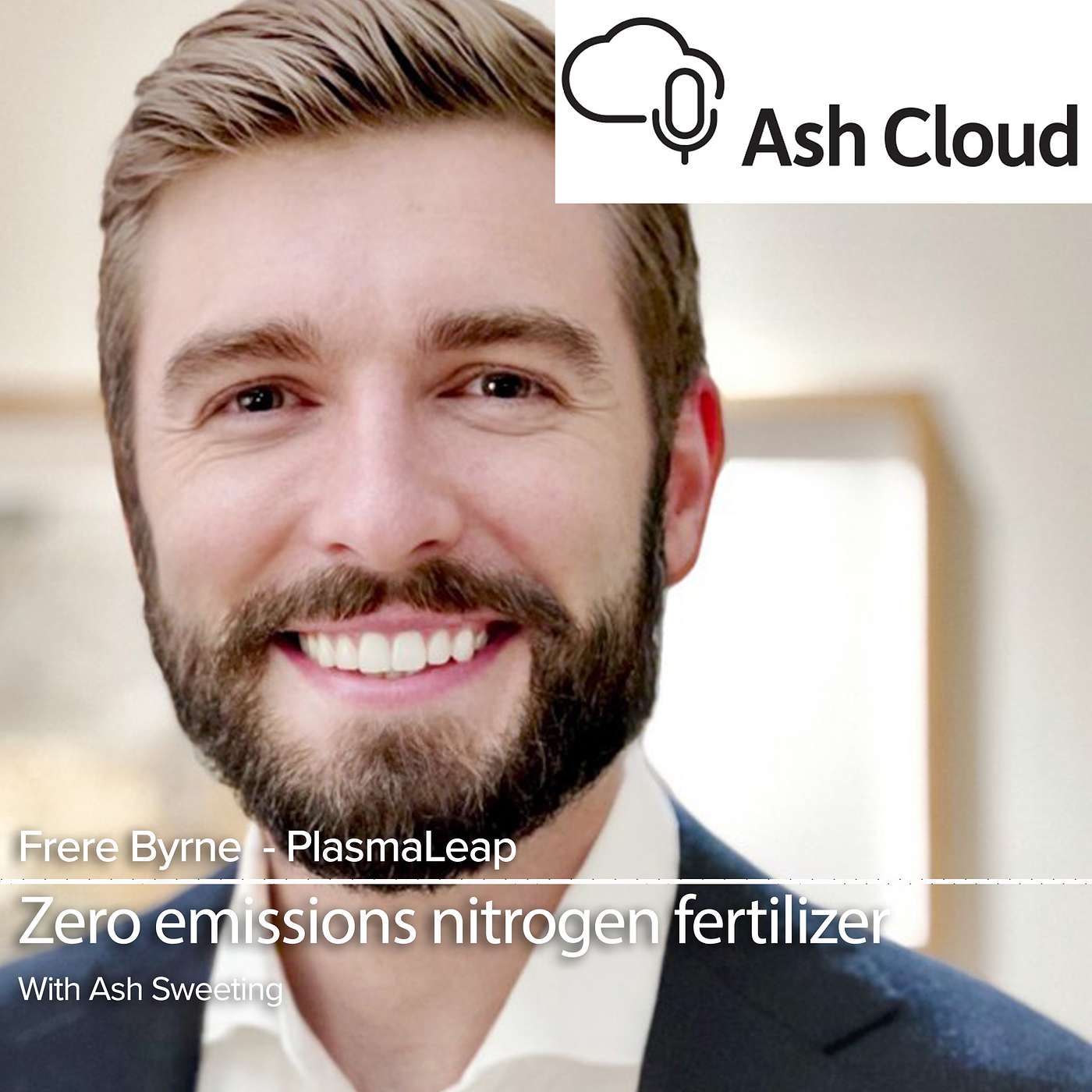
    Low cost, locally produced zero emissions nitrogen fertilizer with Frere Byrne PlasmaLeap Technologies

    Over the last century our food systems have become increasingly reliant on synthetic nitrogen. This nitrogen fertilizer is mostly made through the energy intensive haber-bosch process in centralized production plants, often located in politically sensitive location, that have a carbon footprint multiple times greater than the aviation industry. Today we are joined by Frere Byrne of PlasmaLeap Technologies who is developing low cost mobile technology to systhesis zero emissions ammonia from air and water. I caught up with Frere to discuss the impact of locally produced nitrogen that is not relaint on fossil feuls and long and centralized supply chains PlasmaLeap's modular chemical plants—called NFix—operate as single 40-foot containerized units producing industrial-grade nitrates and ammonia from air, water, and renewable electricity. These units run autonomously using algorithms, requiring no specialized operators and can be controlled remotely from company desks. For large-scale applications, units stack like batteries to create regional facilities. For smallholder farmers, Plasma Leap has developed miniature versions funded through a Gates Foundation grant, targeting production costs below the lowest commodity urea prices of the past 20-30 years. The technology addresses identical challenges across vastly different farming contexts. Whether a one-hectare subsistence farm in sub-Saharan Africa or a 100,000-hectare cereal operation in Australia, farmers face volatile input prices, intermittent supply chains, and little control over product quality. Send us Fan Mail

  • January 8 · 49 min

    Addressing the Climate, Agriculture, Landscape and Food Security Nexus through policy with Tobias Gräs Danish Agriculture and Food Council

    Denmark made headlines in 2024 as the first country to implement a carbon tax on livestock emissions. The country's ambitious 70% emissions reduction target by 2030 includes agricultural reductions of 55-65%. What makes Denmark's policy truly remarkable isn't the tax itself—it's the 60% tax deduction corresponding to mitigation potential. This signals that Denmark's approach isn't anti-livestock, but rather pro-innovation, explicitly avoiding targets on livestock numbers while incentivizing farmers to adopt technologies and practices that can reduce emissions by up to 40%. The impact of Denmark's inclusive policy-making approach through the tripartite agreement cannot be understated. Ministers, farmer representatives, nature organizations, labor unions, and industry came together to craft comprehensive solutions extending far beyond livestock taxation—encompassing voluntary land reform with full compensation, significant afforestation efforts, biodiversity enhancement, and water protection. Today we are joined by Tobias Gräs, Head of Policy at the Danish Agriculture and Food Council, where he coordinates climate action through the World Farmers' Organization and represents Danish farmers and major European cooperative businesses in Brussels. Fresh from COP 30 in Belém, Brazil, Gräs brings insights from Denmark's pioneering policy implementation and an ambitious $50 million Green Climate Fund project transforming dairy production in Kenya's Lake Victoria region. The Tunza GCF project demonstrates how Denmark's cooperative model can drive change across vastly different contexts. Partnering with FAO and the Green Climate Fund, this five-year initiative received $50 million in funding in 2025. with an additional $10 million loan component from Kenyan banks. The project targets 130 agricultural cooperatives representing 80,000 farmers across six value chains in Kenya's Lake Victoria region: dairy, coffee, tea, poultry, African leafy vegetables, and fruit trees. Kenyan dairy cows in the Lake Victoria region average just three liters per day—with potential to reach seven liters through improved feed and management practices. The project aims to achieve 1.2 million tons of greenhouse gas emission savings by 2030 and 4.3 million tons by 2045. The project's success relies on how farmer-owned cooperatives returning value to farmers through dividends and the provision of technical assistance to cooperatives on climate-efficient practices across value chains. As Denmark prepares to scale its domestic climate policies while simultaneously supporting Kenya's transformation through the Tunza project, we welcome Tobias Gräs to discuss the successes and challenges of translating ambitious climate targets into practical action across radically different farming systems. Send us Fan Mail

  • Dec 10, 2025 · 52 min

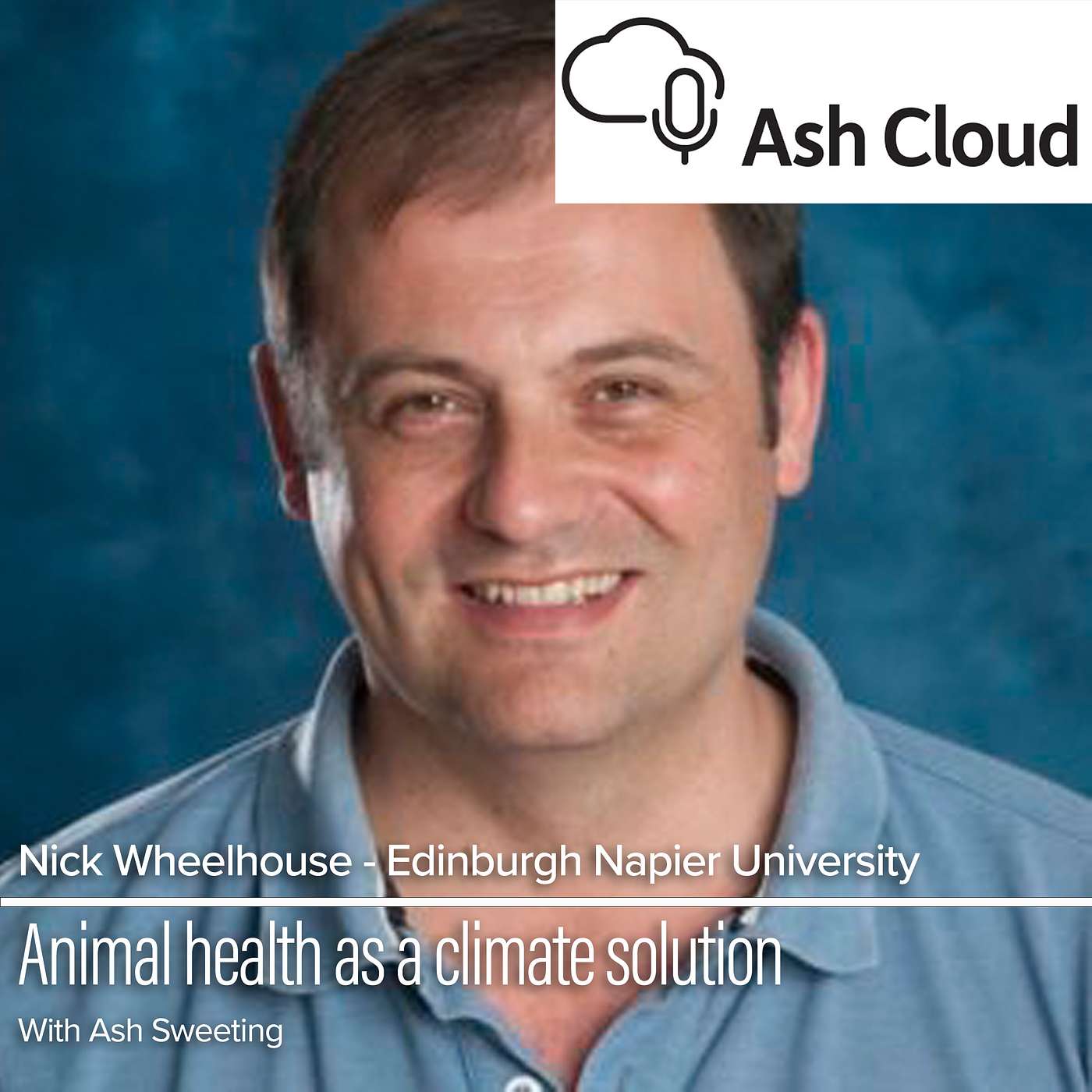
    Animal health as a climate solution with Nick Wheelhouse, Edinburgh Napier Univeristy

    Animal Health as a Climate and Food Security Solution In this episode of the Ash Cloud podcast, we explore an often-overlooked opportunity in the fight against climate change with Dr. Nick Wheelhouse, Professor of Comparative Infectious Disease at Edinburgh Napier University and co-lead of the Global Research Alliance Animal Health and Greenhouse Gas Emissions Intensity Network. Dr. Wheelhouse brings unique expertise spanning both veterinary research and animal science. After completing his BSc in Agricultural Biochemistry and Nutrition at Newcastle University and PhD in Animal Science at the University of Aberdeen, he worked as a Senior Postdoctoral Scientist at the Moredun Research Institute before joining Edinburgh Napier University. His research focuses on bacterial pathogens affecting reproduction—particularly Chlamydia, Brucella, Coxiella burnetii, and Listeria—in both humans and livestock, with extensive work on disease surveillance across Africa. The central thesis challenges conventional thinking: while sick animals are universally recognized as unproductive, the climate implications remain surprisingly underexplored. Wheelhouse reveals that approximately 20% of global animal production is lost due to health issues, with higher burdens in the Global South. This represents not just wasted resources and food insecurity, but significant greenhouse gas emissions as animals continue producing emissions while failing to produce food. The conversation explores specific case studies, including ongoing work with Kenyan dairy farmers where 53% of animals show subclinical mastitis. For farmers earning approximately $70 per cow per year, the $10 treatment cost represents a substantial investment. Yet through basic hygiene and management interventions rather than expensive pharmaceutical solutions, the project aims to demonstrate tangible productivity improvements that make economic sense while delivering environmental co-benefits. Throughout the discussion, Wheelhouse unpacks the complexity of animal health as a climate solution. The counterintuitive reality is that healthier, more productive animals do produce more emissions, but they generate far more food per unit of emission. The goal is to close the productivity gap caused by disease, thereby reducing the emissions intensity of animal-source foods rather than absolute emissions. In Tanzania, research on abortion in livestock suggested potential emissions reductions of 8% in cattle and 16% in small ruminants, while hundreds of thousands could benefit from the additional food that would otherwise be lost. Wheelhouse is candid about the challenges: the complexity of measuring disease impacts, lack of robust data collection systems in many regions, and difficulty quantifying climate benefits from health interventions. These have kept animal health as a "slow burner" in climate discussions. However, he notes an encouraging shift following FAO reports that elevated the topic among international partners and potential investors. The discussion touches on broader implications, including research from Tanzania showing that increased livestock disease correlated with decreased school attendance for girls—demonstrating how animal health impacts cascade through communities beyond immediate productivity losses. Looking forward, Wheelhouse emphasizes disease prioritization must account for local contexts, since farming systems and solutions vary dramatically across regions. He advocates for starting with achievable interventions that farmers can see working among their peers, rather than waiting for perfect technological solutions. The key is empowering farmers with tools delivering tangible results worthy of their effort and investment. Ultimately, this conversation makes a compelling case for why animal health should be among the first considerations in climate-smart agriculture rather than an afterthought. With global popu Send us Fan Mail

  • Nov 25, 2025 · 1 hr 3 min

    Global food security, innovation, and the investment gap with Maximo Torero UNFAO

    The cost living is an increasing global challenge. Food inflation in 2023 was 13.6%, however food prices increased by up to 30% in many low income countries. Currently 60-80% of voters consider food price as a decisive factor in their choice of candidate and across 60% of countries food costs represent more than 25% of the CPI basket. Right now, 670 million people—8.2% of our global population—are going hungry. By 2030, projections show that 300 million people in Africa alone could face food insecurity. But here's the paradox: we have the technology, the knowledge, and the resources to address this crisis. So what's holding us back? Food insecurity is never just about hunger. Throughout history, the impacts of food crises have freuquently included geopolitical instability, increased migration and conflcit. Today we are joined by Maximo Torero, Chief Economist at FAO, where he is working to build resilient, inclusive, and sustainable agrifood systems. Previously Maximo served as served as Executive Director at the World Bank Group. Send us Fan Mail

  • Oct 22, 2025 · 55 min

    Creating a carbon neutral beef operation with Robert Mackenzie, Mackas Australian Black Angus Beef

    "Sustainability means leaving the land in a better place, preparing the next generation for a turbulent future in agriculture... and it's probably also a license to produce." Robert MacKenzie and his farms on the mid north coast of NSW was the first Australian beef operation to become net zero through pasture carbon sequestration. Roberts journey began with a dedication to understand the numbers around all metrics on the farm and then adjusting his management to improve these metrics. The initial seed in his journey to sustainability was planted by Meat & Livestock Australia announcing in 2015 that the industry needs to work towards carbon neutrality by 2030. This led to collecting 1400 soil tests each year across 16,000 acres. This led to healthier and more productive pastures, lower and better use of inputs, improved water holding capacity of the soils and improved weaning rates. Other improvements include adding water points so no animal needs to ever walk more than 800m for a drink. Staff and livestock happiness is also a key goal across Robert's farms. Reproductive performance is critical with Mackas having achieve 98% fertility year on year. Cows that are not producing a calf but still producing methane emissions are finished and sold. Robert's female herd is the backbone of his operation. Robert puts his success down to all the 1%ers that make a business successful. For Mackas this includes carbon sequestration, implementation of alternative energy and better diesel use across equipment, investing genetics with a huge focus on feed use efficiency, addition of many water points, improved ground cover, addressing trace element deficiencies and the inclusion of methane mitigating feed additives. You can listen to our conversation here: Send us Fan Mail

  • Aug 29, 2025 · 50 min

    Building a profitable animal biotech company with Mike Seely, Native Microbials

    AgriFoodTech Venture Capital investment is down by roughly 90% from the high of 2021 with the lack of exits or creation of profitiable agtech companies resulting from the billions invested frequently taking the blame for investors looking for alternative places for put their money. But there are success stories. Today we are joined by Mike Seely, the CEO of Native Microbials. Over the last 10 years Mike and his team has built a profitable animal biotech company. I recently caught up with Mike to hear about this journey and how Native created a product farmers wanted, were willing to pay for, and they built the manufacturing process to cost effectively produce the product at market scale. Send us Fan Mail

  • Aug 23, 2025 · 58 min

    Brazil's transition from a net food importer to one of the world's leading exporters over the last 50 years with Bruno Brasil, Brazilian Ministry of Agriculture and Livestock

    There is a huge amount we can learn from Brazil’s transition from being a net food importer to one of the world’s largest food exporters over the last 50 years. Since deforestation across the Amazon peaked in the mid 1990’s Brazil has continued to invest in both driving productivity increases alongside increasing efforts to preserve wilderness areas and restore degraded lands. To help address climate change the government has doubled investment including doubling investment in low carbon agriculture from $1Billion to $2 Billion through their ABC plan. This program includes making low interest credit available for Brazilian farmers to adopt low carbon practices. Over the last 10 years productivity of beef cattle in Brazil increased by 2.5% per year and dairy production by almost 4% per year. At the same time the ABC plus plan for beef cattle aims to reduce methane emissions and methane intensity. A huge component of this recovering 40 million hectares of degraded pasture land. Today, around 80% of the Amazon is protected by law to combat deforestation. The impact of the Brazilian Government’s investment in education through Embrapa’s long running programs of sponsor Brazilian PhD students across world leading universities cannot be understated. Today we are joined by Bruno Brasil, the director of Sustainable Production and Irrigation at the Brazilian Ministry of Agriculture and Livestock where he coordinates the Sectoral Plan for Adaptation to Climate Change and Low Carbon Emissions in Agriculture. Brazilian farming is highly diverse, over 85% are family farmers, with over 80% of these below 50ha. At the other end of the scale, the largest 1% of all properties in Brazil are responsible for 49% of food production in value terms. As Brazil prepares to host world leaders at COP30 later this year I welcome Bruno to discuss the successes and challneges facing Brazilain agriculture. You can listen to our conversation here: Send us Fan Mail

  • Jul 12, 2025 · 53 min

    Regenerative agriculture with Jason Rowntree, Michigan State University

    Today we are joined by Jason Rowntree from Michigan State University where he is working on systems increase the resilience and to reduce the environmental harm of our food systems. Finding the driver across rural America that encourage farmers and ranchers to adopt management practices that improve soils, and protect local environments and the climate are a key priority of his work. Jason has built and runs the centre for regenerative agriculture at Michigan State University where he is increasingly seeing benefits for farmers that adopt regenerative principles to improve soil health which include: no till cover crops improved biodiversity incorporation of grazing animals in cropping systems Building the resilience to the farms and ranches of Michigan and further across the United State is a key focus of his work. Send us Fan Mail

  • May 8, 2025 · 41 min

    Epigenetics with Travis Bayer, Decibel Bio

    The epigenome is essentially the control software for plants and animals that dictates when, where, and to what level different genes in the genome are expressed. Moderating the epigenome has the potential to upgrade crops in real time, during the season, to adjust photosynthesis and warn crops of upcoming droughts, diseases, or other threats. While traditional plant breeding and genetics requires trait selections to be made prior to planting and establishing the crops, epigentics enables these traits to be managed after the plant is already growing. Today we are joined by Travis Bayer who recently founded Decibel Bio to develop spray on epigenetic instructions that enable a new level of control over crop traits. Travis and Decibel are leading the development of highly targeted epigenetic innovations for crops while other startups are looking at epigenetic reprograming to develop human therapeutics. Send us Fan Mail

  • Apr 11, 2025 · 1 hr 5 min

    Is meat a luxury that is becoming increasingly difficult to afford with Paul Behrens, Oxford University

    Over human history animal protein has always been a luxury food. Meat is the first thing people generally chose to buy when they rise from lower to middle income. With the current cost of living crises across the world, further food price inflation predicted due to climate change, geopolitical instability, and biodiversity loss, increasing impacts on productivity due to climate change, as well as the growing impact of dietary related disease, the big question is how much longer will we be able to afford this luxury. The answer is it’s complex. Today we are joined by Paul Behrens from Oxford University where he is working on systems to reduce the environmental harm and increase the resilience of our food systems. The three things we can change are what we eat, the amount of food wasted, and how we produce our food. Paul sees all three as being necessary for the future health of ourselves and the environment. You can listen to our conversation here. Send us Fan Mail

  • Apr 8, 2025 · 56 min

    Building sustainable supply chains with Lamar Steiger and Neil Mellers, Ranch2Retail

    Beef supply chains have been described as the most dysfunctional and least organised supply chains of everything available in the supermarket. Today we are joined by Lamar Steiger and Neil Mellers from Ranch2Retail who are building connected beef supply chains to improve economic performance of the whole chain and environmental outcomes. Data across all participants is a key component of creating and sharing the extra value. It took over 100 conversations before Lamar found a rancher who was interested in rising to the challenge of creating a premium supply chain for Walmart that provided consistent product, reliably at consistent price which give the customer a great beef eating experience across 4600 stores. Prime Pursuits now supplies about 600 Walmart stores across the SE USA. You can listen to our conversation here. Send us Fan Mail