Skip to content
Artwork for Anglican Ascetic
Religion & SpiritualityChristianityEducation

Anglican Ascetic

Fr Matthew C. Dallman

Homilies, teachings, and interviews from your host, Father Matthew C. Dallman, Obl.S.B., who is the leading authority on the theology of Martin Thornton, student of the Venerable S. Bede, and founder of Akenside Institute for English Spirituality. Fr Dallman is an Anglican priest: Rector of Saint Paul's, New Smyrna Beach, in Episcopal Diocese of Central Florida.

anglicanascetic.akensideinstitute.org
Play
  • 46 episodes
  • Avg 27 min
  • English
Counted on this page — what you have heard stays on this device, so it is not something the list can be paged by.
  • August 2 · 17 min

    On the Salvation of the Eucharist

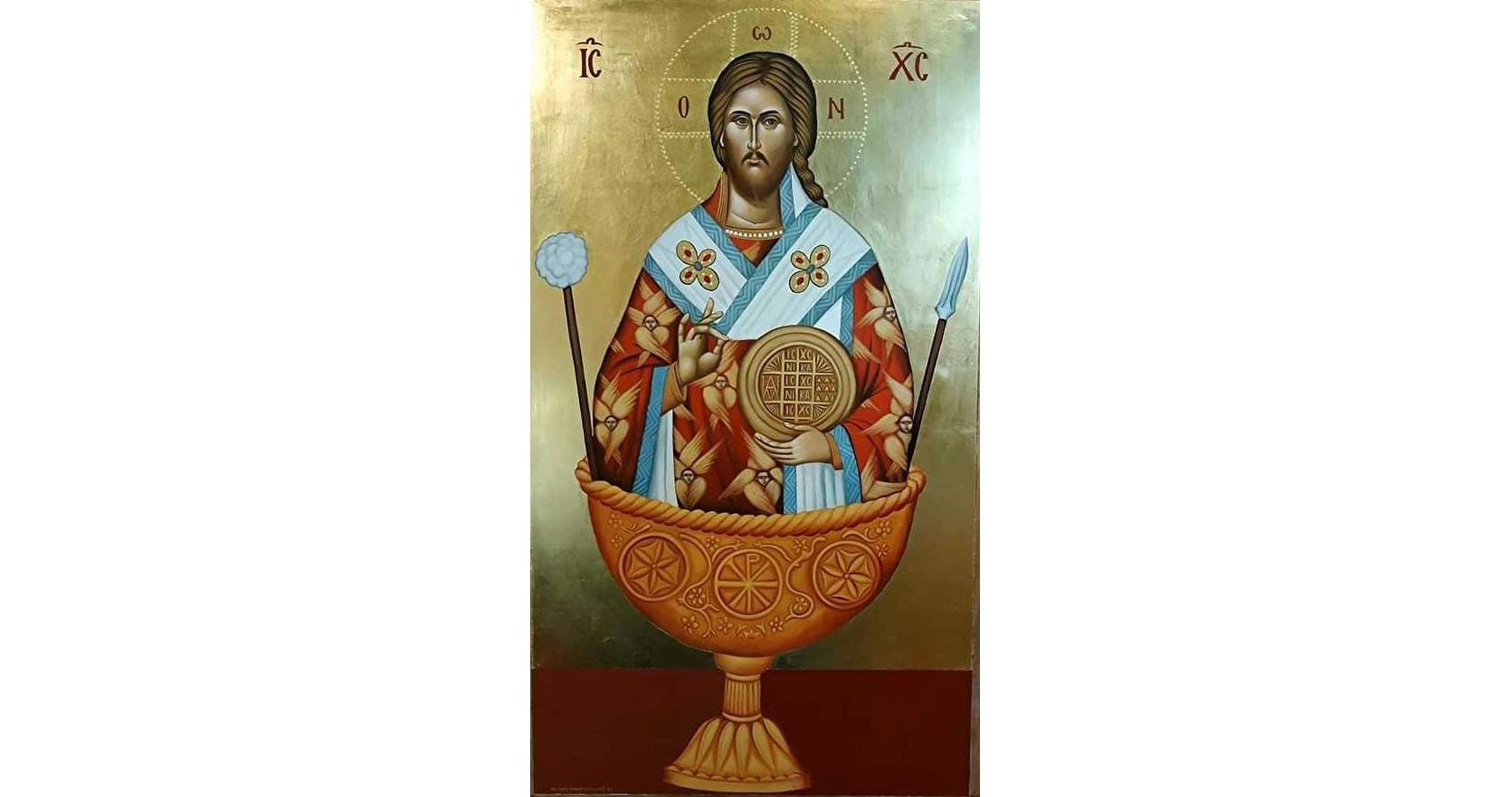
    There is much to consider in the Epistle of S. Paul. While it may seem that there is a jumble of teachings, in fact there is a single link to bring each one together. This link is found in Philippians 2.12 with these words: “Work out your own salvation with fear and trembling.” With awe, wonder, and trembling, take up your salvation, he tells the Church. Now, “salvation” means health, specifically it means spiritual health. Thus Paul’s teaching is: “Work on your spiritual health, and do so with awe, wonder, and trembling before God.” By our work we will no longer be idolators, or sexually immoral, or habitual sinners. Instead we will be transformed by the Gospel, by Christ, by His grace. Salvation in heaven begins with working towards spiritual health in this life. And yet this working towards, or working out, of salvation means specifically our cooperation with the grace God gives to the baptized as our daily Bread: Eucharist, as well as that of Scripture, which make Christ known. The invitation Christ makes in John 1.39–“Come and see”—is the invitation to find Him in the opening of Scripture and to find Him in the Breaking of Bread. All of Scriptures (the books of Moses, the Prophets, the Psalms) are about Him, Jesus taught; and the consecrated Bread and Wine are His Precious Body and Blood. He is our salvation. So our working out of our spiritual health is the life of looking for Him in Scripture and Eucharist, and finding Him, and being fed by Him, transformed by Him, made holy by Him. Paul also teaches provocatively in his epistle. Paul tells us that while the children of Israel ate the same spiritual food, and drank from the spiritual Rock that followed them, and that the Rock was Christ. He identifies in no uncertain terms the God of the Israelites as Christ. He says that the grace of Christ was available to the children of Israel following Moses. Nevertheless with most of them God was not pleased. God was not pleased because most of the children of Israel did not cooperate with the grace Christ made available to them. Instead of choosing Christ, they choose idolatry, the pineapples of sexual immorality, and disobedience of all kinds. God showed great tolerance for their sinfulness. God knows our human condition, for He is our creator. Paul as well emphasizes that God does know that we face temptations, and that God allows us to face temptations, to learn to endure them and to learn through the struggle how to choose God by cooperating with His grace, rather than our normal fleshly tendency to kick against the goads. What Paul intriguingly presents in this passage as the remedy for our salvation is the Eucharist. Just as the children of Israel drank from the spiritual Rock which was Christ, we drink and eat Christ in the Eucharist. And this for Paul is the process of working out and towards spiritual health, week in and week out. He says, “The cup of blessing that we bless, is it not a participation in the blood of Christ? The bread that we break, is it not a participation in the body of Christ?” We find salvation, we find spiritual health, by means of the Eucharist, of Holy Communion, by means of receiving Christ’s precious Body and Blood. Receiving the Eucharist, for Paul, is not an option, but necessary for finding spiritual health. And again, eternal salvation in heaven begins with us receiving the Eucharist in this life. Being regular in receiving the Eucharist is part of our labor and work. This is attested to by the 3rd century Church Father, S. Cyprian of Carthage in his teaching on the Our Father prayer. S. Cyprian writes “Jesus makes it clear that those … who receive the Eucharist … are those who live.” “We ask that we be given our bread, that is Christ,” Cyprian says, “so that we may remain in Christ, and live through His sanctification”—live, that is, through the holiness and transformation fostered by the Eucharist received regularly. Our Lord also teaches on salvation, and does so cryptically, because it is told as a parable. In this parable of the shrewd servant, the servant cheats his master to make friends with the tenants. And, Jesus said, “The master commended the dishonest manager for his shrewdness.” We would expect the master not to do so. Yet Our Lord’s parable finds light in the darkness, and teaches righteousness through an example of iniquity. The deeper message of this parable is that the children of Light, that is, the members of the Church, should regard their salvation with the level of priority as the children of this world do their worldly goals of wealth, fame, and possessions; as they struggle and fight for those, we should struggle and fight for our salvation. The seriousness with which the dishonest servant takes his cheating is an exact description of what God expects of the children of light, in order to obtain a far more important, an infinitely greater, and more noble object–spiritual health, the uprooting of sinful habits. And so, again, eternal salvation involves our work and our labors in this life to uproot out of our heart anything that gets in the way of our love of God revealed in Jesus Christ. We do this work and labor by cooperating with the grace of the Eucharist—of Christ in us, sacramentally—and by keeping commandments of God and the faith of Jesus, which He gave us as the gift of Himself in His Passion, Death, and Resurrection, which is living eucharistically. We are to love God and love our neighbor like Christ loves us, and our work is to replace our unholy habits with holy habits that render our love for God and neighbor so robust that in our love, people see Jesus Christ Himself. Therefore towards our end which is heaven, and eternal salvation in Christ, let us indeed work out our own salvation with fear and trembling, and do so through the daily Bread which is Christ: revealed in Scripture and received in the Eucharist, cooperating with His grace by keeping of Christ’s word and commandments, which enable us to do all such good works as God has prepared for us to walk in, through Jesus Christ our Lord, Who gave Himself for us and for our salvation; He Who lives and reigns with the Father in the unity of the Holy Ghost, ever one God, world without end. Amen. Get full access to Anglican Ascetic Podcast at anglicanascetic.akensideinstitute.org/subscribe
  • August 1 · 1 hr 36 min

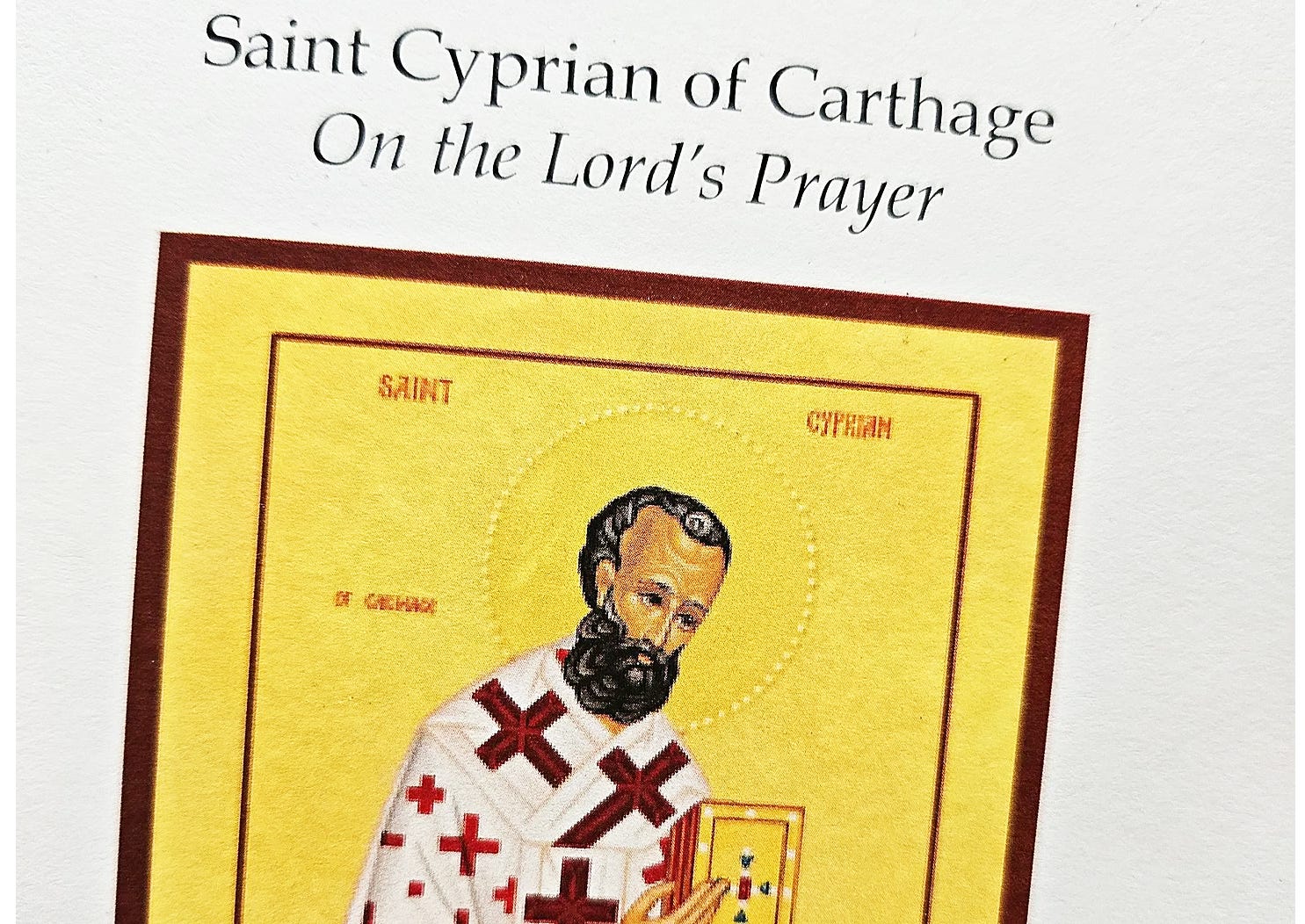
    Ep. 5: S. Cyprian on the Lord's Prayer

    This is unedited audio of my parish’s Saturday morning class in which we study Scripture with the help of the Church Fathers. This class is currently reading On the Lord’s Prayer by S. Cyprian of Carthage. In this episode, we look at chapters 16-18. I take a close-reading approach to the text, and I read aloud every word of the text. It is found in this volume which I suggest you purchase if you want to follow along in the most effective way. Enjoy! If you like this content, please consider becoming a paid subscriber. Paid subscriptions go a long way towards supporting my online ministry. Click below to subscribe! Get full access to Anglican Ascetic Podcast at anglicanascetic.akensideinstitute.org/subscribe

  • July 29 · 18 min

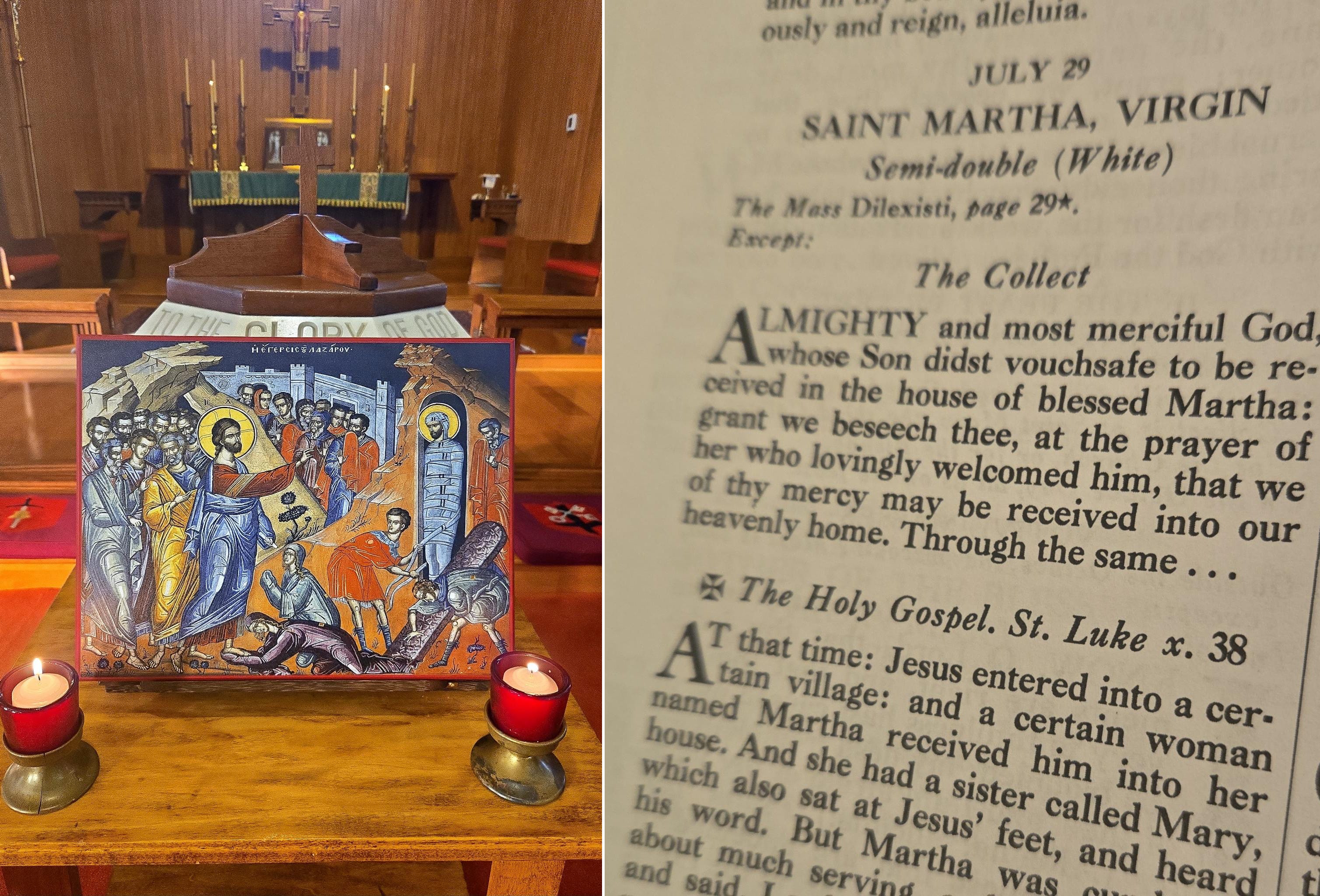
    On Saint Martha's Faith in Christ

    Almighty and most merciful God, Whose Son didst vouchsafe to be received in the house of blessed Martha: grant we beseech Thee, at the prayer of her who lovingly welcomed HIm, that we of Thy mercy may be received into our heavenly home; through the same Jesus Christ Thy Son, Who livest and reignest with Thee, in the unity of the Holy Ghost, ever one God, world without end. Amen. Get full access to Anglican Ascetic Podcast at anglicanascetic.akensideinstitute.org/subscribe
  • July 27 · 13 min

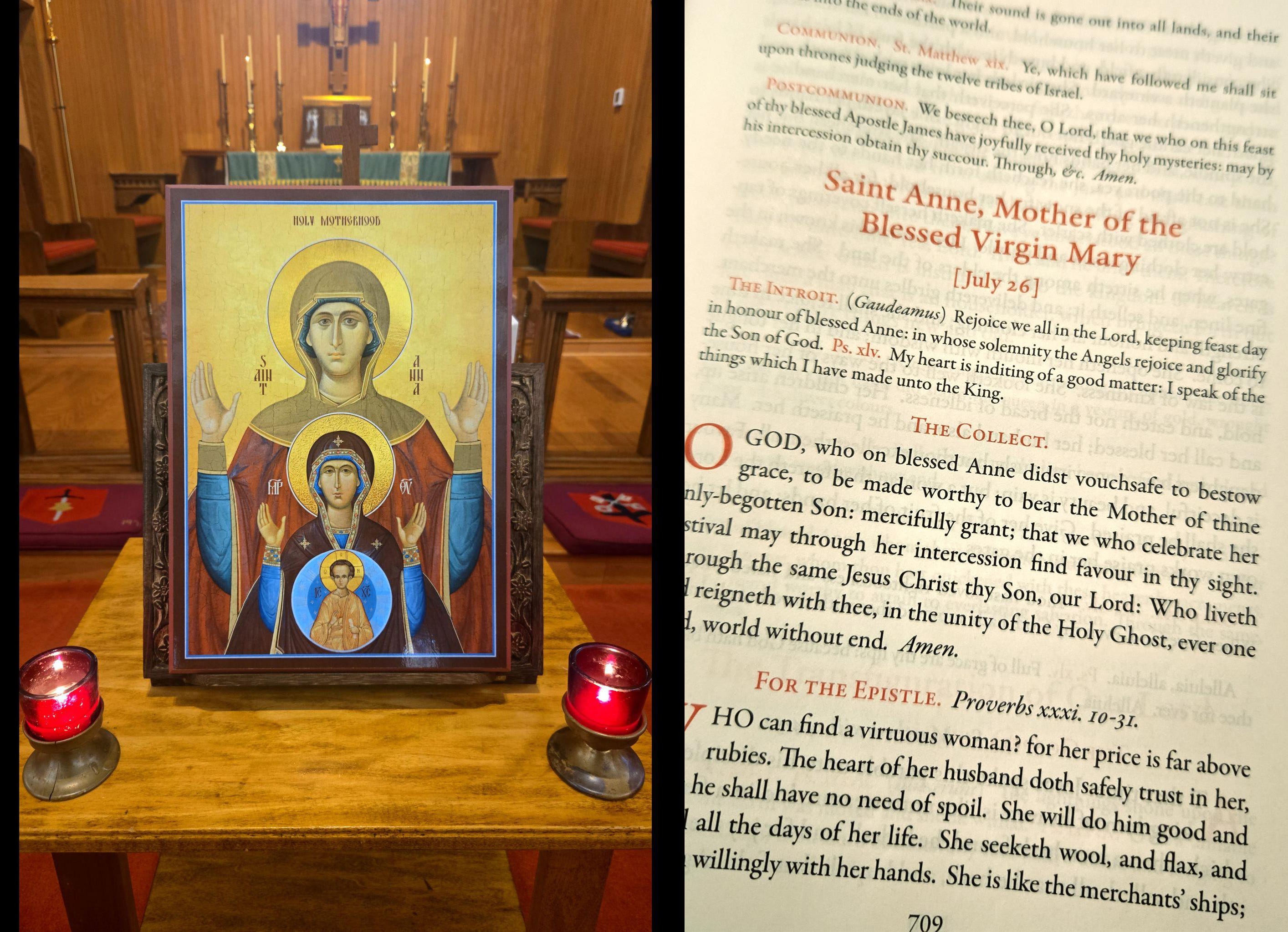
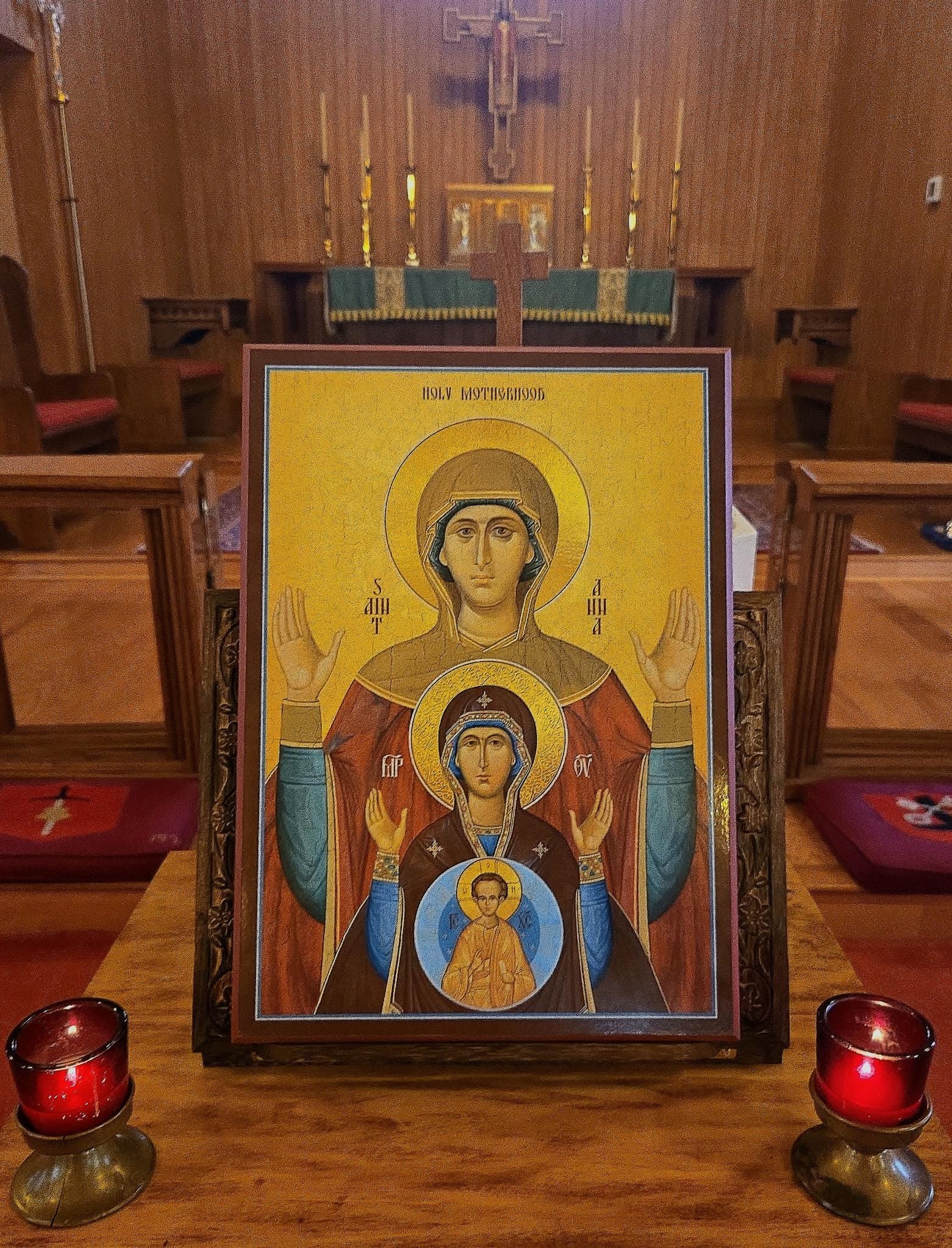
    On Saint Anne, Mother of the Theotokos

    O God, Who didst vouchsafe to give grace to blessed Saint Anne that she might be worthy to bear the Mother of Thine only-begotten Son: Mercifully grant that we who rejoice in the observance of her feast day may by her intercession find favour in Thy sight; through the same Jesus Christ Thy Son, Who livest and reignest with Thee, in the unity of the Holy Ghost, ever one God, world without end. Amen. Get full access to Anglican Ascetic Podcast at anglicanascetic.akensideinstitute.org/subscribe
  • July 26 · 7 min

    In Praise of the Righteous Parents of Blessed Mary

    A Reading from a Homily by Kosmas Vestitor, a Byzantine lay preacher who lived in Constantinople and died circa 850. Today is the day that offers thanksgiving to the progenitors of the Theotokos, through whom the beginning of salvation for everyone has come about. Indeed, the festival of the parents is that of the daughter. For just as a child is glorified too in the glory of its mother, so also is a mother glorified in the blessing of a child. Today there is happiness in remembering the righteous with speeches of praise. It came to pass in times of old that there was a righteous man from the tribe of Judah named Joachim. He was a man distinguished in holiness and righteousness; a man who was notable in nobility and wealth; a man who was single-minded in his offerings of sacrifices; a man in every way well-pleasing to God; a man of the longings which come from the Spirit. For since he was childless and consumed with desire for a child, he fathered the bride of the Holy Spirit. As a man he truly achieved this, since God hearkened to his prayers and granted him the one who was “beyond all the tabernacles of Jacob,” or to put it another way, the daughter who is worthily deemed higher than all created things in heaven or on earth. And he had a pious wife, whose name was Anna, who also came from the royal tribe of Judah since she was a descendant of David. She was a woman who rejected all evil; a woman who lived faithfully before God with her husband; a woman who regularly attended the temple of God along with her own spouse, with prayers, fasts, and pleasing, bountiful gifts a woman who in unanimity of soul and bodily chastity always possessed constancy of understanding with her husband. For she was not mischievously transformed, like Eve, but was instead joined to her husband as a helper both in the living out of virtues and in daily supplications to God. For the two grew equally weary in their prayer of yearning for a child in the same way that a farmer, together with his wife, when they have worked some barren land, sow the seed and, through prayer, expect to gain a good crop of fruit. Anna lived not as Eve lived with Adam, but as one who shared in thanksgiving and worked with Joachim on spiritual good deeds; and she was truly a “better half ” who completed the union with her husband perfectly. For whereas Eve became the producer of pain for the world by means of the fruit of a tree, Joachim’s Anna represented joy for the Creator by means of the fruit of her womb. Continuing with the homily by Kosmas Vestitor It is well known to everyone that Mary the Theotokos was given the good news in the Galilee of the gentiles, in the house of Joseph the carpenter, who had been made the Virgin’s husband in order to ward off the devil’s deception. And again, it is clear that she gave birth to Christ in Bethlehem and that her native land happened to be the same city as that of her mother, just as the oration will demonstrate below. For Mary’s ancestral home was situated near the pool by the Sheep Gate in Jerusalem, according to the text, where Christ who was also our God raised up and cured the man who had lain as a paralytic for thirty-eight years, since he was about to go forth from that house symbolically as the Shepherd of rational sheep. For this reason the grace of baptism is also foreshadowed by the pool of water there, for the illness of chronic deceit that has paralysed the souls of men, just as in the functioning of limbs, has been healed by purification of the Spirit through water, just as the spiritual bread of life was leavened in the figure of Bethlehem. And here Christ was revealed in the form of an angel to Abraham, and he also wrestled with Jacob in angelic shape. For he is the One who came to bring good news to those who are far away and those who are nearby; he is the Gospel of righteousness; he is the One who carried out the commandment of the God and Father by means of angels; he is the “Messenger of great counsel”, to whom the Father became Counsellor and said, “Let us make man according to our image and likeness”. He is also the Bread of true life which was predicted in advance by the name of Bethlehem; for “Bethlehem” means “house of bread,” which was baked in the ashes in Abraham’s tent, that is to say, bread which was leavened in secret, or the flesh of the Savior that was begotten from the Virgin and Theotokos, Mary. It is therefore fitting, on account of these things, to say that the Lord blessed the house of King David on account of his descendant, life-bearing Mary. He blessed the house of the righteous Joachim and Anna on account of their hallowed daughter. He blessed the house of Joseph on account of the bride, the truly pure and ever-Virgin Mother of Christ and Theotokos Mary, who had been entrusted in civil law to him alone. Hence, and on account of these things, thrice-blessed are the parents of the Mother of God, to whom the whole world is indebted! Get full access to Anglican Ascetic Podcast at anglicanascetic.akensideinstitute.org/subscribe
  • July 26 · 13 min

    On Christ Known Through Preachers

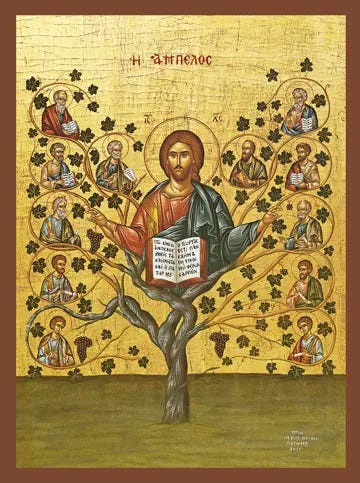
    A life of constantly reflecting on the fact of our Baptism means that everywhere and in all places Christ can be found, Christ can be heard, Christ can be spoken to, His divine majesty adored; and His mercy asked for and received. As Saint Paul writes in Galatians 3.27: “For as man of you as were baptized into Christ have put on Christ.” Even as Moses writes: “The Word is very near you. It is in your mouth and in your heart”: the Word being Christ, the Eternal Word of the Father. Recognizing this fact—recognizing this unsearchable gift—unveils for us the mystery of our existence in Christ, and His existence in us. And what happens to people when mystery is unveiled? What happens is that they are transfigured, and the eyes of their heart see in a new way—with the eyes of Noah after he leaves the ark and beholds a beautiful world, cleansed of evil and full of grace. This is what the upcoming Feast of the Transfiguration celebrates: that knowledge of the truth of Christ, fully God and fully man, opens the eyes of our hearts to see the uncreated light of heaven shine through Him. And this mystery of transfiguration matters quite a bit for our lives in the Church, as we will see shortly. I am going to bring Paul’s teaching today together with that of Jesus Christ, our Lord and Saviour. From Paul we have him exhorting and encouraging us to live according to the Spirit. To live according to the Holy Spirit. He says, “If by the Spirit you put to death the deeds of the body, you will live.” And then Paul adds, “All who are led by the Spirit of God are sons of God.” That word “sons” can trip people up, so let me say firstly that “son” means sharing in the activity of something. It means sharing the nature of it. So “sons of God” means sharing and participating in God’s activity, indeed participating in Him Who shares Himself with us eucharistically as our Daily Bread. Mary Magdalene was participating in Christ’s glory on Easter morning in a manner which was eucharistic–for she was partaking of Him Who is the Eternal Bread of Heaven. Peter, James, and John participated in Christ’s glory at the Transfiguration, and their participation was eucharistic in the same way. To reflect upon Paul’s teaching that “All who are led by the Spirit of God are participating in God’s activity” is to perceive that Paul is teaching about the eucharistic life. Life led by the Spirit of God reveals Christ Whom we receive as heavenly bread. What hinders such life and impedes participation in this life is, according to S. Paul, living according to the flesh, according to self-centeredness, concupiscence, measuring one’s life by worldly values rather than holy values. To be led by the Holy Spirit requires the putting off of self-centered, worldly living, and instead thinking, living, and acting according to Christ’s sacred humanity. To be led by the Holy Spirit means we continue in that holy fellowship, and do all such good works as God has prepared for us to walk in. What we hear from our Saviour Jesus Christ in Saint Matthew’s Gospel is that we must beware of false prophets—that is, false teachers—and recognize good teachers, that is good Priests who preach the true Faith of Christ Crucified and Resurrected. Such people are, by definition, those who are led by the Spirit of God, participating in the redemptive stream of Christ’s living water. These people are not living according to the flesh, but according to the Spirit. And Jesus says, “You will recognize them by their fruits.” By the fruits, then, we recognize holy Preachers of the Word of God. What are the fruits by which we recognize holy Preachers of God’s Word? This is another mystery of God—the mystery of Him being known through preaching, through His chosen Preachers, those chosen and ordained to proclaim the faith of the Church through preaching. How do we recognize them? What fruits are we looking for? What we are looking for are preachers who have been transfigured by the Gospel, transfigured by the uncreated light of Jesus Christ, preachers fully led by the Holy Spirit. And the specific way to recognize holy preachers is that in them we see what are called the Fruits of the Spirit. There are nine Fruits of the Spirit, and these nine come from Paul’s teaching to us in Galatians 5:22-23. There is revealed to us that the Fruits of the Spirit are: Love, Joy, Peace, Long-suffering (patience), Kindness, Goodness, Faithfulness (sometimes just faith), Gentleness (that is, meekness), and Self-Control (or temperance). These are qualities that people living according to the Holy Spirit show in their life, illustrate in their actions, their words, and exhibit as part of their personality. These are what we are to look for in Preachers, that we can separate and distinguish between true preachers and false preachers, between good and bad, between ones we should listen to, and ones we should not. Every healthy, godly tree bears good fruit that we must use to recognize the holiness of the tree. We look for in Preachers the qualities of Love, Joy, Peace, Long-suffering, Kindness, Goodness, Faithfulness, Gentleness, and Self-control. By these, the mercy, love, and presence of Christ is revealed through the Preacher, through any truly Christian person. Holy preachers are those who themselves are transfigured. The nine fruits of the Spirit are the proof that the preachers have been transfigured by Christ and are being led by the Holy Spirit. And we therefore can have full trust in such preachers, that the Holy Spirit has filled that person, and that we can not only listen to them, but be led by them, for it is the Holy Spirit who leads us and guides us into all truth. We can not only listen to them, and be led by them, but in fact be fed by them, because what they preach is Christ crucified and resurrected; what they preach is Christ Who is the eternal Bread come down from heaven; what they preach is He Who is known by the opening of Scripture and breaking of Bread. Holy preachers preach only the Truth–Truth Who is Jesus Christ Himself, Who lives and reigns with the Father, in the unity of the Holy Ghost, ever one God, world without end. Amen. Get full access to Anglican Ascetic Podcast at anglicanascetic.akensideinstitute.org/subscribe

Showing 41–46 of 46 episodes