The Authority Podcast — Expert Insights and Fresh Ideas for Education Leaders
From Compliance to Creativity: Future-Proofing Schools with Mary Hemphill
Lindsey and Tasha talk with Dr. Mary Hemphill about what it means to lead schools in a world that is changing faster than traditional systems can keep up. The conversation explores human-centered leadership, student voice, teacher development, AI, and the shift from a knowledge-based economy to one that increasingly values adaptability, collaboration, creativity, and applied skills.
Dr. Hemphill introduces her five-pillar leadership framework—curation, connection, collaboration, communication, and calibration—and explains how each pillar can help leaders build schools that better meet the needs of students and educators. Throughout the conversation, she challenges leaders to rethink who gets to lead, who gets to teach, and what success should look like in a future that demands more than credentials and content knowledge.
In this episode, we discuss:
Why leadership is fundamentally about people rather than titles or positions
How schools can move from treating students as passive recipients of learning to active contributors in the learning process
Why the shift from a knowledge economy to a skill-based economy should change how schools think about readiness and success
The limits of traditional measures such as grades, degrees, and years of experience when evaluating what students and adults can actually do
What it means to be a curator of knowledge rather than a custodian of information
Dr. Hemphill’s five pillars of leadership: curation, connection, collaboration, communication, and calibration
How connection creates stronger communities where students and educators feel supported and valued
Why collaboration requires more than inviting people into the room and should include meaningful participation in decision-making
How strong communication can build trust and help leaders navigate uncertainty and change
Why calibration is essential for leaders who need to respond to new information, changing conditions, and feedback
What happens to leadership decision-making when pressure increases and why curiosity becomes even more important in those moments
Why schools cannot afford to lose talented new teachers and what leaders can do to create environments where they feel welcomed, supported, and able to grow
The importance of creating safe spaces where educators can ask questions, admit uncertainty, and learn alongside one another
Why leaders do not always need to have the answer and how finding the answer together can strengthen a team
How students can take on meaningful leadership and teaching roles when adults are willing to rethink traditional boundaries
Why teacher and student agency are both essential to building more adaptable learning environments
How AI can support deeper learning when it is used as a tool for thinking rather than simply producing an output
Why vulnerability and authenticity matter for leaders trying to create cultures of trust and inquiry
What it means to “future-proof” a school by developing people who can adapt, think, collaborate, and lead in changing conditions
Why strong leaders should not simply create followers, but intentionally create other leaders
About today’s guest
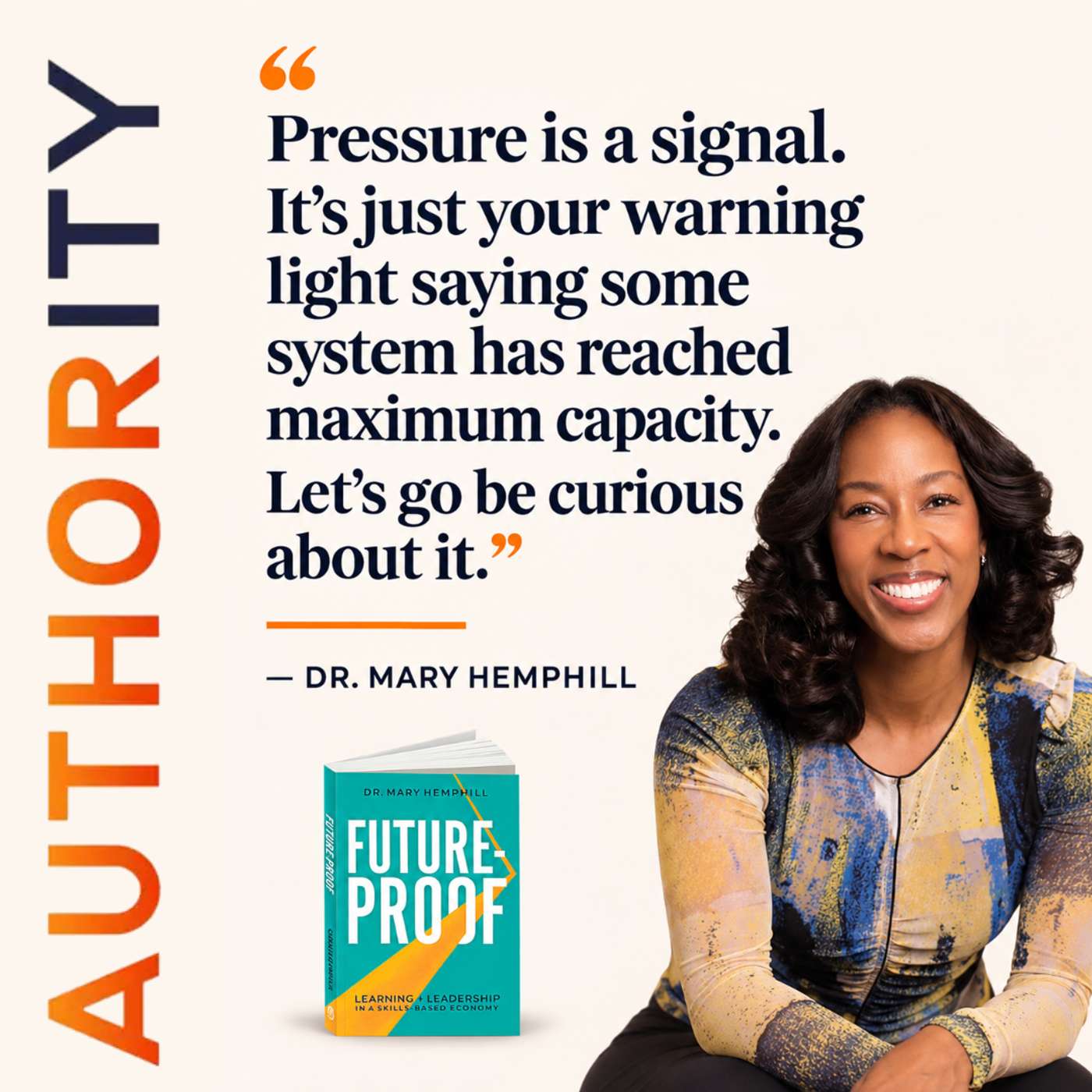
Dr. Mary Hemphill is an educator, leadership expert, and advocate for human-centered school transformation. Her work focuses on helping leaders rethink traditional models of leadership and learning so that schools can better prepare students and educators for a rapidly changing world.
Through her Limitless Leadership framework, Dr. Hemphill emphasizes curation, connection, collaboration, communication, and calibration as essential practices for modern leaders. Her work challenges schools to move beyond narrow definitions of achievement and recognize the knowledge, skills, experiences, and leadership capacity that students and educators already bring into learning communities.
Dr. Hemphill encourages leaders to remain curious, embrace uncertainty, create space for diverse voices, and develop environments where both students and adults have permission to learn, lead, and grow. Her message is clear: schools can't wait to prepare for the future. The future is already here.
Connect on LinkedIn: https://www.linkedin.com/in/drmaryhemphill/
Learn more at: bealimitlessleader.com
Learn more about today's sponsor, Playworks:
We’re proud to be sponsored by Playworks, a 501(c)3 nonprofit organization with evidence-based practices that help schools improve the health and well-being of children by increasing opportunities for physical activity and safe, meaningful play.
If you’re a school or district leader struggling with the challenge of chronic absenteeism, as so many are across the U.S., you may not realize that structured recess is a research-backed approach to keep kids in school. In fact, a UC Berkeley study of Title I schools found that those partnering with Playworks had significantly lower chronic absenteeism rates. Further, Mathematica research demonstrated that Playworks schools spent 27% less time transitioning from recess back to learning, saving teachers valuable instructional time.
These results are possible for your students, too. Learn how Playworks can help you improve student-educator relationships, belonging, and attendance by signing up for a quick no-obligation conversation.


 Becoming Financially Confident