Skip to content
Artwork for Your World of Creativity
ArtsDesignEducationSelf-ImprovementBusinessMarketing

Your World of Creativity

Mark Stinson

On YOUR WORLD OF CREATIVITY, best-selling author and global brand innovator, Mark Stinson introduces you to some of the world’s leading creative talent from publishing, film, animation, music, restaurants, medical research, and more.

In every episode, you'll discover:
- How to tap into your most original thinking.
- Inspiration from the experts’ own experience.
- Specific tools, exercises, and formulas to organize your ideas.
- And most of all, you’ll learn how to make connections

 and create opportunities to publish, post, record, display, sell, market, and promote
 your creative work.

Listen for the latest insights for creative people who want to stop questioning themselves and overcome obstacles to launch their creative endeavors out into the world.

Connect with Mark at www.Mark-Stinson.com

Play
  • 24 episodes
  • weekly
  • Avg 27 min
  • English
Counted on this page — what you have heard stays on this device, so it is not something the list can be paged by.
  • #437
    Monday · 24 min

    Creativity Is Skill You Can Learn, with Dom Morley

    What if creativity isn't something you're born with? What if it's something you can actually practice, strengthen, and learn? On this episode of YOUR WORLD OF CREATIVITY, host Mark Stinson talks with Grammy-winning producer and mix engineer Dom Morley about what 30 years in recording studios with some of the world's most accomplished musicians have taught him about how creativity really works. Dom learned his craft at London's legendary Metropolis Studios and went on to engineer Amy Winehouse's Back to Black, earning a Grammy for Record of the Year. Across his career, he's worked with artists including Adele, Sting, Mark Ronson, Richard Ashcroft, Shakira, Underworld, and Jeff Beck. But after decades around extraordinarily creative people, Dom came to an important conclusion: creativity isn't a mysterious gift reserved for a select few. It's a skill we can develop. His forthcoming book brings together lessons from the recording studio with research into flow, play, constraints, generalism, collaboration, and the conditions that help better ideas emerge. In This Episode, Mark and Dom Explore: Creativity as a learned skill. What separates people who consistently generate ideas from those waiting for inspiration—and the habits Dom has observed among highly successful creative people. The advantage of being a generalist. Dom has deliberately worked across pop, rock, folk, electronic, and orchestral music. While conventional career advice says “pick a lane,” he explains why crossing disciplines can become a creative advantage. Why outsiders sometimes have the breakthrough. Deep expertise is valuable, but it can also narrow how we see a problem. Dom explores why ideas imported from another field can sometimes unlock solutions the experts overlook. Less freedom can mean more creativity. Unlimited time, tools, and possibilities sound ideal—but they can also become paralyzing. Mark and Dom discuss how deadlines, limitations, and deliberately designed constraints can push us toward more inventive solutions. Flow, play, and getting creatively unstuck. Is creative block really a lack of ideas, or are we failing to create the right conditions for ideas to emerge? Dom shares why experimentation and play remain essential even when creativity becomes your profession. Human creativity in the age of AI. As AI makes it increasingly easy to generate music, writing, images, and other creative outputs, what becomes more valuable about the human creator? Dom and Mark consider the growing importance of curiosity, experience, judgment, taste, and knowing which ideas are worth pursuing. Building Your Creative Practice Dom's experience offers an encouraging challenge to the mythology of the “creative genius.” You don't need to wait for inspiration. You don't have to stay in one lane. And you don't need unlimited freedom or resources to produce original work. Instead, creativity can be cultivated by expanding your influences, creating useful constraints, making room for play, developing your judgment, and practicing the process of generating and recognizing good ideas. Whether you're a musician, writer, designer, filmmaker, entrepreneur, scientist—or someone who has never considered yourself particularly creative—the question isn't simply “Am I creative?” A more useful question might be: “What can I do today to become more creative?” Connect with Dom Morley Website: https://www.dommorley.com/ Instagram: https://www.instagram.com/dommorleyauthor/ Follow Dom on Instagram for practical tips and ideas for becoming more creative—and to be among the first to hear about the release of his forthcoming book. Keep Unlocking Your World of Creativity If this conversation sparks an idea, share the episode with another creative person. And wherever you listen, be sure to follow YOUR WORLD OF CREATIVITY, rate and review the podcast, and join Mark Stinson for more conversations with creative practitioners from around the world. Until next time, keep exploring, keep experimenting, and keep unlocking YOUR WORLD OF CREATIVITY.

  • #436
    September 21 · 33 min

    The Practice of Songwriting, with Michael Flannery

    What happens when you reach what looks like the finish line at the very beginning of your career? On this episode of YOUR WORLD OF CREATIVITY, host Mark Stinson talks with musician, songwriter, sound designer, professor, and author Michael Flannery about what happens after the big break—and why building a sustainable creative practice may ultimately matter more than chasing a single creative breakthrough. Michael's Website @thepracticeofsongwriting on Instagram https://www.linkedin.com/in/michaelsflannery/ Michael was signed to LAVA/Atlantic Records and toured opening for Outkast on the Stankonia tour in 2001. Since then, he has followed a simple mantra: “Make a living with sound.” And that's exactly what he's done. Over the past 25 years, Michael has worked as a musician, songwriter, producer, film composer, sound designer, and children's music performer. Today, he teaches sound recording, audio post-production, and songwriting at Stevens Institute of Technology, helping the next generation of musicians develop both their craft and their creative practice. His songs have been recognized by the John Lennon Songwriting Contest, Parents' Choice Awards, American Library Association, and International Songwriting Competition. His new book, The Practice of Songwriting, will be published by Bloomsbury this November. In This Episode, Mark and Michael Explore: Creating “a playground with a fence.” Why complete creative freedom isn't always freeing—and how boundaries and constraints can actually give creators more room to experiment. Practice over outcome. Michael reflects on starting his career with what many musicians consider the ultimate goal—a major-label record deal—and then discovering how to build a creative life that could last for decades. Building creative habits that stick. Why writing regularly matters even if you're only trying to create one great song, and how consistency helps turn occasional inspiration into a genuine creative practice. The science and craft of a great hook. What music theory, rhythm, melody, repetition, language, psychology, and psychoacoustics can teach us about creating the elusive “earworm.” Making music theory less intimidating. Michael shares how musicians can begin understanding the mechanics behind music without allowing theory to overwhelm their creative instincts. Condensing a five-act story into a three-minute song. How songwriters can communicate character, emotion, conflict, and story when they have only a few minutes—and sometimes just seconds—to capture the listener. Writing for children versus adults. Michael draws on his experience to explore how simplicity, clarity, and storytelling change depending on the audience. Teaching as a creative practice. After years of teaching songwriting, recording, and production, Michael explains what his students have taught him about creativity and communicating ideas effectively. The next generation of hitmakers. Today's musicians have access to recording and production technology that would have been unimaginable at the beginning of Michael's career. What does that accessibility mean for creativity? Songwriting in the age of AI. Michael and Mark discuss AI-generated music platforms such as Suno, whether easier production actually leads to better songs, and which parts of the creative process still need to remain deeply human. The Bigger Creative Question While this conversation begins with songwriting, Michael's approach applies far beyond music. Whether you're a writer, designer, filmmaker, entrepreneur, artist, or another kind of creative professional, the challenge is similar: How do you create enough structure to support your creativity without constraining it—and develop a practice that keeps you creating long after the initial inspiration disappears? Michael's career offers an important reminder that a creative life isn't built around one hit, one big break, or one finished project. It's built through the practice of continuing to make the work. Connect with Michael Flannery Visit thepracticeofsongwriting.com to learn more about Michael and The Practice of Songwriting. Listeners can also: Download the first few chapters of the book for free Access bonus songwriting content Learn about upcoming songwriting workshops Explore resources for developing a stronger and more consistent songwriting practice Keep Unlocking Your World of Creativity If this conversation sparked an idea, share the episode with another songwriter, musician, or creative person who could use some inspiration to strengthen their own creative practice. Be sure to follow YOUR WORLD OF CREATIVITY, rate and review the podcast on your favorite listening app, and join Mark Stinson for more conversations with creative practitioners from around the world. Keep exploring, keep practicing, and keep unlocking YOUR WORLD OF CREATIVITY.

  • #435
    September 14 · 25 min

    Building a Place Where Creativity Wants to Happen, with Myles Wakeham, Troubled Clef Studios

    What if where we create matters just as much as how we create? In this episode of YOUR WORLD OF CREATIVITY, host Mark Stinson talks with Myles Wakeham, founder of Troubled Clef Studios in San Miguel de Allende, Mexico — an extraordinary destination recording studio created from an abandoned matador school and full-sized bullfighting ring. During the pandemic, Myles and his wife Sandra saw possibility in a property that had sat unused for years. Inspired by Sir George Martin's legendary AIR Studios Montserrat, they set out to create more than another recording facility. Their vision was a place where world-class artists would want to travel, disconnect from their everyday surroundings, collaborate, and create something remarkable. Myles recreated the famous Montserrat live room down to the millimeter, consulted people connected to the original studio, and even tracked down a vintage Neve 8232 console in a New Jersey storage facility and brought it to Mexico. Troubled Clef officially opened in February 2026 and has already welcomed Grammy-winning artists, commercial production companies, film studios, video game developers, and broadcast projects. In this conversation, Mark and Myles explore: Seeing possibility where others see limitations — how an abandoned bullring became the foundation for an ambitious creative vision. Designing environments for creativity — what AIR Studios Montserrat taught Myles about the influence of place, isolation, acoustics, and atmosphere on creative work. The value of obsession and craftsmanship — why seemingly invisible details can make the difference between something good and something extraordinary. Believing before there's proof — confronting the entrepreneurial question, “If we build it, will they come?” Creating a legacy — Myles' hopes for what artists will create at Troubled Clef and what the studio might represent 20 years from now. Myles' story is a reminder that our creative environment isn't merely a backdrop — it can become an active part of the creative process. And sometimes creativity means looking at something everyone else has overlooked and imagining what it could become. Connect with Myles Learn more about Troubled Clef Studios, its story, facilities, and recording opportunities at troubledclef.com. Myles on YouTube @troubledclefstudios on Instagram Myles's Facebook page https://www.linkedin.com/in/myles-wakeham-a0a1b430a/ If you enjoyed this conversation, follow, rate, and review YOUR WORLD OF CREATIVITY on your favorite podcast platform — and share the episode with someone pursuing an ambitious creative idea. Keep unlocking YOUR WORLD OF CREATIVITY.

  • #434
    September 7 · 28 min

    Finding the Magic From Stage to Page, with Seth Panitch, novelist of "Antique"

    What happens when an accomplished creative deliberately becomes a beginner again? On this episode of YOUR WORLD OF CREATIVITY, Mark talks with Seth Panitch, an award-winning actor, playwright, screenwriter, filmmaker, director, and theatre educator who has added a new creative identity to his 30-year career: novelist. Seth's Website Seth on YouTube @sethpanitchauthor on Instagram Seth's Facebook page https://www.amazon.com/Antique-Novel-Seth-Panitch-ebook/dp/B0FBLVCVPD Seth's debut novel, Antique, published by Grand Central Publishing in February 2026, follows Grace Schaffer, a once-celebrated antique appraiser whose career, marriage, and sense of identity have fallen apart. When she encounters a mysterious necklace that appears to give her an uncanny ability to predict the value of objects, her journey raises a deeper question: What's the difference between what something is worth—and what we are worth? In this conversation, Mark and Seth explore: Becoming a beginner again — What writing a novel offered Seth that acting, theatre, screenwriting, and filmmaking couldn't, and what he had to learn—or unlearn—to embrace a new creative form. Finding the story behind Antique — How antiques, appraisal, mystery, and magic became the setting for a larger exploration of value, identity, and self-worth. Balancing magic with emotional truth — How Seth uses mystery and the unexplained without losing sight of the very human story at the center of the novel. From stage and screen to the page — How decades of experience with dialogue, pacing, character, and performance shaped Seth's approach to fiction. The artist and the teacher — How leading the MFA Acting Program at the University of Alabama influences Seth's creative practice—and how remaining an active artist shapes the way he teaches. Feedback, rejection, and creative risk — Knowing when outside feedback strengthens the work and when an artist needs to trust their own instincts. Appraising our own creative worth — Separating reviews, sales, awards, rankings, and other external measures from our deeper sense of value as creative people. Seth's journey is a reminder that a creative career doesn't have to be defined by a single medium. Sometimes the next chapter requires stepping away from what we already know, embracing uncertainty, and giving ourselves permission to become beginners again. And perhaps Antique offers a question every creative person can consider: Who gets to determine what our work—and ultimately we ourselves—are worth? Connect with Seth Learn more about Seth Panitch and Antique at sethpanitch.com. Antique is available from Grand Central Publishing and wherever books are sold. If you enjoyed this conversation, follow YOUR WORLD OF CREATIVITY on your favorite podcast app, and please rate and review the show. It helps more creative professionals discover these conversations. Until next time, keep unlocking YOUR WORLD OF CREATIVITY.

  • #433
    August 31 · 26 min

    Building Creativity That Actually Works, with Lance Cayko, F9 Productions

    Creative people love ideas. We love the sketch, the concept, the big vision, the possibility of something that doesn’t exist yet. But eventually, somebody has to build it. And that’s where creativity runs into budgets, materials, clients, regulations, deadlines, economic downturns—and all the other realities that can either sharpen an idea or stop it altogether. My guest today knows that intersection especially well. Lance Cayko has worked with his hands in the construction trades, studied environmental design and architecture, built an award-winning architecture and design-build firm, taught the next generation of architects, developed real estate, launched community projects, and even built a successful podcast around the business of architecture. Lance's Website Lance on YouTube @F9Productions on Instagram Lance's Facebook page LinkedIn: https://www.linkedin.com/in/lance-cayko-1227031a/ He co-founded F9 Productions with Alex Gore in 2009—right in the middle of the Great Recession—with about $1,000 and the willingness to find a way forward. Since then, the firm has grown dramatically and produced projects ranging from custom homes and multifamily developments to the internationally recognized Atlas Tiny House and Eastwatch retreat. 1. CREATING WHEN THE CONDITIONS ARE TERRIBLE: Sometimes constraints don’t kill creativity—they force us to become more creative. 2. THE HAMMER AND THE BLUEPRINT: How actually building things with your hands changes the way you think creatively as an architect 3. INNOVATION THAT EARNS ATTENTION: creating something genuinely better versus simply creating something different 4. SCALING CREATIVITY WITHOUT LOSING IT: extending the definition of “building” 5. BUILDING SOMETHING BIGGER THAN YOURSELF: sharing knowledge and creating community. Lance leaves listeners with something they can put into practice this week. You can learn more about Lance, explore his work, and listen to Inside the Firm at InsideTheFirmPodcast.com. And wherever you’re listening today, be sure to follow, rate, and review YOUR WORLD OF CREATIVITY. Share this episode with another creative professional, entrepreneur, architect, designer—or anyone who has an idea they’re ready to move from blueprint to reality. Until next time, we’ll keep traveling around the world, talking with creative people about how they get inspired, organize their ideas, and gain the confidence to make them real. Keep unlocking YOUR WORLD OF CREATIVITY.

  • #432
    August 24 · 38 min

    Knowing Your Numbers, with our Creative Roundtable

    KNOWING YOUR NUMBERS: HOW METRICS CAN STRENGTHEN CREATIVITY What if numbers aren't the enemy of creativity—but one of its greatest allies? In this special YOUR WORLD OF CREATIVITY roundtable, host Mark Stinson sits down with Alisa Sparks, Andrea Carter, and Rei Vardi to explore why creative people need to become more comfortable with numbers—not just financial numbers, but also data, activity, customer behavior, performance, relationships, belonging, and impact. Together, the panelists discuss how meaningful metrics can guide better decisions, sharpen intuition, reveal hidden opportunities, strengthen customer experiences, and help creative ideas grow. MEET THE PANELISTS Alisa Sparks grew Linden Creek from a garage startup into a nationally recognized home staging franchise. With a background in finance, she uses numbers to guide creative decisions, optimize client ROI, and help franchise owners build sustainable businesses. linden-creek.com https://www.linkedin.com/in/alisasparkslc/ Andrea Carter is an organizational scientist and researcher whose work measures belonging, trust, culture, and human performance. Her research challenges leaders to look beyond averages and uncover the hidden stories within the data. www.belongingfirst.com https://www.linkedin.com/in/andreadcarter/ (https://theconversation.com/the-price-of-belonging-is-inconvenience-are-we-still-willing-to-pay-it-270778) https://substack.com/@andreadcarter https://www.adler.edu/faculty-engagement/faculty-directory/carter-andrea-d/ Rei Vardi is the founder of EON Rides, an electric car-sharing and rental platform connecting underutilized vehicles with drivers through a frictionless digital experience. He focuses heavily on customer retention as a key measure of whether the experience truly works. eonrides.com https://www.linkedin.com/in/reivardi/ EPISODE HIGHLIGHTS Is Creativity Constrained by Numbers—or Guided? Rei suggests that numbers don't limit creativity—they define the problem. Data might reveal that customer retention is falling, outreach is too low, or a process isn't working. Creativity comes into play when we ask: How do we solve it? Alisa agrees. Her background in finance became a competitive advantage in the creative world of home staging because she learned to start with the numbers and then ask: How do we create? How do we solve? How do we build? What Should Creative People Actually Measure? The answer depends on what you're trying to improve: Alisa tracks activity, especially how many new relationships and meaningful connections are being developed each week. Rei watches customer retention because repeat business is one of the clearest signs that people genuinely value the experience. Andrea looks beneath averages to uncover gaps in belonging, participation, engagement, and performance. As Andrea explains: "The average score is the story that the leaders want. The distribution is the story employees and customers are living." The Courage to Look at the Numbers Numbers don't always tell us what we want to hear. A campaign may underperform. A hire may not work out. A business model may need to change. An idea may not gain traction. But avoiding the numbers doesn't change reality. Andrea encourages creative people to look directly at the metric they've been avoiding and treat it not as a verdict, but as the beginning of a conversation. Alisa adds that intuition can be useful as a hypothesis—but it still needs to be tested. Scaling Creativity with Metrics Measurement can help a creative idea travel. Andrea's research on belonging began with 3,508 participants in the mining industry and eventually expanded across manufacturing, healthcare, finance, government, and nonprofits, impacting more than 150,000 employees. Her perspective: "Unmeasured creativity is something that keeps us small. Measured creativity is what becomes repeatable by others." Metrics can turn a creative insight into a system, methodology, or infrastructure that others can use. The "Human" Numbers Behind Relationships and Community Not every meaningful number appears on a financial dashboard. Andrea challenges listeners to observe their next meeting, dinner party, or gathering and count: Who speaks? Who gets interrupted? Who receives credit? Who gets remembered? Who hasn't spoken at all? Her insight is simple but powerful: "Counting makes you notice, which makes you kinder." Alisa shares a similar lesson from her first home staging project. The home sold for $30,000 over asking, which initially looked like a great business case study. But when the homeowner explained what that additional money would mean for his family, the number became something more. The numbers may show us how we're making an impact. People remind us why the impact matters. KEY TAKEAWAYS Numbers can provide a frame for creativity rather than restrict it. The most useful metrics aren't always revenue or profit. Activity, retention, participation, belonging, customer behavior, and impact can be equally important. Intuition is valuable, but it becomes stronger when informed by experience and tested against evidence. Averages can hide important differences. Sometimes the real story lives underneath the headline number. Measurement helps creative ideas become repeatable, scalable, and transferable. Sometimes the number you've been avoiding is the one that has the most to teach you. BUILD YOUR NUMBERS MUSCLE THIS WEEK Rei Vardi: Start tracking something. Whatever you're trying to improve, write down where you are now and begin measuring progress. Alisa Sparks: Measure activity before results. Instead of focusing only on whether you made the sale, count how many calls you made, relationships you developed, or actions you completed. Andrea Carter: Look at what you've been avoiding. Choose one number and review it every week at the same time. Don't judge it—study it. Look at the best moment, the worst moment, and what happened in between. FINAL THOUGHT Knowing your numbers doesn't mean becoming an accountant or a data geek. It means becoming a better creative leader. The right numbers can help us understand our customers, test our intuition, strengthen our organizations, build better relationships, scale our ideas, and measure the impact we're truly making. Numbers aren't the enemy of creativity. They may be one of its greatest allies. Connect with Alisa Sparks, Andrea Carter, and Rei Vardi to learn more about their work. And if you enjoyed this roundtable, subscribe, follow, rate, and review YOUR WORLD OF CREATIVITY on your favorite podcast platform. Every review helps more creative leaders discover these conversations. Stay tuned for more discussions inspired by the principles explored in Mark Stinson's book, UNLOCK YOUR WORLD OF CREATIVITY. Until next time, keep asking better questions, keep learning, keep measuring what matters — and together, let's keep unlocking ... your world of creativity.

  • #431
    August 17 · 24 min

    The Power of Myth, by Joseph Campbell & Bill Moyers: Book Review + Audio Experiment

    What if the stories that have captivated humanity for thousands of years are actually teaching us how to navigate our own lives? In this special episode of Your World of Creativity, host Mark Stinson tries out a new podcast format: Creative Book Reviews — exploring influential books that have shaped the way creative people think, lead, and make an impact. For this review, Mark turns to one of the most influential books on storytelling: The Power of Myth by Joseph Campbell and Bill Moyers. Even more unique, the book discussion is presented as an audio overview created with NotebookLM, offering listeners both timeless ideas and a firsthand experience of an emerging AI learning tool. In this episode, you'll discover: Why myths continue to shape our thinking in the modern world Joseph Campbell's groundbreaking concept of The Hero's Journey How George Lucas used Campbell's work to build the story architecture of Star Wars Why the most memorable stories share universal psychological patterns How myths provide a framework for navigating change, uncertainty, and personal transformation Why your own career, business, and creative life may be following a hero's journey right now How shared cultural stories influence leadership, innovation, and even the future of society What today's AI tools can teach us about learning, research, and communicating complex ideas Key ideas explored The Hero's Journey Campbell's timeless framework reveals that great stories—and great lives—follow recognizable stages: The Call to Adventure Leaving the Ordinary World Trials and Transformation Returning with New Wisdom The conversation explores how this pattern appears not only in mythology and literature, but in entrepreneurship, career transitions, creative work, and personal growth. Myth as a Framework for Living Rather than viewing myths as ancient stories disconnected from modern life, Campbell argues they help us: Make sense of uncertainty Find purpose during difficult seasons Build resilience Better understand ourselves and our place in the world Star Wars Through Campbell's Lens The episode examines how George Lucas intentionally built Luke Skywalker's journey around Campbell's research, demonstrating why audiences instinctively connect with stories rooted in universal human experience. Creativity, Storytelling & AI Listeners also experience NotebookLM's conversational audio format — an example of how AI can help synthesize ideas, review books, and support lifelong learning while preserving the richness of great source material. Mentioned in this episode The Power of Myth — Joseph Campbell & Bill Moyers The Hero with a Thousand Faces — Joseph Campbell The Masks of God — Joseph Campbell Star Wars and the influence of Campbell's Hero's Journey NotebookLM as an AI-powered research and audio learning platform A Note from Mark This episode complements our interviews with creative professionals from around the world. Alongside conversations with artists, entrepreneurs, designers, musicians, scientists, and innovators, we'll occasionally explore books whose ideas continue to inspire creative thinking across disciplines. I'd love your feedback. Did you enjoy this AI-generated book review format? Should we continue reviewing influential books alongside our guest interviews? Let me know on LinkedIn or through the podcast website. If you enjoyed this episode, please subscribe, rate, and review Your World of Creativity. Every review helps more creative thinkers discover the show. Until next time… Keep reading. Keep learning. Keep asking better questions. And together, we'll keep Unlocking Your World of Creativity.

  • #430
    August 10 · 24 min

    Hamid Ghanadan, CEO, LINUS Consulting on Persuading the World's Most Skeptical Audiences

    On Your World of Creativity, we explore how innovators, entrepreneurs, artists, scientists, and thought leaders transform ideas into impact. Today's guest has spent three decades helping some of the world's most sophisticated science and healthcare companies answer a deceptively simple question: How do you persuade people who pride themselves on not being persuaded? Hamid Ghanadan is the founder and CEO of LINUS, a commercial strategy consultancy serving life science and healthcare innovators. A former biochemist turned strategist, Hamid has guided organizations including Twist Bioscience, Thermo Fisher Scientific, and 10x Genomics through product launches, market development, and growth initiatives. His new book, Not Buying It: The Art of Selling to Scientists, Doctors, and Other Professional Skeptics, challenges conventional thinking by arguing that even the most technical buying decisions are ultimately driven by psychology, empathy, and human behavior—not just data. Hamid 's Website Hamid on YouTube Hamid LinkedIn: https://www.linkedin.com/in/hghanadan/ Let's explore creativity, persuasion, science, and what it takes to influence skeptical minds. Guest Bio Hamid Ghanadan is the Founder and CEO of LINUS, a commercial strategy consultancy focused on life sciences, healthcare, diagnostics, medical devices, and biotechnology. Originally trained as a biochemist, Hamid became fascinated with a question that would shape his entire career: How do scientists make decisions? That curiosity led him from the laboratory into marketing, strategy, and behavioral psychology. Over the past 30 years, he has developed what he calls an Insights-Led Commercial Strategy, helping science and healthcare organizations better understand customer decision-making and create meaningful demand. His new book, Not Buying It, explores how technical professionals evaluate information, why traditional marketing often fails with scientific audiences, and how empathy becomes a competitive advantage in high-stakes commercial environments. 1: From Biochemist to Behavioral Strategist Hamid, one of the stories I found fascinating is that your career began in a biochemistry laboratory. You describe an early encounter watching a salesperson struggle to connect with scientists, which sparked a question that changed your professional trajectory: How do you sell to such a skeptical audience? What was it about that moment that stayed with you, and how did it eventually lead you from science into strategy? 2: The Psychology Behind Technical Decisions One of the central themes of your book is that commercial strategy is fundamentally a game of psychology. That can sound counterintuitive in industries built on evidence, data, peer review, and rigorous analysis. Yet you argue that scientists, doctors, engineers, and other technical professionals are still human beings first. What do most companies misunderstand about how highly educated professionals actually make decisions? Why isn't more data necessarily more persuasive? 3: The Soul of the Brand Let's apply my favorite framework—the Soul of the Brand. Thinking about LINUS: What is your focus? What work are you really doing? Who are you serving? What gives you credibility? What industry assumptions are you challenging? And what larger mission drives the organization? 4: Persuasion, Creativity, and the Age of AI In the book, you make an interesting observation. AI is making it easier than ever to create content, automate outreach, and scale communications. But you suggest that simply producing more content creates more noise—not more influence. As someone who studies persuasion and decision-making, what concerns you most about how organizations are currently using AI? What human skills become more valuable in an AI-enabled world? 5: Unlocking Influence Through Empathy One of the ideas that really resonated with me is your belief that the key ingredient of an effective strategy is a unique insight into audience psychology—and that finding that insight requires empathy. For leaders, marketers, entrepreneurs, healthcare innovators, and creative professionals listening today: How can they become better observers of human behavior and uncover those insights that others miss? If you enjoyed today's episode, please subscribe, rate, and review the podcast.

  • #429
    August 3 · 41 min

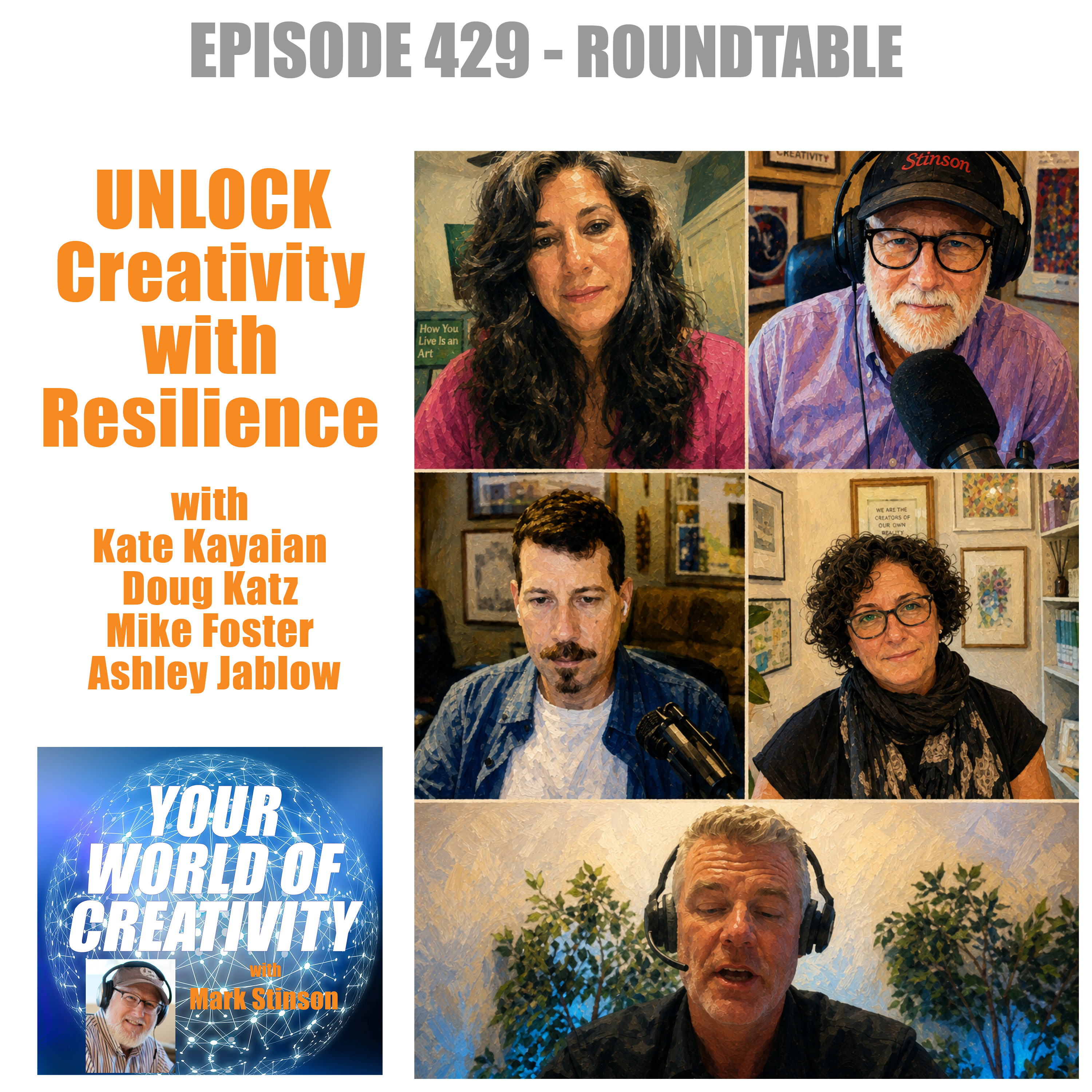
    UNLOCK Your Creativity with Resilience: Global Roundtable

    What keeps creative people moving forward when life doesn't go according to plan? In this special roundtable episode of Your World of Creativity, host Mark Stinson brings together four entrepreneurs, authors, coaches, and mentors to explore one of the six key lessons from his new book, UNLOCK Your World of Creativity: Resilience. Every creative person encounters obstacles. Rejection. Uncertainty. Financial pressure. Health challenges. Unexpected detours. Yet some people find a way to continue creating, leading, and growing despite adversity. In this conversation, our panelists share personal stories and practical insights about navigating setbacks, adapting to change, maintaining momentum, and discovering how resilience often becomes the foundation for creativity and success. The discussion explores leadership, entrepreneurship, personal growth, life transitions, and sustainable achievement in a rapidly changing world. The episode is inspired by the Resilience chapter from UNLOCK Your World of Creativity. In This Episode • Why resilience is built through experience, not inherited • How adversity becomes a teacher and catalyst for growth • The connection between resilience and creativity • Sustainable success versus burnout • Leading through uncertainty and change • Practical habits for staying grounded and adaptable • How setbacks often become the experiences that shape our purpose Featured Guests Ashley Jablow Founder of Wayfinders Collective, coach, facilitator, author, and artist. Ashley helps people redesign their lives through intentional change, creativity, and self-discovery. Website: https://www.wayfinderscollective.com LinkedIn: https://www.linkedin.com/in/ashleyjablow Instagram: https://www.instagram.com/ashleyjablow Doug Katz Disabled veteran, entrepreneur, CEO, and resilience advocate. Doug combines lessons from military service, leadership, and entrepreneurship to help others overcome adversity and lead with purpose. Website: https://nuluventures.com LinkedIn: https://www.linkedin.com/in/doug-katz Mike Foster Entrepreneur mentor, business growth advisor, and leadership coach helping founders navigate challenges, scale businesses, and build sustainable success. Website: https://entrepreneursmentor.co.uk LinkedIn: https://www.linkedin.com/in/mike-foster-entrepreneurs-mentor Kate Kayaian Author, coach, and advocate for sustainable success. Kate helps ambitious professionals achieve meaningful goals while protecting wellbeing and avoiding burnout. Website: https://www.katekayaian.com LinkedIn: https://www.linkedin.com/in/katekayaian Instagram: https://www.instagram.com/katekayaian About UNLOCK Your World of Creativity This roundtable was inspired by Mark Stinson's new book: UNLOCK Your World of Creativity: 6 Key Lessons Learned from More Than 250 Creatives Worldwide Drawing from hundreds of interviews with artists, entrepreneurs, authors, musicians, designers, innovators, and leaders around the globe, the book explores six recurring themes that help people transform ideas into impact. Connect with Mark Website: https://www.mark-stinson.com Podcast: https://podcasts.apple.com/us/podcast/your-world-of-creativity/id1529812538 LinkedIn: https://www.linkedin.com/in/stinsonmark/ Enjoying the Show? Please subscribe, rate, and review Your World of Creativity on your favorite podcast platform. Your support helps us continue bringing conversations with creative thinkers, leaders, and innovators from around the world. Until next time, keep unlocking...Your World of Creativity.

  • #428
    July 27 · 24 min

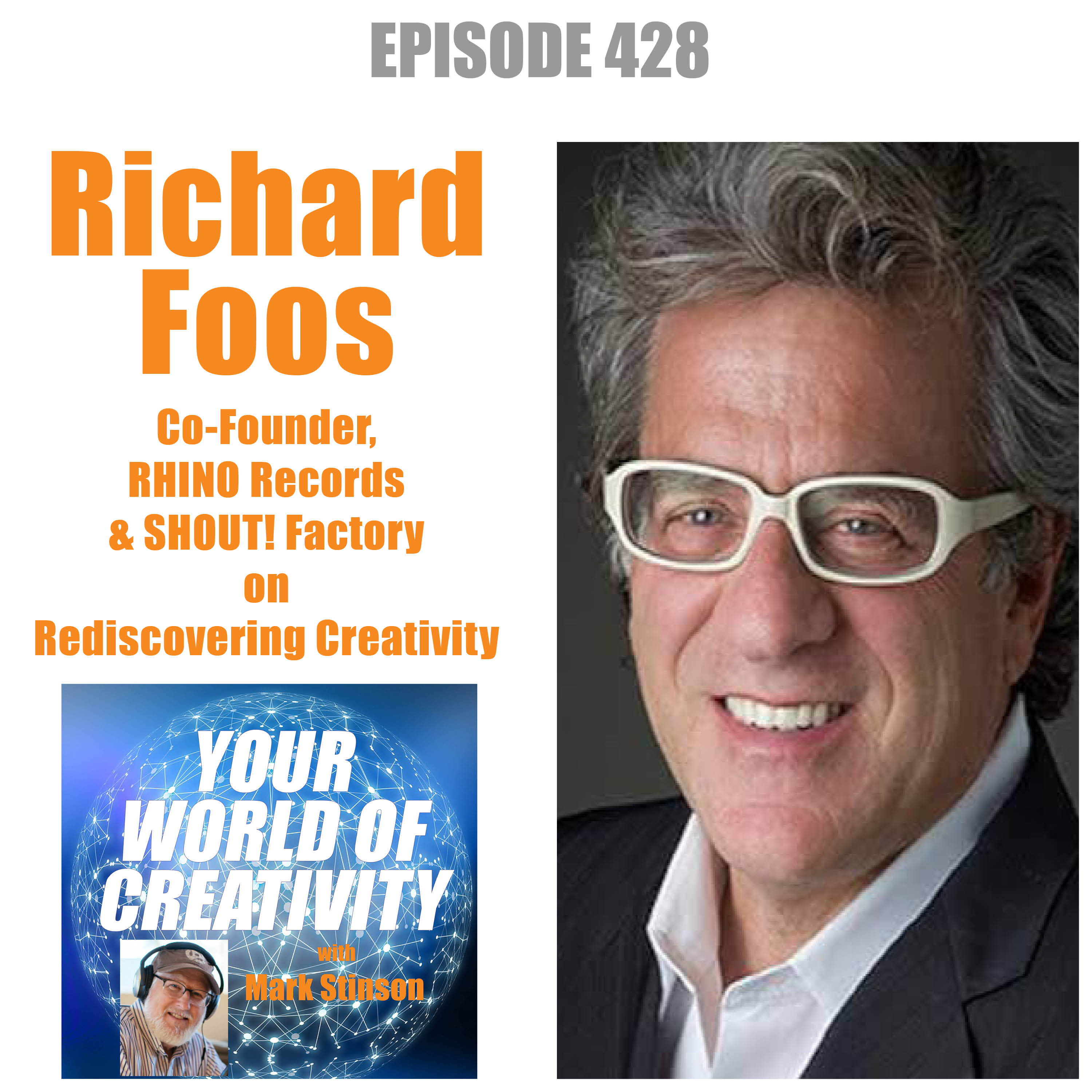
    Richard Foos: Rhino Records & Shout! Factory on the Reissue Culture and Rediscovering Creativity

    On Your World of Creativity, we travel around the world talking with creative practitioners, entrepreneurs, artists, and innovators about how they get inspired, organize ideas, and turn imagination into impact. Today's guest didn't just build a successful business—he helped create an entirely new category within the entertainment industry. Richard Foos was the co-founder of Rhino Records and most recently of Shout! Factory, two companies that transformed the way music, television, and film archives are valued, distributed, and monetized. What began as a passion for out-of-print records became a movement that helped define today's streaming culture, vinyl resurgence, and the growing importance of content libraries. Richard's Website Richard's Facebook page We'll explore creativity, entrepreneurship, cultural preservation, and what happens when you discover opportunity hiding in plain sight. Guest Bio Richard Foos is the co-founder of Rhino Records, one of the most influential reissue labels in music history, and later Shout! Factory, a pioneering company focused on television and film distribution. Beginning with a small record store on Santa Monica Boulevard, Richard and his partner Harold Bronson built Rhino into a globally respected brand known for preserving, restoring, and reintroducing forgotten and out-of-print music to new generations of listeners. The success of Rhino helped establish what many now call reissue culture—a model that transformed entertainment economics by demonstrating the long-term value of existing catalogs. Rhino was eventually acquired by Time Warner and became the catalog development and marketing division of Warner Music Group. Richard later co-founded Shout! Factory, bringing similar innovation to television and film archives. Today he continues advising the entertainment industry while focusing on social impact through organizations including The Narrative Method, Volunteer Collective, Cedars Sinai, and other nonprofit initiatives. His career sits at the intersection of creativity, commerce, culture, memory, and preservation. 1: Seeing Opportunity Where Others Saw Obsolescence Richard, one of the themes we explore on this podcast is creative vision—the ability to see possibilities that others overlook. Back in the 1970s, most of the entertainment industry was focused almost exclusively on the next release, the next hit, the next trend. What led you to recognize value in out-of-print recordings and forgotten catalogs when much of the industry considered them yesterday's news? Was there a specific artist, album, or moment that convinced you this could become a business? How much of that insight came from being a fan versus being an entrepreneur? 2: The Soul of the Rhino Brand Looking back at Rhino Records and now Shout! Factory: What was your focus? What work were you really doing beyond selling records and media? Who were you serving? What gave you credibility? What industry assumptions were you challenging? And what larger mission connected all of it? 3: Reissue Culture Changed Everything Today we take streaming libraries, catalog recommendations, and rediscovered classics for granted. But Rhino helped create the blueprint. How did the process of licensing, restoring, packaging, and reintroducing older content evolve into what has now become one of the dominant business models in entertainment? What resistance did you encounter from record labels and rights holders in the early days? When did you realize the model was bigger than a niche collector audience? 4: What Audiences Teach Us About Creativity One of the fascinating aspects of your career is that you've spent decades observing how audiences reconnect with older creative work. What patterns have you seen in how people rediscover music, television, and film from previous generations? And what does that tell us about human creativity, nostalgia, storytelling, and cultural memory? 5: The Future of Creativity, Archives, and Cultural Legacy Today, entertainment companies increasingly view their catalogs as some of their most valuable assets. Streaming platforms are built on libraries. Vinyl sales continue to grow. Legacy content often outperforms new releases. What does this shift tell us about the future of creativity and content consumption? And what advice would you give today's creators about building work that remains valuable decades from now? If you enjoyed today's conversation, please subscribe, rate, and review the podcast.

  • #427
    July 20 · 24 min

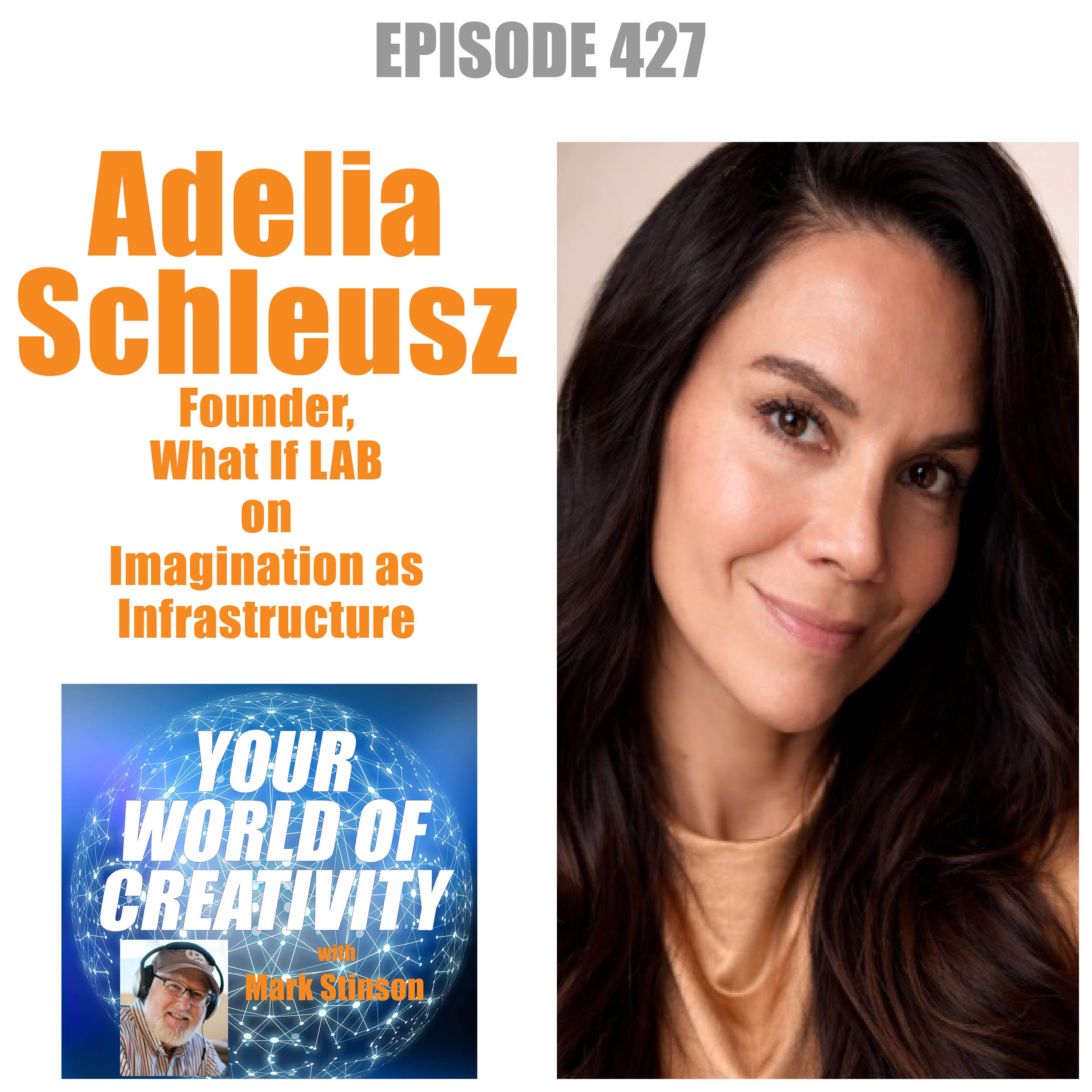
    Imagination as Infrastructure, with Adelia Schleusz, Founder of What If LAB

    On Your World of Creativity, we travel the world talking with creative practitioners about how they get inspired, organize ideas, and turn imagination into impact. Today's guest believes that imagination isn't just a creative skill—it's infrastructure. Adelia Schleusz has built a career at the intersection of commercial interior design, behavioral psychology, sensory design, research, and strategic foresight. As the founder of What If LAB, she helps organizations use creativity, science, and cross-disciplinary thinking to design better experiences, better environments, and perhaps even better futures. Adelia 's Website @adeliapcs on Instagram Connect on LInkedIn: www.linkedin.com/in/adelia-c-schleusz-rid-ncidq-iida-195b116/ If you've ever wondered how curiosity becomes innovation—or how asking "What if?" can transform the way we work, create, and collaborate—this conversation is for you. Guest Bio Adelia C. Schleusz is the Founder of What If LAB, LLC, a creative consultancy operating at the intersection of interior environments, human experiences, strategy, and science. A licensed and registered interior designer, Adelia has spent her career exploring how creativity, behavioral psychology, research, and sensory design can work together to shape meaningful experiences. Her work has earned numerous industry honors, including the prestigious Interior Design 2023 HiP Award, recognizing the most innovative people in commercial design. Adelia is a public speaker, SXSW workshop facilitator, and recipient of the IIDA 2025 Kimball International Makers of a Better Future Fund Award. Through What If LAB, she helps organizations cultivate curiosity, challenge assumptions, and design solutions that bridge imagination and practical impact. Her philosophy is simple: stay curious, ask better questions, and never stop exploring the possibilities hidden inside "What if?" 1: Imagination as Infrastructure One phrase that immediately caught my attention is your description of using "imagination as infrastructure." Many people think of imagination as something abstract or artistic, but you see it as foundational to innovation and problem-solving. What does "imagination as infrastructure" mean to you, and how has that philosophy shaped your career journey from interior design into strategy, research, and future-focused thinking? Are organizations doing enough to nurture imagination—or are they unintentionally designing it out of the workplace? 2: The Soul of Your Brand When I look at What If LAB, I don't see an interior design firm. I see a curiosity engine. A place where diverse disciplines collide to create new possibilities. How has your mission evolved as you've gained experience working across industries and disciplines? 3: Designing for Human Experience You've worked extensively in commercial interiors, behavioral psychology, sensory design, and research. Many people think design is about aesthetics. But your work suggests it's really about human behavior and experience. What have you learned about how environments influence the way people think, collaborate, create, and even feel? What are some simple design principles listeners could apply in their own workspaces or creative environments? Have you seen examples where changing a space transformed the outcomes of a team or organization? 4: The Power of Cross-Disciplinary Thinking A recurring theme on this podcast is that creativity often happens at the intersection of disciplines. You've intentionally built a career that connects design, psychology, research, science, business strategy, and innovation. Why do breakthroughs so often emerge when we bring together people with different perspectives, and how can leaders create environments where that kind of collaboration thrives? 5: Living in the "What If?" In a world increasingly focused on efficiency, certainty, and immediate results, curiosity can sometimes feel like a luxury. If listeners wanted to strengthen their own curiosity muscle this week, what's one question they should begin asking themselves? If you enjoyed today's conversation, please subscribe, rate, and review the podcast.

  • #426
    July 13 · 35 min

    Your Brand & Signature Method, with our Creative Roundtable

    Welcome back to Your World of Creativity. We travel around the world talking with creative practitioners about how they get inspired, organize ideas, gain confidence, and turn imagination into impact. Today, we’re doing something special — a roundtable conversation around one of the six themes from my new book, UNLOCK Your World of Creativity — Developing Your Brand with a Signature Method. We’ve gathered creative leaders from different parts of the country — and a world of different industries — to explore how unique methods become memorable brands. Joining us today: Ela Thier, filmmaker, educator, and author joining us from New York City, where she’s built an award-winning film career and mentored thousands of artists through The Independent Film School. Website: theindependentfilmschool.com IG: @elathier LI: linkedin.com/in/elathier Book: amazon.com/How-Fail-Artist-Best-Tips/dp/B0GWQGLF9K Jessica and Damien Zouaoui, founders of Oakwell Beer Spa in Denver, Colorado, who transformed inspiration from travels across 25 countries into one of America’s most innovative wellness hospitality experiences. Websites: oakwell.com and oakwellfranchise.com IG: @oakwellbeerspa LI: linkedin.com/in/jfrench10 and linkedin.com/in/damienzouaoui Jodi Koch, interior designer, CEO of Elizabeth Erin Designs, and host of Designing in 5D, joining us from Florida, where she helps clients transform homes through her signature 5D Process. Website: elizabetherindesigns.com IG: @elizabetherindesigns LI: linkedin.com/in/jodipeterman Today’s guests represent filmmaking, wellness hospitality, and interior design — a rich mix of perspectives on how a distinctive method becomes a meaningful brand. Here are some of the key questions we explored: What is your signature method? How did your creative philosophy become something distinctly you? How did you know it wasn’t just a business idea — but a signature brand concept worth building? How does someone take what feels intuitive or artistic and turn it into a repeatable signature method that clients can understand and trust? Behind the scenes your brand requires systems and consistency. How do you systematize without losing the surprise and delight? What’s the biggest mistake creative people make when trying to define themselves or their brand? How do you stay true to your signature approach while adapting to client realities? How do you evolve your brand while staying true to what made it special? Closing Question: What’s one thing listeners can do this week to begin developing a signature method of their own? Summary Today we explored how signature methods don’t appear overnight — they emerge through experimentation, setbacks, systems, lived experience, and the courage to lean into what makes you different. Huge thanks to Ela, Jessica and Damien, and Jodi for sharing their insights and stories. And if today’s conversation sparked something for you, this is exactly the kind of idea explored in my new book: UNLOCK Your World of Creativity: 6 Key Lessons Learned from More Than 250 Creatives Worldwide. This roundtable was inspired by Chapter One: Developing Your Signature Method. You can order UNLOCK now on Amazon. https://www.amazon.com/UNLOCK-Your-World-Creativity-Creatives/dp/B0GJZF4N2P/ref=tmm_pap_swatch_0 And if you enjoyed this episode, please take a moment to follow, rate, and review the podcast. It helps more creative professionals discover these conversations.

  • #425
    July 6 · 24 min

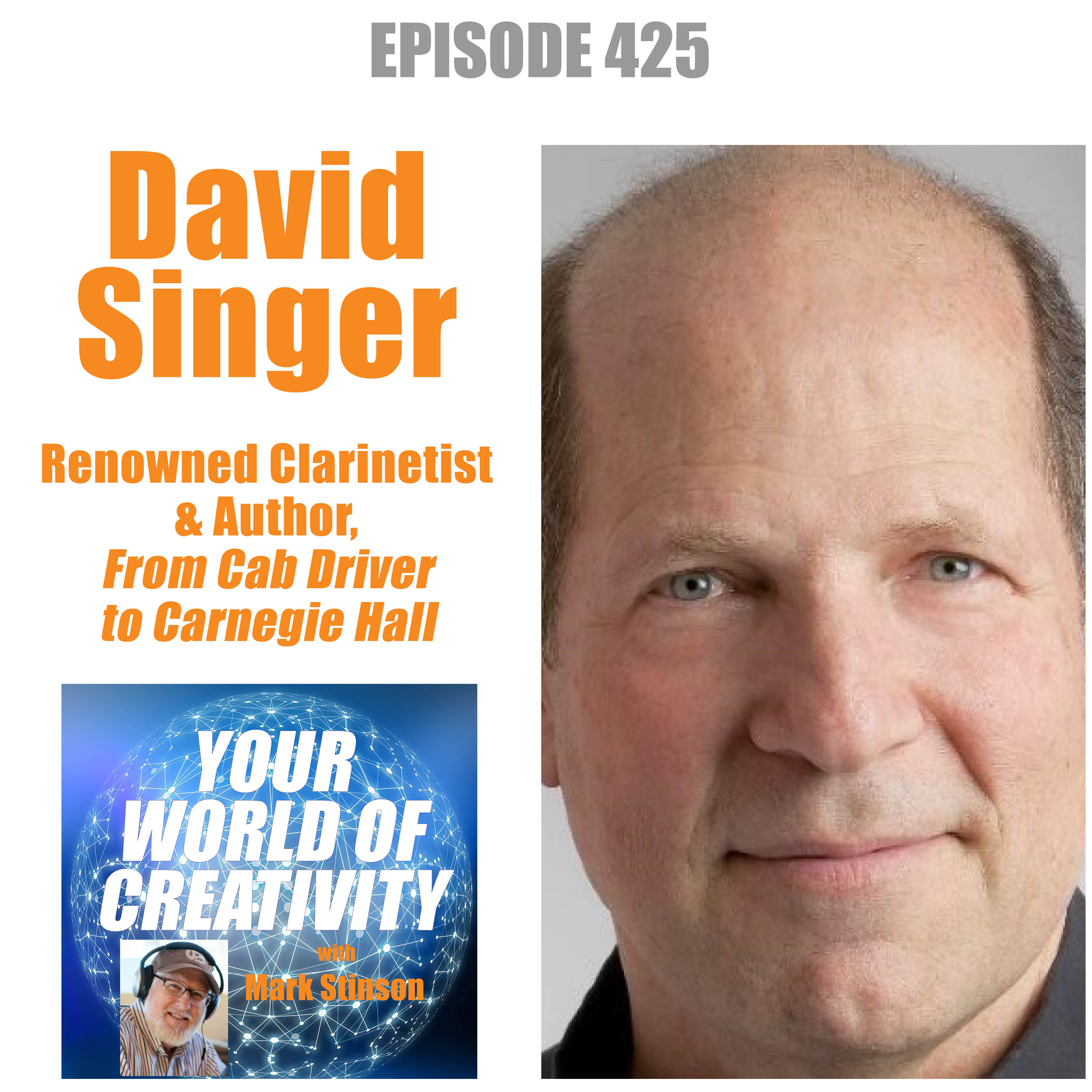
    Classical Music and Artistic Perseverance, with David Singer, Clarinetist and Author, "From Cab Driver to Carnegie Hall"

    Today, we enter the world of classical music and artistic perseverance — a conversation about resilience, mastery, identity, and what it takes to stay devoted to your craft over a lifetime. Our guest is David Singer, internationally acclaimed clarinetist, educator, chamber musician, and author of the memoir From Cab Driver to Carnegie Hall. David's Website David's Facebook page David’s extraordinary career has included performances at the White House for Presidents Jimmy Carter and Bill Clinton, appearances at Carnegie Hall with Yehudi Menuhin, performances alongside Yo-Yo Ma and Rudolf Serkin, and years as co-Principal Clarinetist with the Grammy Award-winning Orpheus Chamber Orchestra. But behind those accomplishments is another story — one of overcoming an abusive childhood, struggling financially as a young musician, driving a cab to support his family, and refusing to let go of his calling. The Journey from Survival to Calling David, your memoir title alone — From Cab Driver to Carnegie Hall — tells a powerful story of perseverance. Take us back to those early years. Despite difficult circumstances growing up and the instability of life as a young musician, what kept pulling you back toward music? At what point did you realize this wasn’t simply something you loved — it was something you were willing to sacrifice for? The Influence of Rudolf Jettel and Musical Obsession You’ve described Rudolf Jettel, Principal Clarinetist of the Vienna Philharmonic, as your “musical father.” You first studied with him as a 12-year-old boy and even sat beside him during Vienna Philharmonic performances. What did those experiences awaken in you creatively and emotionally? And how did that mentorship shape not only your musicianship, but your standards for excellence? Performing at the Highest Level Your career has brought you into some of the world’s most prestigious musical environments — from Carnegie Hall to collaborations with artists like Yehudi Menuhin, Yo-Yo Ma, and Rudolf Serkin. When performing at that level, what separates technical mastery from true artistic expression? What have you learned about communication, emotion, and presence through music? Reinvention, Teaching, and Giving Back In addition to performing, you’ve spent decades mentoring young musicians and building chamber music programs at institutions like Montclair State University, Yale, and Princeton. What do you believe young artists today most need to understand about building a sustainable creative life? And how has teaching deepened your own understanding of creativity and performance? Writing the Memoir: From Musician to Author This book marks your debut as an author, and it goes far beyond music. It’s about resilience, identity, family, and survival. What inspired you to finally tell this story now? And during the writing and audiobook process, what did you discover about yourself that surprised you? David, after a lifetime devoted to music, performance, and teaching, what advice would you give to someone who feels deeply called to a creative path — but is struggling to hold onto belief in If you enjoyed this episode, subscribe, share it with someone who loves music and creativity, and leave us a review.

  • #424
    June 29 · 21 min

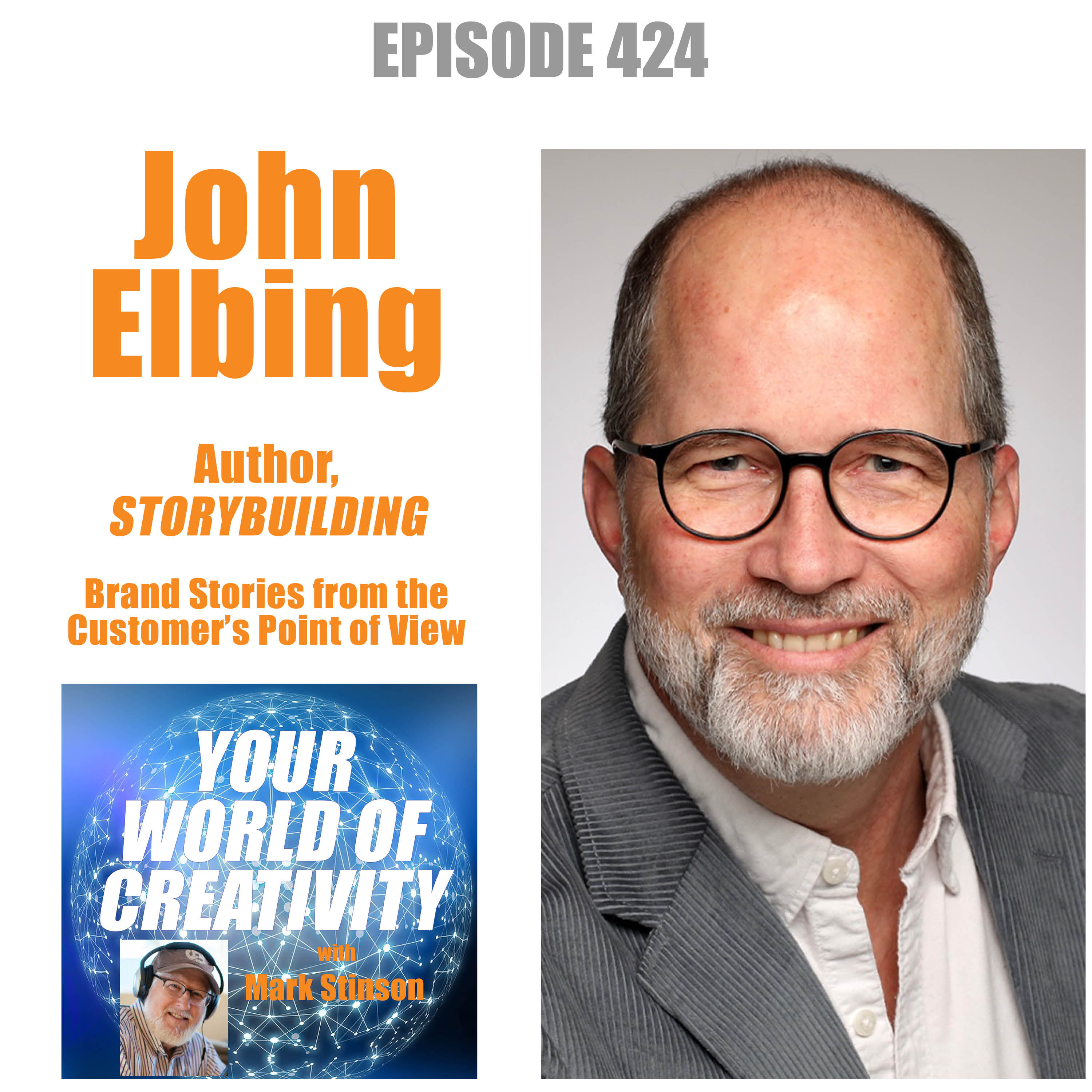
    Brand Stories from the Customer’s Point of View, with John Elbing, author of STORYBUILDING

    Welcome back to Your World of Creativity, where we travel the globe talking with creative professionals who turn ideas into impact. Today, we’re stamping our creative passport in Geneva, Switzerland to talk about the power of story — specifically, how organizations can transform their messaging when they stop talking about themselves and start seeing the world through the eyes of their customers. Our guest is John Elbing, business storytelling consultant, founder of Standpoint, and creator of the Storybuilding method. https://standpoint.ch https://linkedin.com/in/elbing John helps organizations flip the script by building brand stories from the customer’s perspective rather than from inside the organization. His work helps leadership and marketing teams sharpen positioning, align messaging, and simplify marketing decisions. He’s also the author of the international bestselling book Storybuilding. Why Most Brand Stories Miss the Mark John, many companies think they already have a strong story — but often that story is centered on themselves instead of the customer. What’s the biggest mistake organizations make when they build their messaging from the inside out instead of from the customer’s perspective? And how does that shift in perspective change the way a brand connects emotionally with people? The Storybuilding Method You created the Storybuilding method as a practical framework for organizations. Walk us through the core idea behind Storybuilding. How do you help leadership and marketing teams move from simply “telling a story” to actually building one that shapes alignment, positioning, and growth? Story as a Tool for Team Alignment One thing I find fascinating in your work is that storytelling isn’t just external marketing — it becomes an internal alignment tool. How does a shared story help teams make clearer decisions about branding, marketing, and even company direction? Have you seen organizations transform simply because they finally got everyone speaking the same narrative language? Emotion, Perception, and Being Remembered You often talk about how brands should focus not only on what they do, but how they are seen and felt by their audience. Why is emotional perception such an important part of storytelling today? (You’ll enjoy the personal story about the artwork on John’s wall.) And what can businesses do to create stories that people actually remember — and respond to? Flipping the Script on Your Own Story For entrepreneurs, consultants, and creatives listening today, many are deeply attached to their own story and expertise. What advice would you give someone who needs to flip the script and start seeing their brand from the audience’s standpoint instead of their own? John shares an idea he calls “trigger moments.” And what tends to happen when they finally make that shift? John, if listeners walk away with just one insight about storytelling and brand positioning, what would you most want them to remember? If you enjoyed this episode, subscribe, share it with a colleague or creative friend, and leave us a review. And remember: sometimes the most powerful shift in creativity happens when you stop asking, “What do we want to say?” and start asking, “What does our audience need to feel?”

  • #423
    June 22 · 27 min

    How Teams Operate At Their Best, with Stephen Frenkel, Voyager Consulting

    Welcome back to Your World of Creativity, where we travel the globe talking with creative professionals who turn ideas into impact. In recent episodes, we’ve explored creativity through design, dance, music, and innovation—how ideas come to life across disciplines. Today, we’re taking that conversation inside the organization. Because creativity isn’t just about what you make—it’s about how you lead, how you adapt, and how you bring people with you. We’re focusing on what it really means to perform at your very best, especially during moments of transition, uncertainty, and transformation. Our guest is Stephen Frenkel, a coach and consultant with more than 25 years of experience in leadership development, team optimization, conflict resolution, and change management. He brings a systems-thinking approach to help organizations clarify where they’re going, what’s getting in the way, and how to move forward with purpose. Stephen is also a contributing author to Lives Lost and Leadership Found, a powerful collection exploring how grief and loss shape leadership. Stephen's Website https://www.linkedin.com/in/stephen-frenkel-voyager/ 1. Defining “At Their Very Best” Stephen, you help leaders and teams “be their very best.” That’s a powerful phrase—but it can mean different things to different people. How do you help leaders define what “their very best” actually looks like—and why is that clarity so critical before any real progress can happen? 2. What Gets in the Way Once that vision is clear, the next step is identifying what’s getting in the way. From your experience, what are the most common obstacles—whether at the individual, team, or organizational level—that prevent people from performing at their best? And how do you begin to surface those issues in a way that people are willing to address? 3. Systems Thinking + Team Performance You take a systems-thinking approach, which I find really compelling. How does looking at the whole system—instead of just individuals or isolated problems—change the way leaders approach team effectiveness, culture, and performance? Can you share an example where that shift in perspective made a meaningful difference? 4. Conflict, Change, and Creative Tension You’ve spent a lot of your career working in conflict resolution and change management. Many leaders try to avoid conflict—but I suspect you see it differently. How can leaders reframe conflict as something productive—or even creative—and what are some practical ways to navigate tension during periods of change? Stephen says he often refers to the book, Getting To Yes by Roger Fisher and William L. Ury. https://www.amazon.com/Getting-Yes-Negotiating-Agreement-Without/dp/0143118757 5. Leadership, Loss, and Perspective You contributed to a recent book, Lives Lost and Leadership Found, where leaders reflect on how loss shapes their leadership. What inspired you to share your story—and what did that process unlock for you, personally or professionally? And how has that experience influenced how you show up today as a coach, advisor, and leader? Closing Question Stephen, for leaders listening today—especially those navigating change or uncertainty—what’s one question they should be asking themselves right now to move closer to being “at their very best”? Thanks for joining us on Your World of Creativity. If you enjoyed this episode, be sure to subscribe, share, and leave a review. And remember — creativity isn’t just about ideas. It’s about how you lead, adapt, and move forward.

  • #422
    June 15 · 18 min

    Creative Cultural Expression through the Power of Voice, with Kneet, Global Independent Artist

    On Your World of Creativity, we travel around the world talking with creative practitioners who turn ideas into impact. In just the past few episodes, we’ve been (virtually) exploring creative centers like London, Sydney, and Las Vegas — along with vibrant hubs like Pittsburgh and Austin. Today, we’re in New York City… and even making a stop in Times Square ... with a guest who has quite literally taken her voice global. I’m joined by Kneet — a Thai Sikh Punjabi independent artist blending Bollywood glam with hip-hop swagger. Her music explores identity, resilience, cultural fusion, and creative reinvention. Her breakout single “RISE” hit #1 on Apple Music video charts and appeared on Times Square billboards — marking a defining moment in her independent journey. She’s continued that momentum with her latest release, “My Man.” But beyond the music, Kneet brings a powerful lived experience — navigating motherhood, advocacy, and systemic challenges — while completing her Master’s in Developmental Psychology. Today, we’re talking about Creative Cultural Expression… and the Power of Voice. Kneet is a global independent artist whose sound blends pop, hip-hop, soul/R&B, and cinematic storytelling — shaped by a life lived across cultures. Her work is rooted in truth — transforming personal experience into universal expression. Whether through music, advocacy, or storytelling, she is reclaiming voice, honoring identity, and creating space for authenticity. 1 — Identity as Creative Fuel Kneet, your music feels deeply rooted in identity — cultural, personal, and emotional. What first inspired you to use music as a way to express who you are and what you’ve lived through? How has your Thai Sikh Punjabi background shaped your sound, your storytelling, and the way you show up as an artist? 2 — The Power of Voice This episode is really centered on the idea of “the power of voice.” What does that mean to you — both as an artist and as a person navigating real-life challenges? Was there a moment in your life where you realized you had to stop surviving… and start choosing your voice? 3 — Creativity as Healing & Transformation Your work carries emotional depth — it feels like more than performance, it feels like processing and transformation. How does music become a tool for healing when words alone aren’t enough? You’re navigating intense personal experiences while continuing to create. How do you stay grounded and protect your creative energy during those times? 4 — Turning Personal Story into Universal Connection One of the most powerful things about your music is how personal stories become something universal. How do you translate your lived experience into songs that resonate across cultures and audiences? Why do you think so many strong voices — especially women — are often misunderstood, and how does reclaiming your voice shift that narrative? 5 — Rising as an Independent Artist Your single “RISE” hitting #1 and appearing in Times Square is an incredible milestone — especially as an independent artist. What did that moment represent for you? For other artists listening, what are some practical ways they can unlock their voice, build confidence, and create opportunities without waiting for permission? Summary Today we explored what it means to create from identity, to reclaim your voice, and to use creativity not just as expression — but as transformation. From blending cultures into a unique artistic sound… to turning personal challenges into global connection… to rising as an independent artist on your own terms… Kneet's story reminds us that our voice is not something we’re given — it’s something we claim. If you enjoyed this episode, take a moment to subscribe, rate, and review Your World of Creativity on your favorite podcast app. It helps more creative voices like Kneet’s be heard around the world. And come back next time, as we continue our journey… unlocking… Your World of Creativity.

  • #421
    June 8 · 26 min

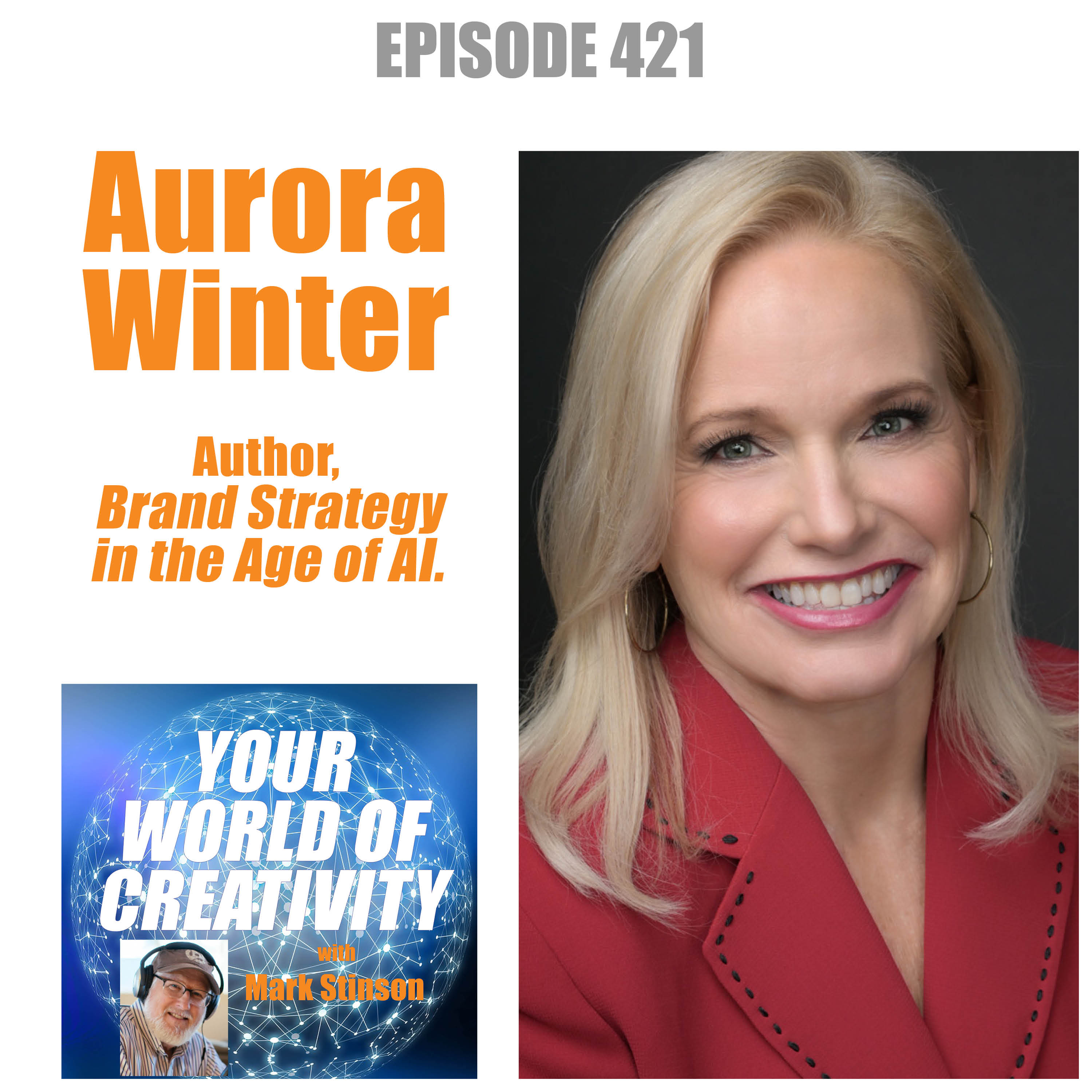
    Brand Strategy in the Age of AI, with Aurora Winter, Author

    On Your World of Creativity, we travel around the world talking with creative leaders who turn ideas into impact. Last time Aurora Winter joined us, we explored her book Turn Words Into Wealth. Now she’s back with a bold new message: 2026 is “do or die” for experts and entrepreneurs. Today we’re diving into her newest release, Brand Strategy in the Age of AI — and what it takes to build a valuable, future-proof brand in an AI-powered world. Aurora Winter is a bestselling author, brand strategist, and former TV executive producer who helps experts and entrepreneurs turn their message into money. With a background in storytelling and showrunning, she’s guided thousands of leaders to create influential, scalable brands. Aurora's Website Aurora on YouTube @aurorawintermba on Instagram Her new book, Brand Strategy in the Age of AI, tackles one urgent question: Will AI replace you — or amplify you? 1 — Why 2026 Is “Do or Die” Aurora, last time we spoke about turning words into wealth. Now you’re saying that 2026 is a “do or die” moment for experts and entrepreneurs. That’s strong language. What’s happening right now that makes this moment so critical? What are you seeing that most leaders are underestimating about AI’s impact on branding and visibility? 2 — Catching the AI Wave (Without Being Replaced) There’s a lot of fear in the market right now — will AI replace writers, coaches, strategists, consultants? From your perspective, how can entrepreneurs catch the AI wave and profit rather than get wiped out by it? You talk about four human superpowers that AI can’t replicate. What are they — and how do they translate into a valuable brand? Your story; your presence; your sense of style; your leadership approach. 3 — The Visibility Imperative (Why Video Matters) You’ve said leaders who skip video are training the market to ignore them. That’s provocative. Why is video so essential in the AI era? How does the “movie trailer mindset” help leaders grab attention in a crowded digital landscape? 4 — Think Like a Showrunner You come from television and production, and now you’re applying what you call the “Netflix Framework” — thinking like a showrunner to build binge-worthy content. What does that mean for a founder or expert building a brand? You also mention leveraging a “fractional Showrunner.” What is that role, and why might it be the missing piece for scaling a powerful personal brand? 5 — Early Adopters Win (How to Be One) You’ve said that early adopters with the right brand strategy are going to crush it in 2026. What does “the right strategy” actually look like? If someone listening feels behind, what’s one move they can make this month to position themselves as an amplified expert rather than an invisible one? We explored all these themes: • AI as amplifier, not enemy • Human superpowers as differentiator • Showrunner thinking for strategic visibility • Brand as intellectual property • Early adoption as leverage

  • #420
    June 1 · 31 min

    Flipping the Record Label Model, with Don Rodriguez, Music Producer and Founder I&I Music Studio

    On Your World of Creativity, we travel around the world talking with creative professionals who turn ideas into impact. Today we’re diving into music and business with Don Rodriguez — a former general contractor who left a 20-year career to pursue his passion for music… and ended up redesigning the record label model itself. Don's Website Don on YouTube Don's Facebook page Introduction Don Rodriguez is an 18-year entrepreneur and general contractor who walked away from a successful construction career after becoming burned out and disillusioned. He pivoted into music — not just as a creative outlet, but as a producer and founder of The I&I Music Studio, a recording studio, record label, and music publisher for independent artists. Drawing on two decades of business and contract experience, Don created a radically different label structure: one where artists own their masters and publishing, while the label generates its own revenue streams and collects points — flipping the traditional industry model on its head. Today, he’s here to talk music, ownership, contracts, publishing, and how independent artists can thrive without giving away their future. 1 — From Construction to Creation Don, you spent nearly two decades as a general contractor before pivoting into music full-time. What happened internally that made you leave that career — and how did music pull you into a new chapter? When you entered the music industry, what did you immediately see that didn’t sit right with you? 2 — Why Artists Still Need a Label There’s a strong narrative right now that independent artists don’t need record labels anymore. From your perspective, why is it still necessary for independent artists to have a label structure around them? What’s the difference between an artist trying to build alone versus having the right kind of team behind them? • Spotlight on Lexsey (emerging pop star) 3 — Flipping the Contract Model You’ve created what you describe as a complete 180 from how record contracts have operated for the last 70 years. Walk us through how your contract works — and why artist ownership of masters and publishing is so critical. How are traditional big-label contracts typically structured — and where do artists lose leverage? • Spotlight on the classical-to-fantasy-grunge artist 4 — Publishing, Production & Revenue You’ve said that music publishing is the key to making money in music. For listeners who aren’t deep in the industry, what exactly is publishing — and why does it matter so much? In today’s world of home studios and DIY production, why does an artist still need a producer and professional studio environment? 5 — Building a Sustainable Ecosystem One of the most interesting parts of your model is that your label generates its own revenue instead of relying solely on artists’ music. How does that work — and how does that change the power dynamic between label and artist? If an artist has already released music under a different structure, can they pivot into a more ownership-driven future? What’s possible? We tie together all these themes: • Creative reinvention • Ownership vs exploitation • Entrepreneurship in music • Designing a better ecosystem • Artists as business partners

  • #419
    May 25 · 29 min

    How to Build a Brand Universe, with Luna Battalia, Business Strategist, Caru Creative and Animist Branding

    On Your World of Creativity, we travel around the world talking with creative practitioners who turn ideas into impact. Today we’re exploring the intersection of soul, storytelling, and strategy with Luna Battalia — a leadership mentor and business strategist who helps founders build Brand Universes people don’t want to leave. Luna blends buyer psychology, artistry, and deep purpose to help entrepreneurs communicate with bold, unignorable confidence. Luna Battalia is the founder of Caru Creative, a full-service brand studio supporting mission-driven leaders and personal brands. She’s also the creator of Animist Branding™, a psychology-driven approach shaped by more than 15 years at the intersection of digital marketing and buyer behavior. Luna's Website @lunabattalia on Instagram Luna believes branding is storytelling, entrepreneurship is soul work, and business should be built as a generative ecosystem — not a carbon-copy strategy. With a background in design and marketing, plus years guiding thousands of founders, she helps entrepreneurs transform their voice, build legacies (not just businesses), and create brands rooted in authenticity, beauty, and impact. 1 — From Strategy to Soul: Your Creative Path Luna, you describe yourself not just as a brand strategist, but as an artist, poet, and devotee of the mystery. Can you walk us through your own creative journey — and how you arrived at this intersection of leadership, branding, and soul-centered business? What was the moment you realized that traditional branding frameworks weren’t enough — and that something deeper was calling you into this work? 2 — Animist Branding™ & Building Brand Universes You created something called Animist Branding™ — a psychology-driven approach that treats brands almost like living entities. What does that mean in practice? You talk about helping founders build a “Brand Universe people don’t want to leave.” What are the core elements that make a brand feel magnetic rather than transactional? 3 — Entrepreneurship as Soul Work You’ve said that entrepreneurship is soul work — not just a business strategy. For founders who are multi-passionate creatives holding big visions, what does it really take to stand confidently in purpose and share their gifts without burning out or shrinking back? How do you help clients move beyond polished feeds and surface-level messaging into something more embodied and honest? 4 — Storytelling, Psychology & Creative Leadership You believe the core of branding is storytelling — and that your gift is asking the right questions to draw out someone’s true story. What kinds of questions unlock the most powerful shifts for leaders? From your experience working with thousands of brands, how does authenticity actually drive growth — especially when paired with buyer psychology and strategic clarity? 5 — The Soul of Your Brand On this show, we talk a lot about the soul of your brand — aligning inner clarity with outer work. When you look at a founder or creative entrepreneur, how do you help them translate who they are into how they show up in the world? For listeners who feel the call to expand into their next level, what’s one small but meaningful step they can take this week to begin building a legacy-driven brand?

  • #418
    May 18 · 25 min

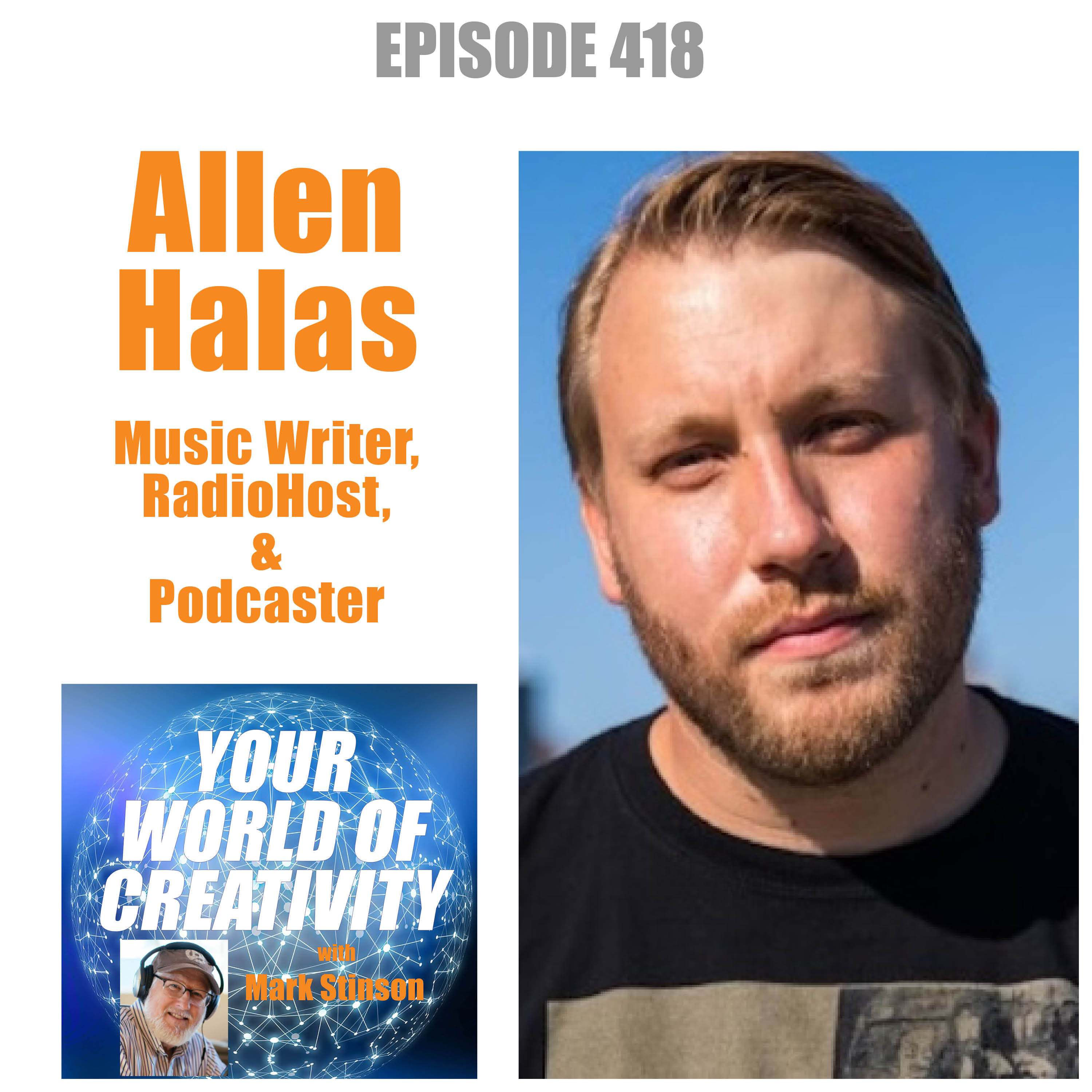
    How Local Artists Get Discovered, with Allen Halas, music writer, radio host, and podcaster

    Today’s guest lives at the intersection of music, media, and the side hustle. If you’ve ever wondered how local scenes get discovered, how independent artists break through, or how creatives build meaningful work alongside a day job—this conversation pulls back the curtain. Allen Halas is a music writer, radio host, and podcaster based in Milwaukee, Wisconsin. He currently works for OnMilwaukee, the city’s largest digital media outlet, where he covers arts, culture, and music. He was previously heard on FM 102.1 as the host of Love Local Radio, championing homegrown talent and community voices. Allen's Website @AllenHalas on Instagram Allen's Facebook page LinkedIn: https://www.linkedin.com/in/allenhalas/ Allen is also the founder of Breaking And Entering, a music platform he launched in 2014 that produces daily content spotlighting independent artists in the Milwaukee music scene. In addition, he co-hosts the Hustling Sideways podcast with Jim Love, where they explore the passion projects and side hustles of entrepreneurs balancing creative work with a traditional 9-to-5. 1) Falling in Love With the Local Scene Allen, you’ve built much of your career around spotlighting local and independent music. What first drew you to covering the Milwaukee music scene, and what keeps you invested in telling these stories year after year? 2) Breaking And Entering: Building a Platform From the Ground Up You founded Breaking And Entering in 2014 and have produced daily content ever since—no small feat. What did you learn early on about consistency, credibility, and community when building a media platform focused on independent artists? 3) From Radio Waves to Digital Media You’ve worked across radio, digital publishing, and podcasting. How has the shift from traditional radio to online media changed the way artists are discovered—and what do you think still matters most, regardless of platform? 4) Hustling Sideways: Passion Projects After the 9-to-5 On Hustling Sideways, you explore how people pursue meaningful creative work alongside full-time jobs. What patterns do you see among those who successfully sustain side hustles—and what advice would you give creatives who feel stretched thin? 5) The Future of Local Music and Independent Media Looking ahead, what excites you most about the future of local music scenes and independent media? And where do you think creators need to be more intentional to thrive in an increasingly crowded landscape? For creatives listening who feel invisible or unsure if their work matters—what would you tell them about the power of showing up, supporting their scene, and staying local while thinking big?

Showing 1–20 of 24 episodes