
Young Urban Anesthesiologists
Der Kaffee, das Bewusstsein und die Narkose
Yesterday · 1 hr 13 min · Episode 68 · 70.8 MB
0:00-1:13:18
Streams straight from the publisher. podnod never proxies or re-hosts episode audio.
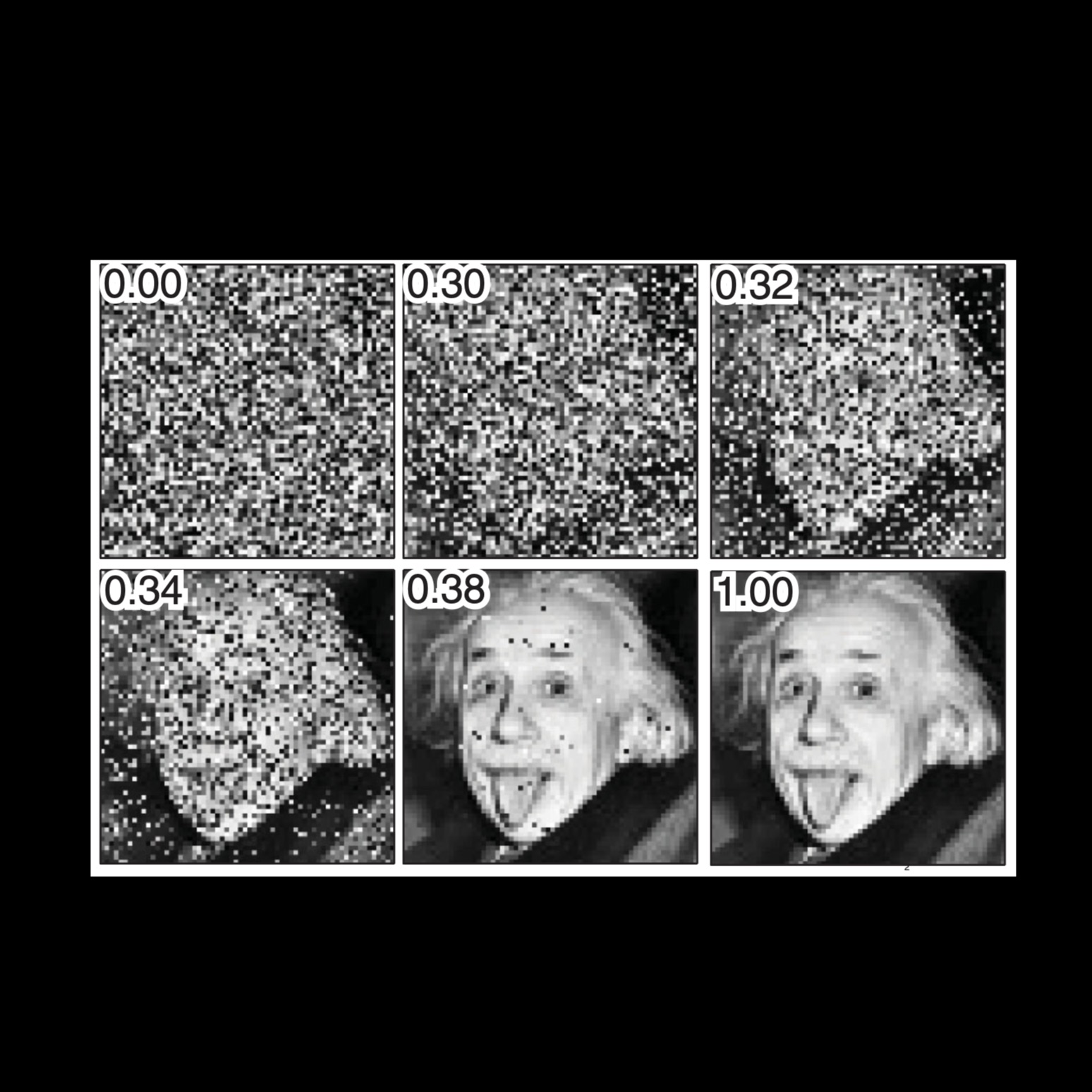
Warum wir das Licht so plötzlich ausschalten
Primärquelle:
- Zhou DW, Mowrey DD, Tang P, Xu Y. (2015). Percolation Model of Sensory Transmission and Loss of Consciousness Under General Anesthesia. Physical Review Letters 115, 108103. DOI: 10.1103/PhysRevLett.115.108103
Methodische Grundlagen:
- Bollobás B, Riordan O. (2006). Percolation. Cambridge University Press.
- Watts DJ, Strogatz SH. (1998). Collective dynamics of 'small-world' networks. Nature 393, 440.
- Kullback S, Leibler RA. (1951). On Information and Sufficiency. Ann Math Stat 22, 79.
Netzwerkarchitektur:
- Markov NT et al. (2013). Cortical high-density counterstream architectures. Science 342, 1238406.
- Felleman DJ, Van Essen DC. (1991). Distributed hierarchical processing in the primate cerebral cortex. Cereb Cortex 1, 1.
- Sporns O et al. (2004). Organization, development and function of complex brain networks. Trends Cognit Sci 8, 418.
Narkose, EEG & Bewusstsein:
- Brown EN, Purdon PL, Van Dort CJ. (2011). General anesthesia and altered states of arousal: a systems neuroscience analysis. Annu Rev Neurosci 34, 601.
- Steyn-Ross ML et al. (2001). Toward a theory of the general-anesthetic-induced phase transition of the cerebral cortex. I & II. Phys Rev E 64, 011917 / 011918.
- Ching S et al. (2010). Thalamocortical model for a propofol-induced α-rhythm associated with loss of consciousness. PNAS 107, 22665.
- Ching S et al. (2012). A neurophysiological–metabolic model for burst suppression. PNAS 109, 3095.
- Feshchenko VA, Veselis RA, Reinsel RA. (2004). Propofol-induced alpha rhythm. Neuropsychobiology 50, 257.
- Tinker JH, Sharbrough FW, Michenfelder JD. (1977). Anterior shift of the dominant EEG rhythm during anesthesia in the Java monkey. Anesthesiology 46, 252.
- Lee U et al. (2009). The directionality and functional organization of frontoparietal connectivity during consciousness and anesthesia in humans. Conscious Cogn 18, 1069.
- Supp GG et al. (2011). Cortical hypersynchrony predicts breakdown of sensory processing during loss of consciousness. Curr Biol 21, 1988.
Bewusstseinstheorie & Messung:
- Tononi G. (2008). Consciousness as integrated information: a provisional manifesto. Biol Bull 215, 216.
- Casali AG et al. (2013). A theoretically based index of consciousness independent of sensory processing and behavior. Sci Transl Med 5, 198ra105.
Klinisch relevante Anschlussarbeiten:
- Samuelsson AR, Brandon NR, Tang P, Xu Y. (2014). Cellular registration without behavioral recall of olfactory sensory input under general anesthesia. Anesthesiology 120, 890.
- Borjigin J et al. (2013). Surge of neurophysiological coherence and connectivity in the dying brain. PNAS 110, 14432.
- Fuentealba P, Steriade M. (2005). The reticular nucleus revisited: intrinsic and network properties of a thalamic pacemaker. Prog Neurobiol 75, 125.
Serienbezug:
- Young Urban Anesthesiologists — Orch-OR-Folge (Hameroff & Penrose): dieselbe Frage, entgegengesetzte Richtung (nach unten in die Zelle statt nach oben ins Netzwerk).
hier gehts zum Feedback und EFN-Formular
Achtung: Fortbildungspunkte können nur innerhalb von 4 Wochen nach Veröffentlichung der Episode beantragt werden. Eine nachträgliche Meldung ist bei der Ärztekammer leider nicht möglich.
Feedback und EFN-Formular
forms.gle