Skip to content
Artwork for You Are Not A Frog
BusinessManagementHealth & FitnessMental HealthEducationSelf-Improvement

You Are Not A Frog

Dr Rachel Morris | Burnout Podcast

The podcast for GPs, hospital doctors and other professionals in high-stakes, high-stress jobs who want to thrive rather than just survive.

You studied for years, you’re really good at what you do but you’ve noticed that you’re starting to feel overwhelmed, overworked and under-resourced. You may be comparing yourself to a frog in boiling water - the heat has built up so slowly that you haven’t noticed the extra-long days becoming the norm. You may feel on the edge and trapped in the very job that you’ve spent years working towards.

Here’s the problem, frogs only have two choices; stay and be boiled alive, or jump out of the pan. The good news is that you are not a frog. You have many more choices than you think you do. You don’t have to quit, and nor should stress and burnout be inevitable.

It is possible to be master of your own destiny, to craft your work life and career so that you can thrive even in the most difficult of situations. There are simple changes you can make which will make a huge difference to your stress levels and help you enjoy life again.

Your host is Dr Rachel Morris, GP turned Executive Coach and Specialist in Resilience at Work who knows what it’s like to feel like an exhausted frog. In the podcast, she’ll be talking to friends, colleagues and experts all who have an interesting take on resilience for clever people in high-stakes, high-stress jobs so that together you can take back control to beat stress and burnout, survive and thrive.

Play
  • 34 episodes
  • weekly
  • Avg 43 min
  • English
Counted on this page — what you have heard stays on this device, so it is not something the list can be paged by.
  • #326
    June 22 · 20 min

    Why Summer Makes Your Burnout Worse (And It's Not Your Fault)

    You may have been counting down to summer all year, telling yourself that you just need to survive until your next holiday. You may have been looking forward to taking a pause and getting a chance to finally breathe. But when you get to your holiday, instead of feeling rested, you feel more exhausted, more overwhelmed, and more behind. And somewhere underneath the busyness, you might be thinking: what's wrong with me? Everyone else seems fine. Nothing is wrong with you - you just fell into the summer Urgency Trap - one of the seven Overwhelm Amplifiers that keeps high achievers stuck in the Responsibility Trap. In this episode, we break down exactly why summer increases pressure instead of relieving it, why you end up covering everyone else's work while your own recovery gets sacrificed, and the one practical shift that changes everything: time-blocking your rest as if it were as important as your most urgent patient or client. We cover: The Urgency Trap: how "urgent but not important" tasks hijack your recovery The long-term fix (the Responsibility Trap) vs. the quick fix you can start today How to time-block rest, recovery, and buffer slots into your diary - and treat them as non-negotiable 📩 Join 20,000 professionals: https://youarenotafrog.com/welcome/ 🐸 Get exclusive episodes and resources by joining FrogXtra: https://youarenotafrog.com/members Mentioned in this episode: ⭐️ Book Your FrogFest Ticket Now

    • Chapters
  • #325
    June 15 · 1 hr 8 min

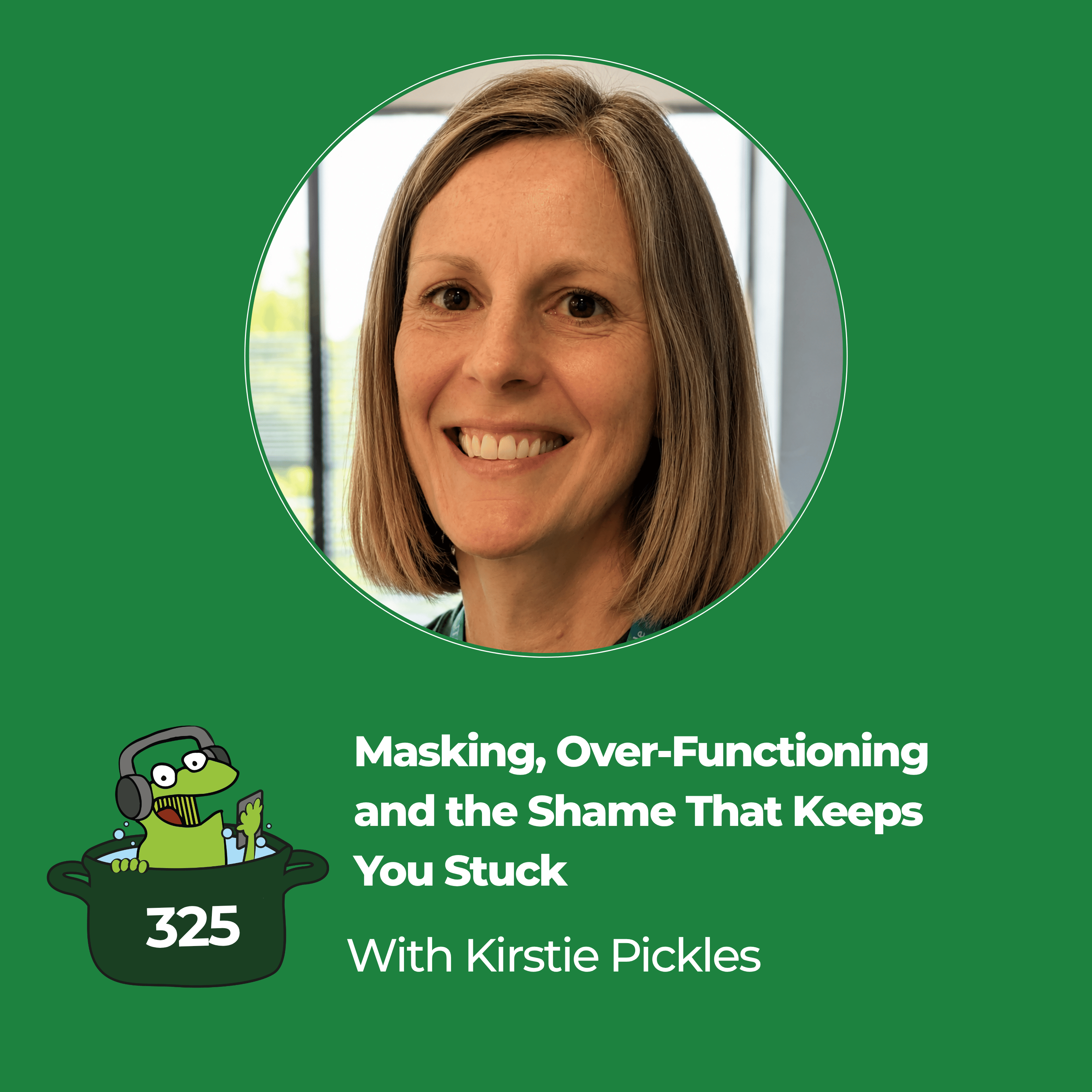
    Masking, Over-Functioning and the Shame That Keeps You Stuck

    If you've always felt like everyone else got an unwritten handbook about how to behave at work - and you've had to figure it out yourself, one interaction at a time - this episode is for you. This week, Rachel’s in conversation with Kirstie Pickles: vet, autistic ADHD professional, and EDI advocate. Kirstie was diagnosed as an adult - after years of masking in a high-stakes clinical role, performing competence while running on empty underneath. We talk about: What masking really costs - not just after one hard day, but across a career Neurodivergent burnout: why it is different from regular burnout, and why the usual advice doesn't work The shame of late diagnosis - and what it means to finally have a name for it What colleagues and leaders can do to make workplaces work for everyone You don't need a diagnosis to recognise yourself here. A lot of us in high-achieving, high-pressure roles have neurodivergent traits we have never had a name for. We just learned to mask through it. Our ingrained programming tells us to keep performing, keep adapting, keep looking like we're coping fine. But that performance has a cost - and it will affect your next decision, and the one after that. Different is not defective. 🎙️ Listen to the full podcast: http://youarenotafrog.com/episodes/324 📩 Join 20,000 professionals: https://youarenotafrog.com/welcome/ 🐸 Get more episodes and resources by joining FrogXtra Mentioned in this episode: Am I Stressed, Overwhelmed... or Burning Out? Get honest with yourself — discover what’s really going on, and what to do next. ⭐️ Book Your FrogFest Ticket Now

    • Chapters
  • #324
    June 8 · 19 min

    Why You Can't Switch Off (And It's Not About Workload)

    Burnout in high stress jobs isn't always about doing too much; sometimes it's about a belief you were never taught to question. You finished your day, finished (most) of your tasks, and you still can't switch off. Most people assume that's a workload problem, but the reason people in demanding roles like medicine can't genuinely rest isn't about how much they've done - it's about what they've been conditioned to believe about rest itself In this episode, Rachel introduces the Superhero Delusion: the conviction that the rules about rest apply to other people. Not to you. She explores how that belief was built, why burnout recovery starts with understanding rest differently, and what sustainable work actually requires. We cover: Why you can't switch off - and why workload isn't the real reason The Superhero Delusion: the conviction that the rules about rest apply to other people, not you How the belief that rest has to be earned gets installed - and who installed it What sustainable work actually requires (and it isn't more discipline) This episode is for you if you're the person who has to be on even when you're officially off. Who takes annual leave and spends the first two days mentally finishing the handover. Who lies awake replaying the list of things that didn't get done - and is still asking whether any amount of done would ever feel like enough. 📩 Join 20,000 professionals: https://youarenotafrog.com/welcome/ Mentioned in this episode: ⭐️ Book Your FrogFest Ticket Now

    • Transcript
    • Chapters
  • #323
    June 1 · 54 min

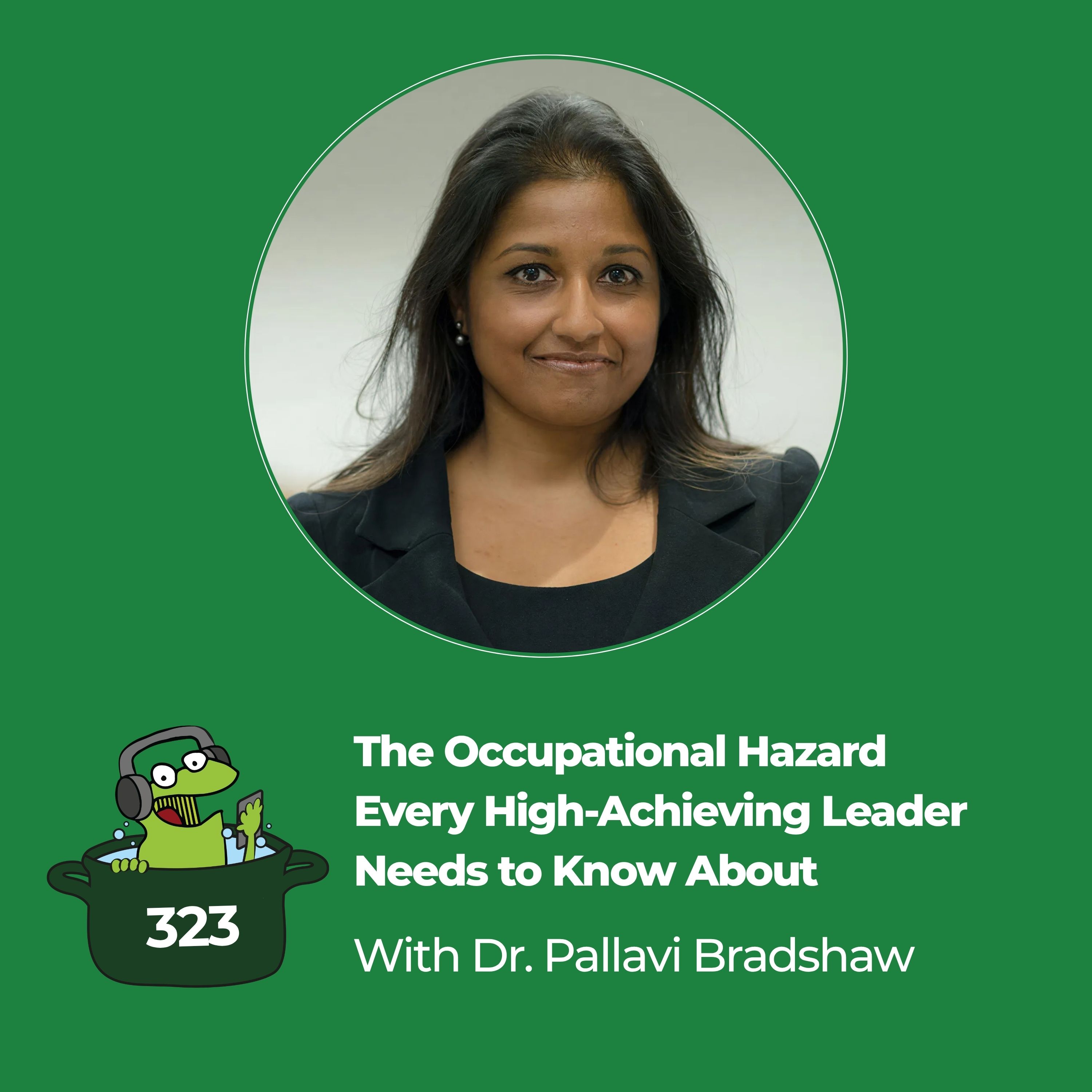
    The Occupational Hazard Every High-Achieving Leader Needs to Know About

    Getting a complaint from a colleague is one of the most destabilising things that can happen to a high-achieving leader. Not because of the process, but because of what it makes you ask about yourself. In this episode, I'm joined by Dr. Pallavi Bradshaw, Medical Director at the MPS, to talk about something that doesn't get named nearly enough: a complaint from a colleague isn't a patient or client complaint. It feels very different and can be devastating if our ingrained programming tells us that we have to please everyone all the time to feel good enough. And so unless you start to frame it differently, it will affect your next decision, and the one after that. This conversation genuinely produced an a-ha moment for me. It may change how you carry the next time it happens. We cover: Why colleague complaints feel categorically different - and why that makes complete sense The question underneath the complaint that drives so many decisions afterwards What Dr Bradshaw has learned about supporting doctors through formal grievances at the MPS How to stop a complaint from becoming something you carry permanently This episode is for you if you're the person who had to have the conversation nobody else would. Who had to make the call that someone disagreed with. Who lies awake replaying a decision you had to make - and is still asking what it says about you. 🎙️ Listen to the full podcast: https://youarenotafrog.com/episodes/323/ 📩 Join 20,000 professionals: https://youarenotafrog.com/welcome/ 🌐 More resources: https://youarenotafrog.com/ Dr Pallavi Bradshaw is Medical Director at the Medical Protection Society (MPS), supporting doctors navigating complaints, grievances, and the more challenging parts of medical leadership. Get more episodes and resources by joining FrogXtra Mentioned in this episode: ⭐️ Book Your FrogFest Ticket Now Am I Stressed, Overwhelmed... or Burning Out? Get honest with yourself — discover what’s really going on, and what to do next.

    • Transcript
    • Chapters
  • #322
    May 25 · 27 min

    Why Imposter Syndrome Isn't a Confidence Problem

    Imposter syndrome is something we often don’t talk about openly, and the standard advice - build your confidence, reframe your thinking, remember your achievements – rarely addresses the real cause. In this Quick Dip, Rachel shares a piece of feedback she received years ago that still stings and uses it to unpick what imposter syndrome really is: it’s not a confidence gap, it’s not a skills deficit, but something much more personal. She talks about why working on your confidence alone will never be enough, what's actually driving that voice that says you're about to be found out, and the one thing that actually shifts it. Key Takeaways Imposter syndrome isn't always about competence or confidence - it can be the system gaslighting you, impossible self-imposed standards, or just the very human experience of feeling not good enough. A 2025 meta-analysis found that 62% of healthcare professionals experience imposter syndrome - this is a profession-wide pattern, not a personal failing. What actually moves the needle is saying it out loud to someone who responds with empathy and recognition. Get more episodes and resources by joining FrogXtra Mentioned in this episode: 🟦 Beat Stress & Thrive | Live Cohort Starts 13 October

    • Transcript
    • Chapters
  • #321
    May 18 · 1 hr 1 min· Video

    Why Your Workload Keeps Growing Without You Agreeing To It

    If you constantly find yourself picking up tasks that nobody else will do, staying late to cover gaps, or slowly absorbing more and more without anyone asking you to - this episode is going to name exactly what's happening. Occupational psychologist Leanne Elliott joins Rachel to unpack why over-responsibility isn't a personality flaw; it's what happens when you don’t have absolute clarity on what tasks are definitely part of your role – and, more crucially, what tasks aren’t. They explore why conscientious professionals in under-resourced settings are most at risk, how the 'if I don't do it, who will?' question keeps people stuck, and what you can actually do this week to start auditing what belongs on your plate and what doesn't. Key Takeaways Role clarity is a recognised psychosocial risk factor, and when it's absent, taking on extra work feels like the only option, even when it's pushing you towards burnout. A simple daily audit - writing down tasks that drained you, that weren't in your role, or that you did out of fear rather than responsibility – can give you the data to have important but calmer and less personal conversations with your team about your roles. Rest and recovery are not the same thing. Knowing your recovery activities and protecting time for them is a skill, not a luxury. Resources Mentioned: The Twenty Questions: How do I know if I’m a workaholic? Get more episodes and resources by joining FrogXtra Mentioned in this episode: Download Your Free Overwhelm SOS Guide Discover the simple, step-by-step process you need to calm your mind, take control of your tasks, and get yourself out of overwhelm. 🟦 Beat Stress & Thrive | Live Cohort Starts 13 October

    • Chapters
  • #320
    May 11 · 31 min· Video

    What to Do When Your Career Map No Longer Fits

    You know something needs to change, but you just have no idea what, how, or where to begin, and your lack of a plan may be starting to feel like failure. In this Quick Dip, Rachel unpacks why the belief that you need everything mapped out before you're allowed to move is the very thing keeping you stuck, and introduces the AB-Z method: a simple framework that replaces the impossible task of knowing your whole future with a far more manageable one. This episode is about how to craft your work, not how to leave your job completely or blow everything up, but how to get a genuine say in the shape of your working life - one honest step at a time. Key Takeaways You don't need the whole career plan - you need A, a sense of Z, and B - the very next step. Z is not a job title. It's how you want to be: internally, and with the people you love. Recovering from burnout is not the same as arriving at Z. The absence of burnout is a step, not a destination. Comparing your Z to someone else's is one of the most reliable ways to stay stuck. Crafting your work and career can happen alongside your current role, not instead of it - and it can start at any grade, any stage. Get more episodes and resources by joining FrogXtra Mentioned in this episode: 🟦 [FREE WEBINAR] How to Beat Burnout and Escape Burnout on Repeat

    • Chapters
  • #319
    May 4 · 1 hr 8 min

    How to Break the People-Pleasing Cycle That's Burning You Out

    If you have ever ended a clinical day exhausted not from the medicine itself but from the weight of everybody else's feelings, this episode might hit home. Josh Connolly, resilience coach and author of ‘It's Them Not You’, joins me to explore why many healthcare professionals take on so much of the emotional load for everyone - and how that pattern almost always began long before medical school. Key Takeaways People-pleasing at work usually has roots in family roles from childhood. The 'high achiever', the 'mascot' and the 'scapegoat' all carry those patterns into adult professional life. Holding space for someone is not the same as absorbing their emotions. The moment you start feeling what they feel, you have crossed a boundary - and your ability to help them actually decreases. When you are about to say yes under pressure, ask: 'Who have I become right now?' If the answer is your childlike self desperately seeking approval, that is the moment to pause. Get more episodes and resources by joining FrogXtra Resources mentioned: It's Them, Not You: How to Break Free From Toxic Parents and Reclaim Your Story by Josh Connolly The Shapes Academy Mentioned in this episode: 🟦 [FREE WEBINAR] How to Beat Burnout and Escape Burnout on Repeat 🐸 Enquire Now About Our Training

    • Chapters
  • #318
    April 27 · 25 min

    How to Stop Doing Everything

    If you’ve ever thought to yourself ‘if I don’t do it, no one will’ this episode is for you. You tell yourself something important will go wrong if you don't do it all - but what if that's not what's actually driving your decisions? In this Quick Dip, Rachel suggests something uncomfortable: that the decisions running your workload might less to do with patient safety than they are to do with who you believe yourself to be. Because the question 'if I don't do it, who else will?' is often not about the risk of harm to patients, customers or colleagues – but more about the question ‘who am I if I don’t?’. And learning to spot the difference between the two will give you back some choice over your workload. Resources Mentioned The Shapes Academy You Are Not a Frog: The Over-Responsibility Trap series Part 1: Why Responsibility Keeps Landing on You Part 2: When ‘Can You Help?’ Doesn’t Feel Like a Question Part 3: How to Stop Feeling Guilty When It’s Impossible to Do Your Job Get more episodes and resources by joining FrogXtra Mentioned in this episode: 🟦 Permission to Thrive ⭐️ Book Your FrogFest Ticket Now

    • Chapters
  • #317
    April 20 · 57 min

    5 Reasons Your Ideas Keep Getting Overlooked (And How to Fix It)

    You're working hard, doing excellent clinical work, and genuinely trying to make things better for your patients - so why does it feel like no one's listening? So many healthcare professionals hit a wall where their ideas get talked over, their proposals stall, and their careers plateau, even when their track record is strong. In this episode, Rachel is joined by Sam Pearce and Sally Powell, co-founders of Impactful Women, to talk about political intelligence - what it actually is, why it feels uncomfortable at first, and how building the right relationships strategically (and with integrity) is the real skill that gets things done in the NHS and beyond. Key Takeaways Your career is your responsibility - waiting for someone to notice you or advocate for you is the most common career trap there is. Influence is relational, not hierarchical. The person who has been in the department 15 years with no senior title can have more sway than the clinical director. Decisions get made before the meeting. Building relationships and having conversations in advance isn't manipulation - it's how things actually work, and others are already doing it. Resources Mentioned Diary of a CEO podcast Impactful Women website Impactful Women on LinkedIn Free resource: 10% Braver Get more episodes and resources by joining FrogXtra Mentioned in this episode: 🟦 Permission to Thrive ⭐️ Book Your FrogFest Ticket Now

    • Chapters
  • #316
    April 13 · 15 min

    How to Stop Feeling Guilty When It's Impossible to Do Your Job.

    Every day in healthcare, a meeting ends, and a problem that was never formally handed to anyone lands on the person who cares most - you. If you've ever walked out of a room carrying something that somehow became yours without anyone asking, this Quick Dip Episode gives that experience a name, explains exactly why it keeps happening to people like you, and gives you the language to start pushing back on it. Listen to other episodes in the Over-Responsibility Trap series: Part 1: Why Responsibility Keeps Landing on You Part 2: When ‘Can You Help?’ Doesn’t Feel Like a Question Learn more about The Shapes Academy here. Get more episodes and resources by joining FrogXtra Mentioned in this episode: ⭐️ Book Your FrogFest Ticket Now

    • Chapters
  • #315
    April 6 · 51 min

    Why ‘I Have To’ Is Keeping You Stuck (And What To Say Instead)

    How many times this week have you thought, "I just don't have a choice"? About your rota, your inbox, the extra patient squeezed in at the end of clinic? That thought feels true, and it can feel like a fact... But what if it’s actually a story, and that story is costing you your peace of mind? In this episode, Rachel sits down with Robbie Swale, coach, author of ‘The Power to Choose’, and creator of the 12 Minute Method, to dig into why reclaiming a sense of agency and choice matters so deeply for your wellbeing. Together, they explore how small shifts in language and perception can move you from feeling like life is happening to you to feeling like you are actually living it on purpose. Key Takeaways Switching "I have to" to "I choose to" is not just a mindset trick. It activates a different part of your nervous system and genuinely changes how you experience pressure. You almost certainly have more options than you can currently see. Curiosity, not certainty, is what opens them up. The 12 Minute Method proves that tiny, consistent actions compound. One lunchtime walk a week adds up to 50 walks over a year, and that matters. Feeling stuck is usually a sign you have not yet had the conversation, asked the question, or taken the step you already know you need to take. Get more episodes and resources by joining FrogXtra Resources Mentioned: 🐸 FrogFest Virtual 🐸 The Power to Choose: Finding Calm and Connection in a Complex World by Robbie Swale 🐸 The 12-Minute Method Books Mentioned in this episode: ⭐️ Book Your FrogFest Ticket Now 🟦 Permission to Thrive

    • Transcript
    • Chapters
  • #314
    March 30 · 15 min

    When 'Can You Help' Doesn't Feel Like a Question (Part 2 of The Over-Responsibility Trap)

    Have you ever had someone ask for “a quick bit of help”… and somehow ended up owning the entire task? In caring professions, requests for help can feel less like requests and more like responsibilities landing on us. We’re trained to notice problems, fix things and support colleagues - which means it can feel incredibly uncomfortable to say no. In this Quick Dip episode, Rachel explores the moment when a simple request triggers our helping reflex, and why so many capable professionals end up carrying work that was never meant to be theirs. Learning to pause before automatically saying yes can help you support colleagues without becoming the automatic carrier of responsibility for everyone and everything. Key ideas discussed in this episode Why requests for help often feel like obligations The “helping reflex” in caring professions How small requests can quietly become your responsibility The difference between caring about something and carrying it Why saying yes when you don’t have capacity can lead to resentment How awareness helps you respond to requests more intentionally Resources mentioned: The Shapes Academy Brené Brown — “Clear is kind” Passing the Naughty Monkey Back with Dr Amit Sharma Mentioned in this episode: 🐸 Enquire Now About Our Training

    • Transcript
    • Chapters
  • #313
    March 23 · 1 hr 2 min

    Freelance vs Employed - On Which Side is the Grass Greener?

    The founder of the National Association of Sessional GPs on whether the grass is always greener, and the changes you can make in your career without feeling like a frog forced to jump out of the pan. Get more episodes and resources by joining FrogXtra Mentioned in this episode: 🐸 Learn More About FrogXtra Gold 🐸 Enquire Now About Our Training

    • Transcript
Showing 21–34 of 34 episodes