August 18 · 42 sec

Aston Institute for Forensic Linguistics
Every sentence tells a story, every word leaves a trace.
Writing Wrongs, from the Aston Institute for Forensic Linguistics, explores historic and contemporary forensic linguistic cases.
Hosts Professor Tim Grant and Dr Nicci MacLeod, who've provided expert evidence in hundreds of cases, examine a specific case and its linguistic analysis each episode.
Some episodes feature guest forensic linguists sharing their experiences as expert witnesses. The series highlights different case types, showcasing the strengths and limitations of forensic linguistics in criminal and civil investigations.

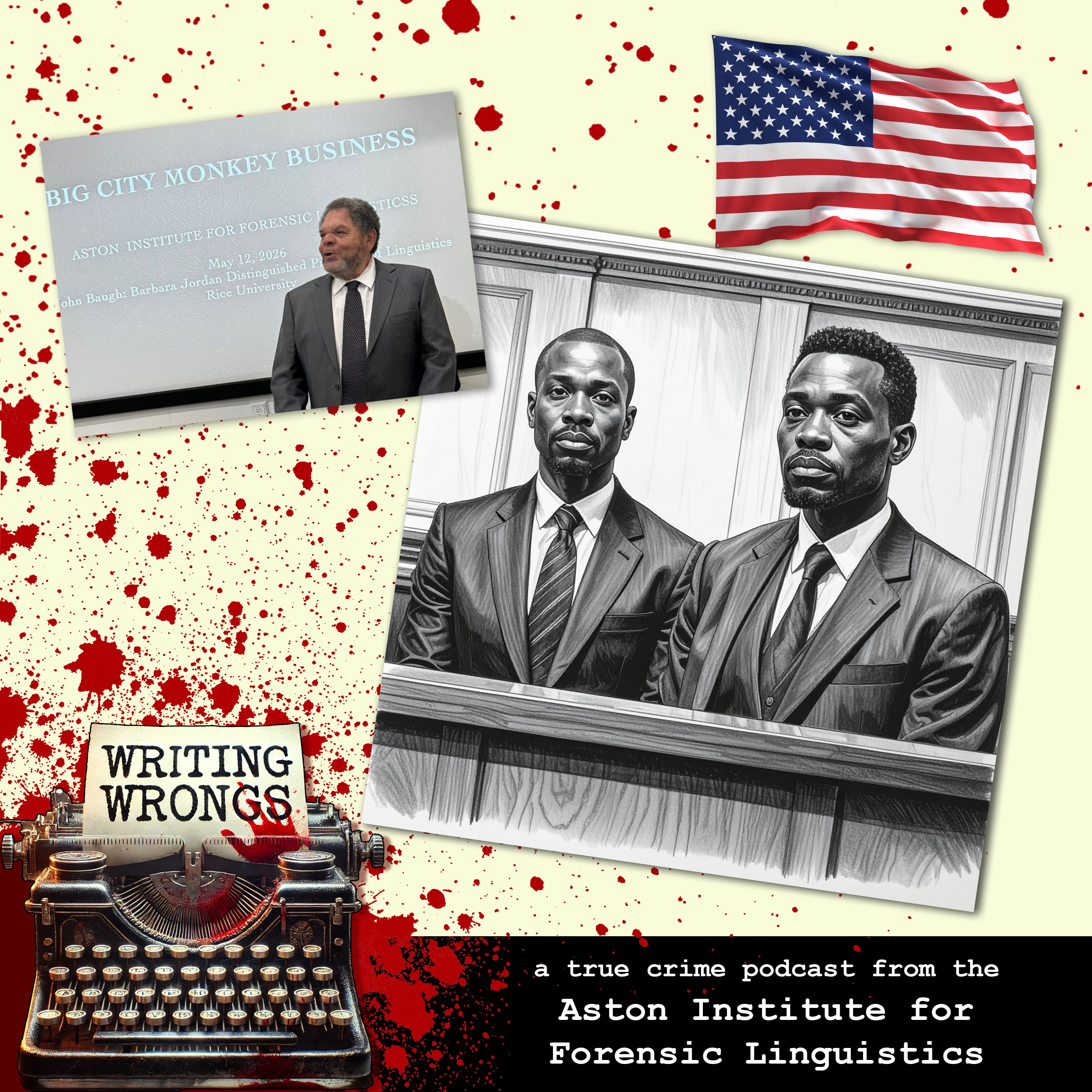
* Warning: Today’s episode contains discussions of murder and racial profiling * Some time in the 2000s, somewhere in the USA. John Smith, an African American male defendant, has been accused of murder. While in jail awaiting trial, he makes a phone call to his cousin. It was believed John confessed to the murder. The defence disagreed, but needed linguistic assistance to help them. Elsewhere in the country, tragedy has struck. 7-year-old Leona Harris was attending a house party with her father, Robert. While standing in the front garden with some friends, they came under gunfire from a passing car. A number of the group were wounded – Leona and Robert fatally so. The police believed they had identified the gang responsible, and the individual who pulled the trigger, and brought him in to be interrogated. However, they needed more information to charge him with the murders. To obtain this, they approached a former member of the gang, Sidney Brown, to help them gather new evidence to arrest the prime suspect – Marcus Jeffreys. Sidney was provided with a mobile phone and instructed to call Marcus, the conversation being recorded and later transcribed. The prosecution’s case was that the transcript clearly showed Marcus agreeing to the proposition that he had committed the murders. Marcus’s defence disagreed. In today’s episode, our hosts Dr Nicci MacLeod and Professor Tim Grant are joined by Professor of Linguistics John Baugh. He’s come to talk to us about his type of linguistic profiling, which occurs when someone’s speech triggers discriminatory bias against them. Through a discussion of two cases John has worked on, he explains how his expertise tackled linguistic evidence in the US criminal justice system. For a list of our sources and more information about this case, please visit https://www.aston.ac.uk/writing-wrongs Have a question for Nicci or Tim? Email us at writingwrongs@aston.ac.uk and we may answer it during an upcoming episode! Check out the official AIFL blog for more forensic linguistic goodies here: https://medium.com/@AIFLblog If you have been affected by any of the themes in this week’s episode, please contact one of these free sources: https://www.samaritans.org/how-we-can-help/contact-samaritan/ https://www.helpguide.org/find-help Production Team: Jordan Robertson, Neus Alberich Buera, Karolina Placzynta, James Cresswell Sound: James Cresswell Editing: Angela Walker Visual design: George Grant With our thanks to Professor John Baugh Professor Tim Grant’s home page: Tim Grant - Aston Research Explorer Dr Nicci MacLeod’s home page: Nicci MacLeod - Aston Research Explorer Professor John Baugh’s home page: John Baugh | Faculty | The People of Rice | Rice University Professor John Baugh’s book: Linguistics in Pursuit of Justice Center for African and African American Studies at Rice University Academic resources Baugh, J. (2016). Linguistic profiling and discrimination. The Oxford handbook of language and society, 349-368. Cotterill, J. (2003). Language and power in court: A linguistic analysis of the OJ Simpson trial. Springer. Dixon, J. A., Mahoney, B., & Cocks, R. (2002). Accents of guilt? Effects of regional accent, race, and crime type on attributions of guilt. Journal of Language and Social Psychology, 21(2), 162-168. Fraser, H. (2020). Forensic transcription: The case for transcription as a dedicated branch of linguistic science. In The Routledge handbook of forensic linguistics (pp. 416-431). Routledge. OJ Simpson Trial Transcript http://simpson.walraven.org/jul12.html Other resources BBC 2016, “Renting while black,” https://www.bbc.co.uk/news/blogs-trending-35464634. The Fair Housing Act Resources
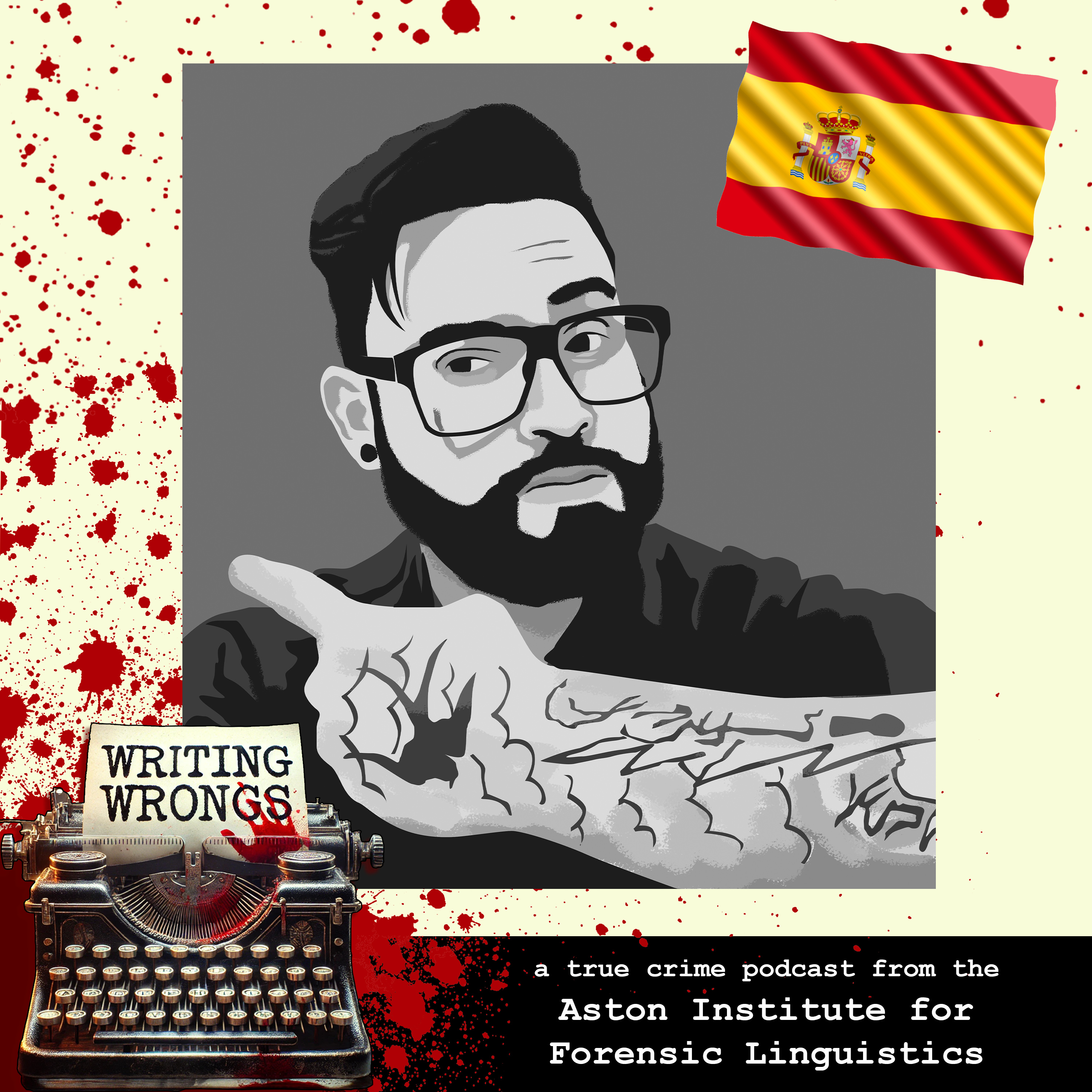
*Warning: this episode contains descriptions of emotional abuse and manipulation* --- November 12, 2018, Madrid, Spain. 47-year-old Galician man Rodrigo Nogueira Iglesias is arrested near the Puerta de Atocha railway station. His crimes stretched back more than twenty years. Rodrigo frequented social media platforms and dating websites where he used fake profiles, pretending to be different people with different names and professions, all with the initial goal of attracting the attention of women who could be potential victims. We are joined by Dr Sheila Queralt – a friend of the Institute and Spain’s top forensic linguistics expert, having consulted on some 300 cases over the past 15 years and testified as a linguistics expert witness in criminal and civil trials across 10 countries, with cases reaching courts including the ECHR. Her work in forensic linguistics at ForensicLab continues through her Laboratory based in Barcelona, which provides linguisticanalysis of recorded conversations and voice messages, as well as written documents. --- In the episode, we make references to episodes 1.4 Romance Fraud, featuring a conversation with Dr Lis Carter, and 3.2 The Multiple Personas of an Online Child Abuser, featuring DrEmily Chiang. Have a question for Nicci or Tim? Email us at writingwrongs@aston.ac.uk and we may answer it during an upcoming episode! Check out the official AIFL blog for more forensic linguistic goodies here: https://medium.com/@AIFLblog If you have been affected by any of the themes in this week’s episode, please contact one of these free sources: https://www.samaritans.org/how-we-can-help/contact-samaritan/ https://www.helpguide.org/find-help --- Production Team: Angela Walker, Jordan Robertson, Neus Alberich Buera, Karolina Placzynta Sound: James Cresswell Visual design: George Grant Editing: Angela Walker Additional voices: Salvador Alberich Castelló --- Illustration by Víctor Gomollón García. Reproduced with the illustrator's kind permission. The illustration was originally created for the book Estafas amorosas by Sheila Queralt Estévez (Larousse Editorial, 2022). More information about the book: https://www.larousse.es/libro/libros-ilustrados-practicos/estafas-amorosas-sheila-queralt-estevez-9788419250179/ Español Ilustración de Víctor Gomollón García. Reproducida con la amable autorización del ilustrador. La ilustración fue creada originalmente para el libro Estafas amorosas, de Sheila Queralt Estévez (Larousse Editorial, 2022). Más información sobre el libro: https://www.larousse.es/libro/libros-ilustrados-practicos/estafas-amorosas-sheila-queralt-estevez-9788419250179/ --- Professor Tim Grant’s home page: Tim Grant- Aston Research Explorer Dr Nicci MacLeod’s home page: NicciMacLeod - Aston Research Explorer Dr Sheila Queralt’s home page: SQ-Lingüistas Forenses Decalogue for requesting a linguistics expert report by Sheila Queralt News of the Nogueira Iglesias case in the Spanish press A guide to spotting romance fraudsters --- Academic sources Carter, E.(2024). The Language of Romance crimes: Interactions of love, money, and threat. Cambridge University Press. Chatten, A., Baxter, K., Mas, E., Pena, J., Tabachnick, G., Duncan, D., & MacKenzie, L. (2024). “I’ve Always Spoke Like This, You See”: Preterite-to-Participle Leveling in American and British Englishes. American Speech: A Quarterly of Linguistic Usage, 99(1), 3-46. Queralt, S. (2022). Linguistic Profiling: A Spanish Case Study. Methodologies and Challenges in Forensic Linguistic Casework, 44–62.
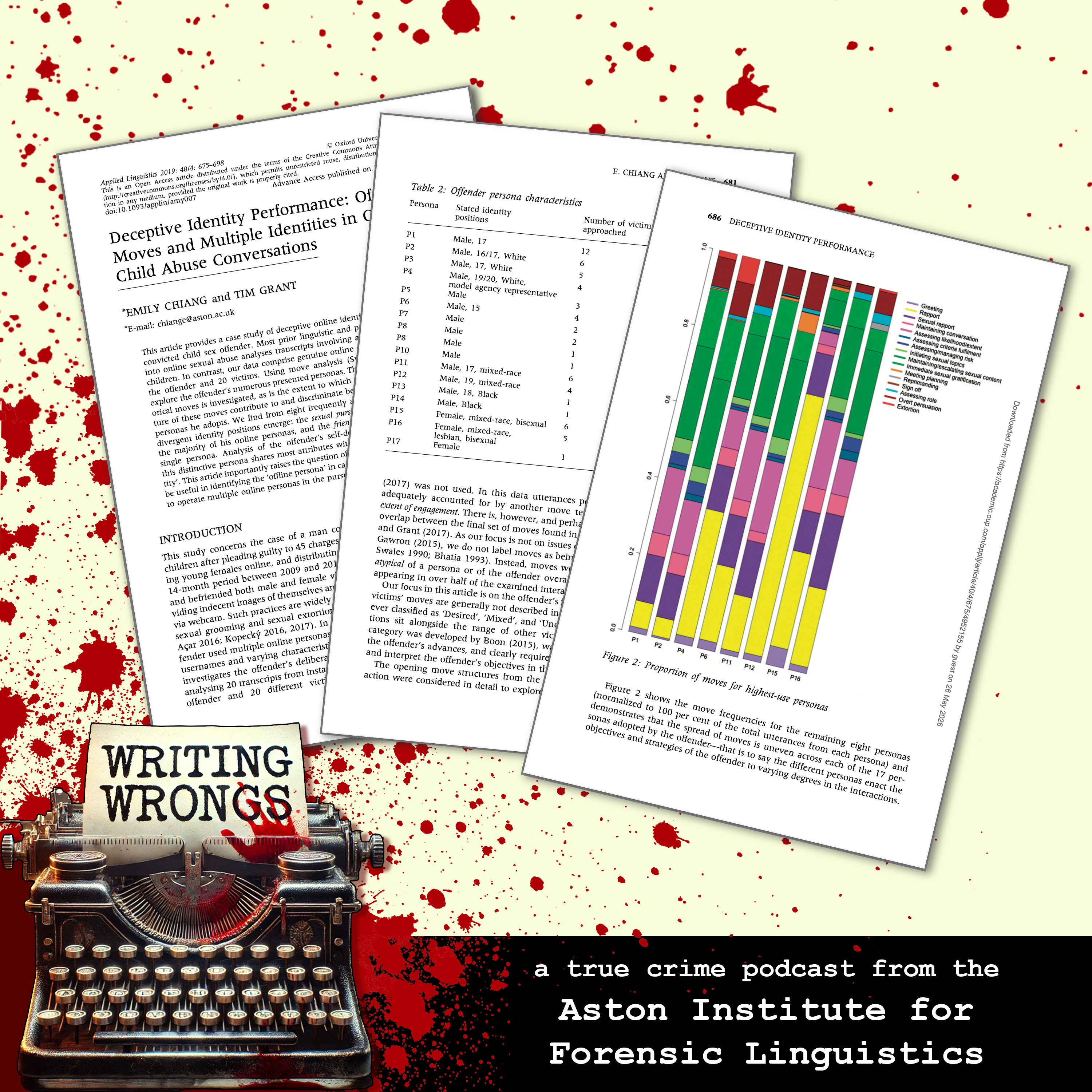
* Warning: Today’s episode contains descriptions of child sexual abuse material. * In today’s episode, Dr Nicci MacLeod and Prof. Tim Grant are joined by Dr Emily Chiang, one of our Research Fellows at AIFL, about her research into identity performance in online child sexual abuse conversations. By tracing 17 different personas from a single perpetrator, Dr Chiang explored linguistic differences in identity performance and online grooming strategies. Together, Dr Chiang and our hosts go over how her research may help future grooming and child sex abuse cases. Have a question for Nicci or Tim? Email us at writingwrongs@aston.ac.uk and we may answer it during an upcoming episode! Check out the official AIFL blog for more forensic linguistic goodies here: https://medium.com/@AIFLblog If you have been affected by any of the themes in this week’s episode, please contact one of these free resources: https://www.samaritans.org/how-we-can-help/contact-samaritan/ https://www.helpguide.org/find-help Production Team: Mark Round, Jordan Robertson, Neus Alberich Buera, Karolina Placzynta Sound: Mark Round Editing: Nicci MacLeod Visual design: George Grant Additional Voices: Karolina Placzynta With our thanks to Dr Emily Chiang and Dr Zoe Adams Professor Tim Grant’s home page: Tim Grant - Aston Research Explorer Dr Nicci MacLeod’s home page: Nicci MacLeod - Aston Research Explorer Dr Emily Chiang’s home page: Emily Chiang - Aston Research Explorer Both Tim and Emily are part of the Europewide Horizon SALVUS project looking at the investigation of online child abuse and exploitation across Europe. You can find out more about the SALVUS project here: https://salvusproject.eu Research Papers: Deceptive identity performance: Offender moves and multiple identities in online child abuse conversations Online grooming: moves and strategies Do Perverted Justice chat logs contain examples of Overt Persuasion and Sexual Extortion? A research note respondingto Chiang and Grant 2017 and 2018.
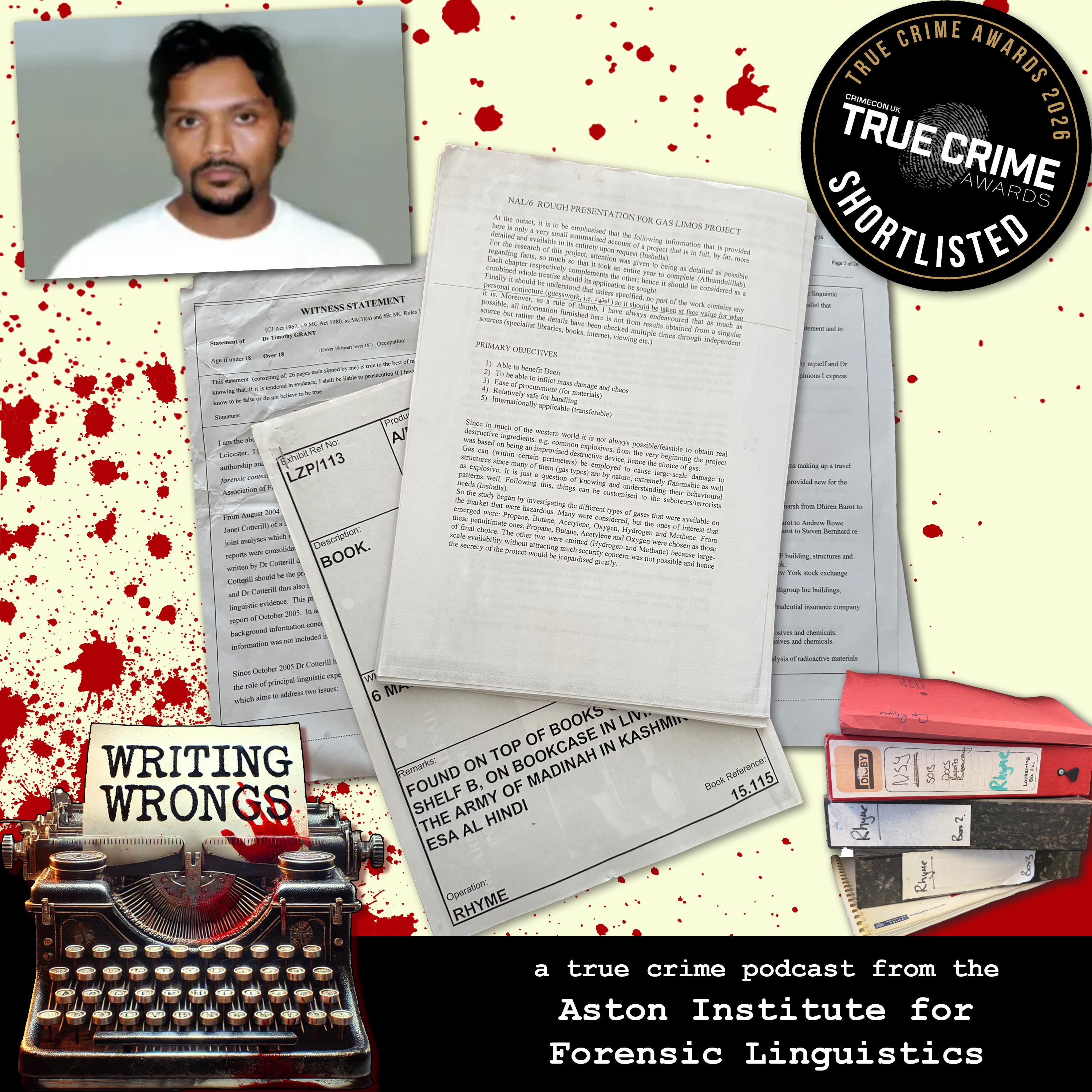
VOTE FOR US IN THE TRUE CRIME AWARDS 2026! *Warning: this episode contains descriptions of terrorist mass-casualty events, and torture * NOTE: This is Part 2 of a double episode. Please make sure you have listened to Part 1 before proceeding. --- These two episodes are dedicated to the memory of Dr Janet Cotterill (1968-2022) who contributed significantly to this case and to forensic linguistics more generally. Her obituary can be found here https://iafll.org/2022/11/11/remembering-dr-janet-cotterill-1968-2022/ --- August 2004. Dhiren Barot, a high-value terrorist, has been arrested in London, and police need to charge or release him within four days. To charge Barot, the police needed to prove to a criminal standard that he had indeed written the Gas Limos project, a document that contained the plot to attack underground carparks of landmark tourist destinations across London with multiple limousines filled with gas cylinders containing explosive gases. In this second part we are joined by Professor Jessica Woodhams from the University of Birmingham who, alongside Tim Grant, Janet Cotterill, and Janet’s PhD student, was rushed to New Scotland Yard in the summer of 2004 to carry out an analysis of The Gas Limos project. For a list of our sources and more information about this case, please visit https://www.aston.ac.uk/writing-wrongs Have a question for Nicci or Tim? Email us at writingwrongs@aston.ac.uk and we may answer it during an upcoming episode! Check out the official AIFL blog for more forensic linguistic goodies here: https://medium.com/@AIFLblog If you have been affected by any of the themes in this week’s episode, please contact one of these free sources: https://www.samaritans.org/how-we-can-help/contact-samaritan/ https://www.helpguide.org/find-help Production Production Team: Mark Round, Jordan Robertson, Neus Alberich Buera, Karolina Placzynta Sound: Mark Round Visual design: George Grant Editing: Nicci MacLeod Additional voices: Professor Siddhartha Bandyopadhyay, George Grant, Stephany Grant, Dr Graeme Hayes, Greg Fraser McLaren Resources Professor Tim Grant’s home page: Tim Grant - Aston Research Explorer Dr Nicci MacLeod’s home page: Nicci MacLeod - Aston Research Explorer Professor Jessica Woodham’s home page: Professor Jessica Woodhams - School of Psychology - University of Birmingham Research Resources Academic Sources - Andrew, C. (2012). The defence of the realm: The authorized history of MI5. Penguin UK. - Carlisle, D. (2007) Dhiren Barot: Was He an Al Qaeda Mastermind or Merely a Hapless Plotter? Studies in Conflict & Terrorism, 30:1057–1071 DOI: 10.1080/10576100701670979 - Grant, T.D. (2022) The Idea of Progress in Forensic Authorship Analysis CUP - Sean O’Neill and Daniel McGrory, The Suicide Factory: Abu Hamza and the Finsbury Park Mosque(London: Harper Perennial, 2006) News sources - Guardian 2006 https://www.theguardian.com/uk/2006/nov/07/usa.terrorism - Times of India 2006 - https://timesofindia.indiatimes.com/articleshow/articleshow/2168783.cms Other Web sources - US Government 9/11 Commission Report https://www.govinfo.gov/content/pkg/GPO-911REPORT/pdf/GPO-911REPORT.pdf - House of Commons library on pretrial detention of terrorists - https://commonslibrary.parliament.uk/research-briefings/sn05634/
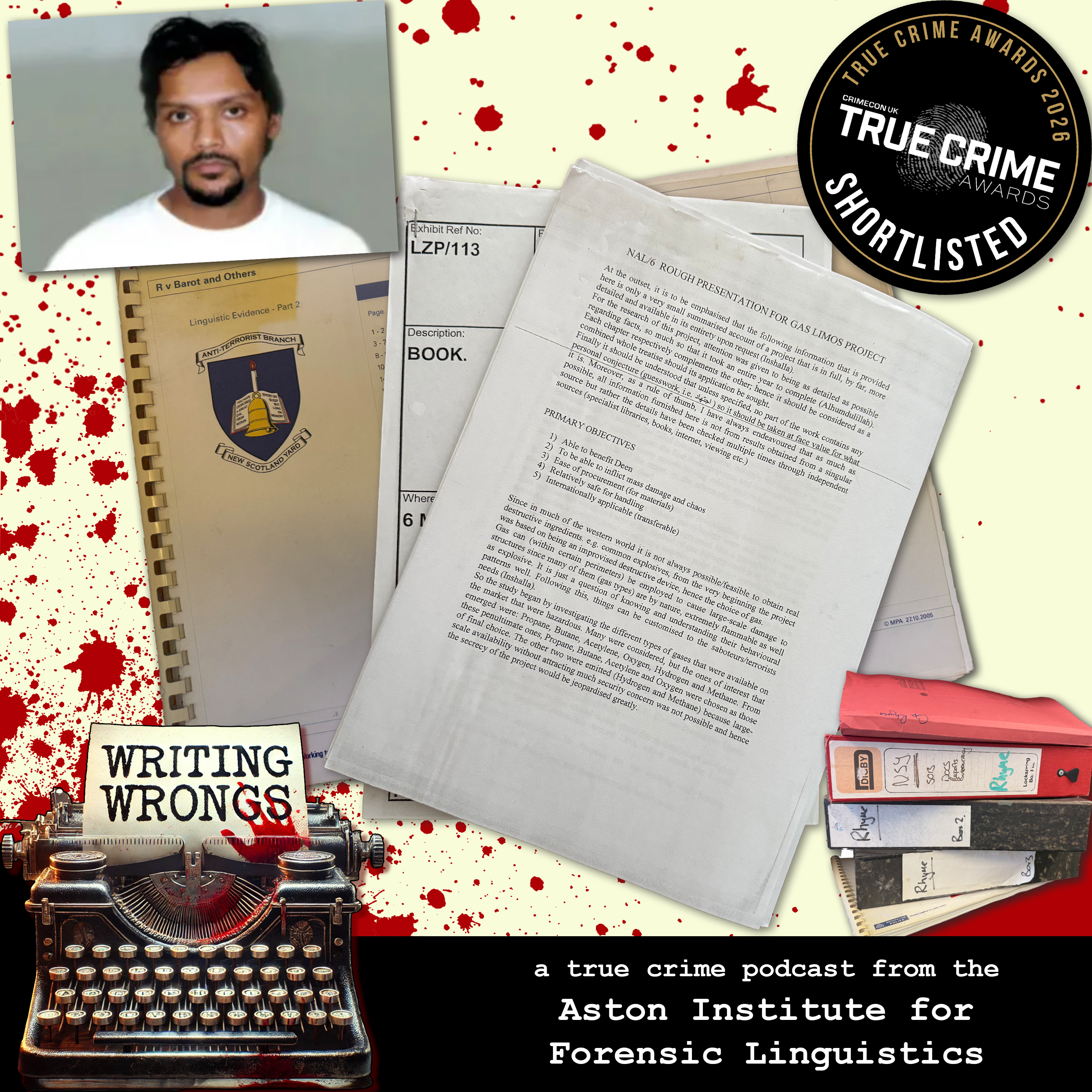
VOTE FOR US IN THE TRUE CRIME AWARDS 2026! *Warning: this episode contains descriptions of terrorist mass-casualty events, and torture * --- These two episodes are dedicated to the memory of Dr Janet Cotterill (1968-2022) who contributed significantly to this case and to forensic linguistics more generally. Her obituary can be found here. --- August 2004. Dhiren Barot, a high-value terrorist, has been arrested in London, and police need to charge or release him within four days. To charge Barot, the police needed to prove to a criminal standard that he had indeed written the Gas Limos project, a document that contained the plot to attack underground carparks of landmark tourist destinations across London with multiple limousines filled with gas cylinders containing explosive gases. In this first part, we explore Barot’s story and background. How did he get from an average upbringing in an Indian family in North London to becoming a radical Islamist authoring a plan for mass destruction? For a list of our sources and more information about this case, please visit https://www.aston.ac.uk/writing-wrongs Have a question for Nicci or Tim? Email us at writingwrongs@aston.ac.uk and we may answer it during an upcoming episode! Check out the official AIFL blog for more forensic linguistic goodies here: https://medium.com/@AIFLblog If you have been affected by any of the themes in this week’s episode, please contact one of these free sources: https://www.samaritans.org/how-we-can-help/contact-samaritan/ https://www.helpguide.org/find-help Production Production Team: Mark Round, Jordan Robertson, Neus Alberich Buera, Karolina Placzynta Sound: Mark Round Visual design: George Grant Editing: Nicci MacLeod Additional voices: Professor Siddhartha Bandyopadhyay, George Grant, Dr Graeme Hayes, Dr Madison Hunter, Aymun Yasin Khan Resources Professor Tim Grant’s home page: Tim Grant - Aston Research Explorer Dr Nicci MacLeod’s home page: Nicci MacLeod - Aston Research Explorer Professor Jessica Woodham’s home page: Professor Jessica Woodhams - School of Psychology - University of Birmingham Research Resources Academic Sources - Andrew, C. (2012). The defence of the realm: The authorized history of MI5. Penguin UK. - Carlisle, D. (2007) Dhiren Barot: Was He an Al Qaeda Mastermind or Merely a Hapless Plotter? Studies in Conflict & Terrorism, 30:1057–1071 DOI: 10.1080/10576100701670979 - Grant, T.D. (2022) The Idea of Progress in Forensic Authorship Analysis CUP - Sean O’Neill and Daniel McGrory, The Suicide Factory: Abu Hamza and the Finsbury Park Mosque(London: Harper Perennial, 2006) News sources - Guardian 2006 https://www.theguardian.com/uk/2006/nov/07/usa.terrorism - Times of India 2006 - https://timesofindia.indiatimes.com/articleshow/articleshow/2168783.cms Other Web sources - US Government 9/11 Commission Report https://www.govinfo.gov/content/pkg/GPO-911REPORT/pdf/GPO-911REPORT.pdf - House of Commons library on pretrial detention of terrorists - https://commonslibrary.parliament.uk/research-briefings/sn05634/
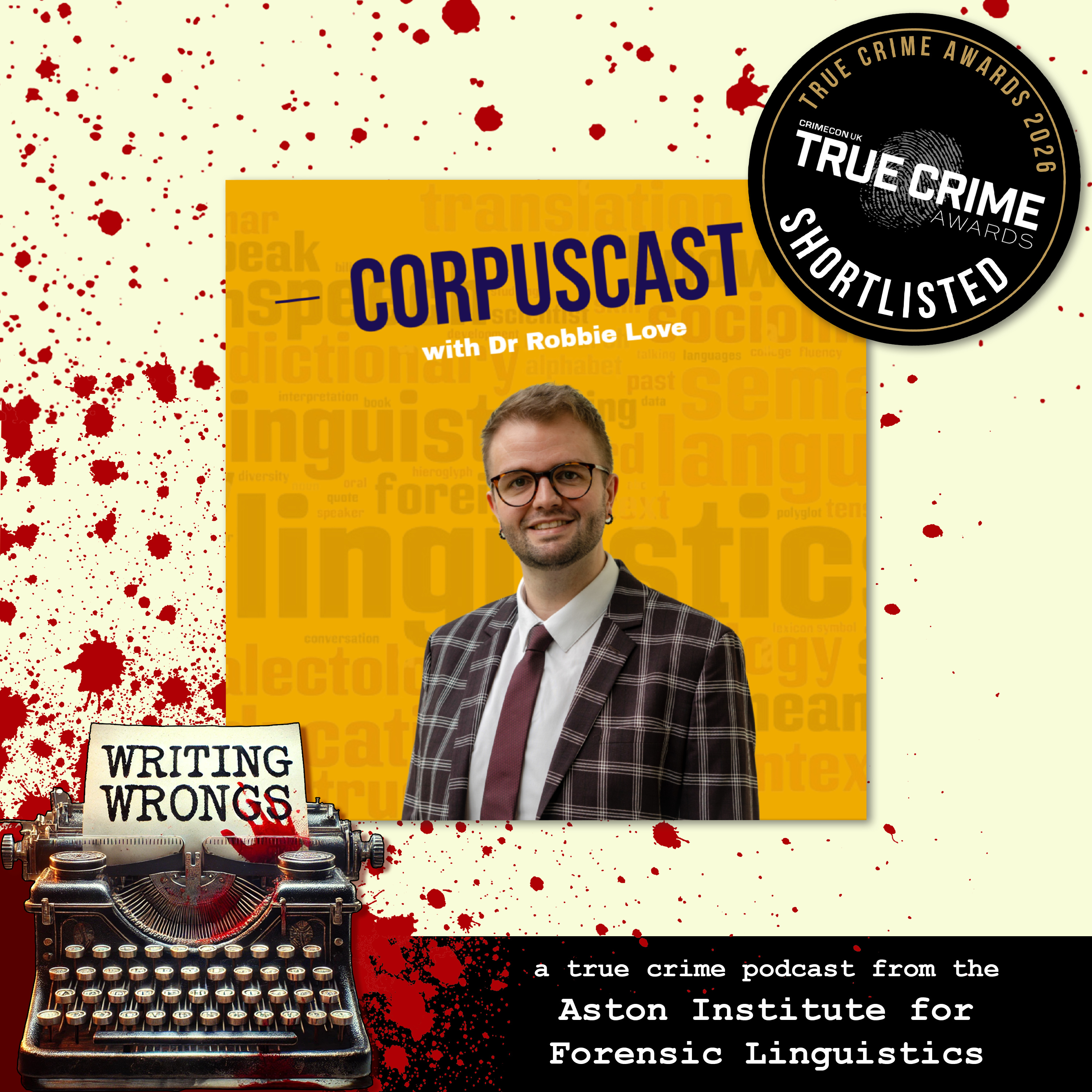
Welcome Wrong’uns to this special episode of Writing Wrongs in conjunction with another Aston Originals podcast: CorpusCast with Dr Robbie Love! Nicci, Tim, and Robbie revisit some of Writing Wrongs’ bestclips involving corpus linguistics. Take a trip down memory lane as our hosts call back to S1E3, S1E7, S2E1&2, and S2E6&7, and grill Dr Love about the ins and outs of the use of corpus tools in forensic linguistics. Erratum: Robbie's upcoming performance of We Will Rock You is at the Alexandra Theatre, not the Hippodrome as Nicci mistakenly says. Tickets available here. VOTE FOR US IN THE TRUE CRIME AWARDS 2026! For a list of our sources and more informationabout this case, please visit https://www.aston.ac.uk/writing-wrongs Have a question for Nicci or Tim? Email us at writingwrongs@aston.ac.ukand we may answer it during an upcoming episode! Check out the official AIFL blog for more forensic linguistic goodies here: https://medium.com/@AIFLblog If you have been affected by any of the themes in this week’s episode, please contact one of these free sources: https://www.samaritans.org/how-we-can-help/contact-samaritan/ https://www.helpguide.org/find-help Production Team: Mark Round, Jordan Robertson,Neus Alberich Buera, Karolina Placzynta Sound: Mark Round Visual design: George Grant Additional Voices: Prof Malcolm Coulthard, Dr Issy Clarke, Dr Andrea Nini With our thanks to Dr Robbie Love Professor Tim Grant’s home page: Tim Grant- Aston Research Explorer Dr Nicci MacLeod’s home page: NicciMacLeod - Aston Research Explorer Dr Robbie Love's home page: Robbie Love - Aston Research Explorer
*Warning: this episode contains potentially distressing discussions* In the series finale, Nicci and Tim will be answering some of the questions that you have been sending in over the course of Season 2. From general questions about forensic linguistics to a deep dive into past episodes, we will be reviewing what season 2 has been about. For a list of our sources and more information about this case, please visit https://www.aston.ac.uk/writing-wrongs Have a question for Nicci or Tim? Email us at writingwrongs@aston.ac.uk and we may answer it during an upcoming episode! Check out the official AIFL blog for more forensic linguistic goodies here: https://medium.com/@AIFLblog If you have been affected by any of the themes in this week’s episode, please contact one of these free sources: https://www.samaritans.org/how-we-can-help/contact-samaritan/ https://www.helpguide.org/find-help Production Team: Mark Round, Jordan Robertson, Neus Alberich Buera, Karolina Placzynta Sound: Mark Round Visual design: George Grant Professor Tim Grant’s home page: Tim Grant - Aston Research Explorer Dr Nicci MacLeod’s home page: Nicci MacLeod - Aston Research Explorer Resources
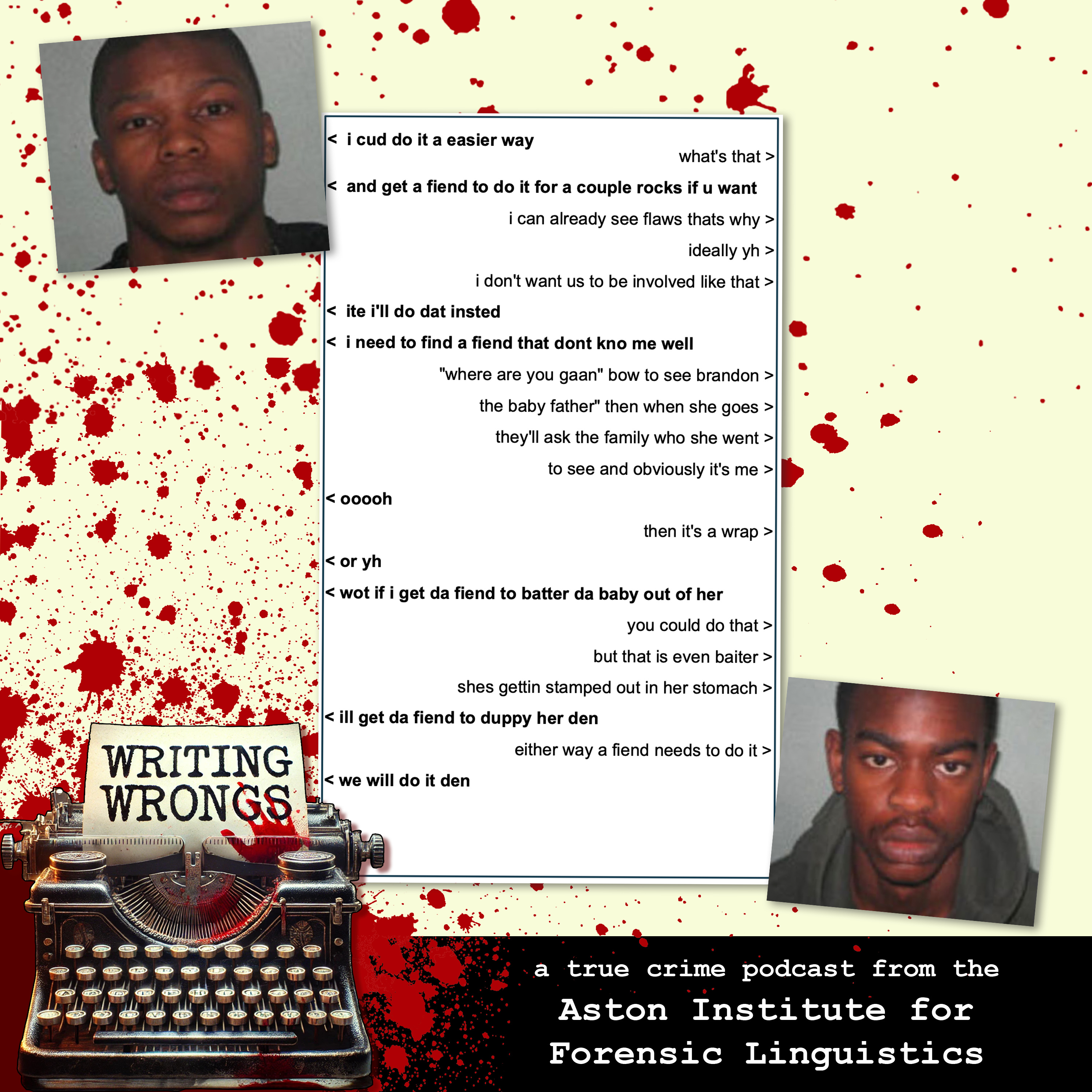
Series 2 - Episode 7 - Part 1 * Warning: Today’s episode contains descriptions of murder, gang violence, knife crime, and a violent attack on a young pregnant girl. * This month, Dr Nicci MacLeod and Professor Tim Grant explore the analysis of Urban British English (UBE) in court. In the first of this two-part episode, Tim discusses a case from 2009 in which he analysed chat logs between two Grime music producers, Maniac and Snoopy Montana, who were accused of conspiracy to murder Maniac’s pregnant girlfriend. Tim drew on corpus linguistics to explore the non-standard variety of English the two used in correspondence with one another to better guide the court on the meaning of the language present in the data. For a list of our sources and more information about this case, please visit https://www.aston.ac.uk/writing-wrongs Have a question for Nicci or Tim? Email us at writingwrongs@aston.ac.uk and we may answer it during an upcoming episode! Check out the official AIFL blog for more forensiclinguistic goodies here: https://medium.com/@AIFLblog If you have been affected by any of the themes in thisweek’s episode, please contact one of these free sources: https://www.samaritans.org/how-we-can-help/contact-samaritan/ https://www.helpguide.org/find-help Production Team: Mark Round, Jordan Robertson, Neus Alberich Buera, Karolina Placzynta Sound: Mark Round, Sam Cook Visual design: George Grant Additional Voices: Frankie Vu, Aston students
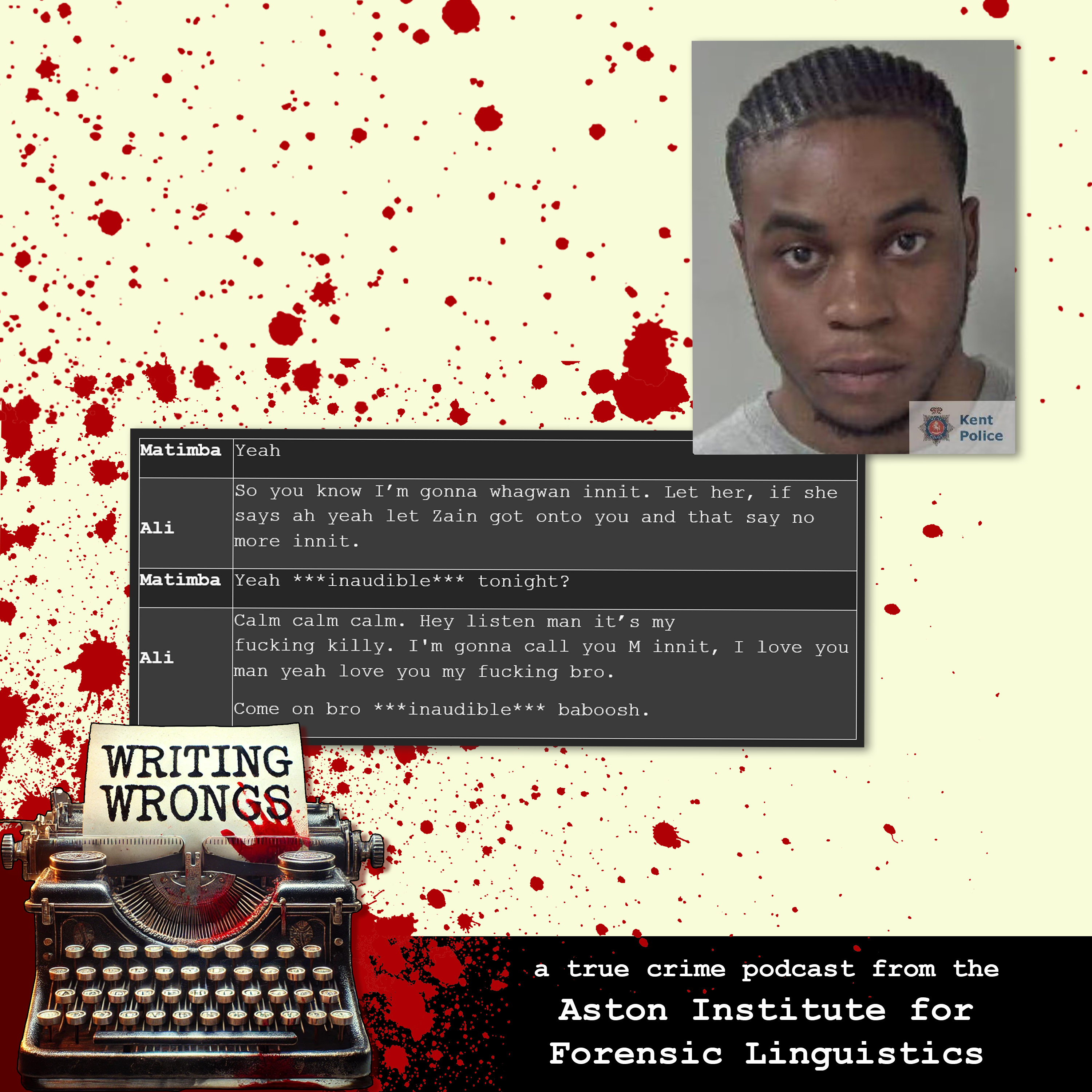
* Warning: Today’s episode contains descriptions of murder, gang violence, and knife crime. * STOP! This episode is the final part of a special two-part episode. Make sure to listen to part one before enjoying this episode. In part two of this special on Urban British English (UBE), Dr Nicci MacLeod and Professor Tim Grant discuss Nicci’s role in a 2021 murder case involving the suspect’s use of the term ‘killy’. Despite the prosecution’s expert defining the term as “the feeling of wanting to kill,” Nicci’s deep dive revealed a more common meaning of the term: ‘close friend’. For a list of our sources and more information about this case, please visit https://www.aston.ac.uk/writing-wrongs Have a question for Nicci or Tim? Email us at writingwrongs@aston.ac.uk and we may answer it during an upcoming episode! Check out the official AIFL blog for more forensic linguistic goodies here: https://medium.com/@AIFLblog If you have been affected by any of the themes in this week’s episode, please contact one of these free sources: https://www.samaritans.org/how-we-can-help/contact-samaritan/ https://www.helpguide.org/find-help Production Team: Mark Round, Jordan Robertson, Neus Alberich Buera, Karolina Placzynta Sound: Mark Round, Sam Cook Visual design: George Grant Additional Voices: Frankie Vu, Aston Students Resources Professor Tim Grant’s home page: Tim Grant - Aston Research Explorer Dr Nicci MacLeod’s home page: Nicci MacLeod - Aston Research Explorer Johnathon Green’s Dictionary of Slang: https://greensdictofslang.com/ Linguistic experts as semantic tour guides by Dr Larry Solan: https://www.researchgate.net/publication/250014956_Linguistic_experts_as_semantic_tour_guides
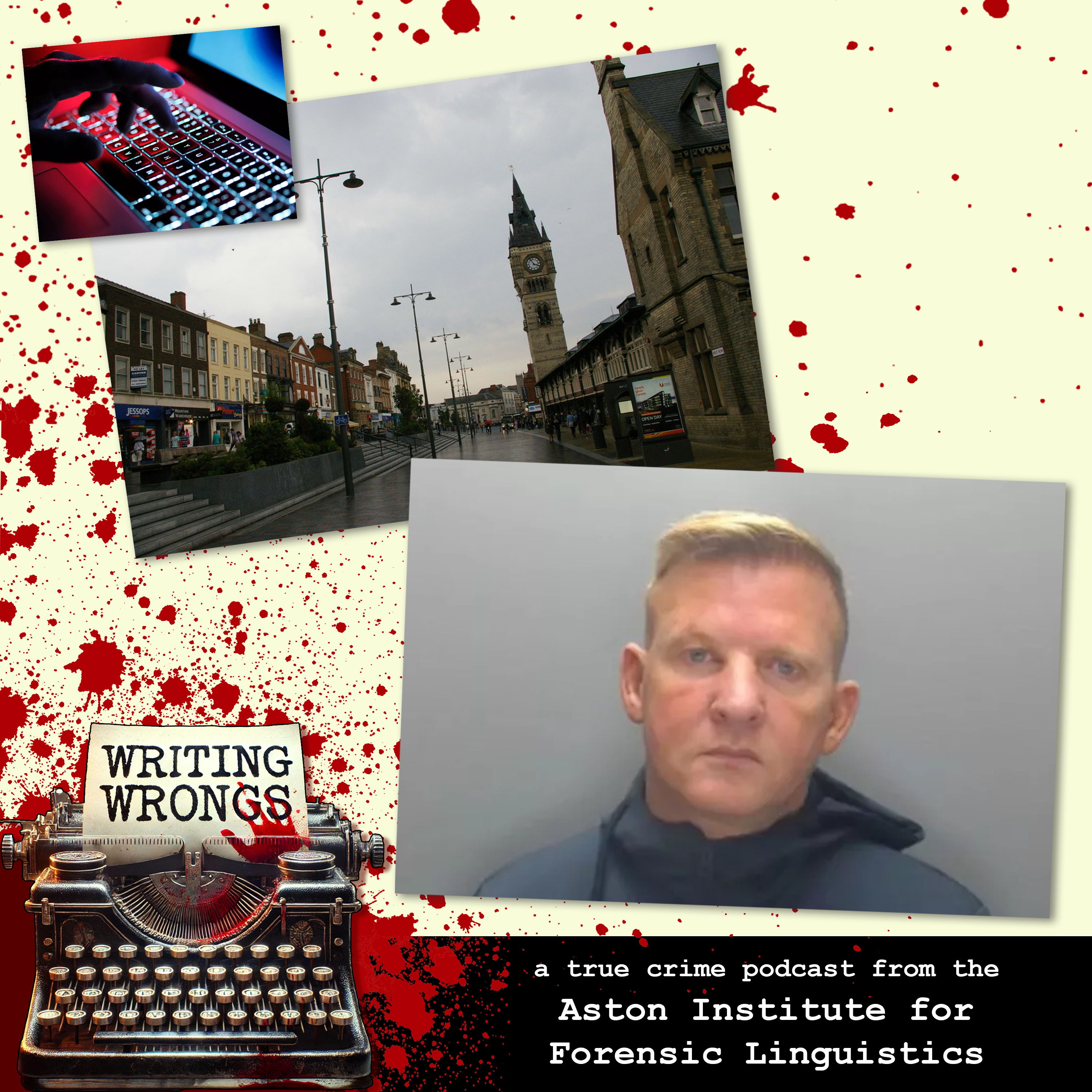
Series 2 - Episode 6 * Warning: Today’s episode contains descriptions ofharassment and stalking. We’ll explore themes related to verbal and emotional abuse, intimate partner abuse, highly offensive communications, and fraud. Listener discretion is strongly advised, as some content may be distressing. * August 2020, Darlington, North East England. A woman begins to receive vast numbers of abusive messages, which she believes are coming from her ex-partner Stuart Bell. It was not a straightforward matter for the police to establish whether it was Bell who was behind the messages. Investigating officer Kerris Dawson approached Dr Nicci MacLeod for help. Join hosts Professor Tim Grant and Dr Nicci MacLeod in unravelling the linguistic features that contributed to determining the authorship of the abusive messages. For a list of our sources and more information about this case, please visit https://www.aston.ac.uk/writing-wrongs Have a question for Nicci or Tim? Email us at writingwrongs@aston.ac.uk and we may answer it duringan upcoming episode! Check out the official AIFL blog for more forensic linguistic goodies here: https://medium.com/@AIFLblog If you have been affected by any of the themes in this week’s episode, please contact one of these free sources: https://www.samaritans.org/how-we-can-help/contact-samaritan/ https://www.helpguide.org/find-help Production Team: Mark Round, Jordan Robertson, Neus Alberich Buera, Karolina Placzynta Sound: Mark Round Editing: Angela Walker Visual design: George Grant Additional Voices: Sam Guerin With special thanks to Robbie Love. Professor Tim Grant’s home page: Tim Grant - Aston Research Explorer Dr Nicci MacLeod’s home page: Nicci MacLeod - Aston Research Explorer

Series 2 - Episode 5 Terror in the State of Denmark - Conversations from a List of Resolutes * Warning: Today’s episode contains descriptions of religious extremism, radicalization and plots of violence or terrorism. * Joined by Dr Tanya Karoli Christensen, hosts Nicci and Tim discuss a counterterrorism investigation from Denmark. In this case, linguistic analysis proved vital in unraveling implied meanings in text messages between a young man of Kurdish background, suspected of planning to travel to Syria to join ISIS, and another man, suspected of trying to recruit him. Through an analysis of 192 written chat messages from March 2015 between the two individuals, Tanya shares how themes of money, battle and war, and urgency in planning played a role in advancing a Danish police investigation. Listen to discover more. For a list of our sources and more information about this case, please visit https://www.aston.ac.uk/writing-wrongs Have a question for Nicci or Tim? Email us at writingwrongs@aston.ac.uk and we may answer it during an upcoming episode! Check out the official AIFL blog for more forensic linguistic goodies here: https://medium.com/@AIFLblog If you have been affected by any of the themes in this week’s episode, please contact one of these free sources: https://www.samaritans.org/how-we-can-help/contact-samaritan/ https://www.helpguide.org/find-help Production Team: Angela Walker, Jordan Robertson, Neus Alberich Buera Sound: Angela Walker Visual design: George Grant Additional Voices: Mark Round, Peter Kiddle With our thanks to Dr Tanya Karoli Christensen Resources Professor Tim Grant’s home page: Tim Grant - Aston Research Explorer Dr Nicci MacLeod’s home page: Nicci MacLeod - Aston Research Explorer Dr Tanya Karoli Christensen’s home page: Dr Tanya Karoli Christensen - Research Profile
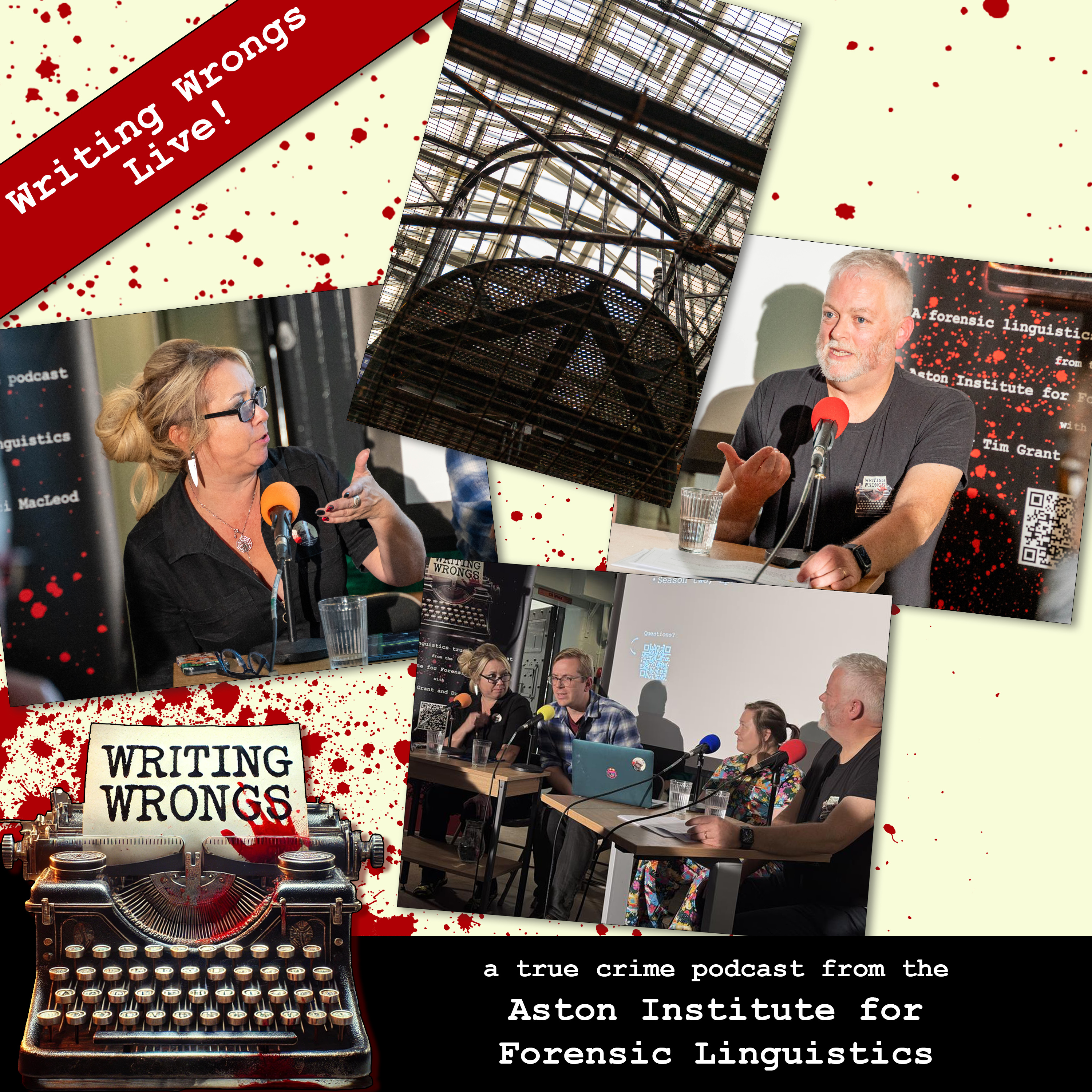
* Warning: Today’s episode contains descriptions of violent murder, grooming and child sexual abuse, and online extremism. * This month, Writing Wrongs comes to you live as a part of the ESRC 2025 Festival of Social Science, from the West Midlands Police Museum at the Old Steelhouse Lane Lock-up. Our hosts are joined by colleagues Dr Emily Chiang and Dr Ralph Morton to discuss the past, present, and future of forensic linguistics. This is a preview of their (along with Prof Malcolm Coulthard) forthcoming book titled Forensic Linguistics in the United Kingdom: Origins, Progress and Prospects, which will be available in 2026 from Cambridge Elements. In the episode (about 40 minutes in) we discuss the Jenny Nicholl case and how their language differs - this is a transcription of the slide that the live audience could see: · I am | Nicholl’s preference = im | Hodgson’s preference = i am · I have | Nicholl’s preference = ive | Hodgson’s preference = ave · my/myself | Nicholl’s preference = my/myself | Hodgson’s preference = me/meself · off | Nicholl’s preference = off | Hodgson’s preference = of · to | Nicholl’s preference = [word]2[word] | Hodgson’s preference = [word]2+space[word] · see you | Nicholl’s preference = cu | Hodgson’s preference = cya · phone | Nicholl’s preference = fone | Hodgson’s preference = phone · shit | Nicholl’s preference = shit | Hodgson’s preference = shite · am not | Nicholl’s preference = ‘m not | Hodgson’s preference = ain’t We were also thrilled to be joined by many of our Wrong’uns (our loving nickname for our fans) for this recording session! It was so lovely to get to meet you and hear your stories. Thank you for your support! For a list of our sources and more information about this case, please visit https://www.aston.ac.uk/writing-wrongs Have a question for Nicci or Tim? Email us at writingwrongs@aston.ac.uk and we may answer it during an upcoming episode! Check out the official AIFL blog for more forensic linguistic goodies here: https://medium.com/@AIFLblog If you have been affected by any of the themes in this week’s episode, please contact one of these free sources: https://www.samaritans.org/how-we-can-help/contact-samaritan/ https://www.helpguide.org/find-help Production Team: Angela Walker, Loretta Milan, Jordan Robertson, Neus Alberich Buera Sound: Angela Walker Visual design: George Grant Additional Voices: Lesley McCarthy, Paul McCarthy, Dana Roemling, Marie Kreft, and Alexander Oldknow With our thanks to the ESRC and the West Midlands Police Museum, Dr Zoe Adams, Dr Daniela Schneevogt, and Karolina Placzynta Resources Professor Tim Grant’s home page: Tim Grant - Aston Research Explorer Dr Nicci MacLeod’s home page: Nicci MacLeod - Aston Research Explorer Dr Emily Chiang’s home page: Emily Chiang - Aston Research Explorer Dr Ralph Morton’s homepage: Ralph Morton - Aston Research Explorer
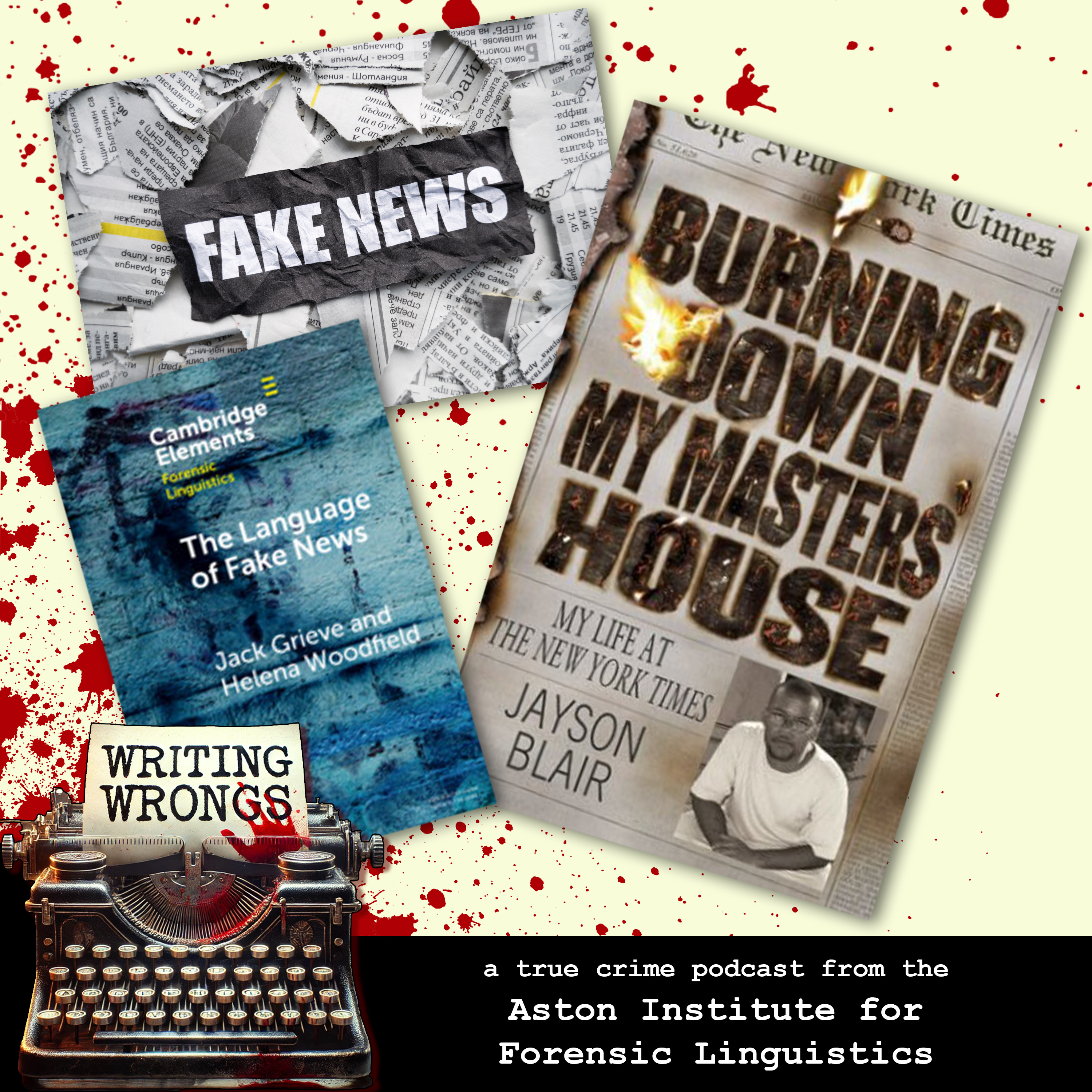
* This episode contains no particular contentwarnings, there is however a very brief mention of another case involving sexual abuse * This episode is about the New York Times, a high reputation paper of record in the Untied States, and how in theearly 2000s they came to publish a series of articles, which turned out to be plagiarised or untrue. Together with Professor Jack Grieve, from the University of Birmingham, our hosts Nicci and Tim take a look at how a linguistic approach to detecting fake news can make a difference. For a list of our sources and more information about this case, please visit https://www.aston.ac.uk/writing-wrongs Have a question for Nicci or Tim? Email us at writingwrongs@aston.ac.uk and we may answer it duringan upcoming episode! Check out the official AIFL blog for more forensic linguistic goodies here: https://medium.com/@AIFLblog Production Team: Angela Walker, Jordan Robertson, Neus Alberich Buera Sound:Angela Walker Visual design: George Grant Additional Voices: Angela Walker With our thanks to Professor Jack Grieve Professor Tim Grant’s home page: Tim Grant - Aston Research Explorer Dr Nicci MacLeod’s home page: Nicci MacLeod - Aston Research Explorer Professor Jack Grieve’s home page: Professor Jack Grieve - Department ofLinguistics and Communication - University of Birmingham Link to the book: The Language of Fake News
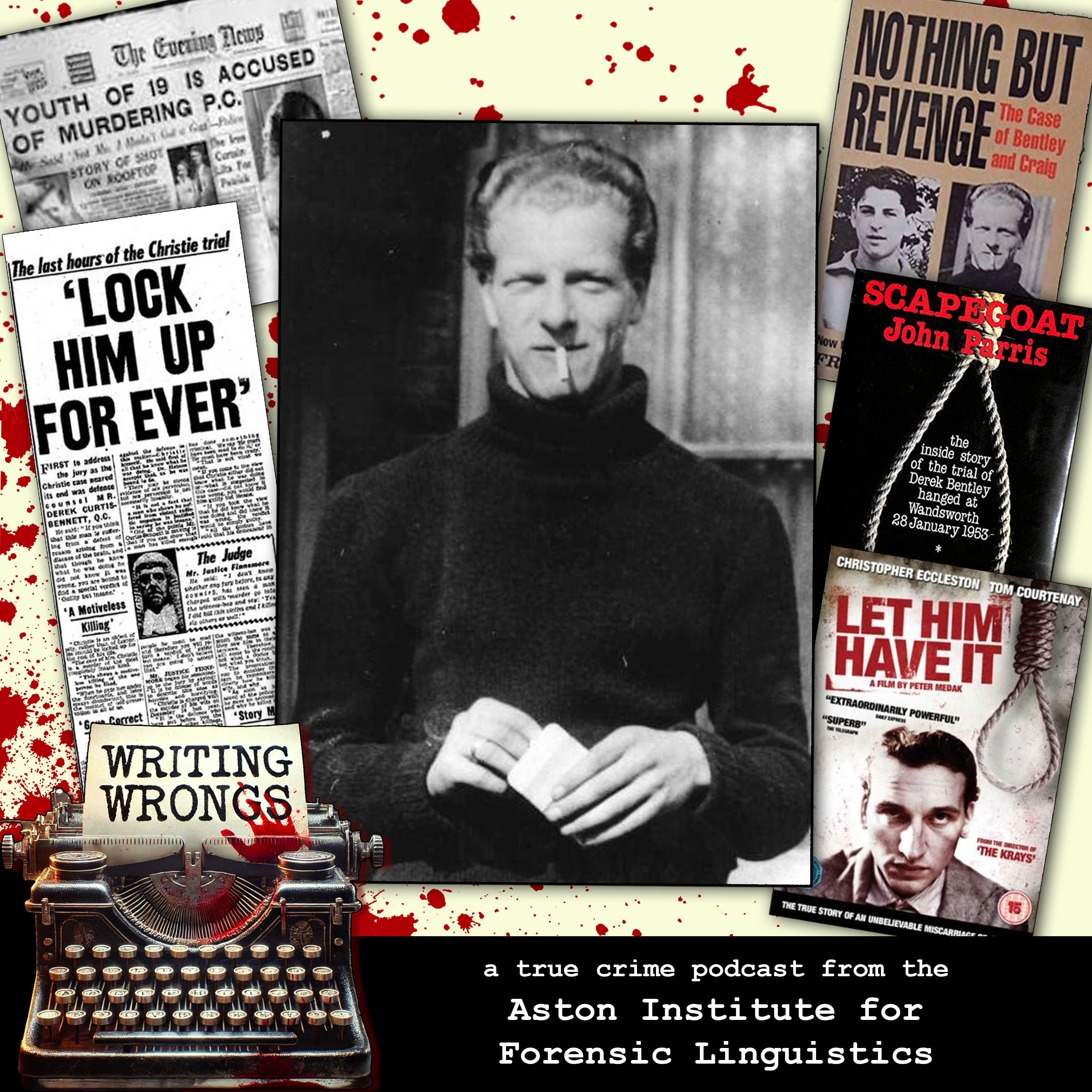
* Warning: This episode contains descriptions of gun violence, murder and capital punishment. * In this first episode of a two-part case, Nicci and Tim discuss Derek Bentley’s story and the miscarriages of justice that occurred when he was found guilty of murder and received the death penalty. Focusing on two different meaning ambiguities, our hosts explore 1) the alleged statement Derek made (‘Let him have it, Chris’) after which a police officer was shot, and 2) the legal vs. ordinary meaning of ‘to be held’, as it played a role in Derek’s failed appeal. For a list of our sources and more information about this case, please visit https://www.aston.ac.uk/writing-wrongs Have a question for Nicci or Tim? Email us at writingwrongs@aston.ac.uk and we may answer it during an upcoming episode! Check out the official AIFL blog for more forensic linguistic goodies here: https://medium.com/@AIFLblog If you have been affected by any of the themes in this week’s episode, please contact one of these free sources: https://www.samaritans.org/how-we-can-help/contact-samaritan/ https://www.helpguide.org/find-help Production Team: Sam Cook, Jordan Robertson, Neus Alberich Buera Sound: Sam Cook Visual design: George Grant Additional Voices: Sam Cook Resources Professor Tim Grant’s home page: Tim Grant - Aston Research Explorer Dr Nicci MacLeod’s home page: Nicci MacLeod - Aston Research Explorer ‘Let him have it’ movie on Amazon Prime UK: Watch Let Him Have It | Prime Video
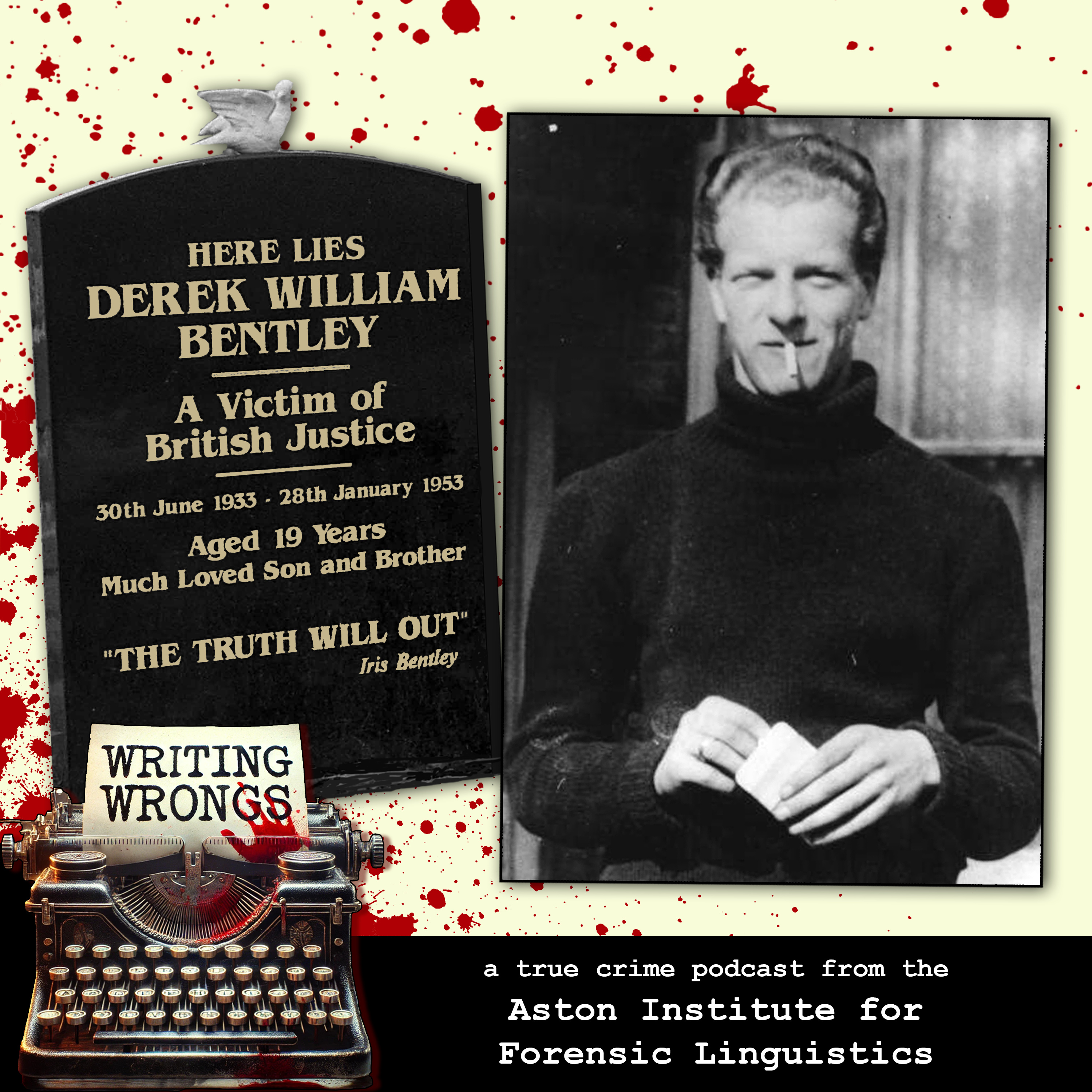
* Warning: This episode contains descriptions of the killing of a police officer and the death penalty. * STOP! If you haven’t listened to part one of this case, go back and listen before starting this episode. Last time, Nicci and Tim explored the language around the custodial status of Derek Bentley, who was one of the last people to be hanged as criminal punishment in the UK in 1953. In part 2, we welcome Prof Malcolm Coulthard, Professor Emeritus here at Aston University, one of the founders of AIFL (Center for Forensic Linguistics at the time), and granddaddy of forensic linguistics. Prof Coulthard joins Nicci and Tim to further unpack the case, this time focusing on the alleged confession Bentley gave the morning following the crime in question. Like Timothy Evans in series 1, it was unclear whether Derek Bentley had truly penned the written confession later given as evidence in court. For a list of our sources and more information about this case, please visit https://www.aston.ac.uk/writing-wrongs Have a question for Nicci or Tim? Email us at writingwrongs@aston.ac.uk and we may answer it during an upcoming episode! Check out the official AIFL blog for more forensic linguistic goodies here: https://medium.com/@AIFLblog If you have been affected by any of the themes in this week’s episode, please contact one of these free sources: https://www.samaritans.org/how-we-can-help/contact-samaritan/ https://www.helpguide.org/find-help Production Team: Sam Cook, Jordan Robertson, Neus Alberich Buera Additional Editing: Angela Walker Sound: Sam Cook Visual design: George Grant Additional Voices: Sam Cook With our thanks to Professor Malcolm Couthard Resources Professor Tim Grant’s home page: Tim Grant - Aston Research Explorer Dr Nicci MacLeod’s home page: Nicci MacLeod - Aston Research Explorer Professor Malcolm Coulthard’s research gate profile: Malcolm Coulthard – Research Gate
Writing Wrongs Live! Come and be part of the Writing Wrongs Live! show 4pm- 6pm 22nd October at the Steelhouse Lane Lockup Free tickets are available from https://www.eventbrite.co.uk/e/writing-wrongs-live-tickets-1520150794949
*Warning: this episode contains potentially distressing discussions* In the series finale, Nicci and Tim answer some of the questions that you have been sending in over the course of Series 1. From general questions about forensic linguistics to a deep dive into past episodes, we will be reviewing what Series 1 has been about. Have a question for Nicci or Tim? Email us at writingwrongs@aston.ac.uk and we may answer it during an upcoming episode! Check out the official AIFL blog for more forensic linguistic goodies here: https://medium.com/@AIFLblog If you have been affected by any of the themes in this week’s episode, please contact one of these free sources: https://www.samaritans.org/how-we-can-help/contact-samaritan/ https://www.helpguide.org/find-help Production Team: Angela Walker, Jordan Robertson, Neus Alberich Buera Sound: Angela Walker Visual design: George Grant Professor Tim Grant’s home page: Tim Grant - Aston Research Explorer Dr Nicci MacLeod’s home page: Nicci MacLeod - Aston Research Explorer Resources
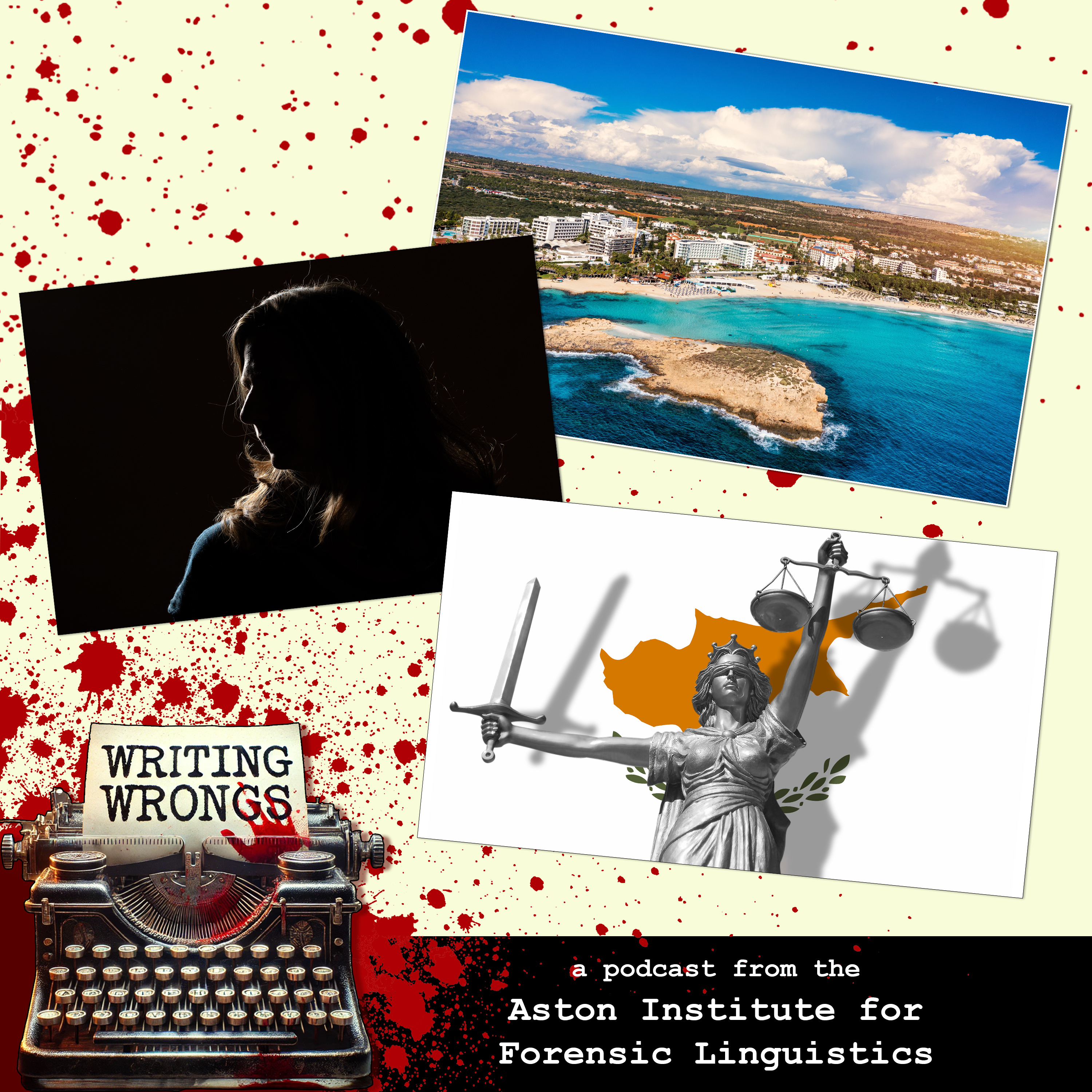
* Warning: This episode contains descriptions of rape and allegations of false reporting of rape * A 19-year-old British woman’s holiday in Ayia Napa turns into a nightmare when she’s accused of fabricating a gang rape claim. Was her police statement truly her own words? In this episode, Dr. Andrea Nini examines the linguistic evidence that became central to uncovering the truth behind this controversial case. For a list of our sources and more information about the case please visit https://www.aston.ac.uk/writing-wrongs Have a question for Nicci or Tim? Email us at writingwrongs@aston.ac.uk and we may answer it during an upcoming episode! Check out the official AIFL blog for more forensic linguistic goodies here: https://medium.com/@AIFLblog Andrea’s webpage: https://andreanini.com/ If you have been affected by any of the themes in this episode, please contact one of these free sources: https://www.samaritans.org/how-we-can-help/contact-samaritan/ https://www.helpguide.org/find-help Hosts: Dr Nicci MacLeod, Professor Tim Grant Production Team: Sam Cook, Jordan Robertson, Neus Alberich Buera Sound: Sam Cook Visual design: George Grant Additional Voices: Sam Cook, Amy Booth
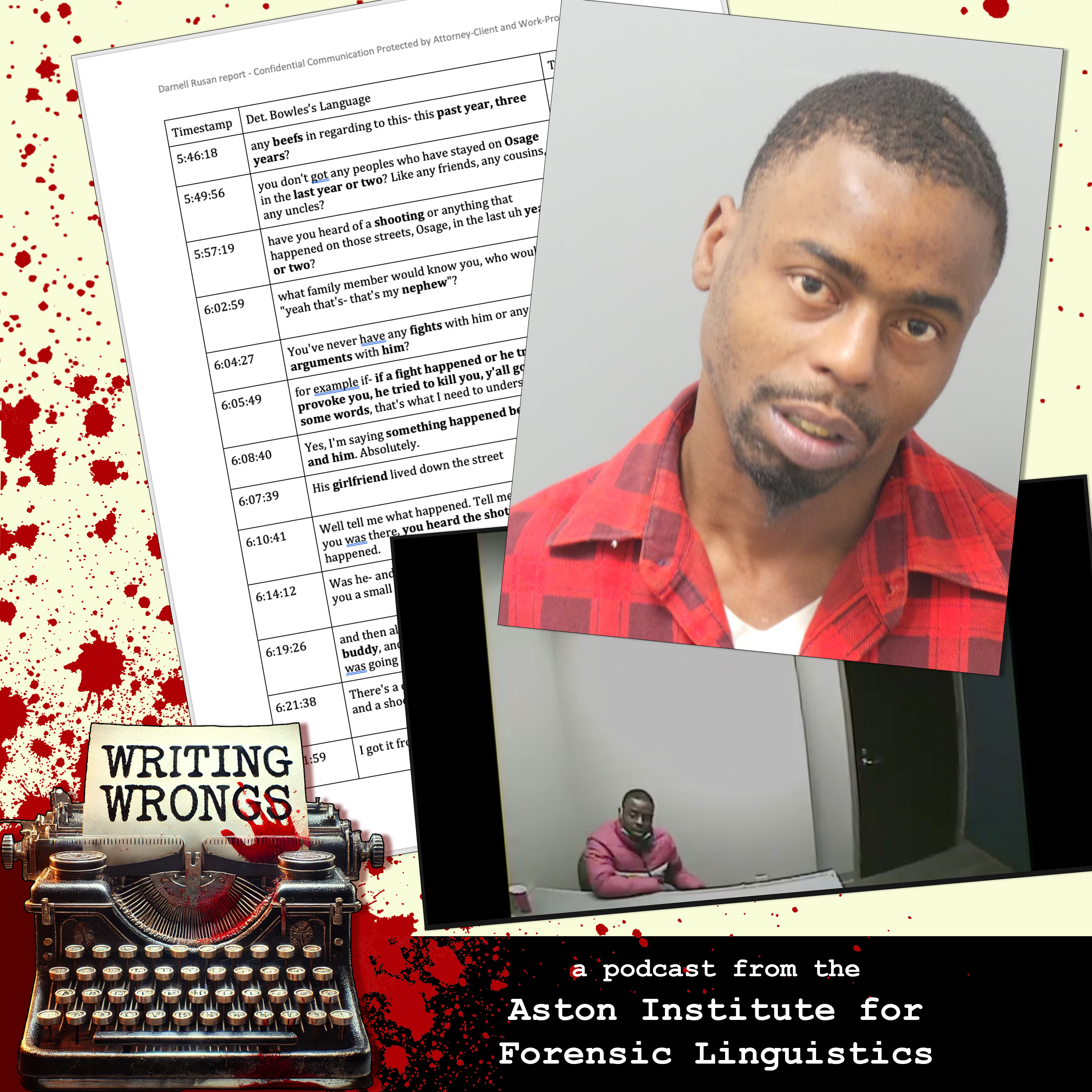
* Warning: This episode contains descriptions of murder * Most people could never dream of admitting to something they didn’t do, especially when it comes to an accusation as heinous as murder. Donte Parker’s murder remains unsolved. If you have any information on this case, please visit https://slmpd.org/tips/ to submit an anonymous tip. For a list of our sources and more information about the case please visit: https://www.aston.ac.uk/writing-wrongs Have a question for Nicci or Tim? Email us at writingwrongs@aston.ac.uk and we may answer it during an upcoming episode! Check out the official AIFL blog for more forensic linguistic goodies here: https://medium.com/@AIFLblog If you have been affected by any of the themes in this week’s episode, please contact one of these free sources: https://www.samaritans.org/how-we-can-help/contact-samaritan/ https://www.helpguide.org/find-help Production Team: Sam Cook, Jordan Robertson, Neus Alberich Buera Sound: Sam Cook Visual design: George Grant Additional Voices: Sam Cook With our thanks to Dr Marlon Hurt Case Resources: https://gunmemorial.org/2019/12/09/donte-parker https://www.gunviolencearchive.org/incident/1568077 https://slmpd.org/tips/