Skip to content
Artwork for WPI News

WPI News

WPI

WPI Latest News

Play
  • 20 episodes
  • English
  • September 30 · length unknown

    Seeking Clues to Problems in Tiny Hearts

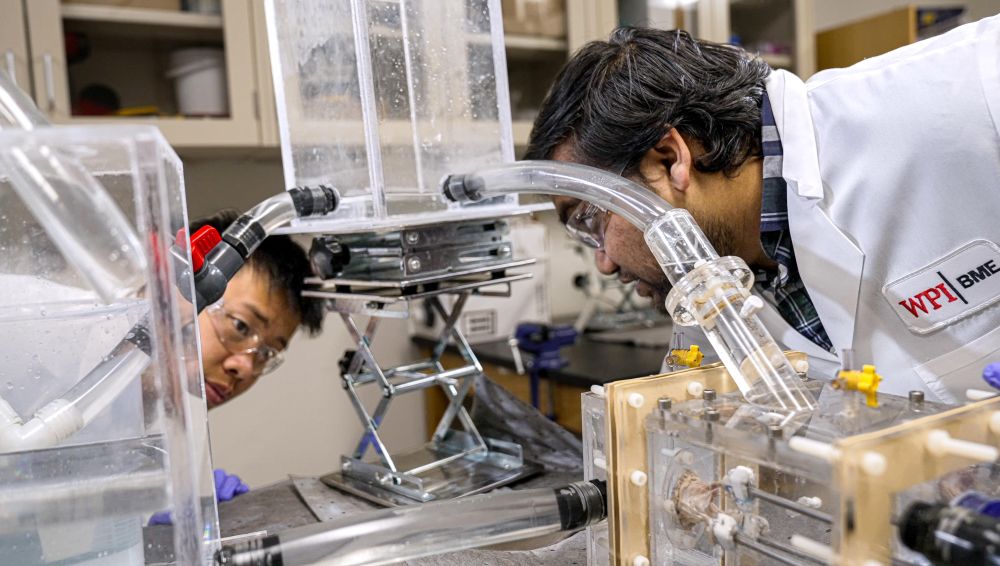
    Worcester Polytechnic Institute researcher Zhenglun “Alan” Wei is aiming to improve prenatal diagnosis of the most common cardiac birth defect by going with the flow … of blood in tiny hearts. Wei, an assistant professor in the Department of Biomedical Engineering, is leading a four-year project funded with $2,915,519 from the National Institutes of Health to develop a personalized model that will use detailed blood flow information collected from noninvasive tests to detect obstructions of the aorta in fetuses. The project aims to improve prenatal testing so that doctors can spot problems in the aorta, a large blood vessel that carries oxygen-rich blood from the heart to the body, before a baby is born and recommend treatments. Current testing relies on anatomic information, rather than blood-flow data, to assess fetal heart health. “Standard prenatal testing and even specialized imaging often fail to detect anatomical problems in the fetal aorta,” Wei says. “By integrating detailed blood flow parameters, we will give doctors a more precise tool to use when diagnosing congenital heart defects.” Wei is working on the project with Professor Zhongqiang Zhang and Associate Professor Fangfang Wang, both of WPI’s Department of Mathematical Sciences, and Dr. Shuping Ge, a pediatric cardiologist and researcher with the Geisinger healthcare system in Pennsylvania. The researchers are focusing on a specific condition called coarctation of the aorta, which involves a narrowing, or pinch, in the aorta as it leaves the heart. Coarctation of the aorta restricts blood flow to the body and forces the heart to work harder to pump blood. The condition accounts for an estimated 6% to 8% of all cardiac birth defects. Diagnosing coarctation of the aorta, especially before birth, can be challenging. Standard ultrasound testing and specialized echocardiograms, noninvasive tests that use sound waves to create images and generate data about a fetus, often fail to detect anatomical and blood flow abnormalities in a developing heart. In addition, ultrasound-based tests sometimes falsely suggest that an abnormality is present even when no such defect exists. If not diagnosed early and repaired with surgery, infants with coarctation of the aorta can suffer lifelong health problems, such as high blood pressure, or even die. The researchers led by Wei will improve detection by building a digital twin model, a viewable digital replica of an individual patient’s cardiovascular system. The model will integrate multidimensional, patient-specific data to support clinical decision-making, including assessment of whether a fetal heart defect is present. The team will build their model using fetal heart data collected at more than 15 cardiology programs across North America that are part of the Fetal Heart Society. The database includes information collected during two-dimensional and three-dimensional ultrasound tests that were performed on hundreds of racially and ethnically diverse pregnant women, including some whose babies were confirmed after birth to have heart defects. Wei and his team have already used information in the database to create a model that represents blood flow in healthy fetal hearts. Going forward, the team will build its new model by focusing on measurements that reflect force on fetal blood vessel walls, pressure and flow through a narrowed fetal artery, and the resistance that can occur when freshly pumped blood collides with other blood in a vessel. The researchers will then test the accuracy of their model in laboratory experiments using 3D-printed silicone models of fetal aortas, fluid, and pumping mechanisms. Finally, data from the Geisinger database will be used to evaluate blood flow metrics for better diagnosis of aorta narrowing in the future. The work builds on Wei’s development of computational and experimental models for blood flow mechanics. His fetus-related research has been supported by the American Heart Association’s Second Century Faculty Independence Award and the National Institute of Biomedical Imaging and Bioengineering Trailblazer Award, prestigious honors recognizing the innovation, significance, and potential clinical impact of his work. He also has collaborated on research to develop pediatric medical devices and 3D-printed blood vessels for heart bypass surgery. Wei says that development of a validated digital twin model for coarctation of the fetal aorta will lay a solid foundation for future human studies that could lead to more accurate screening tools and better health outcomes for children with the birth defect. “Surgeons can repair many heart problems in babies, but the first, and most important, step is detecting problems,” Wei said. “The earlier we can identify a condition, the more time clinicians and families have to plan for the baby’s care. The goal of my lab is to improve the detection and treatment of cardiovascular disease and, ultimately, to help ensure that patients receive the right care at the right time.”
  • September 23 · length unknown

    New National Rankings Recognize Strength of WPI’s Immersive STEM Education

    Worcester Polytechnic Institute (WPI) has moved significantly higher in the latest U.S. News & World Report rankings, entering the top 75 national universities at No. 73, and ranking No. 42 among the nation’s 1,500 private colleges surveyed. The gains reflect WPI’s continued focus on strong student outcomes through immersive STEM education and purpose-driven learning and research. W.P.I. also earned high marks in several areas central to the student experience, ranking No. 6 in the nation for senior capstone projects, No. 13 for co-ops and internships, and No. 50 among the nation’s most innovative schools. It also ranked No. 58 on the Best Value Schools list. The university was further recognized with new or improved rankings for its undergraduate programs in teaching (No. 49), engineering (No. 57), computer science (No. 65), and business (No. 176). “This recognition reflects the strength of a W.P.I. education and, most importantly, the accomplishments of our students, faculty, staff, and alumni,” said WPI President Grace Wang. “Our students learn by applying knowledge to meaningful challenges, working across disciplines, and developing the skills and character to lead responsibly. Those experiences prepare them to make an impact from the moment they graduate.” Hands-on learning has been at the center of WPI’s educational model for more than half a century. Every undergraduate completes projects throughout their time at WPI, including three substantial academic projects—similar to a capstone or co-op—each with a distinct focus and purpose. Students frequently work in teams and collaborate with community or corporate partners at more than 50 project centers around the world to address specific challenges with real-world relevance. Beyond these signature experiences, nearly two-thirds of WPI alumni report completing project work in at least half of their undergraduate courses. That repeated, hands-on learning helps students build the technical expertise, collaboration and communication skills, adaptability, and sense of purpose needed for a rapidly changing world. In WPI’s most recent alumni survey, 93% of respondents said their project experiences enhanced their ability to work effectively on a team, while 88% said the approach helped them develop stronger personal character. Other national rankings have underscored the long-term value of a WPI degree. That recognition echoes a March 2025 U.S. News & World Report ranking that placed WPI No. 18 among Colleges with the Best Return on Investment, citing an independent estimated 40-year return on investment of $3.4 million for a W.P.I. education, measured in 2023 dollars. The latest rankings build on WPI’s broader record of preparing graduates to succeed in their careers and contribute to their communities. That record also includes WPI’s designation as an R1 university in the Carnegie Classification of Institutions of Higher Education, recognized as the highest level of research spending and doctorate production. While rankings represent only one measure of a university’s impact, WPI’s recognition across several categories underscore the value of an education that connects rigorous academics and high-impact research with immersive experience, innovation, and purpose.

  • September 23 · length unknown

    WPI’s Model of Academically Rigorous Project-Based Education Taking Root in Paraguay

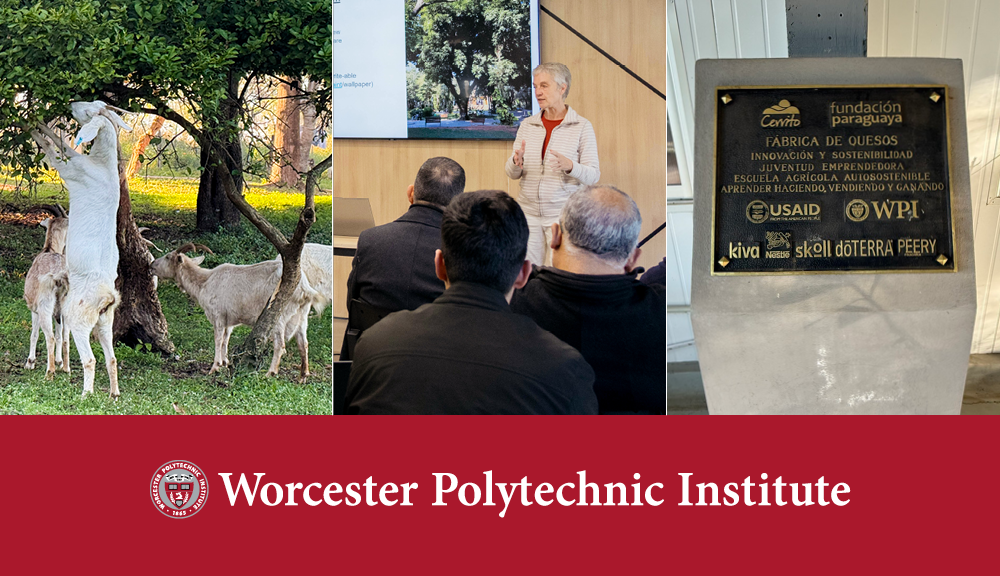
    For decades WPI has been showing educators how to incorporate hands-on projects into coursework, knowing that when students work on real-world problems, the lessons they learn in the classroom are more likely to stick. Over the summer Kris Wobbe served as a Fulbright Specialist in Paraguay, where she was invited to help with a reverse concern: strengthening the academic rigor and classroom engagement in schools that already have a solid hands-on component. Through this global educational partnership, Wobbe—the director of WPI’s Center for Project-Based Learning and interim dean of The Global School—planted a seed that her hosts hope will grow into improved academic and career outcomes for students at three high schools run by the Paraguay Development Foundation, that country’s largest nonprofit organization. Hands-on work is already part of the model at these schools, where students live on site and run a hotel, a farm, and other businesses as part of their coursework. Graduates leave with a technical certification with specialties in areas such as hospitality, agriculture, or forestry, as well as a standard high school diploma. Wobbe’s efforts as a Fulbright Specialist focused on strengthening the academic foundation of that diploma to help launch graduates further. “The underlying mission of these schools is to teach the students the skills and abilities that are going to raise them out of poverty,” Wobbe says. “They see project-based learning as providing them with the skills of leadership and handling ambiguous situations and critical thinking and problem solving—while also helping to make that learning stickier.” WPI’s own data backs up Wobbe’s point: 91% of respondents to the 2021 survey of WPI alumni said that high-quality project work helped them develop a strong base of knowledge, even when the projects were in areas other than their major. One way that project-based learning contributes to students mastering academic content, Wobbe says, is by making concepts taught in classrooms less abstract. For example, the Cerrito Agricultural School, where she stayed during her time in Paraguay, has goats and cows. Some students are now beginning to work on a project that will explore ways to increase the milk yield from those animals. Not only will that project give students opportunities to practice building and testing scientific hypotheses, it will also “demonstrate the value of what they’re learning in their academic classes by having it tied to the success of the school itself,” says Wobbe, noting that the tuition-free school is self-sustaining, meaning it receives no funds from the Paraguayan government. “It matters how much milk they produce because that pays the teachers. It pays for their food. It pays for their electricity.” That direct connection between students’ technical work and the existence of the school makes project-based learning a natural fit at Cerrito and the other two schools run by the Paraguay Development Foundation, says Martin Burt, the foundation’s director and co-founder, as well as a distinguished visiting professor of entrepreneurship and social innovation in WPI’s School of Arts and Sciences. “We’ve shown that education can pay for itself through our practical activities. Now we want to prove that a school like ours, that serves ultra poor students, can also have gold standards in academics,” he says, adding that he wanted to incorporate WPI’s project-based learning model into the academic curriculum of the Foundation schools because of how highly “WPI is respected and trusted.” Students, faculty, and administrators at the Cerrito Agricultural School are already familiar with the basic PBL model, thanks to the Asunción, Paraguay, Project Center, which has been hosting WPI students working on their Interactive Qualifying Projects since 2014. And for the last few years, Cerrito students have used the Experiential Robotics Platform, which WPI helped develop, in their STEM classes. Now, thanks to the partnership established through the Fulbright program, local faculty have begun incorporating Wobbe’s recommendations to more fully integrate project-based learning into the academic curriculum at the Cerrito Agricultural School. Once WPI’s approach to blending theory and practice firmly takes root there, Burt and others from the Foundation will cultivate the concept at their two additional schools, helping the model that started in Worcester spread throughout Paraguay.

  • September 22 · length unknown

    Training Undergraduate Researchers

    WPI researcher Solomon Mensah has been awarded a three-year grant of $532,935 from the National Institutes of Health to provide research experiences to undergraduates who will work on projects determining how sepsis, a life-threatening infection, can trigger severe blood clotting. Mensah, an assistant professor in the Department of Biomedical Engineering, will offer students opportunities to do course-related research projects, individual research work, and Major Qualifying Projects, capstone projects that all WPI undergraduates must complete to graduate. The goal of the research is to determine the molecular mechanisms that link sepsis-induced inflammation to clotting that can potentially block blood vessels and lead to stroke. “As a first-generation student from Africa, I benefitted academically and professionally from mentors,” Mensah says. “Mentors guided me as I prepared for doctoral studies and shaped my path as a researcher. I want to pay these experiences forward to students by mentoring them and offering them meaningful opportunities to conduct research.” Sepsis is a systemic infection that causes widespread inflammation and dysfunction in the body, including damage to the endothelial cells that line blood vessels. Mensah’s team will define the molecular mechanisms that degrade glycocalyx, a protective coating on healthy endothelial cells, during a systemic infection. They also will identify components that ordinarily tether a protein called von Willebrand factor to healthy endothelial cells. During infection, von Willebrand factor detaches from endothelial cells, circulates in the blood, and recruits blood cells known as platelets, which can drive the development of clots. Finally, Mensah and student researchers in his lab will determine if it is possible to rescue a damaged glycocalyx barrier, a step that could pave the way for sepsis treatments. The project builds on Mensah’s research into the role of the glycocalyx in heart and lung disease. Mensah is a fellow of the American Heart Association and has worked on the development of low-cost medical devices for healthcare in low- to middle-income countries. The project is one of several new research initiatives launched at WPI with funding from the NIH’s Academic Research Enhancement Award program, which supports research training for undergraduate students. Mensah expects his award will provide research opportunities to 12 WPI undergraduates. “These projects supported by the NIH provide excellent training for students while also advancing fundamental understanding of human health,” Mensah says. “The work will establish an educational pipeline at WPI, enabling us to train students in biology and train the next generation of biomedical engineers.”

  • September 17 · length unknown

    Could Nature Help Turn Industrial Waste into a New Source of Rare Earths?

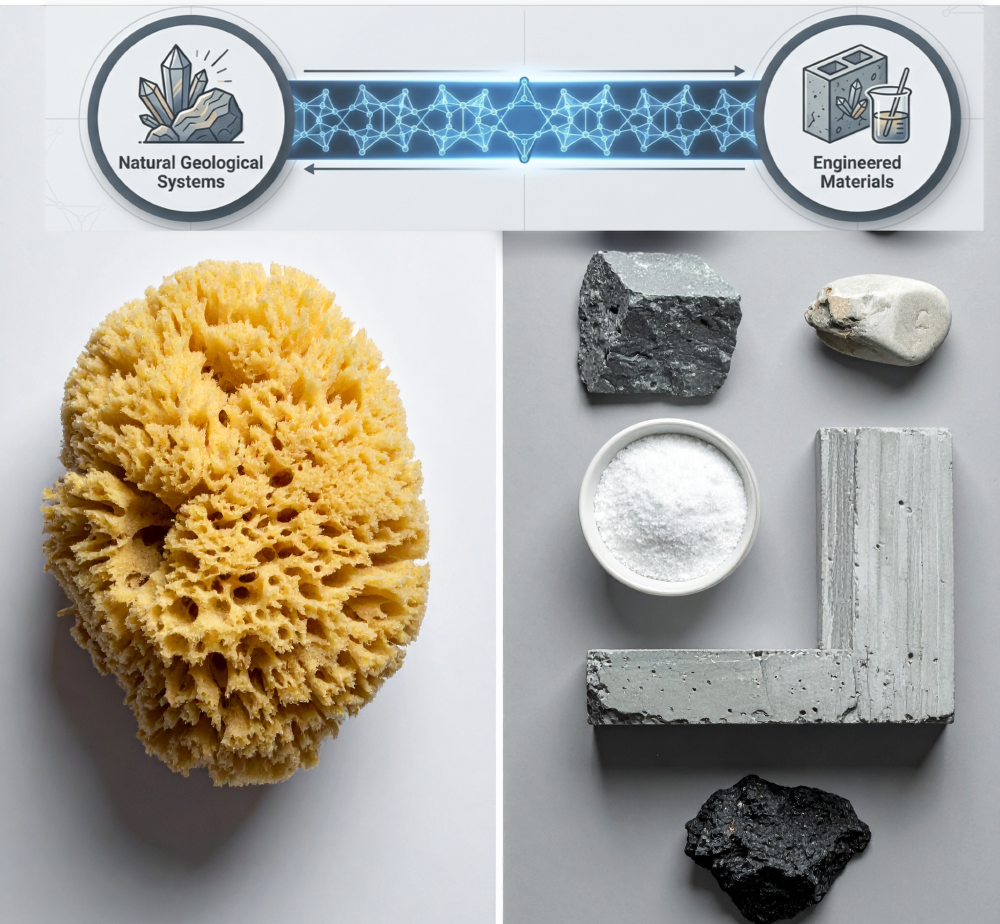
    Coal ash, red mud, and mine tailings are typically viewed as environmental liabilities. But locked inside these massive waste streams are valuable silica, rare earth elements, and other critical minerals. A Worcester Polytechnic Institute (WPI)-led research team has received a $3.3 million award from the National Science Foundation’s Growing Convergence Research program to explore whether lessons from diatoms, sea sponges, and plants could help recover those resources using less energy and fewer harsh chemicals. The five-year, two-phase project is led by Mingjiang Tao, associate professor in the WPI Department of Civil, Environmental, and Architectural Engineering, with Professors Carrick Eggleston and Yan Wang serving as co-principal investigators. Researchers from George Mason University, the University of California San Diego, the University of Massachusetts Amherst, and the University at Buffalo will also be involved. “Recovering critical minerals is only part of the opportunity,” Tao said. “We want to develop a process that uses as much of each waste stream as possible, separating strategically important elements while converting the remaining material into useful products. That whole-material approach could fundamentally change how industries manage waste and obtain essential resources.” The research addresses two interconnected challenges. Producing many silicon-derived materials used in concrete, glass, ceramics, semiconductors, and silicones can require high temperatures, substantial energy, and intensive chemical processing. At the same time, industries generate enormous quantities of silicon-rich waste, including coal ash residue, red mud, mine tailings, concrete debris, waste glass, and metallurgical slag. Much of this waste is stored in landfills, ponds, impoundments, and large waste piles, even though it contains valuable silicon, critical minerals, and rare earth elements (REE). For example, the estimated 11 million tons of REEs trapped in U.S. coal ash landfills is worth $8.4 billion—nearly eight times the nation’s current raw domestic reserves. These materials are essential for electronics, clean-energy technologies, transportation, and national security. The researchers will look to nature for possible solutions. Diatoms, sea sponges, and certain plants use biological molecules and organic scaffolds to capture dissolved forms of silicon and assemble them into intricate silica structures under relatively mild conditions. By adapting these mechanisms, the team aims to develop lower-energy methods that break down the silica-rich components of industrial waste, convert the silica into useful materials, and free rare earth elements and other critical minerals trapped within the substances. The project brings together expertise in biology, geochemistry, materials science, metallurgy, engineering, computational chemistry, and artificial intelligence. Researchers will use advanced computational modeling and artificial intelligence to design specialized biomolecules, predict how those molecules will interact with silicon-rich waste, and accelerate the identification of promising pathways for mineral recovery and materials manufacturing. As lead principal investigator, Tao will oversee the project’s management and coordination while leading research on biosilicification, the process through which organisms form silica materials, and bio-enabled metallurgy for recovering rare earth elements from silicon-rich wastes. Eggleston, a professor in the Department of Civil, Environmental, and Architectural Engineering with expertise in geochemistry, will lead efforts to identify, understand, and optimize the chemical reactions involved in breaking down and rebuilding silicate materials. His work will examine the pathways and reaction rates associated with silicate dissolution, repolymerization, carbonation, glass formation, and silicone synthesis. Wang, the William B. Smith Professor of Mechanical and Materials Engineering and a widely recognized pioneer in battery recycling and sustainable manufacturing, will lead the development of bioengineered processes for recovering rare earth elements and other critical minerals. The team will also evaluate the economic and practical feasibility of scaling the technologies for industrial applications. If successful, the research could create new pathways for transforming large volumes of industrial waste into marketable products, reducing reliance on newly mined resources, lowering the environmental footprint of materials production, and strengthening domestic supplies of critical minerals and rare earth elements. WPI graduate and undergraduate students will be involved in the multiyear project as part of the university’s immersive STEM experience. The interdisciplinary research sits at the intersection of sustainability, biotechnology, materials science, data science, and artificial intelligence. This project also aims to cultivate a broader bioengineered, silicon-based materials ecosystem by connecting researchers, industry partners, policymakers, educators, and future innovators across disciplines and sectors.

  • September 16 · length unknown

    NSF Awards $2 Million to WPI for Student Scholarships and STEM Programs

    The National Science Foundation has awarded $2 million to Worcester Polytechnic Institute for scholarships and mentoring aimed at improving the retention and graduation rates of low-income undergraduate and graduate students in the fields of robotics, smart infrastructure, and advanced manufacturing. The funding will support scholarships for 70 high-performing students, including transfer students from regional community colleges and the University of Puerto Rico Mayagüez, and contribute to national efforts to increase the size of the U.S. workforce in science, technology, engineering, and mathematics. “It is important to give students from all backgrounds the opportunity to contribute to STEM fields,” said Cagdas Onal, associate professor and head of the Department of Robotics Engineering, who will lead the project as principal investigator. “If we remove the financial constraints that make it difficult for students to devote themselves to learning, those students will be able to graduate at higher rates, succeed in STEM careers, and live as productive citizens.” Onal will collaborate with a team of faculty from across WPI, including three co-PIs: Berk Calli, associate professor of robotic engineering; Gillian Smith, professor in the Department of Computer Science and director of WPI’s Interactive Media and Game Development Program; and Yunus Telliel, director of Great Problems Seminar program and assistant professor in the Department of Humanities and Arts and Interactive Media and Game Development Program. Other faculty members who will be involved are Professor Carrick Eggleston, Associate Professor and Director of Sustainability Paul Mathisen, and Nima Rahbar, the Ralph H. White Family Professor and department head, all of the Department of Civil, Environmental, and Architectural Engineering; Professor Pratap Rao of the Department of Mechanical and Materials Engineering; Professor Sarah Strauss of the Department of Integrative and Global Studies; and robotics engineering Professor Jing Xiao. The team will seek applicants who are studying in four fields: robotics engineering; mechanical and materials engineering; civil, environmental, and architectural engineering; and interactive media and game development. Scholarships will be available for undergraduates who are recipients of Pell Grants, a form of federal financial aid, and graduate students who can demonstrate financial need. “Pell-eligible students have lower retention and graduation rates than other four-year undergraduates,” said Smith. “Scholarships will help lift a financial burden for these students, while supporting them in pursuing exciting, interdisciplinary opportunities in design that open doors for a wide variety of internships and future career pathways.” To recruit transfer students, the team will seek applicants at Quinsigamond, Mount Wachusett, Berkshire, Holyoke, and MassBay community colleges in Massachusetts, as well as Northern Essex and Manchester community colleges in New Hampshire. WPI already has transfer partnership agreements with some of the colleges to ease students’ transfer to WPI. In addition to awarding scholarships, the team will develop and offer students programs that build on WPI’s strength as a leader in project-based learning, including the Great Problems Seminar. Faculty members will mentor students as they complete interdisciplinary projects at different levels. Participants will have access to WPI’s summer educational programs, and the faculty team will partner with companies and nonprofit organizations to provide internship opportunities for students. “All students at WPI must complete research projects focused on real-world problems to graduate, and our programs will enable students to shape those required projects into multiyear, interdisciplinary collaborations that can help pave the way for their future careers,” said Calli. “We place great importance on empowering students to make a positive impact in their communities, and this program will provide many such opportunities, from assistive robotics in healthcare to solutions in waste management.” WPI has previously received funding from NSF for similar initiatives aimed at supporting low-income students and building the STEM workforce. The university was awarded $2.5 million in 2023 for scholarships and programs that are still under way for computer science undergraduates. Earlier initiatives focused on students in renewable energy fields and on undergraduates who were the first in their families to attend college. The new program will examine how a coordinated set of interventions can help talented students from low-income backgrounds succeed at WPI. Telliel said the insights will be especially important in the rapidly changing fields of robotics, smart infrastructure, and advanced manufacturing. “Technological change requires us to broaden our understanding of the capabilities essential to STEM,” Telliel said. “Students who can link technical design with human experience and social impact will shape the future workforce in technology and engineering. By cultivating those capabilities throughout the undergraduate education, this project will identify effective ways to help more students thrive while generating insights that can be shared with universities across the country.”

  • September 15 · length unknown

    NIH Grant Supports Research into Neuroscience of Sex Differences

    Why do men and women often respond differently to the same drug, the same stress, or the same brain condition? Worcester Polytechnic Institute (WPI) neuroscientist Jagan Srinivasan has been awarded $554,599 from the National Institutes of Health (NIH) for a three-year project that looks to an unlikely source for answers: a soil-dwelling worm the size of an eyelash. Srinivasan, a professor in the Department of Biology and Biotechnology and director of WPI’s Neuroscience program, will investigate how Caenorhabditis elegans, or C. elegans—a nematode with a nervous system so simple that scientists have mapped every one of its roughly 300 neurons—responds to a pheromone that normally signals mating opportunities. C. elegans has two biological sexes: males and self-fertilizing hermaphrodites. Even with nearly identical brain wiring, however, male and hermaphrodite worms respond differently to the same mating pheromone. Srinivasan’s lab will study how worms learn to avoid this pheromone and how serotonin—the same brain chemical that helps regulate mood in humans—can dial that avoidance behavior up or down depending on sex. “Brain disorders can be difficult to treat,” Srinivasan says. “One challenge is that the activities of our brain are regulated by more than one chemical at a time. Understanding these signals and why sex differences may determine human reactions could help us build the next generation of drugs for human brain disorders.” The project focuses on neuropeptides, small molecules that act as chemical messengers in the brain, and how they enable two versions of essentially the same neural circuit to produce two different behaviors. It’s a question with implications beyond worms. Many human psychiatric and neurological conditions, from depression to anxiety disorders, show sex-based differences in treatment response, and the underlying biology remains poorly understood. The work builds on Srinivasan’s research using C. elegans to study how the nervous system detects, interprets, and transmits olfactory information that influences behavior. He received the WPI Board of Trustees Award for Outstanding Research and Creative Scholarship in 2020, and his work has been published in journals such as Nature Communications. Srinivasan’s project is one of several that are launching in WPI labs thanks to recent NIH awards for research into blood clotting, robotic surgery, proteins, lead poisoning, fibroids, and traumatic brain injury. The NIH funding to Srinivasan comes from a program that specifically aims to make research activities available to undergraduates. “One of the distinctive features of a WPI undergraduate education is the opportunity to get involved in real research,” Srinivasan says. “Students will learn about how to do this research, but they will also learn that research is a process of failing, troubleshooting, and moving forward, which is a way of working that is just as important as doing the experiments.”

  • September 9 · length unknown

    Jamal Yagoobi Receives Highest Honor in Drying Science

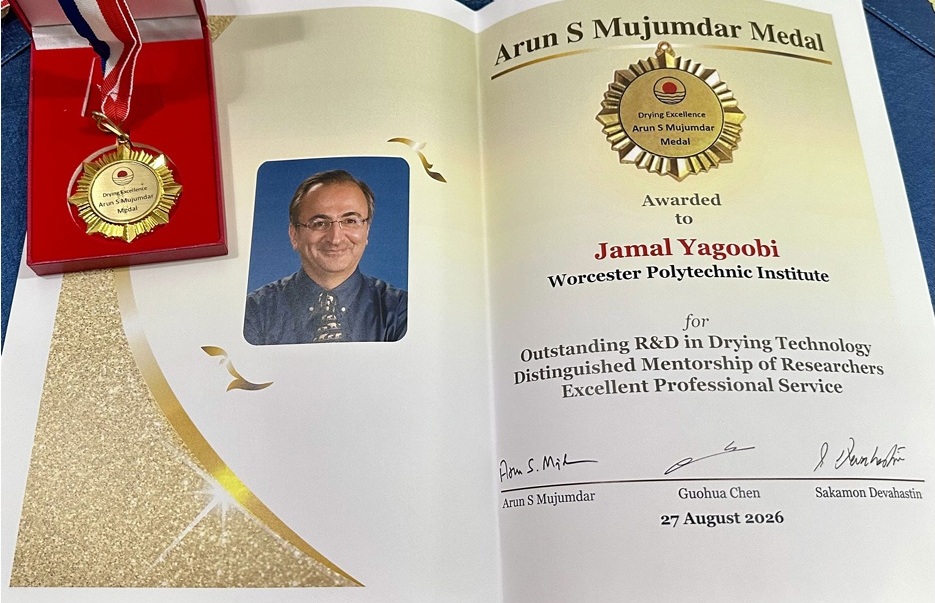
    Jamal Yagoobi, the George F. Fuller Professor in Worcester Polytechnic Institute’s Department of Mechanical and Materials Engineering, has received the Arun S. Mujumdar Medal, considered the highest international honor in the field of drying science and technology. Yagoobi received the award during the 24th International Drying Symposium (IDS), held recently in Paris. IDS is the world's leading global forum for advancing the science, technology, and energy efficiency of industrial drying and dewatering. Yagoobi was recognized for his outstanding research and development in drying technology, distinguished mentorship of undergraduate and graduate students, leadership of WPI’s Center for Advanced Research in Drying (CARD), and exceptional service to the global drying community. The recognition reflects Yagoobi’s decades of work developing technologies that improve heat and mass transfer, reduce energy consumption, and make industrial drying more efficient and sustainable. Yagoobi’s research spans heat transfer, fluid mechanics, thermodynamics, liquid/vapor phase change, and electrohydrodynamics (EHD), the study of the motion of electrically charged fluids. In June, he received the Lifetime Achievement Award from the Electrostatic Society of America for his work in EHD. Yagoobi is also the founding director of CARD, an industry-university research center led by W.P.I. with the University of Illinois Urbana-Champaign as a partner site. Founded in 2016, CARD is the first research center in the United States devoted to drying moist, porous materials, including food and agricultural products, paper and forestry products, chemicals, textiles, and biopharmaceuticals. Through CARD, WPI has established itself as a national leader in advanced drying research. Faculty, students, and industry partners work together to develop and test technologies that can lower energy use, reduce emissions, improve product quality, and strengthen the competitiveness of U.S. manufacturers. Industrial drying is an essential but often overlooked part of manufacturing. It is used to produce everything from food and paper to chemicals and pharmaceuticals and accounts for an estimated 1.2% of total U.S. energy consumption. Much of the equipment currently used by manufacturers relies on older, energy-intensive technology, creating significant opportunities for innovation. W.P.I. researchers are exploring alternatives that include laser-based drying, ultrasound, infrared energy, advanced jet nozzles, dielectrophoresis, and smart sensors. Yagoobi currently leads a $3.5 million project, sponsored in part by the U.S. Department of Energy and Massachusetts Clean Energy Center, focused on using lasers to improve industrial drying and reduce greenhouse gas emissions associated with food, pulp, and paper production.

  • September 3 · length unknown

    WPI Researchers Receive NSF CAREER Awards

    Worcester Polytechnic Institute faculty members Fatemeh Ganji and Fanglin Che have been awarded National Science Foundation CAREER Awards for five-year research projects that will lead to breakthroughs in cybersecurity as well as electrochemical technologies guided by artificial intelligence. Ganji, an associate professor in the Department of Electrical and Computer Engineering, will use an award of $624,083 to develop cybersecurity approaches that will protect privacy on AI devices and operate at the edge of networks, such as wearable health monitors. Ganji will focus on vulnerabilities in AI hardware, known as accelerators, that leave devices vulnerable to malicious actors. Che, an associate professor in the Department of Chemical Engineering, was awarded $637,801 to develop a framework that will use AI and data-driven simulation to reveal how small organic molecules known as self-assembled organic ligands influence catalytic reactions during processes that capture carbon dioxide and electrochemically convert it to fuels and other valuable chemicals more efficiently. “CAREER Awards recognize the promise of early-career researchers and provide critical support as they cement their credentials as experts and innovative thinkers in their fields,” said Bogdan Vernescu, WPI vice president and vice provost for research and innovation. “I am delighted to congratulate Fanglin Che and Fatemeh Ganji on this recognition.” The NSF’s Faculty Early Career Development (CAREER) Program offers its prestigious awards to faculty members who have the potential to serve as role models in research and education. The awards also help faculty members build a foundation for a lifetime of educational and research leadership. WPI’s faculty includes more than 40 individuals who have been recognized with CAREER Awards. Ganji’s CAREER project will focus on privacy-preserving neural networks (PPNN), a type of AI that is designed to function on AI chips without revealing sensitive data to unauthorized parties. She will develop approaches to thwart three types of attacks: backdoor attacks that insert malicious functionality into AI chips; side-channel attacks that leverage inevitable information leakage, such as power consumption, to infer private information; and fault-injection attacks that physically alter hardware to extract data. “AI accelerators are in devices everywhere, from home security cameras to hospital treatment rooms,” Ganji said. “Privacy-preserving accelerators on those devices have been considered secure and private, but research at WPI has uncovered potential vulnerabilities that should be explored and addressed so that users can be assured of privacy.” Ganji joined the WPI faculty in 2020. She earned her PhD from the Technical University of Berlin and was a postdoctoral associate at the Telecom Innovation Laboratories/Technical University of Berlin and the University of Florida. Her research focuses on interdisciplinary approaches to machine learning and cryptography for the design and evaluation of security-critical hardware. Che’s CAREER project will focus on developing an AI-enabled, multiscale simulation framework that will help explain how self-assembled organic compounds attached to metals can speed up and improve carbon capture and electrochemical conversion processes. The research will establish predictive design principles linking molecular-scale interactions to catalytic performance and create new AI-enabled tools for accelerating catalyst discovery, reaction optimization, and scientific understanding of complex chemical systems. “The overarching goal of this research is to develop a physics-integrated and interpretable AI framework that can predict how molecular interfaces control carbon capture and conversion reactions,” Che said. “Simulations, when validated by real-world experiments, can help researchers find the materials and processes that will accelerate catalyst discovery and reaction optimization.” Che, who joined the WPI faculty in 2025, focuses her research on using AI to guide the design of energy-saving catalysts and catalytic technologies. She received her PhD at Washington State University and did postdoctoral research at the University of Toronto and the University of Delaware. Both Ganji and Che will integrate new opportunities for student learning into their projects. Ganji will participate in WPI programs aimed at students in grades 9–11, work with undergraduates to perform and publish research, and advise undergraduate teams working on capstone projects that all WPI undergraduates undertake as part of their degrees. Che will develop hands-on demonstrations for K–12 students, launch a new graduate-level course on applied machine learning in engineering, and bring lectures on computational electrocatalysis and machine learning to her YouTube channel.

  • August 25 · length unknown

    WPI Awarded $2 Million to Expand Medical Robotics Innovation and Training

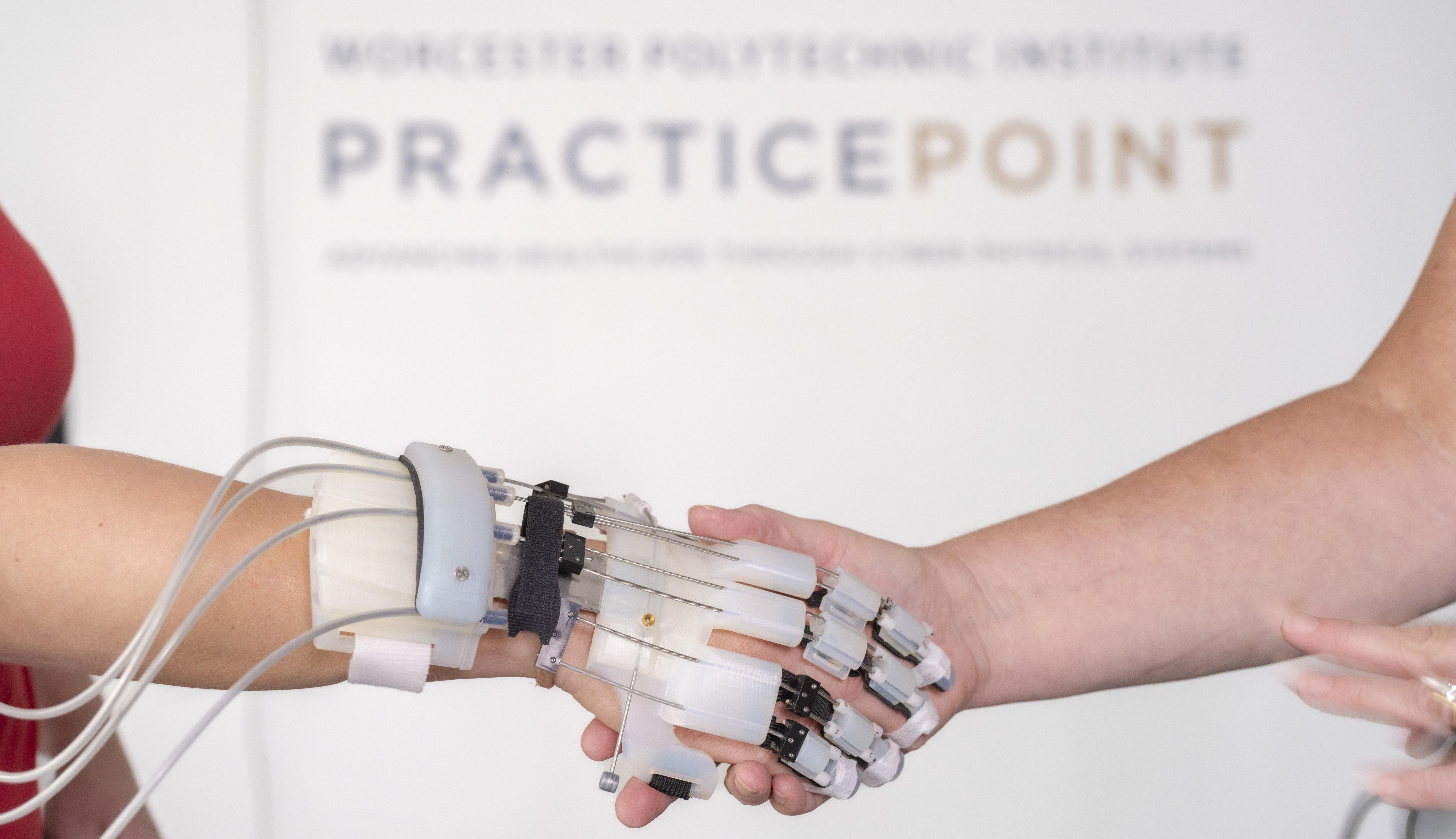
    Worcester Polytechnic Institute (WPI) has received $2 million from the Healey-Driscoll administration to expand PracticePoint and create a Medical Innovation and Training Center focused on advancing medical robotics. The award is part of $6.6 million in grants announced through the Massachusetts Technology Collaborative’s RoboBench program. The statewide initiative is designed to give robotics companies and researchers access to the specialized facilities, equipment, and resources needed to test technologies, prepare prototypes for manufacturing, and bring new products to market. WPI will develop the center in partnership with UMass Chan Medical School. It will provide specialized space for developing and testing medical robotics, while creating closer connections among engineers, entrepreneurs, and clinicians. The center will also support hands-on training for nurses and medical residents using robotic technologies. “State support is essential to building the shared research infrastructure that transforms promising ideas into technologies capable of improving lives,” said Andrew Sears, WPI senior vice president of academic affairs and provost. “This investment will draw on the complementary strengths of WPI and UMass Chan Medical School, help address a critical gap in medical robotics commercialization, and strengthen Central Massachusetts’ role in the commonwealth’s innovation economy.” PracticePoint is WPI’s life sciences training and research and development facility, offering clinical spaces and expertise for the design, prototyping, testing, and real-world evaluation of health technologies and surgical innovations. "This funding will enable PracticePoint to evolve into a Medical Innovation and Training Center, providing the unique environments and capabilities needed to develop, evaluate, and demonstrate medical robotic technologies. It will also facilitate clinical adoption of these new technologies, ultimately enabling the transformation of patient care through medical robotics,” said Liaohai Leo Chen, director of PracticePoint. “Just as importantly, the new center will bring innovators into closer collaboration with clinicians and provide nurses and medical residents with hands-on experience using emerging robotic systems. That feedback and training are critical to ensuring new technologies work effectively in real healthcare settings.” Read the Healey-Driscoll administration’s full funding announcement.

  • August 20 · length unknown

    Learning to Play the Long Game

    When Bella Perry visited WPI as a high school senior, her student tour guide talked about the cancer cell research she was working on. Perry was hooked. “I thought it would be so cool if I could do some meaningful research when I’m an undergrad. I didn’t really know that was a possibility,” says Perry ’28, a biology and biotechnology major who is now doing genetics research in Assistant Professor Karl-Frédéric Vieux’s lab. Her work examines how the expression of specific proteins involved in modifying RNA affects the embryonic development of tiny worms called C. elegans. The goal, Perry says, is that “whatever we find in this research can be applied to human women one day.” Because she’s long been interested in women’s health, Perry is thrilled to be contributing to research that could eventually benefit women. Now starting her junior year at WPI, she’s in awe when she looks back on the opportunities she’s had to develop her technical skills—and confidence—since A-Term of her first year. That’s when Perry was accepted into an extracurricular program originally called U-RISE@WPI, where she could learn about biomedical research as a career and get help finding research opportunities at WPI. She was over the moon to begin volunteering in Vieux’s lab. As someone who learns best by doing, she says, “I knew that if I wanted to make the stuff I was learning in lecture click with me, I needed to do hands-on work. Then I could make that connection in my brain and see the bio actually happening in real life.” Number crunching U-RISE@WPI was funded by a $1.6 million grant from the National Institutes of Health (NIH) in 2024. Perry and 24 other first-year students made up the program’s second cohort, and in spring 2025 she was one of three students selected to continue on and receive additional mentoring, a stipend for summer and academic year research, and tuition assistance for the next three years. Later that spring, though, the federal government canceled the entire U-RISE program, leaving colleges and universities around the country without funds to cover established undergraduate research training projects, including for Perry and five other WPI student participants chosen to work in biomedical labs. “But we believed in our program so much that we said, ‘We’re just going to keep doing this.’ And we actually expanded,” says Kristen Billiar, a professor in the Department of Biomedical Engineering and co-principal investigator (PI) on the original U-RISE grant. Another co-PI, Carissa Olsen, associate professor in the Department of Chemistry and Biochemistry, says, “We were basically in problem-solving mode: What are the most critical parts of this program, and how can we make them work knowing that we’re losing the financial support?” Billiar, Olsen, and their third co-PI, Elizabeth Ryder (a professor, now retired, in the Department of Biology and Biotechnology), decided the core of the program was mentoring. So they figured out how to continue that without the federal dollars, paring down their planned programming and focusing on facilitating career and research mentoring connections between faculty and students. WPI’s Office of Undergraduate Studies chipped in some administrative staff support, and the program’s faculty leadership provided funds to help make up for the summer research stipends that Perry’s cohort had been promised. Billiar, Olsen, and Amity Manning—an associate professor in the Department of Biology and Biotechnology who stepped into the co-PI role after Ryder’s retirement—also agreed to lead the program without the salary support they would have received from the grant. And over 45 faculty members in supporting roles agreed to volunteer their time. But funding for the biggest-ticket item in the original grant, annual tuition support for selected students for each of their last three years at WPI, was not replaced. Still, students already involved in U-RISE wanted to continue working with their faculty mentors, even without any financial support. And in fall 2025, the program—renamed CLIMB@WPI (for Coaching for Leadership, Innovation, and Mentoring in Biomedical Research)—received more applicants than ever before, so faculty agreed to accept larger cohorts going forward. Team building The mentoring program is best described through an extended sports analogy. It now accepts 30 first-year students into a “draft year,” which features resume workshops, research seminars, and “scouting lunches” with faculty members looking for undergraduate lab assistants. Participants are also assembled in groups of five with a faculty “coach” who leads informal group discussions and other enrichment activities. At the end of the academic year, draft year participants can apply to continue in the program as a “trainee”—four are selected annually. Trainees meet regularly with a dedicated faculty coach who serves as their advocate until they graduate. “I love using the term ‘coach.’ The idea is that somebody cares about these students, gets them together, listens to them—but also pushes them a little bit,” Billiar says. “It’s like going to Little League practice. It’s not that fun sometimes, especially if you’re striking out. But you still have to show up. You have to be there. And the coach is the one to motivate everyone to be there on practice days.” Olsen, who is co-vice president of Shrewsbury’s town softball program and has coached more than 50 seasons of various sports, knows a thing or two about building teams and motivating young people. “There are some students that are just going to be successful. We thought of them as your starting shortstop,” she says. “But then there are some students that could really use more help to become their best selves. We thought of them as the kid who says, ‘Oh, just put me in the outfield.’” The coach’s job, she adds, is to “identify that kid’s strengths and build them. Maybe they turn into an awesome outfielder—or maybe they’re a really good second baseman.” Olsen continues, “Thinking about the WPI students as a team, we don’t want to just support students that are going to be successful with no intervention. We want to support every student.” Strength training In CLIMB, that support involves sharing information about possible research opportunities, encouraging students to reach out to faculty whose research interests them, and challenging students to keep showing up—even when the work is demanding. It also involves creating an atmosphere where draftees and trainees feel comfortable talking to and learning from one another. Like all good coaches, Billiar remains optimistic. He has submitted a grant proposal for a new NIH undergraduate research training program that would allow much of CLIMB’s structure to continue and again provide funding for student tuition and stipend support. While he waits, he continues meeting regularly with his trainees, giving them a new professional development challenge each week. Perry, for one, appreciates the skills she is gaining from being challenged. Remembering the steps Billiar and Olsen encouraged her to take that led to her current position working with Vieux, she says, “They gave me the resources and the opportunity to do it myself. I wouldn’t have learned as much if they had just placed me in a lab.”

  • August 17 · length unknown

    Student Contributions Lead to New Fibroid Research

    Worcester Polytechnic Institute researcher Catherine Whittington is launching a new project to develop laboratory models for the study of uterine fibroids, and before work had even begun, WPI students had already played a critical role. The three-year project is built upon research that students, including one who was still in high school at the time, previously completed in Whittington’s lab. Now, with funding from a National Institutes of Health program that focuses on extending research opportunities to undergraduates, Whittington is expanding on the students’ findings to create models that could help researchers better understand and develop treatments for a disease that impacts millions of women. “The framework for this project was established by students who conducted studies, replicated their results, and did statistical analysis, all of which goes into rigorous scientific research,” said Whittington, an associate professor in the Department of Biomedical Engineering. “We have an opportunity to advance and expand their pioneering work.” Whittington will use a $555,371 grant from the NIH’s Eunice Kennedy Shriver National Institute of Child Health and Human Development to develop two laboratory models. Both will create tiny microenvironments for fibroid cells so that researchers can examine how cellular signals moving through stiff and inflamed tissue may affect the course of disease. Uterine fibroids are common benign tumors that grow within the muscular walls of the uterus. An estimated 70% to 80% of women develop uterine fibroids by the age of 50. For some, symptoms can be painful, and the disease can impact fertility. The only cure for uterine fibroids is hysterectomy. For researchers, fibroids are a ripe ground for study. The tumors respond to fluctuations in hormones and also are associated with obesity and inflammation. Some research has suggested that stiffening of tissues around fibroids may thwart important cellular signals, including signals from drug treatments. “There is much we do not know about fibroids,” Whittington said. “We don’t know why they form. We don’t know why they recur after treatment. Models could help by giving researchers a rapid way to study fibroids and tissues under many different scenarios.” Whittington’s lab will develop one model that will embed a single tiny fibroid sphere into a small amount of gel that has been designed to mimic the stiffness and architecture of the uterine environment. Each fibroid-encased gel will sit in a small well on a lab plate. The researchers will then test how molecules of different sizes travel through the samples, especially larger molecules that compare in size to therapeutic drugs. This model will build on a 2024–25 undergraduate capstone project. A second model will create small rings of uterine muscle tissue in wells on a lab plate and seed the rings with tiny fibroid spheroids. The researchers will then expose the rings to hormones, molecules from fat-derived cells, and therapeutic molecules. The model is based on a two-year project conducted by Isabella Palit, who graduated from the Massachusetts Academy of Math and Science at WPI in 2024, and by a team of undergraduates who completed a capstone project in 2025. Kiran Tremblay, a PhD student, has worked on the project since 2025. Whittington expects to sponsor more undergraduate teams for capstone projects focused on the models. She also will hire undergraduate and graduate students to assist with model development over three years. The project will add to Whittington’s development of three-dimensional, tissue-engineered biomaterials for the study of diseases that involve fibrosis, a scarring and thickening of tissue. She received a prestigious CAREER Award from the National Science Foundation in 2025 to develop models for the study of fibrosis in pancreas, skin, and uterine fibroids. Her work has also been sponsored by the National Cancer Institute, Genentech, and the Pancreatic Cancer Action Network. “This new project addresses a significant health problem, but it also highlights the importance of integrating undergraduate and graduate students into research at WPI,” Whittington said. “None of the research in my lab, including this project, could happen without the work and contributions of student researchers.”

  • August 13 · length unknown

    Fighting Lead Poisoning with Probiotic Bacteria

    In the hunt for ways to reduce led poisoning, researchers in Natalie Farny's Worcester Polytechnic Institute lab are turning to some tiny worms with a taste for bacteria. Farny, an associate professor in the Department of Biology and Biotechnology, has been awarded a $400,753 grant from the National Institutes of Health for early-stage research that will examine whether harmless bacteria could be put to work in the gastrointestinal tract of C. elegans nematodes to block the absorption of led. The two-year project will focus on bacteria in a probiotic supplement that is used outside the United States. “Most led exposure occurs when humans ingest contaminated water, food, dust, or paint particles,” Farny said. “There is evidence that bacteria are good at sensing and responding to metals, so our idea is that a potential solution for people in high-risk environments, especially children, might be to consume a probiotic to protect against led poisoning.” Researchers led by Farny will focus their work on E. coli Nissle, a harmless bacteria used in probiotics that are sold outside the United States to treat gastrointestinal ailments such as diarrhea. They will test their ideas in C. elegans, a soil-dwelling worm that feeds on bacteria, measures about 1 millimeter in length, and is often used in genetic and neurological research as a model for more complex organisms. The project will involve inserting code into the genes of E. coli Nissle so that the bacteria produce aptamers, which are strands of nucleic acids. The researchers will then feed the bacteria and led to worms to determine if, in the worms’ guts, the bacteria will make aptamers that trap the led for excretion. At the same time, Dmitry Korkin, the Harold L. Jurist ’61 and Heather E. Jurist Dean’s Professor of Computer Science, will use artificial intelligence methods to identify existing genetic code in E. coli Nissle that could be rearranged to bind with led. The aim is to adapt E. coli Nissle without adding new genetic code to the bacterium. “AI can be trained to sort through large amounts of genetic data to find patterns and use them as informational anchors in designing efficient biomolecules,” Korkin said. “The AI predictions can then be tested in laboratory experiments, and this iterative discovery loop can be repeated multiple time until the most efficient biomolecule is found.” Led represents a significant public health hazard for children and can leach into water supplies from old pipes. Chelation therapy, which uses agents that bind with led in the body for excretion, is typically reserved for patients with dangerous levels of metal poisoning. Yet when consumed, even small amounts of led can cause permanent neurological damage. Farny’s project is built upon years of research in her lab, including multiple student projects, that was supported by early-stage funding from civil engineer Robert F. Ferrari, a WPI alumnus and president of Northeast Water Solutions Inc., a Rhode Island water systems engineering company. “It has been a pleasure to observe and support basic science research in the Farny lab,” Ferrari said. “Natalie Farny shares my interest in public health, and the work that she and her students are doing is expanding understanding about significant problems.” Farny is a synthetic biologist whose research has focused on environmental challenges. She received a prestigious CAREER Award in 2024 from the National Science Foundation to determine how a biological process regulates genes in a soil bacteria that is used in industrial and environmental engineering, and she is a co-inventor on four patent applications concerning aptamers. “The goal in pursuing this new research is to find a way to intervene in a public health emergency,” Farny said. “When communities are facing a led crisis, they can try to determine the source and remove it. But that can take time, and it may not be possible to completely avoid led if the source is environmental. For families that are worried about their children, a probiotic may represent a helpful solution.”

  • August 13 · length unknown

    WPI’s Transfer Pathways Open Doors for More STEM Students

    Four years ago, Worcester Polytechnic Institute set an ambitious goal: to become the premier private university destination for transfer students seeking a seamless pathway to a STEM degree. Today, the university’s expanded transfer initiative is showing results: WPI has grown its network of transfer partnerships to eleven institutions and increased transfer student enrollment by 37%, creating more opportunities for students to continue their educational journeys at a nationally recognized STEM university. Underscoring the success on a national level, WPI has been named to Phi Theta Kappa's 2026 Transfer Honor Roll recognizing institutions that demonstrate excellence in creating and supporting pathways for community college transfer students. The effort addresses a challenge faced by students across the country. Research has found that uncertainty around credit transfers, affordability concerns, and the academic and social transition to a new campus can create significant barriers, preventing many students from successfully completing the transfer process. At WPI, the objective has been simple: remove the guesswork. “Transferring schools can feel overwhelming, especially when students are unsure which credits will transfer or whether they will graduate on time,” said Arne Gericke, dean of undergraduate studies. “Our transfer partnerships provide students with clear directions from day one and help them avoid roadblocks with integrated academic, financial, and career support services from the moment they arrive. Through that work we’re seeing more students successfully make the transition and, more importantly, thrive at WPI.” Building Clear Pathways to STEM Degrees WPI’s transfer partnerships were specifically created for students pursuing degrees in engineering, science, technology, mathematics, and other high-demand fields. The university currently maintains transfer agreements with: Framingham State University, Pre-Engineering Program; Holyoke Community College; Manchester Community College; MassBay Community College; Middlesex Community College; Mount Wachusett Community College; Quinsigamond Community College; Raritan Valley Community College; Connecticut State Community College; Cape Cod Community College; Worcester State University, Pre-Engineering Program Under these agreements, students are guaranteed admission to WPI if they earn an associate degree, maintain a minimum 3.3 GPA, complete a college-level precalculus or Calculus 1 course, and successfully complete a laboratory science course. Students who have not yet completed an associate degree may also be considered for admission if they maintain a minimum 3.0 GPA and have completed the required mathematics and laboratory science coursework. Reducing Cost and Increasing Opportunity Beyond guaranteed admission, WPI’s transfer partnerships are designed to make earning a bachelor’s degree more affordable and efficient. Students admitted through partner institutions receive the WPI Transfer Partner Student Scholarship, valued at a minimum of $20,000 annually for up to four years. The scholarship can be combined with additional financial aid, helping to reduce the overall cost of attendance. Equally important, each partnership includes a detailed transfer guide that maps coursework between institutions. Students know exactly which courses will transfer, how credits will apply toward their chosen major, and what academic milestones they need to reach before arriving at WPI. This structure allows students to complete foundational coursework at their community college before transitioning to WPI for specialized upper-level STEM courses and project-based learning experiences. Building Community After Transfer Recognizing that a successful transfer experience extends beyond academics, WPI has expanded the resources available to help students navigate both the classroom and campus life. Upon enrolling, transfer students are connected with a designated academic advisor, a faculty advisor in their department, and a staff liaison in the Office of Undergraduate Studies. Faculty advisors participate in a professional learning community focused on sharing strategies and resources to support transfer student success. The university has also introduced initiatives aimed at helping transfer students build connections early in their time at WPI. Students who choose to live on campus are guaranteed transfer housing, providing opportunities to connect with other transfer students. A semester-long transfer transition program and specialized programming help students become familiar with campus resources and opportunities. Debra Boucher, assistant dean of undergraduate studies who helped develop the program, says it’s working. “Transfer students have found a strong sense of belonging at WPI among peers with shared experiences and throughout the wider campus community. They thrive academically, graduate at consistently high rates, and pursue life-shaping opportunities through global projects, co-ops, and research.” To ensure those efforts continue to evolve, WPI established a Transfer Student Advisory Board that provides feedback on the student experience and identifies opportunities to strengthen programs and services. Transfer students also have immediate access to the Heebner Career Development Center, undergraduate research opportunities, and tuition waivers for two summer undergraduate courses. Qualified students may also pursue graduate study, creating opportunities to continue their education beyond a bachelor’s degree. Boucher adds, “Transfer students don’t simply find a pathway to WPI, they find a place to belong, opportunities to thrive, and a community made stronger by their success.”

  • July 30 · length unknown

    Worcester Polytechnic Institute Awarded $1.5 Million to Advance Breakthrough Technology for Destroying PFAS “Forever Chemicals”

    Worcester Polytechnic Institute (WPI) has been awarded $1.5 million in federal funding to advance a promising technology that destroys harmful per- and polyfluoroalkyl substances (PFAS), commonly known as “forever chemicals.” The funding will step up research aimed at providing communities with a scalable solution for eliminating PFAS from contaminated soils, while producing renewable fuels as a valuable by-product. The award builds on WPI’s leadership in PFAS remediation and environmental engineering, advancing innovative technologies to detect, remove, and destroy forever chemicals. Widely used in industrial and consumer products for their resistance to heat, water, and oil, PFAS persist in the environment for decades and have been linked to serious health conditions. This project moves one of WPI’s most promising PFAS destruction technologies closer to real-world deployment, helping address contamination from sources such as polluted soils and firefighting foams in Central Massachusetts and beyond. “WPI researchers are making major strides toward their goal of providing communities with a tool to help solve a problem that some have said is impossible to solve,” said Grace Wang, president of Worcester Polytechnic Institute. “With this federal support, we are advancing a technology that not only eliminates so-called forever chemicals but also converts contaminated biomass into sustainable fuels, demonstrating how innovation can protect public health, restore contaminated landscapes, and create a more sustainable future.” The funding was secured in the fiscal year 2026 federal appropriations process through Community Project Funding—a joint congressionally directed spending award—led in the House of Representatives by Rep. James McGovern and in the Senate by Sens. Elizabeth Warren and Edward Markey. McGovern announced the award during a visit to WPI today. “Folks in Massachusetts and across the country deserve to know that their food and water is free from toxic PFAS chemicals,” said McGovern. “I’m proud that WPI is on the cutting edge of research to get these substances out of our soil for good. Because of the new funding we are announcing today, our commonwealth will remain at the forefront of the fight to get rid of forever chemicals once and for all. I’m grateful to President Wang, all the incredibly hard-working researchers at WPI, and Senators Warren and Markey for partnering to deliver this major new investment that will make a PFAS-free future one step closer to reality.” “Massachusetts families shouldn’t have to wonder whether their water is clean and safe to drink,” said Warren. “I fought hard to secure funding for the cutting-edge research WPI is leading to clean up these chemicals and protect communities across the commonwealth.” “As residents, businesses, and municipalities across Massachusetts continue to face the consequences of PFAS contamination, we are proud to partner with Worcester Polytechnic Institute to move forward essential research in the development of new technologies to remove these dangerous forever chemicals and protect our drinking water, farmlands, and environment,” said Markey. “Thanks to the hard work of the scholars at WPI, Massachusetts will be a leader in the next generation of PFAS remediation.” The WPI-led project centers on a novel process known as Radical-Initiated Hydrothermal Liquefaction (RI-HTL). The technology uses heat, pressure, and nontoxic chemicals to destroy PFAS by breaking the strong carbon-fluorine bonds that make the compounds so persistent. Early laboratory testing has demonstrated that RI-HTL can destroy more than 99% of PFAS across multiple forms of contamination, including firefighting foams. One of the greatest challenges in PFAS remediation is removing the chemicals from contaminated soil. WPI researchers will investigate the use of plants that naturally absorb PFAS as they grow. Once harvested, the contaminated biomass will be processed using RI-HTL, offering a promising new strategy for removing and permanently destroying PFAS from the environment. Beyond environmental cleanup, the technology offers an additional sustainability benefit. The RI-HTL process converts contaminated biomass into bio-oil that can serve as a feedstock for sustainable aviation fuel and fuels for heavy-duty transportation, creating value from material that would otherwise be considered waste. The project will advance two parallel areas of research: • Enhance WPI’s PFAS analytical laboratory with advanced instrumentation to strengthen the university’s ability to detect, measure, and analyze PFAS compounds • Apply RI-HTL technology to PFAS-contaminated biomass to establish the scientific foundation for destroying PFAS in plant material The funding will support research activities and investment in laboratory equipment that will expand WPI’s PFAS testing and analysis capabilities. “This investment will allow us to establish an advanced analytical laboratory and generate the scientific evidence needed to move this technology closer to commercialization,” said Michael Timko, the William B. Smith Professor of chemical engineering at WPI and principal investigator of the project. “Ultimately, we hope this work will lead to partnerships with municipalities, environmental agencies, and industry to help address PFAS contamination across Worcester County and throughout Massachusetts.”

  • July 22 · length unknown

    Building the Future Quantum Information and Cybersecurity Workforce

    Worcester Polytechnic Institute researchers Jun Dai and Xiaoyan “Sherry” Sun are launching a three-year project, funded with a $600,000 grant from the National Science Foundation, that will train high school teachers across the country to teach quantum information science and cybersecurity to their students. The goal of the project is to inspire and prepare young people to pursue education and careers in emerging science and technology fields. “We want to expose high school students to these important, but sometimes challenging, topics as soon as possible,” said Dai, an associate professor in the Department of Computer Science and principal investigator on the grant. “The most effective way to do that is to provide teachers with instruction and research experiences that will prepare them to take their knowledge back to classrooms.” Dai and Sun, also an associate professor in the Department of Computer Science, will create a program that will operate entirely online and enroll 10 high school science, technology, engineering, and mathematics teachers per year. Over three years, Dai and Sun expect to train 30 teachers from across the United States. Each year, participants will study independently before beginning a six-week summer session that will include instruction, an introduction to research concepts, project planning, and development of curriculum that can be implemented in schools. The teachers will participate in research exploring how artificial intelligence tools and gamification, a way of using game concepts to create learning experiences, can effectively teach students about quantum computing and cybersecurity. Dai and Sun will invite teachers who complete the program to remain connected to subsequent classes of teachers to build a community of instructors. “We have found that training teachers is an efficient and effective way to bring knowledge, inspiration, and information to high school students,” said Sun. “When we train teachers, they convert their knowledge about highly technical topics into curriculum and lesson plans that high school students can understand and absorb. Teachers have also shown that they can do research with us, publish findings, and spread their knowledge about cybersecurity instruction to other teachers.” The project builds on Dai and Sun’s previous work promoting cybersecurity education, workforce development, and collaboration with government, industry, and academia. They have hosted GenCyber camps, a federally funded cybersecurity teacher-training initiative, and co-implemented the National Cybersecurity Teaching Academy, which offers graduate-certificate education to high school teachers. Dai and Sun have also collaborated on national initiatives known as DRIFT, which aims to prepare cybersecurity workers for U.S. automotive innovation on integrating cybersecurity and AI, and SWEEPS, a collaboration among institutions training software developers about secure programming issues. Dai and Sun received their PhDs at Pennsylvania State University and joined the WPI faculty in 2023.

  • July 8 · length unknown

    WPI Launches Research Collaborations with Tennessee State University

    Researchers at Worcester Polytechnic Institute and Tennessee State University will launch early-stage, interdisciplinary research projects with support from new “seed” grants funded by John T. Mollen, WPI trustee emeritus. The Worcester Polytechnic Institute–Tennessee State University Collaborative Seed Funding Program will provide $20,000 each to four teams composed of WPI and TSU researchers. The teams will use the one-year grants to develop plans for joint research initiatives that could potentially attract government or industry funding. “We are grateful to Jack Mollen for his generous gift, which will enable collaborations between two universities with complementary research strengths and expertise,” says Bogdan Vernescu, WPI vice president and vice provost for research and innovation. “The seed funding will support researchers during the early stages of their work to develop innovative projects with the potential to address important scientific and technological problems.” Mollen served as a WPI trustee from 2007 to 2022 and received an honorary degree from the university in 2023. He was chairman of the WPI Board of Trustees from 2016 to 2021 and again briefly in 2022. “Research collaborations between institutions have the power to tap expertise that may not exist at a single institution,” Mollen says. “I hope WPI and TSU researchers will build long-lasting ties that will benefit both institutions and lead to innovative breakthroughs.” TSU, one of the country’s historically Black colleges and universities, is a public, land-grant university located in Nashville, Tenn. TSU is home to a range of research in science, technology, agriculture, engineering, and mathematics fields. “This seed-grant partnership between our institutions strengthens and expands the research collaboration between Worcester Polytechnic Institute and Tennessee State University, and it enables our institutions to advance critical technology and innovation priorities of national importance,” says Quincy Quick, TSU chief research officer and associate vice president for research and sponsored programs. “Led by TSU researchers in the colleges of Engineering and Agriculture, cornerstones of the university’s research enterprise, this initiative aligns with the state of Tennessee’s strategic investments in artificial intelligence and innovation. WPI investigators bring unparalleled expertise that complements TSU’s strengths, creating a highly synergistic partnership. Beyond the immediate objectives of this seed grant, the collaboration establishes a strong foundation for pursuing significantly larger, externally funded research initiatives while enhancing the research capacity of both institutions to make meaningful contributions in applied artificial intelligence, quantum computing, robotics, and other emerging technologies.” Grant funding will be divided equally between WPI and TSU researchers. The four projects will focus on food safety, agriculture, quantum sensing, and sustainable buildings.

  • June 29 · length unknown

    How Project-Based Learning Might Help Higher Ed Weather the Storms

    It’s no secret that higher education is facing multiple headwinds these days. What isn’t as widely reported, though, is that project-based learning—the active learning approach that’s at the core of WPI’s curriculum—can offer some protection from those headwinds. Last month WPI convened about 70 college and university faculty and administrators to strategize innovative, yet realistic, ways to harness project-based learning (PBL) to ensure that higher education not only remains relevant for students but also prepares them to succeed in an increasingly unpredictable career landscape. “The proof, we like to say at WPI, is in the projects,” said WPI President Grace Wang. “We know that a project-based curriculum challenges students the right way, with complex, real-world problems. They work in teams. They ask questions. They test ideas. They adjust when the path is unclear. They learn to lead and to listen. They grow through adversity as well as success. The result is a degree with enduring value—and graduates who enter the workforce ready to contribute with confidence for the full length of their careers.” The two-day Symposium on Project-Based Learning included panel discussions, workshops, and plenary sessions featuring WPI faculty and alumni as well as faculty from other colleges and universities and staff from national education organizations, including the American Association of Colleges and Universities (AAC&U) and the Lumina Foundation, an independent organization focused on strengthening the effectiveness of higher education. Speakers and participants shared multiple perspectives on how PBL can be leveraged today to prepare students for tomorrow’s jobs in a rapidly changing AI-driven economy. Presenters also noted that a college degree obtained through project-based learning provides real value. “Knowledge isn’t enough anymore. Students need to show what they know how to do,” said Mara Woody, director of strategic partnerships at Riipen, a company that connects students with experiential learning opportunities. While moderating a panel about AI, higher education, and PBL, Woody said that when colleges and universities give students hands-on opportunities to think creatively to help solve real-world problems, students gain skills that they will remember—and use—long after the course is over. “We’re preparing students to thrive in their communities and to help their communities thrive.” Keynote speaker Matt Sigelman, president of the workforce research organization Burning Glass Institute, in a talk titled “The Future of Work and Learning in the Age of AI,” encouraged the audience to learn from the past with an eye toward the future. He pointed out that, in hindsight, many of the seemingly fantastical claims made at the dawn of the internet era underestimated that technology’s impact. We are already seeing AI’s effect on the economy in ways few considered only a couple years ago, and as the pace of that change accelerates, Sigelman said, everyone in the labor force will need to be adept at learning new skills and reframing their experiences. This means that work-based learning in college settings is more valuable than ever. Leading in theory and practice On the heels of the Symposium, WPI’s Center for Project-Based Learning hosted its 12th annual Institute on Project-Based Learning, a hands-on opportunity for higher education faculty and staff to work with WPI coaches to create or advance project-based learning programs at their home institutions. This year more than 80 people attended the Institute, marking the highest attendance since before COVID-19. Participants came from a wide range of institutions, including public and private; liberal arts and technical; and community colleges, teaching-focused campuses, and research-centric schools, highlighting the many ways that projects can be incorporated into higher education. “To host these two events back-to-back certainly reaffirmed my sense that project-based learning is being valued more and more by the higher education community,” said Kris Wobbe, director of the Center for Project-Based Learning and interim dean of The Global School. “We are delighted to support the growth of this movement and hope that the two events provided valuable insights and connections to the participants.”

  • June 25 · length unknown

    Researchers Develop System to Customize Hydrogel Implants

    Researchers led by Worcester Polytechnic Institute Assistant Professor Jiawei Yang have designed a modular system that could potentially improve hydrogel implants in the body by customizing the materials for stiffness and functionality. The system, described in the peer-reviewed journal Science Advances, uses coatings to treat the surface of hydrogels, which are flexible, water-loaded polymers. The researchers reported that by customizing different types of hydrogels with unique coatings, they were able to create two distinct hydrogel implants that maintained adhesion in living tissue and resisted an immune system response. “It is difficult for a material with a single chemical composition to play two distinct roles in an implant,” says Yang, a faculty member in the WPI Department of Mechanical and Materials Engineering. “We addressed that by developing a way to customize hydrogel implants with two sets of chemical compositions that can be tailored to address specific needs and achieve better results.” The research addresses two critical challenges in the design of hydrogel implants—functionality and immune rejection. In the body, hydrogel implants need to adhere to tissues that may have different levels of stiffness, ranging from soft tissues in the brain to stiffer tissues in muscles and cartilage. Hydrogel implants also need to function, perhaps by delivering medicine to tissue or holding a device in place. Increasing the stiffness of a hydrogel implant to meet the needs of stiffer tissues, however, can alert the immune system to a foreign body. One particularly challenging immune system response is fibrosis, in which the body produces collagen to encapsulate an implant with a thick, dense covering. Once encapsulated, an implant can stop functioning. To address the challenges in hydrogel implant design, the researchers grafted two types of ultrathin polymer coatings, ranging from a few nanometers to a few micrometers thick, onto two hydrogels with different structures. Then they tested the materials for adhesion, fibrosis, and stiffness. Yang says that the modular system allowed researchers to overcome the traditional trade-off between stiffness and functionality in implant design. The underlying hydrogels could be adjusted to meet stiffness needs, while the coatings could be adjusted to make sure the implant could continue to function in living tissue without triggering an immune response. The thickness of coatings proved to be a critical factor in design, Yang says. “By dialing up the thickness of coatings to micrometers, we strengthened adhesion,” he says. “When we dialed down the thickness to nanometers, we saw no fibrosis.” The research concentrated on work Yang mostly did while he was a research fellow at Massachusetts Institute of Technology and Boston Children’s Hospital. To characterize the materials that were created, Yang used photonics resources at WPI’s Lab for Education and Application Prototypes (LEAP). Yang, who focuses his research on innovating polymer materials for health and sustainability, joined the WPI faculty in 2024. He received a CAREER Award in 2025 to support work on developing hydrogel bioadhesives for long-term implantation.

  • June 22 · length unknown

    WPI Welcomes More Than 5,000 Attendees During Three Consecutive Weekends of Robotics Competitions

    For three consecutive weekends this spring, Worcester Polytechnic Institute transformed into a global hub for robotics, innovation, and STEM education as thousands of students, mentors, volunteers, families, and industry leaders gathered on campus for BattleCry 26, and the WPI Annual FIRST LEGO League Event (WAFFLE). Together, the events welcomed more than 5,000 attendees to campus and showcased WPI's longstanding commitment to hands-on learning, robotics education, and its partnership with FIRST. The first two weekends featured BattleCry, May 29 and 30 and June 6 and 7, one of the longest-running offseason FIRST Robotics Competition events in the world. More than 90 high school robotics teams came to WPI to continue their engineering journey after the official competition season, testing robot improvements, mentoring new students, and celebrating the community that has defined the program for decades. The third weekend, June 11– 14, brought WAFFLE, WPI's international FIRST LEGO League championship-style event. The competition welcomed 108 teams representing more than 20 countries and 30 U.S. states. More than 2,500 students, coaches, and family members participated in the four-day event. During WAFFLE's opening ceremony, WPI President Grace Wang welcomed participants from around the world and highlighted the importance of making STEM education engaging and accessible for all students. "Together with FIRST, we believe that science, engineering, and technology education should not be hard. It should be fun. It should be accessible," Wang said. She encouraged students to continue pursuing their curiosity and passion for discovery. "Keep exploring, keep experimenting, and keep learning," Wang told the audience. Chris Rake, Chief Operating Officer of FIRST, also addressed participants and celebrated the global community gathered at WPI. "What an incredible gathering of some very, very talented people," Rake said. Reflecting on the collective impact of students, educators, volunteers, and supporters, he added: "The reality is, we all believe in what's happening in this room, and that's why we're all here today." The events were coordinated by WPI's Robotics Resource Center, alongside hundreds of volunteers from WPI and the broader FIRST community, including WPI students and alumni who returned to campus to volunteer at all three events, serving as judges, referees, technical advisors, and mentors. Their participation reflects the deep connection between WPI and FIRST, a relationship that spans more than three decades. Beyond the competitions themselves, students explored the campus, participated in cultural exchanges, formed new friendships, and experienced firsthand how engineering and technology can bring people together across geographic and cultural boundaries. As the final robots powered down and teams began their journeys home, the impact of the three-week celebration was clear: robotics is more than a competition. It is a community that inspires young people to turn knowledge into action, tackle real-world challenges, and imagine a better future. For WPI, the events represent an ongoing commitment to STEM education and to creating opportunities for students from around the world to discover that they belong in science, technology, engineering, and mathematics.

Showing 1–20 of 20 episodes