

Skip to content
Artwork for Wisdom of Crowds
NewsNews CommentarySociety & CulturePhilosophy

Wisdom of Crowds

Shadi Hamid & Damir Marusic

Agreement is nice. Disagreement is better.

wisdomofcrowds.live
Play
  • 20 episodes
  • Avg 1 hr 4 min
  • English
  • August 3 · 1 hr 12 min

    Is the Left's Moment Really Real This Time?

    Shadi and Damir have been circling a question for weeks: is the American left’s moment real? To find out, they invited Sam Adler-Bell, co-host of Know Your Enemy and a socialist since it was, in his words, about as fashionable as collecting model trains. Radicalism keeps outperforming caution. Sam admits he used to advise against using the socialist label, against making Gaza a litmus test, against letting the movement’s fringe run loose — and history embarrassed him each time. So should the left keep pressing? Damir hears something ominous in the pattern. Maybe these positions won because the whole country has slipped into a revolutionary mood, right and left together, and the adults in the room are simply gone. Shadi wants to know whether a movement can inherit the future while losing working-class and black voters, the constituencies it claims to speak for. The Democratic establishment gets a vote too, and Michigan is where it plans to cast it. Required Reading: * Sam’s July 4th tweet. (X) * Know Your Enemy, Sam’s podcast with Matthew Sitman. (Patreon) * Zohran Mamdani’s July 4th speech. * Bhaskar Sunkara on Ross Douthat’s Interesting Times. (New York Times) This is a public episode. If you'd like to discuss this with other subscribers or get access to bonus episodes, visit wisdomofcrowds.live/subscribe


  • July 10 · 52 min

    Where's Your Red Line?

    Damir is back from a sweltering Europe, where some commentators seemed to treat air conditioning as a moral failing. He opens the show with a provocation: the European aversion to AC isn’t about strained grids or shuttered nuclear plants — it’s secular theology, Christian guilt repurposed for Gaia. Shadi, on a mini-sabbatical in New York City (thermostat set well below Mamdani’s recommended 78), mostly agrees, but argues that the new American Left isn’t like the sanctimonious European mainstream. It’s joyous, affirmative, and — in Zohran Mamdani’s case — ruthlessly practical rather than self-flagellating. That sets up the real debate. Damir presses Shadi on what he’s actually signing up for beyond Palestine: Progressive prosecutors? Wealth taxes? Bernie’s proposal for the government to take large stakes in AI companies? Shadi names his red lines — nationalizing industry — but wagers that America’s political culture of individual agency is too deeply rooted for even decades of democratic socialism to undo. Damir isn’t so sure. After Trump’s unchained second term, isn’t anything possible? Required Reading: * Shadi’s thread about the centrality of Palestine in Democratic politics (X). * Jonathan Chait on the DSA’s long march through the Democratic Party (The Atlantic). * Democracy for Realists, by Christopher Achen and Larry Bartels (Amazon). This is a public episode. If you'd like to discuss this with other subscribers or get access to bonus episodes, visit wisdomofcrowds.live/subscribe
  • June 22 · 1 hr 21 min

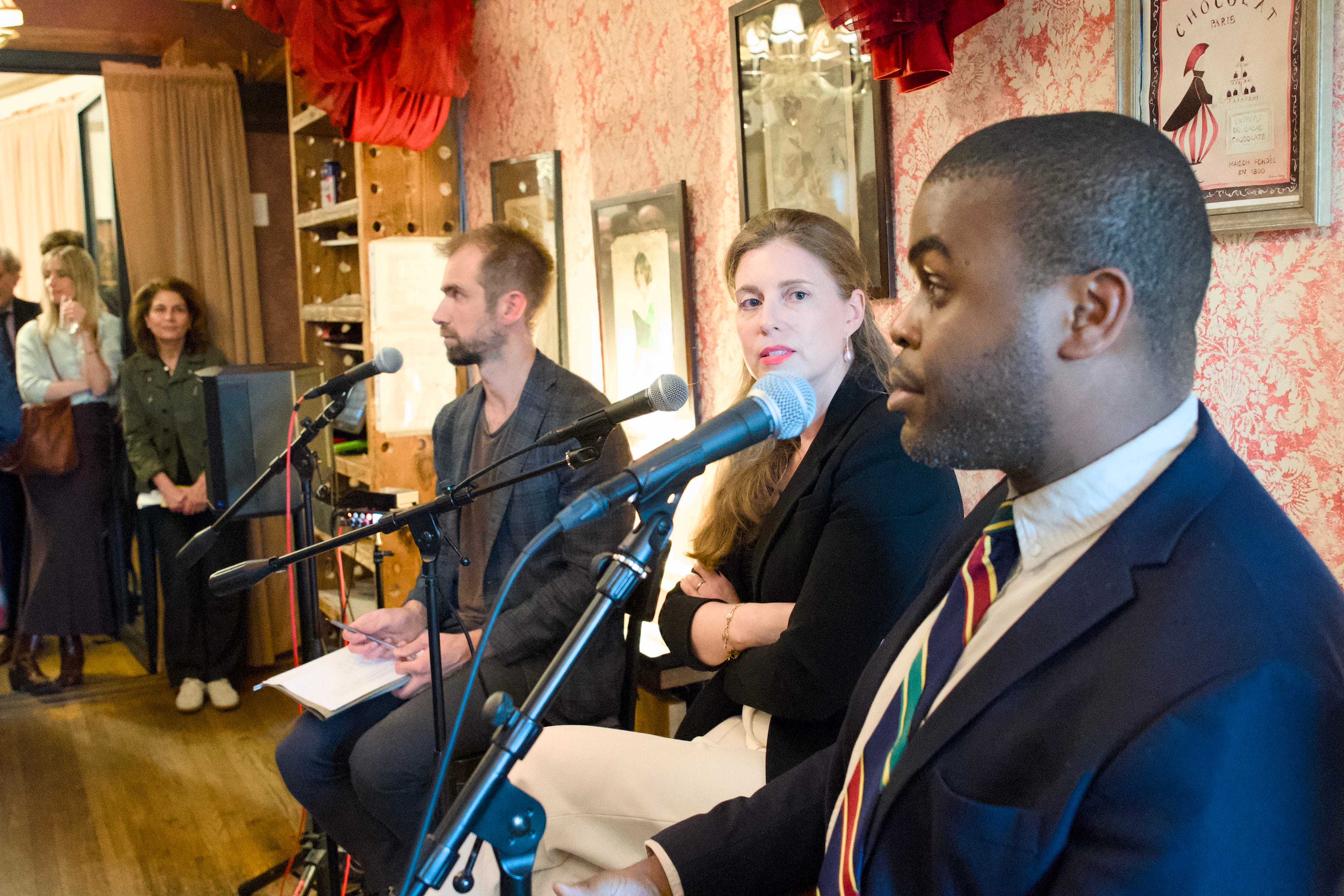
    Anthropic's Jack Clark: AI or Democracy

    This week, we are bringing you a conversation, recorded live at the Times Center in Manhattan last Thursday, between Jack Clark, co-founder of Anthropic, head of the Anthropic Institute and the man behind the Import AI newsletter, and our own Samuel Kimbriel. Clark opens with the uncomfortable premise: recursive self-improvement may arrive this decade — he’ll name 2028 if pressed — and with it a world where AI starts designing its own successors. That cracks open choices nobody has had to make before. Which sciences do we deliberately speed up? Where do we set the dial between individual liberty and collective control when anyone can summon what used to require a nation-state? And who gets to shape the “personality”—air quotes his—of a tool that talks back? It’s an engaging conversation about the big questions of our time. We hope you enjoy! This is a public episode. If you'd like to discuss this with other subscribers or get access to bonus episodes, visit wisdomofcrowds.live/subscribe

  • May 11 · 1 hr 2 min

    What If We Fired All the Politicians?

    In this live taping — a partnership between Wisdom of Crowds, Aspen Philosophy and Society, and Yale’s new Center for Civic Thought — Samuel Kimbriel sits down with political theorist Hélène Landemore and writer Osita Nwanevu to hash out a deceptively simple question: what is democracy actually for? Hélène, whose new book Politics Without Politicians: The Case for Citizen Rule makes the case for sortition — randomly selected citizen assemblies replacing elected legislatures — argues that electoral politics is rigged for the loud, the ambitious and the power-hungry. Osita also wants to rejuvenate democracy, but is much more committed to the idea of elections, and politicians specifically. The disagreement sharpens as they dig into what divides us. Hélène sees most disputes as solvable — get people in a room with the right information, reshuffle constantly to prevent power concentration, and collective intelligence will do real work, even on moral questions like euthanasia. Osita counters that many of our deepest political conflicts are about values, not facts, and no amount of expert testimony resolves whether the state should have the power to execute someone. The conversation was made possible with support from the Gambrell Foundation and the John Templeton Foundation. This is a public episode. If you'd like to discuss this with other subscribers or get access to bonus episodes, visit wisdomofcrowds.live/subscribe

  • May 1 · 1 hr 11 min

    Church and Empire

    The Iran war has produced an unlikely main character: the Pope. This week, our dear friend and former colleague Santiago Ramos returns to the pod. He joins Christine and Damir to unpack the escalating clash between the Trump administration and the Catholic Church over the war, Trump’s various blasphemies, and JD Vance’s remarkable journey from Catholic conversion to, well, rediscovering Protestantism. The conversation then turns to more interesting matters. What does the Catholic tradition actually say about just war, and does anyone in Washington care? Santi argues that the real story isn’t just about applying just war principles — it’s about the Vatican’s deeper commitment to a post-WWII global order that it sees every American war chipping away at. He draws a sharp distinction between just war and holy war, arguing that Secretary of War Pete Hegseth’s invocations of divine mandate are what really set off the Pope. Christine is fascinated by the public’s unexpected hunger for moral authority in a cynical age — and by the spectacle of a charismatic, English-speaking, social-media-fluentAmerican pope suddenly becoming the most compelling critic of the administration. And Damir, true to form, grants the Pope his due as a political operator while insisting that the real story is simpler: while this is a stupid war with no rationale, the savvy Pope saw an opportunity to play politics. The conversation ends with an unlikely convergence, as Christine gets Damir to all but confess his belief in original sin. Required Reading: * Christine Emba, “What a Catholic Church Unafraid of Donald Trump Means to the World” (NYT). * Ross Douthat, “Trump’s Blasphemy is a Warning” (NYT). * Jacques Maritain on just war (Commonweal). * Pope John XXIII, Pacem in Terris (Vatican). * Phil Klay on just war principles and the Iran war (YouTube). * Maggie Haberman and Jonathan Swan, “How Trump Took the U.S. to War With Iran” (NYT). This is a public episode. If you'd like to discuss this with other subscribers or get access to bonus episodes, visit wisdomofcrowds.live/subscribe

  • April 19 · 1 hr 6 min

    Did We Get Hungary Wrong?

    This week, Damir and Shadi are joined by Julian Waller, Professorial Lecturer in Political Science at George Washington University and co-author of Autocrats Can’t Always Get What They Want: State Institutions and Autonomy under Authoritarianism. The occasion is an awkward one for a certain kind of democracy discourse: Viktor Orbán was last weekend thrown out in a landslide by Péter Magyar’s Tisza Party, ending a sixteen-year run. So — was Hungary ever really the dictatorship Western liberals spent the last decade insisting it was? If a supposed autocrat loses a vote and walks away, what does that tell us about the category we put him in? The three dig into Orbán’s media capture, why the Hungarian-language internet routed around it, and whether Magyar’s improvised anti-corruption coalition can hold. They then turn to Magyar himself — a former Fidesz insider who ran the Navalny playbook of anti-corruption populism with a nationalist twist — and ask whether his improvised negative coalition can actually govern. Will unwinding Orbán’s institutional capture require exactly the kind of authoritarian hardball the new guy was elected to stop? The final stretch turns to moralizing, on both sides. Why did both the Right and the Left make such a symbol out of a small European country? Required Reading: * Autocrats Can’t Always Get What They Want: State Institutions and Autonomy under Authoritarianism, by Nathan J. Brown, Samer Anabtawi, Steven D. Schaaf, and Julian G. Waller (Amazon). * Julian’s pre-election epic thread handicapping the Hungarian vote (X). * “A Last Chance for Hungary,” by Bálint Madlovics and Bálint Magyar (Foreign Affairs). * “Authoritarianism, Reform, or Capture? Democracy in Trump’s America,” by Dima Kortukov and Julian G. Waller (American Affairs). * Péter Magyar’s post-election appearance on Hungarian state television (Euronews). This is a public episode. If you'd like to discuss this with other subscribers or get access to bonus episodes, visit wisdomofcrowds.live/subscribe

  • April 14 · 59 min

    Anti-Politics and the Counter-Revolution

    Samuel Kimbriel was in Italy the other week, where he sat down with Rome-based political theorist Giovanni Orsina to talk about European populism. The conversation starts with Giorgia Meloni, who, Orsina argues, is more a pragmatic traditional right-wing politician than a true populist. It then turns to a deeper things. Previewing his upcoming book Counter-Revolution, Orsina claims that after the 1960s, people became both revolutionary and utopian, turning away from politics to morality, law, and markets. But after 2008, populism emerged as a counter-revolutionary force seeking re-politicization. He warns Europe’s institutions were built for depoliticized times and now are struggling to meet the moment. Can they survive? This is a public episode. If you'd like to discuss this with other subscribers or get access to bonus episodes, visit wisdomofcrowds.live/subscribe

  • April 1 · 33 min

    Peter Beinart on Why the "Right to Exist" is the Wrong Question

    This is a free preview of a paid episode. To hear more, visit wisdomofcrowds.live Last week, Shadi wrote a controversial essay over at Wisdom of Crowds titled “Does Israel Have a Right to Exist?” This week, we had our friend Peter Beinart on to the show to unpack the question some more. Peter is, among many other things, a contributing writer for the New York Times and the author of Being Jewish After the Destruction of Gaza. And last year he pen…

  • March 17 · 1 hr 14 min

    What Ails the Left?

    This week, Shadi and Sam sat down with Jonny Thakkar, an Assistant Professor in Political Science at Swarthmore College and one of the founding editors of the invaluable The Point magazine. In a recent essay in The Point, Jonny argues that the left’s organizing framework — reducing injustice and pursuing equality — is inherently negative and distributional, and therefore fails to inspire the kind of longing that drives political movements. This is a topic that we’ve chewed over frequently here at Wisdom of Crowds. The conversation goes on to weigh whether liberalism can offer a genuine vision of the good life or whether it is structurally committed to a neutrality that empties politics of meaning. The group debates Rawlsian liberalism, Marx’s notion of human capacities, the appeal of the tech right’s futurism, as well as religion, autonomy, and whether the loss of a pre-modern sense of cosmic order is recoverable. The episode ends without a tidy resolution, but with a shared sense that any politically viable vision of human flourishing must grapple seriously with what a good life actually looks like — not just what a just distribution of resources resembles. Required Reading: * “Beyond Equality,” by Jonny Thakkar (The Point). * “Last Boys at the Beginning of History,” by Mana Afsari (The Point). * Abundance, by Ezra Klein and Derek Thompson (Amazon). * Ross Douthat’s interview with Sen. Chris Murphy (NYT). * The Grasshopper: Games, Life and Utopia, by Bernard Suits (Amazon). * Laura Field interviewed by Sam and Christine (WoC). This is a public episode. If you'd like to discuss this with other subscribers or get access to bonus episodes, visit wisdomofcrowds.live/subscribe

  • March 7 · 1 hr 3 min

    Cameron Kasky on How Israel Lost America

    This week, Shadi and Damir hosted Cameron Kasky — a rising young activist in the Democratic Party and former congressional candidate for New York’s 12th District — who gave us a glimpse into where American politics might be headed. Cameron started his career as a gun control advocate after surviving the Parkland shooting. For his efforts, he was named one of TIME’s 100 Most Influential People in 2018. He has since become a passionate advocate for the Palestinian cause, especially so after Gaza. We recorded this episode a day after Marco Rubio caused a furor by suggesting America’s decision to attack Iran was shaped by the fact that Israel might do it without us anyway, leaving our assets in the region dangerously exposed. With increasingly hostile young MAGA voices convinced that Israel holds undue sway over American foreign policy, we discussed how Democrats see a path forward. The conversation got heated at times — Damir goes incandescent over Epstein, Shadi frets about entrenched Democratic leaders not reflecting voters’ preferences — but it’s an important episode very much worth your time. American politics is changing before our eyes, and anyone thinking we’re going back to the way things were after Trump has another thing coming. This is a public episode. If you'd like to discuss this with other subscribers or get access to bonus episodes, visit wisdomofcrowds.live/subscribe

  • February 23 · 1 hr 8 min

    Are We All Clavicular Now?

    Damir, Shadi and Christine discuss the latest wave of worrying data about young adults’ retreat from dating, sex, marriage and parenthood. Shadi lays out the big numbers — projections that a large minority of young Americans may never marry and a substantial share may never have children — and ties them to two worries: widespread loneliness (especially among young men) and long-run national capacity in an era of low fertility and reduced immigration. Christine agrees on the economic and political downstream effects but keeps returning to more normative questions: is a prosperous but degraded society worth saving? The conversation swerves (as it tends to) into the subcultures forming in the vacuum: the looksmaxxing/manosphere influencer “Clavicular,” who embodies male energy redirected inward — away from courtship and community and toward obsessive self-modification and performative detachment from women. Damir pushes an uncomfortable adaptation thesis: maybe this is simply what “winning” does to advanced societies, whether we like the aesthetics of it or not. Required Reading: * “The truth about population decline,” by Martin Wolf (Financial Times). * “Get Married Young,” by Brad Wilcox (Compact). * “1-in-3: A Record Share of Young Adults Will Never Marry,” by Lyman Stone (Institute for Family Studies). * The Human Flourishing Program’s “Flourish” measure (Harvard IQSS). This is a public episode. If you'd like to discuss this with other subscribers or get access to bonus episodes, visit wisdomofcrowds.live/subscribe

  • February 15 · 1 hr 11 min

    Just How Worried Should We Be About AI?

    Damir and Sam are joined by Cambridge philosopher Henry Shevlin of the Leverhulme Centre for the Future of Intelligence for a raucous and rambling conversation about the state of artificial intelligence. Is it about to get conscious, take all of our jobs, and destroy the world? Or is all this industry hype? Henry starts off the conversation asserting that AI already has a kind of “agency,” even if it’s not yet the full kind that some skeptics are looking for. Damir and Sam push back on AI’s reliability and proclivity to hallucinations, and wonder whether AI can create anything genuinely novel or creative. The conversation turns to autonomy and risk. Can “artificial superintelligence” ever be reached, asks Sam? Henry points to AI coding agents already improving themselves. Damir objects to anthropomorphizing AI and prefers treating these systems as powerful tools capable runaway failures — but nothing more. Henry disagrees, ending the conversation with a plea for AIs getting consideration as moral entities at some point. Required Reading: * “Superintelligence: Paths, Dangers, Strategies,” by Nick Bostrom (Amazon). * The Creative Mind: Myths and Mechanisms, by Margaret Boden (Amazon). * “Disambiguating Anthropomorphism and Anthropomimesis in Human-Robot Interaction,” by Minja Axelsson and Henry Shevlin (arxiv.org). * “Real Patterns,” by Daniel C. Dennett (Rutgers). * A relevant tweet by Séb Krier (X). * AlphaGo Move 37 analysis (DeepMind). * Conway’s Game of Life (Wikipedia). This is a public episode. If you'd like to discuss this with other subscribers or get access to bonus episodes, visit wisdomofcrowds.live/subscribe

  • February 3 · 56 min

    American Exceptionalism on Trial

    This episode features a full-length debate between Shadi Hamid and Trita Parsi —two thinkers who fundamentally disagree about the role of American power in the world. Released jointly with The Disagreement podcast and hosted by Alex Grodd, the conversation reflects a shared Wisdom of Crowds ethos — one that treats disagreement not as a failure of understanding, but as a tool for thinking more clearly about first principles. Rather than trading talking points, Hamid and Parsi engage each other’s strongest arguments in a sustained, good-faith exchange. Shadi draws on themes from The Case for American Power to defend a position that has fallen out of favor across much of the political spectrum: that American power, when used with moral purpose, can still play a necessary role in reducing global suffering. His argument is aimed in part at a disillusioned left that has come to see U.S. power primarily as a source of harm rather than a potential instrument of humanitarian good. Against this, Trita — one of the most incisive critics of American interventionism — offers a sustained challenge, grounded in historical failures, unintended consequences, and the limits of even well-intentioned power. Does the world need the United States to act, and if so, when — and at what cost? How should past disasters constrain present ambitions? And if American power is curtailed, what realistic alternatives exist, and who bears responsibility when things go wrong? This debate doesn’t resolve those questions — but it models what it looks like to take them seriously, in conversation with someone who sees the world very differently. Required Reading/ Listening: * The Disagreement podcast. * Shadi Hamid, The Case for American Power. (Amazon) * Shadi’s 2024 debate with Daniel Bessner hosted by The Disagreement. This is a public episode. If you'd like to discuss this with other subscribers or get access to bonus episodes, visit wisdomofcrowds.live/subscribe

  • January 27 · 1 hr 10 min

    What the New Right Actually Believes

    This week Christine Emba and Sam Kimbriel are joined by Laura K. Field, a political theorist and the author of the new book Furious Minds: The Making of the MAGA New Right. It’s a sharp, readable taxonomy of the thinkers, factions and subcultures that helped build the MAGA coalition—from the Claremont world and national conservatism, to post-liberal Catholicism, to harder-edged online currents. Laura explains how she came to write about this subject, and how she became convinced the movement wasn’t going to take an off-ramp after January 6. The three trace how these ideas migrate from argument to power. They dissect liberalism’s blindspots, which somehow persist to this day. And they look at the right’s internal fractures — and what those tensions might mean for the coming succession fight in the Republican Party. Required Reading: * Furious Minds: The Making of the MAGA New Right, by Laura K. Field (Amazon). * Why Liberalism Failed, by Patrick Deneen (Amazon). * “The Flight 93 Election,” by Publius Decius Mus (Claremont Review of Books). * “Inside Stephen Miller’s Dark Plot to Build a MAGA Terror State,” by Greg Sargent (New Republic). * “Why the MAGA-DOGE Coalition Will Hold,” by Patrick Deneen (UnHerd). This is a public episode. If you'd like to discuss this with other subscribers or get access to bonus episodes, visit wisdomofcrowds.live/subscribe

  • January 9 · 1 hr 12 min

    Venezuela and Its Consequences

    Against the backdrop of Trump’s breathtaking snatch-and-grab operation against Venezuela’s nasty dictator Nicolás Maduro, Shadi and Damir debate the complexities of global politics, focusing on the tension between power and morality. They explore the implications of U.S. foreign policy decisions and debate the role of values in international relations. Shadi pushes Damir about the implications of his commitments, who in turn says ugly things you probably won’t like. Required Reading: * “Venezuela and the End of Hipocrisy,” by Shadi Hamid (WoC). * “The Great Unraveling Has Begun,” by Oona Hathaway (NYT). * “On the Legality of the Venezuela Invasion,” by Jack Goldsmith (Executive Functions). This is a public episode. If you'd like to discuss this with other subscribers or get access to bonus episodes, visit wisdomofcrowds.live/subscribe

  • Dec 29, 2025 · 58 min

    How Democracies Can Get Their Mojo Back

    As the year winds down, Shadi and Damir hosted Michael McFaul, a professor at Stanford University and former special assistant to President Obama and U.S. ambassador to Russia. His new book, Autocrats vs. Democrats: China, Russia, America, and the New Global Disorder is as good a start as any in trying to figure out how U.S. foreign policy could — and should — develop in the wake of a second Trump presidency. Required Reading: * Autocrats vs. Democrats: China, Russia, America, and the New Global Disorder, by Michael McFaul (Amazon). * The Case for American Power, by Shadi Hamid (Amazon). This is a public episode. If you'd like to discuss this with other subscribers or get access to bonus episodes, visit wisdomofcrowds.live/subscribe

  • Dec 24, 2025 · 59 min

    Holiday Special: The Case for a New American Founding

    This week, we have a special live episode for you. Wisdom of Crowds, in cooperation with Aspen’s Philosophy and Society program, threw a holiday party in DC, celebrating the release of our friend Osita Nwanevu’s new book, The Right of the People. Samuel Kimbriel sat down with Osita and the great Sam Goldman of the Hamilton School at the University of Florida, to kick off our celebration of America’s 250th with a debate of whether the constitution was a bad idea. Osita argues that it is time for a new American founding. The clash between our democratic principles and our long term inequalities requires a gradual but fundamental reworking of the American constitutional order. Goldman dissents, arguing both that, for all its flaws, the American system is superior to any comparable existing democracy of comparable scale—and that any plausible step to dismantle it is likely to lead to ruin. Kimbriel tries to keep the peace. Abandon arguing with your family over the holidays and argue with us instead! Required Reading: * The Right of the People, by Osita Nwanevu (Penguin Random House). This is a public episode. If you'd like to discuss this with other subscribers or get access to bonus episodes, visit wisdomofcrowds.live/subscribe
  • Dec 15, 2025 · 1 hr 13 min

    Why are Charismatic Demagogues So Attractive?

    This week, the great Nils Gilman joined Damir Marusic and Samuel Kimbriel on the pod to unpack the complexities of American foreign policy and its implications for Europe — and beyond. The conversation starts by trying to make sense of Trump’s latest National Security Strategy as a jumping off point, before pivoting into a discussion of populism. Why do some causes, projects — and people — provide meaning while others fall flat? For example, why is Trump’s nationalism more politically effective than calls to global climate action? And is there a better way to create meaning in an increasingly fragmented world? Required Reading: * Nils Gilman, “Climate Leviathan” (Substack). * Nils Gilman, “The Duopoly of Doom” (Substack). This is a public episode. If you'd like to discuss this with other subscribers or get access to bonus episodes, visit wisdomofcrowds.live/subscribe

  • Dec 8, 2025 · 1 hr 20 min

    Do We Crave Intensity in Our Lives?

    Damir’s back from Ukraine, still buzzing — and feeling weird about it. He and Christine talk about the thrill and guilt associated with reporting from war zones, the ethical implications of war tourism, and the psychological toll on both journalists and civilians. The conversation then shifts to Trump and a possibly looming war with Venezuela. The Trump administration has cowed many a politician, but the fear seems to be ebbing. But have we gotten over our addiction to the thrill of political populism? Required Reading: * Damir Marusic, “My Night in Dnipro” (WoC). * Christine Emba, “Vibe Shift 2.0” (WoC). * Jason Willick, “There’s No Middle Ground on the Boat Strikes” (Washington Post). This is a public episode. If you'd like to discuss this with other subscribers or get access to bonus episodes, visit wisdomofcrowds.live/subscribe
  • Nov 30, 2025 · 45 min

    Lea Ypi on Dignity, History and Internet Trolls

    This is a free preview of a paid episode. To hear more, visit wisdomofcrowds.live A few years ago, Lea Ypi was scrolling through Facebook when she came across a family photo she had never seen before. Someone had discovered a photograph of Ypi’s grandparents on their honeymoon and posted it on a public Facebook group. Ypi — a philosophy professor from Albania who teaches at the London School of Economics — was dismayed by the comments on the photograph, which ranged from inaccurate to judgmental to just plain mean. Were the husband and wife in this photo Albanian aristocrats? Fascist collaborators? Victims of Communism? Responding to the trolls — as well as, as she puts it, “taking the trolls seriously” — Ypi decided to write a book reconstructing her grandparents’ story. The result is Indignity: A Life Reimagined, a book which asks, among other things, what does human dignity really mean? What makes this book even more interesting is that Ypi’s grandparents lived through some of the most dramatic moments in the twentieth century: the fall of the Ottoman Empire, the rise of Fascism, and World War II. Ypi joins Damir and Santiago, who want to understand Ypi’s own philosophical priors. Damir wants to know where moral responsibility ends and and the structural forces of history begin. Santiago asks whether dignity, as a concept, has a metaphysical foundation. The result is a wide-ranging conversation that covers history, literature, philosophy and more. In our bonus section for paid subscribers, Santiago asks Ypi about the difference between Fascist and Communist decision-making; Damir presses Ypi on the question of free will; Ypi discusses her two-point prescription for a better Europe; Santiago asks Ypi whether it’s hard to write about one’s country in a foreign language; and finally, Ypi’s hot take on Zohran Mamdani. Required Reading: * Lea Ypi, Indignity: A Life Reimagined (Amazon). * Lea Ypi, Free: Coming of Age at the End of History (Amazon). * Immanuel Kant, Groundwork for the Metaphysics of Morals (Amazon). * Friedrich Schiller, On the Aesthetic Education of Man (Amazon). Free preview video: Full video for paid subscribers below:

Showing 1–20 of 20 episodes