Skip to content
Artwork for What's Your Problem?
TechnologyBusinessEntrepreneurship

What's Your Problem?

iHeartPodcasts and Pushkin Industries

Every week on What's Your Problem?, former Planet Money host Jacob Goldstein talks with entrepreneurs and engineers tackling the biggest challenges at the forefront of technology. How do you make a trip to space as routine as a plane flight? How do you turn solar energy into clean fuel? How do you use AI to stop deadly infections before they spread? We hear a lot these days about how the world is getting worse. What's Your Problem? learns from the thinkers and doers trying to make our future better.

iHeartMedia is the exclusive podcast partner of Pushkin Industries.

Play
  • 22 episodes
  • weekly
  • Avg 41 min
  • English
Counted on this page — what you have heard stays on this device, so it is not something the list can be paged by.
  • August 20 · 44 min

    The Quantum Shift in Biomedical Discovery from Smart Talks with IBM

    When Dr. Lara Jehi began treating epilepsy patients in the 2000s, critical surgical decisions were driven more by clinician intuition and expertise than data. Today, she is a leader of IBM and Cleveland Clinic’s Discovery Accelerator, using advanced AI and quantum computing to transform how researchers analyze data, simulate molecules, accelerate drug discovery, and develop more precise treatments. Malcolm Gladwell talks with Dr. Jehi about how quantum computing is changing biomedical research, and what these breakthroughs could mean for the future of healthcare and life sciences. This is a paid advertisement from IBM. The conversations on this podcast don't necessarily represent IBM's positions, strategies or opinions. Visit us at https://www.ibm.com/think/podcasts/smart-talks See omnystudio.com/listener for privacy information.

    • Transcript
  • S1 · E189
    August 13 · 36 min

    Can We Slow Down Aging?

    Nir Barzilai is a physician and a researcher at the Albert Einstein College of Medicine in New York, where he runs the Institute for Geroscience. Nir’s problem is this: How can we use lifestyle changes and drugs to slow the process of aging? In this episode, Nir explains: The search for biological markers of aging The existing drugs that might reduce the risk of diseases associated with aging The four key lifestyle factors that every researcher in the field agrees on What he learned by studying the genes of people who lived to 100 What “geroscience” means, and why it doesn’t have a Wikipedia page Connect with us: Follow Jacob Goldstein on LinkedIn, X and Instagram Email us at problem@pushkin.fm Follow Pushkin on Instagram, LinkedIn or X Listen to Jacob’s other show, Business History To listen to the show early and ad free, sign up for Pushkin+ See omnystudio.com/listener for privacy information.

    • Transcript
  • S1 · E188
    August 6 · 41 min

    Why Doctors Use Evidence but Managers (Mostly) Don’t

    Helen Pearson is the author of the book “Beyond Belief: How Evidence Shows What Really Works.” Helen's problem is this: How do you get people to make important decisions based on high-quality evidence, instead of on hunches or habits? In this episode, Helen explains: How a doctor's fatal mistake sparked the evidence-based medicine movement Why management is so resistant to evidence-based practices How systematic reviews changed the way she works as a science journalist Why global trust in science remains high – outside the US What a randomized trial of pint glasses revealed about preventing violent injuries. Check out Helen’s book here. Connect with us: Follow Jacob Goldstein on LinkedIn, X and Instagram Email us at problem@pushkin.fm Follow Pushkin on Instagram, LinkedIn or X Listen to Jacob’s other show, Business History To listen to the show early and ad free, sign up for Pushkin+ See omnystudio.com/listener for privacy information.

    • Transcript
  • S1 · E187
    July 30 · 39 min

    The Job AI Was Supposed to Kill

    In 2016, Geoffrey Hinton, one of the inventors of modern AI, predicted that AI would replace radiologists within years. Ten years later, we have a shortage of radiologists. AI has yet to revolutionize the field. What happened, and what does the story of AI and radiology tell us about AI and the future of work? Saurabh Jha is a radiologist at the University of Pennsylvania. He's written about how he uses AI in his practice, and why radiologists have been slow to adopt AI. Saurabh has also traveled to India and Nepal to understand the very different ways AI is being adopted for radiology in the developing world. In this episode, Saurabh explains: Why AI still hasn't made radiologists faster or more productive The risks of novice radiologists using AI versus the benefits to experts Why a successful AI model would need to be nearly perfect How AI is being used to spot tuberculosis in India Why diagnosing a normal scan is harder than diagnosing disease Connect with us: Follow Jacob Goldstein on LinkedIn, X and Instagram Email us at problem@pushkin.fm Follow Pushkin on Instagram, LinkedIn or X Listen to Jacob’s other show, Business History To listen to the show early and ad free, sign up for Pushkin+ See omnystudio.com/listener for privacy information.

    • Transcript
  • S1 · E186
    July 23 · 54 min

    How China Won the Car Industry

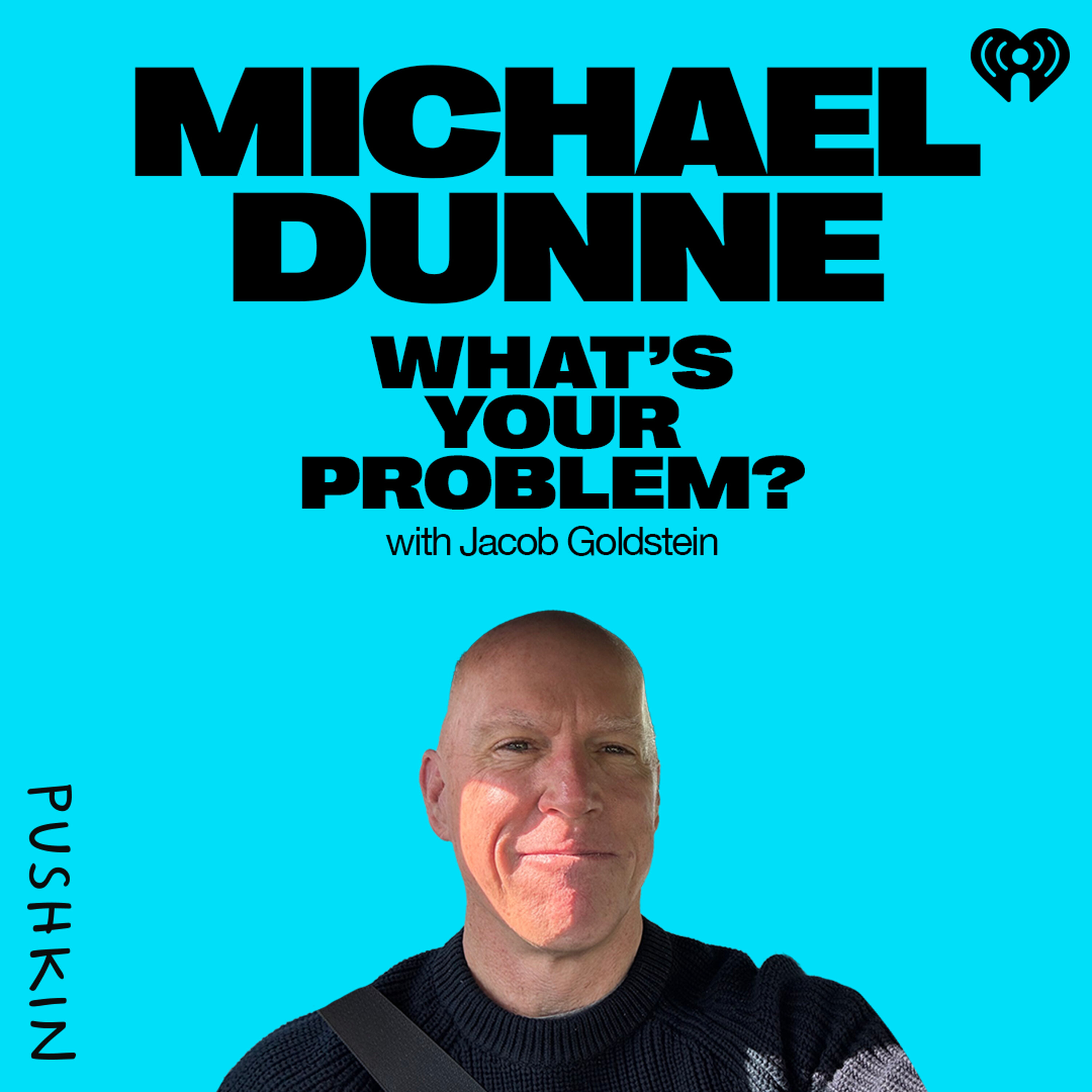
    After spending decades as marginal players in the global auto industry, Chinese carmakers have become the world’s biggest exporters of cars. Chinese cars are some of the best cars on the planet, and they’re available almost everywhere – except in the US. Michael Dunne is the CEO of Dunne Insights, a company that consults on the future of cars. Michael has been working with the Chinese auto industry since 1990. I talked with Michael about how China did it. The problem we discussed was: How can the United States catch up with the Chinese auto industry? In this episode, Michael explains: How China went from making terrible cars in 1990 to dominating global exports today Why China bet big on electric vehicles when nobody wanted them How Tesla's arrival in China revolutionized their EV industry Why losing the car industry would be a national security problem for the US Why the future of a successful American auto industry is on the West Coast Connect with us: Follow Jacob Goldstein on LinkedIn, X and Instagram Email us at problem@pushkin.fm Follow Pushkin on Instagram, LinkedIn or X Listen to Jacob’s other show, Business History To listen to the show early and ad free, sign up for Pushkin+ See omnystudio.com/listener for privacy information.

    • Transcript
  • S1 · E185
    July 16 · 32 min

    Using Viruses to Fight Disease

    Phages are viruses that attack bacteria. People have been using phages to treat infections for over a hundred years, but in most cases they just don't work as well as antibiotics. Paul Garofolo is the co-founder and CEO of Locus Biosciences. His problem is this: How do you genetically engineer phages to be more effective at curing disease? In this episode, Paul explains: Why wild phages never completely wipe out a bacterial infection How to engineer phages with CRISPR to kill bacteria more effectively The clinical trial testing phage therapy for chronic, recurrent UTIs Why persistent bacteria may contribute to autoimmune conditions like Crohn's disease How to use robots and AI to create phage cocktails from wastewater Connect with us: Follow Jacob Goldstein on LinkedIn, X and Instagram Email us at problem@pushkin.fm Follow Pushkin on Instagram, LinkedIn or X Listen to Jacob’s other show, Business History To listen to the show early and ad free, sign up for Pushkin+ See omnystudio.com/listener for privacy information.

    • Transcript
  • S1 · E184
    July 9 · 43 min

    How AI Could Reduce Inequality

    David Autor is a labor economist at MIT. He has written about how the arrival of personal computers increased inequality among American workers. But when it comes to AI, David thinks there could be a different outcome. Read David’s article about AI in Noema Magazine. In this episode, David explains: How computers increased the wage gap between college and non-college educated workers Why AI’s ability to supplement expertise may open up expert fields to more people How AI could make healthcare and legal services cheaper What fields will still experience rapid devaluation of skills due to AI The “no regrets” policies that the US could enact to help ease the impact of AI Connect with us: Follow Jacob Goldstein on LinkedIn, X and Instagram Email us at problem@pushkin.fm Follow Pushkin on Instagram, LinkedIn or X Listen to Jacob’s other show, Business History To listen to the show early and ad free, sign up for Pushkin+ See omnystudio.com/listener for privacy information.

    • Transcript
  • S1 · E183
    July 2 · 52 min

    Racing Wildfires to Warn the Public

    John Mills is the CEO and co-founder of a nonprofit called Watch Duty. His problem is this: How do you build an app to warn people when they are in immediate danger from a natural disaster? Watch Duty has millions of users and played a key role in the Los Angeles fires of 2025. In the show, John talks about how he built his app with the help of an army of volunteers, and why the government hadn’t already built something like Watch Duty. In this episode, John explains: Why one-quarter of Los Angeles residents downloaded Watch Duty during the 2025 fires Why the all-clear message matters almost as much as the initial warning How they are expanding into flood warnings How to decode firefighter’s radio chatter, and his favorite bit of jargon Connect with us: Follow Jacob Goldstein on LinkedIn, X and Instagram Email us at problem@pushkin.fm Follow Pushkin on Instagram, LinkedIn or X Listen to Jacob’s other show, Business History To listen to the show early and ad free, sign up for Pushkin+ See omnystudio.com/listener for privacy information.

    • Transcript
  • S1 · E182
    June 25 · 44 min

    How AI Could Actually Make the World Better

    Josh Tyrangiel is the author of “AI for Good: How Real People Are Using Artificial Intelligence to Fix Things That Matter.” On today’s show, Josh talks about some of these real people and the problems they’re working on: a professor trying to understand her nonverbal son, a general who delivered millions of Covid vaccines in 2021, and a hospital CEO trying to reduce the rate of deadly infections. In this episode, Josh explains: Where AI is helping to reduce hospital infections (and where it’s struggling) Why distributing the Covid vaccine was almost as hard as creating it Why convincing people to use AI is often the hardest problem to solve Why we should use nuclear weapons as a model for regulating AI Connect with us: Follow Jacob Goldstein on LinkedIn, X and Instagram Email us at problem@pushkin.fm Follow Pushkin on Instagram, LinkedIn or X Listen to Jacob’s other show, Business History To listen to the show early and ad free, sign up for Pushkin+ See omnystudio.com/listener for privacy information.

    • Transcript
  • S1 · E181
    June 18 · 48 min

    Finding Meaning (and Money) in the AI Age

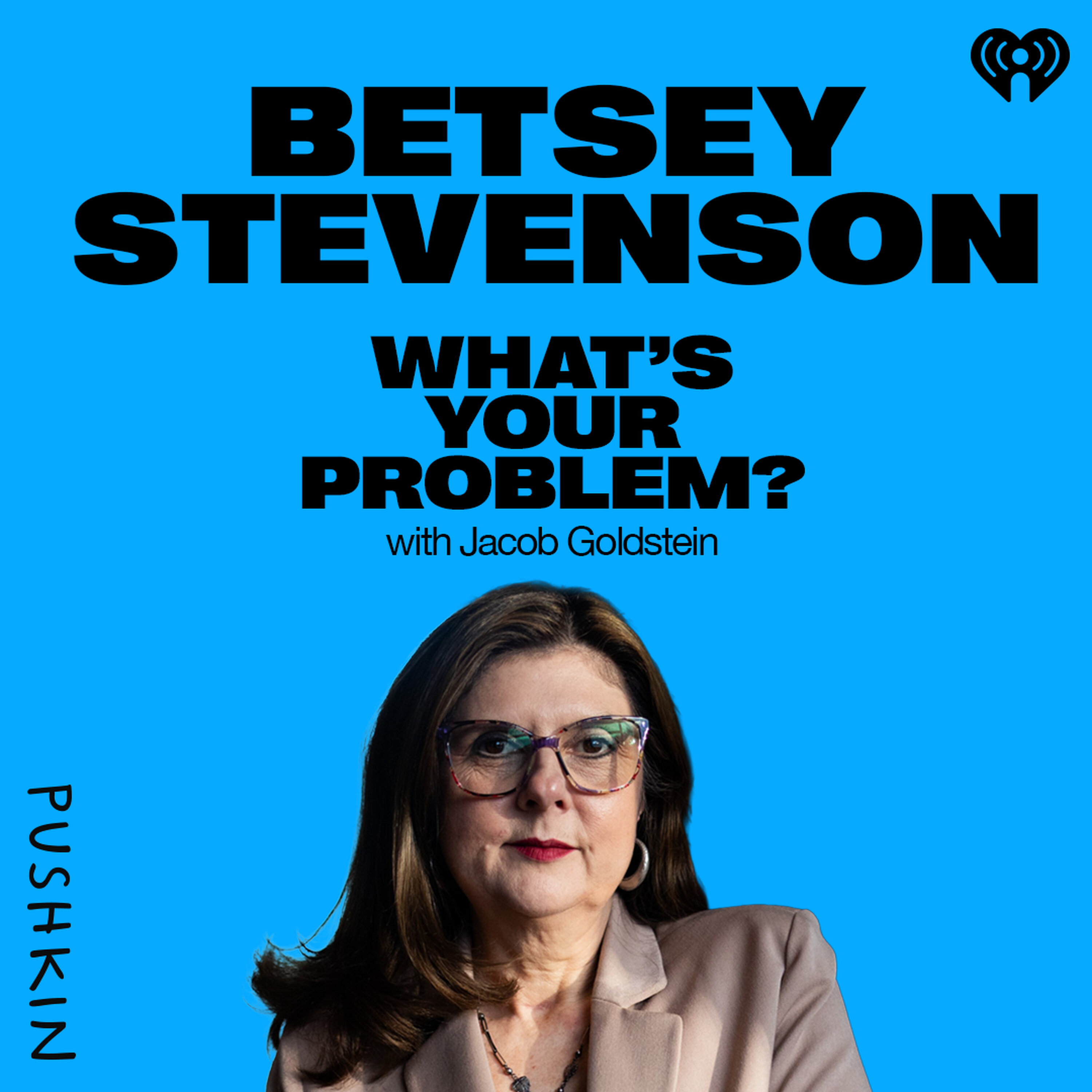
    Betsey Stevenson is a labor economist at the University of Michigan, and she was an economic adviser to President Obama. Betsey’s problem is this: How can we create a world where the benefits of AI are broadly shared? Betsey draws on history – including how the invention of household appliances created a crisis of meaning for American women – to understand how we should respond to the challenge of AI. And she suggests policies to help spread the wealth AI could bring. In this episode, Betsey explains: How Engels’ Pause serves as a warning for workers How 20th century women adapted to automation How AI has changed life for college students The argument for taxing AI firms and distributing the proceeds to the public Connect with us: Follow Jacob Goldstein on LinkedIn, X and Instagram Email us at problem@pushkin.fm Follow Pushkin on Instagram, LinkedIn or X Listen to Jacob’s other show, Business History To listen to the show early and ad free, sign up for Pushkin+ See omnystudio.com/listener for privacy information.

    • Transcript
  • S1 · E180
    May 28 · 36 min

    Using Pokémon Go to Map the World

    Maps have gotten much better over the past few decades. But they're still mostly two dimensional, and they struggle to keep up with a world that is always changing. Brian McClendon is the Chief Technology Officer of Niantic Spatial, a spinout of the company that makes Pokémon Go. Brian's problem is this: How do you build a three-dimensional map of the world that both robots and humans can use to find their way? In this episode, Brian explains: What he learned building Google Earth How Pokémon Go players helped build the foundation for robot navigation What it will take to teach AI to understand the physical world. Why GPS is so bad in cities  Why trees are such a big problem for digital mapmakers Connect with us: Follow Jacob Goldstein on LinkedIn, X and Instagram Email us at problem@pushkin.fm Follow Pushkin on Instagram, LinkedIn or X Listen to Jacob’s other show, Business History To listen to the show early and ad free, sign up for Pushkin+ See omnystudio.com/listener for privacy information.

    • Transcript
  • S1 · E179
    May 21 · 40 min

    The Company Where Everyone Has Their Own AI Agent

    Dan Shipper is the co-founder and CEO of Every, a company that publishes newsletters about AI, develops AI-related software, and helps other companies use AI. Dan has two problems. One, how do you build a company where almost everybody has their own AI agent? And two, how do you use AI as a tool to improve your writing, rather than as a replacement for writing? In this episode, Dan explains: Why managing agents will be a core skill of the future Why AI agents won’t replace you anytime soon How writers learn faster than AI models How to give AI the social skills to work in group settings How AI can help you better understand yourself Check out Every at their website: https://every.to/ Connect with us: Follow Jacob Goldstein on LinkedIn, X and Instagram Email us at problem@pushkin.fm Follow Pushkin on Instagram, LinkedIn or X Listen to Jacob’s other show, Business History To listen to the show early and ad free, sign up for Pushkin+ See omnystudio.com/listener for privacy information.

    • Transcript
  • S1 · E178
    May 14 · 33 min

    Inventing a Better Apple

    The apples you can buy at the grocery store have gotten profoundly better over the past few decades. It’s a kind of everyday, hiding-in-plain sight innovation.  Kate Evans is an apple breeder and professor at Washington State University. Kate's problem is this: How do you invent a better apple? With her team, Kate has in fact invented a new kind of apple called the Sunflare. It’s arriving in stores in a few years. She also helped to invent the Cosmic Crisp, which is out already. In this episode, Kate explains: Why grocery-store apples have gotten so much better Why some of the most delicious apples never make it into stores Why it takes decades to invent a new kind of apple How much more we have to learn about apple genetics How the apple industry is adapting to climate change Connect with us: Follow Jacob Goldstein on LinkedIn, X and Instagram Email us at problem@pushkin.fm Follow Pushkin on Instagram, LinkedIn or X Listen to Jacob’s other show, Business History To listen to the show early and ad free, sign up for Pushkin+ See omnystudio.com/listener for privacy information.

    • Transcript
  • S1 · E177
    May 7 · 32 min

    Building a Business on the Moon

    Rob Meyerson is the co-founder and CEO of Interlune. Rob's problem is this: How do you help build an economy on the moon? Eventually, Rob hopes Interlune will help build a moon base. For now, he is focused on bringing a gas called helium-3 back from the moon to sell on earth. Earlier in his career, Rob was the president of Blue Origin, the rocket company founded by Jeff Bezos. In this episode, Rob explains:  Why reusable rockets are only the first step for going back to the moon What it's going to take to actually manufacture things in space How to build a business by sifting through moon dirt How nuclear fusion and quantum computing could rely on mining the moon Connect with us: Follow Jacob Goldstein on LinkedIn, X and Instagram Email us at problem@pushkin.fm Follow Pushkin on Instagram, LinkedIn or X Listen to Jacob’s other show, Business History To listen to the show early and ad free, sign up for Pushkin+ See omnystudio.com/listener for privacy information.

    • Transcript
  • S1 · E176
    April 30 · 40 min

    Building a Robot People Actually Want

    Aaron Edsinger left his job as director of robotics at Google to start a company called Hello Robot. Aaron’s problem is this: How do you build an affordable robot that people can use to solve real problems at home? The result is a robot that looks nothing like a person. In fact, it’s closer to a Roomba with an arm. In this episode, Aaron explains:  Why home robots have barely progressed since the Roomba Why simpler robots can be more useful than complex humanoids  Why the physical world is so much harder for AI than language How robot safety is fundamentally a physics problem Connect with us: Follow Jacob Goldstein on LinkedIn, X and Instagram Email us at problem@pushkin.fm Follow Pushkin on Instagram, LinkedIn or X Listen to Jacob’s other show, Business History To listen to the show early and ad free, sign up for Pushkin+ See omnystudio.com/listener for privacy information.

    • Transcript
  • S1 · E175
    April 23 · 36 min

    Turning Waste Wood Into Buildings

    Ben Christensen is the co-founder and CEO of Cambium, the largest seller of salvaged wood in America. Ben's problem is this: How can we turn the trees that are falling to the ground all around us, into usable wood? In this episode, Ben explains: Why so much wood goes unused Why Cambium created demand before building the supply chain How building a data layer across the fragmented lumber industry reduces waste Why salvaged wood can compete on price with conventional lumber The best mantra to use 80 miles into an ultramarathon Connect with us: Follow Jacob Goldstein on LinkedIn, X and Instagram Email us at problem@pushkin.fm Follow Pushkin on Instagram, LinkedIn or X Listen to Jacob’s other show, Business History To listen to the show early and ad free, sign up for Pushkin+ See omnystudio.com/listener for privacy information.

    • Transcript
  • S1 · E174
    April 16 · 42 min

    The Great Fusion Debate: How Far Away Are We Really?

    Investors are pouring billions of dollars into nuclear fusion companies. The dream: transform human civilization (and power AI data centers) by providing cheap, abundant energy. But nobody’s figured out how to make it work yet. What will it take to make fusion work at scale – and how will the world be different if it does? To answer this question, Jacob recently hosted a conversation at SXSW between Greg Piefer of SHINE Technologies, Melanie Windridge of Fusion Energy Insights, and Luke Ward of investment firm Baillie Gifford. In this episode, the guests explain: The incredible promise of fusion What it will take to realize that promise How the AI boom and the demand for power is shaping the fusion industry Why having a ton of money flowing into the field is not necessarily a good thing Connect with us: Follow Jacob Goldstein on LinkedIn, X and Instagram Email us at problem@pushkin.fm Follow Pushkin on Instagram, LinkedIn and X Listen to Jacob’s other show, Business History To listen to the show early and ad free, sign up for Pushkin+ See omnystudio.com/listener for privacy information.

    • Transcript
  • S1 · E173
    April 9 · 35 min

    How SharkNinja Keeps Going Viral

    Mark Barrocas is the CEO of SharkNinja, a company that sells everything from vacuums, to blenders, to beauty products. Mark’s problem is this: How do you invent new products that people want to rave about on social media? In this episode, Mark explains: How SharkNinja finds product ideas The tradeoffs at the heart of product development How the Ninja Creami became a viral hit Why some products fail and others succeed. Connect with us: Follow Jacob Goldstein on LinkedIn, X and Instagram Email us at problem@pushkin.fm Follow Pushkin on Instagram, LinkedIn or X Listen to Jacob’s other show, Business History To listen to the show early and ad free, sign up for Pushkin+ See omnystudio.com/listener for privacy information.

    • Transcript
  • S1 · E172
    March 19 · 40 min

    Growing New Livers to Save Lives

    Michael Hufford is the co-founder and CEO of LyGenesis, a company working on a new treatment for end stage liver disease. Michael’s problem is this: How do grow a new liver inside the body of a sick patient? In this episode, Michael explains: The liver's unique power of regeneration The organ transplant crisis and how regeneration can help The science behind using lymph nodes to grow new organs The status of LyGenesis’ human trials The future of regenerative medicine Learn more: Check out LyGenesis’ website Connect with us: Follow Jacob Goldstein on LinkedIn, X and Instagram Email us at problem@pushkin.fm Follow Pushkin on Instagram, LinkedIn or X Listen to Jacob’s other show, Business History To listen to the show early and ad free, sign up for Pushkin+ See omnystudio.com/listener for privacy information.

    • Transcript
  • S1 · E170
    March 12 · 41 min

    Can the US Break China's Grip on Rare Earths?

    Rare earth elements are inside pretty much everything with an on-off switch: Phones, laptops, cars. Even missiles. And China controls the world’s supply of components made from rare earths. David Abraham is the author of the book “The Elements of Power: Gadgets, Guns, and the Struggle for a Sustainable Future in the Rare Metal Age.” David’s problem is this: What should the US do about China's chokehold on the rare earth supply chain? According to Abraham, the current US strategy could wind up costing billions of dollars without solving the problem. And he has a big idea for what we should do instead. In this episode, David explains: How China quietly built a monopoly on rare earth materials Why the 2010 Japan crisis was a preview of today's trade war China’s export restriction strategy Why the problem goes deeper than billions in spending can solve Why electric vehicles are the key to reinvigorating the U.S. rare earth industry Learn more: Find David at his website Buy the Elements of Power Check out David’s article in the new Republic Connect with us: Follow Jacob Goldstein on LinkedIn, X and Instagram Email us at problem@pushkin.fm Follow Pushkin on Instagram, LinkedIn or X Listen to Jacob’s other show, Business History To listen to the show early and ad free, sign up for Pushkin+ See omnystudio.com/listener for privacy information.

    • Transcript
Showing 1–20 of 22 episodes