
Skip to content
Artwork for What The Fraud?
TechnologyNewsTech NewsBusiness

What The Fraud?

Sumsub

Join Thomas Taraniuk in hosting leading minds from the world of AI, fintech, crypto, iGaming, and more. This podcast dives deep into the most pressing issues surrounding digital fraud in business. Each episode dissects key fraud-related issues that companies—both big and small—face today. From deepfakes and identity theft to money mules and forced verification, What The Fraud? is where digital fraudsters meet their match.


This is THE podcast for comprehensive, actionable, and up-to-date information on fraud. Listen in to reveal what you can do to protect yourself and your business.


Don't want to miss an episode? Follow the show now.


CREDITS

From Sumsub and This Is Distorted

Presented by Thomas Taraniuk, Sumsub

Produced by Faye Lyons-White, This Is Distorted

Editor - Dave Reilly, This Is Distorted

Executive Producer - Alex Jungius, This Is Distorted

Executive Producer - Mila Varavina, Sumsub


Hosted on Acast. See acast.com/privacy for more information.

Play
  • 20 episodes
  • Avg 43 min
  • English
  • July 15 · 49 min

    Bury the Blockchain: Crypto's Fight for Trust

    Cryptocurrency didn't invent financial fraud, but it changed how money moves and how criminals exploit it. Now, with new US legislation on the table, the industry faces a bigger question: can a system built on decentralization ever become trusted infrastructure? In this episode of What The Fraud, Tom sits down with the hosts of Crypto in America: Eleanor Terrett, Jacquelyn Melinek, and Gerald Gallagher, for a special crossover episode closing out Season 5. Together they unpack the Genius Act and Clarity Act and what they actually mean for stablecoins, market structure, and consumer protection, why institutions are finally treating crypto as a technology rather than a speculative bet, the surge in DeFi hacks driven by social engineering rather than code exploits, and the growing conversation around privacy, AI agents, and programmable payments as the next frontier. They also get personal, sharing their own brushes with fraud, the online behaviors they'd ban forever, and where they think crypto will be in ten years. Whether you work in fraud, fintech, payments, or policy, this episode offers a candid look at what it will really take for crypto to earn the public's trust. Sumsub's Website: sumsub.com Sumsub's LinkedIn: linkedin.com/sumsub Sumsub's Instagram: instagram.com/sumsubcom Sumsub on X: x.com/Sumsubcom Sumsub's YouTube Channel: youtube.com/@sumsubcom Thomas Taraniuk on LinkedIn: linkedin.com/in/tomtaraniuk Eleanor Terrett on LinkedIn: linkedin.com/in/eleanor-terrett-b9a77292 Jacquelyn Melinek on LinkedIn: https://www.linkedin.com/in/jacquelynmelinek Gerald Gallagher on LinkedIn: linkedin.com/in/gerald-gallagher-285040b6 Hosted on Acast. See acast.com/privacy for more information.
  • July 1 · 51 min

    Cash Out: Fraud's Final Act

    "What happens when the moment of truth isn't onboarding - it's the moment the money moves?" Businesses pour resources into KYC, fraud modelling, and onboarding checks. But fraud doesn't really happen until the money goes out, and by then, it's often too late to get it back. This week's guest is Apurva Shrivastava, Product Lead for Global Payments Product at Amazon. He breaks down why payout fraud is one of the most underestimated risks in the industry, and why "we caught it at onboarding" isn't enough on its own. We cover the three phases of cash-out fraud: Account farming, waiting for a trigger event, and burst execution, why payout fraud often gets booked as an "operational loss" instead of a fraud loss, and what a disbursement-time identity assurance score could look like in practice. As Apurva puts it: platforms have to be right every time. Fraudsters only need to be right once. Sumsub's Website: sumsub.com Sumsub's LinkedIn: linkedin.com/sumsub Sumsub's Instagram: instagram.com/sumsubcom Sumsub on X: x.com/Sumsubcom Sumsub's YouTube Channel: youtube.com/@sumsubcom Thomas Taraniuk on LinkedIn: linkedin.com/in/tomtaraniuk Apurva Shrivastava on LinkedIn: linkedin.com/in/apurva-shrivastava/ Hosted on Acast. See acast.com/privacy for more information.
  • June 18 · 54 min

    Designing for Trust in the Age of Agents — Money20/20 Europe

    For Part 2 of our special coverage from Money20/20 Europe in Amsterdam, we continue the conversation on AI, trust, and fraud with a fresh set of leaders from across digital banking, payments, and regulation. Where Part 1 focused on AI transformation at scale, this episode digs into invisible banking, digital identity, agentic commerce, and the regulatory frameworks needed to make cross-border payments work safely. Direct from the Sumsub booth, Thomas Taraniuk, Head of Partnerships at Sumsub, speaks with leaders from across the financial services ecosystem about what trust looks like when more of banking happens quietly, behind the scenes, and what it takes to keep fraud out without adding friction for the people and businesses who depend on these systems every day. Our guests include: Mette Gade (Chief Product Officer, Lunar) on building "invisible banking," why trust means giving users back their agency rather than advising them, and why fraud prevention works best as a shared community effort. Breno Oliveira (Chief Product Officer, payabl.) on whether digital identity can solve Europe's fraud problem, the rise of selective disclosure, and how agentic commerce will change fraud signals as we know them. Bankole Falade (Chief Legal, Regulatory Affairs & Public Policy Officer, Flutterwave) on building payment infrastructure across 50+ African markets, what Europe can learn from African regulatory pragmatism, and why harmonisation is the "golden ticket" for stablecoins and cross-border payments. Antoine Dauchy (Head of Product Development, FLOA) on the unique fraud challenges of buy-now-pay-later, why 3DS doesn't protect against installment fraud, and how tokenisation is making it easier for fraudsters to cover their tracks. Conny Ploth (VP, Global AI Transformation, Santander) on what it actually means to become an AI-native bank, the cultural shift required to make it stick, and why open innovation, including sharing fraud research publicly, is part of responsible AI Across these conversations, one theme keeps surfacing: as banking becomes quieter and more automated, trust has to be built into every micro-moment, and the institutions, regulators, and product teams that get ahead of fraud will be the ones willing to share data, rethink friction, and design for agents as much as for people. Because the next wave of fraud won't announce itself. It will look exactly like normal traffic, until it isn't. Thomas Taraniuk on LinkedIn: linkedin.com/in/tomtaraniuk Mette Gade on LinkedIn: linkedin.com/in/mettehindborggade Breno Oliveira on LinkedIn: linkedin.com/in/brenoaoliveira Bankole Falade on LinkedIn: linkedin.com/in/oluwabankole-falade-10a5099 Antoine Dauchy on LinkedIn: linkedin.com/in/antoine-dauchy-aa99426 Conny Ploth on LinkedIn: linkedin.com/in/conny-ploth-a66730 Hosted on Acast. See acast.com/privacy for more information.
  • June 17 · 33 min

    Adapt or Fall Behind - AI & Fraud Insights from Money20/20 Europe

    Recorded live on the floor of Money20/20 Europe in Amsterdam, this special episode of What the Fraud? brings together some of the sharpest minds in fintech to tackle the questions that matter most right now: how do you deploy AI at scale, build trust with users, fight increasingly sophisticated fraud, and keep growing without getting left behind? Direct from the Sumsub booth, Thomas Taraniuk, Head of Partnerships at Sumsub, speaks with leaders from across the financial services ecosystem about the forces reshaping the industry: from agentic AI and stablecoins to merchant fraud blind spots and the cost of compliance. Our guests include: Georgios Kolovos (Payments and Fintech Leader, EMEA, Nvidia) on whether a single AI model can power the entire payment stack, the value of transaction foundation models, and why collaboration between financial institutions is essential to staying ahead of fraud Joe Wilson (Chief Evangelist, Bunq) on building trust with expats and digital nomads, why brutal transparency is a competitive advantage, and the case for intervening on the user's side before fraud ever reaches the back end Rik Goslinga (VP, Account Management, EMEA, Adyen) on the merchant blind spots that still plague the industry, why fraud is no longer just a checkout problem, and how machine learning is making the fraud-conversion-cost trade-off less of a zero-sum game Ivan Zhiznevsky (Founder and CEO, 3S Money) on unlocking new markets through modernised payments, the rise of stablecoins as a legitimate business currency, and why governments need to stop outsourcing compliance to the private sector Across every conversation, a common thread emerges: the fraudsters are moving faster, the technology is more powerful than ever, and the institutions that will win are the ones willing to share knowledge, question their assumptions, and embed intelligence across the entire stack, not just at the point of payment. Because in a world where fraud is being industrialised, defence can't afford to stay manual. Thomas Taraniuk on LinkedIn: linkedin.com/in/tomtaraniuk Georgios Kolovos on LinkedIn: linkedin.com/in/gkolovos Joe Wilson on LinkedIn: linkedin.com/in/risenujoe Rik Goslinga on LinkedIn: linkedin.com/in/rikgoslinga Ivan Zhiznevsky: linkedin.com/in/ivan-zhiznevsky-a0074190 Hosted on Acast. See acast.com/privacy for more information.
  • June 3 · 43 min

    Account Takeover: When Trust Gets Hijacked

    Account takeovers have become one of the biggest challenges in fraud prevention. In this episode of What The Fraud, Tom is joined by Suz Lynch, Head of Financial Crime, and Paul Marsden, Head of Risk at Monavate, to explore how fraudsters gain access to trusted accounts, why account takeovers are becoming harder to detect, and how businesses can respond. From behavioural monitoring and AI-driven scams to the balance between security and customer experience, they discuss the warning signs, emerging threats, and practical steps organisations can take to stay ahead. Whether you're working in fraud, fintech, payments, or compliance, this episode offers valuable insights into one of the fastest-growing risks in digital finance. Sumsub's Website: sumsub.com Sumsub's LinkedIn: linkedin.com/sumsub Sumsub's Instagram: instagram.com/sumsubcom Sumsub on X: x.com/Sumsubcom Sumsub's YouTube Channel: youtube.com/@sumsubcom Thomas Taraniuk on LinkedIn: linkedin.com/in/tomtaraniuk Suz Lynch on LinkedIn: linkedin.com/in/suzanne-lynch-68003667 Paul Marsden on LinkedIn: linkedin.com/in/paul-marsden-69a98838 Hosted on Acast. See acast.com/privacy for more information.
  • May 21 · 30 min

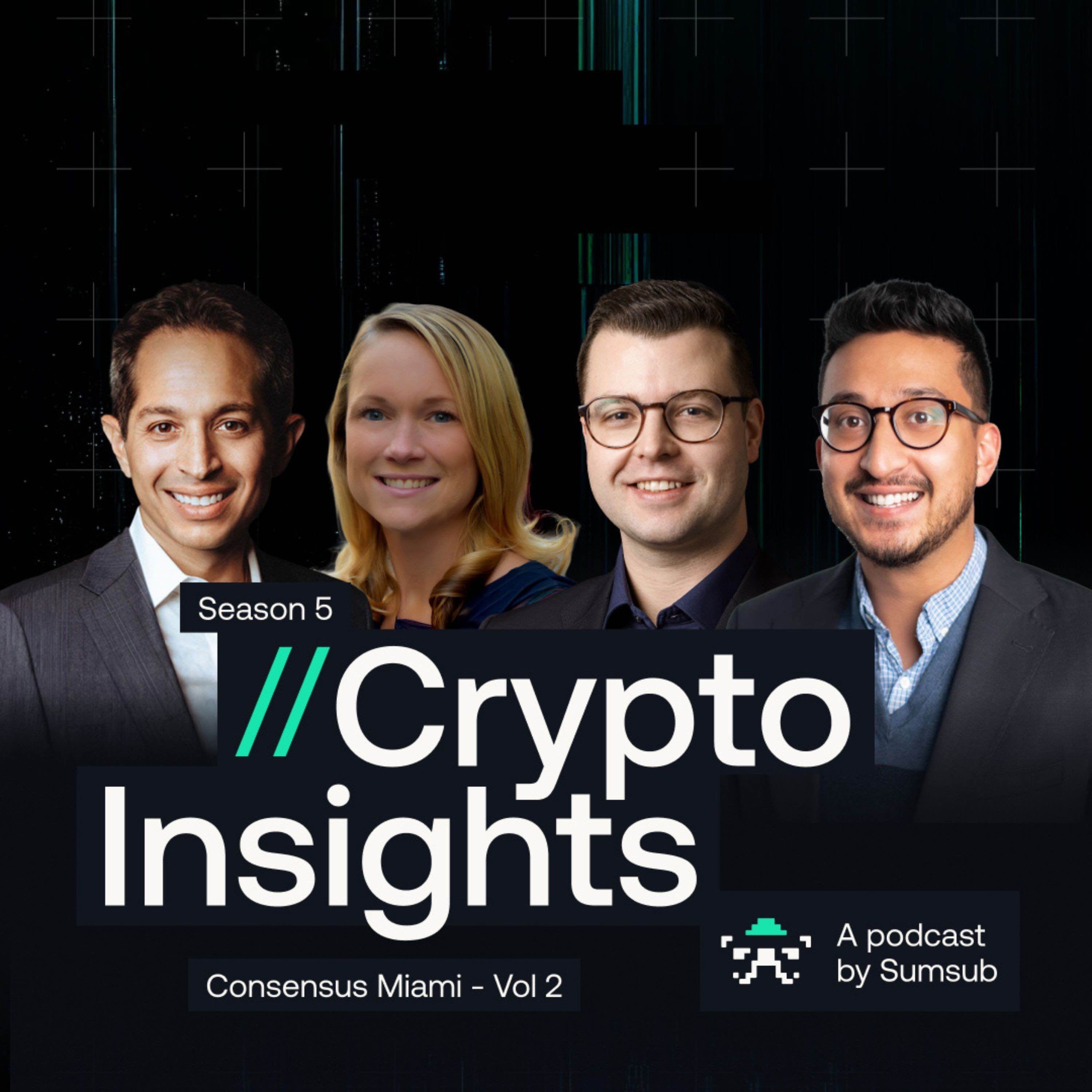
    Building Crypto Infrastructure — Insights from Consensus Miami

    “What does it really take to move digital assets from hype to institutional infrastructure?” At Consensus Miami 2026, one theme stood out clearly: digital finance is moving from experimentation to infrastructure. Institutions are no longer just exploring blockchain… they are actively rebuilding how money is moved, secured, and governed. In part 2 of this special episode of What the Fraud?, Anastasia Shvechkova, Sales Director Americas at Sumsub, sits down for conversations with leaders from across the industry at the Sumsub booth at Consensus Miami, exploring how this transformation is happening across banking, payments, custody, and compliance, and what it means for fraud risk in a rapidly scaling ecosystem. Our guests include: Adam Levine (CEO, Fireblocks Trust Company) on why institutional adoption depends on secure, scalable infrastructure and how custody and risk are evolving together. Ryan Rugg (Global Head of Digital Assets, Treasury and Trade Solutions, Citi) on embedding blockchain into enterprise banking infrastructure and making digital assets feel like just another operational rail. Myles Harrison (Chief Product Officer, AMINA Bank) on building regulated crypto banking that bridges TradFi and digital assets, and why security-by-design is essential for mainstream adoption. Jamal Rayees (Head of Strategy, Polygon Labs) on how stablecoins are becoming the first true breakout use case for blockchain-based payments. Links: Sumsub's Website: sumsub.com Sumsub's LinkedIn: linkedin.com/sumsub Sumsub's Instagram: instagram.com/sumsubcom Sumsub on X: x.com/Sumsubcom Sumsub's YouTube Channel: youtube.com/@sumsubcom Anastasia Shvechkova on LinkedIn: linkedin.com/in/anastasia-shvechkova-878344118 Adam Levine on LinkedIn: linkedin.com/in/adamlevine18 Ryan Rugg on LinkedIn: linkedin.com/in/ryanrugg Myles Harrison on LinkedIn: linkedin.com/in/myles-harrison Jamal Rayees on LinkedIn: linkedin.com/in/jamalraees Hosted on Acast. See acast.com/privacy for more information.

  • May 20 · 32 min

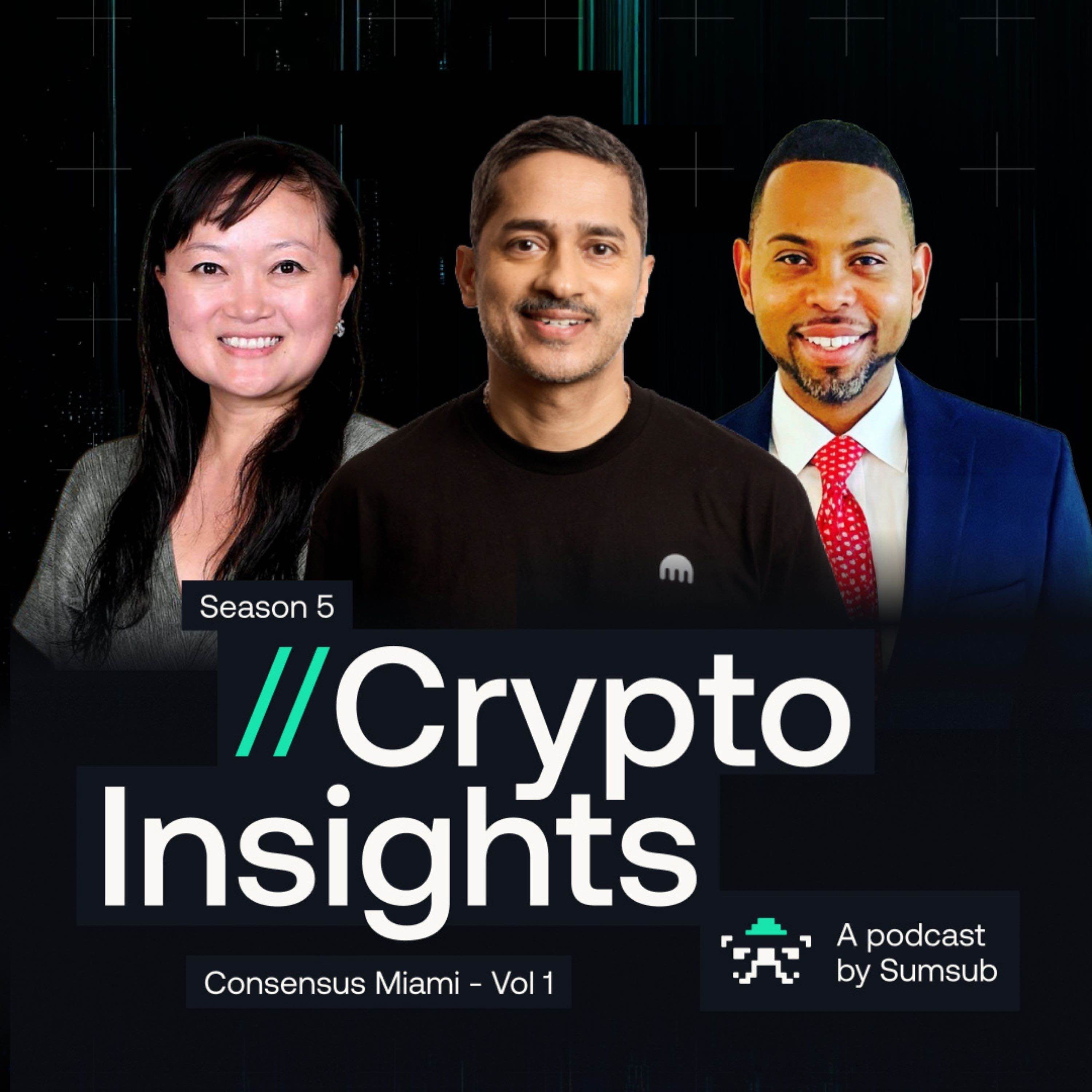
    Scaling Trust in Crypto — Insights from Consensus Miami

    In Part 1 of our What the Fraud? special from Consensus Miami 2026, we explore how crypto is moving beyond early adoption and into mainstream finance. From regulation and compliance to payments and user growth, the conversation focuses on what it takes to scale digital assets safely in the real world. Direct from the Sumsub booth at Consensus Miami, Anastasia Shvechkova, Sales Director Americas at Sumsub, speaks with experts from across the ecosystem about the challenges shaping the next phase of digital finance, from compliance and payments to trust, scale, and user adoption. Our guests include: Lei Lei (VP of Business Development and Strategy, Kite) on building crypto-native products and driving real-world utility Mayur Gupta (Chief Growth & Marketing Officer, Kraken) on scaling adoption and bringing more users into crypto markets Larry Wade (Global Head of Crypto Compliance and Regulatory Relations, PayPal) on how global payment platforms are navigating regulation while integrating crypto Across the conversation, a different set of challenges emerges: not just how to build crypto systems, but how to grow them responsibly. From user onboarding and product-market fit to compliance frameworks and regulatory engagement, the focus is on what it takes to move from early infrastructure to widespread adoption. Because once the rails are built, the real question becomes: who will actually use them, and how safely? Links: Sumsub's Website: sumsub.com Sumsub's LinkedIn: linkedin.com/sumsub Sumsub's Instagram: instagram.com/sumsubcom Sumsub on X: x.com/Sumsubcom Sumsub's YouTube Channel: youtube.com/@sumsubcom Anastasia Shvechkova on LinkedIn: linkedin.com/in/anastasia-shvechkova-878344118 Lei Lei on LinkedIn: linkedin.com/in/lei-lei-90720a Mayur Gupta on LinkedIn: linkedin.com/in/mayurgupta77 Larry Wade on LinkedIn: linkedin.com/in/larryswadejr Hosted on Acast. See acast.com/privacy for more information.
  • May 6 · 53 min

    Fraud at the World Cup: When Volume Turns into Vulnerability

    “What happens when the world’s biggest sporting event becomes the perfect environment for fraud to scale?” World Cup Betting KYC: https://sumsub.link/21f The World Cup isn’t just a global celebration of football, it’s one of the largest betting events on the planet. And where volume, velocity, and global participation collide, fraud doesn’t just appear… it accelerates. Our guest this week is Ludovico Calvi, Honorary President of ULIS, United Lotteries for Integrity in Sports. With decades of experience across betting operations and international integrity networks, Ludovico shares how fraud evolves before, during, and beyond major tournaments like the World Cup. From multi-accounting and bonus abuse to AI-driven synthetic identities and coordinated betting syndicates, this conversation explores how fraud has become structured, automated, and global. We look at why major events create the perfect conditions for these systems to thrive, how fragmented markets introduce hidden vulnerabilities, and why no single operator can see the full picture alone. We also dive into the growing role of real-time data sharing, cross-border collaboration, and integrity “war rooms”, and what it takes for betting companies to balance rapid growth with resilient defences. Because in a world where billions are watching and betting… fraud isn’t just playing the game. It’s playing the system. Sumsub's Website: sumsub.com Sumsub's LinkedIn: linkedin.com/sumsub Sumsub's Instagram: instagram.com/sumsubcom Sumsub on X: x.com/Sumsubcom Sumsub's YouTube Channel: youtube.com/@sumsubcom Thomas Taraniuk on LinkedIn: linkedin.com/in/tomtaraniuk Ludovico Calvi on LinkedIn: https://it.linkedin.com/in/ludovico-calvi-033a5927 Hosted on Acast. See acast.com/privacy for more information.
  • April 29 · 48 min

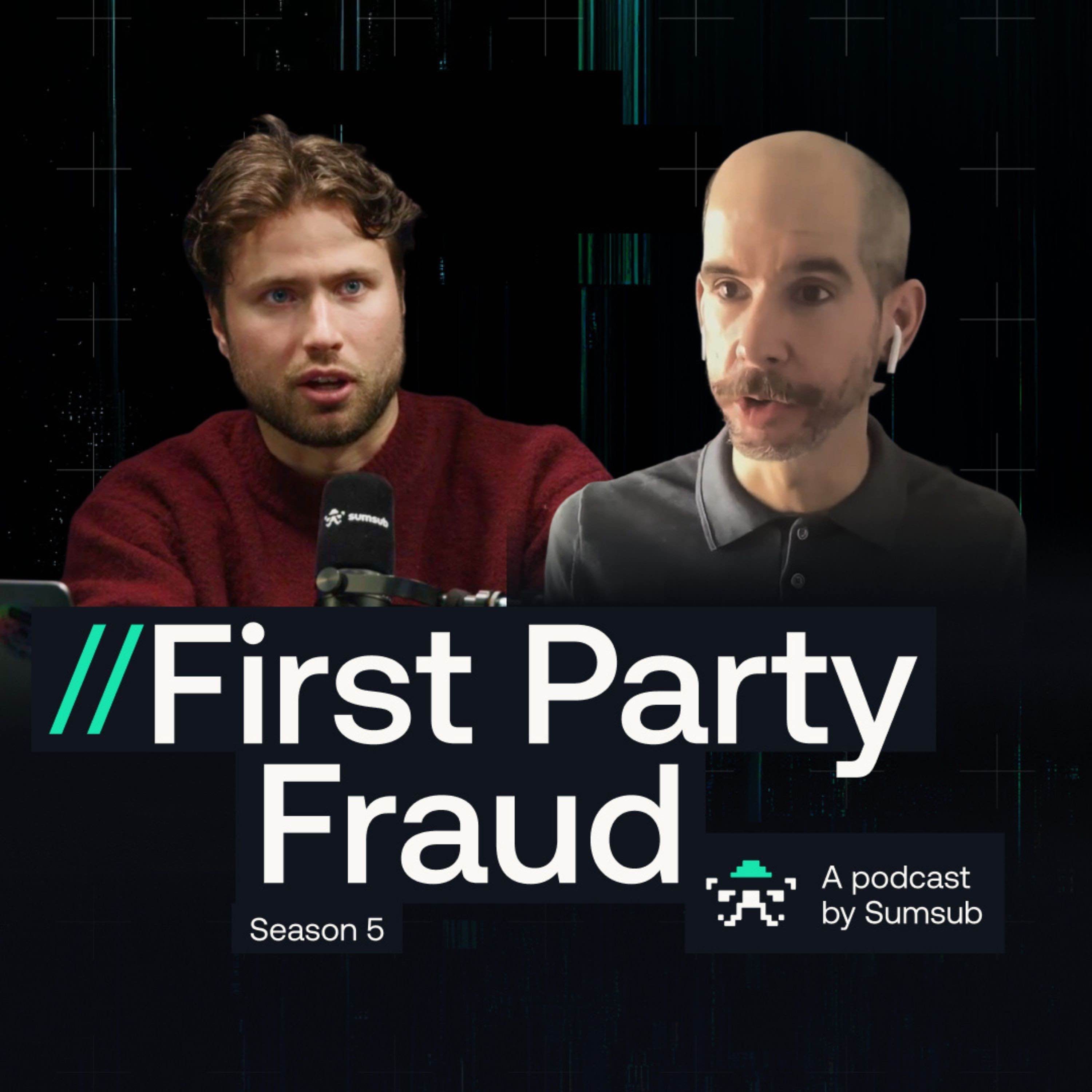
    Gaming the System: The Rise of First Party Fraud

    “What happens when the fraudster isn’t a stranger… but your own customer?” Fraud Prevention Course: https://sumsub.link/2qi Businesses spend millions verifying identities, onboarding users, and preventing external attacks. But one of the fastest-growing threats now comes from inside the perimeter: legitimate customers exploiting refunds, disputes, chargebacks, subscriptions, and reimbursement systems for personal gain. Our special guest this week is Richard Bromley, Head of Fraud and Disputes Risk at Monzo Bank. Drawing on years of experience at the sharp end of fraud prevention, Richard explains why first party fraud has become one of the most misunderstood and underestimated risks facing banks, fintechs, merchants, and payment providers today. From false scam claims and refund abuse to subscription traps, social media “hacks,” and organized criminal groups exploiting reimbursement schemes, this conversation explores how customer fraud is evolving from opportunistic behaviour into a scalable criminal model. We also examine why the term “friendly fraud” is dangerously misleading, how businesses can distinguish genuine victims from dishonest claimants, and why behavioural signals, machine learning, investigator expertise, and cross-industry collaboration are now essential to staying ahead. Sumsub's Website: sumsub.com Sumsub's LinkedIn: linkedin.com/sumsub Sumsub's Instagram: instagram.com/sumsubcom Sumsub on X: x.com/Sumsubcom Sumsub's YouTube Channel: youtube.com/@sumsubcom Thomas Taraniuk on LinkedIn: linkedin.com/in/tomtaraniuk Richard Bromley on LinkedIn: linkedin.com/in/richard-bromley-ica-dip-fcp-4b559a4a/ Hosted on Acast. See acast.com/privacy for more information.
  • April 15 · 45 min

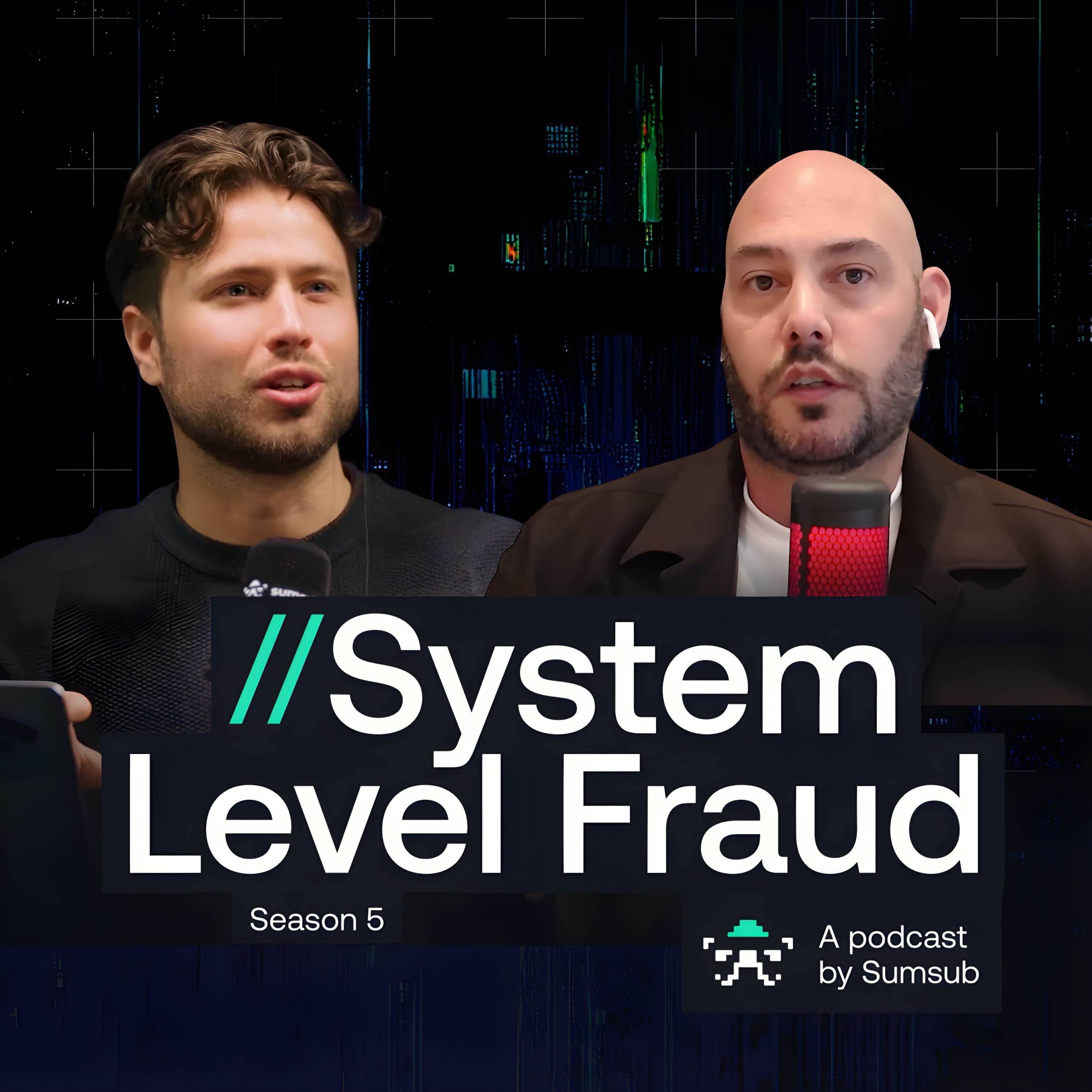
    When Systems Become the Target: The New Era of Fraud

    “Fraud is no longer about convincing a human… it’s about feeding a system.” Fraud is evolving fast. No longer limited to fake documents or stolen identities, today’s attackers are targeting the very infrastructure designed to stop them, exploiting workflows, reverse engineering systems, and operating at machine speed. In this episode, we explore how fraud has shifted from human deception to system manipulation, and why traditional defences are struggling to keep up. Our special guest this week is Maikel Ninaber, Head of Risk and Resilience for EMEA at Mastercard. Drawing on his experience breaking into systems as an ethical hacker and now defending them at scale, he shares how modern fraud attacks are designed, tested, and deployed. From camera injection attacks and emulator farms to AI-driven fraud and reverse-engineered onboarding flows, this conversation reveals how criminal operations are becoming more structured, automated, and scalable. We also explore why layered defences, real-time detection, and cross-industry collaboration are critical, and what it takes for organizations to stay resilient in a world where fraud moves at machine speed. Sumsub's Website: sumsub.com Sumsub's LinkedIn: linkedin.com/sumsub Sumsub's Instagram: instagram.com/sumsubcom Sumsub on X: x.com/Sumsubcom Sumsub's YouTube Channel: youtube.com/@sumsubcom Thomas Taraniuk on LinkedIn: linkedin.com/in/tomtaraniuk Maikel Ninaber on LinkedIn: linkedin.com/in/maikelninaber/ Hosted on Acast. See acast.com/privacy for more information.
  • April 1 · 49 min

    Know Your Agent: The New Frontier of Fraud Prevention

    "What happens when an attacker gains control of your AI agent and the outside world believes everything it does... is you?" AI agents are already booking travel, managing calendars, and handling day-to-day tasks for millions of people. But as they gain access to our accounts, finances, and personal data, a new question emerges: how do you tell a legitimate agent from a hijacked one? Our guest this week is Mick Amelishko, AI advocate and Senior Engineering Manager at Sumsub, who lives at the intersection of AI development and fraud risk every single day. Mick breaks down what AI agents actually are, why they're so powerful, and why that power makes them an increasingly attractive target for bad actors. From compromised personal assistants and prompt injection attacks to the emerging concept of Know Your Agent (KYA), this conversation explores what happens when automation becomes indistinguishable from real user behaviour. We look at how fraudsters can weaponise agent access to drain accounts, impersonate users, and cause damage across multiple platforms, and what businesses and individuals can do about it. Sumsub's Website: sumsub.com Sumsub's LinkedIn: linkedin.com/sumsub Sumsub's Instagram: instagram.com/sumsubcom Sumsub on X: x.com/Sumsubcom Sumsub's YouTube Channel: youtube.com/@sumsubcom Thomas Taraniuk on LinkedIn: linkedin.com/in/tomtaraniuk Mick Amelishko on LinkedIn: linkedin.com/in/amelishko Hosted on Acast. See acast.com/privacy for more information.
  • March 18 · 43 min

    Synthetic Identities: When Data Becomes a Persona

    “What happens when a fraudster doesn’t steal an identity… but builds one from scratch?” Synthetic identities are one of the fastest-growing threats in financial crime. Built from fragments of real and fabricated data, these identities can pass onboarding checks, behave like legitimate users for months or even years, and then suddenly “bust out”, leaving businesses with significant losses. Our special guest this week is Steve Lenderman. Drawing on decades of experience investigating fraud, Steve shares how synthetic identities are created, how they evolve over time, and why this threat has grown from a credit-card problem into a global issue affecting fintech, payroll, government programs, and beyond. From bot-generated identities and AI-assisted fraud to sleeper accounts, bust-out schemes, and synthetic businesses, this conversation explores how organized crime groups and even nation-state actors are scaling these attacks. We also look at why collaboration between industries is critical, how behavioural and device intelligence can reveal hidden patterns, and what companies can do to detect synthetic identities before the damage is done. Mentioned in this episode – how Device Intelligence detects synthetic identities early: https://sumsub.link/ykm Sumsub’s Website: sumsub.com Sumsub’s LinkedIn: linkedin.com/sumsub Sumsub’s Instagram: instagram.com/sumsubcom Sumsub on X: x.com/Sumsubcom Sumsub’s YouTube Channel: youtube.com/@sumsubcom Thomas Taraniuk on LinkedIn: linkedin.com/in/tomtaraniuk Steve Lenderman on LinkedIn: https://www.linkedin.com/in/steve-lenderman Hosted on Acast. See acast.com/privacy for more information.

  • February 5 · 40 min

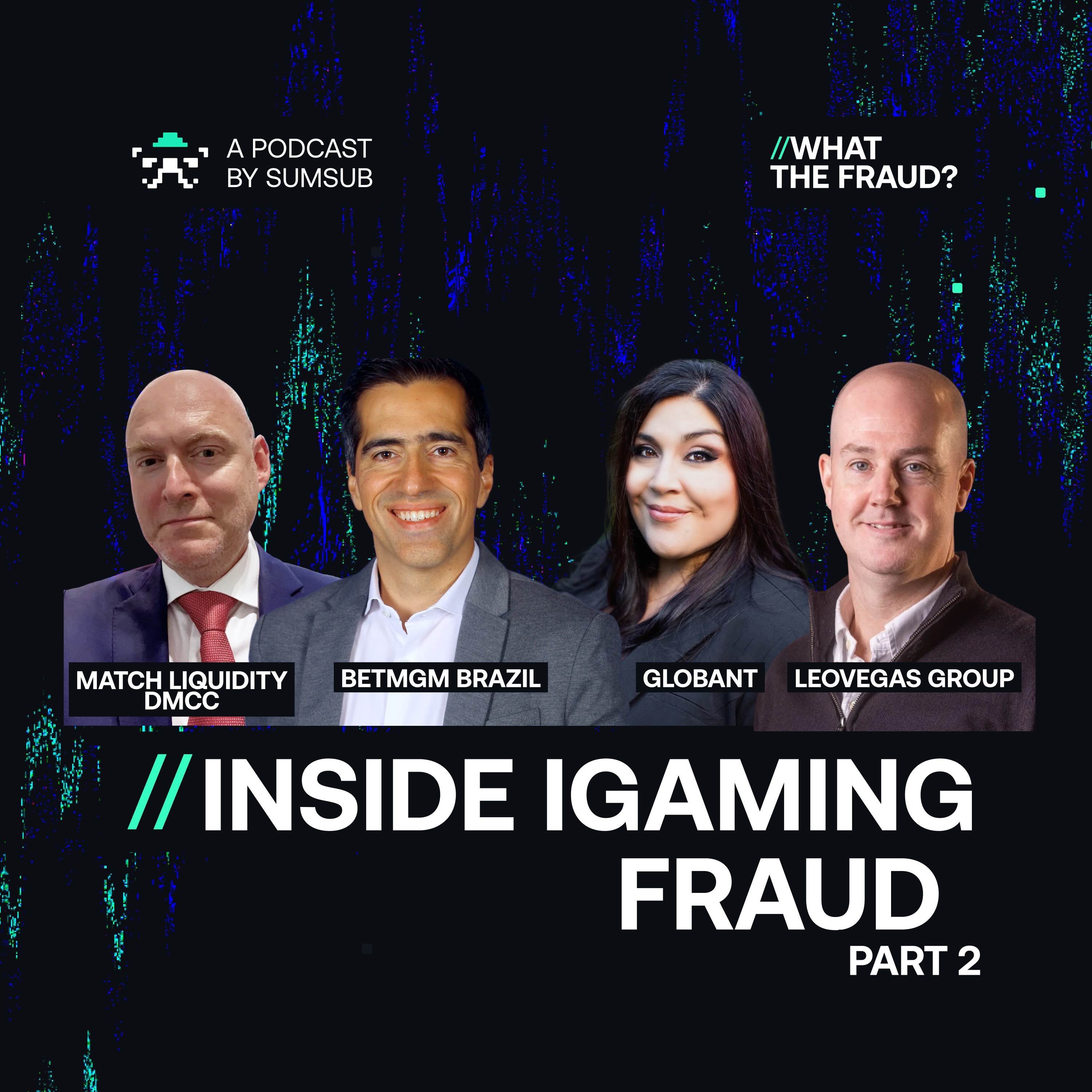
    iGaming Fraud Insights – ICE Barcelona Part 2

    Fraud in iGaming is shaping how operators grow, how regulators respond, and where investors place bets. Recorded live at ICE Barcelona in partnership with the C-Suite Podcast, this is Part 2 of our special What The Fraud? series on the widening global fraud landscape in iGaming. Kris Galloway, iGaming Product Evangelist at Sumsub, took over hosting duties and he was joined by: Daniel Xavier, COO, BetMGM Brazil Andrew Wright, Managing Director UK & Ireland, LeoVegas Group Adrianna Samuels, Vice President - Senior Client Partner | Gaming, Globant Torben Friis, Manging Director - Global Head of Distribution, Match Liquidity They cover the tension between player acquisition and fraud prevention, the ongoing challenge of unlicensed operators, Brazil’s evolving regulatory framework, why fraud risk is increasingly part of financial due diligence and investment decisions, and how major events like this year’s World Cup can open up new fraud angles for sportsbooks. From bonus abuse and multi-accounting to AI-driven threats, the episode maps how the risk environment is shifting for operators worldwide. Sumsub's website: sumsub.com Sumsub's LinkedIn: linkedin.com/sumsub Sumsub's Instagram: instagram.com/sumsubcom Sumsub on X: x.com/Sumsubcom Sumsub's YouTube Channel: youtube.com/@sumsubcom Hosted on Acast. See acast.com/privacy for more information.
  • February 4 · 39 min

    iGaming Fraud Insights – ICE Barcelona Part 1

    Unlicensed operators and AI-enabled fraud are scaling faster than most safeguards. Regulators, operators, and tech providers are being forced to rethink what “player protection” actually means, and how to enforce it across borders. This is Part 1 of 2 special episodes of the What The Fraud? podcast, recorded live at ICE Barcelona. Guest host Kris Galloway, iGaming Product Evangelist speaks with Olabimpe Akingba, Head of Responsible Gaming at pawaTech, Ludovico Calvi, Honorary Presidentof United Lotteries for Integrity in Sports, and Sarah Gardner, Deputy Chief Executive Officer at UK Gambling Commission, about where the market is breaking: responsible gaming that goes beyond box-ticking, industrialised fraud networks, underage exposure risks, and the uncomfortable reality that no single stakeholder can solve this alone. They dig into what actually moves the needle: better use of data, clearer player education, and tighter cooperation between regulators, operators, technology providers, and law enforcement. The takeaway is simple: safe, sustainable gaming will be decided by how well the industry can coordinate enforcement and prevention across jurisdictions, not by adding more isolated controls. Sumsub's website: sumsub.com Sumsub's LinkedIn: linkedin.com/sumsub Sumsub's Instagram: instagram.com/sumsubcom Sumsub on X: x.com/Sumsubcom Sumsub's YouTube Channel: youtube.com/@sumsubcom Hosted on Acast. See acast.com/privacy for more information.
  • January 7 · 45 min

    An Ex-Fraudster's Guide to Staying Safe

    "We can't possibly think of victims as being stupid." We often think of fraud victims as gullible or careless. But what if the real story is about ruthless targeting by increasingly sophisticated criminals? What if AI, deepfakes and quantum computing are making it impossible to tell what's real anymore? Our guest in this episode is Alex Wood, counter fraud expert, international keynote speaker, part of the BBC Radio 4 Scam Secrets team and, in a former life, a prolific fraudster who spent 20 years defrauding victims of millions before serving three prison sentences and turning his life around. Alex joins host Thomas Taraniuk to discuss the sophistication shift, where fraud attempts are dropping but success rates are climbing, powered by AI that makes attacks more targeted and devastating. From his former life recruiting English women as callers for organised crime networks to his current work advising the Home Office on Hawala money laundering networks funding small boat crossings, this episode reveals the insider perspective businesses need to hear. Alex explains why prison was a breeding ground for fraud conspiracies rather than a deterrent, how ChatGPT would have made him ten times more prolific and harder to catch, and why the fake Duke of Marlborough scam worked for seven months simply because luxury hotels refused to share data with competitors. Whether you're protecting your business or trying to spot the red flags in your own life, this conversation offers crucial insights into the criminal mind, the collaboration gaps that fraudsters exploit, and why the next frontier might be quantum computing breaking military grade encryption in minutes rather than months. Sumsub's website: sumsub.com Sumsub's LinkedIn: linkedin.com/sumsub Sumsub's Instagram: instagram.com/sumsubcom Sumsub on X: x.com/Sumsubcom Sumsub's YouTube Channel: youtube.com/@sumsubcom Thomas Taraniuk on LinkedIn: linkedin.com/in/tomtaraniuk Alex Wood on LinkedIn: linkedin.com/in/beatfraud/ Hosted on Acast. See acast.com/privacy for more information.
  • Dec 23, 2025 · 49 min

    Inside Sumsub's 2025 Identity Fraud Report

    "Last year, only one in 10 fraud attempts were sophisticated enough to fool modern verification systems. This year, that number's nearly tripled. Amateur fraudsters are out and professionals who know exactly how to beat our defences are in." The fraud landscape is undergoing a complete transformation. Whilst overall fraud attempts have dropped by 50%, the attacks that do occur are nearly three times more sophisticated than last year. We're witnessing the rise of coordinated, AI-powered professional operations that combine multiple attack vectors simultaneously. Our guest is Artem Popov, Technical Product Manager for Fraud Prevention Solution at Sumsub, who joins host Thomas Taraniuk to discuss findings from Sumsub's annual Identity Fraud Report, analysing over 4 million fraud attempts globally. From AI-generated synthetic identities and deepfakes fooling liveness checks to telemetry tampering that attacks verification systems themselves, this episode exposes sophisticated techniques targeting industries worldwide. Artem explains how ID cards account for 72% of fraudulent documents, why Kenya now sees deepfakes in 10% of fraud attempts, and how romance scams combine emotional manipulation with synthetic identities. This conversation offers crucial insights into the multi-layered defences needed to stay ahead of professional fraud networks investing real money, time, and talent into beating your systems. Sumsub's website: sumsub.com Sumsub's LinkedIn: linkedin.com/sumsub Sumsub's Instagram: instagram.com/sumsubcom Sumsub on X: x.com/Sumsubcom Sumsub's YouTube Channel: youtube.com/@sumsubcom Thomas Taraniuk on LinkedIn: linkedin.com/in/tomtaraniuk Artem Popov on LinkedIn: linkedin.com/in/system29a/ Hosted on Acast. See acast.com/privacy for more information.
  • Dec 11, 2025 · 38 min

    APAC Fraud Insights: Singapore WTF? Summit - Part 2

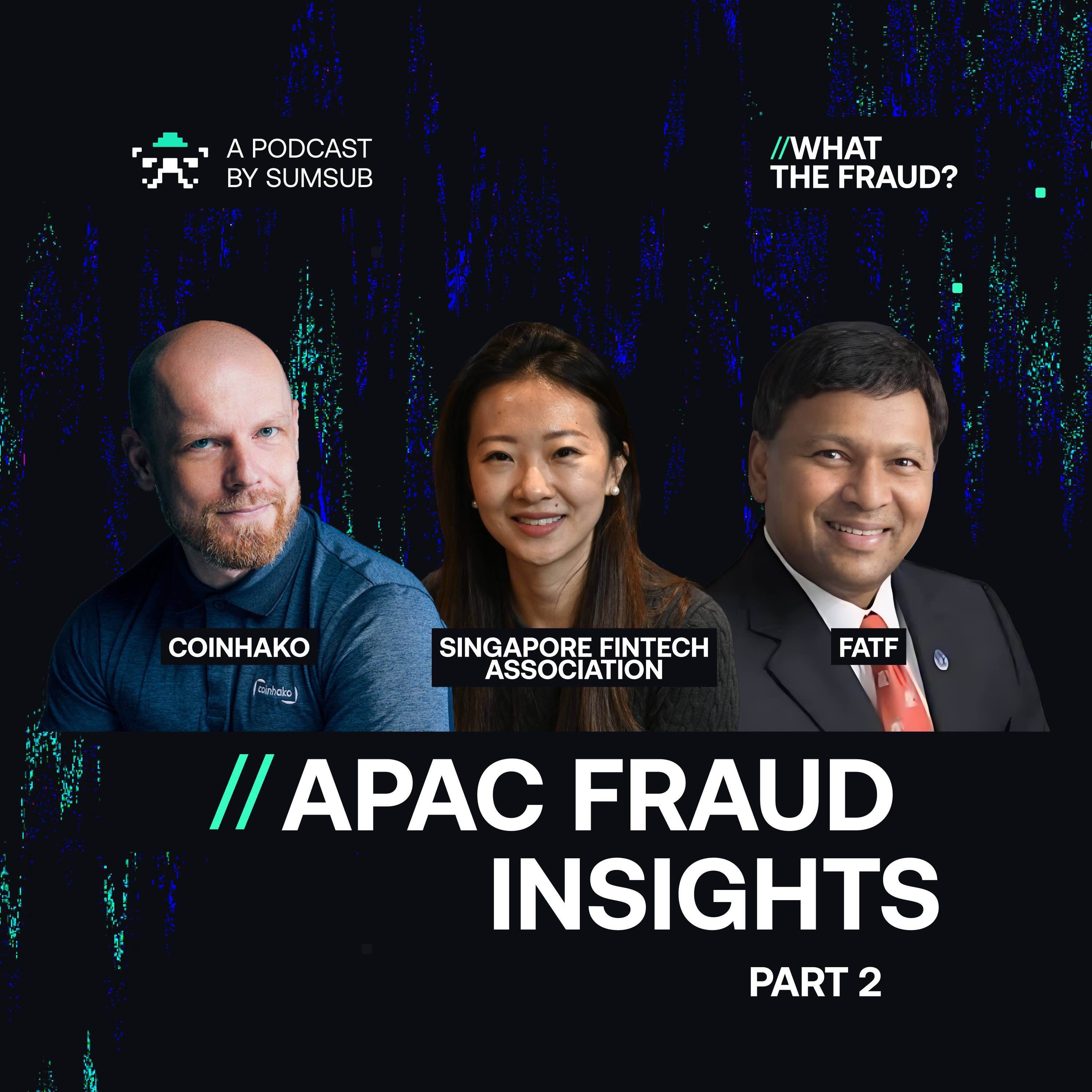
    The fraudsters have already figured out what most financial institutions haven't yet: silos don't work. While your fraud team, cyber team and compliance team operate independently with separate tools and data, criminals are exploiting the gaps between them at an industrial scale. This is part two of two special episodes recorded live at the WTF? Summit in Singapore. Host Thomas Taraniuk sits down with T Raja Kumar, former president of the Financial Action Task Force (FATF), Holly Fang from the Singapore FinTech Association, and Pasi Koistinen, CISO at Coinhako, to discuss what happens when AI becomes both weapon and shield in the fight against financial crime. T Raja Kumar reveals why cutting off money flows matters more than raiding scam compounds, Holly Fang explains why ASEAN's fragmented data sharing laws are a fraudster's playground, and Pasi Koistinen makes the case that your separate fraud, cyber and compliance systems are exactly what criminals count on. From satellite connected fraud as a service operations to the uncomfortable truth that compliance teams lack the AI skills they desperately need, this conversation cuts through the optimism. If Part 1 was about cross industry collaboration, Part 2 is about getting your own house in order first. Because before you can share threat data across borders, you need to share it across your own departments. Sumsub's website: sumsub.com Sumsub's LinkedIn: linkedin.com/sumsub Sumsub's Instagram: instagram.com/sumsubcom Sumsub on X: x.com/Sumsubcom Sumsub's YouTube Channel: youtube.com/@sumsubcom Thomas Taraniuk on LinkedIn: linkedin.com/in/tomtaraniuk T Raja Kumar on LinkedIn: linkedin.com/in/t-raja-kumar-0766317a/ Holly Fang on LinkedIn: linkedin.com/in/hollyhfang/ Pasi Koistinen on LinkedIn: linkedin.com/in/pasikoistinen/ Hosted on Acast. See acast.com/privacy for more information.
  • Dec 10, 2025 · 33 min

    APAC Fraud Insights: Singapore WTF? Summit - Part 1

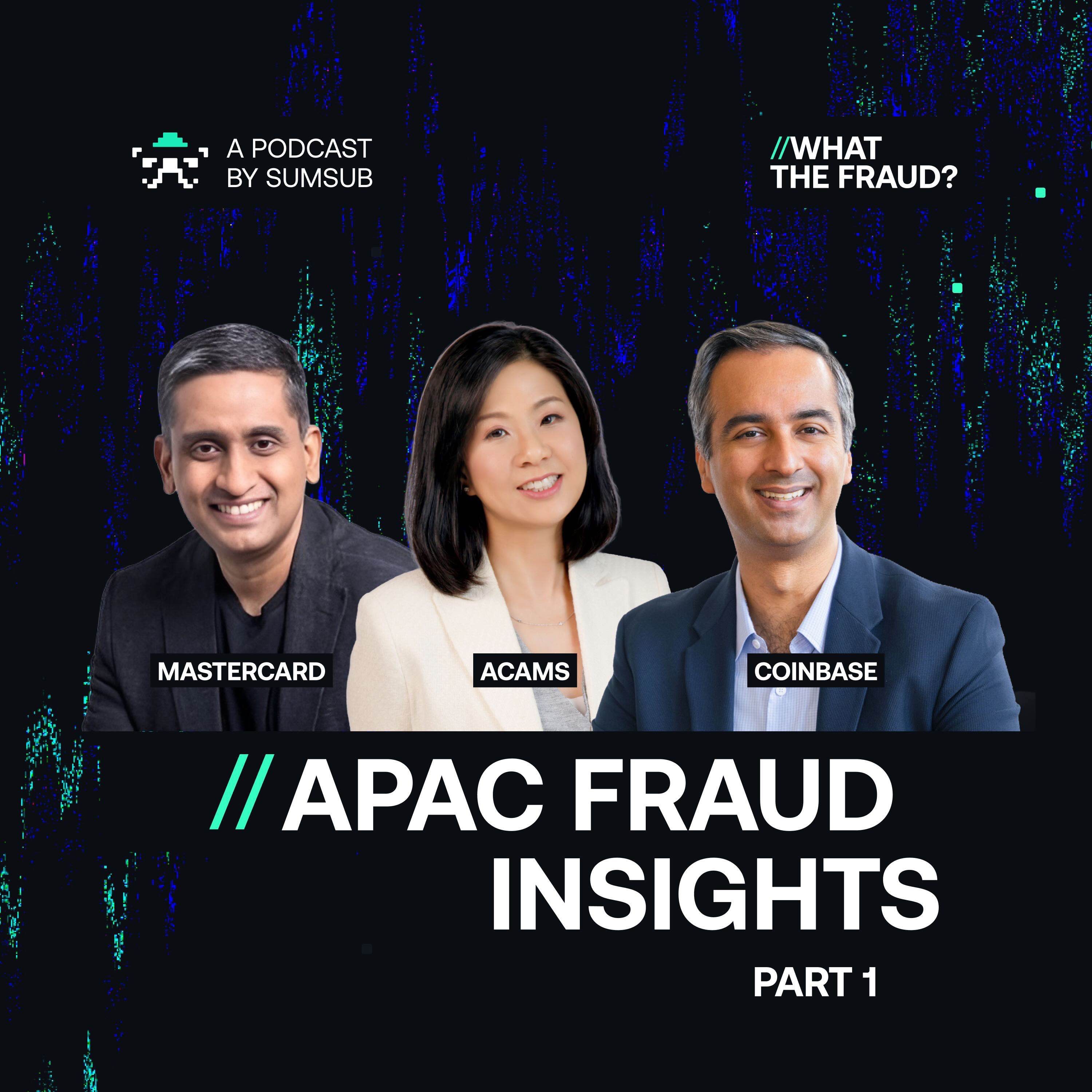
    The financial crime battlefield is shifting. What used to be separate fights against fraud and money laundering has merged into one coordinated attack on the global financial system. As scammers drain accounts and launder proceeds through mule networks faster than banks can respond, APAC is becoming ground zero for a new kind of financial warfare. Recorded live at the WTF? Summit in Singapore, this is part one of two special episodes bringing together frontline defenders. Host Thomas Taraniuk sits down with Hassan Ahmed from Coinbase Singapore, Karthik Ramanathan from Mastercard, and Caryn Leong from ACAMS to discuss how the industry is responding to an evolving threat landscape. From sophisticated deepfakes to money vanishing across borders in minutes, this conversation reveals why fraud networks work together seamlessly while banks are struggling to share data. Hassan explains why Singapore's proactive approach to digital assets sets the standard for Asia, Karthik reveals how mule accounts are the real battleground (not the final transaction), and Caryn makes the case for why compliance teams need to act like crisis responders, not process managers. If you're building in payments, crypto, or financial services across APAC, this episode is your reality check on what's coming in 2026 and why speed matters more than perfection. Sumsub's website: sumsub.com Sumsub's LinkedIn: linkedin.com/sumsub Sumsub's Instagram: instagram.com/sumsubcom Sumsub on X: x.com/Sumsubcom Sumsub's YouTube Channel: youtube.com/@sumsubcom Thomas Taraniuk on LinkedIn: linkedin.com/in/tomtaraniuk Hassan Ahmed on LinkedIn: linkedin.com/in/hassanahmed3 Karthik Ramanathan on LinkedIn: linkedin.com/in/karthik-ramanathan-446738 Caryn Leong on LinkedIn: linkedin.com/in/carynleong/ Hosted on Acast. See acast.com/privacy for more information.
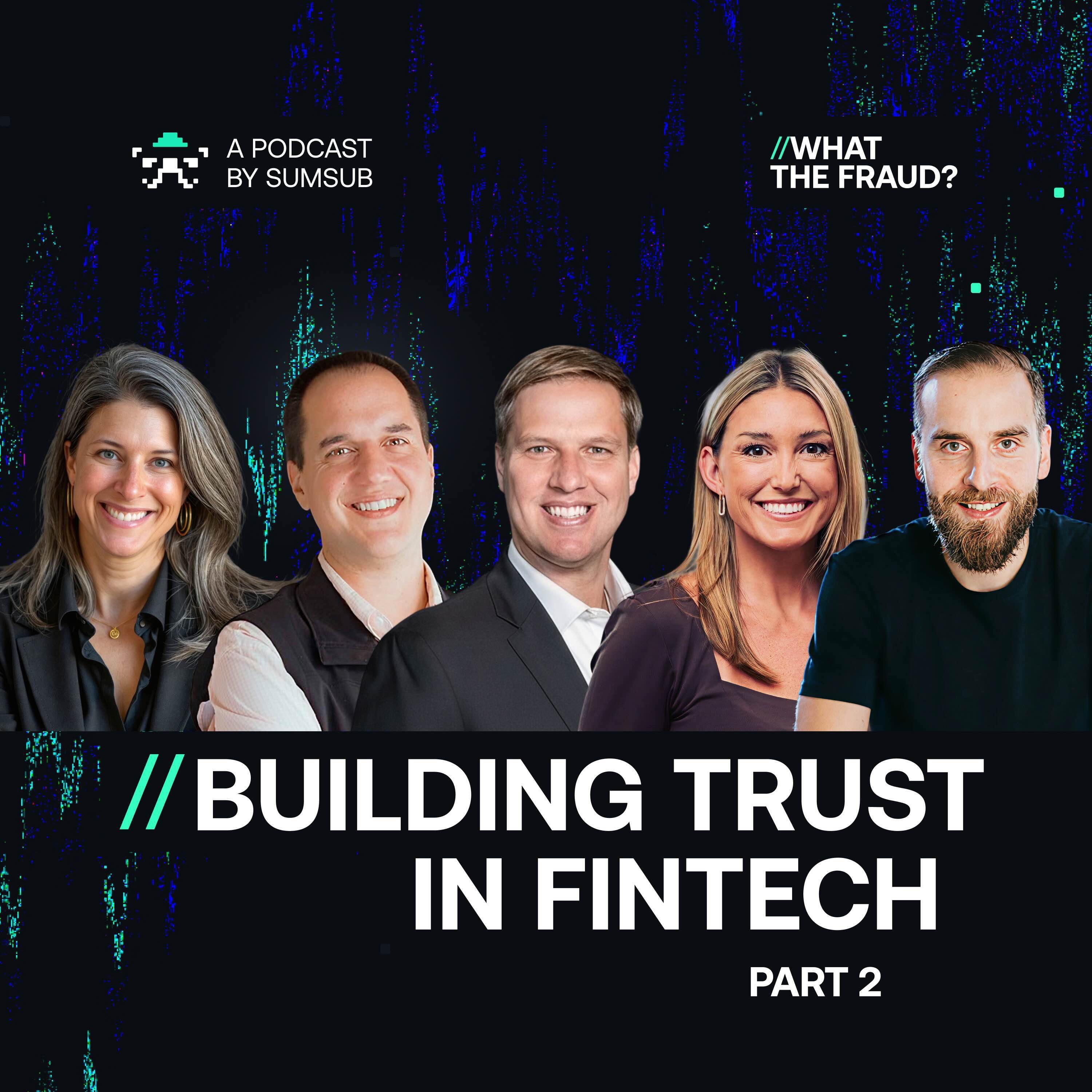
  • Nov 26, 2025 · 44 min

    Glovo's Fraud Playbook: From Free Lunches to Money Laundering

    "Fraud is a lot more popular today than it was 10 years ago simply because today you can advertise fraud on TikTok, Snapchat, whatever platform, and you can just have tutorials on how to gamify anything you want at your doorstep." We think of fraudsters as criminals behind laptops, draining accounts without conscience. But what about that free lunch you claimed on your delivery app or the refund you knew wasn't deserved? Could you be part of the problem too? As the on-demand delivery industry explodes, it's creating new opportunities not just for convenience, but for fraud at every touchpoint. Our guest in this episode is Boris Montin, FinTech Director at Glovo, who joins host Thomas Taraniuk to discuss how delivery platforms navigate fraud across countries, balancing frictionless customer experiences with robust security measures. From opportunistic coupon abusers and professional fraudster networks to merchant money laundering and SMS verification scams in Central Asia, this episode reveals the creative schemes targeting delivery platforms. Boris explains how Glovo uses AI and machine learning to detect fraud in real time, why the "perfect level of fraud" is actually about acceptable friction, and how the democratisation of fraud through social media is changing the game. Whether you're ordering dinner or building a marketplace, this conversation offers crucial insights into protecting platforms whilst keeping customers happy. Sumsub's website: sumsub.com Sumsub's LinkedIn: linkedin.com/sumsub Sumsub's Instagram: instagram.com/sumsubcom Sumsub on X: x.com/Sumsubcom Sumsub's YouTube Channel: youtube.com/@sumsubcom Thomas Taraniuk on LinkedIn: linkedin.com/in/tomtaraniuk Borin Montin on LinkedIn: linkedin.com/in/montinboris/ Hosted on Acast. See acast.com/privacy for more information.

  • Nov 13, 2025 · 37 min

    When Growth Meets Guardrails at Money20/20 Part 2

    Fraud got faster. Your strategy has to be smarter. So what do leaders who rethink risk do to stay ahead? For part two of this special episode of What the Fraud?, Sumsub’s Sales Director, Americas, Anastasia Shvechkova, sits down with five operators who are scaling trust without slowing growth. Recorded live at Money20/20 USA, this episode brings insight from leaders at Standard Chartered, Ebanx, ACAMS, Adyen, and Nubank. We dive into the modernization of dollar infrastructure, tackling fraud in emerging markets, evolving AML standards, breaking down data silos, navigating Web3 compliance, managing BNPL risk, and tracking the rising role of AI in global payments. A wide-ranging look at the shifts redefining trust, innovation, and financial crime prevention. Guests: Jennifer Lassiter, Head of Digital Assets for Europe & Americas at Standard Chartered André Peixoto, Director of Operations at EBANX Craig Timm, Senior Director of AML at ACAMS Brigette Korney, Global Head of Risk at Adyen Nathan Marion, Head of B2B at Nubank Sumsub's website: sumsub.com Sumsub’s What The Fraud Summit: https://sumsub.com/wtf-summit/ Sumsub's LinkedIn: linkedin.com/sumsub Sumsub's Instagram: instagram.com/sumsubcom Sumsub on X: x.com/Sumsubcom Sumsub's YouTube Channel: youtube.com/@sumsubcom Anastasia Shvechkova: https://www.linkedin.com/in/anastasia-shvechkova-878344118/ Jennifer Lassiter: https://www.linkedin.com/in/jbrookslassiter/ André Peixoto: https://www.linkedin.com/in/andr%C3%A9-peixoto-691a93150/ Craig Timm: https://www.linkedin.com/in/craig-timm-4942626/ Brigette Korney: https://www.linkedin.com/in/brigette-korney/ Nathan Marion: https://www.linkedin.com/in/nathanlmarion/ Hosted on Acast. See acast.com/privacy for more information.

Showing 1–20 of 20 episodes