Skip to content
Artwork for WanderLearn: Travel to Transform Your Mind & Life
Society & CulturePlaces & TravelTechnology

WanderLearn: Travel to Transform Your Mind & Life

Francis Tapon

Take a profound and distant journey. Call it Deep Travel, Immersive Travel, Slow Travel, or Vagabonding. Francis Tapon guides you to the intersection of travel, technology, and transformation. The podcast will compel you to go beyond your comfort zone.

ftapon.substack.com
Play
  • 31 episodes
  • weekly
  • Avg 17 min
  • English
Counted on this page — what you have heard stays on this device, so it is not something the list can be paged by.
  • #420
    Yesterday · 34 min

    What is the Feldenkrais Method?

    Peggi Hoing has decades of experience in the Feldenkrais Method. Watch on YouTube Timeline 00:00 Who can the Feldenkrais Method help? 05:00 Healing yourself 06:55 Humanity’s progress 08:25 What do we do wrong? 10:00 Power of belief 11:45 Mistakes parents do with infants 16:30 African ways of raising children 20:40 Being vs. Doing 24:20 When is a physical problem not physical? 27:40 Conclusion What is Feldenkrais? Each of us has our own specific habitual movement patterns that also reflect our emotional state, thoughts, and physical being. These ways of knowing ourselves are familiar, and too often, these patterns require too much effort. It is a cultural condition of “muscling through” – that sense of resistance that we have learned with the mindset of “no pain, no gain.” Over time, this unnecessary muscular effort generates excessive heat and friction, and without awareness of other options, it becomes inflammation. This chronic wear and tear manifests in the stress, pain, and discomfort we all experience at some point in our lives. The Feldenkrais Method is a dynamic learning system that had its first training program in 1969 in Tel Aviv by Dr. Moshe Feldenkrais. His incredible life story led him to develop this learning-through-movement method. He observed how infants learn through movement and developed his own method for rehabilitating injuries during WWII, when the medical model’s remedies were insufficient. Your first experience with Feldenkrais, whether with a hands-on Functional Integration® (FI) session or an Awareness Through Movement® (ATM) class, will bring about a dramatic shift in your comfort. The learning process is ongoing even in the current COVID environment, where we have now developed All that is necessary is a thirst for learning and a curiosity to go beyond what you know, making slow, mindful, small movements to compare and distinguish differences. Who is Peggi? Peggi Honig has been teaching Awareness Through Movement classes for sixteen years. She is currently a Guild-certified Assistant Trainer who travels nationally to work in Feldenkrais Training Programs and also has a private practice in Maryland. Peggi is certified as a North American Guild Practitioner. Peggi’s experience in music and culinary arts led her in the late 1990s to an extensive background in mind-body modalities, including Somatic Education, Hypnotherapy, NeuroLinguistic Programming, Swedish and Deep Tissue Integrated Massage, CranioSacral, Lymph Drainage, and Positional Release.Her passion for human functional anatomy is evident in her teaching and gentle hands-on approach. Connect with me! Send me an anonymous voicemail at SpeakPipe.com/FTapon You can post comments, ask questions, and sign up for my Substack newsletter. If you like this podcast, subscribe and share! On social media, my username is always FTapon. Connect with me on: * YouTube * Facebook * Instagram * X * TikTok * LinkedIn Sponsors 1. My Patrons sponsored this show! Claim your monthly reward by becoming a patron for as little as $2/month at https://Patreon.com/FTapon 2. For the best travel credit card, get one of the Chase Sapphire cards and get 75-100k bonus miles! 3. Get $5 when you sign up for Roamless, my favorite global eSIM with its unlimited hotspot & data that never expires! Use code LR32K 4. Or get 5% off when you sign up with Saily, another global eSIM with a built-in VPN & ad blocker. 5. Get 25% off when you sign up for Trusted Housesitters, a site that helps you find sitters or homes to sit in. 6. Start your podcast with my company, Podbean, and get one month free! 7. In the United States, I recommend trading cryptocurrency with Kraken. 8. Outside the USA, trade crypto with Binance and get 5% off your trading fees! 9. For backpacking gear, buy from Gossamer Gear 10. Get nomadic travel insurance from SafetyWing! Get full access to Francis Tapon at ftapon.substack.com/subscribe

    • Transcript
  • #419
    Tuesday · 11 min

    Election Predictions! Vote today!

    Sym Blanchard and I recorded this 12-minute episode yesterday. We predict the winners of today's key political races in the US. More episodes with Sym Blanchard! What do you think? Put your thoughts in the comments. Connect Send me an anonymous voicemail at SpeakPipe.com/FTapon You can post comments, ask questions, and sign up for my Substack newsletter. If you like this podcast, subscribe and share! On social media, my username is always FTapon. Connect with me on: * YouTube * Facebook * Instagram * X * TikTok * LinkedIn Sponsors 1. My Patrons sponsored this show! Claim your monthly reward by becoming a patron for as little as $2/month at https://Patreon.com/FTapon 2. For the best travel credit card, get one of the Chase Sapphire cards and get 75-100k bonus miles! 3. Get $5 when you sign up for Roamless, my favorite global eSIM with its unlimited hotspot & data that never expires! Use code LR32K 4. Or get 5% off when you sign up with Saily, another global eSIM with a built-in VPN & ad blocker. 5. Get 25% off when you sign up for Trusted Housesitters, a site that helps you find sitters or homes to sit in. 6. Start your podcast with my company, Podbean, and get one month free! 7. In the United States, I recommend trading cryptocurrency with Kraken. 8. Outside the USA, trade crypto with Binance and get 5% off your trading fees! 9. For backpacking gear, buy from Gossamer Gear 10. Get nomadic travel insurance from SafetyWing! Get full access to Francis Tapon at ftapon.substack.com/subscribe

    • Transcript
  • #418
    October 23 · 26 min

    ‘The Formula of Desire’ with Anna Elton

    Are you in a sexless relationship? Watch this video! Sometimes almost everything in a relationship is working, but the passion is gone. Anna Elton’s new book The Formula of Desire, explains how you can reignite that passion. The book’s website has a free assessment. Timeline 00:00 Four elements of desire 02:45 The 7-7-7 Rule 05:45 Alphabet Date List 11:19 Before you speak 15:20 How to ask 17:00 Touch during conflict 19:20 Platinum rule 22:10 Kids Whether you're in a sexless relationship or you want to avoid turning into one, this book is helpful. Anna Elton looks at the conditions that tend to create desire. These include: "attention, emotional safety, novelty, and the ongoing exchange of desire. When those elements are present, passion tends to appear. When they’re missing, it fades." She discusses • Openness—engaging in honest, vulnerable conversations • Assurance—communicating commitment, appreciation, and reassurance • Shared social networks—integrating friends, family, and community • Task sharing—collaborating on daily responsibilities and problem-solving Elton lists date activities in alphabetical order and writes, "Intentional variety matters. Some couples find it helpful to think alphabetically, not as a rule to follow, but as a simple way to break out of autopilot and expand what a “date” can look like." Here are excerpts from the book that will motivate you to buy it "Simple behaviors such as expressing affection, engaging in shared tasks, and offering verbal reassurance help couples stay emotionally engaged" * “Work demands you. You simply can’t be in three different places at the same time. Calendars fill up, and the couple persona gradually moves out of focus, often not through conflict, but through the quiet absence of intentional time together. The exercise below is designed to make that time visible again.” * THE 7–7–7 RULE: It offers an easy, predictable system to keep connection from slipping through the cracks. * Every 7 days: Create intentional connection time. This can be a low-key ritual—a walk after dinner, a slow morning coffee, a tech-free hour on the couch, or anything that deliberately puts “us” back on the calendar. * Every 7 weeks: Plan a romantic or intimate evening together. Not errands. Not a family event. A real night focused on closeness, desire, or play—something that reminds you of who you are together outside of household roles. * Every 7 months: choose a reset experience or getaway. This might be a night away, a staycation, a day trip, or trying something entirely new you’ve never done together * Connection: Share a hug, rest a hand on each other’s shoulder, or a slow kiss that lasts at least five seconds. Sustained touch triggers oxytocin and lowers stress. * Check-In: Ask, “What was the high and low of your day?” Take turns listening without jumping into solutions. Builds emotional attunement and shows care.” * “1. Is it true? 2. Is it kind? 3. Is it helpful? If the answer is no to any of these questions, it may be wiser to pause and reconsider before speaking. You can still express frustration, but how you express it shapes what happens next.” * "The next time you ask for help, include the timing. Use this simple format: “I need ___________ by ___________ because ___________. Does that work for you?” * “Partners regulate conflict differently. Some need closeness to feel safe again, while others need space to settle their nervous system before they can reconnect.” * “A sexless marriage is defined as having sex fewer than ten times a year.” * “It starts with us, and it ends with us,” she said. “When we got married and decided to have kids, we agreed that our relationship comes first. You’re probably wondering, ‘What about the kids? Of course they matter. But we realized that if we lost this connection, we’d all lose.’” VERDICT: Filled with practical advice, this book will help reenergize desire or prevent it from fading. What do you think? Put your thoughts in the comments. Connect Send me an anonymous voicemail at SpeakPipe.com/FTapon You can post comments, ask questions, and sign up for my Substack newsletter. If you like this podcast, subscribe and share! On social media, my username is always FTapon. Connect with me on: * YouTube * Facebook * Instagram * X * TikTok * LinkedIn Sponsors 1. My Patrons sponsored this show! Claim your monthly reward by becoming a patron for as little as $2/month at https://Patreon.com/FTapon 2. For the best travel credit card, get one of the Chase Sapphire cards and get 75-100k bonus miles! 3. Get $5 when you sign up for Roamless, my favorite global eSIM with its unlimited hotspot & data that never expires! Use code LR32K 4. Or get 5% off when you sign up with Saily, another global eSIM with a built-in VPN & ad blocker. 5. Get 25% off when you sign up for Trusted Housesitters, a site that helps you find sitters or homes to sit in. 6. Start your podcast with my company, Podbean, and get one month free! 7. In the United States, I recommend trading cryptocurrency with Kraken. 8. Outside the USA, trade crypto with Binance and get 5% off your trading fees! 9. For backpacking gear, buy from Gossamer Gear 10. Get nomadic travel insurance from SafetyWing! Get full access to Francis Tapon at ftapon.substack.com/subscribe

    • Transcript
  • #417
    October 16 · 37 min

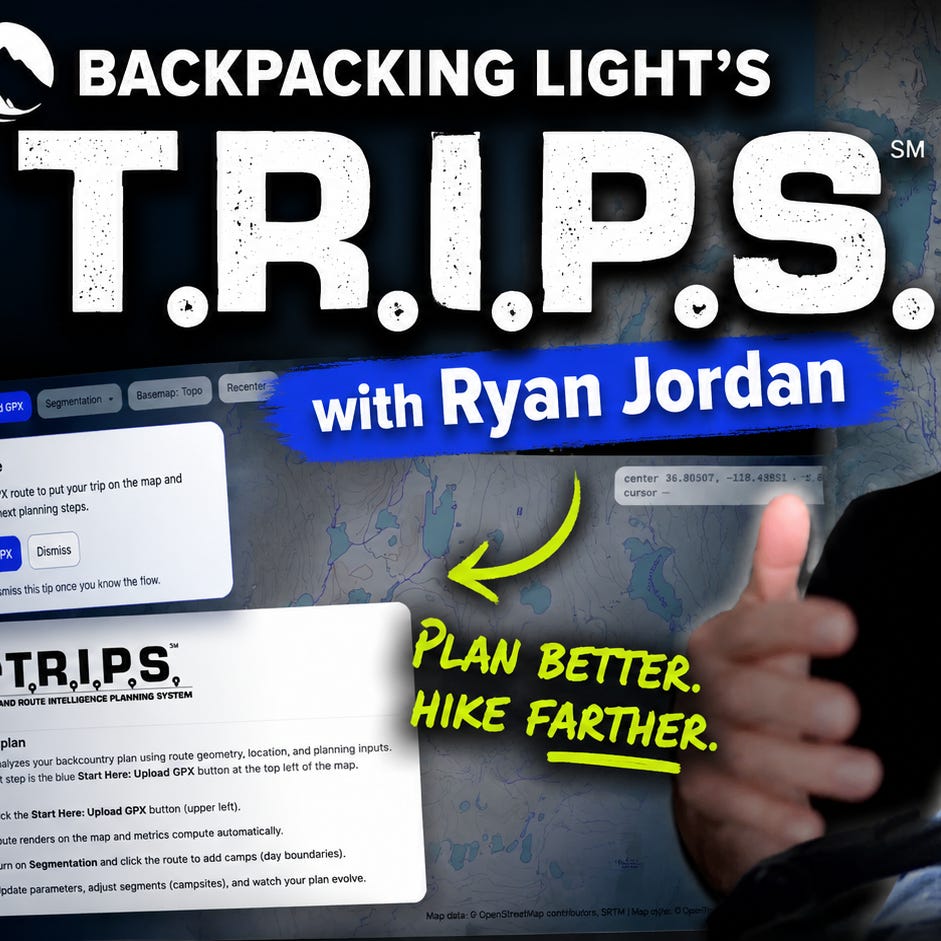
    Backpacking Light's TRIPS with Ryan Jordan

    After the first 8 minutes, Ryan Jordan dives into the TRIPS demo, so you’ll want to see the video version of this podcast. Timeline 00:00 Intro 01:00 Three compliments 07:40 TRIPS Basic 18:00 TRIPS Pro 33:55 Price Background I’m a lifetime member of Backpacking Light (BPL), and I’m excited to use TRIPS. In the show, I mention Ryan’s epic Arctic 1000 trek. His PDF summary of the journey is still a fantastic read decades later. Podcast summary We primarily discuss TRIPS, a new backcountry-planning application that converts a GPX route into a detailed estimate of how difficult a backpacking trip will be. The tool incorporates factors such as route geometry, elevation, campsites, pack weight, and the hiker’s physiology. Before discussing the app in depth, I congratulate Jordan on two achievements: * BackpackingLight’s paid membership model: I admit I once doubted that backpackers would pay for online information, but Jordan proved me wrong by building a successful subscription-based website. Jordan explains that the key is offering enough value for people to invest in their passions. * The Arctic 1000 expedition: I recall Jordan’s earlier ultralight expedition in Alaska, involving three men attempting to travel approximately 1,000 kilometers—about 622 miles—without resupply. They used Alaska’s continuous summer daylight strategically, hiking during the “night” and sleeping during the day to reduce the amount of cold-weather gear they needed to carry. The episode’s central theme is the movement from relying on intuition and experience in trip planning toward using data, physiology, route analysis, and equipment weight to model the actual demands of a wilderness journey. What do you think? Put your thoughts in the comments. Connect Send me an anonymous voicemail at SpeakPipe.com/FTapon You can post comments, ask questions, and sign up for my Substack newsletter. If you like this podcast, subscribe and share! On social media, my username is always FTapon. Connect with me on: * YouTube * Facebook * Instagram * X * TikTok * LinkedIn Sponsors 1. My Patrons sponsored this show! Claim your monthly reward by becoming a patron for as little as $2/month at https://Patreon.com/FTapon 2. For the best travel credit card, get one of the Chase Sapphire cards and get 75-100k bonus miles! 3. Get $5 when you sign up for Roamless, my favorite global eSIM with its unlimited hotspot & data that never expires! Use code LR32K 4. Or get 5% off when you sign up with Saily, another global eSIM with a built-in VPN & ad blocker. 5. Get 25% off when you sign up for Trusted Housesitters, a site that helps you find sitters or homes to sit in. 6. Start your podcast with my company, Podbean, and get one month free! 7. In the United States, I recommend trading cryptocurrency with Kraken. 8. Outside the USA, trade crypto with Binance and get 5% off your trading fees! 9. For backpacking gear, buy from Gossamer Gear 10. Get nomadic travel insurance from SafetyWing! Get full access to Francis Tapon at ftapon.substack.com/subscribe

    • Transcript
  • #416
    October 9 · 21 min

    Genital Mutilation in Gambia

    There are spoilers in this podcast! Watch this show on YouTube! Around 1980, Linda Gambia was a Peace Corps volunteer in Gambia. In 2026, she had reflected enough about the life-changing experience to pen a memoir about it. It’s called The Geography of Desire. This is part two of a two-part podcast. Timestamps 00:00 Husband’s reaction 04:00 Kabir update 05:00 Senegambia 06:45 Book title 10:00 Smartphones 10:50 FGM & MGM 12:30 Peace Corps as a senior If you missed part 1, watch it now! What do you think? Put your thoughts in the comments. Connect Send me an anonymous voicemail at SpeakPipe.com/FTapon You can post comments, ask questions, and sign up for my Substack newsletter. If you like this podcast, subscribe and share! On social media, my username is always FTapon. Connect with me on: * YouTube * Facebook * Instagram * X * TikTok * LinkedIn Sponsors 1. My Patrons sponsored this show! Claim your monthly reward by becoming a patron for as little as $2/month at https://Patreon.com/FTapon 2. For the best travel credit card, get one of the Chase Sapphire cards and get 75-100k bonus miles! 3. Get $5 when you sign up for Roamless, my favorite global eSIM with its unlimited hotspot & data that never expires! Use code LR32K 4. Or get 5% off when you sign up with Saily, another global eSIM with a built-in VPN & ad blocker. 5. Get 25% off when you sign up for Trusted Housesitters, a site that helps you find sitters or homes to sit in. 6. Start your podcast with my company, Podbean, and get one month free! 7. In the United States, I recommend trading cryptocurrency with Kraken. 8. Outside the USA, trade crypto with Binance and get 5% off your trading fees! 9. For backpacking gear, buy from Gossamer Gear 10. Get nomadic travel insurance from SafetyWing! Get full access to Francis Tapon at ftapon.substack.com/subscribe

    • Transcript
  • #415
    October 2 · 26 min

    What's the Chance That Jost Will Die on Everest?

    In last week’s episode, Jost Kobusch, a 32-year-old German mountaineer who summited Denali in winter, said he had a 20% chance of summiting Everest in winter, alone, without supplemental oxygen, and following a rarely climbed route, the dangerous West Ridge. In today’s episode, I begin by asking him for his odds of death. Watch on YouTube Timeline 00:00 Chance of dying 03:40 Climbing in the dark 08:45 Getting to base camp 12:30 Lessons from previous Everest climbs 15:30 Biggest worry 18:30 Acclimatization technology Watch previous episodes with Jost Follow Jost YouTube Instagram What do you think? Put your thoughts in the comments. Transcript Disclosure: I used AI to generate this transcript, so it may be slightly inaccurate. Francis: It’s amazing when you take these risks. We just lost Nims Dai, the great climber who did all the fourteen eight-thousand-metre peaks — quite famous, had a Netflix series, etc. — and there are countless others who have died. I can’t imagine that death doesn’t weigh on you. What’s the percentage chance you think — you said about a twenty percent chance you’ll make it, maybe thirty percent, something like that? What about the chance that you just... die? Morbid question, sorry, but I’ve got to be direct. Jost: I like your questions. You could be German, you know. Francis: Yeah, I’m definitely not American — Americans are too... Germans are more direct. Francis: So what do you think? What’s the chance that you’re going to die? I don’t care about your parents, I don’t care whether they’re sponsoring your journey or any of that other stuff. Are you going to die or not? Jost: I’m of course strongly biased on this question, because — as we all know — you rarely see it coming yourself. You always think, “it’s not going to be me, it’s going to be that guy.” It’s a bit like going to war — you know people die in war, but you think it’s going to be the next guy, not you. So I would definitely not say it’s zero. Even though I think I’m playing it super safe, because ultimately I’ve been on projects where I’ve turned around because it just didn’t align — I go back home. And honestly, as a professional alpinist, I can’t afford to just go and go again — it’s my life savings, holidays pulled together over three years, and I might get fired over the wrong call. So I need to be able to come back, and that gives me a much bigger safety margin, apart from the skill set. But it’s not zero, by definition, because there are risks you cannot calculate. They’re just there — they’re the essence of alpinism. Otherwise it would be a ritualized sport with rules, like basketball or hockey, where you don’t die. Part of alpinism is that risk. So I’d say the percentage is there, but it’s lower single digits. Francis: Okay, wow. So you’re pretty confident — which, again, makes sense, because you probably wouldn’t be doing this if you felt there was an eighty percent chance of death. Some people might, but it sounds like it’s on your radar; you recognize it, but you’re not treating it as high risk because you’re going to play it as safe as you can. Jost: As safe as I can. The goal is not the summit — the goal is to survive. Whenever we do alpinism, we put ourselves in danger to survive the danger. When you reach the summit, you haven’t achieved anything yet. The summit in itself isn’t the goal — the goal is to be back down safely. The summit is halfway through the marathon, but the other half is going to be much tougher. That’s the part where you lack attention, where you get injured. You should not mistake the summit for the goal. The real goal is being back home. Francis: Yeah, and most people who mountaineer die on the way down — that’s where they let their guard down. I remember one guy — a Japanese climber, I think it was around 1980 — the first person to climb Mount McKinley, Denali, in winter. He made it to the summit but didn’t make it back down. He radioed from the summit, and then they never heard from him again. There are countless stories like that, certainly on Everest, of people dying on the way down. So you have to keep that focus. Which brings up another issue — if you make your big push, Jost, from around 7,500 metres straight up over a thousand metres to the summit, it seems like you’d run out of daylight. Even starting at midnight, it seems like a huge push, and you might have to come back down at night since there’s a lot less daylight in winter. What are the logistics? Would you have to spend a night out — because that’s really dangerous, even more so in winter than in May or June? Jost: First of all, I wouldn’t start as late as midnight — a starting time would be more like 10 p.m. So you move up in the dark, and depending on speed, I might have to call it off. If I feel the pace isn’t sufficient, I’ll call it off — because if you do spend a night out and there’s wind, your chances of survival are extremely low at that altitude, especially bivvying. If you keep moving, if you can keep climbing, it can be fine. For example, when I climbed Denali — the same peak where Naomi Uemura was lost on descent — I kept moving even though it was minus 75 with windchill. It was so cold the liquid in my eyes turned to honey, and when I closed them they froze shut — I had to open them with my fingers. But because I kept moving, it was fine. If you sit down somewhere, most people don’t survive once there’s any wind. So logistically, I now have a significant advantage compared to Uemura and many others: even in the dark in winter — and I descended Denali in the dark in winter — I’m following a GPS track on my watch. Without that, you can get lost, make mistakes, fall. My big advantage is that even in the dark I can keep moving, and through movement I generate heat and make progress. My route will be tracked on the watch — it’s steep, but the watch is accurate enough to guide me back. That’s one of the biggest technological advances in alpinism, in my opinion. Francis: I imagine you’ll have a good lightweight but very powerful headlamp too. Jost: Of course. And I’ll have a power bank to charge it in case it fails, and a power bank for the watch too, because we’re talking extreme temperatures and many, many hours. There are also some key metrics I’ll be checking to decide whether it makes sense to continue. One big change this time: on the previous three attempts, I was really just focused on learning. Now, for the first time, I’m mentally allowing myself to plan the expedition so that I’m actually set up for a potential summit push. Everything I’ve learned over the years is going into this expedition, and I’m slowly aligning it more toward the summit itself. That feels different mentally, because I’m now actually visualizing the summit push — I’ve already scouted the place I’d start it from. It feels more tangible than ever before, and I feel as prepared as I’ve ever been. Francis: That’s great to hear. What about the logistics of getting from Kathmandu to Everest Base Camp? Normally that route is shut down in winter — very few people make the classic trek. Are you going with yaks, on foot, or by helicopter? What’s your plan? Jost: I’ll first be in the Annapurna region, then the Manaslu region, for acclimatization, focusing on first ascents. Then at the start of November I’ll relocate to Lukla — a normal flight route — and stay there a bit for training, because an expedition itself isn’t good training, so I need training blocks in between. Then I’m looking at some first ascents in the Khumbu region, to acclimatize further and explore. As for equipment: traditionally you’d use yaks and a lot of gear — a kitchen tent, dining tent, shower tent, personal tent, a cook, a second cook, and so on, plus a lot of food. My logistics are very light, for two reasons. First, I honestly don’t need much — I’m a solo climber. Second, the impact — both on the environment and the budget — is much smaller without heavy infrastructure. I’ll have 75 kilograms of equipment carried by three porters. My idea is to employ three people who carry rather than give the money to one driver — a bit of social sustainability. It’s low season, there are fewer jobs, so in a way I’m providing work for three people instead of one. They just carry the equipment to base camp, and from there I carry everything myself. The logistics couldn’t be simpler. Francis: Is the base camp the same as the famous Everest base camp most Khumbu Icefall expeditions launch from, or is it different since you’re going up the West Ridge? Jost: The West Ridge doesn’t change the starting location — I’ll just walk a bit further, maybe a kilometre in a different direction than people heading for the Khumbu Icefall. What’s significantly different is that I won’t be staying at base camp itself — I’ll be staying in Lobuche, in a lodge. That’s also how I avoid bringing hundreds of kilos up there, and honestly it’s way more comfortable, because winter at Everest base camp is extremely uncomfortable — very windy, strong winds that destroy your tents, so cold that even in your down suit at breakfast the honey turns to glass — nothing you put on your bread works. So you have soup instead. Francis: Speaking of which, what are some things you learned from your previous Everest expeditions that you’re definitely doing differently this time? Jost: One example — don’t bring honey. It only works from around eleven o’clock, once the sun’s on the tent. But there are bigger learnings too. One is the route itself — the lower section I’m climbing hasn’t been climbed in about thirty years, and the way I’m combining it is a variation that’s never been climbed in that combination. I wouldn’t call it a new route — more a variant, my own creation, a logical line for me as a solo climber. That came with a lot of challenges early on, because you don’t know where to go — whether it’s rock climbing, ice climbing, or mixed climbing, you’re searching for good passages. On the first expedition it took me four to six weeks just to find the way up to six thousand metres. On the second, ten days. On the third, two or three days — so you can see the rapid progress. Then there’s the weather — you get to know how the weather and ice conditions work, which is all related. In the meantime I’ve developed a tent specifically for this expedition, better clothing, a watch face that shows me exactly the data I need, a one-piece suit to wear under the down suit and another over it. Right now, together with Alpinist Lab, I’m developing overboots that go over my eight-thousand-metre boots to make them warmer, and we’re building a backpack that’s ninety litres but only five hundred grams. There’s a lot of engineering that goes into it — sunglasses, gear — I’m genuinely a gear nerd about these things. But I think the biggest learning of all, performance-wise, is building a better acclimatization strategy and schedule — through the expeditions themselves, but also through actual research and testing of my body, and developing the protocols further. Francis: Speaking of acclimatization — is that the thing that keeps you up at night, or is there something else you’re most worried about? The weather? Acclimatization? Gear failure? Is there something that stands out? Jost: Acclimatization is probably the key factor for success, but that’s something within my control — and I’m a control freak. I like to control the risk, the route, the logistics, everything. There’s a reason I don’t work in a corporate job with a boss telling me what to do. What worries me most — or rather, the most unpredictable factor — is the wind. If the wind is strong enough, you get no chance at all. You can forget it and go home. One season I was there and it was so windy it knocked me onto all fours just walking around base camp — and you can imagine, a few thousand metres higher, the wind speed was around two hundred kilometres per hour. It’s simply impossible — you’d literally get picked up and blown away. It’s a deal-breaker, full stop. Francis: Is there any way to mitigate that — weather forecasts, that sort of thing? Jost: Weather forecasts are good for the next three days — if you’re lucky, maybe five. So yes, I use a weather forecast, but it’s more of an estimation of what might happen than a certainty. I don’t think you should focus too much on it. If the data’s accurate, great — but if a report shows bad conditions two weeks out, I try not to spend energy worrying about it, because the picture might completely change by the next day. If you’re too caught up in what might happen in the future, you’re not present, you’re not resting, your system doesn’t relax. I’ve seen this in other expeditions — people over-interpreting forecasts that aren’t even that accurate yet, spinning a whole story around them and getting freaked out. Of course I use a weather report, it’s important — but if it shows something two weeks out, it barely enters my consciousness. Francis: In the couple of minutes we have left — a lot of expeditions have been using those altitude chambers people set up at home, simulating five, six, seven thousand metres, to acclimatize in comfort. And there’s also the xenon gas approach — I think there was an expedition that summited Everest in four or five days using it. What do you think of these strategies, and are you using either? Jost: Let’s start with xenon gas. I think it’s a good example of something that may or may not be beneficial. To use it properly you’d need to talk to an expert — I don’t even know how to administer it. It was a smart idea to try, because we don’t really know if it works or not — maybe there’s enough belief in it that it does, and a specific tour operator is offering that method. But let’s be honest, they all use supplemental oxygen anyway — so is it the xenon that’s helping, or just more oxygen? I don’t know. I don’t climb with oxygen myself, and from what I’ve read about xenon scientifically, I don’t see the benefit. As for the ethics — I don’t think it’s unethical to use, as long as you disclose it. The only unethical thing in alpinism is doing something and not sharing it, not communicating it, hiding it — that’s unethical. Francis: And you’ve already said you don’t want extra oxygen anyway, so xenon’s automatically out for you. What about acclimatizing in a hypobaric — or is it called a barometric — chamber? Jost: Xenon might stimulate something beneficial, but it’s not solid enough evidence for me to use. What you’re describing is actually what we’d call a normobaric altitude tent, as opposed to a hypobaric chamber. Hypobaric means lower pressure; normobaric means normal pressure. When we’re at the summit of Everest, the percentage of oxygen in the air is actually similar to sea level — what changes is the pressure, since the molecules are spread further apart. To simulate a real pressure change you’d need big, expensive machinery with solid walls. But by simply lowering the oxygen percentage at normal pressure, you can mimic the altitude effect. So I sleep in a tent at home — just a tent around my normal bed — with a machine blowing in air that has a lower oxygen percentage, same pressure. Personally, I’ll say your body responds much better to real altitude than to this. I use it in addition to real altitude, to maintain acclimatization. My acclimatization for this expedition actually started back in July, when I climbed a seven-thousander in Kyrgyzstan. Then I went home and used the normobaric tent in combination with a specific protocol I’ve developed for climbing four-thousand-metre peaks in the Alps — and that protocol is what’s going to help me maintain acclimatization while still being able to train. Francis: Excellent. Well, Jost, I wish you the best of luck. We won’t be talking again until you get there, and I’m hoping we can do a short interview then — but if we can’t, I understand, I’ll definitely catch you on the way back and get your account of it. Remind everybody where to find you — I’ll put it in the show notes. Jost: My Instagram, and check out my YouTube channel — I put out two videos a month, and they’re really well done. I’m biased, of course, but— Francis: No, they really are well done — I can vouch for that, I subscribe and watch every one you put out. Very professional. I’ll link both the YouTube channel and Instagram in the show notes. Jost: Perfect — check out the YouTube channel, I’ll be taking everyone along on the journey to Everest, with new episodes coming out of the expedition. Francis: And Jost, we’ll try to arrange a call while you’re on the expedition to update everyone on things people won’t see on the YouTube channel. Jost: Okay, awesome. Francis: Well, best of luck and good preparation — I really respect and admire what you’re doing, Jost. Connect Send me an anonymous voicemail at SpeakPipe.com/FTapon You can post comments, ask questions, and sign up for my Substack newsletter. If you like this podcast, subscribe and share! On social media, my username is always FTapon. Connect with me on: * YouTube * Facebook * Instagram * X * TikTok * LinkedIn Sponsors 1. My Patrons sponsored this show! Claim your monthly reward by becoming a patron for as little as $2/month at https://Patreon.com/FTapon 2. For the best travel credit card, get one of the Chase Sapphire cards and get 75-100k bonus miles! 3. Get $5 when you sign up for Roamless, my favorite global eSIM with its unlimited hotspot & data that never expires! Use code LR32K 4. Or get 5% off when you sign up with Saily, another global eSIM with a built-in VPN & ad blocker. 5. Get 25% off when you sign up for Trusted Housesitters, a site that helps you find sitters or homes to sit in. 6. Start your podcast with my company, Podbean, and get one month free! 7. In the United States, I recommend trading cryptocurrency with Kraken. 8. Outside the USA, trade crypto with Binance and get 5% off your trading fees! 9. For backpacking gear, buy from Gossamer Gear 10. Get nomadic travel insurance from SafetyWing! Get full access to Francis Tapon at ftapon.substack.com/subscribe
    • Transcript
  • #414
    September 25 · 15 min

    Jost Kobusch Leaves For Everest Alone

    In a few days, Jost Kobusch will arrive in Kathmandu, Nepal. He will begin his multi-month preparation for his radical goal: to climb Everest alone in winter without supplemental oxygen via the challenging West Ridge route. Watch on YouTube Timeline 00:00 Jost’s origins 05:00 What is the % chance of succeeding on Everest 08:20 Krzysztof Wielicki’s 1980 Winter Everest climb Subscribe to hear next week's episode where I ask Jost what is the percentage chance that he will die! Background below… At 8:20, Jost mentions Krzysztof Wielicki. Who is Krzysztof Wielicki? * Nationality: Polish * Born: 5 January 1950, Szklarka Przygodzicka, Poland * Claim to fame: One of the greatest high‑altitude climbers in history; fifth person to climb all 14 eight‑thousanders. Everest in winter – the historic climb * Date: 17 February 1980 * Summit team: Krzysztof Wielicki and Leszek Cichy * Expedition leader: Andrzej Zawada (Polish national expedition) * Significance: First-ever winter ascent of any 8,000‑meter peak, and the first winter summit of Mount Everest (8,848 m). This climb launched the era of Polish “Ice Warriors,” who went on to achieve many first winter ascents in the Himalaya and Karakoram. Other major winter firsts by Wielicki Wielicki was the first to climb three of the world’s four highest mountains in winter: * Mount Everest – 1980 (with Leszek Cichy) – first winter 8,000‑m ascent * Kangchenjunga – 1986 (with Jerzy Kukuczka) – first winter ascent * Lhotse – 1988 – first winter ascent He also did a famous solo 24‑hour-style ascent of Broad Peak in 1984 (16 hours up, 6 down), another mountaineering milestone What do you think? Put your thoughts in the comments. Connect Send me an anonymous voicemail at SpeakPipe.com/FTapon You can post comments, ask questions, and sign up for my Substack newsletter. If you like this podcast, subscribe and share! On social media, my username is always FTapon. Connect with me on: * YouTube * Facebook * Instagram * X * TikTok * LinkedIn Sponsors 1. My Patrons sponsored this show! Claim your monthly reward by becoming a patron for as little as $2/month at https://Patreon.com/FTapon 2. For the best travel credit card, get one of the Chase Sapphire cards and get 75-100k bonus miles! 3. Get $5 when you sign up for Roamless, my favorite global eSIM with its unlimited hotspot & data that never expires! Use code LR32K 4. Or get 5% off when you sign up with Saily, another global eSIM with a built-in VPN & ad blocker. 5. Get 25% off when you sign up for Trusted Housesitters, a site that helps you find sitters or homes to sit in. 6. Start your podcast with my company, Podbean, and get one month free! 7. In the United States, I recommend trading cryptocurrency with Kraken. 8. Outside the USA, trade crypto with Binance and get 5% off your trading fees! 9. For backpacking gear, buy from Gossamer Gear 10. Get nomadic travel insurance from SafetyWing! Get full access to Francis Tapon at ftapon.substack.com/subscribe
    • Transcript
  • #413
    September 18 · 12 min

    The Peace Corps in Gambia

    There are spoilers in this podcast! Around 1980, Linda Gambia was a Peace Corps volunteer in the Gambia. In 2026, she had reflected enough about the life-changing experience to pen a memoir about it. It’s called The Geography of Desire. This is part one of a two-part podcast. Watch the video! Review of The Geography of Desire ‘The Geography of Desire’ is a quietly delicious memoir that transports you to a tiny Gambian village circa 1979–1981 with the vividness of mango-scented heat and the awkward charm of a Peace Corps volunteer trying to keep a garden alive and her heart intact. What I liked * The writing is descriptive and novel-like, so you can feel the red dirt, the heat, and the mosquito company rather than merely read about them. * The author’s honesty about loneliness, culture shock, and messy relationships makes the book feel lived-in and humane rather than sentimental. * The memoir is a good primer on a little-known time and place in The Gambia; it’s especially rewarding if you want a window into rural life before phones and internet dominated everything. * There’s the implicit Peace Corps survival kit: stubbornness, curiosity, and an inexplicable willingness to be eaten alive by insects for the sake of cultural immersion. * Romantic misadventures are handled with a wink; the tension between lust, love, and cultural boundaries often reads like a romantic comedy that forgot to be tidy. Two flaws 1) Timing of the memoir: the core events took place in 1979–1981, and I kept asking, “Why the long pause?” The gap leaves the narrative beautifully specific to that era but also frustratingly old-fashioned; Gambia has changed since then, so the story sometimes reads like a time capsule rather than a bridge to the present. 2) Where’s the 2026 epilogue? The author returned in 1997 — a useful follow-up — but 1997 feels like a mid-credits scene rather than a full sequel; a short 2026 visit or update about the villagers, the author, and her husband would have made the memoir feel complete and given readers the satisfying afterword they deserve. I ask Linda about these two issues in my podcast. Listen to her response in my two-part interview with her. Final verdict If you want an evocative snapshot of rural Gambia around 1980 — sparse cell towers aside—this memoir is outstanding. I give it four stars: great storytelling and atmosphere, minus one star for not offering a modern (2026) wrap-up that would have turned nostalgia into living history. What do you think? Put your thoughts in the comments. Connect Send me an anonymous voicemail at SpeakPipe.com/FTapon You can post comments, ask questions, and sign up for my Substack newsletter. If you like this podcast, subscribe and share! On social media, my username is always FTapon. Connect with me on: * YouTube * Facebook * Instagram * X * TikTok * LinkedIn Sponsors 1. My Patrons sponsored this show! Claim your monthly reward by becoming a patron for as little as $2/month at https://Patreon.com/FTapon 2. For the best travel credit card, get one of the Chase Sapphire cards and get 75-100k bonus miles! 3. Get $5 when you sign up for Roamless, my favorite global eSIM with its unlimited hotspot & data that never expires! Use code LR32K 4. Or get 5% off when you sign up with Saily, another global eSIM with a built-in VPN & ad blocker. 5. Get 25% off when you sign up for Trusted Housesitters, a site that helps you find sitters or homes to sit in. 6. Start your podcast with my company, Podbean, and get one month free! 7. In the United States, I recommend trading cryptocurrency with Kraken. 8. Outside the USA, trade crypto with Binance and get 5% off your trading fees! 9. For backpacking gear, buy from Gossamer Gear 10. Get nomadic travel insurance from SafetyWing! Get full access to Francis Tapon at ftapon.substack.com/subscribe
    • Transcript
  • #412
    September 11 · 13 min

    Would Jared Diamond Call Bin Laden A Great Man?

    In this video, I review Jared Diamond’s latest book, Profits, Prophets, Coaches, and Kings: (When) Do Leaders Matter? I also reflect on the 25th anniversary of September 11, 2001. Watch the video! In this WanderLearn Show, I mention the following books:1) Guns, Germs, and Steel: The Fates of Human Societies2) Collapse3) Rachel Carson's Silent Spring TIME STAMPS 00:00 Great Man Theory 01:54 Silent Spring 2:45 Botswana Seretse Khama 04:00 Resnick's Pomegranates 4:25 Bin Laden 05:55 Diamond's books 08:00 Justice and Forgiveness Where were you on September 11, 2001? Review of Profits, Prophets, Coaches, and Kings: (When) Do Leaders Matter I’ve read most of Jared Diamond’s books, which means I’ve also spent most of my adult life arguing with Jared Diamond in my head. In “Guns, Germs, and Steel,” he leans on geography as the grand unified theory of human history a bit too hard, like a man who found one really good hammer and now sees nothing but nails shaped like continents. “Collapse” aged about as well as a Norse settlement in Greenland—several of its central claims have since been picked apart by other researchers. So no, I am not a member of the Jared Diamond Fan Club. I just keep paying to renew my membership anyway, because the man can write, and even when I think he’s wrong, I can never quite catch him being lazy about it. “Profits, Prophets, Coaches, and Kings” asks a genuinely great question: how much do individual leaders actually change the course of events, versus just riding the wave that was already forming? Diamond tackles it across history, business, sports, and religion, and—plot twist—never really answers it clearly. Which, to be fair, might be the most honest thing he’s ever written. His method leans heavily on “natural experiments,” comparing similar situations with different leaders to isolate their effect. It’s a clever workaround for the fact that we don’t have a spare universe lying around where Napoleon stayed home, and someone else invaded Russia instead. Clever, but still a workaround, and the book occasionally oversells how clean these comparisons really are. The Botswana chapter is the strongest one in the book, and worth the price of admission. Diamond makes a compelling case that Seretse Khama really was a singular, hard-to-replace figure in turning one of the world’s poorest countries in 1966 into one of Africa’s great development stories—right time, right place, right man, and you believe it. The business and sports chapters are more of a mixed bag: sometimes CEOs and coaches clearly move the needle, sometimes the data suggests they’re basically along for the ride, and Diamond is admirably willing to let the evidence land wherever it lands instead of forcing a tidy thesis. Where he lost me was Rachel Carson and “Silent Spring.” Diamond’s argument implies she was essentially irreplaceable, environmentalism’s version of Shakespeare—nobody else could have written that book or moved that needle. Having just read “Silent Spring” myself, I wasn’t convinced only she could have sparked that movement or written that book. So: four stars. Not because the book nails its own premise, but because Diamond remains one of the most stimulating writers to disagree with in nonfiction today. Recommended, especially for the Botswana chapter and for anyone who enjoys arguing with a very smart, very confident narrator. DISCLOSURE: The publisher gave me a free advance copy. Connect with me! Send me an anonymous voicemail at SpeakPipe.com/FTapon You can post comments, ask questions, and sign up for my Substack newsletter. If you like this podcast, subscribe and share! On social media, my username is always FTapon. Connect with me on: * YouTube * Facebook * Instagram * X * TikTok * LinkedIn Sponsors 1. My Patrons sponsored this show! Claim your monthly reward by becoming a patron for as little as $2/month at https://Patreon.com/FTapon 2. For the best travel credit card, get one of the Chase Sapphire cards and get 75-100k bonus miles! 3. Get $5 when you sign up for Roamless, my favorite global eSIM with its unlimited hotspot & data that never expires! Use code LR32K 4. Or get 5% off when you sign up with Saily, another global eSIM with a built-in VPN & ad blocker. 5. Get 25% off when you sign up for Trusted Housesitters, a site that helps you find sitters or homes to sit in. 6. Start your podcast with my company, Podbean, and get one month free! 7. In the United States, I recommend trading cryptocurrency with Kraken. 8. Outside the USA, trade crypto with Binance and get 5% off your trading fees! 9. For backpacking gear, buy from Gossamer Gear 10. Get nomadic travel insurance from SafetyWing! Get full access to Francis Tapon at ftapon.substack.com/subscribe
    • Transcript
  • #411
    September 4 · 11 min

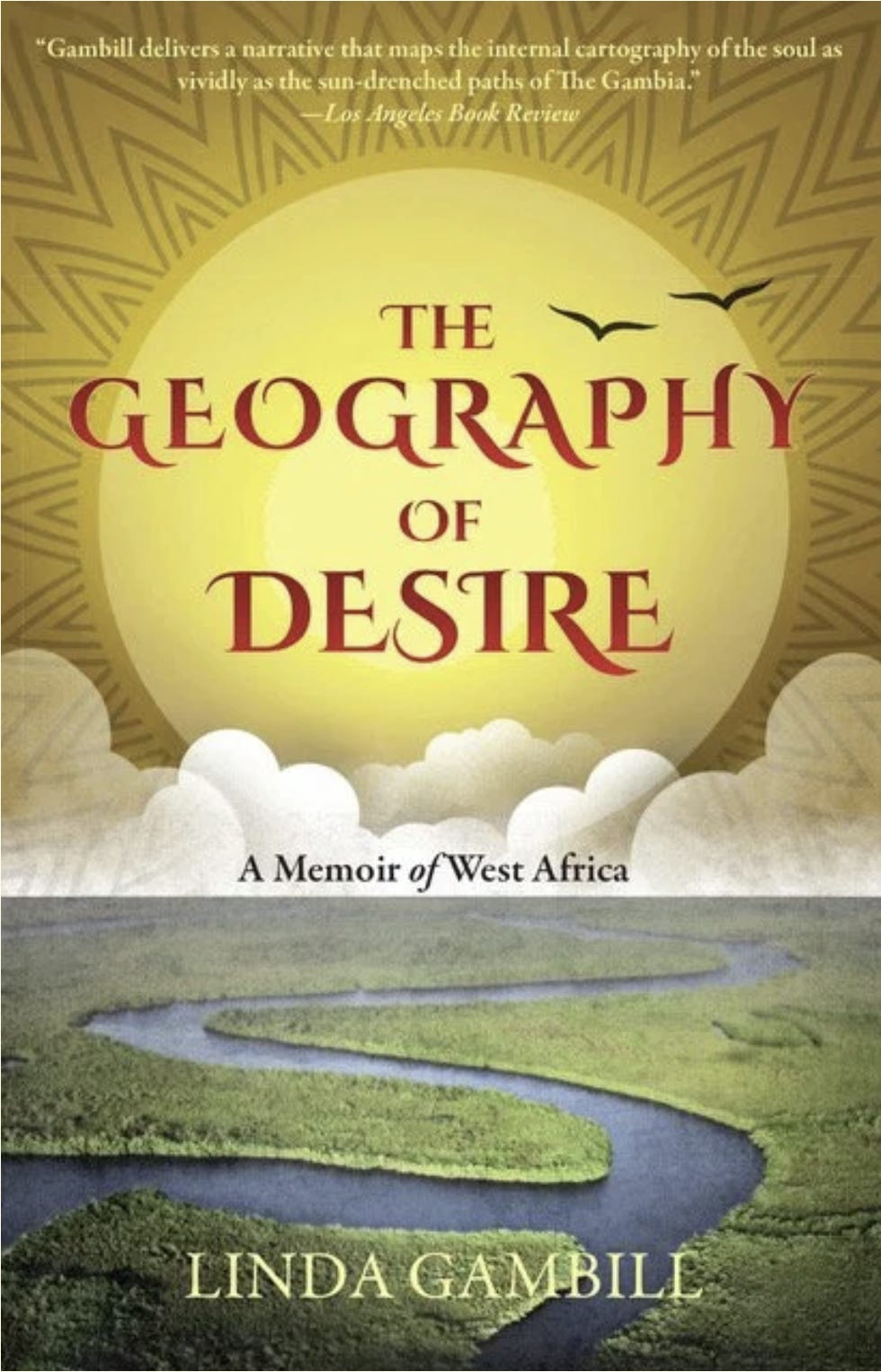
    73-Year-Old ALDHA-West Triple Crowner Shares Wisdom

    Scott Williams and I cover the following topics in 9 minutes: 00:00 Why Go to ALDHA West? 02:00 Aging Advice 05:40 Sweden's Green Ribbon Trail Watch on YouTube! What do you think? Put your thoughts in the comments. Connect Send me an anonymous voicemail at SpeakPipe.com/FTapon You can post comments, ask questions, and sign up for my Substack newsletter. If you like this podcast, subscribe and share! On social media, my username is always FTapon. Connect with me on: * YouTube * Facebook * Instagram * X * TikTok * LinkedIn Sponsors 1. My Patrons sponsored this show! Claim your monthly reward by becoming a patron for as little as $2/month at https://Patreon.com/FTapon 2. For the best travel credit card, get one of the Chase Sapphire cards and get 75-100k bonus miles! 3. Get $5 when you sign up for Roamless, my favorite global eSIM with its unlimited hotspot & data that never expires! Use code LR32K 4. Or get 5% off when you sign up with Saily, another global eSIM with a built-in VPN & ad blocker. 5. Get 25% off when you sign up for Trusted Housesitters, a site that helps you find sitters or homes to sit in. 6. Start your podcast with my company, Podbean, and get one month free! 7. In the United States, I recommend trading cryptocurrency with Kraken. 8. Outside the USA, trade crypto with Binance and get 5% off your trading fees! 9. For backpacking gear, buy from Gossamer Gear 10. Get nomadic travel insurance from SafetyWing! Get full access to Francis Tapon at ftapon.substack.com/subscribe
    • Transcript
  • #410
    August 25 · 10 min

    How Artificial Intelligence Will Transform Travel

    Use the discount code FTAPON when you buy your ticket to the Extraordinary Travel Festival. Watch on YouTube! Timeline 00:00 ETF3 06:00 How do ETF members travel? 11:00 Ric’s road to 193 13:00 Saving the best for last 16:45 Top ETF Speakers What do you think? Put your thoughts in the comments. Connect Send me an anonymous voicemail at SpeakPipe.com/FTapon You can post comments, ask questions, and sign up for my Substack newsletter. If you like this podcast, subscribe and share! On social media, my username is always FTapon. Connect with me on: * YouTube * Facebook * Instagram * X * TikTok * LinkedIn Sponsors 1. My Patrons sponsored this show! Claim your monthly reward by becoming a patron for as little as $2/month at https://Patreon.com/FTapon 2. For the best travel credit card, get one of the Chase Sapphire cards and get 75-100k bonus miles! 3. Get $5 when you sign up for Roamless, my favorite global eSIM with its unlimited hotspot & data that never expires! Use code LR32K 4. Or get 5% off when you sign up with Saily, another global eSIM with a built-in VPN & ad blocker. 5. Get 25% off when you sign up for Trusted Housesitters, a site that helps you find sitters or homes to sit in. 6. Start your podcast with my company, Podbean, and get one month free! 7. In the United States, I recommend trading cryptocurrency with Kraken. 8. Outside the USA, trade crypto with Binance and get 5% off your trading fees! 9. For backpacking gear, buy from Gossamer Gear 10. Get nomadic travel insurance from SafetyWing! Get full access to Francis Tapon at ftapon.substack.com/subscribe

    • Transcript
  • #409
    August 18 · 20 min

    Extraordinary Travel Festival 3 with Ric Gazarian

    Use the discount code FTAPON when you buy your ticket to the Extraordinary Travel Festival. Watch the interview on YouTube! The ETF is probably the best travel conference for adventurous travelers! I’ve spoken at two of the events, and you won’t want to miss the third! Timeline 00:00 ETF3 06:00 How do ETF members travel? 11:00 Ric’s road to 193 13:00 Saving the best for last 16:45 Top ETF Speakers What do you think? Put your thoughts in the comments. Connect Send me an anonymous voicemail at SpeakPipe.com/FTapon You can post comments, ask questions, and sign up for my Substack newsletter. If you like this podcast, subscribe and share! On social media, my username is always FTapon. Connect with me on: * YouTube * Facebook * Instagram * X * TikTok * LinkedIn Sponsors 1. My Patrons sponsored this show! Claim your monthly reward by becoming a patron for as little as $2/month at https://Patreon.com/FTapon 2. For the best travel credit card, get one of the Chase Sapphire cards and get 75-100k bonus miles! 3. Get $5 when you sign up for Roamless, my favorite global eSIM with its unlimited hotspot & data that never expires! Use code LR32K 4. Or get 5% off when you sign up with Saily, another global eSIM with a built-in VPN & ad blocker. 5. Get 25% off when you sign up for Trusted Housesitters, a site that helps you find sitters or homes to sit in. 6. Start your podcast with my company, Podbean, and get one month free! 7. In the United States, I recommend trading cryptocurrency with Kraken. 8. Outside the USA, trade crypto with Binance and get 5% off your trading fees! 9. For backpacking gear, buy from Gossamer Gear 10. Get nomadic travel insurance from SafetyWing! Get full access to Francis Tapon at ftapon.substack.com/subscribe
    • Transcript
  • #408
    August 10 · 7 min

    URGENT! Coldcard MK3 Vulnerability! Move Your BTC Now!

    3-Step EMERGENCY for Bitcoin Coldcard users! 1) Move your funds from your Coldcard, especially the MK3 model. 2) Update your Coldcard firmware. 3) Generate a new seed phrase Watch the video of this podcast Get the new Coldcard firmware Coldcard Status Update and Coldcard Firmware Downloads If you want to get a new hardware wallet, consider the Ledger crypto hardware wallet: Now that so many eyeballs have looked at the Coldcard code, it might be the safest hardware wallet now. It's like after a United Airlines plane crash, United becomes the safest airline because they become extra cautious. DOUBLE APOLOGY 1) I apologize for not getting this message out earlier. I was traveling intensely, but I should have done it sooner. 2) I apologize for recommending Coldcard. The vulnerability went undetected for five years, despite the open-source firmware. Connect Send me an anonymous voicemail at SpeakPipe.com/FTapon You can post comments, ask questions, and sign up for my Substack newsletter. If you like this podcast, subscribe and share! On social media, my username is always FTapon. Connect with me on: * YouTube * Facebook * Instagram * X * TikTok * LinkedIn Sponsors 1. My Patrons sponsored this show! Claim your monthly reward by becoming a patron for as little as $2/month at https://Patreon.com/FTapon 2. For the best travel credit card, get one of the Chase Sapphire cards and get 75-100k bonus miles! 3. Get $5 when you sign up for Roamless, my favorite global eSIM with its unlimited hotspot & data that never expires! Use code LR32K 4. Or get 5% off when you sign up with Saily, another global eSIM with a built-in VPN & ad blocker. 5. Get 25% off when you sign up for Trusted Housesitters, a site that helps you find sitters or homes to sit in. 6. Start your podcast with my company, Podbean, and get one month free! 7. In the United States, I recommend trading cryptocurrency with Kraken. 8. Outside the USA, trade crypto with Binance and get 5% off your trading fees! 9. For backpacking gear, buy from Gossamer Gear 10. Get nomadic travel insurance from SafetyWing! Get full access to Francis Tapon at ftapon.substack.com/subscribe

    • Transcript
  • #407
    August 7 · 6 min

    The Best Long-Distance Trail: Triple Crowner Scott Williams Answers

    What’s best: the AT, PCT, or CDT? I ask a 73-year-old hiker who has done all 3! Be sure to watch last week’s episode featuring Scott! Connect with Scott on FB! Watch this episode Timeline 00:00 Arizona Trail 1:50 Favorite Triple Crown Trail Connect with Scott Williams on Facebook! What do you think? Put your thoughts in the comments. Connect Send me an anonymous voicemail at SpeakPipe.com/FTapon You can post comments, ask questions, and sign up for my Substack newsletter. If you like this podcast, subscribe and share! On social media, my username is always FTapon. Connect with me on: * YouTube * Facebook * Instagram * X * TikTok * LinkedIn Sponsors 1. My Patrons sponsored this show! Claim your monthly reward by becoming a patron for as little as $2/month at https://Patreon.com/FTapon 2. For the best travel credit card, get one of the Chase Sapphire cards and get 75-100k bonus miles! 3. Get $5 when you sign up for Roamless, my favorite global eSIM with its unlimited hotspot & data that never expires! Use code LR32K 4. Or get 5% off when you sign up with Saily, another global eSIM with a built-in VPN & ad blocker. 5. Get 25% off when you sign up for Trusted Housesitters, a site that helps you find sitters or homes to sit in. 6. Start your podcast with my company, Podbean, and get one month free! 7. In the United States, I recommend trading cryptocurrency with Kraken. 8. Outside the USA, trade crypto with Binance and get 5% off your trading fees! 9. For backpacking gear, buy from Gossamer Gear 10. Get nomadic travel insurance from SafetyWing! Get full access to Francis Tapon at ftapon.substack.com/subscribe

    • Transcript
  • #406
    July 31 · 7 min

    Does New Zealand's Te Araroa Trail suck? Scott Williams Answers

    I talk with renowned long-distance hiker & Triple Crowner, Scott Williams, about his experience on New Zealand's Te Araroa Trail. This is part 1 of a 3-part interview series featuring Scott. Watch this interview! Scott's buddy, Sym Blanchard, explained why he disliked the Te Araroa Trail here: What do you think? Put your thoughts in the comments. Connect Send me an anonymous voicemail at SpeakPipe.com/FTapon You can post comments, ask questions, and sign up for my Substack newsletter. If you like this podcast, subscribe and share! On social media, my username is always FTapon. Connect with me on: * YouTube * Facebook * Instagram * X * TikTok * LinkedIn Sponsors 1. My Patrons sponsored this show! Claim your monthly reward by becoming a patron for as little as $2/month at https://Patreon.com/FTapon 2. For the best travel credit card, get one of the Chase Sapphire cards and get 75-100k bonus miles! 3. Get $5 when you sign up for Roamless, my favorite global eSIM with its unlimited hotspot & data that never expires! Use code LR32K 4. Or get 5% off when you sign up with Saily, another global eSIM with a built-in VPN & ad blocker. 5. Get 25% off when you sign up for Trusted Housesitters, a site that helps you find sitters or homes to sit in. 6. Start your podcast with my company, Podbean, and get one month free! 7. In the United States, I recommend trading cryptocurrency with Kraken. 8. Outside the USA, trade crypto with Binance and get 5% off your trading fees! 9. For backpacking gear, buy from Gossamer Gear 10. Get nomadic travel insurance from SafetyWing! Get full access to Francis Tapon at ftapon.substack.com/subscribe

    • Transcript
  • #405
    July 24 · 11 min

    AMA with the Top Serb Nomad, Nenad Stojanovic

    Most of the questions focus on the Balkans, which is ironic since Nenad spends little time there! Follow Nenad on FB & IG at whereisNenad. Watch this episode! Timeline 00:00 What's going on in the Balkans? 01:40 Book recommendations 02:35 Life in Serbia 3:34 Souvenirs 4:20 Best kept secret in the Balkans 08:00 Balkan vibe now What do you think? Put your thoughts in the comments. Connect Send me an anonymous voicemail at SpeakPipe.com/FTapon You can post comments, ask questions, and sign up for my Substack newsletter. If you like this podcast, subscribe and share! On social media, my username is always FTapon. Connect with me on: * YouTube * Facebook * Instagram * X * TikTok * LinkedIn Sponsors 1. My Patrons sponsored this show! Claim your monthly reward by becoming a patron for as little as $2/month at https://Patreon.com/FTapon 2. For the best travel credit card, get one of the Chase Sapphire cards and get 75-100k bonus miles! 3. Get $5 when you sign up for Roamless, my favorite global eSIM with its unlimited hotspot & data that never expires! Use code LR32K 4. Or get 5% off when you sign up with Saily, another global eSIM with a built-in VPN & ad blocker. 5. Get 25% off when you sign up for Trusted Housesitters, a site that helps you find sitters or homes to sit in. 6. Start your podcast with my company, Podbean, and get one month free! 7. In the United States, I recommend trading cryptocurrency with Kraken. 8. Outside the USA, trade crypto with Binance and get 5% off your trading fees! 9. For backpacking gear, buy from Gossamer Gear 10. Get nomadic travel insurance from SafetyWing! Get full access to Francis Tapon at ftapon.substack.com/subscribe

    • Transcript
  • #404
    July 17 · 10 min

    Extreme Nomad Reveals Tips & Plans

    Nenad Stojanovic is 42. He's been traveling the world nonstop for nearly 20 years. You can follow him on WhereisNenad on FB & IG. Watch this episode now! Watch previous episodes to learn more about this remarkable traveler! Timeline 00:00 Travel plans 02:30 Favorite spots What do you think? Put your thoughts in the comments. Connect Send me an anonymous voicemail at SpeakPipe.com/FTapon You can post comments, ask questions, and sign up for my Substack newsletter. If you like this podcast, subscribe and share! On social media, my username is always FTapon. Connect with me on: * YouTube * Facebook * Instagram * X * TikTok * LinkedIn Sponsors 1. My Patrons sponsored this show! Claim your monthly reward by becoming a patron for as little as $2/month at https://Patreon.com/FTapon 2. For the best travel credit card, get one of the Chase Sapphire cards and get 75-100k bonus miles! 3. Get $5 when you sign up for Roamless, my favorite global eSIM with its unlimited hotspot & data that never expires! Use code LR32K 4. Or get 5% off when you sign up with Saily, another global eSIM with a built-in VPN & ad blocker. 5. Get 25% off when you sign up for Trusted Housesitters, a site that helps you find sitters or homes to sit in. 6. Start your podcast with my company, Podbean, and get one month free! 7. In the United States, I recommend trading cryptocurrency with Kraken. 8. Outside the USA, trade crypto with Binance and get 5% off your trading fees! 9. For backpacking gear, buy from Gossamer Gear 10. Get nomadic travel insurance from SafetyWing! Get full access to Francis Tapon at ftapon.substack.com/subscribe
    • Transcript
  • #403
    July 10 · 12 min

    Tales of a Couchsurfing & Hitchhiking Expert

    Couchsurfing isn’t simply a way to save money when traveling, but it’s mostly a way to connect with locals, to understand local culture, and see what you’ll never see in a hotel. Nenad seldom stays in a hotel. Watch this video to hear about his unique lodging experiences. Timeline 00:00 Couchsurfing tips 04:00 Chilling in Indonesia 6:45 Longest wait for a hitch What do you think? Put your thoughts in the comments. Connect Send me an anonymous voicemail at SpeakPipe.com/FTapon You can post comments, ask questions, and sign up for my Substack newsletter. If you like this podcast, subscribe and share! On social media, my username is always FTapon. Connect with me on: * YouTube * Facebook * Instagram * X * TikTok * LinkedIn Sponsors 1. My Patrons sponsored this show! Claim your monthly reward by becoming a patron for as little as $2/month at https://Patreon.com/FTapon 2. For the best travel credit card, get one of the Chase Sapphire cards and get 75-100k bonus miles! 3. Get $5 when you sign up for Roamless, my favorite global eSIM with its unlimited hotspot & data that never expires! Use code LR32K 4. Or get 5% off when you sign up with Saily, another global eSIM with a built-in VPN & ad blocker. 5. Get 25% off when you sign up for Trusted Housesitters, a site that helps you find sitters or homes to sit in. 6. Start your podcast with my company, Podbean, and get one month free! 7. In the United States, I recommend trading cryptocurrency with Kraken. 8. Outside the USA, trade crypto with Binance and get 5% off your trading fees! 9. For backpacking gear, buy from Gossamer Gear 10. Get nomadic travel insurance from SafetyWing! Get full access to Francis Tapon at ftapon.substack.com/subscribe

    • Transcript
  • #402
    July 3 · 14 min

    Pro Hitchhiker Shares Tips & Experiences

    Here are my 10 hitchhiking tips on Forbes. Nenad Stojanovic hitchhikes everywhere. He shares the joys of hitchhiking and why it's more fascinating than public transportation. At 9:00 he discusses money issues. Watch the video! What do you think? Put your thoughts in the comments. Connect Send me an anonymous voicemail at SpeakPipe.com/FTapon You can post comments, ask questions, and sign up for my Substack newsletter. If you like this podcast, subscribe and share! On social media, my username is always FTapon. Connect with me on: * YouTube * Facebook * Instagram * X * TikTok * LinkedIn Sponsors 1. My Patrons sponsored this show! Claim your monthly reward by becoming a patron for as little as $2/month at https://Patreon.com/FTapon 2. For the best travel credit card, get one of the Chase Sapphire cards and get 75-100k bonus miles! 3. Get $5 when you sign up for Roamless, my favorite global eSIM with its unlimited hotspot & data that never expires! Use code LR32K 4. Or get 5% off when you sign up with Saily, another global eSIM with a built-in VPN & ad blocker. 5. Get 25% off when you sign up for Trusted Housesitters, a site that helps you find sitters or homes to sit in. 6. Start your podcast with my company, Podbean, and get one month free! 7. In the United States, I recommend trading cryptocurrency with Kraken. 8. Outside the USA, trade crypto with Binance and get 5% off your trading fees! 9. For backpacking gear, buy from Gossamer Gear 10. Get nomadic travel insurance from SafetyWing! Get full access to Francis Tapon at ftapon.substack.com/subscribe
    • Transcript
  • #401
    June 26 · 15 min

    The Most Well-Traveled Serbian Ever!

    I met Nenad Stojanovic in 2008 when he hosted me on Couchsurfing.com. He’s been traveling ever since! This is a 5-part series featuring Nenad, one of the world’s most fascinating travelers. This is part 1! Watch the video! Timeline 00:00 Who is Nenad Stojanovic? 04:25 North American journey 05:25 Remarkable borders 08:20 China What do you think? Put your thoughts in the comments. Connect Send me an anonymous voicemail at SpeakPipe.com/FTapon You can post comments, ask questions, and sign up for my Substack newsletter. If you like this podcast, subscribe and share! On social media, my username is always FTapon. Connect with me on: * YouTube * Facebook * Instagram * X * TikTok * LinkedIn Sponsors 1. My Patrons sponsored this show! Claim your monthly reward by becoming a patron for as little as $2/month at https://Patreon.com/FTapon 2. For the best travel credit card, get one of the Chase Sapphire cards and get 75-100k bonus miles! 3. Get $5 when you sign up for Roamless, my favorite global eSIM with its unlimited hotspot & data that never expires! Use code LR32K 4. Or get 5% off when you sign up with Saily, another global eSIM with a built-in VPN & ad blocker. 5. Get 25% off when you sign up for Trusted Housesitters, a site that helps you find sitters or homes to sit in. 6. Start your podcast with my company, Podbean, and get one month free! 7. In the United States, I recommend trading cryptocurrency with Kraken. 8. Outside the USA, trade crypto with Binance and get 5% off your trading fees! 9. For backpacking gear, buy from Gossamer Gear 10. Get nomadic travel insurance from SafetyWing! Get full access to Francis Tapon at ftapon.substack.com/subscribe

    • Transcript
Showing 1–20 of 31 episodes