Skip to content
Artwork for Walk With Me, Conversations With Real People
Society & CultureDocumentaryEducationSelf-ImprovementExplicit

Walk With Me, Conversations With Real People

Stephanie Bloom

Journey with real people who have lived a life worth telling a story about. Hear their experiences and the wisdom they have gained from them.

Play
  • 29 episodes
  • Avg 48 min
  • English
Counted on this page — what you have heard stays on this device, so it is not something the list can be paged by.
  • S1 · E6
    Saturday · 1 hr 2 min

    When Escaping Reality Becomes an Addiction: Learning to Face Life | Nathan Hanum

    Enjoy this re-released audio and never before seen video from Season 1. What happens when the thing you use to escape your problems becomes the biggest problem in your life? In this episode of Walk With Me – Conversations With Real People, host Stephanie Bloom sits down with Nathan Hanum to explore alcohol addiction, the psychology of escapism, personal responsibility, and what it means to live fully in reality. Nathan didn't grow up in a dysfunctional household. He describes a stable, loving childhood filled with freedom and exploration. But after years of bullying, unfulfilled ambitions, and increasingly heavy drinking, alcohol became his escape from disappointment and discomfort. His addiction eventually led to multiple DUIs, incarceration, repeated treatment, and a life-threatening hospitalization. At his lowest point, Nathan experienced a moment that changed the direction of his life. Through recovery, reflection, and a new understanding of the things he could and couldn't control, Nathan began confronting the deeper patterns behind his addiction. In this conversation, we explore: How substance use can shift from recreation to emotional escape Why avoiding uncomfortable emotions can reinforce destructive patterns The relationship between shame, guilt, fear, and personal freedom What Nathan learned through treatment and the 12 Steps The importance of radical honesty and personal accountability How gratitude and acceptance changed his perspective Why being comfortable with discomfort can be transformative The difference between surviving and truly living Finding purpose through music, individuality, and self-discovery Nathan also shares his personal perspectives on spirituality, freedom, society, and choosing a life that aligns with his values. A powerful takeaway from this episode: You cannot control everything that happens around you, but you can begin changing how you respond to it. Whether you're navigating addiction, struggling with avoidance, or simply learning to face life's uncomfortable realities, this conversation offers a personal perspective on recovery, resilience, and the courage to stop running. Connect with Nathan Hanum: Facebook: Search "Nate Living Life Hanam" (as stated in the interview) Music on YouTube: Search "Incipient I" Album: No Boxes or Bars, All Space and Stars Connect with Walk With Me: Explore more conversations, stories, and resources at: https://WalkWithMeConversations.com If this conversation resonates with you, please like, comment, subscribe, and share it with someone who may benefit from hearing it. A note to viewers: This episode includes discussion of alcohol dependence, suicidal thoughts, and personal experiences with recovery. Nathan shares his individual perspective, including his reported return to drinking. His experience should not be interpreted as evidence that controlled drinking is safe for others with a history of severe alcohol dependence. The conversation also includes personal political and social opinions that are not independently verified. #AddictionRecovery #Escapism #AlcoholRecovery #WalkWithMe #PersonalGrowth 00:00 Meet Nathan Hanum: Learning to Live in Reality 02:07 Growing Up Different and Facing Bullying 07:04 Early Substance Use and Experimentation 10:41 Recognizing Alcohol Addiction 14:47 DUIs, Jail, and the Consequences of Drinking 17:24 When Drinking Became a Way to Escape Life 19:54 Shame, Guilt, Fear, and Recovery 22:00 A Life-Changing Moment and Hospitalization 23:19 Finding Support and a New Perspective 27:16 Letting Go of Control 30:47 Nathan's Personal Understanding of Recovery 34:30 Finding Direction After Addiction 42:35 Living Without Regret 44:17 Why Escapism Can Become Dangerous 47:01 Finding Yourself and Your Purpose 49:34 Forgiveness and Facing Difficult Emotions 57:40 Learning to Be Comfortable with Discomfort 59:23 Nathan's Music and How to Connect

    • Transcript
  • November 2 · 37 min

    How Shame Fuels Addiction & Finding Hope After Suicide Loss | Colleen Clifford

    What happens when shame shapes your identity for decades? And how do you find hope after losing someone you love to suicide? In this deeply personal episode of Walk With Me – Conversations With Real People, host Stephanie Bloom welcomes Colleen Clifford, author of Life Beyond the Binge: A Commercial Fisherwoman's Journey Home, for an honest conversation about binge drinking, hidden shame, grief, self-forgiveness, and suicide prevention. Colleen spent years convincing herself that her relationship with alcohol wasn't a problem because she didn't drink excessively every day. But while writing her book, she uncovered something far deeper: an experience at age 19 had created a painful belief about her own worth, a belief she carried for decades without questioning. Her journey took another devastating turn when her husband, Scott, died by suicide in 2011. Faced with overwhelming grief, guilt, and unanswered questions, Colleen began the long process of finding compassion, understanding, and a renewed purpose. Today, she is turning her experiences into a message of hope, encouraging others to speak openly about their struggles, challenge the stories they believe about themselves, and ask for help before reaching a breaking point. In this episode, we explore: Why binge drinking can go unrecognized for years How shame and unresolved experiences can shape our behavior The connection between negative self-beliefs and destructive coping mechanisms Navigating guilt and complicated grief after suicide loss Why staying busy isn't always the same as healing The power of vulnerability, journaling, and self-reflection Learning to experience joy while still carrying grief Why asking for help can be one of the most courageous decisions we make How sharing our experiences can give others permission to heal Colleen's story is a powerful reminder that the things we believe about ourselves are not always true, our past doesn't have to define our future, and even after profound loss, life can hold meaning, connection, and joy. About Colleen Clifford Colleen is a longtime commercial fisherwoman, author of Life Beyond the Binge: A Commercial Fisherwoman's Journey Home, and passionate suicide prevention advocate. Through writing and speaking, she hopes to reduce shame, encourage meaningful conversations, and remind people that their lives matter. Connect with Walk With Me Explore more conversations about mental health, personal growth, trauma recovery, relationships, and the human experience. 🌐 https://WalkWithMeConversations.com Subscribe to Walk With Me – Conversations With Real People for authentic conversations that remind us we are never as alone as we sometimes feel. Mental Health Resources If you or someone you love is experiencing emotional distress or thoughts of suicide, support is available. In the United States, call or text 988 to reach the Suicide & Crisis Lifeline, available 24/7. Veterans and service members can call 988 and press 1 for the Veterans Crisis Line. Content Note: This episode contains discussions of suicide loss, alcohol misuse, trauma, depression, and grief. Please listen with care. #WalkWithMe #ColleenClifford #SuicidePrevention #BingeDrinking #GriefRecovery #MentalHealthAwareness #HealingFromShame #SelfForgiveness

    • Transcript
  • October 28 · 44 min

    Your Worst Enemy Is Yourself: Breaking Destructive Habits | Frank Molman

    The Wake-Up Call at 30: Leaving Drugs Behind and Rebuilding Life | Frank Molman What happens when you realize that the life you've been living isn't the life you want to keep living? For Frank Molman, that realization came just before his 30th birthday. Growing up in Santa Cruz, California, Frank experienced a free-range childhood filled with friendship, skateboarding, partying, and plenty of questionable decisions. What began as teenage experimentation eventually became years of substance use, reckless behavior, and a lifestyle he knew couldn't continue forever. But Frank doesn't tell his story through the lens of regret or shame. Instead, he reflects candidly on the choices he made, the experiences that shaped him, and the moment he realized that continuing down the same path could determine the rest of his life. In this episode of Walk With Me – Conversations With Real People, host Stephanie Bloom sits down with Frank for a raw, humorous, and unfiltered conversation about addiction, sobriety, personal responsibility, and the unexpected freedom that comes from living a simpler life. Today, Frank has traded the chaos of his twenties for a structured routine built around work, weightlifting, and protecting his sobriety. His story is a reminder that transformation doesn't always require an elaborate plan. Sometimes, it begins with a decision to stop doing what is destroying your future. In This Episode, We Explore: Growing up as a free-range kid in the 1990s and early 2000s How recreational substance use can become a destructive lifestyle The moment Frank realized he needed to change before turning 30 His experience quitting drugs and embracing sobriety Why he doesn't necessarily regret the experiences of his past How weightlifting, discipline, and routine support his life today The importance of recognizing when your own choices are working against you Why protecting your peace sometimes means embracing a simpler lifestyle A Powerful Takeaway "Your worst enemy is yourself at the end of the day." — Frank Molman Frank's journey challenges us to consider an important question: Are the habits you're practicing today creating the life you want to live tomorrow? You don't have to erase your past to build a different future. You can acknowledge where you've been, take responsibility for where you're going, and make a different choice. Connect With Frank Molman Listen to Frank's podcast, Weirdo, But I'm Real Tho, on Spotify, and search for his podcast on Instagram. Connect With Walk With Me Walk With Me – Conversations With Real People shares authentic conversations about life's challenges, personal growth, resilience, healing, and the experiences that shape who we become. Hosted by Stephanie Bloom, the podcast creates space for real people to share their stories without judgment, reminding listeners that they are not alone in their struggles. Explore more conversations, resources, and Stephanie's book, The Quiet Rebellion: Choosing Peace, Boundaries and Embodied Freedom After Trauma. Visit: https://WalkWithMeConversations.com Subscribe and share: If Frank's story resonates with you, share this episode with someone who may need the reminder that it's never too late to choose a different direction. Content note: This episode includes frank discussion of substance use, addiction, overdose risks, and past violence, along with strong language.

    • Transcript
  • S3 · E41
    October 25 · 59 min

    He Survived War, Abandonment & Trauma—Then Found Peace Within | Udo Erasmus

    What if the peace you've been searching for has been within you all along? Udo Erasmus survived World War II as a young child, became a refugee, experienced separation from his mother, and grew up questioning everything he thought he could trust. But his search for answers led him somewhere unexpected: inward. In this episode of Walk With Me – Conversations With Real People, host Stephanie Bloom welcomes Udo Erasmus, founder of Udo's Oil, author, and longtime advocate for holistic health and self-discovery. At 84 years old, Udo shares an extraordinary story of survival, spiritual awakening, self-discovery, and the daily practices that transformed his relationship with himself and the world. In this conversation, we explore: How childhood trauma and abandonment shaped Udo's search for truth Why searching outside ourselves may never bring lasting inner peace The connection between heartache, self-awareness, and healing How meditation and stillness transformed his relationships Breaking free from inherited beliefs and limiting thought patterns Reconnecting with family after decades of conflict Why peace doesn't have to depend on what's happening around us Moving beyond criticism and conflict to create meaningful change One of Udo's most powerful messages is that peace is not something we must earn, purchase, or wait for the world to provide. It's something we can learn to reconnect with. Whether you're navigating grief, trauma, relationship challenges, or simply feeling overwhelmed by the state of the world, this conversation invites you to explore a different relationship with yourself. ABOUT THE GUEST Udo Erasmus is the founder of Udo's Oil and an author and educator whose work spans nutrition, holistic health, human nature, and inner peace. CONNECT WITH WALK WITH ME Explore more conversations about healing, resilience, personal transformation, and the human experience. Website: https://WalkWithMeConversations.com Subscribe to Walk With Me – Conversations With Real People for authentic stories, meaningful perspectives, and conversations that remind us of our shared humanity. A space where stories unfold, perspectives shift, and hearts connect—one conversation at a time. JOIN THE CONVERSATION What has helped you find peace during difficult times? Share your experience in the comments. If this conversation resonates with you, please like, subscribe, and share it with someone who may need to hear this message. #UdoErasmus #InnerPeace #HealingFromTrauma #SelfDiscovery #WalkWithMePodcast

    • Transcript
  • October 6 · 51 min

    Your Partner Should Feel Like Home: Breaking the Fight/Flight Cycle in Relationships | Gaylen Wilson

    Galen Wilson shares his life story, detailing his experiences from childhood through various career challenges, struggles with alcoholism, and ultimately finding love and purpose after a heart transplant. His journey emphasizes resilience, the importance of relationships, and the tools he developed to overcome adversity. The conversation explores the Monument Method, a relationship coaching approach developed by Galen, which emphasizes the importance of emotional safety and connection in romantic relationships. It discusses techniques for managing conflicts, enhancing intimacy, and creating a safe emotional environment for couples. Takeaways Resilience through adversity Importance of relationships Emotional safety fosters intimacy Conflict management through connection Chapters 00:00 Introduction and Early Life 02:56 Career Challenges and Alcoholism 10:10 Recovery and New Beginnings 20:00 Health Crisis and Heart Transplant 26:59 Love, Support, and New Purpose 31:52 Understanding Attachment in Relationships 35:01 The Monument Method: Building Connections 40:49 Healing Through Emotional Safety 46:49 The Sanctuary Bond: A Safe Haven 51:53 Creating Lasting Romantic Connections 56:57 The Broader Impact of the Monument Method

    • Transcript
  • S3 · E38
    September 29 · 40 min

    When Success Still Feels Empty: Finding Your Way Back to Yourself | Ali Christos

    What happens when you get the money, the recognition, the relationships, and the life you thought you wanted—and you still don’t feel whole? Ali Christos knows what it is like to build a life that looks successful from the outside while struggling deeply on the inside. In this vulnerable conversation, Ali shares his journey from childhood bullying and trauma to depression, a suicide attempt as a teenager, years of chasing external success, the breakdown of a 15-year marriage, and a serious accident that forced him to reevaluate what actually mattered. We explore what helped him begin finding his way back: forgiveness, yoga, meditation, music, serving others, allowing difficult emotions instead of constantly numbing them, and developing a deeper relationship with spirituality and his own inner life. Ali also shares how he eventually became a quantum hypnosis practitioner and discusses his beliefs about the Higher Self, QHHT, intuition, past-life experiences, manifestation, and consciousness. At the heart of this episode is a question many of us eventually face: Who are you when achievement, validation, money, relationships, and the image you’ve built can no longer tell you who you are? If you’ve ever looked at your life and thought, “I should be happy… so why don’t I feel that way?” this conversation is an invitation to look beneath the accomplishments and reconnect with the person underneath them. Content note: This episode includes discussion of childhood trauma, domestic violence, depression, suicidal thoughts and a past suicide attempt, self-harm, substance use, and other potentially difficult subjects. Discover more conversations at WalkWithMeConversations.com.

    • Transcript
  • S3 · E37
    September 22 · 42 min

    When Anxiety Shows Up in the Body: You Are More Than a Diagnosis | Noah May

    What happens when anxiety doesn’t feel like panic—but instead shows up as nausea, vomiting, weight loss, fear, and an increasing need to avoid everyday life? In this episode of Walk With Me — Conversations With Real People, Stephanie Bloom talks with journalist and podcaster Noah May about living with depression and anxiety from a young age, navigating grief, bullying, family challenges, and the physical toll mental health struggles can take on the body. Noah shares how music helped him feel less alone, how medication has supported him, and how his relationship with mental health has changed as he has grown older. Together, Stephanie and Noah also explore the importance of continuing to look for therapies, practices, supports, and lifestyle tools that may help someone move forward. At the heart of Noah’s story is a powerful reminder: mental health struggles may be part of your experience, but they do not have to become your entire identity. In this conversation: • Anxiety presenting through physical symptoms • Depression and suicidal ideation during adolescence • Grief and the loss of a loved one • Bullying and emotional isolation • Music as a source of connection and support • Medication and mental health management • Nutrition, digestive health, and the nervous system • Finding the right therapist and continuing to seek support • Releasing shame around mental health • Learning that a diagnosis does not define who you are Connect with Noah: NoahsPodcasts.com Explore more conversations, stories, and resources at WalkWithMeConversations.com. Content note: This episode includes discussion of depression, suicidal ideation, mental health crisis, and significant weight loss.

    • Transcript
  • S3 · E36
    September 22 · 54 min

    When Your Spiritual Experience Doesn't Fit the Explanation with Michael Monk

    What happens when your deepest experiences challenge everything you have been taught about identity, consciousness, God, and what it means to be human? In this episode of Walk With Me—Conversations With Real People, Stephanie speaks with Michael Monk, founder of the Avatar Energy Mastery Institute. Michael describes growing up as the black sheep of his family, struggling to find a stable identity, and eventually transforming the qualities that once made him feel like an outsider into a path of teaching and service. Michael shares his account of a profound spiritual awakening in 1999 and the years he spent exploring prayer, meditation, energy, consciousness, and what he understands as direct communication with God and the Holy Spirit. He also discusses leaving organized religion, questioning his own perceptions, developing practices intended to quiet the analytical mind, and learning to trust his spiritual experiences. Together, Stephanie and Michael explore the distinction between belief and personal knowing, the relationship between spirituality and the physical body, the importance of discernment, and the difficulties people may face when their experiences do not fit conventional explanations. The conversation also turns toward love, grief, and continuing bonds with those who have died. Michael offers his perspective that love forms an enduring connection between people—one that separation and death cannot erase. In this episode, you'll hear about: Growing up as an outsider and creating an authentic identity Moving from self-doubt toward confidence and purpose Michael's personal account of a life-changing spiritual awakening The difference between inherited belief and direct experience Prayer, meditation, intuition, and inner discernment Questioning spiritual experiences without immediately dismissing them Michael's understanding of energy mastery and consciousness Finding meaning and purpose through teaching others Love as a bridge through grief, separation, and loss Redefining success, retirement, and a life well lived Michael's experiences and spiritual interpretations are his own, but his story invites each of us to ask: What becomes possible when we approach the unknown with curiosity while remaining grounded in thoughtful discernment? Connect with Michael Monk Learn about the Avatar Energy Mastery Institute and the Metaphysical Church of the Tree of Life: MichaelMonk.bio Continue Walking With Us For more honest conversations about healing, resilience, transformation, and the many ways people find their way forward, visit WalkWithMeConversations.com. Listen, explore past episodes, and discover resources created to support your own healing journey. Walk With Me—Conversations With Real People: a space where stories unfold, perspectives shift, and hearts connect—one conversation at a time. To book a private session with me: https://calendly.com/stephanie-bloom5280 My favorite guests book through PodMatch: https://www.joinpodmatch.com/stephaniebloom We couldn't do it without the support of our listeners. To help support the show: CashApp- https://cash.app/$WalkWithMeSteph Venmo- https://venmo/StephanieBloom5280 Click here to purchase my book on Amazon Purchase the supplements you already use at a discount here: https://us.fullscript.com/welcome/roottobloom

  • S3 · E35
    September 15 · 45 min

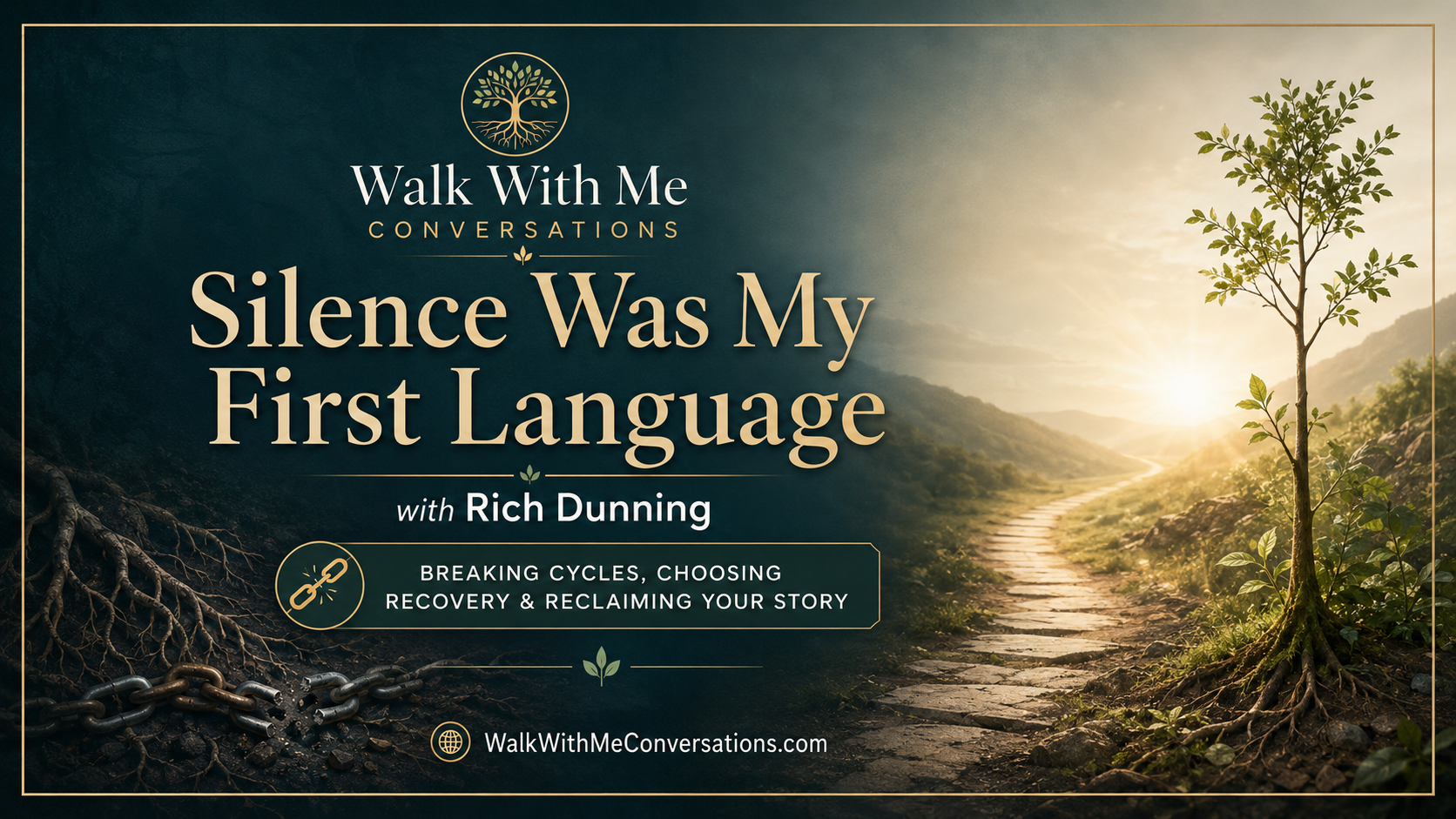
    Silence Was My First Language: Breaking Cycles, Choosing Recovery & Reclaiming Your Story with Rich Dunning

    What happens when the survival skills that protected you as a child begin to destroy your life as an adult? In this deeply personal episode of Walk With Me Conversations, Stephanie sits down with author Rich Dunning, whose memoir, Silence Was My First Language, tells the story of a childhood shaped by poverty, instability, addiction, abuse, homelessness, and one overriding rule: stay silent. Rich shares how those early survival patterns followed him into adulthood. Despite building a successful career and becoming a husband and father, unresolved trauma remained beneath the surface, eventually contributing to severe alcoholism and the unraveling of the life he had worked so hard to create. This conversation isn't only about what happened to Rich. It's about what he chose to do next. Rich opens up about sobriety, Alcoholics Anonymous, learning healthier ways to cope, rebuilding trust, accepting responsibility for the pain he caused, and discovering that our past can explain our patterns without giving us permission to continue them. Together, Stephanie and Rich explore what it means to recognize the patterns we've inherited, consciously interrupt them, and choose how we spend our time and attention moving forward. In This Conversation You'll hear about: Why silence became a survival strategy during Rich's childhood How unresolved childhood trauma can follow us into adulthood Addiction, rock bottom, and the decision to finally ask for help The role AA played in Rich's recovery Accountability versus using our past as an excuse Rebuilding trust and relationships after addiction Reparenting yourself and developing healthier coping skills Why breaking generational cycles requires both awareness and action Turning personal pain into purpose and service Why Rich wrote Silence Was My First Language His hope that sharing his story helps someone else recognize that it is never too late to change Rich describes the book as something that eventually became bigger than his own healing—a way for another person struggling with trauma, addiction, or destructive patterns to see that change is still possible and that asking for help can be the beginning of a completely different life. About Rich Dunning Rich Dunning is the author of Silence Was My First Language, a memoir about survival, addiction, accountability, and the long journey of confronting the truth after a childhood spent learning to remain silent. Rich and his wife are also behind The First Language Foundation, an initiative focused on helping vulnerable children facing circumstances including homelessness, addiction, abuse, and exploitation. Rich shared that he is committed to donating $1 from every book he sells to support the foundation's work. His message to anyone who believes they've gone too far, lost too much, or made too many mistakes is simple: your story isn't over. You can take responsibility, change direction, rebuild, recover, and find purpose. Connect With Rich Rich Dunning / Silence Was My First Language: Visit Rich Dunning Books Connect with Rich on LinkedIn: Rich Dunning on LinkedIn Learn about The First Language Foundation: The First Language Foundation Contact Rich: richdunningbooks@gmail.com Continue Walking With Me If this conversation brought something to the surface for you—a pattern you're ready to examine, a story you're ready to rewrite, or a part of yourself you're ready to understand more deeply—don't stop here. Explore more conversations, resources, Stephanie's book, My Full Script Link, the Walk With Me Conversations podcast, and the Root To Bloom Practice at: WalkWithMeConversations.com Your roots are part of your story. They don't have to determine where you bloom next. Listen. Reflect. Take action. And keep walking. Content note: This episode includes discussion of childhood abuse and trauma, addiction, alcoholism, homelessness, suicidal crisis, and recovery. To book a private session with me: https://calendly.com/stephanie-bloom5280 My favorite guests book through PodMatch: https://www.joinpodmatch.com/stephaniebloom We couldn't do it without the support of our listeners. To help support the show: CashApp- https://cash.app/$WalkWithMeSteph Venmo- https://venmo/StephanieBloom5280 Click here to purchase my book on Amazon Purchase the supplements you already use at a discount here: https://us.fullscript.com/welcome/roottobloom

  • S3 · E34
    September 8 · 1 hr 1 min

    Dyslexia Isn't a Lack of Intelligence: How to Help Bright Kids Read and Write with Russell Van Brocklen

    When a Brilliant Child Can't Get Their Ideas Onto the Page What if a child who struggles to read or write isn't lazy, unintelligent, or incapable—but has simply never been taught in a way their brain can use? In this episode of Walk With Me: Conversations With Real People, Stephanie speaks with dyslexia researcher and educator Russell Van Brocklen, whose own painful educational journey became the foundation for more than 20 years of work with dyslexic students, parents, and teachers. Although Russell's intelligence tested in the 96th percentile, he spent much of his early education reading and writing at a first-grade level. He was placed in special education, excluded from opportunities, and repeatedly underestimated. After a successful state government internship was unfairly recorded as a failing grade, Russell decided to confront the very thing that had limited him: reading and writing. He entered law school and began discovering how differently his dyslexic brain processed and organized information. That experience eventually led him to develop an instructional approach designed to help students translate their ideas into sentences, paragraphs, essays, and advanced academic work. Russell explains why many dyslexic learners may understand specific details before they can grasp the larger concept, why a child's strongest interests can become powerful learning tools, and why writing can help bring structure to thoughts that otherwise seem to move too quickly to capture. Together, Stephanie and Russell also discuss the emotional cost of being underestimated, the determination required to challenge established systems, and the importance of recognizing intelligence that traditional education may fail to measure. In This Episode, You'll Hear About Russell's experience growing up with severe dyslexia while possessing high intelligence The emotional consequences of being mislabeled or underestimated How he completed college despite reading and writing at an elementary-school level The government internship that changed the direction of his life Why he deliberately entered law school to confront his limitations How dyslexic learners may process information from the specific to the general The importance of beginning with subjects that genuinely interest a child How writing can be used to organize ideas and strengthen reading skills Why parents can play an important role in supporting dyslexic children Russell's approach to moving students from sentences to advanced academic writing How foundational research and writing skills can prepare students to use AI as a tool without surrendering their own critical thinking What becomes possible when children are taught in a way that works with their brains About Russell Van Brocklen Russell Van Brocklen is a dyslexia researcher, educator, and the creator of The Writing Method. His original dyslexia research program received funding from the New York State Senate. Russell has worked with hundreds of students and trained hundreds of teachers in techniques intended to help dyslexic learners strengthen their reading and writing skills. His work focuses on helping parents and educators recognize the intelligence behind a child's struggles and give that intelligence a clearer path onto the page. Connect With Russell Website: DyslexiaClasses.com Contact Russell: Dyslexia Classes Contact Page Email: dyslexiaclasses1@gmail.com Parent programs and one-on-one support: Explore Dyslexia Classes Continue Walking With Me If this conversation encouraged you, share it with a parent, teacher, or caregiver who needs to hear that struggling on paper does not mean a child lacks intelligence or potential. Discover more honest conversations about healing, resilience, personal transformation, and doing what once seemed impossible at WalkWithMeConversations.com. Subscribe to Walk With Me: Conversations With Real People on your favorite podcast platform so you don't miss the next story. To book a private session with me: https://calendly.com/stephanie-bloom5280 My favorite guests book through PodMatch: https://www.joinpodmatch.com/stephaniebloom We couldn't do it without the support of our listeners. To help support the show: CashApp- https://cash.app/$WalkWithMeSteph Venmo- https://venmo/StephanieBloom5280 Click here to purchase my book on Amazon Purchase the supplements you already use at a discount here: https://us.fullscript.com/welcome/roottobloom

  • S3 · E33
    September 1 · 58 min

    Healing from Trauma Through Faith: Vietnam Veteran Keith Cole on PTSD, Grief & Recovery.

    What happens when you spend decades carrying grief, trauma, responsibility, and pain without ever truly learning how to process it? In this episode of Walk With Me Conversations, Stephanie sits down with author, speaker, and Marine Corps combat veteran Keith Cole for a deeply personal conversation about survival, faith, healing, and the courage it takes to finally face the things we have carried for far too long. Keith shares how the death of his father during his senior year of high school changed the direction of his life and eventually led him to join the Marine Corps during the Vietnam era. His service included combat in Vietnam, multiple injuries, and later the difficult responsibility of notifying families when a Marine had been killed or wounded in action. After returning home, Keith continued to push forward—becoming guardian to his younger siblings, attending college, becoming a CPA, building a career, and creating a life that looked successful from the outside. But the grief and trauma he had set aside never truly disappeared. Over time, emotional numbness, exhaustion, nightmares, and alcohol became signs that what had been buried still needed to be addressed. Keith eventually reached a breaking point that became a turning point. He cried out to God for help and began writing about his experiences. That writing became part of his healing process and eventually inspired a fictionalized story drawn from his own memories, pain, and redemption. Through that process, Keith also developed what he calls PRAISER, God's Recovery Plan, a scripture-based recovery practice designed to support people navigating trauma, severe stress, and the challenges of everyday life. In this conversation, Stephanie and Keith explore why avoiding pain is not the same as healing from it, why trauma does not have to come from combat to be real, and why asking for help is an act of strength—not weakness. Keith leaves listeners with an important reminder: whatever you are carrying, you do not have to carry it alone. Support may come through trusted friends or family, clergy, a therapist, or another person willing and able to walk beside you. In This Episode How grief changed the direction of Keith's life Serving as a Marine during the Vietnam War Surviving combat and multiple injuries The emotional toll of notifying families of military casualties What happens when trauma is continually pushed aside Alcohol and avoidance as coping mechanisms Reaching a point of surrender and asking for help How writing became part of Keith's healing The connection between faith, reflection, and recovery Why healing requires active participation Why strength includes being willing to talk about pain The importance of reaching out instead of struggling alone Connect with Keith Cole Learn more about Keith, his speaking, book, workbook, and recovery resources at: Recovery by Faith: recoverybyfaith.com Email: keith@recoverybyfaith.com Keith is also available to speak with churches, veterans' groups, and other organizations where his message may be helpful. Continue the Conversation If this episode encouraged you, challenged you, or reminded you of someone who may need to hear Keith's message, share it with them. For more conversations about healing, resilience, personal growth, and learning how to walk through the difficult parts of life with greater awareness and intention, visit: WalkWithMeConversations.Com Listen to more episodes, explore additional resources, and continue walking with us—one conversation at a time. To book a private session with Stephanie: https://calendly.com/stephanie-bloom5280 My favorite guests book through PodMatch: https://www.joinpodmatch.com/stephaniebloom We couldn't do it without the support of our listeners. To help support the show: CashApp- https://cash.app/$WalkWithMeSteph Venmo- https://venmo/StephanieBloom5280 Click here to purchase my book on Amazon Purchase the supplements you already use at a discount here: https://us.fullscript.com/welcome/roottobloom

  • S3 · E32
    August 18 · 54 min

    Tiny Moments, Big Purpose: How One Bed Became a Movement

    What if finding your purpose isn't about searching harder—but about noticing the need right in front of you and choosing to act? In this episode of Walk With Me Conversations, Stephanie sits down with Luke Mickelson, founder of Sleep in Heavenly Peace, an organization built around a simple but powerful mission: "No Kid Sleeps on the Floor in Our Town." Luke's journey began in Idaho with one family, one bunk bed, and a desire to teach a group of young men about service. What happened next changed the direction of his life. Luke shares the moment he met six-year-old Haley, who had never had a bed of her own, and how watching her hug and kiss the bed he had built with his children made him realize that a bed represents far more than somewhere to sleep. It can mean safety, dignity, security, belonging, and the knowledge that someone cares. That experience became the spark for Sleep in Heavenly Peace and a much larger conversation about service, purpose, community, and our willingness to act on what Luke calls our "tiny moments." In This Conversation Stephanie and Luke explore: How growing up in a small Idaho community shaped Luke's understanding of service and giving back. The personal "fog" Luke was experiencing when service unexpectedly gave him a renewed sense of direction. How building one bunk bed with his children eventually grew into the Sleep in Heavenly Peace movement. Why having a bed is about much more than sleep—it can offer a child security, confidence, stability, and a place that belongs to them. The difference between wanting change and developing the desire to act. Luke's concept of "tiny moments"—those seemingly small opportunities to notice a need and do something about it. How service can shift our perspective on our own struggles and reveal passions we may not have known were there. Why meaningful volunteer experiences matter just as much as the mission itself. The extraordinary things that can happen when ordinary people decide, I can help. As Luke explains, we may not change the entire world every time we act on one of these moments—but we can change someone's world. Sometimes, that someone is us. About Luke Mickelson Luke Mickelson is the founder of Sleep in Heavenly Peace (SHP), a nonprofit dedicated to building and delivering beds to children who otherwise may be sleeping on floors, couches, or other makeshift spaces. SHP's current leadership directory continues to identify Luke as the organization's founder. Luke is also the author of More Than Just a Bed, a phrase that captures one of the central lessons of his work: giving a child a bed is about providing much more than a piece of furniture. Connect With Luke & Sleep in Heavenly Peace Sleep in Heavenly Peace: https://shpbeds.org/ Through the SHP website, you can find a chapter near you, volunteer for a build or delivery, donate, explore starting a chapter, or apply for a bed for a child in need. Luke describes those opportunities in the conversation as ways communities can address child bedlessness locally. Contact Sleep in Heavenly Peace: https://shpbeds.org/contact-us/ Phone: 844-432-BEDS (2337) A Note From Stephanie One of the themes I continue to encounter through these conversations is that healing isn't only about what we are trying to leave behind. Eventually, we get to ask: What am I moving toward? That question is woven throughout my book, The Quiet Rebellion: Choosing Peace, Boundaries and Embodied Freedom After Trauma, and it is becoming an even larger part of my work with the opening of Root To Bloom Consulting, LLC. Luke's story is such a beautiful example of what can happen when we begin listening to those small internal nudges—the moments asking us to notice, choose, act, serve, create, or become something more. Sometimes the next chapter doesn't announce itself. Sometimes it looks like leftover lumber in the garage and one more bed that needs to be built. Continue the Conversation If this episode resonates with you, share it with someone who needs to hear it. As Luke points out in our conversation, simply talking about child bedlessness may reach a parent, neighbor, pastor, teacher, friend, or community member who knows a child sleeping without a bed. And there is much more waiting for you beyond the podcast. Visit https://WalkWithMeConversations.com to explore more conversations about healing, resilience, boundaries, purpose, and what becomes possible when we choose to move forward differently. You can also learn more about Stephanie's book, The Quiet Rebellion: Choosing Peace, Boundaries and Embodied Freedom After Trauma, and follow the next chapter of this work through Root To Bloom Consulting, LLC. Listen. Reflect. Share the conversation. And when your own tiny moment appears—consider what might happen if you act on it.

  • S3 · E31
    August 12 · 1 hr 1 min

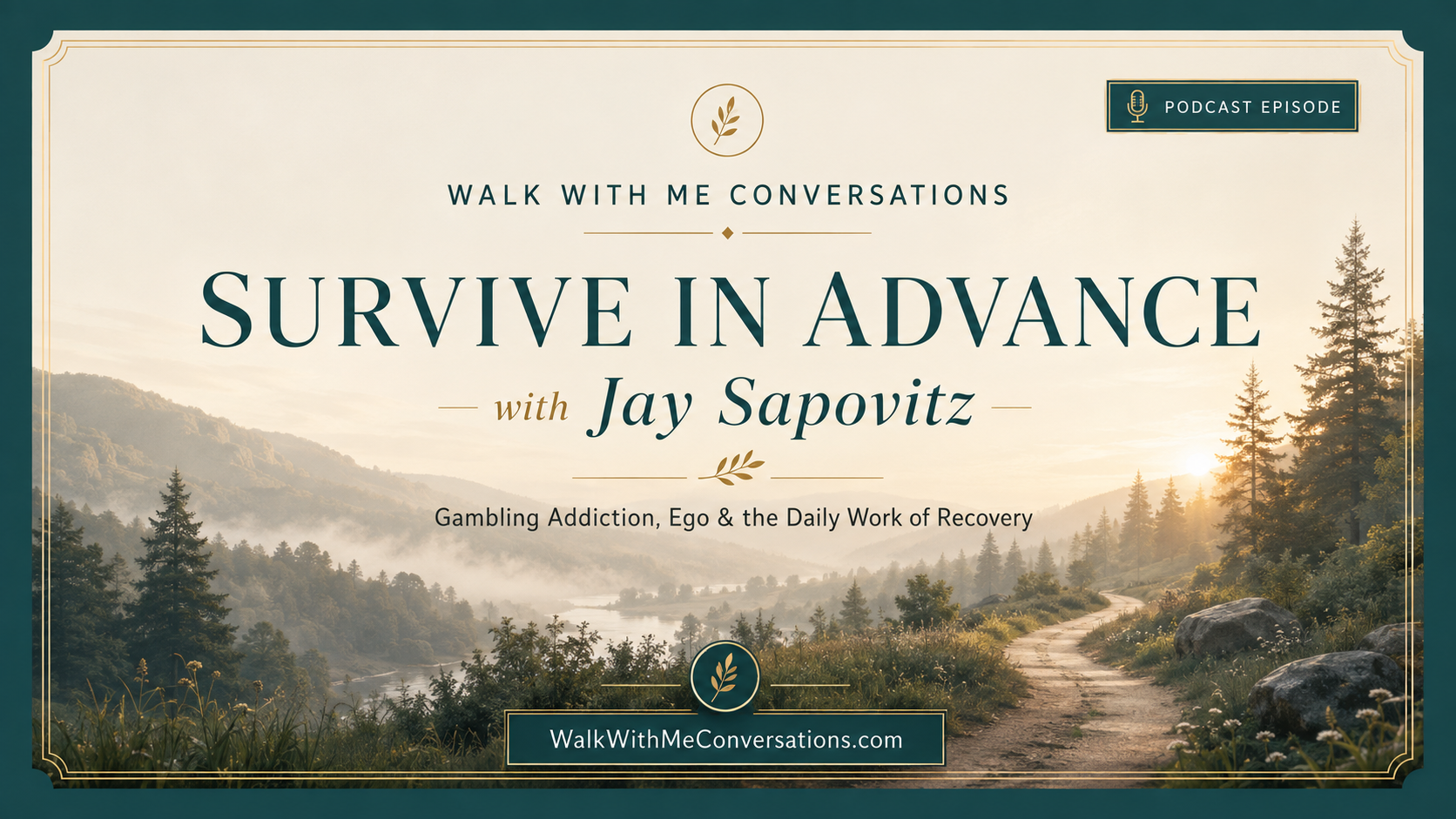
    Survive in Advance: Gambling Addiction, Ego & the Daily Work of Recovery with Jay Sapovitz

    What happens when something that feels completely normal in childhood quietly becomes the thing that consumes your life? Jay Sapovitz grew up close to his father, spending much of his childhood around sports and racetracks. By 13, Jay had started gambling. Before long, gambling wasn't simply something he did—it had begun swallowing his identity. He worked constantly to fund it, surrounded himself with older gamblers, and eventually chose UNLV as his college destination while already deep in an addiction he couldn't yet see clearly. By his early twenties, Jay had reached a devastating bottom. Sitting alone in his parents' basement, he realized he could no longer keep living the way he had been living. The turning point came when he finally did something addiction had made incredibly difficult: he told the truth. Jay made his last bet on March 6, 1997, and walked into his first recovery meeting four days later. But this conversation isn't simply a story about quitting gambling. Jay talks candidly about what happened after recovery—including professional success, entrepreneurship, the return of ego in a different form, and the realization that you can stop one destructive behavior without necessarily addressing everything underneath it. Eventually, he recommitted himself to recovery through honesty, community, service, and putting others before himself. In This Conversation, We Explore How gambling became normalized for Jay at a very young age The relationship between addiction, identity, insecurity, and ego What finally pushed Jay to admit he had a gambling problem Why there isn't one "right" reason—or one right way—to recover The difference between stopping a behavior and continuing to do the deeper work How success and ego created an entirely different kind of rock bottom Why service became transformational in Jay's recovery Learning to separate what is actually true from the stories our minds create The surprising power of saying, "I don't know" Why recovery isn't linear, even decades later The importance of tools, resources, action, and community Learning to let other people have their own experiences—including our children Why honesty may be one of the most important ingredients in getting and staying well Jay describes recovery not as something he completed, but as something he continues to practice. Nearly three decades after his last bet, he still has difficult thoughts, fear, self-pity, and moments when his mind tells him stories that simply aren't true. The difference is that today, he has tools—and he knows he has to use them. As Jay puts it, recovery requires showing up every day. Connect with Jay Sapovitz LinkedIn: linkedin.com/in/jaysap Ink'd Stores: inkdstores.com Continue the Conversation If something in Jay's story resonated with you, there are many more conversations, resources, and tools waiting for you at WalkWithMeConversations.com. Explore past episodes, learn more about the people behind these conversations, discover resources for your own journey, and find ways to connect. And if this episode made you think of someone who might need to hear it, share it with them. Sometimes one honest story reaches us at exactly the right moment. If you're enjoying Walk With Me – Conversations With Real People, please also take a minute to rate and review the podcast on the platform where you're listening. Reviews help more people discover the show and allow these stories of resilience, healing, growth, and very real human experience to reach further. Visit WalkWithMeConversations.com to continue walking with us. Content Note This episode includes candid discussion of gambling addiction, suicidal thoughts, and recovery. Please listen with care.

  • S3 · E30
    August 4 · 51 min

    Building Belief Through the Struggle with Amy Lenius

    What if healing isn't about finding the perfect treatment—but becoming the kind of person who believes healing is possible? In this deeply encouraging conversation, Stephanie sits down with Amy Lenius, holistic health advocate, coach, and speaker, to explore what happens when we stop waiting for someone else to rescue our health and begin becoming active participants in our own healing. After years of living with endometriosis, chronic pain, surgeries, medications, and discouraging prognoses, Amy chose a different path. Through curiosity, education, lifestyle changes, and a commitment to consistent action, she gradually transformed both her health and her mindset. Together, Stephanie and Amy discuss why sustainable healing is built through small daily decisions rather than quick fixes, why self-belief is one of the greatest predictors of success, and how learning to understand your own body can become one of the most empowering journeys you'll ever take. Whether you're navigating chronic illness, hormonal changes, burnout, or simply searching for hope, this episode offers practical wisdom and encouragement to help you take your next step. In This Episode Amy's journey from chronic illness and endometriosis to holistic healing Why curiosity is one of the most powerful healing tools The difference between symptom management and addressing root causes Building self-belief through small, consistent actions The connection between hormones, inflammation, stress, and overall wellness Why perfection isn't required for transformation How to recognize your body's signals before illness becomes overwhelming The importance of sustainable habits over temporary motivation Creating a healing lifestyle instead of chasing quick fixes Supporting women's health through every season of life Learning to advocate for yourself within the healthcare system Why mindset is often the missing ingredient in long-term healing Memorable Takeaways "Healing isn't about one magic solution. It's about stacking small wins over time." "You don't have to control everything—you just have to take ownership of what you can control." "Self-belief grows every time you keep a promise you make to yourself." "Your best days don't have to be behind you." Connect with Amy Lenius Instagram: https://www.instagram.com/amylenius Facebook: https://www.facebook.com/amylenius Amy also offers free community support through her social media channels and invites listeners to reach out directly with questions or to learn more about her coaching programs. Connect with Stephanie Bloom If this conversation resonated with you and you're looking for support on your own healing journey, visit: https://WalkWithMeConversations.com There you'll find hundreds of inspiring conversations with survivors, authors, therapists, advocates, and practitioners sharing the tools that helped them heal from trauma, addiction, grief, chronic illness, and life's greatest challenges. If you're interested in working directly with Stephanie through Root to Bloom Consulting, book here for holistic wellness coaching, nervous system support, and personalized health consulting. If you enjoyed this episode: Subscribe to Walk With Me – Conversations With Real People Leave a review wherever you listen to podcasts Share this episode with someone who needs hope today Every story has the power to help someone else heal.

  • S3 · E29
    July 28 · 34 min

    When Workplace Trauma Shapes Your Future: Breaking Patterns, Finding Your Voice & Building a Better Career | Featuring Natalie Holder

    Have you ever left a workplace wondering why the same unhealthy dynamics seem to follow you from job to job? In this thought-provoking episode of Walk With Me – Conversations With Real People, Stephanie Bloom sits down with employment attorney, speaker, and author Natalie Holder to explore how workplace experiences can leave lasting emotional imprints—and how recognizing those patterns can become the first step toward lasting change. Natalie shares how growing up with a strong sense of justice inspired her career advocating for people facing inequity and exclusion. Together, Stephanie and Natalie discuss workplace culture, leadership, psychological safety, self-awareness, and the importance of surrounding yourself with trusted advisors who help you make wise decisions. Whether you're navigating a difficult work environment, rebuilding your confidence after burnout, or simply wanting healthier professional relationships, this conversation offers practical wisdom and hope. In This Episode How childhood experiences can shape our sense of justice Recognizing unhealthy workplace cultures Why workplace trauma often follows us into future careers The hidden cost of shrinking yourself after difficult experiences How to identify repeating behavioral patterns The importance of psychological safety at work Why mentorship changes careers Understanding the unwritten rules of workplace culture Building your own "Personal Board of Directors" Creating an intentional strategy before leaving a toxic workplace Learning to advocate for yourself without losing your authenticity Key Takeaways Awareness is the beginning of transformation. Trauma doesn't have to define your future. Healthy careers require healthy relationships. Success isn't just about working harder—it's also about understanding organizational culture. The people you surround yourself with can dramatically influence your personal and professional growth. Connect with Natalie Holder 🌐 Website: https://natalieholderspeaks.com 🌐 Quest EI: https://questei.org 📺 YouTube: Search Natalie Holder Speaks for educational content on leadership, workplace culture, and professional development. Connect with Stephanie Bloom If today's conversation resonated with you and you're looking for support on your own healing journey, Stephanie is now accepting clients through Root to Bloom Consulting. Whether you're seeking guidance through holistic health consulting, nervous system restoration, nutrition, lifestyle strategies, or personalized wellness planning, you can learn more and book an appointment through this link: https://calendly.com/stephanie-bloom5280 🌿 Visit: https://WalkWithMeConversations.com There you'll find: Hundreds of inspiring healing conversations Resources for trauma recovery and personal growth Stephanie's book and recommended resources Podcast archives Enjoying the Podcast? If this episode encouraged you, please consider: Following Walk With Me – Conversations With Real People Leaving a review on your favorite podcast platform Sharing this episode with someone navigating workplace challenges Visiting https://WalkWithMeConversations.com for more conversations, articles, and resources designed to help you heal, grow, and thrive. Every conversation has the power to change a life. Thanks for walking with us.

  • S3 · E28
    July 22 · 48 min

    Finding Your Story: Healing Through Identity, Hope & Storytelling with Johnzelle Anderson

    Who are you when the world has spent years telling you who you should be? In this deeply thoughtful conversation, Stephanie Bloom sits down with licensed therapist, storyteller, and author Johnzelle Anderson to explore the profound connection between identity, trauma, storytelling, and healing. Growing up as a mixed-race child in the American South, John struggled to find belonging while navigating racism, abuse, neglect, and the confusion of being defined by everyone except himself. Yet throughout every difficult chapter, a quiet spark of hope remained. That hope eventually led him to become a therapist, a writer, and the author of Mixtape, a memoir that reminds us that our stories don't have to imprison us—they can become the very thing that sets us free. Together, Stephanie and Johnzelle explore why storytelling is one of humanity's oldest healing practices, how writing can become therapy, and why every person has a story worth telling. In this episode you'll discover: • Why identity is often shaped by the stories we're told—and how to reclaim your own. • How childhood trauma influences the way we see ourselves. • The healing power of books, music, education, and creativity. • Why writing your story can transform your relationship with your past. • The difference between surviving life and truly living it. • How therapists use narrative therapy to help people rewrite limiting beliefs. • Why perfection keeps so many people from sharing their gifts. • Practical advice for anyone who wants to begin writing, creating, or simply telling their own story. • The importance of self-kindness as a lifelong healing practice. Throughout the conversation, John reminds us that hope isn't wishful thinking—it's something built through experience, resilience, and choosing to keep moving forward, even when life feels uncertain. Memorable Takeaways "You are worthy of love, understanding, and belonging—not because you've earned it, but because you're human." Healing often begins the moment we stop letting others define our story. Creativity isn't reserved for artists. Whether through writing, painting, music, conversation, or simply sharing your experiences, telling your story is an act of courage. Your past may explain you—but it doesn't have to define your future. About Johnzelle Anderson Johnzelle Anderson is a licensed therapist, storyteller, and author of Mixtape, a coming-of-age memoir exploring race, identity, trauma, belonging, resilience, and the lifelong pursuit of hope. His work combines narrative therapy, personal storytelling, and compassionate insight to help people better understand themselves and the stories that shape their lives. Connect with John Website: https://johnzelle.co Instagram: https://www.instagram.com/johnzelle_ Book: Mixtape: A Memoir Available in hardcover, paperback, ebook, and audiobook through John's website and major online booksellers. Continue Your Own Healing Journey If this conversation encouraged you, challenged your perspective, or reminded you that your story matters, we'd love to continue walking alongside you. Visit https://WalkWithMeConversations.com to explore hundreds of conversations with survivors, therapists, researchers, authors, and advocates who openly share the tools, therapies, and practices that helped them heal. You'll also find articles, resources, and new episodes designed to help you better understand trauma, resilience, mental health, and whole-person healing. Because healing isn't something we were ever meant to do alone. If you enjoyed this episode, please subscribe, leave a review, and share it with someone who needs a little more hope today. To book a private session with me: https://calendly.com/stephanie-bloom5280 My favorite guests book through PodMatch: https://www.joinpodmatch.com/stephaniebloom We couldn't do it without the support of our listeners. To help support the show: CashApp- https://cash.app/$WalkWithMeSteph Venmo- https://venmo/StephanieBloom5280 Click here to purchase my book on Amazon Purchase the supplements you already use at a discount here: https://us.fullscript.com/welcome/roottobloom

  • S3 · E27
    July 14 · 52 min

    When Addiction Steals a Child: Katie Rizzo on Grief, Shame, and Choosing Compassion

    What happens when the unimaginable becomes your reality? In this deeply moving episode of Walk With Me – Conversations With Real People, Stephanie Bloom sits down with author, educator, and grieving mother Katie Rizzo to talk about surviving the loss of her oldest son, Nicholas, to opioid addiction. Katie shares the journey that led her from scientist and biology teacher to writer and advocate after tragedy forever changed her family's life. Together, Stephanie and Katie explore the devastating impact addiction has on families, the hidden shame so many parents carry, and why healing begins when we stop suffering in silence. Katie also introduces her powerful books, The Trimesters of Grief and None of Them Are You, born from journal entries and poetry she wrote while learning to live alongside unimaginable loss. This conversation is honest, vulnerable, and ultimately hopeful—a reminder that compassion is often the first step toward healing. In this episode we discuss: Katie's childhood and the people-pleasing patterns that shaped her life Losing her son Nicholas to opioid addiction Why addiction affects the entire family—not just the individual The role Al-Anon played in her healing Breaking the stigma surrounding addiction and overdose Why shame keeps families isolated Learning to live with grief instead of trying to "move on" How writing became a lifeline through loss The healing power of movement and exercise Building community after unimaginable tragedy Why compassion—not judgment—is essential in addressing addiction Key Takeaways Addiction is a disease—not a moral failure. Families deserve support instead of shame. Grief changes us, but it doesn't have to isolate us. Writing can transform overwhelming emotions into something meaningful. Healing is rarely linear and looks different for every person. Community often becomes one of the greatest sources of resilience. We cannot control another person's choices, but we can choose how we respond with love and compassion. Memorable Quotes "I'm half here and half with Nicholas." "There are over eight billion people on Earth, and none of them are you." "We need less shame and more compassion." Resources Mentioned Al-Anon Family Groups Love in the Trenches Finding the Words by Colin Campbell David Kessler's grief work Nick Cave's The Red Hand Files Connect with Katie Rizzo 🌐 Website: https://katierizzo.com Instagram: https://instagram.com/katierizzo007 Facebook: https://facebook.com/rizzoboysandagirl LinkedIn: https://www.linkedin.com/in/katie-rizzo-098978280 TikTok: https://www.tiktok.com/@katie.rizzo007 Katie's Books 📖 The Trimesters of Grief (Memoir) Purchase: https://www.amazon.com/s?k=The+Trimesters+of+Grief+Katie+Rizzo 📖 None of Them Are You (Poetry Collection) More information: https://katierizzo.com If this conversation encouraged you, challenged your perspective, or reminded you that you're not alone, please share this episode with someone who may need it. To discover more conversations about healing, resilience, trauma recovery, and the remarkable strength of the human spirit, visit: https://WalkWithMeConversations.com While you're there, explore hundreds of conversations with survivors, therapists, advocates, authors, and everyday people who have found hope on the other side of hardship. If you enjoyed this episode, please subscribe, leave a review, and share it with your community. Every conversation shared helps someone else realize they don't have to walk alone. My favorite guests book through PodMatch: https://www.joinpodmatch.com/stephaniebloom We couldn't do it without the support of our listeners. To help support the show: CashApp- https://cash.app/$WalkWithMeSteph Venmo- https://venmo/StephanieBloom5280 Click here to purchase my book on Amazon Purchase the supplements you already use at a discount here: https://us.fullscript.com/welcome/roottobloom

  • S3 · E26
    July 7 · 49 min

    From Burnout to Baseline Joy with Elizabeth Munoz | Healing the Nervous System, Reclaiming Self-Worth & Leading Without Sacrifice

    What if the life you've worked so hard to build is the very thing disconnecting you from yourself? In this deeply personal conversation, Stephanie Bloom sits down with Elizabeth Munoz, founder of Soulhaven and creator of the Radiant CEO Movement, to explore how childhood trauma, nervous system dysregulation, perfectionism, and burnout can quietly shape the course of our lives. Elizabeth shares her journey from growing up in an abusive home, serving in the military, navigating high-pressure corporate leadership, and surviving toxic relationships, to experiencing a complete nervous system shutdown that ultimately became the catalyst for profound healing. Together, Stephanie and Elizabeth discuss what it really means to reconnect with your body, release survival patterns, build healthy boundaries, and create a life rooted in peace instead of performance. This episode is a powerful reminder that healing isn't about becoming someone new—it's about returning home to who you've always been. In this episode you'll discover: How childhood trauma influences adult relationships and self-worth Why so many high achievers live in chronic survival mode The hidden cost of performance-based identity What nervous system regulation actually looks like in everyday life How self-compassion helps break generational patterns Practical ways to reconnect with your body through breath, movement, and awareness Why healing happens through small, consistent steps—not overnight breakthroughs The difference between chasing happiness and cultivating "baseline joy" How redefining success can transform your work, family, and legacy Memorable Takeaways "Healing doesn't happen all at once—it happens one breath, one choice, and one step at a time." "You don't have to earn your worth. You simply have to remember it." "Your legacy isn't just what you build—it's how you show up for the people you love." About Elizabeth Munoz Elizabeth Munoz is the founder of Soulhaven, creator of the Radiant CEO Movement, and a psychology-trained leadership coach who helps women reconnect with themselves after burnout, trauma, and nervous system dysregulation. Her work combines psychology, nervous system education, conscious technology, ritual, embodiment practices, and lived experience to help women build businesses and lives that support their well-being instead of sacrificing it. Connect with Elizabeth 🌐 Soulhaven: https://soulhaven.com 📘 Free Resources & Journal: https://soulhaven.com (Visit the website for Elizabeth's free "Too Much, Not Enough" guide, journal, courses, and additional resources.) Enjoying Walk With Me? If this conversation encouraged you, please consider: • Following the podcast on your favorite listening platform. • Leaving a rating and review—it helps more people discover these stories of healing and hope. • Sharing this episode with someone who may need the reminder that healing is possible. Explore More Conversations Every episode of Walk With Me: Conversations With Real People shares honest stories of resilience, trauma recovery, personal growth, and the practical tools that help people heal. Visit https://WalkWithMeConversations.com to: Browse hundreds of conversations with therapists, authors, advocates, survivors, and coaches. Discover practical healing resources. Learn about Stephanie Bloom's work and books. Subscribe so you never miss a new episode. Because no matter where you've been... You don't have to walk alone. My favorite guests book through PodMatch: https://www.joinpodmatch.com/stephaniebloom We couldn't do it without the support of our listeners. To help support the show: CashApp- https://cash.app/$WalkWithMeSteph Venmo- https://venmo/StephanieBloom5280 Click here to purchase my book on Amazon Purchase the supplements you already use at a discount here: https://us.fullscript.com/welcome/roottobloom

  • S3 · E25
    June 30 · 48 min

    Healing Beyond the Diagnosis: Finding Courage, Presence, and Your Own Path with Bron Watson

    Some people survive adversity. Others allow adversity to transform how they live. In this inspiring episode of Walk With Me Conversations, Stephanie Bloom sits down with Bron Watson—nurse, educator, entrepreneur, mother of five, and founder of The Serenity Project. After surviving breast cancer and later being diagnosed with incurable multiple myeloma, Bron discovered that healing is about far more than medicine. It is about learning to live fully in the present, caring for yourself with intention, and finding peace even when certainty is impossible. Rather than allowing illness to define her, Bron shares how she rebuilt her life around one guiding principle: healing is a journey, not a destination. This conversation is filled with wisdom for anyone facing illness, trauma, grief, burnout, uncertainty, or simply wondering how to reconnect with themselves. In this episode, we discuss: Bron's childhood, early bullying, and how it shaped her confidence and identity The pressure of always being the "good girl" and putting everyone else's needs first Building successful businesses while quietly ignoring her own inner voice How a breast cancer diagnosis forced her to reevaluate everything Why self-care is a necessity—not a luxury Living with an incurable blood cancer while choosing hope, courage, and purpose The difference between curing disease and pursuing healing Learning to become comfortable with uncertainty instead of trying to control it How emotional, mental, and physical stress all influence our health The Serenity Prayer as a practical framework for everyday life Why "be where your feet are" has become Bron's daily philosophy The importance of becoming an active participant in your own health journey Creating The Serenity Project to bridge science, evidence, and the human spirit Memorable Quotes "Healing isn't something that happens to you. It's a path you choose to walk." "Self-care isn't selfish. It's how we keep showing up for the people we love." "You may not be able to control your circumstances, but you can choose how you respond." "Be where your feet are." Key Takeaways Bron reminds us that adversity comes in many forms—not only illness, but loss, broken relationships, financial hardship, burnout, and uncertainty. While we cannot always control what happens to us, we can learn to: Slow down enough to hear our inner wisdom Focus on what is actually within our control Stop allowing fear to dictate today's decisions based on tomorrow's possibilities Care for ourselves with the same compassion we offer others Accept that healing looks different for every person Her story is a powerful reminder that courage is not the absence of fear—it is choosing to move forward anyway. Connect with Bron Watson 🌐 The Serenity Project https://serenityproject.com.au LinkedIn https://www.linkedin.com/in/bronwatson/ Instagram https://www.instagram.com/bronwatson/ Podcast: The Serenity Project Podcast Newsletter and community: https://serenityproject.com.au Continue Your Journey If this conversation encouraged you, inspired you, or reminded you that healing is possible—even when life feels uncertain—we invite you to explore more conversations just like this. At Walk With Me Conversations, we believe healing begins when people are willing to share honest stories, difficult experiences, and the wisdom they've gained along the way. 🎙️ Visit https://WalkWithMeConversations.com to discover more podcast episodes, resources, books, and conversations designed to help you navigate trauma, healing, resilience, and personal growth. If you enjoyed this episode, please consider subscribing, leaving a review, and sharing it with someone who may need this message today. My favorite guests book through PodMatch: https://www.joinpodmatch.com/stephaniebloom We couldn't do it without the support of our listeners. To help support the show: CashApp- https://cash.app/$WalkWithMeSteph Venmo- https://venmo/StephanieBloom5280 Click here to purchase my book on Amazon Purchase the supplements you already use at a discount here: https://us.fullscript.com/welcome/roottobloom

Showing 1–20 of 29 episodes