Skip to content
Artwork for VIFF Podcast
ArtsTV & FilmFilm InterviewsExplicit

VIFF Podcast

Vancouver International Film Festival

Bringing you exclusive in-depth conversations with industry-leading filmmakers, creators and cultural luminaries, recorded live at the Vancouver International Film Festival and year round at VIFF Centre.

~ About VIFF ~ 

Beyond film exhibitions, VIFF strives to engage and empower communities, encourage dialogue and champion local artists. With decades of experience and an unwavering commitment to creating exceptional programs, VIFF has transformed into a highly esteemed annual festival and a premier arthouse cinema. 

Founded in 1982, the Greater Vancouver International Film Festival Society is a not-for-profit cultural society and federally registered charitable organization that operates the internationally acclaimed Vancouver International Film Festival (VIFF) and the year-round programming at VIFF Centre. All year, VIFF produces screenings, talks, conferences and events that act as a catalyst for the community to discover the creativity and craft of storytelling on screen. 

Play
  • 21 episodes
  • fortnightly
  • Avg 33 min
  • English
Counted on this page — what you have heard stays on this device, so it is not something the list can be paged by.
  • S4 · E19
    August 20 · 33 min

    Julia Hebner ​on the conflicting roles women are expected to play

    In Julia Hebner's "Jeff," Marsha is a phone sex operator who takes a call from a man who confesses that he is a pedophile. Throughout the duration of the phone call, Marsha loses touch with what's real, as she gets wrapped up in Jeff's disturbing confessions. Exploring the experience of gaslighting and existing as a woman under the male gaze, "Jeff," illuminates the inherently contradictory expectations placed on women to act as both caretakers and agents of sex for primarily male pleasure. They must be a saint and a sinner when desired, according to Hebner. As this conversation between Marsha and Jeff takes place, Hebner represents their exchange of words in stereotypical role-play scenarios, nurse and patient, teacher and student, to demonstrate this contradiction enacted by the patriarchy. In this episode of the VIFF Podcast, we talk to Hebner about stereotypical sex worker roles, internalized misogyny, the experience of being catcalled as early as the age of 10, and why telling these stories is important. This podcast is brought to you by the Vancouver International Film Festival. Presented on the traditional and unceded territory of the xʷməθkʷəy̓əm (Musqueam), sḵwx̱wú7mesh (Squamish), and sel̓íl̓witulh (Tsleil-Waututh) nations.

  • S4 · E18
    August 13 · 27 min

    Monica Cheema wants you to look, and then look again, at your perception of labour and land

    In the making of "To Look, and To Look Again," Director Monica Cheema captures the story of farm workers on a blueberry farm in Surrey, BC. While many recognize that farms across the province are supported by the labour of foreign workers, Cheema looks deeper, challenging existing narratives in the community and their reliance on settler colonialism to maintain the story. On this episode of the VIFF Podcast, Shorts programmer Casey Wei talks with Cheema about the passage of time when life is rooted in work, how music and poetry can disarm an audience, and more. This podcast is brought to you by the Vancouver International Film Festival. Presented on the traditional and unceded territory of the xʷməθkʷəy̓əm (Musqueam), sḵwx̱wú7mesh (Squamish), and sel̓íl̓witulh (Tsleil-Waututh) nations.

  • S4 · E17
    July 30 · 24 min

    Bianca Rose Cheung on how memories can impact our lives forever

    In Bianca Rose Cheung's "My Dad is an Astronaut," lead character, Cami, lives in rural Northern BC alongside her Mother. Set in a picturesque yet gritty winter, Cami must grapple with her mother's deteriorating health, while reconciling with the absence of her Father. In this short from Cheung, Cami's story is representative of the experience of growing up in an "Astronaut family," a term coined for Chinese migrant families in the 80s and 90s, where different members of the family lived in different countries for economic reasons. But what really intrigues Cheung is the emotional impact of this separation from your loved ones, and how the memory of them is embedded in each choice you make for your future. "My Dad is an Astronaut" demonstrates how we live with decisions made for us, not by us, and how the memory of someone, while alive, can still be a grieving process. In this episode of the VIFF Podcast, we chat with the filmmaker about what it was like shooting in the dead of winter, and how the purpose of cinema is so much more than entertainment. This podcast is brought to you by the Vancouver International Film Festival. Presented on the traditional and unceded territory of the xʷməθkʷəy̓əm (Musqueam), sḵwx̱wú7mesh (Squamish), and sel̓íl̓witulh (Tsleil-Waututh) nations.
  • S4 · E16
    July 16 · 29 min

    Karina Ripper Embraces the Gray Area When it Comes to the Catholic Church

    Karina Ripper's "There's a Devil Inside Me," begins with lead character Teresa, living out her rebellious teens with a bumbling boy in the car, smoking weed, fooling around, and pushing the envelope of her parents' expectations. Ending up at confirmation class, Teresa's curiosity leads her to play dress-up with a nun's habit. Shortly, she's mistaken for a nun herself, and is handed the collections plate from the church. Suddenly in possession of a basket full of cash, the viewer follows Teresa as she decides what to do with it. Ripper herself grew up in Dallas, Texas. As the daughter of immigrants from Mexico, the importance of going to church was ingrained in her from an early age. Finding freedom in film, and representation in storytelling as she grew up "There's a Devil Inside Me," pulls from Ripper's own experiences in the Catholic church as a woman, offering commentary on the pressure to be a saint as a young girl, and some of the unsavoury things that happen when it comes to wealth, and the church. On this episode of the VIFF Podcast, Shorts Programmer Casey Wei talks with Ripper on the beauty of a curveball in a plot, covering dark topics with lightness, and living in the gray area. This podcast is brought to you by the Vancouver International Film Festival. Presented on the traditional and unceded territory of the xʷməθkʷəy̓əm (Musqueam), sḵwx̱wú7mesh (Squamish), and sel̓íl̓witulh (Tsleil-Waututh) nations.

  • S4 · E15
    July 2 · 27 min

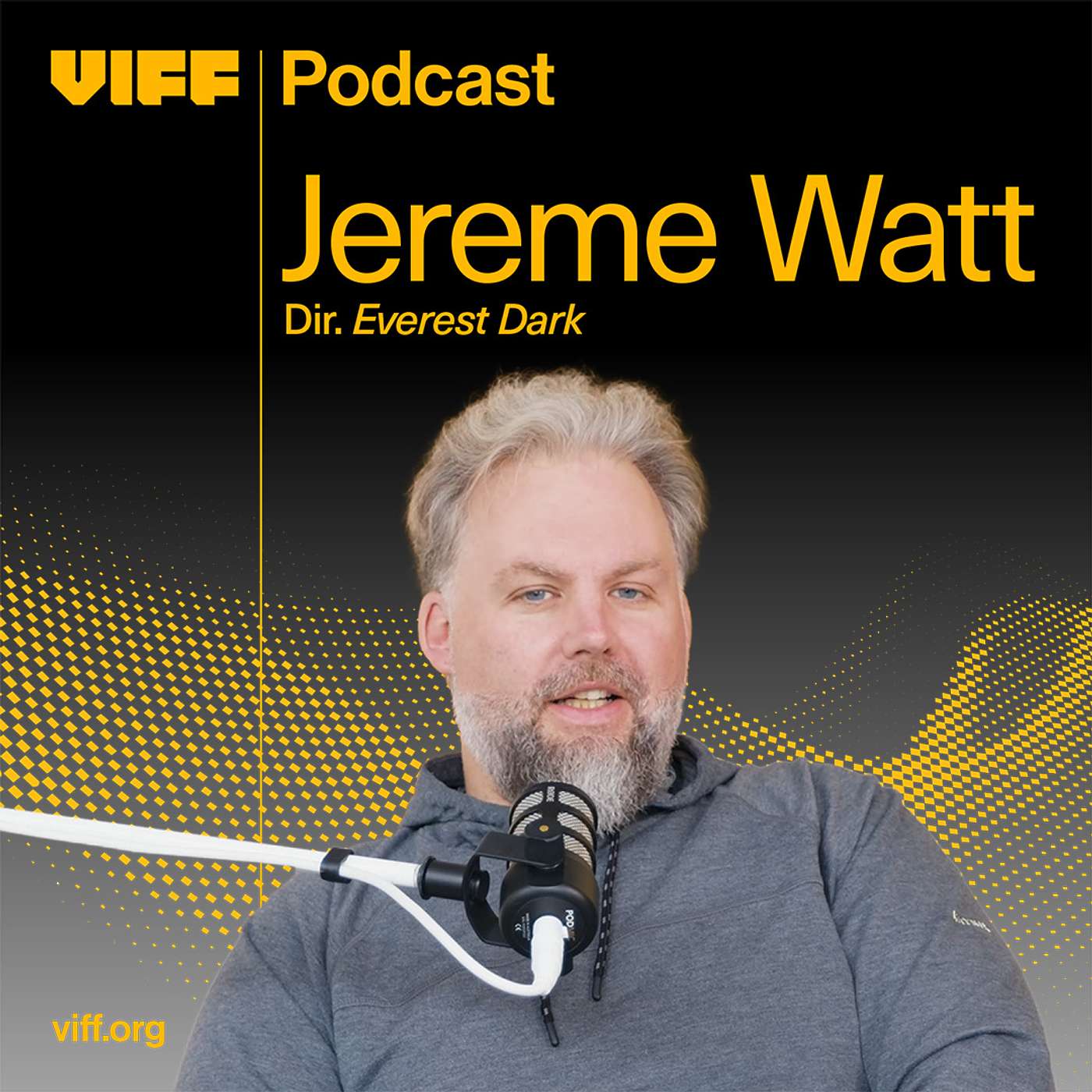
    Jereme Watt reaches new documentary heights in "Everest Dark"

    Many know the visual splendour of Mount Everest, but only through pictures, stories, or tales of these treks that tempt the most ambitious of climbers. But, as the profile of Mount Everest has risen, what's lesser known is the stories of the Sherpas that guide these climbs while risking their lives to recover the bodies of those who did not survive the summit. This side of the story is the catalyst for Jereme Watt's "Everest Dark." Spotlighting one of Nepal's most celebrated high-altitude climbers, Mingma, "Everest Dark" follows this compelling character on his own journey to reclaim Mount Everest from exploitation. In 2015, Nepal suffered a devastating earthquake that cost the lives of many. Mingma believed this to be the wrath of God. "Everest Dark" is a documentary on courage, conviction, faith, and the cost of intruding on what is sacred. In this episode of the VIFF Podcast, Watt sits down with Director of Programming, Curtis Woloschuk, to discuss creating such an arduous project, which also happened to take place during the peak of COVID. From gathering a high-altitude crew to explaining the risks of participation to their parents, creating "Everest Dark" was no small feat. We hear from Watt on his conviction to make it happen. This podcast is brought to you by the Vancouver International Film Festival. Presented on the traditional and unceded territory of the xʷməθkʷəy̓əm (Musqueam), sḵwx̱wú7mesh (Squamish), and sel̓íl̓witulh (Tsleil-Waututh) nations.

  • S4 · E14
    June 18 · 35 min

    In 100 SUNSET, Kunsang Kyirong is inspired by 'complicated women'

    Kunsang Kyirong's "100 Sunset" follows two young women residing in Parkdale, Toronto. Located in a unique apartment complex, housing a vibrant community of Tibetan immigrants, Kyirong's lens lets us into closeness of communal living, and the pangs of loneliness that perhaps make us observe each other more than we should. In this compelling story, lead character Kunsel finds herself fascinated with others, picking up her camera to spy on her neighbours as she becomes enthralled with their day-to-day. Soon, she meets Passang, quickly challenging her introverted nature, and revealing a curious dynamic. To make this film happen, Kyirong went door-knocking, sourcing cast, and locations to ensure this work put Tibetan lives at the centre, demonstrating how even though we all live close together in modern-day housing, our lives may be vastly different. An incredibly strong feature debut from a Vancouver local, on this episode of the VIFF podcast, we talk with Kyirong about capturing 'complicated women,' on camera, working with non-actors, and platforming immigrant communities. This podcast is brought to you by the Vancouver International Film Festival. Presented on the traditional and unceded territory of the xʷməθkʷəy̓əm (Musqueam), sḵwx̱wú7mesh (Squamish), and sel̓íl̓witulh (Tsleil-Waututh) nations.

  • S4 · E13
    June 4 · 13 min

    Igor Bezinović on why his anti-war film arrived at just the right time

    The success of Igor Bezinović's third feature, "Fiume o Morte!," is something to marvel at. "Fiume o Morte!," is about the Croatian city of Rijeka, following its occupation by Italy. Blending absurdist re-enactments and documented record, portrayed almost entirely by first-time actors, it has been seen around the world—and was even Croatia's submission for the Academy Awards. Yet, despite the specificity of this story, "Fiume o Morte!" resonates universally in a time where an authoritarian regime is present, or has been present, on every single continent, insisting that war is necessary. That war is natural. But Bezinović rejects that. He flips the script and pokes fun at fascism with playful skits, and wit. In this episode of the VIFF Podcast, Programmer and Program Lead, Sonja Baksa sits down with Bezinović to talk about the weight of telling this story, using creativity to resist hegemony, and Bezinović's most memorable moments in cinema. This podcast is brought to you by the Vancouver International Film Festival. Presented on the traditional and unceded territory of the xʷməθkʷəy̓əm (Musqueam), sḵwx̱wú7mesh (Squamish), and sel̓íl̓witulh (Tsleil-Waututh) nations.

  • S4 · E12
    May 21 · 35 min

    'Not just another sad story from Africa' Timeea Ahmed wants you to know Khartoum, Sudan

    In Timeea Ahmed's "Khartoum," five exiles of Sudan’s capital give voice to their experiences through reenactment, animation, and recollection. A collaborative documentary, headed by five co-directors, each bringing their unique perspectives and real-life experiences to a documentary that is one of one. Ahmed brings us along on the lives of these five protagonists (one being himself), showcasing their lives, dreams, hopes, and stories of love amidst the rubble. On this episode of the VIFF Podcast, we speak with Ahmed on using documentary film as an archive of life and a testament to what should be remembered in war. This podcast is brought to you by the Vancouver International Film Festival. Presented on the traditional and unceded territory of the xʷməθkʷəy̓əm (Musqueam), sḵwx̱wú7mesh (Squamish), and sel̓íl̓witulh (Tsleil-Waututh) nations.

  • S4 · E11
    May 7 · 28 min

    Sara Wylie on why capitalism is the worst

    Sara Wylie got her filmmaking start in her late twenties, dipping her toe into documentary through her work as a political organizer after making anti-Stephen Harper comedy videos. Soon, her passion for storytelling developed into a heightened curiosity about how she processes her own life and experiences as someone experiencing complex chronic illness. In this personal inquisition, Wylie fell upon the concept of Crip Time, contemplating how able-bodied versus disabled bodies relate to time. In a capitalist society, we are forced to bend to our clocks to keep up with the rapid pace of life. Crip time offers a new, radical approach worth considering: time should bend to disabled bodies and minds instead. Shot on Super 8 and primarily eco-processed with plant materials by hand, in this episode of the VIFF Podcast, we talk with Wylie about her journey creating her short, Resistance Meditation. She describes it as "a weird little movie" — but Resistance Meditation is a lot more than that. It emphasizes the urgent need to resist capitalism, the demands on our precious time, and how folks with disabled bodies hold the keys to what a meaningful alternative could look like. This podcast is brought to you by the Vancouver International Film Festival. Presented on the traditional and unceded territory of the xʷməθkʷəy̓əm (Musqueam), sḵwx̱wú7mesh (Squamish), and sel̓íl̓witulh (Tsleil-Waututh) nations.

  • S4 · E10
    April 23 · 34 min

    Durian and Decision-making with Solara Thanh Bình Đặng

    Solara Thanh Bình Đặng's ripe follows lead character Lệ, on the cusp of a life-altering decision. At this crossroads, she must consider an arranged marriage that is sure to support her family, but yields a profound uncertainty. Representative of a crossroads many women face, ripe represents the experience of facing a dilemma, symbolized by a durian fruit. In this work, Đặng emphasizes not the decision itself, but the spiritual and psychological journey in moving through it, a nod to her love of magical realism, and employing levity when creating a dramatic narrative. In this episode of the VIFF podcast, Đặng discusses why the durian acts as a catalyst for this story, representative of not only a female's anatomy, but also our ancestral ties to nature and the universe. A short film packed with kaleidoscopic visuals and sound effects, shot entirely on 16 mm, Đặng speaks to the power of the short film form and why using it to experiment is an integral step in every filmmaker's journey. This podcast is brought to you by the Vancouver International Film Festival. Presented on the traditional and unceded territory of the xʷməθkʷəy̓əm (Musqueam), sḵwx̱wú7mesh (Squamish), and sel̓íl̓witulh (Tsleil-Waututh) nations.

  • S4 · E9
    April 9 · 41 min

    Nicole Bazuin on the Modern Whore

    Nicole Bazuin first encountered Andrea Werhun on the set of a music video she was directing, in search of Go Go Dancers who'd be willing to participate. At first meet, the two developed what Bazuin calls "a creative crush," compelled to work together on several projects since. What resulted from this affinity for each other's art was a self-published​​ book titled "Modern Whore" based on Werhun's experiences as a sex worker in Toronto. But their collaboration didn't end there. With more story to tell, Bazuin and Werhun teamed up once again, bringing their feature film adaptation of their first collaboration to life. "Modern Whore" the movie centres Werhun's story in this hybrid documentary, where she acts as both narrator and the lead, re-enacting ​her journey in a field that society exclusively villainizes or victimizes. On this episode of the VIFF Podcast, we speak with Bazuin (who wrote, directed, and edited the project) on creating a new feminine archetype. Not a femme fatale, but a femme vitale, a woman whose life is sexy, but contains multitudes in self-love and community. A movie that is told through a specific lens, being Andrea Werhun's first-hand accounts in sex work, Bazuin speaks to the beauty of how conversations evolve once the lens is up, getting Sean Baker on board during the height of the "Anora" fandom as Executive Producer, and how cinema has the power to change the conversation. This podcast is brought to you by the Vancouver International Film Festival. Presented on the traditional and unceded territory of the xʷməθkʷəy̓əm (Musqueam), sḵwx̱wú7mesh (Squamish), and sel̓íl̓witulh (Tsleil-Waututh) nations.

  • S4 · E8
    April 2 · 35 min

    Alison Reid wants you to put down your phone—and go on an adventure

    The urge to escape the mundanities of everyday life is hard to ignore. And yet, so many of us remain tethered to our routines, our homes, our comforts. In 1957, Robert Bateman and Bristol Foster resisted that pull. Instead, they packed their belongings into a Land Rover and set off on a 30,000-kilometre journey across Africa, India, Southeast Asia, and Australia—an adventure that would shape the course of their lives. Driven by a shared reverence for the natural world, Bateman—one of Canada’s most celebrated wildlife artists—and Foster, a conservation biologist and filmmaker, are the subjects of the celebrated documentary, The Art of Adventure. Drawing from rare and deeply personal archival footage, the film invites us to be fully present in the landscapes we move through. In this episode of the VIFF Podcast, Director Alison Reid reflects on the legacy of Bateman and Foster as Canadian icons, her own career as a stunt performer, and why the spirit of adventure matters—at any age. This podcast is brought to you by the Vancouver International Film Festival. Presented on the traditional and unceded territory of the xʷməθkʷəy̓əm (Musqueam), sḵwx̱wú7mesh (Squamish), and sel̓íl̓witulh (Tsleil-Waututh) nations.

  • S4 · E7
    March 19 · 44 min

    Brian Daniel Johnson and Dide Su Bilgin on community and Vancouver's avoidance culture

    In a city plagued by social isolation, Brian Daniel Johnson and Dide Su Bilgin found a story to tell. In their film, A Welcome Distraction, lead character, Ernest, looks for answers amidst grief and heartbreak in this unapologetic portrayal of how disconnected Vancouver can be. Soon, he becomes entangled with a wellness enclave led by a charismatic leader (Adriana Marchand). A true ensemble film, A Welcome Distraction showcases the pursuit of community, as told by a friend group itself. Longtime collaborators, Johnson and Bilgin, met in film school at UBC. Over the years, they cultivated a group of what Bilgin calls "cinematically intertwined" collaborators. Their first feature together depicts the coming-of-age pains they know to be true in a city that challenges them. In this episode of the VIFF Podcast, Johnson and Bilgin talk about their experience finding your friends in film, pushing each other to create work, and how film itself is its own language. This podcast is brought to you by the Vancouver International Film Festival. Presented on the traditional and unceded territory of the xʷməθkʷəy̓əm (Musqueam), sḵwx̱wú7mesh (Squamish), and sel̓íl̓witulh (Tsleil-Waututh) nations.

  • S4 · E6
    March 5 · 31 min

    How film can reconnect you with your roots with Kent Donguines

    Kent Donguines' journey creating Treasure of the Rice Terraces began in 2019. From idea to development, Donguines' slow and steady process was grounded with one intention: to be in community with his subjects. Treasure of the Rice Terraces follows Donguines' travels back to the Philippines to reconnect with his roots. Discovering the world of Indigenous Kalinga tattoos in Buscalan, he falls upon 108-year-old tattoo artist Apo Whang-Od, marking the beginning of this story. A community that is often exploited by tourists and vloggers day after day, all seeking to be marked by Whang-Od, this film offers a new lens on a precious cultural practice, demonstrating how traditions can survive, evolve, and inspire both local communities and identity worldwide. Donguines joins Director of Programming, Curtis Woloschuk, on the VIFF Podcast to discuss how making art can affirm your identity and empower you to bring these stories home. This podcast is brought to you by the Vancouver International Film Festival. Presented on the traditional and unceded territory of the xʷməθkʷəy̓əm (Musqueam), sḵwx̱wú7mesh (Squamish), and sel̓íl̓witulh (Tsleil-Waututh) nations.

  • S4 · E6
    February 19 · 41 min

    Why documentaries are the door to understanding with Elöise King (The Shadow Scholars)

    From travel bans to the risk of criminalization for her film's subjects, Elöise King had to persevere through many hurdles to get her documentary, The Shadow Scholars, to screen. In The Shadow Scholars, cameras follow Patricia Kingori, the youngest Black woman professor in Oxford’s 925-year history, on her compelling global investigation into Kenya’s hidden essay mills — an industry where an estimated 40,000 highly educated yet underemployed Kenyans make ends meet by writing academic papers for wealthy Western students. As the film touches on an ethical gray area— facing many assumptions and judgments in the global north— King was determined to suggest a new worldview. In this episode of the VIFF Podcast, we talk with King about the simple pleasure of diving deep into research, how documentaries can open doors to other worlds, and how education can mobilize us to think beyond the systems we live within. This podcast is brought to you by the Vancouver International Film Festival. Presented on the traditional and unceded territory of the xʷməθkʷəy̓əm (Musqueam), sḵwx̱wú7mesh (Squamish), and sel̓íl̓witulh (Tsleil-Waututh) nations.

  • S4 · E5
    February 5 · 35 min

    How painting provides a portal with Jenn Strom (The Painted Life of E.J. Hughes)

    In the 20th Century, painter E.J. Hughes quietly helped reshape the artistic landscape of British Columbia. Each canvas was a place of worship for the artist who was famously too shy to attend his own art exhibitions. Hughes' legacy has left us with many opportunities to bask in the beauty of this province through each brush stroke. Jenn Strom's The Painted Life of E.J. Hughes explores Hughes’s life not only as an artist but as a devoted, humble human being. In this episode of the VIFF Podcast, we speak with Strom about her passion for archival work, the importance of being present in the process of artmaking, and how art can help you experience your own environment in a whole new way. This podcast is brought to you by the Vancouver International Film Festival. Presented on the traditional and unceded territory of the xʷməθkʷəy̓əm (Musqueam), sḵwx̱wú7mesh (Squamish), and sel̓íl̓witulh (Tsleil-Waututh) nations.

  • S4 · E4
    January 22 · 46 min

    Brishkay Ahmed on embracing identity, and what we can learn from Afghan women

    Growing up, Ahmed felt at odds with her Afghan identity. She describes herself as a rebellious child, not understanding the need for a head scarf, often finding herself "irked" by assumptions about her, before she even knew herself. Perceptions about Afghanistan perpetuated by "breaking news" from CNN certainly didn't help. In her latest work, In The Room, Ahmed sets out to change the conversation. Today, Ahmed is proud of her identity. But the journey to this place of embrace was not linear. In In The Room, Ahmed interviews five women who in their own right, have taught her something about herself, and the many complexities, beauties, and struggles Afghan women face on their own unique paths. In this episode of the VIFF Podcast, Ahmed reminds us that in a time where women's rights are under siege, you, with your story in hand, can be an agent of hope. This podcast is brought to you by the Vancouver International Film Festival. Presented on the traditional and unceded territory of the xʷməθkʷəy̓əm (Musqueam), sḵwx̱wú7mesh (Squamish), and sel̓íl̓witulh (Tsleil-Waututh) nations.

  • S4 · E3
    January 8 · 35 min

    'The Track' Director Ryan Sidhoo on the stories that haven't been told, and getting those movies made

    This isn't Ryan Sidhoo's first time exploring the relationship between sports and space. Also having directed Truth North (2017) and produced Handle with Care (2021), two titles that rounded the festival circuit time and time again, Sidhoo's next feature introduces us to three friends growing up in Bosnia, all of whom have Olympic aspirations. What could be seen as a trio chasing a fairytale, The Track (2025) follows three young men coming of age as they train in luge on an abandoned track from the 1984 Olympics. A hopeful look at the next generation striving to clear out the rubble from the past, Sidhoo is keen to remind us that this isn't a sports movie, but a coming-of-age story about following a dream in a post-war society.In this episode of the VIFF Podcast, we speak with the filmmaker about how to make an audience root for your subjects, the logistical hoops of taking your film to market, and the power of seeing life through cinema. This podcast is brought to you by the Vancouver International Film Festival. Presented on the traditional and unceded territory of the xʷməθkʷəy̓əm (Musqueam), sḵwx̱wú7mesh (Squamish), and sel̓íl̓witulh (Tsleil-Waututh) nations.

  • S4 · E2
    Dec 18, 2025 · 29 min

    'Foreigner' Director Ava Maria Safai talks the horrors of growing up, and what filmmaking teaches you about yourself

    Ava Maria Safai describes Foreigner as “bubblegum horror”—a genre that layers a glossy, fun aesthetic over a dark underbelly of pain. Following an Iranian teenager who moves to Canada, dyes her hair blonde, and becomes a demon, Foreigner explores the ache of wanting to belong and how far you're willing to go to be accepted. In this episode of the VIFF Podcast, Safai shares how filmmaking can be brutal in what it teaches you about yourself—much like our formative teenage years. Reminiscent of Mean Girls but with a little more guts and gore, this conversation dives into Safai’s process in shaping this 2025 festival favourite. This episode was recorded during the 2025 Vancouver International Film Festival. This podcast is brought to you by the Vancouver International Film Festival. Presented on the traditional and unceded territory of the xʷməθkʷəy̓əm (Musqueam), sḵwx̱wú7mesh (Squamish), and sel̓íl̓witulh (Tsleil-Waututh) nations.

  • S4 · E1
    Dec 4, 2025 · 41 min

    Mayumi Yoshida on her debut feature, 'Akashi,' and the power that comes from existing in the in between

    Mayumi Yoshida is THE multi-hyphenate filmmaker you need to watch. As writer, director, producer, and actor for her debut feature, Akashi, Yoshida's world premiere at VIFF 2025 was met with sold out audiences, celebrating her story tackling themes of identity, class struggle, and artistic aspiration. In this episode of the VIFF Podcast, we sit down with Yoshida to discuss her Japanese heritage, identity as an immigrant, and why existing in the in between can give you the greatest superpower of all. Plus, we dive into what made the celebrated filmmaker fall in love with cinema to begin with, starting with a formative screening of Titanic at the age of 8 in Brussels, Belgium. This episode was recorded during the 2025 Vancouver International Film Festival. This podcast is brought to you by the Vancouver International Film Festival. Presented on the traditional and unceded territory of the xʷməθkʷəy̓əm (Musqueam), sḵwx̱wú7mesh (Squamish), and sel̓íl̓witulh (Tsleil-Waututh) nations.

Showing 1–20 of 21 episodes