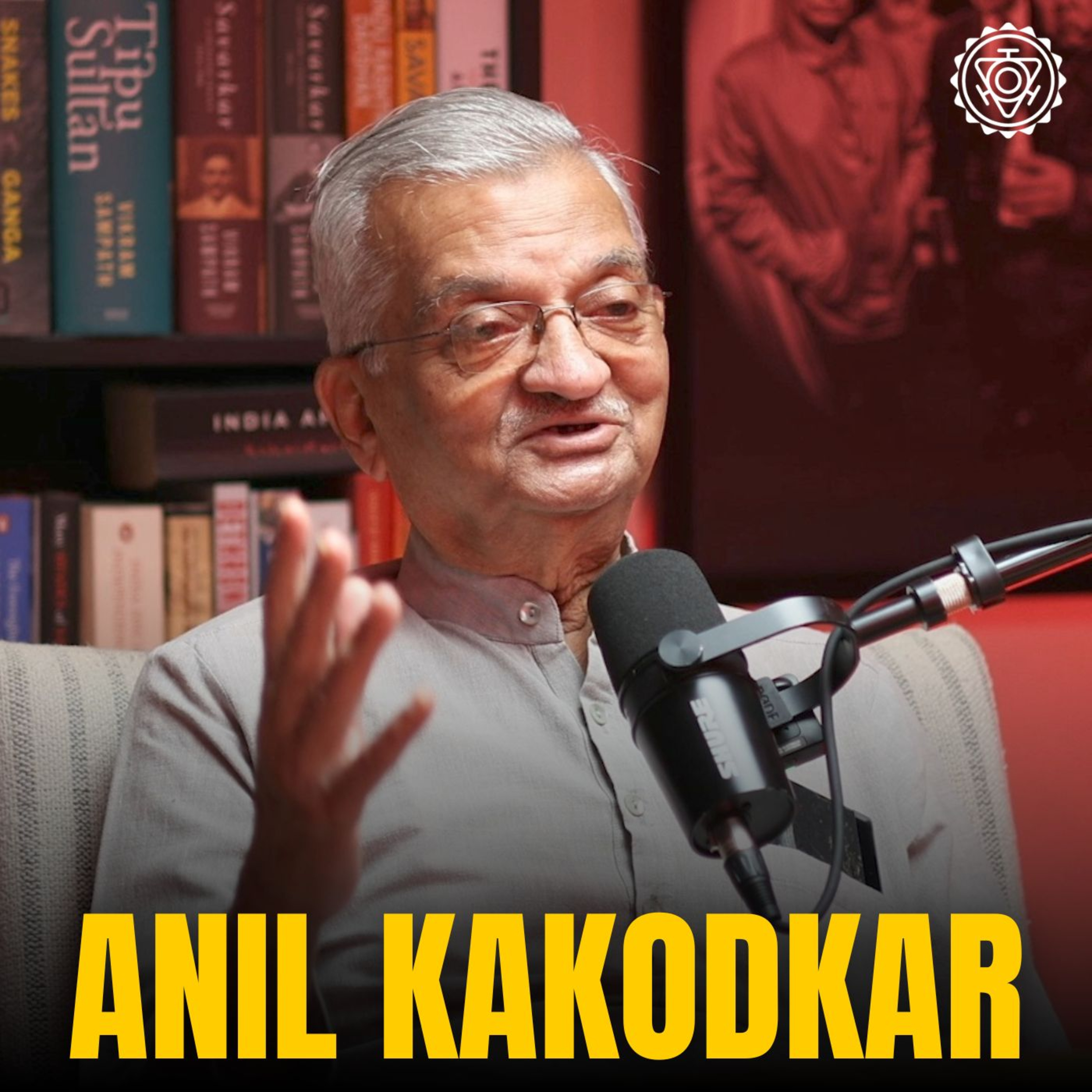
Dr Anil Kakodkar is one of the senior-most living architects of India's atomic energy programme and a Padma Vibhushan awardee. He joined the Bhabha Atomic Research Centre in 1964. He served as Director of BARC from 1996 to 2000 and as Chairman of the Atomic Energy Commission and Secretary, Department of Atomic Energy, from 2000 to 2009.He was among the small group of scientists at Pokhran for India's first nuclear test — Smiling Buddha — on 18 May 1974, and played a central role a quarter-century later in the five Pokhran-II nuclear tests in May 1998 that established India as a declared nuclear weapons state.As a working engineer through the long sanctions era, he designed and built the Dhruva research reactor entirely indigenously, led the development of pressurised heavy water reactor (PHWR) systems that today form the backbone of India's civilian fleet, and rehabilitated Units 1 and 2 of the Madras Atomic Power Station after the 1989 failure of their moderator inlet manifolds — both reactors had been on the verge of being written off. He conceptualised the Advanced Heavy Water Reactor (AHWR), a 300 MW thorium-fuelled design that remains central to India's three-stage nuclear power programme.His team at BARC designed the miniaturised 83 MW pressurised light water reactor that powers INS Arihant, completing India's nuclear triad. Between 2005 and 2008, he was the technical anchor of the Indian negotiating team — alongside Manmohan Singh, Pranab Mukherjee, Shivshankar Menon and Shyam Saran — that delivered the 123 Agreement with the United States, the India-IAEA safeguards agreement, and the September 2008 Nuclear Suppliers Group waiver that ended three decades of India's nuclear isolation.A lifelong champion of thorium as the foundation of India's long-term energy sovereignty — India holds roughly a quarter of the world's known thorium reserves — he has continued to argue, well into his eighties, that abandoning the thorium path would be a serious strategic error. Beyond nuclear, he has chaired the Board of Governors of IIT Bombay, led high-level committees on Indian Railways safety and Maharashtra higher education, helped establish NISER and the Homi Bhabha National Institute, and currently chairs Maharashtra Knowledge Corporation Limited.