Skip to content
Artwork for Urbinary

Urbinary

POLI.RADIO

Urbinary is a podcast by PhD students and research fellows from the Department of Architecture and Urban Studies at Politecnico di Milano. Born in 2022 as a student project, it was rebranded in 2024 with a renewed mission: to make urban studies accessible to a broader audience by exploring innovative research topics and fostering inclusive dialogue. Through fresh perspectives and experimental approaches, Urbinary bridges academia and the public, amplifying young voices and uncovering new paths in urban research.

Play
  • 20 episodes
  • Avg 31 min
  • English
  • Monday · 42 min

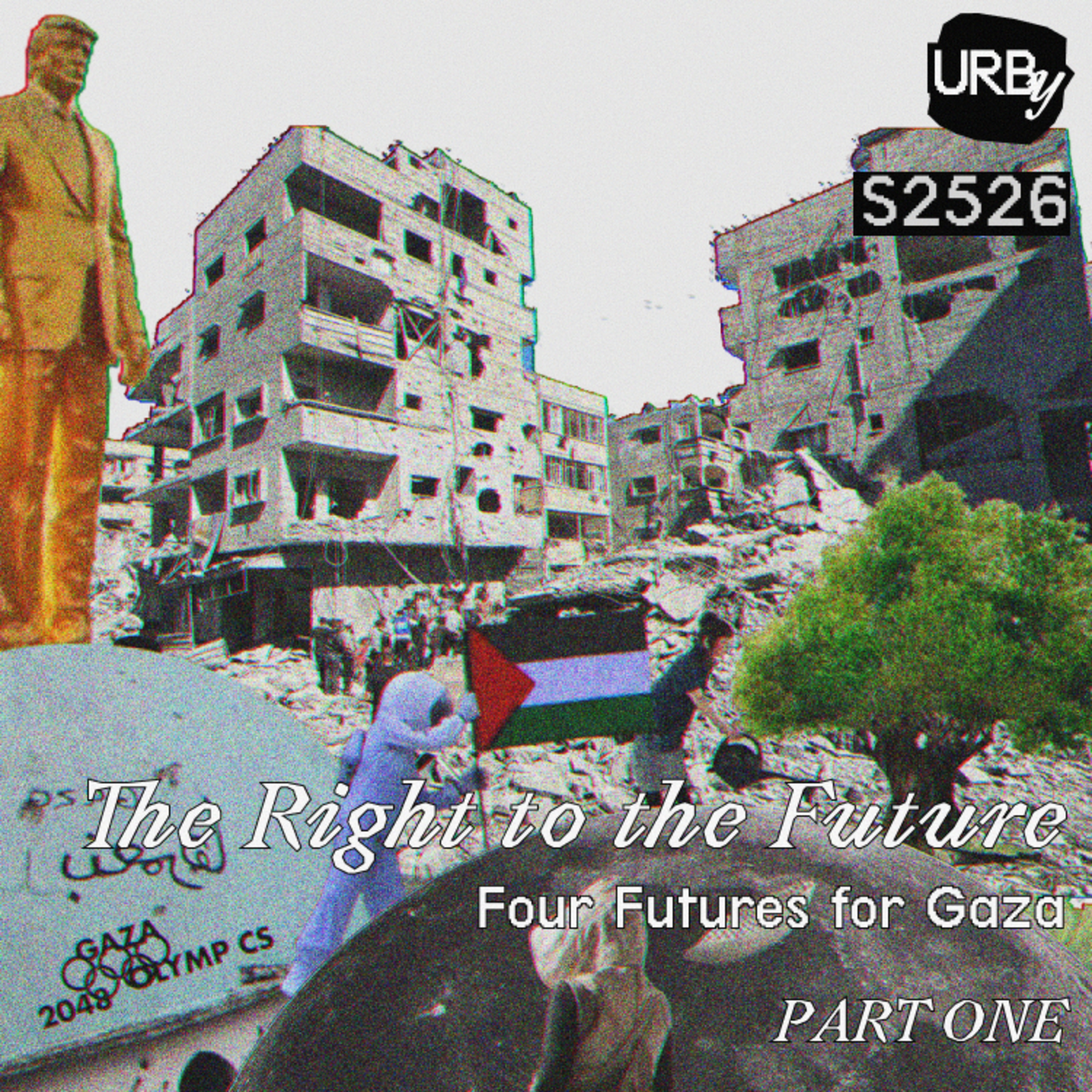
    The right to the future. Four futures for Gaza. Part one

    Imagine Gaza in 2040. Two bored employees in the municipal IT department copy France’s application for the 2048 Summer Olympics, replace the country name and submit it as a joke. The committee accepts. This is Application 39, a short story by Palestinian writer Ahmed Masoud, and it opens an episode about how the future is produced, by whom and for whom. Part 1 of The Right to the Future — Four Futures for Gaza looks at planning as an operation on time as much as on space, and at occupation as a way of controlling who is allowed to plan at all. With Masoud, architect and scholar Dena Qaddumi and architect Abdalrahman Kittana, the episode examines the first of four futures, the imposed one, through the Riviera plan, a 50-year lease and a map drawn as if nobody had ever lived there.

  • July 29 · 22 min

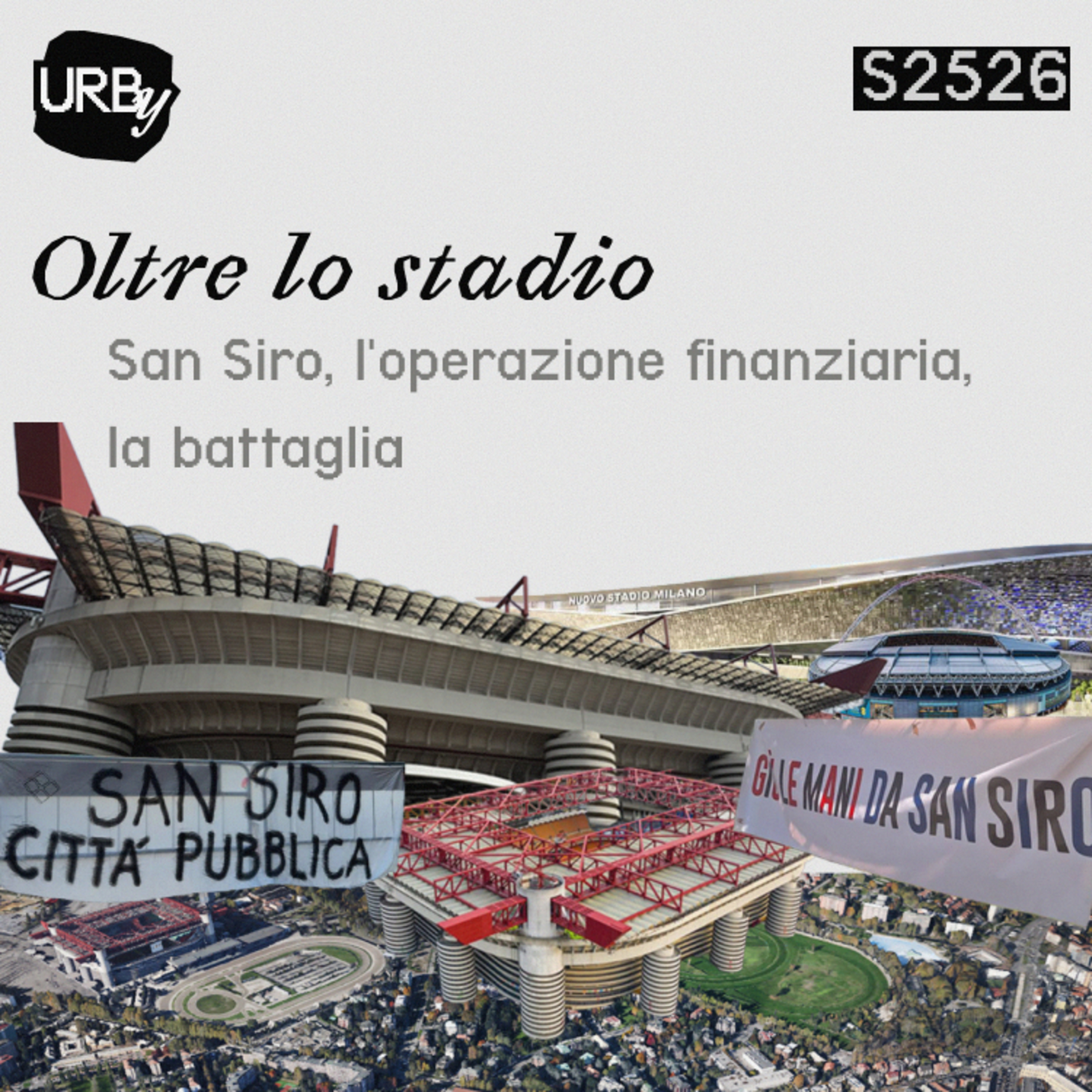
    Oltre lo stadio. San Siro, l'operazione finanziaria, la battaglia

    Sinossi episodio Oltre lo stadio racconta come la costruzione di nuovi stadi di calcio, o la ristrutturazione di quelli già esistenti, sia diventata in Europa volano di trasformazioni urbane molto ampie, spesso con caratteri speculativi. Il terzo episodio va nel dettaglio di un caso studio specifico: la vendita di San Siro a Milano, e il suo futuro abbattimento e ricostruzione. L’episodio ripercorre la cosiddetta “vicenda San Siro”, a partire dall’estate del 2019 e fino alle vicende giudiziarie della primavera del 2026, per dimostrare che lo stadio sia solo un volano per estrarre profitti dalla vendita ai fondi immobiliari americani della Grande Funzione Urbana San Siro. Scritto da Martina Pagani Coordinamento editoriale di Giulia Oldani Post produzione a cura di Giorgio Mattina e Luciano Oliva Fonti audio utilizzate Intervista a Pierluigi Corbani, presidente del Comitato Sì Meazza Documentario “Nuovo G. Meazza di San Siro, uno stadio da campioni”

  • July 20 · 25 min

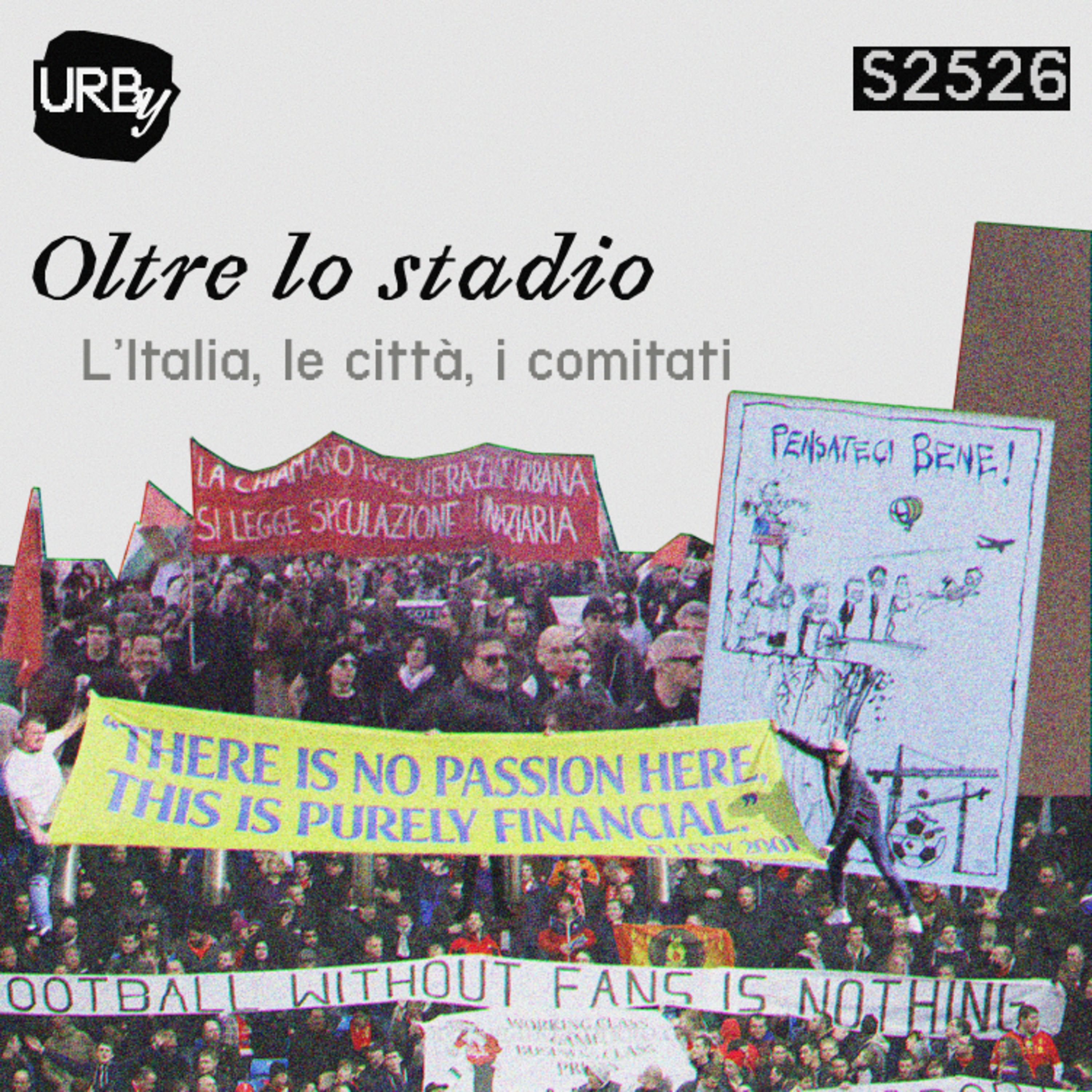
    Oltre lo stadio. L’Italia, le città, i comitati

    Sinossi Oltre lo stadio racconta come la costruzione di nuovi stadi di calcio, o la ristrutturazione di quelli già esistenti, sia diventata in Europa volano di trasformazioni urbane molto ampie, spesso con caratteri speculativi. Il secondo episodio racconta del contesto italiano: come stanno i nostri stadi rispetto a quelli del resto d’Europa, cosa dice la nostra legislazione e, soprattutto, cosa dicono i cittadini. La voce di due avvocatedi due comitati diversi racconta di un conflitto aperto tra la cittadinanza, l’attore pubblico e le società private, e del ruolo fondamentale che hanno avuto i comitati per rallentare o impedire fenomeni speculativi. Fonti audio utilizzate Intervista a Veronica Dini, avvocata dei comitati control’abbattimento di San Siro Intervista a Mirella Quattrone, presidente del Comitatocivico per la tutela della zona stadio Como Scritto da Martina Pagani, coordinamento editoriale diGiulia Oldani, post produzione di Giorgio Mattina e Luciano Oliva

  • July 13 · 24 min

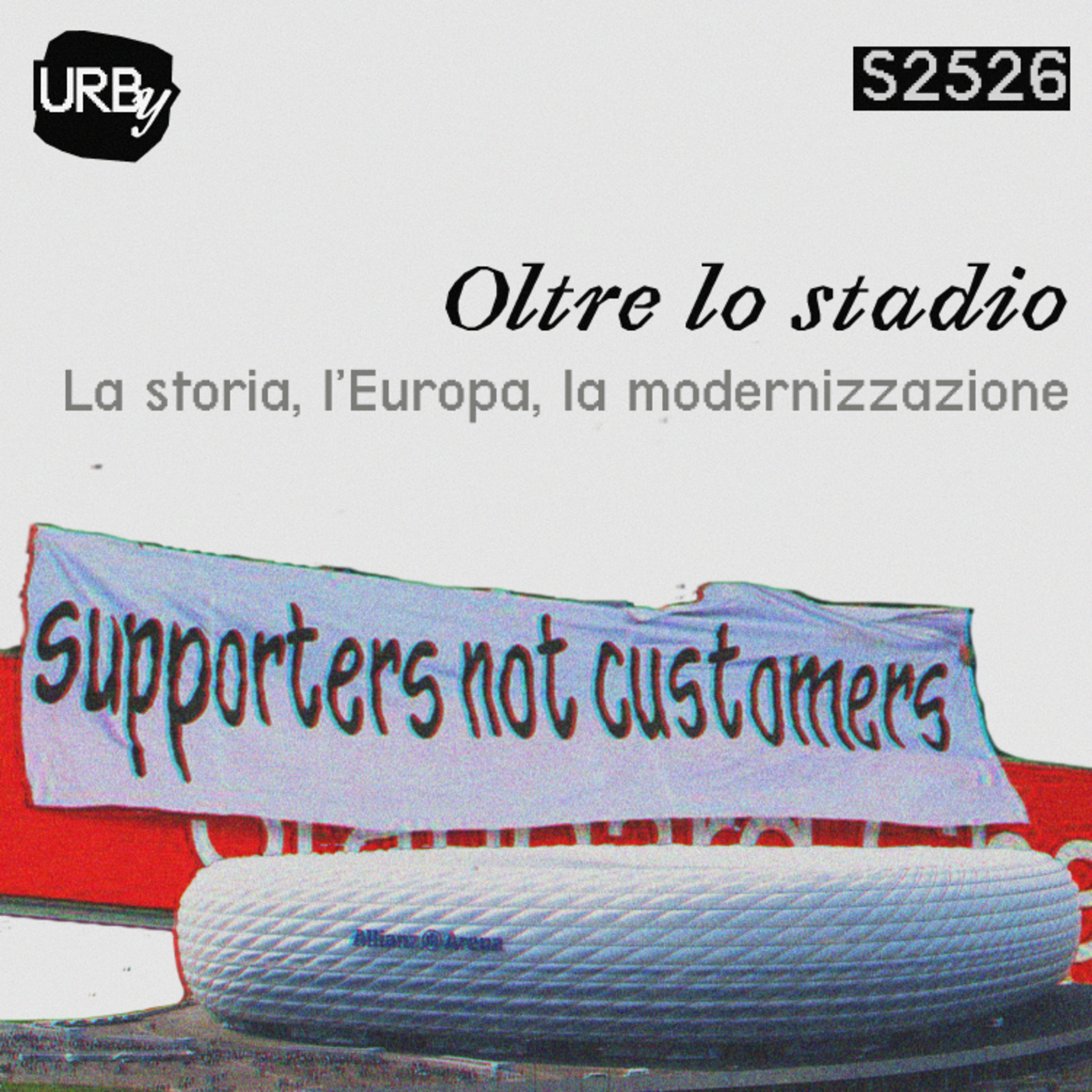
    Oltre lo stadio. La storia, l’Europa, la modernizzazione

    Sinossi Oltre lo stadio racconta come la costruzione di nuovi stadi di calcio, o la ristrutturazione di quelli già esistenti, sia diventata in Europa volano di trasformazioni urbane molto ampie, spesso con caratteri speculativi. Il primo episodio ripercorre l’evoluzione del manufatto-stadio, dai primi edifici in legno del Regno Unito di metà Ottocento alle strutture iper-tecnologiche e multifunzionali dei giorni nostri, con regimi di proprietà passati dal pubblico al privato. L’episodio spiega come questo cambiamento si leghi profondamente alle trasformazioni economiche e politiche delle nostre città, di amministrazioni comunali interessate solo a incoraggiare investimenti privati, e di società sportive che diventano veri policy makers urbani. Scritto da Martina Pagani, coordinamento editoriale diGiulia Oldani, post produzione di Giorgio Mattina e Luciano Oliva Fonti audio utilizzate Intervista a Simone Tosi, docente del Dipartimento diSociologia e Ricerca Sociale dell’Università di Milano Bicocca

  • June 15 · 44 min

    S2526 / Ri-affermare la dimensione pubblica nei territori della logistica

    Il Workshop Younger SIU 2025 ha lavorato ad un’analisi analitico-progettuale del concetto di ‘publicness’ a partire dal caso emblematico del nodo logistico di Piacenza. Per raccontarlo, intrecciamo le nostre riflessioni con quelle dei partecipanti, e audio raccolti durante un sopralluogo commentato nel polo Le Mose.

  • June 5 · 29 min

    S2526 / Below the Surface. Power, Groundwater, and BNBOs in Denmark

    Groundwater protection in Denmark has become a growing source of conflict. Through the case of BNBOs - protection zones around drinking water wells - the episode explores how environmental regulation reshapes agricultural practices, land use, and property relations. Tracing the frictions between agro-industrial metabolism and environmental protection, it asks who ultimately absorbsthe costs of sustainability. Written by Written by Yasemin Alma, Ali Ghanbari, Thomas Riise and Esther Swaap. Narrated by Maša Bezbradica. Edited by Stella De Luca. Post-production and sound design by Giorgio Mattina. The series was developed within the course Conflict Management and Resolution (2025–2026), taught by Carolina Pacchiand Giancarlo Vecchi at Politecnico di Milano. This episode was produced for educational and research purposes. Portions of third-party audio materials may be included for commentary, analysis, and critique. All rights remain with their respective owners. Audio credits DR Nyheder. (2026). Drikkevandsdebatten er skoldhed, men har eksisteret i årtier [Video]. DR. https://www.dr.dk/nyheder/politik/reels/drikkevandsdebatten-er-skoldhed-men-har-eksisteret-i-aartierDR Nyheder. (2026). På sjette døgn er borgerne i Ledøje uden vand: “Det er virkelig skræmmende” [Video]. DR. https://www.dr.dk/nyheder/indland/paa-sjette-doegn-er-borgerne-i-ledoeje-uden-vand-det-er-virkelig-skraemmende DRTV_DR. (2026). Signe Molde drikker drænvand fra en mark med frisk sprøjtet gift [Video]. YouTube Shorts. https://www.youtube.com/shorts/NgMbySG4I8o

  • June 3 · 33 min

    S2526 / Gating the Lagoon. The conflictual decision-making process of MoSe

    Venice has always lived with water. But after the catastrophic flood of 1966, that uneasy coexistence increasingly came to be governed through large-scale technological control. Through the controversial history of the MOSE barriers, the episode explores how infrastructures reorganize socio-natural relations and transform the political struggle over who gets to govern the lagoon. Written by Quentin Baladi, Chiara Caruso, Sanjana Shankar, and Emma Veneziani. Narrated by Dafni Riga. Edited by Stella De Luca. Post-production and sound design by Giorgio Mattina. The series was developed within the course Conflict Management and Resolution (2025–2026), taught by Carolina Pacchiand Giancarlo Vecchi at Politecnico di Milano. This episode was produced for educational and research purposes. Portions of third-party audio materials may be included for commentary, analysis, and critique. All rights remain with their respective owners. Audio credits AGTW. (2022). Il Mose salva Venezia, i cittadini: «Migliore invenzione degli ultimi 150 anni». [Video]. YouTube. https://www.youtube.com/watch?v=D7zpx8BEgEs INA Officiel. (2019). 1966 : Une marée historique inonde Venise | Archive INA [Video]. YouTube. https://www.youtube.com/watch?v= Pellegrini, G. (Director). (2020). La città delle sirene [Documentary]. Ginko Film. Version consulted: DocuVision. (2023). YouTube. https://www.youtube.com/watch?v=AUGvnUp0lz8 TG La7. (2013). Mose di Venezia: appalti distorti, in manette ex presidente Mazzacurati [Video]. YouTube. https://www.youtube.com/watch?v=y5Yiht0ceOM

  • May 28 · 37 min

    S2526 / Flows of Power. How water treaties produce water scarcity

    Starting from the 2020 conflict surrounding La Boquilla Dam, this episode traces the hidden workings of the 1944 water treaty between the United States and Mexico. In the Río Conchos basin, water is not simply scarce: it is made scarce. As farmers face empty canals and mounting pressure to meet cross-border water deliveries, a deeper fracture comes into view, between water as a means of survival and water as a debt to be repaid. Written by Toka Elsayed, Laila Kouta, Alexia Lara, Lucy White. Narrated by Lucy White. Edited by Stella De Luca. Post-production and sound design by Giorgio Mattina. The series was developed within the course Conflict Management and Resolution (2025–2026), taught by Carolina Pacchi and Giancarlo Vecchi at Politecnico di Milano. This episode was produced for educational and research purposes. Portions of third-party audio materials may be included for commentary, analysis, and critique. All rights remain with their respective owners. Audio credits CBS Mornings (Year). Locals in rural Mexican town fault Coca-Cola for depleting water resources. [Video]. YouTube. https://www.youtube.com/watch?v=rPzie3gsdUA Colectivo Testigo Ocular (2020). Boquilla, de la sequía al saqueo. [Documentary]. YouTube. https://www.youtube.com/watch?v=y1wjoeMe05M&t=5286s @gracielaacosta8399 (2020). Boquilla 8 Sep. [Video]. YouTube Shorts. https://www.youtube.com/shorts/3hyn1W1uz9k KSAT 12 (2024). Texas’ only sugar mill to close permanently after 51 years. [Video]. YouTube. https://www.youtube.com/watch?v=gMXbebDCnQw Lyla Mehta (2025). Urban Dialogue, 24th Triennale Milano International Exhibition, curated by Politecnico di Milano. [Audio recording, unpublished]. Monica De La Cruz (2024). Mexico's Violation of 1944 Water Treaty Threatens 500 Jobs and US Food Security – Biden Must Act Now. [Video]. YouTube. https://www.youtube.com/watch?v=m7J3sjwbty0

  • March 11 · 22 min

    S2526 / Public space, public power / Part B - How protest reshapes a city

    Public space and protest power explores how protest movements do more than express political demands; they actively reshape the city itself. Through the ongoing student protests in Serbia, the series explores how public spacebecomes a site of visibility, conflict, solidarity, and collective identity. Beginning with the Novi Sad railway station canopy collapse and the institutional silence that followed, the podcast examines how grief turned into mobilization, and how student-led organizing transformed protest into arecurring urban rhythm. Across both episodes, protest is approached as an urban practice: something that reorganizes streets and squares, redefines everyday routines, and turns ordinary infrastructure into political terrain. By connecting political experience to spatial experience, Public space and protest power shows how democracy is not only debated. It is performed, negotiated, and made visible through the urban space. Public space, public power: How protest reshapes the city shifts the lens from protest as a political movement to protest as a spatial force. As demonstrations become recurring in Serbia, they begin to settle into the city’s everyday rhythm,reshaping how people move, gather, and relate to the spaces around them. Drawing on the Charter of Public Space and conversations with scholars and practitioners, the episode explores how public spaces gain visibility, symbolicpower, and political function during protest. From Beirut to Madrid to Belgrade, it traces how repeated occupation can transform ordinary streets and squares into sites of memory and identity. The episode also examines how protest communication now extends beyond physical space into digital space, allowing visibility to travel and meanings to circulate. Ultimately, the main argument is that public space is not merely where protests take place. It is one of the central stakes of protest itself, and one of the last arenas wheredemocratic presence can become visible, collective, and real.

  • S2526 · E1
    March 4 · 27 min

    S2526 / Public space and protest power / Part A - From Collapse to Collective: Student Protest in Serbia

    Public space and protest power explores how protest movements do more than express political demands; they actively reshape the city itself. Through the ongoing student protests in Serbia, the series explores how public spacebecomes a site of visibility, conflict, solidarity, and collective identity. Beginning with the Novi Sad railway station canopy collapse and the institutional silence that followed, the podcast examines how grief turned intomobilization, and how student-led organizing transformed protest into a recurring urban rhythm. Across both episodes, protest is approached as an urban practice: something that reorganizes streets and squares, redefines everydayroutines, and turns ordinary infrastructure into political terrain. By connecting political experience to spatial experience, Public space and protest power shows how democracy is not only debated. It is performed, negotiated, and made visible through the urban space. From Collapse to Collective: Student Protest in Serbia begins in Novi Sad, where the sudden collapse of a recently renovated railway station canopy turns a normal morning into a moment of collective shock. As accountability fails to arrive and justice remains suspended, the tragedy becomes more than an accident - it becomes a symbol of institutional breakdown. From this rupture, a student-led protest movement emerges, expanding across universities and cities and transforming grief into organization. The episode follows how students, supported by professors and structured through direct democratic plenums, became central actors in demanding transparency, responsibility, and the ruleof law. Positioned within both Serbia’s political climate and the longer global history of student movements, the episode asks why students so often become catalysts for change, and why their protests matter not only politically, but urbanistically as well. It raises an important question: what happens when protest becomes part of the city’s fabric?

  • S2526 · E2
    Dec 15, 2025 · 38 min

    S2526 / Manuale minimo di urbanistica coloniale (come si pianifica un’occupazione) / Parte B - Cisgiordania

    La seconda parte approfondisce la dimensione territoriale del colonialismo d’insediamento in Cisgiordania, dove il controllo lascia la scala urbana per trasformarsi in un progetto capillare di riorganizzazione dello spazio. L’episodio ricostruisce le radici storiche del progetto sionista, la nascita degli insediamenti dopo il 1967 e l’evoluzione della colonizzazione attraverso kibbutz, città suburbane, comunità collinari e outpost illegali poi legalizzati. Le voci degli intervistati guidano l’ascoltatore dentro le logiche di pianificazione che istituzionalizzano l’esproprio: la trasformazione delle terre in “state land”, la costruzione sulle alture come strumento ottico di controllo, l’architettura panottica degli outpost e l’emergere di università nei territori occupati come infrastrutture permanenti della colonizzazione. L’episodio affronta anche il tema della temporalità sospesa dei campi profughi e del ruolo dell’arte e della memoria nel contrastare la cronopolitica dell’occupazione. Fonte inserti audio: https://www.youtube.com/watch?v=fxLDYkX7l9A https://www.facebook.com/watch/?v=10156573118623487 https://www.youtube.com/watch?v=FkXJwErm8DM https://www.youtube.com/watch?v=lrdldVhfbaU

  • S2526 · E2
    Dec 10, 2025 · 30 min

    S2526 / Manuale minimo di urbanistica coloniale (come si pianifica un’occupazione) / Parte A - Gerusalemme

    La prima parte di “Manuale minimo di urbanistica coloniale (come si pianifica un’occupazione)” esplora come la pianificazione urbana diventi un potente strumento di dominio nei territori occupati. L’episodio racconta come mappe, piani regolatori, vincoli e burocrazia siano impiegati da Israele per controllare Gerusalemme Est e ostacolare la possibilità, per la popolazione palestinese, di costruire, espandersi, accedere ai servizi e abitare la città in modo stabile. Dalla giudaizzazione del territorio all’“abusivismopianificato”, la puntata mostra come il potere si inscriva nello spazio: attraverso demolizioni selettive, permessi mai concessi, quartieri compressi e infrastrutture pensate per connettere colonie e isolare comunità palestinesi.Gerusalemme diventa così il laboratorio più evidente del colonialismo d’insediamento, dove urbanistica, legge e politica si intrecciano nel ridisegnare la città e la vita di chi la abita.

  • S2526 · E1
    Nov 26, 2025 · 32 min

    S2526 / Urban studies and political economy in the digital era

    This episode brings together Jeremy Gilbert and Christian Schmid to explore how digital capitalism and Lefebvrian theory can shed light on the changing nature of urban space. Jeremy Gilbert opens the conversation with his work on Platform Capitalism, examining how digital platforms, such as Uber, Airbnb, and Amazon, colonise everyday life andrestructure the material and social fabric of cities. He highlights the ways in which platform power operates across scales, from the household to planetar logistics, transforming labour relations, deepening spatial inequalities, and embedding surveillance and algorithmic governance into urban life. In this account, the city no longer functions as an autonomous entity but as a node within vast digital networks, reshaped by the logics of data extraction and platform accumulation. Christian Schmid then situates these developments within the intellectual legacy of Henri Lefebvre. Revisiting Lefebvre’s notion of the urban revolution, Schmid reflects on the concept of Planetary Urbanisation: a new stage of urbanisation, distinct from the industrial age, that is the product of the digital era. He considers how digital infrastructures and physical spaces are increasingly entangled, producing hybrid spatialities that destabilise bounded definitions of the city.This entanglement, he suggests, redefines public space, accessibility, and inclusivity while also revealing ontological shifts in the city’s essence and functionality. Schmid emphasises that urban planning, historically shaped bytransformations in production, now faces the challenge of responding to Platform Capitalism: either through adaptation or through a radical rethinking of its foundations. Together, Gilbert and Schmid provide complementary perspectives on the contemporary urban condition. Their insights span questions of power, inequality, and planning, and point towards a critical horizon: can urban planning resist Platform Capitalism’s centralisation of power and imagine more democratic futures, or must the discipline itself betransformed to meet the conditions of digital urbanisation?

  • Aug 8, 2025 · 14 min

    S242508C / Living the Divide: Save the City or Sell It Off - U10

    Can a law reshape a city? Salva Milano was introduced to unlock construction across Milan, but quickly became a symbol of something deeper: how urban planning isbeing redefined by private interests, legal loopholes, and political urgency. This episode unpacks what happens when development accelerates at the cost of transparency, equity, and long-term vision. Between satire, protest, andsuspended construction sites, we follow the ripple effects of a city built for speed—and ask: Who is this regeneration really for?

  • Aug 6, 2025 · 13 min

    S242508B / Living the Divide: More Than a Roof - U10

    What happens when housing stops being treated as a right and becomes a residual category—something to manage, not invest in? In this episode, we return to one of Milan’s largest public housing districts to examine the material and institutional neglect shaping daily life. Through interviews with researchers and residents, we uncover the long retreat of public responsibility, the internal fractures within social housing, and the everyday forms of resistance and care that emerge in response.

  • Aug 4, 2025 · 14 min

    S242508A / Living the Divide: Drawing the Line - U10

    Gated condos next to crumbling apartments. Luxury towers rising beside public neglect. In this first episode, we explore how Milan’s urban space has become a landscape of stark contrasts, where inequality is no longer hidden but spatialized, embedded in the city’s architecture. By tracing narratives, policies, and lived experiences, we ask: What kind of logic is driving the city’s transformation? And what does it mean when the same street hosts two versions of the urban future?

  • S4 · E3
    May 29, 2025 · 51 min

    S242507 / Chipping away at the monolith: reframing the Valle di Lei cross-border dam

    In this final episode of the Territorial Elsewheres series, we travel to the Valle di Lei, a borderland between Italy and Switzerland where a monumental dam reveals the tensions between local governance, energy interests and spatial appropriation. Through the voices of Michela Fanetti, Dino Buzzetti, Omar Iacomella, Dominique Durot and Martin Cantieni, we retrace the history and transformations of a valley — formally Italian, yet accessible only from Switzerland — that has become a crossroads of ecological, economic, and institutional transitions. Audio excerpts are taken from the documentary Un metro lungo cinque by Ermanno Olmi and the video Radio 24 – Erste Sendung November 1979 vom Pizzo Groppera.

  • S4 · E2
    May 22, 2025 · 51 min

    S242506 / Mountains of Spectacle: questioning the sustainability of tourism and mega events

    .This episode explores mountain territories as places of production, leisure, and spectacle. Considering practices of mass tourism and mega events as major drivers of spatial transformation, the episode critically explores their sustainability—not only environmentally, but also spatially, socially, and economically. Drawing insights from the work of Martin Müller and Sarah Gainsforth, the episode addresses the material and immaterial effects of such leisure practices in mountain territories through a threefold perspective: firstly, in spatial and tangible terms; secondly, in terms of governance; and thirdly, in terms of the intangible human experience. By reflecting on the above, the episode seeks to highlight the fact that mountains are increasingly undergoing processes of urbanisation, especially in the context of tourism and mega events. Ultimately, it constitutes a call for defending, protecting, and preserving our mountain landscapes.

  • S4 · E1
    May 15, 2025 · 43 min

    S242505 / Agrarian centralities of urbanization: Informality, Infrastructure, and Exploitation

    The first episode of this new Urbinary cycle investigates how systems of labour exploitation shape space, focusing on rural southern Italy. It explores the phenomenon of Caporalato—the informal recruitment of agricultural workers—not merely as an illegal labour practice, but as a spatial and political infrastructure sustaining global food systems. The episode navigates themes of informality, temporariness, and exclusion, tracing how settlements like La Pista emerge from the intersections of migration, state absence, and economic extraction. These spaces, often viewed as peripheral or non-urban, challenge conventional urban categories and highlight the centrality of so-called margins within contemporary capitalism. By reinterpreting the rural as an active site of production and power, the episode raises critical questions: what defines a city, and what kinds of spaces are produced at its edges?

  • #4
    Jan 31, 2025 · 26 min

    S242504 /Finding Our Place: Inside/Outside/In the Periphery of Academia

    In this 4th episode of Urbinary, we venture beyond the traditional confines of academia to explore research, education, and publication practices situated ‘in the periphery of’ academia. We question which aspects of the ‘status quo’ can be pushed back against and how. To unpack this, we chatted with three different editorial platforms that we admire for their thoughtful and generative perspectives: The Funambulist, KoozArch, and Bellingcat. Join Aubrey Toldi, Isabella Traeger, and Mohamed Elgohary as they explore different positionalities within spatial knowledge production.

Showing 1–20 of 20 episodes