Skip to content
Artwork for Untethering Shame
Health & FitnessMental HealthExplicit

Untethering Shame

Kyira Wackett

New episodes every Sunday!

Shame is the fear of not being good enough or worthy of connection and belonging. This silent plague keeps us tethered to the performance, focused on external validation and approval versus internal rooting. It can disrupt every relationship, thought, and experience if left unchecked. And it's time we say enough. Join licensed mental health therapist, Kyira Wackett, in the quest to build insight and take meaningful and intentional actions as we untether ourselves from shame.

Play
  • 29 episodes
  • a few times a week
  • Avg 34 min
  • English
Counted on this page — what you have heard stays on this device, so it is not something the list can be paged by.
  • Sunday · 59 min

    Shame & Loss: What Grief Taught Julie Lucas About Receiving Love

    "I thought I knew what grief felt like." A year and a half ago, Julie Lucas' husband Tommie left for a work trip and never came home. What she found on the other side of that loss was not the grief she expected — it was the shame of grieving wrong, the guilt of feeling okay, and the strange loneliness of being surrounded by people who love you and don't quite know how to reach you. In this episode, Julie and Kyira talk about the fear that stops most of us from grieving at all: that if you let yourself feel it all the way down, you will not come back. Julie found the opposite. This is an honest look at what grief actually asks of us, and what becomes possible when we stop trying to do it the right way. CHAPTERS 00:00 Cold open 00:49 Intro 04:34 "I thought I knew what grief felt like" 05:08 The somatic side of grief nobody warns you about 09:11 Who Tommie was 12:16 The morning it happened 15:46 "You're going to love it here. I feel so free." 20:41 The fear: if I feel it fully, I won't come back 21:48 Asking her mother to hold her 24:52 Protecting everyone else from your grief 25:27 "I don't want my identity to become this" 30:41 Grief has no timeline 39:14 The acoustic guitar emoji 48:40 Grief is a solitary journey we can't do alone 51:45 There's no right or wrong way to do this 54:39 Why "let me know if you need anything" doesn't work MORE ABOUT JULIE As an introverted overthinker, Julie knows what it's like to feel anxious and stuck in her head. She spent much of her footwear design career in critique mode, comparing her work with others and chasing trends. She became a master of focusing on the outside world and, in the process, lost track of her body and its wisdom. A yoga nidra class that brought her back home to herself propelled her on a journey to learn and share this profound practice of meditation and self-inquiry. CONNECT WITH JULIE Website: https://www.withinwonder.com/ Yoga Nidra: https://www.withinwonder.com/yoga-nidra Work with Julie: https://www.withinwonder.com/individual LinkedIn: https://www.linkedin.com/in/wndr/ YouTube: https://www.youtube.com/@within.wonder RESOURCES MENTIONED Tear Soup by Pat Schwiebert and Chuck DeKlyen — the book Julie's mother read aloud before they cried together. Tear Soup on Amazon READY TO TAKE THE NEXT STEP? Download the FREE handout, "5 Things Shame Resilient People Do Every Day," and start making the daily shifts that break the shame cycle keeping you stuck in that negative headspace. Download the Free Handout Book a free 25-minute discovery call to talk through program options and find the support that best fits your needs. Book a Free Discovery Call RELATED EPISODES One Pill Killed My Son. The Stigma Almost Buried Him Twice The Grief Expert: Stop Trying To "Move On" Shame & Complicated Grief: Moving With, Not On Shame & Grief: A Match Made in Misery Radical Acceptance: Grief is non-negotiable AMA: Grieving Someone Who's Still Alive STAY CONNECTED Subscribe on Spotify or Apple Podcasts, and leave a review to let us know your thoughts on this episode. YouTube: https://www.youtube.com/@adversityrising Apple Podcasts: https://podcasts.apple.com/us/podcast/untethering-shame/id1691795543 Spotify: https://open.spotify.com/show/2AouludJr7EweOkMIN9s42 Website: https://www.adversityrising.com/ Instagram: https://www.instagram.com/adversityrising/ Email: kyira@adversityrising.com

  • Friday · 4 min

    When Your Parent Gives You the Silent Treatment (It's Not Your Fault)

    When your parent goes silent... — if a parent has ever shut you out, given you the cold shoulder, or gone quiet to punish you, this episode is for you. We break down why the silent treatment is so powerful, why their silence is not your fault and not your job to fix, and three real scripts you can use to respond without falling into shame. In this episode In this episode of our series on messy parent–child relationships, we cover: Why the silent treatment works — and why it's really about them, not you The difference between keeping the peace and just avoiding the conflict Three response scripts for holding your ground when a parent withdraws How to protect your energy and stop chasing their approval This one's for adult children navigating guilt, shame, and boundaries with a parent who goes quiet — especially if you've ever sat there wondering, "What did I do wrong?" Want support working through this in your own life? Book a free discovery call. 👉 Subscribe for more on parent–child relationships, family guilt, and boundaries. Next episode: The grandparent angle — when a parent expects unlimited access to your kids. #SilentTreatment #ToxicParents #FamilyBoundaries #AdultChildren #ColdShoulder #EmotionalWithdrawal #NotYourFault #HealthyBoundaries Get Connected ★ Subscribe to my YouTube channel ★ Sign up for my email list: adversityrising.com/email-list ★ Listen to my Podcast: Listen on Spotify Take the Next Step ★ Download the FREE handout, "5 Things Shame Resilient People Do Every Day" and start making those daily shifts to break the shame cycle that's keeping you stuck in that negative headspace. Download the FREE handout ★ Book a free 25-minute discovery call to discuss different program options and find the support that best fits your needs. Book Your Free Discovery Call ★ Are you a people pleaser? Ruminator? Over-extender? Sign up for the next round of Liberated Living and implement the Radical 3 Practice: Radical Acceptance Radical Responsibility Radical Authorship Learn More About Liberated Living Timestamps 00:00 — Understanding the Issue 01:50 — How to Handle It 03:15 — The Takeaway

  • September 6 · 58 min

    Shame, Meltdowns and Tantrums: Managing Emotions in Our Children & Ourselves with Dr. Bethany Bilodeau

    Is it defiance, or is it fear? I sit down with Dr. Bethany Bilodeau (Dr. B), an expert in human behavior, to talk about why school refusal, meltdowns, and "non-compliance" are almost always a nervous system that does not feel safe, not a bad kid. Your child plants their feet at the front door. They will not get on the bus. They melt down over a spelling mistake, throw the game board, refuse to walk into a classroom. Everyone around you has a label for it: oppositional, disobedient, manipulative. And underneath it sits the question you are afraid to say out loud. Is this my fault? Dr. B told me: "I very rarely meet a child that I truly think is non-compliant. Very, very rarely." The harder we push, the more the child digs in, because pushing reads as a trap. We get into boundaries that create safety instead of control, why compliance was never the goal, and why failing with a safety net is the best kind of failing. I also had to admit the part I rarely say out loud: sometimes my kid is fine with failing, and I am not. This conversation is for you if: Your child fights you every morning about school You have been told your kid is lazy, defiant, or non-compliant You are carrying the weight of a system that grades you on how obedient your child is You quietly wonder if their struggle is your fault You are not failing. Something else is going on, and it can be worked with. More about Dr. Bethany Bilodeau Dr. B is an expert in human behavior. Her career began as a teacher in Guam and personally with her own family's challenges. She designs programs that help people achieve emotionally, socially, and academically, and holds numerous certifications in behavioral therapies. She was awarded 2024 Business of the Year in Education and the Business Excellence for Social Equity Award. Connect with Bethany: Website Instagram YouTube LinkedIn Ready to take the next step? Download the free handout, 5 Things Shame Resilient People Do Every Day, and start making the daily shifts that break the shame cycle keeping you stuck. Book a free 25-minute discovery call to discuss program options and find the support that best fits your needs. Stay connected: Spotify Apple Podcasts YouTube adversityrising.com Be sure to leave a review to let us know your thoughts on this episode.

  • August 30 · 51 min

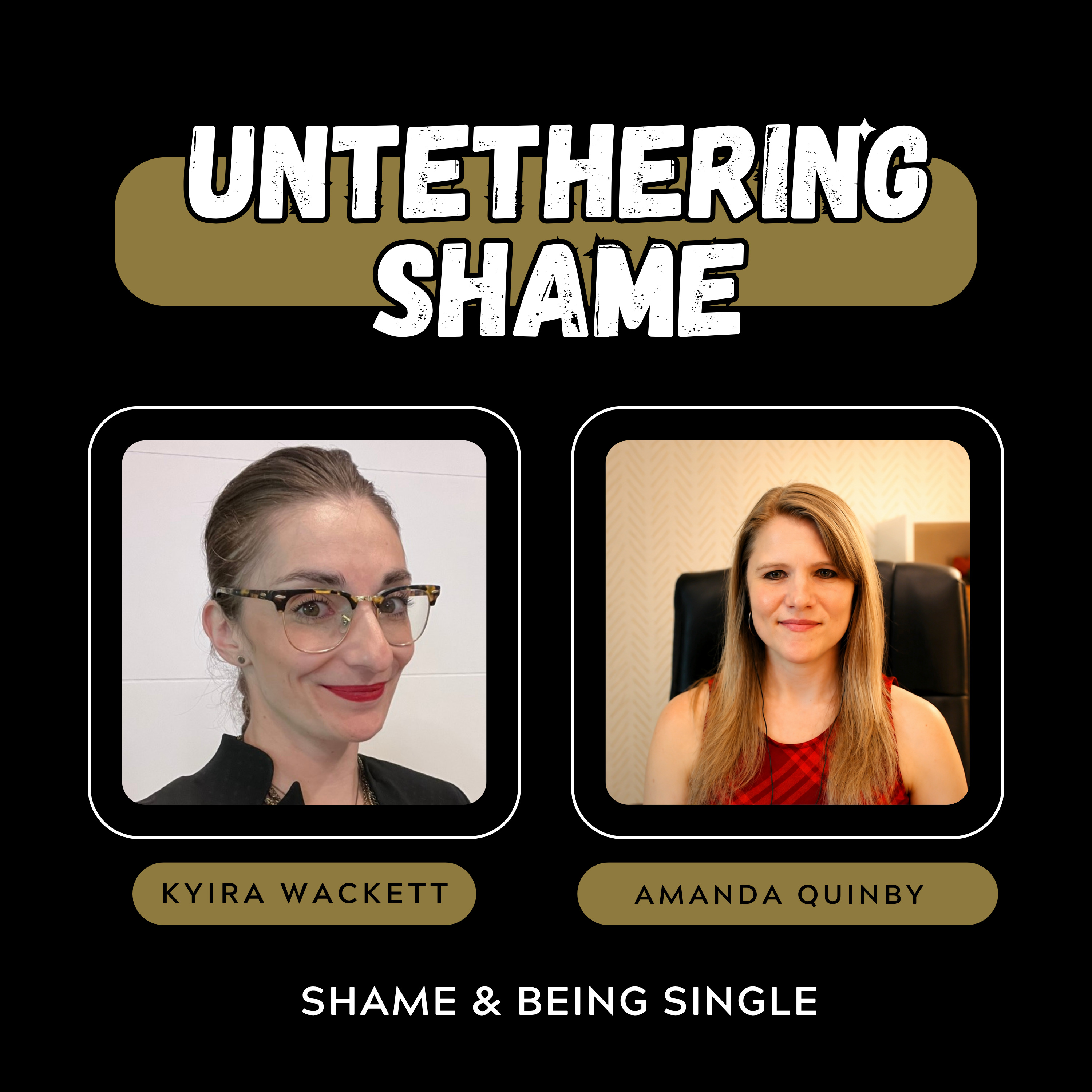
    Shame & Being Single: The Stories We Inherit About Being Alone with Amanda Quinby

    You are not behind. That feeling has a source, and it is older than you are. Being single is not just a relationship status. For a lot of people, it carries a verdict built out of family questions, cultural timelines, and a lifetime of quiet messages about what it means to still be on your own. In this second conversation with clinical psychologist Dr. Amanda Lynne Quinby, Kyira goes after where that verdict comes from—and what believing it actually costs. Amanda names the mechanism most people never see. When you walk into dating carrying "something must be wrong with me," that story picks who you tolerate. It tells you what you deserve. It talks you into staying. And then it points at the result and says, see, I told you. The shame does more damage than the dating ever did. They get into the sentence that starts earlier than anyone realizes: when you get married, and what it implies about you when it does not happen on schedule. The comparison that sharpens every year as the people around you pair off. The reason self-blame is so tempting: if it is your fault, you can fix it, and that feels so much better than sitting with what you cannot control. And the part almost nobody says out loud: other people's opinions about your relationship status are information about them, not about you. Amanda also says the thing a therapist is not supposed to say. When a client insists it must be me, she sometimes agrees. It might be you. Just not in the way you think. Not that you are unlovable. Not that you are unworthy. Not that you are broken. It is the narrative, and the narrative is workable. There is no five-step reframe here and no promise that someone is coming. What there is instead is honest company in a hard conversation, language for things that usually go unnamed, and one real question: Is the story you have been living inside about what your relationship status says about you a story you chose, or one you inherited? If you have ever felt like you were running out of time, wondered what being single this long says about you, or caught yourself quietly assuming something must be wrong with someone else because of theirs, this one is for you. MORE ABOUT AMANDA Dr. Amanda Lynne Quinby is a clinical psychologist in private practice in Bloomington, Indiana. She works with adults in their 30s and 40s who are navigating life transitions such as career changes, divorce, or relocation, and specializes in helping analytical, driven professionals move through the places where they feel most stuck. Her approach is collaborative and grounded, drawing on cognitive-behavioral therapy, mindfulness, self-compassion, and authenticity. She is passionate about helping people treat their feelings as data, create new narratives around their struggles, and build lives that are aligned with their values. CONNECT WITH AMANDA Website:https://www.amandalynnephd.com Psychology Today:https://www.psychologytoday.com/us/therapists/amanda-lynne-quinby-bloomington-in/254020 Email:amanda@amandalynnephd.com Free consultation:https://www.amandalynnephd.com/contact READY TO TAKE THE NEXT STEP? Download the FREE handout "5 Things Shame Resilient People Do Every Day" and start making the daily shifts that break the shame cycle keeping you stuck. http://www.adversityrising.com/become-shame-resilient Book a free 25-minute discovery call to talk through program options and find the support that fits. https://calendly.com/adversityrising/discovery-call STAY CONNECTED Website:https://www.adversityrising.com Spotify:https://open.spotify.com/show/2AouludJr7EweOkMIN9s42 Apple Podcasts:https://podcasts.apple.com/us/podcast/untethering-shame/id1691795543

  • #61
    August 27 · 11 min

    🎙️ Ask Me Anything – E61: You Already Know What You Need. So Why Aren't You Doing It?

    Knowing is not the same as changing. And the personal growth industry has blurred that line for a long time. In this AMA episode, I answer an anonymous listener who has understood exactly what they need for years and still cannot act on it. We get into what is actually happening neurologically, where shame makes the gap wider, and what it genuinely takes to move from understanding your patterns to living differently. This one is for everyone who has done the work and is still waiting for it to show up in their behavior. What we cover: Why insight produces a neurological reward that mimics progress without being progress The difference between the thinking brain and the nervous system, and why behavior lives in the second one How the shame of knowing better becomes its own obstacle to change Why understanding and doing are entirely different processes, not points on one continuum What identity change actually requires: accumulated evidence, not more information How to shrink the gap instead of trying to leap it The core belief underneath most gaps that makes new behavior feel unsafe or undeserved This week: Pick one thing from your "I know I need to do this" list. Write down the fear. Not the hoped-for outcome, but the actual worst-case story your nervous system is running about what would happen if you did it consistently. That story is the gap. And you cannot close what you have not fully seen. Three lines worth keeping: Insight updates the map. But your feet are still walking the old roads. The gap between knowing and doing is not a discipline problem. It is a depth problem. You don't need more knowing. You need someone to help you close the gap. Resources and links: Take the Burnout Quiz Liberated Living Program Free Guide: Five Things Shame Resilient People Do Every Day (and Three Things They Don't) Submit a question for a future AMA episode (anonymous) Connect with me: Website: adversityrising.com Instagram: @adversityrising TikTok: @adversityrising If someone in your life keeps saying "I know, I know" about rest, about boundaries, about speaking up, and nothing is changing, send them this episode. Sometimes the most helpful thing is someone finally naming why it is hard.

  • August 23 · 51 min

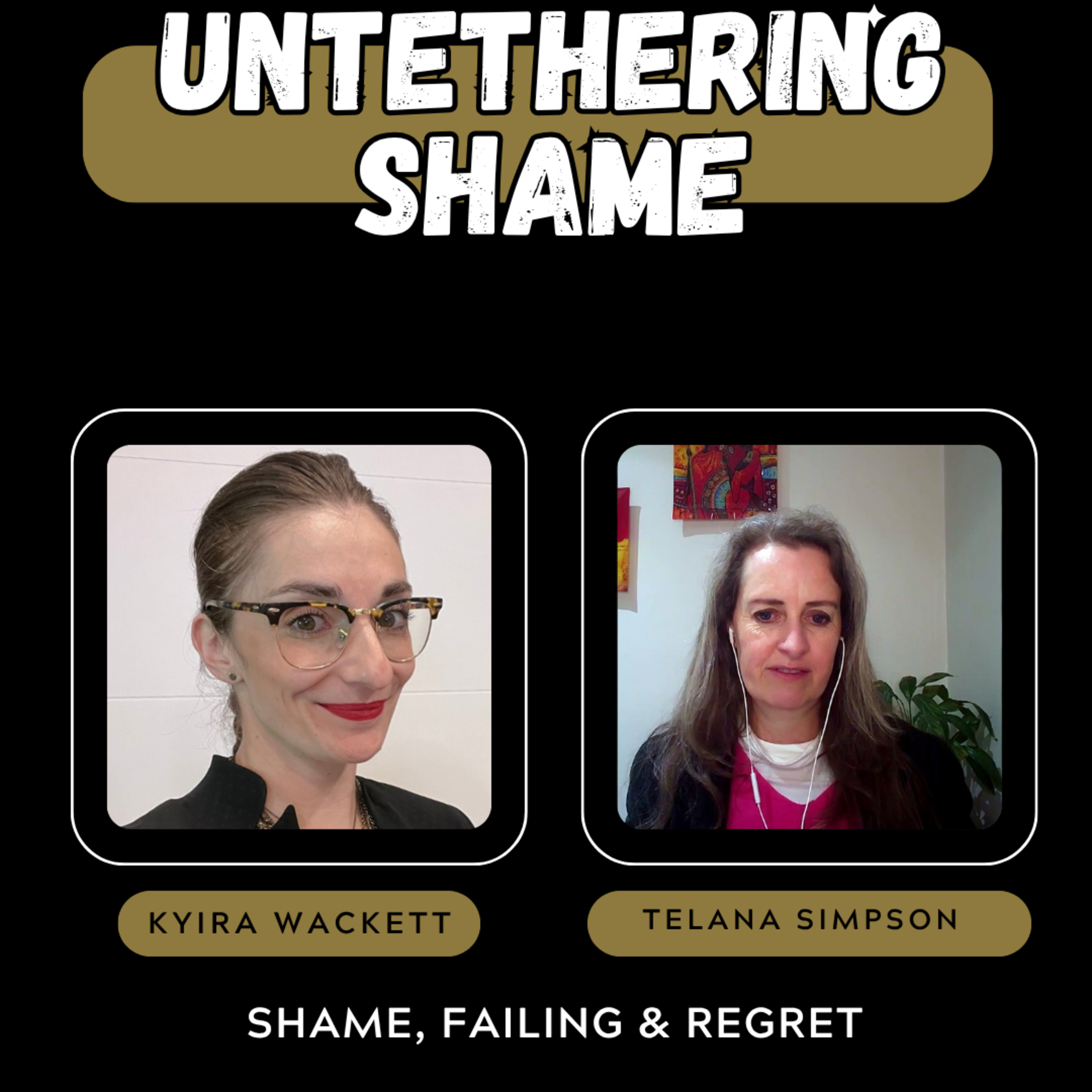
    Shame, Failing & Regret: When Mistakes Feel Like Proof with Telana Simpson

    What does it really cost us to play it safe? And what do we do with the weight of regret when we realize, too late, how much of our life we spent protecting ourselves instead of living it? In this episode, Kyira sits down with Telana Simpson, Courage Coach, facilitator, and podcast host based in Johannesburg, South Africa. With two decades of coaching experience and a background in psychology, Telana works at the intersection of self-worth, communication, and courage. Together they break down the difference between guilt, shame, and regret, and what happens when failure stops feeling like an event and starts feeling like evidence of who you are. Telana draws a line most of us never learned: confidence is about your doing, esteem is about your being. She also shares a personal story about her brother's grief and the regret that surfaced with it: how much time had gone to productivity at the expense of connection. From there the conversation moves into the cultural and intergenerational side of shame around failure, and takes apart the advice we repeat without questioning: live with no regrets. Regret, in her framing, is not a verdict. It is a signal pointing at something you value. If you have ever stayed silent when you wanted to speak, held back when you wanted to reach, or found yourself still carrying the weight of a choice that did not go the way you hoped, this episode was made for you. Connect with Telana: Website Instagram Facebook TikTok LinkedIn YouTube Ready to take the next step? Download the free handout, "5 Things Shame Resilient People Do Every Day": adversityrising.com/become-shame-resilient Book a free 25-minute discovery call: calendly.com/adversityrising/discovery-call Stay Connected: Spotify Apple Podcasts YouTube adversityrising.com #UntetheringShame #ShameResilience #Regret #CourageCoaching #SelfWorth #ImposterSyndrome #KyiraWackett #TelanaSimpson

  • August 19 · 12 min

    🎙️ Ask Me Anything – E60: The Perfectionism Nobody Warned You About (It Looks Nothing Like You Think)

    Perfectionism Is Not About Being Perfect Perfectionism is not about being perfect. It's about avoiding the feeling of not being enough. In this episode of Untethering Shame, I answer an anonymous listener who wonders why they procrastinate, abandon projects, and only show up when success feels certain. Therapist to therapist: your therapist is right. This is perfectionism, just not the version most people recognize. It operates through strategic not starting and not finishing. Perfectionism's primary goal was never excellence. Its primary goal is protection. Why Not Finishing Feels Safer A finished thing can be judged. An unfinished thing can't be fully evaluated. An abandoned project is disappointing, but it isn't evidence of your inadequacy. Not finishing is the most elegant escape hatch there is. Ask yourself: Is the obstacle that you don't know how to do it? Or are you not certain you can do it well enough? One is a skills gap. The other is a shame gap. No productivity system in the world closes a shame gap. Perfectionism & Imposter Syndrome These two are intertwined. Perfectionism is the armor. Imposter syndrome is the wound it's protecting. Not finishing is the strategy that keeps both intact. The Cost of Not Finishing Every abandoned project leaves a deposit against your self-trust: "I don't follow through." "I'm all ideas and no execution." Those stories become identity and build new ceilings. Not because you can't, but because you no longer believe you could. Those are not the same thing. What Actually Helps What helps isn't trying harder. It's changing the story about imperfect work. If imperfect output currently means evidence of inadequacy, practice seeing it as evidence of courage. Build that belief through small acts of completion. Teach your nervous system that done is survivable and being seen unfinished is survivable too. The things you're most certain you'll do well are things you've already done. They sit inside your existing range of tolerance, so they are not growth. Perfectionism keeps you safe, competent, unjudged, and not learning. The version of yourself you most want to become is living at the edge. This Conversation Is for You If... You start things and abandon them before anyone sees. You've been "almost ready" for months. You avoid anything you're not sure you'll be great at. You've been called a perfectionist, but nothing gets finished. Resources & Links Liberated Living: Learn more Burnout Quiz: Find your honest starting point Submit a Question Want to submit a question for a future episode? Submit anonymously or with your name. 👉 Submit Here Take the Next Step ★ FREE Guide: Five Things Shame Resilient People Do Every Day and Three Things They Don't ★ Free Discovery Call: Book a call ★ Liberated Living: Practice Radical Acceptance, Radical Responsibility, and Radical Authorship

  • August 16 · 40 min

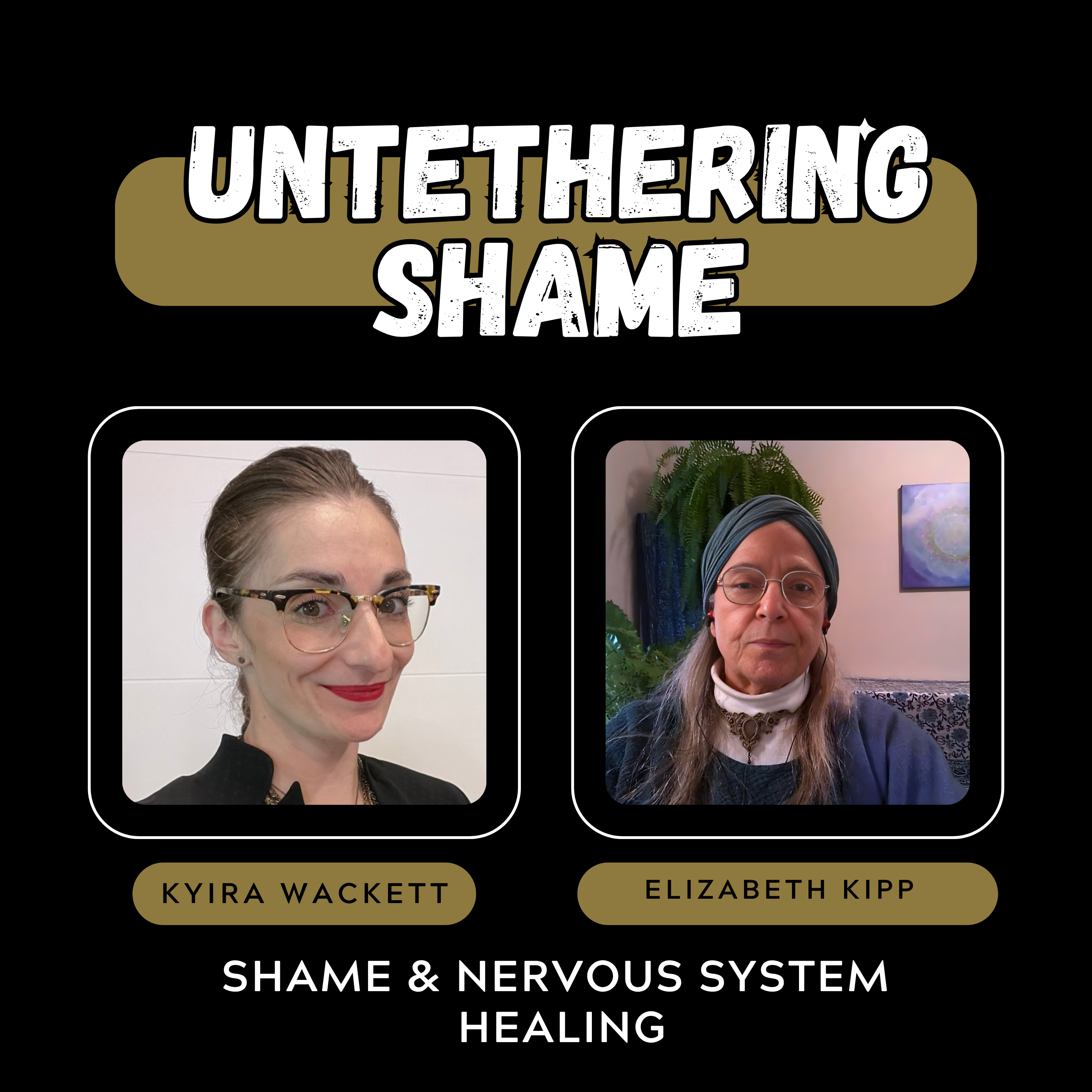
    Shame & Nervous System Healing: Why It Still Feels Hard (Part 2) with Elizabeth Kipp

    If I understand my triggers, if I've done the work, why does it still feel so hard? In this episode of Untethering Shame, I sit down with Elizabeth Kipp, Stress Management and Historical Trauma Specialist, Certified Addiction Recovery Coach, Ancestral Clearing Practitioner, and international best-selling author of The Way Through Chronic Pain, for our fourth and final conversation in this series. This one got personal fast. We are not talking about the nervous system in theory anymore. We are talking about what it looks like to live inside it, in real time, with the people who activate us most. Elizabeth gave me a line I wrote down in all caps three separate times: we cannot defend and connect at the same time. The nervous system does not do both, the same way we cannot digest and run at the same time. Which means the moment the other person is in defense, you are never going to feel seen. Not because you failed at asking. Because their system is not available for it. She also named the thing underneath all of it: safety is the directive of the organism. So instead of trying to make a relationship safe, which you cannot control, you help your own nervous system understand it is safe as a separate whole thing, independent of how that conversation goes. Breath first. Then acknowledge what they said before you say your piece. The part I had to sit with is my own. I have started to notice my relationship with shame looks a lot like an addiction. Elizabeth walks us through the four words that pull you back into your heart before any of it starts: patience, kindness, gentle, self-compassion. This conversation is for you if: You have done the work and still get activated by family You keep leaving conversations feeling unseen, no matter how carefully you phrase it You calm yourself down, then get worked up all over again lying in bed that night You are an adult child trying to have a real conversation with a parent who goes straight to defense You catch yourself upset at people for not meeting expectations you never said out loud Connect with Elizabeth: Website Facebook Instagram LinkedIn Ready to take the next step? Download the FREE handout, 5 Things Shame Resilient People Do Every Day and start making those daily shifts to break that shame cycle that's keeping you stuck in that negative headspace. Book a free 25-minute discovery call to discuss different program options and find the support that best fits your needs. Stay Connected: Spotify Apple Podcasts YouTube Website

  • August 14 · 11 min

    🎙️ Ask Me Anything – E59: The 2am Rehearsal (Why You Know Exactly What to Say and Still Can't Say It)

    In this episode of Untethering Shame, I answer an anonymous listener who asks: "I have a list of conversations I've been avoiding. With my partner, with a friend, with my boss, some for months, some for years. I know exactly what needs to be said. I can rehearse the whole thing in my head at 2 a.m. and I still can't make myself have them. Why do I keep avoiding conversations that could actually change things for the better? And how do I stop getting in my own way?" Here's what I want you to hear first: avoidance is not cowardice, and it isn't procrastination. It's a nervous system response. Your body made a calculation faster than conscious thought that the risk of this conversation outweighs the cost of not having it. That calculation might be wrong, but it isn't weak. Instead of asking "why am I so bad at this?" ask: "what threat is my nervous system convinced this conversation contains?" The Fears Beneath It Avoidance is often fear of rejection, rupture, causing pain, or making an ending feel real. What Is Silence Costing You? Silence can create distance, resentment, and self-betrayal. Every time you stay silent, you teach yourself that what you need isn't worth the risk of saying it. Preparation vs. Rumination Preparation and rumination are not the same thing. Preparation clarifies what you need to communicate and why. Rumination replays the conversation on a loop and introduces a new variable every time, keeping the conversation permanently unready. It's anxiety wearing the costume of productivity. How to Have the Conversation Lead with intention instead of a script. Go in regulated instead of calm—because those are different things. Name the vulnerability at the start so the other person hears care instead of attack. This Is for You If... You have a mental list of conversations you keep postponing. You rehearse at 2 a.m. and still can't start the real thing. You've been telling yourself "it's not the right time" for months. You want the words, but what you actually need is the capacity to say them. Your Homework Pick one conversation from your list. Not the hardest one. Write down: 1) the single most important thing you need this person to understand, and 2) what you're most afraid will happen if you say it. You don't have to have the conversation this week. You just have to get honest on paper about what's keeping you from it. Comment POD and I'll send it your way. Resources & Links Liberated Living: Learn more Burnout Quiz: Find your honest starting point Submit a Question Submit a question for a future episode anonymously or with your name, whatever feels safest. 👉 Submit Here Take the Next Step ★ FREE Guide: Five Things Shame Resilient People Do Every Day and Three Things They Don't ★ Free Discovery Call: Book a call ★ Liberated Living: Practice Radical Acceptance, Responsibility & Authorship Stay Connected Spotify Apple Podcasts YouTube Website

  • August 9 · 51 min

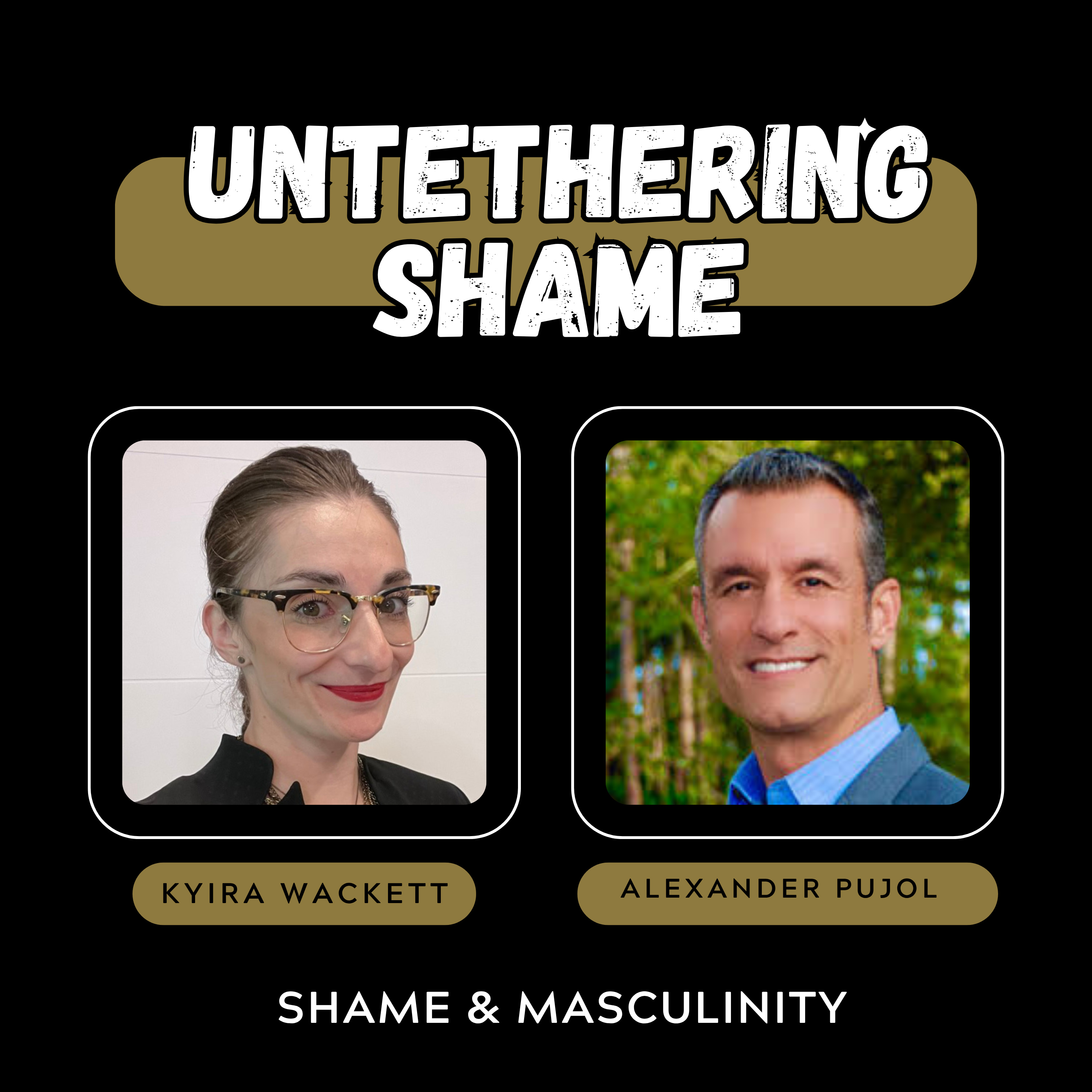
    Shame & Masculinity: Learning Presence Instead of Performance with Alex

    Why He Says This Is A Waste Of Time "It's not a character flaw, it's a chemical state." In this episode of Untethering Shame, I sit down with Alexander Pujol, a former physician assistant turned performance coach and founder of Quantum Human Performance, to talk about what is actually happening inside a man when he goes cold, shuts down, or tells you the conversation you are trying to have is a waste of his time. Alex has spent eight years working with Division I athletes, ballerinas, golfers, and business owners, and he kept finding the same pattern underneath the performance. The people who managed pressure best did it by staying cold through challenge, and that coldness followed them home. What looks like dismissal in a relationship is often residue from a skill that was rewarded everywhere else. We get into why a conversation without a clear goal can register in the nervous system as a threat, and what happens next when adrenaline and cortisol narrow focus and amplify that threat into anger. Alex is direct about the fact that most men cannot name shame when they are in it. They only find it by working backwards from why they are so angry. He also gets honest about his own life. The burnout four years ago that made him stop. The divorce, and reading a book afterward that finally gave him the word for what he had been doing for years without knowing it. Losing his father and immediately starting a 2,000 square foot build out because grief was easier to replace than feel. And the one question he started asking his partner that changed how he shows up in every relationship since. If there is one idea I want you to carry out of this conversation, it is this: the skill was never installed. Nobody taught these men how to sit with an emotion, so there is nothing to fix, only something to practice. As Alex puts it, what we practice grows. This conversation is for you if... Someone you love goes silent or cold the moment things get hard, and you have started taking it personally You are the one who shuts down, and you have never had language for why You keep hearing "I don't want to talk about it" and you do not know what to do with that You were raised to fix, perform, and protect, and you are realizing that none of that taught you how to feel You are parenting a boy and you want to interrupt the pattern before it sets Connect with Alex Alexander Pujol is a former physician assistant turned performance coach and founder of Quantum Human Performance, where he helps athletes and high performers optimize their mind, body, and emotional resilience. Drawing from neuroscience, breathwork, and his own journey through burnout and recovery, he teaches a holistic approach to self-belief, flow, and sustainable performance. Alex is also the author of Spectrum: A Galvanizing Journey, where he shares the principles behind transforming adversity into growth and purpose. Website: oneqhp.com Instagram: @q.h.p._wellness Facebook: alex.pujol.777 LinkedIn: Alexander Pujol Ready to take the next step? Download the FREE handout, 5 Things Shame Resilient People Do Every Day, and start making those daily shifts to break the shame cycle that's keeping you stuck in that negative headspace. Book a free 25-minute discovery call to discuss different program options and find the support that best fits your needs. Stay Connected Subscribe to the podcast on Spotify or Apple Podcasts and be sure to leave a review to let us know your thoughts on this episode. YouTube: @adversityrising Website: adversityrising.com

  • August 6 · 12 min

    🎙️ Ask Me Anything – E58: Having Needs Doesn't Make You Needy (And Why You Were Taught Otherwise)

    Having a need is not the same as being needy. Those two got conflated so early that for a lot of us they feel identical. They're not. This week's anonymous question: "Every time I try to ask for what I need I either over-explain and justify for twenty minutes, or I say nothing and then explode two weeks later. I was told so many times as a kid that I was too needy that I don't know how to have a need anymore. How do I ask without it being a whole thing?" I break down where the "I'm too much" story comes from, why over-explaining and exploding are the same protection wearing different clothes, and what a clean, direct ask actually sounds like. This is for you if: You justify before you ask You go quiet and blow up later You were called dramatic or too much as a kid Homework: pick one small need. Say it out loud. No preamble, no apology, no justification. Just "I need ____." Your needs are not the problem. They never were. Resources & Links Take the Burnout Quiz: https://adversityrising.com/quiz Liberated Living Program: https://adversityrising.com/liberated-living Free Guide, Five Things Shame Resilient People Do Every Day: https://adversityrising.com/become-shame-resilient Submit a question for a future AMA: https://adversityrising.com/shame-free-qa Book a Discovery Call: https://calendly.com/adversityrising/discovery-call Connect with Kyira Instagram & TikTok: @adversityrising Website: https://adversityrising.com Spotify: https://open.spotify.com/show/2AouludJr7EweOkMIN9s42 Apple Podcasts: https://podcasts.apple.com/us/podcast/untethering-shame/id1691795543

  • August 2 · 1 hr 3 min

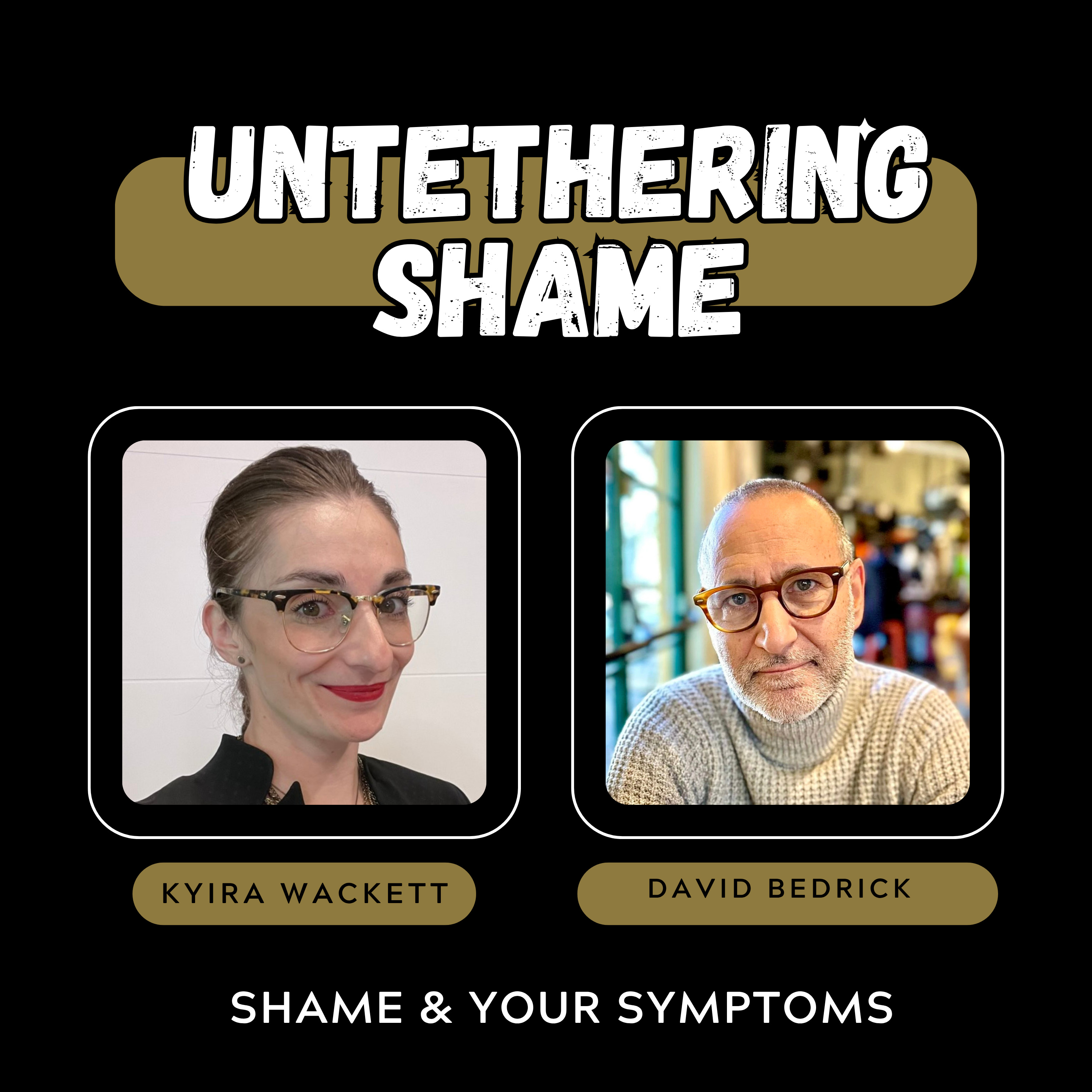
    Shame & Your Symptoms: Why Nothing Is Wrong with You with David Bedrick

    "The shame is it usually means curing yourself of yourself." In this episode of Untethering Shame, I sit down with David Bedrick, psychotherapist, teacher, and author with more than 35 years of experience working with trauma, shame, addiction, body image, and chronic symptoms. David created The Unshaming Way, an approach that treats painful experiences as meaningful signals rather than problems to fix. This is his second time on the show, and we went somewhere I did not plan for. We start with what it costs to belong. David calls it the assimilationist curse, the quiet agreement that says you can stay as long as you become smaller, quieter, less yourself. He points to James Baldwin on the price of the ticket, and then he makes it personal. He is 70. His body is inflamed. Instead of asking how to reduce the inflammation, he asks what he is inflamed about. That question turns the whole conversation. If a symptom is a signal, then the thing you have been trying to eliminate might be the part of you still fighting for something. David tells the story of a client whose relationship with food had been treated as a disorder for decades, and what changed when someone finally asked what her refusal was protecting instead of how to make it stop. He calls it her power. He calls it every piece of medicine she needs in her life. Then he turns it on me. What follows was not planned, and it is the part of this episode I keep coming back to. We do live work on my own anger, the part of me that wants to be seen, and David shows what unshaming actually looks like in real time. Not resolving the conflict. Living it. This conversation is for you if: You have been working on yourself for years and still feel like the goal is to become someone else Your body is telling you something and every professional you have seen wants to quiet it You have been called too much, too intense, too angry, or too needy You are tired of being asked to find balance between parts of you that do not want to compromise You want to know what healing looks like when nothing is wrong with you More about David: David Bedrick is a psychotherapist, teacher, and author with 35+ years of experience working with trauma, shame, addiction, body image, and chronic symptoms. He created The Unshaming Way, which reframes painful experiences as meaningful signals, not problems to fix. Rooted in process-oriented psychology and somatic work, his approach blends depth psychology and social justice, and explores how shame is shaped by the ways we are witnessed by people and culture. He is the author of five books, including The Unshaming Way and The Unshaming Way Workbook, and writes for Psychology Today. His work is also personal, shaped by childhood abuse and the denial surrounding it, which he identifies as central to how shame takes hold. Connect with David: Website Instagram The Unshaming Way: A Compassionate Guide to Dismantling Shame The Unshaming Way Workbook, available now David's Psychology Today articles Episode 1: S2E41 Ready to take the next step? Download the free handout, 5 Things Shame Resilient People Do Every Day, and start making those daily shifts to break the shame cycle that is keeping you stuck in that negative headspace. Book a free 25-minute discovery call to discuss different program options and find the support that best fits your needs. Stay Connected: Subscribe to the podcast on Spotify or Apple Podcasts and be sure to leave a review to let us know your thoughts on this episode. YouTube Website

  • S1 · E57
    July 29 · 13 min

    🎙️ Ask Me Anything – E57: Too Much and Not Enough at the Same Time (Understanding the Core Belief That's Been Running Your Life)

    Do you carry a quiet, persistent feeling that you are somehow too much for some people and not enough for others, no matter how much work you've done? You are not alone. In this episode, we go beneath the strategies and the affirmations to the place where that feeling actually lives. We tackle a question from an anonymous listener: "I've been in therapy. I've read the books. I've done the work, and I still have this deep quiet feeling that I am fundamentally too much for some people and not enough for others. It's been there my whole life, and I can't logic my way out of it. Where does that actually come from, and how do I stop letting it quietly run everything?" If that in-between feels familiar, this episode is for you. I want to release you from the idea that not being able to think your way out of this is a failure. It isn't. It's a clue. Core beliefs were never formed through logic, so logic alone can't reach them. Your years of therapy and reflection built essential scaffolding. This episode is about the rest of the building. In this episode, you will learn: What a Core Belief Actually Is: Why it's not an opinion but a pre-verbal truth your nervous system decided about you early in life, formed in the body before you could question it. Why Affirmations Bounce Off: How your mind and body run on different systems, and why you can know something isn't true while your body still believes it completely. How the Belief Was Formed: How a parent's irritation, silence, or conditional praise became a child's conclusion: I'm too much, I'm only lovable when I perform. Confirmation Bias in Action: How the belief filters every experience, minimizing warmth and amplifying rejection, so it constantly reinforces itself. Belief vs. Identity: The small linguistic shift from "I am too much" to "I have a belief that I'm too much," and why it creates the distance you need to work with it. The Evidence File: How intentionally collecting real moments, real people, and real memories starts to interrupt the filter over time. Somatic Work: Why the nervous system changes through repeated experience rather than single insights, and what body-level work actually looks like. Your Homework: When the belief shows up this week, name it, locate it in your body, and ask how old the feeling is. The answer is usually much younger than you. Resources & Links: Liberated Living Program: Learn more about the coaching program at https://adversityrising.com/liberated-living Start with the burnout quiz to find your honest starting point: https://adversityrising.com/quiz 📝 Want to submit a question for a future episode? Nothing is off-limits (well, almost nothing). Submit anonymously or with your name, whatever feels safest for you. 👉 Submit Here: https://forms.gle/1uYJ87Y2Vag6KYCeA 💬 If this episode spoke to you, drop a comment and share your biggest takeaway: I'd love to hear what came up for you. Take the Next Step ★ Download the FREE Guide: "Five Things Shame Resilient People Do Every Day and Three Things They Don't" and start making those daily shifts. https://www.adversityrising.com/become-shame-resilient ★ Book a Free 25 Minute Discovery Call: Discuss program options and find the support that fits your needs. https://calendly.com/adversityrising/discovery-call ★ Sign up for Liberated Living: Practice Radical Acceptance, Radical Responsibility, and Radical Authorship to reclaim your life. https://adversityrising.com/liberated-living Stay Connected: Subscribe on Spotify: https://open.spotify.com/show/2AouludJr7EweOkMIN9s42 Subscribe on Apple Podcasts: https://podcasts.apple.com/us/podcast/untethering-shame/id1691795543 YouTube: www.youtube.com/@adversityrising Website: www.adversityrising.com That feeling is a child's conclusion about a child's world, carried by a body that never got an update. It doesn't have to be your identity. You are allowed to revise the story.

  • July 26 · 58 min

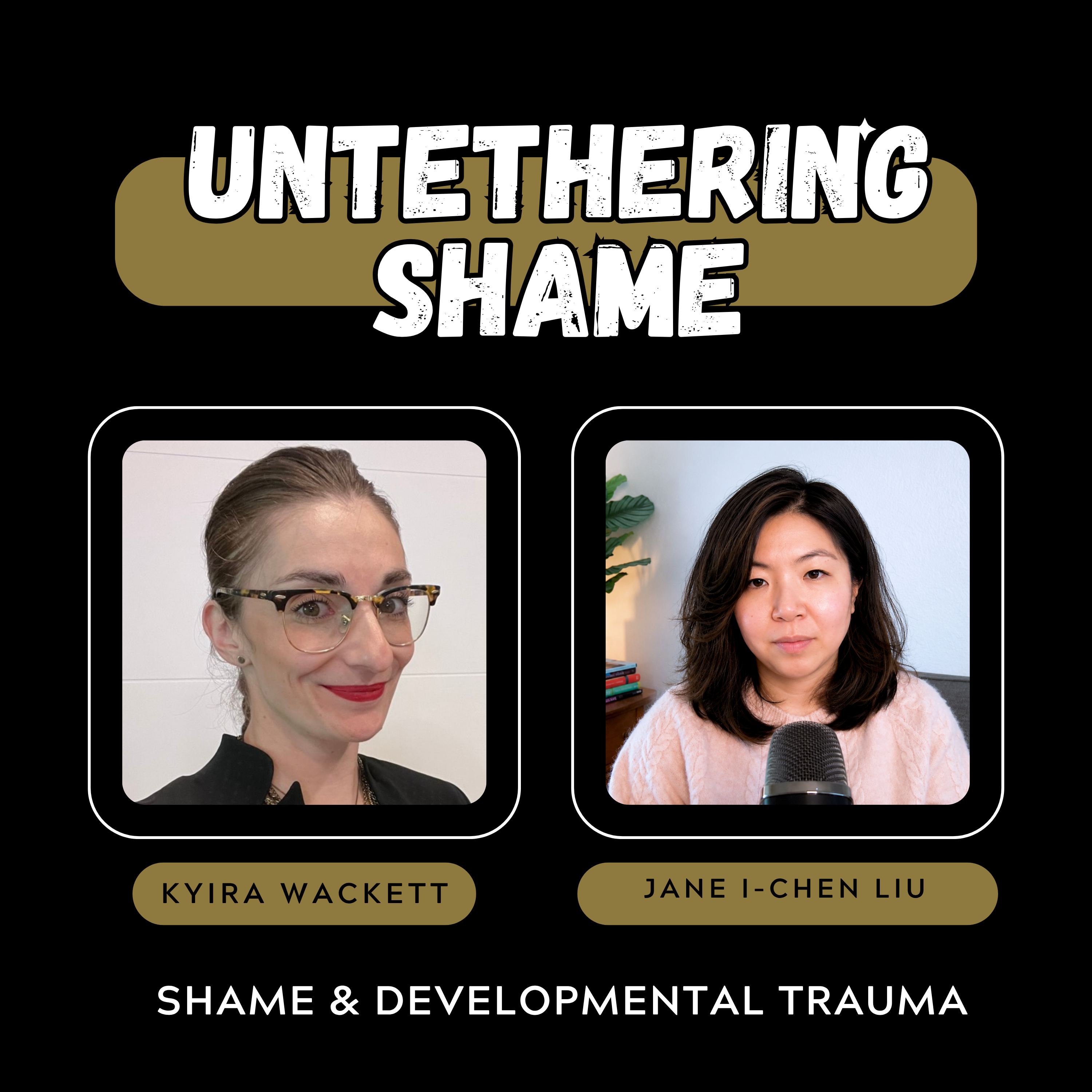
    Shame & Developmental Trauma: How Childhood Wounds Shape Our Worth with Jane I-Chen Liu

    At 42, Jane went home to Taiwan for Chinese New Year and stayed in a hotel instead of her parents' house. It took four decades of healing work to get there. In this episode of Untethering Shame, I sit down with Jane I-Chen Liu, LMHC, SEP, a therapist trained in IFS, EMDR, and Somatic Experiencing, to talk about why boundaries with parents feel so impossible. We get into why you swing between over-tolerating everything and cutting off completely, and why neither one is a failure. Jane explains role confusion in enmeshed families, the difference between healthy shame and toxic shame, and why your nervous system can stay frozen at the age you were hurt. She also walks through her three-step framework: heal the younger parts, update your current nervous system, then rehearse the new behavior before you are in the room. The reframe that lands hardest: boundaries are not rejection. Jane's dad still picked her up from that hotel every day for lunch and dancing. The boundary changed where she slept, not whether she showed up. This conversation is for you if: You feel like a bad son or daughter every time you say no You have gone from tolerating too much to no contact and back again Shame keeps popping up no matter how much work you have done About Jane: Jane I-Chen Liu, LMHC, SEP, is the founder of KareKounseling, PLLC, a trauma-informed practice in Washington State. She helps adults heal childhood wounds, developmental trauma, CPTSD, generational trauma, and toxic shame using EMDR, IFS, and Somatic Experiencing. Connect with Jane: Website: http://www.karekounseling.com Ready to take the next step? Download the free handout, 5 Things Shame Resilient People Do Every Day Book a free 25-minute discovery call Stay Connected: Spotify Apple Podcasts YouTube Website

  • S1 · E56
    July 22 · 13 min

    🎙️ Ask Me Anything – E56: Why You Can't Say No to Your Boss (And What Your Worth Has to Do With It)

    Do you say no with confidence to friends and family, then fold the second your boss sends a "do you have a few minutes?" message? You are not alone. In this episode, we get honest about why work boundaries feel impossible even after years of boundary work. We tackle a question from our listener Deb: "I've gotten better at limits with friends and family, but the second my boss asks me for something I know I can't take on, it's like I fold every time. I say yes, I resent it, and then I feel guilty for resenting it. Why is saying no at work so much harder than everywhere else? And how do I do it without destroying my reputation or my relationships?" If that moment feels familiar, this episode is for you. I want to release you from the idea that folding at work means you haven't done enough work on yourself. It doesn't. Work is where your worth gets evaluated publicly, with real consequences attached, so your nervous system treats a no as an existential threat. That response is logical. It's also running on an old story, and you can rewrite it. In this episode, you will learn: The Core Belief Underneath: How "my value at work is tied to my willingness to say yes" formed long before you had a paycheck, and why it fires faster than your thinking brain. Why Work Rewards the Pattern: How praise, promotions, and "team player" labels quietly confirm the belief while burning you out. The Guilt-Resentment Loop: Why resentment pushes you toward no, shame pulls you back toward yes, and communication scripts alone will never break the cycle. Separate the Request From Your Worth: How to recognize that your boss is assessing capacity, not questioning your value, so the stakes drop in your nervous system. Stop Overexplaining: Why an elaborate justification is the verbal equivalent of asking permission, and the one full sentence that's actually enough. The Story After the No: Why the guilt is almost never proportional to the consequence, and how to catch the catastrophizing before it takes over your week. When the Environment Is the Problem: How to tell the difference between a workplace where no is safe and one where the honest question is whether you can sustain yourself there at all. Your Homework: Revisit one recent regretted yes and answer three questions, including what you would tell a colleague you respect in the same spot. Resources & Links: Liberated Living Program: Learn more about the coaching program at https://adversityrising.com/liberated-living Start with the burnout quiz to find your honest starting point: https://adversityrising.com/quiz 📝 Want to submit a question for a future episode? Nothing is off-limits (well, almost nothing). Submit anonymously or with your name, whatever feels safest for you. 👉 Submit Here: https://forms.gle/1uYJ87Y2Vag6KYCeA 💬 If this episode spoke to you, drop a comment and share your biggest takeaway: I'd love to hear what came up for you. Take the Next Step ★ Download the FREE Guide: "Five Things Shame Resilient People Do Every Day and Three Things They Don't" and start making those daily shifts. https://www.adversityrising.com/become-shame-resilient ★ Book a Free 25 Minute Discovery Call: Discuss program options and find the support that fits your needs. https://calendly.com/adversityrising/discovery-call ★ Sign up for Liberated Living: Practice Radical Acceptance, Radical Responsibility, and Radical Authorship to reclaim your life. https://adversityrising.com/liberated-living Stay Connected: Subscribe on Spotify: https://open.spotify.com/show/2AouludJr7EweOkMIN9s42 Subscribe on Apple Podcasts: https://podcasts.apple.com/us/podcast/untethering-shame/id1691795543 YouTube: www.youtube.com/@adversityrising Website: www.adversityrising.com Your no, delivered with clarity, is an act of integrity. And integrity builds reputations. It doesn't destroy them.

  • July 19 · 52 min

    Shame & the Inner Critic: Understanding the Triangle Driving Your Escape with Jessica Fern & David Cooley

    Why do we escape, what are we really running from, and what does it actually take to stop? In this episode of Untethering Shame, I sit down with psychotherapist Jessica Fern and restorative justice facilitator David Cooley, co-authors of a new book built around the shame triangle. We go deeper into the four types of escapers: over-functioning, under-functioning, other emotions, and aggression, and how each one is a nervous system response to the weight of shame and the inner critic. All three of us bring our own lived experience to the table, so the concepts land as personal and immediately recognizable. We talk about how society rewards certain forms of escape (hello, hustle culture), why most therapy and self-help stop at the symptom level, and how to move from the shame triangle into the self-love triangle: escapers become inner nurturers, and the inner critic becomes an inner coach. What You'll Learn Escapism is a nervous system response, not a character flaw The inner critic is built from the outside in, as a survival strategy The 4 escaper types: over-functioning, under-functioning, other emotions, aggression Why productivity culture makes over-functioning invisible Why treating the symptom (anxiety, perfectionism, addiction) is not enough How the shame triangle shifts into a self-love triangle Healing means expanding your window of tolerance, not eliminating discomfort The inner critic is loud, but it is not truth Start with one part: the critic, the shame, or the escapers. Just get to know it. Connect with Our Guests Jessica Fern, psychotherapist and author of Polysecure: JessicaFern.com David Cooley, creator of Restorative Relationship Conversations: restorativerelationship.com Get Connected Subscribe to my YouTube channel Sign up for my email list Listen on Spotify or Apple Podcasts Take the Next Step Download the free handout, 5 Things Shame Resilient People Do Every Day Book a free 25-minute discovery call Join the next round of Liberated Living

  • S1 · E57
    July 16 · 6 min

    🎙️Ask Me Anything – E55: Why Is It So Hard to Admit We’re Wrong?

    Do you know you should apologize, but feel your whole body resist the moment it's time to say the words? You are not alone. In this episode, we get honest about why accountability feels so threatening, and why it has far less to do with ego than you think. We tackle a question inspired by one of my recent group workshops: "Why does it feel so uncomfortable to admit when I'm wrong or apologize, even when I know I should?" If that hesitation feels familiar, this episode is for you. I want to release you from the idea that struggling to apologize means you don't care. Most of the people who struggle with this care deeply, sometimes too deeply. They are so terrified of being perceived as bad that accountability starts to feel emotionally annihilating. This is shame, not character, and what was learned can be unlearned. In this episode, you will learn: Guilt vs. Shame: Why "I did something bad" allows movement while "I am bad" creates collapse, defensiveness, and overexplaining. Where It Started: How growing up in homes where mistakes felt dangerous, punishable, or shameful taught your nervous system that being wrong risks disconnection. Why Adults Never Apologized: How homes built on authority instead of repair left many of us without a model for tolerating imperfection. Repair Over Perfection: Why healthy relationships require rupture and repair, and why repair, not flawlessness, is what builds trust with your kids, partner, and friends. Self-Forgiveness Done Right: How to hold two truths at once: I don't love what I did, and I still deserve compassion while I grow. Why Shame Blocks Change: Why people become more accountable when they stop treating mistakes as proof they're broken, because safety creates change, not shame. Your Homework: Get curious about where you learned that being wrong was unsafe, and start normalizing being human without collapsing. Resources & Links: Liberated Living Program: Learn more about the coaching program at https://adversityrising.com/liberated-living Start with the burnout quiz to find your honest starting point: https://adversityrising.com/quiz 📝 Want to submit a question for a future episode? Nothing is off-limits (well, almost nothing). Submit anonymously or with your name, whatever feels safest for you. 👉 Submit Here: https://forms.gle/1uYJ87Y2Vag6KYCeA 💬 If this episode spoke to you, drop a comment and share your biggest takeaway: I'd love to hear what came up for you. Take the Next Step ★ Download the FREE Guide: "Five Things Shame Resilient People Do Every Day and Three Things They Don't" and start making those daily shifts. https://www.adversityrising.com/become-shame-resilient ★ Book a Free 25 Minute Discovery Call: Discuss program options and find the support that fits your needs. https://calendly.com/adversityrising/discovery-call ★ Sign up for Liberated Living: Practice Radical Acceptance, Radical Responsibility, and Radical Authorship to reclaim your life. https://adversityrising.com/liberated-living Stay Connected: Subscribe on Spotify: https://open.spotify.com/show/2AouludJr7EweOkMIN9s42 Subscribe on Apple Podcasts: https://podcasts.apple.com/us/podcast/untethering-shame/id1691795543 YouTube: www.youtube.com/@adversityrising Website: www.adversityrising.com You don't have to be perfect to be worthy of connection. You just have to be willing to repair. And you already are.

  • July 12 · 51 min

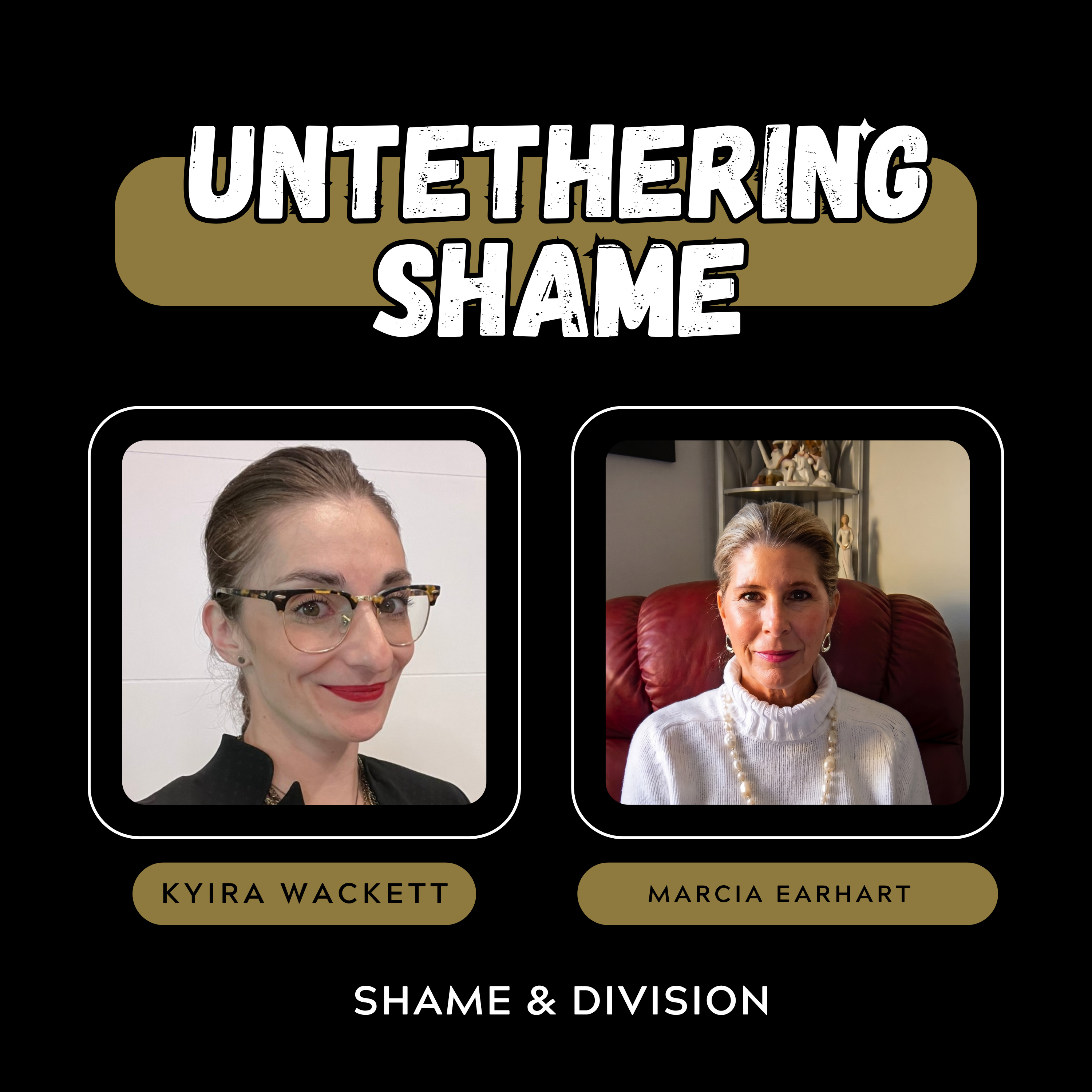
    Shame & Division: Finding Connection Across Difference with Marcia Earhart

    Grief doesn't only come from death. Sometimes it comes from the slow loss of a relationship, an identity, a place you used to belong. In this episode of Untethering Shame, I sit down with Marcia Earhart, a grief and trauma-informed coach, mediator, and HeartSync minister, for a raw conversation about estrangement, complicated grief, and what it actually costs to belong somewhere you have to disappear to stay. Marcia and I hold genuinely opposing beliefs. We chose curiosity anyway. That choice is the episode. We get into why estrangement is rarely about politics, how social media manufactures division, why avoidance damages more than conflict ever will, and why waiting for time to heal you is the quietest way to stay stuck. This conversation is for you if: You have lost someone who is still alive You have shrunk yourself to keep a seat at a table You avoid hard conversations and call it peace You are grieving a version of yourself you cannot get back Connect with Marcia: Website: thesterlingrosesanctuary.us Instagram: @thesterlingrosesanctuary Facebook: TSRS21 LinkedIn: Marcia Earhart YouTube: @marciaearhart6328 Free handout: 5 Things Shame Resilient People Do Every Day. Download it here. Book a free 25-minute discovery call: Schedule here. Stay connected: adversityrising.com YouTube @adversityrising Spotify Apple Podcasts Leave a review and tell me what landed.

  • July 5 · 1 hr

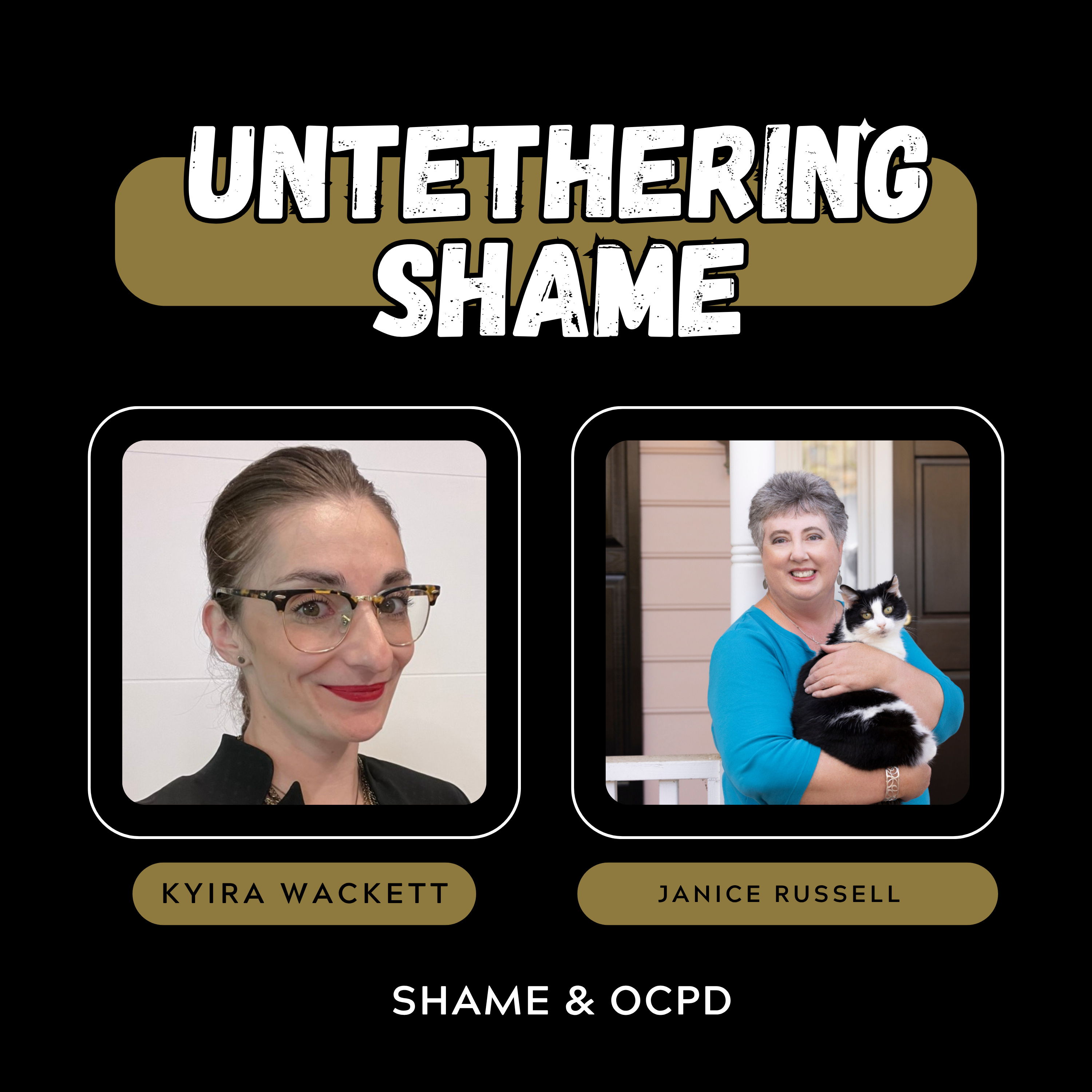
    Shame & OCPD: When Your Brain Never Stops and Society Calls It a Feature with Janice Russell

    What if the traits you've been praised for your whole life, the perfectionism, the rule following, the relentless work ethic, were actually symptoms of a diagnosis most people have never heard of? In this episode, I sit down with Janice Russell, the Overwhelm Slayer, to unpack Obsessive Compulsive Personality Disorder (OCPD). Not OCD. OCPD. Janice spent decades building a life that looked incredibly productive and impressively accomplished, from special education to corporate to a 20-year career as a professional organizer, before a therapist handed her a questionnaire that finally explained the operating system her brain had been running the whole time. We get into the difference between OCD and OCPD, why so many people go undiagnosed, what it feels like when you literally cannot turn your brain off, and how Janice has learned to leverage her wiring instead of fighting it. From planning her relaxation (yes, really) to a gratitude practice built around a two-inch notebook, this conversation is a masterclass in working with your brain, not against it. What we cover: The difference between OCD (an anxiety disorder) and OCPD (a personality disorder) Why the traits society celebrates can be the same ones quietly depleting you How Janice found out about her diagnosis while in therapy for depression The exhaustion of a brain that never stops and why she has to plan her downtime Building systems that honor your wiring: gratitude notebooks, mindfulness streaks, and scheduled recharge Navigating interpersonal relationships when your brain defaults to "there's a right way" "Done is better than perfect" and asking "what's the worst thing that could happen if I don't do this?" How Janice now helps others optimize life after a medical diagnosis More about Janice: Janice Russell is the Overwhelm Slayer, helping people navigate life after a health diagnosis by building systems that make paperwork, to-dos, and time feel manageable. After 11 years in the classroom and time in the corporate world, they built a business grounded in decades of hands-on organizing and productivity experience. Today, Janice provides virtual coaching and accountability for clients managing brain-based, autoimmune, and other body-based conditions. Connect with Janice: Website LinkedIn Facebook Instagram YouTube Ready to take the next step? Download the FREE handout, "5 Things Shame Resilient People Do Every Day" and start making those daily shifts to break that shame cycle that's keeping you stuck in that negative headspace. Book a free 25-minute discovery call to discuss different program options and find the support that best fits your needs. Stay Connected: Subscribe to the podcast on Spotify or Apple Podcasts and be sure to leave a review to let us know your thoughts on this episode. YouTube | Website

  • June 28 · 54 min

    Shame & the Pill-Popping Culture: What Parents Don't Know and What That Silence Is Costing Our Kids with Michelle Kullman

    Please note: this episode covers substance use, fentanyl poisoning, child loss, and grief. Take care while listening. If you're struggling, you can call or text 988 (Suicide and Crisis Lifeline) or reach SAMHSA at 1-800-662-4357. Michelle Kullmann was sure it would never be her kid. Then her 18-year-old son Cade took one pill at college, a fake Percocet that was 100% fentanyl, and he never came home. In this episode, Michelle tells Cade's full story: who he was, the night he died in his UW-Milwaukee dorm, the warning signs nobody in the room recognized, and the judgment she faced afterward. Strangers called her son a junkie. This conversation is about the grief, and the second wound that stigma piles on top of it. Michelle refuses to call what happened an overdose. It was a fentanyl poisoning. It only takes two milligrams of fentanyl to kill you, enough to fit on the tip of a pencil. Today she fights to put Narcan on every college campus and to tell young people the truth about what the fentanyl crisis really looks like. In this conversation: Why "fentanyl poisoning" is not the same as "overdose" The warning signs of an opioid emergency that could save a life How fake pills are pressed to look like Percocet, Adderall, and Xanax How stigma keeps families silent and keeps this crisis hidden How Michelle turned her loss into advocacy through Cade's Light Please note: this episode covers substance use, child loss, and grief. Take care while listening. Connect with Michelle Kullmann Cade's Light: cadeslight.org LinkedIn: Michelle Kullmann Resources 988 Suicide and Crisis Lifeline: call or text 988 SAMHSA National Helpline: 1-800-662-4357 Ready to take the next step? Download the free handout, 5 Things Shame Resilient People Do Every Day, and start breaking the shame cycle that keeps you stuck. Book a free 25-minute discovery call to find the support that fits your needs. Stay connected Subscribe on Spotify or Apple Podcasts and leave a review to let us know your thoughts on this episode.

Showing 1–20 of 29 episodes