Skip to content
Artwork for Unibrow Radio

Unibrow Radio

The Unibrow

The audio home of The Unibrow, featuring live shows and interviews covering the world of art + culture, creativity + design, pop-culture + the artists who define our times. Visit us at The-Unibrow.com or listen up on Apple Podcasts, Spotify or wherever you get your podcasts.

Play
  • 27 episodes
  • Avg 55 min
  • English
Counted on this page — what you have heard stays on this device, so it is not something the list can be paged by.
  • S2026 · E15
    October 27 · 35 min

    UR-15: The Academy Museum has "The Horror Show" (A Ghost in the Gallery Series)

    A few years ago, I started making my way through Rolling Stone’s list of the 101 greatest horror movies of all time. For a horror lover, there were a surprising number of movies I hadn't seen, along with classics I hadn’t watched since I was a child. From Midsommar to The Birds, and An American Werewolf in London to Get Out, it’s an interesting exercise to evaluate the various ways fear finds us. Of all the films I revisited, the movie that surprisingly scared me the most was A Nightmare on Elm Street. Really, Freddy Krueger? He's so well-known and frequently referenced that it almost feels silly to be scared of a man in a striped sweater and fedora. And yet, I found him terrifying. I think what bothered me most was the idea that you're never safe. It doesn't matter how far you go, or how hard you try to get away from him. Eventually, you have to go back to the one place where he can always find you: your dreams. I also couldn’t help but feel sorry for the children on Elm Street, who are forced to pay the price for their parents' sins. It’s not fair to have to carry the burdens our parents leave us, but we do it anyway. We inherit a world shaped by choices we had no part in making, and then somehow become responsible for fixing what was left behind. Climate change. Economic debt. Generational trauma. That is what the horror genre does best: turn the very real things that haunt us into monsters, nightmares, and haunted houses we’re forced to venture into. On this episode of The Unibrow Radio, we continue our Ghost in the Gallery series, where we look beyond the art inside our beloved cultural institutions to the things that can’t quite be explained. But today, we do things a bit differently. I speak with two of the minds behind the Academy Museum’s new exhibition The Horror Show: Assistant Curator Nicholas Barlow and THI Moving Image Lab Curatorial Fellow Bradford Nordeen. Bringing together over 200 years of storytelling, The Horror Show explores why horror films matter so deeply to so many of us. The objects alone are worth the visit. From Alien and The Ring to The Exorcist and The Conjuring, the exhibition brings some of cinema’s most iconic nightmares into the museum. Together, we talk about why we love to be scared, what horror tells us about ourselves, and the stories behind some of the exhibition’s most fascinating objects, including Annabelle, the cart used to wheel Hannibal Lecter in The Silence of the Lambs, and, of course, Freddy’s infamous bladed glove. Luckily, Freddy’s glove stays at the museum. Your dreams, however, are another story. –– Shaquille Heath The Horror Show is on view at The Academy Museum through July 25, 2027. You can learn more at the academymuseum.org.
  • S2026 · E14
    October 13 · 37 min

    UR-14: The Haunting of Smithsonian Castle (A Ghost in the Gallery Series)

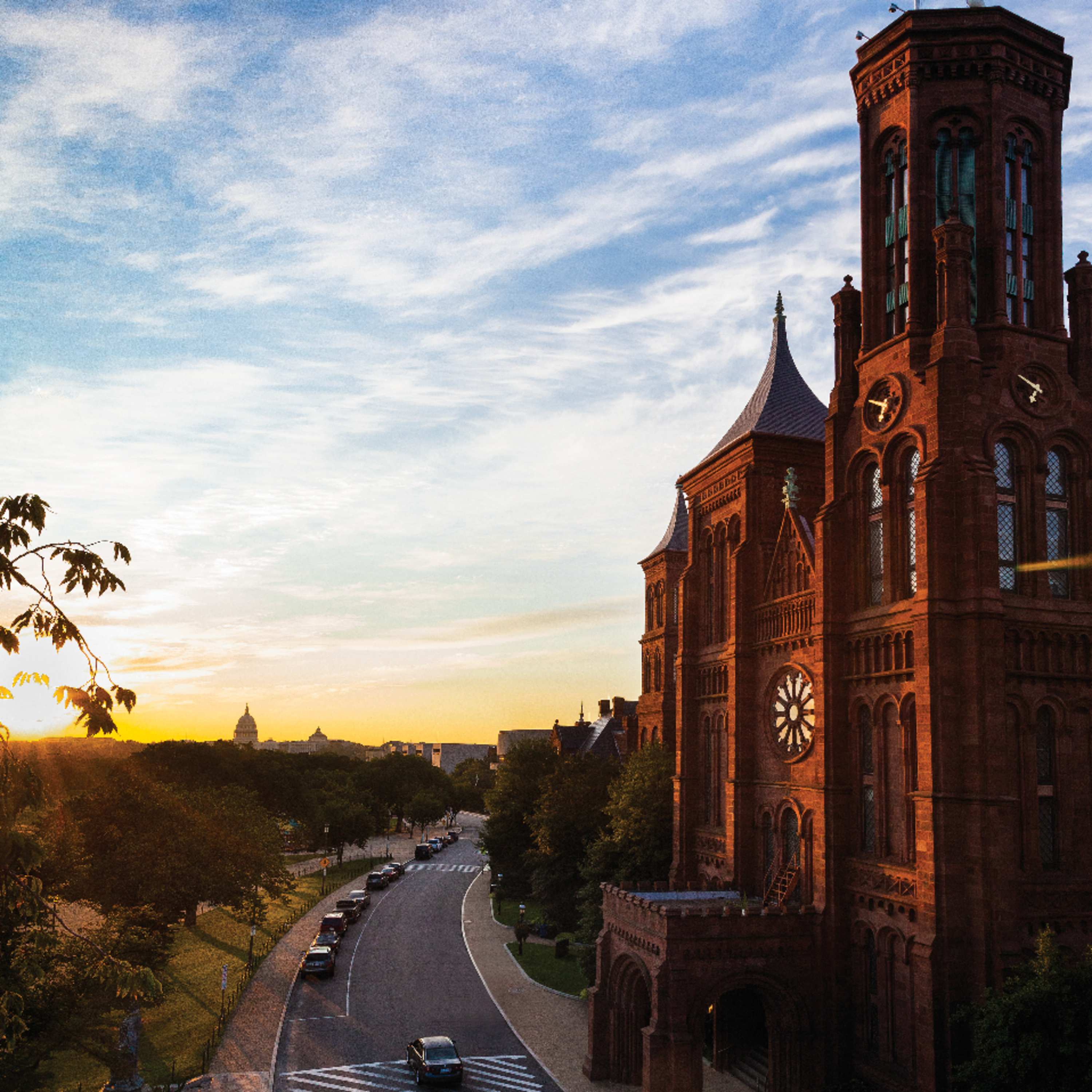
    A few years ago in Paris, I found myself in the Montmartre Cemetery on a sunny afternoon. It’s not as renowned as Père Lachaise, where people flock to pay their respects to Jim Morrison or Oscar Wilde. Montmartre is a bit more quiet, which may be an odd thing to say about a cemetery. I sat on a bench, drinking wine out of a bottle, reading a book, and tried not to get spooked by every leaf that moved out the corner of my eye. Before you side eye me, did you know that cemeteries often functioned as our first public parks? In the nineteenth century, garden cemeteries became places not only for burial, but for strolling, picnicking, and quiet reflection. A place to reflect on death, yes, but more to reflect on life. Looking around I became more curious about the artistry of gravestones, which feels like a very under-recognized art form. How do you begin to approach a single object that will represent the entirety of a soul’s existence? And not just for a moment, but in perpetuity. I found my way to Degas’s grave by chance, beckoned by the desire to see who lay inside the mausoleum with the pretty pink ballet shoes hanging from the door. I’ve always loved Degas. Maybe a bit of a cliché, but I can’t help it. I remember as a teenager going to the National Gallery of Art in Washington D.C. where I looked with awe at Little Dancer of Fourteen Years. There I was, a decade later, just a crypt door away from this beloved artist's final resting place. I put my hand on its stone walls, said my thank-yous, and tried not to look over my shoulder as I walked away. You may already have an idea of where you’d like your final resting place to be, but have you thought about the adornment that might mark it? What objects and symbols define your life? What words would you like for people to remember you by? What if that tombstone existed inside a museum? In fact, inside the symbolic heart of our nation’s largest museum complex: the Smithsonian Castle. Inside this magnificent building lies the tomb of James Smithson, the founding donor of the institution that bears his name. On this episode of The Unibrow Radio, we continue our Ghost in the Gallery series, where we look beyond the art inside our beloved cultural institutions, to the things that can’t quite be explained. Today, I speak with Carly Bond, Associate Director of Architectural History and Historic Preservation, about a personal experience she had in the Smithsonian Castle, currently undergoing the largest historic preservation project in the Institution’s history. One that may have also awakened some of the museum's longer-term residents. After all, renovations have a way of unburying the past. Sometimes, perhaps, a little more literally than intended. –– Shaquille Heath You can learn more about the Smithsonian’s Institution's vast offerings at SI.edu. Writer's Note: As you may be aware, our beloved Smithsonian is currently under a watchful eye by the Trump administration in his distracting and obsessive culture war. Please support the curators, academics, and all of its incredible staff who work diligently to keep the truth of our nation's founding, well… the truth.

  • S2026 · E13
    October 8 · 34 min

    UR-13: The Lucas Museum of Narrative Art Needed an Editor; Jessica Hundley Took the Task

    The Lucas Museum of Narrative Art is finally open; George Lucas and his wife, Melody Hobson's new opus. The building is stunning, it's a mothership, a cloud, a home to a new way to see art in America. We have been about 4x already. We wrote about it. Please read. But today we wanted to talk to Jessica Hundley, who edited the catalog that was published by Taschen Books. I'm always fascinated about this part of the process, how an author or editor puts together a timely and meaningful companion piece to, for some, is a show that they will remember for the rest of their lives. This is different though. This is a catalog (the hardcover edition comes in two volumes, in slipcase,, and is nearly 14lbs and 832 pages) of one collection, of one building, of one couple; a life of telling stories. So it has to be good. Jessica has been writing and editing for years, and has worked with Taschen on the The Library of Esoterica series. She was up for the task of how to take this monumental collection and give it a chance to come home with you. This episode is hosted by The Unibrow's Evan Pricco and recorded live on October 2, 2026 at the Lucas Museum of Narrative Art in Los Angeles You can subscribe to our print edition now. Read Jessica’s profile on Jenny Morgan from Issue 03 here. You can also listen on ⁠Spotify⁠ or ⁠Apple⁠ or wherever you get your pods, too.

  • S2026 · E12
    October 2 · 33 min

    UR-12: The Unexplained Mystery of Los Angeles Philharmonic (A Ghost in the Gallery Series)

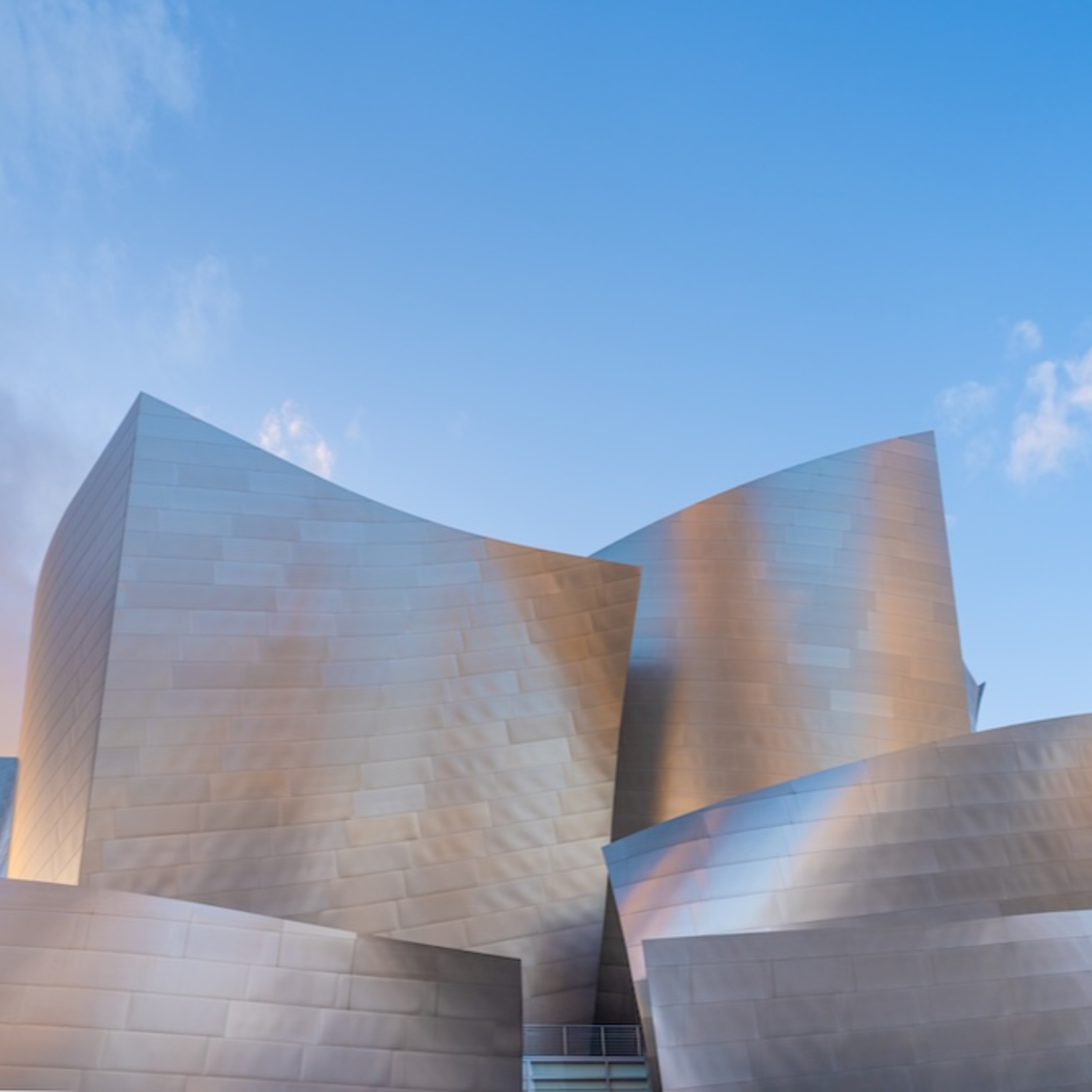
    Before I sat down with the LA Philharmonic to talk about their ghost stories, I found myself thinking about the last time I had been onstage. It was at the Legion of Honor in San Francisco, in the museum's beautiful and, at times, rather eerie theater. Many of our usual readers will know that I previously worked at the Fine Arts Museums of San Francisco, which includes the Legion of Honor and the de Young Museum. It’s a public secret that the Legion was built on the grounds of a former cemetery that operated from 1868 to 1909. When the city decided to turn the area into the park it is today, families were ordered to remove the graves, many of which were reinterred down the peninsula to Colma, also known as the "City of Souls.” Unfortunately not all of the bodies were removed, something made gruesomely clear during the museum’s seismic renovation in the 1990s. One quick Google search and you will see the remains of the unfortunate souls the city of San Francisco was too cheap to remove. Before the museum was renovated to include its downstairs galleries, the only original underground section of the museum was its divine theater. The circular room was designed in a Louis XVI style, with red velvet seats that glisten beneath an ornate ceiling painted by Spanish painter Julio Vila y Prades. It’s a gorgeous setting for any production, but the times I’d spent in the theater when it's empty often chilled me to the bone. During my time at the museum, there were many a security guard who refused to go into the theater at night, let alone anywhere downstairs at the Legion of Honor. Alas, this conversation is not about the Legion of Honor, but three even more renowned stages: The Hollywood Bowl, The Ford, and the Walt Disney Concert Hall. Together, these three venues serve as the primary stages for the LA Philharmonic, and present nearly 300 concerts each year. The Bowl and The Ford were built in the 1920s, while Walt Disney Concert Hall, designed by renowned architect Frank Gehry, opened in 2003. These venues have seen the greatest musicians in the world, from Ella Fitzgerald to The Beatles, retaining the profound energy and emotions that have passed through them. And perhaps, a few lost people who have never seemed to find the exit. On this episode of The Unibrow Radio, we continue our Ghost in the Gallery series, where we look beyond the art inside our beloved cultural institutions, to the things that can’t quite be explained. Today, I speak with Derek Traub, a writer at the LA Philharmonic, about the institution's hallowed halls and strange encounters. At the heart of our conversation is a question that has lingered in the wings for centuries: Why do theaters and concert halls seem to attract so many ghosts? So come along. The performance may be over, but not everyone has left the building. –– Shaquille Heath Visit LAphil.com to see current offerings and performances.

  • S2026 · E11
    September 21 · 1 hr

    UR-11: Bea Scaccia and the Weight of Italian Art History

    What a time to be talking to Bea Scaccia. Yes, she was featured in our Issue 01, so we have been familiar and friends for quite some time now. But she is opening a new solo show, Groomed, at Gagosian Gallery in New York, curated by Francesco Bonami, which is certainly a sign that her trajectory in the contemporary art world is that of rocket shooting into the sky. She's big time. But her journey to now is fascinating. From a small village in Italy, to her education and teaching in Rome, the weight of Italian art history forced her to make a change: how does one become a contemporary artist in a culture who's history is the Renaissance? That ain't easy. So she moved to NYC, where she worked in the studios of Jeff Koons and Marilyn Minter, honing her own craft and understanding the heights of contemporary art practices. Now, her own career is the center of her universe, and with a passion for what she calls "Existential Performance," and works spanning painting, drawing and stop-motion animation, the world is literally her stage. This episode is hosted by Evan Pricco of The Unibrow, and you can subscribe to our print edition now. You can also listen on Spotify or Apple or wherever you get your pods, too.

  • S2026 · E10
    September 15 · 58 min

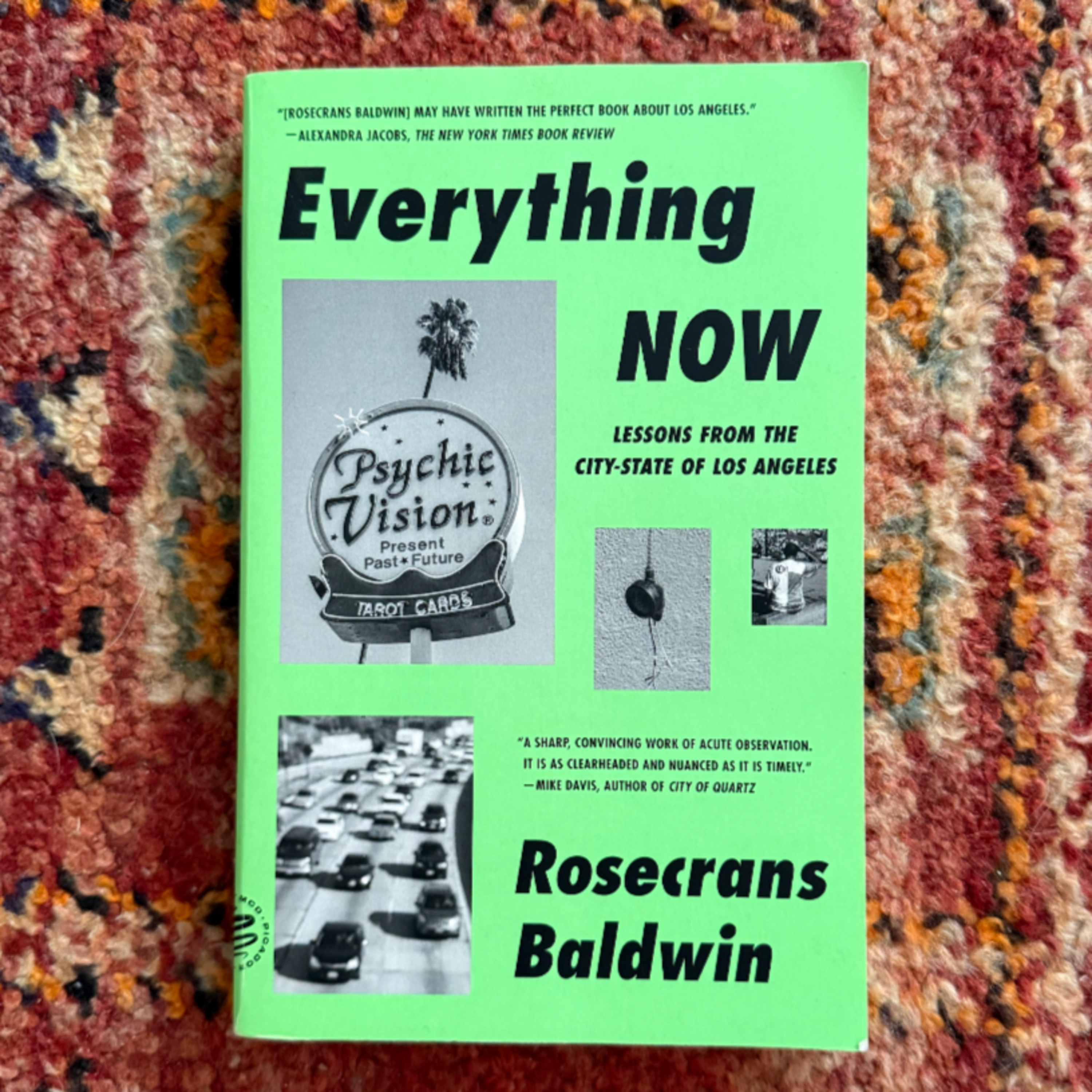
    UR-10: Everything Now and an Evolving Los Angeles City-State with Author Rosecrans Baldwin

    This summer, I was feeling a little down on my time in Los Angeles. I must admit, it comes in waves; some days I love this city and some days I'm wondering how I, one, all, could tolerate a 2-hour, 14 mile commute on a Monday. There are moments where I feel like I wouldn't want to be anywhere on Earth, though. A sunset at the Hollywood Bowl, a morning walk along the ocean, a taco on the side of the road. And, of course, there are the museums, and damn, did the city get two good ones this year: the new Geffen Galleries at LACMA and the Lucas Museum of Narrative Art. So I love this city again, right now. So when looking at this evolving place, I wanted to talk to author Rosecrans Baldwin about his book, Everything Now: Lessons From the City-State of Los Angeles. With these new institutions, and his deep-dive into the history, neighborhoods and people that make this city such an expansive and confusing narrative, he felt like someone who might have some insight into what I was seeing and feeling. The stories that Baldwin tells are not so much why LA is what it is, but the stories of people who are aren't so much trying to make sense of it, but survive it. I also wanted to share my thoughts on the Lucas Museum of Narrative Art, and what I think the critics get wrong and, to be honest, what is the critics role in deciphering the art that was mostly trying to avoid the critics for so long... This episode is hosted by Evan Pricco of The Unibrow, and you can subscribe to our print edition now.

  • S2026 · E9
    August 23 · 1 hr 14 min

    UR-09: Brow to Brow on Our Favorite Upcoming Exhibitions, Widow's Bay and Diet Coke vs Coke Zero

    We are really excited about this one, because the staff never just records our editorial conversations for the world to hear. So that is what we are doing today, as our founder Evan Pricco and editor-at-large Shaquille Heath talk about the Fall 2026 exhibition highlights that has them excited. Our new series is called "Brow To Brow." Evan and Shaq talk about the shows that they missed, the films they watched, the glory of "Widow's Bay," the enjoyment of The Odyssey, diet coke, popcorn, the cultural zeitgeist... really just two old friends catching up and talking about how much they just love looking and talking about art. Some highlights include a lengthy chat about Roy DeCarava's upcoming show at David Zwirner, Ibrahim Mahama at the Fondation Cartier, Azzedine Alaïa: Sculpting Fashion at the Legion of Honor, what we are excited about, what we have learned this summer, what we loved about Matthew Rhys and Hiro Murai... and the upcoming Issue 03 of our print journal... So please, like, subscribe to Unibrow Radio, and enjoy this conversation with Evan Pricco and Shaquille Heath and the "Brow to Brow" series...

  • S2026 · E8
    August 9 · 48 min

    UR-08: Robin F. Williams Loves that Nitty-Gritty American Stuff

    Sometimes the best podcasts are the most unexpected ones, and that is what happened in our conversation with the acclaimed painter, Robin F. Williams. What began as an interview for our Issue 03 that will be out in the fall, coinciding with Williams' solo presentation with PPOW Gallery for Frieze London in October, turned into a wide-ranging conversation about serendipity, a bit of magic, a bit of cultural critique, and the solar system aligning over the skies of Columbus, Ohio in 2024. We took a journey... Williams is Ohio-born but now been based in New York for two decades, whose work often explores what they call the “low-brow, nitty-gritty, American stuff” of horror films, social media and pop-culture, but also through the influence of the past masters and European classics. In quite a rewarding experience, Williams felt a shift in their practice after a return home and the 2024 museum survey, “We've Been Expecting You” at the Columbus Museum of Art in Ohio, where the solar system aligned, literally and figuratively, and a bit of serendipity has brought new energy to the direction of the paintings… At the moment, Williams is in the final stages of completing Act Natural, a new body of work for PPOW that looks at how we confront AI and technology in our lives, and the dichotomies and contradictions in our 21st century human experience. So please, like, subscribe to Unibrow Radio, and enjoy this conversation with Evan Pricco and Robin F. Williams.

  • S2026 · E7
    July 10 · 50 min

    UR-07: The Ghost of Jane Has Never Left the Building (A Ghost in the Gallery Series)

    The main reason I think I love art so much is because it's full of mystery. I've long had a soft spot for the unusual. Somewhere between Are You Afraid of the Dark? and Lemony Snicket’s A Series of Unfortunate Events, I realized my fascination with the unexplained, and I’ve been chasing that feeling ever since. It was only a matter of time before that curiosity led me to the art world. After all, every great mystery leaves clues. So does every great work of art. Art rewards those willing to think like a detective. Understanding a work of art means leaning into that mystery, and following its scent down a long trail of clues, symbols, and intentions. Why are certain objects illuminated while others recede into darkness? What’s the difference between an open palm and a closed fist? Why does one figure meet your gaze while another looks away? It all means something, if you’re willing to look closely enough. Of course, when I learned about Jane! at Cantor Arts Center at Stanford University, I had to speak with its curator. Jane! explores the enigmatic life, and even more mysterious death, of Jane Stanford, founder and matriarch of Stanford University. An advocate of the arts, a collector of oddities, a spiritualist, and the steward of the Cantor, Jane was a remarkably complex woman of the Gilded Age. After surviving one apparent poisoning attempt, Jane died just weeks later under circumstances that remain as mysterious today as they were in 1905. Perhaps it's no wonder that her final resting place lies in a mausoleum just steps from the museum she built. What may be even more mysterious are the numerous staff and students who claim to have seen a woman eerily similar to her portrait wandering Stanford's grounds. On this episode of Unibrow Radio, I speak with Patrick R. Crowley, Associate Curator of European Art at the Cantor, about why it's time for everyone to know Jane, (and her ghost,) a little better. No Ouija board needed. –– Shaquille Heath Jane! Life, Vision, and Legacy of Jane Stanford is on view at the Cantor Arts Center at Stanford University through May 18, 2028.

  • S2026 · E6
    June 24 · 1 hr 4 min

    UR-06: Saša Bogojev on CAN and the Future of Art Fairs

    I don't remember the year I met Saša Bogojev, but I know that he and I both were finding our way in the world of contemporary art through a small passageway that was emerging in a tunnel called Street Art. I think he and I both saw that there was a camaraderie, a friendship, a bond in that scene that was applicable to a greater contemporary art world, a language of access that could be used in describing a greater art lexicon and language. So here we are, nearly 15 years later, and Bogojev has gone from Juxtapoz contributing editor to become a leading writer, curator and organizer of a wave of emerging art that is both international and vital to the health of the overall art market. And, for the last half-decade, Bogojev, The Unibrow’s regular contributor and an editor-at-large, has been a curator and creative artistic director of the CAN Art Fair in Ibiza (and this year, Madrid). This is what I wanted to talk to him about; how the future of the art fair as an entity and the position that CAN has taken over the course of 5 years. We also talk about the increased pressure on the art world, the expectations, the bigger audiences, the draws, the incredible talent we see internationally and the language that we use to historically place it in the world-at-large. We also talk about some of the subjects he loves to write about, how his passion for the arts shows up in his writing, and those little avenues you can find yourself walking down that end up in bigger conversations about arts and culture.

  • S2026 · E5
    May 14 · 49 min

    UR-05: 30 Years of Fredericks & Freiser Gallery

    When Jessica Fredericks and Andrew Freiser founded Fredericks & Freiser Gallery in 1996, the art world was a different place. New York was a different place! What surviving as a gallery meant back then has changed drastically in some respects, but the core principles remain: show what you believe it, and do it with honesty and care. The parts that have changed, indeed, are art fairs, social media, a more savvy artist and more informed collector. But Jessica and Andrew, through a program of showing estate, middle career and young, emerging artists that create what they call "psychological figuration," have weathered multiple storms and the highs and lows of the art market to have one of the most consistent programs in New York. And that is important, as they know they often give an artist their long-sought-after "first New York solo show." That, to this day, will always be a milestone. We sat down with Jessica and Andrew the week of the Independent Art Fair, one of two big art weeks in New York during the year, just after they opened a solo show with Maria Calandra a few nights before. This is the type of schedule we wanted to know about. What makes a gallery work? What makes them interested, three decades into their careers as dealers? What are the ups? The downs? What has changed? Is New York still the epicenter of Art? In this conversation, we talk about the early years of the gallery and how to establish a program that lasts 30 years. From being one of the first galleries in Chelsea, to the blessing of John Wesley and being one of the first galleries to show Jenna Gribbon, they have many stories to tell over 3 decades. That is no small feat in the gallery world, and the advice and direction both Jessica and Andrew have taken and given over the years offers an insight for all galleries starting up today.

  • S2026 · E4
    May 8 · 53 min

    UR-04: Robert Montgomery and the Poetry in Empty Palaces

    Many think of the past in smells, sounds, joys and fears. Recently, I sat down with Robert Montgomery on a stage during the Nuart Aberdeen festival, to try and put words to memories, to think about how language can be an asset for describing our past. Montgomery is a poet, installation artist, conceptual artist, public artist, thinking about language as a way to intervene into our lives and bring a spiritual and personal experience to our public arenas. He is a like a street poet in the 21 century sense. Robert’s work was a highlight of the year’s festival, an 11-meter long sculpture placed in the empty pool of the Bon Accord Baths in the center of Aberdeen. This isn’t the first time Robert’s work, in this context, a collaborative poem, has been placed in long-forgotten spaces. His words become an echo of the past, and bring places and spaces back to life. The work is also about immigration, about community, about sharing life's experiences with others and making others feel welcome. In an era of anti-immigrant politics and the rise of right wing ideology, the new work felt like a counter-argument, a powerful and peaceful resistance: a light poem in the deep end, where fear is replaced by courage and love. In this conversation between Robert and myself, The Unibrow’s Evan Pricco, we connect the dots of Robert’s work and why, as a poet, he found somewhat of a mutual respect and admiration working in public space. The energy of a street art practice connected with Robert. It also connected with Nuart’s founder, Martyn Reed, who has long curated his festival to place unsanctioned art into the context of poetic interventionism. For the 2026 festival, curated under the idea of “Poetry in the Streets,” it was a natural connection to bring Robert back to Scotland. Recorded live at Nuart Aberdeen, at the Lemon Tree, Aberdeen, Scotland, April 2026. Like our recent conversations on the radio channel, we apologize in advance that some of the audio may have a discrepancy in volume due to the live nature of the show. We also have questions from the audience in attendance at the end of the interview, and we thank everyone who participated. And we thank Nuart Aberdeen for their continued support of The Unibrow.

  • S2026 · E3
    April 23 · 25 min

    UR Fiction-03: Eirinie Carson and a Reading from "Bloodfire, Baby"

    Welcome to Unibrow Radio Fiction, a new series where the editors of The Unibrow speak to authors, share selected readings, and begin to think about the art being fiction and narrative writing. Today's guest coincides with Issue 02, with an excerpt and interview with Eirinie Carson and her new novel, Bloodfire, Baby. The book is being hailed by critics and honored for its honesty and daring story. It is Carson's first novel after her memoir, The Dead Are Gods. Shaquille Heath interviews Carson about creating the characters and the story behind the making of the book. The book is "a maternal gothic tale of new motherhood and the torment of a centuries-old haunting," and as you will hear in this conversation with Carson, comes from her own life experience as a new mother and the stories that began to take shape on the page as she experienced her own postpartum reality. Bloodfire, Baby is currently available via Penguin Books. Audio excerpted with permission of Penguin Random House Audio from BLOODFIRE, BABY by Eirinie Carson, excerpt read by Emana Rachelle. Eirinie Carson ℗ 2026 Penguin Random House, LLC. All rights reserved.

  • S2026 · E2
    April 9 · 1 hr 18 min

    UR-02: Shepard Fairey on Creating Modular Frequencies

    Shepard Fairey is one of the most famous artists in the world, and if you think about it, there aren't many artists who are famous in their lifetimes. In times' past, artists didn't get to live with their fame, their notoriety, the praise and scrutiny that comes with making art seen by man. We are living in a different era, art has sometimes permeated into popular culture and consciousness, and Fairey's' Obey Giant and Obama imagery are the rare instances where art becomes mega Pop Art, the kind found on tee shirts and on refrigerator magnets. Fairey is a street artist, fine artist, designer, clothing brand owner, DJ, printmaker, father, husband and revered muralist. He makes art in the moment for a number of social justice causes, and creates studio work that is meticulous and bold and innovative. As we say in the introduction to Episode 02 of Unibrow Radio, for over 35 years, Fairey has been actively pursuing a balance between image and message, creating and exploring the symbiosis of how to make works where politics, music, poster design, skate culture can all exist in a single work. What he is often asking, is how an image can, in itself, be an active work of the past, present and future. Recorded live at Fairey’s gallery, Subliminal Projects, during the run of his new show, MODULAR FREQUENCY, the artist talks about how he uses his own history in his work, the constant battle between reactive work and experimentation, finding ways to rest, and the many layers of influences that he’s drawn on to help develop his aesthetic. He constantly mentions he stands on the shoulders of those who came before him, and he hopes he has blazed a path for others to stand on his…

  • S2026 · E1
    April 3 · 1 hr 18 min

    UR-01: Christopher Anderson and the Future of Photojournalism

    Christopher Anderson is an award-winning photographer and contributor to The New York Times Magazine and The New Yorker, as well as the Photographer in Residence at New York Magazine from 2011-2014. A member of Magnum Photos from 2005 to 2023, Anderson is the author of nine monographs, including the 2026 collection Index, out in the Spring 2026 through Stanley Barker. Originally know for his work as a war correspondent, his photographs depicting the journey of 44 Haitian immigrants attempting to sail to America on a hand-made, wooden boat were awarded the Robert Capa Gold Medal. Recently, his name became widely known for his work for Vanity Fair in covering the Trump Administration. On the occasion of that shoot and his revealing his portraits of Jeffrey Epstein that had never been published, and on the publishing of his newest monograph, The Unibrow sat down with Anderson from his studio in Paris and caught up with the photographer in this wide-ranging conversation. This episode was hosted by Evan Pricco, with introduction by Kim Stephens, and music by Aesop Rock.

  • S20 · E2
    Jun 18, 2025 · 1 hr 2 min

    167: Nathan Bell

    When Nathan Bell announced his latest solo show was to be called "Conversations with Inanimate Objects" and it would showcase a series of what he called "guidance paintings," I was hooked. I've known Nathan for years but mostly as a designer. So being able to speak to him in this context, inside the gallery These Days in downtown LA as the show was coming to a close, was a refreshing moment to have with someone you know and the other side of their brain. In this conversation of The Unibrow's Radio Juxtapoz podcast, I speak with Nathan about the journey of these works, from Finland to Mexico and back to Los Angeles, to his latest project in China and exactly what a guidance painting is. We may mention the Detroit Tigers and Timothée Chalamet... the latter by accident, we swear. Subscribe to the Radio Juxtapoz podcast on Spotify and on Apple Podcasts. The Unibrow's Radio Juxtapoz podcast⁠ is hosted by Juxtapoz editor, ⁠⁠⁠⁠Evan Pricco⁠⁠⁠⁠. Episode 167 was recorded in Los Angeles on June 4th, 2025. Music by Aesop Rock for The Unibrow

  • S20 · E1
    Jun 13, 2025 · 1 hr 6 min

    166: Salomón Huerta

    We kick off Season 20 of The Unibrow's Radio Juxtapoz podcast with a conversation with Mexican-American, Los Angeles-based painter, Salomón Huerta. What started as scheduling a conversation with Huerta around the opening of his solo show Stillness, which opened at Harper's in NYC in the spring, and he and I wanting to catch up after Huerta lost his home in Altadena in the fires that ravaged Southern California in January 2025 became another conversation about fires in LA County: just as we click confirmation on our time to meet up, ICE raids throughout LA had put the city into shock, sparking mass protests, National Guard and Marines being brought to the streets to heighten tensions and has left the Mexican-American community in fear. Not only did Huerta want to talk about the current climate here but his own personal story of being an immigrant to America. Born in Tijuana, Mexico in 1965, his story is one of a meteoric rise in the fine art world (shows at Gagosian in 2001 just as he left UCLA) to soul-searching after his initial success to now creating some of the most personal works to date. There is so much of Huerta's story I didn't know, so on this episode of the podcast, I speak with him about the creation of his famed "back of head" portraits, the genesis of the gun paintings and how he began to develop the pool and home works he is know for now. And, of course, we talk about LA, how his community is rattled and what that means for him in the future. From a wild story of John Baldessari's sort-of critique of his MFA work, to an upcoming show at Marc Selwyn Fine Art, this is an honest must-listen. —Evan Pricco The Unibrow's Radio Juxtapoz podcast⁠ is hosted by Juxtapoz editor, ⁠⁠⁠Evan Pricco⁠⁠⁠. Episode 166 was recorded in Los Angeles on June 11th, 2025. Music by Aesop Rock for The Unibrow

  • S19 · E12
    May 21, 2025 · 1 hr 27 min

    165: Dan Nadel, author of "Crumb: A Cartoonist's Life"

    Author and curator Dan Nadel is a hero of mine and a bit of a renaissance man. He was the publisher of the brilliant and influential PictureBox for decades and was a champion of much of what Juxtapoz was founded on but took it to a whole new level of intricate historical research and creating a voice of record for so many artists who time wasn't given them a needle to etch their name in the vinyl, so to speak. We are talking comic book legends, graphic novelists, outsider artists who might have created some of the most recognizable art of the 20th century that the history books hadn't given the full retrospective for. And Dan was going to do it. This year in paricular, Dan is busy. From publishing his newest book, Crumb: A Cartoonist's Life on the career and life of the controversial figura that is Robert Crumb, to co-curator for Sixties Surreal, a rethinking survey the art history of the 1960s at the Whitney Museum of American Art (opening September 24, 2025) and Curator-at-Large for Geroge Lucas' new Lucas Museum of Narrative Art, we had a lot to catch up on The Unibrow's Radio Juxtapoz podcast. We talk about undergrround comic's new resurgence into contemporary art, the making of the Crumb biography and the incredibly pivotal moment of KAWS' collection show at the Drawing Center in 2024. But more than that, I got to speak with someone I admire on his dedication to print, to words, to creating narratives in a world that needs to understand it's visual history. —Evan Pricco The Unibrow's Radio Juxtapoz podcast⁠ is hosted by Juxtapoz editor, ⁠⁠⁠Evan Pricco⁠⁠⁠. Episode 165 was recorded in Los Angeles and Brooklyn on May 14th, 2025.

  • S19 · E11
    May 14, 2025 · 1 hr 6 min

    164: Shyama Golden

    "'Too Bad, So Sad, Maybe Next Birth' was a phrase my parents would say whenever something was out of my control and didn’t go exactly according to plan," Shyama Golden wrote on the subject of her new solo show of the same name for PM/AM in London. "It feels to me like a short phrase that embodies the entire human struggle, like Sisyphus pushing the boulder up the hill." The Los Angeles-based painter has created a universe where reincarnation, generational trauma and suffering (and a sense of humor to cope with it), Sri Lankan folktales and a personal journey through time and the soul's journey through eras. Golden told me she wanted to create a works that spoke of "past lives because this framework challenges the idea of an essential self, a fixed history, and linear progress." And so she is creating her own story, not the next birth, but this birth. In this conversation from The Unibrow's Radio Juxtapoz podcast, I spoke with Shyama in LA just before her trip to London, just after her husband, Paul Trillo, showed me an incredible AI-generated film he created with her that will premiere in short form at the PM/AM show but will continue to be worked as a longer work in the future. The show is like a journey through our collective creative output: traditional painting, wood masks co-created with craftsmen in Sri Lanka that harken to centuries past as well as a short film utilizing AI. It's work for the ages, literally. The Unibrow's Radio Juxtapoz podcast⁠ is hosted by Juxtapoz editor, ⁠⁠⁠Evan Pricco⁠⁠⁠. Episode 164 was recorded in Los Angeles on May 2, 2025. Music by Aesop Rock for The Unibrow.

  • S19 · E10
    May 8, 2025 · 53 min

    163: Corita Kent's Legacy with Nellie Scott

    The first thing I said to Nellie Scott, Executive Director of the Corita Art Center in downtown Los Angeles that preserves and promotes Corita Kent’s art, teaching, and passion for social justice, was that I wish we didn't need to do this. I wish Corita Kent's work had already done its work, that the world was free of oppression, racism, inequality, chaos and fear. Maybe Nellie and I could just talk about love and a butterfly, the upcoming showing of Kent's work at Andrew Kreps and kaufmann repetto in NYC this month. But the times they are a'changing and oh how they stay the same. The new Corita Art Center opened in March and since, Pope Francis has passed, the structure of democracy in America has been bent to a near breaking point and art has an act of protest and social awareness is struggling to find its footing. So, it's time for Corita Kent once again. In this conversation on the Radio Juxtapoz podcast produced by the Unibrow, Nellie Scott speaks of the founding of the Center in 1997 and its association with the Immaculate Heart Community, how Corita Kent went from entering the religious order Immaculate Heart of Mary at age 18, to championing civil rights, anti-war activism, and peace, through her unique aesthetic of printmaking. She left the order in 1968 and moved to Boston, where she continued to make work. Her art, and her life, was devoted to finding a deep understanding of the human experience, through teaching and creating. Corita left behind a great legacy that continues to reverberate - at the time of her death in 1986, Corita had created almost 800 serigraph editions and thousands of watercolours, alongside public and private commissions. From Boston to Los Angeles, Corita’s life is a truly inspired story. The Unibrow's Radio Juxtapoz podcast⁠ is hosted by Juxtapoz editor, ⁠⁠⁠Evan Pricco⁠⁠⁠. Episode 163 was recorded at the Corita Art Center in Los Angeles in late April 2025. Original music by Aesop Rock for Radio Juxtapoz

Showing 1–20 of 27 episodes