Artwork for Under the Cortex
Science

Under the Cortex

psychologicalscience

The podcast of the Association for Psychological Science. What does science tell us about the way we think, behave, and learn about the world around us?

Under the Cortex is proudly sponsored by Macmillan Learning Psychology, where captivating content meets genuine engagement. Our authors, who are seasoned educators, understand today’s teaching challenges. We aim to craft and present both information and interactive tools that truly connect with students. Whether in-person or online, we support instructors and inspire students. Macmillan Learning Psychology: Engaging Every Student, Supporting Every Instructor, Setting New Standards for Teaching and Learning.

  • 100 episodes
  • Updated Aug 7, 2025

Episodes100

  • Apr 20, 2023 · 33 min

    Industrialized Cheating in Academic Publishing: How to Fight “Paper Mills”

    A growing problem in research and publishing involves “paper mills”: organizations that produce and sell fraudulent manuscripts that resemble legitimate research articles. This form of fraud affects the integrity of academic publishing, with repercussions for science as well as the general public. How can fake articles be detected? And how can paper mills be counteracted? In this episode of Under the Cortex, Dorothy Bishop talks with APS’s Ludmila Nunes about the metascience of fraud detection, industrial-scale fraud and why it is urgent to tackle the fake-article factories known as “paper mills.” Bishop, a professor of neurodevelopmental psychology at Oxford University, is also known for her breakthrough research on developmental disorders affecting language and communication. To read the transcript, see here.

  • Apr 6, 2023 · 13 min

    Exploration vs. Exploitation: Adults Are Learning (Once Again) From Children

    How do you balance innovation and implementation, possibility and practicality? How do you resolve the tension between the lure of the crazy new thing and the safe haven of the tried and true? In her latest presidential column for the APS Observer, APS President Alison Gopnik, who studies learning and development at the University of California, Berkeley, writes about what makes children bad at acting effectively but good at learning, exploration, and discovery and how adults—including cognitive scientists and computer scientists conducting exciting new research—may learn from them. She reads her column in this episode.

  • Mar 23, 2023 · 19 min

    Lived Experiences Can Be a Strength. So Why the Bias Against “Me-Search”?

    Questions often emerge when researchers tend to engage in research on topics that are personally relevant for them. For example, when someone with depression also studies it, should they disclose their personal interest? How is this type of self-relevant research—“me-search,” as it’s popularly known— perceived by the academic and scientific community? In a recent study published in Clinical Psychological Science, researchers found that more than 50% of participants had conducted self-relevant research. Those who had not engaged in self-relevant research made more stigmatizing judgments of it and its disclosure than did those who did engage in self-relevant research. We discuss these findings and their implications with the study’s lead author, Andrew Devendorf of the University of South Florida. To read the transcript, see here.

  • Mar 9, 2023 · 33 min

    Special Episode II: APS 2023 Spence Awardees on Sharing Minds, the Development of Learning, and Implicit Bias

    The APS Janet Taylor Spence Award recognizes APS members who have made transformative early career contributions to psychological science. Award recipients reflect the best of the many new and cutting edge ideas coming from of our most creative and promising investigators who together embody the future of psychological science. The APS 2023 Janet Taylor Spence Award for Transformative Early Career Contributions joined Ludmila Nunes to talk about their research and careers. In this episode, the second of two, Julian Jara-Ettinger, Emily Fyfe, and Calvin Lai discussed reading and sharing minds, the development of learning and its practical applications, and the importance of studying the gap between what people value (for example, racial equality) and what people do (for instance, racial discrimination) and assessing and creating better diversity training for police officers. Read more here.

  • Mar 9, 2023 · 30 min

    Special Episode I: APS 2023 Spence Awardees on Fresh Starts, Time Perception, and the Well-being of Black Families

    Research contributions can be transformative in various ways, such as the establishment of new approaches or paradigms within a field of psychological science, or the development or advancement of boundary-crossing research.  The APS Janet Taylor Spence Award recognizes APS members who have made transformative early career contributions to psychological science. The APS 2023 Janet Taylor Spence Award for Transformative Early Career Contributions joined Ludmila Nunes to talk about their research and careers. In this episode, the first of two, Riana Elyse Anderson, Ed O’Brien, and Hengchen Dai discussed how to study and improve the well-being and functioning of Black families, the importance of time in how people perceive progress, and how fresh starts can feel motivating. Read more here.

  • Feb 23, 2023 · 14 min

    Is Cheating Just a Symptom (and Not the Cause) of Declining Relationships?

    Does infidelity predict an unhappy relationship? Or is it the other way around? Can a relationship recover after infidelity? In a recent study published in Psychological Science, researchers found that relationship functioning starts to decline before infidelity happens and that, in most cases, well-being did not recover in the years following the infidelity. The lead author, Olga Stavrova, a researcher and professor at Tilburg University, explains these findings and elaborates on how they can expand our knowledge about the dynamics of romantic relationships. To read the transcript, see here.

  • Feb 9, 2023 · 20 min

    Stop Oversimplifying Mental Health Diagnoses

    Diagnoses often oversimplify complex mental health problems. How can researchers and practitioners avoid oversimplifications, improve research, and provide more effective and customized clinical practices? A recent article published in Current Directions in Psychological Science presented the advantages of studying mental health problems as systems, not syndromes. The author, APS Fellow Eiko Fried, a psychologist and methodologist at Leiden University, explains this new approach to how we see and classify mental health problems and how mental-health professionals might create better tools to address early risk of certain conditions, such as depression. To read the transcript, see here.

  • Jan 26, 2023 · 12 min

    A Very Human Answer to One of AI’s Deepest Dilemmas

    Imagine that we designed a fully intelligent, autonomous robot that acted on the world to accomplish its goals. How could we make sure that it would want the same things we do? In her latest presidential column for the APS Observer, APS President Alison Gopnik, who studies learning and development at the University of California, Berkeley, writes about how looking at caregivers who raise human children—the parents and grandparents, babysitters and preschool teachers—might help to make sure that robot’s goals align with human goals. She reads her column in this episode.

  • Jan 12, 2023 · 27 min

    Top 10 Articles of 2022: Opinionated Fetuses! Cheating Spouses! And Much More

    Do fetuses care about what their mothers eat? When do spouses cheat? Does the use of social media predict depression and anxiety? How can we understand and address older adults’ loneliness? Some of the top articles published in the APS journals in 2022 explored these questions and much more. In this conversation, Ludmila Nunes talks with Amy Drew, who heads up APS’s journals team, for a countdown of the most impactful articles published in 2022.

  • Dec 15, 2022 · 15 min

    What You Know Changes What and How You See

    Can what we know about an object change the way we see it? Or the way we feel about it? If so, could that be because different brain areas process different features of any given object, such as what we know about its uses? In this episode of Under the Cortex, APS’s Ludmila Nunes speaks with Dick Dubbelde, a recent postdoc and adjunct professor of psychology and neuroscience at George Washington University, about how quickly and how well we process different objects. “In an environment such as surgery, where small spatial details are super important, or in an environment like driving, where reaction time is super important, those little differences can add up, especially at the societal scale,” Dubbelde explains. He explores this research more fully in an article he coauthored with Sarah Shomstein in Psychological Science: “Mugs and Plants: Object Semantic Knowledge Alters Perceptual Processing With Behavioral Ramifications.”

  • Dec 1, 2022 · 14 min

    Children, Creativity, and the Real Key to Intelligence

    Human innovation will always be the essential complement to the cultural technologies we create, including artificial intelligence. In her latest presidential column for the APS Observer, APS President Alison Gopnik, who studies learning and development at the University of California, Berkeley, writes about how psychology, and especially child psychology, will play a crucial role in creating and using the technology of the future. She reads her column in this episode. 

  • Nov 17, 2022 · 17 min

    Failure and Flourishing

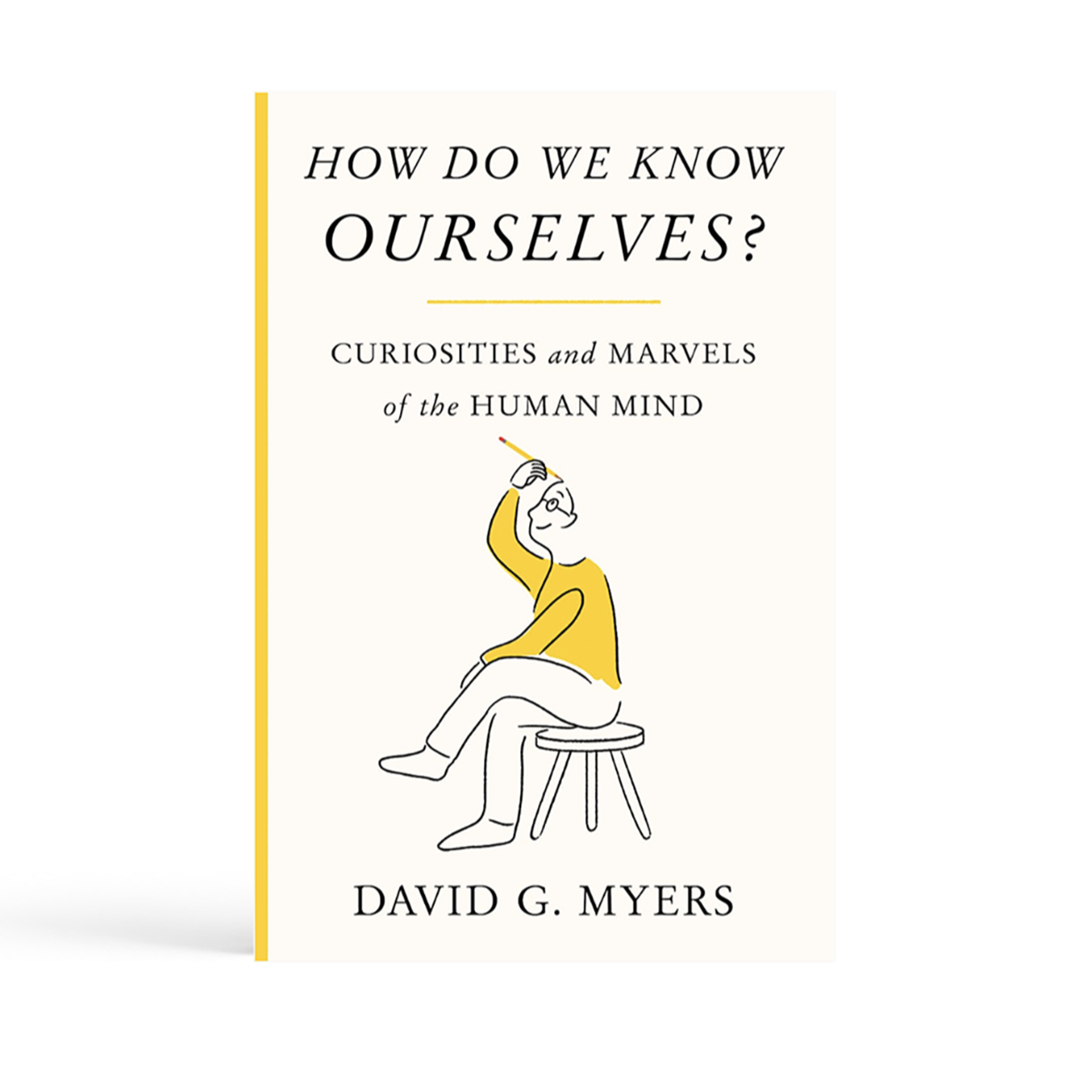
    In the final discussion with social psychologist David Myers, a professor of psychology at Hope College in Michigan, APS’s Ludmila Nunes talks with him about the third section of his book, in which he applies his psychological insights to the larger world around us. Listen to the previous episodes featuring David Myers and his latest book, How Do We Know Ourselves? Curiosities and Marvels of the Human Mind. You’ll get to know more about David’s career and his goals of helping his readers and students think critically, savor the world, and develop a sense of wonder and respect for “the human creature.” Read more about David Myers’s new book, including an excerpt of the chapter Failure and Flourishing here.

  • Nov 10, 2022 · 14 min

    Why Is Everyone Else Having More Fun?

    David Myers, a social psychologist and professor of psychology at Hope College in Michigan, joined us in the last episode to speak about his latest book, How Do We Know Ourselves? Curiosities and Marvels of the Human Mind. In this episode, he and APS’s Ludmila Nunes discuss the second section of the book, which focuses on who we are, and takes a closer look at a chapter called “Why is everyone else having more fun?” Read more about David Myers’s new book here.

  • Nov 3, 2022 · 18 min

    How Do We Know Ourselves?

    Social psychologist David Myers, a professor of psychology at Hope College in Michigan, is the author of seventeen books, including psychology’s most widely read textbook. But he doesn’t write only textbooks. For the last several decades, he has translated findings from psychological science for the general public as well, in books on topics ranging from the scientific pursuit of happiness to the powers (and perils) of intuition. In his new book, How Do We Know Ourselves? Curiosities and Marvels of the Human Mind, Myers presents a collection of short essays on how psychological science contributes to so much of what we can and should know about ourselves and the world around us. In the first of three discussions on Under the Cortex, David Myers joined APS’s Ludmila Nunes to speak about his career, his new book, and how we really do know ourselves. Read an article about David Myers’s new book here.

  • Oct 27, 2022 · 21 min

    What Music Does to Us

    What is the relationship between music and autobiographical memories? Why do we like the music that we like? And what are the challenges that a psychological scientist studying music might face throughout their career? Amy Belfi from the Missouri University of Science and Technology joined APS’s Ludmila Nunes to speak about her career as a neuroscientist studying music perception and cognition as well as how poetry and other forms of art impact brain and behavior. If you want to know more about this research, Amy Belfi’s career and psychological science in general, see her profile in the latest issue of the Observer magazine at psychologicalscience.org.

  • Oct 13, 2022 · 20 min

    Exploration and Risk-Taking: Hallmarks of Adolescence That Increase Well-Being

    Exploration is a fundamental human behavior. Exploring our environment can promote the acquisition of knowledge by exposing us to novelty. Adolescence is a prime time to explore, take risks, and learn, but why is exploration so enticing—and so rewarding—in the lives of teenagers and young adults? The role of exploration and risk taking in sustaining adolescent well-being and establishing social connectivity is the topic of a recent article published in Psychological Science. In this podcast, you’ll hear from the two psychological scientists who wrote this article, Natalie Saragosa-Harris, of the University of California in Los Angeles, and Catherine Hartley, of New York University. They’ll talk with APS’s Ludmila Nunes about their examination of exploration patterns in adolescents and young adults.

  • Sep 29, 2022 · 28 min

    Talking With Birds: The Fascinating World of Avian Intelligence

    Can birds be as intelligent as chimpanzees or dolphins? Can they communicate and use language like a child would? Can they even outsmart undergraduate students? A line of research started more than 40 years ago continues to reveal new findings about parrots’ intelligence and even their ability to use English speech to communicate with humans. Irene Pepperberg, an APS Fellow and adjunct research professor at Boston University, pioneered the study of bird cognition back in the 70s and still studies the cognitive and communicative abilities of grey parrots, comparing their abilities with those of great apes, dolphins, and young children. In this conversation with APS’s Ludmila Nunes, she speaks about research on parrots’ cognitive, their conservation and preservation in the wild, and much more. Learn more about this and other research at psychologicalscience.org.

  • Sep 22, 2022 · 25 min

    The September Collection: New Technology Can Be Scary, Why to Stop Worrying and Love the Eco-Apocalypse, and Much More

    What determines how we feel about new technologies? Can an existential approach help us deal with apocalyptic fears about the climate crisis? And does having brothers or sisters influence our personality? New research in APS journals explores these questions and much more, including what makes a joke funny and how social support can prevent depression in breast-cancer survivors. In this episode of Under the Cortex, cognitive psychologist Ludmila Nunes and her colleague Amy Drew, APS’s Director of Publications, discuss five of the most interesting new articles from the APS journals. Learn more at psychologicalscience.org.

  • Sep 15, 2022 · 22 min

    Attitudes Improve for Sex and Race. Disability and Age? Not So Much

    How did attitudes about race, sexuality, age, or disability change in the last decade or so? In the United States, it appears that bias decreased across all explicit attitudes, but implicit biases decreased only for certain attitudes, including sexuality and race. Moreover, biases have remained stable for variables such as age or disability. What can these patterns of change tell us about our society and the different nature of certain attitudes? Researchers examined more than 7 million implicit and explicit tests for an article published recently in Psychological Science. In this conversation, APS’s Ludmila Nunes speaks with APS member Tessa Charlesworth, the article’s lead author, an experimental psychologist, and currently a postdoctoral researcher at Harvard University. To find your implicit attitudes about race, gender, sexual orientation, and other topics, check out the Project Implicit website at https://implicit.harvard.edu/implicit/. To read the transcript, see here.
  • Sep 8, 2022 · 16 min

    Self-Injury: Can the Internet Play a Positive Role?

    Anywhere between 17% and 38% of adolescents and young adults engage in behaviors of nonsuicidal self-injury, defined as “the deliberate, self-inflicted damage of body tissue without suicidal intent.” These behaviors, which might include cutting, scratching, head-banging, and burning, sometimes help people cope with negative emotions or even serve to keep them from attempting actual suicide, but they can also pose real harms. A recent study in Clinical Psychological Science explores the role that online groups and e-communities can play in reducing the harm posed by nonsuicidal self-injury and in contributing to more effective treatments of this behavior. To speak about self-injury and how online communities might help, Emma Preston, an APS member and graduate student at the University of Southern California, joined APS’s Ludmila Nunes. To read the transcript, see here.