Skip to content
Artwork for Ultimate Partner®
NewsTech NewsTechnologyBusinessMarketing

Ultimate Partner®

Vince Menzione - Technology Industry Sales and Partner Executive

Empowering partners to achieve their greatest results through successful partnering.

Play
  • 20 episodes
  • weekly
  • Avg 32 min
  • English
  • Monday · 26 min

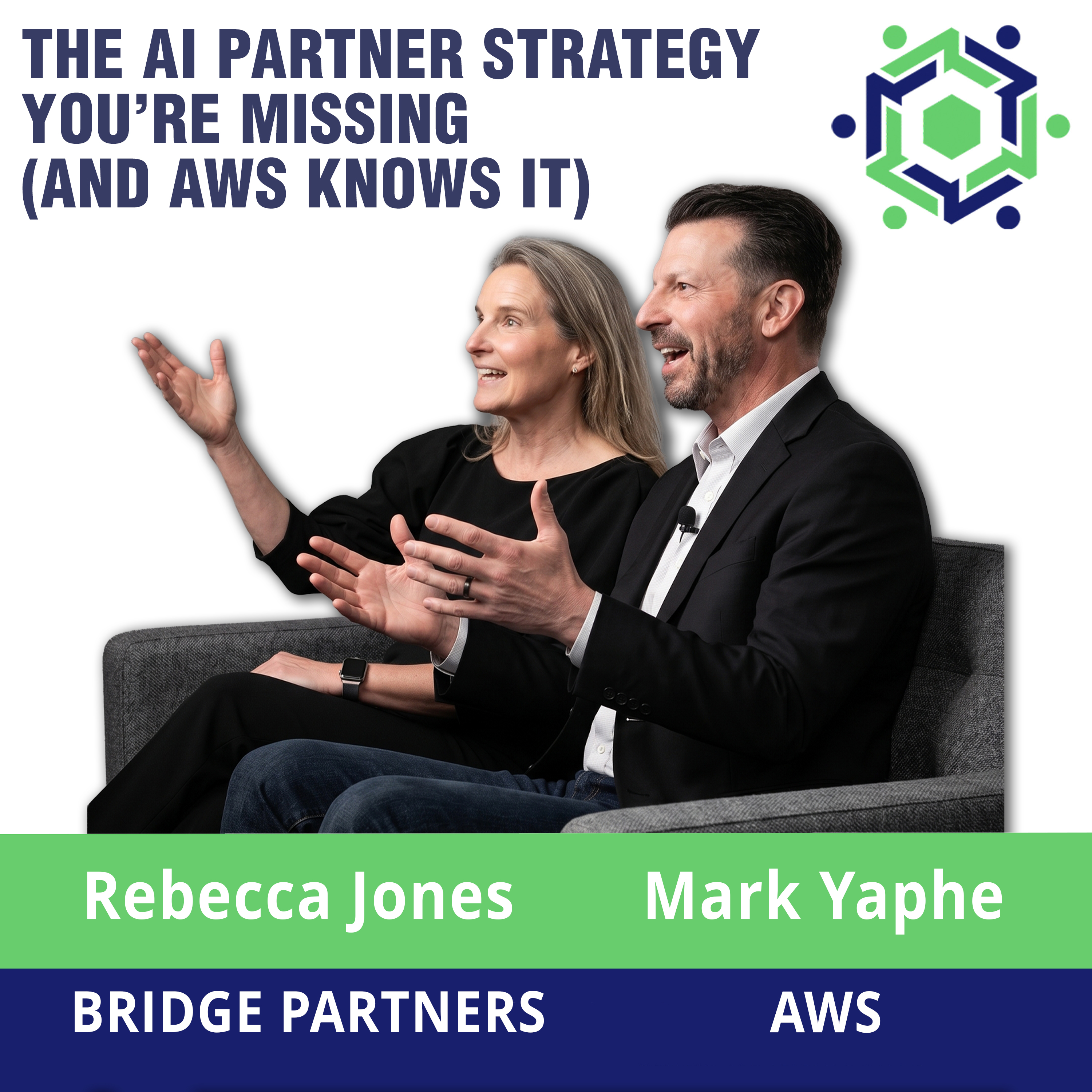
    312 – AWS Partners Unlock the Proven Path From AI Pilots to Profit

    Don’t get left behind in the AI revolution. Subscribe to our Newsletter: https://theultimatepartner.com/ebook-subscribe/ Check Out UPX: https://theultimatepartner.com/experience/ In this powerful episode, Vince Menzione sits down with Rebecca Jones of Bridge Partners and Mark Yaphe, Head of Consulting Partners for AWS, to uncover how AI is fundamentally rewiring the partner ecosystem. They explore the urgent shift from 90% stalled AI pilots to a new era of rapid execution, warning against the trap of “shiny object” syndrome. By unpacking the necessity of a “builder mindset” and a product-focused approach, this discussion reveals exactly what top-performing companies are doing to collapse six-month development cycles into four weeks and secure their place in the 2026 market landscape. Key Takeaways The transition from on-prem to cloud and marketplace is now entirely focused on AI transformation. Top companies approach AI with a product mindset rather than running scattershot pilots. Empowering frontline teams with a “builder mindset” can collapse solution cycles from six months to four weeks. Partners must avoid the $260 billion AI “FOMO” trap by specializing in specific industries and workflows rather than trying to do everything. Evaluating the “highest and best use” of AI models like Claude is essential for managing token economics and ROI. Thriving through AI disruption requires cultivating a strong growth mindset and prioritizing human connection and critical thinking. If you’re ready to lead through change, elevate your business, and achieve extraordinary outcomes through the power of partnership—this is your community. At Ultimate Partner® we want leaders like you to join us in the Ultimate Partner Experience – where transformation begins. Key Tags AI transformation, AWS partner ecosystem, hyperscaler alignment, builder mindset, product mindset implementation, Bridge Partners insights, GenAI solution cycles, AI token economics, Claude model utilization, GSI strategy, 2026 ecosystem shift, AI ROI measurement, agentic tools, workflow specialization. Transcript Rebecca Jones and Mark Yaphe AUDIO EPISODE [00:00:00] Rebecca Jones: You can either, um, think about being disrupted or being a disruptor. [00:00:07] Vince Menzione: You can feel it happening. The ecosystem is shifting beneath us the way hyperscalers are partnering, how AI is remaking the channel. And what it means to win in 2026. [00:00:18] Vince Menzione: Welcome to the Ultimate Partner Podcast. I’m Vince Menzi, own your host. [00:00:23] Vince Menzione: And each week I sit down with leaders at the intersection of [00:00:26] Vince Menzione: technology, partnerships and outcomes, the voices shaping how ecosystems actually work. We talk about what’s real, what’s changing, and what it takes to lead in this era where the partner channel isn’t just part of the strategy. It is the strategy because being in the room changes everything. [00:00:45] Vince Menzione: Let’s start. We have another incredible session today, right? So I get to invite another friend of, of ultimate partner who’s been around for a while and, uh, it’s just absolutely amazing. Rebecca has been in the studio, she’s been at, how many of events have you been with? Fourth, fourth one, and I’m gonna have you introduce Mark as well. [00:01:10] Vince Menzione: So come on, on stage. Rebecca. Rebecca Jones to many of you know. [00:01:14] Rebecca Jones: Thank you, sir. [00:01:15] Vince Menzione: Good to see you. Good to see you. And Mark, great, great to have you. I want to have you, Richard, we’ll have you, Rebecca’s gonna introduce you and then we want you to introduce yourself as well, sir. [00:01:23] Rebecca Jones: Wonderful. Well, [00:01:24] Vince Menzione: and another AWS exec. [00:01:26] Vince Menzione: I love this. Like, I know. Yeah, we’re finishing out the day Strong. [00:01:28] Rebecca Jones: Well, Vince, I have to say, you’ve got me, um, the last time we got together, it was the last session before happy hour. So I guess we’re closing. [00:01:36] Vince Menzione: Well, you know, we’re gonna close us [00:01:38] Rebecca Jones: out [00:01:38] Vince Menzione: really nicely. Know we, yeah. We’re serving Bloody Mary’s, by the way, while you’re guys are up here. [00:01:42] Vince Menzione: No. Good. [00:01:42] Rebecca Jones: So, um, we’re so excited to have Mark. Thank you, mark, for joining us here. Um, head of consulting partners for AWS and, uh. We’re gonna close this down, aren’t we? I love [00:01:54] Vince Menzione: it. I love it. Yes. I’m looking forward to it. [00:01:56] Rebecca Jones: Okay. [00:01:56] Vince Menzione: So Mark’s well, welcome. Good to have you. [00:01:58] Rebecca Jones: Yeah. Do you wanna take a seat? [00:02:00] Vince Menzione: Uh, yeah, [00:02:00] Rebecca Jones: please do. [00:02:01] Rebecca Jones: All right. [00:02:01] Vince Menzione: Please do. I’m morphing the pillows up, by the way. [00:02:05] Rebecca Jones: Oh, are you [00:02:05] Vince Menzione: by the way, for those of who don’t know, these got shipped from my house because we got Oh, I was wondering. It’s hard to find, but yeah. Yeah, they’re, we take them from event to event. It’s so funny to have them. But I wanna, well, thank you for both being here. [00:02:17] Rebecca Jones: Yes. [00:02:18] Vince Menzione: I think it’d probably be helpful for those who don’t know, bridge Of course. Maybe just spend a moment because I know you well. [00:02:23] Rebecca Jones: Yeah. [00:02:23] Vince Menzione: And we know the organization well, those of us. Those of us. [00:02:26] Rebecca Jones: But for me, uh, so let me talk to you a little bit about Bridge Partners and my role, um, the company has been around for almost two decades. [00:02:34] Rebecca Jones: Yeah. And so when you think about the transformation that’s happened within the tech industry. And our primary focus is the tech industry. Uh, and within that we focus on enterprise companies and we help them with product go to market and how they scale that through partners. Yeah. Uh, so that’s given us a really interesting and, uh, vantage point around the transformations from on-prem to cloud, cloud to marketplace and now marketplace and the transformation with ai. [00:03:04] Vince Menzione: I feel like you’re the McKenzie of the, of the partner business. Like I, [00:03:07] Rebecca Jones: I like that. [00:03:08] Vince Menzione: Can we get that? [00:03:09] Rebecca Jones: Yeah. [00:03:10] Vince Menzione: I’ll, I’ll, I’ll sign an agreement with you, but I really do, I feel like as we work together, bridge was always like the organization we bring in to help us. Solve the big issues. Yeah. Like that I think about your organization. [00:03:20] Vince Menzione: Yeah. And Mark, talk to me about Global Consulting services. Sure. So is it all GSIs? Is it, [00:03:24] Mark Yaphe: uh, so I head up, uh, global Consulting Partner Marketing. Okay. So I focus really on, on two key categories for the, the more sig larger, uh, GSIs. Uh, I’ve got a team that actually partners very closely with them. Nice. [00:03:36] Mark Yaphe: That helps them develop the right strategies, go to market approaches, nice to unlock the opportunity. And then for the full consulting community, I look at those mechanisms. Go to market approach is leveraging marketplace to help our whole consulting community become successful with AWS. [00:03:51] Vince Menzione: And we’ve got GSIs in the room here, which is kind of cool actually. [00:03:53] Vince Menzione: Yeah. Um, where do we wanna start? Let’s, let’s, [00:03:57] Rebecca Jones: well, yeah, we’ve got a good list of questions to go through. How’s everybody feeling? We’re we’re good? We’re awake. One more session, everyone. Alright. Okay. [00:04:09] Vince Menzione: So Rebecca, uh, across the organizations you work with. What are you seeing from the highest ’cause? I, I say you’re like the McKinsey. [00:04:16] Vince Menzione: What are you seeing from the highest performing companies? Yeah, that they do differently. When it comes to turning your go-to market strategy into outcomes? [00:04:23] Rebecca Jones: Yeah. Um, I will say the most important thing that we’re seeing from companies is they’re asking different questions, fundamentally different questions when it comes to ai. [00:04:34] Rebecca Jones: Interesting. [00:04:34] Vince Menzione: What do you mean by that? [00:04:35] Rebecca Jones: Well, we, we talked a lot this morning about there’s never been higher access, and I’ll say general adoption for tools and technology. There was a great stat this morning. Uh, I think Jay shared that, uh, from MIT. [00:04:50] Vince Menzione: We keep looking there as if he’s still [00:04:51] Rebecca Jones: sitting there. [00:04:51] Rebecca Jones: Yeah, I’m looking. Where was Jay? He, he was all over the place. Um, there was a great stat from MIT that there was, you know, if you looked at last year, 90% of pilots. Were stuck and they weren’t going anywhere. And now that’s dropped down to 70%. So there’s movement and transformation. And so when I think about that, and when I go back to the types of questions leaders are asking, um, that are really moving ahead, they’re looking at operating systems differently and they’re looking at, um. [00:05:25] Rebecca Jones: They’re asking the questions on where should I apply AI within those work streams, um, and within those operating systems, and the way in which they’re approaching that is with a product mindset. So that is fundamentally different than just the scattershot of let’s just do pilots everywhere. [00:05:44] Vince Menzione: Yeah. You’ve talked about product, uh, mindset with me as well. [00:05:48] Rebecca Jones: Yeah. [00:05:48] Vince Menzione: And I think we were gonna talk about builder mindset as well, mark, that that is a kind of a different point of view. When you think about moving from strategy to execution, how does that mindset show up inside teams and organizations? [00:06:00] Mark Yaphe: No, absolutely. Yeah. You know, the notion of the builder mindset is about, uh, taking the notion of innovation and pushing it out to the edge. [00:06:07] Mark Yaphe: Of the organization, um, the greatest ideas for innovation, the greatest things that will help you scale. They’re in the minds of your customers and the people that can best understand them and best address ’em. They’re your teams. Yeah. Your, your customer teams or your technical teams, but unlocking it. You, you want these teams to do more than just have the conversations and understand needs. [00:06:28] Mark Yaphe: You want them to be tooled and equipped to build. Yeah. So the ones that are right in front of the customers. In that moment of need where they say, I’ve got these offerings and these motions, and it gets me this far, but if I could only do a little bit more, I could delight them. I could really power this up. [00:06:45] Mark Yaphe: And so you wanna unlock that. You want to give them the tools to build, to build the POC to address specific, uh, options in the meeting. And then when they’re showing some success, show the rest of the organization how they can scale that. [00:06:58] Vince Menzione: How do you think about, because I think about big GSIs. Having huge organizations like Accenture has half a million people, and then you have customer teams that may not, are, may not be as fluent in the technology side of things. [00:07:13] Vince Menzione: Like how do you make sure that’s getting from the customer all the way to the right people in the organization and driving that loaded question. I know. [00:07:20] Mark Yaphe: No, I, I, um, you, you, you want to think about how that process works. Yeah. And there are parts of the organization. That define how do we get go to market offers in motions out to the field. [00:07:34] Mark Yaphe: Um, and they look at the whole thing and they say, well, how effective are we and how quickly can we cycle through? Yes. These activities. There’s one partner I worked with, um, they looked at this and they measure the cycle time. How long does it take me to get from pushing on an offer? Working with customers, getting feedback, and then creating new updates. [00:07:53] Mark Yaphe: A long, long time ago, like two years ago, this would take, it was a hundred [00:07:57] Vince Menzione: years ago in AI terms. [00:07:59] Mark Yaphe: Well, that’s basically it. This took about five to six months. They get about two revs a year. Now. They literally implemented a geni solution that number one uses geni to push it out to the teams, makes it bespoke on an engagement by engagement basis. [00:08:14] Mark Yaphe: It makes it relevant for their industries and their use cases. And that same tool is the feedback mechanism. So in real time it’s providing feedback. So they’ve collapsed six month cycle times to four weeks. And the punchline here is we talked about builder teams. The people that figured out they needed the solution, built the solution, and piloted the solutions were the builder teams. [00:08:36] Mark Yaphe: They were the people working with the customers. [00:08:38] Vince Menzione: I love it. Yeah, I love it. Anything to add to that? Rebecca, I know you work again, being the McKinsey of the, of the partner world. [00:08:46] Rebecca Jones: Well, I’ll, I [00:08:47] Mark Yaphe: It’s gonna stick, [00:08:47] Rebecca Jones: stick. It’s [00:08:48] Vince Menzione: gonna [00:08:49] Rebecca Jones: stick. You say it three times, that’s stick. No, I, you know, mark just hit on some really important things with the customer mind. [00:08:57] Rebecca Jones: You’re really looking at what outcomes are you trying to drive for those customers and that builder mindset, you, you’re going to hear a lot about that because companies need, as you transform, you really need to be thinking differently. And transformation takes quite a while. And while there is massive opportunity and you see the, the quickness you have to have that long-term vision and then be able to work backwards from that. [00:09:21] Rebecca Jones: And so I couldn’t agree more with the, the focus on customer outcomes. [00:09:26] Vince Menzione: So we’re in a very interesting, I’ll call it, almost a seminal point, although that’s overused in terms of where we are with AI today, right? I you mentioned like two years, feels like 10 years. Yeah. Ago, right? I mean, we’ve seen such transformation happening, but it also doesn’t feel like organizations are keeping, like, I, I feel like small SMBs actually are further ahead because they, they have to be agile, but the bigger organizations are still trying to figure some things out, right? [00:09:53] Vince Menzione: So. What needs to change around organizations, culture management processes? Like how do we bring, how do we bring everyone along on this journey? [00:10:04] Mark Yaphe: There’s a lot that needs to happen. Um, [00:10:07] Vince Menzione: yeah. [00:10:08] Mark Yaphe: One thing that struck, there’s a lot of things I, I wanted to anchor on. One that Yeah, please. It could be a relevant conversation. [00:10:13] Mark Yaphe: Both, um, as part of your, uh, partner organizations delivering outcomes to customers. And, um, it’s about focusing on the business outcomes. It can be very easy, uh, to talk about the technology and the services, but day to day, the sales organization is going into solve customer problems. They’re meeting line of business leaders in specific industries who have very specific business problems to tackle. [00:10:42] Mark Yaphe: And I think one thing that organizations can do is impress upon them that it’s critical to understand. What are the business problems that we solve for our customers that we’re serving? What are those use cases? What are the drivers for it? In the role that I’m doing in an organization, how does that move the needle? [00:10:58] Guest: Yeah. [00:10:58] Mark Yaphe: For the business outcomes, it’s, it’s not dissimilar to other things, and perhaps it’s a little bit of a pivot, but always thinking about business outcomes, I think is, um, a little bit of a change that needs to be instilled within [00:11:10] Vince Menzione: what, what are the best doing better, and where are you seeing the gaps? [00:11:16] Mark Yaphe: Couple of areas, uh, one area, um, nobody knows everything. Yeah. Nobody’s got all the knowledge. [00:11:23] Vince Menzione: Right. [00:11:23] Mark Yaphe: And so rely on your ecosystem of partners and stakeholders. Yeah. Recognize you’ll only have so much information, um, and reach out, whether it’s to your technology partners, your business partners, your hyperscalers AWS to find out what am I missing. [00:11:38] Guest: Yeah. [00:11:38] Mark Yaphe: Um, again, many years, you know, a hundred years ago, two years, two years ago, um. We’d have these conversations about, well, what use cases are you seeing and what business problems are you solving? But, but those would be in scheduled meetings quarterly. Now there are agenda items on weekly standards. [00:11:55] Mark Yaphe: They’re happening every single week. What are you seeing? What are you seeing? And further, I’ve seen some gen AI and agent solutions that actually automate how that information flows to, to make it, to accelerate. [00:12:06] Vince Menzione: Yeah, it’s, it’s absolutely amazing. Yeah. Anything on, I mean, certainly you’ve got a perspective ’cause you’re working with these organizations. [00:12:13] Rebecca Jones: I have a couple thoughts on this specifically for the partner organizations and the partner companies here. I can understand there’s a lot of, you know, we looked at a stat earlier about the AI partner opportunity and it was. $260 billion somewhere in that bracket. And that can create maybe some fomo, you know, maybe, uh, let’s go after everything in this area. [00:12:37] Rebecca Jones: Yes. And not pick and choose [00:12:39] Mark Yaphe: a [00:12:39] Rebecca Jones: shiny object. Shiny object and not prioritize. And it’s actually the opposite. It’s really understanding where your strengths are in the market. Um, who’s in your partner ecosystem? What are you bringing to market? Are you, uh, a tech company that are looking to break? Bridge and bring out services or your services company, and now that can build product. [00:13:01] Rebecca Jones: But really understanding your opportunity. What industry do you play, what specialization do you have? And go really deep and then know how to augment your partners and the ecosystem around you to make you stronger and better for the customer. So with that market opportunity, which is. Tremendous, how do you focus and prioritize? [00:13:21] Rebecca Jones: And that’s where I have observed partners. Oh, I’m a little bit here, a little bit there, a little bit here. And, and, uh, I would be curious, I mean, that’s probably pretty hard for you if a partner shows up and they’re a little bit of everything. [00:13:34] Mark Yaphe: Well, I, I resonated with a point that you made before. Yeah. I, I’ve spent, um, half my time at AWS on the consulting side working with enterprise customers, the us half the partners. [00:13:43] Mark Yaphe: It’s critical that partners understand what’s unique about them. [00:13:45] Exactly. [00:13:46] Rebecca Jones: Yeah. [00:13:47] Mark Yaphe: You it. I mean, everybody here, they’re looking at cloud migrations and modernizations and agentic, but that’s kind of part of the noise. You’ve gotta know what uniquely you do in an organization to deliver value. Are you developing supply chain for transportation companies or drug acceleration pipelines for. [00:14:06] Mark Yaphe: Pharmaceuticals. Yeah. Starting with that anchoring on your differences, I think is, is really important. [00:14:11] Vince Menzione: When I first started in the partner world, that was one of the biggest challenges and dilemmas, and I’m sure you still see it today, where I do all things. You know the partner that does the big SI that does everything, they have all the certifications. [00:14:24] Vince Menzione: I have 10,000 people trained on every technology certification, right. And then like, well what do you do? Like, and they can’t clarify. Right. Have that conversation. [00:14:33] Mark Yaphe: And then how do people, customers, [00:14:35] Vince Menzione: yeah. [00:14:35] Mark Yaphe: Or sales organizations choose you and why. [00:14:38] Vince Menzione: Yes, exactly. Exactly. So how do you get them to show up in that way? [00:14:43] Vince Menzione: Like especially if they’re like, how do you coach them through that? ’cause it feels like it’s still exists, right? This like mentality or this mindset. I can do all things, especially with the shiny objects that we’re facing today. [00:14:55] Rebecca Jones: Mm-hmm. [00:14:55] Vince Menzione: And I feel like we’re almost, I, I almost feel like we’re at a point right now where we were getting clearer and we’ve had so many shiny objects, even just in the last few months. [00:15:03] Vince Menzione: Like you were talking about how like months feels like ears, uh, you know, I’ll, I’ll use the Claude example here. Yeah. ’cause we, a lot of us pivoted and shifted and like, what do I do now as a partner in the room? Again, I think you, you mentioned the solving for business outcomes for client outcomes as opposed to chasing the next shiny object. [00:15:24] Vince Menzione: Like how do you get, how do you coach them on that? [00:15:27] Mark Yaphe: It’s always on the agenda. It’s, it’s day one conversations. Yeah. Who are you? What’s unique about you? How do you deliver value? Which customers do you focus on and with? Which use cases, and if it is a jack of all trades. Then my team, my and my team will help ’em. [00:15:42] Mark Yaphe: We know that down to specific areas of focus. [00:15:44] Vince Menzione: Yeah. So how do partners need to evolve their capabilities? Like how do they, I mean, how do they actually hone in on this? Like, you know, okay, I can state one thing, but how do I hone in on my capabilities, offerings and teams to stay relevant during this time? [00:15:59] Mark Yaphe: Um, what I’m coaching them on right now? Yeah. That’s what I is, uh, use the technology internally. The agentic tools and the gen AI tools are. I’ve been at this for a while, and the tools that exist right now dramatically expand your capability and capacity. So the thing I coach ’em is embed them in your organization. [00:16:18] Mark Yaphe: Yeah. Mm-hmm. Tackle those key things organizationally. You need to change and leverage these tools to help you accelerate. [00:16:23] Vince Menzione: And they’ll help you solve, they’ll help you solve for absolutely any of them. Right. It’s like, it’s like hiring a consulting organization to come in and solve for that. [00:16:29] Mark Yaphe: Yeah. [00:16:29] Vince Menzione: Yeah. How are you thinking through this? [00:16:31] Rebecca Jones: Well, uh, there’s a couple things I’m thinking about. Um, if you start to. I’ll stay with the customer for just a minute because you’re talking about Claude and just the dramatic improvement. [00:16:45] Guest: Yeah, [00:16:46] Rebecca Jones: that’s there. Just with Claude, uh, we start to think about highest and best use of the model because, uh, we had another talk earlier about the economic conditions and the. [00:16:58] Rebecca Jones: And so now we’re asking partners like, right, [00:17:01] Vince Menzione: the tokens. [00:17:01] Rebecca Jones: Yeah. Yep. How do you specialize and be focused by industry, by workflow, by use cases, you’re gonna start to look at what is the ROI of that investment? Is this a good enough? Look at the models, look at how you’re using that, and you’re having a token conversation because the economics might not be there. [00:17:21] Rebecca Jones: And so as you’re a business and a customer looking to transform their organization. They’re going to look across the business and figure out what are the highest and best use cases that should get that focus. And as a partner, if you wanna be in that conversation and really helping that company or that. [00:17:40] Rebecca Jones: Customer transform from where they are. It’s not only industry specialization, but it’s functional and workflow and really helping them understand what they should be using in that particular use case. So specialization is king or queen and that, um, scenario, and that’s where, you know, you ask partners today to specialize because there’s a whole economic conversation coming behind that, around how do you think about the models as that new one shows up? [00:18:09] Vince Menzione: Let’s shift from the technical side to the human side. [00:18:12] Rebecca Jones: Yeah. [00:18:13] Vince Menzione: Super important, right? I mean, we were having this conversation internally, like everybody’s saying, you know, jobs are going away, jobs are going away. I think I, I believe more jobs are gonna happen, but we’ve gotta get humans aligned properly to what their new roles will be. [00:18:29] Vince Menzione: Comments on this one? [00:18:31] Mark Yaphe: I think this is like a classic organizational transformation Yeah. Question. Mm-hmm. Where the 70, 80% of the problems are people process change. Um, I, I think there are these three areas that organizations need to focus on, and I’m gonna sound a little bit repetitive, but one, it’s okay. [00:18:46] Mark Yaphe: It’s, uh, the role of the team members have gotta be focused on outcomes, especially when things are moving quickly and there’s ambiguity. The one way that you can anchor on moving in the right direction is how do I let my customer, so one is outcomes. The second one is the builder mindset. Move from, I’m presenting, I’m hearing, but I’m gonna build things. [00:19:05] Vince Menzione: Yeah. [00:19:05] Mark Yaphe: And the last one is, uh, inspiring your team, making them competent and confident to navigate ambiguity because that is the premise upon which everybody’s operating. So those three, [00:19:17] Vince Menzione: Rebecca, what capabilities. Would be embodied in, in that organization that Mark describes. [00:19:23] Rebecca Jones: Yeah, I think that the growth mindset, you know, if you can package that around, you can either, um, think about being disrupted or being a disruptor. [00:19:34] Rebecca Jones: And if you have a growth mindset around the opportunity that’s ahead, it’s a whole different perspective of the challenges before you. I love that. And so when I think about what. Capabilities. You know, it’s the critical thinking and the judgment, human connection. We’re all here for a reason. Yes. Right? [00:19:50] Rebecca Jones: Yes, yes. And so as a leader, um, really helping set that tone and letting them see the art of the possible, um, around that vision. But it’s really, if I boiled it down to one thing, it’s having a growth mindset to the opportunity ahead. [00:20:05] Vince Menzione: Well, I wanna open it up. We have about five minutes left. Yeah. And this has been so insightful, but I. [00:20:11] Vince Menzione: I mean, I feel the energy. There’s gotta be some questions out here too. ’cause this, we have two incredible experts up here talking. I mean, and this is such an impactful conversation today. So John’s got a mic and uh, I think we’ve got some questions coming. [00:20:32] Vince Menzione: Yeah, [00:20:33] Rebecca Jones: this’s [00:20:33] Vince Menzione: a long way [00:20:33] Rebecca Jones: around. [00:20:34] Vince Menzione: Took a [00:20:34] Guest: thanks, long David Younger with. Thank you. That was great, great discussion. So, uh, you, you brought up a key statistic, uh, which is the MIT data and around the, the 90, I think it was 95%. Of, uh, businesses, uh, are not in production. And, and actually they, they went further to say that 95% of businesses. [00:20:56] Guest: Uh, we’re achieving zero ROI. And, and that was about a year ago, right? And now, and now you said the number, I think the number was quoted earlier today too, is, is shifting to about 70% of those, uh, projects in production. I’m curious to, to know as you, and I think you nailed it too, when you talk about product, right, have a product mindset or business mindset, right? [00:21:16] Guest: Not just how can I save money, but how can I actually generate revenue, whether it’s saving money or generating revenue. Where would you say. Uh, what, what percentage of companies you talk to are actually achieving real ROI would you say? [00:21:31] Rebecca Jones: Yeah, that’s a, that’s a great question. Really. Great. So I’ll go back and explain a little bit more about what I mean by product mindset. [00:21:39] Rebecca Jones: So a lot of companies did get stuck or there were just, uh, a. Large amount of pilots happening in the organization. And that’s not a bad thing. ’cause you think about, that’s a builder mindset, go and test and trial. But when you’re starting to look at true business transformation, you really need to think about where that, um, high value use case is. [00:22:00] Rebecca Jones: So a. The product mindset I’m talking about is taking a long-term view of the outcomes you’re trying to achieve and how are you going to measure those? And then look at that workflow, that function, and if you’re an expert in that function, whether that be a sales process or a marketing process, you know what KPIs your business is trying to drive today, and you start to unpack that. [00:22:24] Rebecca Jones: And so we’ve seen and what. Um, the most, uh, accelerated motion is knowing the KPIs and the measures you’re trying to achieve and then working towards that. And from there you can build, right? And you start to think and you have an ecosystem approach to that workflow or work stream. So we have seen, um, everybody wants cost on the system. [00:22:46] Rebecca Jones: Um, we have seen dramatic cost reduction in areas we’ve seen, you know. Two to three times, um, faster time to market. Um, there’s multiple things that we’ve seen as, uh, leaders really start to unpack that, understand what they’re trying to accomplish in the business, and I’m happy to go into greater detail. [00:23:06] Rebecca Jones: I know we have just a couple minutes left, but that’s just the product mindset up. How do you get started and how do you look at that long-term opportunity? [00:23:15] Vince Menzione: Really great answer. Mark, do you wanna add that? [00:23:17] Mark Yaphe: I think if you look at all use cases. Maybe 30% perform. But if you look at this across enterprise, I think each enterprise is finding very specific use cases where they’re driving ROI and and um, and so I think it’s about picking your spots, knowing who you are, identifying the top priority ones, not worrying about the broad enterprise transformation. [00:23:38] Mark Yaphe: Find those areas where you can drive value a little bit. Yeah, [00:23:41] Vince Menzione: that’s great that that’s almost a mic drop moment in my opinion. Yeah. That’s really great. Any other questions? I we’re holding every, oh, we got one in the back. I was gonna say I’m holding people up from happy hour. Yeah, [00:23:53] Rebecca Jones: just, we’ll just bring the cocktails in here [00:23:56] Vince Menzione: pretty soon. [00:23:57] Guest: Uh, Jeremy with Integral, um, um, a money question, something comparable. Uh, activator portfolio, the programs for founder firms that are trying to really get off the ground with new ideas. And there’s some comparable programs, I think with different providers. How much of that is a strategy, and I don’t wanna put you on the spot if activating portfolio aren’t the things you’re covering, but, but that money investment for startups that are trying to grow and really focus on AWS uh, the thousand dollars is the founder version that gets us in and then a hundred thousand dollars. [00:24:26] Guest: It’s a bit difficult to get into. And then there’s bigger ones after that if we attend the schools and all these things. But I’m thinking about as we all are trying to grow and really focus in AWS, which a lot of folks really wanna do with Bedrock and all the things that are kind of cool going on, it’s just. [00:24:40] Guest: Great AI focused conversation, but how is that playing into attracting more of the MSPs that are, that are trying to grow and more of the startups to really funding this idea of, of startup mentality. Hopefully that’s not too off topic, but your, your fair game [00:24:57] Mark Yaphe: was, was the question, how does funding. [00:25:01] Mark Yaphe: Attract startups in specific categories, process. [00:25:04] Guest: I think it’s, it’s about if there’s, uh, the other hyperscalers also have programs comparable. So Microsoft’s program is, uh, 150 grand to to, to build out the founder kind of, and it’s fairly easy to get into. Aw. WS is a bit harder to get into, but is that going to change as far as using that as a, as a key strategy for incubating more and more ideas to accelerate the velocity of everything you guys were talking about? [00:25:25] Mark Yaphe: I’m really not the right person. Definitely outta my wheelhouse on that. No problem. [00:25:31] Guest: Yeah. [00:25:37] Vince Menzione: And we’re about seven seconds away from uh, happy hour. [00:25:41] Rebecca Jones: I know, [00:25:41] Vince Menzione: I know. This was fantastic. I know. It was so great. [00:25:44] Rebecca Jones: Yes. [00:25:45] Vince Menzione: And I think the McKenzie thing is gonna stick. I think it is, it is. [00:25:48] Rebecca Jones: Now, mark, I’m gonna make [00:25:49] Vince Menzione: sure it does. And Mark, it was great to have you up on stage with us today. So, so great to have AWS supporting us and sponsoring the event with us and, uh, and having just this broad audience of people just so interested in. [00:26:02] Vince Menzione: Being in the room and and learning from each of you. So thank you so much today. Thank you. Appreciate it. Thank you. Thank you. [00:26:09] Mark Yaphe: Thanks for listening to The Ultimate Partner [00:26:11] Vince Menzione: Podcast. If today’s conversation resonated, share it with a partner leader in your network. Subscribe where you listen, and head over to the ultimate partner.com. [00:26:22] Vince Menzione: For show notes related content and the resources for this episode. And if you haven’t already, now’s the time to register for the Ultimate Partner Live Event in Reston, Virginia, October 26th through October 28th. Until next time, keep showing up in the rooms that matter because being in the room changes everything.
  • September 6 · 34 min

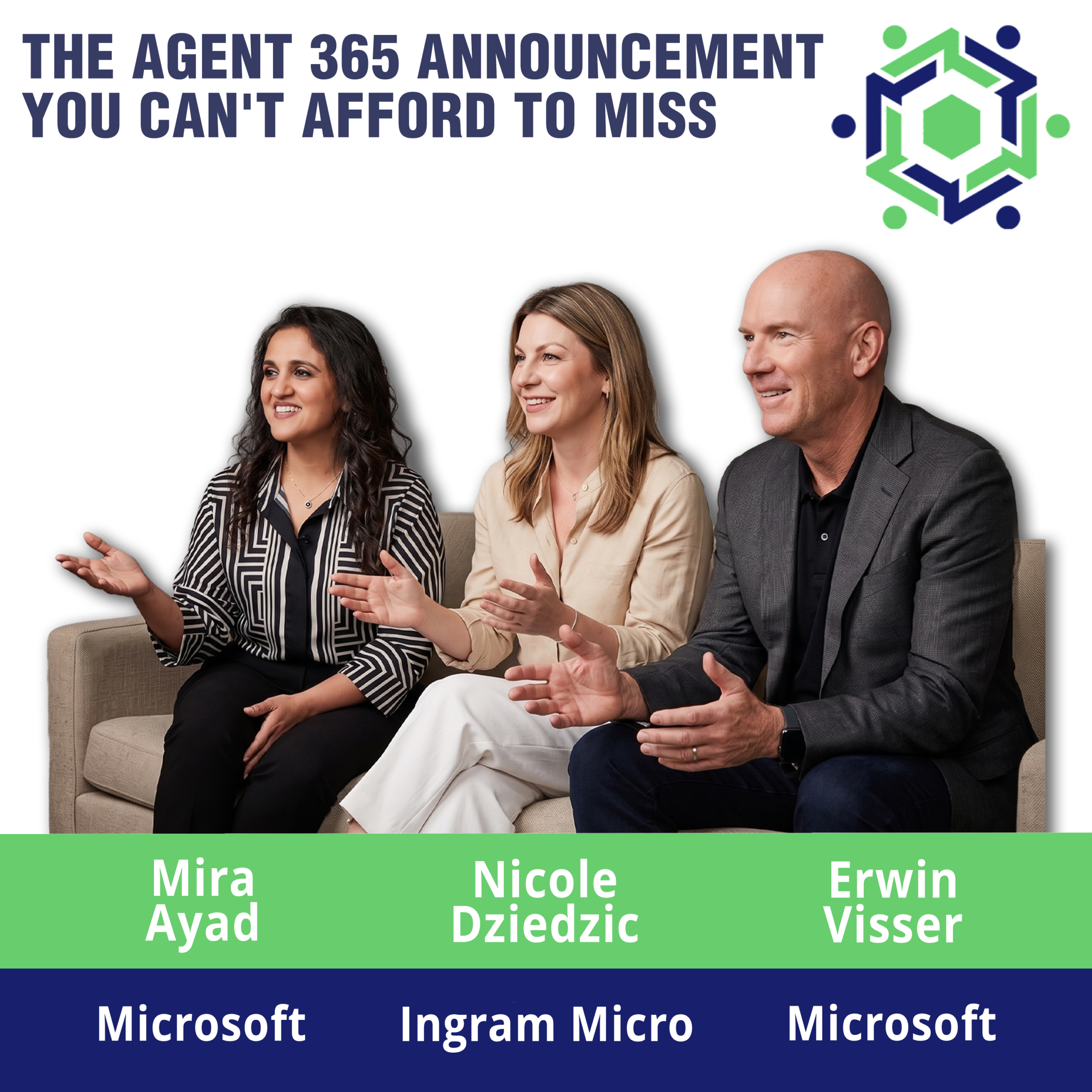
    311 – Why Deals Aren’t Falling From the Sky in Your Marketplace

    Don’t miss this massive ecosystem shift! Subscribe to our Newsletter: https://theultimatepartner.com/ebook-subscribe/ Check Out UPX: https://theultimatepartner.com/experience/ Host Vince Menzione sits down with industry leaders Nicole Dziedzic, Erwin Visser, and Mira Ayad to uncover the critical transformations happening across the technology ecosystem and marketplace. The panel explores the impact of Reseller Enabled Offers (REO), the changing role of distribution into aggregation, and the immense opportunities surrounding agentic AI. They also dive into why MSPs need to ruthlessly simplify their technology stacks to make room for business value selling, and how data tools like ASPX are changing the game for proactive channel strategies. https://youtu.be/4Ox507-0l_8 Key Takeaways The marketplace has completely transformed software procurement and is now rapidly expanding into the SMB sector. Reseller Enabled Offers (REO) allow partners to own private offers on behalf of ISVs while maintaining their trusted advisor status. Ingram has introduced the MCP server to help partners automate and pull necessary distribution data seamlessly. The next few years represent a “golden age” for MSPs if they can successfully adopt, build, and operationalize AI agents. Microsoft’s ASPX platform gives partners critical usage and marketing signals to proactively target customer opportunities. MSPs must simplify their bloated technology stacks to create space for selling true business value with agentic AI. If you’re ready to lead through change, elevate your business, and achieve extraordinary outcomes through the power of partnership—this is your community. At Ultimate Partner® we want leaders like you to join us in the Ultimate Partner Experience – where transformation begins. Key Tags agentic AI, Reseller Enabled Offers, MCP server, marketplace syndication, ASPX data, Agent 365, precision velocity, managed service providers, hyperscaler enablement, technology stack simplification, Ultimate Partner Experience, cloud solutions strategy, customer zero, ISV go-to-market. Transcript Nicole – Erwin – Mira Podcast [00:00:00] Mira Ayad: I think it’s a very simple formula. Start where your customer is at, like meet the customer. Where they act is not just a generic cliche state statement. [00:00:10] Vince Menzione: You can feel it happening. The ecosystem is shifting beneath us, the way hyperscalers are partnering, how AI is remaking the channel. And what it means to win in 2026. [00:00:21] Vince Menzione: Welcome to the Ultimate Partner Podcast. I’m Vince Menzi, own your host. And each week I sit down with leaders at the intersection of technology, partnerships and outcomes, the voices shaping how ecosystems actually work. We talk about what’s real, what’s changing, and what it takes to lead in this era where the partner channel isn’t just part of the strategy. [00:00:43] Vince Menzione: It is the strategy because being in the room changes everything. Let’s start. [00:00:53] Vince Menzione: We’ve got some word friends of ultimate partner coming up now, and then I’m gonna have them come up and introduce themselves. Uh, most of these people I’ve had the opportunity to meet Nicole, come on up. Come on. Good to meet you. I’m gonna have everyone introduce themselves. This guy, I never know. I’ve never met this guy before. [00:01:12] Vince Menzione: Mira, great to see you again. We gotta be on stage about a month ago. Yes. And we get to do this again while a different panel conversation. So, terrific. [00:01:22] Vince Menzione: Nicole, we’re gonna start with you on from the far end and come this way. So I’ll have you introduce yourself to, to our audience. [00:01:27] Nicole Dziedzic: Yeah. So, uh, so I lead our, uh, US business for Ingram, uh, really focused on our customer success and renewals across our vendor stack. [00:01:36] Vince Menzione: Thank you for being here. [00:01:37] Nicole Dziedzic: Okay, [00:01:37] Nicole Dziedzic: thank you. I’m excited. Awesome. [00:01:39] Erwin Visser: Yeah. Uh, great to be here again. Thanks, uh, fin for, for having us and a lot of familiar faces. So, uh, Erman, Viser, uh, I recently changed roles, so four weeks ago, uh, in Microsoft. I’m, uh, I just, uh, started to, uh, to lead the, uh, the Cloud Solutions Strategy team, uh, still in GCPS, so our global channel organization. [00:02:01] Vince Menzione: And Mira, great to see you again. [00:02:03] Mira Ayad: Same here. Yes. I’m looking forward for this conversation. We had so much fun last time. [00:02:07] Vince Menzione: Yes, [00:02:08] Vince Menzione: so [00:02:08] Vince Menzione: good. [00:02:09] Mira Ayad: My name is Mira Ayad . I’m the GM for a global Microsoft marketplace. My team leads the strategy and operations. I’ve been with Microsoft for seven months, I think, but this is not my first rodeo. [00:02:21] Mira Ayad: This is my fourth time boomeranging to Microsoft. Yeah. [00:02:26] Vince Menzione: And for context for people, we have talked about marketplace quite a bit, but the conversation has expanded at Microsoft in, in bigger ways. Uh, before, was it November that. REO was announced. [00:02:39] Nicole Dziedzic: Yes. [00:02:40] Vince Menzione: Yes. We’ll talk about that. But maybe you, you talk a little bit about the reseller enabled, uh, offers and, uh, and maybe we’ll take, we’ll take us through that and then how Ingram has been a great partner, and of course, Erwin’s organization has been really front and center with some of this. [00:02:55] Vince Menzione: So let’s go there for, let’s go first tell us, tell us about, about REO. Sure. For those and, and your, your role is, um, we had Cy on stage yesterday. But your role is front and center with the channel, with the with the reseller community. Right. Taking marketplace into the resellers. [00:03:12] Mira Ayad: Sure. So, uh, Cyril is my partner in crime. [00:03:16] Mira Ayad: He leads the marketing for marketplace. Um, my team focus across all personas that hits marketplace from an ISV to channel partners, buyers, and even the Microsoft sellers themselves. Like how can we bring that vibe and that energy? To bring marketplace, to be front and center. Um, REO is, um, a feature that we’ve launched back in November and it’s, it was a very strong statement from Microsoft of how we’re bringing the channel partners into that marketplace journey. [00:03:45] Mira Ayad: With RE Reseller enabled offers, we allow partners to own the private offer that they can extend to their customers on behalf of the SDCs. So kind of bring that scale mechanism for SDCs to access that channel community and for the channel partner to remain the trusted advisor and provide not only marketplace, um, products, but Microsoft services their own professional services. [00:04:12] Mira Ayad: And wrap that and provide a one-stop shop for customers. [00:04:17] Vince Menzione: And it’s really lit up organizations like Ingram. Nicole, I like, it’s been a maybe a minute here, like talking about the evolution of Ingram. ’cause I think back at the old role of the DTI credit, availability of product and delivery, right? Yeah. The kind of the three things. [00:04:34] Nicole Dziedzic: Yeah, and those are still really, really important to the core of how we go to market. ’cause I think we heard yesterday, every dollar of software, uh, requires a dollar of hardware. So it’s not anything that we’re getting away from. But I think, you know, the marketplaces and the automation, and really where we’ve been transforming our business over the last six to 10 years is how do we take some of that transactional work away from our partners? [00:04:57] Nicole Dziedzic: Make it simpler so that you can really focus on more strategic areas. Marketplace has been a, a heavy part of our go-to-market and something that we’ve been embracing for many years now, um, and seen a lot of success in helping the partners on that journey and helping the vendors really accelerate that with the partner community and the end customers. [00:05:15] Nicole Dziedzic: But it’s also really enabled us to look at how do we wanna show up into our partners differently, right? So as we automate our business. Help our partners automate their business. We have the opportunity to upskill our own resources. And so some of the key areas that we’ve really been focused on is our post-sales motions, and how do we really ensure that the partners customers are leveraging the technology, optimizing it, and adopting it in a much faster pace. [00:05:45] Nicole Dziedzic: So that the investments that they’re making are netting an ROIA lot quicker. Those, uh, those have been things that we have accelerated across our vendor stack. Um, and I think it’s gonna become much more important as we continue to see technology evolve, especially around AI and co-pilot’s. A huge part of what we’ve been really focused on for the last year. [00:06:05] Nicole Dziedzic: Um, the biggest thing that we’re really seeing in the market today. Not just within the MSPs, but within our end customers is that they struggle in terms of how they really get the ROI out of it quickly. Um, and so our team is very human first. Uh, we do have digital motions, but really human first to really dive into the different personas. [00:06:25] Nicole Dziedzic: How do we help them attack that from an end customer perspective? How do we really help them drive value out of those solutions? [00:06:32] Vince Menzione: So what does enablement look like for them? [00:06:34] Nicole Dziedzic: Yeah, so, um, I loved the quote, uh, from some of the folks in the last session because it’s really about meeting our customers where they are. [00:06:42] Nicole Dziedzic: And so it is a, I always call it we play in the gray and we love to play in the gray all day. Um, because our partners and our our partners customers wanna interact differently. And so we wanna make sure that we have, um, ways to interact with them across. Stack both from a digital standpoint where you can really drive efficiency through digital messaging and marketing, um, all the way up to high touch. [00:07:03] Nicole Dziedzic: So those larger customers can get, uh, hands-on training and enablement. We can do it on behalf of our partners or with our partners to really drive that into the end customer, and then that enables us to really customize it. So what personas are we going to engage with? What are the key features we’re looking to get out of it? [00:07:20] Nicole Dziedzic: Um, and largely what are the outcomes that that company is driving towards over the next 1, 2, 3 years, so we can always stay ahead of what their needs are. [00:07:29] Vince Menzione: Nice. So Erwin, what is Microsoft doing to enable this distribution channel to be more effective with partners? [00:07:36] Erwin Visser: Yeah. Uh, it’s a great question. And, and Nicole, I I love how you, uh, and, and Ingram is, is kind of really leaning in mm-hmm. [00:07:43] Erwin Visser: In driving these customer outcomes and, and helping your partners that even if needed, kind of working with your partners or stepping in front of your partners to help drive these outcomes. ’cause I, I think that’s, uh, we’re. Uh, it clearly ev you, you need to meet the customer where they is. But, uh, having helping customers adopt ai, adopt these new AI solutions agents, I think that is going to be super important for partners to drive, uh, incremental value and also the ROI for themselves as well as for the, for the customers. [00:08:14] Erwin Visser: But Microsoft is, have we, um, one of the things that we are heavily investing in at this moment is our skills platform, our scaling platform. So we, we, if, if people have followed us, we kind of revamped it in the last three, four months. Uh, and we are really not just investing now heavily in technical skills, but also project readiness skills for partners as well as sales skills. [00:08:37] Erwin Visser: Uh, like how do you sell in this new world of, uh, of ai. So where you can see, uh, uh, incremental, uh, ongoing investment in our scaling platform. Um, the other thing that we’re, we’re really working on at this moment, uh, with our. Tech team is, is building more helping partners to build like standardized service offerings and also understand this what’s, what is the capability they need to be successful in and, and become ed themself. [00:09:05] Erwin Visser: And, and we’re doing that also in partnership with the, with income. So income can use kind of some of these, these frameworks than to, to leverage them for their partners and then help with, uh, with that enablement. [00:09:18] Vince Menzione: So Mira when we think, so we think about it from a couple different lenses here, right? [00:09:22] Vince Menzione: Because we’ve got the Microsoft first party products that are, that are being offered through distribution channel to customers, and then we have what I call third party, right? Mm-hmm. Which is a lot of what the marketplace does. It does both. But I think about the marketplace, I think about ISVs, I think about agentic ai. [00:09:40] Vince Menzione: How do we, how do you bring it all together? [00:09:43] Mira Ayad: Um, the way I think of marketplace, and you and I talked about this before, yes, it’s that intersection where SDCs ISVs services and solutions meet. First party solutions meet professional services provided by system integrator and all wrapped up to provide that complete solution for customers. [00:10:04] Mira Ayad: So marketplace, kind of that perfect intersection for all of those parties to meet, um, from a customer perspective depends on the segment. We all know that marketplace is born and raised to be an enterprise tool. Now we’re seeing more and more s and b customers coming trying to leverage marketplace. [00:10:20] Mira Ayad: Yeah, [00:10:20] Vince Menzione: very much so. [00:10:21] Mira Ayad: So the role of enablement and how we activate the channel to really be front and center, more proactive as they go and talk to their SMB customers. Find the ways to monetize their solutions and their services for the SMB customers so they can adopt that marketplace. Because with everything that’s happening in the industry, one thing we know for sure that marketplace transformed how procurement of software happens. [00:10:46] Mira Ayad: Yes. And it’s here to stay. [00:10:48] Vince Menzione: Very much so. Very much so. And Nicole, I’m interested too on, on this side because we, we have, this is the first year that we’ve invited quite a few MSPs into the room as well. Right. We were very much ISV and reseller and, and SI focused. Uh, this time has changed like no other. [00:11:05] Vince Menzione: Right. We’ve been talking all morning about all this agentic ai. As an as an MSPI, my my sense is like I need to have my hands on the steering wheel for my customer at all times. And how are you thinking through it? How are you working with those organizations on driving some of that? [00:11:22] Nicole Dziedzic: Yeah, so again, it’s about meeting even our partners where they are. [00:11:26] Nicole Dziedzic: And so one of the things that we’ve recently released at Ingram is our MCP server. And so how do we enable our partners to then connect their agent capabilities that they’ve built internally to grab the data from Ingram so that they can interact with us how they want to, you know, we have our platform and, and. [00:11:43] Nicole Dziedzic: We don’t wanna force everybody to go into a platform. And so that server is gonna enable you to build capabilities internally in the tools that you’ve already invested in so that you can, again, refocus your energies and your teams, um, on selling on these new go-to markets that enables you to grab the data that you need and. [00:12:03] Nicole Dziedzic: Essentially a snapshot of your account when you’re buying through distribution, all with a really simple click of a button. I know I, I oversimplify it, but I’m not that technical. Um, but it is really a click of a button. And so as we continue to release capabilities, API feeds, if you’re connected via that server and you have those agent capabilities already internally, then it’s as simple as us just continuing to release and you’ll continue to be able to grab that information. [00:12:28] Vince Menzione: Mira’s gram’s approach, what you’re starting to see across most of the distribution channel. Yeah, [00:12:34] Mira Ayad: more or less, yes. Like we, we’ve seen, we’ve partnering with Ingram on, on multiple fronts. Uh, there’s another feature that we bring and Ingram has been our, uh, partner in crime, which is syndication, which we push the marketplace listings into the Ingram portal to support what Nicole just said. [00:12:52] Mira Ayad: So partners get to use the tools that they are using today. We’re meeting them where they are. We’re not forcing them into one platform over the other. Um, I think enablement. The role of enablement and the distributor as an enabler is going to grow even more. Uh, switching that message of how can you sell a task oriented agent versus a solution [00:13:17] Mira Ayad: Yes. [00:13:17] Mira Ayad: Um, is a, is a game changer. And we also see, I I like to say this, like distribution are now becoming an aggregation and a distributor. Yes. So they get to aggregate all that solution between all hyperscalers marketplaces. And find that core enablement so partners can be a plug and play and use their core competency to sell and be that trusted advisor for their customer instead of wasting time trying to figure out where to get enabled or how to get enabled. [00:13:44] Mira Ayad: Mm-hmm. So absolutely a hundred percent the aligned. [00:13:46] Vince Menzione: Yeah. Enablement seems to be a big theme here, right, Nicole? And, and, and you’ve got some new products is MCP server and. Some of the things you’re doing there as well. [00:13:55] Nicole Dziedzic: Yeah, I would say even above and beyond the, the MCP server for the automation, you know, enablement enable is kind of our core function of our enablement strategy and enable ai, enable MSP are two of the most recent ones that we’ve released to market. [00:14:10] Nicole Dziedzic: Um, one of the things that we’ve really identified. Especially within the M-S-P-S-M-B and mid-market partner community is that there’s still a struggle in what does AI actually mean for my strategy and out to my end customers. And so we’ve created paths to enable our partners, MSPs, their end customers on how do you build that strategy for AI that’s both going to create outcomes for your end customers, um, but also be safe and secure as you kind of bring it to market. [00:14:39] Vince Menzione: Erwin on your side, on the marketing side, and you just shifted roles. You were [00:14:43] Erwin Visser: Yeah. Know. Yeah. Piece. Well, I didn’t forget everything that I did. Okay, good. No, I, it was only last week. Right. I’m, I’m getting older, but I still have a little bit of memory. Last year, uh, the, the, um, yeah, I wanted, uh, react quickly on the, on MSPs, especially think it’s incredible time. [00:14:59] Erwin Visser: And, and, uh, and, and so you, I think most people probably know that Microsoft, this, uh, our fiscal year start on July 1st. So May, uh, uh, April, may up to June is like really our crunch time for planning. So we’re in the middle of it. But, and, and without seeing, like giving you too much like insights or details, but. [00:15:18] Erwin Visser: We, we believe there, uh, is an in significant opportunity, almost like the golden age for MSPs in the next years. [00:15:25] Vince Menzione: Yes. [00:15:26] Erwin Visser: Uh, if they are able, the, the partners that are able to embrace ai, and we, we kind of think about it in, in maybe in three different like steps or, or framework of clearly, uh, being a customer, zero. [00:15:41] Erwin Visser: And I assume a lot of people, or a lot of people talked about it in the last day and a half, so I don’t have to go in deep here, but hey, you have to adopt the technology itself to be able to deliver and sell it to customers. But then the, the other two steps that we believe one is, uh, uh, built an an agents or an agent accelerator and, uh, that can mean that. [00:16:02] Erwin Visser: Uh, leverage, uh, marketplaces for finding and customizing agents or having competency in-house to build agents for your customers. And then the third step is, is operationalize agents. And I think pe the partners that have experience at this moment with managed services probably have a step ahead. ’cause we had the in. [00:16:24] Erwin Visser: For more and more customers in the future, we’ll rely on a partner to manage and to help support their, their, uh, agent infrastructure. And so, uh, MSPs that can really, uh, jump into that and can help customers to manage, protect, secure, uh, uh, uh, their, uh, their agent in, uh, infrastructure, uh, that will be an an significant opportunity. [00:16:49] Erwin Visser: Um, one of the products that, you know, I’m, I’m not gonna do a product pitch yet, but still, I’m gonna mention you can, [00:16:55] Vince Menzione: and you can also share things that are gonna be announced with us as well. [00:16:58] Erwin Visser: Well, this is, uh, this is, this is announced already, but hey, we, uh, one of the technologies we are very excited about that’s, uh, hopefully can also support MSPs is, uh, agent 365. [00:17:10] Vince Menzione: Yes. [00:17:10] Erwin Visser: Which, uh, which really can help partners to, to kind of like secure and manage and, and drive governance around [00:17:17] Vince Menzione: agents. Still, still very new product by the way. [00:17:19] Erwin Visser: Yeah, it’s, uh, uh, [00:17:20] Vince Menzione: makes a big difference. [00:17:21] Erwin Visser: Awesome. [00:17:23] Vince Menzione: So, Mira, this is very, you know, it’s funny because initially when you would think about what you, what you’re doing with REO as being like big ISVs, selling big solutions through marketplaces, we, we now brought the channel in. [00:17:38] Vince Menzione: But now the ag agentic has really changed the things dramatically. Right, right. Let’s talk about that. How does it, how does it fit into your strategy as you go into the SMB market as well? Right. [00:17:48] Mira Ayad: Great question. And um, I’d like to tell a story in a little [00:17:52] Vince Menzione: bit. Please, please. [00:17:53] Mira Ayad: So, one of my greatest mentors, um, I was just having a chat with him a couple of days ago, and I’m just like, the market is changing faster than anyone can catch up. [00:18:02] Mira Ayad: And he told me, Mira. It’s not a chess game anymore, it’s a squash game. So it’s all about being agile, beating the ball with it, what it is, uh, and moving fast. And I think the strategy for marketplace and for the channel, Microsoft has always been a channel first company, so this is not a news for anyone. [00:18:20] Mira Ayad: Next year we’re focusing more into bringing the channel into marketplace. We are having, and I’m sure Sarah talked about it, uh, yesterday a little bit. We’re having very targeted approach to bring. Agents that customer actually wants into marketplace. So not just a, a traffic jam of agents. Uh, we’re being very precise about it from a channel perspective. [00:18:44] Mira Ayad: Alex? Agree. My colleague, she has a, an a a session later. She [00:18:48] Vince Menzione: does for having Alex on stage here. [00:18:50] Mira Ayad: Yes. And she’s gonna talk more about this channel strategy overall, but being customer zero. Is big for us and precision velocity is something else. Like how can we help the partners [00:19:00] Vince Menzione: precision velocity. I like That’s [00:19:02] Mira Ayad: right. [00:19:02] Mira Ayad: And she’s gonna talk a lot about it. I’m [00:19:04] Vince Menzione: not gonna say [00:19:04] Mira Ayad: her thunder. [00:19:05] Vince Menzione: I wanted to hear, I wanna hear more about it. So it’s, it’s compelling. [00:19:08] Mira Ayad: I know. Just, uh, a under session today, [00:19:11] Vince Menzione: well, I think I’m gonna be leading it, but come in this afternoon. Absolutely. [00:19:16] Mira Ayad: Absolutely. Yes. So moving from being a scale player to actually know what you’re really good at and have that precision. [00:19:23] Mira Ayad: To sell and get your customer where they want to be. I think it’s, it’s all how the strategy is aligned, yet shifting a little bit to reflect what’s happening in the industry. [00:19:33] Vince Menzione: And you’re no stranger to marketplace. Right. Um, we talked about your career journey, but you start off in Microsoft. We sort of knew each other back in the day, right? [00:19:43] Vince Menzione: Yes. Public sector. [00:19:44] Mira Ayad: Yes. [00:19:44] Vince Menzione: And then you left and you went across the river or across, across the lake. It was a lake or river? The lake. Lake. Yeah. You can tell I don’t live here, but [00:19:53] Mira Ayad: it’s a pond. [00:19:53] Vince Menzione: It’s a pond, yeah. [00:19:55] Mira Ayad: Um, so yes, I did start in, uh, Microsoft as a PDM for public sector focusing on education partners. [00:20:00] Vince Menzione: Yeah. [00:20:01] Mira Ayad: Um, [00:20:01] Vince Menzione: Anthony Salcito. [00:20:02] Mira Ayad: Anthony STO was the GM back then. And then I spent some time in an ISV. Um, it was a startup. I think I’ve, I had like my MBA on how to start businesses there. Which I boomerang to Microsoft to be part of the architecture team of a tiny program. I’m not sure if you guys are familiar with it. [00:20:23] Mira Ayad: It’s called CSP. So I launched CSP for the channel partners hosting telco’s, distribution. And then, um, our neighbors across the pond called the pond, me to come and help them build a channel program. Um, and then for, for three years, and then I spend the next seven. On AWS marketplace, uh, helping with, uh, channel adoption and strategy and enablement. [00:20:50] Vince Menzione: Nice. Very nice. Okay. And, um, the perspective on that as well. Bringing you, you talking about being precise. I think I heard what I, what I gleaned from your last set of comments is it can be so overwhelming to have all these agents, thousands and thousands of agents out there, how do, how do I decide, what do I go do and do the agents conflict with one another in terms of how they, how they react, and how they maybe start procuring on my behalf. [00:21:18] Mira Ayad: Um, I think it’s a very simple formula. Start where your customer is at, like meet the customer where they at is not just a generic cliche state statement. Customers are gonna lead our MSPs, our channel, our distribution, and our hyperscalers with their marketplaces or what needs to be built and how fast they want it. [00:21:37] Mira Ayad: And we should not lose sight of that. Um, just. Customer win is a win for everyone. That’s the, that’s, I think that’s the simple formula. And across all, uh, hyperscaler marketplaces, I think everyone is trying to win the heart and the mind of the customer first. [00:21:52] Nicole Dziedzic: Yes. [00:21:53] Mira Ayad: And then we, as the platforms and the channel community, we need to work very closely, um, with precision, with high level of, um, depth of knowledge to bring customers faster and make that customer zero. [00:22:10] Mira Ayad: From our perspective as an internal customer first and our first customer that we’re gonna build the case studies around to build that flywheel so we can accelerate that. So the first five offer becomes, the second, becomes the hundreds. Um, and this is how we bring it on. But always start from the customer. [00:22:26] Vince Menzione: I’m thinking about Jay’s slide yesterday, Jim McBain slide about the 28 moments [00:22:31] Mira Ayad: Yes. [00:22:32] Vince Menzione: And all the, all the partner types that are involved in that process. Right. The ISVs. Uh, CSPs, I mean actually lay out more partner types, ISPs, CSPs, distributor, uh, reseller, all all aligned in that customer journey and all. [00:22:49] Vince Menzione: And so just that coordination and that effort. I just wanna get everybody’s point of view on that maybe. [00:22:53] Erwin Visser: Yeah. [00:22:54] Vince Menzione: Or [00:22:54] Erwin Visser: you want start, Nicole? [00:22:55] Nicole Dziedzic: Yeah. I mean, I think it takes an army, right? And I think it’s about how does each. Each kind of persona simplify the process for the next person. And I think that’s probably the key piece of it. [00:23:06] Nicole Dziedzic: And I’ll, I’ll talk from a distribution lens, is that our goal is that we wanna make sure it’s simpler for our vendors, for our partners to be able to transact in the marketplaces. Um, and also be that conduit, right? To provide that feedback back to vendors around what’s working, what’s not working, so we can go faster, right? [00:23:23] Nicole Dziedzic: And so the partners can go faster, um, but also be super sound in how they bring it to market. [00:23:30] Vince Menzione: And I, and I think what I also got outta that conversation, I want to get your point of view on this, is because again, I go back to ISV thinking, direct selling model. [00:23:39] Mira Ayad: Yeah. [00:23:40] Vince Menzione: And oh, there’s this thing called the channel and oh, we have to go do this. [00:23:42] Vince Menzione: But I think what that illustrated, that slide illustrated to me yesterday. Was how important to have all the multiple touch points involved because the deal is happening before you were entering the room. Right. So how, how are you, how and again, why, why do ISVs? I think, I think the answer is right there. [00:24:00] Nicole Dziedzic: Yeah. I, it’s about how do we scale you and how do we simplify. For the partners. Um, I think the biggest challenge that young ISVs really run into is that they do forget about the channel. And the channel is massive. Um, and the channel gives you reach and it gives you scale by leveraging MSPs and better communities. [00:24:24] Nicole Dziedzic: Distribution comes into the fold because we are that scale for the partners themselves. We are that scale for the MSPs, right? And so there has to be a connection between the two to really enable the ISVs that are direct today, um, to scale to probably the levels that they wanna scale, and a trusted partnership where we can bring in. [00:24:46] Nicole Dziedzic: What works, what doesn’t work? Best practices. ’cause we have worked with a lot of vendors and we continue to work with a lot of vendors, um, on how to continue to scale their business. [00:24:55] Vince Menzione: What’s it, what do they get wrong? You mentioned the younger ISVs. Mm-hmm. The newer is more startup ISVs and the startup doesn’t take long. [00:25:02] Vince Menzione: You can get to a billion dollars. Yeah. Pretty quickly these days. What do they get wrong? And then how do you solve for that for them? [00:25:08] Nicole Dziedzic: I, I think what they get wrong at times, um, is building out a true partner program that makes sense for the MSPs, for traditional VARs, um, for sis to actually wanna participate, right? [00:25:24] Nicole Dziedzic: Because there’s a lot of competition out there, and you have to differentiate yourself. And part of that is making sure you’re not forgetting about what you’re. Partner program is gonna be to bring to market. I think that’s probably the biggest thing. The, the other piece is that, you know, there is a lot of solutions out there and so what’s your compelling event, compelling reason, right, for a partner to wanna bring you into their stock, into their end customers. [00:25:47] Nicole Dziedzic: And that is something that we, at times are missing as well, is, is what’s differentiating you from the person next to you. [00:25:55] Vince Menzione: Mira, anything to add to that? [00:25:57] Mira Ayad: Um, I think working with ISBs for the past, I don’t know how many years in my career, um, I always get asked the same question, how can I utilize marketplace? [00:26:06] Mira Ayad: How can I do the pricing? And I listed on marketplace, how come the deals are not falling from the sky? Yes, exactly. And um, my answer has always been. Listing a marketplace is the first step, not the last, right? What is your go-to-market strategy? How are you going to go to market? What’s the role of the channel that they want them to play? [00:26:28] Mira Ayad: Do you want them to become just a reseller and an extended Salesforce arm? Do you want them to take that to implementation and take your support? I think Microsoft kind of between all of the partner types that we have and the great distributors that we partner with, we kind of unlock that for guys because we can have that conversation and help them with their go-to market strategy. [00:26:49] Mira Ayad: But I think first is marketplace need to be in the beginning of the deals, not at the end. So they can always be like, okay, I’m going to be listed to the marketplace when they pitch that to the customer. Bring the marketplace philosophy and the channel into the deal making. Not on the 11th hour. Yeah. [00:27:06] Vince Menzione: Yeah. I liked what an ISV said earlier about actually unlocking their sales organization by putting incentives out there. Yes. To be marketplace first. Erwin, you, you’re the accelerant. Yeah. Go to markets. You’re the marketing guy in the, in this conversation. [00:27:21] Erwin Visser: Yeah. So I, I’m, I’m maybe, uh, I was thinking on the other side, it’s like, and there’s a clearly a role for the ISV. [00:27:26] Erwin Visser: Yeah. And opportunity through marketplace. I also think there’s an opportunity on the MSP side to really, uh, be proactive around, uh, the ISV solutions that you can deliver to your customers. And, and one of the things that, uh, I, I still see is that, uh, some of our partners are not using just the data that is available and that we also have, uh, as Microsoft and with Ingram give to our partners to really see what the opportunities are out there. [00:27:52] Erwin Visser: And, uh, a new, uh, platform that we released, uh, a few months ago. A SPX. Uh, I would kind of be curious to see, uh, hands up like, uh, of the MSPs in the room. Have you heard of a SPX? A few. Okay. So we still have a little bit more eventually to do here, but, uh, yeah. So we we’re, uh, bringing, uh, data sources to our partners, uh, that combine like usage data and marketing signals, other information that we have, licensing data that that really helps our partners also because. [00:28:24] Erwin Visser: To be, to understand where your customer is. Yeah. You first have to understand also the data of your customer and, and the signals that they are giving in the marketplace so you can help understand where the, the next opportunity is. And so we’re, uh, we have another great partnership with, uh, with Ingram around this data sources and in income enriches them and brings them to their resellers. [00:28:45] Erwin Visser: But I think that’s still, uh, uh, clearly if I saw the hands, an opportunity for us to, uh, to bring that more to the market. Yeah. [00:28:53] Vince Menzione: And let’s not forget the MSPs in this conversation, right? Because they are like at, at all, at all levels, whether it be first party, third party, cross marketplace. They are the instrumentation in front of the customer. [00:29:05] Vince Menzione: And I think there’s a great opportunity and know you talk about how you and enabling them. Um, maybe some last comments about how MSPs in this room could be more successful in the coming year, working with your organizations. Yeah. [00:29:18] Nicole Dziedzic: Yeah. I mean, I think for us it’s challenge us, um, bring forward things that you want and need, even if they seem outlandish from a distribution standpoint, right? [00:29:28] Nicole Dziedzic: We wanna continue to make sure we’re meeting you guys where you are with what you need and how you wanna be interacted with. Um, so I think that would probably be my biggest thing. I do. Before we, I just wanna go back to the as PX data real quick. I do wanna give a plug on the as PX data, because I do work with all of our vendors within Ingram and, and I will say the data. [00:29:46] Nicole Dziedzic: Availability that you guys have released has been above and beyond what we’ve seen from most of our vendors. We hear a lot of can’t share that it’s legal, can’t share that it’s legal. Um, this really enables us and the MSPs to, to see not just where their customer needs to go, but where they’ve been. [00:30:04] Nicole Dziedzic: Right. And so how do you really frame a conversation that’s really strategic by leveraging data and data that will intake and be made available for everybody that, um, purchases through distribution so that you can have that ready at your hand. So I just wanna reverse back to that ’cause it is a really great data set, um, and something we don’t see a lot of vendors actually released to the masses within the partner community within distribution to leverage. [00:30:29] Erwin Visser: Yeah. I, I love that quote, by the way, but it’s, thank you, Nicole. Uh, so the, but, uh, uh, your question is around how we are enabling MSPs, correct? Yes. Yeah. Right. So I had the, um, there, there’s a, there’s a few things here. Uh, I think that, am I, if I’m being honest, there’s still some points that we need to improve on our technology and our roadmap Yeah. [00:30:53] Erwin Visser: Of our technology. So this is clearly well understood within Microsoft and there’s areas that we are, uh, that we’re working on and, uh, we’re taking very serious, uh, at this moment. Good. Uh, to help you like, manage, uh, uh, our technology across, uh, uh, significant numbers of, uh, of, of tenants. Um, the, the second thing I would say is that clearly we talked about scaling. [00:31:16] Erwin Visser: We talked about enabling, uh, added technology to help you build out your managed services from, I would say from the, the, or the, the infrastructure to security to also agents. Now with some of the new technology that we, uh, that we have released. The, the third thing, and this is maybe more of an ask to the MSPs, is that, uh, when I talk to MSPs, when I see the research, uh, I believe that still at this stage, uh, you mo uh, the average Ms. [00:31:44] Erwin Visser: P has like 30 different products in the technology stack. That’s crazy. And, uh, and so I, I simplify. Simplify. Yes, I understand how you got here. Uh, it’s a lot of like, uh, best of breed, maybe selection through, through history. But I think, uh, my advice to MSPs is like, if, if, if you wanna create space for selling business value and for building out like an an AI accelerator for your customers, you need to find a also space to simplify your technology stack. [00:32:15] Erwin Visser: ’cause that’s what we believe. That’s not where the, the opportunity sits in the future. Uh, and that’s also not where I think the, uh, the, the margin sits for, for our partners in the future. So simplify your technology stack. We have ideas about that simplification clearly, but, uh, happy to talk to you about it. [00:32:33] Erwin Visser: But, uh, yeah, simplify and then create space for, uh, for really selling business value with, uh, with agenda ai. I think that’s a, a huge opportunity. [00:32:42] Vince Menzione: There any last comments before we start? [00:32:44] Mira Ayad: Um, a very short comment. So from an enablement perspective, we have a very intentional, proactive focus on enabling the MSP and FY 27 and the remaining of FY 26. [00:32:55] Mira Ayad: Um, yes, last year was the year of the channel. I think next year is going to be the year of, uh, marketplace Channel and MSPs. Um, but I do have an ask. We build marketplace. For you and with you, and you are the closest to the customer. So please be the voice of the customer. Bring us that feedback. Let us know how we can build a marketplace that meets your customer needs so it makes your life easier instead of having to spend time figuring out how to incorporate marketplace in your strategy. [00:33:24] Vince Menzione: I love that we had Jose Gomez. K. Uh, with us yesterday and he spent a lot of time with the partners to getting that feedback, so it was wonderful. [00:33:32] Mira Ayad: Another big guy. [00:33:32] Vince Menzione: Thank you so much. [00:33:34] Vince Menzione: Thanks for listening to The Ultimate Partner Podcast. If today’s [00:33:38] Vince Menzione: conversation resonated, share it with a partner leader in your network. [00:33:42] Vince Menzione: Subscribe where you listen, and head over to the ultimate partner.com. For show notes related content and the resources for this episode. And if you haven’t already, now’s the time to register for the Ultimate Partner Live Event in Reston, Virginia, October 26th through October 28th. Until next time, keep showing up in the rooms that matter because being in the room changes everything.
  • August 29 · 30 min

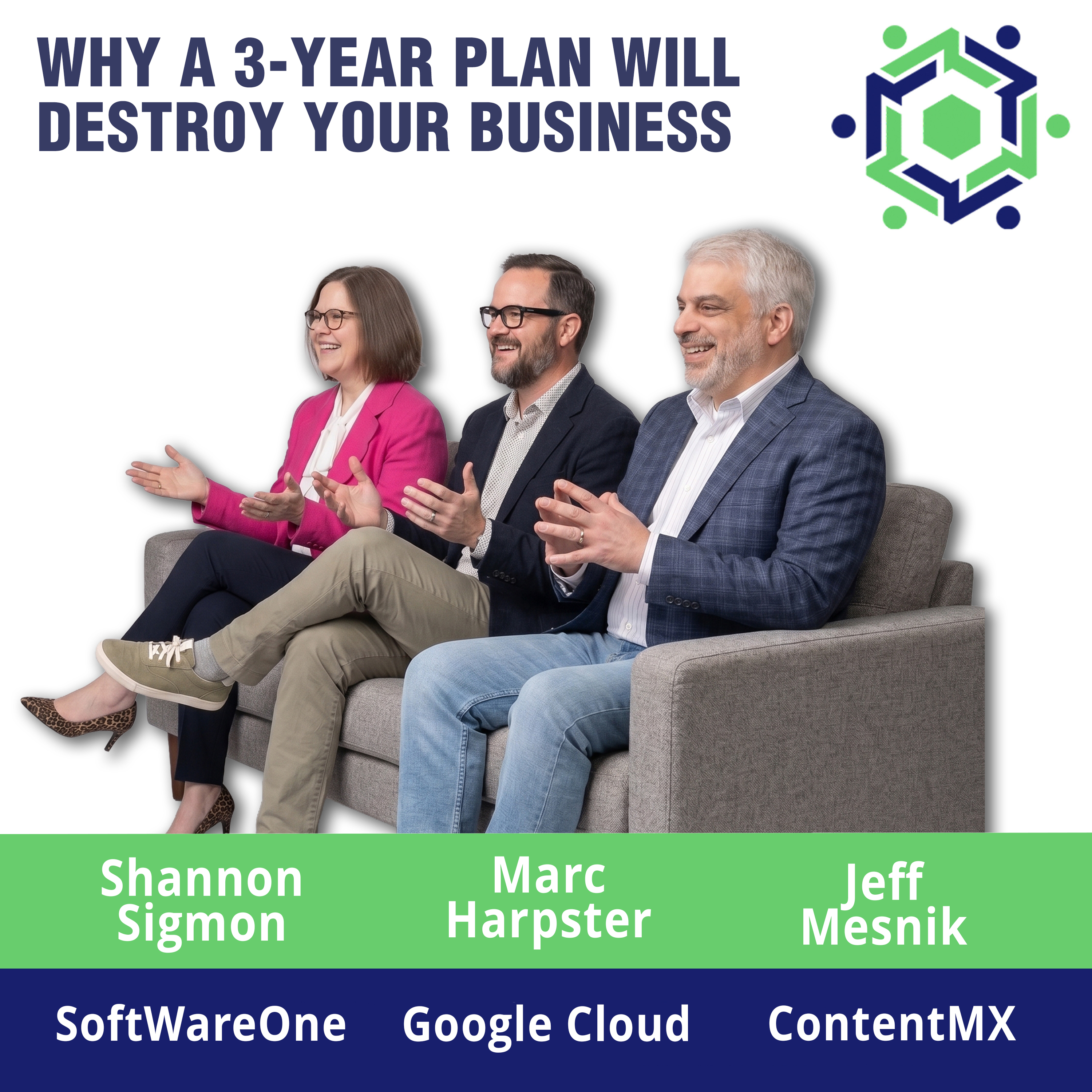
    310 – Why Sticking to a 3-Year Plan Will Destroy Your Business

    Don’t get left behind in the AI shift! Subscribe to our Newsletter: https://theultimatepartner.com/ebook-subscribe/ Check Out UPX: https://theultimatepartner.com/experience/ In this critical conversation, Vince Menzione sits down with Shannon Sigmon, Marc Harpster, and Jeff Mesnik to uncover how the rapid pace of change in the Google Cloud Marketplace and AI agent integration is forcing organizations to completely rethink their go-to-market strategies. They break down why traditional three-year business plans are dead, replacing them with agile 100-day sprints to keep up with the shifting ecosystem. The panel reveals that leveraging your Adaptability Quotient (AQ) and turning data patterns into actionable co-sell motions are the only ways to survive the upcoming “agent age” and maintain a competitive edge. https://youtu.be/xIaABKU1jmM Key Takeaways Consistent messaging is required to gather actionable data and build trust with channel partners. Three-to-five-year business plans are obsolete, and leaders must now operate in 100-day sprints to keep pace with hyperscaler changes. Google Cloud Marketplace uniquely supports channel partners by allowing them to own the customer relationship and recognize top-line revenue. The rise of AI agents is shifting discovery away from traditional SEO, requiring ISVs to adapt how they provide access to their tools. Creating interactive content variations from a single asset helps train AI agents to discover and prioritize your solutions. Despite rapid digital transformation, human connection remains the ultimate deciding factor in enterprise software purchases. If you’re ready to lead through change, elevate your business, and achieve extraordinary outcomes through the power of partnership—this is your community. At Ultimate Partner® we want leaders like you to join us in the Ultimate Partner Experience – where transformation begins. Key Tags Adaptability Quotient, Google Cloud Marketplace, agentic age, co-sell motion, digital sales hub, private offers, propensity to buy, AI pattern analysis, hyperscaler CRM, interactive trivia content, product-led discovery. Transcript Shannon – Marc – Jeff AUDIO Podcast [00:00:00] Vince Menzione: That becomes the core of your data analysis because if you’re not submitting consistent content and submit, you know, consistent information, then you’re not gonna get information back. [00:00:13] Vince Menzione: You can feel it happening. The ecosystem is shifting beneath us. The way Hyperscalers are partnering, how AI is remaking the channel and what it means to win in 2026. [00:00:25] Vince Menzione: Welcome to the Ultimate Partner [00:00:26] Vince Menzione: Podcast. I’m Vince Menzione your host. And each week I sit down with leaders at the intersection of technology, partnerships and outcomes. The voices shaping how ecosystems actually work. We talk about what’s real, what’s changing, and what it takes to lead in this era where the partner channel isn’t just part of the [00:00:46] Vince Menzione: strategy. [00:00:47] Vince Menzione: It is the strategy because being in the room changes everything. Let’s start. [00:00:57] ——-: We have another incredible group of leaders coming up here and, uh, and friends of ultimate partner and, uh, Susan, do you need me for, okay, good. Come on up. So I’m gonna, I’m gonna invite you up and then have you each. Introduce yourself, uh, to this conversation. Shannon, it has been a great to see you. Yeah, great friend. [00:01:18] ——-: Been in, it was in Boca. Mark. Great to have you. Good to see you, sir. Jeff, great to have you. Uh, this is incredible. I’m, I’m excited for this conversation. So, uh, yeah, we talked about aq. We talked a little bit about AQ in this last session. Don’t, didn’t we? Yeah. [00:01:34] Shannon Sigmon: A little. [00:01:34] Vince Menzione: Why don’t we go, why don’t we have you, I wanna have you each introduce yourself, your role, your company mission, and, and, and everything here. [00:01:40] Vince Menzione: So why don’t we start with Shannon. [00:01:41] Shannon Sigmon: Um, hey, thank you Vince for having us again, um, here in Bellevue. It’s been great to meet with everybody and see some old friends. Uh, I’m at Software One, so Shannon Sigman, um, based on the East Coast, but I work at Software One I’m responsible for. Um, in my sales role, I’m responsible for our channel and digital sales organization in North America. [00:02:00] Shannon Sigmon: And then I also have, um, responsibility supporting Regina Ma and Freddie and our leadership team as the chief of staff. Um, and we’re focused software one, if you haven’t worked with us before, we’re focused on helping, um, helping our customers and partners deliver real financial impact in their business so they can afford some of the, the cool to do some of the cool stuff you were talking about in the earlier session. [00:02:20] Shannon Sigmon: And it’s, for us, it’s really about coming in on the front end and helping, um, our customers and our partners understand what they’re doing in their software stack, their cloud stack, and then how to, um, optimize that, rationalize the strategy and, and the implementation of of solutions. [00:02:36] Vince Menzione: And a global leader in the marketplace in [00:02:38] Shannon Sigmon: That’s right. [00:02:39] Shannon Sigmon: The, the number one Microsofts, um, we [00:02:41] Vince Menzione: used to say re reseller or ls. We used to all these different, [00:02:44] Shannon Sigmon: yeah. We, um, it’s funny, I was speaking last night. We fall into the scale solution provider. We’re d with Google and AWS. But, um, we operate very differently on the, on the North America market as a more of a boutique, uh, personalized experience than what a traditional dity is. [00:02:59] Shannon Sigmon: I’m less about the transaction and more about the impact and the, the outcomes and, and helping partners with their go-to-market strategy. [00:03:07] ——-: Awesome. Yeah. And sitting next to you, Marc I’ll let you introduce yourself ’cause this kind of ties in very nicely in [00:03:13] Marc Harpster: Yeah. [00:03:13] ——-: In terms of the work you do. [00:03:14] Marc Harpster: Uh, thanks Vince. [00:03:15] Marc Harpster: Uh, hi everyone. I’m Mark Harpster. I am part of the Google Cloud Marketplace organization. So, uh, guy who you just heard from on the last panel is my boss. Uh, I run strategic initiatives within the marketplace team. So this includes our channel program. Uh, so everyone who is. Uh, the partners who like to resell, uh, ISV software out our marketplace. [00:03:38] Marc Harpster: Uh, I have a team who works with, uh, all of you, and that includes distribution. Uh, and uh, then I also, we run, um, the, some of our, like the go to market strategic initiatives. So we have a. Uh, customer credit program that ISVs can take advantage of to help incentivize deals going through marketplace, uh, propensity to buy, uh, data that we can share. [00:04:02] Marc Harpster: Mm-hmm. Uh, a number of different programs along those lines. Uh, basically, uh, we’re we’re helping. You know, customers find the solutions that they want to buy and helping them buy from the who they wanna buy from. [00:04:14] ——-: Yeah. And you were out early. I mean, you’ve been in the, the, I I feel like Google was leaned in very early on the channel. [00:04:20] Marc Harpster: Yeah. [00:04:20] ——-: And it was a couple years now, right? [00:04:22] Marc Harpster: Yeah. I joined Google about two and a half years ago. Uh, I was, you know, at, at another, worked for another cloud marketplace before that. So I’ve, I’ve been in the marketplace space for, uh, over a decade now. Uh, I’m really passionate about it. And with the, to touch on your point, Vince, I think the one key advantage of Google is, you know, within the, our channel partners, uh, we have a huge, uh, partner network, uh, of, of, you know, channel resellers and, uh, system integrators. [00:04:52] Marc Harpster: Uh, and we actively want those channel partners to, you know, own the customer relationship, including all of the billing. Uh, channel partners tend to love this because we’re the only cloud marketplace that really supports sort of the ability to recognize top line revenue for the channel partners. Uh, and so that’s been a real, uh, you know, distinguishing factor. [00:05:11] Marc Harpster: And one thing I’m really excited about within our marketplace. [00:05:14] Vince Menzione: You got it right. Awesome, Jeff. Good to see you, sir. [00:05:17] Vince Menzione: Good to see you. Thank you. Thank you for having [00:05:19] Jeff Mesnik: me. Good to have you. [00:05:20] Vince Menzione: Yeah. [00:05:21] Vince Menzione: Tell us a little bit about your organization, about content amx. [00:05:24] Jeff Mesnik: Well, I’m honored to be here with, uh, these two. Yeah. [00:05:27] Jeff Mesnik: You know, and, and Vince obviously [00:05:29] Vince Menzione: Thank you. [00:05:29] Jeff Mesnik: But you know, our organization is really about coming back, and I’m not trying to plug tackle by you saying this, but we’re doing the blocking and tackling for organizations another. [00:05:40] Vince Menzione: That’s why I named the tackle. [00:05:41] Jeff Mesnik: Yeah, I know. It’s, it’s, it’s part of my every conversation now and I have to think about it, but we basically believe in the idea that trust is starting by consistency and expectation. [00:05:55] Jeff Mesnik: So a few years ago I was listening to, um, an event where Tim Couch and, um, Michelle Ragusa, McBain were talking and they said, partners respond to. You meeting and greet, you know, exceeding expectations. So one of those expectations should be consistent messaging to them and consistent messaging for them to send out to their customers. [00:06:15] Jeff Mesnik: And then the next step is that becomes the core of your data analysis, because if you’re not submitting consistent content and submit, you know, consistent information, then you’re not gonna get information back. So that information back then turns into sales opportunities because you’re not looking at. [00:06:34] Jeff Mesnik: Clicks or having a marketing person say, Hey, you know, this person just stopped by my booth. Or Hey, they downloaded a white paper. It’s patterns using AI to analyze and address and look at patterns and turn those patterns into actions. So, you know, we’ve been talking Shannon and Mark and I about those patterns and how to. [00:06:55] Jeff Mesnik: Respond to them to maybe do a co-sell motion if that’s what’s necessary, or to make sure that the partner is ready for the next step. We’re doing a program for Microsoft. Whoops. So we’re doing a program for Microsoft. Do I still have it? [00:07:11] Marc Harpster: Yeah, you’re [00:07:11] Marc Harpster: good. Um, that en enables the partners to learn about AI and then we can understand where they are in their AI path. [00:07:22] Vince Menzione: Awesome. So Shannon, uh, Regina, man. Freddy. Yeah. Also a great friend of, ultimate Partner. Been on stage, was on stage here a couple years ago. We talked about adaptability quotient. Uh, we, we took that, we took that back. Now we use it all the time. And I, you know, I want, I wanna cover with you what that means to your organization. [00:07:40] Vince Menzione: A lot has changed. [00:07:41] Shannon Sigmon: Yes. Still. Yeah. [00:07:42] Vince Menzione: Still changed. Yeah. And you work with multiple hyperscalers, so take us through like, how, how, how does. What is now Software One used to be crayon, now it’s software one Crayon, or it’s just software one. Now let’s talk about all the change and how you’re absorbing it, and then how are you taking it to market and being successful. [00:08:00] Shannon Sigmon: Yeah, it’s interesting. We spent time, gosh, two, three years ago now, um, talking about adaptability being the next superpower [00:08:07] Vince Menzione: Yeah. [00:08:07] Shannon Sigmon: Uh, of workforce, right? That it wasn’t just about having the experience, but with the rate at which. The pace at which change was happening, having, uh, uh, employees foundationally focused on curiosity and learning and con constant development. [00:08:23] Shannon Sigmon: Um, and my goodness, uh, this year alone, right? We we’re. We, it’s hard to keep up. Right? So this idea of creating a full three to five year plan, we’re, we’re creating sprints plans. Yes. Right. And sprint strategies. And so I do think when we look at our integration of the two companies as Crayon and Software one come together globally, um, that has been a critical mass. [00:08:47] Shannon Sigmon: Uh, issue for us to overcome, but also to get our employee base one feeling comfortable with the pace of change because it can, for those people who are, are not change agents, it can be really uncomfortable and, and stress inducing. Um, but also giving them space to, to try things, fail fast and learn from it. [00:09:07] Shannon Sigmon: And. Um, it, it, it infuses that adaptability quotient, infuses entrepreneurial spirit within the organization a bit. Um, but it has become, it is the superpower of the next generation is how, how quickly can you adapt to change, but not just adapt to it as it’s coming, but stay ahead of it, um, and stay ahead of what’s happening in the industry through communities like this so that you’re skating towards the puck, not waiting for the puck to hit you in between the eyeballs. [00:09:34] Vince Menzione: Yeah. How long are these sprint. I can’t even imagine doing a three-year plan any, any longer. Right. [00:09:39] Shannon Sigmon: I mean, we, there’s some intentionality behind it for us. So my, um, partner in crime, Sean, uh, er, who leads our rev ops, uh, function in North America, we, we sprint pretty fast. So we do leadership offsite every three months. [00:09:52] Shannon Sigmon: Um, and it’s not like it does, we don’t sit in a meeting conference room like this quite often. There’s. We’re running an Airbnb and we’re living and breathing and talking and tumbling rocks together in a real productive way. Um, and it forces our leadership team to not just work at an operational level, but like really down in the trenches at a personal level together to solve problems for our people. [00:10:15] Shannon Sigmon: For our culture, for our business future. And I think that has helped us stay ahead of what’s coming at us from both the hyperscaler community, from the economy, uh, and global, some of the global trends that we’re seeing. It helps us stay ahead of that. And I mean, as leaders, we can, we can conflict and, and, uh, debate in a closed, safe space to get to work through some of that. [00:10:38] Vince Menzione: Mark, what are you seeing? I mean, we were just talking to D about all the significant advances Yeah. In your organization and you work with all these amazing top resellers in the industry. Mm-hmm. Uh, Tony Voya is an old friend of mine’s. Been on the podcast a hundred times. Yeah. Ran another organization’s one of [00:10:54] Marc Harpster: Yeah. [00:10:54] Vince Menzione: Also one of the large, yeah. [00:10:57] Marc Harpster: Yeah. Tony’s great. Um, it’s interesting you mentioned working in sprints. We, we ourselves are even adapting into sort of the notion of like. What are you doing in the next a hundred days? [00:11:07] Vince Menzione: Mm-hmm. [00:11:07] Marc Harpster: Right? You can’t, that six months, a year is too long. It’s too long. So, you know, that’s just internally, uh, within Google Cloud. [00:11:14] Marc Harpster: But, uh, our, you know, I see this across, if, if we go back a decade ago, uh, you know, ISVs had to learn how to change to, to just to, to list a PayGo product in a marketplace. [00:11:28] Vince Menzione: Yeah. Yeah. [00:11:28] Marc Harpster: Right. A whole new business model. Uh, and then, then we. Introduced the notion of like, Hey, it doesn’t have to just be pay, right? [00:11:36] Marc Harpster: It’s, yeah. Now we’re going to introduce the concept of a private offer, right? And how does that work? Right? And so you heard a lot of, uh, insights in the last panel about some of the changes you need to make to your sales organization and how do you adapt to that, right? And then there’s the change of like, well, what about the channel partners? [00:11:52] Marc Harpster: Right? Yeah. So every channel partner. Uh, in that I’ve been working with for the last eight, nine years, make the pivot to like, oh, we still have a place here. We have all these customer relationships and connections and hey, we can sell these things too. Right? But they have to figure out how the channel private offers feature works, right? [00:12:10] Marc Harpster: Um, distribution. Right. Then suddenly we’re, we’re, we’re bringing distributors back into the cloud marketplace world, you know, and they’re actually pushing us for like brand new things, like, Hey, we wanna, we want more APIs, right? And so I, I’ve seen. The entire community of partners. Be, be able to adapt to meet the customer where they are. [00:12:30] Marc Harpster: Right. And, and take advantage of the customer benefits of buying through marketplaces. And so now we’ve got another, another moment of great change, right? As we head kind of into the agent age. And every one of us is gonna have to, to be adaptable again. Yeah. And I think the notion of like. Whatcha gonna do in the next a hundred days? [00:12:47] Marc Harpster: Or like, what, what, what is the first thing that we, what are our priorities? How do we focus on, this is going to be key, right? ISVs need to, to understand, hey, how do, how do agents change the way we, uh, allow customers to access our tools and our software? Right? Uh, the channel needs to then understand like, well, what are we reselling agents? [00:13:07] Marc Harpster: Are we creating our own agents? Yes. Like, how does this change us? Right? And so it’s across the board, uh, and it’s gonna be a really. Fun, you know, rest next few months. [00:13:16] Vince Menzione: What are you seeing with regards to that? I was thinking about that as well. Like does the ISV create the agent or does the, the, the, the channel partner, the reseller, the Gs, I mean the GSIs [00:13:25] Marc Harpster: are involved here as well. [00:13:26] Marc Harpster: Certainly are, are, are, you know, I think DI mentioned this in the last panel. They, they’re, they’re creating agents, uh, you know, all over the place right now. But a lot of ISVs are as well. They recognize that they need to adapt. Right. And so I think we’re getting. Um, we’re getting really good participation, uh, from. [00:13:46] Marc Harpster: All sorts of partners and even, you know, the, the kind of traditional, uh, like what I call a reseller, they’re starting to figure it out as well. Right? Like, do I need to list my own agent? How do I do that? Right. And they’re coming to us seeking some guidance right now. Yeah. Are [00:14:01] Vince Menzione: you? [00:14:01] Shannon Sigmon: Yeah, I mean, I think we look at ourselves as customers. [00:14:03] Shannon Sigmon: You already heard that yesterday. Yeah. A lot on, from some of the Microsoft community. Um, we we’re starting to see pockets and um, we’re, we’re actually running our own company-wide hackathon in June. Um, specifically to intersect with copilot, Gemini, Claude, how do we get our teams on the ground level? Um, I loved what was said earlier, but it’s gotta be a, a bottoms up, tops down approach. [00:14:28] Shannon Sigmon: And the good thing for us is we have leadership support at the top down on, on the tinkering, on the learning, on the implementation. And now we’re working to build the skillset from the bottom up so that we can take some of those use cases to our customers and our partners and, and start to learn and adopt along the way. [00:14:45] Vince Menzione: So Jeff, you’ve been working with channel partners on the marketing side for many years on their go to market strategies. What are you seeing on your side of this aq? Or how are, how is AQ being absorbed and how are you thinking about this new world that we’re living in today? [00:14:58] Jeff Mesnik: Yeah, I mean, I think, you know, we work with 10,000 different types of channel partners and whether it’s through education or passing through and driving demand for them, and what we’re finding is there’s a little bit sometimes also a whiplash. [00:15:12] Jeff Mesnik: I mean, it’s like first it’s like, okay, we gotta go to the marketplace. Now we have ai, and now, oh wait, there’s these ISVs that can add value on top, and how do I do it together? So. Well, we’re, when we’re talking to these partners, we are trying to learn from the customers also who are bringing, because they’re adjusting their, you know, notions like, right? [00:15:34] Jeff Mesnik: You know, Shannon, you’re doing it every three months, [00:15:36] Shannon Sigmon: right? [00:15:36] Jeff Mesnik: So these poor partners, right? They’re trying to communicate and engage and work with the customer, and then all of a sudden it changes on a dime. So you need to have that instantaneous access to the. Information about what a customer is researching, what they’re doing, what they’re most interested in, and that’s really the important part to help with the, you know, adaptability quotient for these partners. [00:16:00] Vince Menzione: Yeah. [00:16:00] Jeff Mesnik: And for them to learn, they have to be pushed into it through a customer. Not just pushed into it from the vendor’s perspective. Also on the distributors are saying, Hey, let’s you know, go to my marketplace. Don’t go to Google’s marketplace. We are, we are Google’s marketplace. And it’s very, it can be very confusing. [00:16:18] Jeff Mesnik: So using AI you can understand what the customer’s needs are. You can enrich it by pulling in data from the different sources of information, whether it’s a CRM system or third party piece, and then use AI to actually define the next step that each partner can take so that they’re adapting faster and their sales team understands what to do next, and then go through some micro learnings or whatever it might be. [00:16:44] Jeff Mesnik: Mm-hmm. I love that. [00:16:45] Shannon Sigmon: Yeah. Yeah, and I was gonna say, Jeff and I are actually working together on a pilot. One of the things, and Vince, we talked about it, um, our teams internally are so consumed with the integration. [00:16:56] Vince Menzione: Yeah. [00:16:56] Shannon Sigmon: I was scared. There’s a lot of work going on behind the scenes. We pulled the plug really early on, at least getting our frontline sales force integrated last year. [00:17:04] Shannon Sigmon: So, at least to the market and to our customer and partner community, we were one company, but there’s a lot of system integration that’s still to come. And so, um, we, we’ve been partnered with Jeff and, and the content MX team because, um, a part of our cycles of getting our message out to market to our partners and helping them with their customer messaging is just the nurturing, the insights and leading the customer, leading the sellers through that sales Next. [00:17:27] Shannon Sigmon: Best step conversation. And so we’re, um, we’ll leverage some of the, the tools and the resources that that Jeff’s team is bringing to bear for us, because our marketing team has got integration work to go do. We’ve got rebranding and new websites to build and new processes to implement. And so for us that adaptability means realizing we can’t do it all ourselves. [00:17:48] Shannon Sigmon: And so we leveraged this community to connect with partners in the ecosystem who can help us. With our own solutioning of, of how we go to market and making sure we’re not missing the beat in those a hundred day sprints. [00:18:00] Vince Menzione: And you’re truly global. That’s right. As an organization. Right. So Switzerland is now the new headquarters that is right. [00:18:05] Vince Menzione: Nor was it Norway before and [00:18:06] Shannon Sigmon: yeah. [00:18:07] Vince Menzione: And then of course you’ve got the Americas [00:18:09] Vince Menzione: and [00:18:09] Shannon Sigmon: Yeah, we have our headquarter office here in Milwaukee and they’ve got a digital sales hub in Nashville, Tennessee. [00:18:13] Vince Menzione: Yeah. So. Bringing all those resources and then having all these people that have to adapt to change and then drive and go to market. [00:18:20] Shannon Sigmon: Yeah. [00:18:20] Vince Menzione: On top of that, [00:18:21] Shannon Sigmon: look, it just allows us to focus on what matters most, which is our customers, our partners, and our people. Um, and so leveraging our partner community, leveraging this network of folks that you’ve built helps us. We’ll continue to focus our team on the things that matter most for driving the business our results. [00:18:38] Shannon Sigmon: Um, we just announced earlier this week we had a bang up, um, Q1 and looking forward to that momentum carrying through the rest of the year. And, and it’s because of the partnerships and, and helping us to, to manage that adapt adaption of our business, um, going forward. [00:18:54] Vince Menzione: Mark, anything else from your side? [00:18:56] Marc Harpster: Uh, I just, I, I think, you know, platforms like yours are, are super exciting to me, and there’s a number of them that we’ve heard from over the last couple days. [00:19:06] Marc Harpster: You, you help all of us, every partner in the room, including the hyperscalers, you know, meet the customer where they are. And I think that’s increasingly important because as complicated as it’s for all of us to figure this out, it still has to be the customers at the center of it all. Right? And so we need to meet ’em where they are. [00:19:22] Vince Menzione: So what does real AI credibility look like for those partners? [00:19:27] Marc Harpster: Yeah, it’s, it’s a great question. Um, you know, it’s, it’s, uh, I’m fortunate to, to get to be at Google right now and we have, uh, uh, you know, we’re obviously working on a lot of things. Um, you know, we’ve been talking a lot about agents and, and, uh, you know. [00:19:45] Marc Harpster: What does it mean to, to listen agent and what’s that gonna do for the customer? Um, you know, I think it, it’s, it’s gonna have a big impact on how we co-sell. Right. I think we touched a little bit on this in the last panel. Uh, I think that, um, you know, customers, uh, are going to find their way to agents and it’s a different type of customer who’s gonna find it. [00:20:08] Vince Menzione: Yeah. [00:20:08] Marc Harpster: Uh, and I think that, you know, this opens up a real opportunity. Uh, for us to, you know, us as hyperscalers in the marketplace, to, um, kind of flip how things have been. Where traditionally it’s like, oh, you know, the ISV or, or the channel reseller sources the deal, and then we’re gonna register a deal in the, in the CRM, it’s gonna go over to, uh, you know, the, the, the hyperscaler CRM and then the sales rep’s gonna get involved. [00:20:34] Marc Harpster: I mean, that stuff is still gonna happen, still gonna be important, but now customers are gonna find their way to agents and now it’s, oh. The marketplace. [00:20:43] Vince Menzione: Yeah. [00:20:43] Marc Harpster: To get that information back out. Right. Or maybe they’re finding the content through a platform like Jeff’s, uh, and they go try something out and suddenly that’s the signal. [00:20:53] Marc Harpster: Right? And so we need to find a way to communicate that, I think a little more nimbly than we have in the past. Um, you know, so that’s a really big one. Um, and I think that like, uh, you know. The next, the next decade is really gonna be like, a little bit like the last decade was, uh, just as you know, in the last decade, really all these, all of the businesses that, you know, all of you guys in this room found a way to grow these astounding businesses, you know, in cloud. [00:21:21] Marc Harpster: And now I get to do the whole thing again in, you know, in the age of AI and agents. So I’m super excited for it. [00:21:27] Vince Menzione: Well, it, I think about SEO and product-led growth, almost like, oh, the agent’s gonna discover mm-hmm. Yeah. The solution in the marketplace, right? [00:21:35] Marc Harpster: Yeah. [00:21:35] Vince Menzione: So how do you think about go-to market strategies around that, right? [00:21:39] Vince Menzione: Yeah. ’cause, ’cause marketing changes dramatically, [00:21:41] Marc Harpster: right? [00:21:42] Vince Menzione: We were talking about that yesterday. [00:21:43] Marc Harpster: Yeah. Like when the agent is the one, finding [00:21:45] Vince Menzione: the agent is the one finding it, and it, it better be able to find it. ’cause then it’s gonna go search other places if it doesn’t. Yep. As if it’s not discoverable. [00:21:52] Vince Menzione: I think we all get to figure that out together. [00:21:54] Vince Menzione: Right. [00:21:54] Vince Menzione: Jeff, you’re, you’re the go-to-market expert, [00:21:57] Jeff Mesnik: I mean, [00:21:57] Vince Menzione: in the panel here. So how do you think about that? [00:22:00] Jeff Mesnik: We think about it the same way, kind of in your video, right? Yeah. Where it’s basically there’s a few ways that you need to be, um, reaching out so that you’re discovered by the AI agent. [00:22:10] Vince Menzione: Yeah. [00:22:10] Jeff Mesnik: So exactly the, you know, for example, you, you know, people here we are all writing white papers and case studies and, you know, doing all that work. [00:22:18] Jeff Mesnik: But what really triggers it is when you create more content from that one piece. So that’s more interactive. So for example, like, you know, you guys were talking about the short, the video shorts. [00:22:29] Shannon Sigmon: Yeah. [00:22:29] Jeff Mesnik: You can instantaneously, like we have a system that’s connected that instantaneously creates these video shorts from the PDF. [00:22:36] Jeff Mesnik: Or some of you may have seen I created a trivia night, which is an interactive element, so it enables people to then share and engage, and that starts to have, you know, some effect with the SEO, which is now. AI agents who are looking out to see, okay, what are the responses? What are the other people saying? [00:22:57] Jeff Mesnik: You’re spearheading that motion. [00:23:00] Jeff Mesnik: Yeah. [00:23:00] Jeff Mesnik: And then as you said, kind of the, kind of the triggers or the, you know, the, for the data insights that come back mm-hmm. From that are the ones that can trigger a co-sell motion where you’re working together with. Other partners you can be, you know, if you’re a vendor and you use us and you see that information, then maybe partner tap comes in and you can basically find which partner is the right one, and the systems can then target and have a co-sell motion together. [00:23:27] Jeff Mesnik: Yeah. [00:23:27] Jeff Mesnik: Right. So that’s the power that’s available now. [00:23:30] Vince Menzione: Yeah. Shannon, you mentioned about skating where the puck is going. Yeah. Famous. What, by the way, Wayne Gretzky lives in Jupiter, Florida. For those who dunno, uh, all the famous athletes, but of course that’s his, his quote. [00:23:42] Vince Menzione: And Joe Namath. Right. [00:23:43] Vince Menzione: And Joe NamUs. [00:23:44] Vince Menzione: Yeah, he’s in the, he’s in that one picture though slide. I have. Let’s talk about that a little bit. ’cause you, you’re navigating quite a bit of change. One of the most trusted resellers in the market working with the hyperscalers. Tell us how you’re adapting to that puck, where that puck is going. [00:24:01] Shannon Sigmon: Yeah, I, I think one of the things that we encourage and we talk about it, we, um, have a regular standing, uh, meeting where we talk about going out in the wild. [00:24:09] Shannon Sigmon: And so I think the, the most important thing that I would leave you all with and something that we are, um, fostering and learning along the way too, is your people in this whole A-E-O-G-E-O world. Your people have to have an opinion. It’s not just enough for them to share the content, click on the content, read the content, but they have to show up with a perspective or an opinion. [00:24:30] Shannon Sigmon: I don’t, I don’t need to be Jay McBain, but my goodness, I’m gonna follow him. I’m gonna learn from him, and I’m gonna share some of the learnings that I read from him because. He’s doing the work and, and getting the research together for us. But it is important that they do that and the, and the learning and adapting to where the puck is going, doesn’t happen behind a pane of glass. [00:24:47] Shannon Sigmon: They have to be out in front of it, in front of their customers, in front of partners, having a cup of coffee down the street with the neighbors. Because everybody is now consuming information in a much more personal way. It’s not, uh, just a corporate feed, uh, trough of AI slop that, um, somebody I was at an event last week they talked about, but to, to really understand it, to know it to be customer zero. [00:25:13] Shannon Sigmon: You have to be in it. And that doesn’t happen behind the pane of glass. So I would say that was probably the first one. And I think, um, one of the things that, uh, sparked, you know, a fire yesterday for me, Vince, was just really this conversation around the marketplace. Um, and especially in our, our, our community and what we do is how do we, this convergence of SaaS. [00:25:34] Shannon Sigmon: This convergence of consumption in the marketplace. Um, how do we as resellers help our customers optimize how they procure, um, their software in a much more modern way, um, and manage that along, along this journey so that they can take advantage of things coming up in ai. But I think those are like the two. [00:25:53] Shannon Sigmon: The one thing is just being curious, getting out in front of it and building your perspective. And you don’t have to be the smartest person in the room, but you do need an opinion. Um. And then showing up at events like this so that you can learn. [00:26:06] Vince Menzione: So Mark, uh, largest go to market shifts happening. I mean, the, the, the, the growth is astounding. [00:26:12] Vince Menzione: What about from your perspective? [00:26:14] Marc Harpster: Yeah, I think, um, you know, how you go to market, uh, in, in this new age is gonna change based on the type of partner that you are, right? Uh, if you’re an AI native startup, then you know that is your go to market. Like, like the AI is who you are, right? It’s part of your identity. [00:26:35] Marc Harpster: Versus if you’re a a, you know, a, a, an incumbent, a, a large ISV, you need to figure out how to wrap AI around your existing solutions, right? Mm-hmm. But if you may have a SaaS solution, and now do you have agents that are talking to that SaaS solution? You know, and are you building that? Where are you building that? [00:26:50] Marc Harpster: How are you running it? And how are you partnering with, you know, the hyperscalers? Uh, how are you partnering? You know, it could be, uh, philanthropic or open ai, right? Mm-hmm. Like we all have to, you know, you have to think about. How each of these different types of partners can help you go to market, right? [00:27:08] Marc Harpster: And really come up with that strategy. [00:27:13] Vince Menzione: Former. Any comments on that? [00:27:14] Jeff Mesnik: Yeah, well, I mean, I’ll just add, I, I just was thinking about this, uh, I’m gonna butcher this Bueller quote, but things are changing really fast, and you gotta take a moment to listen and understand what’s going on out there. So the data coming in is always going to drive everything else that you do. [00:27:30] Jeff Mesnik: So I butchered that quote, but imagine I said it right? [00:27:33] Vince Menzione: Yeah. I, I love Shannon, what you said it, and I’ll. Paraphrase it. The analog is the new digital. [00:27:42] Shannon Sigmon: It is, yeah. [00:27:43] Vince Menzione: Because we need rooms like this. We need to be in the room with other listen experts like [00:27:48] Shannon Sigmon: yourselves. Yeah. I mean, I say quite often human connection still matters, and at the end of the day, people are gonna use AI tools to do the research, to find the information, to surface the video training, but they’re not gonna make the decision until they know the person they’re buying from. [00:28:03] Shannon Sigmon: Yeah. And so that whole adage of people buy from people they like and trust. Is even more important in this, in this day and age. Yeah. [00:28:12] Vince Menzione: Any last comments or go tos for the, for this community? In front of us today. [00:28:17] Jeff Mesnik: I’ll just say that because of this community, you know, Shannon and I met, so we have yeah. [00:28:21] Jeff Mesnik: Great business that we’re gonna be doing together and I met the team at ISSI and we’ve got a great partnership that’s brewing. And, you know, I’m looking forward to other, you know, people that I’ve met here, um, Andrew who’s out there. Um, we’re gonna do some work together. So thank you, Vince. Thank you. I mean, this community has really been fabulous for me personally and for my business. [00:28:39] Jeff Mesnik: It’s been great meeting [00:28:40] Vince Menzione: and I didn’t pay you to say that, by the way. [00:28:42] Jeff Mesnik: No, I paid you. [00:28:44] Vince Menzione: That’s right. You did. You. Okay. Well, alright, mark, anything, any last comments from [00:28:52] Marc Harpster: Yeah. You know, um, don’t be afraid of the change, right? Like, if you have that hour a week, just go play around with play, play with all of the different, uh, AI. [00:29:02] Marc Harpster: Technologies that are out there, right. And just, uh, get to know them, right? The more comfortable you are with them, the easier this whole thing’s gonna be. So dedicate an hour a week, just go, you know, and that’s your time to, to learn how these things work, right? So [00:29:15] Vince Menzione: yeah, [00:29:15] Marc Harpster: I say don’t be afraid of it. [00:29:16] Vince Menzione: Awesome. [00:29:17] Vince Menzione: Yeah. Thank you so much. What a great panel. Great conversation. What do you think? Everyone? Thank you. Thank you so much. [00:29:25] Vince Menzione: Thanks for listening to the Ultimate Partner Podcast. If today’s conversation resonated. Share it with a [00:29:31] Vince Menzione: partner leader in your network. Subscribe where you listen, and head over to the Ultimate partner.com for show notes related content and the resources for this episode. [00:29:42] Vince Menzione: And if you haven’t already, now’s the time to register for the Ultimate Partner Live event in Reston, Virginia, October 26th through October 28th. Until next time, keep showing up in the rooms that matter because being in the room changes everything.
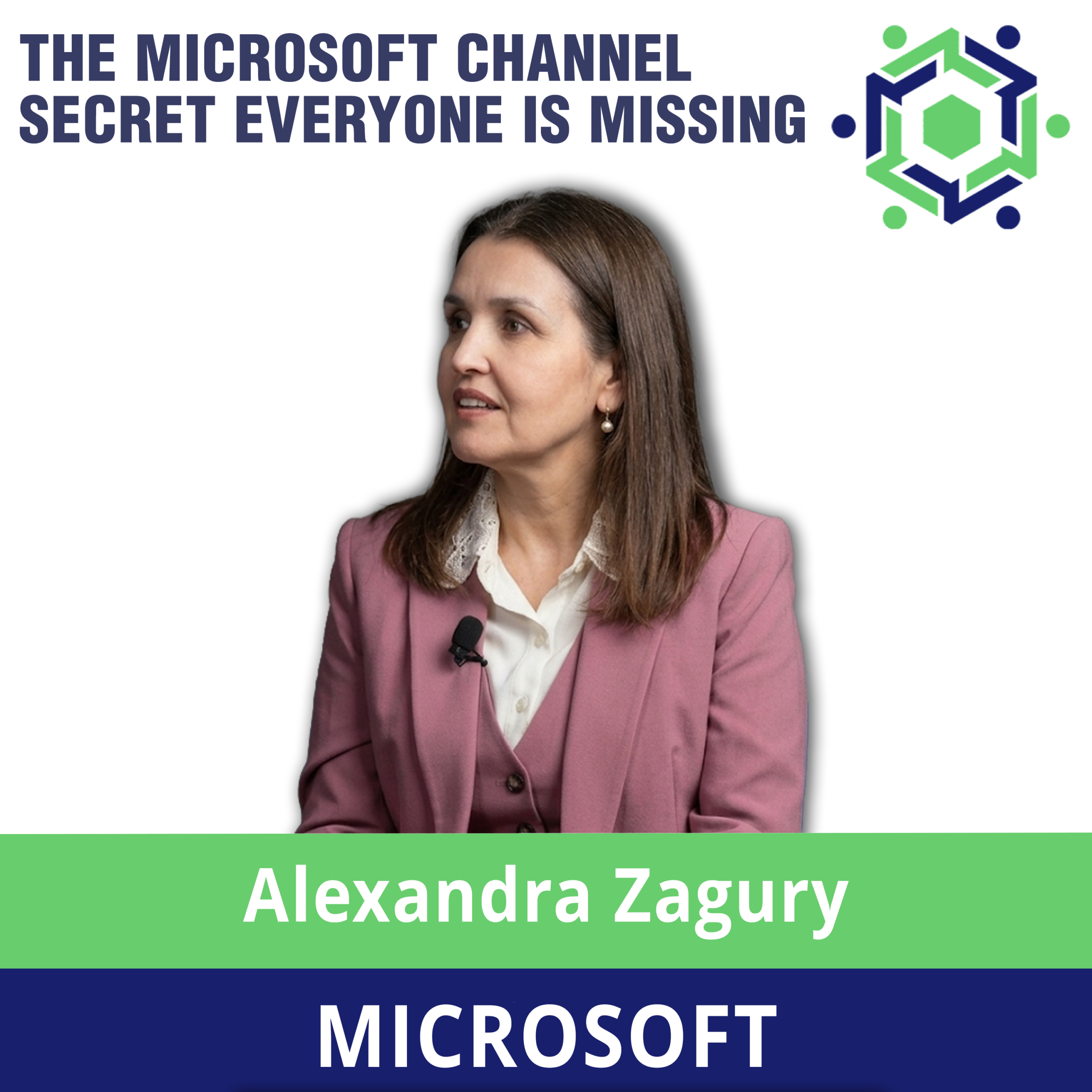
  • August 23 · 31 min

    309 – AWS Marketplace Co-Sell: 3 Moves Partners Must Make in 2026

    Don’t miss the marketplace revolution! Subscribe to our Newsletter: https://theultimatepartner.com/ebook-subscribe/ Check Out UPX: https://theultimatepartner.com/experience/ In this episode of the Ultimate Partner Podcast, Vince Menzione sits down with AWS Marketplace leaders George Maroulakos and Arif Razvi to uncover the rapidly shifting ecosystem of technology procurement and partner transformation. They dive deep into the evolution of buyer experiences, the critical necessity of executive alignment, and how agentic AI is redefining software discovery and consumption. If you want to accelerate deal velocity and ensure your business isn’t left behind, this conversation outlines exactly why integrating the AWS Marketplace into your core co-sell motion is no longer optional. https://youtu.be/Avp0sIyxRU8 Key Takeaways Embracing the AWS Marketplace should be viewed as a natural extension of your co-sell motion, not an interrupt-driven exception. Successfully leveraging the marketplace requires top-down executive sponsorship to overcome internal friction across legal, finance, and revenue operations. Partners must prepare for global expansion by ensuring local entities and currencies are wired up to meet buyers where they are. Agentic AI and natural language queries are leveling the playing field for software discovery, moving beyond traditional SEO-driven presence. SaaS pricing models are shifting toward consumption and outcome-based structures, demanding highly detailed product metadata. The speed of deal closure is drastically increased when partners are prepared to transact seamlessly through the marketplace. If you’re ready to lead through change, elevate your business, and achieve extraordinary outcomes through the power of partnership—this is your community. At Ultimate Partner® we want leaders like you to join us in the Ultimate Partner Experience – where transformation begins. Key Tags AWS Marketplace, partner transformation, buyer experiences, hyperscalers, co-sell motion, revenue operations, strategic alignment, agentic AI solutions, outcome-based pricing, metadata optimization, software discovery, private offers, global expansion, deal velocity, cloud centers of excellence. Transcript Arif Razvi and George Maroulakos Audio Episode [00:00:00] George Maroulakos: From my perspective, think about marketplace as a why not as opposed to a why. [00:00:06] Vince Menzione: You can feel it happening. The ecosystem is shifting beneath us, the way Hyperscalers are partnering, how AI is remaking the channel and what it means to win in 2026. [00:00:17] Arif Razvi: Welcome to the Ultimate Partner Podcast. I’m Vince Menzi, own your host. [00:00:22] Arif Razvi: And each week I sit down with leaders at the intersection of technology, [00:00:26] Vince Menzione: partnerships and outcomes. The voices shaping how ecosystems actually work. We talk about what’s real, what’s changing, and what it takes to lead in this era where the partner channel isn’t just part of the strategy. [00:00:39] Arif Razvi: It is the strategy because being in the room changes everything. [00:00:44] Arif Razvi: Let’s start. [00:00:48] Vince Menzione: I’m excited to, because we were talking about some of this earlier with Matt, but I thought this would be a great conversation. I’m gonna ask each of you to introduce yourselves, George and Arif, and your roles. ’cause you have two very unique roles. Uh. Contrasting roles, I would call it, within the AWS Marketplace Organization. [00:01:06] George Maroulakos: Yep. Happy to do so. So I think Vince just didn’t wanna say my last name, so that’s why I’m gonna introduce myself. Mayor. Very, very good. So Mayor Laki, George Meki, pleasure to meet. Hey, I can say that, uh, all of those that I haven’t met before, lots of familiar faces as well here. Uh, so it’s really great to see. [00:01:21] George Maroulakos: Uh, I’m part of the AWS Marketplace team and our center of excellence. That focuses on buyer experiences. So like why is a buyer guy here in this partner session? And I think, you know, I’m gonna help to try to bring some perspective around what our buyers see as the value for using marketplace and. [00:01:40] George Maroulakos: Working with all of these great partners that are here in the room and, uh, you know, the experiences that we see in helping to drive, you know, the blood to all organs. I’m using that a lot, Alison, to copyright it. It’s, it was really good. I love that, that analogy. But, um, for, but for both our partners as well as for our customers. [00:01:59] Vince Menzione: That’s awesome. [00:01:59] Arif Razvi: Hey everybody. I’m Arif Roski. I’m based here in New York City, although I’m a Celtics fan. Um, uh, go, go. I, I still supported the Knicks through the championship and I’m very happy for them. So excited to be here. Excited to be among, uh, other channel and alliance leaders. I’ve spent my entire 25 plus career in channels and alliances. [00:02:20] Arif Razvi: The last seven years, uh, on AWS marketplace where I lead, uh, a couple of functions. One is I support all of Matt Ian’s feature launches. So from a go-to market perspective, uh, I support his launches. I also focus on international expansion of marketplace. So, uh, Matt alluded to this earlier. I’ll mention some, I’ll talk about some stuff in a little bit. [00:02:39] Arif Razvi: And then, uh, we do some deep engagements with some of our most strategic partners to help them accelerate and unblock their marketplace business. By embedding a subject matter expert from my team into their organization to really help drive, uh, adoption of marketplace. [00:02:55] Vince Menzione: So important. Both of your roles. [00:02:56] Vince Menzione: By the way, this is standout roles. I, you know, I. I don’t want to get into trouble here. I talk about other hyperscalers, but I said this with Matt on stage earlier. You guys have been at the forefront of driving marketplace in such a strong way, having somebody who’s customer focused, right? And that lens is so important. [00:03:15] Vince Menzione: I don’t feel, I feel like that’s missed so many times. And then you also have. You know, quite a bit of an important role here in terms of what you’re doing in embedding resources. ’cause a lot of times people get lost in the process and it seems to be the, the common currents. So, um, really great both sides of the same equation here, right? [00:03:33] Vince Menzione: Buyer led, partner built, uh, let’s start George here. Um. Let’s talk about how buying has changed. Right. We go back to the early days of marketplace. It felt like it was a listing at first and it started to become important. Organizations like Work Span started to come to fruition and started to drive, at least in my part of the world. [00:03:53] Vince Menzione: And then we started talking a lot more about Marketplace. And of course the, the cus customer commits really started driving things in a different direction. You’ve got the customer, so talk about what your journey’s been like. [00:04:05] George Maroulakos: So I’ve been with Marketplace nine and a half years, which is pretty long time since the beginning of it, and watching the evolution of, of where things have come and where they started. [00:04:15] George Maroulakos: And I remember, uh, I was covering the, the northeast region when I very first started and working with, uh, you know, different enterprise accounts and financial services and, and, and healthcare and life sciences, and talking about this. This creation that occurred called, called AWS Marketplace, and even folks within AWS didn’t really know what that meant or how to talk about it or sell it. [00:04:38] George Maroulakos: So there was this creation of a infield based business development function to help supplement the account teams and the value and the importance of marketplace as a part of a customer’s AWS journey. And when I first started the, the, the highest, uh, or most frequently subscribed to products that existed were. [00:04:57] George Maroulakos: Uh, Amazon machine images a amis and it’s very specifically open source amis. So think of Bantu or Cintas as the predominant things that were being subscribed out of marketplace. So, um, by definition, not really revenue generating. You’re, these are not the a hundred million dollar transactions or the billion dollar club that we talk about today. [00:05:19] George Maroulakos: It was very much helping. The builders go again, go back 10 years, uh, who are just getting started with the cloud and how could they find partner solutions that they trusted or that they felt were secure and helping them to start to build out and migrate their workloads into, into AWS. Um, so I existed before the. [00:05:39] George Maroulakos: Very first private offer was transacted. Nice. Um, there’s actually a, a gentleman towards the back, uh, who helped with one of our very first private offers. I see you back there, Joe. Nice, nice. Um, so we, we worked on, uh, uh, uh, really big transaction with, uh, with, at the time AppDynamics, uh, and, and helping to get. [00:05:58] George Maroulakos: You know, a customer really up and running with their implementation that, so watching over the 10 years from, you know, the builder mentality of, of getting started with the cloud to really embracing all kinds of partner based, um, solutions that go along with AWS. It’s really been, uh, you know, a, a rocket ship you referenced earlier, moving to the top right quadrant, if we want to use the, the Gartner analogy, and I think we’re at another. [00:06:24] George Maroulakos: Inflection point because with what’s going on with Ag agentic solutions, the way that our customers are finding and discovering different partner solutions is better than ever I would think. And I think it gives much more of a equal opportunity in playing field for all partners of all shapes and sizes because you’re not driving your presence based on SEO or whether or not you have the best Google search results. [00:06:53] George Maroulakos: With AgTech and how you differentiate your solutions, you’re gonna be able to really get yourself in front of more customers more quickly. And as Matt talked about earlier, the, the, the really big penetration that we’ve seen thus far is real, is on the discovery piece, the, the research area, the pre-purchase activity, so validate what’s available. [00:07:13] George Maroulakos: So I think marketplace has really evolved over the 10 year, nine and a half years-ish that I’ve been there. And I think it’s gonna continue to change here in the coming months ahead. Yeah. [00:07:23] Vince Menzione: Any predictions? [00:07:25] George Maroulakos: Yeah, I, I think, you know, the, I, the, the importance of marketplaces is only going to continue to grow. [00:07:32] George Maroulakos: Uh, and I think we’re going to see, you know, even more innovation and expectation from our customers on being able to find the right solutions and being able to procure and deploy them as quickly as possible. [00:07:44] Vince Menzione: Nice. Arif, from your side. Partner transformation. So, you know, embedding resources with the partners. [00:07:51] Vince Menzione: Right. So you basically help kickstart a lot of the, the efforts, right? George? George is looking at it from the customer side, and then you’re kick-starting it on the partner side. [00:08:00] Arif Razvi: Yeah. Either kickstarting it, uh, on the initial stages with a strategic partner. Yeah. Or accelerating their adoption of something that’s already there. [00:08:07] Arif Razvi: Right. So what we’re seeing, what I’m seeing a lot of more recently is partners who say, I didn’t know you had capabilities for us to sell into Korea or Japan, or we just, we just launched India. Yep. Matt alluded to this easier, uh, earlier that we’re making it easier for partners to expand globally. And now partners are realizing, wait a minute, I can match my. [00:08:26] Arif Razvi: Uh, my business processes on marketplace, so revenue recognition, tax collection, locally, local invoices, and now they’re starting to set up multiple entities outside the US to meet those buyers, uh, where they are. [00:08:41] Vince Menzione: Nice. And you mentioned having these resources. How do you determine who gets resources and who? [00:08:47] Arif Razvi: Well, there’s, uh, staging and there’s, uh, there’s qualification mechanisms we use. We work with the PDMs for the partners. So any PDM, uh, any pd DM managed partner can be nominated for, uh, what, what we call a compensation. [00:08:59] Vince Menzione: So you’re overlaying that organization sense. [00:09:00] Arif Razvi: We’re overlaying the PDs. We’re not replacing, we’re only doing time bound sprints to unlock very specific activities. [00:09:05] Arif Razvi: Very [00:09:06] Vince Menzione: cool. So it’s not a poll. Yeah. Cool. You’re not, you’re not there forever. [00:09:08] Arif Razvi: No. [00:09:08] Vince Menzione: You’re there to get the job done. We [00:09:09] Arif Razvi: did that before. Uh, yeah, we’re, we’re doing short sprints now. [00:09:12] Vince Menzione: Yep. Let’s talk about how the buyers are using marketplace. You’ve done some really in, we talked about this earlier with Matt, but we’ve talked about some of the innovative things you’ve done. [00:09:21] Vince Menzione: You know, being, being able to embed into a website and in the storefronts. All these things seem to be unique to AWS. Talk to us about how the buyers are using the marketplace today. And [00:09:31] George Maroulakos: yeah, I think, you know, Matt talked about earlier the. Pre the, the preconception around why customers use marketplaces for the financial incentives, the, the financial benefits that go along with it, whether it’s direct incentives that are associated with the individual product that’s out there, or the Association of Marketplace to our private pricing agreements and the ability for. [00:09:55] George Maroulakos: Transactions that occur in marketplace to count towards those commits. Um, I’m gonna amplify a, a particular point that Matt made, uh, in his talk that, you know, we have many more customers who do not have PPAs with AWS than those that do. And the volume of transactions that take place in marketplace. [00:10:11] George Maroulakos: Dwarf, uh, in volume from those that, uh, are occur from our PPA customers. So yes, there are very large transactions that occur and there is Ben financial benefit that goes along with it. But there’s many other value points that our customers find from discovery. From ease of use, from consolidated billing, from post-purchase, um, you know, management and governance that goes along with it, and reconciliation that’s available, that’s, that exists. [00:10:36] George Maroulakos: Um, you mentioned storefronts. I’m really excited. That was one of the most exciting launches. That’s why I reminded him when he was talking about it, uh, around, you know, what that means. And it’s both a presence for, um, our partners and being able to create their own storefronts on behalf of, of customers or within their own property, but also for our buyers directly too. [00:10:54] George Maroulakos: Take that next generation of something that was previously, you know, our private marketplace and curate a catalog that is very specific and intentional for the things that they’re interested to innovate with and the partners that they’re interested in using. And so I think meeting our customers where they’re at. [00:11:10] George Maroulakos: And being, you know, marketplace anywhere and everywhere is I think really important for our customers. And then the other aspect, you know, in terms of how our customers use marketplace, there’s more than one persona at our customer that we need to be, be, be aligning with. Right. Interesting. We typically talk about procurement and the value points that procurement find in marketplace, but just as important as, as the technologists. [00:11:32] George Maroulakos: It’s the Cloud centers of Excellence. It’s the innovators who are looking for those business applications or those infrastructure solutions that exist and making sure that we have the right things from the right partners available to them. So we see value all over the place with our customers and how they inter interface with [00:11:47] Vince Menzione: more. [00:11:47] Vince Menzione: You brought up something really interesting, insightful, is the fact that all the different personas in the organization that are touching the marketplace, right? [00:11:54] George Maroulakos: And it’s at different points of the journey, right? Yeah. So while there may be early discovery and research and experimentation going on from, you know, the technologists or, or, or the, or the, the, the business application owners, um, as it progresses through the, the, the. [00:12:09] George Maroulakos: The opportunity lifecycle procurement and sourcing and legal, and the shared services then become a more important part of, of making sure that we get those opportunities closed and launched. [00:12:18] Vince Menzione: Yeah, and that was one of the things we were talking about earlier is the fact that how, how, uh, it, it, the work arduous it could be. [00:12:25] Vince Menzione: To go through that whole process at a customer side. Right? ’cause they have to. [00:12:29] George Maroulakos: It is, and and you know, I think when Cloud first got started, it was quite scary for procurement, right? It became another version of Shadow it. And we were seeing things that were getting purchased on P cards because they could quickly stand up infrastructure versus waiting for the IT team to do it. [00:12:44] George Maroulakos: And so now you introduce all of these other things that. Procurement kept near and dear to their heart, and here comes another wave of, is this truly positive disruption? Is it going to affect what’s, what I’m doing affect really my goals and objectives of supporting the company. And as you, you know, you continue to express the value of marketplace, they start to see, hey, this is actually very complimentary and helped me can get better control and governance in a way that I. [00:13:11] George Maroulakos: Perhaps didn’t have before with what was going on inside the cloud. [00:13:15] Vince Menzione: So this is a question for both of you actually, but I was thinking about these partners in the room and what did they get wrong? Like what are they doing? Like what are the things we always talk about, things that they’re doing right? [00:13:26] Vince Menzione: We’re having the happy talk about all the great success that’s been going on, but what is your advice to partners that maybe are not getting it right? Like what, what, what are the things you see that. The easy stumbling blocks that could be fixed. [00:13:38] Arif Razvi: Yeah. Well, probably the easiest is, uh, waiting to talk about marketplace at the last minute and not making it part of the full commercial journey [00:13:45] Vince Menzione: Yeah. [00:13:45] Arif Razvi: That the sellers will go through. Right. So, um, but that includes being able to have those internal conversations from the executive level, getting that executive sponsorship from marketplace upfront. That filters down through the rest of the organization. So you’ve gotta get rev ops teams, finance, legal, you know, the marketplace terms, the, the standard, uh, contract that goes into your listing has to be approved by legal. [00:14:08] Arif Razvi: Uh, and then you get down to the sales teams, making sure that you’re not penalizing sales teams for doing transactions on marketplace, which will create friction, then meeting buyers where they are, right? So local entities, local currency, um, having all that wired up. Uh, I met with a, a partner yesterday at Summit who is literally wiring up 10 new regions, 10 new entities in 10 new locations on marketplace in advance of what they know is a pipeline that’s going to be building into those regions. [00:14:37] Arif Razvi: So they’re getting ready and not waiting for the last minute for marketplace. [00:14:40] Vince Menzione: I love it. And the internal, go ahead. [00:14:43] George Maroulakos: Yeah, I, I echo definitely what Arif was saying and I think the, the other aspect of that is that our customers shouldn’t feel like it’s more painful. To use marketplace versus they would any other way. [00:14:54] George Maroulakos: And so whether that shows up in pricing, it shows up in awareness of what marketplace is and isn’t, or what it can or cannot do. Um, whether it’s introducing it naturally or it’s this, oh, by the way, on the end, like the, the more. Integrated marketplace is as a part of your co-sell motion, whether you’re doing it directly on your own or through a reseller or with AWS or all of the above. [00:15:17] George Maroulakos: Um, it’s, it should be a natural extension and a value point that you’re bringing to your respective customers, not some. Interrupt driven or, or exception based activity that goes along with selling your, your, your, your solution. [00:15:31] Vince Menzione: Why do you think customer, some customers or some partners are held back or what, what, what is, is it a mindset? [00:15:38] Vince Menzione: I mean, I talk about the principles, you know that, but like, is it mindset? What is it? Is it, [00:15:42] Arif Razvi: it’s, it’s internal. Friction. Yeah. A a a lot of what I see, especially in these, in, in embedded engagements is the amount of, you know, I have a lot of empathy for this room, right? Because you are the ones that have to go internally and navigate all of these stakeholders to be able to convince them that marketplace is the route to market. [00:16:01] Arif Razvi: It’s the preferred route to market, and it’s the way that a AWS wants to co-sell. With its partners. And that’s a hard thing to do if you don’t speak the same language that the tax legal, rev ops, finance, accounting, because everything changes. When you start doing transactions on marketplace, your revenue is booked differently, right? [00:16:20] Arif Razvi: It’s booked as a w from AWS and not from the, you know, from the, so things change and having that conversation is often challenging. Uh, we are working on some tools that will help make that conversation easier. Um, and we’ve already written blogs, and again, there are mechanisms that your partner managers have internally that they can request support and guidance. [00:16:43] Arif Razvi: Uh, and we’re happy to provide that. [00:16:45] Vince Menzione: What needs to change so that marketplace becomes a true go to market engine. [00:16:49] Arif Razvi: Top down, top down, top down where, where I’ve seen the most success. From a partner is where they’ve gotten strategic alignment at the executive level. That marketplace is the way we are going to, uh, sell globally. [00:17:02] Arif Razvi: Right? Then that starts to filter down, as I mentioned earlier, into the different teams and yes, it is a journey and you may start with the US or if you’re EMEA based. Partner, you may start with just amea, but eventually you will start to expand your, you’ll want to expand your business. Um, and marketplace is a great place to do that because we have all of those mechanisms globally to help you scale without adding incremental resources to handle the tax or the compliance or the invoicing and collection and all that stuff. [00:17:30] George Maroulakos: Yeah. I’ll add to that because I’m gonna steal a second thing you said, Allison, about centering around a customer. I, I loved a lot of Allison. Come on now. I’ll be your hype guy. I absolutely, but, but, but the but demand will drive supply. And I think to what you were talking about, Arif, when are customers, when. [00:17:46] George Maroulakos: Our customers come to you about wanting to use marketplace. Yeah. How are you ready to adapt to that? How are you ready to respond to it? And if it becomes a disjointed, not centered around a customer, bespoke based, independently based interaction with the customer, everybody loses. Versus if you’re ready to embrace what that means and how to make that as good of an experience, if not better, versus how they might have traditionally procured your solution and deployed it. [00:18:13] George Maroulakos: Um, now we have a much better together story. So I think understanding that customers more and more are going to use marketplaces, particularly AWS marketplace, and want to make use of partner solutions that embrace marketplace as a part of their way to procure and deploy. You have a much better chance of being successful with them. [00:18:33] Vince Menzione: You know, it made me think about this. Is there a seminal event? Like I think about, I think back to COVID changing buying behavior, right? I’m, we’ll use AWS, an example, three boxes show up in my house every day, right? That didn’t happen before. We used to go to the store. Is there a seminal event we’re waiting to happen? [00:18:50] Vince Menzione: I, I know that the millennial buyer, we talked about this earlier with Matt, is the new buying persona. Over 50% of buyers are millennial and they’re used to doing comfortable with phones and trust Is all there. Is there something else we’re missing or what do, what do you think’s gonna happen? [00:19:03] George Maroulakos: I really think it’s what in front of us right now. [00:19:05] George Maroulakos: Yeah. Vince, I think what. Agen solutions, what Agen SaaS offers, what the power of information and research that’s now directly available to customers versus maybe indirectly available through consultancies or deeper research. Um, the velocity of what our customers are going to be able to do and with partners that they may not have even heard of right before. [00:19:32] George Maroulakos: You know, they started their journey. I, I think this is a present day. Inflection point. Yeah. Um, going back, you know, over the past several years, the advent of supporting private offers I think was a pretty big milestone for marketplace. It allowed for our partners to be able to. Work through customized terms and conditions and commercials that were important for a particular opportunity in a customer. [00:19:54] George Maroulakos: But today, the here and now I think becomes the next inflection point for the success of marketplace. [00:19:59] Arif Razvi: That would [00:19:59] Vince Menzione: Go ahead. [00:20:00] Arif Razvi: I was just gonna add on top of that, but partners need to be ready for that. Right? And if they’re not ready to accelerate a deal and get it closed in days versus stalling it for weeks to negotiate. [00:20:11] Arif Razvi: Yes. Like they’re not gonna stand. Customers are not gonna stand for that. So partners need to be ready to move quickly. If you think about all the innovations that Matt is delivering for Marketplace and Partner Central. They’re about accelerating co-sell. They’re about accelerating deal velocity. They’re about, we know f from, from the Forrester studies and others that we presented, that we’ve made public that the deal value goes up when you’re dealing with marketplace and co-selling with AWS. [00:20:36] Arif Razvi: So how can we just accelerate that? Yeah. Partners need to be ready for that and move quickly. [00:20:40] Vince Menzione: And you use partners in sort of a, you know, plural sense, but I think about those organizations as so many multifaceted. We talked about finance, we talked about all of different functions in the organization. [00:20:51] Vince Menzione: What are you doing to help that? I mean, we talked about you’re doing a lot of readiness work, but I do feel like there’s a lot of evangelism still to be done internally with those organizations. How do you think about [00:21:02] Arif Razvi: that? Yeah, we, um, obviously events like this are fantastic mechanisms to at least get the conversation started and get your head thinking about what you need to think about. [00:21:10] Arif Razvi: But we have other activities. We have, uh, rev Ops squads, right? So revenue operations teams, and we bring them together, uh, around the world op, uh, ops squad, which is operational teams, so deal desks and others that help them, uh, understand the capabilities that marketplace can bring to accelerate deal velocity. [00:21:28] Arif Razvi: And then we have, like, obviously other events like the, the, uh, marketplace Seller Conference in September where we bring marketplace sellers together and give them, you know. Guidance. And so there are ways to get this information beyond just like getting somebody from my team, of which there are very few as you, you know, as we start to, to consolidate down. [00:21:47] Arif Razvi: But um, but they are available and there’s other mechanisms and we’re happy to share those out. [00:21:50] Vince Menzione: Nice, nice. Well coming here doing this and we’ll make a podcast episode out of this as well. Can you hear. I hear us all, uh, because I do think it’s important to get in front of, especially the Chief Finance Officer and operations and all those different departmental heads who aren’t really embedded into, like, they don’t come to these events. [00:22:07] Arif Razvi: Yeah. And they also don’t log into Partner Central. That’s right. So how do they get this information right? Yeah. So we have to one to one it with them. Yeah. But that doesn’t scale when you think about what’s gonna happen now with this next wave of GSIs and sis and, and others coming onto Marketplace who hadn’t been there. [00:22:22] Arif Razvi: Yes, they’re gonna need the same guidance. Yeah. So we have to start thinking about what we’re building is AI tooling to help with those conversations. [00:22:28] George Maroulakos: Well, and, and you know, if, when I think about it from, from our buyer’s perspective, even just yesterday we held a, a couple of round table discussions with some procurement leaders that were, we’re here for the summit and, you know, we do a lot of enablement and, and awareness. [00:22:42] George Maroulakos: With alliance leaders at our partners, and that’s certainly a, the tip of the spear of getting the conversation started, but it’s not enough. And one of the things that we hear from our customers is. Well, you may have a great partnership with particular partner A, but the individual experience that I had with that sales rep doesn’t match that. [00:23:02] George Maroulakos: And so yeah, the evangelism and the awareness, yes, and the understanding of marketplace has to go beyond just the alliance team. You guys are the amplifier to it. But the folks that not only are in the back office and all the, the, the operational teams, but on the front lines and field sales need to also understand and embrace, not understand all the features and capabilities of marketplace. [00:23:25] George Maroulakos: AWS needs to handle that, but understand how marketplace fits into the co-sell strategy in what’s going on for that particular customer is very, very important to make sure our customers get the right experience. [00:23:37] Vince Menzione: Well, I think Arif, you mentioned this earlier about compensation models. And that’s a, that’s a factor too. [00:23:42] Vince Menzione: ’cause people, people, um, they’re fearful of change. They’re fear, fearful of compensation changing. Especially, especially sellers. I, um, again, that’s a coaching area. [00:23:54] Arif Razvi: Yeah, it’s a coaching area. Um, it, it, it is, um. It’s probably one of the easier ones to solve. Um, and, and, and, you know, we have these conversations with partners about net, uh, cost neutral or uh, seller neutrality and things like that. [00:24:06] Arif Razvi: Once you show them the economics of how AWS can increase their deal value, those economics sort of, they go away. The problems go away, but they, you have to get in front of those. Uh, you know, senior leaders, the CROs and the CFOs, to have that conversation to then go, okay, I get what’s going on here. I get why I’m paying. [00:24:23] Arif Razvi: The listing fee is, is about funding all of these marketing activities that we do for our partners, right? [00:24:29] George Maroulakos: Well, and then you use the word neutrality. The other end of that neutrality problem or, or, or challenge is the pricing that goes along with the opportunities that are made available to customers. [00:24:38] George Maroulakos: And so to one of your earlier questions on points of friction or what, what stops it from taking off further? When, when partners and our customers have a disconnect on. What they’re expecting to pay when they use marketplace, or if there is a unnatural cost that goes along with procuring that solution through marketplace. [00:24:57] George Maroulakos: That also tends to bring a, a pretty bad experience, not only for that opportunity in front of them, but for respective opportunities that may, may be in play thereafter. So thinking about not, you know, having an a, an unnatural experience for our customers relative to pricing as well as compensation and, and everything else is, is also very important. [00:25:17] Vince Menzione: So we’ve got a few minutes left, and we haven’t really touched on ag agentic AI and agen AI solutions. A little bit different than the SaaS solutions per se. How, how are these solutions brought and sold differently than SaaS? [00:25:30] Arif Razvi: Uh, well, as Matt said, the SaaS apocalypse is not real. [00:25:34] Vince Menzione: Yeah. [00:25:34] Arif Razvi: Um, he doesn’t, I’m glad to hear that, nor nor do I. [00:25:37] Arif Razvi: Um, I, I think what, you know, where, where SaaS has been very user seat based, you’re moving now to a world that’s gonna be more consumption based or outcome-based pricing. And so that’s really changing the dynamic and I think partners need to think about what does an outcome-based, uh, pricing model look for My particular. [00:25:55] Arif Razvi: Um, product, uh, Zendesk is a good example of, Matt published a blog, uh, earlier this week, I think it was, where we, we referenced Zendesk pricing on closed tickets or, or resolutions to tickets, right? For, for outcome-based pricing. So I think we need to think about on the pricing side, how to reprice, how to think about pricing. [00:26:13] Arif Razvi: But on the discovery side, thinking about what your, what your listing looks like, it’s no longer about marketing copy. It’s about, it’s almost, I was talking yesterday about being an API contract. ’cause the agent needs to have all the details that a person doesn’t necessarily need to have in order to make a recommendation that your product is the best fit based on the technology that’s underlying that, where it’s gonna fit in the infrastructure. [00:26:37] Vince Menzione: So three and a half minutes left lightning round. Um, but seriously, what, what if I’m in the room or even any, any partner that’s listening today, what do I need to change in the next 30 days? [00:26:50] George Maroulakos: From my perspective, think about marketplace as a why not as opposed to a why. And if you change your mindset around marketplace can be better together in helping to accelerate and expand your opportunities with our mutual customers. [00:27:03] George Maroulakos: You’ll get a whole lot more value out of it. You’ll get away from the fud in the system or some of the traditional roadblocks that you either have been or could be encountering when you think about marketplace, uh, together with your, with your solution. So think about the why not think about the value that the, the, the total solution can bring to our mutual customers and integrate it much more naturally into your total sales motion. [00:27:26] Vince Menzione: Nice. [00:27:27] Arif Razvi: I would say maybe three things. One, um, don’t just sell globally. Operate locally. Think about how your buyers wanna buy and then meet them there, right? As a partner, even if you’re doing CPPO transactions, um, you know, meet them in the location. Number two, top down, go get that executive alignment so the problems start to disappear, or at least are easier to manage when you’ve got that executive alignment. [00:27:51] Arif Razvi: And the third was, uh, don’t wait till the last minute to introduce marketplace. Work with your sales teams to make sure it’s part of the early conversation versus no procurement leader wants to know at the end of the day, oh wait, it’s coming. I gotta deal with this marketplace thing. They don’t wanna deal with it on the buyer side. [00:28:06] Vince Menzione: No, absolutely. Alright, we’ve got time for like one question in the back. Is that Eric? Yeah, that’s [00:28:12] Guest: me. [00:28:13] Vince Menzione: Hey. [00:28:14] Guest: Hi, Eric Rosenstein, um, with Cornerstone Strategy XAWS. So George, you talked about, uh, tools around that customers can use to research for self discovery. So what guidance, uh, first of all, like what capabilities are these tools gonna bring and what guidance would you give an industry specific ISV? [00:28:36] Guest: So someone that’s focused on law enforcement or private equity. That solution may be Angen solution, or it may be something more SaaS related. What guidance would you give an ISV to think about how to best leverage those tools? Is it metadata? Is it like. The outcome that your solution’s gonna drive, how would you tell ’em to best utilize those coming tools? [00:28:58] George Maroulakos: Yeah, excellent question and, and I think this is gonna, going to continue to emerge in the days, literally in weeks, weeks ahead. But recently, I, I’d say over the last six months, the advent of agent mode I think has been a game changer and the ability for our customers to use marketplace directly to research. [00:29:18] George Maroulakos: Efficiently what’s in our catalog. Prior to that, we had a category based. Old school based, search based category, click through way, which became very buried beyond the first page for any solution that was out there. Now with natural language query and the ability to propose, what am I specifically looking for, it gives partners that were on the first page or the last page in equal opportunity to be surfaced. [00:29:48] George Maroulakos: So then for a partner being able to do many of the things you just enumerated. Better metadata, better keywords, better description and differentiation for what your solution offers allows for the Ag agent search, whether it’s natively within AWS or outside of AWS through Claude Chat, GBT Crock Pick your, your, your agent of choice. [00:30:10] George Maroulakos: To be able to identify and know that your solution’s available. [00:30:13] Arif Razvi: And from a partner side to your question, I would say, uh, rich metadata, uh, both so that agent mode can find it. Yeah. Use cases, problems, it solves, you know, uh, technical specifications, pricing where you can, right. So that agents can really understand the solution, uh, that the buyer is, um, is looking for. [00:30:33] Vince Menzione: GEO is. [00:30:37] Guest: Perspective should be like as detailed as saying, so this agent is gonna act on these various data sources. [00:30:44] Arif Razvi: Yes. [00:30:45] Guest: Bringing it all together to drive that outcome that you want the agent [00:30:48] Arif Razvi: drive, if you can include what it needs to connect to in order to deliver that outcome as part of the listing. [00:30:53] Arif Razvi: Absolutely. ’cause the agent will want to know. For sure. [00:30:57] Guest: Thanks. [00:30:58] Vince Menzione: Alright, we are at time and this was a great session. [00:31:01] Arif Razvi: Thank you Vince. [00:31:01] Vince Menzione: Great to see you, George. George and I grew up, uh, five miles away from each other and went to the same college. I love it. Great to, great to spend some [00:31:09] Arif Razvi: time with you, George. [00:31:11] Vince Menzione: Thanks for listening to the Ultimate Partner Podcast. If today’s conversation resonated, share it with a partner leader in your network. Subscribe where you listen, and head over to the ultimate partner.com. For show notes related content and the resources for this episode, and if you haven’t already, now’s the time to register for the Ultimate Partner Live Event in Reston, Virginia, October 26th through October 28th. [00:31:38] Vince Menzione: Until next time, keep showing up in the rooms that matter because being in the room changes everything.
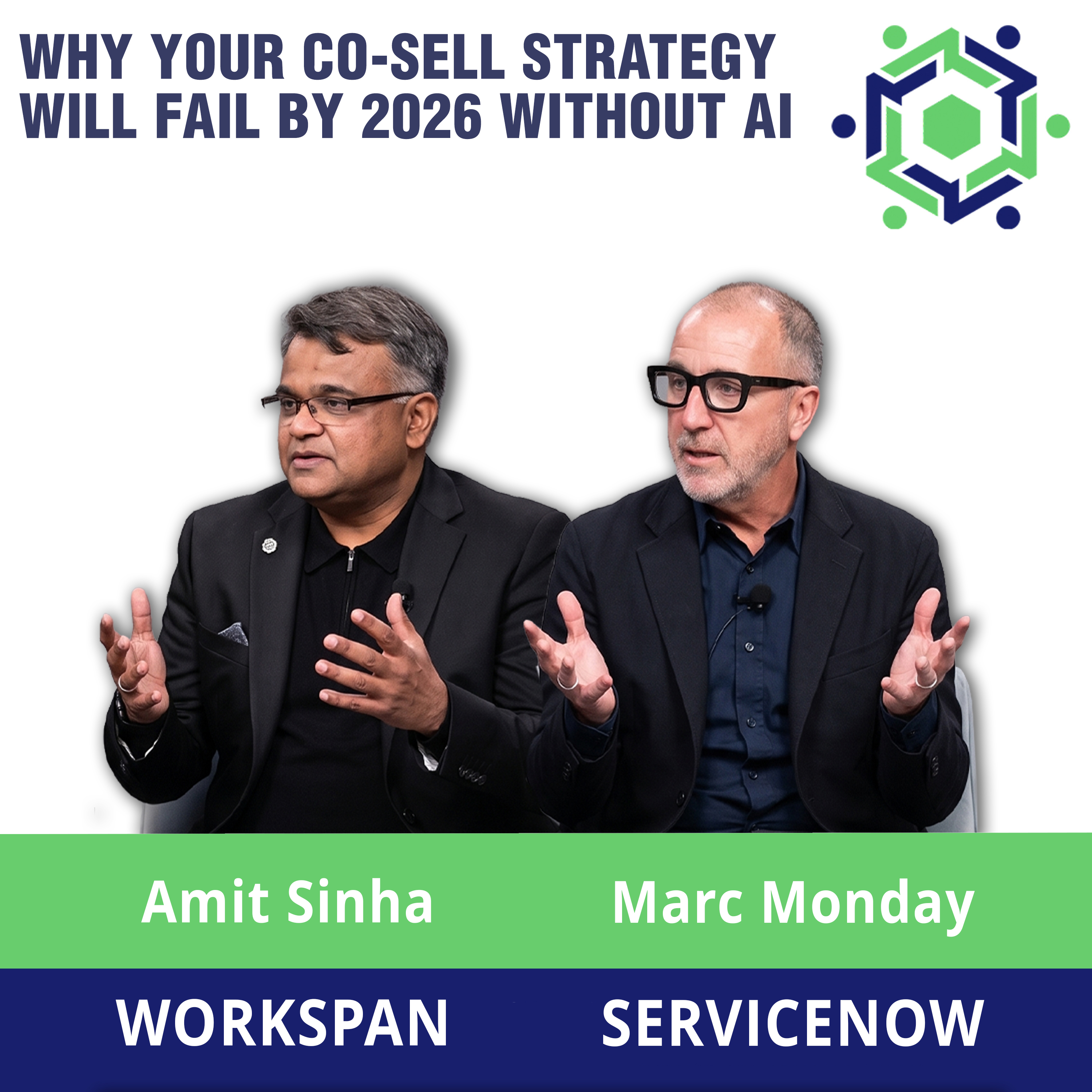
  • August 16 · 29 min

    308 – 7 Partner Secrets Microsoft’s New Channel Sales Leader Just Exposed at UP LIVE

    Don’t miss this massive channel shift! Subscribe to our Newsletter:https://theultimatepartner.com/ebook-subscribe/ Check Out UPX:https://theultimatepartner.com/experience/ In this episode of the Ultimate Partner Podcast, host Vince Menzione sits down with Alexandra Zagury, Corporate Vice President of Channels at Microsoft, to explore ecosystem shifts, partner-led growth, and AI transformation. https://youtu.be/9jrSGX5bM90 Key Takeaways Microsoft’s telemetry and propensity data offer unprecedented insights that many partners are currently failing to unlock. Partners must evolve past basic licensing models and build comprehensive managed service stacks across the entire customer lifecycle. Establishing an AI Center of Excellence on the Microsoft platform is critical for capturing future market share and technical intensity. The modern tech ecosystem demands a shift from product-led growth to true partner-led growth driven by multi-partner collaboration. Renewal engines targeting 110% to 125% retention require an always-on motion starting well in advance of contract expiration. Investing in sales readiness and precision velocity training ensures that end sellers can effectively articulate the value of the Microsoft platform. If you’re ready to lead through change, elevate your business, and achieve extraordinary outcomes through the power of partnership—this is your community. At Ultimate Partner® we want leaders like you to join us in the Ultimate Partner Experience – where transformation begins. Key Tags Microsoft, telemetry, Hyperscalers, channel, small medium enterprise, telcos, hosters, SSPs, Cisco, CSP, agentic GTM, propensity data, SPX, PUPP, cloud descent, MSPs, managed XDR, Agent 365, skilling, co-sell, renewals, flywheel, AI Center of Excellence, enterprise Transcript Alexandra Zagury Audio Podcast [00:00:00] Alexandra Zagury: One of the things that I think is the best kept secret at Microsoft is the telemetry that we offer our partners. [00:00:08] Vince Menzione: You can feel it happening. The ecosystem is shifting beneath us, the way Hyperscalers are partnering, how AI is remaking the channel and what it means to win in 2026. Welcome to the Ultimate Partner Podcast. [00:00:22] Vince Menzione: I’m Vince Menzi, own your host, and each week I sit down with leaders at the intersection of technology. Partnerships and outcomes. The voices shaping how ecosystems actually work. We talk about what’s real, what’s changing, and what it takes to lead in this era where the partner channel isn’t just part of the strategy. [00:00:41] Vince Menzione: It is the strategy because being in the room changes everything. Let’s [00:00:46] Guest: start. [00:00:50] Vince Menzione: I am thrilled because I get to have a leader that is somewhat new in role and is the corporate vice president of channels for Microsoft. And so Alex is here to, is joining us for the first time at Ultimate Partner. I’m thrilled to have you. Thank, thank you so much. Thank you so much. Welcome, welcome. [00:01:14] Vince Menzione: Thank you. Thank you. You and I are gonna be in the center seat in the middle. Okay. Yeah. Yeah. We wanna. So I am thrilled. Um, you’re relatively new in your role at Microsoft. [00:01:24] Alexandra Zagury: Seven months. [00:01:25] Vince Menzione: Seven months, [00:01:26] Alexandra Zagury: yes. [00:01:26] Vince Menzione: Wow. That’s a, that’s a crazy. So take us through, ’cause for those who don’t know you, but a little bit of an introduction, your title, your role, CVP, and uh, your remit. [00:01:37] Vince Menzione: Let’s talk about that and what your organization is focused in, in your mission. Yeah. [00:01:41] Alexandra Zagury: So hi everybody. Really exciting to be here. Thanks for the invitation, Vince. I always love to be with partners and with the channel. So my, I came to Microsoft to lead a new role, which we call Global Channel Sales, and it was part of the strategy of Microsoft to really bet on the growth in small, medium enterprise. [00:02:04] Alexandra Zagury: With the channel partner led growth. So my remit is really to lead our managed partners, but also to lead the strategy when it comes to the channel. Very specifically looking at the telcos, the distributors, the hosters. The sis and, uh, the SSPs of course. And, and so my role can be summarized in one word growth, and that’s what we do every single day is map our ambition to your ambition and figure out how we actually conquer this age of ai. [00:02:40] Vince Menzione: It’s a pretty big role. It’s a pretty, you know, I forgot about hosts ’cause we don’t, we don’t talk about them as much these days in the cloud. [00:02:48] Alexandra Zagury: Still a lot [00:02:48] Vince Menzione: of opportunity. You’ve got, and you’ve got all the telcos as well, which are pretty significant organizations, right? Lumen Field, just around the corner. [00:02:56] Vince Menzione: Mm-hmm. Right up the. Right up, I said across the river, but it’s across the pond in Seattle. And, uh, what does that look like from an organization perspective in terms of dollars? Are you allowed to disclose numbers? [00:03:08] Alexandra Zagury: No, we [00:03:08] Vince Menzione: don’t talk numbers. Okay. And, but you have a long career in this type of environment, in this role. [00:03:15] Vince Menzione: 10 years at Cisco, right? [00:03:17] Alexandra Zagury: Mm-hmm. [00:03:17] Vince Menzione: Tell us a little bit more about your background, [00:03:18] Alexandra Zagury: please. Yeah, sure. Um, well I started out as a, a sales leader. Uh, actually I started out in banking, if you wanna go all the way back. Um, but I fell in love with the channel actually, when I was at Yahoo, believe it or not. Wow. [00:03:32] Alexandra Zagury: Because it was the first interact sales model that I had the privilege to operate in, and I really understood. Stood the power of going through a channel. And then I was at Blackberry where I, I, I also, um, well had various sales leadership roles, but our model was all through, was all through the channel. [00:03:51] Alexandra Zagury: Yes. Um, some startups and then help [00:03:54] Vince Menzione: in those days too, right? [00:03:55] Alexandra Zagury: Yeah. It was all sps and I learned from Jim Balze the channel fundamentals. So, um, and then ended up, of course, at Cisco the last. Nearly 11 years, which I think is also one of the greatest channel companies. Yes. And really has thrived in a partner, partner led growth, and in a partner led model. [00:04:12] Alexandra Zagury: And so when, when Microsoft called, I mean, this was just the opportunity of a lifetime. To lead the channel during an era where we’re all getting disrupted, we’re all having to blueprint new systems, new ways of working, where go to market is getting identified, and we’re all having to figure out how to become customer zero ourselves, but then also how to go to market. [00:04:36] Alexandra Zagury: With, with agents. And so this was the, the most exciting time that I could think of to join the Microsoft ecosystem and really take us to the next level. [00:04:44] Vince Menzione: Well, your background is perfect for this. I, I, Rodney Clark is a friend, has been a guest on the podcast and in, in the studio, and I think of Cisco is the quintessential channel company. [00:04:56] Vince Menzione: Like when I think about how channel got created and how it worked well, it was always Cisco that did it. So give us like your perspective now, like seven plus months and like how does this feel like you’ve You’ve got a big remit and, uh, various, uh, routes to market. We’ll call them, uh, channels to market. [00:05:14] Vince Menzione: So take us through a little bit of that, like Yeah, sure. [00:05:16] Alexandra Zagury: Describe [00:05:16] Vince Menzione: the transition, what it’s been like [00:05:18] Alexandra Zagury: for you. So one of the things we’re focused on is supporting the channel through the transformation, and we look at it in a couple of lenses. The first lens is really helping the channel become customer zero. [00:05:29] Alexandra Zagury: We really believe that the partners that invest in. Actually identifying their own processes and their own go go to market are the channels, are are the partners that it can actually win because if you are using it, you’re gonna be able to sell it. The second layer is all about technical intensity, and I’m very passionate about this because I see it from two lenses. [00:05:51] Alexandra Zagury: One is. I would like each and every of our partners to lead in building an AI Center of Excellence based on the Microsoft platform. It is a unique opportunity. I can give you lots of numbers, right? We’ve all heard about the trillions of agents that are gonna be here by 2030. We’ve all heard about the tam. [00:06:12] Alexandra Zagury: I mean, our TAM is going from 777. Million to over a billion, uh, to over a trillion. I, it’s, the numbers are just enormous, insane, right? Over half a billion of customers in our base that are using, that are, that are based already on the Microsoft platform. So all the goodness of our IU IQ platform can be unlocked with all the services that the partners can build. [00:06:36] Alexandra Zagury: So investing in that technical skilling and building those practices are gonna be, is gonna be essential. The third part. The third pillar is all about ag agentic, GTM. So once you’re actually using, uh, the Microsoft platform, you’re gonna have to reimagine all your business’s pro processes, your sales processes, and the more that you are integrated into how we do, how we do things. [00:07:00] Alexandra Zagury: One of the things that I think is the best kept secret at Microsoft is the telemetry that we offer our partners. Yeah. I mean, it’s unbelievable. I’ve never seen the quality of propensity data. And now I’m gonna give you the ABCs, which is please, A SPX, which is where we get all our copilot data, PUPP, which is our proposal upsell, uh, planner, right, cloud descent, where you can actually get your next action directly to your sellers. [00:07:27] Alexandra Zagury: There is just so much goodness that we give, which is part of our, our investment in partners. Which takes me to the fourth pillar, and that is all about value alignment and one of the things that I’m very focused and I bring with me from, from Cisco and the work that I did with MSPs is really thinking through what is that value exchange between us and the partner. [00:07:49] Alexandra Zagury: I believe that I’m in the business of earning your trust. Earning your preference. And, and, and we do that by really mapping that value alignment. So not just, one of the things that the whole industry has copied from Microsoft is really looking at our incentives across the customer lifecycle. Yes. So really mapping the value alignment across the customer lifecycle, not just at the point of the deal. [00:08:13] Alexandra Zagury: ’cause that was the whole purpose of CSP. That’s right. The investments we make in tele telemetry, the investments we make in our go-to-market assets and having those bi-directional feedback loops so that we can be continuously improving. So those are sort of the things that I’m thinking about every day. [00:08:29] Alexandra Zagury: There’s a couple of others as we lead and support you in this transformation. ’cause I think of my job as to supporting and driving growth with you so that we have that joint ambition. But also supporting the transformation that both of us are on this journey. [00:08:44] Vince Menzione: And Microsoft was the first with Jay McBain was with us yesterday, and we talked, we’ve talked about this before, but you were the first company to take and look, get rid of the old metal systems, right? [00:08:55] Vince Menzione: The bronze, silver, gold, mm-hmm. And move to basically a point system for partners so that they can come at it from a kind of a global perspective on how they drive success. What was, um, what did you learn about this partner community, your first months that you didn’t expect? [00:09:12] Alexandra Zagury: Can I say something controversial? [00:09:14] Vince Menzione: Absolutely. Okay. [00:09:14] Alexandra Zagury: I love, [00:09:14] Vince Menzione: we love controversial, [00:09:15] Alexandra Zagury: so I think one of the things that I was surprised was that I didn’t see all the partners really unlocking the value of CSP. Yeah. What do I mean by that? When Microsoft moved to the Point System, and I was on the other side, really, I was so jealous of CSP when I was running managed services. [00:09:34] Alexandra Zagury: Here’s an offer that is for partners, for Partner that gives you that initial. Guarantee in terms of the margin that helps you throughout the customer life cycle with all the incentives and, and programs that we have. And I didn’t see, I mean there are some partners, but I was surprised not seeing more partners really building their value stack and their services across the lifecycle. [00:09:59] Alexandra Zagury: And I think there’s such a great opportunity now to do that. That was one of the most surprising things I thought. Oh my gosh, there must be so many, so many services stack, so many people really unlocking, unlocking that, that value. That was a, that was a little bit surprising. [00:10:14] Vince Menzione: Why? Why do you suppose, why do you suppose that was happening? [00:10:17] Alexandra Zagury: I think some of the things that we were listening here, there’s some, sometimes complexity. There are things that we still have to. Get better on, and I’m one of the first ones to say that like our partner experience, we have, um, you know, a lot of focus right now on partner center and ensuring that we’re identifying it. [00:10:36] Alexandra Zagury: I don’t know if I can say it, but, you know, one of the things that we’re looking at is replicating internally. We have Agent J. That supports our sellers through the sales process. Nice. We’re looking at having something similar for our partners. Very cool. Getting some claps there. So, yeah, so, uh, I think, you know, that I, some, there are some lockers that we, we have to acknowledge a lot of them are operational and comes with being a 50-year-old company. [00:11:02] Vince Menzione: I, I’ll give you my perspective too. I wanna get your thoughts on this. ’cause I got to, I’ve gotten to know this MSP community, which is a, you mentioned managed services and that, um, I think that some of them, well, I think Microsoft is leaning in, in a much bigger way. Um, we had Jose on stage yesterday and just the, the energy around the room, there he is, he’s back here. [00:11:23] Vince Menzione: The energy in the room around the MSP community is palpable and it maybe it wasn’t there a few years ago. Maybe some people got off the bus, so to speak, like they weren’t really paying attention mm-hmm. To all the change and all the investments. That you men, you’re mentioning or being made to support this, would you, what would you say about that? [00:11:42] Alexandra Zagury: Yeah, I’d say that that that is correct, but I’d also say that what I learned, you know, leading MSP at Cisco was that. All the stars have to be aligned, right? And if one thing is not right, if you don’t have product market fit, if you, if you, if you don’t have a good way to, uh, consolidate your offer, if you don’t have that investment in practice development, like there’s a series of things that we need to get right. [00:12:07] Alexandra Zagury: And I think Jose and I spent a lot of time thinking through those things and we’re, we’re ready to, to welcome the community and specifically around security. I mean, that was the second thing that I was really surprised because I lost so many deals on the other side to Microsoft, and I was like, and then I come on this side and I’m like, there’s all this opportunity everywhere. [00:12:28] Alexandra Zagury: I look underneath this chair, this opportunity, and I’m like, why are people not going after it? There is the opportunity to build managed XDR solutions, the opportunity to reinvent the song. There’s, there’s just so much opportunity and I think people get so stuck in the. Just thinking of it from a licensing model and not thinking it from the, the full on end-to-end value that you can then unlock through the best licensing model on the planet. [00:12:55] Alexandra Zagury: And so, look, we’re here, we’re, we’re ready to talk to all of you and, and really figure this out ’cause we are gonna place really bet big bets next year on ensuring that we’re growing with the MSP community. [00:13:08] Vince Menzione: So what are you personally focused on in changing Microsoft to drive this. [00:13:13] Alexandra Zagury: Well, uh, I don’t know. [00:13:14] Alexandra Zagury: Changing is a, is a, is a big word. Well, I like evolution, change, [00:13:17] Vince Menzione: evolution, evolving. [00:13:18] Alexandra Zagury: You know, I [00:13:19] Vince Menzione: transition. [00:13:21] Alexandra Zagury: I think there is, there is a couple of things that I’ll say that one of the things that I, I’m really focused on right now, the first one is skilling. We’re at a time of such transformation. That investing in skilling, and if you look at our skilling model, it has four pillars. [00:13:37] Alexandra Zagury: The first pillar we’re best in class, in which is certification specializations, and making sure that our ecosystem is certified to go to market. The second one, which we call project ready. It’s sort of how we help you, uh, technically skill the folks that sit in your practices. And there’s more work to do there, and there’s more that you can learn about how we can actually help you. [00:13:59] Alexandra Zagury: And then the middle part I’m obsessed with right now, which is sales ready and tech sales ready. So it is ensuring, because AI is new for everybody. Yes. It’s a muscle, it is a proposition that you have to sell it’s value that you’re selling. I, I love what the gentleman from Lenovo was talking about. It’s, it’s that CSB always on motion. [00:14:21] Alexandra Zagury: Yes. And so really getting very crisp to the end seller at the, at the reseller. For example, at the end, seller at the partner about why Microsoft. Why now, how do I sell and how do I win? And giving them the assets, the competitive battle cards, the, the, the ability to end objection handling all these. Great, we have them. [00:14:45] Alexandra Zagury: I mean, the amount of content we have, but it’s about doing it at what I call precision velocity. [00:14:51] Vince Menzione: Precision [00:14:51] Alexandra Zagury: velocity, right? Which is this concept of how do we get very precise at a persona level. So that we get the velocity of impact. And so I’m, I’m very obsessed with that right now. And there’s two other things I’m very obsessed with, right? [00:15:04] Alexandra Zagury: The other one is this practice building, ensuring that we are together building these AI centers of excellence, um, especially for all our managed partners. This is something that I’ve put on, uh, every single PDM in our org is gonna, is gonna be talking about that. And then the third one is one that I find super interesting, which I think all of us. [00:15:25] Alexandra Zagury: Have a lot of work to do, which is partner to partner. [00:15:29] Vince Menzione: Yes. [00:15:29] Alexandra Zagury: If we look at a customer outcome, thank you. A customer outcome is built of many partners, right? There’s so many different touch points. I think some folks talk about seven partners in, in a customer outcome, and so how do we actually. Use agents, use agent solutions to suddenly unlock this opportunity because most of the time you’ll see an SSP with an si, maybe an ISV in the middle of a transaction to deliver on that customer outcome. [00:16:04] Alexandra Zagury: Yes. So what can we Microsoft do? And I’d love ideas, right? I haven’t cracked this. I don’t think the industry has completely cracked this. It’s more of a, a science than, than, well, more of an art than it is a science today. So that’s the third thing that I, I, I’d love to really improve and, and get better at. [00:16:20] Vince Menzione: I wish you got to see my slide earlier. ’cause I had the seven seats. I had this, I had the seven partners surrounding the customer. Customer is able to make their decisions now because with their cloud commitments [00:16:31] Alexandra Zagury: mm-hmm. [00:16:32] Vince Menzione: They’re in the, they’re in the seat where it used to be. I would rely on the partner to tell me what to do. [00:16:38] Vince Menzione: I, I’m cobbling together the best solution for my organization. Based on the trusted partners, to your point, those seven seats, and that’s partner to partner action. And Jay McBain was here yesterday and he took us through a great example. It’s AstraZeneca, that Microsoft won AWS, thought they were gonna win the deal, and then there were Microsoft partners in involved. [00:17:00] Vince Menzione: And the, the decision was made in December, but the deal didn’t happen until July. And that whole process was because all these different partners showed up. And influence the decision and the solution areas for that customer. [00:17:12] Alexandra Zagury: Yeah, that’s the best example of PLG partner led growth in action, which I think, again, that is the other thing that I’m super excited about is that actually p proving in the AI era that it’s about PLG as partner led growth, not the other PLGI. [00:17:31] Vince Menzione: I love that. I love that. Instead of product led growth, it’s partner led growth. So I understand there’s three layers that you’re very interested in that you want, you were gonna take us through today. Okay. Do you know about this, [00:17:44] Alexandra Zagury: the layers [00:17:45] Vince Menzione: of we have, uh, copilot chat. Oh, yes. 365 and, and agents. [00:17:49] Alexandra Zagury: Yeah. [00:17:50] Vince Menzione: From a product perspective, I thought maybe, [00:17:51] Alexandra Zagury: yeah, sure. [00:17:52] Alexandra Zagury: This is, I mean. This is the, uh, advantage of choosing the market Microsoft platform. Yeah, so as you look, look at it, there’s, there’s definitely different options, but when you look at Microsoft, what’s really, really interesting is that we have all the, all the layers. There’s no AI without data, and we’ve got that data foundation. [00:18:15] Alexandra Zagury: We also have the intelligence data foundation, right? Then we’ve got the, the layer of actually building those AI agents, and then the last layer that we have is actually the experience or the application layer. So when you look at our platform is a completely integrated platform with the different choices. [00:18:35] Alexandra Zagury: We are not behold, beholden to one LLM or another LLM. You’re actually able to bring your data and, and bring the LLM that you want to deliver on the, on the outcomes that you need. And I think that is very, very unique about our proposition. Yeah, I [00:18:50] Vince Menzione: agree. [00:18:50] Alexandra Zagury: But the other thing that is unique, it’s the most exciting product out there. [00:18:55] Alexandra Zagury: Agent 3, 6 5, our own oh oh seven. It really is a differentiated proposition that every single partner can build services around. Starting with your advisory services, tell me customer, what is it that you are thinking of? Then you actually move on to thinking about security because again, just like there’s no AI without data, you have to start with that data foundation. [00:19:24] Alexandra Zagury: There’s no AI without security and no security without ai. And so really thinking through how, uh, agent 3, 6, 5, I love it. I get these claps once a, I love, love really thinking about how Agent 3, 6 5 really unlocks, not only. A security budget, but an observability budget because you can do both. You are talking to both, uh, folks at the customer, right? [00:19:47] Alexandra Zagury: You can actually start talking about how you’re gonna actually govern all of these agents, manage all of these agents, but also there’s the observability layer, which is gonna tell you what actually can you do? How can you actually deliver on the outcomes that we all want from ai, which is productivity. [00:20:05] Alexandra Zagury: Experience and efficiency and all the other things. So I think this is the biggest opportunity this channel has ever seen, and every single partner is gonna have to make a choice on what platform they’re gonna lead with, and we believe it should be ours because it is completely integrated across these three layers with our very own oh oh seven. [00:20:30] Vince Menzione: I wanna get your perspective, but it feels like many of these partners in the MSP community are stuck at that CSP level. We were having this conversation about getting through that, coaching ’em through it. What would your be your perspective on that? [00:20:44] Alexandra Zagury: Um, I’d say, uh, use this moment to unlock that opportunity. [00:20:50] Alexandra Zagury: First off, invest in your skills. Get your, get your team skilled and, uh, on Microsoft, build your center of excellence. Map out your strategy where actually you’re gonna monetize and use all the different assets that we have. And if you are being really, um, I mean, most of them are serviced through a distributor. [00:21:12] Alexandra Zagury: Make your distributor accountable for supporting you in packaging the offers and giving you the, uh, information that you need in terms of skilling. And then in terms of co-selling, again, distributor has a lot of tools that can help you understand how to unlock the co unlock, the co-selling opportunity with Microsoft. [00:21:35] Alexandra Zagury: I think that’s another really big competitive advantage that Microsoft has. When, uh, Microsoft changed what it started by, by, by changing its strategy. I think clarity is kindness. We were very, very clear that where we want, we wanted partners, of course, to play an enterprise with a services stack, but we were very clear that we were betting on a partner led growth in small, medium enterprise, right? [00:22:03] Alexandra Zagury: And so we’ve built our whole operating system. Around that. And so I think it’s really about finding the information that you know you want, planning your strategy, getting skilled and go to market with us. Our co-sell Advantage is very, very unique. It is one of the only companies that has the sales teams completely aligned because CSP is our hero motion. [00:22:29] Vince Menzione: So being with a customer through the journey on CSP, but also renewals are a big component of growth. Talk to us about that. [00:22:36] Alexandra Zagury: Yeah. Renewals are, uh, a machine and an engine that is just absolutely beautiful. It’s your [00:22:42] Vince Menzione: flywheel. [00:22:43] Alexandra Zagury: It is your flywheel. Um, and it is the gift that keeps on giving. We, of course, have a very focused, um, and in fact, one of the things that I’ve done since. [00:22:52] Alexandra Zagury: Uh, since we’ve started, it started a very focused motion in terms of looking at our renewals. We have very specific targets. We, we like to see a renewal at 110% at the moment of renewal. And then we like to see a motion, t plus three, T plus six. That gets us to that a hundred and and 25%. But what we’ve also found out is that this needs to be an always on motion. [00:23:18] Alexandra Zagury: So one of the things that we’re doing is using this concept of precision velocity becoming very rigorous. ’cause we have all the data. Yeah. In terms of what is that next action, and really looking at starting that renewal process, we see that the partners that are able to reach the targets are the ones that start at T minus. [00:23:36] Alexandra Zagury: Six, maybe T minus three, you’re cutting it, but T minus six. And really building that constant motion, getting out in front Yeah. With the customer is really important. And then of course, we now even have these amazing go back motions, uh, with, with our partners where we actually, after the renewal, we go and. [00:23:56] Alexandra Zagury: The renewal was not at the target. We just constantly keep on going. Uh, going back with the, with the partners and we’ve unlocked a, a bevy of data. We, our operating model, we call it the pods, where the PDM sits at the center and orchestrates it with all the different roles that we have. And so we now have a very systematized moment, uh, motion of how to do the renewals. [00:24:18] Vince Menzione: So for the partners in the room, what’s one investment that they should make and what should every partner in the room do differently? Going into, uh, July 1st. [00:24:27] Alexandra Zagury: Well, I think the first thing, remember, CSP is our hero motion, so really for, uh, real, really focused on that. But the one investment, can I say two? [00:24:38] Vince Menzione: Please, please. [00:24:38] Alexandra Zagury: Your time. The, the first one is skilling, right? This is the time. [00:24:43] Vince Menzione: Yeah. [00:24:43] Alexandra Zagury: Technical intensity is super, super important, and really making those investments in skilling not only from a practice perspective, your your, your technical practice, uh, teams, but also from a sales readiness perspective. [00:24:59] Alexandra Zagury: This is a new muscle. It’s we’re all learning how to truly sell outcomes, and so getting your sales teams ready. Is is really important. And then the second one very tied to that is building your AI Center of Excellence based on the Microsoft platform. Because as we go into FY 27, you will see that the partners that prefer and grow with us are the ones that will see the investment come to them. [00:25:28] Vince Menzione: So I want to use the term front. I I, I’ve been avoiding the term frontier firm, but I think it is super critical. Everything I’ve heard today, like you need to be customer zero. You need to get in train, advance on it and go build against it. [00:25:41] Alexandra Zagury: Absolutely. Well, if you had, let me a third, I would’ve said customer zero. [00:25:46] Vince Menzione: You have it? Alright. We have less than a minute. Would you be okay if we ask for like maybe one question? Yeah, absolutely. We’ll do like one, maybe two. So good to have you by the way. Thank you, Vince. So nice to have you here. [00:26:04] Vince Menzione: I think we did such a good job. Oh, here we go. Here’s, here’s fun. A mic is coming your way. [00:26:20] Vince Menzione: Thank you. Here we go. Okay. [00:26:22] Guest: So we’ve been very keen on, um, skilling our people, and I still find it very hard to get all of the information out of Partner Center to get a complete global view. Are you and your team thinking about maybe having an MCP server access and having a real portal working with that data? [00:26:41] Alexandra Zagury: You just touched on one of our areas of improvement. Absolutely. In fact, um, thank you for, stay tuned for holding us accountable to that. That is definitely one of the things that we’re working on is how to integrate skilling hub into partner center. Right. As most of you will know, there are it Qs, and so that’s one of the things that we are definitely prioritizing, but thank you for holding me accountable to that one. [00:27:09] Vince Menzione: Awesome. [00:27:13] Vince Menzione: We have one more back here, David. I see. We wanna see how fast they can move that microphone across the room. Relay system here. The relay team. There we go. [00:27:25] Guest: That was excellent, Alexander. Thank you. And welcome. [00:27:28] Alexandra Zagury: Thank you. [00:27:29] Guest: Can you point to a specific example? ’cause I think it’s so critical what you highlighted just the skill piece and the customer outcomes piece. [00:27:35] Guest: Right. Can you point to a specific example of a story that you really love that highlights, uh, customers lighting it up with ROI. [00:27:44] Alexandra Zagury: Yeah, I think, you know, we’re, we’re, we’re a platform, so I just saw a win wire. Like at Microsoft, we get these win wires all the time about how an SSB actually won a, a deal against one of these big AI only companies. [00:28:00] Alexandra Zagury: And it was really about selling the full platform, right? Yeah. Because if, if you, if you put a full platform against an LLM proposition, I mean, the full platform really stacks up because it’s completely integrated. It’s not behemoth to one, you’re not making a bet on one company. And it really highlighted our mantra around trust and intelligence. [00:28:24] Alexandra Zagury: The customer was able to see, they, they were an M 365 customer, so all their iq, all their intelligence was already there. They knew that they, there were guardrails against it. They had a problem with shadow ai and by actually standardizing on copilot and going on that journey from copilot paid to agents, they sue the, they saw the full, uh, value proposition. [00:28:49] Alexandra Zagury: And so we won that deal and it was one of the. First E seven deals that we won, so it was great. [00:28:55] Vince Menzione: Fantastic. Great. Congratulations. [00:28:57] Alexandra Zagury: Thank you [00:28:58] Vince Menzione: Alex. I am so honored and thrilled that you got, you chose us to be your I I would say the first big Yeah, absolutely. Presentation in front of the partner community. [00:29:07] Vince Menzione: I’m so excited to have you. [00:29:08] Alexandra Zagury: Thank you [00:29:09] Vince Menzione: guys, and hopefully many more times ahead with us. [00:29:10] Alexandra Zagury: Absolutely. Invite me at anytime. [00:29:12] Vince Menzione: Okay. Well, thank you [00:29:13] Alexandra Zagury: so much. [00:29:14] Vince Menzione: Thank you. So great [00:29:15] Alexandra Zagury: to have you. Thank [00:29:16] Vince Menzione: you so much. Thanks for listening to The Ultimate Partner Podcast. If today’s conversation resonated, share it with a partner leader in your network. [00:29:26] Vince Menzione: Subscribe where you listen, and head over to the ultimate partner.com. For show notes related content and the resources for this episode. And if you haven’t already, now’s the time to register for the Ultimate Partner Live Event in Reston, Virginia, October 26th through October 28th. Until next time, keep showing up in the rooms that matter because being in the room changes everything.
  • August 9 · length unknown

    307 – Service Now & WorkSpan Debunk The Co-Sell Myth: Why 50% of Sellers Decide Your Fate

    Don’t miss the AI partnership revolution Subscribe to our Newsletter: https://theultimatepartner.com/ebook-subscribe/ Check Out UPX: https://theultimatepartner.com/experience/ In this episode, Vince Menzione sits down with Amit Sinha from WorkSpan and Marc Monday from ServiceNow to dissect the rapid evolution of AI-native partnerships and the shifting dynamics of the channel ecosystem. They explore how the hyperscaler co-sell model has transformed into a complex strategy of asymmetrical collaboration that demands unprecedented speed, simplicity, and scale from publishers. By integrating AI agents to orchestrate workflows, manage high-risk renewals, and automate low-dollar deals, companies can activate their sellers and drive explosive, exponential growth in their partner programs. https://www.youtube.com/watch?v=ZP4cFBcCI9Q Key Takeaways The partner channel is no longer just a piece of the strategy; it is the entire strategy for winning in 2026. Modern co-selling is an asymmetrical collaboration where publishers must often do more than fifty percent of the heavy lifting. Implementing AI agents within partnerships can lead to massive revenue impacts, such as a 24% higher lift on renewals for companies like Boomi. True scaling requires moving beyond traditional time-and-materials consulting toward outcome-based frameworks for customers. Activating sellers through continuous AI-driven account orchestration is the ultimate key to unlocking exponential ecosystem growth. The market is moving faster than ever, necessitating that partner enablement and roadmaps shift to agile, sprint-based cycles rather than long-term rigid plans. If you’re ready to lead through change, elevate your business, and achieve extraordinary outcomes through the power of partnership—this is your community. At Ultimate Partner® we want leaders like you to join us in the Ultimate Partner Experience – where transformation begins. Key Tags AI native, ecosystem shifting, hyperscalers, Work Span, ServiceNow, lifecycle incentives, cloud native, consumption led, DocuSign, Gong, Boomi, workflow orchestration, asymmetrical collaboration, CRM integration, marketplace private offers, high propensity, seller activation, agentic solution, outcome based consulting, LLM control tower. Transcript Amit Sinha and Marc Monday Audio Episode [00:00:00] Marc Monday: We have to be soup drop dead simple and we’re gonna talk about that nice. In this world. It has to be simple. Even though under the covers it’s very complicated, [00:00:10] Vince Menzione: you can feel it happening. The ecosystem is shifting beneath us. The way Hyperscalers are partnering, how AI is remaking the channel and what it means to win in 2026. [00:00:21] Vince Menzione: Welcome to the Ultimate Partner Podcast. I’m Vince Menzi, own your host. And each week I sit down with leaders at the intersection of technology, partnerships and outcomes. The voices shaping how ecosystems actually work. We talk about what’s real, what’s changing, and what it takes to lead in this era where the partner channel isn’t just part of the strategy. [00:00:43] Vince Menzione: It is the strategy because being in the room [00:00:46] Marc Monday: changes everything. Let’s start. [00:00:52] Vince Menzione: And, uh, two incredible friends up on, uh, up on stage. But I think I’m just gonna have my, one of my first friends come up. Amit Sinha from Work Span, a great, great friend and supporter. We’ve been together since the beginning, since the very first ultimate partner in Dallas when we commandeered Microsoft facility. [00:01:12] Amit Sinha: Yeah, [00:01:12] Vince Menzione: you have a little bit that you’re gonna share first and then we’re all gonna come join you. [00:01:16] Amit Sinha: Absolutely. And [00:01:17] Vince Menzione: then we’re gonna have my other great friend, mark Monday on us on stage with us as well. So yeah, [00:01:21] Amit Sinha: what a privilege. Uh, what a privilege. Vince, you do an amazing job as a community and, uh, incredible. [00:01:27] Amit Sinha: Shout out to Alexandra. Uh, we work together at Cisco talking about lifecycle incentives across the whole lifecycle. So amazing work done there as well. So. Very quickly, I’m gonna talk to you about AI native partnerships. A quick motivation. That’s me. Of course, we are using Nano banana to cover that. [00:01:45] Amit Sinha: That’s me looking up a Yellow Pages. I will date myself. That’s, uh, McDonald’s coming to India and me looking up, uh, the nearest McDonald’s, right? And this is me now booking Uber Eats Ma and I had this real experience yesterday night. I flew in from Sapphire in Orlando and I was hungry. Ma said, let’s, let’s get Uber Eats. [00:02:06] Amit Sinha: And we had a great. De this is digital native, right? We had no idea the world would transform this way, but completely new ways of working. Okay. Um, and, uh, another great experience that Mike, my co-founder and CEO seated the back half, I spent a decade at SAP, uh, doing hana, which was a database product, but it was on premise. [00:02:28] Amit Sinha: We had these racks and our whole gig was actually take an amazing HANA database with this server mounted, deployed. Wow. The CIO and the CFO, that this is the most amazing thing. And they would not say, Hey, you can’t take that box away, because it’s such a good insight that I get for my, uh, analytics product, right. [00:02:47] Amit Sinha: So that’s the old way. And look at us. We are all cloud native, right? Cloud has gotten to a place where it’s not just about infrastructure, running things and meters and stuff like that in a scalable way. It is a also source of innovation. New capability, new business model, consumption led business model. [00:03:07] Amit Sinha: Whole new way of working, right? So this comes to the new world now, what does AI need to look like? We heard all the amazing speakers talk about, uh, you know, the promise of ai, right? But you have a choice. Uh, you have a choice to do it yourself or, uh, especially as partnership professionals, right? When you do it yourself, you have this chat bots and stuff that you get from all the major. [00:03:33] Amit Sinha: You can always get more productive, but that’s about half an hour saved. The bar is too low there. So this is an amazing piece of, uh, research put together by all the experts. Vince, thank you for doing that. Uh, we had Jay McBain lend his voice as well. We had Rob Moyer with all his, uh, decades of, you know, insight and wisdom as to what would the future with AI look like, uh, encapsulate in that. [00:03:57] Amit Sinha: So go ahead, take a picture. Uh, this is not gated. Um, beautiful piece of content has also new insights from leading firms. AI native, I would dare say frontier firms who are like DocuSign or Gong who are really pioneering AI native partnerships, Boomi, and how they’re powering their renewal business case across AWS Google and Microsoft Marketplaces. [00:04:21] Amit Sinha: Uh, this really talks about that. And here, uh, this is the thought leadership that we bring to the table. And again, this is not a vendor pitch. This is, you know, as you elevate from the low bar about making yourself productive where you’re cut and paste, uh, into a chatbot, your context so that you can get a better co-sell email out there. [00:04:40] Amit Sinha: You DIY, this thing. But if you think of working with works span, these are three things that you should think about. First is imagine instead of cut and paste, you have your entire partnership context right there. And because the context is there, the right better together story, the right case study, the right partnership documents, the right opportunity and accounts that intelligence not only informs you, but also your team in a, in an extended way, and even your partnership in an extended way that’s fully automated. [00:05:13] Amit Sinha: Second is it’s not just informing you or sensing you, it is also acting. And I think this is where there are, you know, death by a thousand cuts if happening in the world where all this time gets taken up, right? But if you have an agent that scales in ly, whether you are big mature partnership, you got lots and lots of accounts and opportunities to cover, the agent can do that. [00:05:36] Amit Sinha: Or if you’re a new partnership, how do you get to market quickly? With the right assets, the right get to market content. This can work both ways. And lastly, how do you secure this partnership is done in trust. So you should have an agent for every partnership, uniquely your partnership with Microsoft, your partnership with ServiceNow, your partnership with uh, AWS and Google. [00:05:59] Amit Sinha: They all get a different agent. And the point here is these agents can work in a circle of trust and the boundary that gets established. So via work span, come talk to us outside. And with that, Vince, let’s uh, bring Mark along. Come on, mark. [00:06:17] Vince Menzione: Alright. I am gonna have you and then Mark, uh, yeah. Want mark in the middle? [00:06:22] Marc Monday: Oh, uh oh. [00:06:24] Vince Menzione: So, uh, let me move over so I get back to the picture slide. Look at those two handsome gentlemen up there. Uh, thrilled to have you Mark as well. Uh, for those of you who don’t, because you’ve been, you were just in Boca with us this Yeah. This winter. [00:06:39] Marc Monday: That’s right. [00:06:40] Vince Menzione: And, uh, tell us about your new role at ServiceNow. [00:06:43] Marc Monday: Well, I have the absolute privilege of leading the partner channel at ServiceNow. Yeah. Um, it’s comprised of our partner programs, our program gives and gets, and importantly our five routes to market, our consulting and implementation partners, our resell partners, our service provider partners, our hyperscaler partners, and importantly our build partners. [00:07:03] Vince Menzione: I love it. I love it. So let’s talk about the partner programs and why they’re so critical to ServiceNow right now. [00:07:08] Marc Monday: I think in this world scale is everything, and so this profession has always been a bit mercurial and a little bit of a black box for organizations. What does the partner team do? What does that look like? [00:07:21] Marc Monday: But what we have to continue to do is explain, this is your force multiplier. Working together in collaboration helps you scale beyond your individual numbers. And that’s really the thing that we’re focused on is how do we drive that? And I have three big things that we have to focus on is we have to be sup, drop dead simple, and we’re gonna talk about that [00:07:40] Vince Menzione: nice. [00:07:41] Marc Monday: In this world, it has to be simple. Even though under the covers it’s very complicated. We have to be incredibly fast. Agility is the key in this very moment. And then as I said, with that becomes the scaling element and the force multiplier. [00:07:56] Vince Menzione: And you have spent many, you, well, we both worked at Microsoft together. [00:07:59] Vince Menzione: It’s [00:07:59] Marc Monday: true. [00:07:59] Amit Sinha: Way back way. [00:08:00] Marc Monday: I feel like you’re punking me having me right before lunch. Like I remember back at Microsoft, you did something to me, so I’m gonna have you right before lunch. [00:08:07] Vince Menzione: It’s, no, it’s really terrific to have you. But, uh, so yeah, you, you mentioned about like the change and the specificity and the clarity around it. [00:08:16] Vince Menzione: Amme you have, uh, broken the model, so to speak, working with ServiceNow, right? Yeah. You went from being a traditional. I’ll call it co-sell Engine Marketplace Company. Uh, tell us, tell us, tell us about the innovation that’s going on in the room. We’re working with ServiceNow. [00:08:31] Amit Sinha: Absolutely. Uh, when you think of co-sell, the first mine goes to just co-sell with the hyperscalers, right? [00:08:36] Amit Sinha: Because they kind of pioneered and started this in a unique way. We, of course, got started with Microsoft eight years ago, doing not just co-sell and P two P, but since then AW S and Google right. You would be surprised to know that we do about 10% of AWS sales through work, expand co-sale. Right. Just [00:08:53] Vince Menzione: wow. [00:08:53] Amit Sinha: But that’s where we started. Where we ended up is really looking at all partner types and all motion types and. Mark and I disagreed and he, he really pushed me hard on this. Yeah, and the point here is if you look at your build partner motion, it’s also a co-sell. You build, then you co-sell and go to market, [00:09:11] Vince Menzione: right? [00:09:12] Amit Sinha: If you think about your services partners, right? You have a product. They have amazing last mile services and digital transformation. Uh, capabilities, and again, there’s a coastal motion there. So where we world works span eventually was not just coastal with hyperscalers, but across all partner types. And Mark, thank you for pushing us on that. [00:09:31] Amit Sinha: Yeah. And being a pioneering partner on works span with us. I really appreciate [00:09:34] Marc Monday: this. It was a fun rumble we got there. [00:09:37] Vince Menzione: So why does it matter now for ServiceNow specific? [00:09:40] Marc Monday: Yeah. I mean the reality is, um, I’m gonna say something provocative. We’re, we’re all friends. Yeah. Um, Cosell iss probably a misnomer. It’s not a 50 50 coequal relationship. [00:09:53] Vince Menzione: Yeah. You don’t walk in together holding it back. [00:09:55] Marc Monday: It’s asymmetrical collaboration. I love that. And I want to put the stake in the ground. The co-sell motions that have been created by the hyperscalers are wonderful. The pipe has been opened, but the reality is the publisher. Has to do a lot of the work and the systems are there, but the key is not just connecting into partner center as an example. [00:10:16] Marc Monday: Yeah. But building your own infrastructure and processes. That’s where the magic comes together, and that’s where we really drive scale. And so if we approach co-selling is asymmetrical collaboration and recognizing that you probably need to do more than 50%. When a, when a a team collaborates on co-authoring a book, it’s not like someone’s writing every other word, and it’s exactly 50%. [00:10:40] Marc Monday: Or if a pilot, a co-pilot is with a pilot on a plane, they’re not doing exactly 50% of the work’s, [00:10:46] Vince Menzione: right? No. [00:10:47] Marc Monday: This asymmetric approach requires that we do a lot of the work on our side. Yeah. And that’s where AM and team have really helped us a ton. [00:10:55] Vince Menzione: And ServiceNow was known as a ticketing solution back in the day. [00:10:58] Vince Menzione: Right. And you’ve kind of, I mean, it it, it started that way. [00:11:01] Marc Monday: We have a wonderful heritage 20 plus years Yeah. Of workflow orchestration. Yeah. And in a diggen world, what are we really doing? We’re orchestrating workflows, and importantly, we need to govern those workflows and we need to sequence them in a meaningful way. [00:11:17] Marc Monday: And so our vision of a control tower across any hyperscaler, any LLM, any workflow, any system of record, any time, that’s the key to everything. [00:11:27] Vince Menzione: And so now you’ve taken the work span approach and driven it across what I see, like taking, taking this. This stack, we’ll call it. Yeah, the tower. Yeah. And then applying all of the methodologies and best practices on what we’ve called co-selling and ecosystem orchestration, essentially is what it really is. [00:11:46] Amit Sinha: Absolutely. [00:11:46] Vince Menzione: Yeah. [00:11:47] Amit Sinha: Yeah. And we are thrilled to partner with ServiceNow on this. So ServiceNow, as you guys know, uh, release their CRM product. So we got in at the ground floor on that opportunity and with the now assist agents as well. What we’ve really built is an integration between work span as a platform. [00:12:03] Amit Sinha: And ServiceNow, CRM as well. So if anybody is using that all the way from ServiceNow opportunities to Marketplace private offers, you can a genetically do that. Of course you can do it on Salesforce Hub, spot and Dynamics, but now ServiceNow is an additional option on that. I wanna really double click though, mark, on your point around asymmetry around this, when we say six to seven partners are gonna surround the end customer, right? [00:12:27] Amit Sinha: Yes. They will come at different points in time. Yes. Right? And they will also have different roles to play. So just as you think of a team, right? A soccer team for that matter, or a football team, pick your analogy right. Not everybody’s equal. Right? There’s always a qb. There’s always somebody who holds the prime on the deal. [00:12:45] Amit Sinha: There’s always a role to play. [00:12:46] Marc Monday: Yeah, [00:12:47] Amit Sinha: and I think what’s beautiful about our partnership here is when you look at it applied to services partners, it’s about building billion dollar businesses around ServiceNow, using their competency, but knowing the kind of joint accounts you need to go pursue in order to. [00:13:03] Amit Sinha: You know, burn down their inventory or, or co-sell alongside. If it’s the build partner, it’s about attacking an industry vertical or a joint account there. Right? So knowing very intelligently who to partner with and when to bring them on is the AI orchestration that is key in this partnership [00:13:19] Vince Menzione: here. Yeah. [00:13:19] Vince Menzione: So important. ’cause you, it isn’t single threaded this, this asymmetrical approach. [00:13:24] Amit Sinha: Right. So [00:13:25] Vince Menzione: incredible. You just ha you just finished your big event. I was hoping I did spare Share with us a little bit of your perspective on what’s been changing and how your ecosystem is evolving. Uh, I had Jen Odes in the studio. [00:13:38] Vince Menzione: That’s right. As you know, back in the fall. Fall, go back and watch it again. Yeah, it’s available. Great. Great podcast interview. Yeah. And you’ve been on stage at our events before and we’ve had that as a podcast, but take us how things are changing from the partner type perspective. We have MSPs in the room. [00:13:53] Vince Menzione: I know MSPs are, I know again, hands on the steering wheel. So important, right? Yeah. This technology is so complex. How are you thinking about ecosystem in your role? [00:14:03] Marc Monday: Yeah, I said earlier it’s about simplicity, speed, and scale. Yeah. Last week we had our big customer event knowledge, and on the first day we had our partner event. [00:14:13] Marc Monday: I think the biggest thing that’s happening right now is the pace of change is a bit overwhelming at times. And keeping pace with that is super critical. So what we’ve tried to do and what we announced last week was a lot of investment in giving our channel partners the exact same tools that we use in our business, right? [00:14:32] Marc Monday: So we were really focused on. Um, delivering business value. And so we took our, the solution that we use or the tools that we use for, um, delivering, uh, business value through our partners. It’s an assessment tool. Um, we’ve syndicated that to our partners. We’ve made that available. We also put a little bit of a stake in the ground around what do customers expect right now? [00:14:56] Marc Monday: Um, the time and materials business is gonna be under a tremendous amount of pressure. Some studies are predicting that it could be. Compressed by as much as 30% customers are looking for outcome based. Yeah. Um, they may stop on that journey and, and have something that’s fixed fee. But the reality is everyone is expecting value from the, the technology that they buy, and particularly from an agent perspective. [00:15:21] Marc Monday: We really leaned in on that and published what I think is a pretty good framework mm-hmm. For, um, outcome-based consulting. And we had a couple partners co-author that with us, which was really wonderful. Nice. Um, and it was a nice piece of co-creation and I think I’m seeing more and more of that where we’re co-creating with our partners in ways that we’ve never done before. [00:15:41] Marc Monday: And then I think importantly, security and reliability, um, and managing risk increasingly will be important. In an agentic world, we call it a control tower. We made two fairly big acquisitions in the last several months in terms of both the front door and the back door in terms of securing with the calls that are going into that agent or from that agent. [00:16:04] Marc Monday: To your various data sources. And so for us trying to bring that all together with our strong history of workload flow, orchestration, and then importantly, governance, security, and risk, uh, in the environment today, when you have the potential for hundreds of thousands or even millions of agents touching your core systems of record, [00:16:24] Vince Menzione: how are you thinking about both tiering your partners and also enabling your partners? [00:16:30] Marc Monday: Yeah, I think this is also an, an an area where I’d love to benchmark with y’all, um, because, you know, historically most of us built a fairly robust learning plan for our partners. You’d have a certification and then you would have a competency, and then you, maybe you’d have a wrapper around that competency. [00:16:48] Marc Monday: And it would take a long time, maybe 12 or 18 months to get to that highest level of certification. And it was incredibly robust and that’s wonderful. But when the roadmap is moving so fast that we’re releasing weekly, monthly, and every 90 days, does that type of training still hold water? So I’m proposing that we have both a volume view of how many trained individuals can we get as quickly as possible, and then value. [00:17:16] Marc Monday: And so we don’t want to lose this rich history, what I would describe as the rear view mirror, how we got here, but we also need to approach the windscreen, the windshield, where are we going and what is that opportunity? Yeah, so we have to go a little bit faster when it comes to enablement, [00:17:32] Vince Menzione: so. You, you were in a partnership, you, you call it a built on partnership. [00:17:37] Vince Menzione: Is that, is that the approach that [00:17:38] Amit Sinha: Yeah. ServiceNow has an ISV program called The Built On Partnership. Built On [00:17:41] Vince Menzione: Partnership, yeah. [00:17:42] Amit Sinha: Uh, so we sign onto that program, great accelerators to build lot of coaching and help to build on the ServiceNow platform. It’s not just the CRM integration, where it’s the opportunities and orders. [00:17:54] Amit Sinha: And by the way, this is the best platform or order management out there. So if you think of, uh, of your, if you are a MSP or consulting partner, building orders for your customers, now you want them to land on the marketplace, right? You wanna build that highway. Think of work span, right? So that’s where we came in and we said that if we look at the large number of channel partners, MSPs, who need to do that and are using ServiceNow as a platform to do it, can they genetically do it right from the now CRM? [00:18:24] Amit Sinha: Yeah, so that’s why we came in. The three big use cases we saw, number one was renewals. You talked about Alexandra doing it. Renewals is so [00:18:31] Vince Menzione: important. Yeah. [00:18:32] Amit Sinha: Oh my goodness. If you think about the renewals playbook [00:18:34] Vince Menzione: was so huge, [00:18:35] Amit Sinha: six months, nine, you know, uh, 90 days out, you wanna build that playbook. Mm-hmm. In an agent way when you reach out. [00:18:43] Amit Sinha: And by the way, you heard, uh, die Talk about 462 billion of uncontested Cloud commits out there. Yep. You want your high risk renewals to go against the high propensity to buy accounts. Right. So imagine that matchmaking, if you were to do it humanly, it’ll take you days. If you had an agent to do it like the now assist agent, it can just be done like that. [00:19:06] Amit Sinha: So that was the first use case we went after. Nice. The second one was the low dollar automation. We all have businesses that we land, right? Sub 50 K deals, so we have inside sales teams calling on those customers all day long. So now imagine a Gentech solution where you take all those low dollar deals and again, tie to the marketplace. [00:19:26] Amit Sinha: How can you have express private offers, right, from your opportunities? So those were the two use cases that we went after first and boy, uh, we got some amazing results, [00:19:36] Vince Menzione: I bet [00:19:36] Amit Sinha: for one of these companies, Boomi, we showed that 24% higher lift on renewals. That’s like hundreds of millions in impact just in one year alone. [00:19:46] Vince Menzione: And using AI internally as obviously you’re an AI company. Yeah. How are you thinking about how’s the impact of AI helping the partner function within ServiceNow? [00:19:54] Marc Monday: I, I think there’s this really wonderful opportunity right now where in the short term, we’re taking busy work out of the partner management profession. [00:20:05] Marc Monday: Um, partner managers historically have spent a lot of time chasing data and chasing information and really acting as an ombudsman for the partner within the organization. That work is very quickly. Getting identified. That’s phase one. The thing I’m actually a little more excited about is when it can expand the horizon to have different types of conversations, expanding the partnerships, expanding the multi-partner oppor opportunities. [00:20:29] Marc Monday: That, for me is the next phase, but we, I believe we are the most progressive when it comes to using AI on ourselves and really trying to take the profession to the next level. [00:20:40] Vince Menzione: Nice. Well, I was gonna, I was gonna, I want to go back to the platform again. ’cause you, you’re, you’re starting, you, you mentioned renewals, you’re mentioning some of the success. [00:20:50] Vince Menzione: What else can you point to on the success side, [00:20:52] Amit Sinha: there’s some, uh, amazing research that Sam here has done, uh, with all the data that Wepan has. So we looked at close to a million opportunities and, uh, looked at all the companies doing well. And we actually tabulated how many sellers are engaged on co-sell, not the partnering team, but how many end sellers. [00:21:11] Amit Sinha: This shows the extent of the transformation that the company has gone through, and what we found was amazing. If more than 50% of your sellers have engaged on 10 or more deals, your ecosystem is exponential. It doesn’t need the kind of the doctoring or the prod or the push to kind of say, Hey, use partners. [00:21:31] Amit Sinha: The sellers get it themselves, right? So we, we did this analysis and found like, wow, how can we then get sellers to activate? And the bottleneck that we found was. That there are not enough partner managers to assist every seller in the world. I think that seller activation is the unlock that AI can do. [00:21:50] Amit Sinha: Imagine if you have a partner agent sitting on every account and every opportunity 24 by seven, right? As the world changes, as the world evolves, as the solutions come in. As you know, market events happen. These agents are listening, positioning the right. One of those six partners, or all six partners for that matter, in front of people. [00:22:10] Amit Sinha: So I feel like that that big unlock is seller activation. Yeah. So if all partner managers do with ai, next is one. Of course, get yourself skilled up and yourself productive. But next, direct it to your own internal sales teams and get them activated on your partnerships because that’s where you will move the revenue lever the fastest, in my opinion. [00:22:30] Vince Menzione: Fantastic. What advice do you have for whether they be ISV partners or other partners in the room? ’cause we have partners of all types here. Yeah. What would you have, what would you say to them that need to do differently or better? [00:22:43] Marc Monday: Yeah. [00:22:44] Vince Menzione: Starting today, [00:22:46] Marc Monday: I, I don’t wanna be a broken record, but I would just say go faster. [00:22:48] Marc Monday: However fast you think you’re going, it’s not enough. Yeah. Um, the reality is I think Bill McDermott says like, the market’s never been this fast before and it will never be this slow again. Oh. The reality is this is the pace we run at, and the only way we can run at this pace is if we have the agents doing much of the work for us. [00:23:09] Marc Monday: So I would say go faster. The second thing I would say is automating a bad process is a bad process. So really go and interrogate the workflow that you’re actually thinking about identifying. I’ve seen too many instances from partners and partnerships where you’re taking a bad process and you’re trying to build automation. [00:23:29] Marc Monday: Go back and deconstruct it or start fresh blank piece of paper. Um, again, to my metaphor of the rear view mirror and the wind screen, like it’s, we should honor the past. We’ve done a wonderful job in the last 30 years of building all of this stuff. It’s just not built for this speed. So we need to really stay focused on what’s in front of us. [00:23:49] Vince Menzione: We talked a little bit earlier in one of the other sessions about the playbook and the three year plan, and then maybe moving to sprints. That’s right. How are you, how are you thinking? Are you thinking along the same lines? A [00:23:59] Marc Monday: hundred percent. Uh, we need to move at the pace. Sorry, I’m, we need to move at the pace that the roadmap is moving. [00:24:05] Marc Monday: So if we’re doing weekly, monthly, and quarter releases, we don’t wanna whipsaw the channel. We have to be careful of that. But the reality is, if we’re pivoting our product strategies or release strategies on a quarterly basis. We have to have that same level of agility. That’s where the people who’ve grown up in this profession taking really complicated stuff and making it simple is so critical. [00:24:26] Vince Menzione: Ami, you touched on AI’s role in the partner function. But let’s expand on that. What, what’s it gonna look like in two years? If AI becomes, will it replace the partner function? What, what do you see happening? [00:24:38] Amit Sinha: Absolutely not. I think, uh, we are seeing this evolution and, and you can see the parallels in the engineering organization. [00:24:44] Amit Sinha: When Claude Cursor came along, you saw engineering completely transformed as to how products are now built. How they are, how product managers write PRDs, how engineers actually code this, you know, code the scaffolding all the way to the user experience, how it’s tested. Everything has fundamentally changed. [00:25:01] Amit Sinha: So if you went and asked the engineering leader, how will your role change? Right? Imagine answering that question today, right? It’s fundamentally different. I feel like it’s coming to every function. Whether you want it or not, it’s coming to every function. And the partnership leader will look like the partnership operator that Rob talks about. [00:25:19] Amit Sinha: Yes. It’ll be about orchestrating real time relationships at the account level, at the opportunity level, and being a hands-on person. Uh, i, I would say even at the leadership level or down to partner managers, how can you cover the breadth of accounts and opportunities that’s out there to, for you to prosecute? [00:25:36] Amit Sinha: It’ll not look like I’m managing a partnership. It’ll not look like, Hey, I have to offer an MDF. It’ll not look like, Hey, let’s do A QBR, you know, and get all the teams engaged because that’ll be too late essentially. So this operator perspective is what’s gonna change just as it changed in engineering, it’s gonna happen in partnerships [00:25:56] Vince Menzione: perspective as well. [00:25:57] Marc Monday: Big plus one on what Rob’s talking about. I, I, I’m a big fan of that and I love this idea of using what’s happening in the developer world as an analog for where we’re going. Yeah. Um, I met a product manager last week and she was saying that she was producing 30 or 40 product requirement docs every week. [00:26:14] Marc Monday: Um, that’s remarkable output and she can only do that because of the way she’s leveraging ai. The same will be true for a partner manager, a 10 x, a 20 x, a 30 x on each individual once we get to that stage, and it will happen very quickly. [00:26:29] Amit Sinha: Yeah. Imagine putting a hundred joint account plans together in a day. [00:26:33] Amit Sinha: Yep. [00:26:33] Vince Menzione: Right. Incredible. [00:26:34] Amit Sinha: Imagine putting like five connections on an opportunity just surrounding your deal right now. Right. Doing that. [00:26:41] Vince Menzione: I couldn’t even, I, I couldn’t even imagine. I know you couldn’t even imagine when we were back in the days we were running PAMs and Yeah, totally. Those resources, what they had to do and what’s all totally automated today. [00:26:52] Marc Monday: It. It’s true, it’s true. I was, um, I was bemoaning this, I’ve been on the road a lot lately and I was like telling my wife, like, I long for the days where you have one meeting and you go, you know, you go to New York and you do a two hour QBR and you go to a nice dinner and then maybe you walk around Central Park. [00:27:06] Marc Monday: The reality is you’re doing a hundred of those every single day. It’s a different era. That’s where we need to get the tools to work for people. [00:27:15] Amit Sinha: Mark, I love your analogy around the rear view mirror versus the windshield. Mm-hmm. You have to see through the windshield. [00:27:20] Marc Monday: We do. We do. It’s amazing. Don’t be afraid. [00:27:23] Marc Monday: I, I mean, I would just say do not be afraid. Be excited. We in this room, get to lead the path. Yeah. It is an absolute privilege. [00:27:32] Vince Menzione: So insightful, gentlemen, you’ve been incredible to be on stage with today. Uh, I we have a le a little less than a minute. I was hoping maybe if there was like one question we could take. [00:27:42] Vince Menzione: I got John with a mic and then it’s lunchtime after this, so [00:27:48] Marc Monday: ask on because he can be more pithy. [00:27:50] Vince Menzione: Yeah. [00:27:55] Vince Menzione: Well, you’re both are gonna be around here. I hope [00:27:57] Marc Monday: we will be here. [00:27:58] Vince Menzione: Mark didn’t have you got to sleep in your own bed last night? [00:28:00] Marc Monday: Uh, yeah. It was a long day, but yes. I thank you for, it was very late. Thank you so much. Let’s put this on the record. Marks down. We’re having the event in Bellevue. That was great. [00:28:09] Marc Monday: We’re gonna [00:28:09] Amit Sinha: bring it back. We’re gonna bring it back to Bellevue. [00:28:12] Marc Monday: Seven mile commute is the best trip that I’ve had in many, many weeks. [00:28:17] Amit Sinha: Thank you. Well, thank you, gentlemen. It [00:28:19] was [00:28:19] Marc Monday: incredible. [00:28:20] Vince Menzione: Thanks for listening to the Ultimate Partner Podcast. If today’s conversation resonated, share it with a partner leader in your network. [00:28:28] Vince Menzione: Subscribe where you listen, and head over to the Ultimate partner.com for show notes related content and the resources for this episode. And if you haven’t already, now’s the time to register for the Ultimate Partner Live event in Reston, Virginia, [00:28:44] Marc Monday: October [00:28:45] Vince Menzione: 26th through October 28th. Until next time. Keep showing up in the rooms that matter because being in the room changes everything.

  • August 1 · 30 min

    306 – Why Your AWS Marketplace Strategy Could Become a Single Point of Failure

    Don’t get left behind on AWS! Don’t get left behind on AWS! Subscribe to our Newsletter: https://theultimatepartner.com/ebook-subscribe/ Check Out UPX: https://theultimatepartner.com/experience/ In this episode, we go deep inside the AWS Marketplace with Louise Strandoo, who spent nearly a decade building AWS’s marketplace business from the ground up and now leads partner development for AWS’s data, analytics, and storage practice. We break down why operational excellence has to be in place before you ever enable your sales team, why executive sponsorship from the top of the organization is what keeps a marketplace strategy from collapsing into a single point of failure, and why product-led growth is no longer optional now that buyers, and increasingly AI agents, expect to try, buy, and deploy software without waiting on a human to close the loop, https://www.youtube.com/watch?v=pwyAP7yVy3I Key Takeaways Success on AWS Marketplace requires a comprehensive framework like COST, not just a simple checklist of tasks. Your product must be something customers actually want to buy, not a subpar offering used merely to test the waters. Operational excellence is required to ensure your marketplace motion has the sustainability to scale globally. Product-Led Growth (PLG) is essential for enabling frictionless procurement, especially as buyers shift toward agent-driven AI solutions. Executive sponsorship is critical; building a strategy without leadership buy-in will prevent it from gaining real traction. Sales alignment ensures reps are appropriately compensated and friction is removed, preventing them from avoiding marketplace transactions. If you’re ready to lead through change, elevate your business, and achieve extraordinary outcomes through the power of partnership—this is your community. At Ultimate Partner® we want leaders like you to join us in the Ultimate Partner Experience – where transformation begins. Key Tags Louise Strandoo Audio Episode [00:00:00] Louise Strandoo: Salespeople, rightly so. They don’t wanna introduce something that’s going to add a complexity to the deal. They’re like, why would AWS wanna be involved? [00:00:11] Vince Menzione: You can feel it happening. The ecosystem is shifting beneath us, the way Hyperscalers are partnering, how AI’s remaking the channel and what it means to win in 2026. [00:00:22] Louise Strandoo: Welcome to the Ultimate Partner Podcast. I’m Vince Menzi. Own [00:00:26] Vince Menzione: your host. And each week I sit down with leaders at the intersection of technology, partnerships and outcomes. The voices shaping how ecosystems actually work. We talk about what’s real, what’s changing, and what it takes to lead in this era where the partner channel isn’t just part of the strategy. [00:00:45] Vince Menzione: It is the strategy because being in the room changes everything. Let’s start. [00:00:53] Louise Strandoo: And Louise Strand, come on out. Come on up. Uh, our first, our first [00:00:59] Vince Menzione: Amazon executive at, at this session. Not our first ever, but our first at this session. [00:01:06] Louise Strandoo: Happy to be [00:01:07] Vince Menzione: thrilled to have you. I, why don’t we sit down on an, um, I’ll have you sit here and, you know, you get, take one of the ultimate partner pillows with you since you’re a first assignment attend. [00:01:15] Louise Strandoo: Wonderful. [00:01:16] Vince Menzione: Uh, [00:01:16] Louise Strandoo: good [00:01:17] Vince Menzione: to hear. So great to have you. I thought maybe we’d start, maybe, uh, with you, uh, explaining your role. Then we can start talking about costs, which is the subject is like near and dear, and we’ll talk about that, about what that is. But I want to keep people on their pins of their seats right now. [00:01:33] Vince Menzione: So tell us, tell us more about you and your role and your journey at AWS. [00:01:37] Louise Strandoo: Yeah, well thanks for having me. Good to see everybody in the room. Um, so my name’s Louise. I have spent the better part of the last nine and a half years at AWS and I spent almost that whole time, probably around eight years. In AWS Marketplaces business Development organization, um, I joined to help startups figure out how to scale their business on the marketplace. [00:02:00] Louise Strandoo: And from there, I grew into a number of different roles, helped ISVs figure out how to scale their marketplace business of all sizes. Um, I worked with some of our top sellers on the marketplace, figure out how to really scale their revenue through the marketplace. Today I am actually the lead of the data analytics and storage partner development team. [00:02:20] Louise Strandoo: Nice. Within the US Tech partnerships organization. So it’s been a really cool transition to go from like all marketplace focused. And throughout that time, marketplace kind of became the center of partnerships. Yep. Within our partner program. Um, so now I manage PDMs and partners and we still talk a lot about marketplace. [00:02:40] Louise Strandoo: Also everything else that we do as a partner. So it’s, um, it’s been a fun journey. [00:02:45] Vince Menzione: And we were talking about this earlier, like you started with Marketplace and then moved out where all the other organizations started from partnership and moved into marketplace. Mm-hmm. Almost the other up. And you have built a framework costs [00:02:59] Louise Strandoo: mm-hmm. [00:03:00] Vince Menzione: Characteristics of successful sellers. And I have a set of operating principles about successful partnering. So I’m really intrigued about this conversation. I was hoping you could walk us through it, like what are these characteristics and where do most partners fall short in terms of characteristics? [00:03:18] Louise Strandoo: Yeah, so, um, like all really good things, cost was an effort that I built alongside a bunch of other really smart people. And we started to have this conversation about what does, uh, you know, what does success look like? We we’re focused in the beginning, in my marketplace journey on getting. Partners to sell on the marketplace, getting them to list and adopt the features. [00:03:41] Louise Strandoo: And of course they’re like, why would we do this? And we’re like, that’s a great question. Let’s figure out like really what the why of this whole thing is. And as we started to get partners who were startups and some of our really large partners activated, we started to see all kinds of value and how marketplace was helping co-sell and all this good stuff. [00:03:59] Louise Strandoo: And we needed to figure out like how do we identify what is like the lightning in the bottle? So we looked across some of the most, uh, hypergrowth companies on the marketplace. Mm-hmm. Some of those startups that had really propelled into major success stories. And then some of those like really scaled enterprise sellers, the one [00:04:17] Vince Menzione: that got to a billion dollars. [00:04:18] Louise Strandoo: Exactly. The market, our billion dollar market market. Billion dollar sellers. Right? Yep. And we looked at what are the common characteristics that all of those partners embody. Yes. And how do we kind of. Define a framework that is not a checklist because a lot of us were doing that at the time. Here’s all the things that you should do to make it work well. [00:04:34] Louise Strandoo: It doesn’t really work from partner to partner. Everyone has a unique go-to market strategy. Yeah, so we developed costs to kind of be this overarching tool that partners can use to say, do we have the right kind of fundamental approach to how we’re going to market with AWS and how we’re thinking about the marketplace. [00:04:51] Louise Strandoo: Do we have the right tools to like bring our overall go-to-market strategy to A AWS and to the marketplace so we’re not doing two separate things. That was sort of the genesis of the idea. Makes [00:05:02] Vince Menzione: a lot of sense. [00:05:04] Louise Strandoo: So, um, the characteristics, there’s six of ’em. I won’t go into detail about every single one. [00:05:11] Louise Strandoo: Oh, [00:05:11] come [00:05:11] Vince Menzione: on. We’ll do that one. Yeah. We have some people in the room that are gonna be intrigued by this. Go ahead. [00:05:16] Louise Strandoo: So, um, the first pillar is. Partnership with AWS, you can’t do marketplace without figuring out what, what’s your overall partner strategy, right? So how are you using the partner programs to drive differentiation in your business? [00:05:30] Louise Strandoo: Yep. How are you using our funding programs to elevate the parts of your business that you really wanna accelerate? Um, and how are you thinking about your partner strategy with AWS overall? [00:05:40] Vince Menzione: Interesting. [00:05:41] Louise Strandoo: The second one is, uh, selection on AWS marketplace. [00:05:44] Vince Menzione: Product selection. [00:05:45] Louise Strandoo: That’s right. [00:05:45] Vince Menzione: Yeah. [00:05:46] Louise Strandoo: You gotta have a product on the marketplace that your customers wanna buy. [00:05:49] Louise Strandoo: I think the biggest thing that partners have done wrong over the years is they think, let’s do crawl, walk, run. We’re gonna put something up there that we’re not, you know, really excited about, but we’ll see how it does and then we’ll try to invest from there. [00:06:03] Vince Menzione: Mm-hmm. [00:06:04] Louise Strandoo: If you put something out there that nobody knows how to sell, then that you’re not excited about, your customers aren’t probably excited about it either. [00:06:09] Louise Strandoo: There’s no reason it’s gonna do well in the marketplace. [00:06:10] Vince Menzione: Yeah. It makes no sense to me. [00:06:12] Louise Strandoo: Yep. So you gotta have something good. You gotta have your marquee product, and then you wanna use features that are gonna help buyers actually access that product in a way that’s frictionless. Yeah. The third one is operational excellence. [00:06:25] Louise Strandoo: So that’s looking at how are you structuring your organization and investing in all the right processes that you need to scale the business. Reporting at a global scale, understanding how to recognize revenue and thinking about all of the in-between moments of. Being on the marketplace, creating an offer, how does your sales team gonna get in touch with you when you need to send that offer out? [00:06:47] Louise Strandoo: And how are you making sure that an alliance person isn’t trying to find an outlet in a random corner of an airport to send a private offer to a customer? All of that structural stuff to make the, the motion scale. [00:07:00] Vince Menzione: So we’re talking product led growth versus. One off or [00:07:04] Louise Strandoo: all of it? All of it. Okay. No matter what kind of partner you are, you have to have operational excellence. [00:07:08] Louise Strandoo: Yeah. To make sure that your marketplace and your partnership motion has sustainability and scale. The next two, I’ll kind of go through fast. There is, yeah. Um, partner commitment to marketplace revenue. So what do you really want Drive from a revenue perspective, right. How do you get your leaders bought in on that, and how do you set a goal that dictates what you’re doing? [00:07:28] Louise Strandoo: And then how do you define sales alignment? From a structural perspective to say we’re gonna remove friction that could get in the way of the field selling this thing. We’re gonna remove things that are, um, negating reps from wanting to go through marketplace because it’s impacting their comp. Yeah. Or it’s really hard. [00:07:46] Louise Strandoo: All of that kind of structural stuff goes into the sales alliance. [00:07:49] Vince Menzione: So there’s, yeah. I wanted to take this apart a little bit too, if you don’t mind. No [00:07:52] Louise Strandoo: problem. [00:07:53] Vince Menzione: Because I think about this a lot. So when you start talking about an organization, you’re talking about what this, we’ll call it an ISV Sure. Or an si, but. [00:08:00] Vince Menzione: You know, ISPs primarily is where it all started. They need to get their internal operational excellence. Right, exactly. Which means their, their ops piece. Yep. And their sales execution. They’re gonna to market all those things. The sales alignment side. Is that their sales teams [00:08:18] Louise Strandoo: correct. [00:08:19] Vince Menzione: Are compensated properly so that they don’t go around the systems. [00:08:22] Vince Menzione: Exactly right. They’re aligned. They’re aligned to go drive the right results. [00:08:25] Louise Strandoo: Exactly. [00:08:26] Vince Menzione: Because they’ve made commitments as well. [00:08:28] Louise Strandoo: Yeah. [00:08:28] Vince Menzione: Yeah. [00:08:29] Louise Strandoo: And I always talk about marketplace, like it is transformation. It’s different. It’s not what you’re doing today. [00:08:35] Vince Menzione: That’s right. [00:08:35] Louise Strandoo: Salespeople, rightly so. They don’t wanna introduce something that’s gonna add a complexity to the deal. [00:08:43] Louise Strandoo: They’re like, why would AWS wanna be involved? Stay away. So if that is already there and then on top of that Mm, they don’t get paid as much when they go direct. [00:08:53] Vince Menzione: Right? Right. [00:08:54] Louise Strandoo: They’re not gonna go through the market nice. [00:08:55] Vince Menzione: No, they’re not. [00:08:55] Louise Strandoo: They’re not gonna bring anything to you and the partnership team saying like, Hey, we really wanna figure out how to make this engine work with AWS So we have to do as much as we can to remove that friction from the experience. [00:09:06] Vince Menzione: So, you know, you mentioned private offers, which made me think about like product-led growth versus private offers. ’cause it’s, it feels like marketplace from the beginning. It’s changed. It [00:09:15] Louise Strandoo: has, [00:09:16] Vince Menzione: you’ve been doing this for a number of years. You were first to market with a marketplace. There was, I’ll call a lot of friction because there was channels and other, other routes to market direct selling. [00:09:27] Vince Menzione: Tell us, take us through some of those experiences. Yeah, yeah. Like what was that like? And then obviously you built cos because you had a lot of field engagement with these organizations trying to get them to go do it the right way. [00:09:38] Louise Strandoo: Right? [00:09:39] Vince Menzione: Yeah. [00:09:39] Louise Strandoo: So it’s interesting actually, when we built the marketplace. [00:09:42] Louise Strandoo: It was completely like a product-led growth motion, as in let’s just figure out a way to let AWS customers find amis in the marketplace. Developers are gonna go get it, and they’re just gonna buy it without any additional push from the field or like co-sell. That doesn’t need to happen. Then we heard from customers, Hey, this is great. [00:10:02] Louise Strandoo: But what we really want is also to be able to buy bigger contracts. We wanna customize our contracts, we wanna negotiate price when we’re buying this on behalf of, you know, large organizations. We’re not just buying what’s on the shelf. We need something more custom. So we introduced this concept of private offers to make sure that we could bring all of that customization into the process. [00:10:23] Louise Strandoo: And then we heard from customers saying, uh, we want to purchase from our preferred channel partners. We really wanna make sure that we’re, you know, not losing that source of, um, engagement with our really critical partners. So we had to figure out, hey, how can we make it so that we’re not competing with the channel? [00:10:41] Louise Strandoo: ’cause we’re not really a channel at all. Right. So we had to go and build our platform that allowed for channel partners to sell through the marketplace and augment that private offer piece to say, Hey, if you want, you can have a channel partner resell your product through the marketplace. So today we kind of see all of those as just different routes to market and different ISVs are gonna embrace different routes to market. [00:11:04] Louise Strandoo: First, the really important thing about costs is that it’s. Pushing partners to think about bringing their go to market strategy that works outside of the partnership to the marketplace. Mm-hmm. So if you’re an ISV that doesn’t sell with channel today, don’t start with channel partners on the marketplace. [00:11:21] Louise Strandoo: Right. If you don’t do product-led growth today, probably figure that out before you start doing it on the marketplace. Yeah. But if you’re doing those things, if you’re not doing those things, you should look at why not, and could we be doing those things and then we have the ways to bring it into your strategy with AWS marketplace. [00:11:38] Vince Menzione: So what separates the partners who kind of build this flywheel of success that you describe from those who treat it maybe as a side project? And do you, do you see less and less of that today too? I wanna, I wanna ask you. [00:11:50] Louise Strandoo: No, I think, um, the more mature the marketplace gets [00:11:57] Vince Menzione: Yeah. [00:11:58] Louise Strandoo: The more obvious some of the, uh, characteristics of success become and the more important. [00:12:06] Louise Strandoo: Embodying that framework becomes for partners as they grow to become the next billion dollar seller, right? And become the next a hundred million dollar seller. Um, I think a couple things come to mind for me. The first thing is that like at AWS overall, we talk a lot about like resilient architecture. We talk a lot about what does it look like to drive successful transformation. [00:12:29] Louise Strandoo: All of that has to happen in the partnership. Partners that have really strong marketplace motions with AWS, they do not have single points of failure. They are not expecting an alliance lead to manage everything and then have the business collapse if they leave. [00:12:46] Vince Menzione: Yeah. [00:12:46] Louise Strandoo: They figure out how to delegate and get buy-in from leadership so that they have multiple folks invested in the strategy for multiple angles so that there’s scalability and sustainability. [00:12:58] Louise Strandoo: Without that. You could do all the things right with costs and if there’s res, if there’s no resiliency, if there’s, if there’s a single point of failure, it doesn’t scale and it doesn’t last. [00:13:09] Vince Menzione: It’s so funny ’cause you haven’t seen my seven principles of, of successful partnering, but we talk about growth mindset, we talk about executive commitment and then clarity on your vision and what you’re hoping to achieve. [00:13:21] Louise Strandoo: Yeah. [00:13:22] Vince Menzione: Like that’s your internal victory. You’ve gotta get those things right. That’s exactly what you just said. A hundred [00:13:26] percent. [00:13:26] Louise Strandoo: And you can’t, you, you know, like if you don’t have that executive sponsorship, [00:13:30] Vince Menzione: yeah, [00:13:32] Louise Strandoo: great. You’ve done the cost framework, but where are you gonna go with it? [00:13:35] Vince Menzione: And it’s not just the sponsorship, it’s. [00:13:38] Vince Menzione: Up in, from the top of the organization all the way down to the selling floor. Completely. Right? [00:13:42] Louise Strandoo: Completely. [00:13:42] Vince Menzione: Everybody has to be aligned. Resources, investments all need to be aligned to this. Mm-hmm. [00:13:47] Louise Strandoo: Mm-hmm. [00:13:47] Vince Menzione: We’re speaking the same language earlier. A hundred percent. I love it. I love it. I love it. Um, so what does, we talked about product-led growth, but I want to maybe jump in here a little bit more. [00:13:58] Vince Menzione: Because I think it’s, it’s becoming more prevalent today, isn’t it? Yeah. It’s like, you know, we talked about private offer. It was really private offers, at least my perspective was a few years ago, I wanna buy something from you. Oh, you have a cloud commitment. I can access the cloud commitment. [00:14:13] Louise Strandoo: Yeah. [00:14:14] Vince Menzione: And so it was always the private offer thing that was going on behind the scenes, which required a lot of internal resources to go drive. [00:14:19] Louise Strandoo: Yep. [00:14:20] Vince Menzione: Let’s talk about product led growth. ’cause that becomes a fly more of a flywheel that’s automated Yeah. And allows you to sell while you’re sleeping kind of thing, you know? [00:14:28] Louise Strandoo: Totally. [00:14:29] Vince Menzione: Yeah. [00:14:30] Louise Strandoo: So I think, um, we have heard a lot from customers saying, okay, when we really need to negotiate and we need something custom, we wanna be able to do that. [00:14:40] Louise Strandoo: But we also wanna be able to purchase things quickly. We don’t wanna have to go out to dinner every time we need to upgrade, uh, like our licenses and get a new contract. We wanna be able to experiment and pick the things that resonate best with the line of business users that are, you know, increasingly taking some of that buying power. [00:14:59] Louise Strandoo: And I think especially now that we’re entering into, you know, the unprecedented, unprecedented times, it’s everything is AI like. There is more, um, pressure than ever to have users quickly figure out, does something add value to me and my business right now? And if it does, then I’m gonna keep using it, and if it doesn’t, I’m gonna go to the next thing. [00:15:22] Guest: Right. [00:15:22] Louise Strandoo: Product led growth is really about eliminating some of that I would say. Paperwork at the start of the process and putting the power in the hands of the user to say, can this product solve your challenge? And as more and more buyers are looking at Agen solutions, they wanna be able to try something, see if it works, and then quickly buy it without having to go through a whole bunch of steps because they have work that needs to be done right now. [00:15:54] Louise Strandoo: So the marketplace, that was our roots, like we started with this PLG motion. So we have all of that foundation to do it, and we’ve spent a lot of time over the last two, three years, like really investing in that from our engineering and roadmap perspective to build a whole bunch of features and capabilities that support product-led growth. [00:16:11] Louise Strandoo: We have things like free trials request, demo request, a private offer if you want to. Um, we introduced something, you know, last year that was an express private offer experience. Hey, you know, you want custom pricing. Request it and we’re gonna give it to you right away because the vendor has populated rate cards. [00:16:26] Louise Strandoo: Right? So all of those things I think are really important right now to say, yeah, when your customers like, wanna get going, now let’s stop. Putting barriers in the way and let your product actually show its value immediately. [00:16:38] Vince Menzione: And you were actually putting buttons or making buttons available Yeah. For people’s websites. [00:16:42] Vince Menzione: Exactly. So they could just say, click here and [00:16:43] Louise Strandoo: buy. Absolutely. We buy with a Ws. You can click from your own website, your own marketing pages to route them to the marketplace. If that’s the preferred way to transact, [00:16:50] Vince Menzione: yeah, why not? [00:16:51] Louise Strandoo: Yeah. [00:16:52] Vince Menzione: So you mentioned ai. We talked a little bit, I call it the tectonic shifts. [00:16:56] Vince Menzione: We, we’ve seen this incredible transformation happening so fast. And now we’re talking about agents. Right. And, uh, John Yo was over here from, uh, earlier from Sugar talking about like, what happens if the buyer is an agent? [00:17:08] Louise Strandoo: Totally. [00:17:09] Vince Menzione: Let’s talk about that. [00:17:10] Louise Strandoo: Yeah. I mean, I think that PLG and like is the right thing to enable a agentic procurement. [00:17:18] Vince Menzione: Yeah. [00:17:19] Louise Strandoo: If, um, you know, like in the, uh. 2019 when private offers were like, that was the big boom. We were like getting people to sign up on the marketplace. All we were focused on was private offers. So many sellers would have products on the marketplace where you’d click and purchase it and it would just say, thanks for buying, and it’d be like, we’ll get in touch with you and like a 24 hours and then we’ll figure it out. [00:17:42] Louise Strandoo: No worries. Thanks for buying. If that doesn’t work. If you’re an agent, it doesn’t work. An agent would be like, okay, this is like a dead end, right? Yeah. Agents are gonna look for products that they can purchase and begin using instantaneously. So yeah, product-led growth is like a really good, um, strategy that ISVs can use to future proof their business and make sure that they’re not just catering to an evolved. [00:18:06] Louise Strandoo: You know, procurement persona who maybe is looking for that faster transaction, but also preparing for that agent persona. Yeah. That is gonna be helping make software procurement scale. [00:18:17] Vince Menzione: So what do the partners in the room need to do to rethink how they think about this? [00:18:22] Louise Strandoo: I think there’s a couple things. I think you know, number one, you can look at the cost framework and start to use it as a jumping off point to evaluate your business. [00:18:31] Louise Strandoo: You can look through a bunch of resources that we’ve put out around costs, and one of the first blogs that I wrote has a Buzzfeed style quiz. You can go through and be like, where are we at? And if you realize after you run through that exercise that you’re farther away from where you wanna be in terms of partnering with AWS, it’s a really good dump like starting point to be like, great, here’s the challenges. [00:18:56] Louise Strandoo: But the biggest message I would relay to the partners is. Do not wait to try to go build this and then bring it to your executives and say, look what I built. It’s not gonna go anywhere. You need to go and use that as the cry to your leadership team. Like escalate. Now here’s the opportunity that we have with AWS. [00:19:17] Louise Strandoo: Let’s look at all of the awesome studies that we and our partners have put out over the years. Look at your competitors that are in the marketplace, your competitors that are partnering with AWS, and start there by saying, we’re. Behind or we’re missing in these areas. We could be doing, you know this, to make our product more a ag agentic ready. [00:19:37] Louise Strandoo: We could be doing more in marketplace to ensure that we’re capitalizing on the private offer business, and we need to figure out how we’re gonna drive commitment now so we can go and build this if you try to build it. Then show the value later. It’s gonna be really hard to then be pushing that boulder up the hill. [00:19:55] Louise Strandoo: So the more that you can lean into getting the sponsorship early on, you’re gonna have a much easier time then navigating, you know, all the hard work that comes with partnership co-sell, um, and, and everything kind of fun that we get to do once we get to go to market with our partners. [00:20:10] Vince Menzione: Do you have one piece of advice for each one of the. [00:20:13] Vince Menzione: Conditions or characteristics for, for, for this group to follow or [00:20:17] Louise Strandoo: think about? I think that, um, the, we didn’t talk about the last one, which is a good one to end on, which is enablement. [00:20:22] Vince Menzione: Yes. [00:20:23] Louise Strandoo: Enablement starts with like most of the time, ISVs in particular, and this, it goes for channel partners as well. [00:20:30] Louise Strandoo: They’re like, we gotta enable the field go and enable all the salespeople why they should do all this stuff. You have to do these things like in some sequence though. So if you go and enable the field, everybody do marketplace and they’re like, how? Where do we go, right? Do we send you the leads? Are we slacking you? [00:20:47] Louise Strandoo: Like are we emailing? Like what do we do? You have to then go back and be like, actually, our operational excellence isn’t sorted out. We need to do that first. And who needs to be enabled from that side of the house? Like don’t forget to enable your rev ops teams, your deal desk teams, all of the teams that are kind of essential to making your partnership with AWS Hum need to be enabled in the way that is relevant for their business. [00:21:10] Louise Strandoo: So when you, you know, think about like what do you need to do across all the pillars? It’s gonna be different depending on what your go-to-market focus is. If you’re a hundred percent focused on selling through SIS today and through channel, maybe product-led growth is not the top priority, but then you need to go and figure out, okay, so how have we. [00:21:28] Louise Strandoo: Figured out which partners we wanna work with on AWS and how have we enabled them and have we communicated that enablement to our salespeople? Are we removing unnecessary barriers to them transacting? That’s what you really gotta figure out. So it’s really about looking at how you execute outside of marketplace, outside AWS, figuring out what that, what are the strongest pieces that you do in your business today, across those pillars, and then asking to replicate that with your partnership with AWS. [00:21:56] Vince Menzione: Nice. So to the room here is, um, if someone in this room doesn’t, does one thing differently on the marketplace, what should it be? [00:22:08] Louise Strandoo: There’s so many things I can think about. I think like first [00:22:12] Vince Menzione: you’re coaching ’em [00:22:13] Louise Strandoo: individually, [00:22:13] Vince Menzione: by the way. Just think about it that way. [00:22:15] Louise Strandoo: One of the first things like, it depends on where you’re like, where you’re at in your journey. [00:22:18] Louise Strandoo: So like, quick show of hands, who is, um, a partner that is like using the marketplace today? [00:22:26] Vince Menzione: There’s quite a few actually. [00:22:27] Louise Strandoo: Okay. Awesome. Thank you for helping drive the marketplace. So for those of you that raised your hands, like my sentiment to you all would be figure out how you are incorporating marketplace as the center of your strategy with AWS. [00:22:44] Louise Strandoo: We are increasingly using marketplace as the point of scale for all things about partnership. All things funding are like increasingly requiring some hook into marketplace. So we can actually provide more funding and scale increase like more. So think about like how do you use marketplaces that like center of your partnership, um, for those of you that are not on the marketplace today and are thinking like, is this something that is valuable to me? [00:23:15] Louise Strandoo: Is this something that I should think about and do? You should absolutely. Go look at who are your competitors? Who are the folks that are already out there on the marketplace and, and why aren’t you there? And then you should start to look at what are the characteristics of successful sellers to map out What could we do and what’s the kind of order of operations that we should take to figure out like, how do we get there? [00:23:40] Louise Strandoo: How do we have a plan from the beginning to get buy-in for our partnership with AWS so that we’re not going about it, expecting that it’s gonna just like drive a bunch of leads to the business. It’s not what it does well, but it is gonna help accelerate the way that you co-sell with AWS, which can be a tremendous value add when done appropriately. [00:23:58] Louise Strandoo: So I think, yeah, like figure out the right way that it’s gonna unlock business value depending on what’s most important to your priority. Um. Today [00:24:08] Vince Menzione: we have about three and a half minutes, and I, I’m eager to see if there’s any questions. I, I, um, I, John’s right here with the mic and I love that. I love the, want to get the interaction here in the room. [00:24:19] Louise Strandoo: Yeah, [00:24:20] Vince Menzione: it’s a great group. [00:24:25] Guest: Oh, [00:24:29] Vince Menzione: can they light up that mic? Maybe [00:24:33] Louise Strandoo: Good. [00:24:37] Vince Menzione: There you go. That’s fine. There you go. It’s working. Alright. [00:24:41] Guest: Thank you so much. This is a really great presentation, first of all. I love it. Um, I’m actually part of the, uh, the GSI, so I work cognizant. My name is Ana Hill, um, and I’m manage alliances with ServiceNow. Um, our goal is in the really near future to really engage with all the hyperscalers in sell. [00:25:00] Guest: So that’s one thing. But my interesting, my question is how do you, how, how does AWS measure success? Of the partners who are on your platform, what are the metrics? How do you determine which partners are actually successful and what other partners can use to learn from that? [00:25:19] Louise Strandoo: Yeah, that’s such a great question. [00:25:21] Louise Strandoo: So, um, something that I think is like super helpful that you bring up is cost is not a, um, a scorecard that says everybody that does all these things is a good partner. It’s basically inputs that we have come up with that are supposed to help with the partnership outcomes. Um, so partners, we measure a whole bunch of different things. [00:25:47] Louise Strandoo: I think PDMs and my team carry goals across like seven different categories. There’s a couple of big things that we look at. We look at the revenue that you drive through the marketplace, so whether that’s through private offers or through your self-service business or through. Selling through a reseller, or if you are the reseller, like what is that resell business or driving? [00:26:05] Louise Strandoo: Um, we look at what are the opportunities that you’re bringing and sharing with AWS and that you’re launching. So through our lead sharing mechanism. Not only what are you launching, but what are you sharing with us that is qualified that you’re bringing the field into? Um, we look at things like migrations and migration, realized revenue. [00:26:25] Louise Strandoo: How are you helping drive customers to the cloud? And how are you helping customers not just get everything set up, but you start actually using it. Um, so we really are gonna look across like a multitude of those metrics and when we look at like which partners are kind of leading the way. We’re gonna start to look at the revenue in those buckets, right? [00:26:44] Louise Strandoo: Like who’s sharing and bringing and growing with us? Who’s bringing more opportunities to engage before it happens on the marketplace? Who’s actually completing that transaction? And then who are helping who, who are the partners? Kind of like leading those big types of transformations, migrations, and, and realize revenue. [00:27:00] Louise Strandoo: This is really great. Yeah. Yeah. [00:27:04] Vince Menzione: Thank you. Any other questions? Come on. We’ve got 30 seconds left. We have time for that one last question. Run over there. John. Come on. [00:27:17] Guest: Thank you again, a great, uh, presentation. One question I had is, uh, this morning, right Jay from, uh, oia, right? He identified a whole bunch of, uh, companies that are doing. [00:27:28] Guest: More than a billion dollars in revenue with AWS. [00:27:30] Louise Strandoo: Mm-hmm. [00:27:31] Guest: What would you say are one or two top qualities among these companies that help some drive? I can give [00:27:36] Louise Strandoo: six. And they’re all of these. Yes. [00:27:39] Vince Menzione: The cost, [00:27:40] Louise Strandoo: but like, I think, um, so I love it. Yeah. My, my team we’re working on some content to better capture, like Yeah. [00:27:48] Louise Strandoo: You, you’ve gotten there, you’ve done the six basic things. Now what happens when you’re a billion dollar business? What does it look like there? It’s a lot of the same stuff, right? Like billion dollar billers on the marketplace. They embody that resilience, for example, in their operational mechanisms. [00:28:03] Louise Strandoo: They’re moving beyond the point of there being like one person that creates private offers and they’re like just part of the partnership team. They activate their, um, their deal desk to really manage private offers and marketplace business at scale. They’re integrating their pipeline to share deals proactively through their CRM system and they have really targeted enablement that is. [00:28:24] Louise Strandoo: Really pushing to the field to make sure that every person in their team understands the value of cloud value of AWS and how marketplace accelerates the pipeline. So the more mature that you become as a marketplace seller, like the more that cost is relevant to help keep you on track and be that kind of north star to say like, you could do a cool bunch of stuff with us, but here’s really where you wanna check and see, like what can you do to evolve the business to the next stage? [00:28:49] Vince Menzione: What you’ve said is so like impactful and we have some experts in the room that do this. They help these organizations better understand it’s really getting into your field organization to help them understand how to. How to show up for meetings with AWS re, like how to, how to, uh, co-sell together, how to think about going after these opportunities. [00:29:09] Vince Menzione: What, when you’re, when you’re talking to customers, potential customers about their cloud commitments, like what are the right questions to ask in the pro? There’s so many things, like I’m sure the costs six has like 150 each [00:29:21] Louise Strandoo: Easily [00:29:21] Vince Menzione: steps. Yeah. You know, to it. [00:29:24] Louise Strandoo: Yeah. And I think like, just to follow on that. [00:29:26] Louise Strandoo: Um, we have partners who have gone and they’ve been like, okay, we’re getting a strategic collaboration agreement with AWS. We’re getting funding, and if they don’t have this, it doesn’t work. It doesn’t work. It fails. So this is really like, yeah, it’s about building that resilient architecture to say, if we go big, do we have the execution plan to succeed? [00:29:47] Louise Strandoo: You can’t start with a plan to say, give us a bunch of funding and we’ll go do it. Your salespeople will say. Know what that is. Don’t care. Yeah. So you have to put all of that, you know, all of those building blocks in first to make sure that we can actually execute. [00:30:01] Vince Menzione: You need alignment from the executive suite down to the selling floor. [00:30:05] Louise Strandoo: A hundred percent. [00:30:06] Vince Menzione: Yeah. [00:30:06] Louise Strandoo: Yep. [00:30:06] Vince Menzione: That’s really what it’s all about. [00:30:07] Louise Strandoo: Yep. [00:30:08] Vince Menzione: Louise, thank you so much. It’s been incredible. So great to have you join us. Thank you [00:30:15] so [00:30:15] Louise Strandoo: much. Yes, thank [00:30:16] Vince Menzione: you. [00:30:16] Louise Strandoo: Thank you, [00:30:16] Vince Menzione: thank you. Thanks for listening to The Ultimate Partner Podcast. If today’s conversation resonated. Share it with a partner leader in your network. [00:30:26] Vince Menzione: Subscribe where you listen, and head over to the Ultimate partner.com for show notes related content and the resources for this episode. And if you haven’t already, now’s the time to register for the Ultimate Partner Live event in Reston, Virginia, October 26th through October 28th. Until next time, keep showing up in the rooms that matter because being in the room changes everything.
  • July 26 · 29 min

    305 – The Hidden $20 Billion Microsoft SMB Secret Every MSP Desperately Needs Now

    Don’t miss this massive SMB partner shift! Subscribe to our Newsletter: https://theultimatepartner.com/ebook-subscribe/ Check Out UPX: https://theultimatepartner.com/experience/ In this pivotal episode, we sit down with Jose Gomez Cueto, Microsoft’s SMB leader for the Americas, to uncover the monumental shifts happening within the partner ecosystem and the $20 billion cloud opportunity currently on the table. The discussion dives deep into Microsoft’s commitment to the CSP channel, the explosion of AI agents, and why shifting from traditional headcount growth to outcome-based results is critical for survival. From navigating the complexities of the marketplace to the urgency of becoming “Customer Zero” with AI tools, this conversation provides the roadmap every MSP needs to thrive in the new era of technology. https://youtu.be/QE-1w7GeyPM Key Takeaways Microsoft operates a $20 billion cloud revenue business in the Americas alone, with 80% driven by the channel. The Cloud Solution Provider (CSP) program is now Microsoft’s primary hero motion for the fourth region. The currency of SMB growth is shifting away from headcount and moving directly toward AI-driven outcomes. MSPs must transition from traditional IT outsourcing to strategic business process consulting to survive. Failing to proactively adopt and secure AI tools creates massive liability and shadow AI risks for organizations. IT providers are urged to become “Customer Zero” by deploying and testing Copilot and autonomous agents internally before selling them. If you’re ready to lead through change, elevate your business, and achieve extraordinary outcomes through the power of partnership—this is your community. At Ultimate Partner® we want leaders like you to join us in the Ultimate Partner Experience – where transformation begins. Key Tags CSP, Agent 365, SMB cloud revenue, outcome-based selling, Copilot for business, Defender for business, shadow AI risks, AI agent deployment, Purview data security, Marketplace API integration, autonomous agents, Customer Zero, Microsoft Americas segment Transcript Jose Gomez Cueto AUDIO PODCAST [00:00:00] Jose Gomez Cueto: And, and you know, if I might say something that is confidential, avid Vince, uh, to be quite honest, please, please, uh, by definition, a marketplace is eliminating intermediaries. [00:00:11] Vince Menzione: You can feel it happening. [00:00:13] Vince Menzione: The ecosystem is shifting beneath us. The way Hyperscalers are partnering, how AI is remaking the channel and what it means to win in 2026. [00:00:23] Vince Menzione: Welcome to the Ultimate Partner Podcast. I’m Vince Menzi, own your host. And each week I sit down with leaders at the intersection of technology, partnerships and outcomes. The voices shaping how ecosystems actually work. We talk about what’s real, what’s changing, and what it takes to lead in this era where the partner channel isn’t just part of the strategy. [00:00:45] Vince Menzione: It is the strategy because being in the room changes everything. Let’s start. [00:00:55] Vince Menzione: I am absolutely thrilled for our, our next guest. Um, some of you heard me talk about this maybe earlier or in various pockets of conversation. Um, I believe both the SMB market is an, is an incredible opportunity. We’ve called it the Acre of Diamonds at Ultimate Partner at previous events. And then the MSP community, which I want to thank so many of you to for coming, coming on board now. [00:01:25] Vince Menzione: ’cause we’ve had some MSPs that have come to all our events. And doubled, tripled, quadruple the sizes of their business. From what they’ve learned in these rooms. And so we invited our next guest to come. Oh, Jose, come on up. Jose Gomez Cuerto is the leader of Microsoft’s SMB business for the Americas. Come on. [00:01:43] Vince Menzione: Come on over. Come on over. Sit down with me. And I was so thrilled to get this gentleman to come join us. His team is doing incredible work. I got to meet some of his team actually earlier this year. And we know each other for many years ago. [00:01:56] Jose Gomez Cueto: We do. [00:01:56] Vince Menzione: When I was at Microsoft, right? Yeah. So, so great to see you again. [00:01:59] Jose Gomez Cueto: It’s a pleasure to be here. Uh, thanks for the invitation. I’m thrilled to be here. And thank you all for making time, uh, or traveling here. Uh, this is the best time. To be in the industry. [00:02:10] Vince Menzione: It’s an incredible time. [00:02:11] Jose Gomez Cueto: Yeah, [00:02:11] Vince Menzione: it’s an incredible time. So sit down. Yeah, sit down. Let’s, yeah. So let’s talk about you and your organization. [00:02:17] Vince Menzione: Um, let’s talk, well, I, I, I wanna bring this up because it was like, the noise I heard in the room when I was, I went to Interven earlier this year. Yeah. Is, does Microsoft Care about this market? And, um, I was at Microsoft many years, we worked together when I was a, a gm. And, uh, it was run differently back in the day. [00:02:37] Vince Menzione: Yeah. And there’s been a lot of changes to what we call the SME and C business now. Mm-hmm. Uh, and the SMB business, which you run. So let’s talk a little bit about your organization, where you sit in the organization, and then I want to kind of dive in a little bit about what’s changed. ’cause a lot has changed for the better. [00:02:54] Jose Gomez Cueto: Yeah, it’s a great question and I think that that’s what a lot of people think about, uh, SMB and, and who’s SMB and, and who’s at Microsoft and who do I talk to. So, [00:03:02] Vince Menzione: yes. [00:03:02] Jose Gomez Cueto: Uh, even though I know a lot of, uh, friendly faces in the room, I think it’s a great, uh, starting point. Vince, so. Basically, uh, I am responsible for what we call the small and medium business, uh, segment. [00:03:15] Jose Gomez Cueto: Uh, we can also call it small and medium enterprises. Uh, I would say that it is not a monolith. Uh, we do have, uh, subsegmentation, I think that our friend Jay was talking about up to 20 subsegmentation. Uh, we think about it for simplifi simplification purposes on three. Uh, so we have, uh, the smaller organizations, the medium-sized organizations. [00:03:36] Jose Gomez Cueto: And then what we call top point manage, which is basically large enterprise that we simply don’t have an account management team, uh, assigned to. And we are the happy recipients of many of those, uh, every year. Uh, so I would say that, uh, a best definition would be also anything that is unmanaged and is primarily driven through the channel. [00:03:54] Jose Gomez Cueto: Uh, we run in the Americas approximately more than $20 billion of revenue, uh, on cloud. Uh, that’s [00:04:01] Vince Menzione: crazy. [00:04:01] Jose Gomez Cueto: So, and 80% of that is done. Through companies that are here, [00:04:05] Vince Menzione: $20 billion of business. [00:04:07] Jose Gomez Cueto: Yeah. So, um, the, the Americas region that I’m, uh, representing and under my responsibility includes basically three sales units, the United States, Canada, and Latin America. [00:04:18] Jose Gomez Cueto: Yes. Latin America is more fragmented because we have multi-country and multi, uh, subsidiary, uh, structure. Just to recap a little bit of what you asked me rewinding on what has happened in the last two or three years. Yeah. We brought basically, uh, probably something that you might remember from you were there. [00:04:36] Jose Gomez Cueto: I, yes. Uh, which is bringing the segment, uh, with the channel together. So, uh, I think that, um, uh. Earlier in the morning, uh, Steven was, uh, talking about it, what we call S-M-U-N-C, which is, uh, this segment with the channel. And the main reason is to drive, uh, that synergy, uh, and making, uh, a very bold statement that many of you might remember in the last two years, uh, Judson and Ralph, uh, heter or, or new, uh, president for this, uh, fourth region. [00:05:05] Jose Gomez Cueto: Uh, ’cause we call it fourth region. Yeah. ’cause the other one is our enterprises. [00:05:08] Vince Menzione: Yeah. So Asia, Americas Exactly. And, and EMEA. Then you’re the fourth region. [00:05:13] Jose Gomez Cueto: We’re the fourth region. So, so, um, making CSP, uh, our hero motion, and that is fantastic news. I, I started, uh, part of my journey, uh, in, in the channel, uh, way earlier in distribution in the year 2000. [00:05:30] Vince Menzione: Yep. [00:05:30] Jose Gomez Cueto: Uh, and fast forward, I would say 2011, we were launching the first commercial SaaS offering, which was Office 365. Um, I had the privilege to be, uh, leading the launch globally for that. Uh, but then we, the first thing we did was build a channel, and that was called syndication. And basically the precursor of that, uh, became CSP, basically putting, uh, the partner or customer in the middle, the partner around it for the, not only the, the opportunity, but also the responsibility to serve the customer. [00:06:04] Jose Gomez Cueto: 360 from, uh, presales all the way to, uh, uh. Upsell cross sell, and in between deployment, uh, things, uh, around, um, servicing, bundling offers, uh, troubleshooting and support, et cetera. So, uh, back to your question was, this is a very important thing because we’re basically, uh, making our channel the scale and, and the vision that we have is, is that we are gonna be continuing to scale through the channel. [00:06:33] Jose Gomez Cueto: So, um, one last thing I say, uh, in terms of the organization that I think is important for everyone to understand, and I’m gonna go a little bit into more org structure, is that we, we have these three sales units that are geographic. But, uh, what we’ve done this year is to have, uh, more depth on the solution area. [00:06:50] Jose Gomez Cueto: So you might remember that, uh, we’ve simplified them, uh, same as we used to have 8, 13, 13 areas. Now we have only three Oh yeah, same, same, uh, in the solution area. So we have, uh, the AI business solutions. Uh, cloud and AI platforms. And then, uh, security and my team basically mirrors that structure. And we have, uh, team members, uh, primarily, um, our partner, solutions specialists that are, their job is to work with companies like you. [00:07:17] Jose Gomez Cueto: Uh, some few we do, uh, direct in others. What we do is work with, uh, our top distributors, and I think we have, uh, in the room many of those. I think Google is gonna follow up, uh, for PAX eight, and that’s, uh, how we’re going to market now. [00:07:31] Vince Menzione: So just a little bit of context too for me. ’cause I, I, I had heard this at another event. [00:07:36] Vince Menzione: Yeah. And I just wanted to share this. Um, when I was at Microsoft, we, we did not put the right emphasis and energy and resources in the s and b market when I was there, or, or it was fragmented. Every group did it differently. You remember those days too, right? Well, with public sector, we didn’t necessarily have a team focused, and every business did it a little bit differently. [00:08:00] Vince Menzione: Mm-hmm. And I think one of the contexts you, you mentioned Ralph and being in Ralph’s organization. Yeah. Pulling that all together and creating the fourth region created a lot of focus that didn’t exist. And consistency in terms of execution. I think that’s what you’re talking about here. Right? And then also the fact that like, we didn’t, I don’t think we had a sep, an SMB leader back in, back in the day. [00:08:22] Vince Menzione: Like we didn’t have somebody that we can go to to think about the MSP community the way we do today. Mm-hmm. Right. We were just, they were just almost like unmanaged entities out there. Yeah. Was that, would you, would you agree with that? [00:08:32] Jose Gomez Cueto: Yeah, I, we went through several iterations that, uh, you might argue, uh, were painful or not. [00:08:38] Jose Gomez Cueto: Uh, ultimately what we’re committed is to simplify the partner experience. And make that the same for the customers. But what we have is now one center of gravity, uh, a global SMB organization. We have three area leaders. And uh, and that helps us, uh, to be quite honest and in confidence. And you and I talked about it, Jose, this is a forum for, uh. [00:08:58] Jose Gomez Cueto: Speaking the truth. Uh, we, we, we have to fight the gravitational force of the managed space. The company has a big enterprise footprint, so, uh, many of us have become, uh, the chief agitators, uh, to fight the good fight, uh, for SMB. Uh, try to under unpack, uh, in every single conversation with senior Execut. [00:09:17] Jose Gomez Cueto: What is an MSP? And no, it’s not data consulting or one of the large, uh, global design. Uh, and then we explain what they do and then what is a two tier channel, how do distributors work? And, uh, and what about this and what about that? So I think that that has been, uh, a great, uh, progress and a lot of that can be reflected, uh, into how we’re, hopefully everyone in the room is seeing it in how we’re going to market. [00:09:40] Jose Gomez Cueto: I’ll give you two examples. [00:09:41] Guest: Yes. [00:09:42] Jose Gomez Cueto: Um, for, for quite some time. We, we have very limited, uh. Product truth. That’s what the lingo that we use internally, uh, related to offer that were targeted to SMB. And I would say that, uh, business premium, uh, for M 365, uh, was the fact to offer. But now we’ve been able to in, uh, increase, uh, the not so not only commitment, uh, but also the investment that we’re doing as a company into launching offers. [00:10:08] Jose Gomez Cueto: So we have a co compiler for business that is. At a lower price point that has, uh, the same capabilities at the enterprise, uh, that we’re, uh, doing that we also have some security, uh, offers, uh, that are now unattached to business premium, which is our hero motion for sub 300 space. So you start to see, uh, an important trend and it’s great to have jobson at a CEO, uh, of the commercial business capacity because, uh, we’re making things happen. [00:10:34] Jose Gomez Cueto: So what I would say is that I love coming here to these forums. A lot of my team members are here. We’re here to learn. We’re the learner. All we, we, we don’t know much. We need to learn more. Uh, and, and just keeping us honest in terms of bringing that, uh, ethos of, of the customer that most of you are serving and, and, and things that we can improve to get better to deliver value. [00:10:58] Vince Menzione: Yeah. And the speed at which you’re moving has been pretty fast. It’s been very nimble. Like I, I, I’ve been watching this progression. It’s really like you, you’re really leaning in. I was actually hoping because I could ask you a bunch of questions. Yeah. But we have such a great audience and for the first time we really have opened it up to a lot of MSPs in the room. [00:11:18] Vince Menzione: Yeah. And I know you, you wanna get some interaction with some of these folks as well. I thought maybe we would open if you’re okay with this. Yeah, absolutely. I’d rather than I go off script a little bit. I’d rather open it up to some of the MSPs in the room. We’re sitting here eager to learn how and, and what Microsoft is going to do to help. [00:11:35] Vince Menzione: Because I think the opportunity, I personally think the opportunity is huge right [00:11:38] Jose Gomez Cueto: now. Yeah. Let’s do that and well, we get, uh, warmed up. I would say that. [00:11:43] Vince Menzione: So we need some mics. Yeah. [00:11:43] Jose Gomez Cueto: Uh, something that I’m, that I’m seeing, uh, Vince, and, and, and a question that many of you might have is why now? And, and why this an, an exciting, an exciting time. [00:11:54] Vince Menzione: Yes. [00:11:54] Jose Gomez Cueto: Um, and I would say that, uh. Right now we’re seeing, obviously Jay talked about it and, and the big transformation, but it’s a once in a generation or one in a lifetime. Yeah. Uh, shift of the entire platform. Uh, and, and a lot of the scenarios are even maybe scary, but what we see is huge opportunity. And from an SMB perspective, uh, the biggest thing that excites me is moving from, um, something that was. [00:12:23] Jose Gomez Cueto: More related to size, and now we’re moving to outcomes. So, so think about the future of SMBs, uh, with agents and things being measured on outcomes. And, and what this leads to is, uh, Jay talked about it as well, and sorry Jay, it’s such a good job that I keep quoting you. Um, we do that a lot. Uh. You got it. [00:12:49] Jose Gomez Cueto: So you talked about, uh, I noticed that Bill Gates when he said, you know, uh, uh, a pc, uh, in every desk and what we see is every human empowered with agents. Yeah. Especially in work. And what does that mean, that the currency changes being, because what you’re gonna be able to, to envision. Not in the, in the, in the near future, but now is an agentic explosion where then, uh, the currency is outcomes? [00:13:14] Jose Gomez Cueto: Yes. So if you think of an SMB growing, it’s not growing on, on, on full-time employees or headcount. It’s growing on the ability to do more through agents. So, so I think that’s an important thing and, and that’s something that we’re working very closely with our all, all our channel and the offerings that we’re launching to market as well. [00:13:32] Vince Menzione: I also think about the MSPs as being perfectly positioned because what you described, the new, the new model, the future customer and the outcomes is gonna require hands on the steering wheel at all times. [00:13:44] Jose Gomez Cueto: Yes. Yeah. So on that one, and still waiting for some, uh. Someone that is not shy to ask questions, but we’ll, we’ll keep going in the meantime. [00:13:52] Jose Gomez Cueto: Uh, I, I think that, uh, we are learning, all the [00:13:55] Vince Menzione: MSPs are lined up over here. I’m marching them all. [00:13:57] Jose Gomez Cueto: We, and, and I almost know by name all everyone in the first two rows. Yes. Uh, so, so, uh, I might pick on them. Uh, they’re too shy, but, but we’re learning together. Uh, Vince, uh, the important thing is, is the transformation, uh, and the opportunity, but also the risk of, uh, not acting. [00:14:17] Jose Gomez Cueto: Uh, what we were seeing, uh, for the first, uh, year or two was kicking tires, people testing, uh, ai. And now what we’ve seen is basically, uh, a full adoption. Uh, of the agentic technology, not even adoption of the tools, but embracing the technology. So I, I want to give you, uh, two specific, uh, examples or data points we have, uh, just in the Americas, more than almost 9 million, uh, people using copilot chat. [00:14:49] Vince Menzione: Wow, that’s amazing. [00:14:50] Jose Gomez Cueto: So imagine, uh, the, the potential that is there for people that are actively using the tool. Yeah. Uh, to en enable new scenarios of doing things. Uh, another example, and I think I have, uh, someone in my team here, is Amber in the room. Amber Kinney? No, she left. Okay. So Amber runs, uh, cloud and ai, uh, uh, or Azure platform. [00:15:12] Jose Gomez Cueto: Uh, her team has deployed, uh, more than, uh, 11 agents internally for our partner solution specialist, uh, from. Simple agents that will, uh, tell is if a specific deal is eligible for a pre-sales or post-sales program. And comparing all the complexity of our programs, oh my [00:15:29] Vince Menzione: goodness. [00:15:30] Jose Gomez Cueto: All the way to, to, to managing a pipe more effectively of opportunities. [00:15:34] Jose Gomez Cueto: So what we’re seeing is real. This is not something that people are just kicking the tires. It’s like this is the opportunity. So back to, to the point of m ms. P uh, is, is about learning together on how to transition. To, uh, a model that is gonna be based on outcomes. And, and we were discussing, uh, I was with some of our distributors, uh, many of them in the last two months in, in a specific partner advisory, uh, councils and, and some people were just sharing their experiences. [00:16:04] Jose Gomez Cueto: Oh, I decided to charge X amount for an agent. And how do you come up with that number? I don’t know. We’re just testing. Okay. And what about their current revenue? Uh, and, but what about the tokens? What if, uh, the agents start to consume and they’re gonna do the metering? So, so I think that we’re learning together in this space. [00:16:22] Jose Gomez Cueto: Um, but what it is important is just to think about the important, the, the, the critical role that the MSPs are gonna have in leading. And the biggest challenge that we’re seeing and, and we see it over and over and over is, uh, the part about scaling. [00:16:38] Vince Menzione: Yes. [00:16:39] Jose Gomez Cueto: The skilling is not, uh, about learning how to use the copilot tool or to do, uh, some, uh, you know, tuning and that, because thankfully our, at least our, our technology as a platform, uh, pretty much carries the same, uh, security, uh, and compliance configurations that you have in your Microsoft 365 tenant. [00:17:00] Jose Gomez Cueto: But it is more the, the, the skilling about understanding how to do. Customer outcome conversation. What is your AI strategy? What [00:17:08] Vince Menzione: that’s scaling? Yes. [00:17:09] Jose Gomez Cueto: What really matters? Not [00:17:10] Vince Menzione: the technical skill. It’s, it’s really the approach that they’re taking. [00:17:14] Jose Gomez Cueto: Yeah. [00:17:14] Vince Menzione: With the organization. I, it seems that MSPs for many years were down in the weeds. [00:17:20] Jose Gomez Cueto: Yeah. [00:17:20] Vince Menzione: They were turning the, the wrench, so to speak, in the organization, and yet now it seems like this. Kevin Piker, your old boss used to use this term. The, the CIO. The CEO is the new CIO. In other words, you need to be selling upstream. You need, you need to be having the conversations in the organization that are strategic [00:17:40] Jose Gomez Cueto: Yeah. [00:17:40] Vince Menzione: To that organization. [00:17:41] Jose Gomez Cueto: So, two, two twofold on, on that, uh, point, which is very important. One is, uh, not our, a lot of our MSPs are equipped right now. [00:17:49] Vince Menzione: Yeah. [00:17:49] Jose Gomez Cueto: To have a, a conversation about business strategy. Because traditionally has been more outsource it. [00:17:56] Vince Menzione: Yes. [00:17:56] Jose Gomez Cueto: Uh, we started with, you know, managing the networks, then adding services, support tickets, et cetera. [00:18:03] Jose Gomez Cueto: So being able to have that conversation is important. Uh, we, we see through a lot of our tooling that, uh, the shadow AI is everywhere. And what I always tell in any MSP conversation that I have is risk security. You’re on the hook if something happens. That’s right. So if you’re not acting. Uh, then it is a liability. [00:18:22] Vince Menzione: You’re letting things take off in your own organization. Yeah. People are using [00:18:25] Jose Gomez Cueto: philanthropic on their own. The company can go, uh, bankrupt or get sued or get, uh, if they’re in a regulated industry, they can be taken out, et cetera. So, so that’s an important point, uh, related to, to that transformation. Uh, and, and the other part of the skilling that you mentioned that is super important is being in the weeds. [00:18:45] Jose Gomez Cueto: That is where the innovation is happening. Yeah. The later research that we have is being in the front line because it’s all about, uh, reinventing those processes. So I think that it’s a, it’s a good combination that if we have the MSPs, um, and we’re working, uh, not only internally but with our distributors to develop the right skilling around those other type of, uh, consulting skills. [00:19:07] Jose Gomez Cueto: Uh, data skills, uh, business process, uh, redesign and flows. Uh, that is where, where we see the big opportunity. [00:19:14] Vince Menzione: So it’s balancing out the technical skills with the business process skills, the consulting skills. Yeah, exactly. I think we have a question over here. Yeah. [00:19:22] Guest: Good afternoon, Vince. Good. Sorry. Thanks for the great content. [00:19:26] Guest: The question is around small medium businesses and the cost around cybersecurity. So. Basically, as new tools are coming up that are AI based, such as co-pilot for security, defender for AI, are also consumption based, is there a risk that SMEs will be left out under that cybersecurity poverty line? [00:19:52] Jose Gomez Cueto: I don’t think, uh, it is, uh, a risk to being left out, uh, in the country that the, the SMBs, I would say are more help is needed. And, and the way we think about it from a perspective of, of ai and specifically I’m want to talk about agents, uh, it was mentioned by Steven in, uh, in the morning, and I’m gonna talk a little bit high level and then I’m gonna try to bring it down to, to more tangible is this concept of intelligent and trust. [00:20:19] Jose Gomez Cueto: So on the intelligence, what, what we’re, what we’re trying to say here is that your AI is not just generic stuff that you just prompt and you get like anything that is on the web, but there’s contextual. Data, and, and that’s what we do, uh, with what you might be familiar with, which is the iq. Uh, so we have, um, iq, uh, also in Foundry and on our different data products. [00:20:40] Jose Gomez Cueto: So basically bringing the context of your work, of your contacts, of the people you interact, uh, of the meetings of, of the emails, of the SharePoint files, but also important connectors that are in line of business applications that you can bring to copilot. And then. That intelligence, uh, is relevant and that that basically increases innovation. [00:21:01] Jose Gomez Cueto: And the part about trust, uh, uh, not exactly in cybersecurity, but, but related is basically, uh, agent 365. Uh, can I see, show of hands, who’s aware of Agent 365? Maybe like [00:21:14] Vince Menzione: in the front two rows, [00:21:15] Jose Gomez Cueto: 20%? Yeah. So, um, that is basically, uh, an, an amazing opportunity for our MSP channel because it gives you opportunity to. [00:21:25] Jose Gomez Cueto: Basically observe, uh, govern and apply security to the, the agent activity that is happening. So we think in the context of ai, I think that that’s a, a, a super important, uh, aspect to mitigate any risk of, of what can happen if there’s not, uh, the right, uh, posture. Uh, and then, uh, on, on, on the other part of security, I would say that something, I mentioned something about offers. [00:21:51] Jose Gomez Cueto: We brought the capabilities of the enterprise, uh, SKUs and solutions into these add-ons to N 365. So I would say that with, uh, defender for business, uh, plan two, and sorry to go into the SKU language, uh, it, it is important to, to understand that you have those advanced capabilities. And then another one that we’re pushing, uh, hard and, and is had great receptionist, um, uh, purview, uh, and purview. [00:22:15] Jose Gomez Cueto: What allows you is just to really do everything related to data. Data security policies of what data should be prompted by the model, what information to stay or, or, or not stay. Uh, and I think that’s, that’s also a good opportunity that we’re seeing to bring those, uh, advanced capabilities into the SMBs. [00:22:33] Jose Gomez Cueto: The challenge that we have is how do we get them faster, uh, to everyone, especially when there’s, uh, you know, competing, uh, so solutions around it. [00:22:44] Vince Menzione: We have one more question, and I think we’re probably gonna have to break after that. I know we’re over time already and you’ve got a busy rest of your day. I got, well, we got one back there and we’ve got a mic up here, so, so we have two questions. [00:22:57] Vince Menzione: Yeah. We’ll do Tim first and then we’ll get the [00:22:59] Vince Menzione: mic up. I’ll go for the first 30 minutes and we’ll go from there. Yes. Long time listener. Great to see you again. Jose. Um, business premium, we did E seven. We talked about getting a voice from the MSP space. To build out a business premium, like additional offering. [00:23:13] Vince Menzione: Is there any context to that you have any vision in your crystal ball for October? [00:23:17] Jose Gomez Cueto: Uh, I cannot say or, or deny. Uh, but yeah, I think that what, what you I love it in, in all seriousness team. Uh, thanks for the question. Uh, I think that what you should expect is, uh, I call it product truth, uh, more, uh, SMB built purpose built for solutions. [00:23:35] Jose Gomez Cueto: So an equivalent of, of any seven as well. Yeah. [00:23:40] Vince Menzione: You still have, we have another question in the back? Yeah. Yeah. Okay. [00:23:43] Guest: Yeah. Uh, Jeremy here with Integral, um, there’s this kind of idea going around that while CSP has been very successful for many of us as MSPs and, and since the beginning, it’s been a great program that was focused on s and b and it’s come up now. [00:23:57] Guest: There’s this kind of shift saying, and CSPs and you think about being marketplace companies where CSP is, the plumbing and marketplace is, is the lead. If that is true, or maybe you comment on that, that idea. How does marketplace strategy playing into kind of, I guess I’m plugging serials piece now from behind, but how does marketplace strategy then play into the s and b market if CSPs are focused on that marketplace mechanism? [00:24:21] Guest: Where CSPs now are and the, and the modern work and all the things that we’ve been doing really well for a long time become, maybe plumbing is too far down the stack, but really marketplace being a focus, is that a strategy piece that we should be thinking about for CS p strategy overall? [00:24:36] Jose Gomez Cueto: Yeah, it’s a great question and I’ll try to keep it brief. [00:24:39] Jose Gomez Cueto: Uh, I think you need my v The vision that we have is we’re doing both. Uh, we’re empowering, uh, and customers to find what they need. Uh, in the marketplace. Uh, zero talked about also the opportunity for resellers to get enrolled and start to add services and other things. There’s also, another part of the is, is multifacet, uh, to work with ISVs to make it easier and recruit them to bring the right offers. [00:25:03] Jose Gomez Cueto: For SMBI would say that the feedback that we need is to make sure that the right SA ISVs are the ones that serving SMV are represented. Then from another front, I would accept that yes, we have some, uh, plumbing work to do because right now, uh, some part of the billing is not really that nimble for a two tier model if you’re working through a distributor. [00:25:23] Jose Gomez Cueto: So we made some great progress. Uh, we, we, uh, have, uh, announced something and Ignite, if you missed it, I think we might talk about it, uh, soon. Uh, but we have that, that connection via APIs with, uh, the four largest, uh, global distributors. So we’re making progress towards something that will be seamless. Uh, but I think that the biggest opportunity that we have is, is to crack the code, uh, for marketplace. [00:25:46] Jose Gomez Cueto: And, and, you know, if I might say something that is confidential, avid Vince, uh, to be quite honest, please, uh, by definition a marketplace is eliminating intermediaries. So that’s the dilemma. How do you bring the channel in between to help you expand, [00:26:02] Vince Menzione: right? [00:26:03] Jose Gomez Cueto: That that is really the, the, the, the, the holy grail, if I may use those words. [00:26:07] Jose Gomez Cueto: Uh, but that’s something that, that we’re working towards. And I think, uh, we have a great opportunity ahead and, and you should expect, uh, more announcements as we head into the summer events on how we’re gonna make that more seamless. [00:26:19] Vince Menzione: And REO really lit up the channel Yeah. In, in a big way. ’cause that a hundred percent, that was a blocker before. [00:26:24] Jose Gomez Cueto: Yeah. [00:26:24] Vince Menzione: Yeah. But CSP is also an incredible opportunity if it, you know, I know, I know there’s other sessions and conversations around it. And it does feel, and I’ve heard this before, like I wanna buy from my MSP because they’re the ones I trust. [00:26:37] Jose Gomez Cueto: Yes. [00:26:37] Vince Menzione: But yet I go, I have to go around the system in order to transact my Microsoft licenses. [00:26:43] Vince Menzione: Right. Yeah. And that’s, [00:26:45] Jose Gomez Cueto: I think the scenario getting the gentleman was mentioning is related to marketplace. But yeah. Vince, uh, uh, I just wanted to perhaps close, uh, please. Because I think we’re outta time, right? Yeah, we [00:26:54] Vince Menzione: are. [00:26:54] Jose Gomez Cueto: Yeah. Uh, just in terms of what to expect, uh, we are continuing to be, uh, partner centric. [00:27:01] Jose Gomez Cueto: You should expect as we go into the next fiscal year, uh, more refinement into the customer subsegmentation, we have this concept of above 300 and below 300, uh, working even closer with our distributors to help us scale and amplify the efforts that we do around recruitment, scaling, go to market, uh, co-sell, et cetera. [00:27:22] Jose Gomez Cueto: Uh, and then, uh, obviously expect, uh, we, we, a call to action that I have for everyone is become customer zero. Vince, I’m gonna put you on the spot here. How many agents did you use today? [00:27:37] Vince Menzione: None. [00:27:37] Jose Gomez Cueto: Okay. [00:27:38] Vince Menzione: I, I’ve been in the room leading the room today, [00:27:41] Jose Gomez Cueto: even with more reason. [00:27:42] Vince Menzione: No, I, in, I need to do [00:27:43] Jose Gomez Cueto: more. Put your autonomous agents. [00:27:44] Vince Menzione: I do. [00:27:45] Jose Gomez Cueto: I’m not kidding you and I didn’t, I need to be [00:27:47] Vince Menzione: more of [00:27:47] Jose Gomez Cueto: a frontier for myself. The answer I get usually is like one hand raiser, by the way. Uh, but, but, uh, jokes aside, uh, I think. Becoming customer zero is critical. We cannot be deploying and selling what we’re not using. Uh, we have, uh, great tooling for low-code scenarios, uh, in, in, in, now, I don’t wanna say like in a few months now we have no one, uh, people that have zero knowledge and coding already developing and deploying agents into a secure environment. [00:28:19] Jose Gomez Cueto: It is happening. [00:28:20] Vince Menzione: Yeah. [00:28:20] Jose Gomez Cueto: So, uh, then, uh. Copilot. It is not a competitor charge, GVP or cloud. It is a platform we have both included. [00:28:29] Vince Menzione: Yes. [00:28:29] Jose Gomez Cueto: Do we have multimodal, we have iq. That is everything, uh, closed in terms of, uh, your intelligence. It is secure by default. Uh, and then allowing you to, to do, um, agents and then agents 365 to manage it. [00:28:41] Jose Gomez Cueto: So basically those three stages, customer zero. Uh, copilot agents and Agents 365 as your tool to, to manage them [00:28:50] Vince Menzione: and don’t go rogue and start doing your own things with anthropic and setting up your own instances because you’re gonna compromise your, your instance in your environment. [00:28:59] Jose Gomez Cueto: Well, actually, uh, if you do it in the copilot interface [00:29:02] Vince Menzione: Oh, well, I’m saying do it. [00:29:03] Vince Menzione: Yeah. I’m, I’m at RO going off, off, off, uh, [00:29:06] Jose Gomez Cueto: off. Yeah. Yeah, [00:29:07] Vince Menzione: yeah. Great. Well, thank you, sir. Appreciate you. Thank you. Thanks for listening to the Ultimate Partner Podcast. If today’s conversation resonated, share it with a partner leader in your network. Subscribe where you listen, and head over to the Ultimate partner.com for show notes related content and the resources for this episode. [00:29:29] Vince Menzione: And if you haven’t already, now’s the time to register for the Ultimate Partner Live event in Reston, Virginia, October 26th through October 28th. Until next time. Keep showing up in the rooms that matter because being in the room changes everything.

  • July 19 · 47 min

    304 – Building Successful Multi-Product Solutions with Hyperscalers and GSI’s

    Don’t Fade and Die in AI Subscribe to our Newsletter: https://theultimatepartner.com/ebook-subscribe/ Check Out UPX: https://theultimatepartner.com/experience/ Matt Yanchyshyn, VP AWS Marketplace, Rekha Thangelapalita, Elastic GSI Leaders; Allison McFadden, Accenture AWS Leader; and James Kang of Nvidia join Ultimate Partner. In this panel discussion, leaders from Elastic, Accenture, Nvidia, and AWS dissect the urgent shifts in the ecosystem, emphasizing that partners must adapt to AI and agentic co-selling or risk fading away completely. The conversation explores the necessity of deep co-engineering, the power of multi-product solutions in the AWS marketplace, and how automated agents are now replacing traditional human sales pipeline progression. By embracing data readiness and strategic collaboration, organizations can survive the “token maxing” era, effectively scale their enterprise opportunities, and align with NVIDIA’s five-layer strategy to dominate the new cloud landscape. https://youtu.be/zUkL4Wqsa68 Key Takeaways AI agents will automate the majority of AWS partner co-selling attachments and opportunity progressions this year. Partners who fail to embrace agentic workflows and automated governance face the existential risk of fading into obsolescence. Successful multi-product offerings require a “blood to all organs” approach that benefits the client, the ISV, the GSI, and the hyperscaler simultaneously. Nvidia’s “five-layer cake” model emphasizes that successful outcomes at the application layer automatically drive growth for all underlying infrastructure. The “token maxing” phenomenon is forcing enterprises to seek cost-effective, open-model alternatives to scale their generative AI securely. Integrating GSIs and ISVs on the AWS marketplace significantly increases enterprise deal sizes and long-term customer renewal rates. If you’re ready to lead through change, elevate your business, and achieve extraordinary outcomes through the power of partnership—this is your community. At Ultimate Partner® we want leaders like you to join us in the Ultimate Partner Experience – where transformation begins. Key Tags strategic collaboration agreement, data readiness engine, agentic co-sell, semantic layer, token maxing, five layer cake, accelerated computing platform, open models, cloud consumption, multi-product solutions, partner central agents, propensity data, automated opportunity progression, generative AI governance Transcript Matt Y and Panel Audio Podcast [00:00:00] Vince Menzione: You have a choice. You can embrace them and figure it out and get governance and, and make your data available. Um, use the partner, central agent, move to Agen Co-sell, or you can fade and die. [00:00:11] Vince Menzione: You can feel it happening. The ecosystem is shifting beneath us, the way Hyperscalers are partnering, how AI is remaking the channel and what it means to win in 2026. [00:00:22] Vince Menzione: Welcome to the Ultimate Partner Podcast. I’m Vince Menzi. Own your host. And each week I sit down with leaders at the intersection of technology, partnerships and outcomes. The voices shaping how ecosystems actually work. We talk about what’s real, what’s changing, and what it takes to lead in this era where the partner channel isn’t just part of the strategy. [00:00:44] Vince Menzione: It is the strategy because [00:00:46] Vince Menzione: being in the room changes everything. Let’s start. [00:00:51] Vince Menzione: We’ve got some amazing leaders joining us. So I think probably for a little bit of context, maybe just start with Rika. You can introduce yourself, your role and, uh, what, what you’ve been doing at Elastic. Yeah. [00:01:03] Rekha Thangellapalli: Yeah, sounds great. [00:01:04] Rekha Thangellapalli: Hi everyone. I’m Reka and I lead GSI Alliances at Elastic. Um, for the past 14 years, I’ve had the pleasure of building different kinds of partner ecosystems across companies such as SAP. MuleSoft, Salesforce, Coupa, and now Elastic. Um, I wanna thank Ultimate partner and Vince for having us here today. Thank you and the panel of these incredible speakers for joining me on stage. [00:01:31] Rekha Thangellapalli: Um, very excited for the conversation today. [00:01:33] Vince Menzione: We love Elastic, and you’ve had some of your other leaders on stage at other events. As such, the quality of your leadership team is amazing. Thank you. [00:01:42] Rekha Thangellapalli: I wholeheartedly agree. [00:01:45] Allison McFadden: Excellent. Um, hello everyone. Allison McFadden. I lead our North America AWS practice at Accenture. [00:01:52] Allison McFadden: Uh, I’ve been there for five years, and truth be told, it was my first partnership role, my first formal partnership role. Uh, so I can take some tips from all of you in the room here today. Prior to that, I was 21 years with IBM, and I got into partnerships because my last role at IBM was actually trying to build. [00:02:14] Allison McFadden: Linux business on the mainframe, and I had to have partners. I had to have partners to help me with workloads to run there. So I kind of learned, uh, trial by fire. But I’m excited for the conversation today. Excited to be in this room and excited to talk about what we’re doing with, uh, elastic. Thank you. [00:02:34] James Kang: Uh, my name is James Kang. Nice to see and meet everyone here. Vince, thank you for the opportunity. Thank you [00:02:38] Vince Menzione: for being here. [00:02:39] James Kang: Um, I’m with Nvidia, so I help manage the AWS partnership at Nvidia all up. Um, I guess fun fact, I’m former AWS and so I see a lot of very familiar faces here in the front row. Uh, former colleagues and then current friends. [00:02:56] James Kang: And so, uh, looking forward to the conversation. [00:02:59] Vince Menzione: Great. Well, we’ll start with an easy tia. Matt. This is not directed to you, directed to the others. So what does a successful AWS partnership look like from your C? So we’ll start with Eureka. [00:03:09] Rekha Thangellapalli: Sure. So from an ISV perspective, I think we really are looking at three things. [00:03:15] Rekha Thangellapalli: Uh, mutual investment building together. And scaling together. So when we talk about mutual investment, elastic recently signed a five-year SCA or strategic collaboration agreement with AWS. And while that is a significant milestone in our partnership, for us, what matters more is what it represents, and that is really a long-term commitment from both companies. [00:03:39] Rekha Thangellapalli: Towards product engineering, um, and joint go to market initiatives to deliver value to customers over time. And that’s what we see is that the best partnerships really compound and they build upon each other every year. Um, they don’t necessarily kind of reset every year. Um, next we talk about building together. [00:03:59] Rekha Thangellapalli: So, um. When we talk about joint solutions, we want to deliver solutions that are better together and the customers have to see us that way. And so whether it’s search, observability, or security, we’re looking at taking to market solutions that we can’t or necessarily don’t wanna take on our own. And finally we talk about scaling together. [00:04:22] Rekha Thangellapalli: And this is where marketplace, for instance, plays a big role, um, when customers can draw down on their cloud commitments, transact online and go from, you know, pilot to enterprise scale adoption in hours, not days. Um, this is when really everyone wins. Um, and this is also where partners like Accenture play a critical role. [00:04:47] Rekha Thangellapalli: Um, you know, the incredible amount of expertise that they bring, uh, the managed services capabilities and, um, their data assets actually play a huge role in having our customers realize that value faster. And, um, like Vince mentioned, at the end of the day, best partnerships are all all about creating kind of that. [00:05:07] Rekha Thangellapalli: Self-sustaining flywheel. And so it starts with investing together, building something unique, and having the customers realize that success faster because that success is really the only thing that’s gonna keep that flywheel going for everyone involved. I [00:05:26] Vince Menzione: absolutely. [00:05:26] Allison McFadden: Okay, amazing. I’m gonna riff off a few things Ika said, but from a GSI perspective. [00:05:32] Allison McFadden: A relationship with a WSA successful relationship with AWS looks slightly different. Um, so I think the first thing that we think of in the GSI Community common thread is that the client outcome and delivering value for clients is what we, what we’re striving for. Um, and so the partnership with AWS in that case, um, um, it has to, it has to. [00:06:01] Allison McFadden: Look like one team in front of our clients. So we have to show up indistinguishable, and that’s with AWS and with an ISV partner, it has to look like one solution in front of the client, especially moments that matter. So board meetings, um, you know, the time we’re gonna sign a deal, like we have to look like one team, uh, and keep our our client outcome, um, first and foremost in mind. [00:06:24] Allison McFadden: The second thing, and this is I think where the magic of all the people in this room comes into play. We can have as many discussions at a CEO level as we want. And if our client teams on the ground are not working together, it falls apart. Falls apart directly in front of the client. Yes. And that is a really hard thing to do. [00:06:45] Allison McFadden: So I’m passionate about the alliance work because that that work is what makes it happen at the corporate level. [00:06:53] James Kang: Cool. Um. I’ll start here. So in Nvidia is a accelerated computing platform company. Um, if you asked. Anyone on the, on the street about a year ago, what is ai? A lot of times they would say AI is, is open ai, or it’s philanthropic. [00:07:12] James Kang: Um, Jensen and I’ll, I’ll reference Jensen a lot today, um, because he is our leader, um, but he also sets the strategy in the direction for Nvidia. He talks a lot about AI in the metaphor of a five layer cake. And in terms of the five layer cake, you start off with the foundational bottom layer being power and energy, which sustains. [00:07:32] James Kang: All of our data centers, you move up the stack in terms of chips. So things think of Foxconn, think of TSMC. Next you have the infrastructure layer. So obvious choice is AWS, and then you get to the models where you do have the philanthropics and the open ais. But finally in at the precipice, you have the application layer. [00:07:53] James Kang: Ultimately, the reason why I mentioned all different stacks of the layers, the five layer cake, is the fact that the application layer is the most important. And so when you think about. Partners like Elastic or ServiceNow Trend, ai, CrowdStrike. Every time you pull from the application layer and you see a success, it pulls all five different components of that layer up. [00:08:13] James Kang: And so ultimately, as I think about success, it’s it’s being able to develop these co-sell wins at the application layer and really demonstrating that through extreme co-engineering and co-design with all the different application. Infrastructure, power and energy layers in mind. Um, Jensen also likes to think of himself not only as the CEO and founder, but also as the, the chief Marketing Officer. [00:08:35] James Kang: We are a very event driven company, and so at our big events like GTC or at big industry events like CES or Computex, he likes to show up on the biggest stage, biggest stages and showcase the partnerships with not only ISVs and GSIs, but also with end customers. And so that’s what I think about when I think of SA success. [00:08:56] Vince Menzione: That’s a really good point. You talked about, Allison, you talked about having an alliance strategy, or at least you teed it up, so I thought maybe we would go there for a second. Right? Like, what does a great alliance strategy look like and why is it important to the success of the partnership? [00:09:11] Allison McFadden: Man, I, uh, I have so many opinions on this. [00:09:13] Allison McFadden: We could probably be up here all day. That’s [00:09:15] Vince Menzione: okay. [00:09:16] Allison McFadden: Um, no, I think. Uh, there, there are a couple things, and the first one that comes to mind is focus. We cannot be all things to all people. Um, so when it comes to think about some of the, the work we’re doing with Elastic, we have a very, very clear point of view on what client problem we’re solving, what clients we want to talk to. [00:09:38] Allison McFadden: It helps if, um, from an ISV perspective, if there’s a very clear fit in. The Accenture portfolio or whatever, you know, SI consulting partner. You’re working with a very clear fit in the portfolio and we know what we’re not gonna go after, what we’re not gonna spend our time on because we have, we have this tendency, there’s millions of people. [00:10:00] Allison McFadden: The ecosystem chart that, you know, Vince, you showed up there, there’s so many connections. There’s probably more connections there than there are atoms in the universe, right? So, um. Defining what we do together and what we don’t do together is the first thing that pops to my mind. [00:10:19] Vince Menzione: Reka, do you have a perspective on it since we’re gonna, we’re gonna talk next about what you’ve done together, but, and I also wanna get mass perspective as a hyperscaler partner here as well. [00:10:29] Rekha Thangellapalli: Yeah, I mean from my perspective, I, I’m gonna, you know, kinda echo what Allison said is to be just maniacally focused. Yep. Um, because, especially from my perspective, so Elastic has three different solutions, right? We’ve got search, we’ve got observability, we’ve got security that map to completely different business units within Accenture. [00:10:47] Rekha Thangellapalli: And of course Accenture does a lot of things. And so, you know, when we first came together it was like. Okay, what are we gonna focus on? What industries are we gonna go after? Which segments are we gonna go after? Which customers, you know, um, outcomes are we trying to solve? And I think that sort of maniacal focus is the number one contributing factor to, to the fact that I’m like, up here on stage today. [00:11:12] Rekha Thangellapalli: Great. [00:11:14] Vince Menzione: Matt? Perspective? [00:11:16] Matt Yanchyshyn: Yeah, I, I, I guess I was trying to. To add something, uh, additional from an AWS perspective, uh, when it comes to, you know, what does a great alliance look like? Uh, AWS is obsessed with data, you know, in data we trust. And, and so the best, um, and, and this goes sales business problem, and it’s not just the engineering teams. [00:11:34] Matt Yanchyshyn: And so, uh, you know, Accenture does a good job of this elastic, definitely. And if you can come to the table with, um, quantifiable proof of the value of customer outcomes and partnerships. Um, you’ll win all the time and it’ll be a durable relationship with AWS ’cause we really are this data obsessed company and, and even the most senior sales leaders. [00:11:54] Matt Yanchyshyn: Uh, and so what I mean by that specifically is like if you, if you can show like your a RR to land an a RR conversion ratio, like in in numerical format, it’ll light up our sales leaders and, and they’ll be all, and they will co-sell with you all day long. If you can show the, I mentioned this earlier, like the AWS service, uh, whether you’re consulting company or, um, elastic and, and how the shape of customer accounts change positively when we work together. [00:12:15] Matt Yanchyshyn: That type of sort of quantifiable data works particularly well from an alliance perspective. With AWS as a partner, we, we really are like this data in sort of results out company. Um, so I, yeah, that’s just adding to the great points that were already made. I would say specific to AWS that that’s key. [00:12:30] Matt Yanchyshyn: Yeah. And I’m gonna bring up one more thing. I want to dive in on the, the joint value proposition, but you mentioned something that made a lot of sense and resonated to me about the organizations once you get out of partner, the partner world that we all know and love. Mm-hmm. Once you get down into a field organization or account management organization. [00:12:49] Matt Yanchyshyn: Not as much understanding and really organizations do a bad job here, honestly, in terms of enabling the field organizations. Do you agree? [00:12:58] Allison McFadden: I agree because I, I agree. And, um, you know, I think that’s one of the things, and, and I, I, when I joined Accenture, what we had was a lot of wicked smart architects delivering programs to clients in the field. [00:13:15] Allison McFadden: Very smart, very deep in AWS knowledge. Um, and that was awesome for the 10 clients they were staffed on and to get that understanding of how AWS works and I dream about lar, right? Like, this is a good, you know, but that takes real effort and real work. Yeah. And it’s, it’s um, almost like being a language translator. [00:13:37] Allison McFadden: Yes. For me. Yeah. So, you know, I had to deeply learn AWS so that I could. [00:13:42] Rekha Thangellapalli: Sure. [00:13:42] Allison McFadden: Teach my account teams. My account teams are really smart. They know who they’re selling to. They know their customers. They know what their customers need. They do not know what AWS has to offer always because they’ve got 20 partners lining up to try to tell their stories. [00:13:57] Allison McFadden: Um, they don’t know how to ask of the AWS team or the elastic team or the Nvidia team. Yeah. What they need [00:14:02] Vince Menzione: this co-selling piece. Yeah. [00:14:04] Allison McFadden: And so that is where, um. We had to build that muscle even around our AWS practice, which was a huge practice at Accenture, but we didn’t necessarily surround it with that kind of enablement and um, almost deal coaching layer. [00:14:21] Vince Menzione: So Elastic and Accenture came together. I dunno which one of you wants to lead this part of the conversation, but you will, right? Yeah. So tell us about the genesis of this and why. And a lot of people dunno what Elastic does, but you do some really incredible work. Like I, somebody told me one day was like, oh, you know, Uber, like, that’s elastic, powering all that. [00:14:41] Vince Menzione: Like, we don’t think about that. That the engines that you have and the, the backend to the customers, huge customers. [00:14:48] Rekha Thangellapalli: Yeah, absolutely. Um, so when AWS launched this feature last, um, reinvent where basically it allowed, you know, channel partners such as Accenture to be able to bundle up their services, their data assets with an ISV solution and put it on marketplace, um, you know, Accenture and Elastic immediately saw an opportunity. [00:15:09] Rekha Thangellapalli: Um, at the time most customers were doing gen ai. But they were running into the same challenge, which was that their data just was not ready. And by the way, this is a problem we were solving. Outside of marketplace. I think the, the feature that you guys launched just gave us a way to package it up and to be able to create this repeatable solution, which we call data readiness engine for gen ai and put it on marketplace. [00:15:40] Rekha Thangellapalli: And, um, this to me was a success because. Each company had a clear reason to invest. Um, so for Accenture, they were able to, you know, create a very differentiated services led offering. Uh, for Elastic, we were able to expand on our AI story. And for AWS, um, you know, it drives marketplace adoption, increases cloud consumption, all of that great stuff. [00:16:07] Rekha Thangellapalli: And customers, of course get. A solution to a very real problem that, that they were having. Um, and you know, the surprising part for me going through that journey was that, um. The pitching, the idea, getting the budget, getting the executive sponsorship was actually the easy part. The hard part was getting all three companies to come together, uh, to go from idea to launch in a very ambitious timeline of six weeks. [00:16:37] Rekha Thangellapalli: Nice. And so, you know, this was very much like. Doesn’t matter your title. We’re rolling up our sleeves and we are on this outcome together. Um, and so we literally built a RACI matrix, a project plan, and you know, we had daily standup calls for six weeks where literally. At least one person from each three of these companies called in, you know, got rid of any blockers and we made sure we were on target for that timeline. [00:17:07] Rekha Thangellapalli: Um, and you know, at the end we had a successful launch. But I think my favorite part about the story is the impact that we’re having and, um. My favorite story comes from a global pharmaceutical company that, you know, had basically nine petabytes of data spread across six different continents. Wow. And by working with Accenture and Elastic, they were able to build that trusted foundation that their AI and their agents can, you know, kind of safely tap into and be accessible at scale. [00:17:41] Rekha Thangellapalli: Um, so that’s my version. Allison. [00:17:44] Allison McFadden: Yeah. Well, I don’t have a lot to add. I just, I would say this is a good example of a couple of principles, right? One is having a forcing function is never a bad idea. Sign up for a big event, sign up. I’m like, I’m here with my, you know, Nvidia guys saying, sign up for the event. [00:17:58] Allison McFadden: It’ll make you move quick, right? [00:18:00] Audience Member: Yes. [00:18:00] Allison McFadden: Um, so that is one, but two, one of my mentors once told me, when you’re designing any kind of, you know, offering go to market motion, it has to get blood to all organs. If it does not get blood to all organs, it does not go [00:18:14] Vince Menzione: nice. [00:18:14] Allison McFadden: Um, [00:18:14] Vince Menzione: I love that analogy. [00:18:15] Allison McFadden: Oh, I love it. And I can talk all day. [00:18:17] Allison McFadden: That guy was brilliant. I love him. But, um, no, and, and so Elastic did a really nice job of bringing the tech to the table. Um, our team has to trust in that technology and its ability to scale, right? Um, because at Accenture we have to be able to deploy across 700,000 consultants. Um. And yeah, so I think those are the two, two things that really worked well here is we had, uh, trust in the technology solved a customer need. [00:18:50] Allison McFadden: Um, it drives, we don’t even talk about, like, yes, it drives marketplace revenue, but it unlocks work that we do that drives even more revenue to our AWS Friends. Right. So this is a, this is a, um, product that’s getting your data ready for AG agentic. It’s a messy problem that everyone’s dealing with, and it removes blockers for clients and it unlocks more, you know, ag agentic work on top of that. [00:19:15] Allison McFadden: So, blood to all organs. [00:19:17] Vince Menzione: So, was that the proposal going forward to say we need to have, we need to have trust in the solution. We need to drive significant revenue. It needs to be something all of our, you know, seven, 700,000 people. Can be a part of and help drive? Is that how you think about? [00:19:32] Allison McFadden: Yeah, and for us right now, um, it’s an interesting time for Accenture. [00:19:36] Allison McFadden: Our clients are asking a lot of us, and what it does is it having some of these accelerators helps us deliver cheaper, better, faster to our clients, which is what they’re demanding of us right now. Um, so it’s an accelerator to client outcomes. [00:19:55] Vince Menzione: James, what is NVIDIA’s role and how do, how do you enter the equation here? [00:20:00] James Kang: Yeah, it’s, um, it’s a good question. Um, I, I would say that Nvidia is probably one of the most misunderstood organizations in the world. Um, despite the, uh, the market capitalization in the valuation of the company, we have a very tiny organization. Um, what I mean by that is, um, if you think about. [00:20:20] James Kang: Salesforces and field sales organizations. Um, we’ll take Salesforce as the account or the customer. As an example, we have one account manager at NVIDIA that no, not only covers and is responsible for the relationship with Salesforce, um, but also manages. Automation Anywhere as well as DocuSign. Whereas at AWS, in contrast, like there are full armies and teams Yeah. [00:20:45] James Kang: That are supporting the Salesforce relationship. And so as you think about partnering and working with Nvidia, the focus has to be on really. Extreme co-design, but also being very prescriptive in terms of what are the very specific customer outcomes that we are solving for. And the guidance that I would give is bring in Nvidia into that equation and that conversation as early as possible because that [00:21:10] James Kang: co-engineering and co-design needs to be part of the foundational building blocks in order for you to come out with a end solution that checks all those different requirements. [00:21:20] James Kang: And so I think. Again, like going back to Nvidia, um, we like to talk about two different types of brains. A brain one and a brain two. Uh, brain One you think about the next quarter and making sure that you’re hitting the revenue targets for the next quarter. Brain two, you think about a long-term goals and potentials looking around corners and being very strategic. [00:21:41] James Kang: The saying internally is without Brain one, there is no oxygen, but without brain two, there is no future. And everyone at NVIDIA is trained to think in that brain two mentality. [00:21:52] Vince Menzione: Wow, Matt. [00:21:54] Matt Yanchyshyn: Yeah, I, I was just thinking I love the blood doll organs. Uh, and so just on, on that note, um, and, and, you know, the multi-product solutions that, that you, you built together, uh, that is a really good example of blood do organs because like we all know, that’s how customers buy. [00:22:07] Matt Yanchyshyn: They, they buy solutions and increasingly they’re looking for combinations of ISV, sometimes multiple products from multiple ISVs with services. Uh, often they’re buying it through a resell motion. You know, and they, and, and so that from a customer perspective, they want a single place to go. And so that’s the multi-product solution. [00:22:24] Matt Yanchyshyn: They wanna find everything they need, they need Accenture, they need Elastic to solve a specific solution. And I think where that’s headed is even more specific listings, like with AI powered listing experience, like, you know, elastic Plus Accenture for, I’ll make something up like a manufacturing workload. [00:22:37] Matt Yanchyshyn: And so this solution based. Uh, sort of buying is, is very customer centric. It’s what customers want. We all know that. But that’s, that’s the customer sort of organ, I guess. Um, but then, you know, you all have SCAs and those SCAs have marketplace commits. It helps if that gets transacted through marketplace helps the AWS relationship, you know that that’s an organ. [00:22:55] Matt Yanchyshyn: It’s the relationship. It’s, it’s the commercial construct and that you have, uh, that that’s another organ. You’re marketing people. They, that’s another organ. They don’t wanna land, uh, leads on a static marketing page. They wanna land a lead on a, a storefront with a multi-product solution that can actually convert and that you can actually buy it through that. [00:23:12] Matt Yanchyshyn: So the marketing person’s happy because they, they have less churn. Uh, and then, you know, our reps are happy ’cause guess how they get paid? They retire quota when they sell Marketplace. And they, we also, Jay McMain will tell you, that’s another organ called Jay or on, on you now. Um, [00:23:27] Matt Yanchyshyn: he’ll like that. I’ll call him up and tell him that. [00:23:29] Matt Yanchyshyn: Yeah, [00:23:30] Matt Yanchyshyn: but he, he’ll tell you, you know, don’t believe me. Obviously, never believe Matt, believe, believe the, the data and, and his data shows that. Those deals will close faster and larger if you use marketplace. So that’s, that’s a lot of organs. That’s the whole body. Um, but you know, when you have your customer happy ’cause that’s how they wanna buy your field happy. [00:23:45] Matt Yanchyshyn: Um, and, you know, the relationship happy and you know, your marketing team happy. Uh, and, and Jay happy. Um, and, and you know, I think that multi-product construct and, and the way you kind of use it to model a partnership and the way buyers ultimately wanna buy is, is really powerful. And so I, I think it’s, you know, it’s really a manifestation of how. [00:24:04] Matt Yanchyshyn: We kind of intend and to go to market anyway. Uh, so I think, you know, and thanks for leading the way, by the way. You’re, you’re amongst the very first, so that’s great to see. [00:24:11] Matt Yanchyshyn: So these storefronts are really helping this drive, drive this. Well, [00:24:13] Matt Yanchyshyn: that’s the next evolution. Like we’re talking about the multiproduct solution. [00:24:16] Allison McFadden: I’m JJ Accenture storefront. [00:24:17] Vince Menzione: Yeah. Oh, there you go. I mean, j and j Accenture storefront. [00:24:20] Allison McFadden: We’re gonna talk about that. [00:24:20] Matt Yanchyshyn: Yeah. I mean, [00:24:21] Matt Yanchyshyn: Accenture also leading the way yet again with storefronts. And so I think the combination of. You know, again, I was talking a lot about conversion. Yeah. And you know, buyers know sometimes they know what they wanna buy and, but if you really wanna convert that lead, you wanna land them again, something that combines, you know, elastic Accenture’s services plus software, but in a storefront that is, you know, surrounding with just the solutions they want so they don’t need to kind of go searching. [00:24:42] Matt Yanchyshyn: So, you know, ultimately reducing that time to close, I guess, really ’cause meeting the customer where they are with what they need. [00:24:51] Matt Yanchyshyn: So we talk about co-selling a little bit. We, Jay and I talk about this all the time. We gotta keep looping Jay in here, even though he is not even in town this week, but Reko, um, what does co-sell look like inside Elastic? [00:25:02] Matt Yanchyshyn: You’ve got, we talked about an incredible leadership team. I’ve gotten meet some of your leaders. Seems like you drive, you do a good job internally driving that. Let’s talk a little bit about it. [00:25:11] Rekha Thangellapalli: Yeah, and this is something I’m, I’m personally very passionate about. Um, co-sell is. Very much a journey, not a destination. [00:25:20] Rekha Thangellapalli: And I think step one for us is recognizing the different partner types that we have. Because at Elastic we work with, you know, OEMs, MSPs, resale distributors, GSIs, um, and they all bring something very unique. To the customer lifecycle and they all contribute very differently within, you know, our own sales cycle and sales process. [00:25:45] Rekha Thangellapalli: And so, you know, figuring out what is the unique benefit they bring, how do we enable them? So training and enablement is a huge piece of it, and so is making sure we’ve got the right metrics to measure success. Um, I know a lot of companies look at partner sourced as the north star, and that’s great, right? [00:26:06] Rekha Thangellapalli: Because that is undeniable. You can say, Hey, that would not exist if it wasn’t for my partner team. Um, but we’ve also noticed that when we bring in GSIs, it actually increases renewal rates. It significantly increases. Um, a RR over time. Um, it expands deal sizes and so these are very real metrics that we can point to, um, beyond just the co-sell and the partner sourced number. [00:26:32] Rekha Thangellapalli: Um, so for us it’s looking at it from a very holistic perspective, but also catering it towards that unique partner and making sure we’re doing everything we can to set them up for success and setting up the partnership for success. [00:26:47] Vince Menzione: So clo close win ratios, deal size and renewal rates? [00:26:52] Rekha Thangellapalli: Yes. For specifically for geos size. [00:26:54] Rekha Thangellapalli: Yeah. [00:26:55] Vince Menzione: Very interesting. Allison, uh, what had to change internally to produce these co-selling? We talked a little bit about the field organization and enabling a, a group of, and, you know, account sellers that are very customer focused and enabling them on the co-sell side. What had to change internally to drive that? [00:27:13] Vince Menzione: Yeah. [00:27:14] Allison McFadden: I, I might have already alluded to this a little bit in a previous answer, but, um, creating the capacity to develop, build, and sell these solutions, um, inside of a large GSI, where billable hours is kind of the number one metric on the table. Um. Is part of the investment that we had to make within Accenture to get this done? [00:27:36] Audience Member: Yeah, [00:27:36] Allison McFadden: so expert technology time. So we have technologists that understand the elastic technology. We do similar with Nvidia, by the way, we. We released some of their time to go co-develop the solution because it has to hold technical water, right? It can’t just be a marketing pitch. It can’t just be, it has to be a real, um, what’s the there, there. [00:27:59] Allison McFadden: So in order to actually do proper co-sell, we had to release some of that time. Um, to invest in those partnerships. Um, we’ve also done similar with some industry aligned business development leaders recently, so we have freed their time up to go. Uh. Open new conversations, educate client, account teams, go to clients, have conversations. [00:28:26] Allison McFadden: Um, so that, that’s a new motion that we, uh, have just kind of recently made, um, to allow them, I love this brain one, brain two also, right? So to allow them to focus on brain two, because a lot of our time. Typically spent delivery issues, you know, getting my hours, where am I charging my time? And so just freeing up a little of that capacity to do this work, um, helps get us in this brain two mode where we’re not just living to survive. [00:28:56] Vince Menzione: I. So, Matt, you’ve removed a lot. I mean, one of the things I admire, I admire AWS for being first to market and removing the most friction in marketplace of any of the vendors. Really, truly that. You talked about some of the announcements. How does some of, how does some of this tie PC central agents propensity sales plays, MCP, how does some of this tie to how, how you’re thinking about the future? [00:29:18] Vince Menzione: And how to enable more motions like this. [00:29:20] Matt Yanchyshyn: Yeah. Well, I, I think if you know my boss, UBA Borno, uh, you’ll know that she has a maniacal focus on automation. Yeah. Um, and, uh, co-sell is increasingly automated. You know, you were asking earlier about propensity data. You can get that propensity data in addition to sales plays and, uh, opportunity scores through the partner central agents. [00:29:38] Matt Yanchyshyn: So things that used to require multiple calls to A PDM, if you’re lucky to have one. Yeah. Or a p sm. Uh, you, you can now get through, through these agents, you know, uh, tech Systems, TGS, they, they manage what, over 5,500 customer opportunities with agents that they built on top of our partner Central APIs. [00:29:55] Matt Yanchyshyn: Um, and work Span has built a whole product and business that’s right on leveraging, uh, our APIs, our capabilities to sort of tie into your CRM. So, majority of all opportunities will be progressed and managed by agents. This year at AWS, we already have a majority of all customer opportunities, all app have a partner attached and I, I took a personal goal for a majority of those partner attachments, not to happen from a human. [00:30:22] Matt Yanchyshyn: But from our solution matching engine. And how do you get recommended by that solution? Matching engine, having a healthy ACE pipeline, thanks to partner central agents and the integrations you’re doing. And in addition to being the specializations and doing things like multi-product solutions and ultimately closing opportunities, you dream of LAR and so LAR will help that. [00:30:40] Allison McFadden: It’s more like a nightmare. [00:30:41] Vince Menzione: And so, you know, [00:30:42] Allison McFadden: it’s more like a nightmare, but [00:30:44] Vince Menzione: nightmare. Well, it’s, it’s, yeah. Nightmare of Laura and, and. Nice dreams of PRM, but the, um, but that’s the loop, right? I, I think, uh, increasingly co-sell for us, and in my mind, is largely a hundred percent automated. Yeah. Except for what matters most, those most largest, most strategic, most complex deals. [00:31:01] Vince Menzione: Where our highly paid and very skilled salespeople are most effectively used. [00:31:05] Vince Menzione: Yeah. [00:31:05] Vince Menzione: You know, the days of, you know, this person with 20 years experience selling, clicking, progressing opportunities through a pipeline, uh, should be over. Uh, and, and we need those people out, out selling and, and co-selling. And so that for me. [00:31:19] Vince Menzione: Yeah. That, you know, we talk a lot about co-sell, but I, I’m obsessed with automating as much of the co-sell as possible. [00:31:24] Vince Menzione: I remember going back to the ex Excel spreadsheets and, and that, that seems to be be Viva became spreadsheet jockeys. [00:31:31] Vince Menzione: Yeah. [00:31:32] Vince Menzione: And, and they stopped selling. They forgot how to sell. [00:31:34] Vince Menzione: Yeah. And people spend all this time doing lunch and learns and things like that. [00:31:36] Vince Menzione: And then, you know. Then the salespeople rotate out after 18 months and, and it, that’s, that’s the old days. Uh, you know, the new days are, are AI powered matching algorithms, uh, ag agentic co-sell, using the partner essential agents to get your data and, and putting that data to use automatically and, and what sounded like magic. [00:31:51] Vince Menzione: 12 months ago is being done, you know, by partners at massive scale across thousands of opportunities. You can do it today. And you know, I, there’s a guy named another Mike, right? Mike another Mike who they have, there’s like a guy who’s doing all this and I’m picking on Mike ’cause I, I know their system really well and I know the guy Mike grew easily built it for them. [00:32:08] Vince Menzione: Um, but, you know, I think, yeah, again, in the days of having 10 people sort of doing lunch and learn could be replaced by one or two people, building agents, uh, managing a massive pipeline. And, and that’s the future. [00:32:18] Vince Menzione: Exactly. James, your perspective on what breaks with co-selling? [00:32:22] James Kang: Oh, what breaks co-sell? Um, I would say. [00:32:25] James Kang: It, it starts and finishes with just misalignment and a loss of trust with the customer, especially when you have multiple partners or stakeholders involved. If you’re trying to do a three-way deal with a end customer and you’re not on the same page, you’re not gonna get to a successful outcome on, on the backend. [00:32:44] James Kang: Uh, the fix is a much more complicated story. I would say that to take a step back, um. We’ve talked about the five layer cake. We’ve talked about where NVIDIA kind of fits within the equation. We are invested in the ecosystem and so as different players and application organizations win and see these outcomes for end customers, we celebrate that success. [00:33:07] James Kang: Um, and as part of that kind of ethos of where NVIDIA fits within the ecosystem, we wanna make sure that not only. Our customers, but our partners like ISVs and GSIs are set up for success. Um, we do not as Nvidia sell hardware or GPUs directly to customers We use. Hyperscalers like AWS as kind of our force multiplier. [00:33:31] James Kang: And similarly we think of ISVs and GSIs as the force multipliers in terms of our extensions of how we, we kind of leverage the relationships and build the trust with our end customers. And so going back to kind of the question, Vince, I would say that it all comes back to trust and being able to build that mutual trust. [00:33:48] James Kang: Um, a lot of what we do when we co-sell with AWS is really on the software layer. Um, we actually have more software engineers at NVIDIA than we have hardware engineers, which is a weird thing to say, um, because everyone knows us for our GPUs. But because of that fact, we are heavily invested in Cuda and making sure that Cuda becomes the foundational layer for how not only our ISVs and GSIs, but also our end customers are building. [00:34:12] Vince Menzione: Very cool. So Reiki, you and James together on this production. Versus pilot with the Gentech ai. Tell us a little bit more about that. Where, where are you in the process? [00:34:24] Rekha Thangellapalli: Yeah. So I mean, in general, what we’re seeing out in the market in, in relation to sort of AI and, and customer’s journeys is that, um, at least from an elastic perspective, um, we’re seeing people very much in production when it comes to, you know, kind of AI assistant co-pilot use cases. [00:34:42] Rekha Thangellapalli: So, you know, things like, um, software development, customer support is a big one. Um, any sort of employee productivity use cases where there’s. Still a human in the loop somewhere. Um, and there’s a very like, clear path to value. And so we see the customers being in production excelling there. Um, no problem. [00:35:01] Rekha Thangellapalli: Where we’re seeing people still kind of in the pilot phase is those fully autonomous workflows where there is no human involved. The agent is reasoning on its own. Um, accessing multiple systems and taking an action on the user’s behalf. And what we’re seeing is that it’s not the intelligence of the agent that’s holding it back. [00:35:26] Rekha Thangellapalli: It’s more about giving the right context to the agent and having the right. Security kind of governance controls in place for the company to feel comfortable in putting these fully autonomous workflows into production. And that’s really the conversation we’re having is all right, what are the controls you need in place? [00:35:47] Rekha Thangellapalli: For you to release this to your business unit. Um, and what is the context that the agent is needed before we can comfortably let the agent make the decision on the user’s behalf? Um, James, I’d be interested to hear what you’re, what you’re seeing in the market [00:36:03] James Kang: plus one on all things context. I, I would even go so far as to say, um. [00:36:09] James Kang: H how many folks in the audience have heard of token maxing? Like this new term? [00:36:13] Rekha Thangellapalli: Yeah. Yeah. [00:36:14] James Kang: Um, I’ll, I’ll give a very specific example of, of Uber that went public. With the example of Claude, like they allowed all of their employees to use as many tokens as possible, and within the span of four months, they exhausted their full budget for the year, and so they had to pull back, and now there’s a cap on every employee. [00:36:33] James Kang: I think the number that’s circulating is $1,500 per month per employee, and so I think that is at least. In this multi-phase evolution of where we’re going to be and where we’re today, cost has become kind of the prohibitive force in terms of agentic AI at scale. Um, I think we are working on some very creative solutions in-house and Nvidia. [00:36:55] James Kang: Um. And we saw some really dynamic announcements this week when it comes to all things agent core, um, where we want to focus on very nimble ways for customers to be able to execute and go to market. And one extreme example of that is our investment within our open model strategy. So Nvidia, not only, again, providing GPUs, we actually offer our own op open models, which we call our Nitron models. [00:37:21] James Kang: And through our Nitron models, we are allowing customers to really develop and fine tune their own proprietary models in a cost effective manner. So right alongside the frontier models like OpenAI and Anthropic. It’s not a if then, it’s not an either or statement. It’s a, it’s a permutation, it’s an and So we’re giving you a cost effective alternative to not only bring your AgTech applications at scale by training on Nibo tron, which is open source, but then once you’ve kind of finished and fine tuned that specific training job to be able to. [00:37:53] James Kang: Go ahead and utilize your frontier models, whether it be OpenAI or Claude. And I know there’s other partners here that are providing those kind of different model capabilities. And so I think for us it’s, it’s a matter of choice. We know that this market is dynamic. It’s gonna be evolving over the next coming months as well as the next coming years. [00:38:10] James Kang: Uh, but we believe that we are positioned for a really unique dynamic expansion of AgTech use cases over the, at least the next three to six months. [00:38:20] Vince Menzione: Allison, for the partners in the room who are glazed over right now going, what do I, what do I do over the next 12 months? [00:38:26] Allison McFadden: Should I wake everybody up by saying, yeah, please. [00:38:27] Allison McFadden: Say go hurricanes. [00:38:28] Vince Menzione: Yes. [00:38:29] Allison McFadden: Is there anyone, anybody? Everyone’s like, boo. I get to leave the parade today to go home to parade. I live in Raleigh, so we’ve got our parade on Saturday. Nice. [00:38:39] Vince Menzione: Nice. [00:38:40] Allison McFadden: All right. Wake up. Um, all right. So for the $50 million partners in the room, um. $50 million is not small. You have something that works. [00:38:50] Allison McFadden: Right. This is great. What I would be thinking about is, you know, we’ve talked about focus before, but really doubling down on, you know, what is, what is your industry, what is your client like, ideal client that you serve. And build, um, almost that kind of community. You know, the, the clients we have move from firm to firm to firm. [00:39:17] Allison McFadden: And if you’ve done good work at one, you’re gonna follow ’em to the next. Um, so build that client demand in a specific place or specific client profile that is just like really knocking it out out of the park for you. Um. Scale with marketplace, right? So if you, I, I love some of the data that you were sharing in your talk earlier, um, because it’s like no overhead scaling mechanism. [00:39:45] Allison McFadden: I mean, it’s, it’s fantastic. Um, Accenture, other GSIs like us, we are investing in marketplace. So we’re investing in resources, um, to help us. Use marketplace more with our clients and we’re gonna capture, right, those storefronts. And if you’re present on marketplace, you’re gonna be able to catch, uh, yourself in that wheel. [00:40:09] Allison McFadden: So I think those are the, the kind of couple of things I would say is focus, focus, focus to drive that client demand and use scaling mechanisms like marketplace to really kind of, uh, accelerate. [00:40:24] Vince Menzione: Matt, anything to add there on the. [00:40:26] Vince Menzione: Well just, you know, Ja, James, you, I love the token maxing reference in Uber and it reminds me, you remember when cloud came out and everyone was like, oh, all these people are, are gonna use the cloud and costs are outta control and. [00:40:39] Vince Menzione: Um, a lot of people pulled back from the cloud and, and a lot of those companies no longer exist. And it’s similar with, with, uh, token maxing, like, oh, these agents are outta control. You have a choice. You can embrace them and figure it out and get governance and, and make your data available. Um, use the partner, central agent, move to agent to co-sell, or you can fade and die. [00:40:58] Vince Menzione: And, and that’s, that’s where we’re at. Uh, is, is the, the companies sitting here today embraced the cloud years ago and won. Uh, and and there’s a set of companies here today who are gonna embrace agents in the, for both buyers and sellers, and will win. And there are those who won’t and they won’t win. And so for me, it’s like we’re, we’re at a, we’re at a crossroads. [00:41:18] Vince Menzione: And, and if you’re gonna win, you gotta leap into that, you know? I love it. And, uh, and, and, and it’s, it means the cost of experimentation is so much lower now. Development and, and even business development or software development is, is agent enabled. And so you can take risks, you can experiment and, and you have to, it’s, it’s an existential moment. [00:41:37] Vince Menzione: Agreed. We’ve got a couple minutes left over for any questions. What do you think? Sure. Are there any here. I think there are a couple. Yeah, we’ve got, we’ve got a co-sell question I’m sure coming up here. [00:41:51] Audience Member: Um, I’m Cassandra, I’m the CEO of Partner Tap. And one of the questions I had was, I think, you know, the co-selling between the sellers is where things get. Really, really hard when you’re multi-partner. And so when I was listening, um, with, you know, the Accenture and Elastic together, you talked about how you had, you, you had to get these BD business development people. [00:42:22] Audience Member: Um, is this a new team that is over the client team? And how do these teams interact like with the elastic sellers? Are you doing a lot of coaching to the field and then with if AWS sellers are, are involved, like what is that whole picture? What does look like, [00:42:43] Allison McFadden: like [00:42:44] Audience Member: on the ground? I mean, that is the hardest part, I think, and that’s what we hear. [00:42:48] Allison McFadden: It’s so, it’s so, it’s so tough. Um, and I will, I’ll just say, so our business development leaders that we now have kind of. Expanded their capacity. They have always been, they have always been there. Um, but they have not been well resourced. They haven’t, they haven’t had very clear kind of job description. [00:43:12] Allison McFadden: I’m gonna say I, in the past they have been kind of focused on partner relationship. And so like more like an alliance manager and maybe working on some of the data. Right? So when I say I have nightmares about Lars, because we’re always trying to increase the LAR for Accenture and, and they were focused like in those detailed weeds of like trying to pass ACE and trying to call the PDM and all this stuff. [00:43:39] Allison McFadden: What we are doing is really pivoting them to be proper sales, business development focused on client outcomes and focused on. Technical skills to be able to describe what this solution is to the field. So, um, and because we need, I have many, many questions about, I gotta get agents to work with Eurogen co-sell so that that part somehow goes away. [00:44:05] Allison McFadden: So that’s a, that’s the thing we gotta solve still, but, um, so we’re pivoting them to be kind of driving. More of that co-sell enablement with the field, um, and taking that message to the field rather than being there, waiting for questions to come in from the field, waiting for like our field teams to discover, oh, I saw something that we’re doing with Elastic, like on a press release on LinkedIn. [00:44:30] Allison McFadden: Right. So we’re kind of trying to pivot them to be more proactive. [00:44:33] Vince Menzione: Very cool. [00:44:34] Rekha Thangellapalli: Yeah. And uh, Cassandra, that’s an excellent question because I think. Multi-party, you know, sort of tri-party offerings. The hardest part is operationalizing it at scale, right? Yeah. And so for this particular offering, we are basically having three routes to market. [00:44:51] Rekha Thangellapalli: So one is seeing how this offering fits into our existing elastic go to market. And so I am constantly enabling our field sellers to say, okay, within our three field sales place, here’s exactly where this fits in. Here are, you know, uh. Keywords that you hear in customer conversations where you bring up this offering and here’s a process of how it works. [00:45:14] Rekha Thangellapalli: Um, exactly At what sales stage do I bring in Accenture, how, you know, what are the roles and expectations? Right? So that’s on the elastic side. We’re doing the same thing on the Accenture side. So we’re doing a ton of training enablement and lunch and learns, and we’re also looking at how do we fit into. [00:45:31] Rekha Thangellapalli: Uh, Accenture’s AI transformation projects, we are the semantic layer, right, of their enterprise brain. And so it’s a whole different sales motion, um, and, you know, having the right assets, having the right process again to make sure that that goes smoothly. And then finally, we’re going directly to the customer. [00:45:49] Rekha Thangellapalli: So we are launching multiple external campaigns where, you know, if the customer raises their hand. We will, we will line up immediately. Right. Um, and so, [00:46:01] Allison McFadden: I mean, I can’t, I can’t, I can’t say how important that third leg of the stool is. ’cause the second part, she talked about getting into our catalog is the first thing. [00:46:09] Allison McFadden: ’cause my BU business development leaders have the catalog. Right. And that’s what they’re selling. So what Elastic has done has gotten into one of those offerings and then. If we have a customer that asks for it, that is the fastest way to alignment. That is like the number one thing that we respond to [00:46:26] Vince Menzione: customer at the center. [00:46:27] Vince Menzione: This is great. Well, I think we’re up to time. This was a great session. I want to thank you. This is what a great, what a great group. [00:46:34] Vince Menzione: Thanks for listening to the Ultimate Partner Podcast. If today’s conversation resonated, share it with a partner leader in your network. Subscribe where [00:46:43] Vince Menzione: you listen, and head over to the ultimate partner.com. [00:46:47] Vince Menzione: For show notes related content and the resources for this episode. And if you haven’t already, now’s the time to register for the Ultimate Partner Live Event in Reston, Virginia, October 26th through October 28th. Until next time, keep showing up in the rooms that matter because being in the room changes everything [00:47:09] I.

  • July 12 · 36 min

    303 – AWS Marketplace Leader Matt Y Reveals What’s Coming. It’s Tectonic

    Don’t let the AI wave crush you. Subscribe to our Newsletter: https://theultimatepartner.com/ebook-subscribe/ Check Out UPX: https://theultimatepartner.com/experience/ Dive into the seismic shifts happening within the AWS Marketplace and discover how AI, self-service product-led growth (PLG), and advanced co-selling strategies are redefining partner success. Matt Yanchyshyn, VP of Marketplace at AWS breaks down the recent announcements from the summit, illustrating how agility and adaptation are crucial to surviving the new agentic future. From lowering professional services fees to the explosion of business applications like ServiceNow, this conversation reveals the hidden mechanics of modern cloud procurement and how you can position your organization to capture massive enterprise opportunities before your competitors do. https://youtu.be/gaWxU1kgCLk Key Takeaways Adapting to the new agentic future requires agility rather than fighting the influx of AI tools. Lowering the listing fee for professional services from 2.5% to 0.5% drastically improves partner economics. Organizations without a self-service or PLG motion on the marketplace are literally leaving money on the table. Millennial buyers increasingly initiate complex enterprise procurements through self-service and AI-driven research. New AI-powered opportunity scoring empowers partners to prove their value internally and to AWS. Marketplace success hinges on optimizing metadata for AI agents, not just traditional SEO. If you’re ready to lead through change, elevate your business, and achieve extraordinary outcomes through the power of partnership—this is your community. At Ultimate Partner® we want leaders like you to join us in the Ultimate Partner Experience – where transformation begins. Key Tags: AWS Marketplace, agentic workflow, med pick scoring, phoenix.ai, Cara Cloud, branded storefronts, product-led growth strategy, intrinsic value boost, SaaS evolution, self-service motion, Databricks credit model, Trend Micro companion app, MCP servers, opportunity score tracking, PPA drawdown, concurrent agreements, AAMI structural debt, CXML procurement Transcript: Matt Y Audio Podcast [00:00:00] Matt Y: The ability to adapt with change and kind of roll with punches. ’cause a lot of people are saying like, agents are gonna destroy everything. And, and the opposite has been true. [00:00:08] Vince Menzione: You can feel it happening. The ecosystem is shifting beneath us, the way hyperscalers are partnering, how AI is remaking the channel and what it means to win in 2026. [00:00:19] Vince Menzione: Welcome to the Ultimate Partner Podcast. I’m Vince Menzi, own your host. And each week I sit down with leaders at the intersection of technology, partnerships and outcomes. The voices shaping how ecosystems actually work. We talk about what’s real, what’s changing, and what it takes to lead in this era where the partner channel isn’t just part of the strategy. [00:00:42] Vince Menzione: It is the strategy because being in the room changes everything. [00:00:46] Matt Y: Let’s start. [00:00:50] Vince Menzione: And now on to the really important stuff. So, Matt, I don’t wanna butcher it ’cause I, a couple people have told me how to pronounce your last name and they said use the word magician and you’ll get close to it. But I’m just gonna introduce you as Matt Wy and I’m gonna ask you to pronounce your name on stage, but I want to have you join us. [00:01:08] Vince Menzione: So excited to have Matt wy. After a super busy day and night last night, come over from Brooklyn and join us today. Matt, so great to have you. Thanks. Thank you so much. Thank you so much. Alright, so pronounce your name for us. [00:01:23] Matt Y: Anyone wanna guess? Ian’s? It’s like magician. [00:01:27] Vince Menzione: It’s not that hard, [00:01:28] Matt Y: it’s not that [00:01:28] bad, [00:01:28] Vince Menzione: but I don’t wanna butcher. [00:01:29] Vince Menzione: I wanted to let you do it. Good. [00:01:30] Matt Y: What calls me Matt White. [00:01:31] Vince Menzione: That’s great. [00:01:32] Matt Y: Yeah. [00:01:32] Vince Menzione: So 13 years. [00:01:34] Matt Y: Four coming up on 14 next month. Yeah. [00:01:36] Vince Menzione: Wow. Congratulations. Yeah. So you’ve been there, you’ve been there since the early days. And we, we had a conversation. I had some Microsoft, former Microsoft colleagues. Uh, Theresa Carlson, for those of you who knew the public sector business. [00:01:48] Vince Menzione: Yeah. Who started, I mean, Andy came out, it was so funny because I was there and she was hosting Andy for a dinner and with all the CIOs of the federal government. [00:01:57] Matt Y: Yeah. [00:01:58] Vince Menzione: And she was still at Microsoft and it was actually kind of an interesting time. And she came over and did a lot of great things for a number of years. [00:02:04] Matt Y: Yeah. She [00:02:05] Vince Menzione: and a lot of great [00:02:05] Matt Y: business. [00:02:06] Vince Menzione: Yeah. She really like, it went from employee number one to 7,000. [00:02:09] Matt Y: Yeah. [00:02:09] Vince Menzione: And you, you were, you’ve been there all that whole time. Pretty much. [00:02:12] Matt Y: Yeah, I guess when I started in New York, just down the road, we were, uh, in a Regis facility. There were like 11 of us in, uh, just sitting around a table and we had to speak quietly sometimes because there was a, um. [00:02:21] Matt Y: Some type of a financial services organization down the hall and they’d listen to try and get stock tips on Amazon. Yeah, [00:02:28] Vince Menzione: I love it. [00:02:29] Matt Y: Never leaked. That’s [00:02:29] Vince Menzione: good. I love it. [00:02:30] Matt Y: Yeah, [00:02:30] Vince Menzione: you probably got some great stories and, um, we won’t have time for today ’cause I wanna leave some room for conversations on marketplace end questions. [00:02:38] Matt Y: Yeah. [00:02:38] Vince Menzione: But I would love to invite you back for a real, like, in-depth podcast and I would love to get the whole genesis story. [00:02:44] Matt Y: Let’s do it. [00:02:45] Vince Menzione: We’ll do it. Okay, so let’s talk about, let’s talk about yesterday for you. Uh, some, some really big announcements as well. I thought maybe you could recap a little bit of what’s been going on in the marketplace business and it’s an, it’s been an exciting time. [00:02:58] Matt Y: Yeah. Yeah. You know what’s, I think what was really nice yesterday is it was sort of the combination of bringing, uh, our partner services like Partner Central and all those other services together closer to marketplace. We’ve been doing that over, over several years. So Marketplace has some of its own. [00:03:12] Matt Y: Big announcements, like, uh, we have a, we formalized our list and sell initiative. For example. We have a new, so it we essentially reducing the cost, uh, to list on marketplace through a partner program. [00:03:22] Vince Menzione: Yep. [00:03:22] Matt Y: And incentives associated with that. We have a new AI powered listing experience, which I think is particularly important ’cause I think many of you are like me and watching your SEO numbers go down and watching your agent traffic go up. [00:03:33] Matt Y: And so having, uh, an AI assistance in marketplace to optimize your listings for not just to, you know, retain what you can of your SEO, but prepare for the newent future and improve your GEO as we’re calling it. So that, [00:03:45] Vince Menzione: so it’s GEO now? [00:03:46] Matt Y: Yeah. You know, there’s a little debate right now in the acronym Moral A A EO versus GO I’m going, I’m on the G team, so, yeah. [00:03:52] Vince Menzione: Alright. GEO [00:03:54] Matt Y: It’s like the, the, yeah, they’re gonna win. They’re like the Knicks, but the, um, [00:03:57] Vince Menzione: yeah, yeah, exactly. [00:03:57] Matt Y: But yeah, so AI assisted, uh, I mean, making. The most of, like, essentially marketplace is an excellent conversion engine. And so using AI to help improve that conversion engine in the form of your PDPs for both humans and agents. [00:04:08] Matt Y: So that was an exciting launch. Um, I got the most applause when I announced that. We lowered, we made the economics better for, uh, consulting offers professional services, nice to marketplace. We lowered the listing fee from 2.5 to, to 0.5% and wow, it goes even lower in certain circumstances. So just improving the economics. [00:04:24] Matt Y: I’m really excited to. Really partner with a lot of you to reinvent services through, through the marketplace like we did with SAS and other areas. Uh, and we’re doing with agents right now. So that was a big one. And then a whole series of announcements around, um, how we’re making it easier and more cost effective and more efficient to partner with AWS. [00:04:41] Matt Y: So using AI to, uh, using med pick scoring to automatically progress opportunities so you don’t have to kind of wait on a human. To, to click and progress, you know, that that can take days. And, uh, if you, if you wanna have an opportunity and have that be cos sold with AWS, that can be through a mix of agents for the long tail and with humans in the, in the sort of top end and more complex. [00:05:00] Matt Y: And allowing AI to help all the partners improve their opportunity quality so that we can better co-sell together. So. Yeah, I said AI a lot intentionally. Um, [00:05:09] Audience Guest: yeah, [00:05:10] Matt Y: AI sort of in the whole cycle for buyers, for sellers, uh, for operational efficiency, cost of sales. So a lot of announcements. I think I hit the big ones, so yeah. [00:05:18] Matt Y: I’m Might have missed something there. There we go. [00:05:21] Vince Menzione: George. [00:05:21] Matt Y: Oh, and storefront. Yeah. Thanks George. See, I look at George to see what I missed. Uh, we, we acquired a great company called phoenix.ai late last year. Okay. And you, you actually were said Caresoft and Yeah. Be down. Uh, [00:05:30] Vince Menzione: yeah. [00:05:30] Matt Y: So if you’re familiar with Cara Cloud, they have a procurement portal. [00:05:33] Matt Y: It’s heavy use by the US government, and they, um. Uh, we, we acquired them, uh, the really great growth company. They have over 70 logos now, and they help you build a branded storefront on marketplace, which obviously is important in the government space. If you’re procuring on a certain contract with a certain reseller, um, you know, there’s a certain set of products you’re allowed to buy. [00:05:51] Matt Y: But what we’re finding is even down on Wall Street, you hear, um, enterprises are, are using storefronts for internal procurement and they wanna have a curated collection of, of partner products and, and your own ecosystems internally. So we’re selling to both customers. And also to channel partners to build custom storefronts, branded storefronts for, and [00:06:07] Vince Menzione: it makes total sense, right? [00:06:08] Vince Menzione: Yeah, because you wanna li you wanna limit the, the viewing and, uh, and get, because I mean, how many different listings do we have? Like over 30,000? [00:06:16] Matt Y: Yeah. Yeah. There’s, I think the official numbers over th we have over 36,000. I was checking from over 6,000 vendors. Um, it’s a lot. And, and that’s gonna explode with the AI powered, uh, listing, uh, experience that we launched. [00:06:26] Matt Y: We’re gonna make it easier. And I guess what I’ve been telling partners is. You know, customers aren’t clicking through categories anymore. They’re using AI to search. And so it doesn’t matter how big our catalog is, what matters is being found. And what matters is converting that buyer. So if you have a. [00:06:39] Matt Y: If you’re running a demand gen campaign for say, like, you know, life sciences in, in Jersey and there’s a specific buyer at j and j, you wanna capture, that person doesn’t wanna be just dropped onto a generic marketplace, 30,000 listings. They wanna be dropped in a very specific place where they’re seeing like life sciences offers from Accenture, for example, coupled with a life sciences power thing with Elastic, you know, like, but a solution. [00:07:00] Matt Y: And that they want to land in a curated place where that highly intention buyer can be converted effectively. So that, that’s what we’re doing with all this. [00:07:06] Vince Menzione: And that’s where the GEO comes in because [00:07:09] Matt Y: Yeah. ’cause that buyer might be an agent That’s right. With, and that agent has is even more fickle, honestly. [00:07:14] Matt Y: And you know, what used to be milliseconds for the human before they kind of click away is, is now perhaps microseconds. Yeah. And so, uh, you know, having the right metadata and, and the right positioning, uh, the right story that an agent or a human can pick up to ultimately. Uh, complete their product research and choose your product is, is critical. [00:07:30] Vince Menzione: Very cool. Very cool. So before I, I, I’ve been asked to ask you this because I, I’ve had this con, people have brought come to me and said, you gotta ask Matt about music. He’s a big music guy. And, uh, so what are your favorite bands? [00:07:49] Matt Y: So, I mean, the, the real answer is, uh. I, I go to about a show about every week. [00:07:54] Matt Y: As, as Mike Trill knows, uh, we heard a show last night. Um, we were, uh, just a few hours ago, really? And, uh, um, favorite band, uh, well, I’ll tell, I’ll tell a story. I, I had a side hustle with MTV for years. Um, I used to run a music website. Um, oh, that’s cool. I didn’t know that. It got, it got kind of popular. It got sponsored by, if, if anyone’s into like early hip hop. [00:08:16] Matt Y: It got sponsored by a group called Jurassic Five. ’cause he, one of them reached out to me and said, nice. Hey, uh, you know, I’ve been, I like your website. And he ended up paying for a web, hosting a Dream host, if you remember, of cost back then. [00:08:26] Vince Menzione: Oh, Jesus. [00:08:26] Matt Y: Because I was broke and couldn’t afford it. And then, uh, and then this band sent me like a, a single and said, Hey, you know, trying to get the word out about our little band, can you help us out? [00:08:35] Matt Y: And I put their, uh, I put their, you know, single up on my, on my website and it blew up. And that band is Vampire Weekend. So they’re kind of big now. Wow. Yeah. Um, and uh, that got picked up by like Vanity Fair and all these other guys. And then I got sponsored by MTV to essentially write. Music reviews for years on the side. [00:08:51] Matt Y: So I was working for the Associated Press, laying cable in sports and war and, and, uh, yeah. So Vampire Weekend was good to me that, that they, they kind of paved a way to go to a lot of free shows over the years and a lot of bands and see a lot of great music. But yeah. [00:09:03] Vince Menzione: That is very cool. And that, and how did that get your day? [00:09:05] Vince Menzione: WS It was just a, it was just the technology path that was like, [00:09:09] Matt Y: I mean, it’s a, it’s a, I guess it’s a bit of a long story, but, um, the. There’s many versions of this story. I’ll tell the, tell the one quickly. I was living for free in a Fulbright scholarship house in West Africa. You, we can talk about how that happened another time. [00:09:23] Matt Y: And, uh, a guy had sort of fallen down on the floor ’cause he’d had too much to drink. And I, I sort of lay down beside and be like, Hey man, are you all right? And, um, he, uh. He worked, he, he worked for the Associated Press and next day I had the job, um, being West Africa, head of technology for West Africa. [00:09:37] Matt Y: And because of that, um, and as I learned years later, the AP didn’t have dr they had no disaster recovery. Yeah. And I, I can tell you that now ’cause um, you know, 16 years since I worked there, but they, uh, I put the DR in, um, on AWS and we’re talking like, yeah, 16, 17 years ago. This is early. It was early days. [00:09:56] Matt Y: And I, I swear to God, I paid for. Uh, our AWS bill using, um, taxi receipts, fake taxi receipts that I bought in on Nigerian market, um, because there was no budget and so, you know, it was like 30 bucks. [00:10:08] Vince Menzione: I was gonna say swipe a credit card, but they didn’t [00:10:09] Matt Y: knew that this is the entire press this before. [00:10:11] Vince Menzione: This is before, yeah. [00:10:12] Matt Y: Yeah, like the entire ap. Um, and, uh, so AWS called me like, who are you? Like, why, why are you paying on like this like low limit credit card for like the ap? Like, who are you? And, uh. Next day I had the job. Well, a week later I had the job with aw WS. That so cool. So that’s the story’s [00:10:29] Vince Menzione: cool thing. [00:10:29] Matt Y: Yeah. [00:10:30] Vince Menzione: Very cool. [00:10:31] Vince Menzione: Uh, sports teams. So Knicks fan. [00:10:34] Matt Y: Yeah, I mean, I like the Knicks. Um, they’re h hockey, I’m not allowed to say anything different. No. I appreciate them. Uh, I’m a Raptors fan. I grew up in Toronto mostly. Yeah, yeah. Uh, so, and you know, when they won, uh, that was very exciting as well. So no, Nicks are great. I like the Knicks. [00:10:49] Matt Y: Nothing against the Knicks. Um. They’re fine. Yeah. [00:10:54] Vince Menzione: Hockey, hockey fan. Favorite hockey teams? [00:10:56] Matt Y: Oh yeah. Itron. Maple leaf. Maple leaf. Yeah. They’re gonna, they’re gonna win. Of course. Of course. Yeah. Um, like every year they’re actually, we [00:11:02] Vince Menzione: have some Canadians laughing in the sand. [00:11:03] Matt Y: Well, the leaf are, are, are the Knicks of hockey? [00:11:05] Matt Y: Like Yes, they are. You know, it’s 67 years out, coming up on 68 since they won, so That’s crazy. 53 is nothing. I know. Pain. So. Yeah, definitely the least. Yeah. [00:11:15] Vince Menzione: I love it. I love it. It’s so cool. Yeah. So what was the, uh, what was the, what was the last concert you went to? [00:11:22] Matt Y: Well, literally last night. Oh, it was last, [00:11:23] Vince Menzione: oh, that [00:11:24] Matt Y: was actually concert were my favorite bar in the world. [00:11:26] Matt Y: This place called Sunny’s. Uh, it’s, you know, I, I took Mike and, and Matt from, from Texas and from TGS down there to sort of see my neighborhood and they’re like, where are we? And I’m like, yeah, I live here. Uh, sort of an industrial part of Brooklyn. And, and we went to see, um, I dunno what you would call it, like. [00:11:40] Matt Y: I guess it’d be like roots music. There was a woman with an accordion and a guy with a big cowboy hat. Yeah, it was, it was fun. Yeah. [00:11:47] Vince Menzione: That is so funny. Alright, we’re gonna shift back years. Um, important time right now for partners. What, what should partners be looking out for the most? What would you say to them in terms of what’s the, what’s their real headline for them? [00:11:59] Matt Y: Well, I, I, you know, to borrow from you actually, you know, I liked, uh, the, the principles you had up there and, and with agility, um, you know, there’s a lot of fud flying around right now. You know, people. People were like, oh, it’s the demise of sis with the arrival of ai, you know, everyone’s gonna be using agents. [00:12:13] Matt Y: And then it turns out it’s been a huge boon for most, uh, you know, system integrators and consulting companies that I work with. They all have, you know, the, the good ones especially have vibrant consulting practices now, and everyone is deploying fds, uh, you know, um, the new, the new cool acronym. But it’s, it’s essentially created a huge opportunity for the consulting space. [00:12:31] Matt Y: Uh, and similarly, uh, you know, there there’s this narrative around the sa sa apocalypse, which I really hate, you know, ’cause it was, uh, premature and kind of a trigger reaction from the stock market. And, you know, just look, look what Snowflake did. And, you know, they did what a lot of SaaS companies are doing, but they, they added a nice sort of glaze of positioning and, and, you know, their stock popped and they did pretty well. [00:12:50] Matt Y: And so I think the ability to adapt with change and kind of roll with the punches. ’cause a lot of people are saying like, agents are gonna destroy everything. And, and the opposite has been true. For the more successful consulting companies and software companies who have become agentic. But SaaS hasn’t gone away, you know? [00:13:05] Matt Y: No. Look at our own marketplace. We have this agent marketplace, but people aren’t buying atomic agents at scale. They’re buying ified SaaS solutions with sort of agent sidecars, which has created new opportunities for candidly additional licenses, [00:13:16] Vince Menzione: right? [00:13:16] Matt Y: Um, as customers sort of want to consume more AI services on top of their. [00:13:20] Matt Y: On top of their SaaS solutions. So I think being agile, you know, you see like ServiceNow as part of our billionaires club. Yes. They’re not going anywhere. They’re, yeah. They’re gentrifying. You know, Salesforce has pivoted to this headless model, um, along with Asian Force and using sort of Slack as the operating system. [00:13:34] Matt Y: And, you know, you said like a lot of companies from the seventies aren’t around anymore. They’re gonna be winners and losers. Yeah. Um, but the winners are gonna win even more. And so I, I think what’s so important right now for partners is to not, not bite too hard at the, the latest trend. You know, models are changing and everyone’s like, oh, you know, philanthropics really in the world and they’re wonderful, great to work with, amazing technology. [00:13:55] Matt Y: That’s what people are saying about open AI six months ago. That’s right. And before that, you know, and it, I, I was with Fireworks AI yesterday, a great company and they have some really cool stuff with sort of, um, they believe in more cost effective, uh, open source models essentially, that you can find tune. [00:14:08] Matt Y: Maybe that’s gonna win. I don’t know. Um, is it gonna be sort of domain specific models? Is it gonna be highly capable LLMs? Are LLMs gonna level off as soon as Fable and Mythos are allowed to launch? Maybe. I, I don’t think anyone can predict the future right now. So you have to be agile and you have to kind of seize the opportunities and take a couple punches. [00:14:25] Vince Menzione: Yeah. [00:14:26] Matt Y: You know, and marketplace too, like we’re, you have to be unafraid to experiment right now. Um, you know, that’s hard if your stock’s taking a beating. Um, but this is, it’s a, it is a disruptive time, uh, but it’s creating actually enormous opportunities for growth for partners and, and we really see that, you know, in marketplace specifically within AWS. [00:14:45] Vince Menzione: It, it, it does still feel like the deer in the headlights moment. Right. Would you agree? Like you’re probably taking a lot of meetings and, and calls from ISVs specifically? [00:14:54] Matt Y: Well, [00:14:54] Vince Menzione: that are still trying to figure it out. [00:14:56] Matt Y: Yeah. But it’s everyone. Yeah. I think what’s really interesting, I had a meeting [00:14:58] Vince Menzione: with, it’s not just one. [00:14:59] Matt Y: Yeah. I, well, I had a meeting with one of the leading AI companies, like one of the biggest ones. And they, uh, they demonstrated how they work and they were really proud. They were like, you know, look at our agentic workflow. And I came out at me. I’m like, that’s it. Ours is way better. Like really like, you know, ’cause we we’re, we’re using quick desktop with MCP servers and connectors and all this, and you know, we, we have our own sort of ecosystem of partners, a mix of homegrown software and third party. [00:15:20] Matt Y: And I kinda walked out there and, and looked at, you know, my phone, which has been populated by agents this morning with all the, and I was like, I have a way better agent workflow than this world’s leading supposedly AI company. And I think, um, that really, so during, I, I would, during the headlights, you can call it deer in the headlights, I call it chaos. [00:15:36] Matt Y: And in times of chaos there are people who create. Opportunity again. And so, yeah, there are some people who are stuck and who don’t know what to do, who are over worried about token costs, um, who are not experimenting. But there are a lot of companies, uh, taking this opportunity to kind of pivot their business. [00:15:53] Matt Y: Um, I think, I think we’re in a moment and, uh, yeah, I, I candidly I see more of the latter. I see more experimenting. [00:15:59] Vince Menzione: You mentioned ServiceNow. Any other great examples of that? Organizations that really embraced it? [00:16:04] Matt Y: Uh, yeah. Well, you know, ServiceNow is part of this business applications category, as we call it, in marketplace. [00:16:09] Matt Y: That outside of AI, I think is the fastest growing category in marketplace, which is wild when you think about it. ’cause we’ve historically been an infrastructure partner marketplace with security and data and analytics and, you know, security with channel partners, et cetera. But Salesforce, ServiceNow, Workday, Adobe, you know, I could go on. [00:16:23] Matt Y: They, they are actually. You know, our fastest growing category and yeah, ServiceNow, obviously reinventing itself for ai, Salesforce, but Workday, you know, the workday’s done some, who knows if it’s gonna work, but they, they’re experimenting with essentially like a Databricks, uh, credit style model for like, units of work, uh, which I think is fascinating. [00:16:41] Matt Y: Like everyone’s talking about value-based, outcome-based pricing and meter. And, and you have companies that are ERP companies, you know, like traditional business applications, experimenting with effectively like a metered pay as you go, value based credit model. Again, like who knows if it’s gonna work. [00:16:54] Matt Y: But I think that’s really amazing to see and we need more ISVs experimenting. I, I was talking about trend ai and I know they’re, they’re, they’re one of the sponsors yesterday. You know, many of you know them as Trend Micro back in the day. They’ve successfully reinvented themselves. They built that companion app. [00:17:10] Matt Y: Um, you know, that I think we’re seeing. Just a ton of experimentation in the market across categories. Uh, I could go on and on about partners. Um, yeah, there, I I wouldn’t pick a winner right now. Yeah. [00:17:24] Vince Menzione: You, you, we’ve talked about ai. We’ve talked, talk more about the buying journey and how that’s changing, because again, it feels, it feels like that’s also [00:17:33] Matt Y: Yeah. [00:17:33] Matt Y: So, you know, one of, one of the core, uh, strategic objectives, or we’ll say like the philosophy marketplace is that. Um, financial incentives are important, you know, EDP or PPA drawdown, uh, credits. Like we need to act as an efficient and effective vehicle for allowing buyers to exercise their discounts for, and, and sort of partners to exercise their credits, et cetera. [00:17:55] Matt Y: That, that’s actually important. But what, what a lot of people over rotate on that, and we’re really, one of the things we say a lot inside at Amazon or at AWS marketplace is we want to continue to boost the intrinsic value of marketplace beyond the financial incentives. And well over a quarter of all private offers, private pricing, private, uh, custom terms, et cetera. [00:18:14] Matt Y: Um, begin with a self-service or PLG motion. And partners who don’t have a PLG or self-service motion are literally leaving money on the table. Like if you look at like a Databricks for example, and they did a good job integrating buy with a WS within their SaaS application. They have free trials, they have really strong pego and, and, uh, and PLG motion. [00:18:33] Matt Y: They’re making, I can’t share their numbers obviously, but they’re making a ton of money. On purely self-service motions. And importantly, they’re acquiring new business, new logos that they nurture, you know, really like not just leads but closed opportunities, right? That they lead, they’re growing, uh, at a reasonable conversion rate or or success rate into the next big logos. [00:18:50] Matt Y: And these are over multi-year horizons. They’re patient, you know, they bring in these new logos with PLG, and they’re also bringing banking, a lot of large enterprises. Through self-service. I, I was with data Mask. There’s this great little startup from New Zealand. They’re a New Zealand based company. Um, super nice guy. [00:19:06] Matt Y: And, and, uh, they, they got huge logos. I think they got, what was it? A DP and some huge American logos. Okay. And this like logo in, I think it was Chile, or no, it was Peru. They’ve never been to Peru. They don’t have sales in Peru. Um, and they. Buyers were discovering them self-service and they, they, I think they got something like 13 logos entirely through a self-service motion. [00:19:26] Matt Y: One password will tell you the same thing. I was just with them in Toronto and companies big and small startups and the largest are getting enterprise wins in addition to net new small logos through that PLG. Buyer motion. And that’s because you have a whole generation of CFOs, CTOs, CROs, whatever. The C is [00:19:43] Vince Menzione: millennial [00:19:43] Matt Y: who grew up on their phones. [00:19:45] Vince Menzione: Yeah. [00:19:45] Matt Y: And, and it sounds like, you know, hyperbole, but it’s true. They, they want immediate apps, immediate access. And that actually, you’re like, oh, that never translates to business applications. Turns out it does. It does. And they might not be buying on their phone, but what they are doing is researching and we see the numbers, the amount of customers who are doing their research, and then eventually landing on the page from chat, GPT. [00:20:06] Matt Y: From major financial, like Fortune 500 companies is extremely high. Yeah. Uh, you have procurement team, sourcing team, uh, developers who are starting the research increasingly, like in clawed in chat, GPT, and then, you know, building a proposal and then handing it to their enterprise procurement team. Yeah. [00:20:22] Matt Y: Which is still largely unchanged. So buyer behavior is on the front end, on the research side is really changing. So the [00:20:29] Vince Menzione: discovery is happening through PLG. [00:20:32] Matt Y: Yeah. [00:20:32] Vince Menzione: And then the backend work on private offers and things like that sometimes still happens the old way. [00:20:36] Matt Y: Yeah. Well, and so, you know, it’s [00:20:37] Vince Menzione: fax machine, [00:20:38] Matt Y: some people Yeah, sure. [00:20:39] Matt Y: They’re bringing the deal directly to Marketplace last minute. But even if that deal goes direct, sometimes they’re still beginning their research journey and increasingly using Marketplace as a research vehicle, which is why we launched Agent Mode, um, to help you sort of help you and agents do research. [00:20:51] Matt Y: But that I think if, if I have one piece of device for any partner consulting or ISV is. Don’t leave those leads and that money on the table by not having a PLG self-service strategy like you’re fooling yourself. Uh, and it’s, it’s a huge, it’s a huge, huge business for us. The, the majority of all customers by far on marketplace don’t even have a PPA, uh, and a huge percentage of even those with PPA spend beyond the p. [00:21:17] Matt Y: And so if you’re just think if you’re just using marketplaces as like BPA retirement, you are literally losing money. [00:21:22] Vince Menzione: Yeah. [00:21:22] Matt Y: Yeah. [00:21:23] Vince Menzione: We have a session with Vinod. We’re gonna talk a little bit about that right after. Great. So good. Um, so I, yeah, I think, um. We talked about, we talked about agents, we’ve talked about the millennial buyer, the change in buying behavior. [00:21:40] Vince Menzione: What other, what other areas of aspect I, I, I, I do wanna think about like opening it up though for a second. I think that maybe with maybe nine minutes left. Sure. I just want to get a read from the people in the room. People have questions for Matt that we weren’t able to ask them. Yeah, I think, I think we probably have a few of those. [00:21:57] Vince Menzione: I think that would probably be great. [00:21:58] Matt Y: I can sense the hardball coming. [00:22:00] Vince Menzione: You’ve known each other [00:22:00] Matt Y: a long time. [00:22:01] Vince Menzione: Yeah. No, no. Hardball. We have a mic back here. Okay. I’ll just, we’ll, we’ll, we’ll get you a mic as we are recording. So good. Thank you. [00:22:11] Audience Guest: Uh, Boris Geller with a, a Click PLG is near and dear to my heart. [00:22:17] Audience Guest: We’ve been doing a lot of business in marketplace and I’m still struggling to sell my vision internally on, on, uh, on PLG. Uh, I think. Ag Agent AI is gonna be one of the drivers, and we are already on, uh, agent Marketplace, but I would appreciate guidance on, uh, best practices. How do we kind of, uh, operationalize it? [00:22:41] Audience Guest: It’s, it’s on us, not on you. [00:22:43] Matt Y: Well, no, I think it’s on both of us. You know, we, uh. One thing that we’re trying to do is give you more data to, to sell to your internal stakeholders in your executive suite. The value of co-sell with AWS all up, like finally with what we launched at, uh, the summit yesterday, you now get an opportunity score. [00:23:02] Matt Y: You, you get a number. People have been asking for this for years, so, so you can say when we do this and we, when we give AWS this information. The score goes up and we have a higher propensity to be cos sold by humans or agents before you had to kind of, it was like this mystery you had to guess. And similarly with marketplace, um, we, we have new dashboards that you can use to sort of, you used to have to sit down with us and go through spreadsheets to trace sort of lead to trace the funnel to sort of a close opportunity. [00:23:28] Matt Y: And we’re gonna continue to launch more there. But you now have more data that you can show. You can be like, listen, these are our inbound leads, this how’s converting, and now we have PRM, the partner revenue measurement where we can say like, this is what it’s translating into in terms of. AWS service revenue driven by our product. [00:23:41] Matt Y: And so that being able to tie from that inbound lead from your demand gen campaign through to a converted opportunity to what you actually drive from an AWS impact perspective, so you can, and then what your opportunity score is that data you can use to sell. Not only internally, but to us as well. Yeah, to a skeptical sales team or whatever who’s not maybe, you know, hype on partners in the, in the US West. [00:24:03] Matt Y: You can be like, listen, I don’t care what you think about my business. This is what I’m gonna drive for you with your quarter retirement from an AWS perspective, and this is how the shape of your customer accounts are gonna change. And this is why you should pay attention to my opportunities. ’cause my opportunity score is, is crazy high and I’m giving you insights into business that AWS would not otherwise have. [00:24:19] Vince Menzione: That’s your brand story we’re talking about. [00:24:21] Matt Y: Yeah. [00:24:22] Vince Menzione: Building your story up with within [00:24:25] Matt Y: So it’s, it’s about the data, I guess. And, and you should, you know, you should all actually be [00:24:28] Vince Menzione: Yeah. [00:24:29] Matt Y: Asking me for more data, so, you know, and tell me like, what do you need to sell to your internal stakeholders? ’cause if I can draw a clear line. [00:24:35] Matt Y: From your demand chain campaign that lands on a marketplace, which I know is a conversion machine, it has way better than industry levels of, of conversion rates. And then you can show, hey, if we have a PLG strategy and we land those leads on marketplace, we will convert them with high efficiency, low cost of sales and, and, and have sort of a bifurcated where we can close some through self service, some through express private offers and some through private offers, depending on deal size. [00:24:57] Matt Y: Like you tell A CFO that, and they’re my number one customer now and they love it ’cause they see cost of sales going down, cost of operations going down and business going up. Um, so I think we have more data than we used to use that data. And let me know what other data do you need to make that pitch and make that pitch to the CFO go around the head of sales, all those other people. [00:25:15] Matt Y: Honestly, the CFO is where we get the best leverage. [00:25:18] Vince Menzione: Awesome. Great question. [00:25:23] Matt Y: Gonna bring your mic. [00:25:23] Vince Menzione: We’re, we’re gonna get your mic here. There you go. Oh, [00:25:25] Audience Guest: thank you. So my name’s Jody Cheval and I’m a consultant now, but I was at Workday during when they adopted AWS and it, a sales organization needs propensity to buy data. [00:25:34] Audience Guest: To really drive the sales team to realize the opportunity kind of makes them visualize it. We didn’t struggle, but it was challenging to get that data because at that time we’re getting spreadsheets. So does AWS have a vision of making that API based data that our client, my clients, can get at and bring into a tool to start building account hypothesis based on that data? [00:25:57] Audience Guest: ’cause it really is important to an enterprise sales guy to have the sense that OAWS can help me close this deal. [00:26:03] Matt Y: Yeah. I mean. Part of that. So we, we launched, we’ve been launching part of that in stages and we’re not done. There’s, there’s more coming. Um, part of that is embedded really within the new, uh, partner agent workflows. [00:26:13] Matt Y: We are giving sort of more, uh, information back to you, not just about like what funding programs you’re eligible for, but like, you know, and when, when we will co-sell this deal with you, which is effectively a signal like we, we see this as a high value opportunity, that you have a likelihood of winning internally. [00:26:28] Matt Y: We, we have this solution matching engine that we’re using and we announced. That, that that ties you the partner to a customer specific opportunity that you have a high propensity or the partner has a high propensity to assist with and ultimately win. And now we’ve tied that to our express private offers, which we announced this week. [00:26:44] Matt Y: So it’s an indirect answer to what you’re asking, but a rep can essentially say. Send a private priced offer to the customer on behalf of the partner without having to ring up the partner because they have a high propensity to win this deal with the customer. So we’re progressively launching features like that. [00:26:59] Matt Y: In addition to the propensity to buy data that we do now share. It used to be kind of, again, manual magic depending on who you knew we could share. Now we do share that programmatically, and there’s more to come specifically in that space. Uh, I’d say watch that space. In the next few months, there’s gonna be more data coming away, but we do have the APIs, we have the agent. [00:27:16] Matt Y: We have things like express private office solution matching, and we have been sort of in that space progressively launching features over the last six to 12 months. And, and you should expect to see some more there soon, not just from us or from our partners. [00:27:27] Vince Menzione: Nice. Any announcement dates? [00:27:30] Matt Y: I can’t commit to a date or else my engineers will get mad at me. [00:27:33] Vince Menzione: It looks like we Another question number. Is the mic still back there? Okay. There’s a gentleman over here [00:27:40] Audience Guest: first Go leaves. Um, it’s awesome. I’m right next to. I was right next. [00:27:46] Vince Menzione: We’ve got a lot of great plants here, so, [00:27:49] Audience Guest: um, so this may be a little bit myopic or, or a challenge that we run into, but I love a lot of the innovation that’s looking forward and all the future things that we’re doing. [00:28:00] Audience Guest: One of the things that we’re struggling with is a little bit of almost like tech or structural debt. How do you think about bringing flexibility to the core pieces that underpin all of the innovation, which is. We are self-hosted. So one of our listings is an a MI. You can’t amend an a MI, you have to cancel and start over. [00:28:18] Audience Guest: So a lot of the building blocks, when you think about PLG, if somebody wants to add to that in an a MI listing, it’s, it’s sort of broken. So how are you thinking about taking all of the, the rapidly changing buyer behavior and then looking back at the structural foundation that underpins all of those things, like offers and, and amendments and changes and all of that? [00:28:39] Matt Y: Yeah. I, I promise I didn’t seed that question, but that, that’s a great one. Um, so not to get too in the weeds, but fundamentally, marketplace was built up, um, a bit like AWS like a set, a series of services somewhat independently. And each product type was effectively its own service, SaaS, server images, ais. [00:28:59] Matt Y: Um, what we’ve done recently is now we, we have, we got rid of product types basically on the backend. You, you don’t see it, but what that means, for example, like another thing AAMIs don’t support today, future data agreements. Um, or concurrent agreements, uh, they will all be supported by amis before the end of the year. [00:29:14] Matt Y: ’cause what we’re doing, this fundamental thing that you won’t even see called product offer decoupling. Uh, and it’s a fundamental piece of things that we need to unwind. ’cause we built up, we were moving very quickly over the years. We had a distributed engineering model and we built each product type independently. [00:29:28] Matt Y: And so yeah, if you’re a seller and you’re selling containers, agents, SaaS, amies, um, we’re breaking down the silos between those so that each of them will get the same benefits. And, and by the way, we’re taking the same approach to international. Hopefully you’ve noticed now that. It’s not like a feature launches in the US only and then takes five years to launch in either public sector or another country. [00:29:48] Matt Y: We, we’ve taken a global approach to feature launch and increasingly a product type neutral approach to feature launches. Uh, that’ll be largely resolved before the year’s out. We’re working on it right now. So again, it’s, it should be transparent to you, like you shouldn’t actually see any difference in the, in the experience. [00:30:05] Matt Y: Except that all of those features will be available. So, so that is, uh, actively under work. And that’s actually something if you’d like to try, um, you’re, you’re welcome to. So, yeah, [00:30:17] Vince Menzione: we have time for maybe one more question and we we’re actually gonna have you up here with a couple partners. [00:30:24] Matt Y: Sounds [00:30:24] Vince Menzione: good. Kind of fun. [00:30:32] Audience Guest: Hey, Matt, uh, met Natasha from Dondo. Uh, quick. So great announcements. And you know, you talked about the million, multi-billion dollar, uh, club, and, uh, that’s all great. Uh, in terms of the. Propensity data. I think that’s coming at the center of a lot of things, right? You know, for enterprises, oh, there’s an investment and you tap into that investment. [00:30:53] Audience Guest: But also there’s the other side of the procurement where a lot of customers, sometimes we work with, they’re like, they still wanna go direct for whatever reason, right? So I think there’s an education piece there, but also trying to understand like how we can work together to, you know, get some of that side of the things sorted out as well. [00:31:11] Audience Guest: You know? ’cause a lot of times it’s not about. Just, you know, retiring the, uh, the, the spend comets, but also like, Hey, I’m used, I’m already used that for something else. So maybe that’s not an, uh, something that applies here. And in also in tying that the PLG motion, uh, you know, for the customers you said, you talked about, you know, if there is. [00:31:34] Audience Guest: Leads on the TA table, like where the, it’s not the enterprise, but you know, the others. Um, I feel like it’s more to do, changing the business model at some times. Like with the enterprises, you have the revenue stream coming through, say large deals, right? And all of a sudden you tap into this, you know, PayGo. [00:31:51] Audience Guest: Where it flips the whole equation with, you know, the financing and the, and the, and the revenue measurement. So I think there’s two aspects of how do you kind of cons reconcile those things in terms of, you know, the revenue measurements going forward. [00:32:05] Matt Y: Yeah. So, so two things real quick on the procurement. [00:32:07] Matt Y: Um, yeah, like, yeah, I sort of alluded to this earlier, but, uh. Procurement is a bit late to the AI ag agentic transformation. They’re trying, and there’s a lot of great new incumbents in this space. And the big leaders like, you know, Coupa and Ariba and Oracle are, are, are evolving their products, albeit a bit slowly. [00:32:26] Matt Y: Um, but the, I think, uh, it’s still the long pole in the tent. You know this. And so like, there are two reasons why deals tend to go direct, because it kind of hits a wall of. Legal, uh, you know, procurement, governance, like all that kind of after the selection’s been made, et cetera, or, or they’re, you know, we can’t change. [00:32:44] Matt Y: People are gonna optimize for, for finance, you know, they’re, they’re going to, if they’re getting big discounts. I mean, that is life. I always say it’s like sellers at the most agented company are still gonna chase quota no matter how, you know, crazy. Uh, your, your company is, and it’s the same with, um, with the chief, uh, financial officer and chief procurement officer. [00:33:01] Matt Y: They are going to, they’re literally. Paid to find discounts. And so we’re not, we’re not gonna get rid of financial engineering. That’s a, that’s a thing. What we can do is reduce the friction for procurement. So we launched, for example, like mandatory purchase orders. That was a big thing. We, we have buyer notifications, now we’re making other procure to pay enhancements. [00:33:17] Matt Y: I mean, procurement systems still use like CXML. It’s like, that was, that was cool when I worked for the ap. And like I, I have teenagers that are old, like older than, so they, I, I think, um. Procurement needs to evolve and we’re gonna help it evolve. We’re gonna push it forward and, and we need to make it more seamless for procurement teams so that we remove those objections. [00:33:38] Matt Y: Uh, I can’t remove the financial engineering objection, like, you know, that’s just life. Um, but I can make it irresponsible not to use marketplace ’cause it’s so easy to use. And, uh, that, that’s kind of the approach we’re taking on, on the front end. Uh, you, you know, I think you, you, again, I didn’t see this question. [00:33:52] Matt Y: You, you stepped into a trap. Un unwittingly, um, PLG is not just is for enterprise. And, and PLG doesn’t necessarily mean pego or self-service. Uh, doesn’t necessarily like, uh, most of our self-service efforts are actually focused on private offers. And not necessarily for pego. Uh, when, when I say self-service and, and PLG, uh, it, it can mean all kinds of things like it. [00:34:14] Matt Y: We have requested private offer, requested demo call to actions, buttons that you can put on your listing. For example, you don’t necessarily need a free trial or a metered pay as you go listing to take advantage of those inbound self-service leads. So, and those inbound self-service leads are often massive enterprise deals, like I mentioned specifically, uh, the data mask. [00:34:31] Matt Y: Those giant enterprise deals that they launched came from an enterprise like Fortune 1000 Enterprise in the US that organically discovered their solution on the marketplace using our AI search. And that was a massive enterprise. And so I, I think yes, there is the long tail, you wanna capture a new logo acquisition, but you should think of your product like growth in your self-service strategy as a way to, um, acquire all kinds of leads, including large enterprise. [00:34:54] Matt Y: And so when I say leave money on the table, I’m not just talking about things that are gonna mature over two years or tiny little deals. These could be massive deals. Uh, and, and you’ll accelerate those deals by accelerating their discovery and, and research so that I think that, so, and my advice is don’t, you don’t have to go all in if you don’t have, if you don’t have metering, if you don’t have PayGo, that’s cool. [00:35:13] Matt Y: Start with something simple. Start with a public listing, with a request to private offer like that. That is a, a huge step. That doesn’t take much, and, and it kind of blows my mind still that a lot of companies aren’t doing that yet. [00:35:25] Vince Menzione: Great answer. Well, it’s now time we’re gonna bring, we’re gonna bring, it’s time. [00:35:29] Vince Menzione: We, we’ve got some great partners coming up here, Nvidia Elastic, Accenture gonna all join us for a conversation. Great. And I’m glad that you’re gonna stay with us. And let’s, let’s, well, let’s thank Matt, by the way, for that session. [00:35:41] Matt Y: Thanks. [00:35:42] Vince Menzione: And [00:35:42] Matt Y: thanks for listening to the Ultimate [00:35:44] Vince Menzione: Partner Podcast. If today’s conversation resonated, share it with a partner leader in your network. [00:35:51] Vince Menzione: Subscribe where you listen. And head over to the ultimate partner.com. For show notes related content and the resources for this episode. And if you haven’t already, now’s the time to register for the Ultimate Partner Live Event in Reston, Virginia, October 26th through October 28th. Until next time, keep showing up in the rooms that matter because being in the room changes everything.
  • July 5 · 48 min

    302 – How Top ISVs Are Winning With Cloud Marketplaces

    Unlocking billions in cloud marketplace revenue. Subscribe to our Newsletter: https://theultimatepartner.com/ebook-subscribe/ Check Out UPX: https://theultimatepartner.com/experience/ This powerful panel discussion featuring leaders from Google, Tackle, and dbt Labs dives deep into the explosive growth of cloud marketplaces and the radical shift toward AI-driven go-to-market strategies. With hyperscaler backlogs nearing half a trillion dollars, the conversation unpacks how top-tier organizations are transforming their compensation models, aligning executive buy-in, and navigating the complexities of co-selling to capture committed customer budgets. From the rise of AI agents acting as metered SaaS to the essential operational investments required to scale marketplace revenue from 10% to over 50%, this session provides an actionable roadmap for software companies ready to dominate the 2026 partner ecosystem. https://youtu.be/LSj49f5FEII Key Takeaways Hyperscaler backlog commitments represent a massive, nearly half-trillion-dollar addressable market that completely changes the budgeting conversation. Successful marketplace selling requires complete executive alignment, right down to the CFO, and strategic adjustments like spiffing sales teams for marketplace transactions. The AI category is experiencing staggering 18x year-over-year growth, forcing companies to pivot toward an “agent-first” go-to-market model. Shifting from traditional channels to cloud go-to-market demands a multi-year, intentional investment in operations, people, and technology. System integrators are evolving into software companies as they build orchestration agents to manage fragmented, end-to-end workflows. Leveraging cloud commitments bypasses standard 12-15 month budget cycles, allowing for significantly faster deal closures and larger initial lands. If you’re ready to lead through change, elevate your business, and achieve extraordinary outcomes through the power of partnership—this is your community. At Ultimate Partner® we want leaders like you to join us in the Ultimate Partner Experience – where transformation begins. Key Tags: Google Cloud Marketplace, hyperscaler backlog, cloud commitments, co-selling strategies, AI agents, metered SaaS, product-led growth, rev ops, B2B sales transformation, ecosystem shift, channel strategy, system integrators, Deal registration, private offer APIs, digital transformation, software procurement. Transcript: Insight to Revenue- The State of Cloud GTM [00:00:00] Dai Vu: These are all things everyone has to do to get to that first five to 10 deals, and then 10, 20, 30% of your business through Marketplace. [00:00:09] Vince Menzione: You can feel it happening. The ecosystem is shifting beneath us, the way Hyperscalers are partnering, how AI is remaking the channel and what it means to win in 2026. [00:00:21] Vince Menzione: Welcome to the Ultimate Partner Podcast. I’m Vince Menzi, own your host, and each week I sit down with leaders at the intersection of technology. Partnerships and outcomes. The voices shaping how ecosystems actually work. We talk about what’s real, what’s changing, and what it takes to lead in this era where the partner channel isn’t just part of the strategy. [00:00:43] Vince Menzione: It is the strategy because being in the room changes [00:00:46] John Janke: everything. Let’s start. [00:00:52] Vince Menzione: And we have an incredible session. The way that we wanted today to, to, to start the day up was like, let’s talk about what’s happening right now and let’s get three leaders in this space to come up and talk about the world and how it’s a rapidly evolving. So I want to invite to the stage dvu from Google is a great friend of Ultimate Partner. [00:01:14] Vince Menzione: Are you guys ready? Are you guys micd up already? Okay, good. Good. John Yanke, the CEO and Founder of Tackle, and Sean Todo, who is an incredible leader with DBT, but also an old friend of mine. We worked together on Microsoft Days. Good to see you gentlemen. Thanks Sean. Great to have you with us. [00:01:37] John Janke: They stuck me on the side ’cause they said I’d block the screen if I sat in the middle. [00:01:41] Shawn Toldo: You still block it a little bit. [00:01:42] John Janke: And that picture’s from like 1985. I, I, we do have to get that. I had way darker hair. It was, uh, 10 year, 10 years at a startup. Makes you turn white. [00:01:52] Shawn Toldo: Mine’s the exact same right now. So it’s all good. [00:01:55] Shawn Toldo: Mine’s AI generated. Yeah. [00:01:57] Vince Menzione: Well, you know, guys, I just took it all off at that point, you know, it’s like good. Yeah, but you lose enough of it. You pull it out over the years. Yeah. So, uh, some really exciting times. Uh, you, we gotta spend some time at you at our breakfast. That’s right. A couple weeks ago. [00:02:13] Dai Vu: A lot of folks here, too. [00:02:14] Vince Menzione: A lot of folks that are here were at that breakfast, and I thought we’d spend a few moments with you talking about all the exciting things that have been happening at, at Google. I mean the, yeah, the businesses just to, first of all, the numbers were house. Outstanding. Congratulations. [00:02:28] Dai Vu: That’s right. [00:02:28] Vince Menzione: Yep. [00:02:28] Vince Menzione: Really, some really great numbers. Commitments are off the charts. [00:02:32] Dai Vu: Yes. [00:02:32] Vince Menzione: Crazy off the charts. [00:02:33] Dai Vu: Yes. [00:02:34] Vince Menzione: Yes. Uh, and then there’s a lot happening in this little world called ai, which makes a ton of sense. Yep. I was critical about Google in the beginning because you had all the assets, but Microsoft leaned in first. [00:02:45] Vince Menzione: Uh, but now it’s like things have evolved, uh, quite a bit since those first days. Absolutely. In, in November of 2022. So, uh, take us through a little bit. Let’s, let’s go through [00:02:56] Dai Vu: it. Yeah. I could talk for quite a bit of time because obviously we came out next, yeah. At the end of April, and then we had our earnings announced, but shortly thereafter. [00:03:03] Dai Vu: But, but real quick on next, uh, for folks who attended, uh, you know, the way they framed, uh, the discussion was they showed this AI integrated stack, and that’s how they frame the keynote because we position ourselves as being the only vendor that provides this. Fully integrated stack from custom silicon all the way to the apps and agents. [00:03:23] Dai Vu: And a lot of the announcements were, were focused in those areas. Um, uh, I won’t go through the, the long list, but I think the big ones coming out of next were, uh, certainly the eighth generation TPU we announced, so we actually split this into two specialized chips for training and inference. Uh, so that’s, uh, that was a big piece. [00:03:41] Dai Vu: Uh, but the big one that we announced was this, uh, Gemini Enterprise. Uh, agent platform. So think of it as the comprehensive platform for companies to basically build scale, govern and optimize their agents. And of course, once they have that, they can bring that into, uh, what we call a Gen Gemini enterprise app, which is really the front door for AI for. [00:04:03] Dai Vu: All customers and all employees to manage a mix of agents, um, as part of their daily workflow. And, uh, and a big part of it is, you know, certainly they’ll have some custom agents, but we think a lot of the agents will come from the ecosystem. And obviously there was a big announcement around what we’re doing there. [00:04:21] Dai Vu: Um, and in fact, one of the things that’s interesting is this shows the evolution of, of marketplace in our, in our partnership, which is we’ve taken a lot of the marketplace experience. And brought it into Gemini exp uh, Gemini Enterprise app, right? So search, discovery, uh, the ability to invoke agents, uh, in context. [00:04:39] Dai Vu: I think that’s gonna be very powerful as we think about the evolution, uh, of, of go to market. And then the last thing maybe I’ll highlight is this, um, is. 750 million, uh, investment fund that we’re gonna drive with the broad partnership. So this cuts across all partner types, global system integrators, uh, uh, you know, AI, pure plays, uh, ISVs, uh, the big management consultants as well, uh, because we recognize that partners are gonna be critical to drive business transformation with our end customers. [00:05:08] Dai Vu: So we’re investing around things like. Technical enablement, access to our product teams, access to our FDE for deployment engineers, and then a lot of incentives to drive usage and deployment. So, um, so a lot of, a lot of activity and obviously the ecosystem’s gonna be very critical for us to drive that impact’s. [00:05:25] Dai Vu: Fine. And the last thing, I know we’ve going on and on fine, but the last thing I’ll just mention is just on the earnings announcement, uh, Vince touched on the backlog, so people have been tracking Yeah. Two quarters ago. We were 155 billion on the backlog, and then a quarter later we were 240 billion. And then in the last quarter, just recently, 462 billion. [00:05:46] Dai Vu: So obviously that’s a, a massive signal of customer intent, but more importantly, it’s a, it’s, it’s a addressable market for this ecosystem to go after as well. [00:05:54] Vince Menzione: Yeah. Almost a half a trillion dollars. Yes. In commitment. So a lot, a lot of reason why we should be on the marketplace. [00:06:01] Dai Vu: Absolutely. Absolutely. [00:06:02] Vince Menzione: Um, each of these gentlemen have some things to talk about as well, about their companies and the exciting things that have been happening. [00:06:08] Vince Menzione: I’m gonna start, John, I’m gonna start with you because Tackle has, has transformed quite a bit since the last time you were on stage with us. I thought maybe introduce the company. Take us through the transformation and then we’re gonna do the same thing with Sean with his organization. [00:06:21] John Janke: Yeah. Thanks. Uh, thanks Vince. [00:06:23] John Janke: Great to see everybody. Uh, John Yanke, GM of Tackle at App Direct. So the big news there is Tackle was acquired in Q4 by a company called App Direct, and I think the why behind this app, direct Powers, marketplaces, they run 400 marketplaces around the world for telcos, for ISVs, for system integrators, channel partners. [00:06:42] John Janke: And we were talk like, when you build a marketplace and diagnose this, stocking the shelves is actually really hard. Uh, and we were talking to them about how could we connect the dots between the hyperscaler marketplaces, the iscs we support, and these additional routes to market. Uh, and that became more strategic and we ended up joining forces in December. [00:07:00] John Janke: And since then, the other part that’s really hard when you build a marketplace is how do you generate demand? Uh, so four weeks ago we acquired a company called Partner Stack. And Partner Stack does affiliate content. They have an affiliate content platform that allows you to connect with 150,000 content providers to be able to start to tell your story to drive leads to. [00:07:23] John Janke: Marketplace. So we think there is a tremendous opportunity to continue. We’re in the earliest days. I think the, you know, Jay, I was with Jay at Channel Partners a few weeks ago and he is like, we under called it, he didn’t say this on stage yesterday, but he is like, uh, the 82% growth. He’s like, we totally under called it. [00:07:40] John Janke: Uh, and I think just listening to dies commit level increase mm-hmm. Reinforces the fact that we’ve under called it. But I also think we’re at this tipping point in the market where all of the new capabilities coming out, we have to all rethink our better together stories. So I think the challenge to all partner leaders, it’s like, how do we. [00:07:58] John Janke: Figure that out. So it’s, it’s a, it’s a fun time. As we transform the way we worked. We wrote the first helping people kind of list, launch and sell through the marketplaces. And now to be able to take that to the next level to hopefully unlock the next a hundred billion of marketplace throughput. [00:08:13] Vince Menzione: And are we at a hundred billion? [00:08:15] Vince Menzione: ’cause that was the number, right? [00:08:16] John Janke: I mean that’s, that’s, that’s the number that’s talked about. I mean, we’re seeing the data signals we see, I mean, we will process 20 billion plus this year. Uh, and that number’s growing faster than Jay’s stated number. So I think we’re excited to see where this year lands. [00:08:30] Vince Menzione: We’ve come a long way from three years ago and we all got on stage and talked about marketplaces together. Right. It’s been, it’s been amazing. And then Sean, let’s talk about DBT. You’ve had some excitement. I know some things maybe we can’t even talk about yet on stage. [00:08:43] Shawn Toldo: Uh, yeah, go ahead. [00:08:44] Vince Menzione: No, I was saying I, I could, I’ll pre-announce things, but No, I’m just, uh, tell, tell us about DBT for those who don’t know in the room, sure. [00:08:49] Vince Menzione: Mean Yeah, that might help. [00:08:51] Shawn Toldo: So, uh, Sean Todo, I lead the partner business at DBT. I’ve been here about 18 months. Um, DBT really started as an open source tool. That help data engineers be successful in SQL transformation with cloud data warehouses? Right. And so back even to the Redshift days now into what I would call more the BigQuery, snowflake, Databricks fabric led days, um, DBT is the tool of choice amongst the data engineering community in terms of how they wanna drive SQL transformation. [00:09:21] Shawn Toldo: And so more recently, we kind of jumped into this kind of paid world. Which is why we needed to bring in additional experience leadership around go to market product, sales, et cetera. And so when I walked in the door, one of the things I noticed really quickly was we were running on AWS, which was great. [00:09:40] Shawn Toldo: We were doing some AWS marketplace stuff. We were running on Azure in Europe only. And one of my first strategies was we have to be everywhere, right customer. We have to meet customers where they are. And so we, uh, made some major investments to be on Google Cloud platform to then be able to really take advantage of marketplace, to then really be able to take advantage of the co-sell opportunities that exist in the field from a day, day-to-day AI perspective with Google. [00:10:07] Shawn Toldo: And it has been a hell of a ride. We launched on, uh, Google Marketplace in July of last year. We went to Google next and we were Google Partner of the Year. Wow. For data and analytics in a very rapid way. We’re now in three, uh, data centers around the, the world. So we’re here in the us, we’re in Frankfurt, we’re in uh, uh, UK as well. [00:10:30] Shawn Toldo: And so it’s been a pleasure to work with D and the broader team. Because the enablement we’ve had and the support we’ve had from that group has really helped our growth be up and to the right. The data point I would give is that when I walked in the door, we were 10% of our business from an A RR perspective was transacting through marketplace. [00:10:48] Shawn Toldo: Last quarter we cracked 40%. Whoa. We will be at north of 50, uh, next quarter. [00:10:53] Dai Vu: Wow. [00:10:54] Shawn Toldo: The other piece that Vince was talking about is we’re getting ready to merge with a company called Five Tran. And so there will be a new company name at some point down the road. Uh, pay attention on June 1st for a public announcement around that merger. [00:11:06] Shawn Toldo: Uh, but we’re really looking forward to what we’re gonna be able to do with folks like DI and the Google team as well as others in the ecosystem. Um, ’cause I think in this data world that we’ve played for so long. This trusted foundational element of data and what it’s gonna mean to context in the AI world. [00:11:23] Shawn Toldo: We’re in a very interesting place to really continue our growth rate at a high level. [00:11:28] John Janke: Yeah, that maybe just a comment something there. Start there. I think we, we used to hear people say we wanted to be strategic with cloud, go to market and get to say 10 or 20% of revenue. I think this like 40, 50%. Yeah. Th that’s where people are setting the bar these days. [00:11:43] John Janke: Yeah. So the numbers are getting really crazy. Yeah. Uh, and people are showing up and being like, I have to go big. Mm-hmm. So a huge change over the last few years. [00:11:52] Vince Menzione: Yep. What’s the experience you’re seeing as well? I mean, it, it was a huge amount of buzz at next. [00:11:57] Dai Vu: Yeah. I mean, so interestingly, um, you know, typically when, when people get started on the, on the marketplace in Cosal journey, I always try to caution them and say, this is, uh, this is like a multi-year. [00:12:07] Dai Vu: Yeah. Uh, process. You have to be very intentional. You have to invest. It’s not gonna be a thing where you just list and, and, and, and, and, and sort of this channel opens up. So in some ways, Sean is describing an acceleration that is not common, right? Uh, so they’ve done, we’ve done some amazing things together and we hope to keep that acceleration going. [00:12:22] Vince Menzione: What does that require, by the way? Is it engineering resource? I mean, there’s, I talk about executive commitment and maniacal focus. Yeah. But it’s all those things, right? [00:12:29] Shawn Toldo: Well, all of it. But we went to a QBR in Austin, and I put up a slide and I said, we have to do this. And everybody in our ETE agreed. So when you have a chief financial officer that’s bought into the partner business. [00:12:43] Shawn Toldo: Yeah. And I guess qualifying coming into this role at this company, I qualified the C-level staff. Uh, like are they really serious about partner or not? And it’s one of the reasons I took the role. So I think executive commitment was one thing. I think the second thing is we were really well supported, um, by the Google team across the board, right? [00:13:02] Shawn Toldo: Yeah. So folks, Indy’s team that we would work with regularly on, these are the things you need to do to have an effective marketplace offering. Here’s what you need to do operationally with folks like John and team and others that are in the market, right? That helped us a ton to be able to scale. And then the other thing that we did is we changed comp. [00:13:20] Shawn Toldo: So from our VP of sales levels down, we have a 5% kicker for everything that goes through marketplace. [00:13:26] Vince Menzione: Hear [00:13:26] Shawn Toldo: that everyone. So as soon as we incented the sales team, I love that, right? We, we created the foundation on the partner side, but then from top down on the sales side, they were all in. And as a result of that, the question would become, okay, which marketplace stage two sales cycle are we gonna go use? [00:13:42] Vince Menzione: Yeah. [00:13:43] Shawn Toldo: Who’s the right partner to go partner with? And then my team is reaching out to make sure that co-sell connection happens. [00:13:48] Vince Menzione: That is such a best practice, Sean, to, because there is, as a seller out in the field and we talk about, you talk to John, talks about rev ops all the time. But getting rev ops eng getting the field engaged in the right way. [00:14:01] Vince Menzione: ’cause it feels like it’s more work for them. ’cause they have to think, they have to have more conversations with their customer about their cloud commitments and things like that. Mm-hmm. And then getting them incentive to do the right things. The right behavior. [00:14:12] John Janke: Yeah. It’s a strategy process. People, technology problem. [00:14:17] John Janke: Yeah. It’s not just some flip API automation, go list something if you don’t like that top down view. I think the other thing. Like there’s a, there’s a theme in startups where VCs fund second time founders. I think Sean and team have done this before and they took a lot of learnings over the years and reapplied them, which I think helps them go faster. [00:14:36] John Janke: It’s like that second time. Yeah. Second time cloud go to market Founder theme. [00:14:41] Vince Menzione: Yeah. Yeah. Um, so we could talk about the platform and all the changes there on the. The, the commitments and everything. Mm-hmm. Uh, what separates ISPs generating real incremental revenue on your, in your marketplace? What, what do you see? [00:14:58] Dai Vu: Yeah, so I mean, I, I think there are a couple things. Number one is, uh, the, the foundation has to be, uh, this better together story, uh, with Google Cloud. Um, so this idea that what, you know, what do you bring, what does the Google platform bring and how does that drive impact with customers? And I think this is the reason why Sean and DBT Labs has been very effective. [00:15:16] Dai Vu: ’cause our field recognized they, they can recognize that better together story and communicate it to their customers. So I think that’s the foundation. For everything. Right. And I think as you get started, uh, you know, we do tell partners that they probably need to lean in a little bit, uh, in terms of focus, uh, you know, pick a vertical, a customer segment, um, you know, a geography where they’re particularly strong and, you know, get that momentum going. [00:15:39] Dai Vu: And once you do that, the field knows about it and starts to pull you into deals. Um, so I think that’s the other big opportunity. And then the other thing I just mentioned. Which, uh, the panel already touched on, which is be very intentional around all the things you need to do to invest. Whether it’s like, uh, you know, the business functional alignment, uh, the policies around like, uh, pricing and, and comp, uh, making sure you have the operational capabilities. [00:16:02] Dai Vu: These are all things everyone has to do to get to that. First five to 10 deals, and then 10, 20, 30% of your business through marketplace. And not to, not to top you Sean, but our very top partners are driving 80 to 90% of their business on marketplace. And in fact, some of these partners are actually only marketplace first, uh, uh, because they started out that way. [00:16:21] Dai Vu: Obviously it’s the bigger challenge if you have an existing channel, you’re trying to shift that. But, uh, the aspiration to be more marketplace focus, uh, is up there. [00:16:28] Shawn Toldo: So I just set a new goal for the business plan for me. So that’s exciting. I love it. Looking forward to seeing you in six months on that. [00:16:35] Shawn Toldo: It’s good. [00:16:36] Vince Menzione: I love [00:16:37] Dai Vu: it. Work together on that. [00:16:38] Vince Menzione: Well, di I’m just gonna add, add this because I, I got to see operationally with some of the things you do. Mm-hmm. You, you have an overlay organization. [00:16:45] Dai Vu: Yes. Yes. [00:16:46] Vince Menzione: And so you put accelerants in place within your own organization Yeah. To drive the ISVs into the, into the lines of business. [00:16:54] Vince Menzione: Right. You have, you, you do some of that to accelerate. [00:16:57] Dai Vu: Yeah, I mean, I think, I think this is somewhat unique. I don’t, I don’t wanna speak to the other [00:17:00] Shawn Toldo: hyperscalers, [00:17:01] Dai Vu: but we do have, um, uh, you gotta know the field roles, right? [00:17:04] Shawn Toldo: Yeah. So [00:17:04] Dai Vu: obviously at Google Cloud in the regions, we have, uh, ISV sales specialists who are effectively quoted on marketplace revenue, right? [00:17:12] Dai Vu: So they’re a hundred percent focused on that. And, uh, in addition to that, uh, we also have these, uh, co-sell teams, partner teams where, you know, opportunistically if there’s an opportunity, uh, in a, in a, in a particular area. This team is responsible for connecting the regional sales leadership, uh, the regional, uh, sales teams with, with the partner on the opportunity. [00:17:32] Dai Vu: So there’s a lot of things we’re doing to sort of accelerate that. And of course, the foundation for all this is, you know, our, our, you know, registering deals. And as you definitely get started on that, it’s very important to be very mindful around when you register deals. Uh, be very clear around what the ask and the engagement is with the field reps. [00:17:51] Dai Vu: But once you have that going and get the right rhythm, it becomes sort of a natural way to sort of register all your deals and get that engagement. And then, um, and then maybe the last thing I would say is it isn’t always the sales specialists. It’s, you know, the FSR, our field sales rep as well as our customer engineers are also very motivated. [00:18:08] Dai Vu: To work, uh, with, uh, with our partners because they know that this, you know, whether it be solution completeness or it’s part of a bigger workload or helps unlock greenfield opportunity, they really are motivated to engage with the partners. [00:18:21] Vince Menzione: Nice. [00:18:22] Shawn Toldo: Yeah. I’ll just add, I’ll just add to that statement too. I think, um, it’s one thing to have a story as it relates to. [00:18:30] Shawn Toldo: Google Cloud and what you do with marketplace. It’s another thing to have a story in terms of how you impact data and analytics in our world. And there’s a set of specialist sellers inside of Google mm-hmm. That really care about us because we drive a lot faster consumption of big query. And our ability to tell that story across the world effectively has really created a pull now. [00:18:54] Shawn Toldo: And so I, I would say it’s almost, you know, back to, you know, being 12 years at Microsoft and watching kind of that. Phase and how that went. As we went to the cloud and we picked specialty areas, um, Google is doing that as well and they’re doing it extremely fast in a very, very productive way with partners. [00:19:12] Shawn Toldo: And so, you know, I’ll get comments from like Levi who runs west in north region for us, and he’s a, he was at Google next and he was like, I, I gotta, I, I just gotta go to bed. I’m tired. Like we wore him out over two days with their sales team and gave him a host of follow ups and actions related to specific sales areas as well as specific accounts. [00:19:34] Shawn Toldo: And I think that’s the other thing that, um, Google’s done a good job of, but we’ve pushed and we’ve had to work really hard to earn that seat at the table. To help make those people successful from a comp perspective inside of Google as well. [00:19:45] John Janke: Yeah, and this is a huge failure zone for partners with the clouds because they think enablement’s a one and done thing. [00:19:51] John Janke: Like I did a training for the field and I told them the better together story. That doesn’t work. Like you have to literally. Have consistency around this message every day. Oftentimes you need experts who can partner with your reps to give them the confidence. ’cause they may be able to ask the first line question, but someone asks a follow up and they fold up ’cause they know your product. [00:20:11] John Janke: That’s right. They don’s don’t understand all of the nuances of Google and the clouds and the questions that may come back. But if you do that well, it is a huge unlock. [00:20:20] Vince Menzione: Talk about the coaching you provided on the tackle side of that as well and kind of helping. Through this maturity model? [00:20:26] John Janke: Yeah. I mean we, we, over the years, I mean we started as a pure SaaS company and over the years our customers would consistently ask us for more help and we would struggle to figure out how to do that, and we had to invest in services and we actually acquired a company. [00:20:42] John Janke: Five years ago now, that was the foundation. Aaron Feiger, who’s in the room. The core consulting was the foundation of our services business. And that continues to evolve with us. And you know, we see customers at scale saying, I wanna operate my cloud, go-to market really consistently, and I want you to do all the backend operations so my teams can be outselling our products, selling the better together value with Google and others, and not have to figure out how to run the machinery. [00:21:09] John Janke: So we’ve invested a lot there. We have services around strategy, like how to help people think about their business strategy and translate it into a better together story and able to get executive buy-in. And then we have coaching, which is really a phone, a friend, because I think these things get complicated. [00:21:24] John Janke: And I had a customer who was doing the largest deal in their company history. It was the end of the quarter and it was Friday, and they’re like, this is going to be the most complex transaction we’ve ever done and we have no idea how to do it. Our team gets on the phone with them, they work through, what are you selling? [00:21:40] John Janke: How are you selling it? Is your listing set up the right way? Can we actually create all the offers? In a way you have confidence to execute. ’cause those are failure modes. You try to build a cloud, go to market business, and you mess up the largest deal in the company. On the last day of the quarter, uh, that’s something you can’t recover from. [00:21:55] John Janke: So we try to really wrap support around our customers to help them have the confidence to grow. [00:22:02] Vince Menzione: Di you’ve seen tremendous growth in marketplace. Mm-hmm. We don’t publish the numbers specifically. Yeah. We kind of try to figure it out on the back end, but [00:22:09] Dai Vu: Yep. [00:22:09] Vince Menzione: I know you’re accelerated. Your, your marketplace numbers are astounding. [00:22:13] Dai Vu: Yes. I can share some numbers, if that’s [00:22:15] Vince Menzione: okay. Please. Yeah, let’s go. [00:22:18] Dai Vu: So, um. I would say that for a few years now, we’ve been talking about growth. So we’ve been consistently, uh, you know, north of a hundred percent year over year growth. Uh, for the last few years we’ve been processing, uh, what I say, uh, billions of dollars, uh, annually and, uh, uh, millions of transactions. [00:22:36] Dai Vu: And again, that’s for a few years now. Now for 24 to 25, that full year we also doubled. Wow. Uh, which is, uh, which is amazing when you think about the scale in which we operate. But more importantly, if you look at specific category areas, right? So, you know, historically, marketplace has always cater to, uh, those solution pillars that are tied to cloud migrations, like, uh, like security and data and analytics. [00:22:59] Dai Vu: And those continue to be very strong areas for us. But the biggest growth area is, uh, is in the areas of business app. So obviously, you know, the, the ServiceNow workday, uh, Salesforce of the world, as well as the AI category. So one number that we threw out next was 18 x. Year over year growth for the AI category. [00:23:17] Dai Vu: Wow. So in one year now, a lot of it is models, right? So foundational models with our, with our ecosystem. But a lot of that is around agents. So this whole agent go to market model is gonna be, continue to grow and it’s gonna be a huge focus area for, for the coming years. [00:23:32] Vince Menzione: Fantastic. Yeah. Fantastic growth. [00:23:34] Shawn Toldo: Yeah, and, and I’ll add, Diane and I talked about this at Google next. This is a. Very complex thing for DBT, where today we sell seats. [00:23:42] Vince Menzione: Mm-hmm. Yeah. [00:23:43] Shawn Toldo: To data engineers. [00:23:44] Yeah. [00:23:44] Shawn Toldo: And now we have all these agentic things that are hitting our engine. And di and I are talking and we’re like, okay, so how does this work in an ag agentic marketplace? [00:23:54] Shawn Toldo: Yeah. Kind of a scenario. And what should we build? Where should we play it? ’cause we’re gonna spin the meter in a different way, so to speak. [00:24:01] Dai Vu: Yep. [00:24:01] Shawn Toldo: And so candidly, we got stuff to figure out related to that. Um, I think what’s been fascinating for DBT is our partner ecosystem changed overnight. So now it’s like I talked to x.ai on Monday. [00:24:15] Shawn Toldo: Mm-hmm. We got time with open AI on Thursday and we have a call with Anthropic and our, uh, CEO and co-founder and uh, chief Product Officer next week. [00:24:26] Vince Menzione: Mm. [00:24:27] Shawn Toldo: We don’t have anybody managing those partners. [00:24:29] Vince Menzione: Right. [00:24:30] Shawn Toldo: Today our focus is on managing the large, uh, hyperscalers plus Snowflake and, uh, Databricks. [00:24:36] Vince Menzione: Mm-hmm. [00:24:36] Shawn Toldo: And then the SI ecosystem and some tech partners. So we’re having to like, to your point on Agile yesterday. Yeah. Mm-hmm. Like we’re having to change our strategy, operating model and organizational model to support that. And candidly, we don’t have all the answers yet, so we have a lot of things to figure out fast, which is a little bit scary. [00:24:54] Shawn Toldo: And challenging, but it’s also a huge opportunity we have to kind of embrace and get into. Yeah. [00:24:59] Vince Menzione: And they’re figuring out as well. ’cause they’re, they’re new to partnering as well. Yeah. As organizations [00:25:03] John Janke: and these AI agents. I think to demystify for a lot of people, and what Sean said is totally right. [00:25:08] John Janke: They’re disrupting everyone’s business model. But in reality from a marketplace standpoint, they’re metered SaaS. This is a thing that’s existed for a long time. Yeah. They look like product-led growth products. There is a lot of patterns around how product-led growth products work in marketplace. Mm-hmm. [00:25:24] John Janke: But you have to bring your business strategy, your product and pricing strategy to those two categories. Metered SaaS and product-led growth. Put that all together to get cross-functional alignment. So we are seeing like. A lot of people get tripped up here and it really does go back to more of the company strategy, product strategy questions, and a lot of partner leaders are not in the room for those conversations. [00:25:48] John Janke: So I think at, at this point in time, as you see big pivots with the partners to go all in on agents, you have to go elevate. Those discussions to be like, what is our plan here? ’cause I, I mean, pricing and packaging will be the thing that trips almost everyone up. [00:26:02] Dai Vu: If I could, if I just build on what John John mentioned, um, so I do agree. [00:26:06] Dai Vu: P it looks a lot like POG, but, uh, but the difference I think is POG has. More historically been in like the data and developer space, now it’s like the general business user, right? So this idea that you want a business user to be able to search and discover, um, agents that could actually be part of their like everyday workflow is going to be very critical. [00:26:26] Dai Vu: And uh, you know, I do think that when we think about the ecosystem building agents. Uh, you know, a lot of the ISV partners aren’t necessarily gonna own end-to-end workflows, right? They’ll, they’ll have a very specific, uh, domain and scope area, but you have to enable yourself to be orchestrated and managed by, you know, orchestration agents or, or, or meta agents that are gonna span end, end workflows. [00:26:49] Dai Vu: And sometimes that includes system integrators and, and others who can stitch that, that automation. So I think, I think that’s, that’s one piece of it. But the other area that I think is gonna be different is, um. There’s going to be a lot of agents. I mean, literally you’re gonna have a very fragmented set of, uh, uh, of players, right? [00:27:07] Dai Vu: It’s not just gonna be the incumbents, it’s gonna be a lot of disruptors and, and, and, and startups. And so the, uh, for the incumbents in the room, it is a mandate that you need to, to innovate because if you do not identify and go to like an agent first, go to market model. Uh, you’re gonna be, you know, disintermediated. [00:27:25] Dai Vu: Somebody’s gonna go build an agent that’s going to leverage you as a dumb database. Um, and they’re gonna own the workflow. So you have to, you have to push the, the, the, the limits here. And I think it’s creates a big opportunity for everyone in this room. [00:27:39] John Janke: I’m going off script. I’m curious. Let’s do it. I’m curious on your take on the system integrators. [00:27:44] John Janke: ’cause I think this, this puts like they’re all, a lot of them are creating agents for people and I think that’s turning them almost more into software companies than they’ve ever been. [00:27:53] Dai Vu: They are, and I think they’re, you know, obviously they’re being, uh, impacted from like, you know, typical like, you know, SOW you know, time and materials type type business models. [00:28:02] Dai Vu: But I do think they play a big role because a lot of the system integrators are bringing, um, you know, vertical and business process expertise. And, um, like I said, I said before, a lot of the ISVs are not gonna necessarily have big enough scope in their area to own end-to-end workflows. And that’s really the promise of agents, right? [00:28:20] Dai Vu: You really need. This cognitive, you know, reasoning, planning, executing across end to end workflows. And I think, you know, the system integrators are gonna bring that capability either, either through, you know, these custom, uh, orchestration or meta agents or if they’re able to productize that and bring that to a model, they can also sort of go through the marketplace model as well. [00:28:41] Dai Vu: So who knows is how it’s gonna evolve. But you know, we’ve always been talking about. Marketplace being a broader opportunity for all partner business models. And I think that will extend to not only, uh, you know, traditional sort of, uh, sell and services partners, but also some of these system integrators as well. [00:28:58] Shawn Toldo: If I could comment on that, please. Yeah. I, I was in London two weeks ago and we did an SI partner day. Mm-hmm. We had 25 sis in a room, probably about 50 people. We had no, um, hyperscalers or cloud data warehouse providers. And when we started talking about open data infrastructure. The role that they can play. [00:29:17] Vince Menzione: Mm-hmm. [00:29:18] Shawn Toldo: Cross platform in a cost efficient manner for customers and the advisory orientation of that. They all leaned in and we, we stopped talking and they started talking. [00:29:28] Vince Menzione: Right. [00:29:28] Shawn Toldo: So they’re all facing this kind of same problem, which is actually causing a little bit of a shift, I think, in how they think about, I’m a Databricks partner. [00:29:38] Shawn Toldo: Uh, you sure you wanna do that? [00:29:39] Vince Menzione: Yeah. [00:29:40] Shawn Toldo: So this, this whole thing that’s kind of evolved in the last six to 12 months, when you kind of pick one horse to ride, I, I would tell you be cautious about what that means. You may pick a horse to lead with mm-hmm. But you’re gonna have to flank yourself a bit in terms of other providers that can help you be successful with that, that that partner you’re gonna roll with. [00:30:00] Vince Menzione: So you’re suggesting data vendor agnostic. [00:30:04] Shawn Toldo: I’m suggesting you really have to think about your strategy. Yeah. Because I think the AI, AI disruption is gonna make you think about that strategy. [00:30:13] John Janke: Yeah, I mean there’s, someone mentioned anthropics First Partner Summit. I was not there, but I’ve heard from a bunch of people were there. [00:30:20] John Janke: You know, they had a hundred partners in the room. 95 of them were system integrators. Five were technology companies, the three Clouds, Databricks and Snowflake. Like if you just think about the, the one of the major disruptors in ai, ISVs, were not in the mix. So I, I think, are they trying to disrupt all of us? [00:30:40] John Janke: Uh, do they need us? And they haven’t figured out how to work with us. I, I think. It’s, it’s, [00:30:44] Vince Menzione: and I’ve heard they only have five people in their partner organization, so I just, it’s, [00:30:49] Shawn Toldo: it’s 11 now, but it’s 11, [00:30:51] Vince Menzione: so it was five [00:30:51] Shawn Toldo: last growing fast in the, in the new company I have 50. So like, to put it in perspective, they have to make some pretty big priority. [00:30:59] John Janke: Yeah. And everyone’s been there a hot second, [00:31:00] Vince Menzione: like, right, exactly. Yeah, they, well, we will talk about the learnings we’ve had over the years, getting to where they need to get to. It’s exciting times. We got a lot to talk about here. Um, I, you know, we have about 15 minutes. I I, I want to kind of gauge, ’cause we could talk, we, we have a few things we could talk about, I could ask about, but I want to see if there’s an, like, an interest in opening up to the room for questions. [00:31:25] Vince Menzione: ’cause I feel like we’ve got a very interesting group here. [00:31:28] Shawn Toldo: You got a hand here? [00:31:29] Vince Menzione: Uh, are there hands that wanna Yeah, there’s some people that wanna ask some questions. So Yeah. We have a mic? Yeah, [00:31:37] Dai Vu: we have [00:31:37] Shawn Toldo: a mic. We, [00:31:37] Vince Menzione: we [00:31:38] Shawn Toldo: got one here. [00:31:38] Vince Menzione: We got one here. One here. Thank you. Sorry we went off script, but [00:31:44] Shawn Toldo: that’s fine. [00:31:45] Vince Menzione: It’s fine. [00:31:45] Dai Vu: Off [00:31:45] Vince Menzione: script. Better is good. [00:31:46] Shawn Toldo: I’m sure you planted the questions outta anyway. It’s okay. We [00:31:48] Vince Menzione: did, we did. [00:31:55] Audience Guest: Okay. All Eva, Sean Lightner, quick question to your, uh, increase on the marketplace, and you said you spiff the salespeople by fifth percent. 5%. Mm-hmm. So, and that obviously drives a very large adoption of, uh, marketplace transactions. How are you accounting for the margin you’re losing on, uh, you know, going through the marketplace? [00:32:14] Audience Guest: And also have you done analysis? I’m sure you have, how much is, uh, shape shifting or shifting from existing versus incremental? [00:32:22] Shawn Toldo: Yeah, it’s a great question. Um, um, lemme make three points. Number one, the backlog statement makes the margin statement not matter. So do you wanna play in that space where a customer’s already bought or not? [00:32:36] Shawn Toldo: Yeah. Or do you wanna force a budget conversation that you have to drive on your own in a direct model? That to me, I think it was 484 4 62 [00:32:43] Dai Vu: 4 6 [00:32:44] Shawn Toldo: 2. [00:32:44] Vince Menzione: That’s new Tam available to you? [00:32:46] Shawn Toldo: Yeah. That, that’s just with one. Right. And we are, we are, uh, running on four marketplaces. So that just increases our tam and makes our, our sellers lives easier. [00:32:55] Shawn Toldo: So on that piece, yes, there’s an expense, but we believe it’s right for growth. So there’s a balance there. Um, I think the, and then the second part of your question again. Sorry, [00:33:05] Vince Menzione: shapeshift. [00:33:05] Shawn Toldo: Oh, shift. We, we actually don’t think we would’ve won the business. So if I go back to our Q4 and I can probably point to three or four deals that went, um, Google Marketplace, we would not have won those deals because we couldn’t have created the budget cycle and that quarter. [00:33:23] Shawn Toldo: To make it happen. Generally a budget cycle is gonna take anywhere from 12 to 15 months. Bingo. Because of the spend that was available to us, we were able to close it in that quarter, and we had the largest Q4 in company history. [00:33:35] Vince Menzione: That is such an important point. I’m sorry. [00:33:37] Dai Vu: Okay. [00:33:38] Vince Menzione: But I, I just wanna, that is such an important point of the budget cycle. [00:33:42] Dai Vu: Yeah. [00:33:43] Vince Menzione: Being a year to a year and a half versus being able to tap into a commitment that’s already been made. Yeah, so I just emphasize that [00:33:51] Dai Vu: I was, I was just gonna add real quick, even, even when we see sort of a, uh, a channel shift renewal, which is, you know, it’s on partner paper and it moves to marketplace as part of the renewals, we do consistently see that the, uh, renewal rates on marketplace and the incremental a CB on the expansion and new opportunities tend to be better when it’s on the platform marketplace than than offline. [00:34:12] Dai Vu: And that’s why partners choose to continue to drive renewals on marketplace at a reduced to rev share. But uh, because they see that that growth, [00:34:20] John Janke: we, we, sorry. [00:34:22] Shawn Toldo: We see that as well. Yeah. And I would also make the statement on our land business, when we go through marketplace, we are two x higher across marketplaces. [00:34:30] Shawn Toldo: We’re three x higher with them. [00:34:32] John Janke: Yeah, I think separate new from renewals and then instrument deeply. [00:34:37] Shawn Toldo: Yeah, [00:34:38] John Janke: go proactively talk to your CFO and your head of rev ops to understand their mindset. Because I was with a billion dollar seller a couple weeks ago, their CFO still creates friction in the process, even though they’re selling a billion dollars through these channels. [00:34:52] John Janke: But when they broke it down, their deals are three times bigger. They do them faster. They use more components of the product, which I thought was a really cool one. So customers who buy this platform, many component platforms through a marketplace, end up using six components of the product. Versus a normal land customer who uses two increases gross in net retention. [00:35:12] John Janke: So you have to get to the point where you have the data and you can tell that story real really clearly to your finance team to get support ’cause that they will trip you up if you don’t get them on board. [00:35:23] Vince Menzione: And you’re saying there’s friction in that company. I’m just kind of curious ’cause a billion dollar company. [00:35:27] John Janke: There’s a billion dollar marketplace seller [00:35:29] Vince Menzione: market marketplace company. That’s what I meant. Yeah. But, but the fact that this, their CFO friction, like, is it, is it because they’re not doing a good enough job or? [00:35:37] John Janke: Uh, in, of educating, I, the root of the question is from this person is, would they win without it? [00:35:44] Vince Menzione: Yeah. [00:35:45] Shawn Toldo: Oh, and is it worth the three points? [00:35:46] John Janke: Right. It’s, it is And, and I think some pe like to me, it’s the cheapest channel in the world. Yeah. Like with committed budget and people to support you winning. Like the, that formula, the math is so simple. [00:35:57] Shawn Toldo: Yeah. For, for a company of our size to go to like the classic resell ecosystem, I gotta walk in with 30 points. [00:36:02] John Janke: Yeah. [00:36:03] Vince Menzione: Yeah. [00:36:03] Shawn Toldo: It, it’s an illogical conversation. Outside of public sector and growth, you know, geos around the world. And so I, I’ve been lucky to have a CFO that I haven’t had that challenge with, at least at DBTI should say. [00:36:19] Vince Menzione: Really great insights. I think we have, we have another hand up here. [00:36:28] Audience Guest: Yeah. Thanks Susan. The question is for Dai. Uh, my name is Latif Hamani. I’m the founder of Partner System ai. Um, so what we’ve done is we’ve built a, a co-sell AI agent mm-hmm. That your partners can use to Yeah. Reduce all the friction in the co-sell with you. Uh, the questions that I have is, I guess I should back up, so XAWS Madison with a very large alliances, and then I worked, went on the other side. [00:36:55] Audience Guest: For software companies, and even though I had an operational team, I was spending two to three hours on on the keyboard, right? Mm-hmm. Deal registration, emails that can’t be automated, et cetera. So the question that I have for you is, I’d love for you to validate that. You know, unless you are one of the big companies, one of the big enterprises, if you go to the lower end of the enterprise or the mid market, uh, would you validate that there is a challenge? [00:37:20] Audience Guest: There’s a lot of friction for a smaller company. Mm-hmm. Uh, ’cause these marketplaces are complex. Yeah. The cosell is complex. Uh, that there’s an opportunity to really break down that friction with some automation and ai. [00:37:33] Dai Vu: Yeah, absolutely. So, um, we have already been, uh, part of the journey to remove some of the, uh, the friction as part of that selling and purchasing journey. [00:37:43] Dai Vu: Uh. We’re not quite there yet. But, uh, we’ve done things like we have, uh, you know, private offer APIs. We, uh, we have co-sell, uh, registration automation. Um, you know, we have tools like, uh, propensity to buy, tooling to help, uh, partners do, uh, more targeted efforts. Um, but the a i piece is still coming. Um, so I think, uh, the idea here is that we have launched a number of agents as part of our, um. [00:38:08] Dai Vu: Uh, part of our, uh, Google Cloud Partner network, partner hub. Uh, so these are, uh, agents that are gonna do a bunch of things to help partners as part of their workflow, but we’re gonna extend this to the marketplace and ISV area as well. Uh, so I think there’s a lot of opportunity. So, uh, I know there’s probably a lot of feedback in friction, uh, in, in certain parts. [00:38:29] Dai Vu: So we can, we can go tackle together. [00:38:32] Vince Menzione: Hey. There you go. There was a little [00:38:34] Dai Vu: plug [00:38:34] Shawn Toldo: there for tackle. Exactly. [00:38:37] Dai Vu: Uh, and I wanted, and just to be clear, I want to take a look at it from the end to end, uh, uh, flow, right? It shouldn’t just be just marketplace. It should be all the way from like, you know, top of the funnel, demand generation, all the way to like post transaction follow up. [00:38:51] Dai Vu: So we really need to take a look at, at the, the end, end flows and figure out a way we can remove some of that friction [00:38:56] Vince Menzione: three sense. [00:38:57] Dai Vu: Yeah. [00:38:59] Vince Menzione: Any more questions [00:39:00] Audience Guest: back here? Hey. Hey guys. This, this is a really good discussion. Uh, di this question’s primarily, uh, from, I’m interested in the hyperscaler response. [00:39:09] Audience Guest: Yep. Uh, but all of you, uh, can you talk about the patterns or say more about the patterns between. Um, the consumption of just platform capabilities versus industry workflows. Mm-hmm. And how industry where I, I mean, I, I, my sense is that industry workflows are becoming more [00:39:27] Dai Vu: Yeah. [00:39:28] Audience Guest: Uh, the easier thing for enterprises and SMBs to buy. [00:39:33] Audience Guest: Yeah. Especially SMBs, I think. Um, but say more about those patterns that you’re seeing develop and kind of what is. Uh, who are, where, where are those kind of, where is the demand being driven? Is it, is it, yeah. The search and discover in the marketplace, or is it being led by field sales of mm-hmm. Either GCP or partners? [00:39:55] Dai Vu: Yeah, so let me, I’ll mention a couple, a couple areas where, where it’s growing. So I think number one I mentioned before about some of these large horizontal business apps that we’re partnering with, right? Um, and, uh, and of course the fact that we’re, we’re, we’re transacting them through marketplace is, is a huge. [00:40:14] Dai Vu: Evolution from a few years ago. So who would’ve thought you would be buying like, you know, a hundred million dollars a CB deals, uh, through, through marketplace with like a Salesforce or a ServiceNow workday. But it’s happening now. And to be clear, all these. Horizontal business app. They’re not doing this in a very, you know, opportunistic, transactional way. [00:40:32] Dai Vu: They basically see marketplace and cloud go to market as a strategic growth lever for them. So that’s one big area. So from just a pure large deal perspective. Okay. Then you mentioned before around sort of corporate and SMB. Well, we find that a lot of the big opportunities are mostly around as they scale their business, uh, they’re not necessarily looking for things in the traditional sort of infrastructure space, but they’re looking for, you know, full SaaS applications to help scale their business, right? [00:40:58] Dai Vu: So it would be CRM, finance, hr, these types of solutions to become very attractive for some of this, uh, downstream market. And then lastly, as I mentioned before, which is, uh, when we think about this gentrification and owning, um. Uh, driving, uh, this business process and vertical, the ISVs become very important along with the services partners who bring that domain expertise to drive the end to end workflow. [00:41:25] Dai Vu: So I think that’s gonna be increasingly important. So those are three areas I think we need to watch out for. We. Okay. [00:41:30] John Janke: Maybe one thing, like as the cloud commit grows inside of companies, it’s shifted from being an engineering department, IT department budget line item to a corporate finance budget line item. [00:41:40] John Janke: Typically one of the top five to 10 expenses in a company. So that has shifted. Who is thinking about optimizing? The cloud commit with marketplace contracts. And that opens, that’s really opened up the avenue in addition to like these biz apps, vertical apps players. Yeah. Like having success. So I, I do think even inside your own company, evaluating where your cloud commits are, who owns them and are they thinking about the intersection of marketplace? [00:42:06] John Janke: ’cause I, I think it’s smaller companies, they’re still figuring it out. I run into engineering leaders who still own the commits, uh, but in medium to large companies. Very different. [00:42:16] Vince Menzione: Really good point. Because it, you know this, the optics change dramatically, right? This large commitment is now at the board level, [00:42:23] John Janke: right? [00:42:23] John Janke: And then you do have to teach your sellers as a vertical or business application player how to ask that question. ’cause the first resistance everybody says is, oh my, my person, my stakeholder, we. Manufacturing vertical application provider talking at an event last week, and they’re like, the shop floor manufacturing owner doesn’t know anything about the cloud commit. [00:42:43] John Janke: But if they ask the question, be like, Hey, do you guys have a strategic relationship with Google? Would it be easier to buy our product on the bill? Eight out of 10 times they get a yes. So [00:42:52] Vince Menzione: which is why the 5% comes in And that really accelerates the conversation happening. Yeah. We’ve got three more minutes. [00:43:01] Vince Menzione: Um, if we don’t have any other questions, I ha I have one for each of you really about the maturity model and partners are in the room that are not committed yet, right? We’ve talked about some very significant DBTs doing some incredible things, right? So we, there’s maybe a sense that like we, you, you are working with the be the biggest and the best out there, but what about everyone else that’s in the room that maybe isn’t committed yet? [00:43:23] Vince Menzione: And maybe they’re in motion, but they need some help and advice on what to go do next. What? What would you say die first? [00:43:30] Dai Vu: So they’re early stage, [00:43:31] Vince Menzione: early, early stage or not, they’re not on board yet. They’re not, yeah. They’re not with you yet. [00:43:35] Dai Vu: Yeah. So I’ll, I’ll go back to my earlier comment, which is that as you go into the journey, just be very intentional about what you need to do from an operational, investment people, uh, technology perspective. [00:43:47] Dai Vu: Uh, because it could be, it could be a multi-year journey. Um, uh, so I’d say go into it with the right expectations as opposed to thinking it’s going to be some accelerated six month thing that Sean has been driving here. It’s, he’s the outlier. [00:43:59] Shawn Toldo: But, but the reason for the outlier, [00:44:00] Dai Vu: yeah. [00:44:01] Shawn Toldo: And just to add to the intentional point Yeah. [00:44:02] Shawn Toldo: Is, you know, hire the right people. Right. So, somebody told me a long time ago, uh, hire slow, fire fast. That’s a really, really, really good principle that I take. Mm-hmm. I don’t like the fire part, obviously, but just for context, I, I am very lucky to have a great set of leaders that we were able to add people in. [00:44:24] Shawn Toldo: When I walked in the door, we had a person that was leading the Snowflake and AWS partnership. I had nobody on GCPI had nobody on Microsoft. I had nobody on Databricks. And then we made prioritization decisions on where we’re gonna go next. And so we hired people that had the experience and could drive the outcome in the right way. [00:44:43] Shawn Toldo: But we were very thoughtful about when we made those decisions on a quarterly basis, not a daily basis. So who you’re gonna bet on and then who you’re gonna put in the seat to make that bet come to life, I think is a really important thing as well. [00:44:58] John Janke: Yeah. [00:44:58] Vince Menzione: John, you worked with the be biggest and the best out there, so Yeah, sorry. [00:45:01] John Janke: Well, I think there’s the, like there’s the bottoms up and the tops down. Like seven years ago, this was all bottoms up. It was a partner leader who thought launching a marketplace would be good and they would go figure out how to do some deals and then sell their way up. Today there’s a lot more top down where people get it. [00:45:17] John Janke: But you can evaluate top down pretty fast. ’cause if you go talk to your CEO, you talk to your head of product, you talk to your CFO, and they have an allergic reaction to these concepts. You know, you have to go bottoms up. But there also are success story examples in every single ISV category that exists. [00:45:33] John Janke: Like this is not just security and data and DevOp like the, I think the ServiceNow. Salesforce workday. Examples are really great, like the marketing tech examples, more and more business of vertical apps every day. So I do think you can look at those people who’ve been successful. Maybe they’re your competitors, maybe they’re people you aspire to be and reference them as you’re trying to figure out how to do top down. [00:45:55] John Janke: But like you need both. You can’t win long term unless you get top down and bottom up aligned. [00:46:01] Shawn Toldo: And, and when I, when I would go ask for resourcing, I would always get the question, do, could you go faster with more? And I’d say, no. Gimme the one or two humans here, let me go prove it out and I’ll come back. [00:46:13] Shawn Toldo: So there’s a little bit of a strategy in doing that, that you’re gonna get more over time when you’re, you know, very measured in how you go ask for investment and resource. And so I would just add that point also. [00:46:27] Vince Menzione: Was, was hiring a significant component of your executive commitment, Sean? I mean, [00:46:33] Shawn Toldo: yes. So when I walked in the door at DBT, we had eight people in the partner organization. [00:46:38] Shawn Toldo: Today we have 25, and that was 18 months ago. But that did not happen. I didn’t go in and ask for, you know, that 16 people. Right. I asked over time in a very measured way with, you know, the programs and strategy team, like, what can we also support? You don’t want to bring somebody in to go do something and you don’t have the programs and operations side to support it ’cause they’ll fail. [00:47:01] Shawn Toldo: So we’ve been very thoughtful about how we’ve done that as well. [00:47:04] Vince Menzione: Die from you. I know you had something. [00:47:06] Dai Vu: No, no, no. I, I was good. [00:47:08] Vince Menzione: What is the one thing that people in this room need to go better and differently? Is there one, is there one specific thing other than what we’ve already discussed, did we miss anything? [00:47:16] Dai Vu: No, I would just, the whole identification. So obviously, uh, identifying this is not just like slapping a chat bot, but more around thinking all the things we talked about, product commercials, but also go to market where it’s agent first, where you can surface your agent in a workflow like Gemini Enterprise app. [00:47:34] Dai Vu: That’s gonna drive high alignment with how we work and go to market with Google. [00:47:38] Vince Menzione: Awesome. [00:47:38] Dai Vu: Yeah. [00:47:40] Vince Menzione: Wow. Good stuff. Yeah. Very good session. [00:47:44] Dai Vu: Thank [00:47:44] Vince Menzione: you guys. What do you think? Everyone? Thank you very much. [00:47:47] Shawn Toldo: Thanks for listening to the Ultimate Partner Podcast. [00:47:50] Vince Menzione: If today’s conversation resonated, share it with a partner leader in your network. [00:47:55] Vince Menzione: Subscribe where you listen, and head over to the ultimate partner.com. For show notes related content and the resources for this episode. And if you haven’t already, now’s the time to register for the Ultimate Partner Live Event in Reston, Virginia, [00:48:11] John Janke: October 26th through October 28th. [00:48:14] Vince Menzione: Until next time, keep showing up in the rooms that matter because being in the room changes everything [00:48:22] I.

  • June 29 · 37 min

    301 – Are You Missing Out on $150 Billion in Azure Commitments?

    Master the new Microsoft Marketplace ecosystem. Subscribe to our Newsletter: https://theultimatepartner.com/ebook-subscribe/ Check Out UPX: https://theultimatepartner.com/experience/ Discover the tectonic shifts happening within the Microsoft ecosystem as Cyril Belikoff and Jon Yoo dive deep into the unification of the Microsoft Marketplace and the explosive rise of AI-driven commerce. This comprehensive discussion explores how the marketplace is transitioning from an incubation island to the mainland of Microsoft’s go-to-market strategy, allowing partners to tap into massive Azure consumption commitments. Learn how product-led growth, AI agents, and optimized digital flows are replacing traditional sales motions, making cloud marketplaces the default engine for scaling revenue in 2026 and beyond. https://youtu.be/cAeSIEXbnNo Key Takeaways Microsoft unified its various marketplaces into a single digital flywheel for customers to discover, try, and buy applications. Applications, such as Copilot certified agents, are contextually surfaced directly within Microsoft products to meet users in their flow of work. Customers are making massive Azure commitments, and purchasing full software stacks through the marketplace retires those commitments entirely. Cloud marketplaces have evolved from a secondary channel into the default go-to-market engine with triple-digit revenue growth. Partners must shift from deal-led transactions to product-led growth by optimizing their digital marketplace listings for AI and search engines. The future of software procurement will increasingly involve AI agents acting on behalf of organizations to seamlessly integrate multiple smaller applications. If you’re ready to lead through change, elevate your business, and achieve extraordinary outcomes through the power of partnership—this is your community. At Ultimate Partner® we want leaders like you to join us in the Ultimate Partner Experience – where transformation begins. Key Tags: Microsoft Marketplace, Azure commitments, AI agents, Frontier transformation, M365 Copilot, Foundry, digital flywheel, co-selling, product-led growth, ecosystem shift, SaaS distribution, REO, resale enabled offer, listing optimization, search engine optimization, agentic commerce, cloud go-to-market, revenue recognition, multi-party private offers, Hyperscalers Transcript: Cyril Belikoff and Jon Yoo Audio Podcast [00:00:00] Cyril Belikoff: Why do you have to outsource this or create this vi? Just edit the video right there yourself. Like why do you have to just go do the, as a marketer you want to create a beautiful piece of content, just go and create it. ’cause it can create it for you. Now [00:00:13] Jon Yoo: you can feel it happening. The ecosystem is shifting beneath us, the way Hyperscalers are partnering. [00:00:19] Jon Yoo: How AI is remaking the channel and what it means to win in 2026. [00:00:25] Vince Menzione: Welcome to The Ultimate Partner Podcast. I’m Vince Manzione, your host. [00:00:30] Jon Yoo: We just wrapped up two days in Bellevue with some of the sharpest partner leaders in the business, and what we heard wasn’t incremental, it was tectonic. In this series, we’re going deeper into these conversations, the insights, the frameworks, the real movement we’re seeing in this market right now, because being in the room changes everything and we’re bringing that room to you. [00:00:55] Vince Menzione: And I am thrilled actually for this next one. Uh, I’ve had this opportunity to spend a little bit of time with this gentleman before, and welcoming him back is a pleasure and an honor. Cyril Beov, the vice president. I’m gonna botch up your title ’cause I always say marketplaces, but it’s much more than that. [00:01:14] Vince Menzione: So come on up, zero. And we’re gonna have a conversation and Cyril is amongst other things at Microsoft. Good to see you, sir. Yeah, [00:01:24] Cyril Belikoff: you too, [00:01:25] Vince Menzione: uh, is responsible for the, the Microsoft marketplace. [00:01:29] Cyril Belikoff: Are these your notes here? [00:01:30] Vince Menzione: These are, um, what is that? Yeah, these is gonna be our, our questions, so we, yeah, I, I need help sometimes so prompting, but, uh, so great to have you. [00:01:38] Vince Menzione: So just for purposes of title and context, ’cause your role is much bigger than just marketplace. Yeah. And we’re, we’re gonna sit down and John, is this me? Yes. And then John’s gonna join us. [00:01:47] Cyril Belikoff: Okay. Great. [00:01:48] Joe, [00:01:48] Vince Menzione: well, we’re gonna get started and start having a conversation. And we’ve, we’ve done some of these things before. [00:01:53] Vince Menzione: I’ve, I’ve had, you had me on your stage Yes. In your event at Alyssa Taylor’s event. [00:01:57] Cyril Belikoff: Yes. [00:01:58] Vince Menzione: And then, uh, we’ve, we’ve done some nice things together on stage, both at, at our event in Redmond last year. Yes. Then at our big, uh, ignite breakfast back [00:02:07] Cyril Belikoff: and forth, we had Vince come to our wider org and sort of, uh, I got to do the reverse. [00:02:13] Cyril Belikoff: And so interview him in front of a bunch of, uh, 500 marketers on what do we have to think about for partners. And so he gave us sort of the what’s going on in the partner ecosystem, how to think about it as we think about it, our marketing. [00:02:26] Vince Menzione: And I tried to be candid and represent this group. [00:02:28] Cyril Belikoff: Yeah, that’s great. [00:02:29] Yeah. [00:02:30] Vince Menzione: Was wonderful. Thank you for doing that. [00:02:31] Cyril Belikoff: Yeah. [00:02:32] Vince Menzione: You, you work, you work in an amazing organization. Um, I’ve known Alyssa for many years as well, and you’re an incredible leader. And I just, I wanna frame this maybe with a conversation about, ’cause we’re gonna talk about what’s changed, but, but I think it’s still important for everybody in the room to understand what you did and what your team orchestrated around market. [00:02:52] Cyril Belikoff: Yeah, [00:02:52] Vince Menzione: because it was fragmented, it was in different organizations, it felt very dis disorganized, I guess. Yeah. For lack of a better word. [00:02:59] Cyril Belikoff: Yeah. Thank you. Um, essentially we took it from incubation Island to the mainland Microsoft. I love it. Uh, GTM [00:03:07] Vince Menzione: Yeah. [00:03:07] Cyril Belikoff: Is the simplest way to think about it. Um, and, uh, come September last year now, uh, we unified the, the, the, the many marketplaces. [00:03:19] Cyril Belikoff: Uh, whether it was an Azure marketplace or AppSource and others, and we created the new Microsoft marketplace. Yeah. So one single place for customers to come, discover, try, buy, and for partners, software companies and other NSIs to put their wares up. And, uh, it was the first step in a vision for us to create this digital flywheel for us to bring our customers and our partners together in a more, you know, automated way. [00:03:47] Vince Menzione: Which it, it sounds crazy when you think about it, right? Microsoft has always been like the partnership leader, the leader in the technology, and to have fragmented marketplaces before, right? Yeah. And so what clarity to bring that all together. [00:04:00] Cyril Belikoff: Yeah. It was a big, it was a big step for us and I think what we realized is that customers and partners were saying, Hey, uh, it’s all one place. [00:04:07] Cyril Belikoff: If I’m looking for a SaaS application or an agent or, and plug into teams or whatever it is. I just want to get it all in one spot. Uh, and, uh, and then we need you to connect us to your channel. [00:04:21] Vince Menzione: Yes. [00:04:21] Cyril Belikoff: Uh, and your partners and, uh, can you build out, you know, partner capabilities for that Connects channel to software companies, to, to customers in a digital flywheel way. [00:04:30] Cyril Belikoff: Um, one of the things we actually also announced at that time was this concept of what we call. The marketplace framework. So it’s not just the fact that we have this digital experience or web experience, but that, um, applications that go into the marketplace, depending on the type of applications they get contextually surfaced within Microsoft products. [00:04:53] Vince Menzione: Okay. [00:04:53] Cyril Belikoff: And so if you’re, [00:04:54] Vince Menzione: explain that for this Yeah. For me and for this crap. [00:04:57] Cyril Belikoff: Yeah. So if you are a, um, if you’re a co-pilot certified agent. M 365 copilot agent, you’ll be in the marketplace, but you’ll also be automatically surfaced inside the M 365 copilot, um, product. [00:05:11] Vince Menzione: Nice. [00:05:12] Cyril Belikoff: Same for, uh, large language models in foundry, add-ins in teams, those sort of things. [00:05:18] Cyril Belikoff: ’cause it’s one thing to be where people go to discover Tribu, but users also go into these stores, whether it’s a developer user or an end user. They go in the flow of their work and they want to move quickly. Yes. And so, uh, so they have access. We think that’s very attractive. And the feedback was, Hey, that’s quite differentiated. [00:05:35] Cyril Belikoff: ’cause we have, uh, hundreds of millions of customers in these products every day. [00:05:39] Vince Menzione: Yes. [00:05:39] Cyril Belikoff: And so giving our customers access, our partners access to it and improving their customer experience, um, has worked out well. [00:05:47] Vince Menzione: And something else you did too, because at one point, you know, we were talking about co-selling and single-threaded. [00:05:53] Vince Menzione: And Microsoft has this incredible ecosystem and channel. [00:05:57] Cyril Belikoff: Yes. [00:05:58] Vince Menzione: And it, it was totally disconnected from the whole marketplace strategy, right? Yes. Yeah. [00:06:03] Cyril Belikoff: Yeah. So we, uh, um, we launched, I think in, uh, sorry. At that time in September, we launched five of our largest distributors who were also federating the Microsoft marketplace into their marketplaces. [00:06:16] Cyril Belikoff: And then in the November timeframe at Microsoft Ignite, we launched resale enabled offer [00:06:23] Vince Menzione: RO, [00:06:23] Cyril Belikoff: which is REO, which is a new capability that is proven extremely popular, that connects the software company and the reseller, you know, um, to go and do more deals at scale faster. So [00:06:36] Vince Menzione: we have, we have four of the Es in the room, [00:06:38] Cyril Belikoff: right? [00:06:38] Vince Menzione: Some of the four at the top. Five or six. And then also one of your largest resellers software, one is here as well. [00:06:45] Cyril Belikoff: Yeah. Great. [00:06:46] Vince Menzione: Yeah. [00:06:47] Cyril Belikoff: Great. So it’s, uh, we’ve been busy. [00:06:48] Vince Menzione: Yeah. [00:06:49] Cyril Belikoff: Yeah. Like I said, um, uh, much more work to do. But we are moving from like this incubation project to mainland get it integrated into our core customer, go to market, uh, so that our, uh, software companies and partners have access to those customers. [00:07:03] Cyril Belikoff: And then integration, uh, with the channel. So [00:07:06] Vince Menzione: it’s been a lot happening these last 12 months. Uh. Then Frontier, let’s talk about Frontier. That’s another piece of this. [00:07:14] Cyril Belikoff: Yeah. I’m sure Steven touched on, uh, frontier Transformational or becoming Frontier or Frontier Firm. So probably not helpful to me rehash that. [00:07:23] Cyril Belikoff: I think in general. If you go to a Microsoft discussion or session and you don’t hear about frontier or Frontier transformation, please like, raise your hand and give feedback because that is, um, [00:07:34] Vince Menzione: I kept away from the word frontier with Steve. We were talking about it, but we weren’t using the term frontier. [00:07:38] Vince Menzione: Yeah. ’cause I feel like it gets overused. It’s, [00:07:40] Cyril Belikoff: yeah, it does. It’s, it’s sort of, um, what we try to do with it is articulate it in a way that it’s not just about AI for AI’s sake. [00:07:48] Vince Menzione: Yeah. [00:07:48] Cyril Belikoff: But it’s AI based on what the customer outcome is trying to, what the customer is trying to achieve on their outcome. Um, and so as part of that, of course, you know, agents, AI applications is a big part of what’s driving customers’ capability of, uh, to become frontier. [00:08:05] Cyril Belikoff: And, uh, the marketplace is part of that. ’cause they can either custom build that. Uh, or they can, you know, buy off the shelf, right? Uh, or, and actually in Combin they do mostly they do both, right? And so, um, in order to accelerate their ability to become more frontier, we have these, uh, partners that build, uh, third party solutions through a marketplace. [00:08:27] Cyril Belikoff: And then, uh, uh, those same partners or others that build bespoke solutions around that. So, um, a lot of momentum around, uh, AI apps and agencies, as you can imagine. Um, we have, I think, 5,000 plus AI apps and agents. [00:08:43] Vince Menzione: I was gonna ask you what you’re focused on now, but you, I think you’re tying into this now already. [00:08:47] Cyril Belikoff: Yeah. Um, so of course that’s important. [00:08:50] Vince Menzione: Yeah. [00:08:50] Cyril Belikoff: But really for us it’s about doubling down on driving customer, customer demand. How do we merchandise the right things that customers are looking for? How do we, uh, accelerate any of our flows? Like we will spend hours just looking at like the flow of one scenario. [00:09:07] Cyril Belikoff: Where is it getting stuck? How do we improve it? Um, and then how do we connect it to the channel? And, and what, what more things can we do like EO or multi-party private offers and the like, and we have. Probably an announcement a month in the next three or four months. [00:09:24] Vince Menzione: Oh, come on. Let’s, [00:09:24] Cyril Belikoff: that will, [00:09:25] Vince Menzione: I know, I know it’s early. [00:09:26] Vince Menzione: I know it’s early, but you, you’ve got some, I know you’ve got some things. Think [00:09:29] Cyril Belikoff: about the customer experience. Think about the channel integration and dream about [00:09:33] Vince Menzione: what maybe more of a global scale with some of the offerings, maybe, maybe. Um, so, you know, I, so I, the earnings, we talked about the earnings with Steven, but I thought that there was a very compelling number around the commitment number. [00:09:46] Vince Menzione: Yes. You and you run your Azure as part of your remit. We didn’t go through your entire remit. [00:09:50] Cyril Belikoff: Yep. [00:09:51] Vince Menzione: It’s not just marketplace. You also, you also own the Azure number. [00:09:53] Cyril Belikoff: Yep. [00:09:54] Vince Menzione: Let’s talk about that. [00:09:55] Cyril Belikoff: Yeah. Um. You know, it’s, it’s exciting times for customers. They want to do things not only with us, but with everyone in the room. [00:10:04] Cyril Belikoff: Um, and they are making very large commitments, huge commitments over the next two to three years to spend on Azure. Um, and so it’s now our joint jobs to go and help them identify the right business outcome and go and, you know, consume that commitment. It is just a commitment. It’s not actual. Consumption. [00:10:27] Cyril Belikoff: Yes. And so it’s all of our jobs to take advantage of that. The, the customers are saying, Hey, we have line of sight to the types of things we want to go do over the next two to three years. Uh, probably not everything is, you know, i’s dotted and t’s across, but they have line of sight to most of it. Um, and how do we go help them drive that? [00:10:46] Cyril Belikoff: Um, and so from an Azure perspective, obviously that’s very encouraging for us. It, it allows us to. Invest in more data centers and more capacity that we are doing as fast as we can. Um, and then, um, and then of course on marketplace, the marketplace can retire. [00:11:04] Vince Menzione: That’s [00:11:04] Cyril Belikoff: that Azure commitment. That’s, [00:11:05] Vince Menzione: I wanted to make sure [00:11:06] Cyril Belikoff: people understand that the, in fact, not only the Azure component from the marketplace, but the full software stack from the partner, uh, the software company retires the Azure commitment. [00:11:17] Cyril Belikoff: So if it’s. Uh, I’ll make it up if it’s, uh, a hundred bucks and it’s 50 50, it’s not 50 50, but, um, I won’t disclose any percentages, but let’s say it’s 50 50, it’s much more for the software company, by the way. Um, if it’s 50 50, it’s not just like the $50 for Azure that gets retired. It’s the entire a hundred dollars that gets retired on the customer commitment, commitment, which is great for the software company. [00:11:39] Cyril Belikoff: It’s also great for the customer that they can, you know. Bring that through, uh, to, uh, to their Azure commitment. And we do the same thing with our sellers. So the marketplace sales retire our sellers compensation. So we’re like checking every box so that there’s no friction in the system. So that, so the partner, the customer, our sellers, they’re all juiced to go and. [00:12:03] Cyril Belikoff: Deals with marketplace. [00:12:04] Vince Menzione: I, I hope everybody un understand. I mean, I understand this. I hope everybody else understand this too. ’cause I, I was, watch, you know, I, I, I watched LinkedIn and I see people post things and somebody made a comment about how difficult it was to use Microsoft Portal. And I was thinking to myself, do you realize that there’s, I’ll say 150 billion, but it’s probably a bigger number than that. [00:12:22] Vince Menzione: That’s a total addressable market available to you if you’re a Microsoft partner. You can access these customer commitments. [00:12:30] Cyril Belikoff: Oh yes. [00:12:30] Vince Menzione: If you bring your product on Mark over 400 now [00:12:32] Cyril Belikoff: Yeah. [00:12:33] Vince Menzione: You bring your product into the marketplace, you have access and the customer can retire that commitment. [00:12:38] Cyril Belikoff: Yeah. [00:12:39] Vince Menzione: Without having to justify a new cost justification. [00:12:41] Cyril Belikoff: Yeah. They don’t have to go to procurement. They don’t have to. Yeah. [00:12:44] Vince Menzione: Yeah. I mean, it’s a huge opportunity. [00:12:46] Cyril Belikoff: Yeah. [00:12:46] Vince Menzione: So, um, so you’ve been focused on quite a bit. We wanted to invite John on stage. [00:12:53] Cyril Belikoff: Great. [00:12:53] Vince Menzione: John, you from Sugar is here. Where’s John? Is John in the house? Where’s John? [00:12:57] Cyril Belikoff: There he is. [00:12:58] Vince Menzione: Who’s also an expert in Marketplace. [00:13:00] Vince Menzione: A great friend of Ultimate Partner. Great. Hey, how’s it going? He’s a great partner of Ultimate Partner. Great to see you, sir. All the way from San Fran. Oh, actually we’re on your side of the coast, so, uh, it’s long. He looks [00:13:12] Jon Yoo: cooler than us [00:13:12] Vince Menzione: though. He, he always looks cool. I said that about time. [00:13:15] Jon Yoo: You know, I gotta be comfortable. [00:13:16] Jon Yoo: I gotta be comfortable. [00:13:18] Vince Menzione: So John, good to, good to have you. You’re thanks for having us. You guys are like, every time I see a post from you, you’re moving into a new office space ’cause you’ve outgrown your office space. [00:13:26] Jon Yoo: Yeah, we’re, we’re really excited about the new office. We have hvac, which is a, a big, big, uh, it’s a big thing. [00:13:31] Jon Yoo: Improvements, high ceilings, you know, the whole works h help [00:13:36] Cyril Belikoff: sometimes. Yeah, [00:13:37] Jon Yoo: yeah, yeah, yeah. We, we have our, uh, office opening party if anyone’s an SF on Ally first. [00:13:41] Vince Menzione: Nice. Nice. Yeah. May, may, May 21st. May 21st. That’s right. Well, so, so you’ve been, you’ve had like a front row seat to all of this. I would love to get your perspective on what you’re seeing across partners and what’s changed over the last 12 months. [00:13:55] Jon Yoo: Yeah, so, uh, for those that don’t know, um, sugar is a, uh, a revenue platform for cloud marketplaces and co-selling. Um, so we partner very closely with Microsoft as well as either hyperscalers and other marketplaces like Snowflake, Alibaba, et cetera. And what we, what, what I’m seeing is a couple things. One marketplace is becoming a default to go to market engine. [00:14:17] Jon Yoo: So, you know, I think a lot of people see the stats about how the, the GMV, so, you know, the, the throughput through these marketplaces have been doubling. We’re seeing that in our data as well. So we’re seeing triple digit revenue growth from marketplaces. We’re seeing companies who, you know, maybe the earlier end of marketplaces were infra platform layer of software that used to really adopt it. [00:14:37] Jon Yoo: Now you’re seeing. You know, explosion in a business application layer of companies as well. And so that’s super exciting. I’d say the second piece is channel players are getting more and more involved. Um, I think, you know, I’m the Silicon Valley SaaS bubble, uh, or the AI bubble, so to speak. And I didn’t know as much about the channel world and even these big AI companies. [00:14:59] Jon Yoo: I mean, you’re seeing unprecedented, unprecedented demand, uh, for these, you know, LMS or these AI biz apps. And despite that, they are really working with a partner ecosystem because you’re realizing that most of the world do not really know how to adopt ai. Yeah. And they’re really leaning on expertise. [00:15:18] Jon Yoo: And these AI companies, AI native companies, are looking to channel partners who have these. You know, relationships with their end buyers on how to deliver change managements, how to deliver enablement, not just a system integration site. [00:15:32] Vince Menzione: And they’re also looking to the platform or platforms in the case, Microsoft here also. [00:15:36] Vince Menzione: Right. Which, because like what, where am I gonna do just go out and buy philanthropic or Claude or whatever? I need that to be integrated into my enterprise as well. Right, exactly. [00:15:46] Jon Yoo: So we’re definitely seeing like more adoption of Microsoft Foundry, for example, as people think about security and governance and whatnot. [00:15:52] Vince Menzione: Yeah. Very cool. Any comments on, on? [00:15:55] Cyril Belikoff: Yeah, that makes absolute sense. It’s, uh, um, you know, lots of layers to AI from data. The a, the AI layer itself, the application layer, uh, and innovations happening at all of those pieces of the stack. Um, and so when a software company is trying to, you know, uh, modernize their thought process or build new. [00:16:19] Cyril Belikoff: They ha they have to think about all of those components. Foundry obviously is the AI layer and it provides them with capability to be agile and move quickly and do compliance and, and snap into an organization’s, um, architecture. But it’s the same applies to data, like how it’s fine to have AI but doesn’t, doesn’t do anything without data. [00:16:40] Vince Menzione: Right. [00:16:40] Cyril Belikoff: And so then how do they get data in the cloud? Um, uh, [00:16:44] Vince Menzione: and then how do you security [00:16:45] Cyril Belikoff: govern and govern, right? And how you secure govern, you know, all those sort of things. So obviously we have first party experiences, but they have partners with, um, their own solutions. They’re built on top of, [00:16:53] Vince Menzione: yeah. [00:16:53] Cyril Belikoff: Those Microsoft layers. And, uh, you know, like John says, lots of momentum. [00:16:58] Vince Menzione: So let’s talk about the maturity curve. Like walk us through it. Where do you see partners in this room sitting today? And what does it take to move for them to move to the next stage? Like, what would be your guidance for, for this group? [00:17:11] Jon Yoo: So, you know, we, we work across the entire spectrum of companies. You know, we work with the, the largest enterprises who’ve done billions through these marketplaces like Snowflake, workday, to leading AI companies like Glean or OpenAI, uh, to earlier stage startups who are completely new to marketplaces and really look for, for guidance around what do I do in my first 90 days? [00:17:33] Jon Yoo: How do I get the attention of Microsoft sellers, or how do I. Optimize my marketplace operations so that we can be discovered, uh, really easily on Microsoft Marketplace and others. And the, the way that I think about it is companies first come on, because it is buyer driven oftentimes. So, I mean, that’s just the truth of the nature of you have these big enterprises that want to, you know, burn down their Mac agreements, for example, and that’s how they get started. [00:17:59] Jon Yoo: And or a, a as like this whole space maturing, you’re seeing. A new CRO come in and they’ve done this at X, Y, Z companies and they want to bring that playbook over. But then as they start to do a couple deals through these marketplaces, they think, and this is start of the the flywheel, right? Hey, what do I need for co-selling? [00:18:19] Jon Yoo: And there are systems, you know, integrations and playbooks that need to be done well. Once you do have co-selling figured out, how do I now know which opportunities to co-sell? So we have things like intense signals to be able to. Help them, you know, help overlay a cloud, go to market lens over your existing pipeline. [00:18:36] Jon Yoo: And then now it becomes less of a partnership initiative and actually elevates up to the CRO initiative. And across each of those, um, layers, uh, you have different automation needs because once you actually start to get the flywheel going, it becomes. Holy crap. Now I’m doing 10, 20, 30, 50% of my revenue through these market, you know, through, through marketplace. [00:18:58] Jon Yoo: And it’s creating different data pipelines of work to be done. And now I have to figure out my finance angle of how do I do revenue recognition through these indirect channels. And so that, that, that is kind of the maturity covers. I think about it when you try to retrofit like, uh, all the automation up front, it doesn’t go as well. [00:19:16] Jon Yoo: You have to do a crawl, walk, run approach so that you can also build and bring the rest of the organization with you. So if I look at ’em to the, you know, there’s some familiar faces, some folks that probably are wondering some new faces [00:19:28] Vince Menzione: as well. [00:19:29] Jon Yoo: Yeah. What, what Microsoft marketplace or what marketplace even is. [00:19:33] Jon Yoo: I’d probably say people are in that transformation bucket of, Hey, I’ve done a couple of deals, we’re in this early stages of co-selling. Now I, now I gotta figure out how to supercharge it because this is kind of the future, you know, we can talk more about agenta commerce and whatnot, but, um, I think a lot of people are figuring it out than looking for. [00:19:51] Jon Yoo: For guidance here, [00:19:53] Vince Menzione: zero. [00:19:55] Cyril Belikoff: Yeah. You know, I would say, um, I’ll get what I call tactical yet strategic. [00:20:01] Vince Menzione: Okay. [00:20:01] Cyril Belikoff: Which just think about product-led growth. Yeah. Just think about, uh, similar to the consumer world, if you wanna sell something, you need search engine optimization. If you are thinking about these marketplaces and Microsoft marketplace being one, how are you optimizing your listing so that when a user goes into like the search bar, it’s optimized to bring back the results that make sense to you? [00:20:29] Cyril Belikoff: I think historically we’ve had scenarios where some partners have used the marketplace primarily as like a transaction thing. They’ve done the deal, but then they’re transacted on the marketplace ’cause they wanna retire the the Azure commitment. And that is changing to be sort of product led and marketplace led, uh, versus deal led. [00:20:49] Cyril Belikoff: Uh, but you cannot have a generic one line sentence in your listing. You will not be surfaced unless the customer literally knows your name and will search for you. You’ll not be surfaced if they search for a particular category healthcare app that does something right. And if that’s your thing, you should have the right keywords, you have the right images, have the right videos, and we believed in it so much. [00:21:14] Cyril Belikoff: We actually built a listing optimization AI tool that will auto look at your listing. And based on our best practices, and we know what our search engine is doing, we will make recommendations to you on how to improve. Listing. And so it’s not like a read a document as a best practice. It actually will be an ai, uh, customized tool for your particular listing. [00:21:37] Cyril Belikoff: So lean into those types of things, you know, to, as John says, says, think about the digital flow. This over time will become much more of your, of your business. So make sure you’re thinking about, you know, if someone’s on the marketplace and they decide to trial something for you, how, how are you following up? [00:21:56] Cyril Belikoff: Like, how do you take the next steps? Um, maybe you, maybe you working with a reseller and you don’t have your own sellers, but how do you wiring that into your resellers so your resellers are following up? Or if you have your own sellers, you know, your own sellers are doing it. So you have to sort of digitize your thinking on sales and marketing in this new market, commercial marketplace world, versus in the same way we would’ve done in like the consumer marketplace on Amazon or, you know, um, as you search something on Google. [00:22:26] Cyril Belikoff: Maybe bing. Um, so, um, yeah, yeah. This [00:22:29] Vince Menzione: size. B Come on, come on. [00:22:31] Cyril Belikoff: I [00:22:31] Vince Menzione: had bing. [00:22:32] Cyril Belikoff: Um, [00:22:33] Jon Yoo: I do wanna double click on that, which is when, when we, you know, I talk about like, hey, a lot of it’s buyer driven. A lot of people think about private offers, but then the marketplace offers. But the reality actually, when we look at the data is that there’s a lot more self-service [00:22:46] Vince Menzione: correct [00:22:47] Jon Yoo: offers than there are what they call private offers. [00:22:50] Jon Yoo: So where there’s deal led and that, that, that, that shift. It’s super exciting to see where now these marketplaces are becoming where buyers or users go to discover new products. Let alone, you know, in the future where let’s say there’s an AI agent that has some reward seeking function, and in order to do its job, it needs to go purchase a tool marketplace might be the channel where this happens, which is all the reason why that your listing does need to be optimized. [00:23:16] Jon Yoo: So that one, the agent knows exactly what your tool does and it can match against. Reward. And then second, you have to win the a EO race, right? Yeah. Of, of how you show up in these AI engines. So just wanted to double click on how important that is. Yeah. [00:23:31] Cyril Belikoff: Makes, makes total sense. And we’re, we’re seeing that shift from private office to having a public listed price and a, a public offer as well. [00:23:39] Cyril Belikoff: And so we’re, we’re ourselves investing in our own marketing demand generation. Just in the last three to four months because we’ve seen that taking off and as soon as we saw the signal, we’re like, oh, we should pour fuel on that fire. Because if, if we see organically customers don’t do it, we should, you know, we should go after that and help them understand that we’re here. [00:23:58] Cyril Belikoff: And, uh, if it’s working for some that are doing it by themselves, it’ll work for others and we’re seeing really, really good results. Um, so yeah, get your listing optimized. Think about your digital flows. As John says, the flows of the future are probably agentic wise, maybe not even a human coming to the Microsoft marketplace. [00:24:17] Cyril Belikoff: So you gotta be thinking, not now, it’s okay. You have time. Um, but in the future, you know, six months from now, that quite easily is a scenario. So you really have to start thinking about those, uh, those, uh, digital flows. [00:24:29] Vince Menzione: Yeah. It’s so insightful. Well, it’s what you call product led growth, basically. Yes. And agent led growth. [00:24:35] Vince Menzione: Yes. Right. In some respects. So this is where like we need to think about that. The future model where the agent comes in and actually does the purchasing. We’re not there yet, are we? [00:24:45] Jon Yoo: No. With some products, you know, um, especially, especially if it’s like developer tools. We’re starting to see some of that, but, uh, no one’s gonna buy a cybersecurity solution. [00:24:55] Jon Yoo: Um, that’s seven figures or an agent’s not gonna do that. Right. But the eng the, the search functions are a little bit changing. [00:25:03] Vince Menzione: Yeah. So a lot of ai, you know, we had Steven Boyle on earlier, we were talking about ai, AI natives, you know, that’s Jason Grey’s organization does a lot of work in that area. How do these organizations need to think and act and how do they leverage the cloud marketplaces? [00:25:17] Vince Menzione: Or how do le how do marketplaces fit into the equation? ’cause most of them are coming from a different like paradigm or mindset. [00:25:24] Jon Yoo: I mean, uh, it’s like the number one question, you know, I’ll give a little personal story of like, I get a lot of parking tickets, uh, and I don’t know how to pay off my late fees. [00:25:34] Jon Yoo: So we set up a little open claw that will actually go and ask me questions, and it actually pays off my parking tickets on my behalf. Um, so, so, so, you know, on the other hand, like there, there’s layers to it, right? It could be like layer one, I ask ai, Hey, how do I pay off my parking tickets? Layer two could be. [00:25:52] Jon Yoo: Hey, you know, what’s the best way for me to structure my cadence to pay off the parking tickets? And then layer three is like, Hey, AI, proactively check if I have parking tickets and go pay it on my behalf. Here’s my credit card information, you know, stored in a secure vault. So, uh, what, what I mean by a native as a company bring that analogy is, uh, bringing it at its core. [00:26:12] Jon Yoo: So like a little for, for sugar. We’ve spent the past six months optimizing around our entire, like company brain where we are storing all the context. To a singular, singular place that is queryable, that there’s no coordination tax between teams. Our entire product development process actually is automated where we have multiple agents debating one another, PRDs to code generation, code review, uh, you know, security, qa, et cetera, et cetera. [00:26:40] Jon Yoo: And then there’s humans in the loop across the process. So I would actually think about when we, when we fit that into, into marketplaces, it’s not just thinking about who’s going to send the offers or who’s gonna do the co-sell, or who’s gonna X, Y, Z, but how do you bring all that together so that your sales reps and your partnership person and Microsoft all has to share context in a given deal and it’s done automatically without, you know, back office folks having to update what partner led or partner influence means and reporting things in a, in an old way. [00:27:11] Jon Yoo: So it’s almost re-imagining. Entire workflow, given everyone should have open context of what’s going on in a given deal. So let’s say maybe a hand wavy way of answering that question. Yeah. But it does mean that we should be re-imagining, uh, what the job to be done is, uh, very fundamentally [00:27:28] Vince Menzione: cy, how are you thinking about it since you’re building the, the, the toolkit at Microsoft? [00:27:32] Cyril Belikoff: Yeah. Um, yeah. Well, John says absolutely is right, particularly around marketplace and how that sort of flow and ecosystem will work. Um, in addition to that, it’s. Not only about how marketplace or about developers ’cause the developer, uh, scenario or persona was the first globally to see the value of AI and agents in the flow of their work. [00:27:55] Cyril Belikoff: It was the first to like, oh, one developer can now do much more. I can be empowered, I can build agents to work on my behalf. I can, uh, I can be an architect instead of a hands-on coder. Right. It’s changed the profile of what developers do exactly what. Uh, John mentioned what he’s doing himself. That’s just one profile of a user. [00:28:17] Cyril Belikoff: Th there are many other profiles. A sales person, a marketer, a uh, CFO team, hr. Each of these are literally going through the same transformation. They’re one beat behind developers because developers, you know, was really tech enabled and tech stack driven, and the, and the opportunity was, was obvious quite quickly. [00:28:39] Cyril Belikoff: These are coming really quickly. This is not like the internet adoption cycle that took many multiple years. This is like, we’re talking months. So, and even inside Microsoft, we have our own, what we call, uh, frontier Marketing Internal Initiative to re, um, rewire marketers and how they go about their daily job and stop doing it this way and do it this way. [00:29:04] Cyril Belikoff: Just pick up M 365 copilot with. Coworking Claude, uh, embedded and just go do the work. Why do you have to outsource this or create this? Just edit the video right there yourself. Like, why do you have to just go do the, as a marketer you want to create a beautiful piece of content, just go and create it. [00:29:21] Cyril Belikoff: ’cause it can create it for you now. [00:29:22] Vince Menzione: Yeah, [00:29:23] Cyril Belikoff: three months ago, literally three months ago, it couldn’t do that. And so what is it gonna be in two months for a marketer or a salesperson or finance person? I mean, just co-pilot in Excel. What that is doing to the financial business is in, like if you, any financial person will tell you they live and breathe through in Excel, like it’s just, it’s their equivalent of, it runs [00:29:44] Vince Menzione: most businesses [00:29:44] Cyril Belikoff: their dev tool, right? [00:29:45] Cyril Belikoff: It’s their thing. It’s really [00:29:46] Vince Menzione: is. [00:29:47] Cyril Belikoff: So this is happening over and over again. Again, if you can package those things up and package a package, that piece of IP on a marketplace is, is not only gonna be a big system, it could be a very, very small piece of. Functionality in a flow for a marketer or a salesperson that is so valuable that can be solved many times on a marketplace. [00:30:08] Cyril Belikoff: And in many cases, everyone’s a software company at this point. Everybody can go and package something up. And so I would be stunned if we don’t see cross pollination from system integrators to channel partners, all just publishing on marketplaces based on, oh, I’ve done this thing four times. I cannot do it 400 times. [00:30:26] Cyril Belikoff: Let me just package it up and put it on a marketplace. So. Yeah, I’m sure you know, John alluded to that. It’s, there’s a lot of exciting times. [00:30:33] Vince Menzione: No, the future [00:30:33] Jon Yoo: is [00:30:33] Vince Menzione: great. What do you [00:30:34] Jon Yoo: totally, I mean, it’s, it’s a case of like, how do, what does being marketplace native also mean? [00:30:38] Cyril Belikoff: Yes. [00:30:38] Jon Yoo: You know, and not, I feel like I’ve seen so many people just use it as a, Hey, we’re opportunistically there and if we get some leads out of it, great. [00:30:45] Jon Yoo: Or if there’s some deals, great, but they’re not really leaning in and being marketplace native the way, you know, and right now there’s, this might be uncomfortable, but there’s no excuses. You know, like creating a partner marketing content with your brand guidelines. It should not take so many time. Or it’s a 10 minute exercise. [00:31:02] Jon Yoo: Exactly. Exactly. Three [00:31:03] Cyril Belikoff: prompts. [00:31:05] Vince Menzione: It used to be that ops used to get involved because, oh, we, we know that they have a commitment. Let’s go run it through the marketplace. Right now, what you both have been suggesting here is it becomes a discoverable process. It becomes part of your normal go to market strategy, and you’re, you’re driving pr, product led growth and SEO and all the things you need to do running a a corporation and modern corporation today. [00:31:26] Cyril Belikoff: Yeah, [00:31:26] Vince Menzione: exactly. So, what’s the future like? Where, where do we go in 12 months with this? What do you think? What do you predict? We, we get out a Ouija board or a crystal ball here. What, what, what do we think? [00:31:38] Cyril Belikoff: I think more broadly in the industry, you’re gonna, some of the scenarios that John alluded to, agent to agent interactions, uh, many agents acting on behalf of humans and on behalf of organizations, uh, and doing. [00:31:55] Cyril Belikoff: Simple things and quite complex things. Uh, and those need to be, uh, managed carefully, uh, with, uh, the right, uh, engagements and built carefully. And in, in many cases, customers will look to partners that are quote unquote certified on, uh, uh, HyperCloud platform. Uh, as a way to get going quickly, but also get the, the quality that they need. [00:32:21] Cyril Belikoff: Um, and I think instead of buying this monolithic, massive application, I think we will see lots more of smaller applications being built that have cleaner open, uh, you know, MC, you know, MCP type agent interfaces that can just work together, uh, without, you know. More complicated integration work, [00:32:42] Vince Menzione: cobbled together your own solutions as opposed to big [00:32:45] Cyril Belikoff: monolithic [00:32:45] Vince Menzione: applications. [00:32:46] Cyril Belikoff: Yeah, there’ll be a much more agile, [00:32:48] Vince Menzione: yeah. [00:32:48] Cyril Belikoff: Uh, personalization. I mean, a lot of people saying SaaS is dead. It’s not quite dead. But I think that SaaS will get significantly more agile, more custom and more personal, uh, for, uh, for customers. [00:33:03] Jon Yoo: I, I would agree with that. Um, I mean, I’m biased, but I think marketplace are gonna be even more relevant than ever. [00:33:08] Jon Yoo: I mean, it’s already highly relevant, but, uh, as you, you know, I think in the past the, the narrative was, well, there’s a new generation of buyers and they’re millennials. They, they wanted, you know, uh, I always talk about consumer experience to B2B sales, you know, and, and now it’s like agents that’s that on steroids. [00:33:24] Jon Yoo: Um, but what I, you know, beyond that, I think, uh, there, there’s a lot of talk of like SAS apocalypse or software companies getting. Destroyed by, you know, the, the, the AI labs or SaaS is dead or whatever. I think SaaS is gonna, I mean, there’s gonna be way more software companies because the cost to build is a lot easier. [00:33:46] Jon Yoo: That means that competition will be. Even more fierce than ever. And you have all these AI native companies that are coming out with a quicker time to market, quicker time to value, and they have some recursive loops that makes the product even that much better. Um, so what that means for everyone is like, one, you gotta go back to the, the core differentiations. [00:34:06] Jon Yoo: Or like in the past, maybe the, the time to build was the differentiation, but today it’s, or you know, there’s some other, obviously the core elements, but then there’s. Distribution. Yeah. So how do you partner with Microsoft, for example? How do you have your own self-improving like distribution model? That makes sense. [00:34:22] Jon Yoo: Marketplace being a huge component of that. Two is obviously there, there’s a piece of like network and data. That’s what we think about of hey, what makes our product better as more, more people use it. Um, because yeah, competition is crazy fierce and it finally goes into times deployment. That’s why you see these companies like. [00:34:41] Jon Yoo: Open AI anthropic that are competing for their enterprise, uh, pie. And instead of doing it themselves, they’re, I mean, I think OpenAI just did a joint venture of like $4.1 billion into the deployment company. Anthropics doing the same, they’re surrounding themselves with the ecosystem and channel is going to be more relevant than than ever, as long as you know how to enable AI services and know how to deliver on this technology to the, to the broader world. [00:35:07] Jon Yoo: And so. Channel awesome. Marketplace, awesome. You know, competition’s gonna be fierce. Success is not going anywhere. [00:35:16] Vince Menzione: Good conversation, gentlemen. [00:35:18] Jon Yoo: Awesome. [00:35:18] Vince Menzione: I’ve been told we’re over time. I wanted to open it up to questions. Um, but I do feel like we, yeah, I’ll get, I’ll get yelled at. But this was incredible. Um, some great, I mean, the, the pa it, it’s terrific to see. [00:35:36] Vince Menzione: How far we’ve come in, so shorter period of time, and it’s only gonna continue to get better. I think the one question I’ll have is like, what, what would hold any of these companies back at this point? It feels like it’s such a compelling reason we need to move forward. Is there, is there anything, like why would, why would we hold back? [00:35:54] Cyril Belikoff: Um, you know, some of the discussions we have, um, is about how to balance today’s world with tomorrow’s world a little bit. [00:36:01] Vince Menzione: Yeah. [00:36:02] Cyril Belikoff: Today’s business model with tomorrow’s business model, today’s financial results with tomorrow’s financial results. Um, and there are very different approaches to all of this. [00:36:13] Cyril Belikoff: Those AI natives, they’re like, there is no yesterday. There’s only tomorrow. Um, there those companies that realize they’re being threatened by AI natives and so they have to move quickly. Um, and, uh. Figure out a, a, a business model and then someone else who wants to do a bit of both and bridge into it. [00:36:32] Vince Menzione: Yeah. [00:36:32] Cyril Belikoff: Um, and just within that frame there are different ways to tackle it, whether it’s create two teams, one’s the future team, one’s the current team, and, you know, may the best team win, um, makes sense with the customer and that, uh, or, uh, give the, give the customer the choice and have the teams going together. [00:36:49] Cyril Belikoff: So there are lots of different approaches. [00:36:51] Vince Menzione: Right. So great to have you. Did you have some, did you have a comment to make on that? [00:36:55] Jon Yoo: Uh, no. Just, uh, unwillingness to lean in and learn something new. Yeah. [00:36:59] Vince Menzione: Yeah. [00:37:00] Jon Yoo: I’m, I’m, I’m much more in the burn all boats buckets. Yeah, [00:37:03] Vince Menzione: I know. Me too. [00:37:03] Jon Yoo: Of, uh, no, no old team and new team. [00:37:05] Jon Yoo: Just new team and you know, that’s just push forward. [00:37:07] Vince Menzione: Well, great to have two amazing leaders on stage with [00:37:10] Cyril Belikoff: us. Thanks [00:37:10] Vince Menzione: so [00:37:10] Cyril Belikoff: much. [00:37:10] Vince Menzione: So thank you [00:37:11] Jon Yoo: so much. Yeah, thank [00:37:11] Vince Menzione: you [00:37:15] Jon Yoo: so much. [00:37:16] Vince Menzione: Don’t forget. Ultimate Partner Live is coming soon, October 26th through October 28th in Reston, Virginia. I hope to see you there. [00:37:28] I.

  • June 22 · 18 min

    300 – The 7 Principles of Successful Partnering in the Age of AI

    The 7 Principles of Successful Partnering in the Age of AI Subscribe to our Newsletter: https://theultimatepartner.com/ebook-subscribe/ Check Out UPX: https://theultimatepartner.com/experience/ In this engaging session, Vince Menzione reflects on his extensive career transitioning from direct enterprise sales to building massive channel ecosystems, while unveiling the seven core operating principles essential for modern partnering. Highlighting tectonic industry shifts—from the PC and Cloud eras to the current AI revolution—Vince explains how traditional playbooks are becoming obsolete and why adopting a growth mindset, modeled by leaders like Satya Nadella, is critical for survival. He delves into the rising importance of hyperscaler marketplaces and co-selling, urging leaders to cultivate adaptability (AQ), emotional intelligence (EQ), and mutual trust to thrive in this rapidly changing tech landscape. https://youtu.be/5n8dqiamnmE Key Takeaways Traditional industry playbooks are outdated almost immediately due to the rapid acceleration of AI and market changes. Implementing a “growth mindset” is a foundational operating principle that can transform corporate culture and drive massive valuation increases. Executive commitment and clarity of vision are mandatory for aligning an entire organization around successful partnering. Building a strong brand story and maintaining a maniacal focus on OKRs turns strategic vision into executed results. The technology landscape has experienced massive tectonic shifts from the PC era to the Cloud, Mobile, and now AI, requiring high adaptability (AQ). Mutual trust remains the non-negotiable foundation for any successful professional relationship or partnership. If you’re ready to lead through change, elevate your business, and achieve extraordinary outcomes through the power of partnership—this is your community. At Ultimate Partner® we want leaders like you to join us in the Ultimate Partner Experience – where transformation begins. Key Tags Vince Menzione, growth mindset, Satya Nadella, channel building, tech ecosystem, tectonic shifts, AI revolution, co-selling strategies, hyperscaler marketplaces, organizational alignment, executive commitment, OKRs execution, AQ strategy, mutual trust, B2B technology Transcript [00:00:00] Vince Menzione: Because I think we’re all paralyzed by AI and all the changes that are going on in our world, and playbooks are no longer good because they’re outdated the week after they come out. [00:00:12] Vince Menzione: We just came back from Ultimate Partner live in Bellevue, Washington, where we hosted incredible leaders for two amazing days. Come join us for this next session where we explore the tectonic shifts we’ve all been seeing. What a list. Oh my gosh. I gotta tell you, I was just going back this morning and, and looking to see first of all the number, the sheer number is incredible. [00:00:36] Vince Menzione: But look at, look at all these top executives. These are, these are like market movers. The game changers. These are people that are doing more in our world, in our ecosystem than most others. And we are very fortunate to have the representation from these organizations. From these leaders in the room, and we try to curate an event that is more than a, a sales pitch. [00:01:00] Vince Menzione: We’re, in fact, we, we’re not a sales pitch. We’re all about, you know, helping you achieve more. And we try to frame that around operating principles. So, uh, a little bit of a roadmap lately. I mean, this started out like how did we get here in like, maybe five spots along the way. But, uh, for those of you who don’t know me and my background, and I’ve had an incredible career, I’ve been very blessed. [00:01:20] Vince Menzione: I did a startup that we grew from 6 million to 125 million. Went public on the Toronto Exchange. I’m still friends with the CEO, by the way. Helped, helped him grow and exit that company. Uh, I then followed one of the leaders there to go do a turnaround with Golden Gate Capital, and we took that and that’s where I built my first channel. [00:01:37] Vince Menzione: I went from doing enterprise sales as a direct seller, direct sales leader, VP to then going to building a channel. During nine 11, uh, this company was selling rugged notebook computers. Our biggest competitor was not a US company, and I spent a lot of time on Capitol Hill. I met with several congressmen and senators at a time when people did that, and they talked to each other. [00:01:58] Vince Menzione: And, uh, I built a channel. I got its a GSA schedule, and I understood. So I understood intuitively, even from that point in my career, how to move, how to shift from direct selling to building a channel, building a business around that. We became the growth engine of the company. One of my partners was one of the largest defense contractors, general Dynamics. [00:02:19] Vince Menzione: They had the big contract if you were selling to the US Army. And I knocked down the door basically and said, you got a partner with us. And that’s how we got the relationship established. And they wound up buying us for like 10 x what Golden Gate Capital had had spun us out for. And then Microsoft recruited me. [00:02:36] Vince Menzione: And for almost 10 years I was the GM of public sector partner strategy. And so I was, I was there and we’ll talk about Satya and other things, but I was there when we started the cloud. I was there when we pivoted the business from the old model and working with OEMs and trying to, to do things a different way to the cloud and co-selling and things like that. [00:02:56] Vince Menzione: And, uh, had a great experience. And then when I left I was like, oh, I’m just gonna go work for another big tech company. I started a podcast. I had a friend who said, you should do a podcast on partnering. You know a lot about this more than you probably think you do. And almost 10 years ago, I started a podcast in a spare bedroom. [00:03:13] Vince Menzione: And you know, it, it was, it built a following and there’s a lot of work, by the way, people, a lot of people do podcasts today. It was a lot of work for those of you. I congratulate anybody doing that. Uh, I went back inside for two years because I felt like I needed to go back into a big corporate environment. [00:03:29] Vince Menzione: And then I left during COVID and I learned a lot being at a big corporation about how hard it was to partner. Like it’s still hard. I don’t know how many people in the room feel this way. I know, I know the numbers are much better and Jay will talk through the numbers, but it’s not easy and a lot of organizations don’t understand it. [00:03:47] Vince Menzione: And that’s what we talk about here and we try to help people to achieve more and how to, how to get that mindset in the right place. But anyway, so. We started, we started doing the podcast after COVID, it took off. We did an event. Uh, there’s actually four of the five people that did partner. We called it Partner Mastermind. [00:04:06] Vince Menzione: We did an event about four years ago, uh, separately. And that led to Ultimate Partner. And it’s a long, the long history in the last four years of 10 events, like it’s been an incredible blast. And I want to thank each of you for being along this, this incredible ride with us as we continue to grow and expand. [00:04:24] Vince Menzione: We’ve been doubling every year for the last four years and um, I feel very blessed to be part of this. So I did wanna spend a minute with you on this. I don’t like the drain this slide, but I do wanna identify what I believe are seven operating principles of what makes successful partnering. And you know, you might say there’s eight, you might say there are other things I think about principles as opposed to tactics. [00:04:50] Vince Menzione: Tactics are transactional. They’re temporary and a point in time, and it’s how you respond and react to a situation. Principles are things you take with you, and that’s what we hope to do at Ultimate Partner. Take those things with you and then, then apply some of the things to the tactics that we need to have. [00:05:06] Vince Menzione: And so we talk about growth mindset. Uh, you know, depending on where you stand about Microsoft, these days, when this guy came in, stock was $36 a share. Okay. It’s in the four hundreds now. It was up to over 500 not long ago. He applied a different mindset. The first three things he did, Le got a copy of Carol Dweck’s book about mindset. [00:05:28] Vince Menzione: Growth mindset versus fixed mindset. Uh, he brought in Dr. Michael Vet, who’s a leading sports psychologist, like in, in the industry, who was the Seattle Seahawks sports psychologist. Mike’s been a podcast guest of mine. I’ve been to his studio. Um, and then he, we, he, he changed, he, he brought down, he took down the walls of the way Microsoft operated because leaders fought with each other. [00:05:51] Vince Menzione: They competed with each other for resources, for monetization, for everything. And he changed the mindset. Nobody’s a perfect CEO, but if I was to say to you who I think the best CEO of the last 10 years were, I’d give it to Saja Nadella, but it’s about mindset. It’s about changing or having the right mindset and applying that growth mindset to a successful partner. [00:06:12] Vince Menzione: Executive commitment, I talked about that. Other organizational will go nameless, but if you don’t, you can have the CEO down to the selling floor. Everyone needs to speak partnering, like in order to get it right in an organization. The whole company, the resources, the investments, the alignment, all has to align around partnering. [00:06:32] Vince Menzione: Executive commitment is incredible. Tony Saan took a small MSP to a half a billion dollar exit, took them to go, uh, Google Partner of the Year, seven straight years in a row. I think they’re eight this year. Uh, but Tony’s a good friend of mine. He is also been a guest on the podcast and, uh, somebody I’ve admired and worked with. [00:06:50] Vince Menzione: This is Dr. Michael Dravet. We talk about clarity, like once you get your mindset, once you get executive commitment, you then need to determine like how, what’s the vision? How do we drive success together? You need to turn, you need to know internally how to go do that. Then you lock arms with another organization and then you apply it to that partnership. [00:07:10] Vince Menzione: So that’s incredibly critical. Then, then you gotta do everything right? Like I always kid around about my days at Microsoft, we’d have these incredible meetings with leaders. They’d come meet with us at partner conference. I would literally go back to back for several days in the room. Slide deck after slide deck. [00:07:27] Vince Menzione: We’re high fiving at the end. [00:07:29] Vince Menzione: We’re gonna go do it [00:07:31] Vince Menzione: six months later. Crickets. Nothing happens, right? This happens a lot in partnering. Unfortunately, like we, we set up the right situation. We line everybody. We’re gonna go execute, we’re gonna drive results. You have to apply maniacal, focus, OKRs, everything to everything you do. [00:07:48] Vince Menzione: You need to apply. And by the way, you’re gonna hear from a lot of leaders here that do this type of work. So this is incredibly, uh, critical to success, brand and story. Like I wanna work with Microsoft. There’s gonna be probably 40 plus Microsoft leaders in the room, some of ’em sitting here and around the room. [00:08:06] Vince Menzione: How do you do that? Right? This is Ducks Raymond S. Good friend of mine at Point. I knew at point when they were just starting out. Scott Sackett is here. He’ll be up on stage. Uh, this man was expert on brand and story. Learn from people that are successful, how to be successful yourself, if you wanna be a top partner, if you wanna grow your business, whether you’re working with Microsoft, Google, Amazon, or any of the other partners in this room. [00:08:30] Vince Menzione: You need to be very clear about your brand, articulate it well, and drive a story against that. And that’s really super critical for success. And then once we do all those things, we start driving a flywheel of success. Aaron Feiger and some of the other people in the room, Reese Barry, are gonna be talking about how they do that. [00:08:47] Vince Menzione: They will help these organizations be successful. Pick putting that stake in the ground and driving it. And then what happens is after you drive this incredible success, what does my partner do? My tech giant, the company I’ve been working with, they go change everything. The market changes, the dynamics change. [00:09:05] Vince Menzione: This thing in November of 2022 called AI Happens, Chad, GBT hits the market. How do I respond and react to that? I need to be adaptable. I need to drive an AQ strategy on top of my EQ and iq, and we’ll talk more about that. So these are the operating principles, and we lay it out as a, as a diagram. And by the way, you see mutual trust. [00:09:26] Vince Menzione: Trust has to be in every room without trust, you have no partnerships, without trust, you have no business success. Like you can get buy in business, you can get buy in life, but trust is foundational. And I was very blessed to have that like grain ingrained in me as a young boy. Uh, so that’s our, that’s our operating principles. [00:09:48] Vince Menzione: Um, I’m working on a book right now. It’s almost done though. We’re, we’re talk, we’ll talk about that more, but that’s, that’ll be in the book. Um, and then we’ve been talking about tectonic shifts and I don’t know who said it first, Jay or, or me, but I know who you said it in the studio several years ago. [00:10:04] Vince Menzione: Jay’s been in our, our Boca studio many, many times. But we’ve been talking about tectonic shifts and Oh my gosh, right? So think about, I want everybody to think about this for a second. If you’ve been around tech for a while. We’ve gone through several, like these 10 year phases, the PC era, the cloud era, the well, the cloud. [00:10:23] Vince Menzione: We had client server, pc, client server, we had cloud, we had mobile, and now we hit ai. Those eras all took a period of time, right? They didn’t happen overnight. Like there was a trend like five, six years, seven years, maybe eight years, and then COVID happened, and I believe that COVID was the acceleration point because. [00:10:44] Vince Menzione: We were all forced to do things we didn’t do before. People went out and bought PCs that didn’t have them. Kids had to learn from home. Healthcare was administered tele telehealth, we didn’t do telehealth before. We had like 5% of the population to telehealth before that, uh, our work environment changed, right? [00:11:02] Vince Menzione: We were doing Zoom calls or teams calls back when I was at Microsoft Days, but the world started doing it. Our life started to change. That’s why being in the room places like this is so important. And so that really has accelerated everything. And this, you know, all these things have been accelerating over time and these are significant shifts. [00:11:22] Vince Menzione: We have the three leaders of the three marketplace organizations coming on stage here. Uh, the three hyperscalers, because marketplace went from, we were talking about it like, this is really cool. You need to go do it. A few years ago. So Microsoft lowering the rates on it, and then everything changed and then everybody started accelerating and it became the fungible token. [00:11:43] Vince Menzione: ’cause we used to, we used to partner, we used to take spreadsheets and put ’em up against each other and try to figure out deals and fax copies of deals that came in and say, we want credit for this one. And then Marketplace became a way to create a fun non fungible token. And really drive your success. [00:11:59] Vince Menzione: And so we have all the leaders that are running marketplaces in this room, by the way. So this is gonna be like the most incredible rich conversation. Co-selling. Co-selling is a, you know, a non-starter day. You have to co-sell it. People, we used to do vendor channel, which means I had somebody selling my stuff that’s not happening anymore. [00:12:19] Vince Menzione: And Jay, we’ll talk about the seven seats at the table. But this is all, these are all the things that have been changing. And of course, ai. I think that we are sitting here and I, I, I’ll share, and I’m stressing this, like this is, you need to be in this room because you’re gonna hear from leaders about what the next steps are. [00:12:35] Vince Menzione: ’cause I think we’re all paralyzed by AI and all the changes that are going on in our world and playbooks are no longer good because they’re outdated the week after they come out. So I need to, I need to follow this in real time. I think this is super important that you do, and it’s why we exist and it’s why this time is like no other. [00:12:53] Vince Menzione: I think, you know, we said maybe a generation, maybe it’s a lifetime in terms of the shifts that we’re seeing. So I, I kind of started here and I wanted to end here, uh, just because the light doesn’t go out. That’s what it’s all about. And this is it. This is it for me, right? This is my, my last run. I’m not gonna go work for a company after this. [00:13:16] Vince Menzione: I’m not gonna go into become a consultant. And I want this truly to be like special. And I want you to all feel like you’re part, you are part of it, and however much you wanna lean in and be part of it in the future, we want to grow this in the right way. I, I feel that we have an a unique opportunity. [00:13:34] Vince Menzione: Because we’re not a vendor, we’re not selling anything. I feel like we’re a platform. We’re that we’re that lighthouse and others can come in that are experts and I feel like more and more of ’em are showing up. And you know, the PDG guys did a great job today and others in the room and people that have been friends and supporting us for for years as on that sponsor slide. [00:13:56] Vince Menzione: And so we just want to continued this journey with each of you. Um, and so I want your feedback on what we’re doing. I want, I love your support. I love your passion. I love the fact that you’re still here in the room talking with, with or being here, listening to me today. Um, this is, that lighthouse is, you can see these pictures. [00:14:15] Vince Menzione: These are all family photos. Um, we go to that lighthouse, not because it’s a lighthouse, but uh, it happens to be like a landmark in our town. And, uh, it’s kind of cool. And actually the re Joe Namath has owns the restaurant across from the lighthouse, so we, we’ve got to see him a couple of times, which is kind of cool. [00:14:34] Vince Menzione: But I, I, I, I was posting this lighthouse when I started the podcast. And I was, yeah. ’cause that’s where I live and it’s my hometown. And I think about Dakota Rings and I think about other things. But, um, this is what matters. This is what matters is helping others. And we all are gonna need each other in this world because AI is gonna change our lives. [00:15:00] Vince Menzione: And dramatically it’s, I I think this is a once in a lifetime thing. But I think having people that you trust and being in the room with others where you can learn and grow and adapt, adaptability is so important. So, um, analog is the new digital as my, my good friend Gary V now says. And I think there’s this huge opportunity around what we do as ultimate partner to help everybody reach their pinnacle to everybody. [00:15:26] Vince Menzione: Be the ultimate partner. And I want to thank you for coming. I want your, thank you for your support, friendship, love. And, uh, you’re just an incredible group. Thank you. [00:15:41] Vince Menzione: Until next time, we’ll see you in person. Hopefully at our next event.

  • June 14 · 32 min

    299 – Microsoft CVP Stephen Boyle: Why 95% of Partners Will Miss the AI Wave

    Subscribe to our Newsletter: https://theultimatepartner.com/ebook-subscribe/ Check Out UPX: https://theultimatepartner.com/experience/ https://youtu.be/j0TuosYDQe4?si=7mzUwBe4PrQ-eB2E In this insightful session from the Ultimate Partner Live event in Bellevue, Washington, Vince Menzione sits down with Stephen Boyle, Corporate Vice President for Enterprise Partners at Microsoft, to pull back the curtain on the tectonic shifts redefining the tech ecosystem. Boyle details Microsoft’s massive organizational pivot into enterprise and SME/channel divisions , explaining how artificial intelligence acts as the foundational thread unifying systems integrators, software vendors, and digital natives. Moving past market noise surrounding competing foundational models , he highlights Microsoft’s strategy to become the ultimate “platform of platforms” by prioritizing user choice, security, and trust. Emphasizing a shift away from infrastructure technicalities and toward practical business outcomes , Boyle delivers an urgent mandate for partners to scale technical talent, eliminate traditional operational silos, and brace for the incoming consumption-driven, agent-based future of enterprise computing. Key Takeaways Microsoft has restructured its global sales divisions into distinct Enterprise and SME/Channel organizations to better target its massive total addressable markets. Artificial intelligence is fundamentally altering the partner ecosystem by dismantling traditional software and systems integrator silos to build interconnected, multi-party solutions. Rather than forcing alignment to a singular model, Microsoft aims to be the definitive platform of platforms by offering extensive choice across over 1,100 language models. The enterprise landscape is rapidly moving past experimental AI pilot phases and entering production setups completely focused on transforming core business outcomes. Tomorrow’s service organizations are aggressively evolving into software-minded operations that deploy repeatable, highly specialized internal autonomous agents. Managing tokens and monitoring usage metrics represents the emerging operational baseline for balancing efficiency against the scaling expenses of large language models. If you’re ready to lead through change, elevate your business, and achieve extraordinary outcomes through the power of partnership—this is your community. At Ultimate Partner® we want leaders like you to join us in the Ultimate Partner Experience – where transformation begins. Key Tags AI frontier, platform of platforms, enterprise partners, global systems integrators, digital natives, language models, token consumption, agent sprawl, citizen developers, shadow IT, business outcomes, technical enablement, marketplace growth, hyper-scalers, processing fluency, sovereign AI, industry ecosystems, data governance. Transcript [00:00:00] Stephen Boyle: This is the biggest, most transformative, iterative change in technology we’ve ever seen, where, if you wanna call it a paradigm shift or whatever word comes after paradigm shift. [00:00:12] Vince Menzione: We just came back from Ultimate Partner live in Bellevue, Washington, where we hosted incredible leaders for two amazing days. Come join us for this next session where we explore the tectonic shifts we’ve all been seeing. Uh, I am thrilled to invite our next guest up on stage. I’ve known this gentleman for several years back in my days at Microsoft, and, um, we’ve been friends, actually Microsoft, and then we both went and did different things, came he’s come back to Microsoft in a big way. [00:00:46] Vince Menzione: Uh, Steven Boyle, for those of you don’t know, is recently a named the C. We will talk about it in a second, but I, I need to announce you properly. Is the corporate vice president, which by the way in Microsoft is a big deal for enterprise partners. He and Nicole De and I would say are the two Microsoft leaders in the organization. [00:01:06] Vince Menzione: Nicole is the channel chief. Steven has a, a big remit and we’ll talk about that up on stage. But I’m just so delightful for his support and for making the time in a very busy week at Microsoft ’cause this is CEO summit this week to make some time to come with us and be on stage with me. Please welcome my good friend Steven Boyle. [00:01:29] Vince Menzione: Good to see you, sir. To see. So I’m gonna put you on this side. [00:01:33] Stephen Boyle: Okay. [00:01:35] Vince Menzione: The hot seat. So I’m gonna, I, I didn’t do a justice and I, I wanted you to explain your role. I, I think I know, but I think for the, for the people in the room, uh, talk to us what Enterprise Partners means at Microsoft and what that role remit and remit looks like. [00:01:50] Stephen Boyle: Um, CVPs may or may not be important, but one thing they don’t do is get invites to the CEO summit. So I’m super pleased to be here with you guys. No, no, it’s totally cool. It’s totally cool if that phone rings. No, I’m kidding. Doesn’t. So what does it mean? So I’d like quickly, um. January last year, uh, we split the sales organization into enterprise and small to medium enterprise and channel. [00:02:15] Stephen Boyle: You guys probably familiar with that? Nicole is the, uh, chief partner officer lives in the SMA and C world and drives the channel, um, drives our marketplace business and, and a lot of other things. Um, for that 60 billion, um, you know, total addressable market that we have. Down there in SME and C. Um, at the same time, we established enterprise partner as part of Nick Parker’s overall organization. [00:02:40] Stephen Boyle: Um, but for most of 2025 we ran it as global systems integrators and advisories, ISVs and digital natives. So three separate footprints all focused entirely on, on, on enterprise. Um, in December, January, we talked about establishing an enterprise partner leader that would. You know, aggregate all of this stuff. [00:03:00] Stephen Boyle: Um, I was fortunate to come through, um, some frankly, pretty hairy, uh, experiences, I bet with some of our senior leaders. Um, I, I’ve loved to [00:03:08] Vince Menzione: been in the room for that [00:03:09] Stephen Boyle: questions like, why Steven Boyle and things like that, right? And really have to dig deep to, uh, to justify. Anyway, uh, I’m blessed and honored, uh, to run that entire portfolio of partners, uh, for the entirety of the enterprise partner world, which now from a chief revenue officer perspective, belongs to Deb. [00:03:25] Stephen Boyle: Deb Co. So Deb is the enterprise leader for all of our sales that we do into that space. Awesome. Um, I have three regional leaders, Nina Harding here in the United States, Ehab Ra in in Europe, and Heather Gordon in Asia that mirror and replicate and flow down the things that we decide to do from a strategy perspective for the, uh, for the core. [00:03:45] Vince Menzione: And we love Nina. She’s been, she was at our last event, [00:03:47] Stephen Boyle: super, super lady. And, uh, you know, the US is still 50% of our overall business. [00:03:53] Vince Menzione: Yeah. [00:03:53] Stephen Boyle: Too big to fabric. Every time I talk to Nina, I’m like, Nina, you’re too big to fail. We can’t cover you anywhere else. So you know, you’ve gotta be successful here in the Americas. [00:04:01] Vince Menzione: So I think just for breaking it up, I, ’cause I do want to like, it’ll lead to the next question, right? So you have the global systems integrators, all these systems integrators. Essentially you have all of the software companies we used to call ISVs, we now call SDCs or software development corporations. [00:04:17] Vince Menzione: And then you also have the AI stack, I’ll call it. Right? So under Jason Grafe. Yeah. Many, many might know. Jason’s been a guest on the podcast and was Satya’s chief of staff at one time, eight years. Eight years. Wow. I didn’t realize there was that many. [00:04:31] Stephen Boyle: Carry carried a lot of bags for Satya over the years. [00:04:34] Vince Menzione: Unbelievable. Well, let’s, I mean, so AI is an important component, right? And you saw Jay’s, Jay talking, just talking about AI and all these things. I would love to start here, right? Because, uh, you’re, you’re, I wanna get your perspective as Microsoft, your perspective as Microsoft on the biggest shifts you’re seeing in defining this we’ll call AI Frontier. [00:04:54] Vince Menzione: We’re seeing right now, how should partners translate that into how they position and go to market externally? How, how do we need to think about this time? [00:05:02] Stephen Boyle: Yeah, that is, uh, that is a huge question and I’m not sure we’ve got enough time to go into the, into all of the detail. Um, so let me sort of up level it a little bit for you. [00:05:10] Stephen Boyle: And I think, look, the move that we meet at made a couple of months ago and pulling together those three aspects. Nicole had already done it in SME and C. Right. One partner organization across the world with a very common set of goals. We were working closely together, Sandy Gupta, on ISV, Jason on ai, and myself on on si. [00:05:29] Stephen Boyle: But we were still working closely together across silos. So the opportunity for me, 60 days into this role is AI just allows you to wire the partner ecosystem together differently. Right? And even if you look at how we’re going to market an AI today, um. You know, with, with, with chat GPT, with Claude, with Anthropic, um, I think there’s something like 1100 different, you know, language models on Microsoft today. [00:05:55] Stephen Boyle: So the way I think about AI is we are absolutely gonna be the ultimate platform of platforms. Yeah, choice is incredibly important. Um. It’s, it’s, you know, turn the clock back 12 months, everybody was chat gpt five point x, you know, and then six months ago it was Gemini and now it seems to be clawed. And honestly I don’t know what it’s gonna be next quarter. [00:06:15] Stephen Boyle: So the only thing I can do is offer you choice. [00:06:18] Vince Menzione: Yeah. [00:06:18] Stephen Boyle: And from a partner perspective, I think that minimizes or reduces the risk that you have betting on the Microsoft platform because you can go in a multitude of different directions. I know we’re not in Europe, but if you were in Europe and you were worried about G-G-D-P-R and Jay mentioned sovereignty, you’d probably be like lining up really closely to Misra. [00:06:37] Stephen Boyle: Yeah. And a bunch of other Europe, European partners. So wherever you are in the globe, I wanna be that platform choice. Um, and we will lead with our own first party solutions. I hope they’re not coming for me. Um. I parked safely in the hotel. It can’t be me. Um, but you weren’t vibe coding in the room. Um, but you know, wherever you are in the world, in whichever industry you are in, um, it is our intent to, to offer that platform of platforms and to give the broadest set of partners the opportunity to engage with us. [00:07:07] Vince Menzione: I think that’s really important because I, I have found, especially in the last month or two, people are, it’s almost like a knee jerk. Don’t you feel like people don’t know what to do? There’s been so much noise in the press and the media and, and the markets around open AI and anthropic especially. Where do I go? [00:07:26] Vince Menzione: Seems to be like when I, when I sit, I watch everybody in the room here. I think they’re, they’ve all been thinking that as well. So you can, [00:07:31] Stephen Boyle: there’s a, a little bit of a deer in the headlights moment. Yes. And even I like, I get that. Yeah. Um, you know, I saw, uh, Jay slides. Jay, love the presentation. Love the slides, man. [00:07:40] Stephen Boyle: I’m gonna steal several of them. Um, we’ll talk about that later. We, we [00:07:43] Vince Menzione: have the deck, [00:07:45] Stephen Boyle: but, but in all seriousness, you know, this, this is like. It’s a new paradigm. I will date myself a little bit. Some of you might heard me say this. I sold many computers in the 1980s. Mini computers. Some of you in the room are going, what’s a mini computer? [00:07:59] Stephen Boyle: Um, I sold client server for Sun Microsystems in the nineties. I sold an awful lot of Oracle databases in the Auts, I think they’re called, and I’ve done two stints with Microsoft. This is the biggest, most transformative. Iterative change in technology we’ve ever seen. What, if you wanna call it a paradigm shift or whatever word comes after paradigm shift. [00:08:18] Stephen Boyle: Um, and we are building intelligent systems at scale faster than we’ve ever seen. Scalable, mission critical solutions being implemented today inside of Microsoft and with our most important customers. So, and we can’t do it without partners, right? There is absolutely nothing we can do in this industry. I will, I will put the, you know, the elephant in the room out there. [00:08:40] Stephen Boyle: Our ISD organization has between five and 7,000 people. Our forward deployed engineering organization is about a thousand people. [00:08:47] Vince Menzione: Yeah. [00:08:48] Stephen Boyle: So when you look at the scale of the total addressable market that Jay just talked about. We are gonna service directly like this much [00:08:55] Vince Menzione: used to be 5%. Was it even, is it even that high? [00:08:58] Stephen Boyle: I doubt it’s, I doubt it’s even that. And the billions of dollars that we spend every year helping our customers transform to what we’re now calling frontier firms is gonna be, have to be driven with every single person in this room in some way, shape, or form. Judson is not asking Marla to significantly increase ISD. [00:09:15] Stephen Boyle: Not asking John to significantly increase FDE, although we probably will hire in that area just because of the, the newness and the, you know, bright shiny object that everybody’s like, oh, FDE, I’ve gotta have those. We’ve got a thousand already today that have been around in John’s organization for 10 plus years doing the things that we are doing today. [00:09:32] Stephen Boyle: But we are gonna build out that muscle. But the real way we’re gonna build out that muscle is with all of you in this room. That’s like categorical. That is my like, probably number one goal for the next one to three years is make sure that, that story that Jay just told about Microsoft not being involved in AstraZeneca. [00:09:48] Stephen Boyle: I probably won’t tell Judson that Jay, but I love the story. Um, like if you could all do that for me, like win, um, that is so, you know, from our worldwide learning, through our skilling enablement through our cloud solution architects that I personally own. We are pivoting aggressively towards making sure that the partners understand our platforms better than any other job, number one for me right now, if you don’t understand what I’m selling, like I’m kind of dead in the water obviously. [00:10:15] Stephen Boyle: Well, [00:10:15] Vince Menzione: I was gonna ask you why now? Why Microsoft? Why now? Right? Because there is a lot of noise. You know, Google just announced, you all announced your results on the same day, which was astounding. That was freaky, wasn’t it? It was. It was the first time. And the, the total commitment, customer commitment is over a trillion dollars now, I think 1.2 trillion is what I counted up. [00:10:33] Stephen Boyle: Yeah. [00:10:34] Vince Menzione: But it’s saying a lot about like, what do I do now, like as these partners in the room. Um, how, I think you kind of already, and you’ve talked about this, about differentiating where Microsoft is, I think J Slide does a lot of justice there. It says how, uh, Microsoft Partners came into the room, surrounded the customer. [00:10:52] Vince Menzione: It feels like Microsoft has always leaned in big time on partners. Uh, more so I would say than any other organization out there. What would [00:10:59] Stephen Boyle: you say Joe Roses, my chief of staff, business manager and so many other things was telling me last night that, you know, we used to say 500,000 partners. [00:11:05] Vince Menzione: Yeah, [00:11:06] Stephen Boyle: it’s a, it’s a significantly higher number than that as well. [00:11:09] Stephen Boyle: So there’s an element of, you know, back to the deer in the headlights, which partners are, are more important. One of my other phrases that I say on a regular basis, the winners and losers are yet to be decided in this next wave. Like, I want all of us to on the right side of that argument. Right? But, but it’s gonna be a challenge and, and companies are going through shifts. [00:11:28] Stephen Boyle: You know, Accenture, maybe, possibly doesn’t need 750,000 employees in the not too distant future. Maybe TCS at 600,000 doesn’t need 600,000 human employees. So we’re going through this dramatic shift of, you know, what’s the right balance going forward. What I would say about Microsoft is notwithstanding the fact that we’ve figured this out for 51 years, which is a little bit mind blowing, um, that you know, all the way back in the seventies we’ve gone through so many iterative changes. [00:11:56] Stephen Boyle: People have questioned just like they’ve questions. A lot of other technology companies, are you gonna be around for the long haul? I think we’ve proven time and time again, and I love Jay’s story. I’ve used that myself about how many companies disappear on a, on a decade to decade, you know, business. 10 years ago I had the opportunity to listen to Craig Clayton Christensen, who’s sadly no longer with us. [00:12:15] Stephen Boyle: Yeah. But you know, the books that he wrote and the story that he told to Microsoft 2014, we were nowhere in cloud. [00:12:21] Vince Menzione: Yeah. [00:12:22] Stephen Boyle: AWS was so far ahead of us, it was crazy. And he came in and he’s like. You know what? You guys need to be successful. You need to figure out how to cross this chasm again, and we’ve done it time and time again. [00:12:32] Stephen Boyle: You can go back. You know, Microsoft used to be known as a fast follower in ai. I don’t think we’re a fast follower. I think we’re right up there. We’re right at the front, but that race is still being run and the winners are losers are yet to be decided. [00:12:44] Vince Menzione: I was in that room with Clayton Christensen with you, by the way. [00:12:46] Vince Menzione: I remember, I remember that. That was at a Prism conference. [00:12:49] Stephen Boyle: Yeah. Yeah. [00:12:50] Vince Menzione: You men, you touched on this with the GSIs a little bit. How do you see the roles evolving? You know, we, we, we bucketed all, we’ve always been. Fantastic about bucketing ISVs or SDCs and sis and digital natives. Yeah. How does it, how does that all come together? [00:13:06] Vince Menzione: Does it come together any differently in this new AI platform era, or is it the same? [00:13:11] Stephen Boyle: I look, I, I’ve said this for a long time, like if you go into AstraZeneca, the six plus, you know, frontline partners, there’s probably a whole board of second, third tier that, that we don’t know about doing, you know, things across the AstraZeneca group. [00:13:25] Stephen Boyle: It takes several villages and sometimes a small town, especially in my world, in the enterprise world, strategic five hundreds. Yeah. Um, you know, we, we ran some reports a few years ago and it is shocking how many global systems integrators have a footprint in Shell or Exxon or, you know, bank of America or whatever else. [00:13:44] Stephen Boyle: So I’ve always believed that partner to partner is critical. Yeah. I think it became even more critical in the, in the AI world, and I’ll take my new friends at Anthropic. So I went to the first Anthropic partner Summit. Some of you might have been down there in, in San Diego, um, just a couple of months ago. [00:13:59] Stephen Boyle: Same partners, same people from the same partners. In the room, you know, talking about what they’re gonna do together with Anthropic. Um, and I’m looking out across this audience going, okay, well I know him and I know her and I know those guys, and like, I need to figure out how I’m gonna weave this together. [00:14:14] Stephen Boyle: So it’s not just an Accenture and Anthropic or an NTT data and anthropic, but it’s an NTT data plus anthropic plus Microsoft. Story going forward. And then who’s best at delivering those services capabilities? So it’s it at every juncture that I see in the, in the partner community, and this is the, the reason why I argued vehemently with Nick, that it has to be one organization I’m gonna create maybe given a little bit away. [00:14:40] Stephen Boyle: So if you’re recording, stop now. Um, I’m gonna create an enablement organization that is partner agnostic. I don’t necessarily care. I do care about the digital natives, but I don’t care about how I train them. Right. What I’m more important of is how do I train the digital natives in what the sis are doing, and how do I train the sis and what the ISVs Plus digital Natives are doing. [00:15:01] Vince Menzione: Yeah. [00:15:01] Stephen Boyle: That is my, that’s my game plan. If I fail there, then I think we fail to raise the bar and be differentiated in an AI world, and I’m not set up like that today. [00:15:12] Vince Menzione: I wanna, I wanna ask you, uh, uh, because I was looking at Jay’s slide and the, the managed piece is. And we have a lot of managed service providers in this room today. [00:15:20] Vince Menzione: A lot of them, by the way, come from the old school of managed services. The managed piece seems to be like, if I’m doing something today with ai, we’re gonna talk about security next, uh, up on stage here. It seems like there’s a new set of skills or a different approach to the customer, don’t you? Don’t you agree? [00:15:37] Stephen Boyle: I I [00:15:37] Vince Menzione: think you need to keep your hands on the steering wheel at all [00:15:39] Stephen Boyle: times. I think what it boils down to is you can’t do AI unless you do certain other things. [00:15:44] Vince Menzione: Yeah. [00:15:44] Stephen Boyle: Right. You could be a modern work specialist and you could make a lot of money being a modern work specialist, or you could be a, a dynamic specialist. [00:15:52] Stephen Boyle: We just held our, uh, inner A in a circle conference last last week, which I was disappointed to miss for the first time in a few years. Those, those days are, are, are fast becoming over. [00:16:03] Vince Menzione: Yeah. [00:16:04] Stephen Boyle: Um, why? Because everything that I’ve just said is tied together by ai. Yes. And in order to do good ai, you need good data. [00:16:12] Stephen Boyle: And in order to trust everything that you’re getting, as Judson talks about trust and intelligence, you need to wrap that in a really secure [00:16:19] Vince Menzione: Yes. [00:16:19] Stephen Boyle: You know, en en environment. Now we will do our best to provide levels of security into how we deliver ai. But that’s not the end of the game, right? You have to take it all, all the way to the edge. [00:16:30] Stephen Boyle: So that’s why a siloed partner or a singular commercial solution area partner in Microsoft’s terms, has got to transform its business. ’cause if you’re gonna do ai, you’ve gotta do those other things as well. [00:16:41] Vince Menzione: Agreed. I must see the model changing, and in fact, I see like bigger organizations becoming managed service providers in many respects. [00:16:48] Stephen Boyle: Yeah. Yeah. I mean, look, there’s still, there’s still a role for all the old terminology you mentioned is SV to sdc. Yeah. I’m like, I’m been around long enough. Look, it’s ANB still anv, it’s still an isv. Thank you. Independent software vendor. Um, and it’s, you know, where, where AI is allowing software to be, you know, frankly developed in a number of different places. [00:17:07] Stephen Boyle: We are all citizen developers. Um, you know, I was on a call with our internal leadership yesterday, um, and you guys might have heard this story ’cause I think it came out at Ignite. When we turn the agent 365, around and on ourselves. We found 130,000 agents running across Microsoft that had been developed and deployed internally with, I mean, you could call it shadow it. [00:17:28] Stephen Boyle: I guess that would be one phrase that you would use for it, but the reality is if you, if you haven’t got something to do your job today, you have the tools. To build it really, really fast. Um, and that, you know, that’s, that’s a great opportunity for people to be able to do their work, you know, in a better and in a different way. [00:17:45] Stephen Boyle: But it’s also a huge opportunity to make sure that data governance and security and all the other things that we need to deliver are there out of, out of the gate and out of the platform that we deliver. So security’s absolutely critical. Not saying that managed services won’t grow, um, at, at some level as well, but only if they transform into this multifaceted way. [00:18:04] Stephen Boyle: Yeah. Thinking [00:18:05] Vince Menzione: about, well, that’s what I was, I was gonna lead to here with innovating. It’s happening across, I mean, we’re talking about chips, we’re talking about foundational models, LLMs, we’re talking about applications, we’re talking about agents. How should we think about where to play and how to differentiate as partners in this room? [00:18:22] Stephen Boyle: I think. [00:18:25] Stephen Boyle: So look, I mean, one, one of the ways that Judson talks about it is I think silicon’s gonna change over time. Yes. NVIDIA’s definitely the 800 pound gorilla, maybe the 8,000 pound gorilla. Yeah. Uh, but you know, if you read the press, there’s, there’s things happening in, in different places as first party silicon, which we clearly are, are developing, um, in a quantum direction for sure. [00:18:45] Stephen Boyle: Um, there’s lots of different language models that haven’t even been launched on, on, on the marketplace yet, so. You know, Judson’s trying to uplevel our conversations. You’ll hear us talking about conversations more and more as we go into FY 27, um, that obviate all of those layers. Just like even when I was selling Sun Microsystems, it was about the business outcome and the business solution that we were solving for not necessarily the fastest piece of hardware or the best client service solution on, on the market. [00:19:17] Stephen Boyle: So I think what’s gonna happen over the next 12 to 24 months is we’ll have so many different models to choose from. We’ll have more silicon to choose from, but those won’t be the real buying decisions. The real buying decisions of what? How am I trying to transform my finance organization, my HR organization, and my supply chain? [00:19:36] Stephen Boyle: Because the underlying technology, Judson says commodity I, I guess I can go with that. It will be commoditized and we’ll really start to focus back on what the important things are. We’re moving a lot from pilot to production. You guys have probably seen that. The numbers that Jay just showed about how many. [00:19:52] Stephen Boyle: Projects are failing, is getting less and less because we’re getting smarter and smarter about what it takes to actually drive the business outcome. And I need all of us to be talking that same language. Yeah. Having conversations with head of HR about how we’re gonna transform human capital management in the, in the age of agents, if you like, like the underlying platform. [00:20:14] Stephen Boyle: It’s not, don’t worry about it. You wanna be on a secure platform. Don’t get me wrong. But at the same time, I don’t think we, we spent too much time worrying about that. [00:20:21] Vince Menzione: Yeah. We’re not, what you’re saying is we’re not spending enough time on outcomes. On the business outcomes. Right. And that’s where we need to focus. [00:20:27] Vince Menzione: We’re, we’re focusing on, I, I feel like we’re, it’s a signal to, to noise ratio that we’re living through right now. There’s too much noise. [00:20:33] Stephen Boyle: Yeah. [00:20:34] Vince Menzione: And we’re not focusing on the signal. I think that’s what you’re saying. [00:20:36] Stephen Boyle: I, it’s got to be, I mean, to be honest with you, it’s always been, you know, even when I sold what I would perceive, you know, sun in the nineties was a rockman ship to the stars and, you know, kind of sad what happened to that company. [00:20:47] Stephen Boyle: Um, but we, we were, we were fixated on, we had the best client server. But, but nobody was buying, you know, a piece of Sun hardware as a room heater, which is all it did, you know, like for the longest. But if you had SAP, if you had Cybase, if you had Bond, remember Bond, I mean all of those applications that drove the business outcomes, we’ve gotta get back to that kind of mentality. [00:21:09] Stephen Boyle: Yes. And worrying a little bit less about the underlying architecture. Yeah. It needs to be, it needs to be part of the conversation. ’cause it needs to deliver trust and security and intelligence and everything else. Then you need to rapidly move to what are you trying to achieve and how can we ensure the, the, the success of, of your business outcome. [00:21:27] Stephen Boyle: And look, I mean, Palantir pri you know, sort of came out and said, well, the way we do that is through forward deployed engineering. Um, and they stole the show. And, and, you know, they’re, they’re doing very well as a result of doing that. Uh, but if you go and talk to, um, Tom Siebel’s organization at C3 ai. [00:21:43] Stephen Boyle: They’ve had FDS for quite a while. You know, I told you about John Chuchu 10 years ago. John Chu, Chuck’s job was to go and get all the applications that we needed on the Microsoft phone. Remember that? [00:21:54] Vince Menzione: Yes. Um, [00:21:55] Stephen Boyle: you know, so we’ve pivoted John o over the years to doing what he’s doing now, which is to go sometimes in partnership with, with partners into the customer and say, what is it you’re trying to achieve? [00:22:05] Stephen Boyle: Let me show you how I can build that for you in three weeks or three months. That might have taken you three years. We literally just did a hackathon with one partner last, last, last week with, uh, with our ISE organization, the, the, the forward deployed, uh, group that John runs. Um, and one of the big customers said, I’ve just done in three days what would’ve taken me three months. [00:22:26] Stephen Boyle: Now he hasn’t productized it and rolled it out and blah, blah, blah. But the reality is that is how fast things are changing. And this was not a small company. This was a very, very large oil company, and they were like blown away by how much we can achieve. We’ve gotta do that at scale. [00:22:41] Vince Menzione: Yeah. [00:22:42] Stephen Boyle: You know, we, we have a commitment to scale our FDE community through partnerships to touch all of the S 500 in a very personalized way. [00:22:51] Stephen Boyle: And then, you know, at a slightly, you know, lower ratios down through the, through the majors and into, into Nicole’s SME and C world as well. [00:22:59] Vince Menzione: Jay talks about the decade of the ecosystem. He coined that term back, back on a podcast way back in nine, in, uh, in 2020. Microsoft has been at the, for, we used to call partner to partner back, back in the day. [00:23:10] Vince Menzione: Mm-hmm. Do you remember those days? How do you think about this ecosystem evolving and what steps are you taking to help bring these organizations together? Because I, I, again, we look at the seven seats or 6.3 seats at the table. The customer has the power now that they didn’t have before. ’cause they have the commitment with like with Microsoft and they can buy off of the marketplace and pull together multiple organizations to go, go do that. [00:23:34] Vince Menzione: How do you think about helping to orchestrate that as the leader of the enterprise partner business? [00:23:39] Stephen Boyle: So I’ll start with a really big example, and I’ll try and sort of scale it down a little bit. But my friends at Accenture, with the Accenture, Microsoft Business Group, we spend an awful lot of time, you know, in, in each other’s pockets, in each other’s deals. [00:23:51] Stephen Boyle: We know everything that’s going on in the Accenture, Microsoft Business Group. And a couple of weeks, or maybe a month or so ago, I was told that the Microsoft Business Group is now larger than the SAP Business group. It probably flip flops. [00:24:03] Vince Menzione: Yeah, [00:24:04] Stephen Boyle: it won’t be too long before the Anthropic Business Group is bigger than both of those. [00:24:08] Stephen Boyle: So what I need my Microsoft team to do is to not spend all of their lives in the. A MBG, the Azure, the Accenture, Microsoft Business group, but to go make friends in the Anthropic Accenture Business group and frankly still to make friends in the SAP business group and maybe in the Oracle Business Group and the list goes on. [00:24:27] Stephen Boyle: So at a macro 11, in the very largest accounts where we haven multiple practices, where we haven’t spent time before, I’m gonna. Push my people into uncomfortable zones and I’m gonna push them to go into those other areas and I’m gonna load them up with technical talent and cloud solution architects and ai, you know, forward deployed engineers. [00:24:45] Stephen Boyle: And I’m gonna force different people to talk together that haven’t talked together. So I can do that in TCS. I can do that, Capgemini, I can do that. Um, you know, in Europe with Capgemini and Misra is a classic example. Um, with the, with the Indian sis, Indian based sis, they’re all big enough where I know all the practices exist. [00:25:04] Stephen Boyle: I just need to do a better job of, of talking to them. Now, when you downsize that into, you know, into a, a company that doesn’t have all of that scale, this the same truth still holds. I need to talk to people who aren’t necessarily motivated every single day to do something with Microsoft. I need to talk to people who are motivated to do something with an AI partner or even a traditional SaaS partner. [00:25:27] Stephen Boyle: I noticed yesterday, actually no, this morning I got a notification that we just passed, um, a billion dollars in revenue on the marketplace with ServiceNow. [00:25:35] Vince Menzione: Nice. [00:25:36] Stephen Boyle: Um, and I think AWS announced the same thing, by the way this month as well. Um, so thank you to the ServiceNow people. Yeah. Um, you know, that is that there’s a tremendous demonstration of how far we’ve come in marketplace. [00:25:48] Stephen Boyle: ’cause that’s another one where we trailed AWS quite significantly. But with the right partnerships. And driving the right motions, we can, you know, we can definitely catch up and we will continue to pass, uh, some of, some of the other hyperscalers in, in, in that way. So really the bottom line to your question is partner to partner is still real. [00:26:08] Vince Menzione: Yeah, [00:26:08] Stephen Boyle: how we do it and what we use to tie things together. And I know that compensation drives behavior and we’re not gonna get into a compensation about like how we get compensated and everything else, but the reality is I’ve gotta break down those barriers and those silos and I’ve gotta deliver real meaningful enablement and practice development so that, so that the people who sit in the Anthropic business group and the people who sit in the Microsoft Business Group are spending as much time together as they are with me. [00:26:34] Stephen Boyle: That makes sense. Simply put, that’s what I, I need to achieve at scale rapidly. [00:26:40] Vince Menzione: So to, we’re getting close to time here, but as you look forward, what would define the most successful partnerships in this ecosystem? Is it, is it what you described, the opening up the aperture or for the, for the leaders in the room here today, what should they go do better and differently? [00:26:58] Stephen Boyle: Um, so obviously we’re closing out this fiscal, we’ve got Microsoft start and Microsoft start for partners coming up in July. Um, I mentioned the fact that we’re, we’re driving. Cu customer engagement through the lens of conversations and how do we achieve business outcomes? I would encourage you to, to gravitate, if you like, above the commercial solution areas where you might have understood, this is how I interact with Microsoft today. [00:27:23] Stephen Boyle: Um, and abstract it up to that AI layer. You know, think about trust, think about intelligence, think about business outcomes, and how do I potentially weave together a story? If I’m in the dynamic space, how do I get better in data? If I’m in the data space, how do I get better in. In that modern work environment, but really use AI as the overlay to, to help tie that together. [00:27:44] Stephen Boyle: That’s one thing. The second thing is if we’re not training you in the right direction, it’s stevenBoyle@microsoft.com. Let me know. Awesome. Um, we’ve got programmatic stuff, um, you know, and we’ve got high touch stuff as well. So I think this is, this is another time where Microsoft is gonna over pivot on all of the training and enablement that we need to do to make sure that you’re, you know, you’re grounded in our platform. [00:28:07] Stephen Boyle: Um, I think there’s a huge opportunity with this agenda future to become more of a software partner. You know, even the deepest services organizations are going to need agents, and the more successful ones will be the ones that can turn on those agents in a repeatable way. So. Our agents, the new SaaS. I’m not exactly saying that, but I think that the agen future is one where even the more services oriented companies will, will have teams of agents that they’re deploying. [00:28:35] Stephen Boyle: In fact, I had a very, very large systems integrator, um, in, in the EBC just about a month ago, three weeks ago. Um, and I was sat next to their head of consulting and he showed me what he called his God dashboard. Uh, and right in the middle of his God dashboard there are like 450 accounts. All of whom I recognized, ’cause they were all in the enterprise, right in the middle of his dashboard was, how many tokens am I spending? [00:29:00] Vince Menzione: Yeah. [00:29:01] Stephen Boyle: Like, not like what’s my daily runway? You know, not am I making a profit on that account or anything else like that is like, how many tokens have I consumed? Yeah. Because there is an awful lot of, that is the new juice, if you like. That’s, that’s driving the success. You can have the smartest people on the planet, but you’ve got to still arm them with all the best tools that are available out there. [00:29:22] Stephen Boyle: So it’s fascinating to listen to him, how he had gone through that thing of, you know, agent sprawl, how many are really working, how many are not working? How can we prove that? You can prove it through, you know, managing your tokens. There’s a new version of. Finops for tokens, for want of a better phrase, that’s gonna be critical for us all to understand. [00:29:40] Stephen Boyle: ’cause they’re not cheap, they’re not free, that’s for sure. And, and they might not be cheap if you’re not, if you’re not managing them and using them effectively. Yeah. So that’s the other thing that I would really get on top of. And, you know, we’re gonna make some announcements in the not too distant future about the consumption driven future. [00:29:56] Stephen Boyle: Um, that, that we will, that we will deliver with our first party and third party platforms going forward. So that’s another. Another critical thing [00:30:03] Vince Menzione: sounds like some exciting announcements. Pretty soon. [00:30:06] Stephen Boyle: Yeah, could look close. Quarter four, help me close. Quarter four. Yes. That’s priority number one, two, and three right now. [00:30:12] Stephen Boyle: Uh, but get ready for some, you know, for some new announcements in July. Um, look, the future is incredibly bright with Microsoft. It’s incredibly bright in the industry as a whole, right? I mean, let, let’s be honest, the, the growth targets that we will have for ne next year are astronomical, and we will not make them without the partner community that we have, without training and enabling the partner community that we need for tomorrow. [00:30:34] Stephen Boyle: So like, stay close, you know, stay engaged. Talk to your partner development managers, talk to the talk to field reps, talk to the accounts that that, that you are in, and stay as close as you possibly can to our emerging strategy. And, um, you know, look, I, I think if I had fivefold or tenfold the people I have today, I still wouldn’t be able to touch everybody that I would like to touch in the partner community. [00:30:58] Stephen Boyle: So I’ll apologize in advance. Um, but we’re gonna have some, you know, some really cool ways of learning. Um, and we’re gonna make sure that they’re available to the widest possible audience. [00:31:07] Vince Menzione: Well, we bring the practitioners and the experts in the room to help with that as well. Right? Yeah. Because you can’t always have a partner development manager tied to everybody in the room. [00:31:14] Stephen Boyle: I, I would do hackathons on AI every week with every partner and every part of the world, but I can’t. [00:31:19] Vince Menzione: Yeah, exactly. Well, so good to have you today. Thank you. So good to see you again. I don’t know what your schedule is like. I, we didn’t, we don’t have enough time for questions. [00:31:28] Stephen Boyle: That’s cool. [00:31:28] Vince Menzione: From the audience. [00:31:29] Stephen Boyle: I’m gonna stay around for a little [00:31:30] Vince Menzione: while this [00:31:30] Stephen Boyle: morning and I’m coming back [00:31:31] Vince Menzione: for cocktails. Alright, terrific. So. Stephen Boyle will be here for cocktail hour. Thank you. Four 30 and uh, I wanna thank you, sir. So good to have you. Thank you. Good to see you. Absolutely. [00:31:42] Stephen Boyle: So much. Absolutely. Hey, thanks everybody. [00:31:43] Stephen Boyle: Thanks for what you do today, and hopefully thank you for what you do tomorrow as well. [00:31:46] Vince Menzione: Thank you. An incredible leader. [00:31:49] Stephen Boyle: Don’t forget, ultimate [00:31:51] Vince Menzione: partner Alive is coming soon, June 18th at our executive breakfast in New York. I hope to see you there.Description The Future of Tech is Here. Subscribe to our Newsletter: https://theultimatepartner.com/ebook-subscribe/ Check Out UPX: https://theultimatepartner.com/experience/ I

  • June 8 · 36 min

    298 – Jay McBain: The $6 Trillion Shift Rewriting Every Tech Partnership Right Now

    Description The Future of Tech is Here. Subscribe to our Newsletter: https://theultimatepartner.com/ebook-subscribe/ Check Out UPX: https://theultimatepartner.com/experience/ In this presentation from Ultimate Partner Live, industry analyst Jay McBain breaks down the monumental macroeconomic shifts rewriting the tech sector in 2026. https://youtu.be/r0qTDyw97Gs As the industry rapidly approaches a $6.07 trillion valuation, driven by massive AI infrastructure investments from Sam Altman and the “Magnificent Seven,” traditional sales and channel models are fundamentally collapsing. McBain reveals how buyer demographics have transformed to an integration-first millennial base, why marketplace ecosystems now command over half of all partner-funded deals, and how a tiny elite of just 1,000 tech service providers control two-thirds of global tech revenue. Learn the exact mechanics behind how Microsoft out-partnered AWS to win 26 straight quarters of dominant growth and how your business can deploy an algorithmic early warning system to capture massive wallet share before competitors even step into the boardroom. Key Takeaways Over half of the Fortune 500 companies vanish every 20 years because their leadership fails to anticipate macroeconomic technological cycles. The true opportunity in the $6.5 trillion AI boom lies not in single vendor products, but in the hardware, software, services, and telecom ecosystem surrounding them. Indirect tech sales are undergoing a structural shift toward direct cloud hyperscaler models driven heavily by Nvidia’s core infrastructure client base. Modern business deals are won or lost months before the point of sale based on the average of 6.3 partners surrounding a customer’s environment. Over 51% of tech buyers are now millennials who prioritize software integration capabilities and digital marketplaces over traditional human sales interactions. Tech service economics are pivoting aggressively away from upfront margins toward point-based multi-partner funding across subscription cycles. If you’re ready to lead through change, elevate your business, and achieve extraordinary outcomes through the power of partnership—this is your community. At Ultimate Partner® we want leaders like you to join us in the Ultimate Partner Experience – where transformation begins. Key Tags Nvidia AI buildout, $7 trillion AI opportunity, cloud ecosystem decade, Microsoft vs AWS growth, multi-partner cloud deals, digital marketplace migration, millennial B2B buyers, B2B tech subscription economics, tokenized micro consumption, tech services wallet share, hybrid cloud infrastructure, 28 customer moments, IT services industry growth, telecom spend breakdown, channel chief strategy, managed service providers MSP, global systems integrators GSI, software integration first, point-based vendor incentives, automated co-selling workflows Transcript JAY McBAIN AUDIO PODCAST [00:00:00] Jay McBain: So to go back to that story about the 53% of companies who are gonna fail, one of us is gonna be asked to write the book, but chapter one is always you Blame the CEO. [00:00:13] Vince Menzione: We just came back from Ultimate Partner live in Bellevue, Washington, where we hosted incredible leaders for two amazing days. Come join us for this next session where we explore the tectonic shifts we’ve all been seeing. With that, I am incredibly blessed to invite a friend of mine to the stage. I have a quick little side note, like I found an old LinkedIn post from this gentleman from like many years ago, like 20 years ago. [00:00:39] Vince Menzione: And I wasn’t really that nice to you on that LinkedIn post. Like, oh, like this is before Jay became the Jay, that we all know Jay to be j. But he was in the space and I was at Microsoft doing something and he reached out about something. It was kind of rude, Jay. I was like, oh my gosh. I can’t believe. But Jay has been a great friend. [00:00:54] Vince Menzione: When we started the podcast back up, uh, during COVID we started doing podcasts together. When we moved to the studio, Jay was the first person in the studio. He’s always got a spot, uh, at our events. He’s s Spot Art, and, and he’s a great friend and supporter of Ultimate Partner Jay McBain. For those of you who don’t know him, Jay, welcome. [00:01:13] Vince Menzione: Thank you, sir. [00:01:22] Jay McBain: 31 days ago, we landed Artemis two. The furthest humans have ever been away from the planet Earth 57 years ago. We landed on the moon in the 56 years. Between those two moments, the tech industry has been the fastest growing industry in the world. Every single year we moved from the space race to the technology race, and we’re just getting started. [00:01:46] Jay McBain: If you’re old enough, you’ll recognize the mainframe and mini era for 20 years. You’ll recognize a young disheveled Bill Gates showing up in Boca Raton, Florida for, uh, August the 12th, 1981 launch, where Bill thought that every one of us would’ve a PC in our home, and IBM thought they were gonna sell 10,000 of them to hobbyists. [00:02:12] Jay McBain: 1999, a small startup from an executive who just left Oracle in San Francisco named Mark Benioff. A couple of years later, Jeff Bezos went into a boardroom and said, listen, we’ve spent a lot of money building infrastructure to our busiest day, Christmas, black Friday. You’re telling me this stuff sits idle 10 or 20% for the rest of the year. [00:02:35] Jay McBain: Why don’t we rent that out to others? Got laughed outta that boardroom and then got made of fun of on magazine covers. Maybe you should just tend the store, let the adults talk about technology. In March of 2023, our neighbors, our friends, our family saw DeepFakes. They saw poetry, they saw music, and they came to us as tech people and said, did we just light up Skynet? [00:03:03] Jay McBain: Now every one of these 20 year eras, this is the Taylor Swift version of our industry. Every single one of these eras triggers the fastest growing product in history. Today it’s actually Chacha bt first to a billion users. It triggers a new, richest person in the world, bill Gates, to Jeff Bezos. Now, Elon Musk is the first to sign a trillion dollar pay package, and it’s not for car. [00:03:27] Jay McBain: It’s not for cars. It also triggers a most valuable company in the world change. And today that’s nvidia. These are monumental changes in our industry and they’re monumental changes in partnering every single time. And it also links to our customers. If you take a 20 year view of business, one era, and, and think about the AI era, you know, at the start of it here, if you’re to grab the Fortune 500 magazine from 20 years ago and start to flip through it, 53% of the companies in there no longer exist. [00:04:06] Jay McBain: Every 20 year cycle, we lose over half of the biggest companies in the world. These are the companies that have very deep pockets to buy their way outta problems. If you’re not in the Fortune 571% of tech companies don’t make it 10 years. These are the changes that cost industries. There are changes that cost really big companies and the decisions we make, the trends we’re in right now, in 2026 will be written about in the future. [00:04:39] Jay McBain: This new era, a lot of big numbers being thrown around. Vince’s best friend talk about a six and a half trillion dollar AI opportunity, but it’s not Microsoft’s tam. Microsoft is chasing about a trillion dollars of this. And the ecosystem, the hardware, the software, the services, the telecom is gonna make up the rest. [00:05:04] Jay McBain: It is an ecosystem. Every time these big numbers are thrown, the word ecosystem is always thrown around it. Not to be outdone, Sam Altman’s talking about a $7 trillion build out. The world economy this year, the world GDP will be 126. These are material numbers to world GDP, but even better, they’re both larger than our entire industry is today. [00:05:27] Jay McBain: So what took 56 years of the fastest growing industry this year will be $6.07 trillion. Big numbers, but it’s easier to think about it in terms of a dollar that our customers spend in that dollar. They’re gonna spend 25 cents on hardware. They’re gonna spend 25 cents on software. So for anyone that read the memo 15 years ago, that software’s gonna eat the world, there’s still a dollar a hardware to run every dollar of that software. [00:05:57] Jay McBain: And whether you’re thinking humanoid robots or whichever future you’re envisioning, there’s going to be a dollar of hardware to run every dollar of software for the next 20 years. There’s over 25 cents now in IT services, and in many cases, these services are growing faster than the product categories and just under 25 cents in telecom, that’s how it breaks out today. [00:06:19] Jay McBain: And this industry, which took 56 years to get to this point, is gonna double in size in the next three to five years. We already have two and a half trillion of that seven raised and being spent. Part of the reason Nvidia is the most valuable company in the world. Now our industry, uh, you talk about ultimate partnerships. [00:06:40] Jay McBain: Our industry traditionally, and world trade by the way, is 75% indirect. The dealerships, the agencies, the brokers, the resellers, the retailers, the franchisees, the gas stations, the grocery stores, the pharmacies, all 27 industries sell indirect. You gotta think back the last time you bought something direct. [00:07:01] Jay McBain: Well, I bought a Dell from that dude in the nineties. Cool. Well, Dell Technologies is now 60% indirect. Well, I bought insurance. Direct is 15 minutes. Could save me 15%. Well, Geico last year sold more insurance through agencies and brokers than they did direct. This is the world now. We used to be 75% indirect four years ago. [00:07:26] Jay McBain: Then it went to 73.2, then it went to 70.1 and it then it went to 66.7. By the way, marketplace is in these numbers indirect. It’s not marketplace causing this change. It’s one company, Nvidia. Nvidia has seven customers. The magnificent seven, uh, half of them are in the room right now that every morning we wake up to a hundred billion dollars press release about this $7 trillion buildout. [00:07:56] Jay McBain: What’s interesting is indirect sales in our industry is growing by revenue. It increases every year, just not at the pace that this AI build out is happening direct with seven companies. But the reason we’re all here, and I think the core reason that Vince is building this community is this, you know, Microsoft forever has measured and been very vocal. [00:08:21] Jay McBain: About 96% of their deals have partners in them. Kind of who cares, who collects the money. We care about the moments, the 28 moments before the customer makes a purchase. We care about every 30 days forever, because two thirds of our industry, over $4 trillion now is subscription consumption based. Winning a customer today is only winning the first 30 days. [00:08:46] Jay McBain: We care about this cycle. We care about who surrounds our customer. So six years ago, I stood on a big stage and said, you know, we went through a decade of sales. You know, in 1999, you thought you were born to be a salesperson. You’re managing your territory with your gut. Well, a few years later, you were introduced to the science of selling. [00:09:07] Jay McBain: You know, 10 years later you thought as a marketer, you sit around a cocktail party joking with your friends, 50% of my marketing dollars are wasted. I just don’t know which 50%. Really funny. In 2009 until every 58-year-old CMO got replaced by a 38-year-old growth hacker. Coming in with Marketo and Eloqua and Pardot and HubSpot, and 15,505 as of yesterday, MarTech and iTech tools, ninjas in marketing, they wouldn’t let a nickel go through without measuring. [00:09:43] Jay McBain: Now we understand 96% of deals and partners that surround it. No deal is gonna be won or lost in this era without partnering effectively. So we had to have this decade of the ecosystem. One of the ways we’re tracking is by outsiders. You know, Salesforce every year publishes the state of sales and they’ve got, you know, the number one CRM in the world. [00:10:05] Jay McBain: So they get to go talk to all the CROs, all the salespeople in the world. And as of this year, a couple months ago, 94% of every salesperson in every industry in the world uses partners every single day. You wanna see what this number was six years ago. Also, 89% of salespeople around the world don’t think they’re going to club this year without partners. [00:10:29] Jay McBain: So this is a big moment for us, halfway through the decade ecosystem, but we’re only halfway through. We’re starting to understand now at a more granular level. What partnering means. It’s not theory, it’s not flywheels. It’s not really cute. McKinsey slides that we keep showing to our board saying how important partnering is. [00:10:51] Jay McBain: We’re trying to get to the very specific level of the 6.3 partners on average that surround the deal and what they’re doing. How their business model works, and that’s average if I’m working on a public sector deal. I was at a Red Hat conference yesterday talking sovereignty. If I’m in an enterprise or a large public sector deal, it’s north of 10 partners in the deal. [00:11:15] Jay McBain: So we’re starting to understand what used to be this, this, you know, you’ve been the fastest growing industry for 56 straight years. Every single professional services person in every industry has come in to join the fund. Over 90% of accountants are tech services firms. Over 90% of marketing agencies are tech services agencies. [00:11:36] Jay McBain: All of this 250,000 software companies, a million emerging comp tech companies, the half a million VAR that have been in that traditional channel. The managed service providers, all of these 20 different partner types, millions of companies, tens of millions of people competing for 6.3 spots. Around the customer. [00:11:58] Jay McBain: That’s it. Luckily, there’s 141 million global customers to compete for. There’s, there’s some open slots that you can go find, and that’s the point. Our industry never had our own Fortune 500. We always talk to, you know, these partners and GSIs are doing this and SI are doing that. And we never really had a view of capability and capacity or what our own TAM was inside of that partnering. [00:12:25] Jay McBain: And so we set out and we would’ve loved, you know, chat GPT or Gemini or Claude or any of those tools to do this. But there’s one problem in partnering with AI is that it doesn’t know one partner from the next. There’s a big digital sameness problem in our industry that every single partner, whether it’s Larry in the White van or Accenture, with 786,000 employees all say they do all things to all people all the time. [00:12:53] Jay McBain: 98% of them, 99% of them are private companies that don’t share their p and l. You can’t go into Microsoft’s LinkedIn system and find out how many employees, ’cause it’s a block system, it AI can’t see into it. So it just sees, and it’s a great pattern matching. Google, SEO can’t figure out who’s who, nor today can the large language models. [00:13:14] Jay McBain: ’cause all the things they’re trying to match, the transformers are trying to match. It all looks the same. Every tweet, every ebook, every website, every digital history looks the same. So this took us thousands of people hours across two years to do, to dig into every p and l to dig into every dollar of what they’re doing. [00:13:33] Jay McBain: But what was interesting is only a thousand partners in our industry do two thirds of all tech services. When you get into enterprise, it goes up to 80 to 90%. The partners in the middle, in Blue do more tech services. The 30 of them than the 970 partners in white on the outside, the 970 partners in White do more tech services than the next million combined. [00:14:03] Jay McBain: This is our industry in a nutshell. Every time we talk to a a vendor, every time we talk to a partner, every time we talk to a distributor, we’re now talking names, faces, and places. You you wanna talk sovereignty. Yesterday in Atlanta, 90% of sovereign conversations in public sector in the globe is handled by these companies here. [00:14:26] Jay McBain: Forget about how much you do with these partners today. You wanna chase the next column, which is the wallet share. And I was a channel chief for 17 years. I get the weekly report and I see a million dollar partner, another million dollar partner, sorted top to bottom. You don’t know which partners which, which of those million dollar partners is doing 1.2 million in your category. [00:14:46] Jay McBain: They deserve a baseball cap and a front row seat at your event as an MVP. The next partner right next to them is doing 10 million in your category. They’re only doing a million with you. ’cause customers are pulling them into it. Nine times outta 10. They’re leading with your competitor. So I don’t want that list anymore. [00:15:03] Jay McBain: I want the new list, which is showing me those $9 million opportunities. And I as a board member, as A CEO, as a CFO, as a CRO, I wanna see this list. And then I want to talk people, processes, programs, technology. What are we gonna do to go get our fair share of that 9 million? Where’s our lowest hanging fruit? [00:15:24] Jay McBain: How do we double our pipeline? How do we double the size of our company in three years? It’s all right here. Let’s have very specific conversations and move away from flywheels and move around from force multipliers and and things like that in partnering. Let’s figure out how this partner community is surrounded. [00:15:45] Jay McBain: What do 10 million people who have to be smart in front of their customers every single day, what do they read? Where do they go and who do they follow? It’s the law of a few. This is the old Malcolm Gladwell of tipping point 10 million people in the broader channel. A hundred percent of our TAM comes down to only a thousand watering holes. [00:16:08] Jay McBain: 12% of that entire audience. Doesn’t sound like a lot, but it’s over A million. People love podcasts. Number one way they learn the Joe Rogan effect. In our industry, there’s 121 podcasts. These are all public lists. You can go get on my LinkedIn newsletter on canals, oia. But there’s 121 podcasts that drive him forward. [00:16:28] Jay McBain: Really high up on that list, actually number one on the list is ultimate partner, Vince. That’s how I met. ’cause I asked people, 10 million people, you love this. You walk your dog, you drive to work, you listen to podcasts. I’m not the biggest podcast fan. It’s not number one on my list, but it’s number one on theirs. [00:16:44] Jay McBain: They say, you know, you gotta meet this guy, Vince. It’s unbelievable how great these podcasts are. They’re ultimate. [00:16:54] Jay McBain: Then I talked to Vince and said, but Vince, you know, 35% of your community, the 10 million people love to come to events like this one. The hallway conversations, the hotel lobby bar last night. This is what we love to do, especially post pandemic. It’s the number one way we learn. We learn from our peers, we learn from those around us, and, and the learn from the conversations we have here. [00:17:17] Jay McBain: We always remember these moments, you know, years and years later. There’s 352 choices. I’m going to five of them this week in five different cities. It’s a lot of coverage, but again, it’s a tighter li list of how people work. The magazine lists 106 of them associations like Conter. Now the GTIA peer groups, there’s 15 different spheres of influence, but only a thousand places. [00:17:43] Jay McBain: I could walk you through billionaire, after billionaire, after billionaire in this industry and show you how they did this. How did Arne Bellini at ConnectWise? How did Austin McCord at Datto, how did Nerdio become a unicorn? How did threat locker and huntress move away from 6,500 cyber companies and become unicorns over and over and over again? [00:18:05] Jay McBain: It’s only one slide. Unicorns and billionaires are made here, and a lot of people don’t get it. So walking away from Bellevue, a thousand partners, top down, a thousand watering holes, bottoms up. You’ve covered a hundred percent of your tam. You do it better than 10% of your competitor, 10% better than your competitors. [00:18:27] Jay McBain: You win. You carry that on your resume into the next company. You get a bigger job at a bigger pay scale. Let’s just walk through some examples. Cyber 91.7% of it goes through the channel. Huge channel audience. You know, if you’re in MarTech, it’s only 10%, but this one happens to be all channel, but that’s not the story. [00:18:48] Jay McBain: For every dollar that the 6,500 cyber companies are trying to close, there’s $2 in services. Plot twist, the products are grown at 11, the services are grown at 12.6. Your partners are growing faster than you are, and they will continue to for the next, at least five years, probably 10. So when I’m here, five years from now, you’ll hear in me talk about a three to one split in cyber and then a four to one split in cyber. [00:19:18] Jay McBain: Now, when we’re in Miami a couple days ago is CrowdStrike, they’re talking about a $7 and 5 cent multiplier, chasing that two to one up higher. You look at managed services. Here’s a fun story. Managed services. 82% of customers who are man, uh, outsourcing more this year than last year. 650 billion in size. [00:19:38] Jay McBain: This is bigger than the entire SaaS industry. Salesforce, ServiceNow, Workday, Marketo, NetSuite, HubSpot, 250,000. Others. This is bigger. It’s also bigger than all the Hyperscalers combined, not just AWS, Microsoft and Google, but Alibaba and Oracle and everybody down the list. This is a massive market also growing at double digits. [00:19:59] Jay McBain: So these are some big things and obviously we’re watching, you know, week in and week out, quarter in, quarter out, the Battle of Software and Battle of the Hyperscalers and things like that, and who’s growing at what pace and, and how partnering is connecting to all of this. You know, we watched a moment really early in the pandemic where Microsoft started growing faster than AWS and they haven’t stopped since 26 straight quarters. [00:20:27] Jay McBain: And you ask customers and say, you know, does Microsoft have a better product? And in most cases they say no. You know, AWS had a five year head start. Well, did they have a better price? Well, no, actually most cases Microsoft’s more expensive. Well, did did they have better promotion? Was their Super Bowl ad better? [00:20:44] Jay McBain: No, they’re both kind of crap. So you kind of ask the questions of what’s the only difference that could create growth above the leader in the market? Well, it’s place. More of the 6.3 partners are walking into those keyboard room meetings and drawing clouds up on the wall and labeling the Microsoft than they are AWS. [00:21:03] Jay McBain: Very simple. It’s never been about product. The best product in our industry has never won. And now the best way forward is that partnering moment, and this is the moment. So to go back to that story about the 53% of companies who are gonna fail, one of us is gonna be asked to write the book. And it could be the book like Kodak, they invented the product that ended up killing them. [00:21:26] Jay McBain: And it’s a woe is me story, but chapter one is always you blame the CEO. How could they not see those trends happening in 2026? How could they, you know, were they blind? Were they stuck in their own, you know, innovation chamber? Innovator’s dilemma, were they stuck in their own boardrooms? Why couldn’t they see? [00:21:46] Jay McBain: Well, chapter two, you, you blame the board. They have fiduciary responsibility, outsider view, and how could they not see it? But really, this is the future right here. If you take this slide and apply it 10 or 20 years from now to every failure and every success, these are the chapters of the book. Your buyer is now a millennial. [00:22:05] Jay McBain: As of last year, the 51% of our market is bought by people born after 1982. Different psychology, different behavior, different journey, different criteria, their integration. First buyers. The buy a product, 80% as good as the next one. If it works better in their environment. 94% of people won’t buy a car unless it has CarPlay or Android Auto. [00:22:26] Jay McBain: New Buyer. You have to be more integrated than your competitors. That’s a partnering story. The 6.3 partners. If you heard cyber, you need some great channel partnerships, but you need the other 5.3 partners as well, the consultants, the advisors, the designers, the architects, the implementers, the integrators, the manner service, all of the other partners. [00:22:44] Jay McBain: You need to know more of them than your competitors do, and have them label clouds with your name in them. You need better alliances. Even if you compete, you only compete in the morning. You’re best friends by the afternoon. You have to be tight with the hyperscalers, tight, with the big SaaS platforms, tight with cyber, tight with distribution, there are layers, seven layers to every deal. [00:23:04] Jay McBain: You gotta be tight in and have better alliances than your competitors. And then it all comes to the 28 moments, which I’m gonna end on, but the go to market of all of this, the co-selling, co-marketing, co-innovation, co-development, co keeping. This is it. Your product has to be good enough that somebody’s gonna renew it. [00:23:21] Jay McBain: Your Super Bowl has to be, you know, ad has to be good enough that people don’t, you know, shame you on social media. Your pricing has to be somewhere in a country mile of the bell curve of what the customer wants to pay. But successor failure is just here and platforms are synonymous with partnering. [00:23:40] Jay McBain: It’s our role now in the decade of the ecosystem to drive our companies forward. Marketplace. It’s probably the most predict, you know, great prediction we ever made. You know, growing at 82% compounded, it’s hard to predict ’cause it doubles almost every year. We were almost exact to the decimal point. Five years later now till 2030, we’re watching a second story, which is more interesting. [00:24:02] Jay McBain: If 96% of all deals have partners inside of them and there’s private offers and multi-partner offers and distributor sellers record all these funding mechanisms or services as a product. As of last week, over 50% of all deals in marketplaces now have partner funding. It means that while money changes hands differently, the respect and the recognition of what partners do is in the deal. [00:24:26] Jay McBain: We think that’s going to 59, but at some point, that’s gonna have to hit 96. ’cause to run the best programs, whether it’s an indirect sale, whether it’s a direct sale, whether it’s a marketplace deal, it doesn’t matter how money changes hands. What matters is we recognize the 6.3 partners. They’re not only making the deal happen bigger and faster, but renewing and enriching that every 30 days forever. [00:24:48] Jay McBain: When we watch, you know, billion dollar clubs and when we read all the press releases and all the hubbub about how fast this is growing and who, which companies are behind all this. When I’m quoted in some of these press releases, it’s because of this. You know, CrowdStrike, you know, brags are a billion dollars in a single year, but inside of that, they’re showing that 91% growth in marketplaces, which is pretty phenomenal for any company to almost double in size every single year. [00:25:17] Jay McBain: What’s more phenomenal is they’re growing the channel piece of it, 3548%. That green part of it is growing. Companies that understand platform and have people and processes and programs and technology to do it are winning. And they’re getting recognition and partners are starting to join the Billion Dollar Club who don’t sell a product, but are also winning at Extreme Scale. [00:25:44] Jay McBain: So talk about those partner 1000 and who are leaning in to win at this level. As well as everything changes, traditional billing moved into subscription models, moved into consumption models. Now we’re being tokenized to death multi it’s, it’s in this mode of micro consumption. There’s no chance there was little chance in subscription consumption that would be resold. [00:26:09] Jay McBain: You don’t buy Netflix from the cable guy in the white van. There’s zero chance when you’re buying tokens at a buck a piece that that’s going through any indirect sale. This continues to grow. Now the tectonic shifts is what happens when money changes hands differently. These old programs that we used to all write hundreds of different boxes, we checked every day on deal reg and trainings and all the other things are changing. [00:26:35] Jay McBain: To this, you’ll get these slides, by the way, in high res, inside of this now is the customer. For the first time ever, 45 years later, we have the customer in the middle of what we do, the 28 moments in green before they buy the seven layer stack and the partners inside it. The implementation. The integration, the managed services in a cycle that never ends, and two thirds of our industry. [00:26:55] Jay McBain: With the customer in the middle, we can now move money around to the different moments. It’s not all landing in front or backend margins or market development funds or new customer bonuses or spiffs. It’s landing where it needs to land. Over 400 companies now, pretty much led by Microsoft 400 companies are in a point system right now and 400 more. [00:27:18] Jay McBain: We’re working kind of behind the scenes to get that announced in the next 12 months. This is a total changeover in terms of how economics work and partners are yelling over half of us. I don’t care. Don’t call me a VAR anymore. Don’t call me an MSP. Don’t call me a regional system integrator. I do the consulting over half the time. [00:27:36] Jay McBain: I do the design, I do the implementations, I do the managed services, and 44% of us are vibe coding. On weekends. We’re not happy. Just on the services side. We wanna join the seven layer tech stack as well. These are partners growing faster than their vendors by understanding this cycle and where to show up and where the money is in ai. [00:27:56] Jay McBain: And the number one thing they’re asking for is not more leads, which they did for 45 years. The number one thing is now recognized for what I do. I’ve never just been a cash register. We’re completely now past this idea of a channel being a channel of distribution, and now a channel being this platform for the future. [00:28:16] Jay McBain: As we lay that on top of ai, the first couple of years of AI has really been consumer driven. The 95% failure rate that MIT reported last year is now 70%. That’s the failure to get from proof of concept to production. That 70 will be 50 by the summer we’re moving now in business, the maturity rates are going up at the end customer and in 88% of cases, that’s because of the channel. [00:28:43] Jay McBain: They’re working with partners. They’re not vibe coding themselves and working in little skunkwork groups. They’re working with partners to make it happen, and it now becomes the partner’s number one growth opportunity. I can grow at 11 or 12% in cyber every year. Compounded I can grow in 10% in managed services. [00:29:03] Jay McBain: You know, those are great double digit growth ’cause my customers are growing at 2.7% and I can go four x my customer, but I can go 10 x my customer if I have the right services built around ai. And this compounded growth rate and that big number in 2 20 32, 267 is what’s got those top 1000 partners obsessed. [00:29:25] Jay McBain: And your companies are leading with ai. Now you need to connect to those AI services. You need to get partners on this scale of growth. And they will be adding your name inside every cloud. They write on every whiteboard, but 82% of partners around the world, you know, we survey 25,000 of them aren’t ready, and they’re blaming vendors for not being ready, and they’re telling them exactly the workshops and the training that they need to get ready for this cycle. [00:29:53] Jay McBain: 82% of our entire partner, tens of millions of people, aren’t ready to grow at 35% and they need our help. Last thing I’ll say about AI is it’s the first time from client server to cloud, edge to cloud that it’s been segment driven. SMB alone has one, you know, six different segments, one to nine, 10 to 24, 25 to 49, et cetera. [00:30:18] Jay McBain: Mid-market into enterprise. No one that runs a restaurant is calling Jensen to buy a GPU to put next to the stove. No one’s calling Sam or Dario or anyone at Anthropic or OpenAI directly. They’re waiting. If you run a restaurant with all the people running around with tablets, you’ve invested in toast or square or clover or one of the platforms to run your business. [00:30:41] Jay McBain: A hundred different things. And you’re gonna wait for toast to work with a hyperscaler and build out the capabilities genetically. So when they see a spike in Uber Eats orders, they automatically place a food order and automatically change the staffing to deliver on it. That’s what the restaurant’s waiting for, and there’s no one calling and having a big a agent conversation. [00:31:03] Jay McBain: But even if you go into hundreds of people in medium sized business, every one of the vice presidents have their tech stack already built. I talked about the marketing person already, but the HR leader has one, and everybody’s got their seven layer stack. They’re not calling to buy a GPU and they’re not calling to, you know, bring in open AI directly or, or anthropic. [00:31:22] Jay McBain: They’re waiting for the platform they built to integrate together ag agenta capabilities. Everybody’s in wait mode up until enterprise and public, large public sector. So we are looking at this market and at 90% of that AI market is run by those thousand companies, and the rest of the millions of partners are helping in terms of how these businesses are gonna change at that level. [00:31:46] Jay McBain: Here’s where I end. You know, the 28 moments used to be a theory. It used to be a flywheel. How do we buy a car? [00:31:55] Vince Menzione: Well, we Google it, [00:31:57] Jay McBain: 81% of us now, 94% of us use large language models. We find out that there’s 365 brands of car. I’d have to test drive one every day of the year to get through them all. So we start narrowing these things down. [00:32:09] Jay McBain: We configure it. We put our rims on it, we color it. We download the invoice price. We download the backend rebates this month, whether I buy it in May or June, we find out what 5,000 people paid for our exact car within 50 miles of us. And then we don’t wanna go to the dealer because we know more than the salesperson, the manager ever will. [00:32:26] Jay McBain: We know what we’re gonna pay within, you know, dollars or cents. Just carvana the car. Hand me the keys. Let’s just forget the whole eight hour back and forth. I’ll get you a deal thing. I’m smarter than you in technology. Our customers are smarter than us, smarter than salespeople. That’s why 75% of millennials don’t wanna talk to a salesperson. [00:32:48] Jay McBain: They want to end digitally, and by the way, they’re not gonna send a fax after 28 digital moments. They’re gonna end on a digital marketplace. This is all demographics. It’s not hard to see where it’s going, but we’re getting into names, faces, places again. What if every dollar of your tam, the board, the CEO, runs around with their big multi-billion dollar number, they’re chasing? [00:33:09] Jay McBain: What if every single deal looks the exact same? This is a deal with AstraZeneca, A real deal, real customer spending millions of dollars. We know it starts in October, it ends in April. It’s a six month cycle. We see what they read, the MQ ls at the beginning. We see the sales demo moments. We see ISV, but we’ve never had the light blue boxes. [00:33:30] Jay McBain: What if we as a team could overlay the 6.3 partners in this deal? And when you find out a couple things. Here’s where I end. In December, five deals were one, three of them by NTT. The person at NTT probably coaches AstraZeneca’s, you know, kids’ soccer team. They probably have a cottage together at the lake. [00:33:50] Jay McBain: For the last 20 years, if the person at NTT worked at Deloitte, Deloitte would’ve run this deal. But Software One and Yash are both there, so we understand that when they were drawing clouds up on the wall in the boardroom in December, this deal was won and lost there. It was not won and lost at the point of sale. [00:34:09] Jay McBain: So what if you knew more about this and could see every dollar in your tam? You had an early warning system that this was happening. Two things jump out at this now that we’re in Bellevue. AWS was touched twice in this deal, directly in the marketing cycle and the sales cycle. AWS lost this deal. Here’s an example of Microsoft winning a deal with Microsoft never being touched. [00:34:34] Jay McBain: For some reason, NTT who won, who won AWS’s partner of the year a couple years ago led with Microsoft, so did Software one, Microsoft’s biggest reseller in Europe, and as did Yash, they all led with Microsoft and without Microsoft, knowing Microsoft took a multimillion dollar deal away from their competitors by winning in December. [00:34:53] Jay McBain: That’s one. Second. These partners didn’t just show up other than soccer and cottages. They didn’t show up in December. It went closed one in their CRM system. Back in the summer, August, September, we already knew AstraZeneca was in market, spending millions of dollars. We didn’t need them to read an ebook or go to an event to find that out. [00:35:17] Jay McBain: We knew it because it was closed one. They’re spending hundreds of thousands of dollars times five in December to know what to do at the end. This is an early warning system that’s better than any MQL, better than any SQL. And if you could give your company these level of view into their pipeline with an early warning system that I can work with those partners for months before they ever show up at the customer’s boardroom. [00:35:44] Jay McBain: This is it. Talk about 47% winners. This takes you from not only surviving the AI era to being a top five platform winner. Thank you very much. [00:36:01] Vince Menzione: Until next time, we’ll see you in person. Hopefully at our next event.

  • April 29 · 49 min

    297 – 10 Years of Microsoft Co-Sell: What the Top Partners Do Differently in 2026

    Master the Microsoft co-sell evolution today. Subscribe to our Newsletter: https://theultimatepartner.com/ebook-subscribe/ Check Out UPX: https://theultimatepartner.com/experience/ In this deep-dive panel discussion, industry experts Erin Figer, Erika Irby, and Reis Barrie celebrate the 10-year anniversary of the Microsoft Co-Sell program by dissecting its evolution from its 2016 inception to today’s data-driven, outcome-focused landscape. The group explores the critical shift from transactional sales to modern, frictionless co-sell motions, emphasizing the importance of signals, intentionality, and building credibility with Microsoft field teams. Whether you are navigating the complexities of the marketplace, struggling with reseller enablement, or looking to integrate AI into your sales process, this conversation offers actionable insights to align your organization’s go-to-market strategy with Microsoft’s evolving priorities and achieve results. https://youtu.be/KV1MGSoyWbQ Key Takeaways Effective co-selling has shifted from autonomous, fragmented motions to a highly collaborative, data-driven approach essential for modern cloud GTM strategies. Credibility is the currency of partnership; without trust from vendors and customers, technical go-to-market motions will fail to produce long-term outcomes. The “REO” (Reseller Enablement Offering) model is an operational unlock for ISVs to go global and sell local without the friction of multi-party private offers. Integrating AI into CRM systems is vital for identifying total addressable market (TAM) signals and maintaining sales velocity. “Don’t automate a bad process” remains the cardinal rule; technology should be used to refine existing, successful motions, not to propagate inefficient ones. The human element—community, in-person events, and empathy—is a necessary differentiator in an increasingly digital, automated B2B landscape. If you’re ready to lead through change, elevate your business, and achieve extraordinary outcomes through the power of partnership—this is your community. At Ultimate Partner® we want leaders like you to join us in the Ultimate Partner Experience – where transformation begins. Key Tags Microsoft Azure, Co-sell evolution, Hyperscaler strategy, SMB partner investment, Cloud Marketplace, Veeam GTM, Partner Center alignment, Channel enablement, REO, Cloud consumption, ISV scaling, Go-to-market optimization, Partner-led growth, Azure consumption, Channel friction reduction, Outcome-driven sales, Microsoft ecosystem, Revenue acceleration, Partner alignment. Transcript Erin Figer Panel For Cut Out [00:00:00] Vince Menzione: So when we, so, uh, this all started ’cause I was trying to figure out what was next when I left Microsoft and I had this woman who was doing work, actually starting the co-selling process when we first started doing co-selling. And she was working with one of our partners and she was working with my team when I was at Microsoft. [00:00:17] And then I said, this lady knows a lot about this stuff. So I reached out, I left Microsoft, I said, I think we can help each other. Like, I think we’re gonna, I got these companies that I spoke at Microsoft’s conference. They’re like, can you come help us out? And we teamed up. And, uh, we’ve been friends and doing fun stuff ever since. [00:00:34] And she’s spoken at just about every event in some capacity or another, whether it was on stage or a workshop. Aaron Feiger. And then, uh, I, I found, I also, through Aaron, I met this other gentleman who had another company and he was doing amazing work with ISVs or SDCs, uh, Reese Barry from Carve. And then, uh, when I think we started up the event, I mean, Erica Irby came to one of our first events and spoke on stage. [00:00:58] I was like, yeah, this. The person knows what she’s doing. So I’ve asked the three of them to come up and kind of round out and end the day, but all three of ’em have a tremendous, uh, background in this whole process of co-selling go to market strategies. And I thought you, you can, I’m just giving it over to the three of you. [00:01:17] Erin Figer: I we don’t need [00:01:18] Vince Menzione: a, you don’t needer you don’t need a clicker and you, you know what you’re all gonna be talking about. But these are some really smart people about how to partner with Microsoft. So, yeah. No, thank you for having us. [00:01:27] Erin Figer: Um, hello. Hello. I think this is on. All right. So actually we’re gonna do an exercise. [00:01:32] Um, I want everyone to close their eyes. Close your eyes. Close your eyes. All right. I want you to think back to January of 2016. What were you doing? Where were you in your career? What company were you working for? What was going on in your Microsoft partnership in January of 2016? Okay, Erica, what was happening for you? [00:01:59] Erika Irby: So, uh, is this on? Sorry, I cannot tell. Um, I was at Veeam for the first time. We had just launched our first, uh, endpoint backup, uh, product in April of the previous year because nobody knew what cloud was yet, and people were scared. So we had to launch that product. And we had a relationship with Microsoft in a sense that about 20% of our business sat on Hyper V. [00:02:25] That equated to about, I think like around 90 ish million dollars, which at the time was incredible for us. But to Microsoft was, you know, like, who are you guys again? And, um, we begged and begged to have any type of communication with them. Events. Funding nothing. We did not know what Azure consumption was. [00:02:43] We didn’t have any of that information. And if somebody would’ve told me at that time that nine years later we would sign a five year contract with them and have multiple products dedicated to Microsoft, I would’ve been like, y’all are bananas. [00:02:58] Erin Figer: Reese, what were you doing in January of 2016? [00:03:00] Reis Barrie: Uh, let’s see, Jan, 2016, I was moving from Orlando, Florida to Seattle, Washington, uh, sight unseen with no place to stay. [00:03:10] Uh, to take a job at a place called Microsoft or Consulting Gig, a place called Microsoft. Um, kicking off some of the cool motions that we’re, uh, we’re gonna talk about today, I think. [00:03:20] Erin Figer: Does anybody know the significance of January, 2016 in the audience? Any takers? It was the launch of Cosell officially for Microsoft. [00:03:31] Congratulations. We’re celebrating 10 years of officially. Problematizing how you connect with the Microsoft sales organization in a programmatic at scale way. And try to build meaningful relationships. And I have been helping partners since the inception of Microsoft’s Cosell program. Um, I was on the partner side, Reese was on the inside. [00:03:59] You were at a partner. So we have all seen the evolution of Cosell across all three hyperscalers launching, you know, their co-sell initiatives. So I just wanted to take a moment to recognize. I didn’t know how many people realized that it’s been 10 years, it’s 10 year anniversary. I think it’s a big milestone. [00:04:15] Huge. So. Yeah. Yeah. Well, we, you know, when they launched it, I went, I was consulting for a startup outta Boston and we were trying to get Microsoft’s attention, competitor to fame, and I went to the business development guy and said, uh, do you, did you just see this program that Microsoft launched? I think we should include this in our branding strategy and we should use co-sell as a way to get our brand out to Microsoft and be able to tell our story of who we are and what we’re doing and that we’re in their accounts and they don’t even know it. [00:04:55] ’cause we’re the startup out of Boston who switched over from AWS to Microsoft. And we did, and I put every single opportunity in the system I could for the first six months, which was the last six months of their fiscal year. We go to partner of the, we go to, what was it called? Them WPCI think at the time. [00:05:13] Mm-hmm. Uh, in Vegas. And Nasuni won wins like all four wards worldwide. US Education, healthcare Partner of the year because I put 117 deals in the system and then it seeded Na Sunni’s Marketing for the next two years. ’cause Microsoft gave them tons of money and attention and we were off to the races. [00:05:35] Right. And then it was, can you repeat that? And we went and repeated it with Red Hat and Rubrik and Nintex and Quest and. I don’t know, lots more. But it was, it’s been fun journey co-selling. And it’s interesting to see now, um, how we continue 10 years later to evolve co-sell. And so Erica, what were some of the takeaways you had today listening to the conversation about how co-sell, how you’re modernizing and co-sell is changing inside your organization, especially now being a boomerang. [00:06:08] Erika Irby: Yeah, well we call it a Veeam ring ’cause everything a veer ring, everything has to start with with Veeam. Well, one thing I was gonna comment on, I think I’m sitting here thinking how wild is it that back in the day we actually had to define that co-sell was an action that, that, you know, partners and vendors needed to take or, and different vendors and alliances. [00:06:25] I mean, now we can’t even imagine going to market without, you know, that, that attach. But at the time, we were just very autonomous and everybody sold their own product and it, it took like this actual motion, um, to get us working together. But now look at us. I mean, this community is incredible. And we can also see this by, and even when AGU was mentioning earlier, all the bosses he had in his room, I mean. [00:06:47] How many people like know each other. I mean, this is like part of that, that ecosystem. But today, um, a couple of things I took away, and by the way, we want a lot of interactions, so we’re going to kind of throw it back out at you guys. But for me, um, outcomes came up repeatedly that was mentioned multiple times about outcomes. [00:07:04] Um, speed with intentionality. I think that was super critical. We have to go to market. There has to be a sense of urgency, but if we’re not intentional, it’s like, what are we doing? It’s just like a big mess. Um, and then credibility. And this is something I think is super important, regardless of, um, all of our emotions, all of our go to market, all of the, the things that we do, if we are not credible or not building trust with our vendors, our, our co-partners, our customers, we will never be successful. [00:07:35] Um, so those are the three main things that I took away from, from everybody talking today. And I, I thought, I mean, to me personally, I thought those were pretty powerful. [00:07:42] Yeah. [00:07:42] Erika Irby: So we’d love to hear. [00:07:43] Erin Figer: Yeah. And I know Reese, you have been doing a lot around outcomes and changing kind of the cosal, um, intention. [00:07:54] Reis Barrie: Yeah. The, uh, the, just thinking back to today, like that was like such a, it was really a, a big key theme of today. Like everyone talked about, whether it’s pivot of, of sales, partnership, um, even when you’re talking about AI and some of the, the, uh. POC discussions. So the live like type of stuff, everything was centered around that narrative. [00:08:17] And so, um, and it’s the same with, it’s the same with partnerships. It’s the same with your co-sell motion, same with your benefits utilization, um, and the way you’re utilizing partnerships. And so that’s, that’s a huge, huge component of, um, what I also took away from today. Um, and then somebody, I think it was Mark who said it that I’m gonna, I’m gonna steal this because the, the whole, um. [00:08:40] Near and dear to my heart of like, don’t, don’t scale automate ai, A-I-F-I-A bad process. Like as someone who deals with like, for the most part, bad processes, like day in and day out, um, and trying to refine them and improve them. Like, that’s one of the first things that we, uh, that we talk to partners about when it comes to their partnership and, and the processes they have in place. [00:09:03] So those are like two really big, just takeaways from [00:09:06] Erin Figer: Yeah. Nice. So we’re here to learn from each other, right? Like this is an ultimate partner community of learning from each other. So I’d really love to hear from the audience, like what are some of the things you’re doing in your cloud? Go to market approach and co-selling that you’re trying out. [00:09:23] Either you tried it, you failed fast, you learned from that, that you can share those lessons learned or like what’s working and how are you changing to be more outcome driven in your cloud go to market, uh, approach. Any takers in wanting to experience share? Great. Give that man a mic. [00:09:50] Audience Member: The SMB investments. Um, these, these new, I don’t know what they are. I partner accelerators, PBAs, uh, there’s kind of something going on in the SMB space where it just seems like they’re coming outta the woodwork to come help. On deals. I’ve never seen Microsoft really embrace the customer that they, the way they have in SMB in the cos sells. [00:10:10] I’m not sure if anybody else is seen that, but seems to be working. It’s two things. One, you at Data 60 [00:10:22] America. [00:10:54] I think, I think part of the rarity there is that. Typically you wouldn’t get a seller attached, right? They’re unmanaged that they’re kind of in the nobody cares category, but, [00:11:06] um. So Microsoft made a huge investment in the distribution space saying we’re gonna lean on distribution to help enable our 165,000 indirect resellers that we have as a business. And part of that enablement goes back to field sales alignment. So there’s these roles, ca roles called um, partner Solutions Sellers, PS. [00:11:30] And so they’re aligned by, um, solutions architecture, if you will, for Microsoft. So, or cloud solution area, whatever the new term, modern work, uh, or, uh, AI work, AI workforce, um, data and ai. And so they are there to help support your deal. So it’s, it’s a huge investment and one that I would just can say continue to advocate for it if you’re seeing success with it, because I mean, we’re heading into FY 27 planning for Microsoft. [00:11:58] So. Like there, there could be role changes. So I would say if it, if it’s helpful, like make sure you’re talking positively about it. [00:12:05] Reis Barrie: Yeah, yeah. Just to, to your point, like I, I’d say like, um, in the last six to 12 months, like that’s been a, a thing that’s like we’ve to go back and like, I mean we manage a portfolio of a couple dozen, dozen partners at this point, and so we’ve had to go back and rewrite some of our playbooks, reeducate some of. [00:12:26] Uh, some of the partnership folks that we use because, um, historically you kind of get into this like void of, you’re in partner center, you’re picking, you know, account alignment and it’s not managed. And so it’s like, okay, I expect to do nothing with this deal on the Microsoft side from a co-sell standpoint. [00:12:42] Um, but that’s kind of, that’s changed quite a bit, um, in the last six months where, um, it’s not like a, it’s hard to create, it’s hard to create processes and dependence around it ’cause it’s not like a guarantee that you’ll get, you get engagement, but. Uh, you see more eng engagement, more on more and more deals. [00:12:58] Um, and so we’ve had to go back and work with some of our partners to rewrite some of our, uh, deal sharing playbooks to account for, uh, things like that, which is, it’s super cool to see, frankly, um, to see engagement on these, like predominantly. [00:13:12] Erin Figer: So in that motion. So first off, for the folks that are on the other side of this black curtain by the food station, if you guys could please stop the conversation. [00:13:19] It’s really hard to pay attention to what’s going on in this room. Um. Thank you. Thank [00:13:25] Erika Irby: you for saying that. [00:13:26] Erin Figer: That was a great, that was a great, that’s a great point. And what I wanna talk about next is like in order to kind of continue to evolve the playbooks and they’re changing and people are changing, and priorities are changing, what are some of the signals that you guys are using internally in your organization, whether you’re building or buying, um, but would love to learn from all of you. [00:13:46] What kind of signals are you looking at to help you continue to like co-innovate, co-sell, co-market? Um, in your go-to market strategies? [00:13:58] Audience Member: Yeah, [00:13:58] Erin Figer: please. Um, [00:14:00] Audience Member: well, I’m, I’m, we’re building everything from scratch right now because we’re brand is integration. [00:14:39] Like having our, our engineer be able to interact with product [00:14:43] Erin Figer: engineer. [00:14:50] I’m gonna pick on trend ’cause I had just spent last week with them and Sanjay, I think like what you guys are building internally, um, using signals, building it into an AI agent. To help you understand your tam, you wanna share a little bit. [00:15:06] Audience Member: Happy to, and I’ll disclose. The first thing I did was hire Aaron Feiger to run my co-sell operations, uh, for the, for the second time. [00:15:12] It’s [00:15:13] Erin Figer: nice to be a GDI again [00:15:14] Audience Member: for the second, so well planted. Um, but honestly, like I can’t have an environment where I fail my sellers, like this process has to be frictionless in co-sell and marketplace operations. Or I lose trust in my own house, let alone in my channel and in my customer base. So. Uh, building that strong foundation is like job number one. [00:15:34] I’ve been, I spent a decade at Trend. I’m back, uh, five weeks on the job now. Um, but I’d say we’ve built a multi hundred million dollar cloud marketplace business thinking highly transactional. And what we’re trying to pivot to is a highly dated driven approach where we can look at any cloud in any region around the world, figure out roughly how many accounts they have. [00:15:57] Figure out what those customers are spending and things that we can protect from a cybersecurity standpoint, knowing that four or 5% of that total spend will be spent on cybersecurity, doing an overlap of where I have existing customers in that drawing a tam, overlapping that with my incumbent partners to get the Venn diagram of like, where’s my sweet spot to move this forward? [00:16:18] And then where’s my blast radius? So when I sit down with a guy leading France, or a person leading healthcare. I can have a really specific opportunity about how to leverage my cloud partnerships to accelerate deals and expand growth in a very surgical, data-driven, propensity driven way. And it like totally changes the conversation. [00:16:40] And the other thing we’ve done because you get a lot of pushback and when you’re working with Microsoft, uh, I was chatting with a few folks today, like if you’re in cybersecurity, it’s not easy. They got a 25 billion ish dollars cybersecurity business. So you gotta find your swim lanes. And the dialogue I have now internally with my sellers is a major League baseball analogy, which is, if you play major league baseball and if you hit the ball 30% of the time, you’re gonna go to this little thing called the Hall of Fame, right? [00:17:07] If you bat 300, if you’re in sales and Microsoft, or Amazon or whoever helps you, 30% of the time, you’re gonna go to this thing called President’s Club. That’s the difference between sitting at home in Ohio and sitting with your beach. You know, your, your toes in the sand. So it’s, we’re really trying to change. [00:17:25] Uh, one of the first things I ask my team is, what’s our brand promise to our sales leaders and our sales team? And if you don’t know that answer, you got a fricking problem. So you gotta get that. What’s your Brene Brown would call it? What’s your North Star? What are your values? Whatcha are you gonna deliver? [00:17:38] Right? So you gotta get that right and then you gotta be relentless in making it frictionless. And then you gotta hire Aaron Fier to run your co-sell. [00:17:46] Erin Figer: Okay? Okay. And so, I mean, I think like that’s a trend that I’m seeing across the partners that I’ve been working with is how they’re using data and doing more data driven, um, decision making and getting to their TAM faster so that as they start to then look at this pathway of, okay, now I’m trying to go to market, what. [00:18:11] Programs does Microsoft have or my other partners have that I can use to move me down that path faster. But getting that tam and feeling more confident about it, like, this is the group, this is the subgroup that I’m gonna start with until I see something that says, oh, I need to deviate and do something different. [00:18:30] Um, so I’m definitely seeing that trend. Like what are you seeing, uh, what are you guys doing at Vem? [00:18:35] Erika Irby: Um, so a couple different things. So like you were saying, we, we do leverage, um, AI more, uh, recently for New Deal Reg, um, automation. And we lit, literally just launched it this week. So this is the week that it’s exciting until the, someone tries to use it for the first time and then for. [00:18:52] Um, so I can’t wait to see my emails later, but, um, it, it’s, we’re seeing like that, that that movement, which is, uh, definitely good for that. We have a task force internally for marketing, so trying to figure out how we’re gonna, um, you know, leverage that, uh, um, internally. And I think that Veeam, you know, they, they have been on the forefront of technology for, for a while. [00:19:12] You know, they were the first with the. Virtual backup and, you know, all these things, you know, really trying to be ahead of the thing, ahead of the game. But, um, one thing I, I, I love how many people brought up the intentionality and the mindfulness because I think sometimes we can easily. Put out a whole bunch of tools. [00:19:28] I love that you called out the point about the bad processes, um, because it actually, I think, can just create more confusion, more of a mess, and that, um, really mindfulness will be so much more beneficial, you know, down the road for your partners, for your customers, for everybody that has to, you know, do that interaction business with you. [00:19:47] I did wanna call out that I thought it was lovely that you had a positive comment about Microsoft. I dunno if I, [00:19:53] Audience Member: yeah, [00:19:53] Erika Irby: I like rarely hear that. So like, awesome. I hope that does get back to Microsoft. I hope that they do, um, continue that. I’m sure their SMB is quite a bit bigger than maybe others, but that is a massive install base for, for Veeam as well. [00:20:07] And even though we’re driving and trying to push into the enterprise, protecting that install base is just absolutely critical for success. [00:20:15] Erin Figer: What about you race? [00:20:17] Reis Barrie: So if I’m looking at like signals, I, I think. Uh, I’ll focus on too, I think you mentioned, uh, the, the cycles of change at Microsoft. Like it used to be an annual thing and now it’s like a, then it was a half base thing, and then it was a, now it’s a quarterly thing basically. [00:20:30] Um, but there’s also like, there’s, there’s big signals and small signals, and so annually we still get like that, like the, the, the guiding direction so that we can align. How we talk about ourselves, how we talk about our partnership, how, how we enable our sellers and whatnot. And then we got a lot of programmatic shifts from a, from a quarter to quarter standpoint. [00:20:50] Um, and so focusing on the, like these, um, these signals so we can align our, our messaging and our frameworks to align with, with, with our partnership, um, is, is one thing that’s, you know, super, super important to keep, keep tabs on. Um, and the second one, I’ll, I’ll give, you’ll. Mention is more on the cus sorry, uh, customer side, but like the seller enablement. [00:21:15] And so how is your, on the marketplace side, how, how are your sellers talking to your customers about marketplace? Um, are they, are they bringing up earlier in the, in the qualifying discussions of how does the customer prefer to buy? Um, are there fire drills with two weeks to go, um, till the, till the deal closes and now the customer wants to go marketplace and, and no one knows how to do it? [00:21:37] Um, seen that way too many times. Um, and so, but how, how, like studying kind of the, uh, maturity of our sales org to see well, like where, where, where is our, our, where are our sellers competent to have this marketplace discussion? Um, because I often relate, like, this is kinda a silly analogy, but I, I, simple stuff works really, really well with me. [00:22:00] But I like, have you ever been to a farmer’s market and you’re like nervous to buy something? ’cause you don’t know if they take credit card. [00:22:07] Audience Member: Yeah. [00:22:07] Reis Barrie: And so like to me, I’m like, okay, well, like it’s the same thing with Marketplace to me. And so like, it’s, it’s the same concept of you want your customer to be able to buy, they want the way that they would like to buy. [00:22:19] Um, and you want the person that they’re interacting with to be able to, um, facilitate that, that transaction in, in a way that feels frictionless. Yeah. Right. Uh, and so that’s a lot. Like, those are the kind of, the really two deep signals, um, that we, we look at a lot. [00:22:37] Erika Irby: I wanna make a comment on the marketplace. [00:22:38] So I don’t know if anybody else is experiencing this, you know, Veeam being an ISV, we have a really strong traditional, traditional channel motion. So, to your point about how sellers are, are managing the marketplace, to be totally honest, we struggle on, um, that, because right now it feels like a deal that goes to the marketplace is taken away from a reseller, and that reseller loses out then on that upfront margin and. [00:23:06] Um, there’s not a clean path necessarily for, you know, just because the, the deal happened there. They really, they still need to maintain that because they’re the one pri providing the services. And somebody had brought up earlier that, um, A SMB customer will never be successful without a partner. And I, I totally agree with that, but it’s like that part is missing. [00:23:26] So we almost need like a mindset change. In the channel where the marketplace is just a route to market and how the customer receives the product. It shouldn’t totally matter because at the end of the day, the, they still have to provide the services. It’s like, I could go to Home Depot and purchase a bunch of pipe for my house, but can I install it a thousand percent? [00:23:49] No. I would destroy my house. I used to have to have a plumber. So I think there’s, we could help our channel by changing that mindset, and at the same time, we, we need the marketplace owners to, to provide the benefits so that it is still very attractive for those traditional. Partners to, to push their customers there or else I, I think we’re just gonna constantly have that strife. [00:24:11] Erin Figer: Yeah. Does anyone in the audience, has anyone in the audience activated REO with Microsoft? You have? Yeah. So how’s it, like, how’s it going? Yeah, there’s Bump. Yeah. [00:24:32] Audience Member: How that shifts making people more effective in their roles individually. So we’re early stage of it, but it’s, it’s been a good experience. [00:24:42] Erin Figer: Has it helped to kind of unlock some of that friction with the resellers and continuing to include them to get to the s and b customers? [00:24:49] Audience Member: Yeah, I think the, the challenge that we’re working through right now is, you know, Erica may have said it, but it’s. [00:24:56] It’s not just the, the view of the marketplace taking people out of the equation, it’s how do we use the marketplace for, for co-innovation to keep people in it. So if, if, if it’s gonna take three to five of, of us in this room to deliver that spectrum to innovation for the customer. Um, how do we use the marketplace as a force multiplier of bringing that together and making that transaction easy? [00:25:21] Yeah. If, if our consumers are more and more influenced by Instagram and TikTok Shop Now buttons, like my husband’s texting me about my stuff that showed up today, [00:25:31] Erika Irby: which is none of his business. [00:25:32] Audience Member: None of your business. That’s right. Just put it [00:25:36] Erika Irby: in my room. Thank you. [00:25:37] Audience Member: If people are, people as consumers in the, in the u, us consumer based economy is driving more and more people through like that social experience of purchasing, that is an area where I do think Microsoft could help us and we could help ourselves in marketing how that, how we leverage it to be a force multiplier versus another omnichannel. [00:25:58] Well, [00:25:58] Erin Figer: so on that note, how many of you have put a button on your website? Click to buy? Yeah, [00:26:02] Audience Member: that’s, that’s where I’m at with our marketing team. [00:26:04] Erin Figer: Right? [00:26:04] Audience Member: Yeah. That’s, I think, the next evolution for us in the, in the REO piece. [00:26:08] Erin Figer: Yeah. Yeah. [00:26:10] Audience Member: I, I don’t want it on our website. I want to, I want it on my Instagram, my LinkedIn, my TikTok reels. [00:26:15] That’s, we’re going to, sir, it’s coming next week at our sales kickoff. Yeah. [00:26:21] Erin Figer: Nice, nice. Anybody else? Uh, activated. REO [00:26:28] besides the, you know, RE speed wagon? Uh, it’s the Microsoft Reseller Enablement. Um, offering, so like you activate your resellers to just take your listing and be able to do a private offer so that you don’t have to do multi-party private offers anymore. Your resellers can just take the listing and sell it directly, and they don’t have to wait for you to send them the offer. [00:26:52] Then they have to go do, so it takes out some of the steps and that friction in the process streamlines it and it allows them to like. Add on and do their own pricing. And then the reseller, however you have your arrangement with that reseller, continues to pay you in the back end for, um, selling that through the marketplace. [00:27:11] Erika Irby: I think I’m going to have you come and do a webinar for our Veeam partners to, to help them with that, because to your point, I don’t, I don’t think it’s as prevalent yet. It’s, it hasn’t really caught on. [00:27:21] Erin Figer: Yeah. It’s been really an unlock of, I had a large, um, ISV that I helped. We implemented REO internally, so they have 34 marketplace offerings and they have this initiative. [00:27:36] They wanted to go global, sell local, and so they launched five more publishing accounts and they came to me and said, we need to replicate our catalog five times 34. And I was like, oh God, please, no. And luckily like two months later, Microsoft, like GAed, uh, REO, and I was like, here’s your answer. We’re not going to do that. [00:27:58] We’re going to enable each of your publishing accounts to be resellers of your quote unquote gold standard publishing account, and that we actually implemented REO as an internal mechanism for them to issue their own publishing accounts, to resell private offers in local currencies. Um, and that was really an operational unlock for them. [00:28:25] All right. Anybody you wanna ask a question to the audience? [00:28:29] Audience Member: Okay. I’ll just keep going. [00:28:32] Erin Figer: Um, all right. So what are some other, um, signals or ways that you guys are evolving the way you’re co-selling? Um, does anybody else have some experience shares that they want to, to share with the audience? We’ve got, we’re using data, uh, we’re using some ai, we’re helping us get to our audience faster. [00:28:51] I really loved work span, um, building in an AI tool inside your CRM system, um, so that you can get some of those signals. Any other signals that you guys are using, uh, to change the way you’re co-selling? [00:29:07] It’s quiet on [00:29:07] Reis Barrie: Maybe, maybe I’ll share one, but Yeah. Yeah. So, um, just when it comes to, like, for us, account alignment to me is like one of the most important things and consistently doing, uh, you know, account planning and account alignment against Microsoft their accounts. Um, now it’s a bit interesting ’cause you can include some s and b stuff in there. [00:29:27] Um, but also, uh, Jason you mentioned up there, the. Uh, marketplace rewards, having the propensity mapping. And so looking at not only from an account alignment, um, what Microsoft accounts are, we, um, you know, areas are we most penetrated in, but also of those accounts, which ones are already buying on marketplace. [00:29:47] Uh, maybe have a commitment to Microsoft in, in some way to help us just further, uh, further target and focus on, you know, if we have 500 opportunities that we’re trying to, um. I’m trying to work through, um, to Sanjay’s point, like what’s, what’s the 30% that I’m gonna get my batting average on? Um, and so that constant account alignment to us is like a, is a huge, huge signal, um, for us to focus on. [00:30:14] Um, and then you can even take it a layer deeper to identify, okay, well if I’m looking like, do I have density within Nina had the, the ou up here on the screen. So do I have densities with density within like specific. Uh, verticals or regions, um, or segments that I should maybe if I just focused on that one segment or one vertical, um, you know, then all of a sudden I, I’m super successful having an executive sponsorship in that, uh, in that ou, something like that. [00:30:44] Um, and, but that, that’s all starting with, um, the foundations of that being that consistent account alignment and leveraging some of the, some of the propensity stuff that Microsoft is, is providing. [00:30:56] Erin Figer: And then making sure you’re like bringing it back into your CRM and storing it so that you can continue to use that information ongoing. [00:31:03] And we’re trying to figure out how to embed more and more. [00:31:37] And are you integrating like. Microsoft and other partners into that data as well. It’s like, this is a great partner. Incorporate them at this point in the journey. Yeah, we um. [00:31:50] When [00:31:50] Audience Member: you’re in the process with, with Microsoft, we haven’t opened it up externally, so that’s our crawl, walk, run is we’re, we’re trying this out internally. Let’s see if we can work the bugs out, get the agents working, and then how do we now go to our MSP community and offer this up as an agent they can use within their sales team. [00:32:08] And on the end of. We’re still working in the middle, but front end profiling, it’s helping a ton, um, and giving us a lot of good intel that the sellers are driving through the agent on the back end. It’s, it’s giving us not, um, just propensity data, but what’s resonating. So if we launched 12 products this year and we trained sellers on. [00:32:28] What’s hitting, where’s my pipeline velocity coming from? Where’s my close rate coming from? So that every month when we have our sales town hall, it’s like, here’s the top three sales motions that are actually driving pipeline and fast to cash close rates. [00:32:42] Erin Figer: And I gotta imagine that helps you get to your differentiators. [00:32:45] Audience Member: Oh [00:32:45] Erin Figer: yeah. And refining your superpower story. [00:32:48] Audience Member: That’s right. That’s. Yeah, because it’s for, for our sales team. I mean, we were talking about it earlier, it’s all about simplification. There’s so many options, so much noise. It’s like, just go focus on these three things and this is where you’re gonna deliver impact and outcomes to your customer. [00:33:01] And if we’re doing that, we’re all winning. [00:33:03] Erika Irby: Yeah. I, I, um, just recently, this is why one of the coolest things that Veeam has done, we just launched this tool called, um, expansion iq, and it’s part of our command, the expand motion this year where we’re really. Upselling and cross-selling our, um, install base. [00:33:17] This tool takes all the partners individual propensity data, puts it against four solution plays that we think are the main plays, and then provides them, this is what you could be earning if you took this motion. And then from a marketing perspective, we provide them. And to do this, here’s your campaign. [00:33:37] Here’s your this, here’s your that. Step one, send this email. Like very, very, you know, just, uh, planned out. And I loved what Nina said earlier today when she shared that, um, org chart. Essentially with all the different, um, industry focuses we are driving. One of our go to market actions is a Microsoft healthcare campaign. [00:33:56] That is like very, very specific, but it’s helping our partners in that manner. Could they go to their own database and pull their own and do all this stuff? Of course. But for our sellers to go blink and then give them a report and be like, here it is. It makes it so much more relevant. And then the steps just, they just hand that to their marketing org and then they’re just off and running. [00:34:18] Going back into your team to say, Hey, we rolled out these 12 things, only three landing. You gotta go back to the drawing on the other side. Or We need more money for these three. Yeah, but let’s figure what’s not with customer [00:34:38] to record the. [00:34:47] Audience Member: A better, faster, uh, listening post for, uh, can I talk really loud? Um, it’s, it’s, it’s helped turning on a listening post for our engineering, our marketing, our service delivery organization that would’ve taken months or quarters to get spun up in an executive board meeting or something. Right now they get it real time every week. [00:35:09] Okay. [00:35:09] Erin Figer: So what I’m hearing, like the theme here is to really like. Understand your sales process. Also, your co-sell sales process that runs in parallel with that. And how do you continue to serve up the right data at the right time to help your people take the right next action to continue to drive those outcomes that you’re looking for, but then also using data to circle it back, to say what’s working, what’s not working, to continue to refine that whole motion. [00:35:43] Um, so if you’re not doing that, I think that’s a big aha moment and takeaway, uh, from today’s session or from here today is like, okay, am I really identifying all the opportunities in my process to involve data to help my people continue to drive outcomes? [00:36:04] Audience Member: You [00:36:04] Erin Figer: have a, [00:36:05] Audience Member: you have your head in up back there, Gary. [00:36:06] Yeah. I, I couldn’t tell if, uh, you were prompting me when you asked that question and I, I didn’t want to, you know, do a shameless plug for cloud, but I think everybody [00:36:15] Erin Figer: should shamelessly plug, plug away. [00:36:16] Audience Member: Yeah. Yeah. Well, you know, you brought up a mitt and, uh, the co-sell thing, but it, it does relate to what Reese had said about, um, you know, the being at the farmer’s market and. [00:36:26] Not sure what, you know, can I use a credit card or not? And I think that, um, or [00:36:30] Erin Figer: can I use Apple Pay? I still ask. I’m like, do you, do you accept Apple Pay? [00:36:32] Audience Member: Oh, yeah. Yeah. So it’s like, I think, uh, a lot of times you don’t understand the seller in that situation is not sure how to handle that conversation. So, and there’s not a lot of information about their, about that. [00:36:44] Like how to, when it comes to a seller talking about marketplace and asking about the commit. Because the commit obviously is one of the main drivers, right? 900 billion out there. And committed spend across all the hyperscalers. So how to actually bring that up with a customer and what if they don’t know, right? [00:37:05] So there’s a whole process that, you know, they, they need to be taught this. But the first thing that’s also come up multiple times is activating them also means how to engage them. So an approach there of how to engage your salespeople is critical because if salespeople aren’t in it, they’re nothing’s happening. [00:37:23] You’re not gonna do well with marketplace. And on the co-sell part, it’s kinda the same thing. The typical thing, and I remember talking to Aldo Desal about this at another Ultimate Partner event, but uh, you bring your salespeople into a call, like you set up a call with, with Microsoft and the seller comes in unprepared. [00:37:42] Typically they’re not sure what to say and it’s a little bit intimidating. How, how, how do I, you know, what do you do in this situation? Like, so you start talking about product ’cause that’s what you know, and it’s the last thing you want to do. You, you want to understand what they care about, like em stage and, and, uh, what’s your consumption story and what kind of MRR impact you’re gonna have. [00:38:03] So it’s, these things are just unusual topics for the salespeople to be prepared, uh, to talk about. But it’s critical if your salespeople are gonna be enabled that they can do that. So I think from a co-selling standpoint, that’s just what I want to mention. And by the way, we offered a tool that does that. [00:38:20] Erin Figer: Nice. Awesome. Thank you. Uh, I mean, I don’t know about you. Reese Cloud Atlas. Every time we helped an ISV with their cosell motion, we would say, okay, we’re ready to go share cos sells and drive introductions. Have you done your sales enablement? Oh, yeah, yeah, yeah. We’ve enabled the sellers we have, and then we launch like the first batch of cos sells and then they immediately come back. [00:38:43] Stop, stop, stop. Don’t share any more deals, like we’re causing too much confusion. Uh, we didn’t do our sales enablement. Wow. Grace, [00:38:52] Reis Barrie: I mean, sound [00:38:53] Erin Figer: familiar? [00:38:53] Reis Barrie: It sounds very familiar. It sounds too familiar. Uh, P-T-S-D-A little bit there, but the, uh, sorry, [00:38:58] Erika Irby: but that’s why you guys have jobs. [00:39:00] Reis Barrie: Yes. Go on. It’s, it’s, um, but this, you know, I, I always come back to the, the concept of like, if we showed up to a Microsoft co-sell call the way we do to a customer call, like, oh. [00:39:14] Erin Figer: It, [00:39:14] Reis Barrie: it would, it would be night and day difference of the value you’d get outta your Microsoft partnership and co-sell. That’s all. It’s [00:39:20] Erin Figer: Well, [00:39:20] Reis Barrie: but I think people [00:39:21] Erin Figer: forget Microsoft is your customer too. [00:39:23] Reis Barrie: Yeah. [00:39:23] Erin Figer: They’re your partner, but you have to sell to before you can sell with and through. So you first gotta like master the sell to. [00:39:30] Reis Barrie: Yeah, a hundred percent. So there, there’s there like, and then to your point, [00:39:34] Erin Figer: it’s still true. 10 years later, people, it’s still true. Back to the fundamentals, right? [00:39:39] Reis Barrie: Yeah. It’s, [00:39:40] Erin Figer: yes. Go for it. [00:39:44] Audience Member: The, um, Microsoft being customer, right? So, and I love what you said about sem uh, alignment. So we actually made it a point, um, in our co-sell process, we have a validation checkpoint with Microsoft. If we build a co-sell packages, um, we are an si We’re not primarily ISV, but I think that’s shifting as well gradually. [00:40:10] And ESI kind of becoming a little bit of ISV. Um, so why it’s important, I think like Ree said, like you come up, you show up to co-sell call and you just pitch your services or say, well, let’s do account planning with this and that. Right? But what if it doesn’t work in the field? So that validation became critical for us, and I can tell you that now we have success stories that are actually proven based on that multifaceted feedback, uh, as to it’s one thing to build it. [00:40:46] Yeah. But is it useful for seller, for Microsoft sellers actually in the field? Can they actually position it and help clients to be more successful? Because that’s the ultimate goal. So that validation became, uh, an important checkpoint for us, uh, to make those packages repeatable and successful for customers at the end of the day. [00:41:06] So when we talk about signals, you absolutely right. It’s not just customer signals like we use ZoomInfo, we use all this data points, et cetera, but it’s also signals from the field because while Microsoft is a huge organization, they’re also very dynamic. On very regular basis, a lot of things changed. So taking those signals into account, uh, has created that, what we call like, more of a holistic approach for us, uh, to make it more meaningful. [00:41:33] So [00:41:34] Erin Figer: I like it. And you made it sticky by making it like a required point in the sales process? Absolutely. That everyone stops. Take a moment. [00:41:41] Audience Member: Yeah. [00:41:41] Erin Figer: And make sure that we’re all on the same page. [00:41:43] Audience Member: Yeah. And I think for us as si it’s even more critical. Like I, I, I think there is a lot more to happen in marketplace as, as, as much as we talk about it, but being in si I, we still kind of figure it out, like how Mark marketplace actually becomes a place of transaction for a size. [00:42:01] Yeah. So that’s why, you know, we’re passionate about packages and it’s not just a matter of publishing it and say, oh, it’s co-sell ready? Then what? Yeah. Right. So yeah, so, so that’s why that, that checkpoint is very important for us. So [00:42:16] Erin Figer: definitely, definitely. I think you ladies over here in the corner had some, some hands up, Michelle and, and the other Michelle, Michelle Squared. [00:42:26] Audience Member: Thank you. Michelle Squared. I like it. Um, so. I’ve been a little quiet because I wanna just give my background. So I’m a global VP of channels and alliances and, um, I think it’s a bit of this, uh, the movement, right? So I love your farmer’s market analogy so much. I’m gonna steal that. Thank you. But the reason is because you don’t know unless you’re gonna meet your partners where you are or meet your customers where they are in that journey. [00:42:53] So the first time that they’re selling whatever their goods or wares are, and somebody says, do you take Apple Pay? That’s a clue. And then when you hear it over and over again, you realize there’s a correlation that there’s a need in the market. So in In my life, all roads read to Romes, right? Reseller and VARs, OEM, alliances, MSPs, MSPs, ISVs System integrators. [00:43:17] And as a partner leader, you wouldn’t necessarily think marketplace is first because you feel like you’re going around your partners. But am I meeting my partners where they are in their journey and choosing to procure the way they want to procure? And I think that’s the notion that I have a lot of learning from this team and everyone in this room to understand how do we in a company. [00:43:38] Prescribe the right solution to, to meet our partners in that journey. And I’ll use, kind of circling back to the MSP space, PAX eight, one of Microsoft’s largest partners created a marketplace dedicated to MSPs. And while I was the global Channel chief of SonicWall, a lot of partners said to me, I like you. [00:43:56] I like your products, I like your firewall, but unless you’re on the park, PAX eight Marketplace, I’m not gonna buy from you because they make my life frictionless. And easier to do business with. And I think that’s the motion that every vendor in this room needs to understand is, are we truly meeting our partners where they are? [00:44:14] PS I work for Carrero DDoS Solutions and come to talk to me about that. Thank you. [00:44:18] Erika Irby: Well, and a Guo owes you some money for that commercial right there. [00:44:30] Audience Member: From, we’re actually community first. Um, as an MSP, even though we’re national, like we really focus in on community local touch. Um. Like you said, um, um, Southern seldom me in a southern way. Like that’s what we focus on. I’m your [00:44:45] Erin Figer: huckleberry. [00:44:46] Audience Member: I love that. Exactly. Um, and we’re seeing a ton of success with actual in-person events now. [00:44:53] Like the majority of our business is come in, leads are coming from that right now. And even though, like I, I truly believe in digital first motions, we need to be on Instagram and have that self-serve motion as the next generation comes up in our. Buying and transitioning to their kids or whatever that looks like. [00:45:14] Like we have to remember that there’s also a trend of tactile in person people first coming with it. And so like we, I, I feel like there, there has to be that motion engaged and I would love to hear your thoughts around how are vendors thinking about engaging in that community driven approach, not just the platform itself. [00:45:37] Erika Irby: Yeah, I, I personally also, this is hilarious ’cause we’re like best friends, so we can talk about this later, but, um, from a Veeam perspective, Michelle, um, we are seeing a resurgence in like these thought leadership type of events. And I think there’s, this is, this is sort of related, but just to, this is kind of how I think about this. [00:45:57] Um, Barnes and Noble’s business has like gone through the roof lately, and they are, they’re actually like opening more stores, which is bananas because at one point they were like going outta business because nobody wanted to go and like, touch a book or talk to somebody. But that is changing, thank God. [00:46:11] Right? That is like changing and people are actually like becoming more social because they’re missing this. Um, my kids’ generation refers to places like Barnes and Nobles as the third place. Like this magical place that exists where you can talk to a real human that’s not on your phone. Like it’s, it’s amazing. [00:46:28] But anyways, we’re, I think we’re starting to see this in marketing. We used to like pump everything out digitally, but after a while people get that form and they’re like, I am not putting my dang information in this form. And then your ability to capture that lead completely dissipates. All it is, is, is now an impression, which is. [00:46:47] Fairly worthless. You can have millions of them and nothing happens. So we are definitely investing more into, um, uh, live events, but also with the live streaming because then people can, they’re still watching it live. They still have to register for it. They knew they couldn’t make it. So I think that there’s definitely that digital aspect that’s super helpful. [00:47:05] But a purely digital, you will never make that connection. [00:47:10] Erin Figer: Yeah, I mean, I think. Unfortunately, COVID made us, you know, all do things digitally. But now that we’re past that, getting back to that multifaceted approach, I think if we think about what’s going on in the B2C world, lots of communities within communities, there’s whole company’s getting created, like women are bringing women together to do craft circles. [00:47:37] And literally. Okay. But like I did that digitally. That was pretty awesome. I was like three years. That shameless plug. No, I, no. But like then now there’s like companies that are actually like renting space, bringing people together, like crafting and while they’re doing the activity, um, if anyone’s ever done therapy, a therapist will say. [00:48:01] You know, if you wanna get your kids talking, get them coloring, like distract them and they will start to open up. And so you distract people with an activity and they start to open up. And what they really are, thrive, like what they really need is in this digital world where we’re getting so much information, we still need. [00:48:22] The next layer of filter to help us vet out and validate and confirm like our thinking or like our suspicions on things like, am I in the right going down the right path? Is this the right direction? So there’s still a human element that needs to be involved in that buyer journey, and you’re seeing that with these little micro communities inside communities. [00:48:45] Um, and so I’ve. I mean, I love micro communities inside of bigger communities. I’ve started two of them, three of them. So I, it definitely, like, we need still that in person, uh, interaction and I love seeing it coming back in our space. [00:49:04] Erika Irby: I, I was just thinking about ear, the, the previous panel and the, the topic came up about who can assist partners as they transition from that direct to CSP motion. [00:49:15] And I mean, yes, it, I think Microsoft plays a role there, but I think it would behoove Microsoft to invest in these communities and they would enable that change. Yeah, [00:49:26] Erin Figer: yeah, yeah. There is a person inside of Microsoft who has that remit, but she’s like one person, one person trying to do that. I was like, wow. [00:49:36] Okay. Grace, what are you seeing amongst your partners and also your perspective with working with Microsoft? [00:49:42] Reis Barrie: Yeah, yeah. Um. There’s a really good, uh, the frontier study, the work like door work study that they did, um, which talks really heavily about just like in this, you know, post 20, you know, 2020 culture, how like the amount of busyness has just increased in an insane amount and how a, a really strong use case for AI is to buybacks from that time essentially, um, for us to, you know, return back to a, a normal state and I think social creatures, right? [00:50:10] And so, um, in this. I run a fully remote company, which is like a blessing and also like really interesting to try to create a really strong culture within people that are, you know, 13 times zones apart times. Um, and so it’s uh, it’s a really interesting thing and coming together and, um, into an in-person space or a place here or a place where you can actually talk to your customers, talk to, um. [00:50:39] Step away from that, like that busy day to day where like, I, I can’t even fit a 15 minute break in to grab lunch. You know, days like how much, supposed to find 15 minutes to just have a, a casual conversation and these types of events, which I’m sure Vince is cheering back there that we’re talking about this right now. [00:50:57] But the, uh, but these type of events, they let you decompress from that day and they let you kind of just have these really important conversations that, you know, bring us back to just being humans To me. [00:51:10] Erin Figer: And being human and co-selling with each other. And on that note, we’re 44 seconds over. Yeah, we’ll give it back to Vince, [00:51:18] Reis Barrie: but we were plugging Vince’s events, so I think we’re okay. [00:51:21] Vince Menzione: We One more question. We have one more question from, sorry. Oh yeah. [00:51:23] Reis Barrie: It’s [00:51:23] Audience Member: maybe more a, a shared just as we’re talking [00:51:25] Vince Menzione: by the clip, right. [00:51:27] Audience Member: And to compliment everything that you guys have been talking about around co-sell and. Getting ready in line with Microsoft to speak to the customer and speaking. So the signals that we’re going after are on the actual conversations that are happening in the conversation. [00:51:41] So aside from all the planning, which I agree on, we’re building agents to hear what’s going on on the calls with Microsoft, on the calls with customer, and grab those actual signals. Are we answering the questions in the right way? What types of questions are coming back to us that we weren’t able to answer. [00:51:58] Maybe we forgot some information that we planned on and thought about can we signal and provide that feedback to the user, the seller, or whatnot on the call. And so as we’re doing this, ’cause we’re in the communication space, so we have some self-interest here ’cause that’s sort of the future of our business. [00:52:12] But it’s a really interesting opportunity for us to grab these signals to improve how we’re selling with our customers, how our partners are selling with our customers, with Microsoft. It’s just an interesting way with everything that’s going on full circle, we’re trying to complete that sort of sales journey with AI and, and grab those signals and keep getting better all the time. [00:52:32] Erin Figer: Yeah, I love that. And I think it’s like the ongoing balance of people, process and technology and how do you continue to keep the human in the loop? It, as we continue to introduce and evolve AI and use of data in our companies is like continuing to be mindful about the human in the loop. Um, part of that journey. [00:52:54] So thank you all. [00:52:55] Vince Menzione: Very cool. Great conversation. [00:52:56] Erin Figer: Thanks for all the audience engagement. We appreciate it. [00:52:59] Vince Menzione: Co-selling the house, co-selling the house. [00:53:02] Audience Member: Thank you, Vince. [00:53:02] Vince Menzione: Thank you. And I remember that January, 2016. Yes.

  • April 21 · 40 min

    296 – Why the Obsolete MSP Model is Dying and How to Join the MIP Elite

    Mastering the shift from MSP to MIP. Subscribe to our Newsletter: https://theultimatepartner.com/ebook-subscribe/ Check Out UPX: https://theultimatepartner.com/experience/ In this insightful episode, Oguo Atuanya, CVP of Vendor Experience at Pax8, joins us to discuss the pivotal evolution in the IT channel: the transition from Managed Service Providers (MSPs) to Managed Intelligence Providers (MIPs). We explore how the marketplace is moving beyond traditional infrastructure support toward a future defined by AI-driven orchestration, business consultancy, and scalable agent-tech organizations. Oguo details how Pax8 is leading this transformation by curating solutions that allow partners to move from transactional service models to life-cycle management that prioritizes measurable ROI for the Small and Medium Business (SMB) market. Key Takeaways Pax8 is redefining the role of the distributor by acting as an AI commerce platform for the SMB market. The shift from Managed Service Provider (MSP) to Managed Intelligence Provider (MIP) is critical for scaling in the modern tech era. Successful MSPs must evolve into business consultants who integrate AI-driven workflows rather than just selling infrastructure. Security and automation are foundational elements that every modern MIP must prioritize to ensure scalability for customers. The “MIP Playbook” provides the curriculum-driven enablement partners need to successfully pivot their business models. Building strong, end-to-end customer lifecycle management is the key to minimizing churn and maximizing long-term value. https://youtu.be/c8uCnMJd9bg If you’re ready to lead through change, elevate your business, and achieve extraordinary outcomes through the power of partnership—this is your community. At Ultimate Partner® we want leaders like you to join us in the Ultimate Partner Experience – where transformation begins. Key Tags Pax8, Managed Intelligence Providers, MIP, AI commerce platform, SMB technology, MSP evolution, AI-driven workflows, agent-first strategy, digital transformation, channel partner strategy, cloud solutions, customer lifecycle management, IT channel innovation, scalable automation, business consultancy, technology architecture, agent store, managed service providers. Transcript Oguo Atuanya Audio Episode [00:00:00] Oguo Atuanya: I, I mean, the ultimate goal is to get that MIP channel as intelligent or even more intelligent and agile than any enterprise IT department. [00:00:13] Vince Menzione: We just finished Ultimate Partners Winter Retreat here in beautiful Boca to a sold out crowd. Today I’m joined by Dexter Hardy, the founder of Integral for a compelling discussion, a guo. Welcome back, [00:00:29] Oguo Atuanya: Vince [00:00:29] Vince Menzione: to the welcome back to the podcast, my friend. So good to see you. [00:00:33] Oguo Atuanya: Good to see you, my friend. It’s been about, what, two years? [00:00:35] Vince Menzione: It has been two years, almost two years. Almost two years ago now. And uh, man, this [00:00:40] Oguo Atuanya: thing is just picking up steam. [00:00:41] Vince Menzione: It is. We’re having a blast. We were having so much fun. It was [00:00:44] Oguo Atuanya: awesome. [00:00:44] Vince Menzione: Yeah. [00:00:44] Oguo Atuanya: Really awesome. [00:00:45] Vince Menzione: And you were for context, for people watching and, and listening. Uh, we were here in Boca yesterday for the Ultimate Partner Executive Retreat. [00:00:52] Yep. It was this awesome event and great to have you involved in it. Uh, pat, thank you so much. So, uh, last time you were here [00:01:00] Oguo Atuanya: Yes. [00:01:01] Vince Menzione: Uh, you were representing Microsoft where you spent 22 years. [00:01:05] Oguo Atuanya: 22 [00:01:06] Vince Menzione: years. [00:01:06] Oguo Atuanya: Two years, right. Outta outta Junior Heart. [00:01:07] Vince Menzione: Amazing. And, uh, tell us, tell us about your journey so far. Uh, almost two years, a year and a half at Pax. [00:01:14] Eight. About a [00:01:15] Oguo Atuanya: year and a half. [00:01:15] Vince Menzione: Yeah, [00:01:16] Oguo Atuanya: a year and a half. [00:01:17] Vince Menzione: And tell, tell for our viewers and listeners, uh, your role at Pax eight. [00:01:21] Oguo Atuanya: Yeah. [00:01:22] Vince Menzione: Which is a preeminent company in this space. We used to use the term disty. I’ll let you describe them. Uh, officially [00:01:29] Oguo Atuanya: No, [00:01:30] Vince Menzione: because they don’t, you don’t use that term. [00:01:31] Oguo Atuanya: We’re not, we’re not a distributor. [00:01:33] Vince Menzione: Yes. [00:01:33] Oguo Atuanya: Scott Cha would kill me. [00:01:35] Vince Menzione: That’s right. No, I know, I know. I remember the, uh, [00:01:38] Oguo Atuanya: the New [00:01:38] Vince Menzione: York, was it the New York Times article? Yes. Yes. [00:01:41] Oguo Atuanya: Was kind of a, [00:01:42] Vince Menzione: that was a launching point coming out. Yeah, yeah. [00:01:44] Oguo Atuanya: No, we, we, we see ourselves as, um, um, the pre, uh, permanent marketplace. For SMB. [00:01:52] Vince Menzione: Nice. [00:01:53] Oguo Atuanya: Right. So you think about the SaaS and the cloud. [00:01:55] Yeah. You know, solutions that you need. In SMB, we work with vendors to bring it, um, you know, to the SMB market through, uh, MSPs. And we also, uh, see ourselves as the premier [00:02:08] Vince Menzione: Yes. [00:02:08] Oguo Atuanya: Um, AI commerce platform for SMB. [00:02:13] Vince Menzione: Very interesting. [00:02:14] Oguo Atuanya: Right. And as we go through the discussion, uh, this afternoon, you’ll see why. [00:02:20] Vince Menzione: Yeah. [00:02:21] Oguo Atuanya: That differentiation is [00:02:23] Vince Menzione: key. I, I love, I love to dive in. I love to dive in. I will say this, I, I think you’ve gotten a lot of people very interested in the community. I mean, certainly your events are becoming bigger and bigger. You’re beyond conference. [00:02:36] Oguo Atuanya: Next one’s coming up in Salt Lake City [00:02:38] in [00:02:38] Vince Menzione: June. [00:02:38] I plan on being there, salt Lake City in June. [00:02:41] Oguo Atuanya: I must have you there. [00:02:42] Vince Menzione: I will be there and you will, and you will be at our event in May. [00:02:45] Oguo Atuanya: Absolutely. [00:02:46] Vince Menzione: Talking about beyond, but also talking about this community. Uh, I’ve also woken up over the last year or so as well and learned a lot about this SMB community and ms, what we call MSBs. [00:02:58] You’ve re you’ve re-categorized them, uh, but this community is palpable. The opportunity is huge. [00:03:04] Oguo Atuanya: It’s huge. [00:03:05] Vince Menzione: And, um, I would say that, uh, yeah, we can talk, we’ll talk, we’ll just talk through it. ’cause it is huge. Yeah. There’s a lot of things that need to be done. [00:03:12] Oguo Atuanya: Yeah. [00:03:13] Vince Menzione: And I think, I think PAX eight is, uh, at the forefront in driving a lot of this. [00:03:17] The hyperscalers, like Microsoft are, are paying attention now more in a big, in a bigger way than before [00:03:23] Oguo Atuanya: being great partners. [00:03:24] Vince Menzione: Been great, great partners. Yeah. We’ll talk about your role with Microsoft in that regard. [00:03:28] Oguo Atuanya: Yeah. [00:03:28] Vince Menzione: But talk, let’s talk about this evolution too. Let’s, uh, so for those who are listening, who are used to maybe us talking about a SaaS software company Yep. [00:03:36] Or an ISV or an SDC, uh, we’re talking about MSPs, managed service providers, which is the common term that people use. These are, these have been traditionally the companies, the smaller companies, they used to call em mom and pop shops back. The old VARs that became managed service, the past [00:03:53] Oguo Atuanya: provider in, in the past, they’re getting bigger. [00:03:54] Vince Menzione: And then Yes. One of the big [00:03:55] Oguo Atuanya: ones, y say [00:03:56] Vince Menzione: Nexus Tech. We had Yes. [00:03:57] Oguo Atuanya: Partners of ours. [00:03:58] Vince Menzione: Nexus Techs, new Charter. [00:04:01] Oguo Atuanya: Charter, Michelle [00:04:02] Vince Menzione: Evergreen, I could Ira Lyra. Yeah. They’re, they’re becoming bigger and bigger. Private equity is getting involved. What’s important, what’s important to note too is that the customer is driving this because customers are requiring more and it’s no longer about, and my my point of view is it’s no longer about loading up software and just letting it go. [00:04:22] Oguo Atuanya: Yeah. [00:04:23] Vince Menzione: You need to be hands-on all the time. [00:04:24] Oguo Atuanya: Abs. Absolutely. And, and [00:04:26] Vince Menzione: yeah, [00:04:26] Oguo Atuanya: kind of skating towards that park of, um. MIP? [00:04:31] Vince Menzione: Yes. Let’s talk about MIP [00:04:33] Oguo Atuanya: managed intelligence providers. [00:04:35] Vince Menzione: So last year, year Beyond conference, I believe you launched this like new in I, we’ll call the new nomenclature or the new name, or this new thing. [00:04:46] And evolved. And evolved, yeah. [00:04:48] Oguo Atuanya: Yeah. [00:04:49] Vince Menzione: So talk about the managed intelligence provider for us. [00:04:52] Oguo Atuanya: Yeah. Wow. When it happened In Beyond Or at? Beyond, I should say. Um. We thought it’d catch on because it’s apt. I mean, it’s, it’s sort of indicative of what’s happening now and what will happen over the next 24 months, but, uh, the sort of migration towards this and the marketplace has been immense. [00:05:17] I mean, you, and you, you know, hit on what the difference is. Yes. Earlier on, um, today. What’s driving this shift is that most MSPs have been really good at being tools and technology infrastructure providers. [00:05:36] Vince Menzione: Yep. [00:05:36] Oguo Atuanya: Right. [00:05:37] Vince Menzione: They would hook up your network and your printer. In the old days, they fix your, fix your computers. [00:05:42] Yes. Or replace re-image, all those things. Right? Yes. That was the old days. And, [00:05:46] Oguo Atuanya: and, and also provide some very manual services delivery, which will now play. In this new era that we are actually, I shouldn’t say going into, it’s taking all, [00:06:00] Vince Menzione: we’re, we’re there, [00:06:00] Oguo Atuanya: we’re there right now. So, um, you know, they, they, I guess the transformation from MSP to MIP others partners that would actually become managed intelligence providers. [00:06:14] That means really, you know, integrating intelligence into workflow that matters for the SMBs. Right. So you [00:06:23] Vince Menzione: so double click on that for, [00:06:25] Oguo Atuanya: for [00:06:25] Vince Menzione: our [00:06:26] Oguo Atuanya: viewers. Yeah. So all really means is that you’re moving from being that, you know [00:06:29] Vince Menzione: Yeah. [00:06:30] Oguo Atuanya: Technology, infrastructure, tools, provider to, you know, becoming an, an orchestrator and a and a and a business consultant. [00:06:38] Vince Menzione: Yeah. [00:06:38] Oguo Atuanya: Right. For you. SMB. Right. So important. ’cause you have to now get into, uh, very secure, streamlined automated AI driven workflows to help them. [00:06:52] Vince Menzione: All driven in the cloud. Everything’s in the cloud now, as opposed to the old days. Right. On premise. [00:06:58] Oguo Atuanya: All gone. None. That’s happening. It’s all gone. All gone. Yeah. [00:07:00] So you, you’ve got this automated platform right now. You should as, um, an MIP, um, we actually gonna be in a position to design, um, agent tech organizations for your, uh, SMBs who wanna scale. ’cause as we talked about yesterday, yeah. SMBs have opportunities they wanna grow, but not have the wherewithal to go hire a hundred people. [00:07:27] Instead of doing that, you go hire a hundred agents. Yeah, but you’re gonna need that MIP to architect, the organization, launch it for you, manage it, get you, you know, automated, you know, workflows that you’d leverage to run your company, and then they have to manage and optimize the technology. Um, as necessary. [00:07:49] So, so, huge shift. [00:07:50] Vince Menzione: Huge shift. [00:07:51] Oguo Atuanya: Yeah. [00:07:52] Vince Menzione: And it was interesting for me being at the, where you talked about the write of Boom conference that you, were you, your organization was there? Yeah, I was there as well and I was in the room with some of the Microsoft folks and we had some of those larger partners we talked about [00:08:07] Oguo Atuanya: Yeah. [00:08:08] Vince Menzione: That were in the room as well. And just, uh, different perspectives too. Like I hadn’t heard it firsthand. It was interesting for Microsoft too, to get that feedback from. From some of them as well. Um, I think, I think the ones that are progressive are already on board with you. I’ve, I’ve already talked to some of those organizations, like, oh, we’re a hundred percent Pax eight, that’s it. [00:08:29] But then some of the others I think are still, there are still people out there that are stuck in the past. Would you agree? Like this community is in the, is in a transition right now to this new model? [00:08:38] Oguo Atuanya: Yeah. [00:08:39] Vince Menzione: Tell [00:08:39] Oguo Atuanya: us [00:08:39] Vince Menzione: about that. [00:08:40] Oguo Atuanya: There are, I mean, listen, I, I don’t, you know, wanna put a number. You know what we’re seeing. [00:08:48] But I’d say that about eventually, let’s say we’re gonna have about 30% of folks that really get it and move. [00:08:56] Vince Menzione: Yeah. [00:08:56] Oguo Atuanya: Right. The others we’re gonna have to, [00:08:59] Vince Menzione: there’ll be the laggards that’ll [00:09:00] Oguo Atuanya: take longer and let me just, you know, sort of rephrase that state. Most of them understand, you know, what the opportunity is with this whole Yeah. [00:09:14] Vince Menzione: You [00:09:15] Oguo Atuanya: know. They’re still struggling with being able to, you know, articulate this story, um, from a value prop perspective, right? You know, go in, talk to the SMBs, help the SMBs understand how, you know, they can be more productive, more efficient, and um, ultimately more profitable and scale, um, with an agent, you know, framework. [00:09:44] They still struggle. Yeah. And, and that’s kind of where we come in, where we helping these SMB or sorry, MSPs and to be ips. [00:09:54] Vince Menzione: So tell us, understand that. Tell us what you’re doing. I believe you, you stood up like academies and things like that, right? You’re doing some outreach, some enablement for the community? [00:10:02] Is that what it is? [00:10:03] Oguo Atuanya: Yeah, we we’re heavy, we’re heavy in, um, enablement. Um, because, you know, everyone realizes that. To be successful with this whole campaign. It’s not just about putting agents up in an agent store, real, SMB, you know, native, um, vertical aware agents that actually, you know, when you deploy it in an SMB business, right, they drive value right away, [00:10:37] Vince Menzione: right? [00:10:38] Oguo Atuanya: Right. So, but we also realize that it’s not just about, you know, landing the agents in the marketplace, but enablement is a huge factor. That’s why when you go back to things, you know, like academy, uh, the MIP playbook, uh, some of the, uh, inculcation integrations we we’re doing with, um, partners, really critical to have that enablement layer. [00:11:04] Vince Menzione: Interesting. [00:11:04] Oguo Atuanya: Along with providing the agents and the, in the agents store. [00:11:07] Vince Menzione: Who’s developing these agents in the agent store? Are they providers for the MSP community? Are they organizations like Take, take us through that model. [00:11:17] Oguo Atuanya: Yeah. So they, they, they, because [00:11:18] Vince Menzione: you, you manage all the vendors. [00:11:20] Oguo Atuanya: Yeah, I do. Right? [00:11:21] Vince Menzione: I do. So tell us more about that. [00:11:22] Oguo Atuanya: I do. So it’s, it’s multifold, right? Um, one fold is you have prebuilt solutions that you know vendors. [00:11:30] Vince Menzione: Yep. [00:11:30] Oguo Atuanya: Built for, you know, SMBs and they’re directed towards SMBs. Then you also have a second category, uh, sorry, category of solutions that are more tools that MSBs use. [00:11:42] Right? But there’s also a third, um, prompt to this where we are orchestrating an integration of, um, um, IP between [00:11:54] Vince Menzione: interesting the [00:11:55] Oguo Atuanya: vendor department, uh, into providing, you know, solutions. That we can land in the, in the agent store. [00:12:03] Vince Menzione: That’s fascinating. So, yeah. So you have, so you have a standalone product or a standalone solution or agent. [00:12:10] You have the orchestration and then you have the customer tools and the tool. And the tools. [00:12:14] Oguo Atuanya: Yes. [00:12:15] Vince Menzione: Yes. That’s fascinating. [00:12:17] Oguo Atuanya: Yeah. It’s um, it’s sort of a three flying approach that, um, the market needs, right? Yeah. And that, that’s key. By the way, Vince, when you know, um. You’re developing these agents and these solutions. [00:12:30] Yeah. Because they’re not, they’re not just tools anymore, right. Essentially it could be somebody’s, uh, FTE. [00:12:38] Vince Menzione: Yes. [00:12:38] Oguo Atuanya: Right. So they have to address a specific outcome. They have to be, you know, uh, valuable. You have to show the ROI and for these SMBs. Don’t have a lot of wiggle room. [00:12:53] Vince Menzione: So you, that they’re smaller companies, right? [00:12:55] Yeah. So anything you do is gonna be super impactful. Yeah. It’s not something they can absorb necessarily, or, you know, lose time and money. [00:13:03] Oguo Atuanya: Yeah. [00:13:03] Vince Menzione: Uh, you’ve gotta be very sensitive to that in this, in this market, this size market. And even the MSPs are, even though there are some that are much larger, there’s still a lot of smaller MSPs out there. [00:13:14] Oguo Atuanya: And, and coming to the MIP playbook, um, what partners don’t need anymore. Um, it’s hype. [00:13:23] Vince Menzione: Yeah. [00:13:24] Oguo Atuanya: They need an almost curriculum driven approach, right. To landing this initiative and infrastructure and also managing it long term. Yeah. So that’s what the MIP playbook does. [00:13:39] Vince Menzione: So you were an executive at Microsoft. [00:13:41] You managed the channel partner. I, I would call the resellers and the disti. In fact, for the America’s business, I believe was your role. [00:13:49] Oguo Atuanya: I I did manage the large resellers. At [00:13:51] Vince Menzione: large resellers. So at one point, and you also had the Disti at one time? [00:13:54] Oguo Atuanya: At one point I had the Disti, the telco, the domain providers. [00:13:58] Vince Menzione: Yes. The large resellers. I remember when we first met, yes. I think that was when, [00:14:00] Oguo Atuanya: yes. [00:14:00] Vince Menzione: Yes. And so when you came, PAX eight is a very strong Microsoft partner. You were, again, I mentioned you were the launch partner or one of the launch partners for the marketplace. [00:14:09] Oguo Atuanya: Yeah. [00:14:09] Vince Menzione: But talk about the role and the relationship with Microsoft and the value that PAX eight provides for this market, uh, kind of layering between, uh, the Microsoft components and, and the SMB market. [00:14:24] Oguo Atuanya: Yeah. Does that [00:14:24] Vince Menzione: make sense? [00:14:25] Oguo Atuanya: Yeah. So, so Microsoft has always been. Um, keen on the SMB segment, um, you know, Jose Gomez and Company in the Americas, and folks like, um, Alison West Hughes from a core perspective that, yeah, they’re very serious about this SMB segment. And, um, I’d say the key difference with Microsoft is Microsoft realized early. [00:14:56] Probably based on the fact that Microsoft’s always been a very strong channel friendly, [00:15:01] Vince Menzione: yes. [00:15:01] Oguo Atuanya: Oriented company. I realized earlier that you really can’t scale cost efficiently by having a direct SMB business, right? Right. You have to go through the channel. [00:15:14] Vince Menzione: They’re what, 160,000 MSPs or ips? [00:15:19] Oguo Atuanya: Um, for us at pax, [00:15:21] Vince Menzione: I think for the world. [00:15:22] Oguo Atuanya: Uh, yes. [00:15:22] Vince Menzione: Somewhere the world around there. The world, yeah. You would have to reach all those companies individually, which Yeah, you’d [00:15:27] Oguo Atuanya: have to, well, I mean, even then the, there’s the Ians of SMBs [00:15:31] Vince Menzione: Yes. In worldwide. Yes. That’s right. Right. At at the customer level. The pyramid is huge. You can’t, [00:15:35] Oguo Atuanya: you can’t really scale. [00:15:36] No, you can’t. You can only do that through the channel. [00:15:38] Vince Menzione: Yes. [00:15:39] Oguo Atuanya: And, um, I think, I think the relationship between Microsoft and PAX has just. Strengthened over time because Microsoft sees, if we go back to that definition of a, you know, distributor versus a marketplace and a platform provider stuff. So we’re seeing the difference. [00:15:56] Yes. And the value add and, you know, the services led approach that packs it, you know, brings to, um, um, driving the SMB business. Yes. Um, you know, just that we have, we think PAX eight, we have a very strong relationship. And a very strong MSP ecosystem, which is critical when you sort of, you know, uh, look at that difference between just a regular reseller and an MSP. [00:16:26] Vince Menzione: Absolutely. [00:16:26] Oguo Atuanya: Right. Um, you just can’t, what we talked about earlier, just transact a solution and then walk away. It’s, it’s, uh, it’s, um, it, it’s, it’s really a sustainable end-to-end, you know, customer life cycle management approach. When you’re dealing with them. [00:16:44] Vince Menzione: I think it’s important here too, and, and again for the maturity model of our listeners and viewers, it might be at different levels of understanding about the, about the model. [00:16:53] But if you think about the model and the evolution, right, being the, from the old model of being, uh, hardware centric and maybe software centric, uh, the old days of what was a disti, which are not at disti anymore, but, um, the distis were there to provide credit. Availability of product. [00:17:12] Oguo Atuanya: Yeah. [00:17:12] Vince Menzione: And And delivery, basically. [00:17:14] Right? Yeah. That was it. [00:17:15] Oguo Atuanya: Yeah. [00:17:16] Vince Menzione: And that’s how that they were intermediaries on some of that. [00:17:19] Oguo Atuanya: Yeah. [00:17:20] Vince Menzione: But PAX eight evolved at a later time. [00:17:22] Oguo Atuanya: Yeah. [00:17:23] Vince Menzione: More modern time, I would say in the cloud. Yeah. [00:17:25] Oguo Atuanya: PAX eight. So one in the cloud, if you will. [00:17:28] Vince Menzione: And I think that’s maybe a differentiation and this new model that it also feels to like this MSP community has been coming along. [00:17:36] And I, I, I believe a lot of thought leadership from the PAX eight side. I’m speak, I’m speaking for you here, but in terms of some bold moves that the organization is doing. [00:17:46] Oguo Atuanya: Yeah. Listen. Um, as you know, I dealt or engaged with PAX eight for a while before joining PAX eight. [00:17:54] Vince Menzione: Yeah. [00:17:55] Oguo Atuanya: I’d engaged with p fact fact pxi, funnily enough was the first meeting I had, um, when I came back from the uk. [00:18:02] Vince Menzione: Is that [00:18:02] Oguo Atuanya: right? Yeah. During my stint running, um. Um, devices, uh, sales organization for Microsoft. The first meeting I had coming back into the Americas was so P Aid and Nick Hedy and, uh, Ryan Walsh and, oh, that’s so funny. Joke about it. By the way, Ryan Walsh all has a prep, uh, notes study, you know, he got ready for the media. [00:18:26] Vince Menzione: Oh, that is hilarious. I met Ryan. Uh, we were on stage together at a channel partners a couple years ago. [00:18:32] Can’t [00:18:32] Oguo Atuanya: miss his energy. [00:18:33] Vince Menzione: He can’t [00:18:33] Oguo Atuanya: miss his energy. [00:18:34] Vince Menzione: Such great energy. [00:18:35] Oguo Atuanya: Yeah. But, but listen, I think if I could just sum it in a, you know, in a, um, a framework or a box. The key difference between PAC sales is we look at engaging with MSPs in SMB, um, from a customer lifecycle management. [00:18:57] So we start from, Hey, how do we help you with customer acquisition? When you do acquire the customers and you make that first licensing transaction, it doesn’t go away. That’s when we actually start, you know, thinking about how do we help, um, you ensure that your SMBs realize, um, value from what you sold them. [00:19:18] You know, if you need to expand, but, um, beyond one, you know, skew in the stack, that’s what you do because you understand the needs of USMB that helps drive consumption, you know? Nurture that through all, we start, you know, looking at, is it time for re sorry, renewal. There’s a team minus approach to renewal. [00:19:37] ’cause we also keep our eyes on churn. You can, you know, gain as much business as you can, but if you churn, it does nobody any good. Yeah. So we look at things end to end from our position to churn. And that really is embedded in the platform that sits underneath the marketplace. [00:19:53] Vince Menzione: And you act as the, well see, we’re gonna use technical terms here. [00:19:57] CSP. You’re the first layer of CSP and then they, they also, in many cases, sometimes they’re not, but in many cases they are the CSP to the customer. They’re providing the, the licenses to the customer. [00:20:10] Oguo Atuanya: Well, we, so we, we are the first tier of that, you know, two tier [00:20:14] Vince Menzione: Exactly. [00:20:15] Oguo Atuanya: Model. So we, we, [00:20:16] Vince Menzione: you’re tier one [00:20:17] Oguo Atuanya: Microsoft. [00:20:18] Vince Menzione: Yep. [00:20:19] Oguo Atuanya: Right. We, you know, as an existing might press on an example, it could be one of our other vendors, like, you know, um, any of the 150 vendors we have. We engage with them, we enable the um, MSP, who’s the resell, who’s really in the traditional sense, the reseller layer, much more valuable in terms of what they do. [00:20:41] Vince Menzione: That’s right. [00:20:41] Oguo Atuanya: And then. The MSP engages with, uh, the end customer. So that’s kind of what the flow is. [00:20:47] Vince Menzione: Yep. Yeah. And that’s one component of what they do for the customer. The transaction is a one one and done sort of. [00:20:53] Oguo Atuanya: Yeah. [00:20:53] Vince Menzione: But then it’s all the managed services and layering Oh, provide on top of it. And then all the other solutions say 150 platforms. [00:21:00] Oguo Atuanya: Uh, 150 vendors. [00:21:01] Vince Menzione: Vendors, yeah. So hundreds of platforms that are available to the customer for [00:21:07] Oguo Atuanya: Yeah. [00:21:07] Vince Menzione: Through taxane. [00:21:08] Oguo Atuanya: Yeah. But, but lemme just emphasize that especially. We are going actually where we are. Right. Um, again, it starts, it starts way to the left of the continuum than just driving the transaction. [00:21:23] Vince Menzione: So take us through the continuum then. [00:21:25] Oguo Atuanya: Yeah, that’s what I said earlier, the continuum is, you know, helping this, helping with [00:21:28] Vince Menzione: acquisition, customer acquisition, [00:21:30] Oguo Atuanya: even, you know, prior to that it’s, it’s helped. We’re getting to a point now where we’re helping these MSPs and they should all be able to do that during the MIP era. [00:21:38] Vince Menzione: Yep. [00:21:39] Oguo Atuanya: Understand the market they’re playing it. Yeah. Understand, you know, the market, their SMBs are in, understand their verticals or their scenarios so that you can actually build, you know, this precision, outcome driven, you know, solutions. [00:21:52] Vince Menzione: Yeah. [00:21:52] Oguo Atuanya: Right. That, that’s the beginning and then you sell and acquire. [00:21:58] Right. And then once you acquire that business, uh, it’s always on, you know, situation. You’re helping realize value. ’cause if you don’t. You’re not expanding beyond the stock. Yes. And um, you’re not driving consumption. And if you don’t drive consumption, [00:22:14] Vince Menzione: you’re not making any money. You’re really not making, [00:22:16] Oguo Atuanya: it’s not churn. [00:22:16] Vince Menzione: Yeah. [00:22:17] Oguo Atuanya: Right. And then they have to keep an eye on, when renewals come about, there has to be a healthy T minus period. Right. Um, so ensure that you renew during renewals. Um, that’s actually when we then look at, Hey, what’s your stack look like? Right. Especially with the agent era, right? Do you have everything you need? [00:22:37] Do you have the processes? Is there governance? Is there enough security for your, um, SMB, right? So that’s kind of the tune up time before we renew, and then we help you renew and then retain so that it’s, it’s a, it’s a sort of lifecycle approach, not just transactional. [00:22:55] Vince Menzione: Oh, I, I hear. Talk and, you know, I talk to different people in the industry about the SMBs, the MSPs in the SM B market, uh, that some of these organizations are very much, they’re very technical. [00:23:07] Yeah. Like they’re technical folks. Sometimes they’re not sales folks or they’re not consulting type folks. Yes. So how do you help them overcome some of those challenges or those gaps? I mean, I know some of it’s through the academy. [00:23:19] Oguo Atuanya: Yeah. [00:23:19] Vince Menzione: Do you help them also with selecting like, how do they think about their organizational structure to have the right people in the right seats and those types of [00:23:26] Oguo Atuanya: things and that, that’s, that’s, [00:23:27] Vince Menzione: yeah. [00:23:27] Oguo Atuanya: All what the MIP playbook, that’s, and the process is all about Nice. It’s, it’s, Hey, how do we expand your horizon, you know, beyond just providing the technical aspect things, how do you understand the business? How do you go about conversations to discover, right, your, uh, SMB, right? And once you discover, how do you go about architecting, you know, a value framework that includes, you know, maybe looking at the organization and suggesting agents and then, you know, when you land them, right? [00:23:59] What’s the, um, optimization, you know, process beyond just landing them. So it’s, it’s helping them. [00:24:08] Vince Menzione: Make transit, become business [00:24:09] Oguo Atuanya: consultants. [00:24:09] Vince Menzione: Right, exactly. Which is what they need to do. [00:24:11] Oguo Atuanya: Yeah. The, in this era, you really need to understand what your SMB is doing because, you know, think about it for the longest, this sort sub, you know, consultative approaches were only sort of reserved for enterprise. [00:24:26] Vince Menzione: Yeah, that’s right. [00:24:27] Oguo Atuanya: But when you look at how, you know, the solutions that we sell, I change, they’re really enterprise solutions now that are in SMB. Right. You have to sell that way. You have to engage that way. Right? So that, that’s, that’s a key differentiator between being an MSP and an MIP, bringing that intelligence into you applying, you know, an intelligent workflow to the way your SMB conduct that, sorry, conducts their business. [00:24:56] Vince Menzione: So tell, take me through, uh, what the ideal MMSP or MIP looks like to you. Like what is the. The, the top of the top and to the right. And then where do you see the challenges? Why do some organizations or, or, ’cause I’m sure there are some that struggle, whether it’s 10%, 20%. [00:25:14] Oguo Atuanya: Yeah. Yeah. [00:25:15] Vince Menzione: Because it’s, it’s, it’s a continuum. [00:25:16] It’s a, it’s a cycle to get from, from point A to point B for a lot of these organizations. Right? [00:25:21] Oguo Atuanya: Yeah. So [00:25:21] Vince Menzione: what do you see from the challenges they need to overcome and, yeah, so, so the, [00:25:25] Oguo Atuanya: the, the optimal MSP looks like what we just described, right? Yeah. Right. You have an organization that thinks through the process that way, set up. [00:25:33] Right. [00:25:34] Vince Menzione: And they become an ongoing consultant. They help them through the process. They understand ai. Right. This is another thing too, right? Organizations, I mean, are struggling right now with their [00:25:43] Oguo Atuanya: Yeah, absolutely. [00:25:44] Vince Menzione: Their people. [00:25:45] Oguo Atuanya: It’s gotta be the baseline. [00:25:47] Vince Menzione: Yeah. [00:25:47] Oguo Atuanya: You know, these days, understanding ai, understanding the agent, you know, journey. [00:25:53] Uh, what works well is, um, you know, you, um, you know, you, you. You have to be able to design, um, land a scalable, secure, uh, environment, um, [00:26:13] Vince Menzione: secure. [00:26:16] Oguo Atuanya: So, so security is key here, [00:26:20] Vince Menzione: right? I keep thinking about Claude, what’s happened just in the last several weeks. Yeah. In our industry with people putting things up on, through, through open browsers. [00:26:28] Yeah. [00:26:29] Oguo Atuanya: Yeah. [00:26:29] Vince Menzione: To Claude and to. Different tools. [00:26:31] Oguo Atuanya: Yeah. Yeah. [00:26:32] Vince Menzione: And if you’re an SM B and you’re trying to lock down your environment’s, don’t want, that’s, you don’t want your data exposed. [00:26:37] Oguo Atuanya: That’s why security is [00:26:38] Vince Menzione: huge, [00:26:39] Oguo Atuanya: is key. But, you know, one of the things we recommend is start very specific. Uh, it could be a bundle that includes, you know, could be co-pilot, could be some other AI pillar. [00:26:52] Uh, and then it has to be, you know, a security layer. [00:26:57] Vince Menzione: Yeah. [00:26:58] Oguo Atuanya: Uh, to that. Then there has to be an enablement, you know, services layer to that as well, right? So, um, you build secure, um, you land, uh, and then skills develop key, right? And then monetization. You have to be able to hit those levels, uh, to be able to survive in this world. [00:27:22] You’re no longer just selling. Tools. [00:27:27] Vince Menzione: Yes. At margins, [00:27:30] Oguo Atuanya: flat margins. So the tool, the tool sprawl, um, is what takes a lot of margins away. [00:27:37] Vince Menzione: Yes. [00:27:37] Oguo Atuanya: From the equation. [00:27:38] Vince Menzione: Right? Tell, tell us about that. ’cause I, I, I remember even back in my Microsoft days, yeah, we would go in and, and have partners that were successful that would say. [00:27:47] In fact, the ones that are most successful would basically tell the customer, you already own it. Like you have a, you have an enterprise agreement and it has all the capabilities you need to run your enterprise, and you’re buying all these other one-off solutions and trying to patch them into your, into your portfolio of your, your solution set. [00:28:04] Oguo Atuanya: Yeah. Nobody, nobody, especially in SB, nobody wants any more tools. [00:28:08] Vince Menzione: No, I can [00:28:09] Oguo Atuanya: imagine. Um, you, you’ve gotta sort of assemble this thing into a platform that works. [00:28:14] Vince Menzione: Yep. [00:28:15] Oguo Atuanya: Right. And it’s gotta be repeatable. If it’s not repeatable, then you’re not driving the frequency. Right. It’s gotta be scalable. Um, ’cause if it’s scalable, then you’re going into, um, that kind of sprawl where people start thinking they need to replace gaps with more tools. [00:28:32] Yeah. Nobody needs. Right. [00:28:34] Vince Menzione: And that creates more vulnerability by putting [00:28:36] Oguo Atuanya: Absolutely. [00:28:37] Vince Menzione: Yeah. [00:28:37] Oguo Atuanya: Absolutely. Yeah. It’s [00:28:39] Vince Menzione: fascinating. So [00:28:40] Oguo Atuanya: it’s, it’s a different, um. Sort of engagement and I, I’m refraining from saying it to different kind of sell because the connotation of sell is you transact and you’re gone. It’s a full lifecycle engagement model. [00:28:56] Yeah. [00:28:56] Vince Menzione: I think what you’re doing is you’re enabling the evolution of this market. [00:29:01] Oguo Atuanya: Yeah, [00:29:01] Vince Menzione: that’s the way I would say it. [00:29:02] Oguo Atuanya: Well, that, that’s exactly what we’re trying to do with, um, the shift from MSP to MIP is. Um, we’re driving the transformation in SMB. [00:29:12] Vince Menzione: Yeah. [00:29:13] Oguo Atuanya: I, I mean, the ultimate goal is to get that MIP channel as intelligent or even more intelligent and agile than any enterprise IT department. [00:29:23] Yes. ’cause they are the, [00:29:24] Vince Menzione: they are ones, the enterprise IT department [00:29:26] Oguo Atuanya: for that customer. Yeah. The, the word trusted advisor is gonna take a very, you know, it’s [00:29:31] Vince Menzione: fascinating, [00:29:31] Oguo Atuanya: more serious connotation in this space. Because the SMBs are dependent on you as the MMIP for that. [00:29:39] Vince Menzione: Yeah. Let’s talk, we, we had a session on marketplace yesterday. [00:29:42] Oguo Atuanya: Yeah. [00:29:43] Vince Menzione: Um, you have been a great driver now through, especially through this new program, the new unified marketplace. [00:29:50] Oguo Atuanya: Yeah. [00:29:50] Vince Menzione: Uh, PAX eight is stood, stood above and beyond and doubled sales, I think is what I thought I heard. Take, take us through some of the, [00:29:58] Oguo Atuanya: well, I mean, uh, uh, a marketplace. Uh, marketplace sales has grown exponentially, [00:30:04] Vince Menzione: exponentially, [00:30:04] Oguo Atuanya: right? [00:30:05] Um, um, this partnership with Microsoft is really all about for the first time, um, integrating, you know, both the, uh, Microsoft, uh, marketplace and the P State marketplace into the MSP delivery, you know, system. Right? What does that mean for the MSP? It means that for the first time, the MSP is gonna have an ability to, um, you know, uh, bundle seamlessly or package seamlessly. [00:30:36] I know from a Microsoft Yeah. Package seamlessly. Um, you know, so Microsoft, uh, solutions and third party solutions that are complimentary again, to driving the outcomes that, you know, uh, the SMB needs. It’s really all about provisioning. Um, and, um, you know, building those solutions intelligently and, and dynamically, right? [00:31:05] Where it’s very scalable, right? So that, that’s sort of what the intelligence and the, the dexterity of our marketplace, uh, does. Right? So, so it’s, it’s, it’s creating, you know, um, provisioning, building, uh, transacting. Then really managing in a very automated fashion. Right. So that’s what the MSP gets. Yes. [00:31:32] The vendor, like Microsoft and other vendors remove the guesswork from, is this actually gonna hit the mark for, uh, SMBs? ’cause we do that curation through the discovery when we, you know, integrate marketplaces. Make sure that those solutions, those agents that land in the marketplace are SMB applicable. [00:31:57] ’cause the other thing we, we, we see in the marketplace, and I’m using the general marketplace is, um, a lot of companies will tell you that they have SMB solutions or agents. Yes, in the marketplace. And then you go into the marketplace and these are really enterprise, enterprise [00:32:14] Vince Menzione: solutions. Solutions that are [00:32:15] Oguo Atuanya: being forced down into SMB. [00:32:18] Well, you can’t do that these days ’cause you have to hit that, you know, customer, um, precision when you’re driving, you know, outcome based solutions. You have to be precise. [00:32:29] Vince Menzione: What is, what is the curation process for? Um, I’m an SMB customer. I come to the MSP. And you help at your marketplace level, it sounds like you help design what the right solution is. [00:32:42] Oguo Atuanya: Yeah. Yeah. [00:32:42] Vince Menzione: So what, tell, take us through that process real quick. [00:32:45] Oguo Atuanya: Yeah. So, um, you know, we have a set of folks internally. Along with our PXI labs people. [00:32:52] Vince Menzione: Okay. [00:32:53] Oguo Atuanya: When we’re actually intaking, you know? So [00:32:56] Vince Menzione: you’re using AI as well on that side of Yeah. We use AI Doing your discovery process for the customers. Yes. [00:33:02] Using [00:33:02] Oguo Atuanya: AI as well. It, it uses ai, the rules that are being written into it, you know, [00:33:06] Vince Menzione: it [00:33:06] Oguo Atuanya: processes, Hey, it’s gotta be applicable from an SMB perspective. Right. This [00:33:10] Vince Menzione: is very cool. [00:33:11] Oguo Atuanya: Right. So, um, you know, we, we do that, we ensure that it’s, um. It’s applicable. There’s no guesswork. Right. Then we put it on the, um, on the agent store. [00:33:22] Right. And then, um, you know, we help the, uh, uh, MSPs, um, architect and fit solutions around the agents, you know, for very specific outcomes. That’s, uh, so it’s, [00:33:36] Vince Menzione: this is fascinating. [00:33:37] Oguo Atuanya: It’s a very curated process. [00:33:39] Vince Menzione: Yeah. So for, um, the market, the MSP market or MIP market that are watching and listening today, and maybe they’re not with PAX eight yet. [00:33:49] Like what would, what would be the, the, I mean you’ve already described what the differentiation Yeah. Just, I’m just thinking out loud here. Like what would you say to them today, especially as this market is changing, not your market, but the, just the technology sector, the, the shifts are happening so fast right now. [00:34:07] What would be the. I guess the one piece of advice you would give to this community of technology companies out there that they should think about for 10 26. [00:34:18] Oguo Atuanya: It’s, it’s really refrain from Yeah. Selling just tools and infrastructure. Yeah. [00:34:30] Vince Menzione: Which is the way a lot of them have been structured. That’s right. [00:34:32] They’ve done right. [00:34:33] Oguo Atuanya: Yeah. Think about [00:34:34] Vince Menzione: they’ve gone down a road with a vendor because they got great margins for some reason. [00:34:37] Oguo Atuanya: Yeah. So understand your customer, the space they’re playing and how you can build, you know, solutions, uh, for them. Be specific vis-a-vis the solutions that you’re building. Right. [00:34:50] Again, um. I was having a conversation yesterday with Nina Hard, and we’re talking about the high heat of, uh, traffic verticals, right? Yeah. Uh, you know, things like healthcare, uh, things like financial services, right? Be very specific in the solutions that you’re building, right? Don’t experiment too much land on what an applicable solution is. [00:35:18] Vince Menzione: Yeah. Predictable [00:35:18] Oguo Atuanya: solution. Make it repeatable, make it. Scalable. Emphasize on the upscale and enablement right, and focus on the monetization. Understand exactly how you’re gonna articulate the value add and the ROI. To [00:35:40] Vince Menzione: To the customer. [00:35:41] Oguo Atuanya: The SMB. [00:35:41] Vince Menzione: Yeah. [00:35:42] Oguo Atuanya: Because that’s where a lot of folks struggle, right. They still cannot do all that, [00:35:47] Vince Menzione: and they get stuck on the cost to the customer. [00:35:50] They get hung up, I guess, is what I would say. Right. They don’t, they don’t articulate the value enough. [00:35:55] Oguo Atuanya: Well, they’re not selling outcomes. [00:35:57] Vince Menzione: They’re not selling outcomes. They’re selling, [00:35:58] Oguo Atuanya: they’re trying to piece together tools. [00:36:00] Vince Menzione: Hot [00:36:00] Oguo Atuanya: and hot [00:36:01] Vince Menzione: tools, [00:36:01] Oguo Atuanya: spot applications. [00:36:02] Vince Menzione: Tools, tools is the best way to [00:36:03] Oguo Atuanya: Yeah. [00:36:04] Vince Menzione: To describe it [00:36:04] Oguo Atuanya: to [00:36:05] Vince Menzione: the [00:36:05] Oguo Atuanya: company and all else spills come to Pax it. [00:36:07] Yes. Teach you how to do it. [00:36:09] Vince Menzione: Well, I, I’m fascinated to join you in June at Beyond. [00:36:13] Oguo Atuanya: Yeah. [00:36:13] Vince Menzione: Um, same [00:36:15] Oguo Atuanya: here. [00:36:15] Vince Menzione: So dates again. [00:36:18] Oguo Atuanya: Vincent, you put me, I think it’s, uh, June 7th to the ninth. [00:36:21] Vince Menzione: June 7th to the ninth. [00:36:22] Oguo Atuanya: And this is, uh, in Salt Lake City. In Salt Lake City [00:36:25] Vince Menzione: this [00:36:25] Oguo Atuanya: year. [00:36:25] Vince Menzione: Salt [00:36:25] Oguo Atuanya: Lake [00:36:26] Vince Menzione: year. Yeah. You had it, you had it in a different in Colorado last year [00:36:28] Oguo Atuanya: we had it in Denver. [00:36:29] So this is actually, this is actually, um, this is [00:36:32] Vince Menzione: your hometown, [00:36:33] Oguo Atuanya: the company. Yeah. This is, this is the mainstream. Beyond. So [00:36:36] Vince Menzione: I love [00:36:37] Oguo Atuanya: it. This is a big event. [00:36:38] Vince Menzione: Yeah. [00:36:38] Oguo Atuanya: Right. ’cause we also have regional events. [00:36:40] Vince Menzione: Yeah. Like four or 5,000 people. I think last year [00:36:43] Oguo Atuanya: it was right around three to 4,000. Three to 4,000 last year. [00:36:45] I think we’re gonna get, you know, more than that. Yeah. In, in, uh, salt Lake City. Then of course we have, um, a regional beyond. We just had the Em me version in, um, Berlin. Um. Netherlands, [00:36:56] Vince Menzione: Netherlands [00:36:57] Oguo Atuanya: after that. [00:36:57] Vince Menzione: But you did Berlin last year? We [00:36:59] Oguo Atuanya: did Berlin. Berlin last I knew years ago. Next year we’ll be in, uh, uh, Copenhagen. [00:37:03] Vince Menzione: Okay. [00:37:03] Oguo Atuanya: And then we’ll also have, um, uh, Asia version. Nice. Uh, in 27 [00:37:08] Vince Menzione: Milano. Maybe the year after would be good. [00:37:11] Oguo Atuanya: We, we, we need to arrange, I’ll work with, um, uh, you know, uh, MCEO. Harold. [00:37:16] Vince Menzione: I love it. I love it. [00:37:17] Oguo Atuanya: Yeah. [00:37:17] Vince Menzione: Um. I would, uh, so I have one question. I might’ve asked you this question before, but I would love to just ask you now. [00:37:24] ’cause times have changed. Our lives change, but this is my favorite question. I ask all my guests, especially all my good friends like you, you’re hosting a dinner party and you can host a dinner party anywhere in the world. It might be here, it might be in Houston, it might be in Kenya, it might be anywhere. [00:37:41] We maybe, maybe it’s in EMEA or AsiaPac. Um. You can invite any three guests from the present or the past to this amazing dinner, whom would you invite? A guo and why? [00:37:55] Oguo Atuanya: So this one always gets me because [00:37:58] Vince Menzione: I love that. [00:37:59] Oguo Atuanya: Yeah. So, you know, you and I have talked before, right? So there’s a standing, uh, invitation for my mom, you know, who know? [00:38:05] Love that. Yes. Swear a while ago. [00:38:07] Vince Menzione: Yes. Yes. [00:38:07] Oguo Atuanya: And then, you know, my sister also who [00:38:09] Vince Menzione: passed [00:38:10] Oguo Atuanya: away, passed away in May [00:38:10] Vince Menzione: last year. [00:38:11] Oguo Atuanya: So I’d love to have this tea because, you know. [00:38:14] Vince Menzione: Some great conversations. We’ll see how [00:38:15] Oguo Atuanya: he’s doing and, you know, and check [00:38:17] Vince Menzione: in with [00:38:17] Oguo Atuanya: how, how, how things, um, are going and now Wow. This third one, [00:38:24] Vince Menzione: who’s the third one? [00:38:26] Oguo Atuanya: This third [00:38:26] Vince Menzione: one is, he talked about your son a little bit the last couple of days. Yeah. Days. But I don’t think, [00:38:30] Oguo Atuanya: I don’t think he’s, he wants to be bored. [00:38:33] Vince Menzione: Yeah. [00:38:33] Oguo Atuanya: Having, having, um, a dinner with you [00:38:35] Vince Menzione: and you’ll be there. So now we need to ask add one more [00:38:38] Oguo Atuanya: person. Yeah. We need to add one more person. I’m thinking about that. [00:38:42] MSB. Who’s become an MIPI [00:38:46] Vince Menzione: love it. [00:38:47] Oguo Atuanya: I [00:38:47] Vince Menzione: would [00:38:47] Oguo Atuanya: love to have him at the, or her at the table. [00:38:50] Vince Menzione: Yes. [00:38:51] Oguo Atuanya: And, and talk about what that journey was like. [00:38:53] Vince Menzione: I love it. I love it. Well, that’ll be a fun dinner and I might come by and bring dessert or something. [00:38:58] Oguo Atuanya: You, [00:38:58] Vince Menzione: you, you, [00:38:59] Oguo Atuanya: you’re [00:38:59] Vince Menzione: always maybe just stop by and say, [00:39:00] Oguo Atuanya: you’re always welcome. [00:39:01] Vince Menzione: I’d love to meet your mom and your sister. So [00:39:03] Oguo Atuanya: thank you Vince. [00:39:04] Vince Menzione: Um, you are a great friend. I’m so excited to have you here in the room. Your organization is doing incredible things and we love having you as part of ultimate partner in our community. So, so great to see you again, my friend. [00:39:18] Oguo Atuanya: Appreciate it, Vince. [00:39:19] It’s always a, a pleasure being here with you and seeing you and, uh, I can’t wait to see you beyond. [00:39:24] Vince Menzione: I love [00:39:24] Oguo Atuanya: it folks out there. It’s selling out. So [00:39:26] Vince Menzione: babe, [00:39:27] Oguo Atuanya: get our, [00:39:27] Vince Menzione: get your tickets [00:39:28] Oguo Atuanya: soon. June 7th to ninth. It’s, uh, the biggest show in the MSU [00:39:31] Vince Menzione: world. It’s the biggest show. And then we, uh, is also gonna participate, I believe, at our, at our Bellevue event, Bellview Forum, which will be an incredible event. [00:39:39] Yeah. And May 13th, May 11th, through the 13th. I want to thank you for watching. I wanna thank you for listening to this episode of The Ultimate Eye, to partnering and following our YouTube channel, ultimate Partner, and for being part of our community at Ultimate Partner. Thank you so much. Thank you so much. [00:39:55] Thank you. Don’t forget, ultimate Partner Live is coming soon, may 11 through the 13th in beautiful Bellevue, Washington. I hope to see you there.

  • April 14 · 21 min

    295 – What the C-Suite Isn’t Telling You About AI Trust and Governance

    Unlocking the Power of Frontier Partnerships Subscribe to our Newsletter: https://theultimatepartner.com/ebook-subscribe/ Check Out UPX: https://theultimatepartner.com/experience/ In this compelling discussion from the Ultimate Partners Winter Retreat, Microsoft GM Katharine Kennedy joins Vince Menzione to break down the operating models of “Frontier Firms.” Katharine shares her incredible journey of scaling the ServiceNow partnership from zero to $1 billion in TCV and reveals her current mission: building Adobe into the next great frontier firm for Microsoft. The conversation dives deep into the necessity of AI-led innovation, the critical importance of placing trust at the center of every technological stack, and why traditional quarterly business reviews are being replaced by real-time, constant connectivity. Whether you are an ISV, SDC, or channel partner, this session provides a roadmap for navigating the tectonic shifts in the AI ecosystem through organizational alignment and shared vision. Key Takeaways Frontier firms integrate AI up and down the UI, agent, and data layers while evolving their internal operating systems. Successful partnerships require a shared vision at the highest level that melds two mission statements into a single belief system. The traditional QBR is becoming outdated, replaced by real-time, constant communication across engineering and product teams. Trust must be the primary pillar of AI development, supported by core principles like fairness, reliability, and accountability. Leading with co-innovation and customer-centric data solutions is more effective than leading strictly with revenue goals. Strategic use of the Microsoft Marketplace remains a “hidden gem” for achieving scale and high-velocity growth. https://youtu.be/OU22MIfs-1A If you’re ready to lead through change, elevate your business, and achieve extraordinary outcomes through the power of partnership—this is your community. At Ultimate Partner® we want leaders like you to join us in the Ultimate Partner Experience – where transformation begins. Key Tags: Frontier Firms, SDC, Microsoft GM, Adobe Partnership, ServiceNow, AI Operating Model, Responsible AI, Co-innovation, Partner Value Chain, Organizational Alignment, Microsoft Marketplace, TCV, Data Sovereignty, AI Agents, Adobe Firefly, Azure, Ecosystem Growth, Digital Transformation, AI Governance, Strategic Partnerships, Tech Leadership. Transcript: Katharine Kennedy Vince Menzione: [00:00:00] Honestly, it’s people. Yes, with agents. Um, and I know we hear that and it’s very like, oh, what does it mean? Are we really using it? I cannot tell you how many agents I use in a day. We just finished Ultimate Partners Winter Retreat here in beautiful Boca to a sold out crowd. Come join me now for a compelling discussion on the impacts of the tectonic shifts we’re all seeing. We, we’ve talked about MSP, we’ve talked about channel. We’ve talked about marketplace. We haven’t really dug deep into the SDC conversation, and I still, that doesn’t roll off my tongue. I still say ISV in my own mind, but the software development corporations, um, we’ve had several executives from that, from that world. Sandy Gupta has been. Um, many time guests, uh, at, at, at our events and we really wanted to double click. And I was so fortunate to meet Katherine Kennedy several months ago and learned about what [00:01:00] she’s doing and what the work that she’s driving. So I wanna invite her on stage ’cause we’re gonna have a very intimate conversation by Yeah, we call these so great to have you here. And, uh, you’re a GM at Microsoft, which is a big deal, by the way. A lot of people don’t know that. Thank you. And you’re running, uh, two of, I’d say two of the most significant partners within the Microsoft ecosystem. I would say obviously two. Now. Just one. Okay. We’re doubling down on focus. So nice to meet everybody. I, I wish there was a fire ’cause it did. What you Well come on. This goes off heat by the way. We get back off a little bit. This goes off our, so all good. So tell us, give us your, yeah. Give us your background and your role. Katharine Kennedy: Sure. So Catherine Kennedy. Nice to meet you all. Um, I’m a GM at Microsoft previously overseeing both the ServiceNow and the Adobe practice. Um, spent the last four years building ServiceNow too. What now our previous guests got to refer to as our REO, you know, exciting, uh, big growth [00:02:00] partnership. Um, so we took that from, for them from $0 in terms of shared revenue to a billion dollars in TCV. Um, and they have one of the largest Macs now with Microsoft. And we did that over the course of three years. So we’ll talk a little bit about. Um, the mindset, uh, and the operating models and things that we implemented with ServiceNow. Um, and then at the time, um, they asked me to take on Adobe as well. And when we saw the opportunity at Adobe, we said, wow, we really need to focus here. And so I have the privilege of being able to focus on Adobe this year. And, um. What I’m most excited about is the ecosystem and the ecosystem opportunity with Adobe as we build them into the next frontier firm or Microsoft. Vince Menzione: And of course we use the term spark, the ecosystem, so yes. Um, so let’s, let’s dive in [00:03:00] here. Use the term mindset. I was thinking about mindset. Market shift, frontier Firm, how do those things align together? Microsoft has been talking, I mean, Judson up on stage and Ignite talking about frontier firms. Nina’s talked about frontier firms. This is a shift in how organizations operate. Yes. In for some, yes. Uh, for others. I was thinking, what are you seeing across the SDC community specifically where you’ve managed before, where you’re managing now, but with ServiceNow and Adobe as an examples? What defines a company that’s truly making this leap? Katharine Kennedy: So as we’re looking at these frontier firms, uh, especially in the S-D-C-I-C spaces, we’re looking at, um, how do they implement AI up and down their stack, but then across the operating system, um, and. I refer to it in our business as the partnership value chain. ’cause we look at our SDCs and ISVs as partners. Um, and so the partner operating model between Microsoft and in this [00:04:00] case, Adobe or ServiceNow, has to be solely in lockstep and moving at warp speed. It’s as, as we’ve been talking about all day, it’s just moving so fast and so the tighter. We’re connected. The Cohesity across the company, um, is absolutely critical, but it’s AI up and down, AI across, um, and what I mean by that is, uh. That’s from the UI layer to the agent layer down to the data layer. So unlocking all of the layers of the stack. And then across the operating model, how are we empowering each executive to buy in on that North star or that strategy that we have jointly? And then how do we drive that operationally to execute at the field level? And that’s. Probably the biggest undertaking, um, I’ve ever done because it’s really you, your team becomes, uh, [00:05:00] these we’re like ants running between two giant companies. I mean, it’s just back and forth, back and forth, back and forth. And um, that’s really the art and the science of it is that honestly it’s people. Yes. Um, and I know we hear that and it’s very like, oh, what does it mean? Are we really using it? I cannot tell you how many agents I use in a day. It’s truly remarkable. Vince Menzione: You mentioned North Star, so I wanted to Yeah. Can I double click on it? Katharine Kennedy: Please do. Yes. Happy to. Vince Menzione: Yeah. I think about mission and purpose and all that tying into North Star. Are, are you implying that an organization needs to get its North Star, right? First and then how, how, and what, what are most of these organizations you’re seeing today, not the ones you manage, but other organizations in the SDC portfolio? Like where are they in terms of the continuum? How are, how are they moving along and what’s your guidance to them? Katharine Kennedy: It’s a good question. So I’ll start by saying my observation, my opinion is [00:06:00] as I’m looking across the companies that are successful and the ones who are yet to be successful, um, the key differentiator is that there is a shared vision at the highest level of the company that drives all the way down to the field. And what I mean by that is we’re taking two mission statements and we’re melding them together. Then we’re creating a belief system and it becomes a cultural shift across two companies versus, Hey, we’re gonna have all of these siloed, tactical, yeah. Operating units and they’re gonna do their own thing and maybe they’ll be successful over here. Maybe they’re doing something different over here, but we’re really. I think I heard Nina say this also, we’re pulling that red thread through the company. Yes. Um, which is critical. And I’ve seen so many companies just show up for the revenue. And yes, that’s an absolute outcome and it’s a [00:07:00] tremendous outcome if you do it right, but you have to do it right. You have to pull that red thread and you have to have every single part of the. Partner value chain buying into this strategy and this North Star, and if they don’t, if one piece of that chain is not bought in, you fail. Yeah. Vince Menzione: Organizational alignment is what you’re saying and what, what I’m hearing is in order, in terms of getting the AI Strat, the North Star aligned. Yes. You’ve gotta get the, I call the C-Suite aligned. Yes. You need to get all the functions of the organization aligned to the thread that you talked about. Yes. And then what does that look like? What does that North Star look like? What is it, what is the ideal example of what the North Star would look like? I’m, I’m a frontier firm. I brought in on ai, music agent ai. I’m doing all the things that we’ve talked about earlier. Katharine Kennedy: Yes. Um, so I think it, so operationally, um, it’s moving the operational rhythm from what used to be [00:08:00] qbr. Frankly, I think that’s outdated. Yes, it is. It is real time, constant communication. And yes, there will be checkpoints and they could be weekly, they could be monthly, they could be quarterly, but this is just real time constant communication because the pace of business, the pace of innovation is going so fast. We have to have that direct line of communication product to product team. We have to have that direct line of communication, engineering to engineering, because with everything going in on. Everything going on in the macroeconomic climate today, especially given concerns around sovereignty. Um, I run a global business, so we have customers saying, Hey, I don’t wanna host my data in a place where I don’t align with the values. That’s a real situation. That was actually a topic at Davos, as you mentioned, um, Nina. And so, um, we’re rapidly addressing these concerns with our customers and meeting our customers where they are. [00:09:00] Um, but it’s that real time constant connectivity. Um, and we’re frankly. We’re seeing it across the board. Um, but the operating model has to change. We have to look at more advanced, modern models, uh, for these partnership businesses to sustain in this next wave of transformation. Frankly, Vince Menzione: you know, it’s, so, you talked about values? Yes. This is, this leads into another conversation, right? When we talk about ai, we talk about, we talk about AI and the use, use cases. We skip over things like values and trust and governance. Katharine Kennedy: Oh, good segue. This is, this is my passion, please. Oh, I get so worked up about this. Good. So I, I had the privilege of, um, sitting, uh, with our SLC community a couple weeks ago, and, uh, they introduced, oh, here’s our amazing new, uh, pitch. We were just [00:10:00] speaking about it in the back actually. And, and it is, it’s amazing. And, uh, they said, do you have any feedback? And I was like, oh. And I waited and I saw everybody, every, you know, oh, we need to change this or tweak that. And I, and I waited. And then at the last moment I stood up. I was like, okay, I gotta say it. I was like, you say intelligence and trust. I, this is a small tweak, but trust has to be first, foremost, first, last, center, everything. Trust has to be everything. And, um, and I truly mean that. And I think, you know. Of all the companies I’ve worked for and I’ve worked for quite a few, um, Microsoft is the company that I believe in the most that can do the most good in society and in the global. Macroeconomic economy, a anything right in the world, in your communities. Um, and so one of the things that really struck me, and I keep coming back to with Microsoft and the, the topic of trust is how Microsoft, [00:11:00] um, was first to the table in this, in this, um, moment of ai. You know, introduction a few years ago to say, Hey, we need a set of core values and ethics and principles that we’re all gonna, we’re all gonna marshal around and I haven’t heard it as much recently, and now it’s coming back. And, uh, you know, the, the six core principles that Microsoft used is, I’m just gonna tell you right now, our fairness, reliability and safety, privacy and security, inclusivity, um, transparency and accountability. And it’s not. Just six principles that you see on a poster in the offices. These are embedded, again, back to the operating model across every single aspect of our business. So within our product, within our engineering, even just in our collaboration tools, you could be sending a teams message and you’ll get a notification, Hey, this is not aligned to the Microsoft. Core [00:12:00] values of ai. And so there are gates and governance and guardrails built into every layer of our technology stack and then across the company in our operating rhythms. And that is what gets me so excited and gets me up at, at out of bed in the morning. Um. I actually got a call from Sila. No one wants a call from Sila. Does anybody know Sila? Uh, yeah. Yes. Okay. That’s our legal, that’s our legal team. Legal affairs. Sila. Yeah. No one wants that call. Uh, I actually, I got so excited. I was like, are you calling about responsible ai? ’cause I was one of the first, um, I was one of the first to raise my hand to say. We will sign up. Was it Brad Smith calling you? Oh gosh. Oh, that would be a dream. I think he’s so, I’m, I love him. I think he’s so cool. Um, I love that you actually, sorry, side, I’m gonna take you on a side tour. Next slide. Um, my favorite thing to do is pull up the news and you’re seeing something from the Prime Minister in, you know, Germany and Brad [00:13:00] Smith’s in the foreground Yes. Of every photo. You’re just like, wow, we’re influencing at such a global. Um, base that I could just, it’s hard to wrap your head around sometimes, but, so anyways, going back, I’m gonna take us back to trust. Um, please. Vince Menzione: Well, I just think we need to apply it back to ai, right? Because it is so important. It is. It is. These agents are out there and if they’re not governed and if you don’t Yeah, yeah. Katharine Kennedy: I’m so, so, yeah, thank you. Keeping me on track. So, so why I am excited about it is, is because, um. As we’re going out into our communities, um, we’re here in the southeast and one of the biggest issues that comes up over and over again is, how do I trust that AI is not gonna learn off my data? How am I gonna trust that it’s telling me the right information? And so on and so forth. And that’s when I get to this great conversation about trust and our responsible AI pact and, um. This is, this is truly what I mean, that it can be a force [00:14:00] multiplier, but it can be a force for good. And if you don’t have those guardrails and that governance and those principles aligned across the companies. You fall down, right? You fall down with the customers, you fall down with the organizations you’re serving. And so going back to our North Star two, we align there, we align with the values and the ethics, and then we can start to really build a business together. And that’s how we were able to do it so fast. And so, um, at such scale, at such global scale, um, with. ServiceNow, but now we’re going to take a mature partner in Adobe and we’re gonna take them to the frontier in a way you haven’t seen before. So. Just a little commercial. Adobe is gonna be announcing their Adobe marketing agent. I love it as GA next month. So they are a frontier firm for us. Yes, very exciting round of applause for Adobe there. For Adobe. Yeah. And more to come. So we’ll be [00:15:00] having, uh, their firefly, uh, video models coming out on Azure and available through Marketplace as well, um, coming soon. So lots of exciting things happening. Vince Menzione: Sounds exciting. So let’s talk about those partner big wins that you’re saying. Give us some examples of those. Katharine Kennedy: Now are you talking about from a Microsoft and Adobe co-innovation perspective? Yes, from the co-innovation perspective. Okay. Yeah. Um, so from a co-innovation perspective, this is. This is a labor of love. Um, I approach it in a very disciplined manner. The way that we look at, um, these frontier firms is we’re leading with co-innovation versus leading with revenue. And it’s a, it’s, it’s a paradigm shift that takes everyone to buy in back to my earlier point, but also, um, the hardest part is. Teaching companies, um, to do things differently. Uh, so we start with [00:16:00] engineering and product. And actually before we get there, we start with customer and we sit with our customers. We understand what our customers are asking for. We’re understanding the value that they need unlocked, and typically it’s at the data data layer. And so what we’re doing is we’re seeing, okay, what are the data things? What are the data silos that need to be unlocked? And so we start to kind of build up from there, taking the customer perspective. Then we sit with engineering and product and we say, okay, what do we have on the truck today? How can we elevate this to an AI led AI first motion that meets our customers where they are in their AI journey? And delivers value and business outcomes day one versus, hey, we have to go through this laborous process. One of the other things we’re seeing is forward deployed engineers. Um, so thinking about, Hey, how do we sit with our customers and start architecting. What they need to address their business challenges today, um, because AI [00:17:00] can solve a lot of this, right? And so it’s a really interesting model shift that we’re seeing across the board within Microsoft, within our largest ISVs, and within our customer and our, um, ecosystem community with our GSIs, our sis, as well as our channel. Vince Menzione: So I know we were. You’ve had a lot. We, we had Jason up here talking about marketplace. Yes. And Jason Grey, Ja. Oh no, Jason. R Jason. R Jason. Yeah. We’ve had Jason Grey. He’s had Jason Grey. Yes. Well, we, um, you’re, you ServiceNow got called out in that last set session. I know. I was thinking about marketplace and co-selling. Yes. And then ecosystem. So I wanna like tie those three things together if that’s possible with you. Like what are you seeing from a best practice perspective. Obviously ServiceNow has been a top a top partner. We’re starting to see a lot of, well, channel D, channel [00:18:00] resellers, and the like. What are you seeing from a best practice perspective and is there yes. Central opportunities there? Katharine Kennedy: Yes, yes, yes, yes, yes, yes, yes. Okay. Three things. Um, one is AI led innovation. First and foremost, you gotta have the solution. You gotta have it. If you don’t have the solution, you don’t have something to sell. Second is a, um, AI led go to market hero motion. And what I mean by that, so in the, I’ll use ServiceNow as a, as a. Example ServiceNow. We created a, the first, uh, copilot plus, um, ServiceNow assist agent to agent go to market hero story. It landed really well with our customers and so we started to build off of that and we integrated across, um, up and down the stack. Like I mentioned, the data layer, the agent layer, and the ui. Um, and our customers were thrilled. They were like, wow. What else can we do with this? Can we unlock HR with this? Can we unlock. [00:19:00] What else can we do? Finance? Can we do finance? And so we started to see these, these moments in time where our customers were taking the technology and taking it to places we just hadn’t even thought about yet. Um, so I would say those two. And then the third would be, uh, making sure that we’re enabling the field. In a way that they know that story, they can tell that story, and then they have access to people to support that story. Um, and then wrap that in marketplace leverage micro, uh, marketplace as a scale motion. And now I know we still have opportunities to continue to improve around marketplace. Um, but we’ve come a long way and we’re seeing tremendous growth and scale out of this engine. So it’s, it’s definitely a hidden, um. I would say honestly, it’s still a hidden gem in the Microsoft. Uh. Bag, if you will. Vince Menzione: $300 billion in total.[00:20:00] Katharine Kennedy: Yeah, I seriously, yeah, but not anymore, I should say. Yes, I’ve been to Singing from the Rooftop. Yes. Vince Menzione: And you’re gonna be back this afternoon, right? Yes. A session with Ashley, so, oh, okay. I think, was it with Ash? Maybe? Oh know, maybe. I don’t know. Maybe. I’d be delighted it’ll be back the same. I’m happy to be back. I wanna make sure, I do wanna make sure, we’ll, we’ll cover some more of this there. Katharine Kennedy: And then the last thing, yeah. Shared KPIs. Yes. Shared KPIs. We gotta track it. We gotta be accountable. So get your vision aligned. Get your vision, get your organizations across all of the disciplines aligned. Yes. And then have a set of shared KPIs and owners for each of those KPIs. Yes. Right. And govern it. And govern it. Govern it, yeah. Report up to the CEO on a weekly basis, on a monthly basis, on a quarterly basis. I started reporting up to our CEO and he was like. What is she doing? He’s like, this business is going really, it’s growing fast. What is she doing? Can we do this somewhere else though? Um, it’s, you know, making sure people know the story, um, [00:21:00] and everyone’s buying in and they’re accountable. It’s, um, it’s a simple thing, but it’s powerful. Thank you for having me. Vince Menzione: Thank you so much. I really, yeah. Appreciate it. Thank you everyone. Alright, thanks. You don’t forget, ultimate Partner Live is coming soon, May 11th through the 13th in beautiful Bellevue, Washington. I hope to see you there.

  • April 7 · 11 min

    294 – The Missing Piece of Your Ikigai: Why Nobody Finds Purpose Alone – Vince Menzione

    Find the room that changes everything. Subscribe to our Newsletter: https://theultimatepartner.com/ebook-subscribe/ Check Out UPX: https://theultimatepartner.com/experience/ I’ve been thinking about purpose a lot lately. Not your job title. Not your company’s mission statement. Not your OKRs. Your reason for being. In this solo episode, I challenge the traditional concept of Ikigai — the Japanese framework for finding meaning — and reveal the critical piece that’s been missing from the standard four-circle model all along. I draw from 40 years in this industry, from carrying a bag in the field to leading a $4.6 billion partner business at Microsoft, to a serious accident that stopped me cold and forced me to ask the hardest questions of my life. What came out of that experience changed how I see purpose entirely. My conclusion: purpose is not a solo exercise. You don’t find it in a diagram. You find it in the room — the right room, with the right people, at the right moment. In this episode, I introduce the Fifth Circle — the question every partner leader and ecosystem builder needs to add to their Ikigai: Who am I finding it with? https://youtu.be/_z_QRObCXSc Key Takeaways Ikigai represents your “reason for being” across four circles: what you love, what you’re good at, what the world needs, and what you can be paid for — but that’s not the whole picture. The traditional model is almost always framed as a solo exercise. For those of us building partnerships for a living, that framing is incomplete. Proximity is a strategic asset — especially now, in the Decade of the Ecosystem. My accident was the catalyst that clarified everything: my purpose wasn’t in the content I created. It was in the community I served. The best partner leaders don’t treat hyperscalers as vendors or partners as channels — they treat them as co-creators and extensions of their own mission. Nobody does the extraordinary alone. The Fifth Circle asks: Who are you finding it with? If you’re ready to lead through change, elevate your business, and achieve extraordinary outcomes through the power of partnership—this is your community. At Ultimate Partner® we want leaders like you to join us in the Ultimate Partner Experience – where transformation begins. Key Tags: Ikigai, reason for being, ecosystem builder, partner leader, hyperscaler executive, Microsoft partner business, proximity strategy, decade of the ecosystem, Ultimate Partner, relational leadership, AI marketplace, co-sell, community building, professional breakthrough, career reinvention, mission statement, vision statement, Okinawa centenarians, purpose-driven leadership, networking vs. relationship, boot cast, Bellevue Washington, Ultimate Partner Live, strategic assets, co-creator mindset. Transcript: UP Solocast March 27 [00:00:00] Vince Menzione: Welcome to the Ultimate Partner Podcast. I’m Vince Manzione, your host, and today we have a special treat. I’m going to spend some time with you just one-on-one having a conversation that really I’ve been thinking about quite a bit lately. What is your reason for being not your job title, not your company’s mission statement, not your OKRs? [00:00:30] Vince Menzione: Your reason for being, you see, there’s a Japanese concept that many of us follow or talk about. In fact, I have posted about this before. Ikigai. It means roughly reason for being or reason to wake up in the morning, and it’s represented over four overlapping circles. And I’ve talked about my icky guy extensively because I feel like I just found it over the last few years. [00:00:56] Vince Menzione: An Iki guy is what you love, what you’re good at, what the world needs, and what you can be paid for. We’re all four of these. Me? That’s your purpose. That’s your icky guy. So I first encountered this years ago. In fact, I was in search for my mission for so long. I spent time with Dr. Michael Vet. In the room trying to understand like where I took my career, where I took all the things that I was good at doing, leading partnerships and the things that I enjoyed doing and all the things that I could help the world doing. [00:01:33] Vince Menzione: But something always felt incomplete about that. In all those conversations and building out my mission statement and my vision statement and some, some other capacities, and it took me, you know, 40 years in this industry, 290 podcast conversations. Dozens of events that I’ve either been on stage or the 10 and 11 that we’ve hosted ourselves and a career that took me from selling in the field, carrying a bag to leading a $4.6 billion partner business at Microsoft. [00:02:06] Vince Menzione: It took me all of that to understand what was missing, and that’s what today’s episode is all about. Let me give you the full, icky guy picture before I tell you what I think is missing. The concept comes from the Okinawa Japan region. Famous for having one of the highest concentrations of centenarians in the world. [00:02:26] Vince Menzione: Researchers have studied these people for a long time to understand why they’ve lived so long, and it comes down to purpose. What was their icky guy? The framework became popular in the west, largely because it gave people a practical tool. Four questions, four circles. Find the overlap. And it works as far as it goes, but I’ve seen executives use it in offsites. [00:02:51] Vince Menzione: Coaches use it for clients. Leaders use it to navigate career transitions, and people talk about it on LinkedIn and on social all the time. The challenge is how it’s framed. It’s almost always framed in a solo exercise. You alone answering these four questions isolated from the people around you, you alone finding that intersection. [00:03:14] Vince Menzione: You alone discovering your purpose. And for many things in life, that’s the right frame. Introspection matters. Self-knowledge matters. But for those of us who are building partnerships for a living, for partner leaders, ecosystem builders, hyperscaler, executives, ISV, founders, MSP operators, and people that build communities like Ultimate Partner, I wanna offer you a different frame. [00:03:41] Vince Menzione: Here’s what I’ve learned, and I don’t say this lightly because it took a long time to articulate it clearly to me, and maybe it was my accident that made this really resonate. You don’t find your purpose alone. You find it in the room, the right room with the right people at the right moment. I can trace almost every significant turn in my career, every breakthrough, every reinvention. [00:04:10] Vince Menzione: Every moment of clarity back to a room, a conversation at a partner conference, a dinner where someone said something that shifted my perspective, a coach that led me to the right conclusions. An event where I met someone who saw what I was building before I fully saw it myself. This isn’t luck, this is proximity. [00:04:35] Vince Menzione: And in the decade of the ecosystem. And during these times of tectonic shifts, which is what I believe we’re living through right now, proximity is a strategic asset. Think about the best results you’ve driven in partnerships. Were they the result of a product strategy as a solo strategy exercise, or were they the product of being in the right relationship at the right time with the right, trusted? [00:05:02] Vince Menzione: I know what your answer is because I’ve heard it 290 plus times. The guests on this podcast, the Tony Voyance, the Greg Serafin, the Jay McBain, the Dr. Michael DVAs, the Nina Hardings in the room, every one of them, when I ask about their greatest moments, they talk about people, they talk about the team, the partnership, the relationships that made it possible. [00:05:28] Vince Menzione: That is the fifth circle, not just what you love. What you’re good at, what the world needs, and what you can be paid for, but who you find it with. I wanna get personal for a second. Just over a year ago, on March 31st of last year, as you all know, I was in a very serious accident. I won’t go into great details about this, but it was the kind of moment that stopped me. [00:05:55] Vince Menzione: It forced me to look up from the world and ask the hard questions. What am I doing? Why does this matter? Who am I doing it for? I spent a month basically in bed trying to work through getting ready for our event that year in Redmond. And during that time, I had nothing to do but think. And what I kept coming back to again and again, wasn’t the content I’ve created on the podcast. [00:06:24] Vince Menzione: It wasn’t the leaders coming on stage. Oh, of course those were important components of it. It was the people, the community in the room, and when I had to get up on stage again, when I needed to go out to Redmond, it was those people that were calling me back. The leaders I’d sat across from for these five plus years. [00:06:45] Vince Menzione: The conversations that have changed my thinking, the relationships that have made ultimate partners, something real, that was my icky guy. And I hadn’t built it alone. I had built it in the room with the most remarkable collection of partner leaders I could ever imagined when I came back, blue Cast and all, I knew more clearly than ever why I do this, and the answer wasn’t in a four circle diagram. [00:07:14] Vince Menzione: It was in the face of the people that showed up in that room, and I could see them now in front of me to this day. So what does this mean for you as a partner leader, as an ecosystem builder? Someone navigating the tectonic shifts of AI marketplace co-sell and more. It means your Ikigai exercise needs a fifth question, not just what do I love? [00:07:39] Vince Menzione: What am I good at? What does the world need? What can I be paid for, but also who am I finding it with? Let me make this concrete. The best partner leaders I know don’t just have strong strategies. They have strong ecosystems of people, mentors, collaborators, cos sellers, hyperscalers champions, and community members who amplify what they’re building. [00:08:09] Vince Menzione: I see it in my friends that are building their communities like Christine Bonard at the Witt Network. I see it in those rooms. It’s not transactional. They’re relational. They don’t treat the hyperscaler as a vendor. They treat them as a co-creator. They don’t treat their partners as a channel. They treat them as an extension of their own mission. [00:08:32] Vince Menzione: They don’t show up at events to collect business cards. They show up to find their people. That last one. Finding your people is where Ikigai gets activated in the ecosystem world. Proximity to the right people, ideas, opportunities, changes, everything. That’s not a tagline. That’s the operating principle behind everything. [00:08:57] Vince Menzione: Ultimate Partner has built the podcast, the events up live in Bellevue, this May and our community. All of it is about creating the room. Because when you find the right room, when you’re in it, contributing to it, building in it, your purpose doesn’t stay abstract, it becomes real. It becomes results. It becomes the extraordinary. [00:09:28] Vince Menzione: I wanna leave you with this somewhere in your career, maybe it’s already happened, maybe it’s ahead of you. There will be a room where something shifts, a conversation that reframes how you see your work, a relationship that accelerates everything. A community that makes you more than you would’ve been without it. [00:09:51] Vince Menzione: That room doesn’t happen by accident. You have to pursue it. You have to invest in it. You have to show up even when it’s hard, even when you’re wearing a boot cast. Even when the timing isn’t perfect because nobody does the extraordinary alone, that’s what the Ultimate Partner framework is built on. [00:10:15] Vince Menzione: That’s what the book that I’m writing is built on, and that’s what I believe with every conversation I’ve been privileged to have on this podcast and in the rooms at Ultimate Partner events. Find your room, build on it. And be the kind of partner, someone else’s breakthrough. Depends on. Thanks for being here. [00:10:39] Vince Menzione: Thanks for being part of the Ultimate Partner podcast about being part of our mission, being part of our community, showing up in our room. Until next time, we’ll see you in person, hopefully at our next event. Ultimate Partner Live is coming soon, May 11th through the 13th in beautiful Bellevue, Washington. [00:11:02] Vince Menzione: I hope to see you there. [

  • March 31 · length unknown

    293 – The $500B Cloud Commitment Opportunity Are You Being Left Behind?

    Master the $500B Cloud Marketplace Engine Subscribe to our Newsletter: https://theultimatepartner.com/ebook-subscribe/ Check Out UPX: https://theultimatepartner.com/experience/ In this compelling discussion, Vince Menzione sits down with Dexter Hardy, founder of Ntegral and the visionary behind Spark, to deconstruct the massive transformation happening within the cloud ecosystem. Dexter shares his journey of evolving from a traditional systems integrator to a marketplace powerhouse with over 300 solutions and customers in 100 countries, revealing the “Marketplace Operating System” that drives global sales without a massive headcount. They dive deep into the Spark GTM methodology, discussing how companies can bridge the gap between building a solution and actually driving “Get It Now” transactions while navigating the $500 billion committed cloud-spend landscape. From the nuances of multi-party private offers to the critical role of AI in becoming a “frontier firm,” this episode provides a high-level masterclass for any partner looking to turn the marketplace into their most effective revenue stream. https://youtu.be/VLkkuHPpYuk?si=x03Odt2UsCjhtVf4 Key Takeaways The cloud marketplace represents a potential $500 billion in committed spend that partners cannot access without MAC-eligible, transactable solutions. Marketplace as a Service (MaaS) helps traditional SIs pivot to becoming SDCs or ISVs by providing a strategic roadmap for IP conversion. Successful marketplace strategy requires a “Marketplace Operating System” that aligns digital sales with your internal operations and business goals. The “Get It Now” economy allows for 24-hour global sales and lead generation without the need for traditional manual email or phone chains. Becoming a “Frontier Firm” means combining human experience with AI to do things faster, better, and more efficiently than the competition. Co-selling is evolving beyond just the hyperscalers to include rich, multi-party private offers involving resellers and distributors. If you’re ready to lead through change, elevate your business, and achieve extraordinary outcomes through the power of partnership—this is your community. At Ultimate Partner® we want leaders like you to join us in the Ultimate Partner Experience – where transformation begins. Key Tags: Integral, Spark, Marketplace as a Service, MaaS, Marketplace Operating System, Marketplace Strategy, Transactable Offers, Get It Now button, SI to ISV pivot, SDC, Microsoft Marketplace, AWS Marketplace, Google Cloud Marketplace, IP Co-sell, MAC eligible, Multi-party private offers, REO, Reseller enabled offers, Cloud Committed Spend, Frontier Firm, AI agents, Spark GTM methodology, Marketplace Optimization, Digital Sales Flywheel. Transcript: Dexter Hardy Audio Episode [00:00:00] Dexter Hardy: AI in the hands of someone who has no idea what they’re doing is just a, it’s a faster way to failure, right? Yeah. ’cause they have, they [00:00:06] Vince Menzione: still don’t understand the concepts. [00:00:11] Vince Menzione: We just finished Ultimate Partners Winter Retreat here in beautiful Boca to a sold out crowd. Today I’m joined by Dexter Hardy, the founder of Integral for a compelling discussion. Dexter, welcome back to the podcast. Great to be here, Vince. It’s [00:00:29] Dexter Hardy: always a pleasure. [00:00:30] Vince Menzione: It is so good to have you back in Boca. [00:00:33] Vince Menzione: Uh, we just wrapped up our ultimate partner executive winter retreat. We call it the Winter Retreat now. [00:00:39] Dexter Hardy: Yep. [00:00:39] Vince Menzione: It’s still February when this airs. It’ll probably be March or April. [00:00:43] Dexter Hardy: Okay. [00:00:43] Vince Menzione: But, um, yeah, the weather in the north has been, they’ve had a tough winter. [00:00:49] Dexter Hardy: Yeah. It’s been brutal [00:00:50] Vince Menzione: for, it’s been brutal. Even, even Atlanta where you are. [00:00:53] Vince Menzione: Had a little bit of winter this year as well. [00:00:54] Dexter Hardy: I was happy to get on the flight. Yeah. It was like 29 degrees the day out, so, [00:00:59] Vince Menzione: so, um, this is your second time Yeah. On Ultimate Partner. And we’ve been friends for, we’re just talking about this. You’ve been to every single one of our Ultimate Partner events. [00:01:10] Vince Menzione: Nine events, [00:01:12] Dexter Hardy: yep. [00:01:12] Vince Menzione: Three times here in Boca and then in other cities like Dallas and Las Colinas. Seattle, Seattle and Reston. Oh my goodness. And we’re back in Seattle again in May. So, uh, we’ve been, we’ve been busy. We’ve been busy. Both of us have [00:01:27] Dexter Hardy: Scott Myer [00:01:28] Vince Menzione: up and we’ve been, and we were introduced. We’ve been friends and worked together. [00:01:31] Vince Menzione: And so I would love to get caught up on you and Integral. [00:01:35] Dexter Hardy: Yeah. [00:01:36] Vince Menzione: Um, the first time we sat down, we talked about Integral as a marketplace. Uh, customer base or, or, or vendor supporting the marketplace. [00:01:45] Dexter Hardy: Yep. [00:01:46] Vince Menzione: And you were, you’ve been, uh, showcased at Microsoft with the Marketplace organization. You’ve done some astounding things in terms of driving business without like a big sales force, you know, and driving marketplace sales, uh, to very high levels. [00:02:02] Dexter Hardy: Yep. [00:02:03] Vince Menzione: And, uh, and now you, I’ll call it a little bit of a twist and turn, but now. You’ve taken all the great learnings, and I’m probably sharing some of your thunder here, but you’ve taken all the great learnings that you’ve had in marketplace and your business [00:02:16] Dexter Hardy: mm-hmm. [00:02:16] Vince Menzione: And now you’re like looking at all these other companies, they’re probably trying to do the same thing and finding ways to help them. [00:02:21] Vince Menzione: So let’s, let’s talk about that. Let’s talk about where you’re going. [00:02:25] Dexter Hardy: Yeah. So, so thanks for that. And it’s always a pleasure to be, you know, in the room with you, especially on the podcast, uh, seeing it grow over the years. And, um, to kind of double click on. How did we get to where we are with, uh, spark Bi Integral? [00:02:40] Dexter Hardy: Um, it’s our marketplace as a service offering. Um, we [00:02:46] Vince Menzione: marketplace as a service. You get that? I just wanna make sure people are listening and watching. Get that. That’s a, that’s a new acronym for me. [00:02:53] Dexter Hardy: That’s a new one. But, but what we, how do we get there? So to your point, yes, we. We’re a, um, marketplace first organization looking at the digital sales leaned in heavily on marketplace. [00:03:08] Dexter Hardy: Um, and what we were doing internally was we created our marketplace operating system. Like literally, how do we run our business? How do we digitize, how do we get those, uh, how do we turn the marketplace into our 24 hour sales guy? Yeah. Taking all those lessons learned how you deal with the hyperscale or how do you understand, you know, the, the signals that’s happening in the market. [00:03:33] Dexter Hardy: Uh, coupling that with, because we’ve been a member of this wonderful organization and getting into the partner community ecosystem, we get asked a million times, I bet. What do you do? How do you do it? That’s help us understand marketplace and so what we. What we saw there was an opportunity to both lean into the challenges that other partners are facing. [00:04:00] Dexter Hardy: If you’re an SI that’s trying to pivot [00:04:02] Vince Menzione: yep, [00:04:03] Dexter Hardy: and be in the marketplace, you’re already established company, how do you create Transactable offers? How do we take the the marketplace opportunity and leverage AI and put our agents in the marketplace? Our aha moment was this is, this is an en enablement opportunity that we can get into and basically be the first ones in because we leaned into it, we understand it. [00:04:35] Dexter Hardy: What makes us different from the other companies is we actually use that methodology every day. [00:04:43] Vince Menzione: For those who maybe didn’t listen to the last podcast we did together, I know this story, but I want others to know the context of it. Tell us about your transformation to a marketplace firm. [00:04:54] Dexter Hardy: Okay, for sure. [00:04:56] Vince Menzione: Maybe the shorter version. [00:04:57] Dexter Hardy: The shorter version, [00:04:57] Vince Menzione: but I, I do know that there was some, you were in business for a long time before this became the business strategy. [00:05:03] Dexter Hardy: Yeah, so the shortened version business founded 2002, Microsoft partner for many years. Yep. 2020. Si. Si as an si. 2020 COVID. [00:05:16] Vince Menzione: Yeah. [00:05:16] Dexter Hardy: Consulting 2.0. [00:05:17] Dexter Hardy: How do you do what you do at scale for others? Taking your ip, converting it. We did that at 2020. Embraced the marketplace. We created our solutions, deploy them to the marketplace. The rest is history. We leaned in how [00:05:32] Vince Menzione: many solutions in the [00:05:33] Dexter Hardy: marketplace, over 300 solutions. I wanna [00:05:35] Vince Menzione: make sure people [00:05:35] Dexter Hardy: got that. [00:05:35] Dexter Hardy: Over a hundred, 300 [00:05:36] Vince Menzione: solutions. [00:05:37] Dexter Hardy: Over 300 solutions. Yeah. Uh, we have. Customers in over a hundred countries. I mean, and [00:05:42] Vince Menzione: yeah. [00:05:43] Dexter Hardy: You know, continuing to build and expand our customer base on a daily basis. And so, [00:05:48] Vince Menzione: and they’re, and they’re buying when you, while you sleep. I mean, we, we’ve known each other pretty well for a number of years. [00:05:54] Vince Menzione: And [00:05:54] Dexter Hardy: yeah, [00:05:54] Vince Menzione: you have customers like, um, I’ll throw out a number, like 25,000 customers, probably, maybe beyond that. And these customers are buying your solutions. All hours of the day and night, [00:06:06] Dexter Hardy: right? Yeah. I I love the get it now button in the marketplace. Literally all they have to do to work with us or transact with us is click on, get It Now, and that’s the transactable offer that everyone, there’s this mystique around. [00:06:19] Dexter Hardy: People are like, well, we don’t have any leads. We can, you know, our, we have an offer in the marketplace and nobody’s clicking on it. And I’m like, Hmm, [00:06:27] Vince Menzione: yeah, [00:06:27] Dexter Hardy: we can help you with that. Right? And so, um, you know, that’s how we. Our, our story with that, our background with that was it’s our 24 hour sales guy. We drive our campaigns, we align with the solution plays. [00:06:41] Dexter Hardy: We’re getting those clicks with, to your point, without this huge army of people. Yeah. And so now we’re saying from a marketplace strategic advisory, a lot of people were saying it earlier, like, you know, marketplace isn’t this adjacent thing to business. How do you strategically think about it as. Um, part of your business all up. [00:07:03] Dexter Hardy: How do you add that as a revenue stream, uh, for your organization? And yeah, there may be some changes that you need to make, you know, how do you incorporate the channel? How do you add in all of the things that you’re currently doing, but create that as a flywheel for this. Get it now economy. [00:07:22] Vince Menzione: So all the, I’m, I’m thinking out loud, like there’s probably a lot of people watching you up on stage at these events talking about how you evolved your company and grew it. [00:07:31] Dexter Hardy: Yeah. [00:07:32] Vince Menzione: Going, that’s me. [00:07:33] Dexter Hardy: Yeah. [00:07:33] Vince Menzione: That’s me. The old, the old version of you absolutely is them. [00:07:37] Dexter Hardy: Yeah. [00:07:38] Vince Menzione: And they all, they all want help. [00:07:39] Dexter Hardy: They all, [00:07:40] Vince Menzione: everybody wants help in marketplace. [00:07:41] Dexter Hardy: Right. And [00:07:43] Vince Menzione: yeah. [00:07:43] Dexter Hardy: And, and to that end. Because I was them. I understand how their mind, it’s a mindset shift, right? You’re saying, okay, we have these traditional sales, we’re a systems integrator, we have all this ip, these, there are all these things that we can do. [00:07:57] Vince Menzione: Yeah. [00:07:58] Dexter Hardy: I don’t, how do we convert this to transact ability? How do we get our sales teams enabled to sell it? And I was, and my, my feedback and my response to that is, well, one, we have a service for that. It’s our marketplace advisor services. I’m sorry for the plug, but not sorry. [00:08:16] Vince Menzione: No, we’re, no, we’re gonna plug today as well. [00:08:18] Vince Menzione: Much as you want. [00:08:19] Dexter Hardy: Yeah. [00:08:20] Vince Menzione: And then I think about this too, because a lot of these sis are developing, we’re just, uh, talking with Agua about MSPs, developing agents for their customers and then making ’em repeatable. [00:08:30] Dexter Hardy: Yep. [00:08:31] Vince Menzione: And so you have other sis that are creating AI tools and agents. Microsoft is created and the, and so has AWS and Google, they’ve created space in their marketplaces for agent AI tools. [00:08:44] Dexter Hardy: Yep. [00:08:45] Vince Menzione: And so now you’ve got all these companies that were traditional sis that are now becoming what we would call ISVs or, or SDCs. And they need help in getting these solutions to the marketplace. [00:08:57] Dexter Hardy: Absolutely. [00:08:58] Vince Menzione: So, so talk about what you’re doing with Spark. [00:09:00] Dexter Hardy: Yeah. So our concept with Spark is. When you look at enablement, so you’ll have platforms that are enablers and a lot of people will say, well, what makes Spark different? [00:09:12] Dexter Hardy: Why? Why you versus Tackle Or Sugar? [00:09:15] Vince Menzione: Yeah. [00:09:15] Dexter Hardy: Any of the other work span. Work span or any, they’re all friendlys to us because we’re meeting you where you are. Right. In order for you to use their platform, you gotta already have the solution together. [00:09:29] Vince Menzione: Yeah. [00:09:30] Dexter Hardy: Right. They can help you deploy. There’s Deploy. They are a deployment firm or [00:09:35] Vince Menzione: Right. [00:09:36] Dexter Hardy: Um, platforms We’re saying [00:09:38] Vince Menzione: they’re middleware in many respects. Correct. Between the, they’re, [00:09:41] Dexter Hardy: they’re integrated into the marketplace. They’re highly embedded into the systems behind it, and we’re saying what happens before that? I have no idea what solution to build. I have no idea how we’re gonna take advantage of Marketplace. [00:09:58] Dexter Hardy: How is Marketplace gonna change? Again, we had these conversations at dinner. Um, [00:10:04] Vince Menzione: yeah, [00:10:04] Dexter Hardy: all of the big players are saying, we have channel, we have our sales teams, we have all these things already. How does marketplace play into that for us? And so that Marketplace strategic advisory goes into it and says, here’s how. [00:10:19] Dexter Hardy: Right. We have a. Our Spark GTM methodology goes into how do those things play together? What are your KPIs or what are your business goals as an organization all up? And then we marry this, basically a Venn diagram of how we marry marketplace with your current objectives. Okay. To not just be this, uh, ubiquitous thing that’s kind of sitting over on the side, like, let’s just put it in marketplace because we need to, and nobody knows it’s there and nobody knows it’s there. [00:10:49] Dexter Hardy: It’s part of. Everything all up. Your messaging, your sales organization, your, um, documentation that you have for your organization. So now everyone understands, not just you as the, let’s say you’re an SI that you were, but you, the si with your agents and how that plays into your bigger value proposition. [00:11:10] Dexter Hardy: So take [00:11:10] Vince Menzione: us through the, go to the methodology you described the Spark methodology. [00:11:15] Dexter Hardy: Yep. So, um, a lot of people, when they think about. The methodology, you’ll say we’re a, we’re an si. I’m just going to use an example. You’re an si. How, how do I get somebody to click on my, my opportunity? How do I get somebody to understand what we have as a value proposition? [00:11:39] Dexter Hardy: And I’d say to people, well, there’s this, it’s part of the methodology. There’s product viability. Can you build something? Versus should you build something. Right. [00:11:50] Vince Menzione: Interesting. [00:11:51] Dexter Hardy: If you are, if you are out there today and you’re saying, I mean, everybody’s seeing Claude, the agents, you can, you can ask AI to build you pretty much anything. [00:12:00] Dexter Hardy: Yeah. [00:12:00] Vince Menzione: Yeah. [00:12:01] Dexter Hardy: Now the question scary and that, that’s a, that, that introduces a new problem. But it’s, can you do it or should you do it? [00:12:08] Vince Menzione: Yes. [00:12:09] Dexter Hardy: And and what I’ll tell people is part of our advisory, so the steps are. What is your North Star right now and what is the software that would enable you to get on that AI rocket ship to propel you even further with where you are? [00:12:27] Dexter Hardy: Those are the solutions that we would try to [00:12:29] Vince Menzione: Okay. [00:12:30] Dexter Hardy: That out, pull out of, uh, as part of that marketplace. Um, advisory Second, what partner or partner organizations are you a member of? Is it Microsoft? Is it the AWS? Is it, you know, Google Cloud? Google Cloud, what have you, and let’s say Microsoft. What are solution plays? [00:12:51] Dexter Hardy: What is Microsoft focused on? How does what you’re doing as an organization align with that go to market? Mm-hmm. Because now you have that jet power of what they’re, um, promoting along with your organization. [00:13:06] Vince Menzione: Nice. [00:13:07] Dexter Hardy: And then the final piece is, well, now that you’ve done that, how do I get it into market? [00:13:12] Dexter Hardy: How do I, uh, get people to click on it? And that’s where some of the secret sauce that I won’t divulge on this, [00:13:19] Vince Menzione: uh, [00:13:20] Dexter Hardy: but there is some secret sauce to getting the ICPs to lean in, getting the [00:13:25] Vince Menzione: Yeah. [00:13:25] Dexter Hardy: You know, you’re listing to light up inside of that. And so that’s. You know, that’s at a high level. That’s kind of how the marketplace, [00:13:32] Vince Menzione: I think what you’re alluding to, and I, I don’t wanna put words in your mouth, but I do think you’ve done a very good job on what I would call maybe digital marketing, maybe. [00:13:41] Vince Menzione: Would that be the right terminology? Yeah. To make your solutions discoverable, to make people understand that they’re out there and to lean in and be able to purchase them. [00:13:51] Dexter Hardy: Yeah. [00:13:52] Vince Menzione: Which I think I would say that’s probably part of the secret sauce, probably of Spark. That is what you’re saying because a lot of organizations struggle here. [00:13:59] Dexter Hardy: Yeah. [00:14:00] Vince Menzione: They put something in the marketplace and nothing ever happens with it. Even even big companies do that. They don’t know how to do it. [00:14:06] Dexter Hardy: So, so yeah. Without divulging the secret sauce, I had a gentleman ask me yesterday, um, during the conference, so how is this different from SEO? I said, good question. [00:14:20] Dexter Hardy: Yeah. Is is SEOS? Is, is SEO involved? Sure, but that’s not the final answer. Because you could do SEO, that doesn’t mean anybody. That just gets you, doesn’t mean anything. Doesn’t mean anything. And so. That’s why I keep going back to this methodology of really aligning it with, uh, what it is you’re trying to accomplish, who it is you’re trying to get to lean in, and then what is the value proposition? [00:14:42] Dexter Hardy: Because at the end of the day, Vince, I think even with any service, like I said, we did our first offerings with our R zero offerings and now we’re doing this. It’s what is the value, right? Um, it’s a hard. Thing to do to really wrap your brain around how your, how your business is going to change from, if you’re doing direct sales and you got your bag and you’re out there selling to now, you mean I don’t have to pick up the phone and call you? [00:15:15] Dexter Hardy: There’s not an email chain that goes out. It’s literally people are just clicking on Get it now to get it [00:15:21] Vince Menzione: and getting it. [00:15:22] Dexter Hardy: That’s a, that’s a mind shift change and that’s. To your point, there is some market, there is some marketing expertise that is required. [00:15:29] Vince Menzione: And we’ve also talked about, I know you and I went down a journey on the co-sell business [00:15:34] Dexter Hardy: Yeah. [00:15:34] Vince Menzione: And how difficult it can be to get a, a seller from a Microsoft or a Google and Amazon involved, unless it’s, you know, a $10 million transaction, they don’t want to get involved. [00:15:45] Dexter Hardy: Right. [00:15:46] Vince Menzione: Uh, you really wanna reach the customer. Because you know, the hyperscalers is great. If you’re driving a ServiceNow or an ADO a big solution, it’s gonna be tens of millions of dollars. [00:15:56] Dexter Hardy: Yeah. [00:15:57] Vince Menzione: But if you are an SI and you’re selling this as part of maybe a services offering, or you’re selling it as, you know, you’re just selling as a standalone. [00:16:04] Dexter Hardy: Right? [00:16:05] Vince Menzione: Um, you want as much eyeballs and transactions as possible and you’re not gonna get that just going co-selling. [00:16:12] Dexter Hardy: Right. And, and the other part of that I will say about co-sell. [00:16:17] Dexter Hardy: I think co-sell has gotten like a dirty rap or bad rap around it. Co-sell is with the hyperscaler, but it’s with other partners too. [00:16:28] Vince Menzione: Sure, [00:16:28] Dexter Hardy: right? Oh yeah, absolutely. So, um, being in the marketplace gives you the option of co-selling would, not just the hyperscaler, but co-selling with other orgs. And so now anytime that you’ve give, you’ve given yourself that X factor on top of your existing ability to deliver. [00:16:44] Dexter Hardy: That’s where you’re seeing the true power of marketplace. [00:16:47] Vince Menzione: And yesterday you were on stage with Jason Rook. [00:16:50] Dexter Hardy: Yeah. [00:16:51] Vince Menzione: And this was part of the conversation. It was you, Jason Rook and Amit Sinha at, at uh, work Span. [00:16:58] Dexter Hardy: Mm-hmm. [00:16:58] Vince Menzione: And part of the conversation was around the, uh, reseller enabled offers. And I think what that’s somewhat of what you’re alluding to is that you have other wait routes to market channels to market. [00:17:10] Dexter Hardy: Right [00:17:11] Vince Menzione: through building other partnerships for co-selling. Yeah. That what you, you were alluding to. Yeah. [00:17:15] Dexter Hardy: So, so yeah, there, there are a million ways to, once you’re in, once you have a transactable offer, that’s when you get the magic unlocks. Right. You, the barrier to entry is being in marketplace with a transactable offer. [00:17:31] Dexter Hardy: And if you’re outside of that loop, again, the REO. You’re not available. Guess who? Guess who can’t do that? [00:17:39] Vince Menzione: Yeah. [00:17:40] Dexter Hardy: If you’re not in the marketplace, you can’t do that. [00:17:41] Vince Menzione: Can’t do that. [00:17:43] Dexter Hardy: Multi-party private offers can’t do that. ’cause you’re not in the marketplace. [00:17:47] Vince Menzione: No. [00:17:48] Dexter Hardy: Right. And so what we’re saying is think about all up, how you’re missing out on. [00:17:56] Dexter Hardy: All of these wonderful opportunities to, I think, I think the number got thrown out a couple of times. Jason ran away from it when you said it’s like a $300 billion number on, he [00:18:07] Vince Menzione: didn’t want, he didn’t, he didn’t want me sharing or he wasn’t, he, he didn’t want to, uh, what, what did he say? Validate that that was the right number, but $300 billion in potential cloud budgets. [00:18:21] Vince Menzione: That you could have access to. We know the number across the three hyperscalers is north of 500 billion. [00:18:27] Dexter Hardy: Yep. [00:18:27] Vince Menzione: It’s just that Microsoft doesn’t break out their numbers and make them public, and so we, you know, [00:18:32] Dexter Hardy: and, and [00:18:33] Vince Menzione: estimates. [00:18:33] Dexter Hardy: What I would tell everyone that’s listening, I would invite you to consider [00:18:37] Vince Menzione: Yeah, [00:18:38] Dexter Hardy: the following. [00:18:39] Dexter Hardy: If you’re not in the marketplace with a IP, co-sale or MAC eligible solution, you’re not eligible for that. [00:18:49] Vince Menzione: That’s right. [00:18:50] Dexter Hardy: Spend. And so is that worth it for you as an organization to say, yes, we need to figure out this and get involved with that? [00:19:01] Vince Menzione: So I’m an SI and I raise my hand. I’m like, Dexter, help me. [00:19:06] Vince Menzione: What happens next? [00:19:08] Dexter Hardy: I would say. Let me introduce you to my team. [00:19:12] Vince Menzione: I love it. I love it. [00:19:13] Dexter Hardy: Um, [00:19:14] Vince Menzione: and you’ve been building your team since, uh, we go back now four years, but like yeah. You, you’ve been growing your business, hired some incredible people in your [00:19:22] Dexter Hardy: team. Yeah, we have some rock stars on our team. I’m really, really happy with my team. [00:19:25] Dexter Hardy: Uh, you know, we’re still growing and it’s, it’s a wonderful thing to be in this economy and still growing. Yes. Um, and like I said, yes, we, I would introduce you to my team and my team would then help you, uh, through. The marketplace advisory. We can help you with the health check. We can do the strategic advisory, the alignment around, here’s what we’re doing. [00:19:47] Dexter Hardy: Another thing that I’ll go ahead and put in here, if you already have listings in the marketplace and people aren’t clicking on them, we have marketplace optimization as well. [00:19:58] Vince Menzione: I love that [00:19:59] Dexter Hardy: because we, again, that conversation comes up all the time. Yeah. We put, we, we invested in Marketplace and we have our listing out there. [00:20:08] Dexter Hardy: Nobody’s clicking on it. Well, we can help you with that too. [00:20:11] Vince Menzione: Yeah. [00:20:12] Dexter Hardy: Right, because to your point, it’s not just building an ar, arbitrarily writing something about it, putting it in marketplace. Right. That’s, that’s an arbitrary approach. We’re saying how do you turn those into a lead gen, revenue gen, um, operation arm of your business. [00:20:29] Vince Menzione: Nice. [00:20:29] Dexter Hardy: Which is what we call market marketplace operating system. [00:20:33] Vince Menzione: Marketplace operating. Okay. So we got another, I got another word I need to learn. Another acronym I need to learn. [00:20:38] Dexter Hardy: Yeah. You know, I [00:20:39] Vince Menzione: less, [00:20:40] Dexter Hardy: I’ve been around Microsoft too long, I guess. [00:20:42] Vince Menzione: Yes. I [00:20:42] Dexter Hardy: created all these, [00:20:45] Vince Menzione: so, um, just perspective could, because you’ve been in the marketplace since we talked about COVID. [00:20:50] Dexter Hardy: Yeah. [00:20:51] Vince Menzione: Really. So that’s five years. Five [00:20:52] Dexter Hardy: years. Yeah. [00:20:54] Vince Menzione: Um, talk about how it’s changed from your perspective. I mean, I, we talk about it all. We talk, we have leaders like Jason and Cyril comes here and. Does, uh, speaks about some changes going on, but tell us your perspective on how it’s evolved. [00:21:08] Dexter Hardy: Um, so the marketplace is always evolving really. [00:21:12] Dexter Hardy: Um, from, from when we got in early in the marketplace. Uh, REO didn’t exist. Multi, multi-party. Private offers didn’t exist. The amount of committed spend on hyperscalers little was, wasn’t there. Um, the seller, the field sellers within the hyperscalers. Marketplace wasn’t part of their thing. So, um, you know, when that, when that frontier, not just that, not to confuse terms when that frontier opened up Yeah. [00:21:43] Dexter Hardy: Like there were, you know, it, it really wasn’t a clear path on how do you channel, how do you do sales, how do you integrate with the team? Um, and now there’s a lot more options, uh, for organizations that want to keep some of those motions together. Disti are now able to get involved with the conversation. [00:22:05] Dexter Hardy: They were kinda locked out for a while, but now with the s and the multi-party private offers and disti are in the conversation, [00:22:12] Vince Menzione: it’s lit up the disti like crazy. Yeah. In fact, we were, we just spent time with a few and some friends there and [00:22:19] Dexter Hardy: yeah. [00:22:19] Vince Menzione: Yeah, it’s been wild to watch this. [00:22:21] Dexter Hardy: Yeah. [00:22:21] Vince Menzione: We haven’t talked about AI very much. [00:22:24] Vince Menzione: I mean, we talked about it from a solution and something you put in the, the market as an agent. But we haven’t talked about the change in a big way. Um, what’s your perspective for the partners out there and how they need to think about AI and embracing it and where they are in the journey? [00:22:41] Dexter Hardy: Yeah. Um, I really, AUL said something, uh, in his, in the panel discussion that he had the other day and it, it just really resonated with me. [00:22:53] Dexter Hardy: Uh, will AI take your job? Probably not. The person who’s using AI [00:23:00] Vince Menzione: will take [00:23:00] Dexter Hardy: the job. Will take you [00:23:01] Vince Menzione: job. Yes. [00:23:02] Dexter Hardy: Same thing. That’s really [00:23:04] Vince Menzione: so true. [00:23:05] Dexter Hardy: Same thing for, same thing for companies. Yeah. If you don’t have, and I, I’ll, I’m, I, I’m really gonna ask, I should have asked Jason this question. Why isn’t there a badge for frontier firms for SDCs? [00:23:21] Dexter Hardy: That’s a solution. Partner badge, not a frontier firm. [00:23:24] Vince Menzione: Yeah, [00:23:24] Dexter Hardy: but I’ll say if your company isn’t investing in combining people and ai, you’re missing the boat. [00:23:36] Vince Menzione: Yeah. So be a frontier firm. [00:23:37] Dexter Hardy: Be a frontier firm where it doesn’t matter if you’re an si, SDC, if you are not leveraging that superpower of how do we do things faster, better, quicker. [00:23:50] Dexter Hardy: Make that part of your go to market and your operating total operations, you’re going to get left behind. [00:23:57] Vince Menzione: Yeah. We’re hearing it loud and clear. I mean, all the sessions we had yesterday. [00:24:02] Dexter Hardy: Yeah. [00:24:02] Vince Menzione: All the people like yourself that have been here are all frontier firms. They’re all companies that have leaned in, in a big way. [00:24:07] Dexter Hardy: Right. [00:24:08] Vince Menzione: Um, and in some respect, I mean, we we’re, I’m, I’m saying proceed with caution because I, I know by 2030 our world is gonna look very radically different than it looks today. [00:24:17] Dexter Hardy: Yep. [00:24:18] Vince Menzione: Uh, we just, I need to make sure we have the security and the governance and the data structure the right way so that we just don’t, things don’t just go crazy in some respects. [00:24:27] Vince Menzione: Right? [00:24:27] Dexter Hardy: Yeah. And I, I do think that, um, to your point, you have to, we still have to keep the human factor in everything that we’re doing. Um, there is, again, it’s AI plus your experience that makes you better. [00:24:46] Vince Menzione: Yeah, agreed. [00:24:47] Dexter Hardy: AI in the hands of someone who has no idea what they’re doing is just a, it’s a faster way to failure, right? [00:24:53] Dexter Hardy: Yeah. Because they have, they still don’t understand the concepts. And so I really want to make sure that, you know, when you think about ai, think about it from the context of experience, right? Yeah. [00:25:06] Vince Menzione: And yeah, we can go, we can go down a, a whole discussion point here about ethics and what I’ll call AI for good. [00:25:14] Vince Menzione: Mm-hmm. Like I said, having the right approach, having an ethical approach. We talked about Microsoft on stage yesterday with people like Brad Smith, who, uh, there’s people that have this, this right philosophy and approach to ai. Right. That [00:25:29] Dexter Hardy: right. [00:25:29] Vince Menzione: It will do good for the world and not bad for the world. [00:25:32] Vince Menzione: Yeah. [00:25:33] Dexter Hardy: And I think that has to be, well, I’ll just speak for myself. Can you do something and should you do something [00:25:42] Vince Menzione: Yeah. [00:25:43] Dexter Hardy: You have to, that should be a question that you’re asking yourself. You should be evaluating and you have to have whatever your moral compass is that has to align with your moral compass. [00:25:53] Dexter Hardy: Yeah. Because they’re, you know, because with AI the can you do something becomes a lot bigger. Yeah. [00:26:02] Vince Menzione: Good point. Good point. [00:26:03] Dexter Hardy: Should you do it well, you know, greater good. I think as a, as a collective, one of the things that’s. If it hasn’t rained true. Uh, we all live on this planet. We all are part of the, we’re all in part of a connected ecosystem. [00:26:21] Dexter Hardy: Um, and so can we do it? Should we do it? Those are questions that we need to, you know, really think about as we continue to leverage AI and do the things that we’re doing. I mean, there’s, there’s a lot of opportunities. [00:26:36] Vince Menzione: Good points, good points. So for partners watching, listening today, um, two, couple things. [00:26:43] Vince Menzione: First of all, it’s changing fast. We need like, what would be, we’re at the beginning of 2026. We’re the first quarter, 2026, maybe the end of the first quarter at this point. [00:26:53] Dexter Hardy: Yeah. [00:26:54] Vince Menzione: What is the one or two or three things that partners need to go do differently or better? And then, um, what would you say to them about marketplace and embracing marketplace? [00:27:09] Dexter Hardy: So I’m gonna answer the second question first. [00:27:12] Vince Menzione: Okay. Sounds good. [00:27:14] Dexter Hardy: Get in the marketplace. [00:27:15] Vince Menzione: Get in the marketplace, [00:27:17] Dexter Hardy: period. [00:27:17] Vince Menzione: Like why wouldn’t you be in the marketplace? [00:27:20] Dexter Hardy: Every hyperscaler has doubled down, tripled down. Yeah. On their marketplace. Microsoft had multiple marketplaces, now it’s just one. [00:27:28] Vince Menzione: Yeah. [00:27:29] Dexter Hardy: Writing should be all over the wall. Not that [00:27:31] Vince Menzione: one. There is, there is no market without marketplace. I mean, literally today, the old way, days of selling, the old days of co-selling are gone. [00:27:39] Dexter Hardy: Yeah. [00:27:39] Vince Menzione: Like the days when we, we got pos and we, we sent a, an Excel spreadsheet to Microsoft to tell ’em about the deals that were co-sell. [00:27:47] Vince Menzione: Ready? Those days are gone. So you’re saying we’ve gotta be in the marketplace now and then, what would you say maybe the one thing that’s, let’s limit it to one for all of our amazing viewers, listeners, and ultimate partner guests, when when you, when I see you in Bellevue again, ’cause you’re gonna be in Bellevue, May 11th to the 13th again. [00:28:08] Vince Menzione: Absolutely. With us helping lead the marketplace conversation. What do they need to be doing now? Right now? Besides getting the marketplace? [00:28:18] Dexter Hardy: Besides getting the marketplace, I, I would, I would do a hard look at operations. [00:28:24] Vince Menzione: Operations. [00:28:25] Dexter Hardy: Like a lot of companies, they’re growing and they, what is it? How are we looking internally in our organizations to figure out again, can we do it? [00:28:34] Dexter Hardy: Should we do it? Companies need to focus on their superpower, even, even the big ones, right? Um, being. Not having the focus, not look, looking at or listening to your why as an organization can, can put you in a, in a really weird space. And so, uh, with everyone being able to grow and do what we’re doing, I would say lean into your why, [00:29:01] Vince Menzione: like into your why. [00:29:02] Dexter Hardy: Lean into your why. [00:29:03] Vince Menzione: I think too, I think what you, what you’re saying here, and I’m, my, my reaction to it too is that, uh, we’re, we’re so caught up in the moment right now. And things are changing, so it feels like they’re changing so fast, like coming back to philanthropic and [00:29:20] Dexter Hardy: yeah. [00:29:20] Vince Menzione: What’s evolved just in the last month or so that people are taking their eye off the why or the wall, so to speak and reacting? [00:29:29] Vince Menzione: Is that, is that your point? [00:29:31] Dexter Hardy: Yeah, that’s my point and, and I’ll give you an example. So AI is different from the following technology, but. And I both were around for the blockchain, blockchain, blockchain conversation. [00:29:45] Vince Menzione: Yeah. [00:29:45] Dexter Hardy: And if you weren’t doing blockchain, you weren’t part of the conversation. I invite you to consider how many conversations have you heard about blockchain do? [00:29:56] Dexter Hardy: Again, AI is a little bit different because it’s, it’s an enabler. It’s, it’s, it’s, it, it does a lot more than that. But I, I will say. AI is gonna become table stakes. And that’s why I say you have to, you have to embrace it as an organization. Yeah. And if you’re not, you’re gonna get left behind. [00:30:13] Vince Menzione: Okay. It’s a drop. [00:30:14] Vince Menzione: Drop the mic moment there. So drop the mic. I’m gonna ask you one more question, personal question. Yeah. I’d love to ask this of every single one of my guests. [00:30:22] Dexter Hardy: Yep. [00:30:23] Vince Menzione: I probably have asked this to you before, but I’m gonna ask it to you again. [00:30:26] Dexter Hardy: Yes. [00:30:28] Vince Menzione: You are hosting a dinner party. You can have this dinner party anywhere in the world. [00:30:32] Vince Menzione: We could talk about locations as well, and you can invite any three guests from the present or the past to this amazing dinner party. [00:30:41] Dexter Hardy: Mm-hmm. [00:30:42] Vince Menzione: Whom would you invite today and why? [00:30:48] Dexter Hardy: Wow. So the last time I answered that question, for those who didn’t hear the first podcast, it was Barack Obama. [00:30:56] Vince Menzione: Yeah. Nelson [00:30:57] Dexter Hardy: Mandela. [00:30:58] Dexter Hardy: And my great-grandparents. [00:30:59] Vince Menzione: Your great-grandparents. I remember your great-grandparents [00:31:02] Dexter Hardy: In this conversation, it’s gonna be more than three people. I’m sorry. [00:31:07] Vince Menzione: All right. But [00:31:07] Dexter Hardy: it make [00:31:08] Vince Menzione: some exceptions here. We’ll make them. [00:31:10] Dexter Hardy: It would be my great-grandparents. Still [00:31:13] Vince Menzione: nice. [00:31:14] Dexter Hardy: My parents and my children. [00:31:18] Vince Menzione: Very cool. [00:31:19] Dexter Hardy: Because I want to look back and let them see the same reason that I had them there before. [00:31:25] Vince Menzione: Yeah. [00:31:26] Dexter Hardy: Look at what you started. [00:31:27] Vince Menzione: Nice. I love that. [00:31:29] Dexter Hardy: Look at the continuation of your legacy in my parents. [00:31:32] Vince Menzione: Yeah. [00:31:32] Dexter Hardy: Look at what I have been able to build because of the investments and the things that you’ve poured into the love, the energy, the effort, the sacrifice, and then the sacrifices that I’m making to pass into that legacy. [00:31:46] Dexter Hardy: The next legacy. So this would be a. This is why I would say leaning to your why, like understand the importance of family. [00:31:54] Vince Menzione: Tell us about your great, your great grandparents. You told me about this on the last podcast for those who didn’t, didn’t listen in. [00:32:01] Dexter Hardy: Yeah. [00:32:02] Vince Menzione: And don’t have the inclination to go back. [00:32:05] Dexter Hardy: Yeah. [00:32:05] Vince Menzione: But I think it’s a great story. [00:32:06] Dexter Hardy: Yeah. So, you know, growing up in the south [00:32:10] Vince Menzione: Yeah. [00:32:10] Dexter Hardy: Alabama specifically, uh, my great grandparents were part of, you know, slavery era. [00:32:16] Vince Menzione: Yep. [00:32:16] Dexter Hardy: Jim Crow. Jim Crow. Crow. Yeah. The whole. [00:32:21] Dexter Hardy: The history of the United States and what, how it was built, you know, [00:32:26] Vince Menzione: an important part of the history of the United States, by the way, that we all should never forget. [00:32:29] Dexter Hardy: Yeah. So again, some of those, some of the ceilings that are out there now, there wasn’t even an option for. [00:32:36] Vince Menzione: Yeah. [00:32:36] Dexter Hardy: And so that’s why I really wanted them to, I would really want them to be here to see something that they probably could never even conceive as an option of, of it being. [00:32:47] Dexter Hardy: Uh, to be able to see where things are and then to, you know, why my kids, if this is where we are right now, I want you to dream big. The same amount of energy it takes to think small is the same amount [00:33:04] Vince Menzione: of energy it takes to think big. Dream big. Dream big. Dream. [00:33:09] Dexter Hardy: Dream big. [00:33:10] Vince Menzione: I think we’re gonna leave on that message. [00:33:12] Dexter Hardy: Yeah, [00:33:12] Vince Menzione: that’s a great message. [00:33:13] Dexter Hardy: Awesome. [00:33:14] Vince Menzione: So great to see you, my friend. It’s [00:33:16] Dexter Hardy: always a pleasure [00:33:16] Vince Menzione: to be with you, so always a real pleasure for me as well. [00:33:19] Dexter Hardy: Yeah, [00:33:19] Vince Menzione: and I want to thank you for watching and listening and being part of Ultimate Partner and the Ultimate Partner YouTube channel and our great guest and friend, Dexter Hardy. [00:33:30] Vince Menzione: Great to see you again. [00:33:31] Dexter Hardy: Always a pleasure us. Thank you, [00:33:33] Vince Menzione: sir. [00:33:33] Dexter Hardy: All right. Appreciate it. Thank you. Thanks. [00:33:35] Vince Menzione: Don’t forget, ultimate Partner Live is coming soon, May 11th through the 13th in beautiful Bellevue, Washington. I hope to see you there.

Showing 1–20 of 20 episodes