Skip to content
Artwork for UFO to UAP Explained

UFO to UAP Explained

Matt Tones | UFO and UAP Research

Join Matt Tones on 'UFO to UAP Explained' as we delve into the mysteries of unidentified aerial phenomena. From the Roswell incident to cutting-edge military disclosures, we uncover government secrets and advanced technologies. Each week, challenge your beliefs with expert interviews and in-depth discussions, whether you're a skeptic or a believer. Subscribe now for groundbreaking insights and your weekly dose of UAP knowledge. www.UFOtoUAP.com

Play
  • 34 episodes
  • Avg 36 min
  • English
Counted on this page — what you have heard stays on this device, so it is not something the list can be paged by.
  • S1 · E66
    August 3 · 36 min

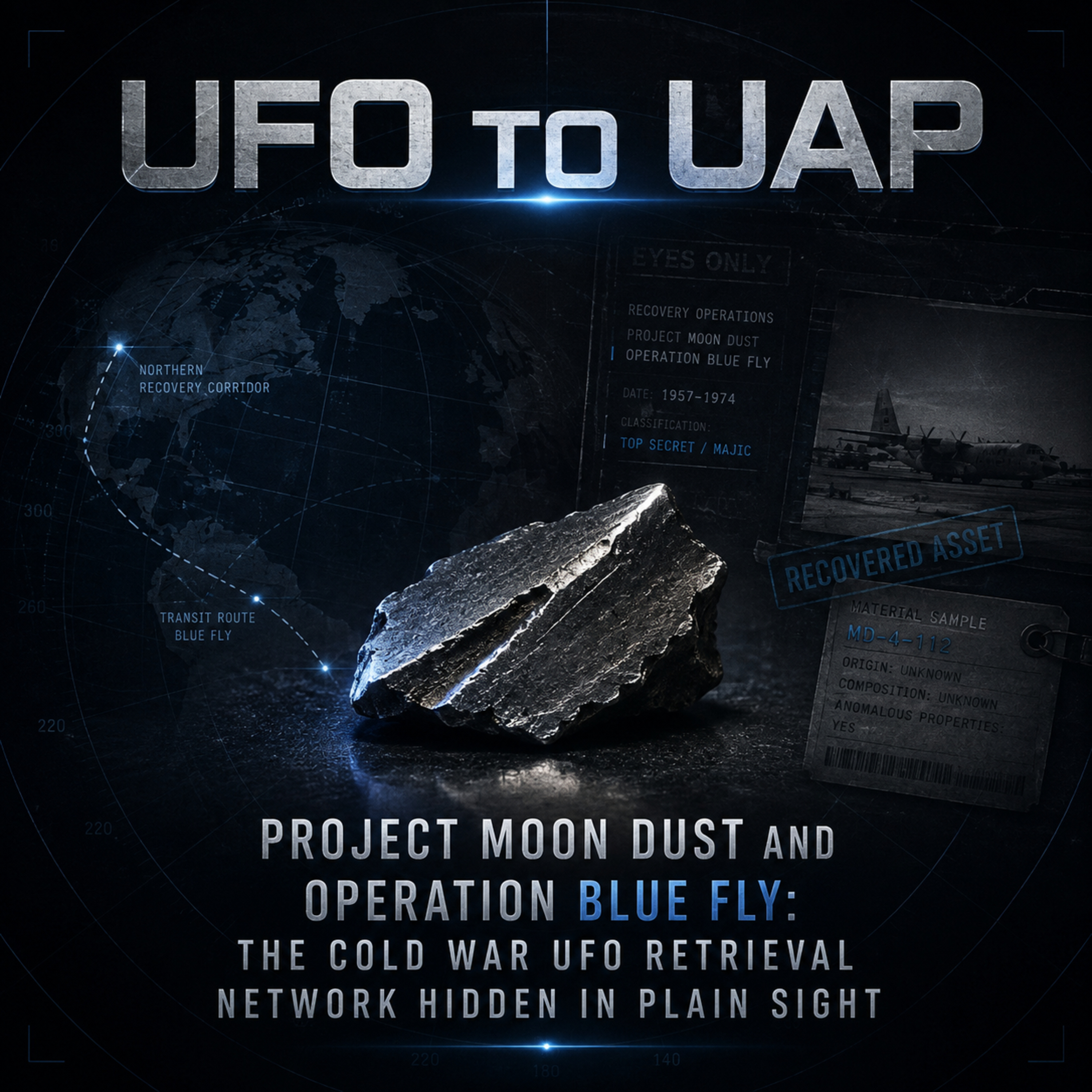
    Project Moon Dust and Operation Blue Fly: The Cold War UFO Retrieval Network Hidden in Plain Sight

    Were Project Moon Dust and Operation Blue Fly part of a hidden Cold War UFO retrieval network? In this episode of UFO to UAP Explained, host Matt Tones investigates two of the most intriguing names in declassified UFO history: Project Moon Dust and Operation Blue Fly. During the Cold War, the United States built systems to locate, recover, transport, and analyse fallen aerospace material, foreign space debris, satellite fragments, missile components, and objects of technical intelligence interest. But some declassified records also connect this recovery framework with unidentified flying objects, raising serious questions about whether legacy UFO retrieval efforts may have been hidden inside ordinary Cold War intelligence operations. This episode examines how Moon Dust and Blue Fly operated, what official documents say about foreign material exploitation, how recovered debris was moved to technical experts, and why the famous Congo metal-fragment report remains one of the most important UFO-related recovery documents in the public archive. The episode does not claim that Project Moon Dust proves alien crash retrievals. Instead, it separates evidence from speculation and asks a more careful question: did the U.S. government already have a recovery-and-exploitation pipeline capable of handling UFO-related material under Cold War national security cover? From Project Blue Book and Air Force intelligence to the NSA-hosted Congo exploitation report, descended foreign space vehicles, recovered metal fragments, and modern legacy retrieval claims, this episode explores the machinery behind one of the most controversial questions in UFO disclosure. Follow UFO to UAP Explained for evidence-led analysis of UFO disclosure, UAP investigations, Project Moon Dust, Operation Blue Fly, recovered UFO debris, Cold War intelligence, AARO, declassified files, and the hidden history of unexplained aerial phenomena. Episode Timestamps: (0:00) - Uncovering the Cold War UFO retrieval Network (2:34) - Moon Dust, Blue Fly: Cold War UFO Link (7:07) - Distinguishing Blue Book from Material Recovery Programs (10:26) - Declassified Report on Congo UFO Metal Recovery (13:16) - Cold War Global Recovery and Hidden retrieval Architecture (18:31) - AARO, Cold War Intelligence and UFO Residue (23:02) - Nuance, Congo Report and UAP Scepticism (29:12) - Cold War Bureaucracy: The Real Retrieval System) Sources: Air Force / FOIA records on Project Moon Dust, Operation Blue Fly, and UFO intelligence team duties; Moon Dust Intelligence Collection Guidance Letter; NSA-hosted Congo metal-fragment exploitation report; State Department / USAF / DIA Project Moon Dust and Blue Fly cable records; National Archives Project Blue Book material; AARO historical reporting. Keywords: UFO, UAP, Project Moon Dust, Operation Blue Fly, UFO Retrieval, UFO Debris, Recovered UFO Material, Congo UFO Debris, Cold War UFO Files, Foreign Material Exploitation, Project Blue Book, UFO Disclosure, UAP Disclosure, AARO, Declassified UFO Files, UFO to UAP Explained, Matt Tones.
  • S1 · E65
    August 2 · 38 min

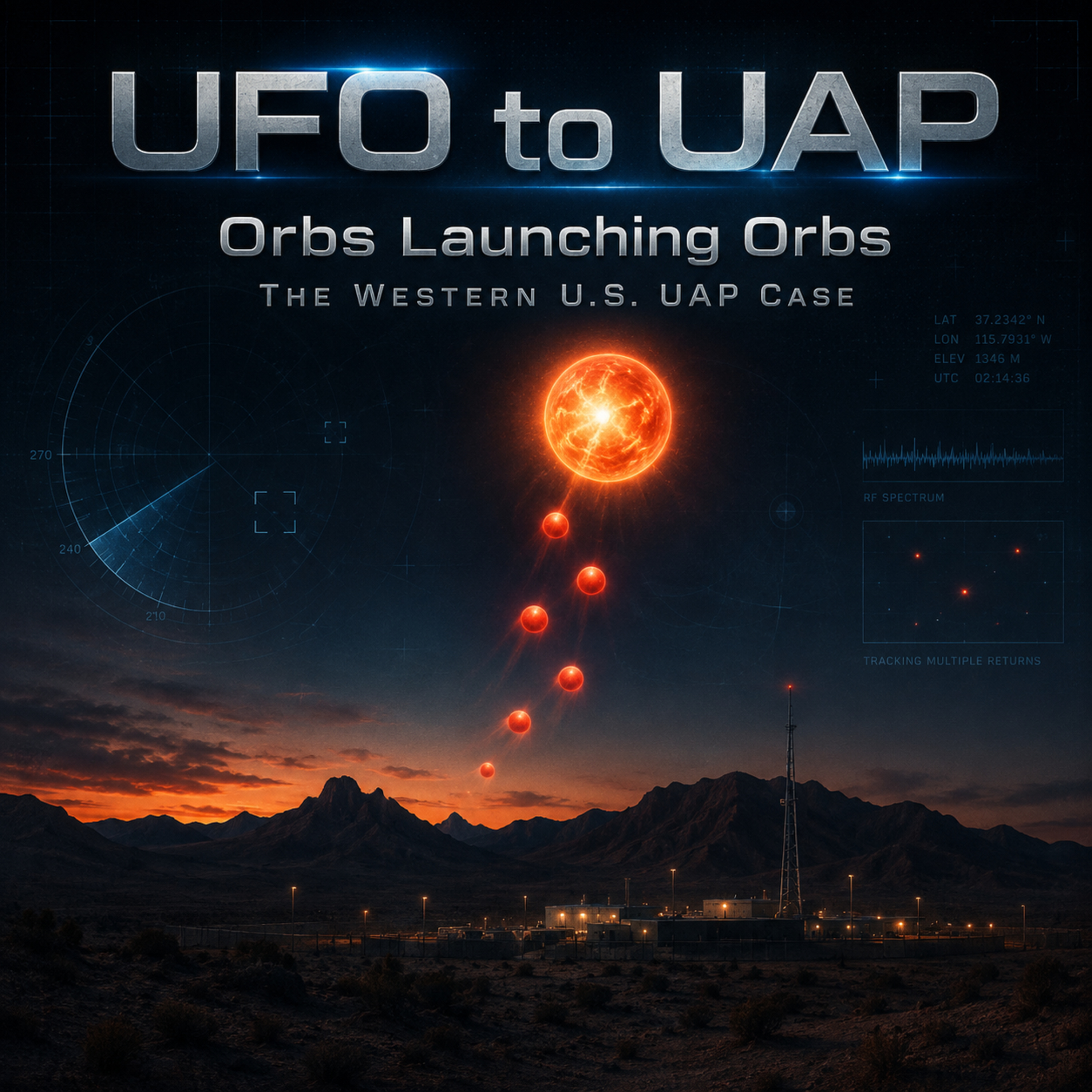
    Orbs Launching Orbs: The Western U.S. UAP Case AARO Still Can’t Resolve

    What happened in the Western U.S. “orbs launching orbs” UAP case? In this episode of UFO to UAP Explained, host Matt Tones investigates one of the most unusual recent UAP cases found in the 2026 U.S. UFO files: a Western U.S. incident involving federal law enforcement witnesses, orange “mother orbs,” smaller red orbs, military flare activity, radar and ADS-B review, and an AARO case analysis that still leaves part of the event unresolved. According to the AARO case update, six federal law enforcement special agents reported observing unusual luminous phenomena near a sensitive national security site over two days in October 2023. Witnesses described orange orbs appearing briefly, smaller red orbs seeming to emerge from them, silent movement, repeated patterns, and observations from multiple viewing angles. AARO assessed that roughly 60 percent of the reported activity was plausibly attributable to military aircraft deploying infrared countermeasure flares. But approximately 40 percent remained unresolved after first-stage analysis, with “unrecognized technology” listed as a provisional, unsubstantiated hypothesis based on witness testimony and elimination of competing explanations. This episode separates evidence from speculation, examining what AARO could explain, what it could not, why missing technical data matters, and what this case reveals about UAP disclosure, national security, witness testimony, military flares, sensor gaps, and public trust. Is the Western U.S. orb case a breakthrough, a misidentified military exercise, a classified capability, or another example of why UAP investigations need better data? Follow UFO to UAP Explained for evidence-led analysis of UFO disclosure, UAP files, AARO investigations, military encounters, orb sightings, declassified records, and the future of unexplained aerial phenomena. Episode Timestamps: (0:00) - The Western US Orb Case: Unresolved Technology (2:22) - Federal Agents Witness Unexplained Orb Phenomena (7:30) - AARO’s Explanations: Flares, Unresolved 40%, and Ruled-out Hypotheses (12:23) - The Unrecognised Technology Provisional Hypothesis (15:30) - Extraordinary Details From a Federal Agent’s Testimony (20:00) - Cinematic Orb Sightings During Helicopter Mission (22:47) - ASRO’s Analysis: Strengths, Weaknesses and Future Needs. (26:00) - Sensitive Sites, Case Interpretation, and balanced UAP views (30:10) - Beyond Orbs Launching Orbs: The Need for better data (32:36) - UAP Disclosure Challenges and the path forward. Sources: AARO Western U.S. Event “Orbs Launching Orbs” Case Analysis Update; Witness 1 Western U.S. Event Narrative; ODNI / USPER Senior U.S. Intelligence Officer Narrative; Pantex Unidentified Object Incident Report; 2026 U.S. UFO Files release materials. Keywords: UFO, UAP, Orbs Launching Orbs, Western U.S. UAP Case, AARO, UFO Disclosure, UAP Disclosure, Orb Sightings, Orange Orbs, Red Orbs, Military Flares, Infrared Countermeasures, Sensitive National Security Site, Unrecognized Technology, UAP Investigation, UFO to UAP Explained, Matt Tones

  • S1 · E64
    August 1 · 30 min

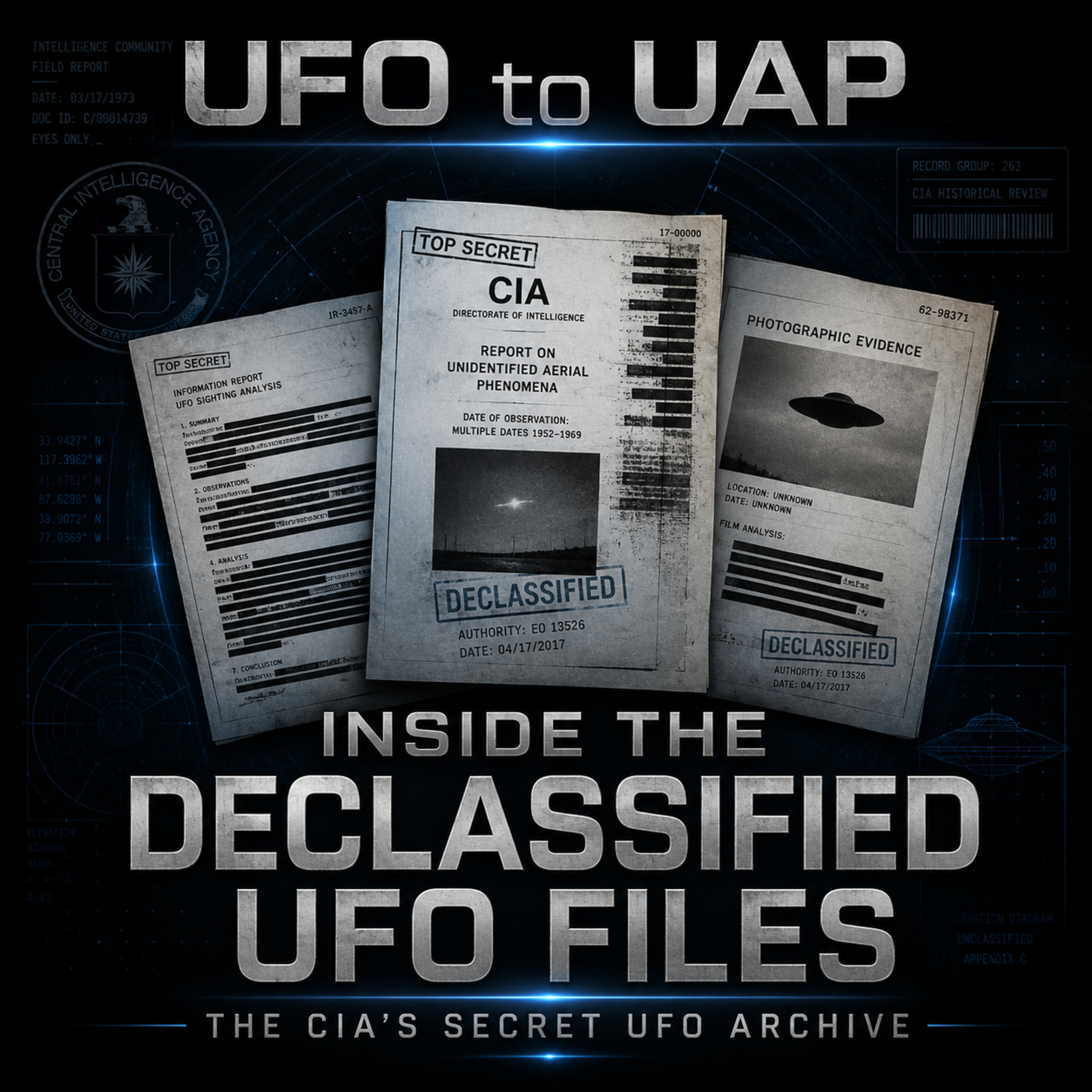
    Inside the Declassified UFO Files: The CIA’s Secret UFO Archive

    What do the CIA’s declassified UFO files really reveal? In this episode of UFO to UAP Explained, host Matt Tones investigates the CIA’s secret UFO archive, exploring how intelligence agencies monitored flying saucer reports, shaped public perception, supported scientific review, and managed the UFO mystery during the Cold War. From Project Blue Book and the 1952 Washington UFO wave to the Robertson Panel, U-2 reconnaissance flights, classified aircraft, foreign sightings, and official CIA memorandums, this episode examines why UFOs became a national security issue — and why government secrecy helped create the modern UFO cover-up narrative. We explore what the CIA collected, what it explained, what it concealed, and why declassified documents often reveal something more complicated than simple denial or confirmation. Did the CIA hide evidence of extraterrestrial craft, or was it protecting classified technology, intelligence methods, public confidence, and Cold War security interests? This episode separates evidence from speculation and asks what the CIA’s UFO history teaches us about disclosure, secrecy, institutional trust, and the modern UAP debate. Follow UFO to UAP Explained for evidence-led analysis of UFO disclosure, UAP investigations, CIA files, Project Blue Book, AARO, declassified records, military encounters, intelligence history, and the future of unexplained aerial phenomena. Episode Timestamps: (0:00) - Unpacking the CIA’s Secret UFO Archive (3:14) - National Security and Early UFO Reports (5:44) - CIA’s Fear of Psychological UFO Threats (8:07) - How CIA Secrecy Fuelled Public Mistrust (12:13) - Did Classified Aircraft Create UFO Mythology? (15:25) - Global UFOs and Intelligence Information control (19:22) - The Credibility deficit in UAP Disclosure (21:57) - Beyond Aliens: The Real Value of CIA Files (25:55) - Power, Secrecy, and Managing the Unknown. Sources: CIA — CIA’s Role in the Study of UFOs, 1947–1990; CIA — Take a Peek Into Our X-Files; National Archives — Project Blue Book records; CIA Robertson Panel records; CIA U-2 and OXCART historical material; AARO Historical Record Report; U.S. Department of Defense historical UAP reporting. Keywords: UFO, UAP, CIA UFO Files, Declassified UFO Files, UFO Disclosure, UAP Disclosure, Project Blue Book, Robertson Panel, CIA X-Files, Cold War UFOs, U-2 Program, AARO, Government Secrecy, UFO Cover-Up, UFO to UAP Explained, Matt Tones.
  • S1 · E63
    July 31 · 29 min

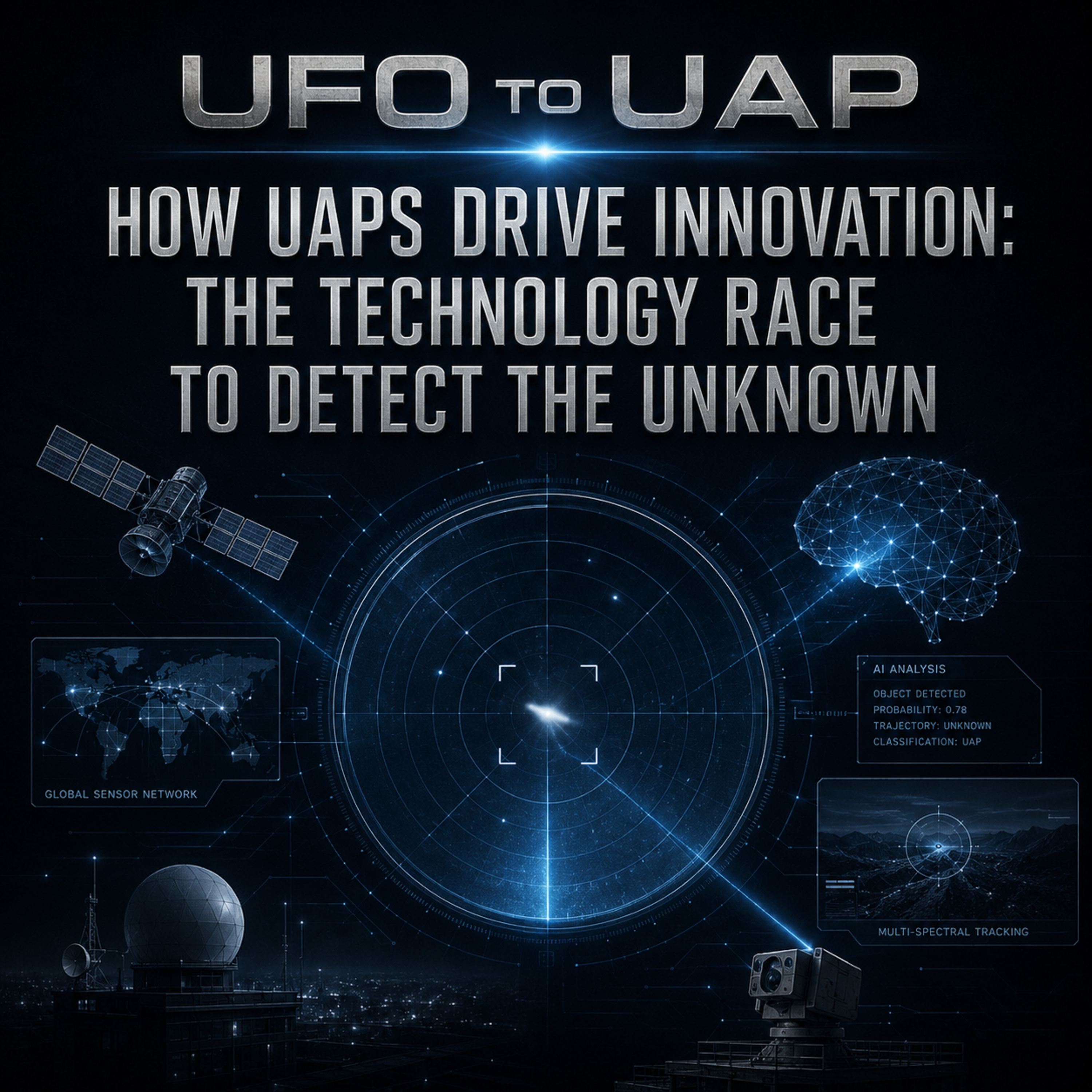
    How UAPs Drive Innovation: The Technology Race to Detect the Unknown

    How are UFO and UAP investigations driving innovation in radar, AI, satellites, sensor fusion, and aerospace technology? In this episode of UFO to UAP Explained, host Matt Tones investigates how the modern UAP mystery is pushing science, national security, and technology toward better ways of detecting the unknown. For decades, UFOs were framed as a question of belief. Today, UAP are increasingly treated as a data problem involving radar systems, infrared sensors, satellite monitoring, artificial intelligence, drone detection, airspace surveillance, quantum sensing, military reporting, and multi-spectral analysis. This episode explores how unidentified anomalous phenomena expose gaps in detection, classification, sensor calibration, metadata, public transparency, and government response. From AARO and NASA to AI anomaly detection, commercial satellites, military airspace awareness, and future sensor networks, we examine how the search for UAP may be accelerating a new technology race. Are UAPs driving better instruments, stronger evidence standards, and a more scientific approach to the unknown? Or will better technology simply reveal that the mystery is more complex than we imagined? Follow UFO to UAP Explained for evidence-led analysis of UFO disclosure, UAP science, AARO, NASA, radar systems, artificial intelligence, satellite tracking, sensor fusion, military encounters, and the future of unexplained aerial phenomena. Episode Timestamps (0:00) - From Belief to Data: UAP as a modern data problem. (1:29) - UAP at the intersection of science, security and technology (3:21) - How UAP drive innovation in radar detection and classification (5:29) - Infrared sensors: Detection, interpretation and metadata challenges (6:45) - Sensor Fusion: Building stronger UAP evidence through convergence (7:23) - Artificial intelligence: Pattern machine for UAP anomaly detection (9:53) - Satellites: Integrating data into a broader detection network (12:07) - Quantum sensing: Precision measurement for future UAP detection (14:00) - The private sector’s growing role in UAP detection (16:21) - Military pressure: Driving technology to avoid technical surprise (18:39) - Scientific stigma: How cultural change drives technical progress (20:22) - Innovation principles for better UAP evidence and trust (22:15) - Imagining the ideal future UAP investigation network (23:18) - Beyond UAP: Broader benefits of advanced detection systems (24:39) - Disclosure through infrastructure: A better process for truth (25:39) - UAP drive innovation: From belief to measurement (27:02) - UFO to UAP Explained: The technology race to detect the unknown. Sources: NASA UAP Independent Study Team Report; NASA Science UAP overview; AARO mission and reporting materials; ODNI / U.S. Department of Defense UAP reports; research on multimodal UAP observatories, sensor fusion, infrared detection, AI anomaly analysis, satellite monitoring, and airspace surveillance. Keywords: UFO, UAP, UAP Science, UFO Disclosure, UAP Disclosure, AARO, NASA, Sensor Fusion, AI Detection, UFO Radar, Satellite Tracking, UAP Research, Airspace Security, UFO to UAP Explained, Matt Tones.
  • S1 · E62
    July 30 · 28 min

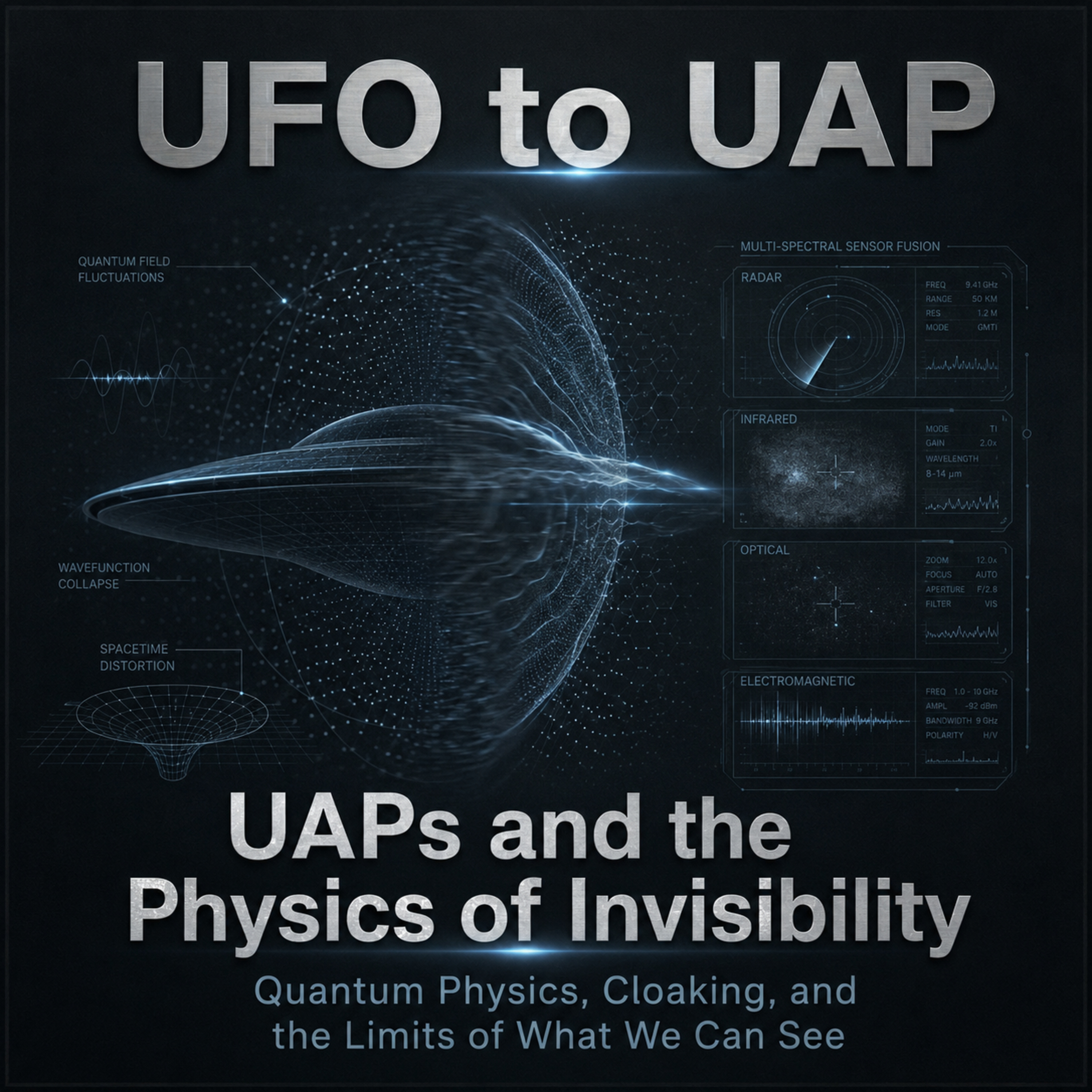
    UAPs and the Physics of Invisibility: Quantum Physics, Cloaking, and the Limits of What We Can See

    UAPs and the Physics of Invisibility: Quantum Physics, Cloaking, and the Limits of What We Can See Can quantum physics help explain why some UFO and UAP encounters appear, disappear, or evade detection? In this episode of UFO to UAP Explained, host Matt Tones investigates the physics of invisibility, exploring how light, radar, infrared sensors, stealth technology, metamaterials, quantum physics, sensor fusion, and electromagnetic detection shape what witnesses and military systems can actually see. From reports of UAPs vanishing from sight to objects appearing on some sensors but not others, this episode asks whether the mystery is always about what is in the sky — or whether it is sometimes about the limits of human perception and modern detection systems. We examine the science behind visibility, optical cloaking, radar stealth, infrared signatures, plasma phenomena, quantum sensing, metamaterials, and the role of multi-spectral data in modern UAP investigations. This episode does not claim that quantum physics proves UFOs or invisible spacecraft. Instead, it separates science from speculation and asks how future UAP research could use better sensors, better physics, and better evidence standards to understand what older systems may have missed. Are UAPs hidden by advanced technology, sensor limitations, atmospheric effects, classified systems, or something still unknown? Follow UFO to UAP Explained for evidence-led analysis of UFO disclosure, UAP science, AARO, NASA, quantum physics, radar systems, sensor fusion, stealth technology, and the future of unexplained aerial phenomena. Episode Timestamps: (0:00) Could UAPs be hidden in plain sight? (1:10) What this investigation does—and does not—claim (1:47) Visibility as an interaction with light and sensors (4:00) Quantum physics without UFO mythology (5:37) How light interacts with matter (7:04) Sensor fusion across radar, infrared and optics (7:56) The real science of cloaking (8:07) Metamaterials and wave manipulation (10:06) Quantum measurement and misleading claims (11:37) Quantum sensors and future UAP detection (12:46) Stealth technology and classified aircraft (14:42) Why UAPs can appear to vanish (16:45) Plasma, electromagnetic fields and aerial events (19:03) Can large objects become quantum-invisible? (20:57) A future multi-sensor UAP investigation (22:43) Testability, public trust and unfalsifiable claims (24:15) Six layers of the invisibility problem (25:54) Final assessment: measurement before mythology. Sources: NASA UAP Independent Study Team Report; NASA Science UAP overview; AARO mission and reporting materials; AARO Historical Record Report; research on metamaterials, optical cloaking, quantum optics, quantum sensing, radar stealth, sensor fusion, plasma phenomena, and UAP detection systems. Keywords: UFO, UAP, UAP Science, UFO Disclosure, UAP Disclosure, Quantum Physics, Physics Of Invisibility, Optical Cloaking, Stealth Technology, Sensor Fusion, AARO, NASA, UAP Research, UFO to UAP Explained, Matt Tones,

  • S1 · E61
    July 29 · 27 min

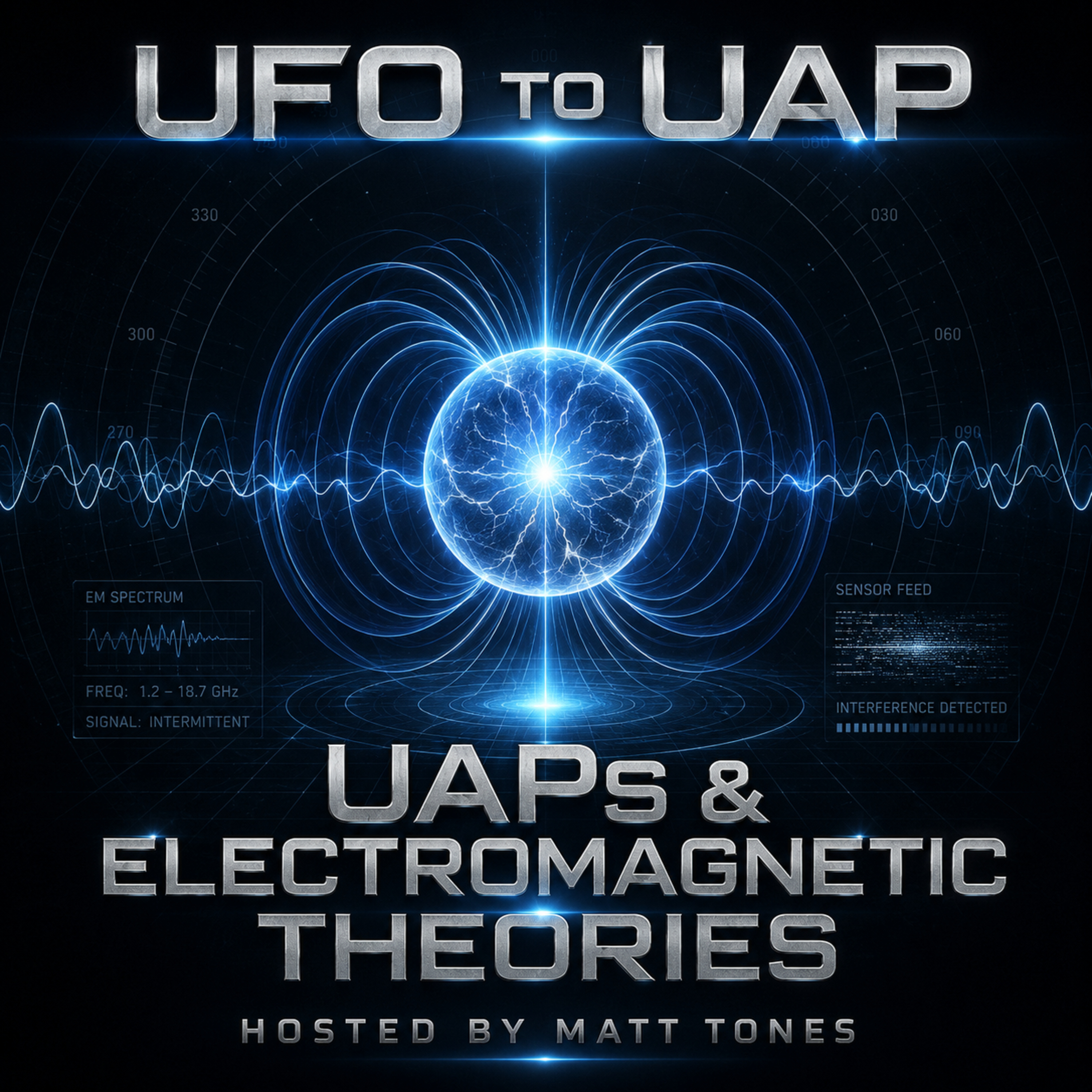
    UAPs and Electromagnetic Theories: Plasma, Sensor Interference, and the Science Behind UFO Encounters

    Can electromagnetic theories help explain some UFO and UAP encounters? In this episode of UFO to UAP Explained, host Matt Tones investigates the relationship between UAP sightings, plasma theories, radar detection, infrared sensors, radio interference, magnetic anomalies, and the electromagnetic spectrum. From reports of compasses spinning, radios failing, vehicles stalling, radar returns, glowing objects, and aircraft instrument interference, this episode asks whether some UAP cases may involve electromagnetic effects — or whether those effects are being misinterpreted through incomplete data. We explore how modern UAP research uses radar, infrared imaging, optical sensors, satellites, magnetometers, radio-frequency monitoring, AI analysis, and sensor fusion to separate ordinary explanations from genuinely unresolved anomalies. This episode also examines plasma theories, Project Condign, NASA’s UAP research framework, AARO’s scientific approach, and why future UFO investigations may depend on better electromagnetic measurement, metadata, calibration, and multi-sensor evidence. Are UAPs physical craft, atmospheric plasma, sensor artifacts, classified technology, or something still unknown? And could electromagnetic data be the key to understanding what witnesses, pilots, and military systems are actually detecting? Follow UFO to UAP Explained for evidence-led analysis of UFO disclosure, UAP science, AARO, NASA, radar systems, plasma theories, sensor fusion, and the future of unexplained aerial phenomena. Episode Timestamps: (0:00) - Unpacking the electromagnetic enigma of UAP encounters (3:51) - Understanding UAP through detection, interference, and explanation. (6:33) - Measuring electromagnetic interference in historical UAP cases (9:23) - Exploring plasma theories for luminous unidentified aerial phenomena (12:02) - Separating speculation from evidence in UAP propulsion theories (14:11) - Advancing UAP research with modern multimodal observatories (17:08) - How converging data strengthens UAP explanations and cases (20:00) - Navigating secrecy and trust in UAP scientific disclosure (23:29) - The future of UAP: From belief to electromagnetic measurement Sources: NASA UAP Independent Study Team Report; NASA Science UAP overview; AARO mission and reporting materials; AARO Historical Record Report; UK Ministry of Defence / Project Condign UAP study; Galileo Project research on geomagnetic monitoring for UAP; arXiv research on multimodal UAP observatories, sensor metadata, magnetometers, anomaly detection, and electromagnetic monitoring. Keywords: UFO, UAP, UAP Science, UFO Disclosure, UAP Disclosure, Electromagnetic Theory, Plasma UAP, AARO, NASA, Sensor Fusion, Radar UFO, UAP Research, Anomaly Detection, UFO to UAP Explained, Matt Tones.
  • S1 · E60
    July 27 · 39 min

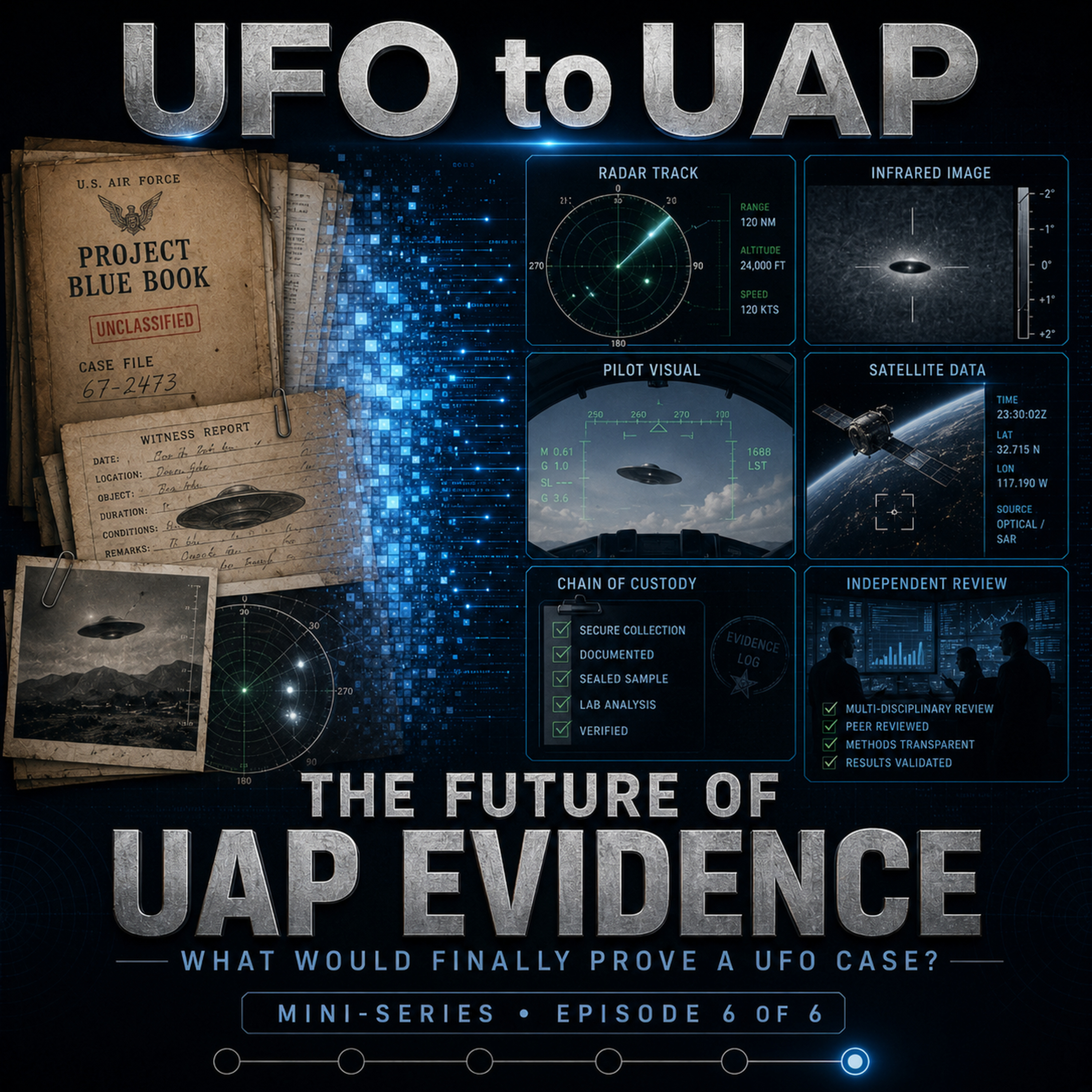
    The Future of UAP Evidence: What Would Finally Prove a UFO Case?

    What evidence would finally prove a UFO or UAP case? In Episode 6 of the From UFO Files to UAP Science mini-series, UFO to UAP host Matt Tones investigates the future of UAP evidence and asks what would be required to move a case from mystery to proof. After exploring Project Blue Book, the 1952 Washington UFO wave, Rendlesham Forest, the Tic-Tac encounter, artificial intelligence, machine learning, radar systems, and sensor fusion, this final episode brings the series together by examining the standard of evidence needed for serious UAP disclosure. This episode explores video evidence, radar tracks, infrared data, satellite imagery, pilot testimony, physical materials, chain of custody, independent scientific review, AARO-style investigation, government transparency, and the role of converging evidence in proving future UAP cases. Would clear video be enough? Would radar and infrared data be required? Would physical material finally settle the debate? Or will true UAP proof require multiple independent systems confirming the same unexplained event? Follow UFO to UAP for evidence-led analysis of UFO disclosure, UAP science, AARO, declassified files, military encounters, sensor fusion, artificial intelligence, and the future of unexplained aerial phenomena. Episode Timestamps (0:00) - The transformation from UFOs to UAP science (02:22) - Why different audiences demand different proof (05:57) - Video alone is not enough for UAP proof (08:26) - Multi-sensor correlation for UAP anomaly detection (10:39) - Forensic chain of custody for physical UAP material (13:26) - Integrating witnesses into broader evidence structures (15:51) - Official acknowledgement vs Scientific UAP proof (18:10) - Proving the anomaly before investigating origin (20:40) - Extraordinary evidence for extraordinary UAP claims (22:55) - Systematic observation for future UAP detection (24:35) - The key to proving future UAP cases (26:43) - Transparency and accountability in UAP Disclosure (28:50) - Balancing scepticism and belief in UAP research (31:05) - Building systems for truth, Not just revelations (34:15) - The path from UFO files to UAP science Sources: National Archives — Project Blue Book; NASA — UAP Independent Study Team Report; All-domain Anomaly Resolution Office (AARO); U.S. Department of Defense — Historical Navy UAP Video Release; AARO Historical Record Report; Scientific Coalition for UAP Studies / arXiv research on multimodal UAP observatories and sensor-based detection. Keywords: UFO, UAP, UAP Evidence, UFO Disclosure, UAP Disclosure, UAP Science, AARO, Sensor Fusion, UFO Proof, Declassified UFO, Military UAP, AI Detection, UAP Research, UFO to UAP, Matt Tones.

  • S1 · E59
    July 14 · 34 min

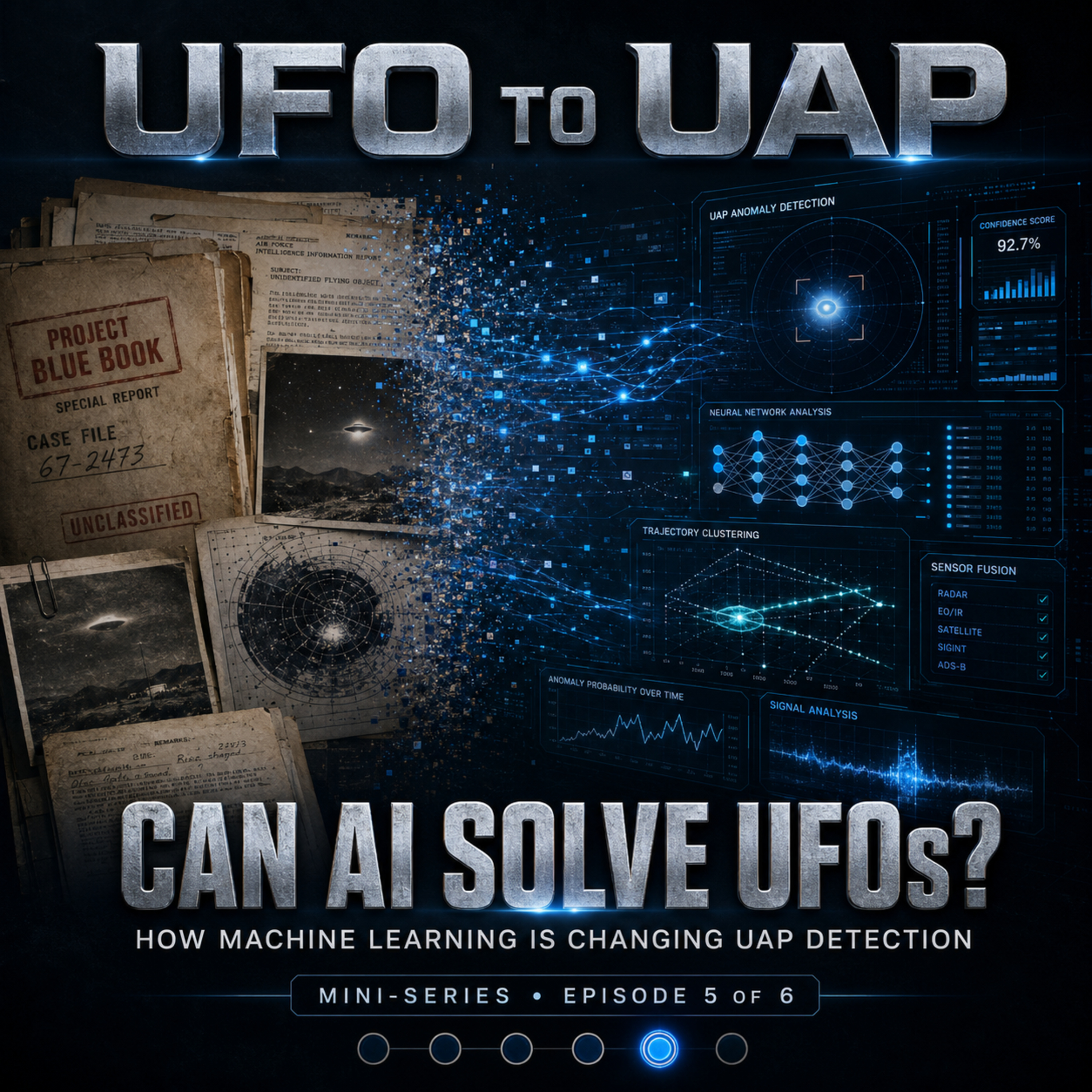
    AI and the Future of UFO Research

    For over 70 years, UFO investigations have plagued researchers with the exact same problem: too many reports, too little data, and too much uncertainty. But the modern UAP era is shifting away from leaked videos and whistleblowers, moving toward something much more powerful—mass data and pattern recognition. In Episode 5 of our six-part miniseries, From UFO Files to UAP Science, host Matt Tones dives into the technological revolution quietly transforming the study of Unidentified Anomalous Phenomena (UAP). Can artificial intelligence and machine learning finally separate the true anomalies from the noise, or will it just create a new layer of algorithmic secrecy? Episode Timestamps (0:00) - Introduction: Moving past whistleblowers and looking toward data-driven UAP breakthroughs. (2:28) - The Historic Data Problem: Why building certainty from fragments has failed for decades. (3:39) - What AI Actually Does: The reality of pattern recognition, scaling data, and isolating the "residual cases." (5:52) - Anomaly Detection Explained: Why an anomaly doesn't automatically mean "alien." (7:57) - Turning History into Data: How AI could mine Project Blue Book, the 1952 Washington Wave, and Rendlesham Forest. (9:33) - Live Detection Challenges: System filters, sensor blind spots, and the danger of algorithmic secrecy. (12:58) - The Tic Tac Case Through the Lens of AI: Predictive modeling and preventing evidence loss. (16:09) - Satellites & Sensor Fusion: Why no single sensor will solve the mystery. (20:33) - The Risk of Control: Could AI be used by governments to hide evidence instead of revealing it? (22:54) - The Rise of Civilian Science: Building open-source, public AI tracking networks. (26:19) - The Ultimate Gold Standard: What an ideal, trusted AI investigation pipeline looks like. (28:15) - Where AARO Fits In: The inevitable shift from "what did you see" to "what did the network detect." (29:48) - Looking Ahead to Episode 6: What would finally count as undeniable proof? What do you think? Would you trust an AI-assisted UAP investigation more than a traditional government report, or do we always need human experts to verify the truth? Let us know your thoughts in the Spotify Q&A or comments below! If you're ready to look past the sci-fi tropes and look into the actual data infrastructure reshaping disclosure, hit Follow, rate the show, and share this episode with someone ready for the scientific truth. Sources: NASA — UAP Independent Study Team Report; NASA Science — UAP research overview; All-domain Anomaly Resolution Office (AARO); U.S. Department of Defense — AARO scientific and data-driven UAP reporting; U.S. Department of Defense — Annual Report on Unidentified Anomalous Phenomena; arXiv research on machine learning, anomaly detection, sensor systems, and multimodal UAP observatories. Keywords: UAP detection, machine learning, artificial intelligence, UFO files, UAP science, sensor fusion, anomaly detection, Tic Tac UFO, Project Blue Book, AARO, Matt Tones, unidentified aerial phenomenon, satellite tracking data.

  • S1 · E58
    July 13 · 30 min

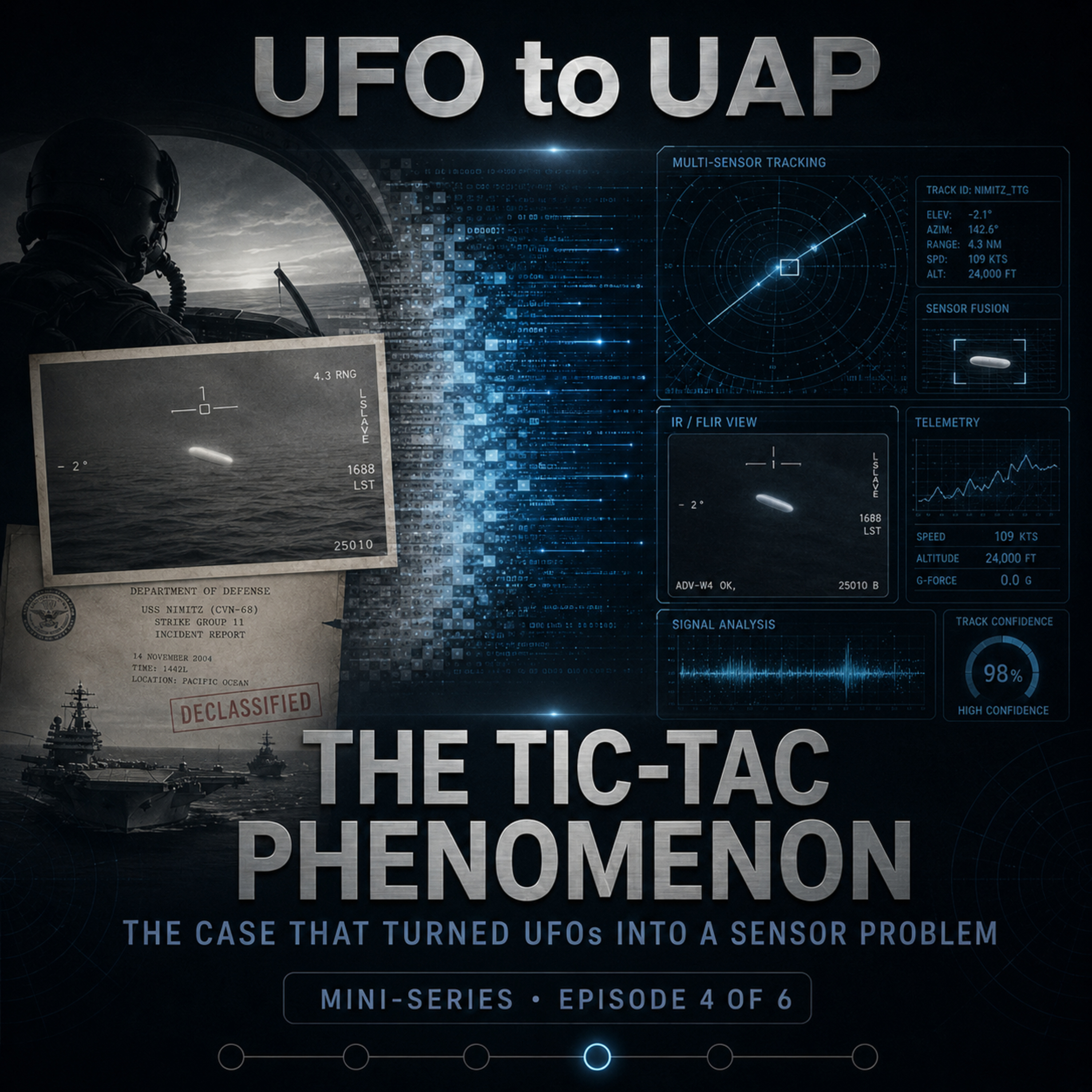
    Tic-Tac UAP: Transforming UFO Mysteries into Sensor Science

    A smooth, white, featureless object with no wings, no rotors, and no visible exhaust—witnessed by elite Navy pilots, tracked by advanced military radar, and recorded by a fighter jet's targeting pod. Years after the 2004 USS Nimitz Tic-Tac encounter, the case remains publicly unresolved. But its true legacy isn't just the mystery; it’s how it fundamentally changed the game. In Episode 4 of our six-part miniseries, From UFO Files to UAP Science, host Matt Tones breaks down why the Tic-Tac encounter served as the ultimate bridge between legacy UFO folklore and modern UAP data science. The question is no longer just "What did the pilot see?"—now, it's "What did the sensors record?" Episode Timestamps: ​(0:00) - Introduction: The featureless white object that changed the UAP conversation forever. ​(1:06) - The Turning Point: Shifting from subjective witness stories to raw sensor data problems. ​(2:11) - The Traditional UFO Model vs. Modern Frame: Why Project Blue Book and Rendlesham Forest got trapped by data poverty. ​(5:11) - November 2004: Setting the scene inside the high-tech US Navy training environment off Southern California. ​(6:54) - Commander David Fravor’s Close Encounter: The visual anomaly and the extraordinary "Cap Point" acceleration. ​(8:31) - Data Poverty vs. Data Control: How modern UAP investigations face classification roadblocks instead of missing evidence. ​(10:32) - Deconstructing the "Flir1" Video: Why a single targeting pod clip is just one layer in a wider data architecture. ​(12:50) - What is Sensor Fusion? Combining radar tracking, infrared heat signatures, visual shapes, and telemetry. ​(13:52) - Evaluating the 6 Possibilities: Misidentification, sensor error, classified US tech, foreign adversaries, natural phenomena, or the genuinely unknown. ​(17:21) - The Power of Stigma Shift: How changing the language from UFO to UAP opened doors in Congress and the media. ​(19:02) - The Tic-Tac as the Hinge: Why sensors without transparency still lead to public distrust. ​(21:27) - If It Happened Today: What a modern, trusted data preservation and UAP disclosure pipeline should look like. ​(23:33) - Setting the New Benchmark: Using layered military evidence as the gold standard for credibility. ​(25:30) - The Final Verdict: The Tic-Tac didn't prove aliens, but it did prove that the future of disclosure will be fought over data. ​(27:00) - Previewing Episode 5: Can artificial intelligence and machine learning solve the UFO problem? Join the Conversation: What do you think is the most plausible explanation for the Tic-Tac? Was it classified US tech, a foreign platform, sensor errors, or something completely unknown? Drop your thoughts in the Spotify Q&A or comment section below! If you want to understand how the military handles anomalies in controlled airspace, hit Follow, rate the show, and share this episode with a fellow UAP researcher. Sources: U.S. Department of Defense — Historical Navy UAP Video Release; U.S. House Oversight Committee — 2023 UAP hearing testimony from Cmdr. David Fravor; NASA — UAP Independent Study Team Report; All-domain Anomaly Resolution Office (AARO); U.S. Department of Defense — Annual Report on Unidentified Anomalous Phenomena; arXiv research on UAP sensor systems, metadata, and multimodal observatories. Keywords: Tic-Tac UFO, Nimitz encounter, David Fravor, UAP detection, sensor fusion, military radar, infrared targeting pod, UAP science, AARO, Matt Tones, unidentified aerial phenomenon, government disclosure, radar track data.

  • S1 · E57
    July 7 · 38 min

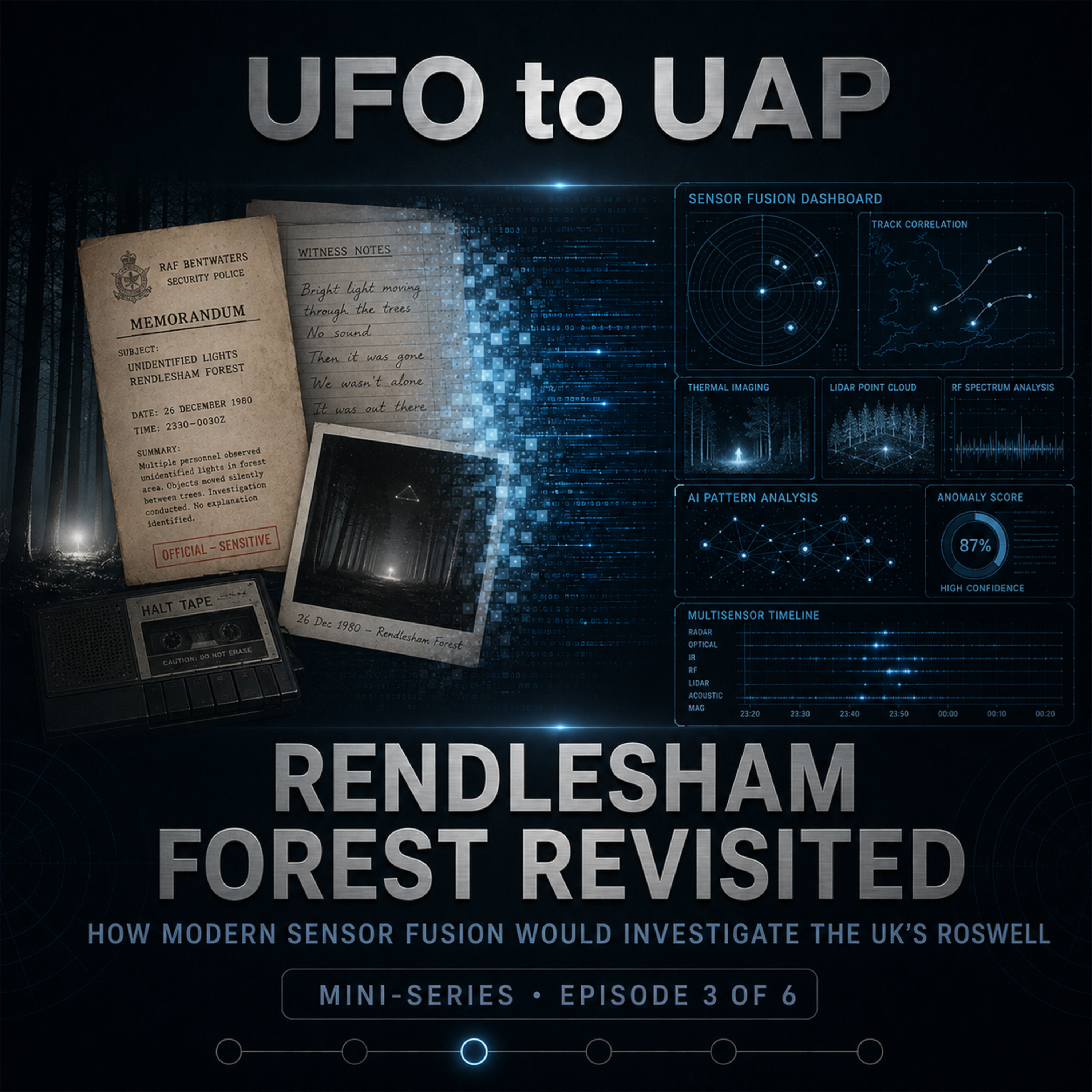
    Rendlesham Forest Revisited: How Modern Sensor Fusion Would Investigate the UK’s Roswell

    Did an alien craft land near a sensitive Cold War military installation in late December 1980, or was the Rendlesham Forest incident a perfect storm of environmental misidentifications, flashing lighthouses, and high-stakes anxiety? In Episode 3 of our six-part miniseries, "From UFO Files to UAP Science," host Matt Tones revisits the legendary Rendlesham Forest encounter—widely known as the "UK’s Roswell." But instead of just retelling the classic folklore, we analyze the evidence under a cutting-edge lens: If Rendlesham happened today, how would modern sensor fusion, AI, and military tracking technology handle it? We break down the four foundational pillars of the case—witness testimony from trained military personnel, official documentation like the Halt memo, the infamous Halt audio recording, and physical trace evidence including radiation readings. Discover how today's automated body cameras, open-source satellite checkers, strict chain of custody protocols, and data triangulation would either solidify the world's most famous military UFO encounter or explain it away completely. Use the timestamps below to jump straight to specific sections of our analysis: ​(00:00) - Introduction: The Legend of Rendlesham Forest ​(00:35) - Miniseries Roadmap: From Washington 1952 to Suffolk, England ​(01:26) - The Core Question: How Would Modern UAP Investigations Handle the Case? ​(02:17) - Why Rendlesham Matters: Moving Beyond the Limits of 1980s Methods ​(04:24) - The Cold War Military Context: RAF Woodbridge & Bentwaters ​(05:28) - 1980 vs. Present Day: The Missing Sensor Tech & Data Realities ​(06:22) - The Evolution of Human Memory & Witness Testimony Layers ​(08:33) - Demystifying the "UK's Roswell" Nickname ​(09:37) - Breaking Down the 4 Core Evidence Categories ​(10:00) - Analyzing Military Witness Reliability & Perception Biases ​(11:58) - The Institutional Weight (and Limits) of the Halt Memo ​(13:30) - Unpacking the Halt Audio Recording: Important but Decisive? ​(15:39) - Modeling the Lighthouse Theory: Geometry & Line of Sight ​(17:15) - Physical Site Claims: Radiation Readings & Chain of Custody Standards ​(19:08) - The 6 Layers of a Modern UAP Investigation ​(23:02) - Cold War Security Breaches vs. Public Curiosity ​(27:30) - Separating Core Evidence from Pop-Culture Mythology ​(31:20) - The Impact of UFO Stigma on Historical Reporting ​(33:00) - Final Verdict: Why Weak Evidentiary Foundations Leave the Case Unresolved ​(35:32) - Coming Up Next: The Nimitz "Tic Tac" Encounter Breakdown If you enjoy exploring the intersection of historical UFO files and rigorous modern UAP science, make sure to hit the Follow button on Spotify, leave us a 5-star rating, and share this episode with a friend! Connect with us online or submit your thoughts on this episode via our Q&A section below. Sources: UK National Archives — Ministry of Defence UFO files and Rendlesham Forest records; Lt Col Charles Halt memorandum on the RAF Woodbridge/Rendlesham Forest incident; UK Ministry of Defence — Project Condign / Unidentified Aerial Phenomena in the UK Air Defence Region; NASA — UAP Independent Study Team Report; NASA Science — UAP research overview; All-domain Anomaly Resolution Office (AARO); arXiv research on UAP sensor systems, metadata, and multimodal observatories. Keywords: UFO, UAP, Rendlesham Forest incident, UK Roswell, military UFO encounter, Charles Halt memo, UFO files, UAP science, sensor fusion, anomalies, RAF Woodbridge, RAF Bentwaters, alien spaceship, extraterrestrial, Matt Tones, aviation safety, radar tracking, anomaly investigation.

  • S1 · E56
    July 6 · 40 min

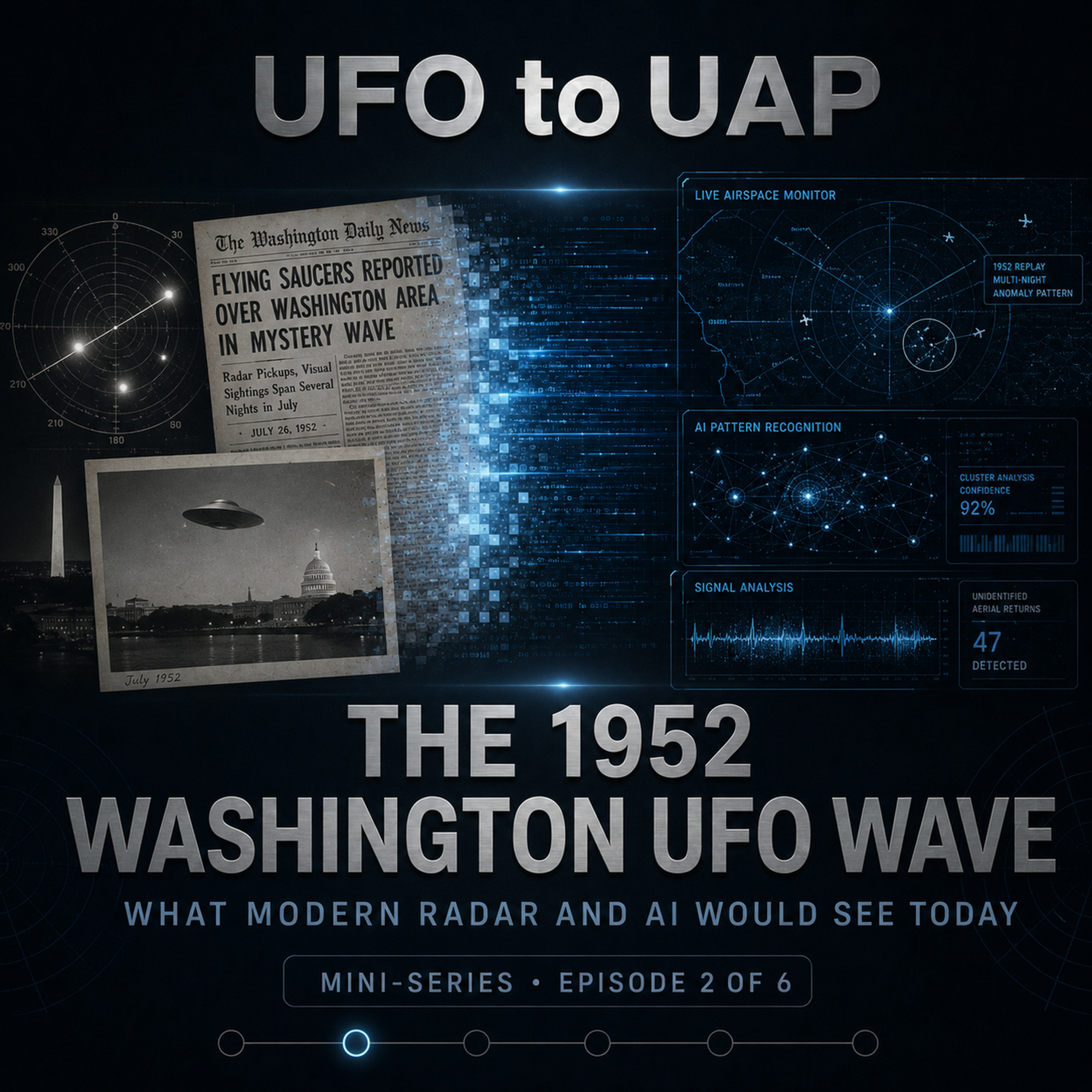
    The 1952 Washington UFO Wave: What Modern Radar and AI Would See Today

    Imagine July 1952. The Cold War is intensifying, the public is anxious, and radar is rapidly becoming the ultimate tool for national defense. Suddenly, unidentified objects appear directly over Washington, D.C.—not a remote desert or a quiet rural highway, but right above the political heart of the most powerful nation on Earth. Radar operators see unusual returns, jet pilots are scrambled, and the government is thrown into institutional uncertainty. In Episode 2 of our six-part miniseries, "From UFO Files to UAP Science," host Matt Tones investigates the legendary 1952 Washington D.C. UFO wave. Instead of just retelling history, we ask a cutting-edge question: If this massive airspace intrusion happened today, what would modern radar, artificial intelligence, satellite tracking, sensor fusion, and open-source intelligence databases actually see? We break down the limits of 1950s instruments versus today's technology, dive deep into how radar anomalies and atmospheric conditions can mislead operators, and look at how modern agencies like AARO build a robust data picture. Discover why the Washington wave became an early blueprint for the modern UAP disclosure problem, and how today's machine learning anomaly detection would change the final verdict. Episode Timestamps: ​(00:00) - Introduction: The Night Blips Appeared Over the Capital ​(00:50) - Miniseries Roadmap: Transitioning from Project Blue Book to AARO ​(01:26) - The Core Question: How Would Modern Technology Filter the 1952 Wave? ​(02:05) - The Strategic Cold War Domain: Washington D.C. as a Target Symbol ​(03:04) - Why the Washington Case Defines the UAP Disclosure Problem ​(04:10) - 1952 Technology vs. Modern Data Saturated Airspace ​(05:00) - Avoiding the Two Major Mistakes of Judging Historical UFO Cases ​(05:38) - Demystifying Radar: Objective Mechanical Evidence or Atmospheric Illusion? ​(06:26) - The Modern Interrogation: The Checklist for Verifying Radar Returns ​(07:44) - Interactive Listener Poll: Is Radar Alone Enough for Credibility? ​(08:01) - Historical Context: The Psychological Space of the Early 1950s ​(09:00) - Airspace Protection: How National Security Concerns Haven't Changed ​(09:58) - The Sensor Fusion Model: Combining Radar, Infrared, and Satellites ​(11:50) - AI & Machine Learning: Automating Anomaly Detection in Protected Skies If you love diving past the surface mythology of famous UFO encounters to explore the strict data and science behind modern UAP investigations, make sure to hit the Follow button on Spotify, leave us a 5-star review, and drop your thoughts in the comment section below! Sources: National Archives — “Saucers Over Washington” and Project Blue Book records; National Archives — Project Blue Book UFO files; NASA — UAP Independent Study Team Report; NASA Science — UAP research overview; All-domain Anomaly Resolution Office (AARO); arXiv research on UAP sensor systems, metadata, radar analysis, and multimodal observatories. Keywords: UFO, UAP, Washington UFO wave, 1952 UFO wave, Project Blue Book, AARO, sensor fusion, military radar, artificial intelligence, temperature inversion, anomalous propagation, jet intercept, Matt Tones, national security, restricted airspace, open source intelligence, flying saucers.

  • S1 · E55
    July 6 · 35 min

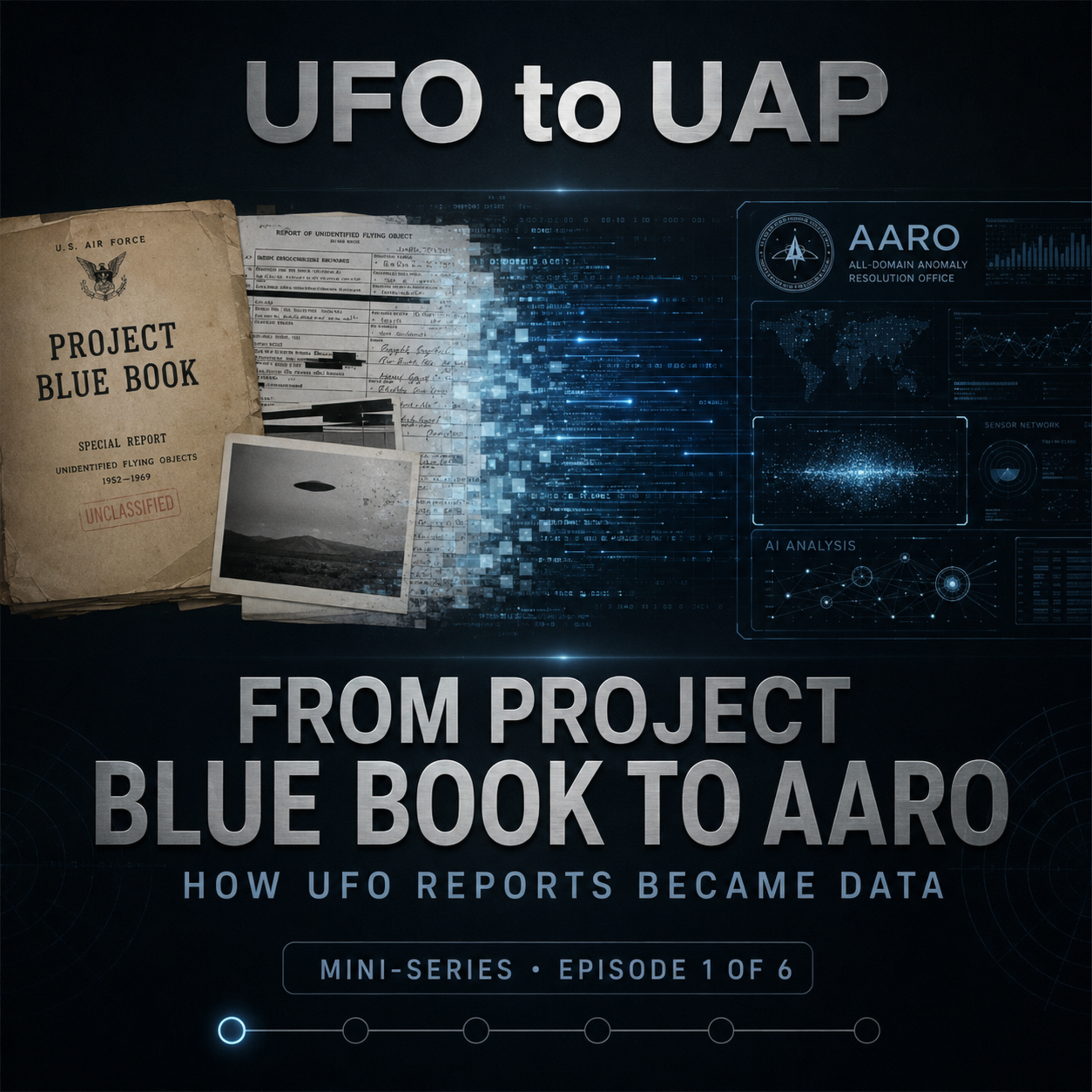
    Data-Driven UFO Studies: From Project Blue Book to Modern AARO Analysis

    For more than 70 years, the UFO mystery has lived inside paper archives—hidden away in declassified government files, handwritten witness statements, pilot notes, weather checks, and official memos. But today, we are entering a brand new era. The UFO story is transitioning from a culture of strange lights and official denials into a rigorous problem of science, sensors, and data tracking. In the premiere episode of our six-part miniseries, "From UFO Files to UAP Science," host Matt Tones lays down the essential baseline for the modern UAP disclosure debate. Instead of just reading through old history, we ask a defining question: What would happen if the most famous historical UFO encounters were investigated today using artificial intelligence, sensor fusion, satellite tracking, and machine learning? We track the long evolutionary road of official American investigations—from the national security anxieties of Project Sign and Project Grudge to the massive, long-running archive of Project Blue Book. Discover why the word "unidentified" became a doorway for decades of speculation, how the limits of 20th-century human observation left cases permanently unresolved, and how modern offices like AARO are trying to reshape the entire framework of public trust and disclosure. Episode Timestamps: ​(00:00) - Introduction: The 70-Year Evolution of the UFO Mystery ​(00:23) - Miniseries Roadmap: Introducing From UFO Files to UAP Science ​(00:37) - The Core Question: What If Historical Cases Had Modern Tech? ​(01:10) - The Shift: Moving from Human Reports to 21st-Century Data ​(01:52) - Introducing Episode 1: Project Blue Book to AARO ​(02:17) - The Long Road from Handwritten Reports to AI Sensors ​(03:02) - The Old Model: Report-Driven and Limited by 1950s Evidence ​(03:40) - Narratives vs. Numbers: The Incomplete Evidence Problem ​(04:24) - What Did the System Record? The Spine of the Series ​(05:24) - The Strategic Origins: Inside Project Sign and Cold War Airspace ​(06:05) - National Security Context: Are UFOs Secret Soviet Technology? ​(07:05) - Project Grudge & The Early Culture of Official Dismissal ​(07:19) - Project Blue Book: The Historical Baseline for UFO Files ​(07:58) - What "Unidentified" Actually Means: Data Gaps vs. Extraterrestrials ​(08:30) - The Doorway of Speculation: The Permanent Disclosure Tension ​(09:09) - Interactive Listener Poll: What Does Unidentified Mean to You? ​(09:30) - The Two Interpretations of Blue Book: Rational Science or Cover-Up? ​(10:22) - The Public Interface: How Incomplete Files Damaged Public Trust ​(10:51) - Lessons for AARO: Why the Government Must Show Its Work ​(11:30) - Human Observation Limits: The Flaws of Visual Tracking If you want to look past the pop-culture mythology to examine the actual data, sensor grids, and science that define modern aerial anomalies, hit the Follow button on Spotify, leave a 5-star rating, and share your answers in our Q&A poll down below! Sources: National Archives — Project Blue Book records; National Archives — “50 Years Ago: Government Stops Investigating UFOs”; NASA — UAP Independent Study Team Report; NASA Science — UAP research overview; All-domain Anomaly Resolution Office (AARO) mission and vision; arXiv research on UAP sensor systems, metadata, and multimodal observatories. Keywords: UFO, UAP, Project Blue Book, AARO, Project Sign, Project Grudge, UAP disclosure, sensor fusion, artificial intelligence, Matt Tones, military intelligence, declassified files, national security, restricted airspace, anomalous propagation, aviation safety, anomalies.

  • S1 · E54
    July 5 · 33 min

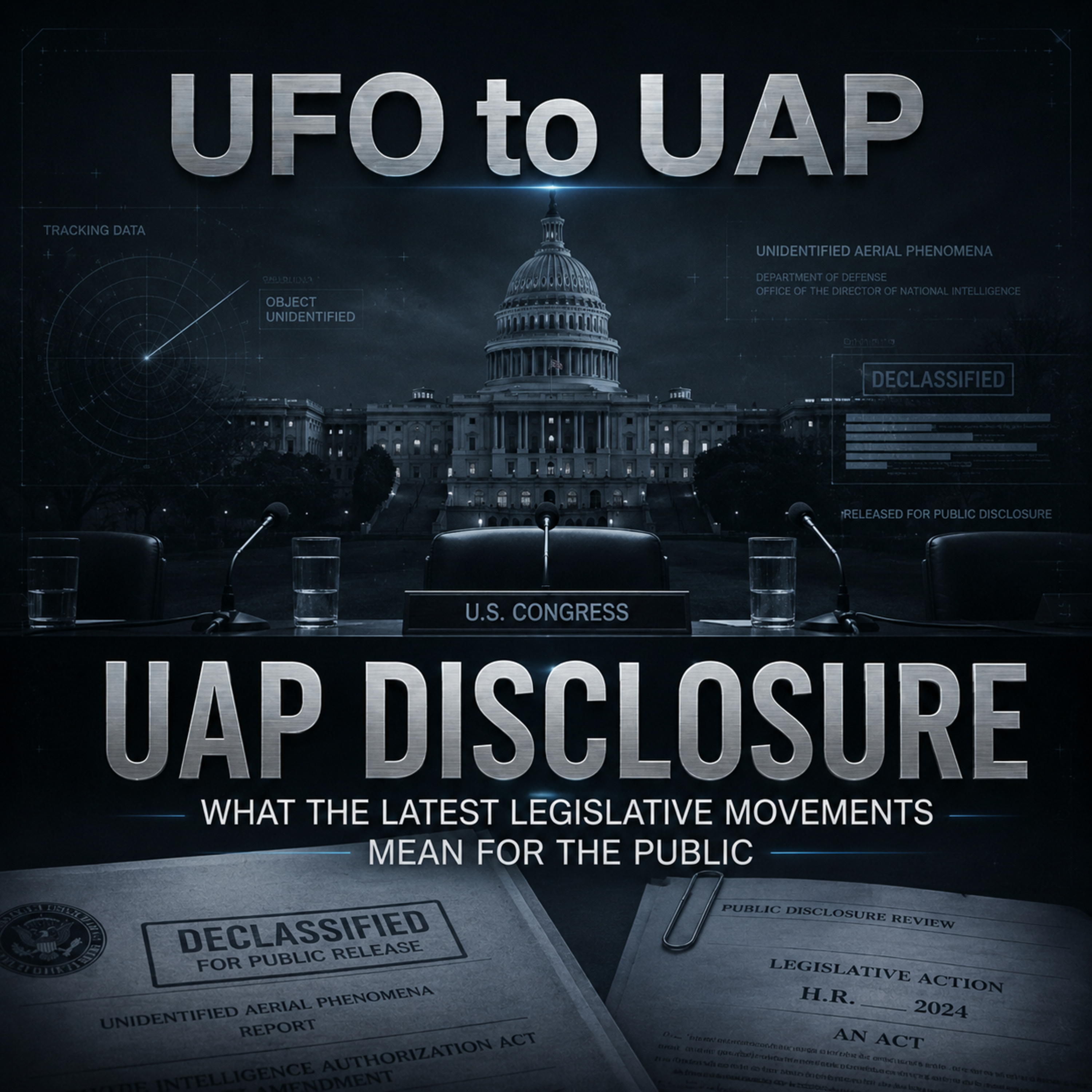
    UFO Disclosure: What the Latest UAP Legislative Movements Mean for the Public

    For decades, UFO disclosure was treated purely like a question of belief. Did you believe the witness? Did you trust the photo? Did you believe the government was hiding something? But the modern UAP era has fundamentally changed the conversation. The issue is no longer just debated in fan forums—it is moving through the halls of Congress, shaping intelligence authorization acts, driving whistleblower protection bills, and forcing classified oversight briefings. In this episode of "UFO to UAP Explained" host Matt Tones unpacks the latest UAP legislative movements and explains exactly what they mean for the public. Instead of chasing sensational rumors, we look at the dry, high-stakes mechanics of law, national security policy, and government archives. We break down how recent legislation attempts to shift the balance of power, the ongoing institutional tug-of-war between public transparency and military secrecy, and why these legal mandates are the most significant development in the history of aerial anomalies. Learn why the true story of modern UAP disclosure isn't just about what is flying in the sky—it's about who controls the information here on the ground. Episode Timestamps: (00:00) - Introduction: Moving UFO Disclosure from Belief to Law(00:15) - Changing the Question: The Reality of Modern UAP Oversight(00:30) - Moving Through Congress: The Mechanics of Defense Legislation(01:05) - Demands for Data: Video Files, Satellite Records, and Transparency(02:30) - Beyond the Science: The Legal Framework Governing Modern UAP Data(03:15) - The Strategic Turn: How Defense Authorization Acts Changed the Game(04:00) - Mandated Transparency: The Legal Deadlines Facing Intelligence Agencies(04:45) - The Institutional Tug-of-War: National Security vs. Public Right to Know(05:30) - Protecting the Sources: The Reality of Classification Boundaries(06:20) - Whistleblower Provisions: Lowering the Risk for Insiders to Speak Out(07:10) - The Public Impact: How Legal Mandates Reshape Historical UFO Myths(08:00) - Tracking the Archives: Establishing a Permanent Record for Anomalies(08:45) - Interactive Listener Poll: Do You Believe Congress Can Force True UAP Disclosure?(09:30) - Conclusion: Why the Legality of Data Controls the Future of the Mystery If you enjoy an analytical approach to the laws, data, and policy defining modern aerial anomalies, hit the Follow button on Spotify, leave a 5-star rating, and share your answers in our Q&A poll down below. Sources: Congress.gov — UAP Whistleblower Protection Act; U.S. Senate / NDAA records on UAP disclosure amendments; National Archives — UAP records collection requirements; All-domain Anomaly Resolution Office (AARO); U.S. Department of Defense — Annual Report on Unidentified Anomalous Phenomena; NASA UAP Independent Study Team Report. Keywords: UFO, UAP, UFO disclosure, UAP legislation, Congress, whistleblower protection, National Defense Authorization Act, AARO, intelligence community, classified data, government transparency, Matt Tones, national security, aerial anomalies, public oversight, policy reform.

  • S1 · E53
    July 4 · 35 min

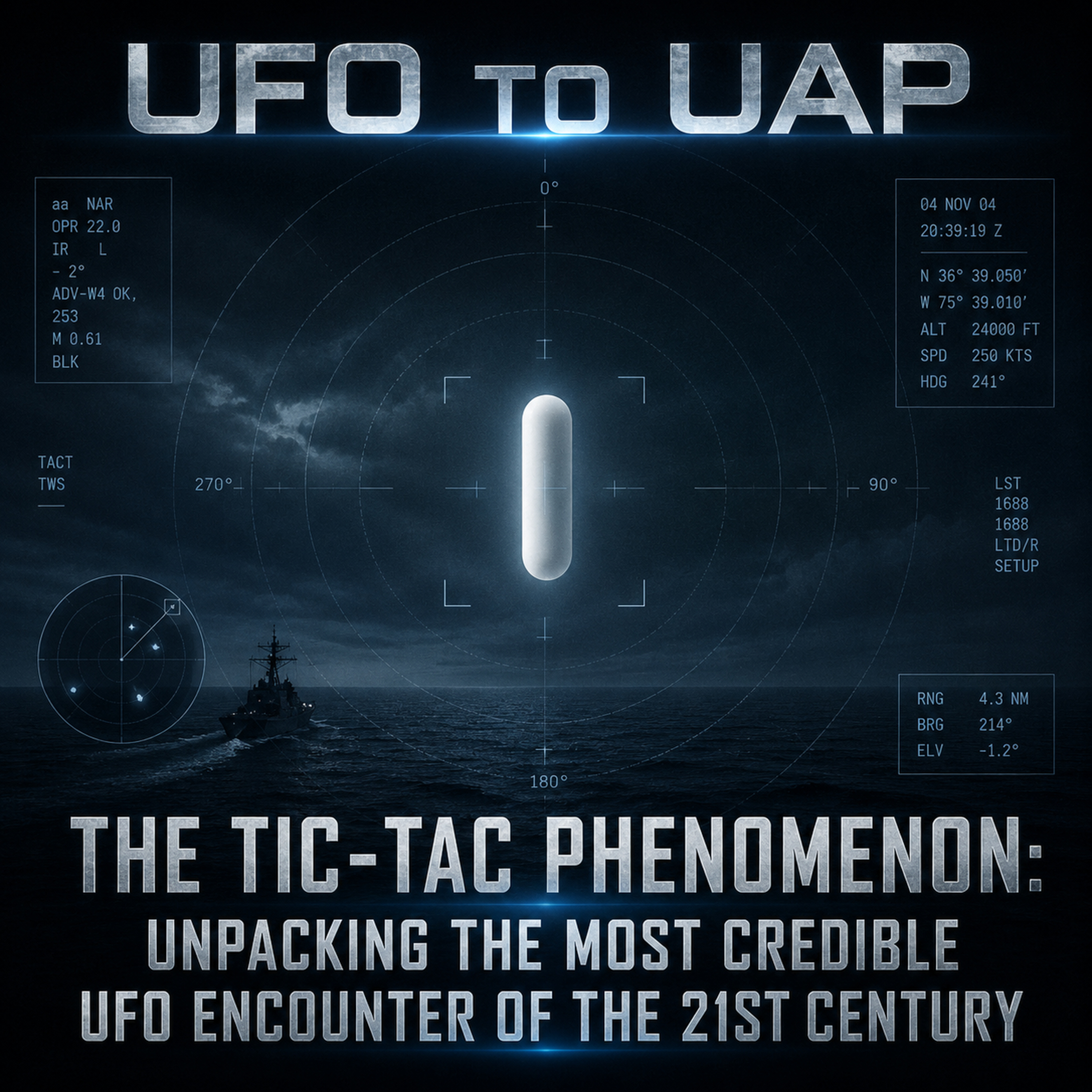
    The Tic-Tac UFO Phenomenon: Unpacking the Most Credible UAP Encounter of the 21st Century

    There are UFO stories built on rumors and blurred photographs. And then there is the Tic-Tac. On November 14, 2004, off the coast of Southern California, highly trained Navy pilots from the USS Nimitz carrier strike group were diverted to investigate a series of anomalous radar returns. What they saw with their own eyes—and what military sensors tracked—would completely redefine the global conversation surrounding Unidentified Aerial Phenomena (UAP). In this episode of "UFO to UAP Explained," host Matt Tones dissects the legendary 2004 USS Nimitz encounter. This case didn't become famous because it definitively proves the existence of alien life. It became famous because it brought together the critical components missing from so many standard UFO cases: disciplined witnesses, structured military context, advanced radar triangulation, official targeting pod footage, and sworn congressional testimony. We look past the sensationalism to review the exact mosaic of data—from the initial Aegis combat system radar tracks down to the ocean disturbance, the visual engagement by Commander David Fravor, and the infamous FLIR1 video. Discover why the Tic-Tac case successfully shifted the UAP topic out of the fringe culture of "belief" and forced it onto the desk of national security officials as a serious aerospace tracking problem. Episode Timestamps: (00:00) - Introduction: Moving Past Rumors to the Reality of the Tic-Tac (00:44) - Diverted from Training: The November 14, 2004 USS Nimitz Mission (01:06) - What Sets the Tic-Tac Apart? The Rare Elements of UAP Credibility (01:37) - Unpacking What Was Reported, Recorded, and Acknowledged (02:05) - Transforming the Subject: Shifting UFOs into a National Security Issue (02:21) - The Pre-Tic-Tac Era: Why UFO Reports Were Historically Ignored (03:03) - Shifting the Framing: How the Modern Era Replaced Belief with Raw Data (03:57) - Setting the Stage: The Controlled Training Grid of the Carrier Strike Group (04:42) - The USS Princeton Radar Logs: Tracking Anomalies Before Visual Intercept (05:33) - The Intercept Scramble: Fravor’s Crew Guidance to the Merge Plot (05:41) - Looking Down: The Mysterious Ocean Disturbance and White Water Patch (05:52) - First Visual Contact: Describing the Smooth, Wingless Object (06:05) - The Engagement: How the Tic-Tac Reacted and Mirrored Fravor’s Jet (06:27) - Extreme Acceleration: The Object Disappears from Visual Range (06:34) - Reappearing at the CAP Point: A 60-Mile Leap of Performance (06:57) - Analyzing Evidentiary Limits: The Public Access Gap to Raw Sensor Data (07:41) - Interactive Listener Poll: What Makes the Tic-Tac Case Persuasive to You? (07:56) - Tracking the FLIR1 Video: Understanding the Targeting Pod Recording (08:09) - The Video vs. The Event: Why the Clip is Just One Fragment of a Mosaic (09:21) - Piecing Together the Fragments: How Real-World UAP Investigations Work (10:15) - Performance Profiles: Analyzing Appearance vs. Real Behavior If you value an analytical approach to the data, sensor grids, and testimonies defining modern aerial anomalies, hit the Follow button on Spotify, leave a 5-star rating, and share your answers in our Q&A poll down below! Website: https://www.ufotouap.com Keywords: UFO, UAP, Tic-Tac UFO, USS Nimitz encounter, David Fravor, USS Princeton, Aegis radar, FLIR1 video, Navy pilots, military sensors, UAP science, Matt Tones, aviation safety, national security, congressional testimony, anomalous performance, anomaly tracking.

Showing 21–34 of 34 episodes