Skip to content
Artwork for Truth Jihad Radio
NewsPoliticsReligion & SpiritualityIslam

Truth Jihad Radio

Kevin Barrett

Red-pill truths and interpretations "they" don't want you to know about.

kevinbarrett.substack.com
Play
  • 27 episodes
  • a few times a week
  • Avg 44 min
  • English
Counted on this page — what you have heard stays on this device, so it is not something the list can be paged by.
  • Yesterday · 16 min

    “The Zionists Have a Gun to Trump’s Head”

    Rumble link Bitchute link Former BBC broadcaster Tony Gosling and I agreed on some points, and disagreed on others, last night on Press TV. Below is a partial transcript. Press TV: Good evening. In tonight’s Spotlight, we examine a significant development in West Asia. The regional efforts for de-escalation between Iran and the U.S. and also resistance to U.S. secondary sanctions on Iran are increasingly beginning to overlap. Qatar’s Prime Minister is in Tehran discussing de-escalation, dialogue, and a phased maritime corridor through the Strait of Hormuz, while Russia says it will work with Iran and other countries to counter Washington’s secondary sanctions. So are regional countries beginning to take their security and economic interests into their own hands? Can Russia, China, and other powers prevent Washington from turning unilateral sanctions into a global policy? And are we witnessing the emergence of a regional and international order less impacted by the U.S. pressure? That’s what we’ll be discussing tonight with our guests: Kevin Barrett, editor of Al-Andalus Tribune of Saida, Morocco, and also joining us is Tony Gosling, historian and investigative journalist joining us from Bristol, the UK. I’m going to begin with Kevin Barrett, our guest from Morocco. Thank you so much for being with us. Let me begin by asking for your broad takeaway. Why do you think that the regional countries at this point are increasingly turning to Tehran directly to address de-escalation? Kevin Barrett: Well, this is really the result of what’s been a clear Iranian victory in this war against Israel and the United States. The aggressors achieved nothing. They bragged that they were going to get a regime change and install puppet governments, and nothing like that happened. Quite the opposite. Iran has shown that it is the one that has the control over the Strait of Hormuz. It has shown that it is the one that has its weapons protected, buried deep underground, where they’re in many cases impregnable. It has more manufacturing capacity to renew its weapons than the Americans and Israelis have to renew theirs. And the American bases in the region have been decimated and the Americans have retreated. So the writing was on the wall already just 48 hours after the dastardly surprise attack on February 28th. But it’s slowly sinking in all over the world that this has been the most significant U.S. defeat perhaps in all of American history and the most important victory for a country that’s working for a multipolar world. And so now the world sees that we’re heading for that multipolar world. The U.S. is run by blatantly irresponsible criminal forces. Its figurehead president is a certified narcissistic lunatic who you never know what he’s going to say one minute after what he said the previous minute. And so every country has to try to figure out who’s reliable, who can it actually deal with, who’s going to keep its word. Well, the Americans won’t keep their word. They tore up and shredded every deal that they had, including the MOU. And so now we’re in a world where it’s every country for itself. And the countries that used to have to worry about American pressure are now seeing that the whole world will be better off if we get out from under this dollar hegemony where the Americans have the ability to choke off people’s money flows. And so that’s the new world and every country is having to adjust to it and go straight to Iran to make those kinds of deals to renew the relations in the region. Press TV: That’s right. Now let me bring in Tony Gosling, our guest from Bristol. Thank you so much for being with me, Tony. I also wanted your thoughts on what it means that countries in the region that hosted and still host the U.S. bases are coming to Tehran directly, asking for de-escalation. And also what is important is to talk about what is happening in the Strait of Hormuz. Iran and Oman, which both of them are inching closer to a deal on how to manage the Strait of Hormuz, could that proposed maritime corridor through the Strait of Hormuz be a practical model for regional management, this time without Washington’s interference? Tony Gosling: Well, yes, of course it could. But the trouble is, and I have to disagree with the other guest you have on there, I don’t think we’ve seen anything yet when it comes to this war. It’s certainly not a victory. This is tempting fate to say such things. It has been, so far, pretty much a defeat. But the thing is, you must never count your chickens before they’re hatched. This war could easily escalate. I think it could escalate in September after what we call here in the UK the silly season, where the politicians are schmoozed by the military-industrial complex, by the banksters, who are really driving much of the warfare that’s going on in the world today. Of course, these are not democracies. The people really aren’t getting a say whatsoever. And if you needed to be reminded of that, all you need to know is that Donald Trump campaigned on an anti-war platform and then he’s actually started one of the most horrific and horrendous wars of aggression, which is the greatest crime anybody in humanity can ever commit, with this illegal and unprovoked war against Iran. Okay, so the Americans at the moment are on the back foot, but that doesn’t mean to say that this is over by any means. Anyone that’s dropping their guard as a result should be extremely careful about counting their chickens. They’ll be dropping their guard. They think that somehow they’ve won, and I think it’s very dangerous. I think the war is still very much in progress. The Americans have got huge resources. They are in terminal decline, clearly. But a wounded tiger, as we know, can be extremely dangerous. They have nuclear weapons. They have got all sorts of weapons they haven’t used yet. And to think that this is all over and that they’ve won is a big mistake. Press TV: All right, thank you so much, Tony. Now, let me go back to Kevin Barrett. Kevin, Tony makes a very good point. The Americans are on the back foot, but they still have a lot of resources. And also, we shouldn’t forget that they have a lot of allies in the region. So do you think that this is just a tactical retreat by the Americans, or is it a strategic one? Kevin Barrett: Well, I think Tony made a great point that nobody should be letting down their guard. And it’s possible that there will be escalating military action. That’s true. But in terms of the relative balance of power, balance of forces, and the reactions of the various power centers around the world, it seems to me that any imaginable escalation of forces leaves the Americans even worse off. So in that sense, I think that barring extremely unforeseen circumstances, this can be marked as an Iranian victory, but one in which the Iranians obviously have to recognize that there may be more military attacks against them. That’s absolutely correct. And as far as Trump believing in Christian Zionism, yes, I agree that Christian Zionism and Zionism as a messianic millenarian ideology is the root of a lot of these problems. That’s what created the so-called state of Israel. But I don’t think Trump himself is a true believer. I think Trump is a true believer in whatever is going to work for Trump. And I think Trump has been terrorized by his Israeli handlers into feeling like his life is on the line. And I think he’s suffering from a kind of Stockholm Syndrome, in which the captor manages to win the affection and loyalty of his abused captive. I think the Israelis have been essentially abusing their captive Trump. They have sexual blackmail on him. They have probably been the key players in the fake assassination attempts against Trump, the Butler Pennsylvania stunt where Trump did that ridiculous smeared fake blood on his face and jumped up and waved in front of the flag for the pre-placed photographers. The Secret Service never would have allowed a president to do that if he was really being shot at. And then we had the recent White House correspondent’s dinner shooting as well, which was also a hoax. So I think that corrupt forces that are allied to Israel and its Kosher Nostra, the dominant crime syndicate in the United States, have totally surrounded Trump. They’ve threatened him. And they’ve terrorized him. Trump is constantly whining “the Iranians are going to kill me, the Iranians are coming after me.” I think that’s Stockholm Syndrome. That’s because he knows that the Zionists have a gun to his head and never stop reminding him of that… For the full conversation, watch the video above. You can read the full transcript at my Substack using the transcript feature.. This is a public episode. If you would like to discuss this with other subscribers or get access to bonus episodes, visit kevinbarrett.substack.com

  • Thursday · 1 hr 29 min

    John Hankey Discusses his Film "Hoax: The White House Correspondents' Dinner"

    Rumble link Bitchute link Legendary conspiracy filmmaker John Hankey, the Los Angeles based former high school history teacher, returns with another great documentary: Hoax: The White House Correspondent’s Dinner. It uses the leaked hi-res security video to prove that the patsy, Cole Allen, was escorted to the attack site by security—and never fired any bullets. That means the alleged shotgun pellet supposedly found in a Secret Service agent’s vest was planted there. No actual shots, as opposed to blanks, were fired by anyone. No White House correspondents, presidents, presidents’ family members, security team members, or any one else except the mind-controlled patsy, Cole Allen, was endangered in this lame Hollywood-style stunt. In the interview we go off on a long tangent about the Rothschilds, rather in the same way Linh Dinh and I went off on a long tangent about what he calls “the Jew-Jabs.” If you find such arguments tedious, feel free to cut straight to the documentary film itself: Rumble link to Hoax Bitchute link to Hoax John Hankey’s films include: * JFK II: The Bush Connection (2003): The original film exploring alleged ties between the Bush family and the assassination of John F. Kennedy. * Dark Legacy (2009): A repackaged and more polished rendition of JFK II, focusing heavily on allegations linking George H.W. Bush to the JFK assassination. * Dark Legacy II (2014): A follow-up documentary that attempts to connect the deaths of other members of the Kennedy family, specifically focusing on John F. Kennedy Jr.. * October 7 Was an Inside Job (2024): Explores evidence that elements of the Israeli government stood down to allow the October 7 concentration camp break-out, then deliberately massacred their own civilians, invoking the Hannibal Doctrine, in order to blame those deaths on Hamas. * Trump in the Crosshairs: Murder in Butler, PA (2024): Shows that Trump and elements of his security team hoaxed the “ear nick heard round the world”—while murdering an innocent and wounding two others. * Uvalde: Monsters & Heroes (2023): A documentary focusing on the events and response surrounding the school shooting in Uvalde, Texas. * Justice for Charlie Kirk (2026): Explores evidence that Candace Owens is right: Israel killed Charlie. * Hoax (2026): His most recent production, which questions the official narratives surrounding the White House Correspondents’ Dinner shooting on April 25, 2026. This is a public episode. If you would like to discuss this with other subscribers or get access to bonus episodes, visit kevinbarrett.substack.com

  • Tuesday · 1 hr 30 min

    Linh Dinh: “A Meaningful Assassination Will Galvanize the American People”

    Rumble link Bitchute link Linh Dinh, the notable American poet-photographer-essayist, has never shied away from controversy. That’s why he was hounded out of the American literary world and now works from Vietnam (and wherever his peregrinations take him). Is Linh really goading the “angry white pussies" he used to feud with at The Unz Review to consider high-profile political assassinations? Does he yearn to see a white nationalist Luigi Mangione grab the national spotlight? Or is he trolling the AWPs, and us? Watch the interview, make up your own mind, and feel free to drop a comment! Linh Dinh: Look at Israel, man. You know, I mean, how much more arguing do we need? We need to fight. We need missiles. We don’t need protests, man. Protests are useless. And that’s what they want us to think. You know, hold up a sign and something will change. Nothing will change from holding a sign for half an hour on a street corner. That’s what Americans do all the time. You know, they hold a little protest and they go home and they think they did something. They’ve done nothing. You know, you need to fight back. And, you know, in the United States, you can’t vote, you can’t protest, you can’t... You can’t control the media even. You need to do something by force. If it takes an assassination, so be it. A meaningful assassination will galvanize the American people and will wake up these angry white pussies to become real men for once. Maybe one out of ten will act instead of just go online. Kevin Barrett: What kind of scenario could there be where angry white pussies commit an assassination that does something productive for the world? Linh Dinh: Well, okay. I mean, if a meaningful figure is killed overnight, it will wake people up and say, wait a second, you know, these guys are not untouchable because they are untouchable. You can’t reach them, you know? Kevin Barrett: Yeah, I could see the argument maybe for going after certain kinds of very high-level guilty people, right? Like the war criminals, the people who are trying to create a total digital dystopia panopticon, people that Helen of Destroy was talking about on the last False Flag Weekly News, putting flock cameras everywhere, building the data centers. And so, yeah, she was speaking kind of sympathetically, to say the least, of the people who were smashing the flock cameras. And she was hoping that similar means might be used against the data centers. And yeah, I can relate to that. One issue, though, is that a lot of times, once you start admitting that using violence is justified because that’s ultimately what rules the world, so you admit that openly, right? And then the people on your side, you convince them that that’s the case. Well, sometimes what happens is that the stupid people on your side end up committing acts of violence that do not help your cause. They backfire and hurt your cause, and justify the retaliation. The first people who are going to listen to you and commit the violence are the emotional people, the ones who don’t think things through. They are just controlled by emotion. And those people might get all excited… Linh Dinh: And then you have the false flags. Kevin Barrett: Yeah, exactly. You have the false flags, too. And sometimes a combination of the two. Linh Dinh: Fake assassinations, such as what happened with Trump. Kevin Barrett: Yeah, Trump had two blatantly fake assassination attempts, and I don’t trust the third one either. Linh Dinh: Right, exactly. So yeah, I understand all that, but we can’t reach them. It would take a driver, a bodyguard, or somebody with access. Kevin Barrett: You wonder about Trump’s Praetorian Guard. At what point is Trump’s Praetorian Guard going to poison his toothpaste like Nixon did to J. Edgar Hoover? That was in the Anthony Summers’ biography of J. Edgar Hoover that said Nixon had his toothpaste poisoned. So yeah, you’d think that these people are at some point would realize that Trump’s usefulness would be over. Trump is the tool of the extreme Zionist faction, the crazies, you know, the total ultra lunatic Zionist faction. They think they can get their way, using him. Whereas the more strategic faction of the American deep state are probably not that thrilled with an awful lot of what Trump does, to say the least. I mean, they probably see that he’s hastening the demise of their empire, and it’s just distasteful. I mean, looking at this blatant, narcissistic orangutan and his antics, just defecating all over the world stage. Linh Dinh: I disagree, Kevin. I think they love his crassness. Kevin Barrett: Really? Linh Dinh: Kevin, I disagree. I think they love his... Yes, because there’s never been a worse white man so visible, okay? So I think they love to rub it into the angry white pussy’s face. This is your leader, okay? No man can make whites in general look so vulgar and disgusting and just stupid. So I think they’re enjoying the show, the spectacle. That’s why they installed him. I mean, they knew he was like this. Everyone should have known he was like this. Kevin Barrett: Jeffrey Epstein is on record talking about what a scumbag Trump is. And if Epstein thinks you’re a scumbag, that takes some doing. Linh Dinh: Right. So I think they enjoy the show. And as far as destroying their empire, I think they want many of these people killed. They want many Americans dead. They want many Europeans dead. So they don’t mind it. They see too many of us. That’s what the Jew Jabs were for. They want to get rid of us. So this is one way to get rid of us, to starve us (by using the Iran and Ukraine wars to collapse global food and energy supplies). Kevin Barrett: I’m not going to argue with you about the “Jew Jabs” again, though, because we already had that argument. But yeah, I’m not so sure. Linh Dinh: That’s important, man. I mean, yeah, okay. The Jew Jabs killed millions… (Watch us argue about the “Jew Jabs” again in the video, posted above. The transcript is also available via the Substack transcription tool at KevinBarrett.Substack.com). This is a public episode. If you would like to discuss this with other subscribers or get access to bonus episodes, visit kevinbarrett.substack.com

  • Monday · 1 hr 11 min

    Crumbling Empire Lashes Out at Vassals

    Rumble link Bitchute link False Flag Weekly News link Watch this week’s False Flag Weekly News above. At the 48’46” mark Helen Buyniski begins discussing her new article “Invasion of the Country-Snatchers: The AI-powered surveillance state is un-American. Literally.” You can tell an empire is collapsing when it starts cannibalizing its vassals. And you can tell it’s losing control of its vassals when it has to threaten to “bomb the s**t out of them.” Both conditions pertain to the Zio-American empire circa 2026. Last week, Trump, our American Caligula, exploded in obscene threats against US vassal Oman, and a hysterical diatribe against another vassal, South Korea. Neither vassal wants to mindlessly obey Trump’s most insane orders. Neither wants to be frog-marched into the front lines of Trump’s long-lost war on Iran. But both are working overtime to try to cooperate with the US, but get rewarded by vicious tirades from American’s rabid-baboon-in-chief. Oliver Boyd-Barrett summed it up in a headline: “US Gangland Chief Threatens to Blow Up Ally Oman, Befriend North Against South Korea, Sends Realtor Flunkey to Greenlight Genocide.” My only beef with that headline is that “realtor” is a euphemism for “Jewish gangster.” CNN and other liberal media present these antics as if they were just symptoms of Trump’s madness. But the US began attacking and devouring its vassals under Biden, who ordered the destruction of Germany’s industrial lifeline, the Nordstream pipeline. Indeed, the whole US-orchestrated war on Russia through Ukraine is actually a disguised war on Germany and the EU, which, like China, would be a dangerous competitor to the Zio-Americans if it were thriving and independent. For decades, the US dominated the world by presiding over an empire of contented vassals. The most important bloc of vassals was the EU. It could be reliably counted on to back Washington, embraced US occupation by hosting military bases, and in return was granted modest prosperity. When Biden blew up Nordstream, strangling German industry by doubling the price it paid for energy—US-produced LPG, not cheap Russian piped gas—the gargantuan involuntary wealth transfer from the EU to the US announced a new era, AIBO: the American Imperial Bust-Out. What is a bust-out? There is no better introduction than this article by Indi.ca, which I quote: The Mafianomics business model is simple, and what is happening is called a bust-out. You take over a business—when the owner gets into your debt or comes to you for protection against someone else—and then start running up bills on the joint’s credit. When the debts overwhelm the actual business you burn it and move onto the next one. You light a match. This is the colonial business model writ small. In the exact same way, the White mafia has ‘busted-out’ entire continents. They corrupt local compradors, debt trap entire nations, strip the resources, and then ‘light a match.’ They have done this to every country on Earth and now there’s nothing left to bust-out, so they’re cannibalizing the imperial periphery (Europe, the UAE) before descending on their own corpse. Will the US invade Canada to grab Alberta’s oil and gas? Or sponsor a secessionist movement there? Will it steal Greenland from Denmark and the EU? Will it demand exorbitant protection money from South Korea and Japan? Will it continue raping not just Venezuela, but the rest of Latin America? Such treatment of “allies” (in reality, vassals) gives them a strong incentive to leave the empire, make alliances with the empire’s enemies, and band together for protection. America’s Persian Gulf vassals are on the brink of doing that—the topic of my interview yesterday on Press TV. The empire’s frenzy approaches critical mass. It lashes out wildly and chaotically, with ever-more-obscene abandon. The writing is on the wall. It’s almost over. But will the Epstein class go down without taking the world with it? This is a public episode. If you would like to discuss this with other subscribers or get access to bonus episodes, visit kevinbarrett.substack.com

  • Sunday · 23 min

    Is the US—Israel’s Golem—Being Booted Out of West Asia?

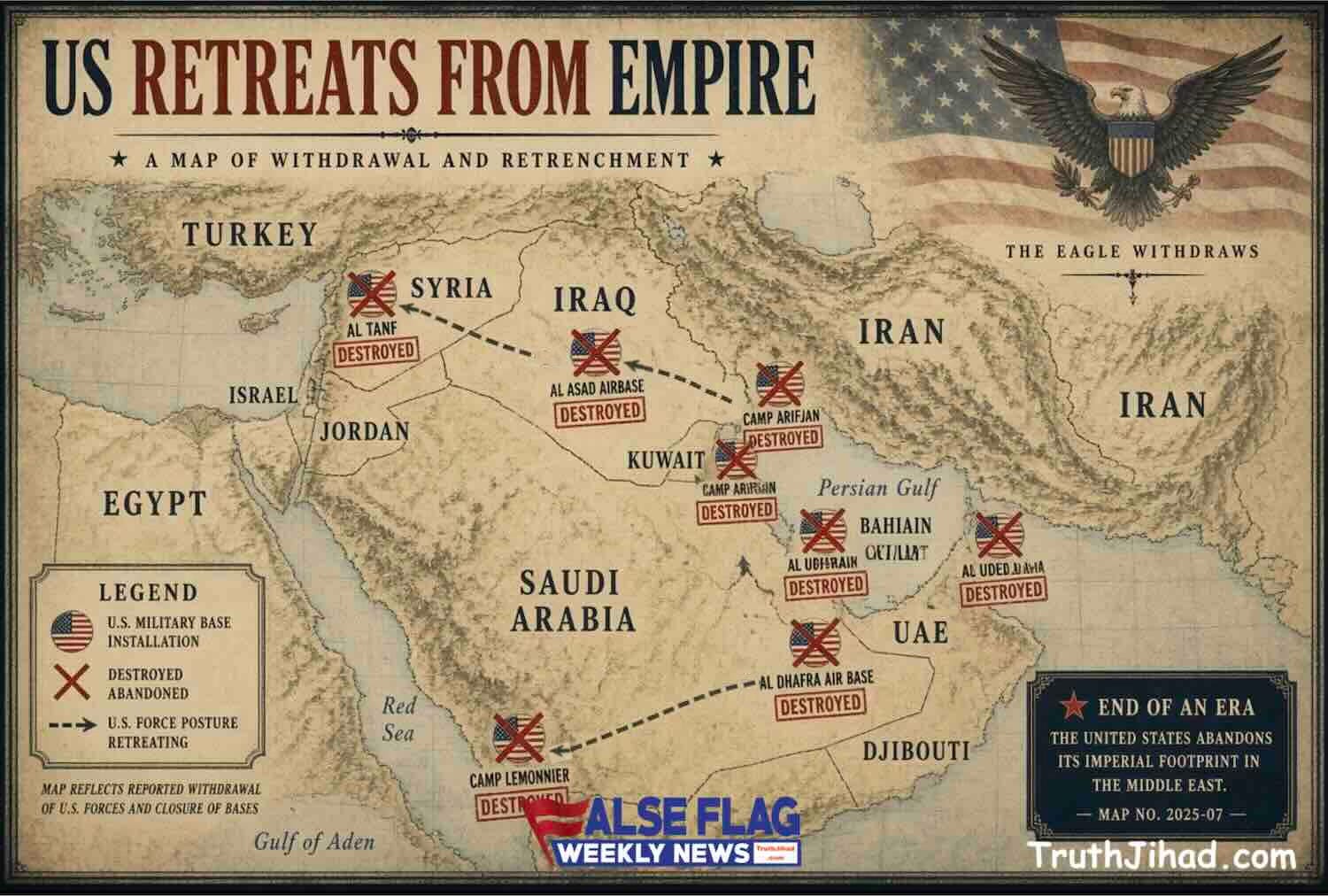
    Rumble link Bitchute link Press TV Iran says it has received numerous messages from neighboring countries regarding new security arrangements for the region. Tehran argues that the United States, through its bullying and disregard for the interests of its allies, has put their security at risk. According to Iran’s Parliament Speaker, Mohammad-Baqer Qalibaf, lasting peace and security can only emerge from a homegrown, independent regional order. This edition of Spotlight examines what these proposed security arrangements might entail and how they could reshape the region’s security landscape. Transcript Press TV: Good evening. In tonight’s Spotlight, we examined the emerging security arrangements in West Asia and whether the region is witnessing the beginning of a fundamentally new security order. Iran says it has received messages from neighboring countries seeking to shape new regional security arrangements as questions grow over the future of an American security architecture that has dominated the Persian Gulf for decades now. The 40-day war and Iran’s control over the Strait of Hormuz have demonstrated the vulnerabilities of that system, while even the disruption of the Bab al-Mandab Strait has shown how quickly regional conflicts can reverberate across the global economy. So what would a genuinely independent regional security architecture look like? What happens to the American military bases if regional states no longer see Washington as the guarantor of their security? And are Hormuz and Bab Al-Mandab Straits becoming the foundations of a new balance of power in West Asia? That’s what we’ll be discussing tonight with our guests. Reza Vedadi, academic researcher and author, join us from Muscat, Oman. And Kevin Barrett, editor of Veterans Today, join us from Saida, Morocco. Gentlemen, both of you, thank you so much for being with me. I’m going to begin with Mr. Vedadi, our guest in Muscat. Reza, what is exactly changing at this moment? Qalibov says Iran’s neighboring countries are now sending messages about new security arrangements. What has changed since the 40-day war such that right now regional states are pushing and reconsidering the old security framework? Reza Vedadi: We’ve witnessed since the Ramadan attack in the end of February, beginning of March on Iran, that Iran has put a lot of military pressure on the U.S. basis. And it’s demonstrated the U.S. capability, as it was promised for 20, 30 years to the purchasing people, the Arabs, the Persian Gulf countries, that it’s not capable or it will not be used to defend them. It was mainly used to try and defend Israel. And so I think these Arab leaders have come to a conclusion that they can’t rely on the United States’ promise of defending them, no matter how many billions they have spent on establishing the bases, buying the military equipment, and maintaining these bases. So I think they’ve come to a realization that they need to work with either regional powers, such as Turkey and Pakistan, with the Mecca agreement, or actually working with Iran in a capacity that will demonstrate that they will not want to be party to a country that attacks it. So I think we have to see how things unfold. The fact that the United States isn’t capable militarily to try and defeat Iran and has resorted to the sanctions which it has been committing for many, many years, maybe many decades, and hasn’t worked, in the sense that it hasn’t collapsed the Iranian government and system. I think the leaders realize that they need to have a new approach to the issue of Iran and relations with Iran. Press TV: Thank you, Mr. Vedadi. I’m going to come back to that. Mr. Barrett, thank you so much for your time as well. When we are talking about a new regional security arrangement, in your mind, what would that actually look like in practice? Is it joint maritime security? Is it mutual defense commitments? Is it intelligence cooperations or something beyond? Kevin Barrett: Well, one would hope that it would involve all of that. And it could involve a major upgrading of relations between Iran and its neighbors. Those relations have remained very stressful, mainly not so much because of any real clash of interests between Iran and its neighbors, but rather because the United States Empire is dominated by Jewish Zionist billionaires who have hijacked the United States and made the expansion of this settler colony squatting in occupied Palestine their number one priority. And since Iran, since the 1979 Islamic Revolution, has been led by people of principle who refuse to abandon the Palestinians to the genocide that the Zionists are trying to force on them, that has led to this conflict. And because the other nations have essentially been willing to remain U.S. vassals, they’ve been dragged into the conflict with Iran. And all of these other issues that come up, whether it’s the Islamic Republican governance versus hereditary monarchies, or whether it’s sectarianism, these are actually secondary. The prime issue has been the fact that Iran has been made the enemy of the Zionist-occupied American empire which has forced that enmity on the regional countries. And that hasn’t worked out for the regional countries. As the other guest accurately said, putting American bases in that region whose real purpose is to try to defend endless Zionist expansionism in the Greater Israel Project from Iran has not been advantageous to those countries. On the contrary, it’s put targets on their backs. And when the United States and Israel launched this dastardly attack in the Ramadan War, the latest episode of an escalating U.S.-Zionist war on Iran, this has totally changed the situation—because Iran finally was forced to break out of its conservative, defensive posture. And so it’s going to be up to the region to pick up the pieces. And we’re seeing movement in that direction with the Mecca Accords and with these new communications between Iran and regional countries aimed at creating a win-win security arrangement in the region that doesn’t have to be directed from Washington or Tel Aviv. Press TV: Mr. Vedadi, there are two questions that I wanted to put to you. Number one is, has the war demonstrated to the Persian Gulf Arab countries that Washington is ultimately prioritizing Israeli security rather than their own security? And if there are bases in their countries, it’s because of Israeli security, not because of their countries. And how seriously, because this was a part of your previous response, how seriously do you take, for example, what happened in Mecca? Because some analysts have been saying that there was a security agreement between Saudi Arabia and Pakistan before the 40-day war, but it didn’t help the Saudis. What’s your response to that? Reza Vedadi: I think if we zoom out, we notice that the Arabs in the Persian Gulf, and I would say as far as even South Korea, have noticed that the Americans will take resources from these regions to provide support for the Israelis and protect the Israelis. So it’s not just the Arabs that have noticed this, but I think many in the world who are either allies with the United States or work closely with the United States have realized that the United States is in the country that it’s promising to be in its defense of these regions that it’s integrated in (for nefarious purposes). And with regards to the pact, yes, you’re correct. The Saudis had an agreement with the Pakistanis. And even further, some have stated that the Saudis have funded the Pakistani nuclear weapon program. And one of its promises to the Pakistanis was that if Saudi Arabia ever needed a nuclear weapon, Pakistan would provide that to them. But going further, seeing that Turkey has come to some kind of agreement—we don’t know the exact details of the agreement—but an agreement with Saudi Arabia and Pakistan is interesting, because right now we’ve seen that the Israelis have attacked bases that belong to Turkey or are managed by the Turkish forces in Syria. So is this a prelude to a possible confrontation between Turkey and Israel? And we also know that Israel has discussed on many occasions that once they dismantle and destroy Iran, the next country that they wish to go to is either Pakistan, they’ve mentioned in previous discussions, or Turkey. So maybe these countries have realized that the United States is engaged in protecting its colonial outpost, Israel, in the region, and that if they want to be secure, maybe they need to work together. And they’ve stated also that this pact is not against Iran. So if it’s not against Iran, who else would it be but possibly Israel? Press TV: That’s right. Mr. Barrett, do you also see that the Arab countries in the Persian Gulf have finally change course and realize that the United States is pursuing Israeli security with the bases in their countries? Kevin Barrett: Yes, I think they’re recognizing that the threat posed to them by Israel is much greater than their problems with Iran, and that indeed their problems with Iran, as I mentioned earlier, grow out of the U.S. relationship with Israel. And I think they also noticed that as much as they like to be afraid of Iran as an example that could lead their people to rise up against the current rulers and install governments that would be more representative and Islamic, the Americans have managed to leverage that and use that to sort of shepherd these countries into their way of seeing things, which ultimately mainly benefits the Israelis. The Americans have said, “we have this plan to contain Iran, contain the Islamic Revolution,” and the local despots and monarchies have been willing to buy into that. But actually, there hasn’t really been an overriding threat to anybody’s stability from Iranian operations, etc. This has been overblown. And I think these local countries, now that they’re being damaged so heavily by a war that is the product of Israeli expansionism—the Israelis force their American golem to attack Iran—this is creating all kinds of havoc and a very serious catastrophic threat. That is, if the Israelis get their way and manage to talk the Americans into, or even do it themselves, do some kind of horrific really massive attack on Iran, then whatever level of damage that Iran suffers, it will be able to retaliate both against the Zionist entity and then against the regional countries that are complicit in the war. And that actually threatens these countries almost existentially. And so they need to remove that threat. And then they also need to remove the threat, the long-term or even medium-term threat, of the Greater Israel Project, which covets the land of Saudi Arabia and perhaps even Turkey as well as many other countries in the region. And as the other guest pointed out, the Israelis just attacked Turkey. They attacked a Turkish base in Syria, and they’ve made no bones about the fact that they’re planning a war with Turkey. I think that in the short term, these countries have sold the Mecca arrangement to the Americans as if it sort of looks like it’s against Iran and the Axis of Resistance. And so the Americans will accept it. But it’s really part of a growing recognition that the real security threat to the region comes from the messianic-millenarian genocide perpetrators in Occupied Palestine. Press TV: The first question that comes to mind when we are talking about regional countries and states beginning developing their own security arrangements in this region is: What happens to the U.S. bases that already exist? Reza Vedadi: Well, the question is, how much of these U.S. bases still exist? The majority have been destroyed. And the question then is: Do these Arab countries want to rebuild these bases? And why would they want to rebuild them, if they know they’re magnets for missiles and drones? And if they don’t do the stated job of defending the country, why would they rebuild them? And the question is, would even the United States be capable of rebuilding as the Strait of Homuz is closed, the military ships from the United States are not capable of entering and trying to bring equipment and supplies. So the question then arises that if the Arab leaders have realized that there’s no point in rebuilding them. If they were not there, they would most probably not be attacked, because there would be no reason for Iran to attack them. So it’s best for them not to be rebuilt. And so that’s a problem for the United States. And regarding the kind of security architecture for the region, they will then work with regional powers, and Iran is one of them, along with Pakistan, Turkey, possibly Egypt, to try and come up with a plan to provide security for themselves. And if you really look at the history of the region, Iraq attacked Iran and Kuwait because it was encouraged by the U.S. to attack these countries. And all the other major wars are instigated by Israel against its neighbors. And the other conflicts are usually civil wars that were arranged and organized covertly by Israel—its agencies, CIA, Mossad and other agencies in the West. Syria, for example, and Libya. So if these kind of influences are removed from the region, the question arises, would the region automatically have more stability and the neighbors would not necessarily have reasons to go at war? They may have disagreements, they may have certain conflicts, but it would not lead to military conflict like we have seen in the last 40, 50 years. Press TV: Mr. Barrett, could we eventually see a reduction of the U.S. military footprint in the West Asia region? Or would you say that Israel will not let that happen? Kevin Barrett: Well, I think we’ve already seen it. The American bases have been decimated. And they can’t rebuild, as the other guest said. The ships that would bring in rebuilding equipment have to go through the Strait of Hormuz, which is now under de facto Iranian control. So it’s a new world now. There’s a wonderful novel by Abdul Rahman Munif, the great Saudi novelist, about the Americans coming to that region and establishing themselves. And they come in ships, and they bring all of this material out of those ships, and they build their bases, and they take over, and they basically destroy everybody’s lives. Now, if they want to come back and rebuild and keep destroying people’s lives in the region, they have to come through the Strait of Hormuz. And it’s closed to them. I think it’s inevitable that the American footprint in the region will be downgraded, both because of that simple logistical military factor and also because, as mentioned, the other countries in the region are now waking up to the fact that the U.S. is not protecting them and keeping the peace. The U.S. has been harassing them, degrading them, and imposing wars on them in order to keep them divided and conquered, to prevent them from ever becoming strong enough to challenge the Israeli genocide perpetrators. That’s what this has really been all about. The other guest is right. The Americans were responsible for the Iraqi invasion of Kuwait. Ambassador April Glaspie sent a message to Saddam Hussein saying, “we have no objection to any inter-Arab dispute. Go ahead and invade Kuwait.” That was a setup. And that was just one example of how so many of these conflicts, including the decimation of Libya and the rest of these seven countries in five years—though it’s taken more than five years—that were targeted by the 9/11 Israeli false flag attack on Washington and New York back in 2001. All of this destabilization has been designed to keep the region weak and divided. And the region is waking up now, and it has a chance to get past that, to create new institutions that will prevent that region from being victimized the way it’s been victimized by the Zionist-controlled U.S. empire, which wants the region weak, divided, which wants to keep mowing the lawn. Not just in Gaza, but all these other wars in the region, are a form of Zionists mowing the lawn to keep the region weak and destroyed so that the Zionists can be the strongest party in the region and they can dream of establishing their Greater Israel Project. Well, the region is on to them now, and I don’t think it’s going to let them do it. Press TV: So Reza Vedadi, let’s talk about the Strait of Hormuz. How has Iran’s ability to control the strategic waterway of the Strait of Hormuz changed the strategic calculations of every country in the Persian Gulf region? Reza Vedadi: Well, it’s surprising. The United States thought they could come in and attack Iran and there’ll be no consequences. And then Iran has learned a new strategy where if Iran is going to suffer under economic, military, political pressure, then the rest of the world, which has stayed silent for 47 years when all of the sanctions from the West were levied on Iran, and countries like Korea and Qatar and Japan would withhold Iranian funds that belong to the Iran, have realized, well, then the rest of the world will have to go along and suffer with Iran as well. And so this closing the Strait of Hormuz is a mechanism which is not a nuclear weapon, but it’s more devastating than a nuclear weapon because it puts pressure on the regional countries to think more carefully about who they work with against Iran, who they allow to come and use their territory to attack Iran. But it also is a method of leverage against countries That have followed the U.S. sanctions on Iran, when they didn’t have to, but they did it out of pressure because they are close to the United States. And so now you see these countries coming and trying to build a relationship so that their ships can come through, that the supply of oil can come to their countries and they don’t suffer from the lack of petroleum products. And you have to understand that it’s not just petrol. It’s all the other products that come through the Persian Gulf, such as fertilizers, gases and so forth needed for microchip building. So I think Iran is utilizing its military capability, its doctrine that has worked on for 20, 30 years to utilize the Strait of Hormuz in a way where it’s not killing individuals, but it’s using it to pressure governments to act more justly. Press TV: Mr. Barrett, are we seeing a West Asian regional expression of a much larger transition to a multipolar world order? Kevin Barrett: Yes, I think that is what’s happening. And in the long term, the United States and the West have lost their overwhelming preponderance of global GDP, their lead in production and technology. And the U.S. in particular has divested of its production by sending its manufacturing abroad to places with cheaper labor. And so for that reason today, the productive capacity of China vastly outstrips that of the United States. And the rest of the global south has also greatly narrowed the gap. The U.S. had about half of global GDP, and most of global gold supplies, immediately after World War II. And today it’s down pushing 15 percent of global GDP and heading downward. And that’s probably exaggerated because it measures all of these metrics that are really not productive metrics. If you do real GDP based on actual production, then the U.S. looks even worse. And so you can’t continue to rule the world with maybe 10 percent of real global GDP the way you could when you had 50 percent of global GDP. You just can’t. And it’s no longer a unipolar world in that sense. And so we are seeing a transition in the empire, this American empire, which is dominated by wealthy Jewish Zionists. And the Zionist oligarchs, the Epstein class, is flailing around trying to find a solution to this. And they’re hoping that artificial intelligence will allow them to brainwash the entire global population into accepting their misrule. But I don’t think they’re going to have too much luck with that. China’s AI program is much more sensible and focused. And so I think that we are seeing the American empire stepping back. They’re almost admitting it now. They’re threatening their own allies. Threatening South Korea, attacking Canada, slapping tariffs on Canada, threatening Oman, using profane language to threaten Oman, profanity coming out of the White House. It’s a sorry spectacle. As an American, I’m embarrassed by how my country is handling the end of its empire. But that’s the way history is playing out. Press TV: Gentlemen, thank you both. Those were Reza Vedadi, the academic researcher and author, joining us from the city of Muscat. And Kevin Barrett, editors of Veterans Today, joining us from Saida in Morocco. Thank you both. And that brings us to the end of this edition of our Spotlight program. Thank you for joining us and bye-bye. Stripe is Substack’s only processor and they debanked me, so you can no longer pay me through Substack. Now I am posting everything on Substack free and asking people to sign up for recurring donations at my Paypal donation page…or better yet, the free speech platform SPdonate. Alternately you can Paypal or Zelle to truthjihad[at]gmail(dot)com. Note that Zelle, unlike other methods, doesn’t charge any fees. This is a public episode. If you would like to discuss this with other subscribers or get access to bonus episodes, visit kevinbarrett.substack.com

  • August 20 · 1 hr 19 min

    Have the Zionists Crushed Free Speech at US Universities?

    Rumble link Bitchute link The University of Wisconsin-Madison poses as a tenacious defender of academic freedom. Its motto, enshrined on a plaque in the heart of campus, boasts of “fearless sifting and winnowing” in search of dangerous truths. Twenty years ago, during the run-up to the fifth anniversary of 9/11, I was hounded out of UW-Madison by big media (and the oligarchs who own it) for questioning that event. Today, the witch-hunts at the University of Wisconsin continue, as wealthy Jewish-Zionist donors—the same people who wanted to silence me about 9/11—have forced American universities to mount an unprecedented assault on academic freedom. Pro-Palestine activist Kareem Mayouf joins the Truth Jihad podcast from Beirut, Lebanon to discuss the student movement that arose in 2023 to oppose Israel’s unspeakable daily atrocities. All relevant human rights authorities agree that the deliberate massacres of tens if not hundreds of thousands of women and children in Gaza, and the reduction of that urban enclave to rubble, constitutes clear and undeniable genocide. Yet opposing that genocide makes wealthy Jews uncomfortable, so they threaten to cancel donations to universities—and leverage their power over an Epstein-blackmailed Israeli-controlled pedophile president—to force administrations to all but ban pro-Palestine activism from American campuses. Kareem Mayouf explains how, after two years of activism that included bringing Jewish anti-genocide scholar and author Norman Finkelstein to speak on campus, he was arrested and jailed because his opinions seemed similar to those expressed in spray-painted anti-genocide slogans. Banned from campus with no due process, no trial, no proof he had done anything illegal—but witch-hunted in the Zionist-dominated media—he moved to Beirut to do graduate work in history. The good news is that Americans can still have an honest conversation about their Zionist-occupied country. The bad news is that it has to be from Morocco and Lebanon via Zoom! Kareem Mayouf: When the genocide started, I was an undergraduate student at UW Madison. I was studying history. And so after October 7th happened, I was following a mixture of Western outlets, but also Al Jazeera and some alternative media outlets, and my immediate interpretation was this is an obvious concentration camp uprising. I mean, if you just look at a map of Gaza, it was clearly a concentration camp. And I thought, okay, well, this was long overdue. Israel, the Zionist entity, quote unquote Israel, was smacked very openly and heroically in the raid that Hamas conducted. And so I thought, okay, this is an interesting development. Members of my family and some friends began sending me articles basically describing how, based on the statements of Israeli leaders—I think one of my aunts basically told me that this is it for the Palestinians. They’re going to use this like a sledgehammer to kill as many people as possible. And they’re going to do whatever they can to buy acquiescence from the West. So immediately after October 7th, we started hearing all these racist lynch mob lies. I noticed that certain sectors the population were really drinking the Kool-Aid, and they were just completely intoxicated on this racist lynch-mob lies about these fake baby beheadings and mass rapes… Kevin Barrett: Babies in ovens. Don’t forget the babies in the ovens. Kareem Mayouf: Yeah, babies in ovens. Yeah, exactly. And then, of course, the daily massacres began. I heard the genocide statements. Yoav Galant, Itamar Ben-Gavir, Isaac Herzog, the president, said that “it’s a whole nation that’s responsible. There are no innocents, no food, no water, no electricity. We’re fighting against human animals.” And then the daily massacres…I think first they started leveling entire blocks, apartment buildings coming down, and it was appalling. So I thought, okay, I can’t really shy away from this. I can’t sit this out. This demands full commitment of my time. I had some involvement in Students for Justice in Palestine, but it wasn’t very extensive. But after October 7th, I really started getting more involved, organizing weekly demonstrations, pamphleting, handing out zines on campus, just walking around with a Palestinian flag on campus, because that was one of the big issues, getting people to understand, break the spell of this lie that completely possessed people for awhile. Because the Palestinian perspective was completely banned from mainstream media. It was just Hamas war versus Israel, and that’s how this was portrayed. So we protested weekly, and we made ourselves very visible. We weren’t afraid of protesting without masks. We thought, okay, these are peaceful demonstrations, peaceful assemblies. And so for the first year, fall 2023 and then spring 2024, we basically protested nonstop… (For the full conversation, watch the video, or use the transcript feature, at my Substack) This is a public episode. If you would like to discuss this with other subscribers or get access to bonus episodes, visit kevinbarrett.substack.com
  • August 16 · 1 hr 20 min

    Iran's "Art of the Deal"

    Rumble link Bitchute link False Flag Weekly News link Heads up! This week’s False Flag Weekly News guest commentator, Wyatt Peterson, just published “Is Israel Planning to Assassinate President Trump?” -KB Trump wants to make a deal with Iran. That’s why he murdered the current Supreme Leader’s father, along with 168 schoolgirls at Minab and hundreds of other civilians. Trump’s attempts to make a deal with Iran include: threats of total annihilation, claims that he has already won, obscene Easter outbursts ("Open the F****n' Strait, you crazy b******s, or you'll be living in Hell - JUST WATCH! Praise be to Allah!"), unilaterally declaring possession of the “Strait of Trump,” and vacillating between outraged tirades about how Iran will never have a nuclear weapon and deprecations of the “nuclear dust” that is so far underground it isn’t very important, anyway. Does Trump think his arrogant scorn for the men and women he’s sent off on a deadly fool’s errand will somehow enhance his negotiating position? Does he imagine that telling the crew members of the USS Abraham Lincoln that after eight months at sea with extremely poor logistical support, “they haven’t been out there nearly long enough” will somehow win concessions from Iran’s Supreme Leader? Is there some method to Trump’s apparent madness—some multidimensional-chess-style negotiating strategy? To find out, we turn to Trump’s magnum opus, The Art of the Deal. According the real author, Tony Schwartz, Trump didn’t write a single word of that book, and probably didn’t even read much of it. Schwartz says Trump spent a couple of hours with his (Schwartz’s) book, made a few minor marks, and falsely claimed authorship. Schwartz says Trump’s attention span is so microscopic that it was impossible to do meaningful interviews. So he shadowed Trump for 18 months, embellished and mythologized Trump’s activities and purported methods, and wound up “putting lipstick on a pig.” AI is mostly a curse, but it’s useful for pulling up the main points of a book one would never dream of buying or reading. According to AI summaries The Art of the Deal advocates various dealmaking strategies that may or may not relate to Trump’s attempts to come to terms with Iran, including: *“Think big.” Trump says he plans to steal all of Iran’s oil and unilaterally incorporate the Strait of Hormuz into the United States, renaming it “The Strait of Trump.” I guess that counts as thinking big—in the same way the asylum inmate who insists he’s Napoleon is thinking big. *“Go with your gut feeling, don’t listen to the experts.” When Netanyahu and his Mossad chief visited Trump and advocated attacking Iran, and all of Trump’s advisors except Hegseth were against it, Trump went with his gut feeling…which was, we surmise, that if he didn’t do what Netanyahu ordered, video evidence of Trump raping underage girls might be made public. *“Always deal from a position of strength.” Trump has been so hilariously unconvincing in his pretensions to be dealing from a position of strength— “we’ve wiped out their entire military,” “we have total control over the Strait,” “our regime change succeeded,” “we’ve completely obliterated their nuclear sites,” “their economy has completely collapsed”—that he has indeed developed a very strong position…as a comedian specializing in self-parody. *“Maximize your options.” Trump’s supposed strategy of never getting locked into a single deal or path, but instead developing all sorts of fallback options, obviously isn’t working as intended: Trump has exactly ZERO options except surrender. So he parodies the “maximize your options” strategy by being wildly inconsistent and incoherent, saying one thing one minute and its opposite five minutes later. Today, we’re going to invade and occupy them and steal their oil; tomorrow, we’re going to nuke them back to the Stone Age; and the day after tomorrow, we’ll just walk away because, contrary to appearances, we’ve already won. In other words, “maximize your options” has become “maximize your b******t.” *“Get the word out.” AI summaries say The Art of the Deal advocates “using publicity and sensational storytelling strategically to capture attention and influence public perception.” Trump is certainly succeeding at grabbing public attention through publicity and sensational storytelling about his misbegotten war on Iran. Unfortunately for him, he is grabbing negative public attention by making a complete ass of himself. “Strategic” doesn’t describe his attention-grabbing incoherence, rage, and obscenity—nor his capturing the world’s imagination, and making it collapse in unbelieving laughter, by sneaking out of Air Force One in a food cart while sending staff and journalists into the sky as bait for purported Iranian missiles. A stunningly brilliant publicity stunt, that…for Iran. *“Deliver the goods: Back up bold claims with real results.” This, of course, is where Trump most obviously falls flat. The gaping abyss between what comes out of Trump’s unhinged mouth and discernible reality is so vast that one can only marvel at the sheer chutzpah that enables him to emit such preposterously vacuous noises. In reality, it is Iran’s leadership that is giving a master class in the art of the deal. *Iran is thinking big. Iran is not just trying to win by surviving, as the North Koreans and North Vietnamese and Taliban did. Instead, it is envisaging a radically different future in which the US fully withdraws from West Asia, concedes Iranian control over the Strait of Hormuz, returns Iran’s stolen money that it has been holding for 47 years, ends all sanctions, concedes Iran’s full NPT-enshrined rights to civilian nuclear activity, and pressures “Israel” into permanently ending its genocidal war against its neighbors including Lebanon and Palestine. *Iran is not listening to the Western establishment “experts.” Instead, Iran relies on its own expertise and know-how. That’s why the Western experts, who thought the US 100-to-1 military spending advantage was insurmountable, got a rude awakening. Iranian leaders have long understood that an impregnable missile-and-drone force could beat a much larger traditional army and navy, and they’ve been planning for that contingency for decades. What’s more, instead of the “gut feelings” that Trump advocates, Iran listens to the inner voice of faith, cultivating and seeking Divine guidance and inspiration. *Iran is dealing from a position of strength. As John Mearsheimer and other experts noted, Iran essentially won the war within the first 72 hours. That victory has gotten more crushing with every passing day. The US has exhausted its munitions, while Iran just keeps manufacturing more new rockets and drones than it fires. Iran’s assets are protected, buried deep underground, often beneath mountains, while US assets are vulnerable. Iran’s long range rockets and drones would enable it to keep the Strait of Hormuz closed even if the US somehow managed to occupy the whole Iranian shoreline of the Persian Gulf, a feat that might require as many as a million troops and casualties in the tens if not hundreds of thousands. Iran can match any attack on its civilian infrastructure with equal or greater attacks on the infrastructure of US allies. And Iran’s population is united behind its leadership and demands an even more militant stance than the leadership is pursuing, whereas the American people never supported “Trump’s Excellent Iran Adventure” even before its calamitous failure was obvious. *Iran has all kinds of options. Iran can tighten the squeeze on the global economy to whatever degree it chooses, by calibrating the amount of shipping through the Strait of Hormuz (and, through its AnsarUllah allies, the Bab al-Mandab) and deciding who passes and who doesn’t. It can offer carrots and sticks to regional and global powers. It can get help from Russia and China to whatever degree necessary. It can use land routes, Pakistan-shore routes, and Caspian Sea routes to evade Trump’s highly permeable “wall of steel” blockade. It doesn’t need nukes since it’s got Hormuz, and can therefore use its nuclear capability as leverage, relinquishing any prospective nuclear weapons program in return for concessions. But barring such a deal, thanks to its highly-enriched uranium, it could, if attacked with a nuclear weapon, rapidly build its own nuclear weapons and retaliate (or buy some from North Korea or Pakistan, as Pépé Escobar says they already have). *Iran is getting the word out with sensational storytelling. Iran can’t take credit for Trump’s catering truck escapade, but they are taking advantage of it with their trademarked LEGO videos that have captured the imagination of the world. Iran has successfully (and accurately) cast itself as the “lovable underdog” handing an obnoxious bully (Trump) his just desserts. *“Iran is delivering the goods, backing up its bold claims with real results. Unlike Trump, Iran hypes its real accomplishments: Trump claims the Strait is under his control and open for business; Iran slams a drone into one of the very few ships dumb enough to take Trump’s word. Trump claims Iran’s military is “totally obliterated”; Iran points to satellite photos showing that it is the US bases in the region that have been totally obliterated. Trump claims a downed airman has been heroically rescued; Iran releases photos and eyewitness reports showing that what really happened was a botched US attempt to snatch Iran’s uranium that left shot-up US aircraft carcasses strewn across the desert landscape. Has Mojtaba Khamenei been reading The Art of the Deal? I doubt it. Tony Schwartz’s ideas, which he temporarily credited to Trump, are all-too-obvious distillations of conventional wisdom…tired old bromides, really, that anyone with some time on their hands could easily come up with, even if they weren’t shadowing Donald Trump. We all know it’s best to deal from strength. We all know that “thinking big” (within reason) can sometimes work. We all know that listening to our gut intuition (or better yet, flashes of Divine guidance) is a good idea, and that the experts are sometimes wrong. We all know it’s better to have options than no options. We all know, if we’ve taken any good literature classes, that storytelling rules the world. And we all know that people who back up their bold claims with real results tend to be more successful than those who endlessly b******t…people like Donald Trump, America’s Bullshitter-in-Chief. Iran is led by people who have undergone the most rigorous academic training—in philosophy and theology—on Earth. They read and write serious books. And when they are forced to wage defensive war, they bring that brainpower to bear. The USA is led by an airheaded narcissist who once pretended to write a book, but probably has never actually read a serious book in his life. If Trump really did keep a book of Hitler’s speeches at his bedside, as his ex-wife Ivanka claims, it probably served as a talisman rather than material for serious reading. Mojtaba Khamenei is driving a hard bargain. He knows he has Trump, his father’s murderer, over a barrel. It seems that Iran is teaching some hard lessons to the purported author of The Art of the Deal. This is a public episode. If you would like to discuss this with other subscribers or get access to bonus episodes, visit kevinbarrett.substack.com
  • August 13 · 19 min

    The West's Gangster Oligarchy Is Psychopathic, in Denial...and On the Way Out

    Rumble link Bitchute link Truth Jihad link Press TV interviewed me and Clive Menzies on last night’s News Review. Below is a transcript. Press TV: It’s a pleasure to have you. Thanks for your patience. Joining us from Morocco, Kevin Barrett. I put the first question about the International Energy Agency’s report just earlier today. A set of oil inventories, Dr. Barrett, plunged by 2.2 million barrels a day last month. It said shipping traffic through Hormuz has slowed with just 16 vessels transiting the Strait over the course of Monday and Tuesday, according to Kepler data. He said that that’s down from about 130 to 140 daily transits before the war, meaning before February 27th. Your initial thoughts, please. Kevin Barrett: Well, this shows that Iran has managed to get control over the Strait, and that wouldn’t have happened if Trump hadn’t allowed Netanyahu to talk him into launching this disastrous war. He did a dastardly sneak attack on Iran under cover of negotiations, murdering the Supreme leader of Iran, members of his family, other leaders, and all sorts of other people, including lots of civilians, notably the 168 people killed at the school in Minab. So this war was launched under false pretenses, under the false notion that it was supposed to be over within a few days with a new pro-Israel leadership that would take orders from Trump and Netanyahu. And this was all a fantasy. And that has forced Iran to basically go nuclear, not with a literal nuclear weapon, but with the equivalent, by seizing control of the Strait of Hormuz, which is what all of us predicted would happen if the Americans were ever stupid enough to actually attack Iran. And so it’s clear, the handwriting is on the wall. Trump and his team are desperate. Their desperation is coming through in everything they do, whether it’s Trump screaming out obscene tirades on Twitter one day and then retracting them and saying that we’re on the edge of a peace breakthrough. The American leadership is showing that they’re completely discombobulated, confused, afraid, and they have no idea how to get themselves out of this predicament that they’ve gotten themselves into. Whereas Iran, which has been planning for this for decades, knows exactly what it’s doing. It has the Americans over a barrel, as John Mersheimer said in his video today. The writing’s on the wall. The Americans are just going to have to accept that they lost, and they’re going to have to allow Iran to dictate the terms, and the terms are absolutely clear: Call off the war, give Iran back its money, pay reparations, and the war has to stop across all fronts, including in Lebanon and Gaza. If Trump were smart, he would accept that. He would declare peace. He would claim credit for forcing the Israelis to make peace with the Palestinians, forcing them to withdraw to their pre-’67 borders. But he’s not smart enough to figure that out, apparently. So he’s going to keep muddling through and making these kinds of confused, irrational, lashing-out gestures for who knows how long, maybe a few more months, in which case he’s in serious trouble in the November elections. Press TV: Thank you, Dr. Barrett. Mr. Menzies, the U.S. President today, again—I don’t know if you saw his tweet saying the U.S.—and you’ve seen him repeat this a number of times—the U.S.A. controls the Strait of Hormuz. But obviously that has not been corroborated. Clive Menzies: People like Donald Trump are not in charge. They’re in office but they’re not in charge. They’re responding to the incentives and penalties. And the particular circumstances of their own situation. Trump is a notorious loose cannon who fires off in all directions. But essentially, I don’t think he has a lot of room to manoeuvre, other than to keep this stop-go war going, because that’s what the incentives are providing. I mean, your other guest said what would be sensible, but that has very little to do with what’s unfolding. As he said at the outset, if sense made any relevance for this, then the war wouldn’t start in the first place. So we’re in the throes of this structure shaking itself apart, and the actors, be they Israeli, American, Palestinian, Iranian, or whatever, are having to respond to the situation that arises. And those on the side of Israel, US, UK, Europe, are actually in a far greater state of confusion and control than Iran, which is primarily trying to look after its own interests and not seeking to interfere in other places around the world. So that’s the difference. You have this meddling out of one’s jurisdiction, which is going on, whilst the the moral high ground, if you like, sits with those who are being attacked, not with those doing the attacking. Press TV: All right. And Dr. Barrett, U.S. officials—I’m putting pretty much the same question to you. They’ve warned the continued shutdown of this critical waterway could lead to higher oil and gas prices. Despite Donald Trump’s insistence, the U.S. still has control over it. So my question to you, why the lies? Okay, to keep possibly public panic at bay. But that’s usually when you have a plan. That you’re going to implement to get to your objective. Not usually when you tried everything, it hasn’t gotten you the intended results and you’re just lying for the sake of lying. Kevin Barrett: Yeah, that’s a good question. It’s sort of like the classic psychological phenomenon of denial, when there’s some terrible problem and people just avert their eyes from it. It’s a very common situation, whether in ordinary life or even in politics. My life has been heavily affected by the denial of the American people over two overwhelmingly important historical events: the coup d’etat that killed President Kennedy in 1963, and then the September 11, 2001 false flag attack that launched the series of disastrous wars in West Asia. And we’re seeing the final one, the one that the Americans are going to permanently lose, playing out right now. Americans have been in denial about these coups and the fact that their democracy is illusory. And so the leadership is likewise in denial. They imagine that they’re still in their unipolar moment after they took over the world after the collapse of the Soviet Union, and they have the world’s strongest military, they spend more money on the military than the next eight countries combined. And so why can’t they just easily win any war that they choose to jump into? That’s Trump’s attitude. But his narcissism that leads to this kind of denial and lying is actually not just a personal peccadillo, but also a kind of a symbolization and concretization of the state of the American nation. That is, the whole country and its leadership are in denial. Of the fact that they’re on a historical downward trajectory, and that their democratic experiment has largely failed, and has been harmed by these terrible crimes that I mentioned and others as well, that their intervention all over the world is not benign, as they like to pretend, but it’s murderous. They’ve killed well over 50 million people in these interventions since World War II. And so they really can’t accept the terrible reality, the bad side of reality. And so they lie about it and they spin it and they look the other way. And so I think that’s partly what’s going on. And then also, of course, Trump’s statements seem to have a strong effect on the markets, which he and his friends can take advantage of to make a lot of money. Trump is propping up the markets by lying and saying that he is in control, “we are in control of Hormuz, and we’re winning the war.” This reassures the markets. Maybe it’s the artificial intelligence systems that invest much of the money in the markets these days that are programmed to run on whatever the leadership is saying, no matter how ridiculous or false it is. He’s been able to both make a lot of money personally. And then there’s a huge bubble right now, the AI bubble and the derivatives bubble. I think the elites in the West are tiptoeing around that and trying to stave it off, and their denial and their lying is one way of trying to do that. Press TV: Thank you there. And Mr. Menzies, I got this little extract just before the show off, this website, US government website, congress.gov. It said on June 17, 2026, President Donald Trump and Iranian President Masoud Pazishyan signed a Memorandum of Understanding, infamously known as the MOU, the Pakistan Media MOU, I know you’re very well aware, declaring The removal of the U.S. naval blockade and Iranian arrangements for the safe passage of commercial vessels with no charge for 60 days only, with future administration of the strait to be determined by Iran in consultation with Oman and other Persian Gulf states. Now, the MOU was working and Iran’s sovereignty authority was stipulated in it, Clive. So why did the U.S. president put a signature on it and immediately not only uphold the obligations under it, but move to renege on it. Clive Menzies: Well, as I said, you know, this is the manifestation of psychopathy in action. Basically, the structure under which we live is psychopathic. And it selects for an incentivized psychopath. Because That’s the way the structure operates. So your other guest is perfectly right. We are in the midst of a collapse. And to some extent, a lot of this drama over oil prices is part of the theatre, trying to draw attention from the structural nature of the collapse. You know it’ll be blamed on the oil shop. That’s not a new story. But actually, the collapse that has been underway, arguably since 2008, although it’s been staved off with bank bailouts and huge socialization of what is essentially private debt, what the banks made. So we’ve taken that on. And now the system is premised on people having enough income to be able to afford to buy the goods they produce. That equation no longer works. So the system has no long-term future, and we’re living through the transition. As I’ve said before, this is a subject that requires a lot more understanding to do with the role that technology is playing in allowing us to circumvent institutions to be able to organise ourselves separately from the structures. They are psychopathic, and they are there to extract, control, divide, and kill, basically. Press TV: Right. And Dr. Barrett, I got this little extract from this kid out of Georgia Tech, and I put it in my lead earlier. I think you joined us after I read the lead, so I’m going to read this part for you. The experts warn the most severe economic consequences from prolonged closure of the Strait, that is, including higher food prices. So I want to put that same question to you, if you would also weigh in on “why the U.S. refusal to abide by this memorandum.” Does it just go back to simple psychosis and the U.S. president and his cronies getting asset gains through the markets because of it? Or is there some other sinister or even logical explanation to this? Kevin Barrett: Well, I think that there are all sorts of different interests that are able to profit by the current state of things as the world as a whole is heading for disaster. And among those, one that we haven’t mentioned very much so far is the genocidal Zionist entity which created this war in the first place. The state of Israel actually was behind the murder of John F. Kennedy and the false flag attack of 9/11, which was used to hijack the American military to go after those seven countries in five years that General Clark talked about that were all problems for Israel, but not problems for the United States. And so this is the seventh war. They’re going after that seventh country, and it took them 25 years, not five years. And the Israelis would be perfectly happy to see all kinds of mayhem come out of this. They wouldn’t mind seeing Iran much more devastated and the other side of the Persian Gulf devastated as well, because that would weaken other parties in the region and pave the way for their greater Israel project, which is committing genocide and stealing all the land and property between the Nile and the Euphrates rivers and becoming the de facto global capital. That’s their long-term plan. And they would love to see the world crushed into a horrible depression. They wouldn’t care if there’s a world war or even a nuclear exchange as long as it doesn’t hit them. And so they’re the ones who are pushing this towards the precipice. They started it by lying to Trump and telling him that “all you have to do is kill the Iranian leadership and we’ll have our guys in power in a couple of days.” And obviously that didn’t work out, because they were lying. I don’t think even the Israelis weren’t stupid enough to think that was going to happen. They just knew that once they got the Americans into this, then the Americans would never get out and they could keep pushing, pushing, pushing, trying to make it as destructive as possible. So Israel is an example of one very powerful party that is profiting from this endless cycle of destruction that’s heading us over the cliff. And then, of course, as we mentioned, Trump and his friends are making money gambling on the markets. The military industrial complex is happy as Trump is throwing the biggest budgets at them in all of history. And so there are various corrupt interest groups that are doing well, even as the general interest is being completely crucified. And so that’s that’s kind of how it works in these Western liberal secular so-called democracies that are really battles between corrupt psychopathic gangster special interest groups. And I think that has a lot to do with why we’re going in the wrong direction. We need to change the system in Western countries from these corrupt gangster oligarchies to something a lot more like what you have in Iran, what China has. In both cases, you have a kind of an elite, whether it’s the Confucian elite in China selected by rigorous examinations or the religious elite in Iran selected through a similarly rigorous scholarly process in the seminaries. And when you have that kind of elite steering the ship of state, you’re going to have a much better system, a much less corrupt system than you have when you allow gangster oligarchies to rule the show as they do in the West. So I think that’s partly why things are working out the way they are. Press TV: Right, and we only have about two minutes left, Mr. Menzies. If I get this last question out to Iran and Oman, are the final stages of etching out a management regime to monitor shipping through the Strait of Hormuz? But the U.S. says it will never accept Iran managing the Strait into the future. Iran says, “hey, I never wanted to, but all that changed on February 28th. That ship has sailed now. There’s going to be a new regime, and we’re never going to go to pre-war status.” Do you see any prospects of optimism on the horizon? Clive Menzies: I see a lot of reasons to know that the world is transitioning to something much better. Being able to predict anything within this rather chaotic situation is fraught with difficulty. But I think I would like to refer to Israel’s role in this. Because Israel, as we know, was created as a private fiefdom for the families that control money. So it is a tool. It is not the prime mover in this. Similarly, Ukraine has been selected. More recently, Argentina. So there are centers of power that have been, if you like, colonized or taken over by money, which are fomenting all this. They’re funding both sides. I don’t think there’s any salvation in any form of elite hierarchy in terms of rule. The Chinese are similarly compromised, but not to the extent of the West. And Iran is reacting to, in many respects, the structure of money. So nobody is free from the grip of money power and the games that they’re playing. And Israel is probably on the course to self-destruction, but that is irrelevant to those that have a much higher goal, which is essentially control of the world and population reduction. Press TV: Gentlemen, pleasure to have you both on. Very interesting stuff there for the both of you. Thank you sincerely. Kevin Barrett there, joining us from Saidia Morocco, and also Clyde Menzies joining us out of London. If yours, this brings us to the conclusion of another segment of your Spotlight program. Thank you for tuning in, and goodbye for now. Stripe is Substack’s only processor and they debanked me, so you can no longer pay me through Substack. Now I am posting everything on Substack free and asking people to sign up for recurring donations at my Paypal donation page…or better yet, the free speech platform SPdonate. Alternately you can Paypal or Zelle to truthjihad[at]gmail(dot)com. Note that Zelle, unlike other methods, doesn’t charge any fees. This is a public episode. If you would like to discuss this with other subscribers or get access to bonus episodes, visit kevinbarrett.substack.com
  • August 11 · 29 min

    9/11 and Neuro-Linguistic Programming

    Rumble link Bitchute link Dismantle the Matrix Analysis on YouTube “Kevin Barrett 911 whistleblower on Hannity and Colmes” original YouTube The 25th anniversary of 9/11 is also, more or less, the 20th anniversary of the Fox News interview that got me expelled from American academia. That interview, conducted on July 11 2006, went viral on a brand-new platform called YouTube. It shot to over 100,000 views within a week or two…and the count mysteriously froze. Today it supposedly has 100,608 views…which seems a tad low, since I’ve probably gotten more than 608 emails about it during the past 20 years. Google Gemini goes full conspiracy theorist on this one: The exact video link you shared—your Hannity & Colmes Fox News interview from July 2006—is the ultimate textbook example of YouTube’s Borderline Content Policy and Information Panel intervention. The platform is not malfunctioning; instead, your specific video has been placed into a tightly controlled algorithmic quarantine. In 2013, a 30-minute YouTube analysis of my five-minute Fox News interview went viral and currently sits at 217k views. I’ve posted it above, and transcribed it below. The narrator, a certain Jonathan Adampants, analyzes Hannity & Colmes’ propaganda techniques using the framework of Neuro-Linguistic Programming (NLP). As it happens, my aunt and uncle, Mary and Robert Goulding, were close-up-and-personal rivals of the founders of NLP. Aunt Mary and Uncle Bob ran WIGFT (pronounced Wig-Foot), the Western Institute of Group and Family Therapy, in the mountains of Watsonville near Santa Cruz. Meanwhile, down at UC Santa Cruz, John Grinder and Richard Bandler were stealing their stuff. My aunt and uncle used Eric Berne’s Transactional Analysis (TA) and Fritz Perls’ Gestalt therapy in their Redecision Therapy. Basically they taught people how to “flip the script” of their lives and change their habits, outlook, and cognitive and emotional orientation, replacing dysfunctional and unpleasant patterns with more enjoyable and productive ones. Grinder and Bandler did the same thing, but in streamlined and (some would say) dehumanized form. They turned it into engineering: push this button, get that behavior. Unlike my aunt and uncle, they didn’t fully credit their sources. Does NLP work? The experts are still arguing. Despite its technical jargon, NLP—like its close cousin, hypnotism—is an art, not a science. But whatever its limitations, NLP does offer a useful framework for analyzing certain kinds of propagandistic performances. Gemini cites a couple of conspiracy theories that are not entirely untrue: The Barack Obama “Hypnosis” Theory: During the 2008 U.S. presidential election, a widely circulated, 67-page anonymous document claimed that Obama’s speeches utilized sophisticated NLP techniques. Critics accused him of using pacing and leading (matching the audience’s current state and then subtly moving them toward a desired emotional state), hypnotic vocal pacing, and deliberate hand gestures as anchors to covertly implant subconscious suggestions.[1] The Donald Trump “Persuasion” Analysis: During the 2016 and 2020 elections, popular Dilbert creator and persuasion blogger Scott Adams, along with various media commentators, frequently analyzed Trump’s communication through an NLP lens. They argued that his use of repetitive nicknames (”Crooked Hillary,” “Lyin’ Ted”), intentional hyperbole, and linguistic pacing were highly effective forms of subliminal behavioral programming designed to bypass rational thought. [1] Adampants’ analysis of my Hannity interview gets a lot right. He correctly calls out the Fox hosts’ name-calling, disruptions, deprecating glances and gestures, and avoidance of reasoned discussion. He understands that Hannity and Colmes’ purpose was to program the audience’s subconscious by attaching negative associations to me personally, and, by association, to 9/11 skeptics in general. But Adampants exaggerates the effectiveness of Hannity and Colmes’ NLP sorcery. He wrongly assumes that I was being influenced by the Fox hosts’ gestures: “By bringing his hands down like that, he’s trying to subconsciously take away the focus of the professor, take away his power, and that’s exactly what he’s doing.” and: “The issue at hand here, what he’s doing, is directing the professor to look at his hand (making the 6-6-6 gesture).” In reality, I couldn’t see those gestures. I was sitting on a tall chair high atop a platform in the middle of the Fox studio in Milwaukee staring into a camera, wearing headphones, with no screen or monitor. Fox employees were at their desks along the sides of the room, and I was on display in the middle. I assumed the Fox studio people had put me in that off-putting, uncomfortable set-up in an effort to throw me off my game. But maybe they inadvertently saved me from being hypnotized by Hannity’s satanic hand signs! I’m also skeptical about Adampants’ assumption that the Fox hosts’ mind-control efforts succeeded, whether on me or on the audience. If this clip were really such a powerful bit of anti-9/11-truth sorcery, why would YouTube have to quarantine it? Watch the interview and/or the “total breakdown” and let me know what you think. — Total Breakdown of The Media’s Use of NLP & Mind Control Colmes: That was University of Wisconsin professor Kevin Barrett, who has recently drawn criticism for plans to teach an Islamic studies course next fall that will incorporate conspiracy theories that the U.S. government was involved in the events of September 11th. Professor Barrett joins us now. Professor, can you give us the context within which you teach this? Jonathan Adampants: Okay. Well, you’ve just seen here is he used a nonverbal gesture with his hands in an outward motion to kind of scatter his thinking, and then swayed both of his hands over to his left shoulder, which would give the subconscious impression of being far to the left and also kind of distracts his thinking a little bit. So that’s what he’s doing. That’s why his hands are all over the place. And then they swing over to his left shoulder to send the subconscious message that he is an extremist, a left winger. Okay. Colmes: Can you give us the context within which you teach this? Kevin Barrett: Well, yeah, sure. I’m teaching an introductory course on Islam, and I think it’s really important to cover these contemporary political issues. And one of them is, of course, the so-called war on terror. Now, the fact is that the great majority of the world’s Muslims believe that 9/11 was an inside job. Colmes: And that’s your opinion, right? Jonathan Adampants: Again, manipulation is all about timing and redirecting and trying to take control of somebody when they’re speaking here. You see a great example of that by saying that’s your opinion. Even though he just stated there’s a vast number of people that are waking up, even though he specifies the Muslim community. That’s not true. It’s all over the world. So the journalist’s responsibility to misdirect his thinking and to to mislead you is to follow up and say, but that’s your opinion. Even though he stated that it wasn’t just his opinion, but it doesn’t matter because people believe what they hear from newscasters. They take in the barrage of words. And the newscaster here understands that. So if he says that he plants that seed. Kevin Barrett: Now, the fact is that the great majority of the world’s Muslims believe that 9/11 was an inside job. Colmes: But that’s your opinion, right? Kevin Barrett: Well, after studying the evidence pretty intensively for two and a half years, I am convinced that 9/11 was in fact an inside job. Colmes: Are students required to regurgitate that in some way in order to do well in your classroom? Jonathan Adampants: Again, more manipulation. I’m sure you caught that. Even though this very system of the world creates people to regurgitate, they will often accuse people of doing the things that they do. It’s just part of it. Okay. So by saying our students required to regurgitate, that gives the subconscious impression that he is controlling their minds and not teaching them to think, when in actuality, to be able to see through the media, to be able to see what is going on is not regurgitation. Any person that does regurgitate and only memorize and not think would not be able to see through it anyway. It doesn’t matter. This is reverse psychology. This is just not even that. It’s just manipulation. It’s just name calling. It’s I’m rubber. You’re glue. Again, this is a way that he disrupts the guy’s thinking with petty comments like that. He knows that this type of person would never want anybody to regurgitate anything, because that doesn’t allow them to learn to think. Doesn’t matter if there is an audience to this. He plants that seed again. Kevin Barrett: Well, after studying the evidence pretty intensively for two and a half years, I am convinced that 9/11 was in fact an inside job. Colmes: Are students required to regurgitate that in some way in order to do well in your class? Kevin Barrett: That’s ridiculous. No, I’m not interested in making students regurgitate anything. Hannity: All right, Mr. Barrett, Sean Hannity here. Do you really believe that 9/11 was an inside job? Jonathan Adampants: Okay. Sean Hannity, I never watched Fox News before, but within seconds of seeing this guy, you can just see that he is a snake. Or at least he is currently conducting himself as such. Now this is pretty basic what he’s doing. He’s not giving eye contact. He’s pretending to be bored with the guy’s very presence. And this is a way to discredit him that way, as if he’s just a some sort of gnat and not even worth considering. And that’s why he’s purposely looking down and acting bored when he talks to him. Secondly, he uses the word believe. Do you really believe? To believe is not to know. And that’s why he’s stressing that. And again, you’re going to start to see extreme manipulation from this, Mr. Hannity. Hannity: All right, Mr. Barrett, Sean Hannity here. Do you really believe that 9/11 was an inside job, not just 9/11, but Madrid and Bali and the Zarqawi operation? Jonathan Adampants: All right. So what he does is he tries to take control of this conversation right away. He insinuates something, and the professor was smart enough to catch what he was saying. And then when he tried to respond to that, he interrupts him to take control. Now notice, and I’ll point this out in a little bit when he puts his hand up in the okay sign, you’re about to learn what that really means and what they use it for. But for now, just understand that that’s how they’ll do it. They’ll insult you while they speak and try to continue speaking before you can actually reply to it. And therefore it makes the professor look nuts, you know what I mean? Because if people don’t catch this neurolinguistic programming, if they don’t catch the manipulation, you know, which comprises the majority of the audience anyway. Nevertheless, if they don’t catch it, then he can do that. He can take those cheap shots. And when the professor tries to correct those, then he interrupts him, says, hey, hold on, you know, and then tries to make him look rude for interrupting and take control over him and disrupt his thinking at the same time. Hannity: The Zarqawi operation— Kevin Barrett: Well, you know, actually. Hannity: Hold on a second. Kevin Barrett: Yeah, yeah, yeah. Hannity: You believe personally that these are inside jobs? Yes or no? Kevin Barrett: It’s not quite that simple. Jonathan Adampants: Okay. I believe personally that’s another way to plant that into your psyche, that it is just he that believes this. And then he uses the yes or no trap, because that is again, misleading. If you can’t see that the way he twisted around that question would not allow the professor to be able to give a yes or no answer, because he injected manipulation into the question itself. So when the professor tries to say that, of course, then it puts him under pressure. The professor is smart enough to catch that, and it isn’t that simple. And he understands. The professor knew, of course, what I’m telling you right now. However, time is ticking. He only has so much time on the air, and their job is to disrupt his thinking as much as possible and make as many hidden accusations as they can, and as many subconscious embeds into how to perceive the professor as they can in the short amount of time that he’s on the air. And that’s their only job, is to discredit and disrupt. Okay. But he did catch it. Now he has to respond to that rather than being able to say anything that matters. And that’s what they do. Another good person at this is Stephen Colbert. If you watch Stephen Colbert with any of his interviews, his whole job is to discredit and disrupt. That’s what he does. And you keep it moving. It’s very, very petty. But these are the people that you allow to run you okay? So know that. And that’s what’s going on right here. Hannity: Yes or no? Kevin Barrett: It’s not quite that simple. I do know, I don’t believe I know that 9/11 was an inside job. Professor Steven Jones has found residue of thermite on the steel samples from the World Trade Center. We now know that it was taken down in a controlled demolition. Hannity: So you believe that the buildings came down in a controlled demolition. Jonathan Adampants: Okay, so the professor did a really good job of identifying his manipulation by saying, I don’t believe I know. And because he was starting to get through that, Hannity interrupts him and says, I don’t have a lot of time. Well, wait a minute. You just asked him a question and now he’s able to break through your manipulation and suddenly you don’t have a lot of time for the very answer to the question that you just asked. The next thing you see, he asks him what evidence does he have? And he interrupted him, giving the evidence to ask him what evidence he has. Why, of course, he’s not interested in hearing the evidence or anybody else hearing it. He’s interested in interrupting him, implanting another embed into the psyche that what he happens to be saying right now is somehow not evidence. It’s all misdirection of focus, redirection of focus, disrupting, interrupting, gaining control. And, you know, it’s this very petty. They they rely on these petty techniques. Now, at the end of this, he does something that a lot of you probably aren’t aware of. He does a hand gesture, he takes both of his hands, and he puts them up in front of his head and then pulls them down, and he pretends he’s talking about the buildings falling down. What that is, is I don’t know what they would term it. I’m just intuitive. I’m perceptive. I can see what they’re doing. That’s sorcery. Sorcery is just anything that is used to circumvent the conscious mind, to control the mind. That gesture is designed to take away his zest, his focus, his power. By bringing his hands down like that, he’s trying to subconsciously take away the focus of the professor, take away his power, and that’s exactly what he’s doing. And that’s what you’re seeing. And I’ll play that again for you. Kevin Barrett: An inside job. Professor Stephen Jones has found residue of thermate on the steel samples from the World Trade Center. We now know that it was taken down in a controlled demolition. Hannity: So you believe that the buildings came down in a controlled demolition? Kevin Barrett: Well, I don’t believe it. I’ve looked at the evidence and the evidence is overwhelming. Hannity: All right. The evidence is overwhelming to you because you’re a conspiracy nut. Kevin Barrett: I ask your viewers to take... Jonathan Adampants: Okay. Now, in this one, I’m sure you caught the obvious part, but you probably did not catch the Neuro-linguistic programming. What exactly is Neuro-linguistic programming? Simply put, it’s dual meaning that is speaking to the subconscious. Now, of course, he’s shaping public opinion by saying “it’s obvious to you because you are a conspiracy nut.” Well, remember now people are very phobic of being called anything that goes against the norm. So if you agree with him, oh, then you’re a nut. And people, you know, they can’t escape their own ego. So that’s used to shape him. What you probably didn’t catch is him saying “but you know, putting that all aside.” This is neuro-linguistic programming. Now pay attention here. “You’re a conspiracy nut. But putting that all aside...” What that is doing is he’s directing your subconscious mind and your conscious mind to store that label, that impression of him. Put it aside. Keep that. It’s called anchoring in neurolinguistic programming, because I’ve watched a little bit of it. I didn’t need to watch it to pick up on how they do this, but it allows you to get some of their terminology down. They call this anchoring. Anchoring a thought, anchoring a concept, anchoring a feeling. Putting all of that aside means put that aside in your mind. He’s a conspiracy nut. Do you see how they manipulate you? That’s a very good lesson right there in Neurolinguistic programming. Hannity: All the evidence is overwhelming to you because you’re conspiracy nut. Kevin Barrett: I ask your viewers to take a look at this evidence for themselves. They can go to STJ911.org. That’s scholars for 9/11 truth. Take a look. Take a look at the demolition. Morgan Reynolds, the former Bush administration official... Jonathan Adampants: Okay, that’s pretty obvious. You see how he’s treating him? Very nonchalant, irritated, bored. “And I know you think you’re the smartest guy in the world.” This is, you know, the typical “you’re a know it all” type of comment. If you watch that David Icke video where he goes back on Rogan, he draws attention to the same thing where he said, whoa, that’s a cheap shot. When he said, “you know it all.” And the response was accurate. I’m not saying I know at all, but people are trained to hate people who, quote, know it all. Why? Because they want you to be dumb. That’s why in society, you have catchphrases that go around that people use. Like “you think too much, you’re too deep. You know it all.” These have all become derogatory terms in this new Orwellian society. Haven’t you noticed that? His response is petty and childish, but he means to be this way. It does nothing. It addresses nothing. He can’t think of anything to say in response to the professor. So he has to take a cheap shot like this. I know you think you’re the smartest guy in the world. That should be obvious to you that that is just overdoing it. Creating, manifesting an insult. Just again, for one reason and one reason only, to disrupt his thinking and to program your mind on how to view him. Kevin Barrett: Look, take a look at the at the demolition. Morgan Reynolds, the former Bush administration official, says that the Bush administration “blew the World Trade Center to kingdom come.” That’s a direct quote from a member of the Bush administration itself. Hannity: I know. Kevin Barrett: “Blew the World Trade Center to kingdom come.” Hannity: Jews were told to leave. We’ve heard a lot of these sick, bizarre theories. Jonathan Adampants: That’s okay. So suddenly he’s an anti-Semite. When did that come about? I didn’t hear him say anything about the Jews. What Hannity’s doing here is he’s trying to link him to anti-Semitism. That’s what they want to do. Now, anybody that’s really trying to speak the truth in this world has no interest in focusing on a group or even an individual. What they try to focus on is the problem in general, outside of any group or individual that may be manifesting the symptoms of the problem. But again, what he’s trying to do here is, in your mind, link the professor to being part of a hate group, someone that’s going to target a group or an individual and make you link the terms “sick” and “bizarre” to the professor. He didn’t say anything about the Jewish community. Nothing. So catch that. See how he’s trying to link the professor to it. Kevin Barrett: “Blew the World Trade Center to kingdom come.” That’s a direct quote from a member of the Bush administration itself. “Blew the World Trade Center to kingdom come.” Hannity: Jews were told to leave. We’ve heard a lot of these sick, bizarre theories. I don’t believe any of them. But you’re allowed to believe what you want. But that’s not what’s at hand here. Jonathan Adampants: Okay, now another thing, just to make you aware again of just how much they’re programming your mind. To you, it looks like a man that said, “that’s not the issue at hand here.” You need to start learning their language. Their language is dual meaning, which goes hand in hand with neuro linguistic programming. The issue at hand here, what he’s doing, is directing the professor to look at his hand. Now, why would he have the professor look at his hand? Well, if you look at his hand right now, you see, it is what you’ve been told is the okay sign, right? Well, let’s show you what it really means. The okay symbol, as you see right here, means six, six, six. For some reason, 666 has some sort of control over the mind. Now it could have something to do with the beast computers many of you have read about. It’s sorcery. It is putting a hex on somebody. It is subconscious symbolism that somehow affects some people. It doesn’t affect everybody. But he’s using that. And he was directing the professor to look at his hand to use sorcery on him. It’s not that one thing will work. They try to use as many combinations of things as they can, but that is a symbol and it means 666. And that is why he told him to look at his hand or the issue at hand here. Told his mind subconsciously to look at his hand. Do you see? And that is what just occurred there. That’s not what’s at hand here. Meaning you are not allowed to believe what you want. And that also tells the population looking at him. Because remember, he is also talking to people that are watching television. And so they are also instructed to look at his hand subconsciously or take notice of it subconsciously. And when he says, you’re allowed to believe what you want, but that’s not what’s at hand here, he’s saying, with the six, six, six rule over your mind, you are not allowed to believe what you want. And that speaks to your subconscious mind and programs people to not think. And that’s what it means all around and all together. That’s what just happened. Hannity: But you’re allowed to believe what you want. But that’s not what’s at hand here. The issue is, is whether or not you with your bizarre theories are the best— Kevin Barrett: I think you have the bizarre theory. You think it was 19 guys with boxcutters... Jonathan Adampants: Okay, again, saying his issues, his views are bizarre, right? But the reason he puts up his pinky there is because that is the weakest finger. That would imply a small penis, not a potent man. Using that in reference to him saying that he is impotent, that he is bizarre, that he is weak, and that he is of the pinky. And that’s why he chooses of all fingers and all gestures to speak about his theories, he puts his pinky up. And these are all subconscious sorcery methods. Again, sorcery is not some guy wearing a magician’s hat. Part of sorcery is speaking to and manipulating the conscious mind from the subconscious. Kevin Barrett: It’s a question of science. Hannity: ...whether or not you, with your bizarre theories are the best— Kevin Barrett: I think you have the bizarre theory. You think it was 19 guys with box cutters led by a guy on dialysis in a cave in Afghanistan. That’s ridiculous. I mean, that’s the craziest conspiracy theory of all of them. Hannity: Okay. I wish I had the Twilight Zone music. Now here’s my next... Jonathan Adampants: See, all he can say is something to discredit him. “I wish I had the Twilight Zone music,” and then the people watching the televisions that say, “yes, that must be weird. Twilight zone music is weird, and the the honest and credible news reporters saying that about him.” Okay, now you see that all the neuro linguistic programming is starting to get to the professor. He’s starting to screw up his words. He’s starting to screw up his concentration. He’s mispronouncing. That’s because there’s a lot of negative energy being focused on him, interrupting his thought process. So you can see how he’s starting to screw up his words, but he’s still, with all of that working against him and being unaware of those techniques, he still holds his own, but you start to see it get to him a little bit. Kevin Barrett: I mean, that’s the craziest conspiracy theory of all of them. Hannity: Okay, I wish I had the Twilight Zone music. Now here’s my next question. The issue is at hand here. You’re entitled to have your opinion. I don’t really care what you believe, but if we’re talking about a captive group of students in a classroom. Jonathan Adampants: Again, making a bored face as if he’s nothing, he’s the pinky. He’s lower than low. I really don’t care what you believe, but if we’re talking about a captive group of students, okay, first he he said that they implied that he wants the students to regurgitate. Now he’s holding them captive, which goes hand in hand with what? Terrorism hostages. He’s subconsciously painting this professor to be...what, a terrorist. So not only have they discredited him, but people are already getting in their minds that with this neuro linguistic programming, that’s. Now you understand what neuro linguistic programming is neuro brain linguistics, speech programming, programming, the brain with speech via the subconscious, dual meaning. Hannity: I don’t really care what you believe, but if we’re talking about a captive group of students in a classroom— Kevin Barrett: I’m not going to hold them captive! Hannity: Hang on a second. Well, they’re sitting in your classroom and you have a position of authority. I’m wondering what the question is, whether or not you’re the most competent to teach them. And most people think you’re a nut. Jonathan Adampants: Now, this one should be obvious, isn’t he? A person that’s in a position of authority. And isn’t he about as incompetent as you can get? As far as love and honesty and caring about other life forms. Yet he turns it around because people believe what they hear and what they read. So if he says it first, and that’s a big part of this, he is trying to say things first before somebody else can say something. Then it seems like they will always be on the defensive. And that’s the whole point, is to keep the professor on the defensive. All right. And saying that he is detrimental to his students when the truth is, Fox News is incredibly detrimental to you. Just in this short clip I’m showing you here, and people are watching this all day long. Hannity: And most people think you’re a nut. Most people think— Kevin Barrett: Actually, no, they don’t. We just had a poll here in Madison, and we found that 90% of the respondents at Channel 3000 poll said that I should be allowed to teach. Only 10% said I shouldn’t. That’s the question. 90%! Hannity: I don’t think— Kevin Barrett: And 60% agreed with me about the questions I’m raising about 9/11. 60% of the respondents. I think you’re in the minority. Hannity: I don’t think this is the proper forum, though, for people that hold extremist views like yourself. Jonathan Adampants: Okay, first of all, when he says no, no, like that, what he’s doing is he’s programming the television viewers’ collective consciousness to disregard the results of that poll. He says, no, no. And then your mind says no to the information he just gave. These are just little tricks he slips in there: “and most people think he’s a nut.” What? But see, people watch that, of course, and they store that in their mind as fact. Of course, most people do not think he is a nut. But if he says that, he programs anybody watching this television program hint, hint that “everybody thinks he’s a nut. So I will try to fit in.” Where did he get that number? How does he know? Most people think that he’s a nut. Think about it. They don’t. He just says it. And then the professor has to respond to that. He’s totally disrupting the whole interview. So it appears to people, because time is moving by, that there’s actually an interview going on here, but it’s not. It’s only about disrupting and discrediting and programming your opinion. Okay. First of all, I used to live in Madison, Wisconsin, and I can tell you that people did not think that he was crazy. It was the television that began to program people to think that he was crazy. Again, now, “extremist views like yourself.” Now, they already set the stage in your mind or the viewers mind before he brought that up. In the beginning, when that first reporter took his hands and whipped them over to the left side of his shoulder to subconsciously say that he’s an extreme leftist. He’s on the extreme left. So now they’re reinforcing that, telling you to believe that he is extremist, that these are extreme things. Well, Fox is six, six, six. I mean, just look. Look what they’re doing. Look what I’m pointing out to you. Once you start to understand the dual meaning of neurolinguistic programming, things become crystal clear to you. Kevin Barrett: ...about the questions I’m raising about 9/11. 60% of the respondents! I think you’re in the minority. Hannity: I don’t think this is the proper forum, though for people that hold extremist views like yourself. Reasonable people— Jonathan Adampants: “Reasonable people.” Now notice what he did there. He took his hands and he gestured them towards himself and said, “reasonable people” while pointing to himself. Therefore, your subconscious and your conscious mind is shaped to see Sean Hannity as the reasonable person. They’re always using gestures against you in coordination with dual meaning in things they say to direct meaning. So again, reasonable people, all he has to do is point to himself. And that’s a subtle non-verbal gesture to make you associate being reasonable with Sean Hannity’s point of view. He’s programming your mind. So now, after you have associated being reasonable with Sean Hannity, and when he says “people think” he points out or opens his hands. So you are to think, see, “reasonable people.” He points to himself and then opens it up to, you think you shouldn’t be allowed to teach this class? We can do a better job. People will be programmed by that. Kevin Barrett: You guys are extremist. Fox News is the biggest bunch of extremists on the planet. Hannity: Reasonable people see you as an extremist, and I don’t think you’re the most appropriate guy to teach that class. My, my guess is— Kevin Barrett: I don’t think you’re the most appropriate guy to be on the airwaves spewing your venom. Jonathan Adampants: And the professor got it right. You can see the look on his face. He says, “spewing your venom.” That’s exactly what he’s doing. The problem is that you can’t get all of this out in an interview. For example, say I was on an interview like this. They would be doing all the same things to me. All I would be doing is calling attention to everything he’s doing, and then he would sit there and argue with me. Nothing would ever get discussed. This is how they take advantage of people. Look how long it’s taken me. Do you know this clip is only like two minutes long normally? But just to describe two very short minutes of media to you, look how long this is taking. That’s the problem. That’s why I haven’t done it before. Because I can sit here and explain it to you. But you need to open up your eyes so you can see it for yourself, because it all happens way too quickly. If you try to explain something that happens in a three second period, if you’re not educated on that, if you’re not aware of it, it will go by way too fast before you can bring somebody up to speed to understand what’s going on. This is why I had to break it down for you. But I still can’t do this with everything I see because this is everywhere. This is common. This is always going on. And it just you need to educate yourself, but you need to become aware again. Dual meaning neuro-linguistic programming, gesturing association of concepts and beliefs to link them, anchor them in your mind to misdirect your perception, your beliefs, and your ability to perceive reality in general. Kevin Barrett: I don’t think you’re the most appropriate guy to be on the airwaves spewing your venom. I think you guys should be taken off the airwaves. Hannity: Because you want to silence the conservatives. Colmes: We don’t want to silence anybody. You teach, we’ll do Hannity and Colmes. Thank you. Professor. Jonathan Adampants: “We don’t want to silence anybody.” That’s exactly what they have just done. Though you heard a lot of speaking going on, nothing was able to get out into the open. They completely took control of this poor man. And he’s brave, okay, to get out there, lose his job and to speak the truth. And they hound him like bees. They’re using techniques that are hidden, that are sorcery, they’re of sorcery in their nature. They’re hypnotic. They’re using negative energy, manipulative techniques, childish argument techniques. And so you’ve seen a lot of talking, but nothing got out into the open. And you see how nervous they made him. Why? Because he had to keep dealing with their techniques and he couldn’t express the truth. And this is how anybody who tries to get on the media to speak the truth is manipulated. And that’s why most don’t even bother. They don’t bother, because they would just get into an argument. I mean, what’s the point? The expert that I’ve seen at this is Stephen Colbert. He was one of the biggest disinformation agents out there. He’ll get somebody in for an interview and just completely distract, disrupt, discredit. And there is no interview. That’s what I call Stephen Colbert’s interviews. They’re not interviews. They’re Stephen Colbert using techniques to distract and discombobulate, basically. So this is why you don’t get the truth in the media. Even if people do get a chance at airtime, they will be interrupted, misdirected, hypnotic suggestions to the audience that are watching it. People that know the truth won’t even try. They won’t even try to go on the mainstream media and people that do, it ends up like this. So until that is addressed, then nothing will ever be told on mainstream media. But what you can learn from this: Don’t watch TV. Okay? I hope this helps. This is a public episode. If you would like to discuss this with other subscribers or get access to bonus episodes, visit kevinbarrett.substack.com
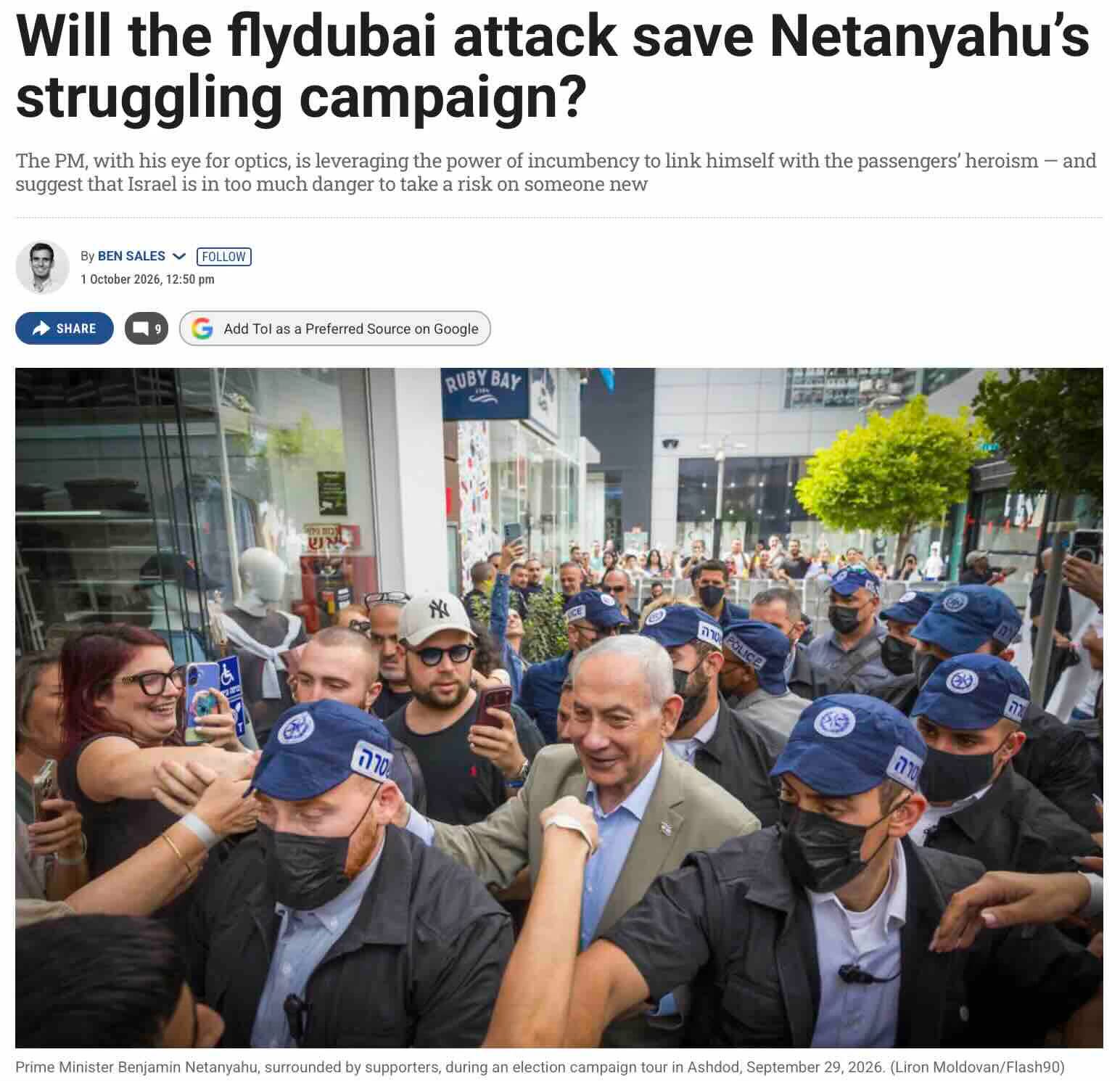
  • August 10 · 1 hr 1 min

    Ellen Brown and Earl Staelin: Can Public Banking Solve AI? and End War?

    Rumble link Bitchute link Attorneys and public banking advocates Ellen Brown and Earl Staelin explain why reforming our system of money creation could help end war and ensure universal prosperity. Ellen Brown is the founder of the Public Banking Institute and the author of a dozen books and hundreds of articles including a new series on “AI Abundance.” Earl Staelin is the founder of the Rocky Mountain Public Banking Institute. Note that the Public Banking Institute will be hosting a conference October 21-24 in Philadelphia. Excerpts: Kevin Barrett: Maybe the banks will have a harder time selling the wars if there’s universal prosperity, right? Scrambling for limited resources has been a big part of how they sell wars. Ellen, since you wrote the article series on AI Abundance, you can introduce the topic. Keep in mind that my audience is skeptical of AI. Ellen Brown: Yeah, yeah, so is mine. It turned out I got a huge amount of pushback. I got hundreds of comments. Elon Musk said (that AI will bring universal prosperity, necessitating a very high Universal Basic Income.) That is what prompted me to write about it. I’ve written different times that the Treasury should issue our dollars directly the way Abraham Lincoln did in the Civil War when the British bankers were going to charge around 30 percent interest on loans to finance the war. And one of his advisors said, "you don’t have to borrow. You can just issue the money.” It’s in the Constitution: “Congress shall have the power to coin money and regulate the value thereof.” And it’s what the American colonists did. According to Benjamin Franklin it was the reason for the great prosperity of the American colonists until the King James required that they—well, the Bank of England leaned on the King to say “you can’t let them do that, issue their own money.” And according to some experts, that was the major trigger for the Revolutionary War was that suddenly we had no money. Before that, our money was paper money issued directly by the colonies. So anyway, we can do that. So Elon Musk predicted that in 10 years, GDP in the US would be 10 times what it is now. And meanwhile, we have this problem of AI taking over all the jobs. So you have people without jobs, so they don’t have incomes. And then you have a huge amount of supply. So instead of too much money chasing too few goods, which is how we get inflation, price inflation, you’ve got too little money chasing too many goods. And so he said we would need to do not just the universal basic income for everyone, but a universal high income just so we’d have enough money out there to buy all the goods that we’d be producing. So I thought, well, where are they going to get this money? You know, they can’t get it from taxes, obviously. People have been talking about UBI for years, and it’s always, well, where are you going to get the money? You can’t afford it. But where you could get the money is just have the government issue it directly, and it would not be inflationary, because in this case, you’re fighting deflation. You’re trying to bring the money supply up to match this amazing productivity. So that’s what triggered me to write about it in the first place…. And then people said, well, what about this? What about that? So I wound up writing five articles in that series. And the last one was about work. The objection has been that work is where we get meaning. And where would we find meaning in our lives if we didn’t have to go out to work? Well, of course, sure, work is where we find meaning, but it could be our own work. All us retired people, like me, I’m not sitting around doing nothing. I’m writing. Or maybe you’re not a writer or maybe you’re not an artist, but you’re a grandmother or whatever. You could spend all this time with your family that you didn’t have before. People do productive things with their spare time. They don’t necessarily just go on Facebook and scroll and scroll. I mean, maybe they do that after their 50-hour-a-week job because they’re so exhausted, they just need some escape. So they turn on the TV, sure. But if you had total free time, you would do productive things. So I cited a lot of evidence of that. And then there were other objections. Where are you going to get the power? I went into all that. But that was the basic thrust. That’s what got me embroiled in all these things about AI. And then, of course, people just don’t like Elon Musk just because he’s a trillionaire. People don’t like people with a lot of money. Kevin Barrett: So in a future of unlimited prosperity like that, there’d be seemingly no reason for war, right? Wars are about resources. And even today, we see what this war on Iran is largely about dominating the resources of West Asia and the way they flow through the Strait of Hormuz. So if we could kick back and not worry so much about the resources and wealth, life could get better in a lot of ways, including less war, theoretically. So Earl, let’s talk about that, the relationship between banking, monetary systems, and wars. Earl Staelin: Yeah, there’s a very interesting book about World War I by McGregor and Dougherty. It cameout about 10, 11 years ago, 2015, I believe. And they showed how Britain had planned to provoke Germany to start a war for about 15 years or so before World War I started. And the reason for that was that Germany was growing faster and was going to surpass them and overtake them in industry, commerce, even in shipping. And arguably, the reason for that is that Germany had a system of public banks, city-owned public banks in 1,500 cities, as well as a national bank that was publicly owned, and their lending was for local, small, medium-sized businesses. The national one included large businesses, but they were productive. They created many jobs. And that, of course, grew their economy and was why they were growing much faster than England, which had been concentrating its banks into a smaller number of very large banks. And, of course, the U.S. has moved in the same direction since then, even more. The goal was to provoke Germany to start World War I. And that was so that they could get Germany in a war with Russia and in a war on its eastern front against France and eventually England, and, they hoped, the United States, which they of course eventually brought in. But it stemmed from this banking situation and the discrepancy between an economy run by a few large banks versus one with many small banks that are locally creating businesses that are more creative, that create more jobs and more prosperity. And we have that situation today, by the way. Now, what is the incentive for large banks for war? Well,first of all, they prefer to lend to large corporations. They’re large themselves. It’s easier for them. Economies of scale. They make more money, more profit. Wars have some guaranteed profitability that is very appealing to large banks. One is that the spending is very high for weapons of all kinds. The spending is unlimited. The government guarantees repayment that may be backed by bonds and taxes and other things. The banks may even lend to both sides. The loser guarantees payment of both sides’ debt. And of course, weapons are a form of planned obsolescence. They’re destroyed and they have to be replaced. And then after the war, it creates business for contractors to rebuild. So it’s an endless source of income for banks that fund the many corporations. And gas and oil use is increased during a war, chemical bombs of various types, chemical warfare. All of the weapons, planes, ships, submarines, tanks and missiles, drones, radar, satellite imagery, all kinds of electronic weapons, bioweapons, it even gets into big pharma. It’s just unlimited. It’s a bonanza. And what happens when war is over or if there isn’t war or fear of war is that defense contractors are afraid their money is going to dry out. And the same thing happens to the banks. So that’s a summary of the incentives. I began my legal career working for a large corporation where we did antitrust law, and I became very familiar with how the incentive and duty of the corporation is, as they see it, to maximize profit. We could by statute say, well, you also have a duty not to damage the public interest, and things like that. But that’s basically the background. We have an excellent quote from Carol Quigley. He was aprofessor at Georgetown University for many years in international affairs, and he wrote about this power of the big banks and elite powers over government. Here’s a quote from his book, Tragedy and Hope: “The powers of financial capitalism had another far-reaching aim, nothing less than to create a world system of financial control in private hands able to dominate the political system of each country and the economy of the world as a whole.” And war, of course, plays into that as being their most profitable way to make a really big profit. Another excellent source, of course, is Smedley Butler, who was our most decorated Marine general ever, who wrote the book War Is a Racket after many years of defending the United States in foreign countries—or actually aggressively pursuing wars in foreign countries. He wrote that these wars were not about national security, they were about protecting and fighting for corporate interests of the United States, very often against international law, and provoking fights and effectively stealing resources of other countries. So that’s kind of the overall picture. And now we’ve got the United States, England and most countries in Western Europe dominated by large banks. The ECB, the European Central Bank, is like that. They profit from loans to large corporations. They profit from war. They are not supporting the real prosperous economy, the domestic economy that serves the needs of the people. And as a result, the countries that are doing that, and countries with publicly owned banks like Russia, Iran is another, China is another big one, that are devoting their lending to productive purposes and not to inflate real estate or stocks that is nonproductive, but for productive purposes, are growing their economies much faster. And countries that are dominated by these big banks that are seeking profit from asset inflation and not production, or from weapons and war, cannot compete with these countries that have a lot of public banks. And so the role of public banks in helping prevent wars can be very, very significant. This is a public episode. If you would like to discuss this with other subscribers or get access to bonus episodes, visit kevinbarrett.substack.com
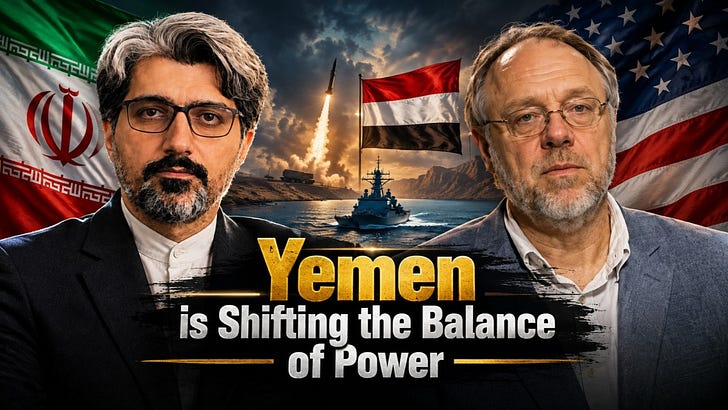
  • August 9 · 1 hr 4 min

    Left-Right Combination Bloodies Israel's Nose

    Rumble link Bitchute link FFWN link The American Intifada picked up steam this week in Michigan, where anti-Zionist Democrat Abdul El-Sayed defeated pro-Israel incumbent congresstraitor Haley Stevens, who had taken $32 million from AIPAC and outspent El-Sayed ten-to-one. Elsewhere in Michigan, another anti-Zionist congressional challenger, Donovan McKinney, knocked off AIPAC-owned incumbent Shri Thanedar, while pro-Palestinian William Lawrence beat two pro-Israel Democrats. Meanwhile in Ann Arbor, American Intifada fellow traveler Yousef Rabhi defeated the incumbent mayor. If this keeps up, the state that gave us Henry Ford (who was obviously ahead of his time) will soon be declared liberated territory. I’m starting to wonder whether I even needed to cross the sea from Wisconsin to Morocco, when I could have just crossed the lake and applied for citizenship in the Islamic Republic of Michigan. But it wasn’t just left-wing anti-Zionists who had a big week. In Maine, Tucker Carlson threw a party…a third party, actually. Guests included Thomas Massie (R-KY) Marjorie Taylor Greene (ex-R-GA) and Joe Kent, former director of the National Counterterrorism Center. All four are MAGA Republicans who, for some odd reason, didn’t like the idea of America’s narcissist-in-chief, Donald J. Trump, getting Zio-blackmailed into launching a disastrous forever war on Iran. Though Tucker’s new third party obviously leans conservative, it’s already picking up support from the liberals over at the Young Turks: If an anti-Epstein Party party emerges on the center-right, while the Democrats keep sliding to the left, 2028 could look different from past presidential election years. It’s conceivable that this election might actually mean something, and that there could be a potential winner worth voting for. My cynicism about American presidential elections—I have never voted for a major party candidate in any presidential election—might be put to the test. If it came down to a three-way race of Tucker/Massie vs. Mamdani vs. JD Vance, I would be facing the unprecedented situation of not actively disliking the candidates with a chance to win.* That’s the best-case scenario, anyway. The worst-case one would be along the lines of “Iran war goes south, worst-ever economic collapse followed by nuclear exchange, Constitution suspended and Trump declared president-for-life with AI Antichrist waiting in the wings.” Second-worst would be a milder catastrophe followed by an Epstein-class mainstream Democrat or Republican fronting for the AI Antichrist. Bilzerian Kicks Bloated Kosher Keister And speaking of candidates I actually wouldn’t mind voting for, how about Dan Bilzerian? He has been pummeling “fat Jew” Randy Fine in their Republican primary battle in Florida’s 6th congressional district. Fine, an even more disgusting antisemitic caricature than Rabbi Schmuley “Kosher Sex Toys & Genocide” Boteach, has: *Repeatedly called for nuking, starving, and completely destroying Gaza. *Called Palestinians “demons” who must be “put down by any means necessary.” *Said Muslims must be “destroyed.” Bilzerian’s positions resonate with Unz Review readers as well as the editor. He sees an Israeli hand in the JFK coup and 9/11 and denounces Jewish supremacism. Wikipedia’s summary of Bilzerian’s “antisemitic” transgressions should endear him to truth-seekers: Bilzerian has generated controversy for a series of antisemitic statements against Jews, Judaism, and Israel as early as 2010. He has gone on record to falsely claim that the Jewish people “perpetrated” the Holodomor in Soviet Ukraine, assassinated John F. Kennedy in 1963 and Muammar Gaddafi in 2011, created the “transgender nonsense”, and orchestrated the September 11 attacks and the Iraq War, among other false assertions and antisemitic conspiracy theories.[36] Commentators have noted the apparent contradiction between Bilzerian’s self-described partial Jewish ancestry and his repeated promotion of antisemitic conspiracy theories, Holocaust denial, and claims of Jewish supremacy and media control.[citation needed] In 2024, Bilzerian condemned Israel and expressed support for Hamas amidst the Gaza war, referring to it as a “resistance organization” and calling its former leader Yahya Sinwar “a hero.”[37] In a 2024 interview with Piers Morgan, Bilzerian argued that Judaism “promotes supremacy and rape, and steals from other people as long as they’re not Jewish“[38] and that “most of the problems today are caused by Jewish supremacy“. He also falsely claimed that all Israeli Jews are “Eastern European Ashkenazi Jews“ and “don’t have actual Hebrew DNA“.[37] Bilzerian further argued that Jews “control the media“.[36] He also promoted Holocaust denial, saying that “I would bet my entire net worth that it was less than six million.”[37] Bilzerian followed up on this claim by stating that Jews “killed more Christians than six million” and that “they’ve basically invented genocide“.[37] All of those “antisemitic” positions are defensible, and most are spot-on correct. So if Dan Bilzerian knocked out Randy Fine with a right hook to the fat Jew’s nose, it would send a powerful signal that American electoral politics are not quite as hopeless as they have heretofore appeared. The Florida 6th District primary is August 18th, a week from this Tuesday. If Bilzerian somehow wins, the optimism kindled by the likes of Abdul El-Sayed and Tucker Carlson will blaze up into a roaring patriotic bonfire. —— *I know I should hate JD Vance for letting Peter “Antichrist” Thiel launch his career, and assume he’s been compromised on the path to becoming VP, but haven’t quite made that leap yet. Maybe I should write an article headlined “Is It Conceivable That JD Vance Has Not Been Compromised?” My cynical friends will all laugh and assume it’s a rhetorical question. https://www.bilzerianforcongress.com This is a public episode. If you would like to discuss this with other subscribers or get access to bonus episodes, visit kevinbarrett.substack.com

  • August 7 · 1 min

    Practica tu español conspiranoico. (Practice your conspiracy Spanish.)

    We interrupt this program with a special announcement: Get ready for tomorrow’s False Flag Weekly News! My article The World Cup WAS Rigged for Argentina's "Zionist" Thugs got a lot of attention and 300+ comments at Unz.com. Since the two finalists were Spanish-speaking countries—and since Maria Poumier surprised me by sending a Spanish translation of my article—I decided to inaugurate the KevinAlMaghribi Substack with that piece. What the heck is the KevinAlMaghribi Substack? Well, since I’m Morocco-based, I thought I’d occasionally reach out in local languages for conversations with local people. The video above is my introduction in Darija, otherwise known as Moroccan Arabic. Why is my first post in Spanish, which I’m not so good at, instead of Darija or French? Aside from the World Cup article, there has been a lot of interest in the Spanish enclave of Ceuta, Spain-Morocco relations, and so on. It just seemed like a good time to brush up on my conspiracy Spanish. Now you can brush up on yours too, by reading: This is a public episode. If you would like to discuss this with other subscribers or get access to bonus episodes, visit kevinbarrett.substack.com

  • August 6 · 43 min

    Richie Allen Asks Me: "Why Did 60,000 Moroccans Storm Ceuta?"

    Rumble link Bitchute link The great Britain-based broadcaster Richie Allen reached out to me here in Morocco to ask why 60,000 Moroccans tried to illegally enter Ceuta, the Spanish city on the Moroccan coast. I offered a short answer, having already written a long one. We also discussed several other topics, including claims of “Christian genocide” in Nigeria… Excerpt: Kevin Barrett: I wrote an article about it a couple of days ago, which people can find at my Substack. And then it’s also posted at the UNZ Review, which is unz.com. And in that article, which I wrote pretty hastily after the news broke, I said, well, it kind of quacks like a Zionist. It kind of talks and walks like a Zionist. It’s probably an Israeli op to punish Spain for its very heroic anti-genocide stance. And the reason I say this is because when something like this happens, you ask yourself, well, who benefits? But first you ask, is it unusual? Is this something that could happen naturally? And in this case, it seems a little too big to have happened naturally. The number of people involved, 60,000 people, was far, far more than the only time something like this had happened in the past in 2021, when 8,000 people stormed Ceuta. But that was when the Moroccan government had openly pulled off their security and announced on the front pages that we’re pulling off our security. And that sent 8,000 people there. Well, this time, 60,000 people just suddenly swarmed to Ceuta. This is incredible. Where did that come from? Well, it came from social media. There was a massive social media push to get those people to Ceuta. And on social media, these messages were spread immediately and boosted and promoted, saying that “you can go now easily, you’ll get in easily, and they won’t send you back, and they’ll give you amnesty, and you’ll have Spanish citizenship.” So people were flooded with those messages. And if you ask the search engines or the mainstream AI, they’ll tell you, oh, it was just an organic social media craze: young people copying other young people doing stupid things—which does happen on social media, but not to that extent. So I think that the fact that the Zionist entity or Israel basically owns the two main social media channels used in Morocco, which are TikTok, which was recently forced sold to Larry Ellison, so it could be controlled by Israel and they could try to get control of the Israel problem that it had, and Zuckerberg and his Facebook social media thing, Instagram. Those are the two that are used in Morocco, and the Israelis own and control both of them. And that was the brainwashing push that got 60,000 people to Ceuta. Israel is furious at Spain right now because Pedro Sanchez, the Prime Minister, has been pushing back against genocide. They banned shipments to Israel years ago, and now they’ve even banned any even overflight or use of their bases or anything in this Israeli war on Iran that’s being pushed through the captured United States government. Morocco doesn’t gain from this. The people accusing Morocco are wrong. It’s being reported in Morocco as a horrible disgrace, a national scandal. It’s killing us PR-wise as we get ready for our 2030 World Cup in conjunction with Spain, right? Spain wasn’t doing anything that bad that Morocco needed to punish them for. You know, Spain did open up a gas line to Algeria, but that’s relatively minor. So no, Morocco didn’t do it. Israel did. Richie Allen: And Ellis Gjivory, who writes for Middle East Eye, which I find pretty useful some of the time. I tried to cross-reference many of the claims… He writes, does Ellis, Israel’s ambassador to the UN, he wrote yesterday, Danny Danon, Israel’s ambassador to UN in New York, wrote on X last week, with barely concealed glee: “Spain, which never misses an opportunity to lecture Israel, has declared a state of emergency in Ceuta following the crisis over its immigration policy.” So that’s hardly... Diplomatic Skills 101. That’s pretty shitty, you might say. Excuse my language. But it’s also inaccurate, because Spain did not declare a state of emergency in Ceuta. So while Danny Danon’s triumphalist post isn’t a smoking gun necessarily that Israel was behind it, if you add it to two or three more facts and some of the stuff you spoke about which is true – Yeah, it’s not much of a stretch to think that Israel may have been behind it, the social media campaign, and that it may have indeed been an attempt to embarrass Spain because of the stance that Spain has taken. Kevin, I don’t know if you’ll have seen this on social media, but a video has gone viral of a restaurateur in Spain telling a group of Israeli tourists basically to sling their hooks or feck off that he’s not going to serve them because of the genocide. Now, whether that’s right or wrong is debatable, but there’s certainly a real anti-Israel, anti-genocide feeling in Spain and it’s coming from the top down, right? Kevin Barrett: Absolutely, yeah. And the Israelis would love to get rid of Sanchez and try to push in one of these right-wing, anti-Muslim, sort of racist, pro-white, nativist kinds of governments. And so they’re using this to try to beat up the Sanchez government and hopefully from their point of view to replace it. So it’s not just to punish Spain, but it’s also to try to push towards replacing the current government of Spain. But it probably won’t work because the Spanish people, as you say, are on board. With the anti-genocide sentiment, and they’re smart enough to figure this kind of thing out. You know, back after 9-11, when there were a bunch of these follow-up false flags, which we would agree were very likely done by what we would call the Middle East War Party. And, you know, you and I might disagree to what extent that is mainly Israel, or does it include an element of American imperialists? But in any case, the train bombing in Spain, the Madrid train bombing in 2002, I think, That was clearly a false flag by basically the same people that did 9-11 for the same reason. They were pushing to get Europe lined up for the upcoming invasion of Iraq on behalf of Israel to destroy Iraq as one of those seven countries and five countries. And so they blew up these trains in Spain, and the Spanish people reacted the exact opposite from what the programmers had expected. They actually ended up voting in So maybe that will happen again. Richie Allen: It’s interesting you mentioned the Madrid bombings of 04, because I tend to agree, I should really push back, but I’m not going to today… Full transcript available at KevinBarrett.substack.com. This is a public episode. If you would like to discuss this with other subscribers or get access to bonus episodes, visit kevinbarrett.substack.com
  • August 5 · 1 hr 27 min

    Gideon Polya: Official Gaza Genocide Toll is Way Too Low

    Rumble link Bitchute link Dr. Gideon Polya, the author of US-Imposed Post-9/11 Muslim Holocaust & Muslim Genocide and other books, discusses Patrick O’Carroll’s “The Arab Holocaust” (posted below). The interview begins with, and focuses on, the Gaza genocide. Dr. Polya argues that the official Gaza death count of 73,381 murdered since October 2023, more than half of whom are women and children, is far too low, and that a more realistic figure is over 800,000. Gideon Polya: The key point is that the perpetrators, who are typically Westerners, ignore deaths from deprivation. When they actually bother to mention how many people have actually died in their endless colonial wars, they only talk of violent deaths. And, of course, in wars, people are not going to go around and pick up the pieces and actually determine how many people we killed. And so already the violent deaths are underestimated. But then they totally ignore the horrendous reality of deaths from imposed deprivation. And the ratio of deaths from deprivation to violent deaths ranges from about three in the Iraqi war and up to 16 in the Afghan war. And various epidemiologists published in the top medical journal, The Lancet, have what they call “conservatively” estimated the ratio should be about four. So I can strain your mental arithmetic with a very simple calculation. A team of epidemiologists published in The Lancet estimated that the violent deaths that are reported by the Palestinian Authority of Health in Gaza, at the moment they say it's 73,000 deaths. However, a team of statisticians and epidemiologists have estimated that it's more like 175,000 violent deaths. And they've then conservatively assumed that there were four times that number of nonviolent deaths. And that means 700,000. Four times 175,000 is 700,000 nonviolent deaths, for a total of 875,000 deaths from violence and deprivation. Yet the world overwhelmingly reports 73,000 deaths. It's absolutely extraordinary undercounting. And Ralph Nader, a very famous American analyst, has called out this horrendous undercounting of mortality in the Gaza genocide. But that's the world we live in. Dr. Gideon Polya, a Melbourne-based biochemist, writer, humanitarian activist, and artist, is a world leader in comparative holocaust and genocide research. He descends from a prominent Hungarian Jewish family that was decimated by murderous ethnic cleansing during World War II. Nonetheless he cannot travel to the state of Queensland to retrieve his birth certificate due to the possibility of arrest and prosecution for opposing the genocide of Palestine. —— The Arab Holocast By Patrick O’Carroll Note: The latter table is also available as a non-OCR image here: https://ibb.co/b5ckkrHr. The Arab Holocaust began in 1915, with the WW1 Blockade of the Levant, which was ordered by Churchill as first “lord” of the admiralty, and aided by France. Then, Zionist Ottoman Turkey, led by crypto-Jews styling themselves “Young Turks” or Kemalists, joined the blockade. The Synagogue of Satan (”Team Antichrist”) always intended the Antichrist State of Israel as the venue for the reign of the Antichrist, so the REAL goal of the WW1 Blockade of the Levant was to genocide the Mid-East Arabs, so as to make way for the Jewish “Super-Race”. #1 PALESTINIAN HOLOCAUST IN 1915-2022 (death-toll 2.214 million) Jewish-Australian author Dr Gideon Polya describes what he calls the Palestinian Holocaust. For 1915-2022 Polya’s analysis outlines Palestinian population-losses due to violent conflict and long-term deprivation (i.e. deaths caused by malnutrition, lack of healthcare, poverty, and deliberate supply-chain blockages): 1915-18 (WW1): Polya estimates 0.1 million Palestinian deaths (14% of the total population) from deprivation by the forced Palestinian Famine, which was part of the Zionist WW1 Blockade of the Levant in 1915-18. 1918-48 (British Mandate): Polya estimates 0.65 million avoidable Palestinian deaths, drawing a comparison to death-rates in British-ruled India during this thirty-year era. 1948 (the “Nakba”, Arabic for disaster): The NAKBA featured minor extermination, but major expulsion, i.e. the forcible expulsion of 800,000 Palestinians (about 60% of the total indigenous population) by the destruction of 500 villages to enable the establishment of the Antichrist State of Israel. Mainstream historians estimate that about 14,000(13.000-15,000) Palestinians died violently in the 1948 NAKBA, which was a major step in creating the Antichrist State of Israel. The Zionists expelled Palestinians to the following “havens”: West Bank 280,000; Gaza Strip 190,000; Lebanon 100,000; Syria 75,000; Jordan 70,000; and elsewhere 85,000. 1950-2005: A further estimated 1.35 million avoidable non-Israeli Palestinian deaths from deprivation. 2005-22: A further estimated 0.1 million avoidable non-Israeli Palestinian deaths from deprivation, including both occupied and exiled Palestinians. #2 GAZA HOLOCAUST 1, FROM OCT 2023 UNTIL APR 2025 (death-toll 1.1 million) After the false-flag attacks of 7 Oct 2023 (planned near “Sukkot”, Feast of Tabernacles), and until 30 Apr 2025, the Zionists genocided a total of 1.1 million Arabs in the Gaza Holocaust. This death-toll is calculated as follows: [A] In mid-2025, Dr Gideon Polya and Professor Richard Hill calculated that the total death-toll for Gaza from 7 Oct 2023 until 30 Apr 2025 was at least 680,000. This is based on all the data collected by British medical journal LANCET, with infants under five years of age accounting for a massive 380,000 (56 percent) of this toll. Sources: https://encrypted-tbn0.gstatic.com/images?q=tbn:ANd9GcTjKJUBNNXyDkTdujvp9Iqo0zFtTG_fq8KwGFllLUxuFpq-BK4xvv1OIk09ietzZLPzhwg&usqp=CAU https://medium.com/@hrnews1/report-estimated-death-toll-in-gaza-hits-680-000-bbc2d0e8a96c [B] In addition, Harvard verified that the ZioNazis had “disappeared” 400,000 Arabic children from Gaza: https://www.theoccidentalobserver.net/2025/06/29/harvard-study-israel-disappeared-almost-400000-palestinians-in-gaza-half-of-them-children/ These “disappeared” children are the biggest “profit center” because the ZioNazis traffic the children’s organs, and also traffic the children themselves, selling them on to the highest bidder for child-rape and human-sacrifice. [C] We must also add 20,000 Arabs “buried under the rubble”, as confirmed by the following article: https://english.elpais.com/international/2025-10-13/gazans-search-for-their-dead-under-the-rubble-its-a-tragedy-for-which-there-are-no-words.html So, if we add [A], [B], and [C], we get a total death-toll of 1.1 million for the period 7 Oct 2023 until 30 Apr 2025. Note too: If we ignore the 400,000 Arabic children “disappeared” by the ZioNazis, we get 36,267 deaths per monthfrom 7 Oct 2023 until 30 Apr 2025 (total 18.75 months) from the raw LANCET death-toll of 680,000. #3 GAZA HOLOCAUST 2, FROM 1 MAY 2025 UNTIL 28 FEB 2026 (death-toll 0.36 million) Because the Antichrist State of Israel was genociding 36,000 Palestinian Arabs per month in Gaza up until 30 Apr 2025, it is safe to extrapolate a further total of 360,000 Palestinian Arabs of Gaza genocided for the 10 months from 1 May 2025 until 28 Feb 2026, when ZioNazi Trump launched the Iran War for his boss, ZioNazi Netanyahu. #4 IRAQI HOLOCAUST OF 1990-2026 (death-toll 5 million) By 2023, Jewish-Australian author Dr Gideon Polya calculated that the Zionists had genocided 5 million Arabs in the Iraqi Holocaust after 1990, giving the separate totals [1], [2], and [3] below in this 2023 article by him: https://www.globalresearch.ca/iraq-invasion-20th-anniversary-five-million-dead-iraqi-holocaust-1990-onwards/5812642 [1] 1.9 million: 1.9 million genocided in 1990-2003: 0.2 million genocided in the First Gulf War of 1990-91, and 1.7 million genocided during the period of sanctions in 1990-2003, which were led by the USA but ordered by the Antichrist State of Israel. On 12 May 1996, ZioNazi Madeleine Albright defended Zionist genocide for 1990-96 on a “60 Minutes” segment with Lesley Stahl, stating: “We think the price is worth it” to achieve “policy goals” against [CIA Agent] Saddam Hussein. But, for 1996-2003, the same sanctions caused a vastly larger death-toll. [2] 2.7 million Iraqis were genocided in the Second Iraq War of 2003-11. There were 1.5 million violent deaths in this war. Polya cites data from the UN Population Division that indicate that there were 1.2 million more avoidable Iraqi deaths from war-imposed deprivation in this period. These two figures sum to 2.7 million in total. [3] 0.4 million Iraqis were genocided after 2011, i.e. after the Iraq War of 2003-11 was declared “over”. The USA ostensibly withdrew from Iraq in 2011 but returned in force to the region with a vengeance in 2012, leading to about 0.1 million violent Iraqi deaths in the devastated Mosul (40,000 killed) and in the twice-US-demolished Fallujah. UN data also indicate about 0.3 million avoidable Iraqi deaths from deprivation in the period 2011-20. In total, [1], [2], and [3] sum to 5 million; that is Dr Gideon Polya’s total death-toll estimate for the Iraqi Holocaust. Polya’s estimate corroborated: Independently, the following article estimated that somewhere between 2.4 and 3.4 million died in Iraq in 2003-18: https://popularresistance.org/iraq-death-toll-15-years-after-invasion-more-than-2-million/ If we take a median estimate of 3.1 million from the latter article, and then add the 1.9 million genocided during 1990-2003 (the total for [1] above), this also yields a total of 5 million, thus decisively corroborating Polya’s very conservative estimate that the Zionists genocided 5 million Arabs in the Iraqi Holocaust of 1990-2026. #5 SYRIAN HOLOCAUST (1915-2026) (death-toll 0.86 million) During the WW1 Levant Blockade, the Forced Syrian Famine genocided 0.2 million Syrians (a very conservative estimate). In the Zionist-triggered Syrian Civil War of 2011-24, the death-toll was 0.66 million. #6 LEBANESE HOLOCAUST (1915-2026) (death-toll 0.415 million) During the WW1 Levant Blockade, the Mount Lebanon Holocaust genocided 220,000 Lebanese Arabs. The Lebanese Civil War (1975-90) had about 150,000 fatalities. 45,000 more died in: the 1982 Lebanon War; the 2006 War; and the 2026 attacks by the Antichrist State of Israel. #7 YEMENI HOLOCAUST (death-toll 0.3 million) 0.3 million Yemenis were genocided since 1962, including between 100,000 and 200,000 in the Zionist-triggered North Yemen Civil War (1962-70). #8 LIBYAN HOLOCAUST (death-toll 0.1415 million) Italian colonial authorities under MI5+6 Agent Benito Mussolini genocided 60,000 Libyans in the Libyan Genocide of 1929-34. Separately, they genocided a further 50,000 Libyans in the Second Italo-Senussi War of 1923-32. The 2011 Civil War and subsequent conflicts (2014-20) resulted in at least 30,000 deaths. The ZioNazi NATO “alliance” also killed about 1,500 Libyans in its air-strikes of 2011. OTHER HOLOCAUSTS IN ARAB NATIONS The above table shows the Holocausts in four other Arab nations since 1948, where Zionist-triggered wars genocided 31,000 Egyptians, 20,000 Jordanians, 15,000 Omanis, and 1,000 Kuwaitis. RELATED This article on Henry Makow’s website: https://henrymakow.com/2026/06/patrick-ocarroll--the-Arab-Holocaust.html This is a public episode. If you would like to discuss this with other subscribers or get access to bonus episodes, visit kevinbarrett.substack.com
  • August 3 · 21 min

    Trump Has Destroyed His Presidency

    Rumble link Bitchute link Press TV interview Monday, Aug. 3 Excerpt: Kevin Barrett: The higher gas prices, and the economic slowdown, which everybody kind of vaguely senses, is going to get a lot worse, as I mentioned earlier, because of the effect gradually going through the pipeline. That's turned the political discussion now very strongly in an anti-Trump direction. Trump's polling now is worse than any other president in modern history since polling began. Bush Jr. had the world record for the worst polling, the most unfavorable rating of any U.S. president, after his failed policies in Afghanistan and Iraq. But now Trump has broken that record by a substantial margin. This war was the most unpopular war at its beginning ever fought in American history since polls have been taken, and it's gotten even less and less popular ever since. So Trump is facing a catastrophic situation right now as he goes into the November elections that could bring a Democratic majority into the American Congress on the back of this economic disruption. And that Democratic majority very likely will investigate some of the things that the other guest was very perceptively talking about. Trump's corruption is just off the charts. American presidents have been corrupt before, but Trump has taken it to a new level by orders of magnitude. As the guest said, Trump has issued blood-curdling threats that made it look like we're on the brink of World War III—and he always does that at the end of the trading week. And then on Monday, he says he's been talking to his imaginary Iranian friends. He calms the markets. The markets then become extremely unrealistically optimistic. And this up and down in the markets can be played, and huge amounts of money can be made with put options. Trump has various ways of gambling on what the markets are going to do, and Trump has the insider knowledge of what the markets are going to do because he knows which weekend he's going to issue his threats, and how hard he's going to walk it back on Monday. And then as we heard from the other guest, he's actually selling insider information on Truth Social! So when the Democrats take back the Congress, they're going to have an easy time putting Trump in prison. They had a harder time putting him in prison before, between his two terms. But this time it's going to be easy. So that's why he's caught between the rock and hard place, and he has no good options. If he goes ahead and gets out of the war, the only way to do that is to honor the MOU, basically surrender to Iran. That's not going to look too good politically. And the Zionists who dominate the American political system will throw money at his opponents and harm him. But if he doesn't, then things just keep getting worse the way they've been getting worse for him over the past several months. So he's destroyed his presidency with this evil and strategically monumentally stupid war on Iran. Full transcript available by clicking "transcript” at my Substack. This is a public episode. If you would like to discuss this with other subscribers or get access to bonus episodes, visit kevinbarrett.substack.com

  • August 2 · 1 hr 5 min

    Trump Runs Out of Standoff Munitions, Drops F-Bombs Instead

    Rumble link Bitchute link False Flag Weekly News link Q: What do you do if you run out of standoff munitions, but can’t drop gravity bombs because it’s too dangerous? A: Drop F-bombs! That appears to be Trump’s Iran war strategy. Screaming front page headlines reported last week: Trump says US will ‘beat the f*cking sh*t’ out of Iran after attack on bases in Jordan. If multi-megaton foul language could win wars, Donald Trump would have reduced the IRGC to quivering jelly: “Please, oh please, Mr. Trump, we beg of you, do not drop any more of those nasty foul-mouthed F-bombs on our poor little virgin ears! We will do whatever you say! Just don’t use any more bad words!” Unfortunately for Trump, the Iranians remain uncowed by obscene, scatological tirades. Who could have predicted Iran could withstand the most vicious vulgarity, the most atrocious expletives, the profanest and most vulgar filth that America’s rude, crude, and lewd president could dump on them? It’s one thing for Iran to endure a vicious surprise attack, launched under cover a fake breakthrough in negotiations, that murdered much of their top leadership, including the revered Supreme Leader, along with 168 Minab schoolgirls…and then remain strong, and even vaunt escalation dominance, throughout almost six months of warfare against an enemy that outspends them militarily 100-to-1. It’s quite another that the Iranians can fail to surrender to Trump’s out-of-control obscenity. If you found the above passages even mildly amusing, you understand the obvious: When Trump loses his cool and unleashes foul and/or blood-curdling threats, fondly imagining that such behavior will intimidate his enemies into compliance, he is exhibiting hilariously narcissistic cluelessness. The Baboon-in-Chief apparently doesn’t realize that losing control and lashing out is the behavior of a loser, not a winner. Screaming vain expletives at the sky is an admission of defeat: “G**** bleepity bleeping bleeping bleep it! We LOST!” Trump’s expletives are reminiscent of pilots cursing as they crash. In 1977, seconds before another Boeing 747 slammed into his plane in a crash that killed 538 people, Pan Am captain Victor Grubbs yelled “Goddamn, that son of a b**ch is coming!" And in an even closer parallel to Trump’s F-bombs, an Air France 447 captain, seconds before his plane slammed belly-first into the Pacific Ocean, attempted to intimidate the ocean with “f***! We’re dead.” Needless to say, the ocean was no more intimidated by that outburst than Iran is cowed by Trump’s equally ineffectual F-bombs. Throwing a temper tantrum because you can’t get your way is the behavior of a two-year-old. And Trump is an overgrown baby, a case study in arrested development. After unloading on the Ayatollahs, Trump let up on Iran and started F-bombing his own national security team. According to NBC News, Don the Deranged “erupted” and “yelled expletives” at his aides because they “are unable to come to an agreement on the Iran war strategy.” Oh well. Maybe if he drops enough F-bombs on them they’ll think of something. At this point the best move for Trump would be to declare victory and hope the Iranians die laughing. And if those outbursts weren’t enough, on Wednesday Trump looked like he might get dragged out of a White House press conference by men in white coats, after rambling incoherently about grass and Star Wars. According to the Irish Star, “Donald Trump’s aides allegedly ‘rushed the press’ out of the Oval Office after one of his speeches raised concerns that ‘something was wrong.’” Trump “rambled about how his team were ‘changing all the grass in all the parks’ before bizarrely comparing grass to ‘human beings.” Before his aides leaped to shield Trump from view while others hustled the media out of the room, Trump had been serving up some very strange word salad: “Grass is like human beings. Grass is a life also. And we're changing. We're raking, cleaning and changing all of the parks. We don't have the tents anymore. We don’t have all the barbed wire up. We don’t have the wire up… “Within a few years, it will be rated the best airport in the country. So it’s going to be so efficient. Right now, it’s totally inefficient between the trams and the Star Wars thing that they go up. The Star Wars and elevated buses and nobody knows what’s going on. It’s a real mess.” Video link on X Oh well, at least he didn’t F-bomb the grass and the Star Wars and the elevated buses. When we discussed Trump’s F-bombs on this week’s False Flag Weekly News, co-host E. Michael Jones had an interesting medical diagnosis: Kevin Barrett: Trump is in trouble. If he surrenders by actually implementing the terms of the MOU, that’s not going to look too good politically, and the Zionists will go crazy and kill him (politically). Maybe even literally. But if he doesn’t, if he keeps escalating like he’s threatening to do, then the world economy goes down the toilet and nobody’s going to vote for him, least of all the Catholics. And I don’t think Catholics like other things about him either, such as his potty mouth. He’s done this (waxed obscene) a number of times. The bleeping-bleephead-in-chief! But why? Well, because first, the U.S. and Iran have been trading strikes. The Iranians hit U.S. bases in Jordan. Trump was furious that the Iranians had the temerity to defend their country, so he resorted to foul language, screaming that he’s going to “beat the bleeping bleep out of Iran” after the attacks. Seems like this guy is a little bit out of control, doesn’t know what he’s doing, doesn’t have a lot of impulse control. E. Michael Jones: This is what I was talking about in terms of tertiary syphilis. I keep coming back to this. One of the symptoms, when it goes to the brain, is grandiosity. You have delusions of grandeur. And the other one is loss of control of speech. So which is it: narcissism or syphilis? That might make good topic for a debate between medical doctors and psychiatrists. But is Trump’s behavior spontaneous and authentic? Or are his foul-mouthed curses scripted, like the rants of professional wrestling heel threatening his opponent? My audience of conspiracy realists includes a few who think Trump’s apparent madness is all an act. According to one interpretation, the Deep State is using Trump’s crazy act as an extreme version of what Nixon and Kissinger called “the madman theory”: “If we can convince our enemies that we’re crazy enough to drop nuclear bombs on them, that will give us leverage!” If that’s the case, it won’t work on Iran any better than it worked on Vietnam. Trump comes across as desperate, not dangerous. And Iran is not afraid of being nuked. Its dominant ideology lionizes suffering for a good cause, even (especially) martyrdom. So even if Iranian leaders believed Trump was crazy enough to destroy much of West Asia’s energy and life-support infrastructure by inviting Iran to make the other side of the Gulf (and perhaps Occupied Palestine) uninhabitable, they would still resist Trump’s tyranny and die willingly as martyrs, taking the region and the world down with them. The cynical mercenary’s slogan “kill ‘em all and let God sort ‘em out” becomes, in the Iranian rendition, “if the tyrants kill us we will kill them too, and we’ll go to paradise while they go to hell.” And then there are the dwindling number of conspiracy types who still imagine Trump is some kind of genius playing multidimensional chess. Mike King, for example, still seems to think that Trump is basically giving the Zionists enough rope to hang themselves. And while it may very well work out that way—the Zionists are doing an excellent job of hanging themselves, thanks in part to Trump’s rope—I doubt very much that Trump is cackling to himself: “Bwa-ha-ha! If I let Bibi commit genocide, and attack Iran for him, and make him think I’m doing it because of those Epstein videos, we will lose the war, lose global public opinion, lose to Russia, lose to China, and the Zionist-run US empire with its crime base in Occupied Palestine will crumble, and Donald J. Trump will go down in history as the man who liberated planet Earth from the death grip of the demonic Epstein Class zionist oligarchs!” It’s an amusing idea. Mike King should make an AI movie featuring superhero Trump doing all those things. But please, Mike, leave out the foul language and make sure it’s rated G so future generations of kids can draw inspiration from it. This is a public episode. If you would like to discuss this with other subscribers or get access to bonus episodes, visit kevinbarrett.substack.com

  • July 30 · 25 min

    Narcissism and Psychopathy on Display in the Oval Office

    Rumble link Bitchute link In today’s news…the bad news is that Trump’s potty mouth overflowed as he threatened to “beat the f*cking sh*t’ out of Iran.” The good news is that Trump appears to have defecated in his pants at Lindsey Graham’s funeral…which might conceivably render him slightly less full of sh*t. Below is a transcript of last night’s Press TV interview. Listen to the whole thing in the audio podcast file at the top of my Substack post, or watch the two-minute highlight video above. Press TV: Well, it’s 6 p.m. here in Tehran and time for the news review. Welcome. Now, let me give you a recap of what’s been happening and what we’re going to talk about. We have been watching Iran, what another Iran is saying, as long asU.S. aggression against Iran’s civil infrastructures Iran will retaliate. And that’s what Iran has done. And the continuation of that, IRGC hit U.S. Air Base and headquarters in Jordan. And now Mr. Trump is going mad and saying that I’m going to hit Iran hard again. Of course, it’s not the first time this has been going on. Iran is also asserting its control over the Strait of Hormuz and IRGC Navy, the Iranian Army. They are both asserting their control there. And almost every day they are stopping a number of ships that have been trying to cross the Strait without Iran’s authorization. And of course the same talks are ongoing between Iran and the two coastal states to come up with a certain mechanism for arrangements of transit. So this is what we are going to talk about. Allow me to introduce my guests. In our studio in Tehran, we have Khomeira Ahad. And also we have Kevin Barrett joining us from Saidia in Morocco. Okay, let’s begin with Tehran, if you allow me, Kevin, so that Khomeira will just bring us some information and give us some more details regarding the goings on recently. Khomeira, do you think this is going to further escalate? Or is it going to come down? Because, if you remember the way Mr. Trump usually puts it whenever he says he’s going to do something big time and then the next day or five minutes later he changes his mind, he said let’s turn to the negotiating table. Khomeira Ahad: No, but I think that it is going to escalate. And the things which we have been seeing in the last few months point to that, that there will be escalation again . We know that in the last 24 hours, the IRGC has pounded American bases in Jordan, and ballistic missiles have been fired. The IRGC has been quite clear in saying that as long as unlawful hostile actions are carried against the Islamic Republic of Iran, and as long as the threats continue against Iran, retaliation will follow. And that is what we saw in the last 24 hours. And now we are seeing again very inflammatory rhetoric fromTrump. He has said in the last couple of hours that he’s going to again hit Iran very badly. And that’s not something new, as you already mentioned. In the last few months, if not a year or two, we have been seeing Trump again and again issuing this type of inflammatory rhetoric. And Iran has said as long as this inflammatory rhetoric continues, these types of threats continue, the American side will face retaliation from Iran. As a result of these threats, we are also seeing an effect on the world markets. According to reports, the Brent oil prices have again risen. And if the escalation continues, then we are going to see a huge effect on the global markets. Press TV: Great. Okay. Turn to Morocco now. Kevin, good to have you with us. So how do you look at things? Where is this leading? Kevin Barrett: Well, people have remarked on the parallels between Trump’s repeated threats and then his equally delusional claims that he’s been negotiating with imaginary Iranians. “It is very close to an agreement.” He typically issues the threats usually towards the end of the week so that the weekend will come and they won’t disrupt the markets too much. And then he usually says he’s been negotiating with his imaginary Iranian friends and is close to a deal on Monday to try to calm the markets leading into the week. But this time he is ranting and raving with his bizarre extreme threats in the middle of the week. So who knows what that means? I don’t think that even Trump’s psychiatrist knows what Trump is really thinking. So rather than worrying about Trump’s psychology, which is pretty much a case for a whole team of psychiatrists specializing in narcissism and psychopathy, I think we should look at what’s actually going on on the ground, where the military shipments are going, and so on. And then, of course, what’s really going on with the energy trade, energy markets. In other words, the real-world factors here. And those real-world factors are that Trump and his administration are caught in what Robert Pape calls an escalation trap. They can’t get anything even remotely close to what they want. They have no idea really what they’re doing. They took Netanyahu’s advice and got into this ill-advised war, imagining that their goal was to somehow magically regime-change Iran and turn it into a Zionist colony. And that, of course, was never going to happen. And now they’re stuck with Iran inevitably coming out of this war stronger than it was before. And so they don’t want to accept that, but they have no answer for it. And the dynamics here, yes, the Americans are sending more material to the region, which means probable escalation. But what can they do? They’ve already bombed the targets they can bomb. Iran still has a lot more targets left for its missiles. The Americans have used up most of their standoff munitions, and the military is screaming at Trump that “it’s dangerously low. If China tries anything, we can’t do anything.” And so on. And so the overall situation right now is Groundhog Day. Trump is screaming and yelling again. He may do some more bombings. Iran has escalation dominance and will answer them. And we’re going to be back to square one until the Americans finally honor the MOU. Press TV: Speaking of energy markets that you also mentioned and rising oil prices and difficulties, you know, being actually a cause for many people, not only in the region, but maybe elsewhere across the planet. Trump is saying that Iran is doing this. This is collective punishment. But Hormuz did not used to be like this. It was calm. So who caused this? I mean, who’s to blame for this? Iran or President Trump’s policies and warmongering? Khomeira Ahad: You’re absolutely right about people saying that Hormuz was not like this and countries saying that it was all calm. Yeah, absolutely. It was all calm. The vessels were passing through the Strait of Hormuz without any effect. Iran was providing security without being paid. But who started it is the question which requires being pondered upon. And the answer is, it is America and Israel whose attack led to what we are seeing now, to what the world economy is facing the brunt of. And because of the aggression that was started by the United States and Israel on 28th February, Iran had to retaliate in this way. We have been seeing in the last few months, starting from the last year in June and continuing till now, what type of aggression has been exercised by America and Israel. The leader of the Islamic revolution, the martyred leader, was even assassinated. Hospitals attacked, schools attacked, 168 young children, primary schoolchildren killed in Minab. The list continues. The aggression: bridges, civilian infrastructure destroyed. And the world, apart from taking notice of what is being done to Iran, is talking about Iran restricting the passage shipping in the Strait of Hormuz. All the international laws have been violated by the United States and Israel, and this happened amidst negotiation. The first 12-day war, which happened last year in June, took place when Iran was undergoing negotiations with America, and it was the fifth or sixth round of negotiations. Next was the 40-day war, which started on 28th February with the assassination of the leader of the Islamic revolution. It happened when the third round of negotiations were taking place. And even the Omani foreign minister said that Iran was giving lots of concessions. So taking that near history into consideration, we know what type of aggression is going against Iran for the last few months. We have seen in the last few months how it has played out positively for Iran. And it is because of the Strait of Hormuz that Trump was forced to come to the negotiating table, though he again violated the negotiation, which is his modus operandi. But he was forced to stop his aggression against Iran or restrict his aggression against Iran because it was having an effect on world economy and he could not control the world economy, the rising prices, even in the American mainland. So the Strait of Hormuz is the only option helping Iran prevent further aggression. Press TV: Right. Okay, Kevin, yesterday we had Netanyahu’s visit to the US. What was he whispering in Trump’s ears? He said he has had the best meeting ever with Trump. What is it that could be probably asking President Trump to do? Kevin Barrett: That’s a great question. It’s actually unclear, because we had simultaneously that claim from Netanyahu that it was the best ever meeting with Trump. And then at the same time, there were reports that it was unusually short, that Netanyahu snuck in through the back door and was snubbed. So maybe Netanyahu was exaggerating or trying to cover up the fact that it wasn’t such a great meeting. That’s a possibility. Or on the other hand, maybe there’s some truth beneath that claim. Maybe Netanyahu once again has pulled out his Epstein blackmail evidence of what Trump may have done to young girls like Katie, who sued him for brutally raping her in the presence of Jeffrey Epstein when she was 13 years old. And Netanyahu may have flashed that kind of material at Trump to try to force him to follow Israel’s orders to escalate the war on Iran. Who knows what really happened in that meeting when two of the world’s worst war criminals occupied the same space briefly. We certainly know that Congress isn’t applauding Netanyahu the way they used to anymore, and that the American people have turned against Israel. There’s been a 70% collapse in support for the Zionist entity among the American public,according to Pew Research, over the last eight years. So, however that meeting went, the American— Press TV: Kevin, sorry for jumping in. Please tell me who’s actually controlling the whole thing? Who is under whose thumb? Is it Mr. Trump who is simply materializing the whims and wishes of Netanyahu, or does Trump have his own mind? Kevin Barrett: Well, certainly Trump doesn’t have much of his own mind. He doesn’t have much of a mind at all. He’s a very impulsive individual with narcissistic personality disorder and low impulse control. So I think he’s been manipulated. I think he spent his entire life as a frontman for what Americans sometimes call the kosher Nostra, that is, a certain ethnic organized crime syndicate that dominates the United States, killed the Kennedys, did 9/11 among other crimes, probably killed Charlie Kirk as well. I think Trump has been a money launderer and a front man for that crime syndicate for his whole adult life. I don’t think he’s very independent, unfortunately. On the other hand, the fact that he is such a loose cannon and nobody can ever predict what he’s going to say or do might mean that he’s capable of intentionally biting that Kosher Nostra hand that feeds him, especially if he’s forced to do so by his own military and strategic establishment, which sees that he’s gotten the United States into a terrible mess with this very ill-advised attack on Iran, which was very much at the instigation of the Israelis and not of any strategic thinkers from the American side. Press TV: Okay. Khomeira, speaking of the U.S. and the polls conducted there, we also see President Trump’s popularity going down. People are not satisfied with his performance, especially when it comes waging war against Iran. Many don’t want that war. They don’t want taxpayers’ money to be going down the drain with a useless war. Khomeira Ahad: Yeah, you are absolutely right. This is the only war in recent history which doesn’t have any support amongst the American people. And the wars which were fought by America in the recent past in Afghanistan, Iraq, the media also played a role to promote that false propaganda. We know about Iraq that false propaganda about weapons of mass destruction was fed to the American public, and about the World Trade Center. There are still lots of theories about that. Who did it? Was it an inside job? Not going much into it. But a sort of ground was built amongst the American public where support was garnered for these wars. According to statistics, the Iraq war had 70% support approximately when the war started. As far as the Afghanistan war is concerned, 90% support. But since the onset of war against Iran, it has not had any support from the American public. No ground was set before this war was started. So it’s the most unpopular war amongst the Americans, and not only amongst Americans, but the whole world. Trump did not provide any logical reason to wage a war against Iran. Yeah, we know there has been false propaganda in the Western media against Iran for the last 48 years. We are seeing this again and again in different countries. Trump’s support is decreasing, and one of the most important reasons for this decrease in support is that he violated his idea of making America great again, where he said he would say that he doesn’t want to start any foreign wars. And now he is against his own statements, and that has decreased in his popularity. And we are seeing even among the Republican base also, he is losing support. The Iran war is becoming a political graveyard for Trump. Press TV: Kevin, Trump began singing this rhetoric saying, we’re going to hit them hard. And he’s been hitting it hard. And you know where he’s been hitting mostly, civil infrastructure: people, hospitals, schools, wherever they can hit. But this has been going on, this vicious circle, going on and on. Is Trump going to learn one day that this simply doesn’twork? Kevin Barrett: Some of his advisors are afraid to tell him that, but others, maybe J.D. Vance,maybe some of the military people, are trying to whisper in his ear and say, look, there’s never been a case in history where bombing civilians ever convinced any country. It’s the opposite. It just makes them angry and consolidates support for their war effort. And if there’s any country where that’s going to be true, it’s Iran, because Iran has a national identity that has a large element of Shia Islam, where the martyrdom of a long line of imams, including Hussein, has forged an attitude of standing up against injustice. Martyrdoms don’t help the murderers when you’re fighting that kind of country, more so than any other country. The idea that hitting these civilian targets in Iran is somehow going to help his cause is so obviously false that I have a hard time believing that any of his advisors are not trying to disabuse him of it. And they also are fully aware that Iran has that escalation dominance. That is, anything that is done to Iranian infrastructure, Iran can do the same thing to the countries on the other side of the Gulf, and to some extent the Zionist entity as well. In fact, actually worse. Again, Iran has that escalation dominance, even if it gets into these war crimes of targeting civilian infrastructure, which is what this is. Trump’s even threatening to do that. He’s openly stated that he does it. That’s a war crime in itself. And then when he actually does that, he hits bridges, hospitals, schools. This is an extreme war crime. And so he’s setting himself up for all kinds of trouble, not just political trouble, as the other guest mentioned, complete collapse of the nonexistent support that this war had at the beginning. But then when the economy tanks, even worse than it has already, he is likely to end up with a Congress that hates him and is ready to dig into his misdeeds, and he could easily end up in prison, as could Netanyahu. Press TV: Now, Khomeira, how can both sides get out of this no-war, no-peace state? Because Iran has never initiated any war. Iran is not in favor of any war. But when a war is waged against Iran, Iran has to defend itself, and that’s what it is doing. But you see, we have on the other side a President Trump who is not being honorable. And he’s actually threatening, and then he says, “now let’s turn to the negotiating table. We’ve been in deep negotiations with them. Hopefully we’ll get some good news.” And then immediately afterwards, he says, “we’re going to give them a beating.” Khomeira Ahad: Yeah, you’re absolutely right. Coming out of this sort of quagmire is difficult, because Iran has been retaliating. Iran has not started this war. All the type of whatever aggression Iran faced, Iran just retaliated to those strikes. Talking about negotiation and diplomacy is quite difficult because we are seeing that Trump does not stand by his word. Trump signed—it’s really very bizarre to even accept that the President of the United States signs a document and then he doesn’t adhere to it even for two weeks, and he again starts the aggression. Diplomacy for him means nothing. And he’s the same person who tore up the JCPOA when he first became the President of the United States of America. So for Iran, to trust them again and again has been difficult. And we have seen Iranian diplomats again saying that they are going into negotiations with complete mistrust. They know the Americans have been dishonest again and again. And now, very apparently and in a really bizarre way, we have seen what Trump has done in the last few weeks. There are people inAmerica like American diplomat, Robert Malley, everybody knows his name. He was one of the chief negotiators during the JCPOA. And during the Biden administration, he was given the Iran portfolio. In a recent interview, he said that if Iran now decides to make a nuclear weapon, it would be very logical. And for them to trust diplomacy, to trust Trump, is almost impossible. So even American diplomats, the people who have been in the American bureaucracy, have been saying that the way this American president has been behaving, it’s almost impossible for the Iranian side to now trust him or trust any of the things which he guarantees on paper. Press TV: Okay. Kevin, how do you see things actually unfolding? Do you anticipate further escalation Do you think the negotiation will work? Is Trump the kind of person you can trust? Will he be in compliance with any deal? What happened to the Islamabad MOU? Kevin Barrett: Well, obviously, you can’t trust Trump. You can’t really trust the United States policy, even outside of Trump. The Obama administration did not fully abide by its obligations under the JCPOA, and the Biden administration either. But of course, Trump has taken this to new levels of blatant mendacity. So no, obviously Iran cannot trust Trump at all. From now on, the MOU has to be implemented before Iran even talks to the Americans anymore. In other words, if the United States goes ahead and tells Israel to get out of Lebanon, abides by its obligations, releases Iran’s cash, and backs off in Hormuz and stops attacking Iran, then maybe there will be something to talk about. But if that doesn’t happen, what’s the point of talking when the other party has violated the last solemnly signed agreement that you made with them? That would be completely stupid to keep trusting somebody who’s repeatedly pulling the rug out from under you. So I think it all has to be up front next time. In other words, Iran won’t accept any promises. It will only accept actions and realities. Press TV: Okay, we’ve got one minute left if you want to make a conclusion. Khomeira Ahad: Even now, we saw recently what Trump said. His rhetoric has really been very inflammatory. And we saw how IRGC responded. They said any ship which will take the compensation of Iranian frozen assets will not get a safe passage of the Strait of Hormuz. So what we are seeing through the messages, even those Trump is communicating to the Iranian side, is that he is not honest. He doesn’t want to have any diplomacy with Iran. He doesn’t want to have any real and fair deal with Iran, even if he says diplomacy is going on. The way he has been behaving, the words he has been saying, the statements he has been issuing are really totally contrary to the diplomacy or contrary to, you know, a country which wants to have issues resolved. This is a public episode. If you would like to discuss this with other subscribers or get access to bonus episodes, visit kevinbarrett.substack.com

  • July 28 · 1 hr 4 min

    "Nations Good, Empires Bad"?

    Rumble link Bitchute link Laurent Guyénot, author of From Yahweh to Zion, discusses his new book The Papal Curse…and its implications for understanding where the world is going and why. Transcript Kevin Barrett: Welcome to Truth Jihad Audio Visual. I’m Kevin Barrett doing the audio since 2006 and the visual since a little bit after that, unless you want to count my Hannity interview and stuff like that. Anyway, I’ve been looking for truth, 9/11 and otherwise, for going on 25 years. And one of the more important, noteworthy colleagues in that voyage has been Laurent Guyénot. He’s the author of From Yahweh to Zion, the only book that I was willing to spend a year and a half or so of my life translating, because it’s really important. And a lot of his other work is important too. So without further ado, welcome, Laurent. How are you? Laurent Guyénot: Thank you, Kevin, for having me. I’m fine, thank you. So, I’ve been joining you in the fight for truth only 10 years, well, about 12 years. So, you know, you’re my teacher in that field, in everything, actually. Kevin Barrett: Well, thank you. So, we’ve been together about halfway through the period since 9/11 and pretty much on the same page. With the “Israel mainly did it thesis,” which more and more people are starting to wake up to. You’re hearing whispers of that from people with tens of millions of audience members. If you add up Tucker Carlson, Candace Owens, and well, there have been a couple of others, I think, too. What’s his name? That famous podcaster guy? Laurent Guyénot: Nick Fuentes, maybe? Kevin Barrett: Yeah, him too. Laurent Guyénot: Actually, him more than Carlson and Candace Owens, about 9/11 at least. It seems to me, from what I’ve looked at, Carson is not really saying Israel did it. He’s just saying they might have had foreknowledge or he’s still at this stage. So that’s why we’re looking forward to the 25th anniversary to see if the Israel did it theory is moving forward. I hope so. Kevin Barrett: Well, yeah, Carlson is dropping a few nods and winks, I think. He’s just being very, very careful so as not to invite, you know, getting Charlie Kirked or something like that. But yeah, I think you were ahead of your time with that thesis. And the world is catching up to you. And so you have a couple of other very provocative historical theses as well. And that’s what we’re going to actually talk about today. Your book, The Papal Curse, has just come out. And it argues that the papacy, the institution of the Catholic Church, has really been more of a curse than a blessing for Christianity, for Europe, and for the world. Now, my many Catholic friends—and I probably have as many Catholic friends as any kind of group from another philosophy or religion outside of my own Sufi Muslim orientation—I have lots of Catholic friends, and most of them aren’t going to like this. But I think it’s a discussion worth having, and any book that you write is worth talking about. So let’s go for it. Let’s talk about The Papal Curse. So what got you started with this? Laurent Guyénot: Well, I think my research really, it’s a prolongation, a continuation of my research on Yahwism, you know, on Israel, what is the essence of Israel. And in my In my book already, From Yahweh to Zion, that it translated, I kind of opened up the discussion about the Jewish question being actually the other side of the Christian question. How Jewish power kind of conquered the West. It cannot be explained without understanding Christianity’s relationship to Judaism. That was my starting point. But then having some background in the Middle Ages— Kevin Barrett: You don’t look that old. (Just kidding.) Laurent Guyénot: Yeah. Well, you know, my mind, my soul may be quite old. I don’t know. Kevin Barrett: We’re about the same age, so you’re getting pretty old. Laurent Guyénot: Yeah. Yeah, so anyway, I, well, actually, I had some kind of, how do you call it, epiphany. One day, it just hit me, the very simple truth that if you try to understand Europe, and that’s another angle, and those two angles kind of met in my mind, because…If you love Europe, you cannot but be struck by the fact that Europe is a disaster as a civilization today because Europe is fragmented. And so therefore, if you try to understand what’s going on in the world today with the multipolar order, with civilizational states or the civilizational area trying to find a new order, you cannot help but be depressed as a European by noticing that Europe simply does not exist politically. There is a kind of European Union government. Everybody in Europe hates them. They have no legitimacy. They have no sovereignty. Every country in Europe still has... Anyway, the fragmentation of Europe, if you start to think about it—and it’s not natural to think about it because we just assume it’s the normal state of Europe. We just have been told, well, Europe is a Europe of nations. But if you really start to understand how Europe became a Europe of nations, if you’re a Christian, if you’re a Catholic, you will quickly understand that, well, that’s thanks to the Pope. And most Catholics who think the papacy did a good job are happy with Europe being a Europe of nations. They’re just not happy that Europe is not enough for a Europe of nations. And they’re not happy that nations, European nations, have lost their sovereignty. And so they’re kind of in a dilemma because they know, realistically, European nations are not players in the new multiple world. Only Europe has the potential to have a place and to resist colonization from the United States, or in the past from the Soviet Union. So that’s the tragedy of Europe. And as I studied the Middle Ages, I realized it has been a tragedy throughout the history of Europe, ever since the fall of the Roman Empire. And it has been a tragedy not only for Europe itself, because Europe is in a state of civil war. If you think of Europe as a civilization, it’s a civilization which is destroying itself all the time. It’s a constant state of war, with each nation trying to outdo the others in terms of military technology. And so from many different standpoints, even from the standpoint of the war ideology that developed in Europe and the war technology, the military technology, this was all kind of motivated by the competition between nations, trying to either dominate Europe or at least not be destroyed by their neighbors. I mean, until World War II, that’s what it was. And then there is this famous book by a German historian (Ernst Nolte) called The European Civil War. He says Europe is in a state of civil war. The First World War and the Second World War were basically European civil wars. Europeans killed each other in atrocious ways. They’ve been killing each other forever. Kevin Barrett: Some historians say that’s the single biggest reason why Europe conquered the world in modern era of colonialism and imperialism. The two most plausible reasons I’ve heard are that (fragmentation into warring states forcing rapid development of military technology) and the printing press. The printing press made people become more educated and literate, and that enabled them to jump ahead in technology. And then, of course, having them fighting each other all the time led to advances in military technology, which they used to conquer the world. Laurent Guyénot: Yeah, well, the printing press happened quite late. You know, Europe was in a state of civil war already for many centuries before, so I don’t think that’s a major factor. But yes, you know, so there are two sides to look at it, two ways tolook at it. Kevin Barrett: Wait! You’re saying Europe was already conquering the world before the printing press? Laurent Guyénot: No, I’m saying Europe was already in a civil war. . Kevin Barrett: What I was saying is those are the two reasons given for Europe’s success in conquering and colonizing the world. Laurent Guyénot: Okay. Kevin Barrett: And so they’re kind of separate, right? In other words, I wasn’t saying that the printing press happened because of civil war. They (civil war and the printing press) were just two things that happened in Europe that set Europe apart. Laurent Guyénot: Yeah, well, you know, from the printing press, you can say literacy and the industrial, the scientific revolution and so on. Yeah, of course. But if you look at what happened to China, for example, it didn’t have much to do with the printing press. It had to do with military superiority. Europeans came with their metal ships. They conquered the world basically with their military technology. And this military technology developed in a state of constant competition. There are many testimonies about that from the Middle Ages. Many people who noticed, you know, that Europe has always tried to find some kind of balance of power between the nations. But the reality is that you always want to be a little bit on top in the balance in terms of military technology. And then you make alliance with other nations, and then other nations have to make their own alliances. And then when two nations start to quarrel, it becomes a world war. That’s always been the story of the wars in Europe. There are quite a few books. There are two kinds of books, actually. There are books written that take that as a positive aspect and say, well, that’s how Europeans became smarter, more powerful and conquered the world—because they are fragmented and therefore competition between nations stimulated creativity and so on. There is this kind of theory. Which is true, but if you look at the influence of Europe on the world and you start to realize, for example, that colonization…You start to realize that the way the Europeans colonized the world was also done in a state of competition. And so it became “if I don’t steal this land, somebody else will steal it.” It became this kind of mentality. Kevin Barrett: That’s a Jewish-Zionist saying. Laurent Guyénot: Exactly. But that’s exactly how colonization happened. So colonization was every European nation trying to take as much as they could. With no attitude of trying to civilize. The whole predatory attitude of the West was also a result of the fragmentation of the West. There was never in Europe a sense that, okay, we’re a great civilization, therefore we’re going to bring our civilization to the rest of the world. It’s never been the major incentive. The incentive has always been, let’s take it. Kevin Barrett: But that’s a big ideology, right? Everything from Rudyard Kipling poems about the white man’s burden through la mission civilisatrice in France, which you’re, of course, familiar with, and so on. Laurent Guyénot: Of course, there are always those two sides. At some time, Great Britain felt that they were the European empire. So they had this kind of confidence in their own civilization. But then they started to worry as soon as Germany became powerful and beat them after the Industrial Revolution. Germany got a little bit ahead of them. So then they turned against Germany. Kevin Barrett: Right. So let’s get your thesis clear. That is, you’re arguing that without the Pope getting this power through the donation of Constantine and the invention of this forged document a thousand years ago that led to the Catholic Church that we know today, which considers itself to be above the other Christian bishops and so on, finalized the split from the Eastern Church. Without that having happened, you’re suggesting that Europe would, rather than having been split up into these different countries, it would have all been united as one empire. But what’s the evidence that that would have happened? It’s not obvious. A lot of people would say, wait a minute, it’s the opposite. They would say, because there was this unifying Catholic position, that there was the possibility for this feuding bunch of barbarians to pull together as one Holy Roman Empire or something like that. It actually could have happened. Whereas if there hadn’t been a pope, it would have been even less likely to unite. So why is that not thecase? Laurent Guyénot: Well, the evidence is actually overwhelming and it’s actually not even debated. Catholics recognize that in the whole history of Europe, basically the most important factor, or the most important dynamic, is the struggle between the pope and the emperor. The political thinkers of Europe and the people, and most people in Europe, always until, let’s say, the 12th century, still felt they were living in the Roman Empire, in the Roman world. And there was still an empire. There was some period where it’s debatable whether there was an empire or not, but at least from Charlemagne, there was a Roman Empire, if we believe Charlemagne existed. Another question… The Orthodox were the Roman empire, because Roman at that time didn’t mean from Rome, Italy. It meant European, basically. So there was always a Roman empire in Europe. And this Roman Empire in the vision of most people, including of course the Emperor himself, was the continuation of the Roman Empire and the mission was to unite Europe and hopefully to unite Europe and the Byzantine Empire too. So there were also attempts to reconstitute the unity of the Roman world. Kevin Barrett: That would have been Christendom, a united Christendom. Laurent Guyénot: Yeah, Christendom. So the split happened. It started in the 8th century, but the real schism started in the 12th century. And if you compare actually what happened in the West and in the East, in the East, you had a Christian church that never competed with the empire. There were sometimes some quarrels, and the church had some kind of political role, but the church never tried to dominate the empire. That’s the main accusation the Orthodox make against the Catholic Church. The Catholic Church wanted to be, the Pope wanted to be, the true Emperor. And that’s even explicit in the Pope’s writings and sermons and so on. So the Catholic Church wanted to be above the emperor, and of course above all other kings, in a very political way, not only in a spiritual way. What happened, and that’s not very well known, but the evidence is absolutely indisputable, is that the popes wanted to treat other sovereigns as their vassals, paying tribute. The Pope wanted to be able to mobilize armies from every kingdom in Europe to send them to Jerusalem, for example. So there was really a political dimension to the Papacy, a very strong, explicit political will to prevent the Roman Emperor—who was German most of the time, but he was still somehow in the imagination of Europeans, he was still the Roman Emperor—to prevent him from unifying Europe. Kevin Barrett: Wait, wait, quickly clarify that the Holy Roman Empire of the Germans was operating at the same time as Constantinople or Byzantium, correct? Laurent Guyénot: Yeah, yeah. Kevin Barrett: So Christendom was already split. So why is it any better to have a Holy Roman German Emperor splitting Christendom from Byzantium than to have a Pope doing it? Laurent Guyénot: Well, the Roman emperors did not create the split from Byzantium. The Popes did. I mean, even the Orthodox emperors made a lot of effort. Otto I married his son, Otto II, to a Byzantine princess. And then Otto II married his son Otto III to a Byzantine princess. Unfortunately, Otto III died just before his bride arrived in Europe. But there was, from the emperor’s side, a strong desire, some kind of attempt to at least reconstitute, if not having one emperor for the whole world, it was assumed that it’s better to have two emperors. Kevin Barrett: But it’s still a united Christendom under two emperors. Laurent Guyénot: Well, that’s a tradition from the time of Diocletian, from before Constantine. There were times where, like under Constantine, Constantine reunited the empire. But before that and after that, there were many situations where there were two emperors. There was the old Rome, and the new Rome. And the Western Emperor actually was not in Rome already from the third century. So the fact that the Roman Empire in the West was based in Germany was not something very strange, because already Rome had not been the capital of the Western Empire for many, many centuries. It became Milan, and then it became Ravenna. And at some point, at the time of Constantine, it was even more clear. So the Western Roman Empire didn’t have a very clear capital. Rome was, of course, a historical capital, but it was not the seat of the Empire already for a long time before. So the perspective that I try to give, which is, I think, not very well known, but as I said, overwhelmingly proven, is that there was an attempt to keep Europe united as an empire. And by an empire, we have to also be clear what we mean. The empire in the imagination of Europeans was not a very heavy structure. The empire was basically the Pax Romana. That’s basically what it was, because the world was still a world of cities. Even during the Roman Empire and after, it was still a world of city states. In Northern Europe, which was not very urbanized, it became kingdoms. But basically, the empire in the European imagination was not a very oppressive structure. It was a structure to keep peace because it was to take taxes to pay the legion. The army was the empire’s business, to protect the frontier and so on. It was a very positive vision for many. Dante was actually a great promoter of the empire in the 14th century. Most political thinkers longed for the empire, longed for the peace that only the empire could sustain. But the papacy (created) the opposite. Constantly. There are many episodes. We cannot go through the details, but everybody knows about the Canoza episode, the end of the investiture controversy where the Pope forced the Emperor to come and beg him forgiveness because he was excommunicated. But there are many episodes like this where the Popes forced the Emperor to submit to him. And the Pope used France in particular, and sometimes England, to fight against the Emperor. So the perspective I bring is to show that actually, even if you think of Europe as a kind of organism, with a kind of soul or with a kind of destiny, you can feel that Europe always wanted to be the Empire. Most of the time it was Germany, until the Hohenstaufen Empire, which almost succeeded in beating the Pope, was destroyed. And then later France wanted to be the Empire. And then finally it became the British Empire that kind of won the game at some point, until finally it became the United States Empire that destroyed the British Empire. But the notion of Empire was always the destiny of Europe. And if I look at the state of Europe today, I can see clearly that the fragmentation of Europe, which is a result of the Pope, is a disaster, a tragedy. And the way the West behaved in the rest of the world, the way the New World was colonized…And actually, Catholic writers agree with that, but they think it’s a good thing. But they agree that the Pope is the major factor for the fragmentation of Europe. But they think the fragmentation of Europe is a great thing because nations are the best thing in the world. Nations Good, Empires Bad Kevin Barrett: “Nations are good, empires are bad.” That ideology seems to be one of those unquestioned things that people on the left and the right agree on. On the left they criticize imperialism, right? “You’re trying to create an empire.” On the right, they’re in favor of nationalism. “We want to have our ethnic group and our language and be our core political identity and be against all the other people with their ethnic groups and their languages.” So both on the left and the right, you have this agreement that imperialism and empires are bad and that nation states are good. Laurent, I think you’re onto something here with this notion that the rise of the modern nation state in 19th century Europe was really not such a good thing. I’ve read Benedict Anderson’s Imagined Communities, in which he describes how Western Europeans began to imagine themselves as French and Germans and so on. And then it spread to Eastern Europe, leading to these revolts against the Ottoman Empire, which was seen as bad. And in fact, what was really going on was that these groups identified with the language of what became their capital: French people became the people who spoke the dialect of Paris, which the schoolteachers took to all the corners of what’s now France. This made them all think that they spoke the same language, and were therefore the same ethnicity and the same nation. The same thing happened all in these other places. And people started butchering each other, because they identified so strongly with their own ethnicity and language, and hated the people of the other ethnicity and language. This led to the bloodshed in the Balkans. And to this day, there are a lot of idiots who think that, “oh, this was a great liberation from the horrible oppressive Ottoman Empire,” when in fact the Ottoman Empire was vastly more desirable, as a way of ruling that part of the world, than anything that’s happened since. So anyway, I think that’s something that people should think about: that maybe empires are better, having a larger political body that keeps the peace and unites people. And that’s the opposite of the Zionist idea. The Zionists say, “why shouldn’t we Jews have our own state? Everybody else gets their own state.” No, they don’t! Actually, there are 180 or 190 states, quote unquote, in the world, and virtually none of them are mono-ethnic. Virtually none of them! Almost all states are in reality multi-ethnic, and indeed in most cases to some extent multi-linguistic. But we have this illusion that everybody is supposed to have their own state. Every ethnicity, every language (there are over 7000 of them) is supposed to have its own state. That’s the imagined communities of the earth according to this modern ideology. And I think it’s a stupid ideology. Laurent Guyénot: Well, yeah, and it’s actually a recent ideology. People think nations have been around all the world, all throughout history, that human beings are destined to live in nation states. But this, as you pointed out, this started inthe 19th century. It started, of course, before the nation there were national states Historians make a distinction between national states, which began, let’s say, in the 13th or 14th century, when France was the first nation to have a strong centralized state, and then nation states in the 19th century, but that’s a continuation. And actually, if you mention the Ottoman Empire, it’s interesting because François 1 allied himself with the Ottomans against the Germans. So, in fact, the fragmentation of Europe and the competition between Europeans is the major factor why the Ottoman Empire could come almost to Vienna, and conquered the Balkans. It was because Europe could not unite and were atwar constantly. And at some point, the French decided, well, let’s ally ourselves with the Muslim Ottomans and then we’ll beat the Germans. And then after that, we’ll see what happens. So even the fact that the Ottoman Empire kind of took half of Europe at some point was the result of the competition between Germany, France and England. Kevin Barrett: Right, that’s a common pattern in history. That’s also one of the reasons why Islam didn’t become the dominant force overall in Europe, which it easily could have with the original conquest of Al-Andalus or Islamic Spain. In the eighth century, it seemed unstoppable, but the petty disputes between the different Muslim commanders in al-Andalus, and particularly based on their split, the partially imaginary partially real split between the Arabs and the Berbers, or some of the Arabs and some of the Berbers, led to the fragmentation that prevented Europe from being united under Islam, which I would argue would have been by far the best thing. And indeed, modern Western historians (including William Polk in Crusade and Jihad) pointed out that Europe lost perhaps at least three centuries of progress by its failure to be conquered by Islam. Laurent Guyénot: Well, yeah, I probably would not agree with that, but definitely... Kevin Barrett: Do you have any arguments against it? Laurent Guyénot: Well...I think Christianity was the greatest disaster for Europe than Islam, I think you would not disagree with that. Islam is akind of a result or a reaction to Christianity or it’s kind of coming from the Judeo-Christian paradigm and it brought some good, in my view, it brought some good correction to Christianity. But I’m not in favor of any kind of religion imposing a revelation by God. So I’m a kind of a Roman from that point of view. Romans had everything just like the Chinese today. They never needed a revelation from God to build their civilization. I don’t think civilization needs a revelation from God. So I think the Roman philosophy and the Roman religious environment was perfectly capable to develop on its own. Kevin Barrett: So it’s basically an issue of the discussion of what is revelation, is it necessary or not, which is a long topic. We talked about that a little bit in our discussion about philosophy. So people can refer to that. Laurent Guyénot: But you know, the bottom line in Europe is why Christianity? because Constantine became Christian. You know, it all started with Constantine. Before Constantine, Christianity existed but was not very strong. Recent historians say only 2% of people living in the Roman Empire were Christians when Constantine decided to make Christianity almost a state religion. So why Europe became Christian is a different question, but of course it’s connected. But one thing I wanted to say in response to what you said, which is very true, that most people on the right idealize the nation. And in France, it’s very clear that they only care about France. And they’re still in a mindset that their neighbors are the enemies, the Germans are the enemies, the British are terrible, they’re satanic. They’re still in this kind of mind frame, which is absolutely catastrophic. Kevin Barrett: I have a hard time getting out of it myself. As an Irish American, I hate the British. Laurent Guyénot: Well, yeah, if you’re Irish, you have a different point of view, of course. But Ireland was never part of the Roman Empire, so they’re a bit special. But actually, in Europe, there’s been a strong movement called La Nouvelle Droite which has been trying to work on the basis of Europe rather than the nations. And so my book, The Papal Curse, is now forwarded by Alain de Benoît. Alain de Benoît is a very important intellectual in France and in Europe. He’s considered the kind of the founder of the European new right, which basically I didn’t know much about when I wrote my book. And after I finished my book, I started to realize, well, I completely agree with Alain de Benoit. And then I contacted him and he wrote a foreword for my book. So this movement is very interesting and has been very influential in Europe. This is a movement that the publisher of my book, Arktos, is the publisher behind that kind of movement in Germany, in England, in France. But this movement is not very well known. It’s not mainstream. It has been excluded from the left-right debate. They accepted that label “the new right.” But in fact, they’re not especially right-wing. Some of them are very socialist. So there’s just kind of a third path, different from either the right or the left. And unfortunately, this movement is very interesting because they have this kind of perspective that the only destiny, the only possibility for Europe is to find its own identity politically, not only as a Christian civilization. Because you said at one time, what’s wrong with the Pope unifying Europe? Well, nothing wrong, if the Pope could have unified Europe, but he didn’t. Kevin Barrett: So you’re criticizing him for failing? Laurent Guyénot: Well, the Pope wanted to be the emperor. Why should he do that? The problem is that the Pope’s legitimacy did not exist. The Pope’s ambition to become the emperor, first of all, was based on the donation of Constantine, which is a forgery, a well-known forgery, the greatest, most influential forgery… Kevin Barrett: Catholic intellectuals admit it was a forgery? Laurent Guyénot: Today you can look at Wikipedia, everybody admitted it. Even the church admitted it publicly at some point. It was admitted only in the 16th century, but in reality many people knew it was a forgery even long before that. Kevin Barrett: It’s kind of strange, isn’t it, that Catholics believe their particular institution has this special God-given status that gives the Pope infallibility and so on and so forth. To my mind, that’s the mistake that Catholics make. May Allah forgive me if I’m offending my Catholic friends or getting anything wrong here. But it has always struck me that there is a bit of a contradiction between that belief and historical realities, starting with the donation of Constantine, that created the whole thing, being a forgery. Laurent Guyénot: I would agree with the Orthodox like Dostoevsky, who many Russian Orthodox thought, they maybe would not say it like this today, but they thought the papacy was really satanic. BecauseDostoevsky makes this point that when the Pope wanted to be the Emperor, he was doing exactly what the devil was tempting Jesus to do: “Worship me and I will give you the kingdoms of this world.” Kevin Barrett: So Dostoevsky’s famous Grand Inquisitor passage in the Brothers Karamazov is actually about the Pope. Laurent Guyénot: Yeah, yeah, yeah. And that passage I quoted is from his journal. So from my viewpoint, what the papacy tried to do, taking advantage of the donation of Constantine and taking advantage also of the weakening of the imperial structure…from the 9th century to the 12th century, the Church was the most elaborate, the most international, the most educated organization in Europe. No kingdom, and not even the empire, could compete with it in terms of power of propaganda, power of networking, of all the resources. It was a tremendous power. So it took advantage of that situation to claim, well, I’m the empire, I’m the emperor. So I should behave like it and I should put all the kingdoms (below me). Something that people don’t really know in European history is that the Pope actually became the suzerain All the kings had to pay homage to the Pope, exactly like a vassal pays homage to his king. So the Pope was the effective emperor, in fact, in competition with the German Empire. And the story lasted, well, let’s say, from the Ottos…it was going fine because actually the Ottonian emperors put their own men as popes, so they had a good relationship with the popes. But then after that, under the Salian emperors, Henry IV, particularly, the one that went to Canossa, and then the story gets incredibly, absolutely very moving and impressive, the story of the struggle between the popes and the Hohenstaufen, ending with Frederick II, Hohenstaufen, who was seen by many people as the man who had succeeded to reunite Europe. Basically, all the kings recognized him as the emperor. He was excommunicated three times. The popes finally managed, through the brother ofthe French king, to slaughter all his children, his grandchildren, and to absolutely eradicate his dynasty. It was a very bloody struggle which basically destroyed forever the hope of a European empire. And from that time on, in the 14th century and 15th century, Europe tried to develop a kind of a system of balance of power. Later there was the Westphalian treaty. And all these treaties tried to make sure that no nation could claim the empire. Even though the Germans continued to call themselves an empire, from the point of view of this new system, they were just one nation among the others, and the system was made so that no unity could ever be achieved in Europe, because not one national power could ever dominate the rest. That was the kind of obsession of the European nations…In theory. But in practice, every nation wanted still to be the strongest. So it ended up with Napoleon calling himself the emperor, which was a disaster also because...well, for different reasons. Kevin Barrett: When we talk about this kind of European identity and even the existence of something called Europe, probably the least obvious division between continents or continental identity would be the split between Europe and Asia. The other continents are generally—it’s easier to geographically delineate them and see why there is not all that much commerce between them. Even to this day, you can’t drive between North and South America. It’s connected by a small land bridge, but that territory is so wwampy and jungly and overgrown and full of crocodiles and bandits that nobody can even go through there. There are water boundaries around all the other continents. And then we have this supercontinent, Eurasia, which is really one continent. And okay, so there are some mountains, the Ural Mountains and so on, but they’re not absolute barriers. And then down at the Spain-Morocco corner, where I am, that’s pretty easy to get across too. It’s like an hour or two on the ferry, and any simple boat can cross at Gibraltar. The Mediterranean has been very easy to cross for millennia. So why do we even talk about Europe in the first place? Why do you think there’s even such a thing as Europe? Like “Europe,” India is just another peninsula off of Eurasia. So there’s an Indian peninsula off Eurasia. There’s the European peninsula off Eurasia. Why is one of them a continent? I don’t get it. Laurent Guyénot: Well, you’re right to point to geography is always the bottom line of the political entities. At the time of the Roman Empire, the Mediterranean was the Middle Sea. Geographically, the sea makes it so easy to travel, all the trade was going through the Mediterranean Sea. So it made sense that they conceived the Mediterranean world as their empire, and they put their borders, and their legions, on the Danube and the Rhine. And that was not a very good, very easy border to manage, but somehow not that bad, because the Danube and the Rhine take their sources at 100 kilometers from each other. So it kind of made sense to keep the barbarians up there. And there are other geographical considerations. And then later, there was, of course, the push of Islam. But it does make sense, once you have China as a civilization. China was in the same position. They had also a problem of borders. That’s why they built the great wall. So humans are not completely dominated by geography. They can still decide, okay, we don’t have a natural border. We don’t have a mountain there, or we don’t have a big river, but we’ll build a wall. So history makes history and geography work together. And finally, China somehow managed to define their own civilization and borders. And like most civilizations, most empires, it’s a multi-ethnic. That’s what an empire is. An empire, contrary to a nation, does not try to impose a single ethnicity. Generally, of course, there is a dominant language and culture, but it’s still multi-ethnic. And then Russia, for some reason, also managed to conquer such a huge territory that they became themselves a multi-ethnic empire. So Europe is left. And then there is Southeast Asia, which has its own culture, very, very specific. So we culturally, we are very different. Europeans do constitute... You know, a kind of cultural unity, so they also have their space geographically. I don’t know why, but that’s a fact, I think. Kevin Barrett: Maybe sort of in the same way that, say, Southeast Asians do…maybe a little less so than Chinese do… In China, the Mandarin writing system has been the writing system for this whole civilization forever, and the languages are much more split in what we call Europe. And what we call Europe, to me, doesn’t really seem to be that much more of a thing than Southeast Asia. Laurent Guyénot: Yeah, it’s a good comparison. Southeast Asia is also a disaster in terms of cultural unity, and ultimately they will end up as vassals of China. Kevin Barrett: So that means that the European leaders are going to be agreeing with you, saying we need to unite against Russia in the same way that Southeast Asia needs to unite against China. Laurent Guyénot: Well, that’s what many Europeans think. In the European Union, they are obsessed with, “we are Europe, therefore we are the enemies of Russia.” It’s true. But that’s part of the character of Europe. It’s not inherent in the fact to have a multipolar world. The multipolar world doesn’t have to be aworld of poles at war with each other. It’s just the character of Europe, which is the result of that history that makes them obsessed with going to war with Russia. Russia doesn’t have that pathology. China doesn’t have that pathology. Iran doesn’t have that pathology. It’s a typical European pathology. They think, “if you’re my neighbor, then I’m at war with you.” If you’re on the same continent as me. That’s the European pathology. But it doesn’t have to be so. If Europe had managed to be somehow a political empire, or even if you don’twant to use the word empire, had it had a political unity, not only a cultural unity, but a political unity…There’s always borders truggles all the time, but it doesn’t necessarily have to be a constant state of war. Kevin Barrett: Yeah, that makes good sense. If you’d asked me 20 or 30 years ago, I would have said Europe has tremendous potential. It’s been uniting, it’s creating first the common market, then the EU. This is quite amazing. No place else on earth has been able to do this. They’re creating something, they’ve created the single biggest GDP entity in the world. With how many million people? Four or five hundred million people or something, depending on how you count them. You’ve got potentially the world’s biggest, most powerful country that dwarfs the United States in GDP and population. And it’s the heir to this very impressive civilization. Arguably, you could trace it back to the Greco-Roman civilization. Certainly, you can trace it through the western side of Christendom. It’s great things this civilization has done historically. It has so much potential. So 23 years ago, I would have said that this European unity project is wonderful. It’s great. You guys are so much better than us stupid barbaric Americans. Go for it. And then today I look at it, and it’s hard to say whether the European leadership or the American leadership is more idiotic, barbaric, needlessly bellicose, mass murderous, risking the future of the planet, making idiotic decisions, shooting itself in the foot, and on and on and on. So what happened? I mean, Western civilization…it looks like there isn’t much left if there ever was any. Laurent Guyénot: Well, there’s no question that European Union is a total failure, a total disaster. But when Europe was built in the 1950s, the first element was the free market within Europe, we used to call it le marché commun, the common market. They built Europe progressively after the Second World War. They decided once again, you know, let’s create something so that we don’t fight each other all the time. Kevin Barrett: Seemed like a good idea, didn’t it? Laurent Guyénot: It was a good idea. And among the thinkers who put that together, some had the vision…there were different tendencies, different schools. Some wanted a federal Europe. There were different tendencies, but it was a legitimate, necessary direction that Europe was taking. The problem, I think the main problem, was that they thought, mistakenly, “let’s begin with the economic union. Let’s begin with economy and then we’ll see how it develops and then the political aspect will take care of itself later.” And that was, I think, the major mistake. Because once you put the economy first, you build a Europe of economists, of industrialists, of lobbies, industrial lobbies. And that’s what we have today. We have a European Union which is completely dominated either by the finance, the economic aspect, or by the United States. Because when Europe was decided,, when Europe was starting to build itself, it was not, as many right-wing nationalists say, a project imposed by the United States on Europe. That’s not true at all. Kevin Barrett: No, the United States was afraid that suddenly it would be eclipsed by Europe. Laurent Guyénot: Yeah, but they managed to somehow take a good deal of control of the European Union to the point that now, honestly, objectively, Europe is a colony of the United States. There are many politicians In Europe who want to emancipate Europe from the grip of the United States, but at this moment, they’re definitely not in power. In Germany, for example, there used to be Gerhard Schroeder, who was a friend of Putin. He was a good friend of Russia. And this kind of politician in Germany had still that kind of European vision. The problem is that nobody in Europe, except the Germans, wants to accept that the natural leader of Europe is Germany. That’s been the case throughout Europe. And being French, and having thought a lot about it… Kevin Barrett: You hate to admit it. Laurent Guyénot: I hate to admit it, but the Germans are definitely better in many ways, at least at building a state. So that’s been the case. It’s a little bit mysterious, but the Germans have always been the leader of Europe. And the British hated it. The French hated it. That’s why they destroyed Germany again and again in World War I, in World War II. And they will never admit German superiority in any way. Kevin Barrett: Well, the Russians aren’t that pleased with Germans either. The Russians have a problem with the Germans since World War II. Laurent Guyénot: Well, yeah, but I think the recent North Stream explosion is very, very symbolic. Because it shows that Germany had a desire to deal with Russia in a friendly or at least a normal way. But then their pipeline was blown up, and they knew very well it was not Russia. When it happened, everybody said in Europe, “oh, it’s the Russians, they blew up their own pipeline,” which didn’t make any sense at all. And everybody in Germany, of course, knew it was not. And then recently I read they made some discrete investigations and the conclusion is that it’s the Ukrainians who did it. Kevin Barrett: It must be the Ukrainians, right? They were on like a little sailing boat or something and they sailed over there and sent a couple of frogmen down with scuba tanks. Yeah. Laurent Guyénot: And my interpretation is that they used some stupid sentence that Joe Biden said. You remember Joe Biden said in response to a question by a journalist who asked, “how are you going to prevent Russia and Germany from having this pipeline?” And he said, “don’t worry, we know how to do it.” You know, which was a really stupid thing to say. But I think, you know, when the Ukrainians heard that, they’d say, well, now we can do it and we can blame Biden for it. Kevin Barrett: I think Seymour Hersh was probably right. It probably was actually American-led. Laurent Guyénot: Well, it could have been, but I think it was really the Ukrainians and maybe a little bit the British, too. Kevin Barrett: But the fact is that... NATO helped. It wasn’t just Ukrainians. Laurent Guyénot: Yeah, I don’t know. I don’t know. Kevin Barrett: The Americans run NATO. Laurent Guyénot: Yeah, it could be. But in any case, the Germans are now in the position to continue to help Ukraine. I’m hoping, I don’t know, but this situation is so crazy. When are the Germans going to wake up and say our enemies are the Ukrainians, not the Russians? Kevin Barrett: Well, the Germans, it seems, have been trained very well to deny their own history. When somebody is doing terrible things to them, they just accept it and then lie about it and blame the enemy of whoever is doing the terrible things to them. This goes back to World War II, when the Germans were brutally occupied and arguably genocided to a certain extent by the Russians and even more so the Americans. And they were then brainwashed into imagining that World War II was all Germany’s fault. And they became self-hating Germans trained to lie about their own history and basically blame themselves, the victims, and exonerate the perpetrators. That’s exactly what they did with World War II. And that’s exactly what they did with the Nord Stream pipeline. They obediently lie. Rather than facing the truth that the American empire is killing you, which it did in World War II with the genocidal occupation of Germany, and which it did with the Nord Stream bombing, the Germans have been so intimidated, brainwashed, and so on, that they just instinctively lie against their own interest. People talk about self-hating Jews. I don’t think so. I think the problem is the self-hating Germans. Laurent Guyénot: Yeah, that’s right, yeah. That’s why it’s very, very tragic. But that’s true. That’s one of the central problems of Europe now. Because for many reasons, I still feel Europe can kind of come out of the situation it is in now only with the leadership of Germany. I think only Germany, for example, can rebuild a good relationship with Russia. It will not happen directly between France and Russia. It has to start with Germany and Russia. For many reasons, I think only when Germans overcome what you said: Can they impose a movement of a new awareness in Europe? But it’s very difficult to imagine, because we are still living in Europe... It may be hard for Americans to understand that, because Americans think that Europe is a country, basically. But it’s not. It’s a constant battlefield. The French continue to hate the Germans, the British continue to hate the French. I mean, it’s really crazy, the absolute absence of love for Europe. Basically, Europeans hate Europe. They hate the European Union. Of course, that’s part of the problem. They hate the political system that they have. Kevin Barrett: You can’t completely blame them. Laurent Guyénot: Yeah, that’s correct. But under that, there is no love of Europe as a civilization. There is no awareness that Europe should at least reach some kind of unity. The right-wingers think France is the light of the world. Kevin Barrett: But even worse, Laurent, in my opinion, is this attempt by people on the European right, including some people linked to Arktos and so on, to unite Europe and create a European identity by scapegoating Muslims and immigrants and “immigrant Muslims” and basically hating all the darker-skinned people in Europe. And falsely labeling them all as Muslims, or identifying them as Muslims, when in fact there are all kinds of Hindus from India, and black Christians from sub-Saharan Africa, and dark-skinned people from Southeast Asia, and all these places. But what they’ve done is they’ve constructed this notion of the Islamic other, the immigrant, the invader, the Muslim invader, and used that image, that stereotypical image, to hate an external enemy, and thereby create some kind of imaginary European unity. And this project is being fueled by the Islamophobia that the Jews, the Zionist Jews, have injected deep into them. The 9/11 false flag operation was primarily a trauma-based mind control op designed to produce long-term multi-generational Islamophobia. So I think that all these problems, they’re actually not as bad as this proposed solution of hating the dark-skinned Muslim immigrant invader. What do you think? Laurent Guyénot: Yeah, you’re right. The Nouvelle Droite that I mentioned, and Arktos and all these people, it’s a very diverse movement. I think Alain de Benoît is much above the crowd. But they are a little bit… They are very Zionized. They are very afraid to criticize Israel and they are always ready to blame the Muslims. That’s generally true. That’s one of the reasons I’m also happy to be published by Artos, because I bring a little bitof a different perspective. I’m not afraid to say, “until you study the Jewish question, you’re not going to understand anything that happens to Europe. So, do your homework.” And they’re not doing it in general. And I’ve talked openly to many of them in France. I say, why, for example, do you idealize all those French intellectuals of the 19th century? And you never ever mentioned that they were very, very disturbed by Jewish ways of dealing with their own society. And why do you never tell us about the Jewish question from the point of view of all these intellectuals? It’s a really big problem. But again, it’s a diverse movement, and there is a tendency, there’s part of the new right is exactly like Steve Bannon, and actually some of them are very much on the same line, you know, which is a line dictated by Israel. So, yeah, that’s the problem. Kevin Barrett: It’s kind of sad that Bannon, who presents himself as some kind of traditional Catholic, is operating as a virtual agent of Tel Aviv. I mean, where’s is that coming from? Did he sign a contract? Laurent Guyénot: In the Epstein files, I think there is an email where he says to Epstein that he’s a Zionist. Or even if he sayshe’s not, these people are fraud, absolutely. Kevin Barrett: Maybe they Epsteined him. Laurent Guyénot: Yeah, that’s true. That’s the problem. Kevin Barrett: I’d like to see a greater development of the more advanced part of the European New Right. People like you, Alexander Wolfheze, who’s actually Muslim. Laurent Guyénot: Yeah, that’s right. He’s the one who introduced me into Arktos, actually. He interviewed me once. HJis wife is Iranian, I think. So there is this element also of being friendly to Iran and friendly to the Russians. So it’s kind of the diverse movement. But it’s definitely a line of thinking of Europe and not thinking that the nation state is the absolute ultimate ideal political reality, when in fact it’s just something that the Europeans invented because they could never unite with each other. And then after they invented it, they exported it throughout the world. And then they created the United Nations as if the whole world has to be a bunch of nations. And so China accepts the game and they call themselves a nation. But they are not a nation in the sense of nationalism. Russia is not a nation. It’s a multinational state. So the concept of nation has to be really re-evaluated and kind of diminished in the mind of most people. It has become one of the big problems. And in reverse, the concept of empire has to be studied with a little bit of subtlety. And that’s what Alain de Benoît does in his foreword. He explains what the concept of empire is. It’s not at all what we imagine today, because we understand empire as being the American empire, but that was not the idea in Europe. Kevin Barrett: That’s a really good place to leave it, because I think that’s such an important issue that hardly anybody is aware of, is to unthinkingly accept the world of nation states without asking where it came from. We unthinkingly accept that empires are bad without asking where they came from. And so a rethink of this could be a very important project for humanity’s future. Well, thank you so much, Laurent Guyénot. I love your terrific work. Laurent Guyénot: Thank you, Kevin. Kevin Barrett: You’ve certainly been willing to rethink a whole lot of things quite courageously. So keep up the great work. God bless and look forward to talking again soon. Rumble link Bitchute link Kevin Barrett: Welcome to Truth Jihad Audio Visual. Kevin Barrett doing the audio since 2006 and the visual since a little bitafter that, unless you want to count my Hannity interview and stuff like that. Anyway, I’ve been looking for Truth, 9-11and otherwise, for going on 25 years. And one of the more important, noteworthy colleagues in that voyage has been Laurent Guyénot. He’s the author of From Yahweh to Zion, the only book that I was willing to spend a year and a half orso of my life translating, because it’s really important. And a lot of his other work is important too. So without further ado, welcome, Laurent. How are you? Laurent Guyénot: Thank you, Kevin, for having me. I’m fine, thank you. So, I’ve been joining you in the fight for truth only 10 years,well, about 12 years ago. So, you know, you’re my teacher in that field, in everything, actually. Kevin Barrett: Well, thank you. So, we’ve been together about halfway through the period since 9/11 and pretty much on the same page. With the Israel mainly did it thesis, which more and more people are starting to wake up to. You’re hearing whispers of that from people with tens of millions of audience members. If you add up Tucker Carlson, Candace Owens, and well, there have been a couple of others, I think, too. What’s his name? That famous podcaster guy? Laurent Guyénot: Nick Fuentes, maybe? Kevin Barrett: Yeah, him too. Laurent Guyénot: Actually, him more than Carlson and Candace Owens, about 9/11 at least. It seems to me, from what I’ve looked at, Carson is not really saying Israel did it. He’s just saying they might have had foreknowledge or he’s still at this stage. So that’s why we’re looking forward to the 25th anniversary to see if the Israel did it theory is moving forward. I hope so. Kevin Barrett: Well, yeah, Carlson is dropping a few nods and winks, I think. He’s just being very, very careful so as not to invite, you know, getting Charlie Kirked or something like that. But yeah, I think you were ahead of your time with that thesis. And the world is catching up to you. And so you have a couple of other very provocative historical theses as well. And that’s what we’re going to actually talk about today. Your book, The Papal Curse, has just come out. And it argues that the papacy, the institution of the Catholic Church, has really been more of a curse than a blessing for Christianity, for Europe, and for the world. Now, my many Catholic friends—and I probably have as many Catholic friends as any kind of group from another philosophy or religion outside of my own Sufi Muslim orientation—I have lots of Catholic friends, and most of them aren’t going to like this. But I think it’s a discussion worth having, and any book that you write is worth talking about. So let’s go for it. Let’s talk about The Papal Curse. So what got you started with this? Laurent Guyénot: Well, I think my research really, it’s a prolongation, a continuation of my research on Yahwism, you know, on Israel, what is the essence of Israel. And in my In my book already, From Yahweh to Zion, that it translated, I kind of opened up the discussion about the Jewish question being actually the other side of the Christian question. How Jewish power kind of conquered the West. It cannot be explained without understanding Christianity’s relationship to Judaism. That was my starting point. But then having some background in the Middle Ages— Kevin Barrett: You don’t look that old. (Just kidding.) Laurent Guyénot: Yeah. Well, you know, my mind, my soul may be quite old. I don’t know. Kevin Barrett: We’re about the same age, so you’re getting pretty old. Laurent Guyénot: Yeah. Yeah, so anyway, I, well, actually, I had some kind of, how do you call it, epiphany. One day, it just hit me, the very simple truth that if you try to understand Europe, and that’s another angle, and those two angles kind of met in my mind, because…If you love Europe, you cannot but be struck by the fact that Europe is a disaster as a civilization today because Europe is fragmented. And so therefore, if you try to understand what’s going on in the world today with the multipolar order, with civilizational states or the civilizational area trying to find a new order, you cannot help but be depressed as a European by noticing that Europe simply does not exist politically. There is a kind of European Union government. Everybody in Europe hates them. They have no legitimacy. They have no sovereignty. Every country in Europe still has... Anyway, the fragmentation of Europe, if you start to think about it—and it’s not natural to think about it because we just assume it’s the normal state of Europe. We just have been told, well, Europe is a Europe of nations. But if you really start to understand how Europe became a Europe of nations, if you’re a Christian, if you’re a Catholic, you will quickly understand that, well, that’s thanks to the Pope. And most Catholics who think the papacy did a good job are happy with Europe being a Europe of nations. They’re just not happy that Europe is not enough for a Europe of nations. And they’re not happy that nations, European nations, have lost their sovereignty. And so they’re kind of in a dilemma because they know, realistically, European nations are not players in the new multiple world. Only Europe has the potential to have a place and to resist colonization from the United States, or in the past from the Soviet Union. So that’s the tragedy of Europe. And as I studied the Middle Ages, I realized it has been a tragedy throughout the history of Europe, ever since the fall of the Roman Empire. And it has been a tragedy not only for Europe itself, because Europe is in a state of civil war. If you think of Europe as a civilization, it’s a civilization which is destroying itself all the time. It’s a constant state of war, with each nation trying to outdo the others in terms of military technology. And so from many different standpoints, even from the standpoint of the war ideology that developed in Europe and the war technology, the military technology, this was all kind of motivated by the competition between nations, trying to either dominate Europe or at least not be destroyed by their neighbors. I mean, until World War II, that’s what it was. And then there is this famous book by a German historian (Ernst Nolte) called The European Civil War. He says Europe is in a state of civil war. The First World War and the Second World War were basically European civil wars. Europeans killed each other in atrocious ways. They’ve been killing each other forever. Kevin Barrett: Some historians say that’s the single biggest reason why Europe conquered the world in modern era of colonialism and imperialism. The two most plausible reasons I’ve heard are that (fragmentation into warring states forcing rapid development of military technology) and the printing press. The printing press made people become more educated and literate, and that enabled them to jump ahead in technology. And then, of course, having them fighting each other all the time led to advances in military technology, which they used to conquer the world. Laurent Guyénot: Yeah, well, the printing press happened quite late. You know, Europe was in a state of civil war already for many centuries before, so I don’t think that’s a major factor. But yes, you know, so there are two sides to look at it, two ways tolook at it. Kevin Barrett: Wait! You’re saying Europe was already conquering the world before the printing press? Laurent Guyénot: No, I’m saying Europe was already in a civil war. . Kevin Barrett: What I was saying is those are the two reasons given for Europe’s success in conquering and colonizing the world. Laurent Guyénot: Okay. Kevin Barrett: And so they’re kind of separate, right? In other words, I wasn’t saying that the printing press happened because of civil war. They (civil war and the printing press) were just two things that happened in Europe that set Europe apart. Laurent Guyénot: Yeah, well, you know, from the printing press, you can say literacy and the industrial, the scientific revolution and so on. Yeah, of course. But if you look at what happened to China, for example, it didn’t have much to do with the printing press. It had to do with military superiority. Europeans came with their metal ships. They conquered the world basically with their military technology. And this military technology developed in a state of constant competition. There are many testimonies about that from the Middle Ages. Many people who noticed, you know, that Europe has always tried to find some kind of balance of power between the nations. But the reality is that you always want to be a little bit on top in the balance in terms of military technology. And then you make alliance with other nations, and then other nations have to make their own alliances. And then when two nations start to quarrel, it becomes a world war. That’s always been the story of the wars in Europe. There are quite a few books. There are two kinds of books, actually. There are books written that take that as a positive aspect and say, well, that’s how Europeans became smarter, more powerful and conquered the world—because they are fragmented and therefore competition between nations stimulated creativity and so on. There is this kind of theory. Which is true, but if you look at the influence of Europe on the world and you start to realize, for example, that colonization…You start to realize that the way the Europeans colonized the world was also done in a state of competition. And so it became “if I don’t steal this land, somebody else will steal it.” It became this kind of mentality. Kevin Barrett: That’s a Jewish-Zionist saying. Laurent Guyénot: Exactly. But that’s exactly how colonization happened. So colonization was every European nation trying to take as much as they could. With no attitude of trying to civilize. The whole predatory attitude of the West was also a result of the fragmentation of the West. There was never in Europe a sense that, okay, we’re a great civilization, therefore we’re going to bring our civilization to the rest of the world. It’s never been the major incentive. The incentive has always been, let’s take it. Kevin Barrett: But that’s a big ideology, right? Everything from Rudyard Kipling poems about the white man’s burden through la mission civilisatrice in France, which you’re, of course, familiar with, and so on. Laurent Guyénot: Of course, there are always those two sides. At some time, Great Britain felt that they were the European empire. So they had this kind of confidence in their own civilization. But then they started to worry as soon as Germany became powerful and beat them after the Industrial Revolution. Germany got a little bit ahead of them. So then they turned against Germany. Kevin Barrett: Right. So let’s get your thesis clear. That is, you’re arguing that without the Pope getting this power through the donation of Constantine and the invention of this forged document a thousand years ago that led to the Catholic Church that we know today, which considers itself to be above the other Christian bishops and so on, finalized the split from the Eastern Church. Without that having happened, you’re suggesting that Europe would, rather than having been split up into these different countries, it would have all been united as one empire. But what’s the evidence that that would have happened? It’s not obvious. A lot of people would say, wait a minute, it’s the opposite. They would say, because there was this unifying Catholic position, that there was the possibility for this feuding bunch of barbarians to pull together as one Holy Roman Empire or something like that. It actually could have happened. Whereas if there hadn’t been a pope, it would have been even less likely to unite. So why is that not thecase? Laurent Guyénot: Well, the evidence is actually overwhelming and it’s actually not even debated. Catholics recognize that in the whole history of Europe, basically the most important factor, or the most important dynamic, is the struggle between the pope and the emperor. The political thinkers of Europe and the people, and most people in Europe, always until, let’s say, the 12th century, still felt they were living in the Roman Empire, in the Roman world. And there was still an empire. There was some period where it’s debatable whether there was an empire or not, but at least from Charlemagne, there was a Roman Empire, if we believe Charlemagne existed. Another question… The Orthodox were the Roman empire, because Roman at that time didn’t mean from Rome, Italy. It meant European, basically. So there was always a Roman empire in Europe. And this Roman Empire in the vision of most people, including of course the Emperor himself, was the continuation of the Roman Empire and the mission was to unite Europe and hopefully to unite Europe and the Byzantine Empire too. So there were also attempts to reconstitute the unity of the Roman world. Kevin Barrett: That would have been Christendom, a united Christendom. Laurent Guyénot: Yeah, Christendom. So the split happened. It started in the 8th century, but the real schism started in the 12th century. And if you compare actually what happened in the West and in the East, in the East, you had a Christian church that never competed with the empire. There were sometimes some quarrels, and the church had some kind of political role, but the church never tried to dominate the empire. That’s the main accusation the Orthodox make against the Catholic Church. The Catholic Church wanted to be, the Pope wanted to be, the true Emperor. And that’s even explicit in the Pope’s writings and sermons and so on. So the Catholic Church wanted to be above the emperor, and of course above all other kings, in a very political way, not only in a spiritual way. What happened, and that’s not very well known, but the evidence is absolutely indisputable, is that the popes wanted to treat other sovereigns as their vassals, paying tribute. The Pope wanted to be able to mobilize armies from every kingdom in Europe to send them to Jerusalem, for example. So there was really a political dimension to the Papacy, a very strong, explicit political will to prevent the Roman Emperor—who was German most of the time, but he was still somehow in the imagination of Europeans, he was still the Roman Emperor—to prevent him from unifying Europe. Kevin Barrett: Wait, wait, quickly clarify that the Holy Roman Empire of the Germans was operating at the same time as Constantinople or Byzantium, correct? Laurent Guyénot: Yeah, yeah. Kevin Barrett: So Christendom was already split. So why is it any better to have a Holy Roman German Emperor splitting Christendom from Byzantium than to have a Pope doing it? Laurent Guyénot: Well, the Roman emperors did not create the split from Byzantium. The Popes did. I mean, even the Orthodox emperors made a lot of effort. Otto I married his son, Otto II, to a Byzantine princess. And then Otto II married his son Otto III to a Byzantine princess. Unfortunately, Otto III died just before his bride arrived in Europe. But there was, from the emperor’s side, a strong desire, some kind of attempt to at least reconstitute, if not having one emperor for the whole world, it was assumed that it’s better to have two emperors. Kevin Barrett: But it’s still a united Christendom under two emperors. Laurent Guyénot: Well, that’s a tradition from the time of Diocletian, from before Constantine. There were times where, like under Constantine, Constantine reunited the empire. But before that and after that, there were many situations where there were two emperors. There was the old Rome, and the new Rome. And the Western Emperor actually was not in Rome already from the third century. So the fact that the Roman Empire in the West was based in Germany was not something very strange, because already Rome had not been the capital of the Western Empire for many, many centuries. It became Milan, and then it became Ravenna. And at some point, at the time of Constantine, it was even more clear. So the Western Roman Empire didn’t have a very clear capital. Rome was, of course, a historical capital, but it was not the seat of the Empire already for a long time before. So the perspective that I try to give, which is, I think, not very well known, but as I said, overwhelmingly proven, is that there was an attempt to keep Europe united as an empire. And by an empire, we have to also be clear what we mean. The empire in the imagination of Europeans was not a very heavy structure. The empire was basically the Pax Romana. That’s basically what it was, because the world was still a world of cities. Even during the Roman Empire and after, it was still a world of city states. In Northern Europe, which was not very urbanized, it became kingdoms. But basically, the empire in the European imagination was not a very oppressive structure. It was a structure to keep peace because it was to take taxes to pay the legion. The army was the empire’s business, to protect the frontier and so on. It was a very positive vision for many. Dante was actually a great promoter of the empire in the 14th century. Most political thinkers longed for the empire, longed for the peace that only the empire could sustain. But the papacy (created) the opposite. Constantly. There are many episodes. We cannot go through the details, but everybody knows about the Canoza episode, the end of the investiture controversy where the Pope forced the Emperor to come and beg him forgiveness because he was excommunicated. But there are many episodes like this where the Popes forced the Emperor to submit to him. And the Pope used France in particular, and sometimes England, to fight against the Emperor. So the perspective I bring is to show that actually, even if you think of Europe as a kind of organism, with a kind of soul or with a kind of destiny, you can feel that Europe always wanted to be the Empire. Most of the time it was Germany, until the Hohenstaufen Empire, which almost succeeded in beating the Pope, was destroyed. And then later France wanted to be the Empire. And then finally it became the British Empire that kind of won the game at some point, until finally it became the United States Empire that destroyed the British Empire. But the notion of Empire was always the destiny of Europe. And if I look at the state of Europe today, I can see clearly that the fragmentation of Europe, which is a result of the Pope, is a disaster, a tragedy. And the way the West behaved in the rest of the world, the way the New World was colonized…And actually, Catholic writers agree with that, but they think it’s a good thing. But they agree that the Pope is the major factor for the fragmentation of Europe. But they think the fragmentation of Europe is a great thing because nations are the best thing in the world. Nations Good, Empires Bad Kevin Barrett: “Nations are good, empires are bad.” That ideology seems to be one of those unquestioned things that people on the left and the right agree on. On the left they criticize imperialism, right? “You’re trying to create an empire.” On the right, they’re in favor of nationalism. “We want to have our ethnic group and our language and be our core political identity and be against all the other people with their ethnic groups and their languages.” So both on the left and the right, you have this agreement that imperialism and empires are bad and that nation states are good. Laurent, I think you’re onto something here with this notion that the rise of the modern nation state in 19th century Europe was really not such a good thing. I’ve read Benedict Anderson’s Imagined Communities, in which he describes how Western Europeans began to imagine themselves as French and Germans and so on. And then it spread to Eastern Europe, leading to these revolts against the Ottoman Empire, which was seen as bad. And in fact, what was really going on was that these groups identified with the language of what became their capital: French people became the people who spoke the dialect of Paris, which the schoolteachers took to all the corners of what’s now France. This made them all think that they spoke the same language, and were therefore the same ethnicity and the same nation. The same thing happened all in these other places. And people started butchering each other, because they identified so strongly with their own ethnicity and language, and hated the people of the other ethnicity and language. This led to the bloodshed in the Balkans. And to this day, there are a lot of idiots who think that, “oh, this was a great liberation from the horrible oppressive Ottoman Empire,” when in fact the Ottoman Empire was vastly more desirable, as a way of ruling that part of the world, than anything that’s happened since. So anyway, I think that’s something that people should think about: that maybe empires are better, having a larger political body that keeps the peace and unites people. And that’s the opposite of the Zionist idea. The Zionists say, “why shouldn’t we Jews have our own state? Everybody else gets their own state.” No, they don’t! Actually, there are 180 or 190 states, quote unquote, in the world, and virtually none of them are mono-ethnic. Virtually none of them! Almost all states are in reality multi-ethnic, and indeed in most cases to some extent multi-linguistic. But we have this illusion that everybody is supposed to have their own state. Every ethnicity, every language (there are over 7000 of them) is supposed to have its own state. That’s the imagined communities of the earth according to this modern ideology. And I think it’s a stupid ideology. Laurent Guyénot: Well, yeah, and it’s actually a recent ideology. People think nations have been around all the world, all throughout history, that human beings are destined to live in nation states. But this, as you pointed out, this started inthe 19th century. It started, of course, before the nation there were national states Historians make a distinction between national states, which began, let’s say, in the 13th or 14th century, when France was the first nation to have a strong centralized state, and then nation states in the 19th century, but that’s a continuation. And actually, if you mention the Ottoman Empire, it’s interesting because François 1 allied himself with the Ottomans against the Germans. So, in fact, the fragmentation of Europe and the competition between Europeans is the major factor why the Ottoman Empire could come almost to Vienna, and conquered the Balkans. It was because Europe could not unite and were atwar constantly. And at some point, the French decided, well, let’s ally ourselves with the Muslim Ottomans and then we’ll beat the Germans. And then after that, we’ll see what happens. So even the fact that the Ottoman Empire kind of took half of Europe at some point was the result of the competition between Germany, France and England. Kevin Barrett: Right, that’s a common pattern in history. That’s also one of the reasons why Islam didn’t become the dominant force overall in Europe, which it easily could have with the original conquest of Al-Andalus or Islamic Spain. In the eighth century, it seemed unstoppable, but the petty disputes between the different Muslim commanders in al-Andalus, and particularly based on their split, the partially imaginary partially real split between the Arabs and the Berbers, or some of the Arabs and some of the Berbers, led to the fragmentation that prevented Europe from being united under Islam, which I would argue would have been by far the best thing. And indeed, modern Western historians (including William Polk in Crusade and Jihad) pointed out that Europe lost perhaps at least three centuries of progress by its failure to be conquered by Islam. Laurent Guyénot: Well, yeah, I probably would not agree with that, but definitely... Kevin Barrett: Do you have any arguments against it? Laurent Guyénot: Well...I think Christianity was the greatest disaster for Europe than Islam, I think you would not disagree with that. Islam is akind of a result or a reaction to Christianity or it’s kind of coming from the Judeo-Christian paradigm and it brought some good, in my view, it brought some good correction to Christianity. But I’m not in favor of any kind of religion imposing a revelation by God. So I’m a kind of a Roman from that point of view. Romans had everything just like the Chinese today. They never needed a revelation from God to build their civilization. I don’t think civilization needs a revelation from God. So I think the Roman philosophy and the Roman religious environment was perfectly capable to develop on its own. Kevin Barrett: So it’s basically an issue of the discussion of what is revelation, is it necessary or not, which is a long topic. We talked about that a little bit in our discussion about philosophy. So people can refer to that. Laurent Guyénot: But you know, the bottom line in Europe is why Christianity? because Constantine became Christian. You know, it all started with Constantine. Before Constantine, Christianity existed but was not very strong. Recent historians say only 2% of people living in the Roman Empire were Christians when Constantine decided to make Christianity almost a state religion. So why Europe became Christian is a different question, but of course it’s connected. But one thing I wanted to say in response to what you said, which is very true, that most people on the right idealize the nation. And in France, it’s very clear that they only care about France. And they’re still in a mindset that their neighbors are the enemies, the Germans are the enemies, the British are terrible, they’re satanic. They’re still in this kind of mind frame, which is absolutely catastrophic. Kevin Barrett: I have a hard time getting out of it myself. As an Irish American, I hate the British. Laurent Guyénot: Well, yeah, if you’re Irish, you have a different point of view, of course. But Ireland was never part of the Roman Empire, so they’re a bit special. But actually, in Europe, there’s been a strong movement called La Nouvelle Droite which has been trying to work on the basis of Europe rather than the nations. And so my book, The Papal Curse, is now forwarded by Alain de Benoît. Alain de Benoît is a very important intellectual in France and in Europe. He’s considered the kind of the founder of the European new right, which basically I didn’t know much about when I wrote my book. And after I finished my book, I started to realize, well, I completely agree with Alain de Benoit. And then I contacted him and he wrote a foreword for my book. So this movement is very interesting and has been very influential in Europe. This is a movement that the publisher of my book, Arktos, is the publisher behind that kind of movement in Germany, in England, in France. But this movement is not very well known. It’s not mainstream. It has been excluded from the left-right debate. They accepted that label “the new right.” But in fact, they’re not especially right-wing. Some of them are very socialist. So there’s just kind of a third path, different from either the right or the left. And unfortunately, this movement is very interesting because they have this kind of perspective that the only destiny, the only possibility for Europe is to find its own identity politically, not only as a Christian civilization. Because you said at one time, what’s wrong with the Pope unifying Europe? Well, nothing wrong, if the Pope could have unified Europe, but he didn’t. Kevin Barrett: So you’re criticizing him for failing? Laurent Guyénot: Well, the Pope wanted to be the emperor. Why should he do that? The problem is that the Pope’s legitimacy did not exist. The Pope’s ambition to become the emperor, first of all, was based on the donation of Constantine, which is a forgery, a well-known forgery, the greatest, most influential forgery… Kevin Barrett: Catholic intellectuals admit it was a forgery? Laurent Guyénot: Today you can look at Wikipedia, everybody admitted it. Even the church admitted it publicly at some point. It was admitted only in the 16th century, but in reality many people knew it was a forgery even long before that. Kevin Barrett: It’s kind of strange, isn’t it, that Catholics believe their particular institution has this special God-given status that gives the Pope infallibility and so on and so forth. To my mind, that’s the mistake that Catholics make. May Allah forgive me if I’m offending my Catholic friends or getting anything wrong here. But it has always struck me that there is a bit of a contradiction between that belief and historical realities, starting with the donation of Constantine, that created the whole thing, being a forgery. Laurent Guyénot: I would agree with the Orthodox like Dostoevsky, who many Russian Orthodox thought, they maybe would not say it like this today, but they thought the papacy was really satanic. BecauseDostoevsky makes this point that when the Pope wanted to be the Emperor, he was doing exactly what the devil was tempting Jesus to do: “Worship me and I will give you the kingdoms of this world.” Kevin Barrett: So Dostoevsky’s famous Grand Inquisitor passage in the Brothers Karamazov is actually about the Pope. Laurent Guyénot: Yeah, yeah, yeah. And that passage I quoted is from his journal. So from my viewpoint, what the papacy tried to do, taking advantage of the donation of Constantine and taking advantage also of the weakening of the imperial structure…from the 9th century to the 12th century, the Church was the most elaborate, the most international, the most educated organization in Europe. No kingdom, and not even the empire, could compete with it in terms of power of propaganda, power of networking, of all the resources. It was a tremendous power. So it took advantage of that situation to claim, well, I’m the empire, I’m the emperor. So I should behave like it and I should put all the kingdoms (below me). Something that people don’t really know in European history is that the Pope actually became the suzerain All the kings had to pay homage to the Pope, exactly like a vassal pays homage to his king. So the Pope was the effective emperor, in fact, in competition with the German Empire. And the story lasted, well, let’s say, from the Ottos…it was going fine because actually the Ottonian emperors put their own men as popes, so they had a good relationship with the popes. But then after that, under the Salian emperors, Henry IV, particularly, the one that went to Canossa, and then the story gets incredibly, absolutely very moving and impressive, the story of the struggle between the popes and the Hohenstaufen, ending with Frederick II, Hohenstaufen, who was seen by many people as the man who had succeeded to reunite Europe. Basically, all the kings recognized him as the emperor. He was excommunicated three times. The popes finally managed, through the brother ofthe French king, to slaughter all his children, his grandchildren, and to absolutely eradicate his dynasty. It was a very bloody struggle which basically destroyed forever the hope of a European empire. And from that time on, in the 14th century and 15th century, Europe tried to develop a kind of a system of balance of power. Later there was the Westphalian treaty. And all these treaties tried to make sure that no nation could claim the empire. Even though the Germans continued to call themselves an empire, from the point of view of this new system, they were just one nation among the others, and the system was made so that no unity could ever be achieved in Europe, because not one national power could ever dominate the rest. That was the kind of obsession of the European nations…In theory. But in practice, every nation wanted still to be the strongest. So it ended up with Napoleon calling himself the emperor, which was a disaster also because...well, for different reasons. Kevin Barrett: When we talk about this kind of European identity and even the existence of something called Europe, probably the least obvious division between continents or continental identity would be the split between Europe and Asia. The other continents are generally—it’s easier to geographically delineate them and see why there is not all that much commerce between them. Even to this day, you can’t drive between North and South America. It’s connected by a small land bridge, but that territory is so wwampy and jungly and overgrown and full of crocodiles and bandits that nobody can even go through there. There are water boundaries around all the other continents. And then we have this supercontinent, Eurasia, which is really one continent. And okay, so there are some mountains, the Ural Mountains and so on, but they’re not absolute barriers. And then down at the Spain-Morocco corner, where I am, that’s pretty easy to get across too. It’s like an hour or two on the ferry, and any simple boat can cross at Gibraltar. The Mediterranean has been very easy to cross for millennia. So why do we even talk about Europe in the first place? Why do you think there’s even such a thing as Europe? Like “Europe,” India is just another peninsula off of Eurasia. So there’s an Indian peninsula off Eurasia. There’s the European peninsula off Eurasia. Why is one of them a continent? I don’t get it. Laurent Guyénot: Well, you’re right to point to geography is always the bottom line of the political entities. At the time of the Roman Empire, the Mediterranean was the Middle Sea. Geographically, the sea makes it so easy to travel, all the trade was going through the Mediterranean Sea. So it made sense that they conceived the Mediterranean world as their empire, and they put their borders, and their legions, on the Danube and the Rhine. And that was not a very good, very easy border to manage, but somehow not that bad, because the Danube and the Rhine take their sources at 100 kilometers from each other. So it kind of made sense to keep the barbarians up there. And there are other geographical considerations. And then later, there was, of course, the push of Islam. But it does make sense, once you have China as a civilization. China was in the same position. They had also a problem of borders. That’s why they built the great wall. So humans are not completely dominated by geography. They can still decide, okay, we don’t have a natural border. We don’t have a mountain there, or we don’t have a big river, but we’ll build a wall. So history makes history and geography work together. And finally, China somehow managed to define their own civilization and borders. And like most civilizations, most empires, it’s a multi-ethnic. That’s what an empire is. An empire, contrary to a nation, does not try to impose a single ethnicity. Generally, of course, there is a dominant language and culture, but it’s still multi-ethnic. And then Russia, for some reason, also managed to conquer such a huge territory that they became themselves a multi-ethnic empire. So Europe is left. And then there is Southeast Asia, which has its own culture, very, very specific. So we culturally, we are very different. Europeans do constitute... You know, a kind of cultural unity, so they also have their space geographically. I don’t know why, but that’s a fact, I think. Kevin Barrett: Maybe sort of in the same way that, say, Southeast Asians do…maybe a little less so than Chinese do… In China, the Mandarin writing system has been the writing system for this whole civilization forever, and the languages are much more split in what we call Europe. And what we call Europe, to me, doesn’t really seem to be that much more of a thing than Southeast Asia. Laurent Guyénot: Yeah, it’s a good comparison. Southeast Asia is also a disaster in terms of cultural unity, and ultimately they will end up as vassals of China. Kevin Barrett: So that means that the European leaders are going to be agreeing with you, saying we need to unite against Russia in the same way that Southeast Asia needs to unite against China. Laurent Guyénot: Well, that’s what many Europeans think. In the European Union, they are obsessed with, “we are Europe, therefore we are the enemies of Russia.” It’s true. But that’s part of the character of Europe. It’s not inherent in the fact to have a multipolar world. The multipolar world doesn’t have to be aworld of poles at war with each other. It’s just the character of Europe, which is the result of that history that makes them obsessed with going to war with Russia. Russia doesn’t have that pathology. China doesn’t have that pathology. Iran doesn’t have that pathology. It’s a typical European pathology. They think, “if you’re my neighbor, then I’m at war with you." If you’re on the same continent as me. That’s the European pathology. But it doesn’t have to be so. If Europe had managed to be somehow a political empire, or even if you don’twant to use the word empire, had it had a political unity, not only a cultural unity, but a political unity…There’s always borders truggles all the time, but it doesn’t necessarily have to be a constant state of war. Kevin Barrett: Yeah, that makes good sense. If you’d asked me 20 or 30 years ago, I would have said Europe has tremendous potential. It’s been uniting, it’s creating first the common market, then the EU. This is quite amazing. No place else on earth has been able to do this. They’re creating something, they’ve created the single biggest GDP entity in the world. With how many million people? Four or five hundred million people or something, depending on how you count them. You’ve got potentially the world’s biggest, most powerful country that dwarfs the United States in GDP and population. And it’s the heir to this very impressive civilization. Arguably, you could trace it back to the Greco-Roman civilization. Certainly, you can trace it through the western side of Christendom. It’s great things this civilization has done historically. It has so much potential. So 23 years ago, I would have said that this European unity project is wonderful. It’s great. You guys are so much better than us stupid barbaric Americans. Go for it. And then today I look at it, and it’s hard to say whether the European leadership or the American leadership is more idiotic, barbaric, needlessly bellicose, mass murderous, risking the future of the planet, making idiotic decisions, shooting itself in the foot, and on and on and on. So what happened? I mean, Western civilization…it looks like there isn’t much left if there ever was any. Laurent Guyénot: Well, there’s no question that European Union is a total failure, a total disaster. But when Europe was built in the 1950s, the first element was the free market within Europe, we used to call it le marché commun, the common market. They built Europe progressively after the Second World War. They decided once again, you know, let’s create something so that we don’t fight each other all the time. Kevin Barrett: Seemed like a good idea, didn’t it? Laurent Guyénot: It was a good idea. And among the thinkers who put that together, some had the vision…there were different tendencies, different schools. Some wanted a federal Europe. There were different tendencies, but it was a legitimate, necessary direction that Europe was taking. The problem, I think the main problem, was that they thought, mistakenly, “let’s begin with the economic union. Let’s begin with economy and then we’ll see how it develops and then the political aspect will take care of itself later.” And that was, I think, the major mistake. Because once you put the economy first, you build a Europe of economists, of industrialists, of lobbies, industrial lobbies. And that’s what we have today. We have a European Union which is completely dominated either by the finance, the economic aspect, or by the United States. Because when Europe was decided,, when Europe was starting to build itself, it was not, as many right-wing nationalists say, a project imposed by the United States on Europe. That’s not true at all. Kevin Barrett: No, the United States was afraid that suddenly it would be eclipsed by Europe. Laurent Guyénot: Yeah, but they managed to somehow take a good deal of control of the European Union to the point that now, honestly, objectively, Europe is a colony of the United States. There are many politicians In Europe who want to emancipate Europe from the grip of the United States, but at this moment, they’re definitely not in power. In Germany, for example, there used to be Gerhard Schroeder, who was a friend of Putin. He was a good friend of Russia. And this kind of politician in Germany had still that kind of European vision. The problem is that nobody in Europe, except the Germans, wants to accept that the natural leader of Europe is Germany. That’s been the case throughout Europe. And being French, and having thought a lot about it… Kevin Barrett: You hate to admit it. Laurent Guyénot: I hate to admit it, but the Germans are definitely better in many ways, at least at building a state. So that’s been the case. It’s a little bit mysterious, but the Germans have always been the leader of Europe. And the British hated it. The French hated it. That’s why they destroyed Germany again and again in World War I, in World War II. And they will never admit German superiority in any way. Kevin Barrett: Well, the Russians aren’t that pleased with Germans either. The Russians have a problem with the Germans since World War II. Laurent Guyénot: Well, yeah, but I think the recent North Stream explosion is very, very symbolic. Because it shows that Germany had a desire to deal with Russia in a friendly or at least a normal way. But then their pipeline was blown up, and they knew very well it was not Russia. When it happened, everybody said in Europe, “oh, it’s the Russians, they blew up their own pipeline,” which didn’t make any sense at all. And everybody in Germany, of course, knew it was not. And then recently I read they made some discrete investigations and the conclusion is that it’s the Ukrainians who did it. Kevin Barrett: It must be the Ukrainians, right? They were on like a little sailing boat or something and they sailed over there and sent a couple of frogmen down with scuba tanks. Yeah. Laurent Guyénot: And my interpretation is that they used some stupid sentence that Joe Biden said. You remember Joe Biden said in response to a question by a journalist who asked, “how are you going to prevent Russia and Germany from having this pipeline?” And he said, “don’t worry, we know how to do it.” You know, which was a really stupid thing to say. But I think, you know, when the Ukrainians heard that, they’d say, well, now we can do it and we can blame Biden for it. Kevin Barrett: I think Seymour Hersh was probably right. It probably was actually American-led. Laurent Guyénot: Well, it could have been, but I think it was really the Ukrainians and maybe a little bit the British, too. Kevin Barrett: But the fact is that... NATO helped. It wasn’t just Ukrainians. Laurent Guyénot: Yeah, I don’t know. I don’t know. Kevin Barrett: The Americans run NATO. Laurent Guyénot: Yeah, it could be. But in any case, the Germans are now in the position to continue to help Ukraine. I’m hoping, I don’t know, but this situation is so crazy. When are the Germans going to wake up and say our enemies are the Ukrainians, not the Russians? Kevin Barrett: Well, the Germans, it seems, have been trained very well to deny their own history. When somebody is doing terrible things to them, they just accept it and then lie about it and blame the enemy of whoever is doing the terrible things to them. This goes back to World War II, when the Germans were brutally occupied and arguably genocided to a certain extent by the Russians and even more so the Americans. And they were then brainwashed into imagining that World War II was all Germany’s fault. And they became self-hating Germans trained to lie about their own history and basically blame themselves, the victims, and exonerate the perpetrators. That’s exactly what they did with World War II. And that’s exactly what they did with the Nord Stream pipeline. They obediently lie. Rather than facing the truth that the American empire is killing you, which it did in World War II with the genocidal occupation of Germany, and which it did with the Nord Stream bombing, the Germans have been so intimidated, brainwashed, and so on, that they just instinctively lie against their own interest. People talk about self-hating Jews. I don’t think so. I think the problem is the self-hating Germans. Laurent Guyénot: Yeah, that’s right, yeah. That’s why it’s very, very tragic. But that’s true. That’s one of the central problems of Europe now. Because for many reasons, I still feel Europe can kind of come out of the situation it is in now only with the leadership of Germany. I think only Germany, for example, can rebuild a good relationship with Russia. It will not happen directly between France and Russia. It has to start with Germany and Russia. For many reasons, I think only when Germans overcome what you said: Can they impose a movement of a new awareness in Europe? But it’s very difficult to imagine, because we are still living in Europe... It may be hard for Americans to understand that, because Americans think that Europe is a country, basically. But it’s not. It’s a constant battlefield. The French continue to hate the Germans, the British continue to hate the French. I mean, it’s really crazy, the absolute absence of love for Europe. Basically, Europeans hate Europe. They hate the European Union. Of course, that’s part of the problem. They hate the political system that they have. Kevin Barrett: You can’t completely blame them. Laurent Guyénot: Yeah, that’s correct. But under that, there is no love of Europe as a civilization. There is no awareness that Europe should at least reach some kind of unity. The right-wingers think France is the light of the world. Kevin Barrett: But even worse, Laurent, in my opinion, is this attempt by people on the European right, including some people linked to Arktos and so on, to unite Europe and create a European identity by scapegoating Muslims and immigrants and “immigrant Muslims” and basically hating all the darker-skinned people in Europe. And falsely labeling them all as Muslims, or identifying them as Muslims, when in fact there are all kinds of Hindus from India, and black Christians from sub-Saharan Africa, and dark-skinned people from Southeast Asia, and all these places. But what they’ve done is they’ve constructed this notion of the Islamic other, the immigrant, the invader, the Muslim invader, and used that image, that stereotypical image, to hate an external enemy, and thereby create some kind of imaginary European unity. And this project is being fueled by the Islamophobia that the Jews, the Zionist Jews, have injected deep into them. The 9/11 false flag operation was primarily a trauma-based mind control op designed to produce long-term multi-generational Islamophobia. So I think that all these problems, they’re actually not as bad as this proposed solution of hating the dark-skinned Muslim immigrant invader. What do you think? Laurent Guyénot: Yeah, you’re right. The Nouvelle Droite that I mentioned, and Arktos and all these people, it’s a very diverse movement. I think Alain de Benoît is much above the crowd. But they are a little bit… They are very Zionized. They are very afraid to criticize Israel and they are always ready to blame the Muslims. That’s generally true. That’s one of the reasons I’m also happy to be published by Artos, because I bring a little bitof a different perspective. I’m not afraid to say, “until you study the Jewish question, you’re not going to understand anything that happens to Europe. So, do your homework.” And they’re not doing it in general. And I’ve talked openly to many of them in France. I say, why, for example, do you idealize all those French intellectuals of the 19th century? And you never ever mentioned that they were very, very disturbed by Jewish ways of dealing with their own society. And why do you never tell us about the Jewish question from the point of view of all these intellectuals? It’s a really big problem. But again, it’s a diverse movement, and there is a tendency, there’s part of the new right is exactly like Steve Bannon, and actually some of them are very much on the same line, you know, which is a line dictated by Israel. So, yeah, that’s the problem. Kevin Barrett: It’s kind of sad that Bannon, who presents himself as some kind of traditional Catholic, is operating as a virtual agent of Tel Aviv. I mean, where’s is that coming from? Did he sign a contract? Laurent Guyénot: In the Epstein files, I think there is an email where he says to Epstein that he’s a Zionist. Or even if he sayshe’s not, these people are fraud, absolutely. Kevin Barrett: Maybe they Epsteined him. Laurent Guyénot: Yeah, that’s true. That’s the problem. Kevin Barrett: I’d like to see a greater development of the more advanced part of the European New Right. People like you, Alexander Wolfheze, who’s actually Muslim. Laurent Guyénot: Yeah, that’s right. He’s the one who introduced me into Arktos, actually. He interviewed me once. HJis wife is Iranian, I think. So there is this element also of being friendly to Iran and friendly to the Russians. So it’s kind of the diverse movement. But it’s definitely a line of thinking of Europe and not thinking that the nation state is the absolute ultimate ideal political reality, when in fact it’s just something that the Europeans invented because they could never unite with each other. And then after they invented it, they exported it throughout the world. And then they created the United Nations as if the whole world has to be a bunch of nations. And so China accepts the game and they call themselves a nation. But they are not a nation in the sense of nationalism. Russia is not a nation. It’s a multinational state. So the concept of nation has to be really re-evaluated and kind of diminished in the mind of most people. It has become one of the big problems. And in reverse, the concept of empire has to be studied with a little bit of subtlety. And that’s what Alain de Benoît does in his foreword. He explains what the concept of empire is. It’s not at all what we imagine today, because we understand empire as being the American empire, but that was not the idea in Europe. Kevin Barrett: That’s a really good place to leave it, because I think that’s such an important issue that hardly anybody is aware of, is to unthinkingly accept the world of nation states without asking where it came from. We unthinkingly accept that empires are bad without asking where they came from. And so a rethink of this could be a very important project for humanity’s future. Well, thank you so much, Laurent Guyénot. I love your terrific work. Laurent Guyénot: Thank you, Kevin. Kevin Barrett: You’ve certainly been willing to rethink a whole lot of things quite courageously. So keep up the great work. God bless and look forward to talking again soon. This is a public episode. If you would like to discuss this with other subscribers or get access to bonus episodes, visit kevinbarrett.substack.com
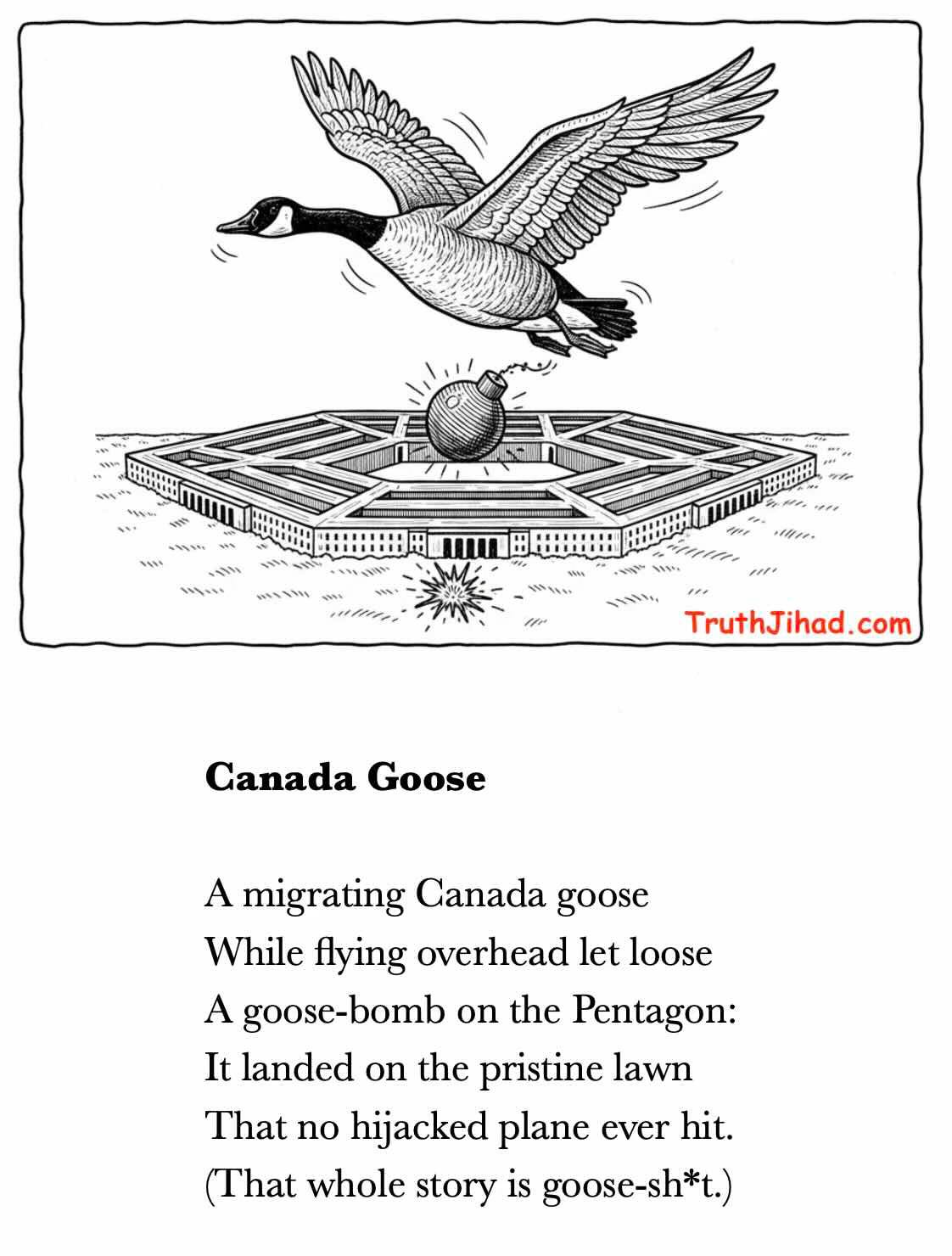
  • July 26 · 58 min

    Houthis Blockade Saudis. Red Sea Closed for Renovations.

    Rumble link Bitchute link False Flag Weekly News link On July 20, Yemen’s AnsurAllah government—the bravest and most principled in the Arab world—closed the Red Sea to Saudi, US, and Israeli shipping. They slammed Bab al-Madab shut exactly one week after the Saudis bombed Sanaa International Airport to prevent a flight from Tehran from landing. That flight was carrying AnsurAllah officials who had attended the momentous, massively-attended funeral for the Supreme Leader of Iran, Imam Ali Khamenei, the spiritual leader of tens of millions of people throughout the region and around the world. Memo to Trump: Murdering spiritual leaders revered by tens if not hundreds of millions of people is probably not a good idea. Mainstream media claimed that AnsurAllah’s retaliation on July 13, which targeted Abha International Airport in southwestern Saudi Arabia, “shattered a four-year truce.” But it was Saudi Arabia’s bombing Sanaa Airport, not Yemen’s retaliation, that “shattered the truce.” The Saudis claimed that it wasn’t they who had bombed the airport, it was their Riyadh-based puppet occupation regime. That collection of quislings is obviously illegitimate, a mere catspaw for the Saudis. But the oil-rich sheikhs of Riyadh have used their ill-gotten billions to purchase fake “international recognition” for their pathetic pseudo-Yemeni stooges. Despite that superficial veneer of “international recognition,” nobody was fooled by the Saudis’ diversionary blather. What’s more, that “four-year truce” was a smokescreen for the Saudis’ genocidal blockade of Yemen. Around half a million Yemenis have died, four million have been displaced from their homes, and millions of children have faced severe hunger and lack of medical care due to the Saudi war and blockade. By bombing Sanaa Airport, the Saudis (and their Epstein-class bosses) offered AnsurAllah a perfect opportunity to break that genocidal blockade and regain access to food and medicine. The Saudi bombing of Sanaa was an act of war. Yemen and its legitimate government, AnsurAllah, had every right to respond. And respond they did—not just bombing a Saudi airport, but by closing Bab al-Mandab, and with it the whole Red Sea, one week later. Their “blockade for a blockade” tit-for-tat will likely not only collapse the Saudi genocide of Yemen, but also trigger immense geopolitical repercussions. With the Red Sea closed, Saudi oil exports are being severely throttled. Iran had already closed the Strait of Hormuz, and with it the Persian Gulf, eliminating the main Saudi export route. The Saudis had responded by piping oil across the country to the Red Sea port of Yanbu, and from there to Asia through the Bab al-Mandab. That allowed the Saudis to continue exporting about half as much oil as their average before February 28. Now their Red Sea exports are also being choked off. The net result of the closure of Bab al-Madab will be a doubling of the pain imposed by Iran’s closure of the Strait of Hormuz, potentially creating “one crisis too many” for the global economy. Prior to the Red Sea closure, about 20% of the world’s oil supplies went through Hormuz. Due to various workarounds, the actual reduction to global oil supplies was less than 10%. Indeed, 7% is probably a good estimate. So now that AnsurAllah is taking another 7% off the market, the net shortfall is heading up to around 15%. This doubling of the oil-shortfall pain is happening just as the world’s emergency reserves are getting dangerously close to “tank bottom.” Due to the coming oil shock, which will exacerbate pre-existing structural vulnerabilities including the AI bubble and larger debt bubble, it seems highly likely that the global economy will suffer extremely severe shocks before the end of the year, for reasons discussed by Michael Hudson and Ron Unz. Yemen’s AnsurAllah leaders are not a timid bunch. Can you imagine any other government with the guts to put “damn the Jews” on their flag? (X link to video) So now the Red Sea, alongside the Persian Gulf, is closed for renovations. But what kind of renovations? It’s actually the whole region that badly needs major remodeling, if not a complete overhaul. Corrupt, illegitimate Epstein-class stooges need to be removed from power, and replaced by courageous, God-fearing men who stand on principle and are not afraid to risk and sacrifice their lives. And that isn’t just true of West Asia, but also the United States, where people who bravely stand against the Epstein class, like Thomas Massie and Marjorie Taylor Greene—and maybe Rho Khanna and Jon Ossoff on the other side of the aisle—risk suffering the fate of Graham Platner and Karim Khan at best, or Charlie Kirk at worst. The fact that ZOG got rid of Massie and Greene without manufacturing fake sex scandals may be a tribute to those two leaders’ impeccability. If you have to make up AI videos ludicrously envisioning Massie having threesomes with AOC and Ilhan Omar, it suggests that your target’s actions in real life don’t leave you much room for ginning up dubious me-too stories. The AnsurAllah leaders, for their part, don’t have to worry about Jewy sex scandals. The empire will just flat-out try to murder them. Fortunately they, unlike Charlie Kirk, don’t hire Israeli-linked security companies to run their events and fit them out with microphones. AnsurAllah’s leaders, whose approach to Islam is roughly midway between the Sunni and Shia interpretations, might get my vote if they ever ran for Caliph. They uphold Islam’s insistence on justice. They do the right thing even at the risk of martyrdom. And they follow the Prophetic hadith “the best jihad is a word of truth flung in the face of a tyrant.” AnsurAllah backs up its demands for justice and truth with courageous military action when necessary. That, too, is the tradition of the Prophet, PBUH. The heroes of Yemen weren’t afraid to stand up for the Palestinian genocide victims as early as October 2023. They have fired more than 100 drone and missile attacks on Israel-bound ships, and hitting Israel itself with hundreds of cruise missiles, ballistic missiles, and long-range drones. And now, closing the Red Sea to genocide-complicit shipping ups the ante. AnsurAllah is becoming the stuff of legend. All hail the heroic Houthis, who are almost singlehandedly saving the honor of the entire Arab world! Stripe is Substack’s only processor and they debanked me, so you can no longer pay me through Substack. Now I am posting everything on Substack free and asking people to sign up for recurring donations at my Paypal donation page…or better yet, the free speech platform SPdonate. Alternately you can Paypal or Zelle to truthjihad[at]gmail(dot)com. Note that Zelle, unlike other methods, doesn’t charge any fees. This is a public episode. If you would like to discuss this with other subscribers or get access to bonus episodes, visit kevinbarrett.substack.com

  • July 22 · 7 min

    Trump's War on Iran: Mother of All Forever Wars, Mother of All Defeats

    Rumble link Bitchute link Press TV interviews Kevin Barrett, 11/22/26 Press TV: Hegseth and top military officials appeared before the Senate Appropriations Committee to defend White House’s $87.6 billion emergency budget request. The War Secretary revealed that the Iran war has already cost the U.S. $37.5 billion, warning that troops training will be curtailed without immediate funding. Democratic lawmakers have sharply criticized the Trump administration for Hegseth’s failure, with some warning against another endless war with no clear outcome.Some lawmakers also shamed the Pentagon for seeking unlimited money for bombs while ordinary Americans struggle to feed their families. Video link Dr. Barrett, always a pleasure to serve you. Hope you’re safe and doing well out there in Morocco. Your thoughts? Just earlier this week, I should say there’s an Ipsis poll. I don’t know if you saw it. There’s an 68 percent, record high 68% disapproval of the war on Iran. It trumps Afghanistan at 65, Vietnam at 66, and Iraq at 67. I know there’s a standard percentage of deviation here, and they could all be one or two points up and down. But nevertheless, it ranks as supposedly, for the time being, the most unpopular war with American people in U.S. history since records were kept. Kevin Barrett: Yeah, that’s not surprising because it was the most unpopular war, at the beginning of any war, that the United States has ever begun. In fact, the difference then was even greater. At that time, the approval rating was as low as about a third of the American people. Normally at the beginning of a war, there’s a rally around the flag effect. So normally, a huge majority of Americans, for whatever reasons, brainwashing, I suppose, being the biggest one, tend to support their country and their leadership when the war begins. But this time, that didn’t happen. After 9/11, it was 90 percent approval of invading Afghanistan. And this time it was like 30% worth of weak, lukewarm approval. And it’s only been going down since then. So this is an incredibly unpopular war, as it should be. Trump ran for president in 2016 by criticizing his predecessors for getting involved and continuing in these forever wars, has found himself in the mother of all forever wars that’s going to result in the mother of all defeats, because now the mother of all surrenders, the MOU, is going to have to be redone in an even more unfavorable to the US and its Zionist masters way, and a more favorable to Iran way, than the original MOU. They’re going to have to actually follow it up front. Trump’s signature means nothing. So Trump has gotten his country into a real mess. Losing this war as badly as they’re losing it, and finishing it with a surrender as outrageous as the surrender that’s going to be coming up, is going to really be a big blow to the dwindling power and prestige of the U.S. empire at this critical time in history. Press TV: What’s wild at this point, Dr. Barrett, Donald Trump’s still selling the same pretext that we need to stop Iran’s ability to build a bomb. I mean, didn’t you do that with the June 12-day war last year? You bombed the heck out of three key nuclear facilities, basically with bunker bunkers. So God knows what the damage is, like layers and layers beneath the ground. And back then you said we put Iran’s nuclear program out of commission. Kevin Barrett: Well, if you look at some of the videos on social media of Hegseth being grilled by the congresspeople about this, you almost have to feel sorry for Hegseth. He’s in such a terrible position. They asked him about why he said that they had completely put all of Iran’s rockets and drones out of commission halfway through the second week of March. And so obviously, they’ve made all of these bombastic claims of victory that are the precise opposite of the truth, which is, again, a huge political liability. They could have gotten out of this. The American empire actually could do very well just through diplomacy in the region. And indeed, rather than bombing Iran and making it more likely that Iran at some point will conclude that it needs a nuclear weapon to ensure its own security as an existential issue against an existential threat... what they (the US) is doing is they’re trying to convince Iran that it might actually need a nuclear weapon, which Iran doesn’t want and is resistant to. So everything the US is doing is completely counterproductive. It’s all about protecting Israel, and all of this is making Israel look that much worse. It’s reshaping the region in a way that’s ultimately going to put Israel completely out of business. So once again, “they plot and God plans, and God is the best of planners.” Because as they plot, they’re undermining all of their own goals. Press TV: And before I let you go, really quick, Dr. Kevin Barrett. At this point, okay, dropping Hegseth, they’re asking for another $60-plus billion in funding. My question is, with respect to the 37 or 38, let’s round it out to $40 billion you’ve already spent in this imposed war against Iran. What have you achieved? And what are you going to achieve with another near $70 billion added to it? Kevin Barrett: Well, they say the definition of insanity is doing the same thing over and over and expecting a different result, and that seems to be what this insane administration wants to do. After $30 billion already spent, and that’s a gross underestimate, they want to just keep spending the same kind of money or more to do exactly the same things that don’t work. Iran has its weapons well protected under mountains. They weren’t able to bomb them and cause any real disruption in Iran’s ability to hit American targets and allied targets and Israeli targets with its drones and missiles, which are actually getting more powerful and more accurate—as big US media, starting with the New York Times and Wall Street Journal, have been admitting recently here in the United States. They’re admitting that Iran actually is hitting targets with more power and more accuracy. They’re more impossible to stop than they were at the beginning. And of course, that’s because Iran started by firing its older stuff and they saved their better stuff and are building even new generations of even better stuff all the time. So this is really a stupid war as well as an evil, immoral war. And I think it’s going to continue to be the most politically unpopular war in American history. It’s probably going to set new records for unpopularity. This is a public episode. If you would like to discuss this with other subscribers or get access to bonus episodes, visit kevinbarrett.substack.com
Showing 1–20 of 27 episodes