Skip to content
Artwork for Truth and Reckoning
NewsPoliticsGovernment

Truth and Reckoning

CELDF

Truth and Reckoning is a broadcast of the Community Environmental Legal Defense Fund (CELDF) focused on environmental justice, frontline action, community rights, and the rights of nature.

celdf.substack.com
Play
  • 22 episodes
  • Avg 52 min
  • English
Counted on this page — what you have heard stays on this device, so it is not something the list can be paged by.
  • Today · 1 hr 18 min

    Organizing for True Grassroots Power with Peter Block

    Welcome to Truth and Reckoning, a newsletter and podcast from the Community Environmental Legal Defense Fund (CELDF). We are organizers, lawyers, and revolutionaries who educate and agitate to confront systemic injustice and restore humanity’s relationship with the Earth. For more than 30 years, we’ve helped communities resist corporate power, reject regulatory false promises, and assert their right to self-governance grounded in ecological balance. In this episode, we talk with author and organizer Peter Block about relationality, community building, and changing minds through dialogue In a world where divisions often overshadow common ground, fostering community through meaningful conversations has never been more essential. In this conversation with Peter Block, an author and consultant on community building, we explore the importance of community, the challenges we face in building real relationships, and how intentional dialogue can bridge gaps and foster connections. Peter introduces a framework he calls the “Six Conversations,” which are designed to promote accountability and connection among community members: * Crossroads: Discussing the pivotal moments in life that shape decisions. * Possibilities: Exploring the potential outcomes of collective actions. * Doubts: Acknowledging the fears and hesitations that hinder progress. * Gifts: Recognizing the unique contributions each individual brings to the community. * Promises: Making commitments to one another to foster accountability. * Invitations: Encouraging open dialogue and participation. These conversations challenge participants to reflect on their roles and contributions, shifting the focus from participation to active engagement. Peter highlights the importance of social capital — the networks, relationships, and trust that exist within a community which play a crucial role in determining how effectively a community can mobilize and take action. While the benefits of deep community conversation are clear, Peter acknowledges that there are significant challenges to overcome. Many individuals come to discussions expecting quick solutions or data-driven outcomes, rather than engaging in the messy, often uncomfortable work of building relationships. Peter suggests that community organizers must work to create environments where individuals feel safe to express their doubts and vulnerabilities. Only then can true connection and collaboration flourish. There is a tendency to rely on leaders or experts to drive change. However, Peter advocates for a shift towards empowering citizens to take ownership of their communities. This requires a commitment to cultivating deeper relationships and fostering a sense of belonging. As Peter writes in his book Activating the Common Good: Reclaiming Control of Our Collective Well-Being: “What is needed is local, relational-based activism that endures over time and is less dependent on the transformation of people in the traditional leadership positions. This is where we must adopt new protocols for mobilizing the common good. Most ways of engaging citizens are cause oriented gatherings and promotions. Progressive news sites. Events designed to convince and persuade and educate. They feature passionate speakers. Experts presenting research findings. Calls for action. Panels on stage. Dialogues and interviews with well known experts. Presentations on what has worked elsewhere. Traditional forms of activism that enlist, recruit, inspire and pressure others to change are variations of a marketing strategy. They are selling something, treating the audience as consumers. They are likely to inspire and excite in much the same way movies and the arts do. This approach is valuable, but not transformational. Suppose we decided that the purpose of bringing people together, whether in groups of five or five hundred, was to take advantage of the one irrefutable thing that they all have in common: the fact that they showed up. Say we used each occasion to have them find each other. To have them trust each other… Suppose we used that connection to mobilize their energy to take actions over that which they have control. This way of bringing people together is different from education, persuasion, research and good examples. We call this approach relational or convening activism. The main intent is to create social capital. It is a counterapproach to strategies that call for better management and leadership, and for someone else to change…..On the question of action, something is needed to convert the consumer who came to listen and support into the citizen who leaves to produce… The challenge in efforts to create an alternative future is the need for the effort to be sustainable… the path to have citizens more powerfully connected to each other, especially those who were relative strangers up to now. Our traditional ways of doing this are to ask citizens to get involved by attending events as listeners, sending money, completing surveys and writing letters. As a persuasive process, this approach builds support for the cause, but these activities are limited forms of engagement. The heavy lifting is done by people who launched the idea, or who are paid to do it or are heroic volunteers, and by institutions organized around a particular interest. The suggestion here is for us to put the heavy lifting in the hands of citizens. When we search for where the future exists in the present, we find it in the stories of citizens who are connected to each other in unique ways.” Links and Resources * Peter’s website * “A Small Group” website About the Truth and Reckoning Podcast If you’re new here, this is Truth and Reckoning, a newsletter from the Community Environmental Legal Defense Fund (CELDF). We are organizers, lawyers, and revolutionaries who educate and agitate to confront systemic injustice and restore humanity’s relationship with the Earth. For more than 30 years, we’ve helped communities resist corporate power, reject regulatory false promises, and assert their right to self-governance grounded in ecological balance. In this show, we learn from front-line organizers and communities fighting against environmental destruction. We explore different perspectives and innovative strategies for movement building, the potency and potential of rights of nature, and effective action in defense of our communities. And, we share inspiring stories of people working towards right relationship with the land and each other. The show is hosted by CELDF Community Resistance and Resilience Program Co-Director Max Wilbert. You can find the show on: * Apple Podcasts * Spotify * Pocketcasts * YouTube (video and audio) * And anywhere else you get your podcasts (click here to find this podcast via your preferred app) About CELDF — Community Environmental Legal Defense Fund CELDF is a nationwide community of organizers, lawyers, and partners who educate, agitate, and organize to confront systemic injustice and restore humanity’s reciprocal relationship with the Earth. For over 30 years, we’ve helped communities resist corporate exploitation, reject regulatory false promises, and assert their right to self-govern through systems grounded in ecological balance and collective power. Curious to know more? * Contact CELDF * Visit our website * Support our work * Join the CELDF email list Get full access to Truth and Reckoning at celdf.substack.com/subscribe
  • Wednesday · 49 min

    STANDING WITH THE GRANDMOTHERS: Direct Action is Halting Border Wall Construction

    Welcome to Truth and Reckoning, a newsletter and podcast from the Community Environmental Legal Defense Fund (CELDF). We are organizers, lawyers, and revolutionaries who educate and agitate to confront systemic injustice and restore humanity’s relationship with the Earth. For more than 30 years, we’ve helped communities resist corporate power, reject regulatory false promises, and assert their right to self-governance grounded in ecological balance. In this episode, we speak with Kate Scott at a direct action against wall construction on the Arizona-Mexico border Support is urgently needed in Lochiel, Arizona where activists are taking direct action to prevent the construction of a border wall between the US and Mexico. This wall would represent the first time than an entire continent has been severed in two by a wall and would cut off essential habitat for the critically endangered jaguar and ocelot. Kate Scott, who we’ve been supporting for the past year in her efforts to resist border wall construction, joins us from the front lines of an active direct action campaign. After camping for weeks under an ancient cottonwood tree, Kate helped to catalyze a treesit that is now bi-national with people in the trees on both the US and Mexico sides of the border. With roots in the community for over three decades, Kate brings a unique perspective to the fight. At the center of Kate’s activism lies a grove she refers to as the “grandmothers”—the ancient cottonwood trees that stand sentinel in the valley. “If they were a mammal, they’d say they were a sentinel keystone species,” Kate notes, emphasizing the ecological significance of these trees. Reports from the front-lines For those who aren’t on Instagram, here are some updates from the front lines: Links and Resources * https://instagram.com/rally.forthevalley About the Truth and Reckoning Podcast If you’re new here, this is Truth and Reckoning, a newsletter from the Community Environmental Legal Defense Fund (CELDF). We are organizers, lawyers, and revolutionaries who educate and agitate to confront systemic injustice and restore humanity’s relationship with the Earth. For more than 30 years, we’ve helped communities resist corporate power, reject regulatory false promises, and assert their right to self-governance grounded in ecological balance. In this show, we learn from front-line organizers and communities fighting against environmental destruction. We explore different perspectives and innovative strategies for movement building, the potency and potential of rights of nature, and effective action in defense of our communities. And, we share inspiring stories of people working towards right relationship with the land and each other. The show is hosted by CELDF Community Resistance and Resilience Program Co-Director Max Wilbert. You can find the show on: * Apple Podcasts * Spotify * Pocketcasts * YouTube (video and audio) * And anywhere else you get your podcasts (click here to find this podcast via your preferred app) About CELDF — Community Environmental Legal Defense Fund CELDF is a nationwide community of organizers, lawyers, and partners who educate, agitate, and organize to confront systemic injustice and restore humanity’s reciprocal relationship with the Earth. For over 30 years, we’ve helped communities resist corporate exploitation, reject regulatory false promises, and assert their right to self-govern through systems grounded in ecological balance and collective power. Curious to know more? * Contact CELDF * Visit our website * Support our work * Join the CELDF email list Get full access to Truth and Reckoning at celdf.substack.com/subscribe
  • August 22 · 25 min

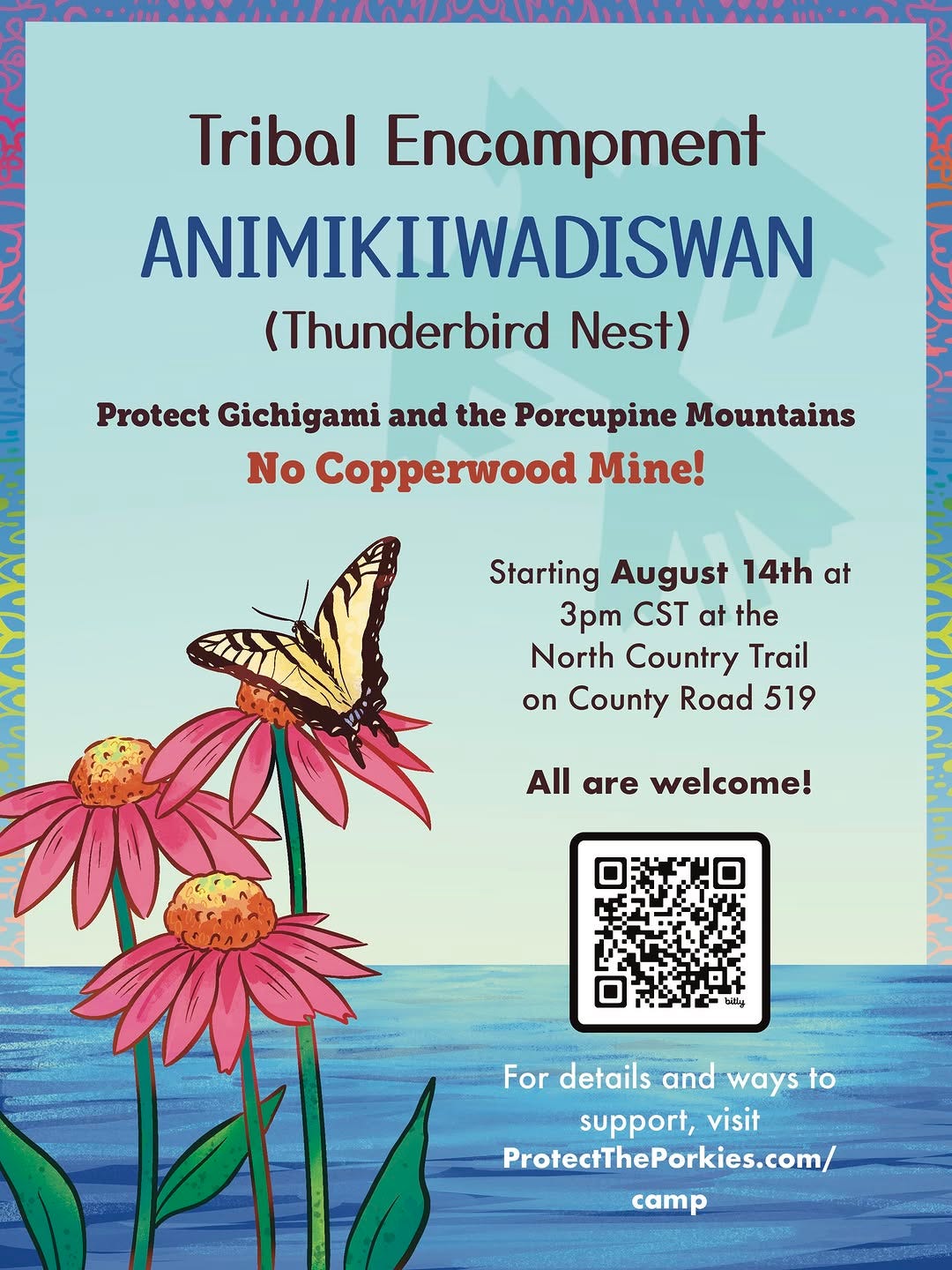
    “Animikiiwadiswan” Thunderbird Nest: Anti-Mining Occupation Launched in Michigan

    Welcome to Truth and Reckoning, a newsletter and podcast from the Community Environmental Legal Defense Fund (CELDF). We are organizers, lawyers, and revolutionaries who educate and agitate to confront systemic injustice and restore humanity’s relationship with the Earth. For more than 30 years, we’ve helped communities resist corporate power, reject regulatory false promises, and assert their right to self-governance grounded in ecological balance. In this episode, we speak with Tom Grotewohl of Protect the Porkies about a new land defense camp — “Animikiiwadiswan” or Thunderbird Nest — in Michigan The Porcupine Mountains on the shores of Lake Superior are home to the largest old-growth forest east of the Mississippi, a haven for wildlife. Tom explains, “There’s no good place for a mine, but this location should certainly be at the bottom of the list.” The urgency of this mission has sparked a grassroots encampment aimed at resisting a proposed copper mine that threatens not only the forest but the very ecosystem it supports. We’ve covered this story previously in detail with a lengthy interview. We won’t recap all the details from that episode. Instead, this conversation focuses on the new camp and how people can get involved. The proposed mining project is spearheaded by an inexperienced Canadian company, which has already clear-cut over 100 acres and destroyed wetlands in their quest for profit. Despite the Michigan government’s repeated denials of funding for the project, the mining company is now seeking a $250 million loan from the Export-Import Bank of the United States. In response, mine opponents have set up an encampment right next to the mine site, inviting community members and allies from local tribes to join the fight. “The encampment has been great because it invites people to see firsthand why this area deserves protection,” Tom shares. With the encampment standing as a physical presence against the mining interests, Tom emphasizes the importance of community and connection at the camp. As Tom notes, “Capitalism is a collusion between industry and government.” Activists are encouraged to join the encampment every weekend. Links and Resources * https://protecttheporkies.com/encampment About the Truth and Reckoning Podcast If you’re new here, this is Truth and Reckoning, a newsletter from the Community Environmental Legal Defense Fund (CELDF). We are organizers, lawyers, and revolutionaries who educate and agitate to confront systemic injustice and restore humanity’s relationship with the Earth. For more than 30 years, we’ve helped communities resist corporate power, reject regulatory false promises, and assert their right to self-governance grounded in ecological balance. In this show, we learn from front-line organizers and communities fighting against environmental destruction. We explore different perspectives and innovative strategies for movement building, the potency and potential of rights of nature, and effective action in defense of our communities. And, we share inspiring stories of people working towards right relationship with the land and each other. The show is hosted by CELDF Community Resistance and Resilience Program Co-Director Max Wilbert. You can find the show on: * Apple Podcasts * Spotify * Pocketcasts * YouTube (video and audio) * And anywhere else you get your podcasts (click here to find this podcast via your preferred app) About CELDF — Community Environmental Legal Defense Fund CELDF is a nationwide community of organizers, lawyers, and partners who educate, agitate, and organize to confront systemic injustice and restore humanity’s reciprocal relationship with the Earth. For over 30 years, we’ve helped communities resist corporate exploitation, reject regulatory false promises, and assert their right to self-govern through systems grounded in ecological balance and collective power. Curious to know more? * Contact CELDF * Visit our website * Support our work * Join the CELDF email list Get full access to Truth and Reckoning at celdf.substack.com/subscribe
  • August 5 · 1 hr 3 min

    Water is Life: Walking the Columbia River w/ Julie Lomboy

    Welcome to Truth and Reckoning, a newsletter and podcast from the Community Environmental Legal Defense Fund (CELDF). We are organizers, lawyers, and revolutionaries who educate and agitate to confront systemic injustice and restore humanity’s relationship with the Earth. For more than 30 years, we’ve helped communities resist corporate power, reject regulatory false promises, and assert their right to self-governance grounded in ecological balance. In this episode, we speak with Djuli (Julie) Lomboy about her prayer walk along the Columbia River (Imaɬ) Djuli Lomboy is an enrolled member of the Confederated Tribes of Grand Ronde of Klickitat, Wasco, Chinookan, Molalla, Klamath, Filipino, German, French Canadian and Scandinavian descent. She walked nearly the whole length of the lower river, 300 miles from Astoria to Hanford, starting in June and finishing in July. We discuss Djuli’s motivation for embarking on this walk, the difficulties she faced along the way, the nuclear contamination of the Hanford nuclear site, other threats facing the river and the riparian communities, the spiritual basis of cultural transformation, and the disconnection of modern society from the natural world. The world’s greatest rivers are among the most degraded ecosystems. The Colorado River, sucked dry for agriculture in California and the Southwest, no longer reaches the ocean. The Mississippi is so toxified with agricultural chemicals that the Gulf of Mexico at its mouth is lifeless across 7,000 square miles. The Yangtze is now home to the world’s largest dam and not to the Chinese paddlefish and Yangtze river dolphin — both extinct. And, of course, the Imaɬ (or Columbia). A being as vast as the Columbia is hard to kill. She is still alive. Yet she is dying. Year after year, her waters grow warmer and more difficult for native fish to survive in. Her salmon are dying, with fewer and fewer wild fish, the illusion of their persistence only maintained through a vast network of fish hatcheries, factory farms where eggs are raised into fish like cattle on a feedlot and released for anglers and commercial fishermen to gather into their nets. Her sturgeon, her steelhead, her freshwater mussels and lamprey and all of her inhabitants are dwindling. More than 60 large dams on her mainstem and tributaries shackle her. Her watershed has been deforested, urbanized, poisoned. The soils of her slopes, formerly nurturing wild ecologies, now erode under mechanized plows, carrying chemical fertilizers and pesticides into her waters. Millions of acres of her lands have been buried under concrete and asphalt, a veil of bitumen (tar sands). Wind turbines strike her ferruginous hawks and golden eagles out of the sky. Nuclear waste seeps into her waters at Hanford, [perhaps the most contaminated site in the world] where the plutonium that was used in the atomic bombings of Japan was enriched. Data centers take ever more of her flow, stealing the cold, life-sustaining waters that come from her mountains and necessary for her health and returning it superheated and toxified with chemicals. Up and down her length, industry has had its way. She is in a cage, and the bars close in tighter and tighter every year. Yet in those places where people make room for her to heal, she has done so, at least in part. Along the White Salmon, the removal of a dam led to salmon returning where none had been seen for decades. This is essential. But unless the destruction is stopped — not just stopped, but reversed — then there is only one end for her. There are multiple new nuclear reactors being planned along the Columbia River, most financed by tech companies seeking power for additional data center construction. Fuel for these reactors, if they are built, would likely be sourced from uranium mines in the American southwest, which have left behind a toxic legacy (an estimated 15,000+ abandoned uranium mines in the southwest have never been cleaned up) and have disproportionately harmed the Diné, Hopi, and other regional tribes. This conversation is an important reflection on personal action, prayer and internal change, the destruction of rivers — the veins of our planet — and more. We thank you for listening. Links and Resources * Hanford Challenge - leading watchdog of the Hanford cleanup * List of dams in the Columbia River watershed * Confederated Tribes of Grand Ronde website * Prayer Walk on The Imaɬ (Columbia River) - video recorded by Djuli in advance of the walk * Past, Present, and Future Dead: The Nippon Dynawave industrial accident, Coffin Rock, and ecological collapse * Impacts of noise pollution on wildlife * Impacts of roads on wildlife About the Truth and Reckoning Podcast If you’re new here, this is Truth and Reckoning, a newsletter from the Community Environmental Legal Defense Fund (CELDF). We are organizers, lawyers, and revolutionaries who educate and agitate to confront systemic injustice and restore humanity’s relationship with the Earth. For more than 30 years, we’ve helped communities resist corporate power, reject regulatory false promises, and assert their right to self-governance grounded in ecological balance. In this show, we learn from front-line organizers and communities fighting against environmental destruction. We explore different perspectives and innovative strategies for movement building, the potency and potential of rights of nature, and effective action in defense of our communities. And, we share inspiring stories of people working towards right relationship with the land and each other. The show is hosted by CELDF Community Resistance and Resilience Program Co-Director Max Wilbert. You can find the show on: * Apple Podcasts * Spotify * Pocketcasts * YouTube (video and audio) * And anywhere else you get your podcasts (click here to find this podcast via your preferred app) About CELDF — Community Environmental Legal Defense Fund CELDF is a nationwide community of organizers, lawyers, and partners who educate, agitate, and organize to confront systemic injustice and restore humanity’s reciprocal relationship with the Earth. For over 30 years, we’ve helped communities resist corporate exploitation, reject regulatory false promises, and assert their right to self-govern through systems grounded in ecological balance and collective power. Curious to know more? * Contact CELDF at https://celdf.org/contact/ * Visit CELDF at https://celdf.org/ * Support CELDF at https://celdf.org/donate/ * Join the CELDF email list at https://secure.everyaction.com/TdVG-tdqbEW229YMqwOaYQ2 Get full access to Truth and Reckoning at celdf.substack.com/subscribe
  • July 1 · 1 hr 21 min

    This Revolutionary Moment: A Conversation With Tad Stoermer

    This year marks the 250th anniversary of the signing of the Declaration of Independence, the beginning of armed revolution against the English crown, and an internal struggle between reformers and reactionaries which would ultimately lead the United States further down the path of imperialism, land theft, and elite domination. Today, the U.S. government is using the 250th anniversary as an opportunity to peddle propaganda in service of nationalistic fascism. As a law firm which has been educating communities about the truth of U.S. “freedom” for thirty years, we’re here to set the record straight. Welcome to CELDF’s America 250: A Revolutionary Perspective. In this episode, we speak with historian and author Tad Stoermer. Tad is author of the just-released book “A Resistance History of the United States.” He joined CELDF’s Education Director Ben Price and Consulting Director Tish O’Dell in a conversation about what resistance is and needs to be in this 21st century revolutionary moment. We discuss how the American system of government isn’t broken, but rather its been fixed to work as it does from the beginning. We talk honestly about how protest does not equal resistance, and how institutional mechanisms and cultural forces routinely interrupt real resistance before it gets started. We talk about the importance of debunking nationalist mythology about the nation’s founding. We asked Tad Stoermer “What exactly did Americans gain by waging a war against British oppression, and was it really a revolution?” You may be surprised by Tad’s answer. For folks who are intrigued by CELDF’s America 250 series, Tad Stoermer is the public historian for you. He is the author of A Resistance History of the United States, just released on June 2, 2026, and A Public History of the American Revolution, scheduled for publication in 2027. Tad is one of the most widely followed public historians in the world, reaching millions each month with his YouTube Resistance History Updates, Morning Reports, Constitutional Myths, Public History Practice, America 250 and Resistance History playlists, to name a few. Links and Resources * Tad’s Substack * Tad on YouTube: Is Violence Part of Resistance?: No River, No Flood * To buy Tad’s book, visit Penguin Random House online or contact your favorite independent bookseller. About the Truth and Reckoning Podcast If you’re new here, this is Truth and Reckoning, a newsletter from the Community Environmental Legal Defense Fund (CELDF). We are organizers, lawyers, and revolutionaries who educate and agitate to confront systemic injustice and restore humanity’s relationship with the Earth. For more than 30 years, we’ve helped communities resist corporate power, reject regulatory false promises, and assert their right to self-governance grounded in ecological balance. In this show, we learn from front-line organizers and communities fighting against environmental destruction. We explore different perspectives and innovative strategies for movement building, the potency and potential of rights of nature, and effective action in defense of our communities. And, we share inspiring stories of people working towards right relationship with the land and each other. The show is hosted by CELDF Community Resistance and Resilience Program Co-Director Max Wilbert. You can find the show on: * Apple Podcasts * Spotify * Pocketcasts * YouTube (video and audio) * And anywhere else you get your podcasts (click here to find this podcast via your preferred app) This episode can be viewed on YouTube here: About CELDF — Community Environmental Legal Defense Fund CELDF is a nationwide community of organizers, lawyers, and partners who educate, agitate, and organize to confront systemic injustice and restore humanity’s reciprocal relationship with the Earth. For over 30 years, we’ve helped communities resist corporate exploitation, reject regulatory false promises, and assert their right to self-govern through systems grounded in ecological balance and collective power. Curious to know more? * Contact CELDF at https://celdf.org/contact/ * Visit CELDF at https://celdf.org/ * Support CELDF at https://celdf.org/donate/ * Join the CELDF email list at https://secure.everyaction.com/TdVG-tdqbEW229YMqwOaYQ2 Get full access to Truth and Reckoning at celdf.substack.com/subscribe
  • June 24 · 20 min

    Reconnecting Education and Nature

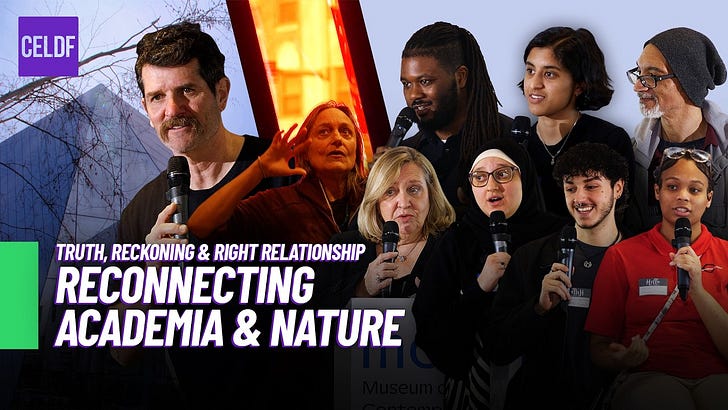
    Welcome to Truth and Reckoning, a newsletter from the Community Environmental Legal Defense Fund (CELDF). We are organizers, lawyers, and revolutionaries who educate and agitate to confront systemic injustice and restore humanity’s relationship with the Earth. For more than 30 years, we’ve helped communities resist corporate power, reject regulatory false promises, and assert their right to self-governance grounded in ecological balance. Radical Visions: Reconnecting Academia and Nature, held in March, was CELDF’s second truth, reckoning, and right-relationship convergence (TRRR). The two-day gathering was aimed at advancing community resistance and resilience by digging into the deeper systems that shape how we learn, how we teach, how we act, and who our education ultimately serves. An intentionally intergenerational, transdisciplinary and immersive experience., students and faculty from several educational institutions in the greater Cleveland area gave powerful testimony on how the current system is set up to prepare them for corporate labor needs rather than for critical thinking, creativity or civic power. Through testimony, art and roundtable conversations on topics about connections to local food systems and technology and AI and the harms to not just the environment, but to the physical and mental harms to the students of the future it became clear that no one on the university campuses were talking about these issues, let alone connecting them to the larger system. What Radical Visions revealed is that the current environment, culture, and business of academia has led to profound student alienation, disengagement and anxiety. The framework of educational nurturing no longer supports deeply intertwined connections with nature, place and humanity, but has been supplanted with “information management”, replaceable “skills” and superficial “credentials”. This convergence was not just an academic or climate event, but it was a reckoning with the structures that disconnect us from each other, from our histories and from the natural world. Radical Visions was a direct offshoot from the first CELDF truth, reckoning, and right-relationship with the Great Lakes held in 2023/2024. CELDF’s consulting director began meeting with a few students in July of 2025 to conceive of, plan for, and create this convergence. And to help expose many others to the TRRR framework, CELDF is working on a TRRR Guidebook as a resource for communities to use as a model for community building, in spite of the single issues and labels that have divided us for too long. What both these gatherings highlighted was that intentional divisions through politics, cultural labels and even educational institutions, were keeping people in place-based communities fragmented when in reality there are a lot of common frustrations and shared values. The TRRR model is a way to help people figure out ways to connect and re-establish community to work together on creating resilient, healthy communities into the future. So much of what CELDF does is about relationships. Through those relationships, connections are made and actions ensue. Besides funding needed to develop the TRRR Guidebook into a powerful tool, CELDF also needs your dollars to keep reaching out, making new connections, and nurturing relationships. The video of this event can also be found on YouTube: About the Truth and Reckoning Podcast In this show, we learn from front-line organizers and communities fighting against environmental destruction. We explore different perspectives and innovative strategies for movement building, the potency and potential of rights of nature, and effective action in defense of our communities. And, we share inspiring stories of people working towards right relationship with the land and each other. The show is hosted by CELDF Community Resistance and Resilience Program Co-Director Max Wilbert. You can find the show on: * Apple Podcasts * Spotify * Pocketcasts * YouTube (video and audio) * And anywhere else you get your podcasts (click here to find this podcast via your preferred app) About CELDF — Community Environmental Legal Defense Fund CELDF is a nationwide community of organizers, lawyers, and partners who educate, agitate, and organize to confront systemic injustice and restore humanity’s reciprocal relationship with the Earth. For over 30 years, we’ve helped communities resist corporate exploitation, reject regulatory false promises, and assert their right to self-govern through systems grounded in ecological balance and collective power. Curious to know more? * Contact CELDF at https://celdf.org/contact/ * Visit CELDF at https://celdf.org/ * Support CELDF at https://celdf.org/donate/ * Join the CELDF email list at https://secure.everyaction.com/TdVG-tdqbEW229YMqwOaYQ2 Get full access to Truth and Reckoning at celdf.substack.com/subscribe
  • June 16 · 1 hr 9 min

    The Broken Revolution: 1776-2026

    This year marks the 250th anniversary of the signing of the Declaration of Independence in what is now the United States. With it came the launch of an armed revolution against distant fascist leaders and a struggle between reformers and reactionaries who would ultimately lead the budding nation further down the path of imperialism, slavery, land theft, and elite domination. Today, the U.S. government is using the 250th anniversary as an opportunity to peddle facile propaganda in service of nationalistic fascism. As a law firm which has been educating communities about the truth of U.S. “freedoms” for thirty years, we’re here to set the record straight. Welcome to CELDF’s America 250: A Revolutionary Perspective: an ongoing series this year. If you’re new here, this is Truth and Reckoning, a newsletter from the Community Environmental Legal Defense Fund (CELDF). We are organizers, lawyers, and revolutionaries who educate and agitate to confront systemic injustice and restore humanity’s relationship with the Earth. For more than 30 years, we’ve helped communities resist corporate power, reject regulatory false promises, and assert their right to self-governance grounded in ecological balance. In this episode Continuing CELDF’s America 250: A Revolutionary Perspective series, CELDF’s Executive Director Kai Huschke and Education Director Ben Price discuss the disconnect between the aspirations of revolutionary American colonists who demanded freedom from top-down governance and what they did to try to realize those goals before the Federalist counter-revolution. Hushke and Price find close comparisons between Declaration’s grievances justifying secession from the British empire and today’s failures of governance. 250 years ago, the British policies toward its colonies gave deference to privileged persons, living and corporate, over settler subjects of the empire. The anti-corporate stance of the American rebels will seem very familiar to Americans living now, 250 years later. Links and Resources * A250 series * CELDF YouTube channel About the Truth and Reckoning Podcast In this show, we learn from front-line organizers and communities fighting against environmental destruction. We explore different perspectives and innovative strategies for movement building, the potency and potential of rights of nature, and effective action in defense of our communities. And, we share inspiring stories of people working towards right relationship with the land and each other. The show is hosted by CELDF Community Resistance and Resilience Program Co-Director Max Wilbert. You can find the show on: * Apple Podcasts * Spotify * Pocketcasts * YouTube (video and audio) * And anywhere else you get your podcasts (click here to find this podcast via your preferred app) About CELDF — Community Environmental Legal Defense Fund CELDF is a nationwide community of organizers, lawyers, and partners who educate, agitate, and organize to confront systemic injustice and restore humanity’s reciprocal relationship with the Earth. For over 30 years, we’ve helped communities resist corporate exploitation, reject regulatory false promises, and assert their right to self-govern through systems grounded in ecological balance and collective power. Get full access to Truth and Reckoning at celdf.substack.com/subscribe
  • May 21 · 1 hr 22 min

    BLACK OUT: A Conversation on Systemic Racism With Anthony Karefa Rogers-Wright

    This is Truth and Reckoning, a newsletter from the Community Environmental Legal Defense Fund (CELDF). We are organizers, lawyers, and revolutionaries who educate and agitate to confront systemic injustice and restore humanity’s relationship with the Earth. For more than 30 years, we’ve helped communities resist corporate power, reject regulatory false promises, and assert their right to self-governance grounded in ecological balance. In this episode, we speak with Anthony Karefa Rogers-Wright Anthony is a son of Sierra Leone, an international climate and environmental liberation advocate, a racial justice practitioner, a writer and a policy expert residing in the United States with his family and their cats, “Evil” Ernie and MalaChai the Mischievous. He is a proud and active member of the Black Alliance for Peace and the North South Project for People(s)-Centered Human Rights. His radio program, “Full Spectrum with Anthony Rogers-Wright,” airs on the Mighty WPFW network every Tuesday at 6:00 PM EST. On the day that we had a chance to sit down with Anthony, he was at an international conference focused on stopping global fossil fuel use in Colombia, a nation where 30% of the population is of African descent, and, as he explains during this conversation, the voices of black people were being silenced. That sad truth of racism in Columbia is historically linked to racism in the United States, and this conversation focuses on the Declaration of Independence, the US Constitution, Reconstruction, the non-profit industrial complex, and pro sports as it effects, impacts, relates to, and ultimately shapes life for black people, the society at large, and the questions of whether we can fully reconcile with the institution of slavery and the ongoing colonization of people and planet. CELDF’s Executive Director Kai Huschke and Anthony delve into personal experiences relating to the Declaration of Independence, the constructs keeping racism alive in the US, the social dynamics and racism, and the bright spots that emerging in breaking the structure of racism in what many would find to be unlikely places. This interview is the second installment on systemic racism and sexism as part of CELDF’s America 250: A Revolutionary Perspective. It follows the live discussion with Colville Confederated Tribes descent Dina Gilio-Whitaker and Kānaka Maoli Anne Keala Kelly entitled “What Revolution? Systemic Racism, Sexism, and Genocide from America’s Beginning.” Anthony’s insights echo the need for structural transformation rooted in history, truth, and collective courage. Get ready to confront the lies, embrace the struggle, and harness the power of collective disobedience to forge a new path toward justice. Links and Resources * Anthony’s radio show on the WPFW network * Anthony’s articles on Black Agenda Report * Big Green + Big Tech = Bigger Environmental Racism: How Certain “Environmental” Groups are Selling out Frontline Communities by Greenwashing Data Centers About the Truth and Reckoning Podcast In this show, we learn from front-line organizers and communities fighting against environmental destruction. We explore different perspectives and innovative strategies for movement building, the potency and potential of rights of nature, and effective action in defense of our communities. And, we share inspiring stories of people working towards right relationship with the land and each other. The show is hosted by CELDF Community Resistance and Resilience Program Co-Director Max Wilbert. You can find the show on: * Apple Podcasts * Spotify * Pocketcasts * YouTube (video and audio) * And anywhere else you get your podcasts (click here to find this podcast via your preferred app) About CELDF — Community Environmental Legal Defense Fund CELDF is a nationwide community of organizers, lawyers, and partners who educate, agitate, and organize to confront systemic injustice and restore humanity’s reciprocal relationship with the Earth. For over 30 years, we’ve helped communities resist corporate exploitation, reject regulatory false promises, and assert their right to self-govern through systems grounded in ecological balance and collective power. Get full access to Truth and Reckoning at celdf.substack.com/subscribe
  • May 12 · 1 hr 9 min

    "What Revolution? Systemic Racism, Sexism, and Genocide from America's Beginning"

    This is Truth and Reckoning, a newsletter from the Community Environmental Legal Defense Fund (CELDF). We are organizers, lawyers, and revolutionaries who educate and agitate to confront systemic injustice and restore humanity’s relationship with the Earth. For more than 30 years, we’ve helped communities resist corporate power, reject regulatory false promises, and assert their right to self-governance grounded in ecological balance. As the Federal government celebrates the 250th anniversary of the Declaration of Independence, nationalistic propaganda based in American exceptionalism and lies about the real history of the USA are proliferating. Did you know that the Declaration of Independence argued that secession was justified on the basis that the British had “endeavoured to bring on the inhabitants of our frontiers, the merciless Indian Savages, whose known rule of warfare is an undistinguished destruction of all ages, sexes and conditions”? Or that the Union’s first president, George Washington, was given the name ‘Town Destroyer’ by members of the Iroquois confederacy? This conversation between Anne Keala Kelly (Kānaka Maoli (Hawaiian) / Irish), Dina Gilio-Whitaker (Colville Confederated Tribes descendant), CELDF’s Education Director Ben Price, and CELDF’s Community Resistance and Resilience Program Director Max Wilbert discusses the the real founding of the United States and the colonial violence that hidden behind rhetoric of “freedom” and ideas such as “all men are created equal.” We discuss: * The roots of systemic racism, colonialism, and genocide in US culture * The Doctrine of Discovery as founding myth and animating force for the ongoing colonial process * Racial and patriarchal hierarchies as pillars of US government and society * Strategies for resistance, decolonization, and spiritual renewal Here’s a clip from the discussion: About Our Speakers Anne Keala Kelly (Kānaka Maoli (Hawaiian) / Irish) is an award-winning filmmaker, journalist, writer, editor, podcaster, and activist whose work analyzes and advances Indigenous peoples’ rights, cultural, environmental, and political resistance and representation in media. Her print journalism and commentary have appeared in Indian Country Today Media Network, The Nation, Honolulu Weekly, YES! Magazine, Native Americas, Honolulu Civil Beat and other publications. And her essays can be found in cultural and academic journals, such as ʻŌiwi: A Native Hawaiian Journal, and American Indian Quarterly. Her broadcast reporting has aired on Al Jazeera English, The NewsHour with Jim Lehrer, the Pacifica Network’s Free Speech Radio News, Independent Native News, and more. Keala has produced and hosted her own podcast and Substack column (The Native Truth), was a regular contributor and occasional host on the internationally syndicated First Voices Radio show, and most recently had the honor to edit the catalog for Wasco / Yakama artist Lillian Pitt’s upcoming exhibition at The Museum At Warm Springs. Keala is the author of the short book, “Our Rights to Self-Determination: A Hawaiian Manifesto” (2022). Her documentary, “Noho Hewa: The Wrongful Occupation of Hawai’i,” has received international film festival awards, and is widely taught in courses focusing on Indigenous Peoples, colonization, Hawaiian sovereignty, and militarism. * Keala’s website * The Native Truth Substack * Noho Hewa: The Wrongful Occupation of Hawai’i * “Our Rights to Self-Determination: a Hawaiian Manifesto” Dina Gilio-Whitaker (Colville Confederated Tribes descendant) is a renowned scholar, educator, journalist, and author in American Indian studies. She co-authored along with Roxanne Dunbar-Ortiz the popular book “All the Real Indians Died Off” and 20 Other Myths About Native Americans (Beacon Press, 2016), and is Assistant Director of the California Indian Culture and Sovereignty Center at California State University San Marcos. As the former Policy Director and Senior Research Associate at the Center for World Indigenous Studies, Dina has worked with Indigenous governments in the U.S. and beyond for many years helping them to formulate policy strategies and work cooperatively with federal and state governments and in other collaborative organizational partnerships. In her second book As Long As Grass Grows: The Indigenous Fight for Environmental Justice from Colonization to Standing Rock (Beacon Press, 2019), Dina applies her expertise in environmental justice to create a foundation for thinking through what environmental justice policy means in Indian country. The only book of its kind, it stands as a primer for governments and organizations of all kinds who are engaging in environmental justice work with Indigenous peoples. Most recently, she authored “Who Gets to be Indian? Ethnic Fraud and Other Difficult Conversations about Native American Identity” (2025). Dina is regularly invited to speak on topics related to American Indians (including environmental justice) at universities, conferences, and gatherings of all sorts all over the country. * Dina’s website * “All the Real Indians Died Off, And 20 Other Myths About Native Americans” * As Long as Grass Grows: The Indigenous Fight for Environmental Justice, from Colonization to Standing Rock * “Who Gets to Be Indian? Ethnic Fraud, Disenrollment, and Other Difficult Conversations About Native American Identity” Ben Price is a pioneer in the Rights of Nature Movement. In 2006 he organized the first community on Earth to recognize legal rights for Nature, Tamaqua, Pennsylvania. In the decades that followed, Ben continued organizing scores of communities to enact community rights and rights of nature local legislation. In 2010, Ben was called into Pittsburgh, PA, where he organized in the City’s nine districts and lobbied their respective City Council representatives to draft and enact a ban on hydraulic fracking and that also recognized the rights of local ecosystems to exist, flourish, and evolve. The law was enacted by unanimous vote of the City Council. Ben’s book “How Wealth Rules the World: Saving Our Communities and Freedoms from the Dictatorship of Property” was published in 2019 and his novel, “OGDEN: A Tale for the End of Time” was published in 2023. Ben’s collection of essays Wouldn’t You Say? was published by CELDF in early 2025. Max Wilbert is co-director of Community Resistance and Resilience with the Community Environmental Legal Defense Fund (CELDF). He is also a community organizer, wilderness guide, and co-founder of the anti-mining group Protect Thacker Pass. He has been active in grassroots political movements for 25 years. Max is a MA candidate in Degrowth at the Autonomous University of Barcelona, where his research focuses on sustainability, greenwashing, and resistance movements. He is co-author of the book Bright Green Lies: How The Environmental Movement Lost Its Way and What We Can Do About It, author of an essay series titled We Choose to Speak, and writes a newsletter called Biocentric. His work has been featured in CNN, The New York Times, Le Monde, The Guardian, Dark Mountain, Earth Island Journal, and elsewhere. Get full access to Truth and Reckoning at celdf.substack.com/subscribe

  • April 8 · 1 hr 9 min

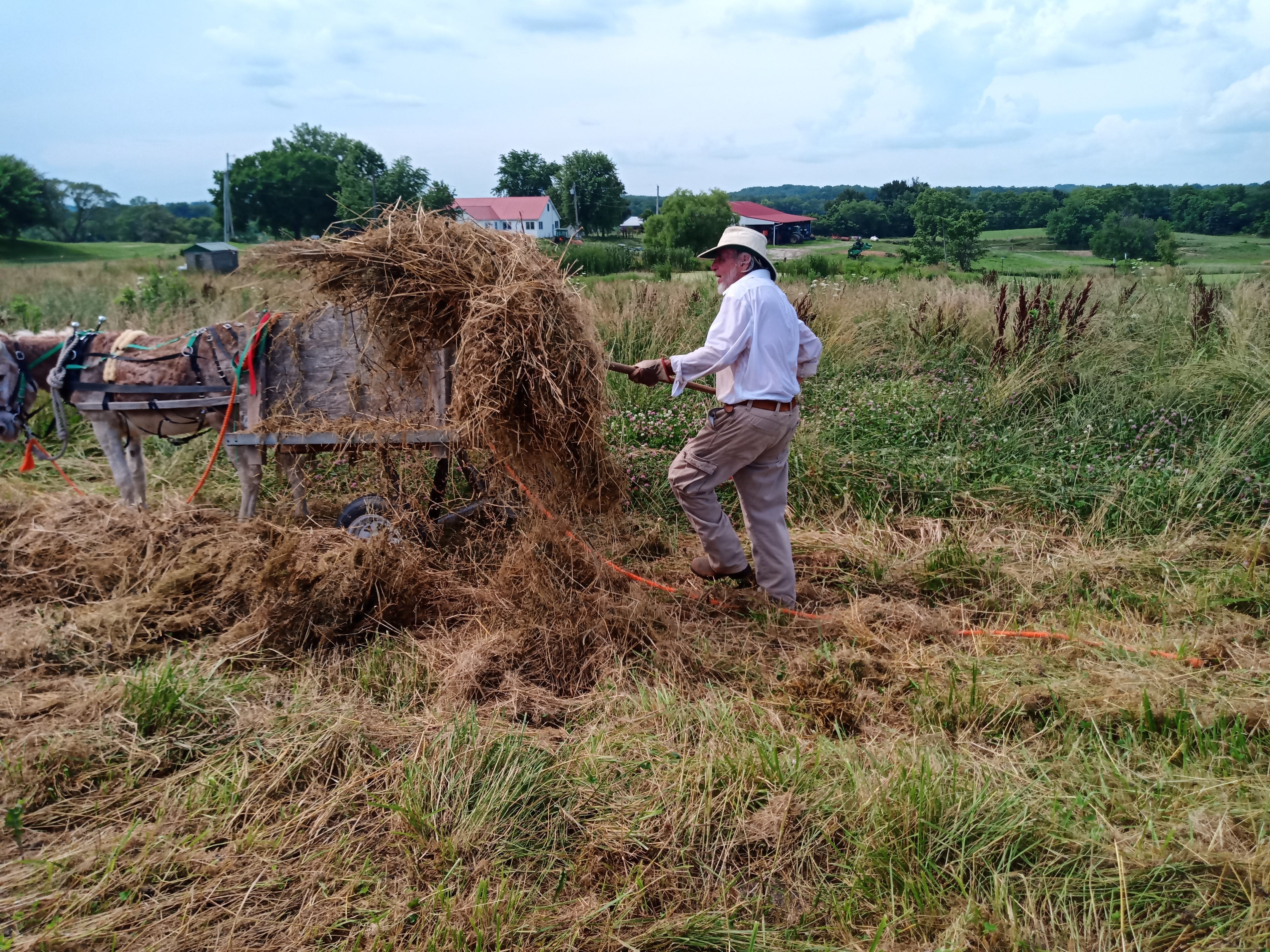
    Donkeys, Slowing Down, and Eco-Collapse with Jeff McFadden

    Welcome to Truth and Reckoning, a podcast and newsletter from the Community Environmental Legal Defense Fund (CELDF). We are organizers, lawyers, and revolutionaries who educate and agitate to confront systemic injustice and restore humanity’s relationship with the Earth. For more than 30 years, we’ve helped communities resist corporate power, reject regulatory false promises, and assert their right to self-governance grounded in ecological balance. Subscribe to learn about rights of nature, environmental movement strategy, and stay updated on our work. In this episode of the Truth and Reckoning podcast, we speak with Jeff McFadden Jeff is a small farmer engaged in land restoration work in southeastern Missouri. He’s well-known in his area for driving to town in a cart pulled by one or two of his donkeys. Jeff’s political analysis is rooted in the concept of slowing down to reduce ecological impact and improve human life. As Jeff wrote in a recent piece: “I see a massive slowing of everything as inevitable. Speed is kinetic energy. If a mass moves, energy moves it. The faster it moves the more energy it takes. We’ve gotten so used to talking of things in abstract terms that we tend to think that the way things are is the way they have to be. All the cars, all the noise, all the dirt, all the stuff in all the stores, all the goods and services competing for our attention and our money, that’s just the way things are. We ignore the energy. We are oblivious to the universal energy flow underlying our entire global economy and social system, what one might call our civilization. A vast flow of kinetic energy pours without ceasing across Earth, and without it none of things we take for granted would happen or appear. An inconceivable amount of mass is moving around Earth’s land surface, water surface, low atmosphere, and close orbital space. All of that motion, all of that kinetic energy, was released from petroleum molecules by burning. That which we call civilization burns over 100 million barrels of petroleum a day. Over half of that, some fifty-five million barrels a day, goes to industry, including industrial agriculture. Over half of what’s left goes to transportation. The biggest single portion of that is ocean vessels which burn the heaviest diesel oil in the word, and that’s with over 100,000 jets taking flight every day. There’s no place in that system where you can take out one of every five gallons and not notice it. If we lose half of it we’ll be in deep s**t. The current economy is what it is as a result of unimaginable amounts of energy being unbound from molecules and released into the wild, into the ecosystem, into Earth, Water, and Air. Added to that, and exceeding it, excess solar energy gets caught by all the extra carbon we’ve put into the air. It’s massively not working. Everybody’s crazy.” This is a fascinating conversation that touches on eco-collapse, overshoot, Jevon’s Paradox, restoration, social change vs. individual change, and more. Links and Resources * Jeff’s YouTube Channel * Jeff’s Substack newsletter This episode can also be watched on YouTube. About the Truth and Reckoning Podcast In this show, we learn from front-line organizers and communities fighting against environmental destruction. We explore different perspectives and innovative strategies for movement building, the potency and potential of rights of nature, and effective action in defense of our communities. And, we share inspiring stories of people working towards right relationship with the land and each other. The show is hosted by CELDF Community Resistance and Resilience Program Co-Director Max Wilbert. You can find the show on: * Apple Podcasts * Spotify * Pocketcasts * YouTube (video and audio) * And anywhere else you get your podcasts (click here to find this podcast via your preferred app) About CELDF — Community Environmental Legal Defense Fund CELDF is a nationwide community of organizers, lawyers, and partners who educate, agitate, and organize to confront systemic injustice and restore humanity’s reciprocal relationship with the Earth. For over 30 years, we’ve helped communities resist corporate exploitation, reject regulatory false promises, and assert their right to self-govern through systems grounded in ecological balance and collective power. Get full access to Truth and Reckoning at celdf.substack.com/subscribe
  • March 26 · 6 min

    The Civil War is Already Here

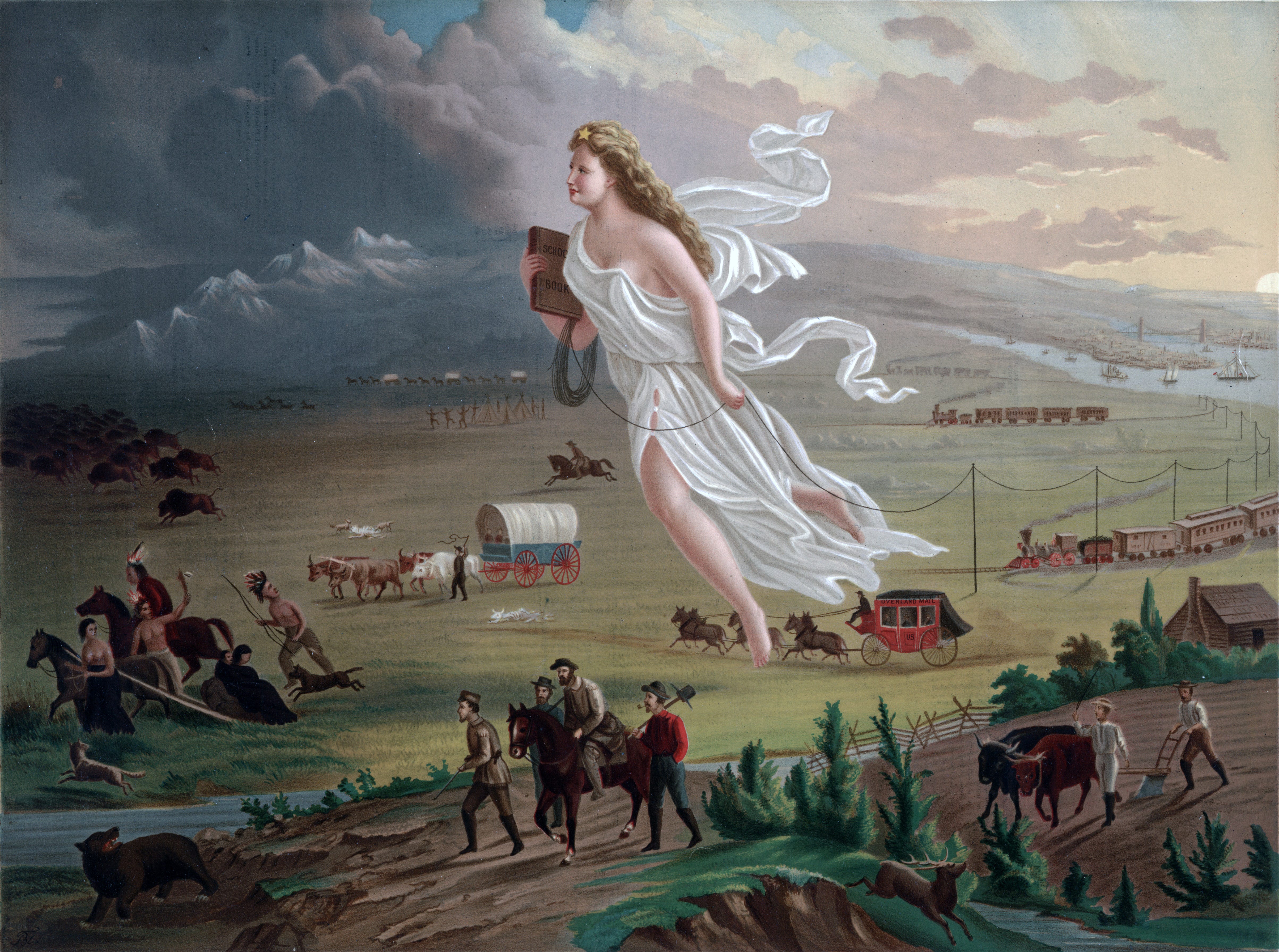
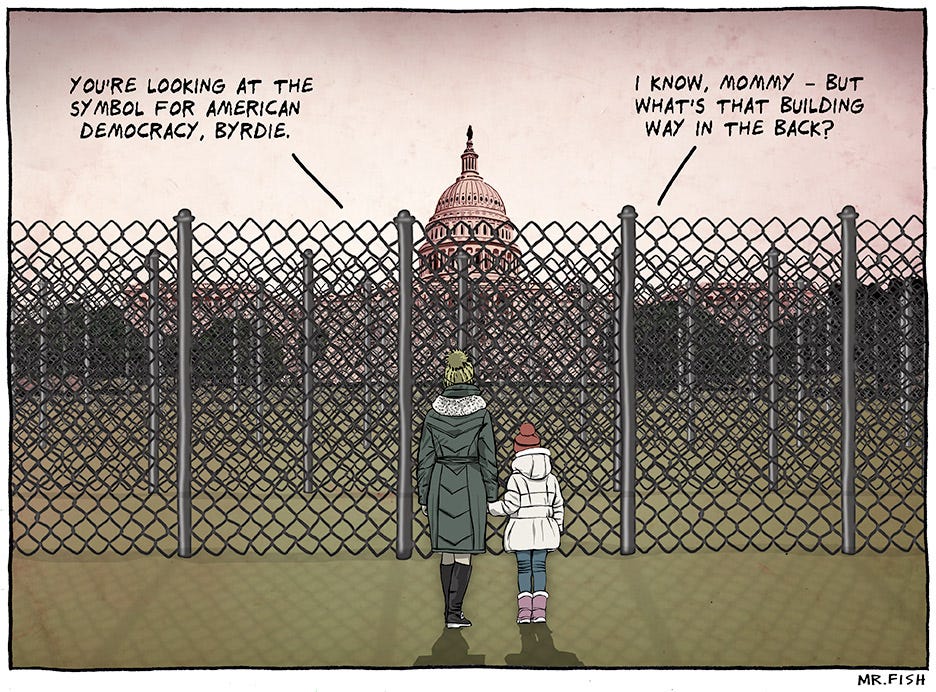
    Through the 4th of July CELDF will be challenging dishonest narratives about America’s past and how those lies distort our lives in the present. This essay is the last installment in a four-part series of reflections on the Declaration of Independence from CELDF’s staff. By Max Wilbert The destruction of our planet isn’t a mistake or an accident. It’s driven by deliberate policies designed to maximize extraction of resources from the natural world and labor from workers for the benefit of the wealthy. The same is true for resurgent fascism and white supremacism, mass extinction of wildlife, ecological collapse, the climate crisis, and social polarization. In each case, these are either policy instruments of the ruling class (aka the Epstein class) or what they see as acceptable costs. George Kennan, former State Department Director of Policy Planning and at the time one of the most influential men in government, wrote in a 1948 memo that “[The United States has] about 50 percent of the world’s wealth but only 6.3 percent of its population... Our real task in the coming period is to devise a pattern of relationships, which will permit us to maintain this position of disparity...” Kennan is telling the truth that is often obscured: the primary goal of US government policy is not to raise the global standard of living, spread democracy, education, or health, but to maintain disproportionate wealth. Whatever scraps are provided to the working class in this country are mostly aimed at keeping us too content, distracted, and addicted to muster an effective rebellion. The United States of today is far, far more unequal than in 1948. This country has more than twice as many billionaires as the second-ranked country (China), despite having less than 25% of China’s population. And the power these wealthy people wield is totalitarian. Research which examined 1,800 policy proposals in the United States and compared the level of public support vs. likelihood of a proposal becoming law found that ordinary people have a “non-significant, near-zero level” of influence over government decisions. Meanwhile, the results showed that “economic elites and organized groups representing business interests have substantial independent impacts on U.S. government policy”. In other words, our votes, public comments, and activism are exerting “near-zero” influence on government policy; the wealthy control the government entirely. We live in an oligarchy — a society ruled by the rich. Political philosopher Sheldon Wolin called this system, defined by the ongoing presence of supposedly democratic processes concealing a government which is functionally ruled by an unelected elite, inverted totalitarianism. The population has either been propagandized into believing we’re free, bribed into a state of what Wolin calls “civic demobilization,” or beaten into compliance with violence and surveillance. The Declaration of Independence, written 250 years ago, opens with the words: “We hold these truths to be self-evident, that all men are created equal, that they are endowed by their Creator with certain unalienable Rights, that among these are Life, Liberty and the pursuit of Happiness.” Words are cheap. I’m reminded of the words of James Baldwin who, writing in The Nation in 1966 about police brutality towards black children, said “I can’t believe what you say… because I see what you do.” By 1776, Europeans had already been engaged in a genocidal project of profit-driven settler colonialism on this continent for centuries, and a system of elite domination was firmly entrenched. The Declaration of Independence goes on to state that “whenever any form of government becomes destructive of these ends, it is the right of the people to alter or to abolish it, and to institute new government, laying its foundation on such principles, and organizing its powers in such form, as to them shall seem most likely to effect their safety and happiness… when a long train of abuses and usurpations, pursuing invariably the same object, evinces a design to reduce them under absolute despotism, it is their right, it is their duty, to throw off such government.” This, I agree with. We are already living in a time of civil war. The United States government and the elites that run it are waging war against the people and the planet. They are killing people in the streets, abducting families, conducting illegal wars and genocide, strengthening a system of police state surveillance, and enriching the already wealthy to ever-more-obscene levels via systems of patronage and legalized corruption. Meanwhile, the climate descends into chaos, pollution proliferates, cancer and disease multiply, the planet is destroyed further every single day, and more and more people die deaths of hopelessness from addiction and poverty. Those killed by factory discharges, a lifetime of toxic industrial food, climate chaos, lack of basic healthcare and societal decency, and afflictions of despair are just as much casualties of the class war. It’s not just the current administration. The same has been true for my entire life, with different factions of the ruling class engaging in the push-pull cycles of minor reform and counter-revolution that make inverted totalitarianism such a resilient, effective, and convincing system of oppression. The civil war is already here. The question for us is, do we still believe in the mythology of the benevolent US government enough to be pacified, or are we prepared to throw off these rulers who have shown themselves time and time again to be leaders of a death cult? Max Wilbert is Co-Coordinator of Community Resistance & Resilience and Publicist for CELDF. He is the author of two books, writes the newsletter Biocentric on Substack, and has been part of grassroots political movements for 25 years. If you’re new here, this is Truth and Reckoning, a newsletter from the Community Environmental Legal Defense Fund (CELDF). We are organizers, lawyers, and revolutionaries who educate and agitate to confront systemic injustice and restore humanity’s relationship with the Earth. For more than 30 years, we’ve helped communities resist corporate power, reject regulatory false promises, and assert their right to self-governance grounded in ecological balance. Subscribe to learn about rights of nature, environmental movement strategy, and stay updated on our work. Get full access to Truth and Reckoning at celdf.substack.com/subscribe
  • March 20 · 5 min

    When Revolution Stops Sounding Radical

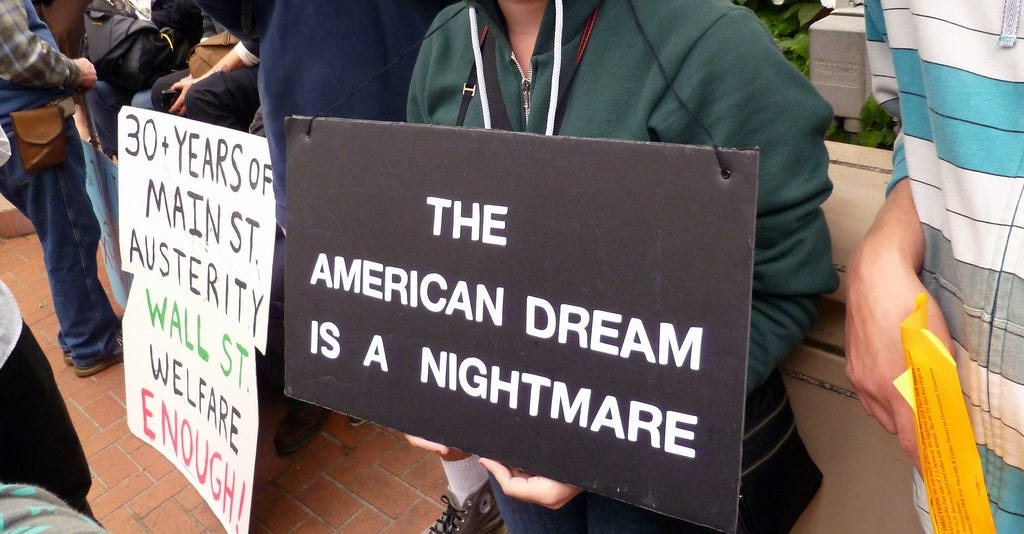
    Welcome to Truth and Reckoning, a newsletter from the Community Environmental Legal Defense Fund (CELDF). We are organizers, lawyers, and revolutionaries who educate and agitate to confront systemic injustice and restore humanity’s relationship with the Earth. For more than 30 years, we’ve helped communities resist corporate power, reject regulatory false promises, and assert their right to self-governance grounded in ecological balance. Subscribe to learn about rights of nature, environmental movement strategy, and stay updated on our work. Through the 4th of July CELDF will be challenging dishonest narratives about America’s past and how those lies distort our lives in the present. This essay is part of a four-part series of reflections on the Declaration of Independence from CELDF’s staff. By Christine Schoenberger The crumbling of the American Dream is radicalizing the people to whom it was once promised. They are not activists or people who think of themselves in terms of left or right, but mostly people who have avoided politics altogether and assumed the system basically worked, even if imperfectly. But something interesting is happening in online discussions. You don’t have to look long before the patterns emerge: people, especially younger adults, describing unemployment or wages that don’t cover rent, having to work two jobs and still needing roommates well into adulthood, or medical debt that will never realistically be paid off. It’s not unusual to hear of people encountering ads for jobs requiring graduate degrees for entry-level work, or sending hundreds of resumes and receiving only silence. You may be surprised at the number of people in their forties who have quietly accepted they will never retire and doubt Social Security will exist when they need it. Parents describe how their entire paycheck disappears to cover childcare, but they can’t stay home with the kids because the family will lose health insurance if they don’t work. Commenters from other countries respond in disbelief that this is life in the United States. But something is shifting among people who once rolled their eyes at politics. They’re using words like “systemic,” “billionaire class,” and even “revolution” that they would have avoided even five years ago. And it’s not for dramatic effect; they’ve arrived at this conclusion on their own. It reminds me of this line from the Declaration of Independence: “But when a long train of abuses and usurpations [comes from the government]…it is [the people’s] right, it is their duty, to throw off such Government…” We tend to treat that sentence as sacred or an artifact from an earlier time, but today it reads more like a directive. The Declaration did not simply announce independence from Britain. It said that when power consistently harms the people it governs, it loses the right to exist. This idea was explosive in 1776 and remains so now. Did the Declaration’s aspirations come to fruition? Politically, the Revolution succeeded in that a new nation was born. But economically and socially, power reorganized itself. The British pointed out the hypocrisy of claiming liberty while maintaining slavery. So-called “liberty” coexisted with property requirements for political participation, exclusion of women, and dispossession of Indigenous nations. Poverty, as always, remained concentrated among those already denied power. For generations, instability could be framed as someone else’s problem. The American Dream functioned as proof that the system worked, if not for everyone, at least for some. Even partial access kept the larger promise intact. But what happens when supposedly secure Americans begin to feel the same precarity long familiar to marginalized communities? What happens when the gap between the fairytale and the lived experience becomes impossible to ignore? What made the Declaration dangerous wasn’t that it asked for too much, but that it normalized resistance. It treated revolt as a rational response to sustained harm and even a duty, an idea that does not fade simply because a new government takes power. For a long time, calling something “radical” was enough to shut people up. Insults like “commie,” “extremist,” “terrorist” carried fear and stigma, warning others to stay quiet. But fear starts to lose its grip when experience becomes collective. There is only so long you can get away with these labels before they lose their impact. If we are willing to look honestly at our history, revolution is not outside of the American story, but one of its central chapters. The Revolution was ordinary people deciding that the system had broken its contract with them. Maybe the Declaration didn’t fall short because it was unrealistic, but because it was always uncomfortable for those with wealth and power. Once you tell people they have the right to resist sustained harm, that idea does not stay contained in one century. Revolution isn’t an interruption in our history; it is one of its foundations. And maybe what unsettles some people now is not the word itself, but how appropriate it is beginning to sound. Christine Shoenberger is a grant writer for the Community Environmental Legal Defense Fund (CELDF). She holds a Master of Health Science degree from the Johns Hopkins Bloomberg School of Public Health and resides in Maryland with her family. Get full access to Truth and Reckoning at celdf.substack.com/subscribe
  • March 13 · 5 min

    The Danger of the Declaration of Independence

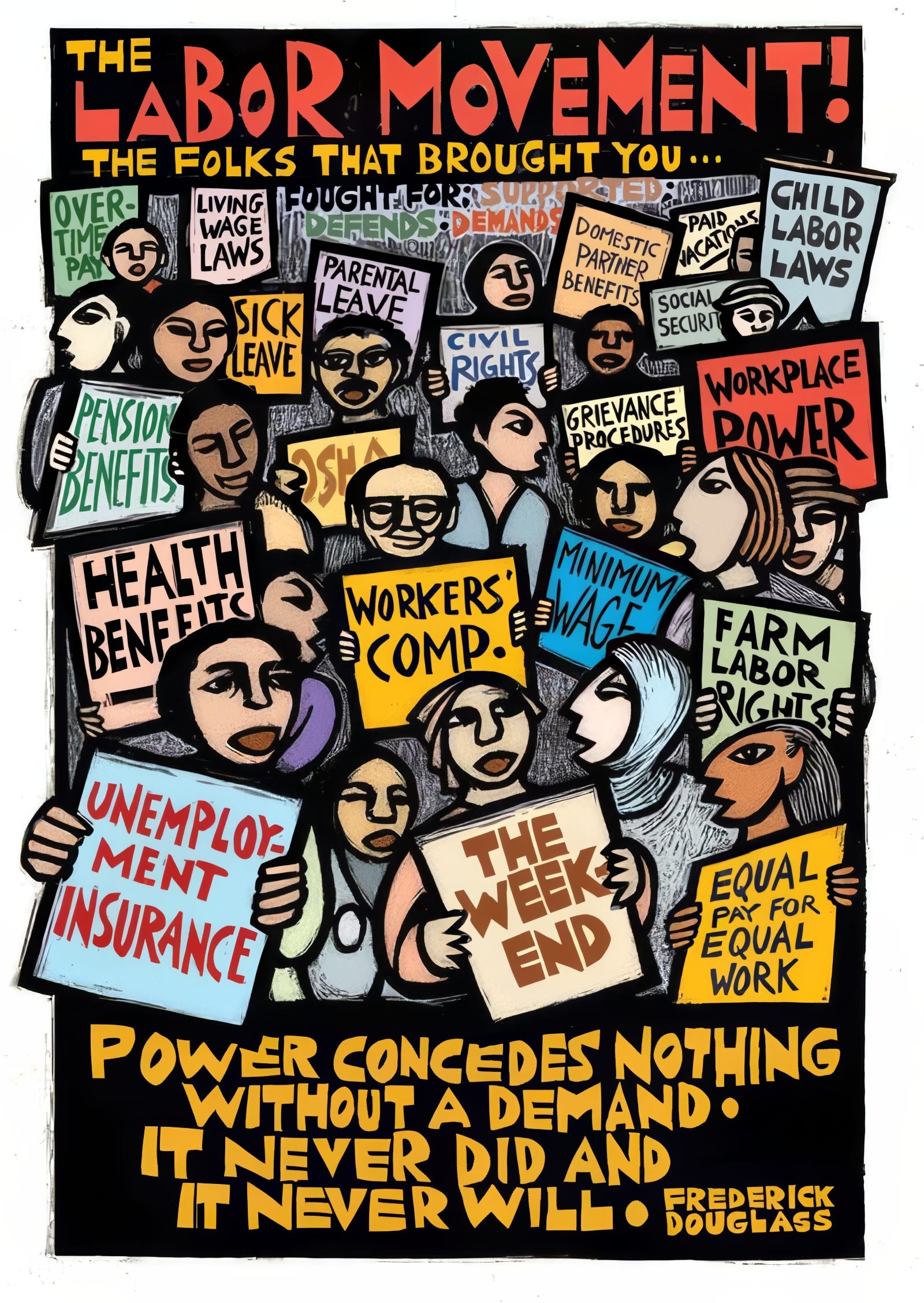
    Welcome to Truth and Reckoning, a newsletter from the Community Environmental Legal Defense Fund (CELDF). We are organizers, lawyers, and revolutionaries who educate and agitate to confront systemic injustice and restore humanity’s relationship with the Earth. For more than 30 years, we’ve helped communities resist corporate power, reject regulatory false promises, and assert their right to self-governance grounded in ecological balance. Subscribe to learn about rights of nature, environmental movement strategy, and stay updated on our work. Through the 4th of July CELDF will be challenging dishonest narratives about America’s past and how those lies distort our lives in the present. This essay is part of a four-part series of reflections on the Declaration of Independence from CELDF’s staff. By Will Falk The Declaration of Independence is a dangerous document – though probably not in the way you’re thinking. When Americans think of the Declaration, they often think of it as the shot across the British bow that announced the brave underdog patriots’ defiance of those powder-wigged, lordly stiffs who dared tax Americans without representation. Today, the Declaration of Independence is fetishized in the United States as key to what it means to be an American. It is clung to by Americans who need to soothe their guilty consciences for the history of genocide, ethnic cleansing, and colonial violence that has made, and continues to make, the United States possible. The British, at the time the Declaration was made, didn’t think much of it. Much of the British commentary on the Declaration chided the American rebels as petulant children. “Petulant children” might be too nice of a term for men like Thomas Jefferson who, while declaring that “all men are created equal” enslaved hundreds of men (and women and children) during his lifetime; who raped at least one of those slaves; who defined his children, born by the woman he raped, as property; and who engaged in illegal land speculation, buying claims to land that Native peoples had not ceded. “Petulant children” similarly might be too nice of a term for men like George Washington who, like Jefferson, enslaved hundreds of men (and women and children); who similarly engaged in illegal speculation of land that Native peoples had not ceded; and who treated Native Americans with such brutality that the Iroquois nicknamed him “Town Destroyer” for his practice of ordering troops to destroy whole villages. Of course, there’s nothing unique about Jefferson and Washington amongst the United States’ so-called “founding fathers.” One of the primary motivators for the American movement for independence was the Proclamation of 1763, which prohibited colonists from settling west of the Appalachian Mountains (land that Jefferson, Washington, and others were hoping to make a fortune selling through speculation markets). I can hear readers demanding: “How dare the King tell Americans where they can settle?” The thing is, the land west of the Appalachian Mountains was already home to Native American First Nations. No, the British didn’t really care about protecting Native folks. But, they were sick of spending money on troops to protect American colonists (and speculators) who were illegally violating treaties made with those First Nations. Another one of the primary motivators for the so-called “Patriots” was an alliance that enslaved folks made with the royal governor in Virginia beginning in 1774. This alliance resulted in Lord Dunmore’s Proclamation, which offered freedom to any enslaved person or indentured servant owned by a rebel who escaped and joined the British Army. Americans feared free African populations so much that Lord Dunmore’s Proclamation pushed many Americans to the rebel cause. And, of course, this fear found its bloodiest expression 90 years later during the Civil War, when hundreds of thousands of Americans gave their lives to protect the institution of slavery. “Yes, yes,” I hear some readers muttering. “But, some of the Patriots really did aspire to the ideals described in the Declaration.” Did they, though? Because I think people who truly aspired to the ideals described in the Declaration would have joined with Native Americans and enslaved Africans – those whose life, liberty, and pursuit of happiness were most clearly threatened in 1776 – and fought directly to protect them. And, this is why the Declaration of Independence is such a dangerous document. It was propaganda used in 1776 by the most powerful American rebels (enslavers, land speculators, purveyors of genocide) to convince the working class folks that the most powerful American rebels needed to do their dirty work to protect their interests against the British. The Declaration of Independence is similarly used as propaganda in 2026 by the most powerful Americans to convince working class folks to do the dirty work of protecting the most powerful Americans’ interests in Venezuela, Iran, Gaza, and the streets of cities like Minneapolis. There’s nothing wrong with the ideals described in the Declaration. But, the United States has never existed to defend Americans’ life, liberty, and pursuit of happiness. If it did, slavery would have been outlawed on July 4, 1776. If it did, Native Americans would still govern their land. If it did, the United States would not be one of the prime drivers of total ecological collapse. Life, liberty, and the pursuit of happiness, after all, are not possible on a dead planet. So, no, I do not care about sweet sounding ideals. I care about protecting the most vulnerable amongst us, those whose life and liberty are most directly threatened. We have countless other histories to look to than the history of the reactionary American rebels who fought for independence so they could steal more land and enslave more people. We could look to people like Tecumseh, Denmark Vesey, Nat Turner, and John Brown – people who knew just how dangerous the Declaration of Independence really is. About the Author Will is a writer, lawyer, and environmental activist. The natural world speaks and Will’s work is how he listens. He believes the ongoing destruction of the natural world is the most pressing issue confronting us today. For Will, writing is a tool to be used in resistance. Will graduated from the University of Wisconsin-Madison Law School and practiced as a public defender in Kenosha, WI. He left the public defender office to pursue frontline environmental activism. So far, activism has taken him to the Unist’ot’en Camp – an indigenous cultural center and pipeline blockade on unceded Wet’suwet’en territory in so-called British Columbia, Canada, to a construction blockade on Mauna Kea in Hawai’i, to endangered pinyon-juniper forests in the Great Basin, and to Thacker Pass in northern Nevada. Will’s first book How Dams Fall describes his relationship with the Colorado River in the context of the first-ever American federal lawsuit seeking rights for a major ecosystem, that he helped to file, was published in August 2019. His second book When I Set the Sweetgrass Down, a full-length collection of poetry was published in 2023. You can follow Will’s work at willfalk.org. Get full access to Truth and Reckoning at celdf.substack.com/subscribe
  • March 6 · 7 min

    Freedom for Who? Reflections of an American Woman on the Declaration of Independence

    Welcome to Truth and Reckoning, a newsletter from the Community Environmental Legal Defense Fund (CELDF). We are organizers, lawyers, and revolutionaries who educate and agitate to confront systemic injustice and restore humanity’s relationship with the Earth. For more than 30 years, we’ve helped communities resist corporate power, reject regulatory false promises, and assert their right to self-governance grounded in ecological balance. Subscribe to learn about rights of nature, environmental movement strategy, and stay updated on our work. Through the 4th of July CELDF will be challenging dishonest narratives about America’s past and how those lies distort our lives in the present. This essay is part of a four-part series of reflections on the Declaration of Independence from CELDF’s staff. They’re part of CELDF’s America 250: A Revolutionary Perspective series. Two-hundred and fifty years after the Declaration of Independence was signed by an exclusive gathering of wealthy white men, O’Dell speaks to what the Declaration failed to address when it asserted that: “We hold these truths to be self-evident, that all men are created equal, that they are endowed by their Creator with certain unalienable Rights, that among these are Life, Liberty and the pursuit of Happiness.” You can find more on America 250: A Revolutionary Perspective at CELDF’s Truth + Reckoning Substack. Be sure to follow us there and at CELDF.org, where you can learn about our Education, Consulting, and Community Resistance & Resilience programs. Consider supporting CELDF by making a donation that fits your plans. By Tish O’Dell Looking back at what I was taught in my 6 decades on this Earth as an American and what I have had to “unlearn” thanks to my colleagues at CELDF, community members I have fought alongside and even the lawyers, judges, electeds and media who have exposed reality to me, my perspective of the Declaration of Independence (DOI) is far different today than what I learned in school. As a young girl in school, I believed what I was taught hook line and sinker — the DOI was an amazing document recognizing that we were all free and equal in this country no matter where we were born, our socioeconomic status or who our parents were. Although an obvious red flag clue should have been the first line “all men are created equal”! When I questioned that, the reply was always the same, “women fought for the 19th amendment (over 100 years after the DOI) and won”, as if voting somehow guaranteed we were equal under the law. I also came of age during the era of “women’s liberation” which included the fights for equal pay and equal rights. I remember seeing Gloria Steinem speak at Kent State University which I was attending in the mid-1980’s and she inspired me to look closer at what I had been taught and what reality was when it came to women’s rights. She gave statistics on the pay discrepancy between men and women doing the same job. The fact that a woman couldn’t get a credit card without her husband’s signature and that in many states marital rape was legal (many states still treat marital rape differently under the law). And of course, the big issue about whether a woman has the right to decide whether to go through with an unwanted pregnancy is still being debated in 2026. Over the years I did what so many of us have been taught to do… I marched in my community; I traveled to Washington D.C. to march for the Equal Rights Amendment for women; and I wrote letters to electeds and anywhere else that would print them. These experiences made me realize that the freedom I had been taught that the DOI and constitutional amendments promised, were more illusion than reality. In 2011 I began organizing and working with CELDF. I took Democracy School and learned the real history behind the DOI and this sparked my interest in learning even more about the movement for women’s rights. Abigail Adams wrote to her husband, John, in 1776 as the idea of what we know as the United States was being formed, “Do not put such unlimited power into the hands of the husbands. Remember, all men would be tyrants if they could. If particular care and attention is not paid to the ladies, we are determined to foment a rebellion and will not hold ourselves bound by any laws in which we have no voice or representation.” Over the next two centuries women fought and fought hard to become recognized rights holders. Some engaged in direct action and were arrested, like Susan B. Anthony and Alice Paul. When they appeared before the court, the judge ruled against them. What many today would call a “loss” and yet, I am so grateful that they didn’t give up. I learned that in many local communities and later territories in the US, women had the right to vote and when the territories became states, the legislatures actually took away women’s right to vote. I learned that the struggle wasn’t just some women in white dresses with sashes parading down the streets and that these protests were somehow responsible for the 19th amendment. It took over 100 years of meetings, organizing, protests, arrests, court cases and acts of extreme courage and sacrifice that resulted in torture and even losing their own children, just to be able to vote, but still not changing that famous line, “all men are created equal”. I also learned in my work with CELDF and by being directly involved with the court cases filed on behalf of local laws protecting nature and the rights of community members, that when we attempted to cite the DOI as the basis of our arguments in our briefs regarding those “unalienable rights of the people to protect their lives, liberty and happiness”, the courts, if they even addressed the argument at all, stated that the DOI is not actually law but just poetic words of aspiration. So while this country and our government celebrate the 250th anniversary of the Declaration of Independence, let’s see it through the eyes of truth and reality. There may have been good intentions by the people at the time who took all the risks, including the women, but we have never lived up to those intentions of freedom, justice and rights for all persons and the non-humans that we depend on. Isn’t it about time we take the words seriously and breathe life into the righteous word of the Declaration of Independence or perhaps just start over with a new guiding document that actually reflects and codifies the values we were taught were there all along? About the Author Tish O’Dell has been involved in community rights and Rights of Nature work since 2012. She started in her own community of Broadview Heights, Ohio, leading to the adoption of Ohio’s first Home Rule charter amendment creating a Community Bill of Rights banning fracking and recognizing Rights of Nature. She then went on to work with dozens of Ohio communities on anti-fracking, anti-pipeline, right to a livable climate, fair and free elections, and water privatization issues. Today, Tish works with communities all over the country and internationally, most recently working with residents and a state legislator in NY to introduce the Great Lakes Bill of Rights. In 2019, she worked with the people of Toledo to pass the historic Lake Erie Bill of Rights. She has taught workshops, CELDF’s Democracy Schools, and is a founding member and current board member of the Ohio Community Rights Network. Tish, along with other CELDF staff and community members, has been featured in the documentaries We the People 2.0, Invisible Hand, What We do to Nature, We do to Ourselves, and edited the book Death by Democracy. In her free time, Tish likes to spend time on or near Lake Erie, in her yard, or with family and friends having lively discussions or playing a competitive game…for fun of course. Get full access to Truth and Reckoning at celdf.substack.com/subscribe

  • March 3 · 1 hr 12 min

    Fracking, Workers Health, and Labor Power w/ Truckers Movement for Justice

    Welcome to Truth and Reckoning, a podcast and newsletter from the Community Environmental Legal Defense Fund (CELDF). We are organizers, lawyers, and revolutionaries who educate and agitate to confront systemic injustice and restore humanity’s relationship with the Earth. For more than 30 years, we’ve helped communities resist corporate power, reject regulatory false promises, and assert their right to self-governance grounded in ecological balance. Subscribe to learn about rights of nature, environmental movement strategy, and stay updated on our work. In this episode of the Truth and Reckoning podcast, we speak with Billy Randel, John Taylor, and Ray “Hollywood” Randall of Truckers Movement for Justice. CELDF has been involved in the fight against fracking (hydraulic fracturing for the extraction of oil and gas) for many years. We often hear about environmental impacts of fracking, and the harms to local communities. But in this conversation, we connect with another impacted group: truckers who haul materials and toxic waste for the fracking industry, who are exposed to serious pollutants as a result, and who suffer the same abuses as all workers face: theft of wages, declining working conditions, and pressure to maximize profits at the cost of well-being. Truckers Movement for Justice emerged in part because of these health impacts on workers, and because in addition to exploiting nature, empire also exploits labor. There is a connection between the destruction of the planet and harm to workers. What we do to nature, we do to ourselves. These truckers find themselves in a difficult situation, because unlike unions organizing in a physical workplace, they are always on the move. Their strategies for finding unity and solidarity and organizing across thousands of miles of road are well worth learning from. We at CELDF also found this conversation interesting because of TMJ’s focus on succession: how they make sure that there’s leadership in the next generation beyond those that are currently in those leadership positions that are now older. We explore the grassroots efforts of Truckers Movement for Justice (TMJ) as they organize independent truck drivers to challenge industry exploitation, environmental hazards, and systemic corruption. * The origins and evolution of Truckers Movement for Justice * Challenges faced by independent truck drivers in organizing and advocacy * The impact of industry practices on worker rights, wages, and health * Environmental and health hazards in the oil, fracking, and trucking industries * Strategies for building solidarity among isolated workers * Historical parallels with union decline and corporate control * Practical steps for community and worker organizing efforts * The importance of collective action to challenge systemic oppression Links and Resources * Truckers Movement for Justice Facebook * Instagram @truckers_movement_for_justice * North American Truckers’ Movements Announce International Alliance * Book: Petroleum 238 * Truckers Petition Feds to Enforce HAZMAT Rules on Oil and Gas Waste This episode can also be watched on YouTube. About the Truth and Reckoning Podcast In this show, we learn from front-line organizers and communities fighting against environmental destruction. We explore different perspectives and innovative strategies for movement building, the potency and potential of rights of nature, and effective action in defense of our communities. And, we share inspiring stories of people working towards right relationship with the land and each other. The show is hosted by CELDF Community Resistance and Resilience Program Co-Director Max Wilbert. You can find the show on: * Apple Podcasts * Spotify * Pocketcasts * YouTube (video and audio) * And anywhere else you get your podcasts (click here to find this podcast via your preferred app) About CELDF — Community Environmental Legal Defense Fund CELDF is a nationwide community of organizers, lawyers, and partners who educate, agitate, and organize to confront systemic injustice and restore humanity’s reciprocal relationship with the Earth. For over 30 years, we’ve helped communities resist corporate exploitation, reject regulatory false promises, and assert their right to self-govern through systems grounded in ecological balance and collective power. Get full access to Truth and Reckoning at celdf.substack.com/subscribe

  • February 11 · 17 min

    Urgent Threat to Alaska Rainforests

    Welcome to Truth and Reckoning, a podcast and newsletter from the Community Environmental Legal Defense Fund (CELDF). We are organizers, lawyers, and revolutionaries who educate and agitate to confront systemic injustice and restore humanity’s relationship with the Earth. For more than 30 years, we’ve helped communities resist corporate power, reject regulatory false promises, and assert their right to self-governance grounded in ecological balance. Subscribe to learn about rights of nature, environmental movement strategy, and stay updated on our work. In this episode of the Truth and Reckoning podcast, we speak with Kashudoha Wanda Loescher Culp (Tlingit) and Joshua Wright The Tongass Rainforest in Southeast Alaska is the last great expanse of temperate old growth forest left in the United States, and it has been partially protected since the “Roadless Rule” halted most logging there in 2001. Now, the "biggest threat to the west coast rainforest this century" is here: Bill S.2554, which would permanently privatize 115,200 acres, including 80,000 acres of old-growth rainforest, into the hands of privately owned logging corporations — all behind a veil of “justice” for indigenous people. All this is happening at the same time that the roadless rule itself is under threat. This conversation with Tlingit elder and forest defender Wanda Culp and filmmaker and activist Joshua Wright — who helped launch the Fairy Creek blockade — dives into "indigi-washing," one of the divide and conquer strategies being used defeat public opposition to the destruction of the land. Wanda and Joshua have requested your help: TAKE IMMEDIATE ACTION: Please contact the Natural Resources Committee TODAY to oppose S.2554 and urge them to protect our public lands instead of handing them over for private exploitation! If you are reading this after February 12, please email the Senate regardless, please also reach out to your local congressional representative to tell them that you oppose the bill. Sample letter: https://tinyurl.com/protectTNF fortherecord@energy.senate.gov 202-224-3121 Links and Resources * Background on ANCSA, the Alaska Native Claims Settlement Act (1971) The YouTube version of this podcast will be available here shortly. About the Truth and Reckoning Podcast In this show, we learn from front-line organizers and communities fighting against environmental destruction. We explore different perspectives and innovative strategies for movement building, the potency and potential of rights of nature, and effective action in defense of our communities. And, we share inspiring stories of people working towards right relationship with the land and each other. The show is hosted by CELDF Community Resistance and Resilience Program Co-Director Max Wilbert. You can find the show on: * Apple Podcasts * Spotify * Pocketcasts * YouTube (video and audio) * And anywhere else you get your podcasts (click here to find this podcast via your preferred app) About CELDF — Community Environmental Legal Defense Fund CELDF is a nationwide community of organizers, lawyers, and partners who educate, agitate, and organize to confront systemic injustice and restore humanity’s reciprocal relationship with the Earth. For over 30 years, we’ve helped communities resist corporate exploitation, reject regulatory false promises, and assert their right to self-govern through systems grounded in ecological balance and collective power. Get full access to Truth and Reckoning at celdf.substack.com/subscribe
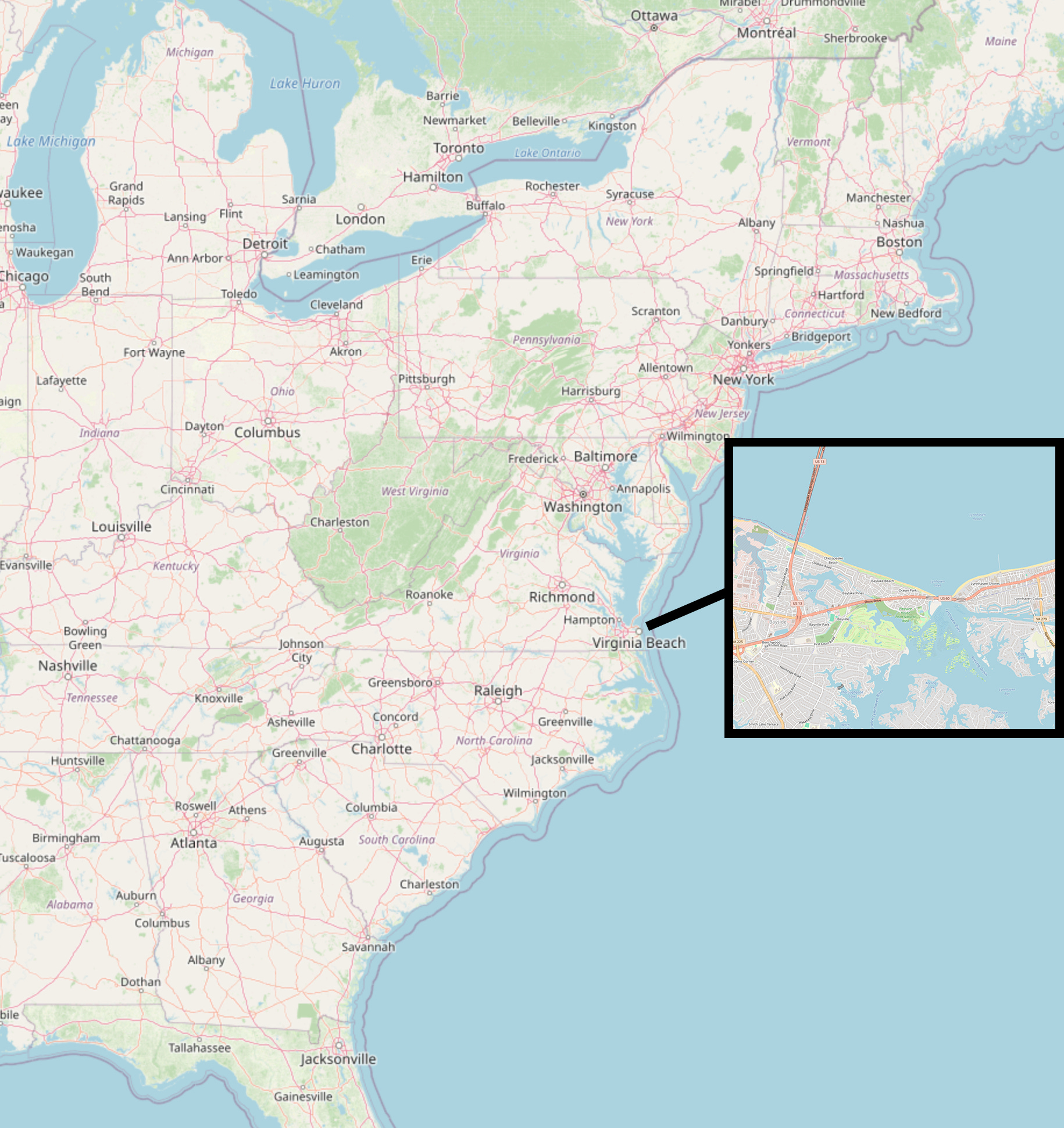
  • February 9 · 1 hr 14 min

    Community Resistance to Toxic Waste Mining w/ Tom Grotewohl

    Welcome to Truth and Reckoning, a podcast and newsletter from the Community Environmental Legal Defense Fund (CELDF). We are organizers, lawyers, and revolutionaries who educate and agitate to confront systemic injustice and restore humanity’s relationship with the Earth. For more than 30 years, we’ve helped communities resist corporate power, reject regulatory false promises, and assert their right to self-governance grounded in ecological balance. Subscribe to learn about rights of nature, environmental movement strategy, and stay updated on our work. In this episode of the Truth and Reckoning podcast, we speak with Tom Grotewohl of Protect The Porkies Our conversation focuses on the ongoing efforts to oppose the Copperwood Mine in Michigan’s Upper Peninsula through the organization Protect the Porkies. Tom calls the proposed Copperwood Mine a “toxic waste mine,” because that’s most of what it will produce. We explore the motivations behind the campaign, intervention points around securing funding for mining projects, and the environmental impacts of mining. We also dive into the importance of art and culture. Tom and the rest of the team at Protect the Porkies have used community engagement and art to involve and inspire people throughout their campaign. This conversation is also a dialogue. Tom and I first met through Protect Thacker Pass, and in this interview, he turns the questions around on me to discuss lessons learned from that campaign to resist a lithium mine in Nevada. Topics discussed in this show include: * Government and corporate partnerships in resource extraction * The potential of the Rights of Nature movement to reshape environmental law * The importance of community engagement, cultural change, and grassroots activism to build decentralized movements for protection of land and water Chapters 03:00 Introduction to Protect the Porkies 05:50 Tom’s Background and motivation 09:29 Max’s experience with Thacker Pass 13:02 Funding for mining projects 19:35 Environmental impacts and permitting issues 25:45 Government and corporate partnerships 31:28 Lessons from Thacker Pass 36:56 Rights of Nature, including challenges and successes 52:03 Cultural change and community engagement 01:03:41 Strategies for Implementing Rights of Nature Links and Resources * Protect the Porkies website * How to take action on Copperwood * Protect Thacker Pass website The YouTube version of this podcast can be viewed here: Keywords Protect the Porkies, copper mine, environmental activism, rights of nature, community resistance, Thacker Pass, mining funding, ecological crisis, grassroots movements, cultural change About the Truth and Reckoning Podcast In this show, we learn from front-line organizers and communities fighting against environmental destruction. We explore different perspectives and innovative strategies for movement building, the potency and potential of rights of nature, and effective action in defense of our communities. And, we share inspiring stories of people working towards right relationship with the land and each other. The show is hosted by CELDF Community Resistance and Resilience Program Co-Director Max Wilbert. You can find the show on: * Apple Podcasts * Spotify * Pocketcasts * YouTube (video and audio) * And anywhere else you get your podcasts (click here to find this podcast via your preferred app) About CELDF — Community Environmental Legal Defense Fund CELDF is a nationwide community of organizers, lawyers, and partners who educate, agitate, and organize to confront systemic injustice and restore humanity’s reciprocal relationship with the Earth. For over 30 years, we’ve helped communities resist corporate exploitation, reject regulatory false promises, and assert their right to self-govern through systems grounded in ecological balance and collective power. Your gift helps us to support communities on the frontlines of corporate and ecological destruction — people standing up to defend their water, forests, and future. Together, we’re advancing Rights of Nature and Community Rights in the name of Community Resistance + Resilience, challenging a system that treats nature as property and people as obstacles. Please donate today! Get full access to Truth and Reckoning at celdf.substack.com/subscribe
  • January 27 · 1 hr 37 min

    "Greedy Hands in the Wetland" — Update on Virginia Beach Forest Destruction

    Welcome to Truth and Reckoning, a podcast and newsletter from the Community Environmental Legal Defense Fund (CELDF). We are organizers, lawyers, and revolutionaries who educate and agitate to confront systemic injustice and restore humanity’s relationship with the Earth. For more than 30 years, we’ve helped communities resist corporate power, reject regulatory false promises, and assert their right to self-governance grounded in ecological balance. Subscribe to learn about rights of nature, environmental movement strategy, and stay updated on our work. In this episode of the Truth and Reckoning podcast, we speak with four people resisting the destruction of a rare maritime forest in Virginia Beach, VA This is a followup to episode 2 of this podcast, in which Dr. John Aguiar introduced us to “Pleasure House Point,” a natural area in Virginia Beach which is currently being bulldozed by the city government as a so-called “restoration” project. Thousands of trees have been cut down, including mature oaks and pines, heavily impacting bird and Diamondback terrapin habitat. At Pleasure House Point, the city of Virginia Beach is currently clearcutting a mature native forest and destroying critical nesting habitat for the Diamondback Terrapin. It’s part of what they call a “restoration” project, and is happening as part of a wetlands-credit scheme whereby wetlands habitat elsewhere which is being destroyed for a flood-mitigation project is supposedly being “offset” by the creation of new wetlands at Pleasure House Point. In both cases, nature is losing. This story is one of a growing number of examples — from forest thinning to spraying invasive species with herbicides — where “restoration” has been co-opted and used as a greenwashing technique. This isn’t an indictment of restoration as a whole, but it is a warning that there are active attempts to use the language emerging from this field to justify more destruction of our planet. In this followup episode, we speak with Dr. Aguiar and three other residents of the area who are opposing the destruction: Kim Mayo, Windy Crutchfield, and Walt Stone. These three have, with some assistance from CELDF, filed a pro se lawsuit against the Army Corps of Engineers for destroying Pleasure House Point. Listen to the first interview on this topic, released in May 2025, here: Topics discussed in this show include: * The link between local politicians and housing developers who benefit from the clearcutting and made major campaign contributions * The city’s stonewalling and lack of transparency * The lawsuit against the Army Corps of Engineers * Community protests and activism * Feelings of betrayal by local environmental organizations * Impacts of wildlife, including the diamondback terrapin * The need for more journalists to write this story and more community members to join the resistance * Why is it that nature always has to be destroyed? Why not bulldoze the golf course or the luxury homes instead and turn that land into salt marsh? Photos from the site Partial timeline since May 2025 * Feb. 2025 - Multiple gatherings/ protests * March 8, 2025 - Documentary filmmaker records residents urging the city not to destroy our public land * March 18-19, 2025 - More than 5,000 trees are cut down, including sizeable live oaks the city was legally required to conserve. * April 27, 2025 - Virginia Beach City Government sets up security cameras on-scene which play recorded messages when they detect people nearby instructing people that they are trespassing and police would be called. * May 2025 - Documentary filmmaker returns, recall petition launched against Councilman who pushed the destruction in his district * August 2025 - Illegal pollution discharge documented by opponents * October 12, 2025 - Media captures oil barrel, toxic waste ,and a portable toilet floating around next to the restored “wetlands” (deforested area). * December 2, 2025 - Councilman Joash Schulman refuses to talk about Pleasure House Point when questioned at a public meeting about his developer donor having water views following the deforestation. Links and Resources * Link to a short documentary about Pleasure House Point by Angelique Herring Studios * Barrels, construction material litter Pleasure House Point Project; residents call for accountability | 13newsnow.com * Virginia Beach citizens sue Army Corps over wetlands project that cleared forest at Pleasure House Point The YouTube version of this podcast can be viewed here: Keywords Virginia Beach, environmental activism, diamondback terrapin, forest destruction, community response, local government, transparency, environmental journalism, terrestrial ecosystems About the Truth and Reckoning Podcast In this show, we learn from front-line organizers and communities fighting against environmental destruction. We explore different perspectives and innovative strategies for movement building, the potency and potential of rights of nature, and effective action in defense of our communities. And, we share inspiring stories of people working towards right relationship with the land and each other. The show is hosted by CELDF Community Resistance and Resilience Program Co-Director Max Wilbert. You can find the show on: * Apple Podcasts * Spotify * Pocketcasts * YouTube (video and audio) * And anywhere else you get your podcasts (click here to find this podcast via your preferred app) About CELDF — Community Environmental Legal Defense Fund CELDF is a nationwide community of organizers, lawyers, and partners who educate, agitate, and organize to confront systemic injustice and restore humanity’s reciprocal relationship with the Earth. For over 30 years, we’ve helped communities resist corporate exploitation, reject regulatory false promises, and assert their right to self-govern through systems grounded in ecological balance and collective power. Your gift helps us to support communities on the frontlines of corporate and ecological destruction — people standing up to defend their water, forests, and future. Together, we’re advancing Rights of Nature and Community Rights in the name of Community Resistance + Resilience, challenging a system that treats nature as property and people as obstacles. Please donate today! Get full access to Truth and Reckoning at celdf.substack.com/subscribe

  • January 8 · 1 hr 11 min

    "It Rips Your Heart Out" — Defending Southern Arizona's Borderlands with Kate Scott and Tony Heath

    Welcome to Truth and Reckoning, a podcast and newsletter from the Community Environmental Legal Defense Fund (CELDF). We are organizers, lawyers, and revolutionaries who educate and agitate to confront systemic injustice and restore humanity’s relationship with the Earth. For more than 30 years, we’ve helped communities resist corporate power, reject regulatory false promises, and assert their right to self-governance grounded in ecological balance. Subscribe to learn about rights of nature, environmental movement strategy, and stay updated on our work. In this episode of the Truth and Reckoning podcast, we speak with Kate Scott and Tony Heath about resisting border wall construction. Last month, CELDF’s executive director Kai Huschke traveled to southern Arizona to participate in a rally against the construction of a 30-foot wall impervious to not just humans, but animals as well — including critically endangered jaguars, as well as ocelots, pronghorn antelope, and black bear who live in the area. In this interview recorded on-site, Kai speaks with Kate Scott and Tony Heath. Kate and Tony are the co-founders of the Madrean Archipelago Wildlife Center (MAWC) and part of a broad community-based and bi-national coalition opposed to the construction of the border wall. The interview focuses on the ecological impacts of the wall, drivers of mass migration, the jaguar and other wildlife, and the urgency of resistance to this project. Links and Resources * Madrean Archipelago Wildlife Center * Border Wall Resistance Coalition * Madrean Archipelago Films The YouTube version of this podcast can be found here: Keywords border, activism, ecology, environmental impact, community, wall, San Pedro River, jaguar, indigenous rights, climate crisis About the Truth and Reckoning Podcast In this show, we learn from front-line organizers and communities fighting against environmental destruction. We explore different perspectives and innovative strategies for movement building, the potency and potential of rights of nature, and effective action in defense of our communities. And, we share inspiring stories of people working towards right relationship with the land and each other. The show is hosted by CELDF Community Resistance and Resilience Program Co-Director Max Wilbert. You can find the show on: * Apple Podcasts * Spotify * Pocketcasts * YouTube (video and audio) * And anywhere else you get your podcasts (click here to find this podcast via your preferred app) About CELDF — Community Environmental Legal Defense Fund CELDF is a nationwide community of organizers, lawyers, and partners who educate, agitate, and organize to confront systemic injustice and restore humanity’s reciprocal relationship with the Earth. For over 30 years, we’ve helped communities resist corporate exploitation, reject regulatory false promises, and assert their right to self-govern through systems grounded in ecological balance and collective power. Support this work Your gift helps us to support communities on the frontlines of corporate and ecological destruction — people standing up to defend their water, forests, and future. Together, we’re advancing Rights of Nature and Community Rights in the name of Community Resistance + Resilience, challenging a system that treats nature as property and people as obstacles. Please donate today! Get full access to Truth and Reckoning at celdf.substack.com/subscribe

  • Dec 15, 2025 · 1 hr 42 min

    Defending 2,000-Year-Old Forests w/ Elder Bill Jones and Will O'Connell

    If you’re new here, this is Truth and Reckoning, a podcast and newsletter from the Community Environmental Legal Defense Fund (CELDF). We are organizers, lawyers, and revolutionaries who educate and agitate to confront systemic injustice and restore humanity’s relationship with the Earth. For more than 30 years, we’ve helped communities resist corporate power, reject regulatory false promises, and assert their right to self-governance grounded in ecological balance. Subscribe to learn about rights of nature, environmental movement strategy, and stay updated on our work. In this episode, we speak with Elder Bill Jones of the Pacheedaht First Nation and Will O’Connell on the frontlines of old-growth forest defense First we’ll hear from Will O’Connell, a 34-year-old science and math teacher who has been on the front lines of these protests and joins us from his car at the protest camp, then from Elder Bill Jones from the Pacheedaht First Nation, two leaders in the forest defense movement currently taking place in Vancouver Island in western Canada. Elder Bill is 85 years old. For decades, he has welcomed people into the forests to stand with him in defense of the last old-growth trees on his territory. At Fairy Creek, his invitation sparked one of the largest acts of civil resistance in Canadian history. Now, Western Forest Products has filed a civil suit against him, seeking an injunction that would make it illegal for Bill to be on his own land. If this injunction is granted, police will be authorized to arrest and detain those protecting the old growth. Bill’s grandfather once told him: “Sonny, go out into the forest. That is where you will find the Great Mother. In the forest. It is a place of worship.” Today, that sacred place is under threat as logging companies push to cut what remains. On the day before we recorded this interview, Monday December 8th, Will had been wrongfully arrested by the RCMP, the Canadian federal police, while on-site in the Walbran, and loggers had been able to pass the blockades and begin logging ancient forests again - towering 2,000 year old western red cedars, ancient firs and hemlocks. A dozen people or more have been arrested over the past week or so, with more every day. They need support on the front lines, so if you’re near Vancouver Island, please go. And if you’re not, we need you elsewhere. This conversation explores the ongoing efforts to protect the Walbran Valley’s ancient forests, highlighting the role of community activists, including Elder Bill Jones, and the challenges posed by law enforcement. The discussion delves into the tactics used by forest defenders, the historical context of forest defense movements, and the personal experiences of activists on the front lines. It emphasizes the importance of solidarity and the need for continued action against ecological devastation. Message from Walbran forest defenders COME TO CAMP We are currently in Kaxi;ks (the Upper Walbran) Valley, fighting for an end to old growth logging. NEW CAMP: 48.75088, -124.50931 Links and Resources * Donation link to support the resistance * Fairy Creek Blockade on Instagram * ‘Indian Against Indian’: The Walbran Forest Protection Blockade and Truth & Reconciliation as Colonialism Continues ... * How the Walbran Blockade Echoes Another Famous Stand in the Forest The YouTube version of this podcast can be found here: Topics Covered Walbran Valley, old growth forests, forest defense, RCMP, direct action, community mobilization, environmental activism, Elder Bill Jones, logging, climate change, anthropology, empire, civilization, food supply, population pressure, extraction, and the preservation of wild places and forests as a source of life for future people. Takeaways * The Walbran Valley is home to ancient forests that are under threat from logging. * Elder Bill Jones plays a crucial role in the movement to protect these forests. * The RCMP has been using heavy-handed tactics against forest defenders. * Direct action tactics, such as cantilevers, are being employed to block logging roads. * Historical forest defense movements have shaped current activism strategies. * Solidarity among activists is vital for sustaining the movement. * The legal landscape is complex, with injunctions leading to police action. * Community mobilization is essential for effective forest defense. * The fight for the Walbran Valley reflects broader ecological issues. * Activists are determined to continue their efforts despite challenges. About the Truth and Reckoning Podcast In this show, we learn from front-line organizers and communities fighting against environmental destruction. We explore different perspectives and innovative strategies for movement building, the potency and potential of rights of nature, and effective action in defense of our communities. And, we share inspiring stories of people working towards right relationship with the land and each other. The show is hosted by CELDF Community Resistance and Resilience Program Co-Director Max Wilbert. You can find the show on: * Apple Podcasts * Spotify * Pocketcasts * YouTube (video and audio) * And anywhere else you get your podcasts (click here to find this podcast via your preferred app) About CELDF — Community Environmental Legal Defense Fund CELDF is a nationwide community of organizers, lawyers, and partners who educate, agitate, and organize to confront systemic injustice and restore humanity’s reciprocal relationship with the Earth. For over 30 years, we’ve helped communities resist corporate exploitation, reject regulatory false promises, and assert their right to self-govern through systems grounded in ecological balance and collective power. Support this work Your gift helps us to support communities on the frontlines of corporate and ecological destruction — people standing up to defend their water, forests, and future. Together, we’re advancing Rights of Nature and Community Rights in the name of Community Resistance + Resilience, challenging a system that treats nature as property and people as obstacles. Please donate today! Get full access to Truth and Reckoning at celdf.substack.com/subscribe

Showing 1–20 of 22 episodes