Skip to content
Artwork for Tom Rowland Podcast
SportsWildernessHealth & FitnessExplicit

Tom Rowland Podcast

Tom Rowland

Tom Rowland of Saltwater Experience Television finds interesting stories in Fishing, Hunting, Fitness and the Outdoors and brings them to you in ultra high-quality audio. Unhurried conversations with icons, up and comers and people doing amazing things outside. Text "PODCAST" to (305) 930-7346 to contact Tom directly with questions or show suggestions.

Play
  • 30 episodes
  • weekly
  • Avg 1 hr 9 min
  • English
Counted on this page — what you have heard stays on this device, so it is not something the list can be paged by.
  • Tuesday · 54 min

    Jill Christofferson & Sean Trindell | FWC’s Catch a Florida Memory | Ep. 1034

    Jill Christopherson and Sean Trindell are the team behind FWC’s Catch a Florida Memory, the saltwater angler recognition program that rewards anglers for the fish they catch in Florida waters. There are 75 saltwater species on Florida’s life list, and in 10 years nobody has caught all of them. That’s the challenge Jill and Sean brought on the show. You don’t have to finish the list to get something out of it, though. Your first 10 fish earn you a T-shirt and a certificate, and a photo from years ago still counts, as long as you’re in it, the species is clear and the fish came from Florida waters. Before we recorded, I took them fishing in the Keys. Inshore, we went after the new Southern Inshore Slam: a snook, a redfish and a trout in 24 hours. The trout and redfish came easy. The snook did not. Between floating grass and dirty water, we fished for hours, and Sean lost a good one at the boat before he finally landed his first snook and finished the slam. The next day we went offshore with Jill. She caught her first cobia, and Sean landed a big blackfin tuna that I netted for him. That’s what I like about this program. It gives you something to chase. Maybe you’ve caught two kinds of snapper and you need one more for a slam. That changes your plan for the day and the mood on the boat, and it’s a great way to get kids learning fish ID. In this episode: How the Life List, Reel Big Fish and nine Grand Slam categories work Why catch-and-release counts, and when you need a measurement The quarterly Secret Fish riddles, plus one we try to solve on air The first Veterans Challenge, where the military branches compete for points More than 4,500 anglers and about 40,000 catches, all reviewed by hand Start your list at https://catchafloridamemory.com Questions or brand partnerships: anglerrecognition@myfwc.com We’ve completely redone the Tom Rowland Podcast website. Take a look and email me what you think at podcast@saltwaterexperience.com. #TomRowlandPodcast #CatchAFloridaMemory #FloridaFishing #SaltwaterFishing #FWC

  • October 20 · 1 hr 13 min

    Bill Oyster & Capt. Rhett Morris | Oyster Bamboo Fly Rods | Ep. #1033

    Bill Oyster of Oyster Bamboo Fly Rods and Capt. Rhett Morris join me for a story about craftsmanship, business, and one very hard-earned permit. Bill builds fly rods out of bamboo, a technology most anglers left behind decades ago. He had a four-year waiting list, but he was working until 3 AM seven days a week and realized he’d never make a middle-class income building rods. So he started teaching people to build their own. Today Oyster Bamboo runs 240 students a year through its classes, and the waitlist stretches two years out. Bill shares how one phone call from a determined wife led to his first student and why other rod makers warned him that teaching would put them all out of business. He also talks about building rods for President Carter and a royal wedding gift. Rhett walked into Bill’s shop by accident in Blue Ridge, Georgia, and ended up building a 10-weight bamboo rod he named “The Permit.” He tells the story of the three years it took to land a permit on that rod and why it meant more than any fish he’s caught. Learn more and get on the class waitlist at oysterbamboo.com

  • October 13 · 1 hr 8 min

    Jaclyn Lunaas and Chris Macaluso | Theodore Roosevelt Conservation Partnership | Ep. 1032

    One company owned by Canada’s Cooke Inc. is catching about 70% of all the Atlantic menhaden that can legally be harvested. The fish we love to chase depend on that bait to survive: striped bass, tarpon, redfish, cobia, king mackerel, and bluefin tuna all rely on menhaden, and so do ospreys and whales. I sat down with Chris Macaluso and Jaclyn Lunaas of the Theodore Roosevelt Conservation Partnership (TRCP) to find out how this works. They explain how Virginia ended up with 75% of the coast-wide quota, and how a leasing loophole lets a foreign-owned company fish under an American flag. We also cover the Louisiana bycatch study, which estimated that 140 to 160 million additional fish are killed in a single Gulf season, including about 30,000 redfish and 250,000 speckled trout. We get into the science too. Regulators found that the Atlantic menhaden population had been overestimated by about 40%. The science called for a cut of more than 50%, but the commission took only a 20% cut for 2026. In the Gulf, Louisiana and Mississippi have no catch limits at all. Most importantly, Chris and Jaclyn explain what you can do about it, even if you never catch a striped bass in your life. Learn more and sign the petition: trcp.org/foragefishrecovery Chapters 00:00 One company is catching most of the menhaden 01:04 Meet Chris Macaluso & Jaclyn Lunaas of TRCP 05:20 Why menhaden are “the most important fish in the sea” 06:54 The reduction industry: fish meal, fish oil & pet food 09:22 Migration and the predators that follow menhaden 11:26 Pogey boats, spotter planes & the Gulf bycatch study 16:01 Warning signs in the Chesapeake Bay 20:18 Striped bass as the yardstick 22:01 The most efficient fishery there is 25:34 The ask: lower the quota and reallocate it 27:55 The 40% overestimate and the 2026 quota cut 29:59 How Virginia got 75% of the quota 33:30 Why other states banned reduction boats 37:31 The foreign-ownership loophole 40:20 The Gulf’s “Wild Wild West”: no catch limits 45:20 Ecology vs. economics and king mackerel 49:51 How do you count a bait fish? 54:58 Tarpon, redfish & the all-you-can-eat buffet 58:32 What anglers can do to help 1:02:06 Lessons from Captains for Clean Water 1:06:15 How to get involved #menhaden #stripedbass #fishingconservation #tarpon #redfish #TomRowlandPodcast

  • October 6 · 1 hr 11 min

    Dane Sanders | Men and Women of Discomfort | Ep. 1031

    Full Article on Tomrowlandpodcast.com Episode Description - Most people drift their way into worse health, weaker relationships, and a life they don’t recognize. Dane Sanders says the answer isn’t another burst of motivation—it’s an operating system for becoming stronger in the middle of real life. Tom Rowland sits down with Dane, founder of Men and Women of Discomfort (MWOD), for a conversation about why voluntary discomfort matters, how drift quietly erodes your gains, and why the hardest parts of life are often the ones that change you most. If you’ve ever started strong on a challenge, a fitness plan, or a personal reset—only to watch it fade—this episode will hit close to home. Visit The Website: https://www.mwod.io/ You’ll discover: Why Dane says MWOD is more than a challenge—and how it differs from programs built around a finish line The difference between the drift and the storm, and why both are inevitable How MWOD uses daily check-ins, weekly challenges, and a 12-week cadence to build momentum The CREDO framework: commit, release, embrace, define, and own it Why discomfort doesn’t have to be physical to be transformational How a challenge called Ghostbusters helped people pursue forgiveness, reconnection, and meaningful conversations Dane also shares how MWOD began with his friend Tim Kruger. Tim’s battle with cancer brought home a powerful idea: practice voluntary discomfort before involuntary discomfort chooses you. That became a turning point—transforming a fitness experiment into a lasting philosophy about faith, purpose, and becoming the kind of person who can handle what comes next. This conversation goes far beyond workouts. It’s about identity, belonging, resilience, and the small choices that shape your future—whether in your health, relationships, work, faith, or the conversations you’ve been avoiding. Dane Sanders is the founder of Men and Women of Discomfort, a community built around deliberate discomfort, accountability, and sustainable growth. The goal: to become strong and awake for love’s sake. If you’re tired of starting over and ready to build something that lasts, this conversation is for you. Chapters 00:00 Introduction to the Men and Women of Discomfort challenge 02:21 What is the challenge and how does it differ from a traditional challenge 04:18 Discomfort as an operating system for life 09:17 The storms and drift of being human 11:45 The concept of anti-fragility and resilience 16:44 The story of Tim and the discovery of the challenge's purpose 21:28 How the program is structured and what participants do 24:53 The Ghostbusters challenge and calling out personal ghosts 27:47 Stacking wins and momentum in discomfort 32:24 The evolution of the challenge into an operating system 37:42 Most difficult challenge and lessons learned 38:07 The concept of Masogi and high-risk, high-reward challenges 39:32 Personal stories of endurance and discomfort 43:49 Uncovering hidden discomforts in daily life 49:35 The power of small daily improvements 54:34 The CREDO process: Commit, Release, Embrace, Own 01:03:17 Final thoughts on discomfort and transformation

  • September 22 · 1 hr 6 min

    Jere Hartman | "RangeOars Row" | Ep. 1029

    Jere Hartman spent 19 years in the Army, including time as an Army Ranger, then went straight into the FBI's Terrorist Screening Center. Two years later he'd put on 50 pounds and was spending his nights sitting in the dark. So he walked into his performance review and resigned. What came next was a six-month thru-hike of the Appalachian Trail (trail name: Clincher, and he'll tell you why). Ten years later, he answered a Facebook post in the Ranger community and signed on to row across the Pacific Ocean. In this episode, Jere and I talk about: Why leaving a structured military life with no transition nearly broke him Trail magic, trail families, and what the AT gave him that he didn't expect Rowing from Monterey to Kauai in 35 days with a five-man crew in the World's Toughest Row Keeping the boat's water maker alive after it broke on day three Riding out 30-foot seas at night in a rowboat, and the crew pact that "it's 100% or we don't make that decision" Weeks of glowing phosphorescence, hundreds of dolphins, and a pint of rum split five ways Corsair Racing, the nonprofit he helped build to get veterans out on the ocean, and the crew now training for a 3,000-mile Atlantic row from La Gomera to Antigua Coaching CrossFit in Chattanooga, and why he believes it's for everyone, no matter how beat up you are Support Corsair Racing: https://corsairracing.org This episode is brought to you by Star brite, makers of Salt Off and a full line of boat-care products, and a company that invests heavily in conservation. Check them out at https://www.starbrite.com 🎙 Subscribe to the Tom Rowland Podcast for more conversations with people doing extraordinary things. #TomRowlandPodcast #OceanRowing #Veterans #AppalachianTrail #ArmyRanger #WorldsToughestRow #CrossFit

  • September 16 · 1 hr 24 min

    Rhett Morris | Beyond Borders Outfitters | Ep. 1028

    Captain Rhett Morris of morefishflorida.com has guided the greater Charlotte Harbor area for three decades — and he kept a catch log almost every day of it. That data now tells a story the numbers on Florida's coast are backing up: a steady, decades-long decline in snook, redfish, and trout that's accelerated since the mid-2000s. In this episode, Rhett walks Tom through what his records reveal, what actually caused the collapse (the record-shattering 2018 red tide, the nitrogen overload, and the algae that smothered the seagrass), and why Hurricane Milton turned out to be one of the best things to happen to the fishery in years. Then he lays out his proposal: treat Charlotte Harbor as a test zone, change the redfish and snook slot limits, and let the fishery become its own hatchery. It's not a mandate — it's the start of a conversation, and it comes with a real economic case for why even the developers should care. If it resonates, there's a petition at morefishflorida.com. As Rhett says, sharing it may matter even more than signing it. 👉 Sign & share the petition: https://morefishflorida.com This episode is brought to you by Star brite — makers of Salt Off and a full line of boat-care products, and a company that puts real effort into conservation. Check them out. CHAPTERS 00:00 Intro & Star brite 00:47 Meet Capt. Rhett Morris 02:00 Bowhunting turkeys & the confiscated African poacher's bow 04:30 Growing up in Rhodesia (now Zimbabwe) 06:30 Landing in Florida & a biologist father 07:30 Quail hunting, bird dogs & vanishing habitat 12:30 How his dad's record-keeping shaped him 15:00 30 years of catch data — the decline 20:00 The bait situation 21:00 The record-breaking 2018 red tide 28:00 Seagrass loss & the algae that smothered the flats 32:00 How Hurricane Milton helped 37:30 The fix: rethinking slot limits 40:00 The redfish proposal (25–27") 44:00 The snook proposal & 75 billion eggs 47:30 Why the FWC hasn't acted 49:00 Charlotte Harbor as a test zone 54:00 The economic case — $497M and thousands of jobs 1:06:00 Where to sign: morefishflorida.com 1:07:00 The closure data that proves the point 1:11:00 A guide's responsibility & catch-and-release 1:20:00 Wrap-up & call to action 1:21:00 Next week: a bamboo fly rod & a permit #TomRowlandPodcast #Fishing #Snook #Redfish #CharlotteHarbor #Conservation #FloridaFishing

  • September 9 · 1 hr 11 min

    David Moss | The Nature Conservancy | Ep. 1027

    Red snapper season in the South Atlantic got shut down the night before it opened — and most anglers still don't really know why. In this one, I sit down with David Moss, Fisheries Project Manager for The Nature Conservancy, to break the whole thing down in plain English: what an EFP actually is, the lawsuit that closed the season, why managers and anglers see two completely different oceans, and the surprising reason keeping your spots secret might be the very thing costing you fishing days. David's a Florida-born fisherman first and a fisheries guy second, and he makes the case for why the catch data you throw away — including the days you get skunked — is exactly what the fishery needs to open more seasons, not fewer. We get into: Why red snapper are stacked up in the Atlantic but you can't keep one How "rare event species" like tilefish and snowy grouper get shortchanged by old data The truth about whether your secret numbers are actually safe in reporting apps Gulf vs. Atlantic red snapper — two fisheries, same fish The Goliath grouper problem everyone sees but no one can prove How to actually get involved if you're fed up Get in touch or get involved: David Moss — david.moss@tnc.org The Nature Conservancy Florida fishing: nature.org/floridafishing Reporting apps mentioned: iAngler, Got One, MyFWC, Vessel Councils: South Atlantic Fishery Management Council, Gulf of America Fishery Management Council, FWC Also mentioned: Angler Action Foundation, West Palm Beach Fishing Club Brought to you by Star brite — makers of Salt Off and a full line of boat care products, and a company doing real work in conservation. starbrite.com Chapters: 00:00 – Intro & catching up (mangroves, lobster mini season) 02:20 – What The Nature Conservancy actually does 04:30 – Red snapper: what happened and why the season closed 07:30 – EFPs explained in plain terms + the lawsuit 10:00 – Three states reapply — what a real season could look like 12:00 – App-based reporting and the data managers need 14:00 – Discards, barotrauma & why released fish still count 15:30 – Deep-water "rare event species" & TNC's pilot project 17:30 – "Why should I give them my data?" — the honest answer 23:00 – How catch data gets collected now (dock surveys & mail-in) 25:30 – Do the apps work offshore? Are your spots protected? 33:30 – Gulf vs. Atlantic red snapper 37:00 – ACLs, sectors & how commercial reporting works 40:00 – How David got hooked on fisheries management 44:00 – The Goliath grouper problem 47:30 – How to get involved (councils, clubs, public comment) 51:00 – Soccer, family & a coaching detour 54:30 – From landscaping to The Nature Conservancy 59:00 – The one message: your information matters 1:04:30 – Secret spots, hunters vs. anglers & sharing data 1:09:30 – Wrap-up & resources

  • September 2 · 1 hr 24 min

    Capt Dylan Hubbard | Hubbard's Marina | Ep. 1026

    Everybody keeps asking me about red snapper — why they're everywhere and you can't keep them in one place, and nowhere to be found in another. So I brought on someone who lives on both sides of that fight. Dylan Hubbard is VP of Hubbard's Marina in Madeira Beach — a fourth-generation, nearly 100-year-old operation — and he's also president of the Florida Guides Association, VP of the Charter Fisherman's Association, and chair of the Gulf Council Reef Fish Advisory Panel. He's one of the only guests we've had who's both a working charter operator and deeply embedded in the federal fisheries decision-making process. That combination makes this one of the clearest breakdowns of what's really happening with our fishery that I've heard. In this conversation we get into: Why red snapper is a Gulf success story but a crisis in the South Atlantic — and how discard mortality quietly shrinks the season every year The EFP fight, the 11th-hour injunction, and MRIP vs. state (SRFS) data — why "letting them guess" hurts anglers How his grandfather's handwritten notes from a 1988 meeting let Dylan change federal law in two meetings to save his 39-hour trips The gag grouper rebound, the lag between what we see on the water and what the science says, and where AI is starting to change fisheries research Getting fired by his own dad — and reopening the marina five days after Hurricane Helene "If you're not in the room, you're on the menu." If you care about the future of the fishery, this is the one to watch. Connect with Dylan & Hubbard's Marina: 🌐 hubbardsmarina.com 📺 Hubbard's Marina on YouTube & Facebook — plus their live Q&A show every second Sunday of the month, 7:30 PM ET 📞 Text or call 727-393-1947 ✉️ info@hubbardsmarina.com This episode is brought to you by Star Brite — makers of Salt Off and a full line of products to take care of your boat, and a company that gives back through conservation. Check them out.

  • August 25 · 22 min

    Rich Hernandez | "Do Hard Things 365" | Ep. 1025

    Rich Hernandez can do 5,000 push-ups without ever touching his knees — and he's chasing a world record that hasn't been broken since 1980. But as he tells me here, it was never really about the push-ups. This time we're in person, right after a morning workout together, digging into how an MIT engineer with a Yale MBA walked away from the aerospace world to preach the gospel of hard work — and why the same process that took him from 40 push-ups to 5,000 (and a 7-minute plank to a 4-hour one) applies just as much to your business, your parenting, and anything else you're trying to get better at. Presented by Star brite — clean and protect your boat: https://bit.ly/4o80cws ▶ Rich's first time on the show (EP 974: Record-Breaking Conquest): https://www.youtube.com/watch?v=1wL-YJXbbZM CHAPTERS 00:00 Welcome + Star brite (live and in person) 01:00 The push-up guy: 5,000 reps and chasing the world record 02:00 Receipts: livestreams and 12,345 push-ups in a day 04:00 From MIT and Northrop Grumman to a Yale MBA 05:00 The gospel of hard work: 333,000 push-ups in a year 06:00 What the family business taught him 08:00 How getting better at one thing spills into everything 10:00 Veronica, "Life Is Good," and the power of agency 12:00 The push-up progression: 40 to 5,000 14:00 Atomic Habits, 1% better, and the hockey stick 15:00 The planking journey: 7 minutes to 4 hours 17:00 Why the first five months are the hardest 18:00 Consistency, accuracy, intensity 19:00 The traveling salesman problem 21:00 Where to follow Rich FOLLOW RICH — Do Hard Things 365 YouTube: https://www.youtube.com/@Dohardthings365 Instagram: @dohardthings365 SUBSCRIBE TO THE TOM ROWLAND PODCAST Apple: https://podcasts.apple.com/us/podcast/tom-rowland-podcast/id1353574678 Spotify: https://open.spotify.com/show/5dMqjMPfvEYSte837YNunX Free fishing knot guide: https://bit.ly/3UnAeIP

  • August 19 · 59 min

    Capt. Brandon McGraw | "Space Coast Fishing Charters" | Ep. 1024

    Captain Brandon McGraw is a Space Coast fishing guide who runs Space Coast Sport Fishing out of the Melbourne area, working the Mosquito Lagoon, the Indian River, and Sebastian Inlet on Florida's east-central coast. A retired firefighter with 20 years at Orlando Fire Department, he now guides full time for redfish, seatrout, and some of the largest snook in Florida. In this episode he explains how the Mosquito Lagoon clawed back from its seagrass collapse, why the Sebastian area grows oversized snook, and the small details that decide light-tackle tournaments.

  • August 12 · 1 hr 14 min

    Dr. John Carlson | NOAA Fish Biologist and Shark Assessment Expert | Ep. 1023

    Shark depredation is when a shark eats a hooked or landed fish before an angler can bring it in, and in Florida it has become one of the most contested issues on the water. In this episode I sit down with Dr. John Carlson, a research fish biologist with NOAA Fisheries who has spent 25 years studying shark and sawfish populations, to work through the question anglers keep asking me: how can there be too many sharks and a global shark decline at the same time? Press play above to watch, or scroll down to listen to the full conversation.

  • August 5 · 54 min

    Dr. Kevin Stone | Orthopedic Surgeon | Ep. 1022

    Tom Rowland Podcast Episode 1022 is a conversation with Dr. Kevin Stone, the San Francisco orthopedic surgeon behind The Stone Clinic, about biologic knee replacement — rebuilding a worn joint with donor meniscus cartilage and regrown articular cartilage instead of replacing it with metal. We also cover what “bone on bone” actually means, partial versus total knee replacement, robotic cementless implants, PRP and stem cell recruitment, the truth about BPC-157, and why he thinks most people told they need a total knee replacement do not.

  • July 28 · 1 hr 2 min

    Jonathan Godbout | American Ninja Warrior | Ep. 1021

    Jonathan Godbout is a four-time American Ninja Warrior competitor and three-time national finalist who is now training to break the 24-hour Murph world record: 21 Murphs in a single day. That's 40 miles of running, 2,000 pull-ups, 4,000 push-ups, and 6,000 air squats — all in a 20-pound vest. We get into how he's training for it, why he's chasing a sub-35-minute Murph, how he plans to pace one Murph every hour on the hour, and what four seasons of Ninja Warrior taught him about doing hard things.

  • July 22 · 1 hr 6 min

    Captain Adria Gutierrez | "Angling with Adira" | Ep. 1020

    Tom Rowland Podcast Episode 1020 is a conversation with Adria Gutierrez, a Venice, Florida charter captain who live-streams her entire fishing charters on TikTok. She runs inshore, nearshore, and offshore trips out of Venice, Boca Grande, and Charlotte Harbor, holds federal permits, and has turned a full-day live stream into a booking engine, a shirt business, and a source of viewer tips.Listen now: Apple Podcasts · Spotify · YouTube

  • July 15 · 49 min

    Andy Strelcheck | NOAA Fisheries' Southeast Regional Administrator | Ep. 1019

    Andy Strelcheck is the Regional Administrator for NOAA Fisheries’ Southeast Regional Office, working with federal fisheries throughout the Gulf, South Atlantic, and U.S. Caribbean. I brought Andy back on the podcast to get a direct explanation of what happened when the proposed South Atlantic red snapper season was stopped less than a day before Florida’s opening date. We break down exempted fishing permits, recreational catch surveys, discard mortality, descending devices, fish tagging, red snapper stock assessments, and the frustrating situation where fishermen can see more fish while receiving less access. Andy also explains why anglers should participate in fishing surveys, how missing information increases uncertainty, and why there is encouraging news for several grouper and snapper fisheries. If you liked this episode, share it with a friend, rate the show, and stay tuned for more unfiltered conversations.

  • July 8 · 1 hr 32 min

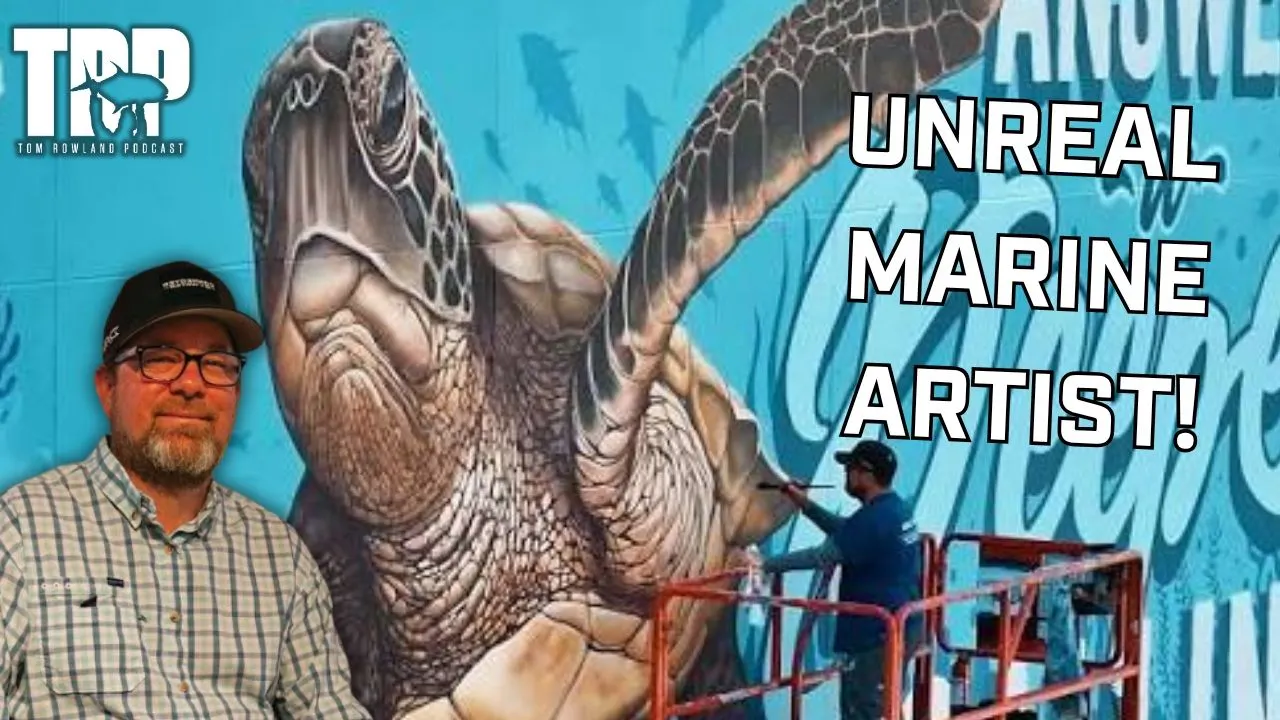
    Dennis Friel | Marine Artist | Ep. 1018

    Tom Rowland Podcast Episode 1018 is a conversation with marine life artist Dennis Friel, host of the Connected by Water podcast, on what it actually takes to paint fish for a living — from the Star brite SeaSafe event and a live-painted mahi, to leaving a 17-year music-business career, to whether AI is the next Napster for working artists, and where he really stands on Florida's shark debate.

  • July 1 · 1 hr 41 min

    David Graham | Boundless Pursuit | Ep. 1017

    On the Tom Rowland Podcast, David Graham of Boundless Pursuit recaps intense international fishing adventures driven by his desire to “overcome” difficult fisheries. Fresh from India, he describes targeting the rare goonch catfish in the Ramganga River near Jim Corbett Park, where tigers and leopards roam and recent attacks underscored the danger; he details guides, bait, heavy tackle, and improvised rock sinkers, and landing two goonch in 10 days. He also revisits his Republic of Congo trip for goliath tigerfish, explaining the complex logistics arranged through lodge owners Mark and Hilly, the harsh realities along the river, and the explosive fight that finally produced a major fish on day eight. Graham discusses conservation, sustainable tourism, planning, and funding trips while working a regular job and raising two daughters.00:00 Welcome And Sponsor00:34 Catching Up After Years01:29 Why India And The Goonch04:36 River Habitat And Dam Impact07:02 Ten Days Two Fish08:13 Finding Guides And Access10:09 Tigers Leopards And Real Danger14:13 Packraft Mission And Pug Marks16:45 Leopard At Camp19:01 Bait Tackle And Rock Weights25:08 Wels Catfish Side Quest28:23 What A Goonch Looks Like31:09 Goonch River Adaptations31:49 Brutal Fights In Rapids32:54 Monster Head Close Up33:26 Can You Go Back35:42 Guides And Planning38:16 Congo Tigerfish Tease40:26 Congo Lodge Connections43:03 VIP Entry Logistics46:43 River Scale And Risks49:45 Wildlife Gone Missing50:36 Tigerfish Mystery And Teeth54:38 Village Life Perspective58:14 Gifts For The Kids01:00:19 KabeKabe Dance Ritual01:02:13 Eighth Day Breakthrough01:05:43 Goliath Power Runs01:06:38 Mist And Bite Window01:07:35 Ferocious Surface Attacks01:08:48 Eighth Day Hookup01:10:52 Landing And Aftermath01:11:46 Bizarre Jaw Anatomy01:13:32 Sustainable Tigerfish Future01:15:49 Congo Logistics And Optics01:21:30 Safety And Risk Limits01:25:24 Finding Fish By Local Names01:28:44 Why He Chases Friction01:34:21 Funding Trips And Sacrifice01:37:50 Wrap Up And Where To Follow

  • June 24 · 54 min

    Ed Emory | Snake River Guide | Ep. 1016

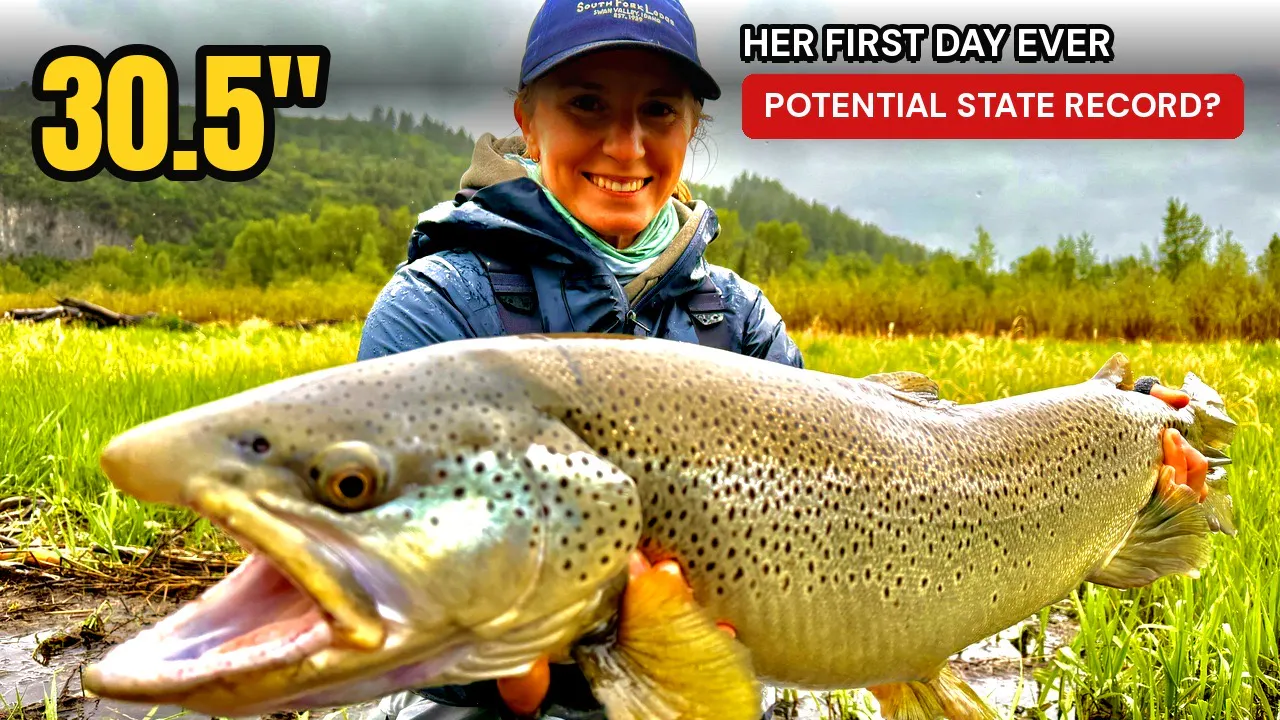
    Ed Emory is a fishing guide on the South Fork of the Snake River in Idaho who guides out of South Fork Lodge. He has guided for 36 seasons and logged about 67,000 guided river miles, which he points out is roughly 2.8 times the circumference of the globe with clients in his boat. He is known for targeting and landing exceptionally large brown trout and for an analytical, psychology-driven approach to guiding and fighting big fish.How big was the brown trout Ed Emory's client caught on the South Fork? The fish measured 30.5 inches, with a girth Ed describes as about as big around as his thigh and a pectoral fin large enough to cover his client's entire hand. It is the largest brown trout he has landed on the South Fork since his 31.2-inch brown in 2011, and it cleared the 30-inch mark that Idaho recognizes for a catch-and-release state record. The fish was caught, measured, photographed, and released on film. Who caught the 30.5-inch brown trout? A client named Caroline Langdale, whom Ed describes as a petite angler from Georgia, on her first-ever day fishing the South Fork. She turkey hunts and had caught saltwater fish such as tarpon and redfish before, and Ed credits that saltwater experience for how she fought and landed the fish, keeping the rod bent at the right angle and sliding the fish sideways into the net rather than trying to lift it. What is Ed Emory's approach to fighting a big trout? Ed treats it like a prize fight. He throws a jab to test what the fish will do, reads its response, and refuses to accelerate the fight, letting the fish tire itself rather than forcing it. He stresses situational awareness, knowing the river bottom, the hazards, and the depth where the fish lives, and keeping big fish in the 10-to-15-foot water they are comfortable in rather than dragging them into deep holes. He says landing big fish is mostly between the ears. Why is the South Fork producing so many big fish this year? Ed's theory is that the population of smaller guardian fish is near a historic low, so a fly reaches the largest trout instead of being intercepted by the many smaller fish that would normally feed first. With fewer fish between the angler and the big ones, anglers are gaining access to trophy browns that usually sit concealed at depth, feeding on the easy food that drifts to them. What is the conservation debate on the South Fork of the Snake River? Idaho Fish and Game has worked to remove rainbow and hybrid trout, including by electroshocking, which was halted when funding ran out, to favor cutthroat. Ed argues the river is no longer a native cutthroat fishery but a wild, naturally reproducing one, since hatchery Snake River fine-spotted cutthroat have passed through the dam from Palisades Reservoir for decades. He favors cutthroat-centric management, such as placing egg boxes with Snake River fine-spotted cutthroat eggs in the river, and letting anglers decide what they keep.

  • June 17 · 1 hr 15 min

    Seafue | Fortnite Streamer Turned Fishing Addict | Ep. 1015

    Tfue was the most-watched Fortnite streamer on the planet. Eleven million Twitch followers. Eleven million YouTube subscribers. Over 1.7 billion views. And in 2023, he walked away from it all. Not because he failed. Because he was done. Now he's running 120 miles offshore in the Gulf chasing swordfish, flats fishing in Indian Rocks Beach, and building one of the fastest-growing fishing channels on YouTube under the name C-Few. I really loved this conversation. Some of the moments that stood out to me: - The way Tfue talks about gaming and fishing as two sides of the same obsession — when he's in, he's ALL in. Whether that's streaming 15 hours a day or going 4-for-5 on swordfish before noon. - His take on what it actually takes to be the best in the world at something — genetics, age, reflexes, mindset — and how a lot of it applies far beyond gaming. - The moment he realized a flats boat was too dangerous for anyone he invited on it, and how that pushed him into bigger water and bigger fish. - How he learned sword fishing almost entirely on his own — YouTube, trial and error, and just going 120 miles out into the Gulf until he figured it out. - His honest answer when I asked if competitive gaming and competitive fishing are comparable. He doesn't sugarcoat it. The answer surprised me. 00:00 Introduction 01:00 From #1 Fortnite Streamer to Fisherman 03:35 What It Takes to Be the Best in the World at Gaming 07:00 How Tfue Fell in Love with Fishing 09:45 The Boat Progression — Simmons Flats Boat to 43-Footer 14:00 Sword Fishing the Gulf — Running 120 Miles Offshore 17:00 Sponsors, Growing C-Few, and Building a Fishing Channel 21:00 The Bahamas, Exumas, and Dream Fish 27:30 Retiring at 28 — What That Actually Looks Like 32:00 Gaming vs. Fishing: Competitive Mindset Breakdown 38:00 Fortnite by the Numbers — The Scale Is Hard to Believe 44:00 Enhanced Games, Adderall in Esports, and Performance 51:00 Skill Ceiling, Genetics, and What Makes a Great Competitor 55:00 AI, Chess, and Cheating at the Highest Levels 1:01:00 Dream Catches, Bluefin Tuna, and What's Next 1:07:00 Golf, Card Counting, Casinos, and Random Life Stuff 1:14:00 Where to Find Tfue — Tfue and C-Few 🔗 Follow Tfue: YouTube (Fishing) → @CFew YouTube (Gaming) → @Tfue 📘 Free Resources: 🎁 Saltwater Knot Guide → https://bit.ly/3UnAeIP 🎙️ Tom Rowland Podcast → https://bit.ly/3O4lgn0 📺 Subscribe for More Unfiltered Conversations → https://www.youtube.com/saltwaterexperience?sub_confirmation=1 📱 Follow the Show: Instagram → https://www.instagram.com/saltwater_experience/ TikTok → https://www.tiktok.com/@saltwaterexperience Facebook → https://www.facebook.com/tvswe #Tfue #CFew #FortniteStreamer #SwordfFishing #OffshoreFishing #FishingYouTube #GamingToFishing #TomRowlandPodcast #SaltwaterExperience #DaytimeSwordfishing #InshoreF ishing #TarponFishing #GulfOfMexico #FishingChannel #Fortnite #StreamerLife #RetiredAt28 #FishingPodcast #BluefinTuna #FloridaFishing

Showing 1–20 of 30 episodes