Skip to content
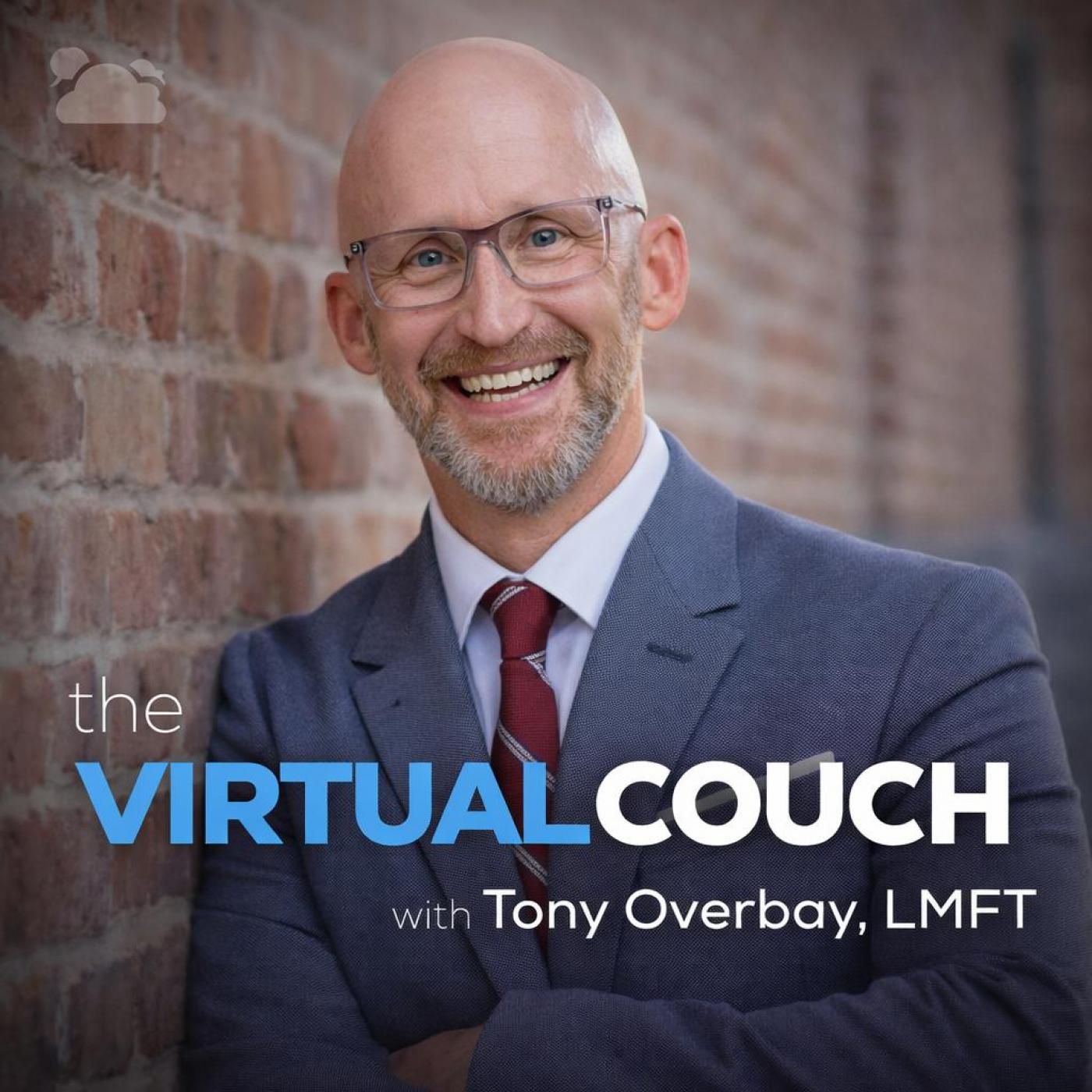
Artwork for The Virtual Couch
Health & FitnessMental HealthEducationSelf-Improvement

The Virtual Couch

Tony Overbay LMFT

The Virtual Couch is a mental health podcast hosted by Tony Overbay, a licensed marriage and family therapist with more than two decades of experience who works with individuals and couples. Through relatable stories, practical psychology, and evidence-based tools, Tony helps listeners better understand relationships, parenting, addiction, emotional maturity, and personal growth, while also supporting those navigating faith crises and deconstruction from high-demand religions. The podcast offers clear strategies to break unhealthy patterns, improve communication, and build a more grounded sense of self while approaching life’s challenges with insight, clarity, and humor.

Play
  • 20 episodes
  • fortnightly
  • Avg 1 hr 2 min
  • English
  • Monday · 1 hr 6 min

    The Unicorn Might Have Rabies: How Anxiety Keeps You "Safe" - Live Q&A

    Anxious-avoidant attachment, emotionally immature in-laws, panic attacks, and what if the unicorn has rabies? Tony tackles his first live Q&A in a year, where you’ll hear answers to these questions and many more. Recorded live with daughter Sydney moderating, Tony takes real questions from real listeners: what happens when you spot narcissistic traits in your spouse's parent before they do, how to stop reacting and start building the pause, and the complete origin story of the anxious-avoidant loop — the pattern he sees in almost every couple who walks into his office. If you keep pursuing while your partner withdraws, this episode names what's actually happening between those two nervous systems. EPISODE HIGHLIGHTS: Understand why handing your spouse the word "narcissist" for their own parent asks them to reinterpret an entire childhood — and what tends to work instead. Move through the four stages of awakening, from "you don't know what you don't know" to unconscious competence. Separate observation from judgment ("she hasn't texted back" vs. "she doesn't care about me") using the pre-pillar of Tony's four pillars of a connected conversation. Meet Jack and Jill: how anxious and avoidant partners find each other, fall into the pursue-withdraw dynamic, and begin to break the loop. Work with your biology during a panic attack — extended exhales, co-regulation, and why being told to "calm down" triggers psychological reactance. Tony Overbay is a licensed marriage and family therapist who has spent more than 20 years — and 15 to 20 couples a week — watching these patterns play out in real time. Want the free Anxious-Avoidant Loop PDF handout Tony reads from in this episode? Email contact@tonyoverbay.com and he'll send it your way, along with his related episode list. Please follow Tony on Instagram @virtual.couch on TikTok @virtualcouch on Facebook https://www.facebook.com/tonyoverbaylmft and on Substack https://thevirtualcouch.substack.com/ You can reach out to Tony through his website tonyoverbay.com or by emailing contact @ tonyoverbay.com

    • Transcript
  • August 14 · 1 hr 7 min

    Taking the Long Way Home: Homer as Your Therapist, The Odyssey as Your Map

    Emotional maturity takes the long way home, and Homer's Odyssey has been quietly saying so for 2,800 years. Underneath Christopher Nolan's new adaptation sits a poem that Tony thinks is one of the best pieces of therapy literature ever written, and almost nobody reads it that way. The monsters aren't the point — they're the muse. Every obstacle Odysseus meets is asking whether he's willing to become somebody different, and if you've been away too long from your sense of self, from the marriage you thought you'd have, from the body you used to trust, from the faith that used to hand you certainty, or from the person you were sure you'd be by now, this one tends to land. In this episode: Meet the Lotus Eaters as experiential avoidance — coping that doesn't start as self-sabotage, it starts because it works, and then it quietly moves the destination Borrow a rule from Tony's ultra-running days, beware of the chair, and notice how many races end beside a space heater rather than on a cliff Tie yourself to the mast with a Ulysses contract, the decision your calm Tuesday afternoon self makes on behalf of your 11 p.m. Friday night self Watch the Cyclops moment show up in a marriage, when "See, I told you so" reaches back and drags a conflict you'd already escaped into your future Sit with David Schnarch's differentiation, and the difference between other-validated and self-validated intimacy Tony Overbay is a licensed marriage and family therapist who has spent over twenty years watching people discover they didn't know what they didn't know. This is part one — part two takes on Schnarch's four points of balance. If the poem stirred something up for you, send it Tony's way and it may end up in the next episode. Please follow Tony on Instagram @virtual.couch on Tiktok @virtualcouch on Facebook https://www.facebook.com/tonyoverbaylmft and on Substack https://thevirtualcouch.substack.com/ You can reach out to Tony through his website tonyoverbay.com or by emailing contact @ tonyoverbay.com

    • Transcript
  • August 6 · 1 hr 31 min

    “Killed Them All, Of Course": The Mind of Robert Durst w/Attorney Kate

    Content warning: This episode includes discussion of homicide, dismemberment, and domestic violence. Listener discretion advised. Robert Durst confessed on a hot mic — but the real story is watching a man confabulate in real time, for decades, and nearly get away with it. In the first-ever Murder on the Couch guest episode, Tony is joined by his friend Kate, a civil attorney and lifelong true crime devotee, to break down the case behind HBO's The Jinx. Kate presents the case — the 1982 disappearance of Kathie Durst, the murder of Susan Berman, the Morris Black acquittal that still defies belief — while Tony reacts in real time with the psychology underneath it all: confabulation, childhood adaptations, and what actually happens when someone is finally confronted with a lie they can't tap-dance out of. In this episode, you'll discover: Why memory is "adorable and fallible" — and how the legal system's hierarchy of evidence accounts for exactly that How Durst's defense team built reasonable doubt around an admitted dismemberment (and why the missing evidence mattered more than the conceded facts) The difference between psychopathy and sociopathy — nature vs. nurture, charm vs. rage, and why nonviolent sociopaths walk among us What a masterful cross-examination and an eight-hour couples intensive have in common: staying with someone's discomfort until the adaptation collapses Why breakthroughs so often have a "shelf life" — and what it takes for real change to stick Tony Overbay is a licensed marriage and family therapist who has spent decades watching people confabulate, deflect, and defend in real time — just usually not on the witness stand. If you've ever watched someone rewrite reality right in front of you and wondered how they believe their own story, this episode is for you. Please follow Tony on Instagram @virtual.couch on Tiktok @virtualcouch on Facebook https://www.facebook.com/tonyoverbaylmft and on Substack https://thevirtualcouch.substack.com/ You can reach out to Tony through his website tonyoverbay.com or by emailing contact @ tonyoverbay.com Content warning: This episode includes discussion of homicide, dismemberment, and domestic violence. Listener discretion advised. Robert Durst confessed on a hot mic — but the real story is watching a man confabulate in real time, for decades, and nearly get away with it. In the first-ever Murder on the Couch guest episode, Tony is joined by his friend Kate, a civil attorney and lifelong true crime devotee, to break down the case behind HBO's The Jinx. Kate presents the case — the 1982 disappearance of Kathie Durst, the murder of Susan Berman, the Morris Black acquittal that still defies belief — while Tony reacts in real time with the psychology underneath it all: confabulation, childhood adaptations, and what actually happens when someone is finally confronted with a lie they can't tap-dance out of. In this episode, you'll discover: Why memory is "adorable and fallible" — and how the legal system's hierarchy of evidence accounts for exactly that How Durst's defense team built reasonable doubt around an admitted dismemberment (and why the missing evidence mattered more than the conceded facts) The difference between psychopathy and sociopathy — nature vs. nurture, charm vs. rage, and why nonviolent sociopaths walk among us What a masterful cross-examination and an eight-hour couples intensive have in common: staying with someone's discomfort until the adaptation collapses Why breakthroughs so often have a "shelf life" — and what it takes for real change to stick Tony Overbay is a licensed marriage and family therapist who has spent decades watching people confabulate, deflect, and defend in real time — just usually not on the witness stand. If you've ever watched someone rewrite reality right in front of you and wondered how they believe their own story, this episode is for you. Please follow Tony on Instagram @virtual.couch on Tiktok @virtualcouch on Facebook https://www.facebook.com/tonyoverbaylmft and on Substack https://thevirtualcouch.substack.com/ You can reach out to Tony through his website tonyoverbay.com or by emailing contact @ tonyoverbay.com

    • Transcript
  • July 14 · 1 hr 9 min

    What If You're Not the Problem You Think You Are in Your Relationship?

    What if the reason difficult conversations feel so impossible isn’t because you’re too sensitive, too anxious, or bad at communicating? What if you’ve spent years trying to find the perfect words—only to have your questions dismissed, your feelings turned against you, or the conversation somehow become about everything you did wrong? In this crossover episode of The Virtual Couch and Waking Up to Narcissism, Tony explores what has to happen before you can truly say the difficult thing. He breaks down the difference between ordinary fear and a nervous system that has learned through experience that vulnerability may come at a cost. You’ll learn why explaining yourself more doesn’t always lead to being understood, how emotionally mature and immature people respond differently to difficult conversations, and why your partner’s defensiveness doesn't automatically mean you communicated poorly. Tony also explores the importance of knowing who you are, learning to tolerate discomfort, recognizing when you’re trying to manage someone else’s emotions, and speaking from integrity without making your peace dependent on the other person’s response. This episode isn’t about deciding that everything is someone else’s fault. It’s about becoming honest enough to recognize what belongs to you, what doesn’t, and whether the problem is really who you’ve believed yourself to be—or the relationship pattern you’ve been trying desperately to survive. You'll learn how to: - Recognize the catastrophic "simulations" your brain runs — and why it files imagined disasters right next to real memories - Spot the difference between managing your partner's emotions and actually allowing them their own experience - Say the true thing from a grounded place instead of a needy, validation-seeking one - Understand why the leap is the last step, not the first — and why the "okayness" on the other side is something you build before you jump Drawing on more than two decades as a licensed marriage and family therapist, Tony walks through what actually gets you across the chasm — and it's quieter, slower, and stranger than "just be braver." Part two lands soon — send your questions and situations to contact@tonyoverbay.com and Tony will work them into the next episode. 00:00 Crossover Episode Intro 01:02 Bungee Jumping Story 05:36 Differentiation Explained 09:09 Codependency Fried Clams 12:20 Mature vs Immature Dynamics 17:03 Fine Text Example 22:50 Constructing Your Crucible 25:25 Therapy Gridlock Scripts 27:44 Attack Surface Vulnerability 33:27 Cliff Edge Say It 35:27 Leap of Faith Metaphor 38:41 Why Just Jump Fails 40:53 Advice and Validation Trap 44:47 Fear Is a Story 46:52 Emotional Immaturity Dynamics 49:20 Brain Prediction Machine 58:16 Grounding Before the Leap 01:03:29 Growth Edge vs Safety Data 01:08:13 Wrap Up and Next Steps Please follow Tony on Instagram @virtual.couch, on TikTok @virtualcouch, on Facebook https://www.facebook.com/tonyoverbaylmft, and on Substack https://thevirtualcouch.substack.com/ You can reach out to Tony through his website tonyoverbay.com or by emailing contact @ tonyoverbay.com

    • Transcript
  • June 23 · 1 hr 7 min

    What Happens When You Stop Needing to Be Right - Certainty, Curiosity, and Emotional Immaturity

    Why does certainty feel safer than curiosity—and why does that quietly run so many of our relationships? In this Q&A crossover, Tony answers three listener questions that sound completely unrelated—a spouse who looked through a phone without asking, someone who keeps pulling conversations back to themselves, and why confident, certain voices dominate public life—then reveals the single thread connecting all three: how hard it is to tolerate uncertainty, and why curiosity (not certainty) is where growth actually lives. If you've ever felt the pull to fill in the blanks, win the argument, or get reassurance right now, this one will make you feel seen. In this episode, you'll: Reframe the phone fight using Tony's four pillars of a connected conversation—because it's almost never about the phone. Understand why your brain treats not knowing as a threat (it's a "don't get killed device") and how to stay present in the gray. Build a well inside yourself instead of chasing validation in every conversation—Tony's "emotionally dehydrated" metaphor for growing up with conditional self-worth. Tell the difference between confidence rooted in security and performative certainty that needs an audience. Trade self-monitoring for genuine curiosity using implicit memory and ACT—because you're not broken, you're human. Tony Overbay is a licensed marriage and family therapist with more than two decades of clinical experience helping people become curious rather than defensive. If the noise of everyone being so sure has left you exhausted, press play—there's room here to not know, and to grow from it. 00:00 Q&A Episode Setup 01:34 Three Questions Theme 05:18 Why Curiosity Matters 07:25 Brain Craves Certainty 09:03 Ambiguity Feels Threatening 10:49 Stress Kills Curiosity 13:14 Cognitive Flexibility 14:38 Certainty Gets Rewarded 17:39 Phone Privacy Conflicts 22:40 Four Pillars Framework 26:49 Validation Seeking Habits 28:37 Desert and Thirst Metaphor 31:28 Validation Seeking Pattern 32:04 Curiosity Over Self-Monitoring 34:05 Boundaries With Unavailable People 35:30 You Are Not Broken 36:19 ACT Mindset Shift 37:48 Language Learning Analogy 40:24 From Self-Criticism to Acceptance 42:06 Certainty vs Wisdom 48:27 Insecurity and Emotional Immaturity 50:43 Narcissism as Defense 56:27 Healthy Ego vs Defensive Ego 01:02:27 Leadership and Group Dynamics 01:05:21 Choose Curiosity and Close Please follow Tony on Instagram @virtual.couch on Tiktok @virtualcouch on Facebook https://www.facebook.com/tonyoverbaylmft and on Substack https://thevirtualcouch.substack.com/ You can reach out to Tony through his website tonyoverbay.com or by emailing contact @ tonyoverbay.com

    • Transcript
  • June 12 · 1 hr 44 min

    What You Don't Know You Don't Know About Meditation (Hint: You Can’t Stop Thoughts or Clear Your Mind!)

    Mindfulness isn't about emptying your mind or finally feeling calm—and believing it was is probably why you quit. Your emotions fire before your thinking brain ever catches up, which means most of your reactions—the defensiveness, the cravings, the snap judgments—are already in motion before you "decide" anything. In this conversation, Tony unpacks the neuroscience behind that gap and the genuinely doable practice that helps you notice your patterns sooner, build a pause, and respond to your life instead of just reacting to it. In this episode, you'll: Discover why you "feel before you think"—the low road and high road your brain takes, and why emotions fire roughly two and a half times faster than thoughts Learn to build the pause that turns automatic reactions (yes, including the fourth Oreo) into actual choices Untangle the real difference between meditation and mindfulness—and why the practice has roots in everything from Buddhist tradition to Christian contemplative prayer, no conversion required Understand why silence can feel so unbearable that people will choose a mild electric shock over sitting alone with their thoughts—and what that reveals about emotional avoidance Strengthen the "runway" between your internal smoke alarm and your inner fire chief using sleep, breath, and a practice you can start in the next sixty seconds Tony Overbay is a licensed marriage and family therapist and host of The Virtual Couch, drawing on his clinical work and four-plus years of daily practice to make mindfulness feel approachable instead of intimidating. Stay through the end for a short guided practice you can take with you—and remember, you're not failing when your mind wanders. You're not broken. You're human. Start with one breath today. 00:00 One Year Post Fusion 01:02 Trusting Physical Therapy 02:56 From Woo Woo to Mindfulness 05:05 No Magic Beans 10:03 The Pause Changes Everything 14:12 Stick Not Snake Brain 19:09 Oreos and Autopilot 22:07 Mindfulness and Maturity 28:56 Meditation Practice Tiers 30:31 My Daily Practice Origin 34:46 Meditation vs Mindfulness 35:28 Meditation Roots East West 38:02 Skepticism and Ownership 40:20 Meditation Styles Overview 42:34 Mindfulness Misconceptions 45:47 Mindfulness in Daily Life 48:33 Mindfulness History and MBSR 52:10 What Mindfulness Is Not 55:33 Brainwaves and Frequencies 58:47 Entrainment and Binaural Beats 01:02:52 Natural Sounds and Safety 01:05:15 Apophenia Pattern Seeking 01:06:41 Why Silence Feels Hard 01:10:22 Stimulation Dopamine Avoidance 01:11:46 Back to Beats and Apps 01:12:08 Meditation Apps I Use 01:12:26 Monroe Institute Hemi Sync 01:13:51 Gateway Process Hype 01:15:01 Binaural Beats Reality Check 01:16:07 Breathwork Science Basics 01:17:38 Vagus Nerve and HRV 01:19:33 Nasal vs Mouth Breathing 01:22:20 Diaphragmatic Breathing 01:23:43 Neurons Wire Together 01:25:01 Startle Response Runway 01:27:54 Lengthening the Runway 01:30:32 What We Learned Today 01:32:46 Guided Mindfulness Practice 01:38:19 This Too Shall Pass 01:39:54 You Are Not Broken 01:43:04 Closing Breath and Goodbye Please follow Tony on Instagram @virtual.couch on Tiktok @virtualcouch on Facebook https://www.facebook.com/tonyoverbaylmft and on Substack https://thevirtualcouch.substack.com/ You can reach out to Tony through his website tonyoverbay.com or by emailing contact @ tonyoverbay.com

    • Transcript
  • June 4 · 1 hr

    Murder on the Couch: When "I Did It For You" Is a Lie

    A heads-up before you press play: this is a bonus crossover from my true crime podcast, Murder on the Couch, dropping into your Virtual Couch / Waking Up to Narcissism feed. It's heavier than usual and opens with a disturbing familicide case that I don't sugarcoat, so if that's not where you are right now, it's completely okay to sit this one out and come back when you're ready. If you stay, I use the case to get at the things we talk about all the time—shame, compartmentalization, the altruistic defense, emotional immaturity, and differentiation—because the behavior is horrific, but the psychology underneath it is deeply human. John List killed his wife, his mother, and his three children—then walked away convinced God would understand. Murder on the Couch is back. Licensed therapist Tony Overbay reopens one of true crime's most chilling family annihilation cases, but not for the manhunt or the famous 18 years List spent hiding in plain sight as "Bob Clark." Tony sits with the question that actually keeps him up at night: how does a devout, rule-following Sunday school teacher reach a place where murder becomes, in his own mind, the most loving thing he could do? If you've ever performed "fine" while something was quietly falling apart inside you, this one lands closer to home than you'd expect. In this episode: Untangle guilt ("I did something bad") from shame ("I am bad")—and why shame left in the dark only grows heavier Spot the "altruistic defense": how control and harm get repackaged as love, devotion, and protection See how rigidity, compartmentalization, and a performed self can hollow a person out long before any crisis hits Learn the ACT distinction between the conceptualized self (the story) and the observing self (the awareness)—and why List had no one home to catch him when the story collapsed Drawing on acceptance and commitment therapy, David Schnarch's work on differentiation, and Richard Rohr's reframe of shame, Tony brings 600-plus episodes of clinical insight to the cases that won't let him go. Shame grows in concealment and shrinks in connection. And Tony's looking for a co-host—if a case has gotten under your skin and you know why, email contact@tonyoverbay.com and pitch it. 00:00 Bonus Episode Setup 00:21 Murder on the Couch Returns 02:56 Content Warning and Themes 05:53 John List Case Opens 08:46 Show Relaunch and Co-Host Invite 12:40 John List Background and Unraveling 17:31 Compartmentalization Explained 19:53 Shame Versus Guilt 24:21 ACT Defusion and Healing 25:47 Shame Architecture of John List 28:21 Altruistic Defense and Covert Narcissism 30:49 Narcissistic Injury 31:26 Altruistic Defense 35:32 Love Versus Control 36:29 Rigidity Explained 38:08 Rules And Fragility 42:06 Eighteen Years Hidden 45:40 Conceptualized Self 48:35 Excavating The Self 52:56 Why This Case Haunts 54:31 Faith And Performance 58:07 Tell The Truth 59:41 Closing And Co-Hosts Please follow Tony on Instagram @virtual.couch on Tiktok @virtualcouch on Facebook https://www.facebook.com/tonyoverbaylmft and on Substack https://thevirtualcouch.substack.com/ You can reach out to Tony through his website tonyoverbay.com or by emailing contact @ tonyoverbay.com

    • Transcript
  • May 15 · 56 min

    The Validation Paradox: Why Reassurance Can Feel Lonely

    Your partner said all the right things. So why do you feel MORE alone than before you opened up? Welcome to positive invalidation. That strange ache—being reassured into invisibility—has a name. It's what happens when "you're so good at your job, don't even worry about it" lands like a door quietly closing on what you actually feel. In this episode, Tony Overbay unpacks the science of validation, the paradox underneath it, and why the partner who soothes you fastest may be regulating their own nervous system, not seeing yours. Through the story of Archie and Veronica, this episode explores: Why positive invalidation stings more than the obvious kind—and how to spot it inside your own well-meaning reassurances Dr. Marsha Linehan's "kernel of truth" definition of validation, plus Tony's four pillars of a connected conversation David Schnarch's distinction between other-validated and self-validated intimacy—and why needing validation is the real trap The co-regulation research (including the famous fMRI hand-holding study) that explains why your partner's bad day becomes your emergency The four stages of competence, from "unconscious incompetence" to actually living it—and why stage two is where most people quit therapy HALT, upstream versus downstream work, and a surprising tangent into energy landscapes and Buddhist non-self As a licensed marriage and family therapist who's spent decades guiding couples back toward each other, Tony weaves together DBT, ACT, and Schnarch's differentiation work to answer one question: can you give validation as a gift without needing it back? If something here resonates, share it with someone who needs to hear that they're not broken—they're human. Please follow Tony on Instagram @virtual.couch on Tiktok @virtualcouch on Facebook https://www.facebook.com/tonyoverbaylmft and on Substack https://thevirtualcouch.substack.com/ You can reach out to Tony through his website tonyoverbay.com or by emailing contact @ tonyoverbay.com 00:00 Welcome and Disclaimer 02:28 Meet Archie and Veronica 03:07 A Compliment That Hurts 05:08 Positive Invalidation Explained 06:35 Where Invalidation Comes From 09:10 Science of Validation and DBT 09:49 Four Pillars of Connection 12:31 Validation Research and Polarization 14:52 Schnarch and Differentiation 18:05 Self-Validated Intimacy 19:08 Non-Self and Interdependence 22:58 Co-Regulation and Fusion 26:08 When Comfort Is for You 28:11 Co-Regulation as Hope 28:57 When Growth Triggers Chaos 30:03 Energy Landscapes Explained 32:01 Biology of Pushback 35:02 Validation Paradox 38:12 Self-Validated Intimacy 41:12 Building Self-Validation 46:20 Veronica and Archie Revisited 47:09 Upstream vs Downstream 51:37 Four Stages of Change 55:00 Key Takeaways and Wrap

    • Transcript
  • April 30 · 1 hr 7 min

    It's Not About the Dishes - Trojan Horses Hiding in Every Marriage

    The dishwasher fight you've had a thousand times? Or is it about the laundry, where you’re going to eat, making the bed, and cleaning the kitchen? The truth is, it’s never really been about the dishwasher (or laundry, eating, making the bed, etc). Couples therapist Tony Overbay walks through Jack and Jill, a 25-year marriage stuck in a low-grade war over how to load the dishes, and reveals what those endless arguments are actually carrying: a need to be seen, an effort that's gone unregistered, and two adaptive children from two completely different childhood homes still running the show. If you've ever been mid-fight and thought, "How are we doing this again?"—this episode finally names the pattern. In this episode you'll: Recognize the Trojan horse argument—how a fight about tongs, rinse agents, and which rack secretly carries the vulnerable conversation you haven't been able to say out loud Spot the four signs you're stuck in one: repetition without resolution, the running tab of unacknowledged effort, kitchen sinking (John Gottman's term), and the hollow win that doesn't feel like a win See how your adaptive child (Terry Real) brought the rules of your childhood home into your marriage—and why your nervous system can't tell the difference between a predator and your spouse walking in with "that look" Leave the waiting room—where both partners want connection but each waits for the other to move first—through differentiation (David Schnarch), not conditional effort Try three guided exercises—open the horse, flip the ledger, and one unilateral move—designed for one person, no partner participation required Drawing on nearly 20 years of couples therapy, his training in Emotionally Focused Therapy, and his four pillars of a connected conversation, Tony reframes the most exhausting argument in your marriage as a map—not a verdict. You're not broken. You're human. And the argument you keep having is pointing somewhere useful. The Magnetic Marriage course is getting a complete overhaul that builds in everything covered here. Get on the waitlist at tonyoverbay.com/magnetic. Please follow Tony on Instagram @virtual.couch on Tiktok @virtualcouch on Facebook https://www.facebook.com/tonyoverbaylmft and on Substack https://thevirtualcouch.substack.com/ You can reach out to Tony through his website tonyoverbay.com or by emailing contact @ tonyoverbay.com 00:00 Welcome and Setup 01:03 Dishwasher War Story 01:57 How Dishes Become Proxy 04:17 Inside the Dishwasher Debate 07:45 Jack Stops Helping 10:08 Childhood Dish Rules 13:38 Seen and Validated 15:16 Trojan Horse Concept 18:53 Four Trojan Horse Signs 23:26 Not a Relationship Crisis 25:05 Why Vulnerability Feels Dangerous 26:17 Adaptive Child Patterns 30:52 Nervous System Triggers 32:18 Amygdala Hijack Mode 33:44 Learning New Skills 34:55 The Waiting Room Trap 39:46 Conditional Effort Stalemate 42:05 Trojan Horse Reframe 44:27 Differentiation Explained 47:29 Meaning We Assign 51:37 Impermanence and Hope 53:54 Reaching Without Scorekeeping 56:58 Dishwasher Reimagined 01:00:36 Tuesday Night Practice 01:02:44 Closing Encouragement

    • Transcript
  • April 16 · 1 hr

    You Can’t Cram for the Test of Life - Dr. Mark Redford on Flossing, Faking It, and Why Habits Never Lie

    You lie to your dentist. You lie in therapy. And here's the uncomfortable truth — the patterns you think you're hiding are hiding nothing. Tony Overbay, LMFT, sits down with friend and dentist Dr. Mark Redford to unpack one of the most fascinating overlaps between dentistry and human psychology: impression management — and why you simply cannot cram for the test of life. From the dental chair to the therapy couch, the habits you actually practice tell a story no amount of performance can cover up. If you've ever "prepared" for a dentist appointment by flossing for three days straight, this episode is your mirror. In this episode, you'll explore: Why your dentist can spot that you don't floss before you even open your mouth — and what that reveals about the limits of impression management in every area of your life The concept of "cramming for the test of life" and why emotional growth, empathy, and trust can't be memorized the night before How co-regulation works in the dental chair (and in your closest relationships) — and why calm presence is more powerful than joining someone in their chaos The "post-cleaning motivation shelf life" — why that I'm a new person feeling lasts about two weeks, whether you're leaving the dentist or your first therapy session The difference between unconscious incompetence and conscious incompetence — and why knowing you're avoiding something is actually meaningful progress The hidden burnout drivers in helping professions, why pathological kindness can work against you, and what it looks like when patients (or clients) need someone to blame Tony Overbay is a Licensed Marriage and Family Therapist with over 20 years of experience helping individuals and couples move from stuck and confused to grounded and growing. If Dr. Redford's calm, co-regulating presence sounds like exactly what your nervous system needs in a dentist, you can reach him at info@redfordsmiles.com, follow him on Instagram @redfordsmiles, or visit redfordsmiles.com. And while you're at it — his wife Amy offers cooking classes for all ages, from cookie decorating to high-end culinary experiences. Find her on Instagram @onecutecookiekitchen or at onecutecookie.net. Whether you're finally ready to be honest with your dentist — or with yourself — tonyoverbay.com is a great place to start. If you're a man who wants to build real emotional strength (not just talk about it), the Men's Emotional Architects group is open. Reach out at contact@tonyoverbay.com to learn more. The updated Magnetic Marriage course is also coming soon — get on the waitlist at tonyoverbay.com/magnetic. Please follow Tony on Instagram @virtual.couch on TikTok @virtualcouch on Facebook https://www.facebook.com/tonyoverbaylmft and on Substack https://thevirtualcouch.substack.com/ You can reach out to Tony through his website tonyoverbay.com or by emailing contact @ tonyoverbay.com

    • Transcript
  • March 31 · 31 min

    They Said All the Right Things (and Nothing Changed): The Anxious-Avoidant Trap w/Mackie Overbay

    Why do the same conversations keep "resolving" without anything actually changing? Tony and his daughter Mackie unpack what they call "mouth sounds"—when someone says all the right words, uses the right tone, even touches your hand, and you walk away thinking this time it's different… but it never is. This episode dives deep into the anxious-avoidant attachment cycle and why your nervous system chose your partner long before your conscious mind caught up. Tony walks through the Anxious/Avoidant attachment loop while Mackie checks boxes in real time—and then shares the raw, hard-won lessons from her own recent breakup in her twenties that every person navigating heartbreak needs to hear. In this episode, you'll discover: Why "mouth sounds" feel so convincing—and how both partners are projecting completely different realities onto the same conversation The anxious-avoidant origin story: how your childhood wired you to find the familiar disguised as the opposite Why consideration may be the highest form of love—and what it actually looks like in practice Mackie's breakup playbook: feel it instead of numbing it, no feeling is ever final, there's no correct timeline for healing, and being alone beats settling The hardest truth about leaving: sometimes choosing yourself means handing the other person the gift of getting to play the victim—and learning to be okay with that Tony Overbay, LMFT, draws from over 20 years of couples therapy and 1,500+ couples to explain the patterns most people can't see until it's almost too late. Whether you're stuck in a cycle, fresh out of a breakup, or watching someone you love go through it—this one's for you. Head to tonyoverbay.com/magnetic to join the wait list for the Magnetic Marriage course and start building the tools nobody handed you off the factory floor. 00:00 When Talks Repeat 01:11 Meet Tony and Mouth Sounds 02:21 Projection Behind Promises 03:34 Anxious Avoidant Framework 05:02 Mackey Breakup Lessons 06:04 Course Plug and Tools 09:58 Mackey Joins the Show 11:34 Dating After Breakup 13:04 Why Words Hook Us 15:05 Jack and Jill Origins 21:10 How They Attract 23:02 When Emotions Trigger Withdrawal 24:09 Differentiation and Change 30:05 Consideration as Love 31:32 Four Pillars and Victim Mode 33:15 Anxious Avoidant Patterns 33:55 Feeling Considered Matters 34:28 Inappropriate Outside Connection 36:09 Boundaries Trust Walk Away 37:36 Training What You Tolerate 40:46 Rapid Fire Lessons Begin 41:17 Feel It Dont Numb 45:00 Trust After Betrayal 48:54 No Feeling Is Final 50:13 Impermanence Changes Everything 53:00 No Timeline For Healing 57:48 Leaving And Being Villain 01:00:42 Wrap Up And Where To Find Us Please follow Tony on Instagram @virtual.couch on Tiktok @virtualcouch on Facebook https://www.facebook.com/tonyoverbaylmft and on Substack https://thevirtualcouch.substack.com/ You can reach out to Tony through his website tonyoverbay.com or by emailing contact @ tonyoverbay.com Contact Tony at contact@tonyoverbay.com to learn more about his Emotional Architects men's group. To learn more about Tony's upcoming re-release of the Magnetic Marriage course visit https://www.tonyoverbay.com/magnetic. Sign up for his newsletter through the link at https://linktr.ee/virtualcouch Available NOW: Tony's "Magnetic Marriage Mini-Course" is only $25. https://magneticmarriage.mykajabi.com/magnetic-marriage-mini-course

    • Transcript
  • March 7 · 54 min

    You're Not Bad. You're Carrying the Problem: Shame, Triggers, and Healing

    "I was triggered" vs. "I chose"—what if both are true, and neither gets to the real problem? When a listener sent Tony a viral video challenging people to replace "I was triggered" with "I chose," it sparked a deeper conversation about accountability, nervous system science, and the shame-based frameworks many of us inherited long before we ever heard the word "trigger." This episode holds two truths at once: yes, adults are responsible for their behavior—and the initial nervous system activation that precedes a choice is real, automatic, and not a moral failure. Episode highlights: Why the word "trigger" can feel like a life sentence to trauma survivors—and an identity assignment to the people who hurt them Rick Hanson's "first and second dart" framework and the four stages of change from unconscious incompetence to unconscious competence The critical distinction between activation and action—and why that space is where all growth lives How Richard Rohr's reframe of sin as brokenness needing healing (not judgment) connects directly to why shame never produces lasting change How shame gets installed in childhood before a four-year-old's brain can separate "I did something bad" from "I am bad"—and how ACT defusion offers a way out 00:00 Welcome and Course Plug 01:08 Listener Email and The Bet 03:33 Nick Pollard Trigger Reframe 04:57 Agreeing With Nuance 08:58 Trigger Word Cultural Weight 13:21 First and Second Darts 15:08 Four Stages of Change 21:21 Agency vs Nervous System 24:00 Pathologically Kind and Shame 26:46 Language Shapes Experience 27:18 Sin Versus Healing 28:36 Rohr Reframes Brokenness 31:08 Shame Keeps Us Stuck 31:57 How Shame Gets Installed 37:03 ACT And Defusion 40:13 Radical Acceptance Lens 41:52 Original Sin Culture Myth 46:43 Kingdom Of God Within 49:18 What We Learned Today 51:37 Closing Reflections Tony Overbay is a licensed marriage and family therapist, betrayal trauma certified, and host of The Virtual Couch, Waking Up to Narcissism, and Love, ADHD podcasts. If the idea of change through agency—not shame—resonates with you, explore Tony's Magnetic Marriage course at tonyoverbay.com/magnetic Please follow Tony on Instagram @virtual.couch on Tiktok @virtualcouch on Facebook https://www.facebook.com/tonyoverbaylmft and on Substack https://thevirtualcouch.substack.com/ You can reach out to Tony through his website tonyoverbay.com or by emailing contact @ tonyoverbay.com

    • Transcript
  • March 3 · 52 min

    Why "Me Too" Feels Like "Not You": Stop Fixing, Start Staying

    You said, "That sounds really hard," so why is your partner still upset? It's called the Empathy Dash — that moment you touch your partner's pain just long enough to check a box, then sprint toward solutions, silver linings, or your own experience. In over 1,500 couples sessions, Tony has watched this pattern quietly erode trust while both partners swear they're trying. This episode unpacks why your empathy isn't landing, what your nervous system is actually doing when you rush to fix, and a deceptively simple practice that changes everything. In this episode, you'll discover: Why "me too" on the inside lands like "not you" on the outside — and the intent-vs-impact gap where relationships slowly erode Stealing Thunder: the real-time couples session moment that perfectly captures how sharing gets hijacked before it even lands How your Adaptive Child — the survival strategy that kept you safe growing up — is now sabotaging your closest relationship The neuroscience of co-regulation and why your calm presence does more than your best advice ever could The 3-Before-1 Rule: a concrete practice for staying present when every instinct says fix, solve, or flee Tony Overbay, LMFT, draws from over two decades of couples therapy, Terry Real's relational framework, and Dan Siegel's interpersonal neurobiology to redefine what empathy actually looks like in practice. If you've ever left a conversation thinking "I said all the right things" while your partner felt completely unseen — this one's for you. You're not broken. You just don't know what you don't know yet. 00:00 Welcome and Where to Follow 01:15 Retreat Story Mental Load Misfire 04:56 Intent vs Impact in Bids 06:08 Attack Surface and Pathological Kindness 09:37 Sequencing the Conversation 12:26 Stealing Thunder Named 17:02 Catching the Thunder Grab 18:17 Drive By Empathy Metaphor 21:03 Empathy vs Sympathy Basics 22:36 Why Optimism Can Dismiss 24:02 What Empathy Actually Does 26:58 Real Life Fixing Examples 28:39 Spotting the Empathy Dash 29:30 Why We Do It 30:12 Adaptive Child Origins 31:39 Fixer vs Avoider Examples 33:49 Co-Regulation Explained 34:44 Two Ways to Respond 37:16 Four Pillars Framework 38:11 Questions Before Comments 38:58 Curiosity in Action 42:19 Three Before One Rule 45:40 When Effort Feels Unseen 47:35 Handling Your Triggers 49:27 Closing Encouragement Get on the waitlist today for Tony's upcoming Magnetic Marriage live course! Head to https://tonyoverbay.com/magnetic Contact Tony at contact@tonyoverbay.com to learn more about his Emotional Architects men's group.

    • Transcript
  • February 17 · 52 min

    Validation, Co-regulation, and Emotional Immaturity (with a Hint of Spirituality) w/Angela De Hoyos, ALC

    What happens when your greatest strengths—your empathy, your willingness to self-reflect, your sensitivity—become the very tools someone uses to convince you everything is your fault? In this crossover episode with therapist Angela De Hoyos, ALC, Tony explores why validation feels like survival when you were raised in an emotionally unpredictable home. You learned that love could vanish without warning—so you became hypervigilant, endlessly working to secure a connection that was never yours to earn. Now you may find yourself starving for validation from the one person who can't hold it steadily. You can learn more about Angela by visiting her website https://www.findingbalancecounseling.com/ and subscribe to her podcast “Finding Balance with Mental Health and Spirituality” here https://www.findingbalancecounseling.com/podcast EPISODE HIGHLIGHTS: Understand the origins of validation: why we learn we exist through others' responses—and how that wiring gets exploited Discover why "pathologically kind" people attract emotionally immature partners—and keep trying harder when it doesn't work Recognize the trap of "if it's my fault, I can fix it"—and why that belief keeps you chasing validation instead of building self-trust Learn the crucial difference between validation and agreement—you can acknowledge someone's experience without abandoning your own Build a 90% solid sense of self so you stop outsourcing your worth to people who use it against you 00:00 Introduction and Episode Overview 01:25 Guest Introduction: Angela de Hoyos 03:16 The Magnetic Marriage Course Pitch 06:20 Understanding Validation and Emotional Immaturity 08:15 Therapeutic Insights and Parenting Dynamics 20:46 The Concept of Co-Regulation 28:40 Exploring the Concept of Existence and Value 29:05 The Story of Jill: Unpredictable Childhood 30:33 Understanding Validation and Recognition 33:50 The Role of Self-Validation 40:59 Spiritual Perspectives on Validation 51:25 Final Thoughts and Reflections Get on the waitlist today for Tony's upcoming Magnetic Marriage live course! Head to https://tonyoverbay.com/magnetic If you are interested in joining Tony's private Facebook group for women in narcissistic or emotionally immature relationships of any type, please reach out to him at contact@tonyoverbay.com or through the form on the website, HTTP://www.tonyoverbay.com If you are a man interested in joining Tony's "Emotional Architects" group to learn how to better navigate your relationship with a narcissistic or emotionally immature partner or learn how to become more emotionally mature yourself, please reach out to Tony at contact@tonyoverbay.com or through the form on the website, HTTP:www.tonyoverbay.com

    • Transcript
  • February 2 · 58 min

    Duty vs. Desire: The Hidden War Inside Your Marriage

    Why does your spouse get to want things while you're drowning in responsibility? That resentment you feel watching your partner pursue hobbies while you manage everything isn't petty—it reveals what Tony identifies as one of the "fundamental wounds" in modern marriages: the split between duty and desire. Through the story of Sarah and Michael—a couple weeks from divorce—Tony explores how one partner can become a pure, exhausting obligation while the other escapes into hollow pleasures. Both are starving for what the other has, but neither can see it. You'll discover why the "serpent's trick" convinces us that what we want and what we should do are enemies when they were always meant to work together. In this episode, you'll learn: Why feeling like "a machine that keeps everyone running" signals you've lost connection to your own desires—and why reclaiming them is actually part of your duty as a parent and partner The difference between discipline that crushes your soul and discipline that creates freedom (hint: it depends on whether it's aligned with your actual values or just "socially compliant goals") How asking "what can I do to help?" often puts the mental load right back on your overwhelmed spouse. Why Michael's gaming and biking felt hollow even though Sarah assumed he was "living his best life." The concept of impermanence—and why accepting that your beliefs will evolve is liberating, not threatening Tony Overbay, LMFT, draws from over 20 years of couples therapy and 1,500+ couples to share the exact framework that helped Sarah and Michael move from combat to connection. Ready to stop the cycle? Join the Magnetic Marriage waitlist at tonyoverbay.com/magnetic and learn what you don't know you don't know about reconnecting with your partner. 00:00 Introduction and Host Background 00:35 Common Relationship Challenges 01:53 The Magnetic Marriage Program 02:59 Today's Episode: Overwhelmed by Responsibilities 03:37 Meet Sarah and Michael: A Struggling Couple 03:57 Sarah's Perspective: Duty Over Desire 13:12 Michael's Perspective: Desire Over Duty 17:49 The Core Wound: Duty vs. Desire 21:50 Connecting to Universal Archetypes 28:10 Embracing Change and Growth 28:26 Embracing Impermanence 28:45 Healing Through Change 29:34 The Paradox of Certainty 29:55 Sarah and Michael's Journey 32:20 The Garden of Eden Metaphor 33:07 The Serpent's Trick 34:40 Modern Examples of Duty vs. Desire 38:00 The Role of Discipline 40:42 Integrating Duty and Desire 48:42 Personal Reflections on Duty 49:53 Values vs. Socially Compliant Goals 54:05 Sarah and Michael's Progress 56:24 Conclusion and Call to Action Get on the waitlist today for Tony's upcoming Magnetic Marriage live course! Head to https://tonyoverbay.com/magnetic Contact Tony at contact@tonyoverbay.com to learn more about his Emotional Architects men's group.

    • Transcript
  • January 13 · 31 min

    The Power (and Struggle) of Honest Communication in Relationships - Tony Answers Your Questions

    Tony addresses a listener's question about feeling anxious due to a communication lapse with her husband. He delves deep into the nuances of relationship dynamics, emphasizing the importance of honest and continuous communication. He shares insights on how patterns in behavior reflect true priorities, touches on the significance of co-regulation, and explores how small, seemingly insignificant moments can significantly impact intimacy and connection over time. Whether dealing with newlywed issues or long-term relationship challenges, Tony provides practical advice on building trust and emotional intimacy. Submit your questions through his website, http://tonyoverbay.com 00:00 Introduction and Episode Overview 00:43 How to Submit Your Questions 01:42 First Question: Communication in Marriage 03:14 Understanding Emotional Reactions 09:09 The Importance of Co-Regulation 15:00 Selective Competence in Relationships 24:52 Intimacy and Sexuality in Marriage 30:10 Conclusion and Final Thoughts Contact Tony at contact@tonyoverbay.com to learn more about his Emotional Architects men's group. And visit https://julie-dejesus.com/cruise to learn more about Tony and his friend Julie De Jesus's "I See You Living" cruise, a 5-night Western Caribbean Cruise from January 24-29, 2026 aboard the Royal Caribbean Cruise Line. To learn more about Tony's upcoming re-release of the Magnetic Marriage course, his Pathback Recovery course, and more, sign up for his newsletter through the link at https://linktr.ee/virtualcouch Available NOW: Tony's "Magnetic Marriage Mini-Course" is only $25. https://magneticmarriage.mykajabi.com/magnetic-marriage-mini-course

    • Transcript
  • Dec 31, 2025 · 1 hr 13 min

    Your Goals Aren't Yours—That's Why They Don't Stick (ACT for Lasting Change)

    What if your New Year's resolutions keep failing because they were never really yours to begin with? Most goals we set aren't chosen—they're inherited from magazines, social media, parents, or that version of ourselves we think we're supposed to become. That's why they don't stick. In this episode, Tony shares his decades-long "pushup obsession" and how Acceptance and Commitment Therapy (ACT) finally broke the cycle—not through more discipline, but by discovering what actually mattered to him. What you'll learn: - Why "socially compliant goals" sabotage your motivation before you even start - The crucial difference between values (your compass) and goals (checkboxes)—and why confusing them keeps you stuck - How to use lead measures instead of lag measures to build sustainable change - The "Passengers on the Bus" technique for moving forward even when self-doubt is loud - A simple 5-step "Get Back on the Saddle" plan for when you inevitably wobble With over 20 years of clinical experience, Tony explains why you're not broken—you're human—and offers a framework for building a life that actually feels like yours. Ready to stop beating yourself up and start driving toward what matters? This might be the last resolution episode you'll ever need. 00:00 Introduction: Are Your Goals Really Yours? 00:44 Meet Tony Overbay: Your Guide to Self-Improvement 01:57 The New Year's Resolution Dilemma 04:03 The Pushup Story: A Lesson in Values 12:34 Understanding Socially Compliant Goals 15:04 Experiential Avoidance: The Trap of Avoiding Discomfort 20:26 Lag Measures vs. Lead Measures: The Key to Achieving Goals 27:28 Values vs. Goals: The Core of Sustainable Change 38:52 Perceived Value vs. Perceived Capability 40:57 Understanding Perceived Capability and Value 41:46 Corporate America and Disengagement 42:50 New Year's Resolutions and Motivation 46:18 Acceptance and Commitment Therapy (ACT) vs. Cognitive Behavioral Therapy (CBT) 54:47 The Power of ACT in Therapy 01:00:58 Practical Steps for Getting Back on Track 01:06:05 Embracing Emotions and Moving Forward 01:08:01 Conclusion: Driving the Bus Towards What Matters Contact Tony at contact@tonyoverbay.com to learn more about his Emotional Architects men's group. And visit https://julie-dejesus.com/cruise to learn more about Tony and his friend Julie De Jesus's "I See You Living" cruise, a 5-night Western Caribbean Cruise from January 24-29, 2026 aboard the Royal Caribbean Cruise Line. To learn more about Tony's upcoming re-release of the Magnetic Marriage course, his Pathback Recovery course, and more, sign up for his newsletter through the link at https://linktr.ee/virtualcouch Available NOW: Tony's "Magnetic Marriage Mini-Course" is only $25. https://magneticmarriage.mykajabi.com/magnetic-marriage-mini-course You can learn more about Tony's pornography recovery program, The Path Back, by visiting http://pathbackrecovery.com

    • Transcript
  • Dec 11, 2025 · 1 hr 4 min

    The Family Butterfly Effect: How Your Uncle Ray Changed Everything—And How You Can Change It Back

    Every family has an origin story—and it's not always the one told at holidays. In this episode, Tony explores the fascinating concept of the butterfly effect and how it applies to family systems. From a scientist's obsession with Gila monster saliva that led to Ozempic, to a wrong turn that ignited World War I, small moments can create massive ripples. But what happens when the butterfly in your family isn't an event—it's a person? Through the story of "Uncle Ray," Tony unpacks how one emotionally overwhelmed parent can set patterns that echo for decades, and how family roles—the helper, the peacekeeper, the fixer, the scapegoat—get assigned long before we're even aware of them. You'll learn about the patterns of emotional immaturity (black-and-white thinking, mind reading, magical thinking, and more) and how they show up in everyday family dynamics. Most importantly, Tony shares the hopeful truth: the butterfly effect works both ways. One person's dysfunction can ripple through generations—but so can one person's healing. If you've ever wondered how to break cycles in your own family or show up differently this holiday season, this episode is for you. 00:00 Introduction: Family Dynamics and Roles 01:05 The Butterfly Effect in Families 03:02 Crossover Episode: Emotional Immaturity and Family Systems 04:36 The Butterfly Effect: Scientific Examples 10:02 The Butterfly Effect in Family Systems 14:33 Uncle Ray: The Catalyst of Chaos 23:25 Pathological Kindness: Janet's Role 27:39 Emotional Immaturity: Patterns and Consequences 33:10 Black and White Thinking 33:40 Mind Reading and Assumed Intent 34:28 Difficulty with Accountability 35:39 Emotional Reasoning 36:35 External Validation Dependence 37:58 Magical Thinking 39:03 Managing Other People's Emotions 40:40 The Butterfly Effect in Family Dynamics 41:15 Curiosity and Emotional Maturity 43:28 Reconnecting with Uncle Dave 51:30 The Impact of Family Systems 55:55 The Cost of Emotional Immaturity 58:25 Breaking the Cycle 58:45 Setting Boundaries and Responding Differently 01:02:38 Hope and Creating Positive Ripples Contact Tony at contact@tonyoverbay.com to learn more about his Emotional Architects men's group. And visit https://julie-dejesus.com/cruise to learn more about Tony and his friend Julie De Jesus's "I See You Living" cruise, a 5-night Western Caribbean Cruise from January 24-29, 2026 aboard the Royal Caribbean Cruise Line. To learn more about Tony's upcoming re-release of the Magnetic Marriage course, his Pathback Recovery course, and more, sign up for his newsletter through the link at https://linktr.ee/virtualcouch Available NOW: Tony's "Magnetic Marriage Mini-Course" is only $25. https://magneticmarriage.mykajabi.com/magnetic-marriage-mini-course You can learn more about Tony's pornography recovery program, The Path Back, by visiting http://pathbackrecovery.com

    • Transcript
  • Nov 21, 2025 · 48 min

    Stop Managing Your Partner's Emotions: How One Couple Broke Free From the Anxious-Avoidant Trap

    Have you ever found yourself calculating what to say when your partner is upset—choosing words to manage their emotions rather than speaking your truth? In this episode, Tony shares the breakthrough story of a couple navigating financial betrayal and the exhausting cycle of emotional management that kept them stuck. Through Mark and Sarah's journey from reactive patterns to authentic connection, you'll discover the five elements of differentiated intimacy and why trying to make your partner "okay" with uncomfortable truths actually prevents genuine healing. Tony breaks down how anxious and avoidant attachment styles create complementary patterns of pursuit and withdrawal, and why both strategies are really about the same thing: controlling the other person's emotional state rather than being present to it. BONUS SECTION: Tony responds to overwhelming listener feedback from his recent co-regulation series by explaining the neuroscience behind Mark and Sarah's breakthrough. Learn about Ed Tronick's famous "Still Face Experiment," how childhood co-regulation failures create adult attachment wounds, and why healing requires nervous system-level change—not just better communication skills. Perfect for you if: You're exhausted from walking on eggshells or constantly pursuing connection You recognize yourself in anxious or avoidant attachment patterns You're recovering from betrayal (financial, emotional, or otherwise) in your relationship You want to understand why the same conflicts keep repeating You're curious about the neuroscience of relationship healing Topics covered: The difference between managing emotions and being present to them Five elements of differentiated intimacy in action How to hold incompatible truths without relationship collapse The anxious-avoidant trap explained through nervous system dynamics Co-regulation: from childhood patterns to adult healing Why secure attachment can be earned at any age 00:00 Introduction and Episode Overview 00:37 Imagining Relationship Scenarios 02:56 Understanding Emotional Management 03:56 Exploring Co-Regulation in Relationships 07:33 Case Study: Mark and Sarah's Financial Infidelity 13:54 Breakthrough Session: Honest Communication 21:45 The Real Work of Differentiation 23:22 Mark and Sarah's Emotional Breakthrough 24:38 Key Lessons from the Breakthrough 25:34 Managing Emotions vs. Genuine Intimacy 28:06 Questions for Self-Reflection 29:29 Understanding Co-Regulation 30:53 The Still Face Experiment 33:36 Mark and Sarah's Attachment Styles 35:54 The Anxious-Avoidant Trap 37:11 Breakthrough in Therapy 40:38 The Role of Co-Regulation in Healing 41:39 Neuroplasticity and Secure Attachment 45:48 Final Thoughts and Resources Contact Tony at contact@tonyoverbay.com to learn more about his Emotional Architects men's group. And visit https://julie-dejesus.com/cruise to learn more about Tony and his friend Julie De Jesus's "I See You Living" cruise, a 5-night Western Caribbean Cruise from January 24-29, 2026 aboard the Royal Caribbean Cruise Line. To learn more about Tony's upcoming re-release of the Magnetic Marriage course, his Pathback Recovery course, and more, sign up for his newsletter through the link at https://linktr.ee/virtualcouch Available NOW: Tony's "Magnetic Marriage Mini-Course" is only $25. https://magneticmarriage.mykajabi.com/magnetic-marriage-mini-course You can learn more about Tony's cornography recovery program, The Path Back, by visiting http://pathbackrecovery.com

    • Transcript
  • Nov 4, 2025 · 1 hr 12 min

    Why You Fell for Your Partner (and Why You Keep Fighting Them) — Part 2

    In Part 2 of Why You Fell for Your Partner (and Why You Keep Fighting Them), Tony Overbay, LMFT, continues the story of Jack and Jill — a fictional couple built from hundreds of real couples he’s worked with in therapy. But this time, the story shifts. What happens when children grow up with emotional safety, repair, and consistency? What does love look like when it’s modeled, not managed — when connection feels safe instead of chaotic? Tony explores how secure attachment is formed through co-regulation, how parents teach emotional safety through presence instead of fixing, and how those lessons echo into adulthood — shaping how we love, argue, and connect. Through rich storytelling and neuroscience-backed insights, you’ll learn: • What healthy co-regulation sounds like in real life • Why conflict in secure relationships feels safe, not scary • How consistent emotional repair rewires the brain • Why secure partners are drawn to emotional availability, not intensity • How “earned secure attachment” and therapy can break old patterns This episode isn’t just a look at what healthy relationships sound like — it’s a roadmap for how to build one. Because your past might explain your patterns, but it doesn’t have to define your future. 00:00 Introduction and Recap of Part One 01:23 Understanding Attachment Styles 02:25 Exploring Jill's Childhood 03:16 Exploring Jack's Childhood 04:58 Healthy Emotional Regulation 06:44 Jill's Healthy Emotional Development 21:10 Jack's Healthy Emotional Development 31:28 Jack and Jill's Relationship Dynamics 35:04 Healthy Communication in Relationships 36:06 The Importance of Secure Attachment 37:08 Navigating Stress and Boundaries 40:06 Conflict Resolution and Compromise 41:43 Building a Secure Relationship 52:55 The Role of Childhood in Adult Relationships 01:02:29 The Power of Therapy and Self-Work 01:08:52 Final Thoughts on Relationship Growth Contact Tony at contact@tonyoverbay.com to learn more about his Emotional Architects men's group. And visit https://julie-dejesus.com/cruise to learn more about Tony and his friend Julie De Jesus's "I See You Living" cruise, a 5-night Western Caribbean Cruise from January 24-29, 2026 aboard the Royal Caribbean Cruise Line. To learn more about Tony's upcoming re-release of the Magnetic Marriage course, his Pathback Recovery course, and more, sign up for his newsletter through the link at https://linktr.ee/virtualcouch Available NOW: Tony's "Magnetic Marriage Mini-Course" is only $25. https://magneticmarriage.mykajabi.com/magnetic-marriage-mini-course You can learn more about Tony's cornography recovery program, The Path Back, by visiting http://pathbackrecovery.com

    • Transcript
Showing 1–20 of 20 episodes