Skip to content
Artwork for The Viktor Wilt Show
NewsComedy

The Viktor Wilt Show

Viktor Wilt

The Viktor Wilt Show daily recap! If you miss the show weekdays from 6A-10A MST, you've come to the right place.

Play
  • 31 episodes
  • Avg 35 min
  • English
Counted on this page — what you have heard stays on this device, so it is not something the list can be paged by.
  • Friday · 39 min

    Traffic School - Grave Robbing, Guillotines And Inflatable Anime Women - 08/28/2026

    This episode of Traffic School begins with what sounds less like a legitimate radio program and more like two men standing outside a post office trying to resurrect the concept of 19th-century bounty hunting. Wanted posters come up almost immediately, along with the horrifying realization that Speaker 1 apparently considers himself an “outstanding young man,” despite the conversation rapidly turning toward suspicious behavior, mysterious electricity usage, heat sensors, and a house glowing so brightly that the government apparently needs to be informed. The conversation then takes a hard left into neighborhood fire trucks, elderly neighbors, Arizona vacations, and an absolutely bizarre story that is teased but never fully revealed because apparently even Traffic School has standards somewhere deep beneath the basement floor. Then, suddenly, it is time for actual law questions. The first major legal crisis involves a supposed dine-and-dash, except the alleged criminal mastermind insists he actually paid. During a birthday dinner for Peaches, the restaurant payment system apparently displayed multiple tickets, the correct bill was selected, the payment was processed, the waitress confirmed everything was fine, and everyone left. Later, however, the crew discovered that another group had apparently departed without paying, while a friend had paid the original bill. The payment itself initially showed as pending, creating a spectacular bureaucratic nightmare in which one person had apparently paid, another person had apparently paid, and everyone was now wondering who had technically stolen dinner from whom. The discussion spirals into whether dine-and-dash can become theft, whether intentionally entering a business with the plan to steal food could constitute burglary, and whether eating more than $1,000 worth of food would transform the situation into grand theft. The answer, delivered with the confidence of a man who has already been accused of crimes he didn't commit, is essentially: Carl, stop committing felonies. The episode then produces an incredible flashback involving Pizza Hut and a police captain who generously offered to buy pizza for everyone after a day at the gun range. The captain paid for his own meal and the lieutenant's, then apparently vanished into the sunset while everyone else assumed the bill had been handled. The waitress eventually stopped the remaining group and revealed the horrifying truth: the captain had not actually paid for everybody. He had merely paid for himself and one other person, leaving the sergeant to discover that he had accidentally inherited an entire restaurant bill. It becomes a masterclass in the ancient law-enforcement technique of saying, “The other guy said he was paying.” Then comes an actual public-service announcement: school is back in session. Drivers are urged to watch the yellow flashing lights because ignoring them may result in the sudden appearance of red and blue flashing lights. The hosts discuss people flying down Alameda Road, children riding bikes and skateboards, kids on electric scooters, and the general nightmare of trying to navigate roads while children are simultaneously excited about returning to school and apparently operating under the assumption that traffic laws are more of a suggestion. The conversation emphasizes defensive driving, paying attention, adding time to your commute, and remembering that Idaho is still in the “100 deadliest days of driving.” Then the show returns to the crucial matter of parking your car facing the wrong direction. Apparently this is generally governed by city ordinance, leading to a story about Burley enforcing the rule with enough enthusiasm to become a recurring character in the episode. Speaker 1 recalls parking backward in front of his own house, only to have an officer come to his door and inform him that his vehicle was illegally positioned. Unfortunately, the story gets worse because the car also contained a garbage bag full of beer cans from band practice. Although the beer cans were apparently leftovers from the previous night and the driver wasn't intoxicated when confronted, the visual of a police officer approaching a car parked illegally backward in front of a house containing a suspicious bag of beer cans is objectively spectacular. Somehow, he received only a warning. That leads into the bizarre discussion of seat-belt enforcement, including the claim that a seat belt violation is generally a secondary offense but that Burley apparently operates according to its own mysterious gravitational field. The hosts joke about officers finding additional reasons to initiate a traffic stop, including broken taillights and speeding. A story about an 80-mph freeway on-ramp then gets dragged into the conversation, with the horrifying realization that admitting “I'm used to getting on the freeway at 80” may not be the optimal strategy when speaking to law enforcement. The segment eventually clarifies the distinction between primary and secondary offenses and whether passengers or drivers can be cited when children aren't properly buckled. And then everything gets weird. The hosts suddenly ask whether guillotines are legal to possess. Nobody seems entirely certain, but the working theory is essentially that owning one may be legal while using it is where the problems begin. This leads directly into a story about a man who allegedly drove from California to Washington, D.C. with a gigantic guillotine mounted on the back of a flatbed truck. The group becomes increasingly fascinated by the logistical nightmare of transporting a giant head-chopping apparatus across the entire country without being stopped, especially because the guillotine apparently towers over the truck and might have presented a potential height violation. The conclusion is that even if the authorities weren't concerned about the historical implications of the device, somebody should probably have noticed the enormous guillotine sticking into the sky. The episode then receives a call from Deborah, who asks whether it is legal to have a hangman's noose hanging from the ceiling of your house. This question somehow leads to the revelation that Deborah owns multiple coffins built by her deceased husband, keeps swords and axes around the house, used to have a guillotine in her living room, got married on Halloween inside a funeral home while everyone was dressed in black, and apparently considers this all perfectly normal. The hosts attempt to process the fact that this is a real person's actual home while Deborah calmly explains that she and her husband simply loved Halloween. The conversation eventually becomes an accidental architectural tour of what may be the most intimidating house in Pocatello. That naturally leads to human remains. Another caller asks about transporting a casket or skeleton in a privately owned vehicle. The discussion distinguishes between decorative or 3D-printed skeletons and actual human remains, before the hosts discuss Idaho's law concerning human remains taken from graves or burial sites. Lieutenant Crane explains that, as of July 1, Idaho made it a felony to own, sell, or lease human remains taken from a grave, and that advertising them for sale is prohibited as well. The discussion then somehow turns to Facebook Marketplace and the horrifying possibility that someone might actually be browsing local listings for human bones. The skeleton conversation gets even darker when the hosts discuss excavators who have accidentally uncovered human remains in the region. In those cases, Idaho State University was reportedly brought in to help de...

    • Transcript
  • Thursday · 31 min

    NHOMAM - We Asked ChatGPT If Bobby Bones Has A Secret Radio Burner Account - 08/27/2026

    Peaches is approaching the final afternoon show of his 20s and apparently believes the only responsible way to enter his 30s is by leaving town for Southern California while mentally preparing to board an aircraft like a man being transported to the moon against his will. The episode immediately establishes that we are dealing with a man whose brain has become a loose collection of tabs playing simultaneously, as the conversation ricochets from California vacations and Tupac lore to gambling, wedding food poisoning, childhood vomiting incidents, Facebook political arguments, MySpace, high-school romantic devastation, and the impending arrival of something known throughout the episode as Peach’s Manifesto. Things take a sharp turn into gastrointestinal warfare when the hosts discuss a couple who allegedly paid $30,000 for wedding catering only for the couple and roughly 60 of their 112 guests to become violently ill with norovirus. The suspected culprit? Deviled eggs, because apparently nothing says “eternal commitment” quite like spending tens of thousands of dollars to exchange vows before immediately entering a medically enforced horizontal position. The story becomes even more horrifying when they discuss the discovery that kitchen workers apparently weren't using hand soap. From there, Peaches dredges up a childhood memory in which he vomited all over a bedroom door and received not sympathy, concern, or a gentle glass of water, but the parental equivalent of a performance review: Why didn't you use the toilet? His childhood digestive crisis somehow becomes evidence in the ongoing case against his family’s customer-service department. Then comes the political Reddit courtroom. Peaches explains how an old political argument on his personal Facebook page apparently followed him onto a completely unrelated K-Bear post, where somebody decided that using Reddit was sufficient evidence to classify him and Viktor as “raging liberals.” The hosts then attempt to map the political geography of Facebook, Reddit, X, and Threads like two exhausted cartographers trying to draw borders on a burning mattress. Eventually, they reach the conclusion that social media has become progressively worse and begin fantasizing about the return of MySpace—specifically the old version, complete with Top Friends, profile customization, and enough interpersonal warfare to destroy friendships before breakfast. The MySpace discussion unlocks one of the most aggressively embarrassing chapters of Peaches’ personal history: his high-school crush Emily and her Top Three Snapchat friend, Zach, a water polo player. Peaches recalls essentially turning himself into a one-man athletic experiment because he wanted to defeat Zach for the romantic affection of a girl, culminating in a promposal involving a cereal box and a basketball-themed message featuring Peaches dunking alongside professional basketball players. It was, by his own admission, painfully cringe. The emotional damage becomes substantially worse when he later discovered Emily and Zach had hooked up, leaving Peaches to process his teenage heartbreak through volleyball spikes presumably aimed directly at the metaphysical ghost of his rival. Emily is now married, apparently travels extensively, has tattoos, and her husband Riley looks vaguely like Peaches, which Peaches interprets not as evidence that humanity contains millions of people with similar facial structures, but as an opportunity to verbally declare victory over a man who has probably never heard of this podcast. And then, looming over the entire episode like a poorly written political thriller, comes Peach’s Manifesto. The hosts repeatedly tease its impending release until the phrase begins to sound less like a heartfelt birthday social-media caption and more like Peaches is about to emerge from a bunker wearing an Andre the Giant singlet and announce the dissolution of the United States. In reality, Peaches explains that the “manifesto” is essentially a long, emotional social-media caption about making amends with people from his past. Unfortunately, because the audience has apparently been trained to interpret every sentence on this show as evidence in a criminal investigation, Viktor immediately imagines the comments section filling with jokes, while listeners who don't understand the show's dynamic may wonder why Peaches is publicly threatening to chop people down. The episode then introduces an absolutely unnecessary secondary storyline involving an inappropriate birthday gift: an inflatable blue anime woman. The gift was intentionally chosen because it was ridiculous, and Peaches immediately begins contemplating its future as a regift to Bryson’s older brother. Somehow, the object becomes symbolic of the entire episode: a bizarre physical manifestation of two radio hosts who cannot be trusted to behave normally around a birthday, a microphone, or an online comment section. The contrast is particularly spectacular because Peaches is simultaneously talking about pouring his heart out in a deeply personal manifesto while being surrounded by people actively encouraging the comments section to behave like a pack of raccoons with access to Wi-Fi. Next, the show wanders into Grand Theft Auto 6 territory, Netflix, YouTube, copyright concerns, and an increasingly elaborate accusation that Viktor somehow committed a dine-and-dash the night before. Except he didn't. He paid. The problem is that the payment apparently remained pending, leading to an absurd fictional reconstruction in which the hosts imagine themselves fleeing a restaurant while a waitress discovers twenty minutes later that the bill wasn't paid. This is immediately followed by a conspiracy theory in which the waitress may have somehow pocketed the money, despite the hosts having essentially no evidence whatsoever. The entire thing becomes a perfect demonstration of the show's recurring problem: a normal event occurs, and within approximately 45 seconds they have constructed an alternate universe in which everybody is potentially involved in a criminal conspiracy. Then comes Peaches’ flight anxiety, which is apparently a recurring internal disaster movie. He explains that he has been saving a prescribed emergency anxiety medication for the flight to California and jokes that he simply collects mysterious pills from the mean streets of Pocatello. His old anxiety involved obsessing over every conceivable detail, including the weather, the boarding process, and the possibility that something would go wrong. He then discovers the horrifying irony of priority boarding: he can get onto the plane earlier, which means he gets to spend more time sitting inside the plane. This is presented as a benefit by the airline, while Peaches correctly identifies it as an elaborate psychological torture mechanism. He also complains about absurd carry-on fees and the cost of flights, leading to a spontaneous investigation into Viktor’s potential trip to Phoenix for his daughter’s wedding. The wedding discussion reveals that Viktor’s daughter is planning a small, intimate wedding with no plus-ones, which means Becca apparently won't be attending and Viktor may be traveling solo. Naturally, this immediately becomes another potential family conflict despite everyone involved being fully grown adults. Peaches insists that adults should be capable of being in the same room without immediately deploying the ceremonial CHOP! CHOP!—a recurring joke that has now somehow transformed Peaches into a fictional professional wrestler whose primary conflict-resolution strategy is physically chopping anyone who i...

    • Transcript
  • Wednesday · 15 min

    NHOMAM - The Manifesto Of Peaches: A Disturbing Reflection - 08/26/2026

    This episode of The Noon Hour of Madness and Mayhem begins with Peaches apparently deciding that the only appropriate way to handle a midlife crisis is to simultaneously sell his possessions, stage his apartment like a soulless luxury hotel listing, write an enormous philosophical autobiography about his summer, listen to sad music while doing it, and somehow turn Facebook Marketplace into his personal digital archaeological dig. Peaches has apparently entered his “I must explain my existence to the internet” era, complete with a reflective essay that begins with the energy of a man staring dramatically out a rain-covered window while a piano plays in the background. Meanwhile, the rest of the show immediately subjects this emotional literary masterpiece to the ancient and sacred law of TLDR. The gang discusses Facebook’s absurd character limit, attention spans, the supposed three-second window needed to hook someone, and the possibility of turning Peaches’ essay into a dramatic televised reading where someone in a suit solemnly announces, “Peaches did this.” The entire emotional journey is then abruptly murdered by Facebook Marketplace. And Facebook Marketplace is not merely a website in this episode. It is a portal. A cursed dimensional doorway into the strangest objects ever owned by mankind. One person gets bland paintings, a salt lamp, a vacuum and an acoustic guitar. The other gets dinosaur lamps, bizarre toilets apparently detonated by military-grade plumbing explosives, cosmetology mannequins with creepy wig-covered heads, leather trench coats, pendulums and other artifacts that look like they were removed from the basement of a haunted Victorian orphanage. The Marketplace algorithm has apparently decided that these people do not deserve normal household goods. It wants them to see the weirdest garbage Idaho has to offer. The discussion of driving a pickup truck to Pocatello just to retrieve two books somehow evolves into an existential debate about gasoline costs, lifted trucks, masculinity, and the immortal declaration that Peaches himself is essentially a lifted truck because apparently walking into someone is equivalent to getting hit by a semi. Then comes the trench coat. A completely ordinary $50 black trench coat becomes the foundation for a horrifying alternate reality in which Peaches goes wandering around the Idaho Falls Greenbelt at night wearing a trench coat, gray fedora and possibly playing the Twilight Zone theme while looking like the world's least competent noir villain. Within seconds, the show has created a scenario in which a local radio DJ could potentially become the subject of a news report about a trench-coat-wearing flasher terrorizing the Greenbelt. This is also where the show remembers that there are rabid bats around Idaho Falls and Rigby, which is a particularly unfortunate development for people who enjoy taking nighttime walks. The discussion of rabies quickly becomes horrifying because bat bites can be so tiny that someone might not even realize they've been bitten before the biological nightmare begins. This leads to memories of bats flying directly into people's heads, bats at Craters of the Moon, Bigfoot jump scares, mysterious roadside silhouettes and a black Bigfoot cutout that apparently exists solely to make unsuspecting pedestrians believe a ten-foot woodland cryptid has emerged from the darkness. The Greenbelt then becomes its own ecosystem of questionable smells and nocturnal creatures. A group of people occupying the entire trail is compared to mole people emerging from a sewer because apparently they smelled so terrible that the only logical explanation was subterranean human civilization. This spirals into a lengthy discussion about the lingering smell of cigarettes and cigars, the horrifying experience of putting on yesterday's smoke-soaked shirt and suddenly realizing you smell like you've been chain-smoking behind a casino since 1974. Former smokers confess that they have experienced the phenomenon firsthand, while memories of the old 105 The Hawk studio lead to the realization that indoor smoking once apparently turned entire buildings into giant ashtrays. The episode then briefly establishes that cigarettes are not merely something you smoke; they are a fragrance subscription service that remains embedded in your clothing long after the cigarette itself has been extinguished. But the episode's descent into animal-related insanity is where things truly leave the earthly plane. After discussing a violent donkey that allegedly barged into a van and beat the occupants, Peaches discovers stories about animals being mistreated by humans, including a disturbing incident involving geese and another involving a kid at a zoo chasing a bird with a stick after apparently getting into an enclosure. The show's moral outrage is immediate, spectacular and increasingly unhinged. The hosts discuss what kind of parents allow their children to behave like tiny zoo-based supervillains, before the conversation predictably escalates into increasingly ridiculous fantasies involving Big Bird, axes, animal enclosures and revenge delivered through aggressively costumed bird-based justice. At this point the program is no longer discussing animal cruelty. It is effectively building a cinematic universe where radio personalities dress as giant birds and hunt down misbehaving children. Finally, the discussion lands on the horrifying reality of being a theme-park mascot. Peaches recalls working at Knott's Berry Farm in heavy clothing while dealing with Southern California heat and the absolutely disgusting possibility of falling into the filthy water near the log ride. The conversation explores mascot height requirements, claustrophobia, heat, sweat, terrifying costumes and the psychological damage of having to inhabit a giant cartoon character while children stare at you. An Easter Bunny costume is revealed to have induced near-terminal claustrophobia, and the possibility of putting someone into a Snoopy costume quickly becomes a nightmare scenario involving crying children, aggressive mascots and a radio personality charging uphill while dressed as a beloved cartoon animal. By the end of the episode, Peaches has gone from writing a heartfelt reflection on his life to browsing creepy Marketplace mannequins, potentially stalking the Greenbelt in a trench coat, worrying about rabies, smelling suspicious pedestrians, judging cigarette smokers, defending geese, plotting bird-based vengeance and contemplating the existential horror of mascot life. This is not a podcast episode so much as a neurological event.

    • Transcript
  • #415
    Wednesday · 53 min

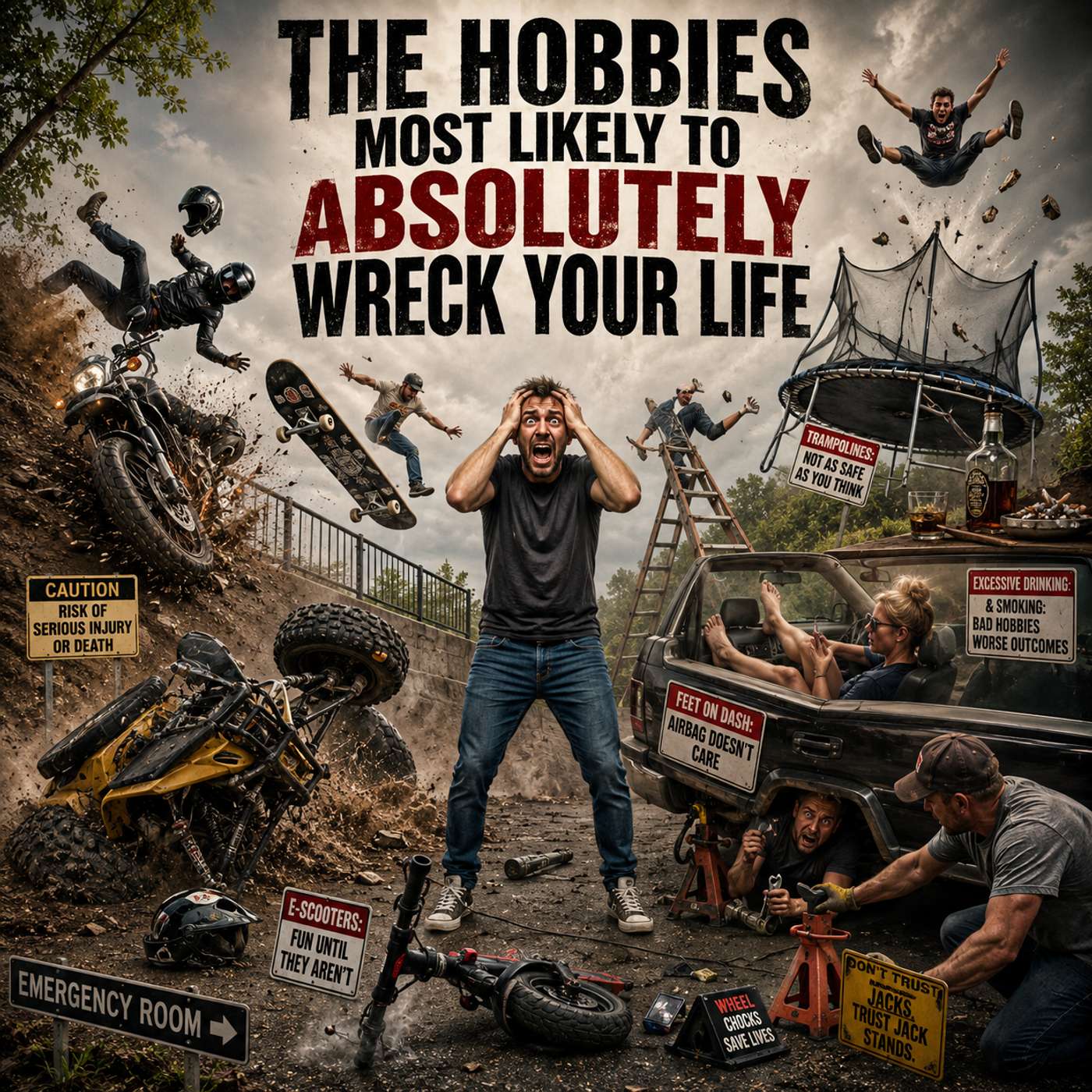
    #0415 - The Hobbies Most Likely To Absolutely Wreck Your Life - 08/26/2026

    This episode of the Viktor Wilt Show begins with the profound realization that Wednesday is, in fact, not Thursday, which immediately establishes the emotional and spiritual condition of everyone involved: exhausted, confused, and desperately trying to survive until the weekend. Viktor talks about the upcoming farmer's market appearance, where he’ll be collecting donations for the Idaho Food Bank while also giving away tickets to the Museum of Idaho, the Idaho Falls Zoo, and Yellowstone Bear World. Then, like a man who has been given access to the internet but absolutely should not have been, he launches into the upcoming Grand Theft Auto 6 extended look, Rockstar Games’ apology over leaked footage, and the possibility that the leaked footage might have somehow been part of an elaborate marketing conspiracy. Naturally, the conversation briefly evolves into the possibility that the entire GTA universe is secretly real and that someone involved with the game could actually be typing everything from a basement. The show then takes a horrifying detour into the world of hobbies that doctors, paramedics, firefighters, and medical professionals apparently want humanity to stop doing immediately. Motorcycles are placed directly into the danger zone, followed by ATVs, skateboarding, trampolines, feet-on-the-dashboard passenger behavior, e-scooters, climbing ladders, and the deeply questionable decision to crawl underneath a vehicle that is being held up by nothing more than optimism. The trampoline discussion becomes particularly cursed when stories emerge involving braces, missing teeth, and medical professionals who apparently see trampolines as retirement-funding mechanisms. The overall lesson is simple: apparently every recreational activity humans have invented is secretly waiting for an opportunity to turn your afternoon into a trip to the emergency room. The episode then swerves hard into celebrity mortality and the strange phenomenon of universally beloved famous people. The discussion of Dolly Parton becomes unexpectedly emotional as Viktor reflects on his mother and the way Dolly reminded him of her because both were remembered as exceptionally kind, caring, and beloved people. What begins as a discussion about celebrity reputations turns into a surprisingly heartfelt reflection on what it means to leave this planet with people genuinely grieving because they loved you rather than because they merely recognized your name. The conversation then spirals into a bizarre unofficial ranking of famous people who seem almost impossible to dislike, including David Attenborough, Michael J. Fox, Christopher Lloyd, Weird Al Yankovic, Keanu Reeves, Carol Burnett, Ian McKellen, and Danny DeVito. This naturally leads to the discovery that Becca apparently has not watched Back to the Future, resulting in Viktor announcing plans to subject her to an enormous cinematic education involving the Back to the Future trilogy, Star Wars, and various other nerd-related cultural homework assignments. Then the show finds the kind of news story that seems like somebody generated it after falling asleep with their forehead on a keyboard: a man from California is reportedly arrested near the U.S. Capitol with a full-sized guillotine sitting in the bed of his pickup truck. The sheer logistical question becomes almost as entertaining as the alleged incident itself. How does somebody drive a guillotine across the country and apparently make it all the way to Washington, D.C. before anyone finally says, “Hey, buddy, what's with the execution device?” From there, the show visits the Berkeley Pit in Butte, Montana, where the water is so contaminated that birds apparently need to be actively convinced not to land there. Propane cannons, high-powered lasers, remotely operated vehicles, and other bird-deterrent technology enter the discussion, creating one of the strangest mental images imaginable: an enormous toxic mining pit surrounded by increasingly elaborate machinery whose primary mission is basically screaming at birds to stay away. The middle portion of the show becomes a prolonged public-service announcement about going to bed like a responsible adult. Viktor admits that he stayed up too late, fell asleep watching television without his CPAP, and eventually had to be awakened by Becca. This leads to stories about friends who apparently watched him experience sleep apnea events without helping him because they found the situation hilarious. The show then pivots into birthday plans for Peaches, who is officially turning 30 and apparently celebrating by trying to convince everybody else to abandon their carefully guarded weekday bedtime schedules. The farmer's market becomes another recurring source of suffering, with discussions about getting up early, potentially dealing with rain, surviving hot weather, and Peaches' questionable plan to fly out and spend his birthday getting roasted by the sun at the beach. Grand Theft Auto 6 returns because apparently one mention was nowhere near enough. The extended look is coming, Rockstar has promised something that exceeds expectations, and the hosts begin imagining increasingly ridiculous explanations for the leaked footage. They question how old the leaked material might be, speculate about what characters and actors could actually appear, and briefly contemplate the possibility that the whole leak situation could somehow be a massive marketing stunt. Meanwhile, Peaches predicts that the highly anticipated extended look could be approximately three seconds long and consist entirely of somebody demonstrating how to walk. Then comes the economic despair portion of the program. Viktor discovers Canada's lengthy retaliatory tariff list and becomes increasingly concerned about the possibility of already-expensive Canadian fish becoming even more expensive. From there, the conversation turns toward Idaho politics, election season, and the idea that candidates for major state offices should be required to participate in debates so voters can actually hear them defend their positions. The episode then discovers a completely different retirement strategy: digging through your grandparents' old belongings in hopes that they accidentally purchased something decades ago that is now worth hundreds of thousands of dollars. A forgotten whiskey barrel becomes the show's latest accidental lottery ticket, prompting the realization that apparently the only thing standing between you and financial independence might be an extremely dusty basement. The show then enters its “we are radio professionals and therefore completely incapable of generating ideas without artificial assistance” era. Viktor and Peaches discuss brainstorming, the exhaustion of coming up with original promotional concepts, and how ChatGPT has made it dangerously easy to outsource creativity. The conversation somehow evolves into data centers, AI, Idaho Falls, and a bizarre imagined future where downtown Idaho Falls has effectively become one enormous futuristic data center. Then the office lighting becomes the enemy. Bright fluorescent and neon lights are accused of destroying creativity, turning people into lizards under heat lamps, and generally making the conference room feel like a place where good ideas go to die. The music portion of the episode delivers another hard left turn as the show discusses a bizarrely entertaining cover of “Dragula” by Signs of the Swarm. The hosts praise the band's unusual take on the Rob Zombie classic and then discuss another heavy reinterpretation of R.E.M.'s “Losing My Religion” by Oni, complete with the band's distinctive progressive-metal weirdness and electronic xylophone. The discussion eventually gets tangled up with local music promotion, social media videos, and the eternal problem of getting pe...

    • Transcript
  • Tuesday · 28 min

    NHOMAM - Fish Milk, Giant Trucks, Private Jets And The Erotic Power Of Karaoke - 08/25/2026

    This episode begins with the hosts apparently deciding that the most responsible way to generate income in 2026 is to establish a completely legitimate, definitely-not-illegal lemonade cartel somewhere in Idaho. Within approximately three seconds, the conversation has already descended into whether you can be arrested for operating an unlicensed lemonade stand, how old you sound when you incorrectly pronounce the word “permit,” and whether saying “haberdashery” is itself evidence that you've reached an advanced stage of adulthood. This eventually leads into the absolutely magnificent story of Tyler, aka Heavy T, a 34-year-old man associated with The Woody Show who was apparently sent into the wilderness of Southern California to operate a lemonade stand as some sort of human sacrifice for entertainment. What Tyler didn't know was that the whole operation had been rigged against him, because one of the show's producers sent friends and teenagers to deliberately antagonize him. What begins as an innocent beverage enterprise rapidly becomes a psychological warfare operation involving threats to call the police, people returning with eggs, and the general realization that perhaps Southern California is not the idyllic paradise one imagines when dreaming of selling citrus-based refreshments to strangers. Despite being subjected to what can only be described as the Vietnam War of lemonade stands, Tyler somehow walks away with $45 after two hours, proving that capitalism remains alive, confusing, and occasionally sticky. Naturally, the logical next step is to debate the appropriate price of lemonade during the current economy. One dollar? Five dollars? Two dollars with free Costco cookies? The hosts begin reverse-engineering the entire lemonade supply chain, including whether lemons can even grow in Idaho, whether someone's indoor garden could provide the necessary agricultural infrastructure, and whether the novelty of two grown men operating a lemonade stand might actually increase sales. The conversation then takes a hard left into what might be the most aggressively cursed business proposition imaginable: fish milk. Yes. Fish milk. Not metaphorical fish milk. Actual fish ground into a fine white protein powder and subsequently transformed into a strawberry- or chocolate-flavored beverage. The episode explains how fish milk has been promoted as a possible nutritional option in Indonesia amid a shortage of cows, with pony fish processed into powder before being mixed with water and sugary flavors. Suddenly the humble lemonade stand has evolved into a maritime dairy conglomerate. From there, the hosts enter the Great Milk War of 2026. What technically qualifies as milk? Does almond milk count? What about oat milk? Why does nobody seem to agree on what milk actually is anymore? One host launches a full-scale assault on almond milk, declaring it terrible, while the other defends it on the grounds that it's convenient, shelf-stable, and perfectly acceptable when unsweetened. This somehow becomes an argument about almond farming, water usage, cow shortages, plant-based food culture, and the broader societal collapse surrounding the fact that drinking a normal glass of cow's milk apparently now feels like you're participating in some sort of controversial underground movement. The discussion briefly wanders into beef prices and grocery shopping before immediately transforming into a forensic investigation of gas prices and a former coworker's Facebook post. The gas-price segment becomes a spectacular demonstration of the ancient human principle known as “your wallet, your choice.” A former coworker posts about spending $120 to fill up his enormous truck, prompting the hosts to point out that perhaps operating a gigantic fuel-consuming land yacht comes with the predictable consequence of needing gigantic quantities of fuel. The debate isn't simply about gas prices; it's about whether owning a giant truck is justified, whether you actually use the truck for truck things, and whether complaining about expensive fuel while driving a massive vehicle is analogous to ordering a seven-foot pizza and becoming angry that the pizza is seven feet long. Diesel enters the conversation, along with the observation that diesel vehicles can have excellent fuel economy, followed by the inevitable realization that diesel trucks are still extremely large objects that require considerable amounts of extremely expensive dinosaur juice. Then the episode takes a sudden financial nosedive into the stratosphere with the story of a guy shopping for a private jet with a $30 million budget, only for the salesman to calmly explain that buying the jet is merely the beginning of the financial apocalypse. Fuel costs hundreds of dollars per gallon. Pilots and flight attendants need hotels. Landing at airports costs money. Want to rearrange the furniture? Congratulations, that bench you're replacing costs hundreds of thousands of dollars. Suddenly the $30 million airplane resembles a $30 million subscription service to getting financially punched in the face. The hosts then connect this to RVs, campers, boats, storage fees, insurance, licensing, towing, repairs, winter storage, dump stations, and the mysterious recurring expense known as “disposing of the dookie.” The conclusion is devastatingly simple: sometimes the juice is simply not worth the squeeze. The conversation then becomes unexpectedly nostalgic about 2020, with one host describing how financially successful and socially entertaining that year was for him because he could work remotely, play video games with friends, and have people available to hang out online. The hosts acknowledge, however, that the pandemic itself was obviously horrific and that people died, creating the strange and uncomfortable phenomenon of simultaneously remembering certain personal experiences from that period fondly while recognizing the enormous suffering happening around the world. Naturally, the episode refuses to remain serious for more than approximately fourteen seconds before returning to trucks, Idaho winters, four-wheel drive, and whether a gigantic pickup might actually be useful when the weather turns into a frozen death dimension. The hosts then begin designing their hypothetical luxury transportation empire, including Mercedes Sprinter vans loaded with every imaginable option, rear air conditioning, luxury partitions, and enough interior customization to accommodate a human being who requires significantly more legroom than the average automobile engineer apparently anticipated. The Sprinter van wins the philosophical argument because it is actually useful, unlike certain expensive vehicles whose primary function appears to be announcing to everyone within a five-mile radius that the owner has money. This naturally brings up the Cybertruck, which is characterized as the automotive equivalent of a man standing in a parking lot screaming “LOOK AT ME!” The Corvette then enters the arena when a man in Park City dramatically deploys his electronically retractable roof and apparently adjusts his rear-view mirror specifically to verify that the hosts are admiring his vehicle. Batman has nothing on this guy. And then comes perhaps the most brutally accurate sociological conclusion of the entire episode: men are largely impressing other men. The hosts argue that the people most impressed by an expensive sports car are other dudes. The people most impressed by a massive physique are other dudes. The people most impressed by elite guitar playing are other dudes who play guitar. Meanwhile, the mysterious secret weapon of actually attracting women might be something as deranged as singing, reading books, taking care of plants, or possessing a personality that isn't entirely composed ...

    • Transcript
  • #414
    Tuesday · 59 min

    #0414 - Maggot Shakes. Delicious? Or... Does That Lead To The Brown Challenge? - 08/25/2026

    Tuesday arrives, Viktor Wilt arrives, and civilization immediately begins to deteriorate. The episode opens with Viktor revealing that he has committed the most dangerous financial decision known to modern man: he bought a camera. Not merely a camera, but a nice camera, which means he has now entered the forbidden dimension where one innocent purchase magically transforms into an infinite shopping list of lenses, accessories, memory cards, technical specifications, cables, mounts, and approximately 14,000 YouTube tutorials explaining why the camera he just bought is apparently useless without another $900 attachment. Viktor immediately begins pestering Howie Rock and Lou Brutus with photographs of his new technological offspring, while simultaneously realizing that he cannot actually use the thing because he forgot to buy memory cards. Thus, the camera sits there, beautiful and completely useless, like a Lamborghini with no wheels. His grand plans involve returning to streaming, producing YouTube content, and making everything look professional and high-quality, which means the next stage of his life is apparently going to be Viktor Wilt versus the autofocus menu. Unfortunately, the camera wasn't the only thing keeping Viktor awake. He went to bed far too late, couldn't fall asleep properly, and arrived on Tuesday somehow more exhausted than he was on Monday, which should be physically impossible but is apparently one of the many undocumented laws of adulthood. At least he got some chores done, so the universe reluctantly allowed him to continue existing. He also announces an upcoming giveaway and a Saturday appearance at the Idaho Falls Farmers Market, where he and Justin from 105 The Hawk will be collecting digital donations for the Idaho Food Bank while handing out tickets to the Museum of Idaho, Idaho Falls Zoo, and Yellowstone Bear World. The weather is expected to cool down dramatically for Saturday, which Viktor regards as a divine intervention because spending several hours at a farmers market in ninety-degree weather is apparently less “community outreach” and more “slow-roasting a radio personality.” Then humanity begins its long march toward becoming completely unbearable at concerts. Viktor discusses a video involving Ashes to New, where someone in the audience decided that the appropriate way to enjoy a live performance was apparently to spray the band with water. Singer Danny responded with an extremely aggressive verbal counterattack, which Viktor cannot play on the radio because the FCC apparently still objects to broadcasting people screaming profanities even though politicians on television are allowed to do basically whatever they want. But beneath the comedy is a legitimate point: performers have absolutely no idea what someone in the crowd is spraying or throwing at them. It could be water. It could be something dangerous. It could be some unidentified substance from the cursed inventory of a man who owns a squirt gun and zero impulse control. So, please, for the love of live music, stop throwing things at musicians. From there, Viktor tumbles directly into the bizarre economics of rage bait. He talks about a Wyoming political candidate whose social media presence has become so aggressively cringeworthy that Viktor keeps encountering his posts despite not even following him. The realization dawns that perhaps this isn't incompetence at all. Perhaps the man has discovered the ancient internet secret: make people furious, collect engagement, get paid. Viktor admits he even asked the guy how much money he made from Facebook over the previous year, receiving the digital equivalent of absolute silence. The logic is terrifyingly simple. If you can make people angry enough to comment, argue, share, laugh, insult you, or write a 900-word manifesto about why you're an idiot, the algorithm doesn't care. Engagement is engagement. The internet has essentially created a machine where human irritation gets converted into money. Naturally, this leads to burgers. Nobody knows why. Viktor starts imagining the classic hypothetical: someone gives you a million dollars, but you have to eat the same fast food every day for a year. The conversation becomes an existential investigation into which burger chain could possibly provide enough variety to prevent a full psychological collapse. Viktor admits he could probably live on burgers for half the week, although even the mighty burger eventually becomes an enemy. He then realizes he has spent valuable radio time talking about food without actually being hungry, officially classifying the segment as “useless content management would probably yell at me for.” He refuses to provide free advertising to the mystery burger establishment, because if they want Viktor to reveal his million-dollar survival strategy, they can buy an advertisement. Capitalism wins again. The show then takes a sharp turn into childhood morality when Viktor remembers finding $20 at Valleyfair as a kid. In the ancient era when $20 could apparently buy enough entertainment to make a child feel like Warren Buffett, the discovery was treated as a personal lottery win. Now, however, Viktor wonders whether he should have turned the money in, because somebody else might have lost it and desperately needed it. This segues into a story about a person at a Walmart in Albany, Georgia, who picked up $30 someone had dropped and didn't turn it in. Police got involved, the money was eventually returned, and the charges were dropped. Suddenly Viktor is confronting the horrifying possibility that somewhere in America there is a theoretical threshold where finding loose change transforms you from innocent pedestrian into international fugitive. Is five dollars enough for the police to come after you? What about one dollar? What if you find a penny? Somewhere, Lieutenant Crane is apparently preparing a tactical response team for a sidewalk quarter. Freak News then detonates. First up: parents are apparently naming children after weapons. Wesson. Caliber. Shooter. Trigger. Remington. Colt. Ruger. Winchester. Viktor tries to imagine introducing a child named Dagger, before shortening it to “Dag,” which somehow makes the entire situation worse. The argument becomes a desperate attempt to make these names sound normal: Wesson can be Wes. Caliber can be Cal. But Dagger remains Dagger, because there is no nickname capable of rescuing a human being from being named after an object found in the inventory of a medieval murder enthusiast. Then comes an airplane passenger who apparently became so intoxicated that she pulled down her pants and squatted in front of other passengers. Viktor's response is essentially: congratulations, you've survived long enough to reach adulthood without doing anything quite that catastrophically embarrassing. He uses the story as a bizarre motivational speech. You may think your life is going badly, but at least you're not the person who decided the airplane cabin was the appropriate location for an impromptu bathroom performance. Somewhere in Australia, Sarah Parker is learning that “outraging public decency” is a surprisingly official-sounding way of saying, “Ma'am, what on Earth were you doing?” The internet then discovers a man in New York with an explosive temper, and because humanity has apparently learned nothing from history, people begin deliberately parking near his house just to provoke him into coming outside and screaming. His anger became content, and now strangers are essentially running a recurring reality show outside his driveway. The man reportedly has people showing up daily. Viktor, despite knowing this is objectively terrible behavior, immediately admits that hearing about the phenomenon makes him want to search TikTok for v...

    • Transcript
  • Tuesday · 34 min

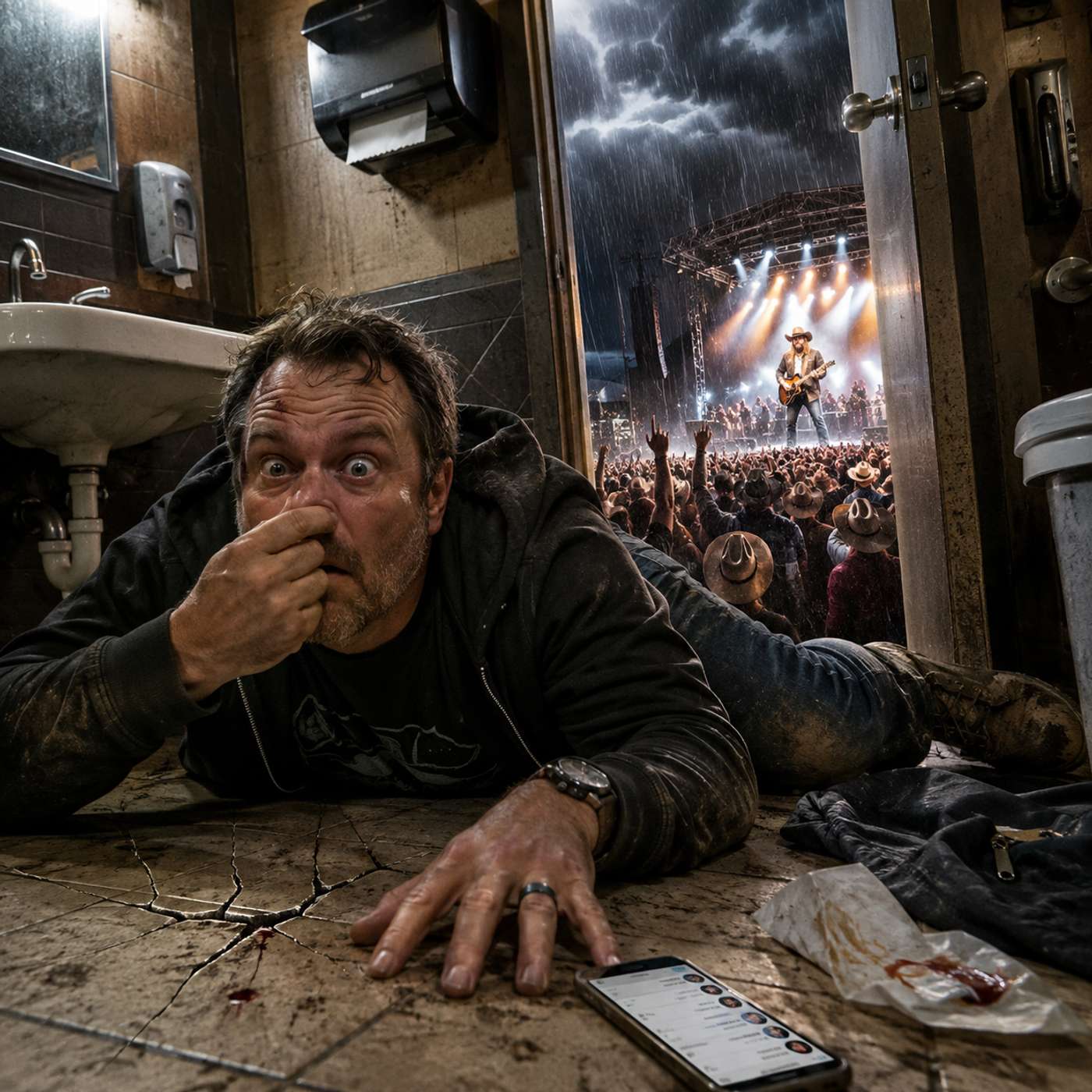
    NHOMAM - Ian Munsick, Primus, A Cat, A Dead Plant And One Catastrophic Bathroom - 08/24/2026

    This episode begins exactly where a responsible podcast should never begin: with Viktor Wilt apparently having once again attempted to personally headbutt the structural integrity of civilization. The show immediately launches into the revelation that Viktor recently smashed his head in an Arctic Circle bathroom after making the deeply questionable decision to try popping his ears while standing up. This was not some graceful medical maneuver performed by a trained professional. This was Viktor plugging his nose, attempting to force his ears to pop, and then apparently downloading a temporary trial version of consciousness because the next thing he knew, he was waking up on the floor with his head having introduced itself violently to a tile wall and his knee having also gotten involved in the festivities. He had been feeling sick before the trip to Park City, his ears were already suffering from elevation and sinus pressure, and then a mountain fire forced the group off the freeway and into a tiny Utah town where fate apparently decided that an Arctic Circle bathroom would become the scene of the most idiotic near-death experience imaginable. The truly magnificent part is that nobody immediately knew what had happened because the Arctic Circle bathroom was apparently located far enough away from civilization that Viktor could theoretically have died in there and become a local Utah mystery. He stumbled out pale, disheveled and refusing to explain himself until they got back to the vehicle, where he finally confessed that he had passed out while trying to pop his ears. Naturally, Becca responded not with the immediate solemnity one might expect after discovering that her travel companion had just potentially concussed himself in a fast-food restroom, but by laughing hysterically. Viktor, meanwhile, was conducting a full internal medical investigation, wondering whether he had a concussion, whether one pupil was larger than the other, whether he had brain damage and whether he might simply die. Somehow he still managed to eat a chicken sandwich, although the group spends an absurd amount of time debating why he didn't order the legendary Arctic Circle ranch burger and tots. Because apparently even during a potential neurological emergency, the real tragedy was that Viktor made the wrong lunch decision. The episode then takes a hard left turn into Viktor's extensive history of falling down at concerts and radio events. Apparently this is not an isolated incident. He has fallen at Papa Roach, fallen around radio people, fallen through a curtain, and generally demonstrated that standing upright is merely a suggestion. Yet somehow he managed to survive the Ian Munsick concert without falling, despite the venue being on a slope and the entire event eventually being pummeled by an absolutely brutal rainstorm. The crew also revisits the infamous Cody Jinks incident where Viktor apparently arrived late and repeatedly demanded to know where Shane Smith and the Saints were, despite the fact that there was another opener. His defense, naturally, is that he wasn't screaming. Everyone else in the room strongly disagrees. Then comes the Ian Munsick Park City takeover, which apparently involved Ian Munsick taking over approximately the entire municipality of Park City, Utah. There were events throughout the day, including an 8 a.m. coffee-and-hike event that Viktor predictably did not attend because walking before the reasonable hour of civilization is apparently beneath him. Instead, the first event he actually bothered to attend was a 3 p.m. happy hour at the Palomino, where the food sounded like it had been designed by someone who hated cowboys. Salmon pancakes, meat tartare, black bean sliders and tiny expensive dishes were discussed while Viktor repeatedly questioned why anybody would spend nearly $20 on something that looked like cat food when they could simply eat a burger. The real objective, however, was the elaborate drink-and-stamp system designed to acquire an Ian Munsick beer koozie. And then the alcohol arrived to test whether Viktor had learned anything from the Arctic Circle incident. Spoiler: absolutely not. Viktor and Justin ordered the Mountain Goat, an extremely strong old-fashioned-style drink containing enough spirits to make Justin immediately realize that the situation had developed a concerning trajectory. They also sampled the Medicine Man, which Viktor described as something that Arthur Morgan from Red Dead Redemption 2 might drink in the woods while attempting to cure tuberculosis. Then, as if two strong cocktails weren't enough, Ian Munsick's wife emerged with giant shots for everyone. Viktor enthusiastically participated because apparently the human brain can survive being knocked unconscious by ear pressure and still immediately volunteer for another terrible decision. Somehow, against every conceivable prediction, Viktor actually behaved himself in the radio room. Ian Munsick came in, recognized Viktor from Idaho, and everything initially went perfectly normally. Then Ian began discussing his bass playing and his cover of Ozzy Osbourne's “No More Tears,” and Viktor's brain apparently activated its emergency heavy-metal override. Rather than simply allowing the conversation to continue like a normal human being, Viktor interrupted and announced that Ian needed to learn Primus' “My Name Is Mud.” Ian responded that it would take him years to learn, which Viktor interpreted not as a polite dismissal but as an invitation to continue campaigning for the greatest possible country-meets-Primus crossover in human history. Viktor later whispered “Primus, My Name Is Mud” into Ian's ear before the photo, causing Ian to laugh. And somehow this was considered one of Viktor's more restrained interactions with an artist. The concert itself somehow ends with Viktor claiming a clean victory: no falling, no fights, no catastrophic public incident, and only getting absolutely annihilated by rain. He still didn't stay until the end because apparently concert survival requires strategic evacuation before the Uber prices enter their final boss phase. The crew debates whether the obvious solution is simply driving, walking or staying until the end, while Viktor points out that their hotel was essentially downhill from the venue. His alternative transportation strategy appears to involve potentially rolling down the mountain like a human tumbleweed. Then, because one bizarre story apparently wasn't enough for this episode, the conversation moves to Peaches' apartment being invaded by a mysterious black cat. The cat simply walked into his home, began inspecting the furniture and plants, and behaved as though it had signed a lease. Peaches, rather than immediately embracing his new feline overlord, contemplated various methods of extraction before ultimately trying to politely convince the cat to leave. The internet immediately diagnosed the situation as the legendary “cat distribution system,” but Peaches rejected his appointment to the position of Cat Owner. He knew the animal appeared to have a home across the street, although it had no collar, and the entire situation became an unexpectedly intense philosophical debate about outdoor cats, microchips, shelters and whether Peaches was being selected by forces beyond his control. Then came the funeral for the plant. Peaches had owned a plant for years, had watched it survive winter, watched it deteriorate during the brutal summer heat, moved it around, watched it repeatedly fall over and finally reached the point where he carried it to the dumpster while listening to sad music. This wasn't merely throwing away a dying houseplant. This was John W...

    • Transcript
  • #413
    August 24 · 53 min

    #0413 - I Went To An Ian Munsick Show And Nearly DIED In An Arctic Circle Bathroom - 08/24/2026

    Monday arrives on The Viktor Wilt Show with Viktor Wilt sounding like a man who has spent an entire weekend standing directly on the border between “I’m probably fine” and “I am absolutely about to become a medical news story.” Viktor spent the weekend feeling just sick enough to be miserable without ever fully committing to being sick, which is arguably the most irritating form of illness because you spend three straight days wondering whether you’re about to wake up completely destroyed. Instead, he got the deluxe package of throat clearing, sinus pressure, plugged ears, terrible sleep, anxiety about becoming dramatically more sick overnight, and the general sensation that his body had submitted a customer-service complaint against him. Despite all this, he and Becca still made the trip to Park City, Utah, for the Ian Munsick Park City Takeover and album release show, because apparently the human body can be operating at 63% capacity and still be expected to drive to another state for entertainment. The weekend turned out to be surprisingly good, with Viktor getting to hang out with Ian Munsick, meet Ryan Charles—the cowboy rapper who apparently has enough personality to power a small municipality—and spend time with Justin from The Hawk. Park City also delivered the traditional Park City experience of being expensive enough to make you reconsider every financial decision you've ever made, although Viktor was pleasantly surprised to find a hotel deal that didn't require selling a kidney. Then came the most important scientific discovery of the morning: Becca likes Rush. Viktor's brain immediately rejected this information as impossible. According to the highly questionable scientific institution known as Viktor's brain, Rush is apparently a band exclusively enjoyed by nerdy dudes, and the discovery that Becca actually likes Rush has potentially doomed her to years of progressive-rock punishment. Suddenly, her future contains Between the Buried and Me, Elder, Devin Townsend, Steven Wilson, Opeth and every other band capable of producing a song that lasts longer than some marriages. Viktor is now on a mission to determine whether Becca is secretly the only woman on Earth who likes Rush, even creating a poll in the K-Bear 101 Idaho Rock and Metal Group to investigate this phenomenon. Meanwhile, Rush is touring through major markets with multiple-night runs in places like Los Angeles, Fort Worth, Chicago, New York and Toronto, leaving Viktor to conclude that attending would probably require either winning the lottery or committing a minor financial felony. The show then wandered into the dangerous psychological territory of the midlife crisis, where Viktor conducted a deeply scientific self-assessment and determined that his own crisis was comparatively harmless. Instead of purchasing a sports car, abandoning his family, wearing a leather vest everywhere or suddenly attempting to communicate with teenagers using Gen Z slang, Viktor bought a giant television, a sound system and—apparently as the latest stage of his transformation—an actual quality camera for his studio. The camera immediately created the familiar adult experience of seeing a new bill and wondering why money was ever invented. He rationalized the purchase through no-interest financing and then realized that he now has to learn how to operate the thing, which means his midlife crisis may have quietly mutated into photography. This was contrasted with internet examples involving motorcycles, crypto, bizarre wardrobe transformations, podcasts with twelve listeners and people spending absurd amounts of money trying to reinvent themselves. Viktor ultimately decided that a camera is considerably more practical than a convertible, particularly after seeing gasoline priced around six dollars a gallon in Utah. The Park City concert itself became a masterclass in why country artists apparently have figured out how to treat fans better than many rock artists. Ian Munsick had events scheduled throughout the weekend, including a morning hike and breakfast, a listening-party happy hour hosted by Ryan Charles, specialty drinks, fan interaction and an intimate acoustic performance. Viktor and Becca even participated in the elaborate beverage-based scavenger hunt required to obtain a coveted beer koozie, creating what Viktor jokingly described as the world's most expensive beer koozie. Ian's drinks included the Mountain Goat and the legendary Medicine Man, which apparently tasted less like a cocktail and more like something excavated from the back room of a medieval apothecary. Ian's wife then bought an entire round of shots, Ian himself showed up and played acoustic songs for a small crowd, and Viktor spent the afternoon eating absolutely none of the highfalutin food because his soul apparently has a strict “give me a burger” policy. Viktor also attempted to use the intimate artist interaction as an opportunity to accomplish the impossible: convincing a country singer to cover Primus' “My Name Is Mud.” Ian was discussing how much he loves playing bass and talking about his cover of Ozzy Osbourne's “No More Tears,” which Viktor apparently interpreted as an invitation to launch a full-scale Primus recruitment campaign. He repeatedly suggested “My Name Is Mud,” Ian laughed and explained that it would take years to learn, and Viktor continued pushing the concept anyway, including one final Primus reference immediately before photographs. Somewhere in Park City, a country singer was simply trying to release an album while Viktor Wilt attempted to drag him unwillingly into progressive bass music. Then the sky opened up and attempted to drown everybody. The concert was hit by an absolutely ridiculous downpour, with Viktor describing rain hammering the crowd while lightning flashed in the distance. Rather than immediately evacuating, everyone apparently just stood there getting progressively wetter until Viktor grabbed a folding chair and used it as an improvised roof over Becca's head. The group eventually started worrying about food, bathrooms and the impending nightmare of thousands of people simultaneously trying to summon an Uber. Viktor and Justin ultimately left before the show was completely over because they could see the transportation apocalypse forming in the distance. It was at this point that the weekend officially transitioned from “fun country concert getaway” into “Viktor Wilt Survival Simulator.” But the real incident happened before the concert, at an Arctic Circle somewhere along the detoured route through Utah. Because a wildfire had shut down part of I-15, Viktor and Becca were forced onto back roads and passed an Arctic Circle when they had originally planned to stop at In-N-Out. Viktor's ears were already painfully plugged from pressure after driving through the mountains, so he decided to perform his usual maneuver: plug his nose and blow in an attempt to clear his ears. There was only one problem. This time he was standing. In a private bathroom. And apparently his body decided that this was the perfect moment to shut down the operating system. Viktor blew to clear his ears, and the next thing he knew, he was waking up on the bathroom floor with his head smashed against the tile wall, his knee hitting the ground, blood coming from his head and absolutely no idea what had just happened. He had essentially managed to faint while trying to make his ears pop, turning an ordinary fast-food bathroom break into a low-budget medical thriller. Even worse, nobody immediately knew what happened because the bathroom was located around the back, and Viktor had apparently gone down hard enough that nobody heard him. His first thought upon regaining consciousness was essentially that this would be an extraordinarily stupid way to die. He eventually emerged pale and d...

    • Transcript
  • #412
    August 24 · 41 min

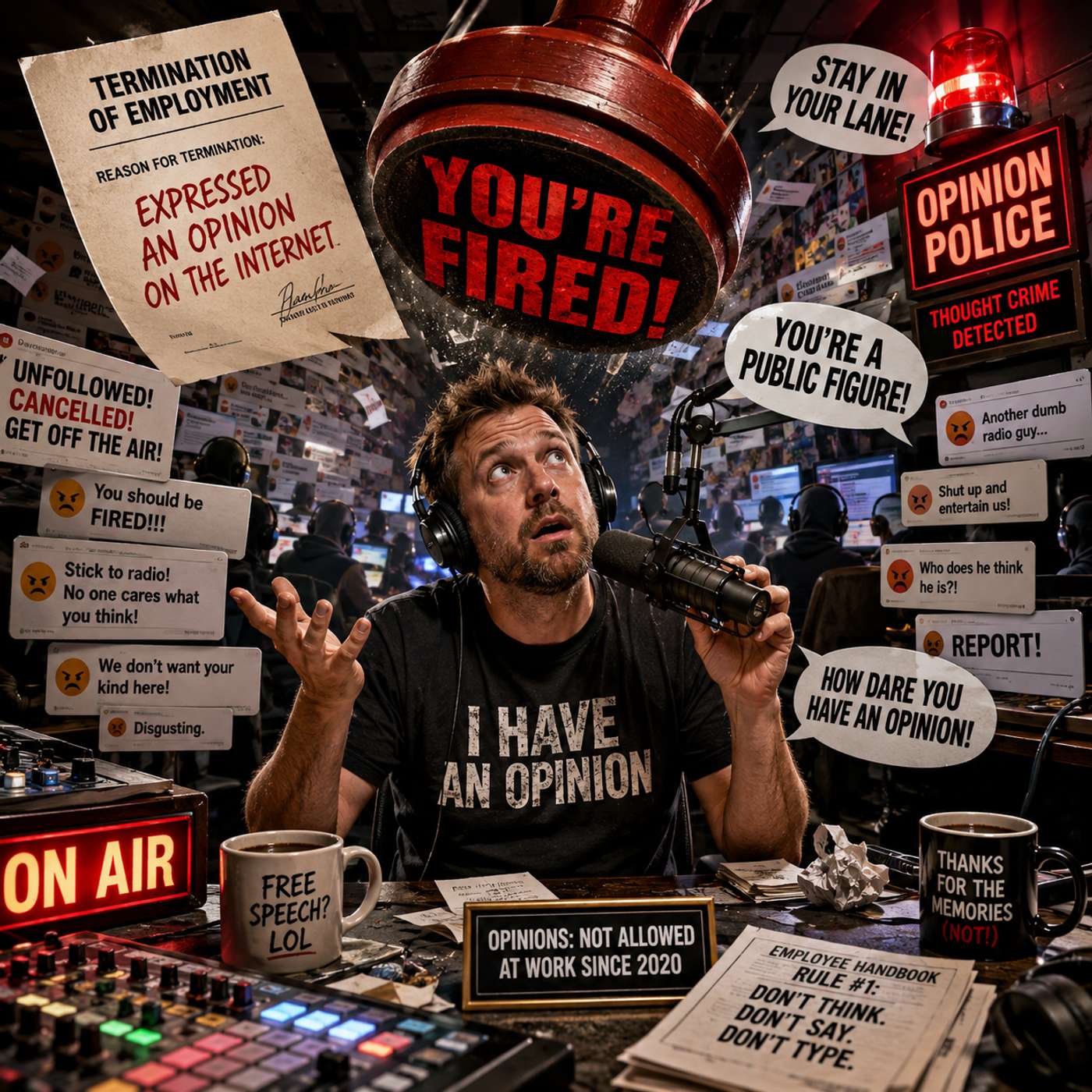
    #0412 - Apparently I Should Be Fired For Having Opinions - 08/21/2026

    Friday arrives and Viktor Wilt is already operating at approximately 73% human capacity, because his throat is still being held hostage by some mysterious respiratory goblin, his nose spent the previous evening completely barricaded, and the morning begins with nasal spray, Zyrtec, questionable levels of optimism, and the terrifying realization that he is supposed to drive to Park City for the weekend while potentially fighting off whatever microscopic demon has decided to move into his upper respiratory tract. But there is no time to perish peacefully because Viktor has radio to do, Traffic School to host, an interview with the singer of the brand-new metal band Showing Teeth to conduct later, and an entire internet full of people apparently determined to make every possible conversation as stupid as physically achievable. Naturally, the morning begins with Facebook drama, because apparently Viktor committed the unforgivable crime of having an opinion about an Idaho politician while simultaneously being a person who works in radio. The resulting online courtroom immediately produces accusations that he should “stay in his lane,” predictions that he is going to get fired, and the bizarre implication that radio personalities apparently surrender all political opinions the moment they receive a microphone. Viktor’s response is essentially: if everyone else can yell their opinions into a webcam from a basement, why exactly am I prohibited from having one? Then things somehow get even dumber when someone accuses him of being drunk because he played a “best of” show while he was out of the office, despite the fact that he was dealing with private family matters and absolutely does not owe Facebook strangers a detailed medical, emotional, or logistical itinerary of his life. The episode consequently establishes one of its central commandments: stop making assumptions about people you don't know. From there, Viktor enters the terrifying wasteland of internet discourse and discovers a thread asking what “died in 2020 and never came back,” only to initially misread it as asking who died in 2020, because apparently the brain has decided that Friday mornings are no longer a time for reading comprehension. This sends him spiraling into a depressing inventory of things people believe disappeared after 2020: reasonable prices, 24-hour businesses, common decency, good service, and the general societal ability to behave like a human being instead of a comment-section raccoon. WinCo receives a rare heroic shoutout for still allowing people to buy groceries at ridiculous hours, even if the store is apparently transformed into an obstacle course of cardboard boxes after midnight. Then, because happiness is apparently forbidden, Viktor discovers another online debate asking what concert cliché bands should immediately retire. This launches an entire forensic investigation into the Crimes Against Live Music: ridiculous ticket prices, predictable encores, endless “MAKE SOME NOISE” commands, audiences being forced to sing half the song, blinding stage lights, excessive backing tracks, and bands taking forever to actually appear on stage. Viktor particularly takes issue with people answering the question incorrectly, because apparently even a casual Facebook question must now be treated like the SAT. He also points out that paying $250 for a concert ticket is becoming completely deranged, although he admits he has personally paid around that much for Nine Inch Nails, thereby placing himself directly inside the expensive-concert-ticket crime scene. The morning then swerves violently into Florida Man territory when Viktor discovers a story about a driver who allegedly got into a road-rage confrontation with a bicyclist, attempted to run the cyclist off the road, got out of his vehicle, attacked him, smacked his phone away, grabbed him by his shirt, and then drove away while still holding onto the guy, resulting in the cyclist being dragged and having his foot run over. Viktor's takeaway is basically that apparently owning a nice Lexus does not automatically install the “don't behave like a lunatic” software update. He then pivots into an extremely important public service announcement for PC gamers: DO NOT GO LOOKING FOR A PIRATED COPY OF GTA 6. With leaked GTA 6 footage circulating online, malware authors have apparently discovered that desperate gamers are excellent bait, and fake copies of the game are being used to infect computers. Viktor's advice is remarkably simple: wait for legitimate information instead of downloading “GTA 6.exe” from a website that looks like it was assembled inside a haunted GeoCities page. He discusses the leaked footage, Rockstar's apparent anger, copyright takedowns, Reddit removing material, conspiracy theories about whether the leaks were somehow intentional, and the looming official extended look that should provide a much cleaner and more legitimate glimpse at the game. The entire GTA 6 segment becomes a perfect collision between modern gaming hype, internet stupidity, malware, crypto scammers, conspiracy theories, and people apparently willing to risk their entire computer because they desperately want to see pixels of a video game several months early. Then comes the Electric Scooter Tribunal, where Viktor discovers Consumer Reports has tested a bunch of electric scooters and isn't recommending any of them because of injury concerns. This prompts Viktor to remember his own bizarre experience trying to operate one in Salt Lake City, where he apparently managed to lose a battle against a machine whose entire purpose is essentially “stand on this thing and move forward.” The conversation turns toward traumatic brain injuries and scooter accidents, producing the obvious conclusion that if you're going to launch your face toward pavement at scooter speed, wear a helmet. From there, the news becomes progressively more deranged: stolen LEGO sets worth roughly $30,000 are discovered in an abandoned van in the California desert, a frustrated teenager apparently decides that driving around 140 miles per hour is a reasonable response to being annoyed on the way to the gym, and Viktor naturally uses the story as a segue into the Advocates Injury Attorneys and Traffic School. Because if your morning show doesn't seamlessly transition from stolen LEGO empires to catastrophic speeding collisions and legal advertising, what exactly are you doing? The episode then takes a detour into criminal stupidity involving a woman who allegedly wanted to blow up the New York State Capitol and sought help constructing a bomb, only to discover that the people assisting her were actually FBI undercover agents. The agents reportedly took her to Home Depot, where she apparently even wondered whether she had purchased the correct nails for the device she intended to use. Viktor's commentary can essentially be summarized as: maybe don't ask strangers on the internet how to destroy a government building, especially when the strangers are suspiciously helpful. This becomes another installment in the ongoing scientific study of the human brain under conditions of catastrophic decision-making. Meanwhile, Viktor is increasingly concerned that his weekend trip to Park City is going to become an altitude-sickness experiment. He is already feeling under the weather, is preparing to travel to a higher elevation, and then discovers that high-altitude travel can involve headaches, dizziness, nausea, dehydration, fatigue, and a general feeling of “why did I voluntarily come here?” He learns about hydration, carbs, acclimatization, alcohol, and the possibility that elevation can make certain physical and emotional sympto...

    • Transcript
  • August 24 · 38 min

    Traffic School - Police Grapplers, Flock Socks And The Death Of Common Sense - 08/21/2026

    This week's Traffic School begins with Lieutenant Crane casually revealing that his teenage years apparently consisted of repeatedly being kicked out of school and then eventually returning to that exact same campus wearing a police uniform, which is perhaps the funniest possible way to demonstrate that life has an extremely specific sense of humor. The discussion quickly establishes that Crane was apparently enough of a menace as a teenager to get himself trespassed from his own high school, only to later show up there as a lawman to handle an actual call. Somehow, this becomes a recruitment pitch for anyone who has ever thought, “There is absolutely no way they would let someone like me become a cop.” Crane insists they might, while Viktor immediately begins investigating whether his own questionable history would disqualify him. Apparently the only thing standing between Viktor and a career in law enforcement is physical fitness, which is devastating news for everyone involved. Then the show immediately plunges into the bizarre world of Flock cameras and the apparently heroic Flock Sock, a 3D-printable little garment designed to cover a Flock camera from “the elements.” The question becomes whether putting a removable sock over a police camera is actually illegal, because apparently we have reached the point in civilization where people are using sticks to dress surveillance cameras. Crane explains that simply touching the device may not necessarily constitute a crime if no damage is caused, but spray-painting or permanently damaging it would obviously be another story. Before the legal analysis can become remotely normal, Crazy Carl calls, immediately derailing the show into discussions about sponsorships, radio station phone systems, and the possibility of renaming the entire studio after “Doofus Plus.” The segment eventually becomes an extended fever dream about Carl's caller antics, police employment, old cars, and whether a person with misdemeanors can become a cop. The automotive portion gets progressively more ridiculous when Carl asks about his friend's nearly completed 1965 Thunderbird, which apparently still needs a driver's seat repaired and a windshield installed. The shocking discovery is that the vehicle can technically still be driven without the windshield, provided other requirements are met, including windshield wipers. This produces one of those uniquely Idaho moments where everyone pauses to consider the magnificent legal logic of having windshield wipers for a windshield that isn't currently there. The conversation then spirals into engine swaps, enormous horsepower, superchargers, blowers, and the timeless question of exactly how much horsepower you can legally cram into a street car. Crane's answer is essentially that horsepower itself isn't the problem; how you operate the vehicle is. In other words, Idaho apparently isn't particularly concerned if your car has enough horsepower to launch itself into another dimension, provided you aren't driving like an absolute lunatic. Viktor then announces that he is heading to Park City for a concert, which creates an entirely separate subplot involving mountain elevation, illness, cowboys, country music, and the possibility that Viktor may simply perish at approximately 7,000 feet. Crane's prediction is that Viktor probably won't die from being sick, but may instead die because of something he says to somebody. This is followed by discussion of the upcoming basketball game, which nobody involved seems remotely enthusiastic about because apparently running back and forth on a basketball court is considered an unacceptable burden. The show then dives into one of the coolest pieces of police equipment discussed all morning: the Grappler, a device that can be mounted to police vehicles and deployed to hook onto the rear of a fleeing vehicle and bring it to a stop. Viktor thinks it looks awesome. Crane agrees that police would love to have them. The problem is money. Idaho agencies can't necessarily afford to put one on every patrol car, and having one Grappler-equipped vehicle sitting somewhere across the state doesn't help much when an emergency happens hundreds of miles away. The discussion somehow evolves into imagining an officer getting a call to hurry across Idaho because he is the one guy assigned the magical car-chasing fishing hook. Then Steve O. from Mudvayne calls with a deceptively simple question: Are U-turns legal at red lights? Crane explains the circumstances under which U-turns can be made, including the importance of the signal, traffic conditions, and posted signs prohibiting U-turns. Naturally, the segment concludes with everyone making jokes about how long they have been staring at each other's faces in the studio and Viktor revealing that he has apparently developed a stopwatch specifically for determining when Lieutenant Crane has overstayed his welcome. Next comes the Bonneville Metropolitan Planning Organization transportation feedback map, which allows members of the public to identify transportation problems and road issues. Viktor discovers that the map appears to be absolutely covered in complaints, making it look less like a transportation planning tool and more like a digital autopsy of every road in East Idaho. The pair wonder how many complaints are legitimate and how many are trolls simply tagging everything they possibly can. The discussion includes potholes, railroad crossings, traffic lights, dangerous intersections, and the eternal dream of creating a map where people can complain about politicians instead of roads. Then the episode takes a hard left turn into celebrity status, Joe Rogan, public figures, Tums, Kleenex, Zoom interviews, and the sacred tradition of doing questionable personal business while technically being on company time. Viktor proudly reveals that the studio now has an official bottle of WinCo-brand Tums because apparently gastrointestinal distress is such a routine part of the K-Bear experience that emergency antacid infrastructure has become necessary. The callers return with another extremely modern legal question: Can you get in trouble if somebody is putting AI-generated stickers featuring your likeness all over town? The answer is delightfully simple: if you're not the person actually putting them up, you aren't the one committing the vandalism. This leads to an escalating discussion about stickers on gas pumps, fake “I Did That” stickers, shirts for Viktor's mother, Ouija boards, ghosts, and the shocking revelation that the caller's mother was apparently an angel while Viktor's family insists his own mother would never haunt anyone. The family pancake hierarchy somehow becomes part of the legal discussion, because Traffic School apparently has no remaining barriers between law enforcement education and generational pancake trauma. The episode then takes a detour into Grand Theft Auto 6, with Viktor declaring that he needs at least four days off when the game comes out. The conversation covers leaked footage, the game's digital-only release, hackers, potential financial consequences, and the enormous question of what happens when somebody causes massive financial losses and ends up owing restitution they could never realistically repay. Crane explains that restitution can be paid incrementally, leading to the depressing mental image of somebody emerging from jail and paying their enormous debt five dollars at a time. Chrissy, the American Falls lunch lady, then calls in with questions about the new Idaho license plates and what law enforcement can actually see when a plate...

    • Transcript
  • August 24 · 19 min

    NHOMAM - We Need To Talk About Jeff’s Butt - 08/21/2026

    The Noon Hour of Madness and Mayhem gets off to a questionable start when Peaches and Viktor Wilt debate whether being tall, short, skinny or anything else is fair game for workplace jokes, before discovering that McDonald’s may have an entire customer dossier on your ordering history—and Viktor’s Taco Bell account apparently deserves its own congressional investigation with 30,000 lifetime points. From there, things take a hard left into Jade’s classroom “fart corner,” toxic concert farts, a kid at the Bilmuri concert apparently conducting an air-quality experiment on everyone around him, and Viktor and Jeff’s escalating office-wide gas warfare involving fake farts, stink bombs, fart spray and the possibility of strategically placed sardines. The guys also revisit the art of complaining to radio stations, including listeners demanding people get fired because they said something they didn’t like, and why Peaches and Viktor would rather ditch the old radio formula of fake bits, fake prank calls and everybody reading the same prep. They also get into Shane Gillis’ comments about being chased by homeless people in Salt Lake City, whether the city really deserves its reputation, why Idaho Falls residents sometimes act like their town has become Los Angeles overnight, and Viktor admitting he walks the Greenbelt at 11 PM in a hoodie listening to sad songs like a man desperately waiting for somebody to love him. Add in Peaches trying to drown gnats in his bathroom sink, a discussion about Gavin Newsom, Joe Rogan and the hypothetical political podcast episode nobody saw coming, and a final investigation into the suspicious Corona bottle sitting on the desk, and you’ve got a Friday episode that somehow manages to cover fast food surveillance, workplace warfare, modern radio, Salt Lake City, politics, insects and an alarming amount of gastrointestinal information.

    • Transcript
  • August 21 · 21 min

    Viktor Wilt interviews Showing Teeth - 08/21/2026

    Viktor Wilt sits down with Showing Teeth for a conversation about one of the most exciting new acts in heavy music. Showing Teeth talks about the unusual, almost entirely self-created origins of the project, developing their distinctive sound, and working remotely with collaborators. They also dive into the raw emotion behind Showing Teeth’s screaming vocals, influences ranging from Periphery and Whitechapel. Plus, they discuss the upcoming EP A Fate Worse Than Loneliness, signing with Spinefarm and Republic Records, playing Sick New World, the challenges of suddenly performing on massive stages, and their upcoming tour with President, including stops in Boise and Salt Lake City. And yes, there’s also a very important discussion about the cats behind the music—including Michael, the girl cat with a very boyish name.

    • Transcript
  • August 20 · 28 min

    NHOMAM - Viktor Paid Actual Money To Have A Robot Accuse Him Of Hitting A Car - 08/20/2026

    Today’s episode of The Noon Hour of Madness and Mayhem begins with Peaches casually unveiling what appears to be the collected works of a man who has been trapped in a basement with a typewriter for seventeen years, only for us to discover that it is actually the beginning of his autobiography. Naturally, this immediately becomes Peach’s Book of Anger, because apparently the universal rule of writing a large amount of text is that you must be furious. From there, the conversation detonates into a completely unnecessary philosophical debate about GLP-1 medications, their side effects, methamphetamine, cigarettes, concert smoking sections, and the deeply irritating person who would walk into a smoking area specifically to inform everyone that they might have consequences for their choices. The smoking section, however, is defended as one of the last remaining bastions of human civilization because it is apparently the only place at a concert where people can actually talk without screaming directly into each other’s skulls. The episode then spirals into the increasingly ancient problem of going outside after 6 p.m. Apparently staying out past six on a school night is now an extreme endurance event, and the boys contemplate the collapse of their trivia-league ambitions because someone took a nap at six o’clock and the others apparently require the gravitational assistance of a bartender, Becca, and a person identified only as Bubblegum Booty to form a functioning team. The stakes become even higher because listeners have been instructed to photograph Peaches at concerts and post the evidence online, meaning Peaches is now considering simply refusing to leave the house ever again. Somewhere in this timeline, Theory of a Deadman and Sevendust are waiting for September 23rd while the hosts perform advanced temporal mathematics to determine that the event is approximately one month away. Then comes the real centerpiece: National Radio Day, a holiday apparently invented so radio employees can celebrate the fact that radio employees are disappearing. Instead of balloons, cupcakes, party favors, and Fred Meyer pastries, the hosts discover the much more appropriate visual representation of modern radio: one remaining employee attempting to track seven shows a day before being reduced to atoms. This sends them into a horrifying archaeological expedition through radio job listings, where they discover opportunities in Charleston, West Virginia, St. Louis, mysterious Midwest locations, and Roswell, New Mexico. Every listing sounds progressively more like a corporate hostage note, especially the positions demanding that one person simultaneously be an on-air personality, brand ambassador, social media manager, content creator, Swiss Army knife, spiritual disciple, country-music expert, and presumably the person responsible for unclogging the office toilet. The Charleston position even includes the sacred corporate relics of health insurance and a 401(k), while the actual salary remains hidden in a vault guarded by three retired program directors. The radio-job discussion reaches maximum corporate-radio psychosis when the phrase “Swiss Army knife” is interpreted correctly to mean, “Congratulations, you now have eight jobs.” The hosts imagine mandatory meetings, conference-room pizza parties, screaming general managers, and the strange expectation that a radio personality should drive around town talking about anxiety. Unfortunately, the anxiety is not hypothetical. The episode reveals that the hosts are barely sleeping, with one of them lying awake at 1:30 in the morning while apparently half of Facebook simultaneously reports that they too have become unwilling nocturnal creatures. The moon is blamed. The lack of air conditioning is blamed. The entire human condition is briefly blamed. Then the episode transitions into the beautiful train wreck known as interview preparation. Viktor is preparing to interview Showing Teeth, a newer artist who has not accumulated the decades of professional media training possessed by people like Chris Jericho, Shane from Silverstein, or other musicians who can actually carry an interview without needing to be dragged across the conversational finish line with a tow cable. The preparation immediately becomes obsessed with cats because, apparently, the best way to interview a screaming vocalist is to determine whether she yells at her cats with the same intensity she uses in her songs. The discussion then explodes into musicians being judged based on terrible cellphone footage from enormous festivals, people accusing new bands of being industry plants, and the absurdity of criticizing a band’s performance when you are watching a shaky phone video recorded from approximately 900 yards away while the sound system is actively being eaten by the atmosphere. Naturally, cats eventually lead directly into haunted blankets, Zach Bagans, prank calls, and underwear surveillance, because this is apparently how human conversation works now. Peaches reveals that someone called the Z103 phone line using what sounded like a robotic soundboard and immediately informed him that they knew what color underwear he was wearing. Instead of ending the discussion there like normal adults, the hosts decide to test whether they can prank call themselves. This results in an absolutely magnificent fake hit-and-run scenario in which Viktor is accused of scratching a car, leaving a note, driving a gray vehicle, refusing to cooperate, and becoming the target of an increasingly aggressive fake motorist demanding his insurance information. Viktor ultimately gives Geico a completely unnecessary free advertisement before being informed that he has been pranked by PrankDial.com. The most important revelation is that Viktor has actually spent money on prank-call credits, meaning we have officially reached the stage of capitalism where a grown man is paying real currency to have robots accuse him of vehicular crimes. And then, because apparently humanity has learned nothing, the episode launches directly into AI radio hosts. The hosts discover a story about a radio show using an AI co-host named Coyotech, a bilingual artificial personality apparently being syndicated as though the future of broadcasting has finally arrived wearing a cowboy hat. Instead of being impressed by this technological breakthrough, the hosts immediately begin asking the most important questions: Is the AI actually getting paid? What happens when the internet goes down? Is it “sick” if it disappears? Can you argue with it? Can you call it a clanker? Can you create an AI boyfriend or girlfriend? And, most importantly, can you put an AI version of DJX into the studio specifically so someone can scream at it for four hours? This is the moment where the entire episode becomes a technological horror story about the future of radio being populated by artificial personalities who require neither sleep, benefits, lunch breaks, nor the ability to complain about the GM. The AI discussion somehow becomes even more deranged when the hosts imagine communities of people emotionally attached to AI romantic partners, complete with the possibility of people becoming genuinely offended when someone insults their synthetic significant other. The idea of creating fake AI girlfriends, posting them online, rating their attractiveness, and accidentally starting a civil war between humans and imaginary romantic partners is floated with absolutely zero concern for the structural integrity of society. The hosts then ponder whether AI relationships could experience d...

    • Transcript
  • August 20 · 26 min

    NHOMAM - This Horrifying Dead Animal Cost $68 And Was Secretly Worth $60,000 - 08/19/2026

    This episode of the Noon Hour of Madness and Mayhem begins with the extremely important national crisis of men losing their hair, because apparently society has decided that follicles deserve their own awareness month. The conversation immediately spirals into the realization that one of the hosts has been willingly chrome-domed since August 28, 2023, after a particularly awful stretch of sleep deprivation and an alarming heart episode convinced him that if the Grim Reaper was coming, he might as well meet him with a freshly shaved head. From there, the hosts spend an impressive amount of time essentially arguing that bald men need to stop treating their scalps like a classified military installation and simply shave the damn thing. Hair loss treatments, hair transplants in Turkey, John Cena's suspiciously powerful new hair situation, Hims advertisements aggressively asking whether you're still balding in 2026, and the eternal male fear that women will no longer find you attractive once your hairline begins retreating are all thrown into the blender. The conclusion is basically that being bald is fine, shampoo bills decrease, showers become faster, and nobody needs to walk around with a desperate little island of hair clinging to the back of their head like it's the last survivor of civilization. Naturally, the discussion becomes even more psychologically devastating when family history enters the picture. One host talks about his father going through essentially the same life progression, including transferring high schools around the same time and eventually going bald around the same time, while relatives gleefully pointed out his disappearing hairline. Then there is the absolutely brutal comparison to Chris Daughtry, with Jade apparently looking at the situation and declaring that this was the host's future: bald, shaved-headed and apparently destined to become Idaho's answer to Daughtry. This somehow transitions into an insult involving a character from Dune, before the hosts return to their core scientific finding: shaving your head is easier, cheaper, faster and probably better than desperately trying to disguise the fact that your hair has already filed for permanent relocation. Then comes the Tim Pool Beanie Investigation, which may be the most unnecessary forensic examination of headwear ever conducted on a radio podcast. The hosts discuss an interview clip involving Tim Pool storming out of an argument and somehow arrive at the theory that his ever-present beanie exists primarily to conceal his hair loss. The fact that he was reportedly wearing the beanie indoors during an extreme heat wave only makes the alleged scalp cover-up more suspicious. This evolves into a larger discussion about people who wear hats constantly and then reveal a truly catastrophic haircut or horseshoe-shaped hair situation when the hat finally comes off. The hosts' prescription remains astonishingly simple: shave it. Free yourself. Throw away the shampoo. Become aerodynamic. Stop pretending the last six strands are going to mount a counteroffensive. The bald-head conversation then somehow mutates into an entire men's grooming seminar. Suddenly we're discussing exfoliating mitts, sugar scrubs, soft skin, smelling good and the general concept that perhaps men should take care of themselves instead of deliberately cultivating the physical appearance of a construction worker who has spent fifteen consecutive hours fighting concrete. Memes about rough, cracked hands and women supposedly preferring men who look like they have been assembled out of gravel are dissected, resulting in the revelation that there is apparently a subsection of the internet dedicated to making masculine self-neglect look aspirational. The hosts' counterargument is refreshingly simple: clean yourself, take care of your skin, smell good, and maybe don't make your hands look like Freddy Krueger's stunt double. And then, because absolutely nothing can remain normal for more than approximately fourteen seconds, the episode swerves into the Great Tramp Stamp Rebranding Initiative of 2026. The lower-back tattoo is allegedly returning, except apparently we are no longer supposed to call it a tramp stamp. The new, supposedly more respectable terminology is "cake topper." The hosts immediately determine that this is somehow worse. The phrase "cake topper" leads to an extended investigation of whether someone could marry the person of their dreams only to discover years later that their spouse has always dreamed of getting a giant lower-back tattoo. Dating itself becomes a subject of confusion, as one host admits he apparently never experienced the traditional sequence of dinner, conversation, learning about someone's hopes and dreams, and gradually falling in love. Instead, relationships somehow just happen. Meanwhile, the other host's friends are attempting to turn nightly walks into opportunities to get to know each other, which sounds suspiciously like a date disguised as cardiovascular exercise. The tattoo discourse becomes progressively more cursed as the internet supplies increasingly terrible terminology. "Tramp stamp" is challenged by "cake topper," "bumper sticker," and eventually the unforgettable phrase "ink above the stink." At this point, the hosts are basically conducting linguistic research into how many different names humanity can invent for a tattoo located above someone's rear end. The comments section becomes a radioactive wasteland of people arguing about whether the tattoos ever disappeared, whether they should be touched up after twenty years, and whether the terminology somehow makes the whole concept better or significantly worse. The answer, according to the hosts, is definitely the latter. Then the episode finally arrives at the topic that actually threatens to consume civilization: GTA 6 leaks. The hosts dive into the recent leaked footage surrounding Grand Theft Auto 6, including speculation about the hacker behind the material, Rockstar's surprisingly aggressive-but-apparently-not-aggressive response, websites hosting the footage, Reddit discussions, and the bizarre possibility that the entire thing could somehow be part of a marketing strategy. There is even speculation that the supposed hacker could be connected to the promotional rollout, because Rockstar traditionally does not exactly sit around politely watching leaked footage spread across the internet. The possibility of Laszlow secretly being behind everything is raised, because apparently the safest way to explain a massive video game leak is to blame the guy associated with Rockstar's audio and radio content. The GTA conversation gets even more ridiculous when the hosts discuss the supposed military incentive involving four days off to play GTA 6 if you reenlist, which sounds so absurdly like something from Grand Theft Auto that the internet apparently struggled to distinguish reality from satire. The mental image of someone in the middle of a military deployment trying to redeem their GTA vacation pass is enough to derail the discussion entirely. Meanwhile, November 19 is identified as the date everyone is supposedly going to call out of work, and the hosts begin mentally calculating how much paid time off needs to be hoarded for the inevitable GTA 6 binge. The entire workforce is apparently one Rockstar release away from collapsing. The leaked footage itself becomes its own comedy routine. People are apparently complaining that the 720p footage looks terrible, prompting the obvious response that 720p footage is, in fact, 720p footage. Complaining that leaked, low-resolution material doesn't look as good...

    • Transcript
  • #411
    August 20 · 1 hr 13 min

    #0411 - Distracted By GTA 6 Leaks - 08/19/2026

    Viktor Wilt returns to the microphone on a Wednesday after taking Tuesday off because life decided to pile approximately 47 psychological anvils onto his head at once, and the result is a show that begins with a surprisingly sincere admission that sometimes stress accumulates until your brain simply slams the emergency shutdown button. After acknowledging that he probably needs to talk to his therapist and promising to try to produce something fun, Viktor immediately begins digging through the internet for content, because apparently the correct response to a rough mental week is to investigate leaked footage of Grand Theft Auto 6, discuss cigarette addiction, investigate alien corpses, and eventually discover that a lake in Nevada is coughing up human remains. The GTA 6 leaks become the first major rabbit hole, with Viktor explaining that the internet has apparently exploded over leaked gameplay while simultaneously insisting that the footage itself is hilariously underwhelming: somebody driving around in an El Camino, somebody getting into a fight, a map that looks roughly like what everyone already assumed the map would look like, and somebody playing basketball. In other words, the gaming industry's most anticipated apocalypse has apparently arrived and revealed… basketball. Viktor admits that the gameplay footage did make him slightly more excited, but he remains committed to experiencing the actual game rather than ruining it for himself with spoilers. Then the show takes a hard left turn into the world's least sympathetic cigarette debate. Viktor and Peaches dig into an unpopular-opinion Reddit post arguing that smokers are unfairly treated compared with people struggling with alcohol or harder drugs. Viktor doesn't completely buy the premise, but he does make an important distinction: nicotine addiction is extremely difficult to overcome, and treating smokers like disgusting human garbage isn't exactly a revolutionary addiction-treatment strategy. The conversation veers through cigarette butts, rehab facilities where people detox from alcohol or hard drugs while continuing to chain-smoke, the cost of cigarettes, and Viktor's memories of watching family members die from cancer. The conclusion is essentially: smoking is terrible, nicotine is brutally addictive, cigarettes are expensive, don't litter, and if you genuinely want somebody to quit, screaming “YOU DISGUST ME” at them probably isn't going to unlock the secret ending where they immediately become healthy. From there, the show enters Korn Cat Industrial Complex Mode, as Viktor discovers Jonathan Davis's cat-themed merchandise and begins conducting an extremely serious financial audit of coffin-shaped cat dishes, spiked collars, colorful collars, and other aggressively metal accessories for animals. Viktor is intrigued by the aesthetic but remains horrified by the economics of spending $50 on something his cat will almost certainly lose outside. This is followed by a much more serious moment involving a death at Guns and Gear in Idaho Falls, where Viktor expresses disgust at people making cruel or insensitive comments about a tragic apparent suicide. He argues that people should sometimes simply shut up rather than treating somebody else's death like an opportunity to unleash whatever half-formed thought is currently rattling around inside their skull. He closes the segment by encouraging listeners to check on family and friends and remember that people struggling can seek help. And then, because apparently emotional sincerity can only survive approximately four minutes on this program, Halloween arrives approximately two and a half months early. Viktor discovers Tubi's “Terror on Tubi” horror hub, featuring thousands of hours of horror content, and immediately starts mentally building his October movie schedule while complaining about commercials on streaming platforms. Then comes one of the episode's greatest psychological mysteries: Viktor dreams that he is shoplifting. Not sophisticated Ocean's Eleven shoplifting. Not desperate shoplifting. Apparently dream-Viktor and a group of people simply walked into somewhere, grabbed stuff, and ran out like human Roombas. The problem is that real-life Viktor would not shoplift, so his subconscious has apparently started writing unauthorized fan fiction about his criminal career. He then contemplates the horrifying possibility of dreaming that you're in jail, waking up, and discovering that you are somehow still in jail. The freak-news portion then becomes a magnificent parade of increasingly questionable headlines. A man wearing a horror mask is reportedly terrorizing people in Philadelphia, which becomes particularly suspicious because Viktor owns the exact same mask and has worn it for Halloween. Naturally, he must publicly establish that he has not recently been terrorizing Philadelphia and that Walmart sold more than one of these masks. Then comes the “Flock sock,” a 3D-printed device allegedly intended to protect Flock cameras from the sun, although Viktor is deeply skeptical about the stated purpose because covering a surveillance camera with a removable sock has certain obvious alternate applications. Then the aliens arrive. A supposed Pentagon UFO scientist claims the United States is hiding the bodies of four different extraterrestrial races, and Viktor gleefully identifies the alleged lineup as the classic gray aliens, Nordics/tall whites, reptilians, and praying mantis beings. The entire discussion becomes a sarcastic demolition of the internet's favorite epistemological system: “one guy said it, therefore it is definitely true.” Facts? Evidence? Multiple witnesses? Documentation? Absolutely unnecessary. Somebody on Facebook said it, so apparently the alien morgue is real. The segment concludes with a bizarre New Orleans stabbing story in which a man apparently suffered multiple stab wounds without realizing he had been stabbed until somebody else pointed out that he was bleeding, leading Viktor to arrive at the horrifyingly logical conclusion that the only pleasant stabbing is apparently the stabbing you don't notice. Then Peaches arrives and the show immediately devolves into an unpaid financial-services broadcast because Viktor apparently owes her a few dollars for books. The transaction somehow involves a possible $5 bill lying on Viktor's floor, accusations of being secretly wealthy, bartender money, and a brief detour into the possibility of somebody working at a lounge under the name Ravonda. From there, the conversation detonates into the viral controversy surrounding a mother who complained that the new Spider-Man movie should have been rated R because of its language. The internet responded by giving her precisely what she apparently feared: approximately 14,000 strangers using significantly more profanity than anything she was complaining about. Viktor and Peaches then descend into the history of movie ratings, including the bizarre fact that movies like Jaws, Raiders of the Lost Ark, Poltergeist, and Indiana Jones and the Temple of Doom could receive ratings that would probably be handled differently today. A caller then provides the origin story of PG-13, connecting Temple of Doom and Gremlins to Steven Spielberg's push for a rating between PG and R. Suddenly the show becomes an impromptu cinematic history seminar, except the lecture is constantly interrupted by arguments over whether Gremlins is a Christmas movie. Viktor's position is unwavering: yes, it is absolutely a Christmas movie, and it's the best Christmas movie. The discussion then wanders through The Odyssey, Matt Damon, Tom Holland, age-appropriate movies, the number of F...

    • Transcript
  • August 17 · 26 min

    NHOMAM - Viktor Went To WinCo Looking Like A Possessed Black-Metal Drag Queen - 08/17/2026

    The Noon Hour of Madness and Mayhem begins by accidentally turning into the Idaho Falls Bureau of Sprinkler Crimes, because apparently we have reached the point in civilization where two radio hosts must personally investigate whether grass is receiving the precise amount of water necessary to survive without allowing a single molecule to escape onto the sidewalk. The discussion starts innocently enough with drought conditions, Lake Powell and Lake Mead shrinking, and concerns about water conservation, but very quickly becomes a surveillance operation against lawn irrigation systems. One host describes walking through the community park during his lunch break and deliberately allowing a sprinkler to blast him directly in the body because it is approximately 900 degrees outside, only to return to the studio absolutely drenched and dripping onto the furniture like a man who just escaped from a car wash. The sprinkler is eventually elevated to public enemy status after they discuss one that used to spray directly into his apartment whenever his windows were open. His solution was not to contact management, adjust the sprinkler, or perform a reasonable maintenance procedure. He simply launched the sprinkler into the distance and apparently solved the problem through backyard ballistic engineering. From there, the lawn itself is put on trial. The hosts propose eliminating grass entirely and replacing it with artificial turf, gravel, desert plants, or potentially an entire sagebrush ecosystem because apparently maintaining a lawn has become an unacceptable luxury in the great Idaho water apocalypse. This somehow mutates into a conversation about AI data centers consuming downtown Idaho Falls, with the completely deranged logic being that if everybody gets rid of their lawns, the city will have enough water to operate the enormous hypothetical AI data center that will apparently eat downtown whole. Then the Rose Bowl gets dragged into the conversation, because one host has decided the historic Pasadena venue is terrible and should simply be demolished and replaced with—what else?—an AI data center. The proposed replacement plan includes surrounding the futuristic data center with Flock cameras so anyone who becomes emotionally devastated by the destruction of a historic stadium and attempts to spray-paint the building will immediately be detected. This episode has now traveled from lawn sprinklers to drought policy to artificial grass to artificial intelligence to stadium demolition to facial recognition-adjacent surveillance technology without ever once applying the brakes. Then comes the Great Flock Camera Investigation, an extended investigative journalism segment conducted almost entirely through zooming around a map and pointing at tiny dots. The hosts discover that Flock cameras are apparently scattered around Idaho Falls, particularly near intersections and roundabouts, and begin cataloguing their locations with the intensity of two men who have just discovered a conspiracy hidden beneath the municipal road system. They discuss Flock's use by law enforcement, including reports of inappropriate use and alleged stalking behavior, before turning the entire thing into a geographical scavenger hunt. Roundabouts become especially suspicious. One location has three cameras pointing in different directions, another has multiple cameras near a major intersection, and one neighborhood location prompts the horrifying realization that the Lowe's parking lot may, in fact, be watching you. Meanwhile, the Costco intersection—despite being described as a nightmare of people cutting each other off—apparently lacks the same camera coverage, which leads to the completely rational conclusion that someone needs to explain why the surveillance state is apparently obsessed with certain roundabouts while leaving other traffic disasters untouched. The Flock discussion eventually becomes so ridiculously long that the hosts themselves acknowledge that their first commercial break has basically turned into two people staring at a map of surveillance cameras. They joke about blocking cameras with a pool skimmer, reenacting a fake shanking at a roundabout, and examining which parts of town have the most surveillance. It is essentially Traffic School: Surveillance Edition, except the instructors are two radio hosts who may or may not be qualified to operate Google Maps. The entire segment manages to combine Idaho traffic, police technology, roundabouts, neighborhood geography, crime prevention, and an alarming amount of geographic confusion into one sprawling municipal-security fever dream. After that, the episode takes a hard left directly into the Viktor Wilt Makeup Incident, which may be one of the most spectacularly unnecessary public appearances ever documented by a radio personality. Following a black-light party, Viktor ends up with his face covered in makeup, including his tattoos being painted, his face getting progressively more caked in makeup, and eventually looking sufficiently horrifying that he decides the only reasonable next step is to go to WinCo looking like a deranged black-metal outlaw and greet random shoppers with variations of “Howdy, mister.” The plan is so bizarre that some people laugh, some people apparently flee, and some children look genuinely disturbed by this mysterious makeup-covered man wandering through the grocery store carrying frozen lasagna, ice cream, and salad. The visual apparently becomes even more horrifying when combined with a Whitechapel shirt, leading to the mental image of a small child entering the grocery store for dinner and encountering what appears to be a discount black-metal frontman whispering greetings between the frozen foods. Unfortunately, Viktor's makeup adventure does not end when he gets home. He discovers that the eyeliner has survived his initial attempt at removing it, and then proceeds to wage chemical warfare against his own eyeballs by repeatedly attacking the remaining makeup with soap, water, towels, and sheer masculine confidence. Nothing works. The eyeliner simply refuses to die. Eventually he discovers that oil-based makeup remover is required, while his eyes and surrounding skin become increasingly irritated from his attempts to scrub himself back into a normal human being. The next morning, Becca discovers that Viktor apparently went to sleep and woke up still looking like someone had hired a black-metal musician to perform at a funeral. The episode then veers into skincare, retinol, facial toner, and the possibility that some male radio personalities are already wearing enough products to accidentally become beauty influencers. And then, because apparently there was still room for something more horrifying, Maryland's Rabid Beaver Crisis arrives. The hosts discover reports of rabid beavers attacking people, including a child at a summer camp, and immediately become obsessed with the concept of a beaver transforming from a normally shy woodland creature into a tiny, furious, disease-ridden chainsaw with teeth. They investigate rabies, discuss the seriousness of beaver bites, imagine a rabid beaver attacking someone in a canoe, and repeatedly marvel at the fact that these animals are apparently capable of causing serious injuries. The conversation escalates into the possibility of befriending a wild beaver as a replacement pet for Lou Brutus, naming it “Wild Willie,” carrying it around, taking photographs with it, and eventually being bitten before appearing on the radio while dying of rabies. At this point the show has completely abandoned reality and entered a universe where rabid beavers are radio co-hosts. The Lou Brutus portion then produces ...

    • Transcript
  • #410
    August 17 · 51 min

    #0410 - My Cat Entered A Haunted Blanket And Came Out Possessed - 08/17/2026

    Monday has arrived once again, apparently against everyone’s wishes, and Victor Wilt begins the show with the unmistakable energy of a man who has survived an entire weekend but has absolutely no idea what he did with it. The weekend was supposedly fun, but Friday has apparently been erased from the historical record, while Saturday becomes increasingly difficult to explain to future archaeologists. Victor spent part of the weekend hanging out at Alibi while Becca worked, helping prepare for a black-light party, decorating the place with neon streamers and discovering that his tattoos become approximately 700% more suspicious under black light. Then, in what can only be described as a catastrophic lapse in adult supervision, Becca and the kids decided Victor needed a full face of makeup. Victor agreed. This was his first mistake. By the time the children were finished, he looked less like a normal human being and more like Arthur Morgan after spending three consecutive days fighting ghosts in a truck stop bathroom. Rather than simply going home and removing the evidence, Victor went to WinCo looking like an absolute lunatic and began greeting strangers with Arthur Morgan's signature “Howdy” routine from Red Dead Redemption 2. He wandered through the grocery store attempting to increase his honor level while random shoppers laughed, stared, or quietly reconsidered every decision that had brought them into that particular aisle. One child apparently looked at him as though they had just witnessed the physical manifestation of a nightmare. The real horror began the next morning when Victor discovered that makeup apparently possesses the durability of industrial concrete. He assumed ordinary soap and aggressive eye scrubbing would solve the problem, because apparently nobody had informed him that eyeliner is a tiny black demon that must be exorcised with oil-based makeup remover. He emerged from the shower looking like he had spent the night crying mascara directly into his own soul. The thought of arriving at the Monday morning company meeting with full eyeliner and mascara became a genuine workplace emergency. Victor eventually found the correct makeup remover, but only after rubbing his eyes so violently that the skin around them became red and irritated. The situation was eventually under control, but the lesson was clear: if someone puts makeup on you as a joke, Google how to remove it BEFORE you start attacking your eyeballs with a towel. Then we arrive at what may be the most important paranormal investigation of the entire year: the haunted blanket. Victor recounts how his cat Lucy crawled underneath a particular blanket and instantly transformed from a sweet, quiet kitty into an apparently demonically possessed beast making noises Victor had never heard before. He tried another cat. Same result. The second cat also became a tiny furry hellspawn underneath the blanket. A third cat apparently took one look at the situation and refused to participate, which honestly may have been the most scientifically sound decision anyone made all weekend. Victor subsequently called Zak Bagans' Haunted Museum in Las Vegas and left a voicemail explaining the situation, offering to personally transport the allegedly haunted blanket to Vegas for paranormal examination. Unfortunately, he forgot to leave a phone number, meaning the entire investigation now hinges on whether the Haunted Museum possesses the technological capability to identify who called them based entirely on caller ID. The blanket itself remains in active service because, despite potentially housing an interdimensional demon, it is apparently a really comfortable summer blanket. The paranormal theory receives a devastating scientific counterargument when a caller suggests the cats may simply be reacting to “toxic gases” underneath the blanket. Victor reluctantly admits this is possible, meaning the great haunted blanket mystery has now become a battle between supernatural possession and extremely concentrated cat farts. Meanwhile, the weather forecast reveals that East Idaho is preparing for more heat, with temperatures pushing toward the mid-to-high 90s later in the week, while Victor is preparing for a trip to Park City to see Ian Munsick. So essentially the region is being asked to choose between climate misery, possible thunderstorms, and a blanket that may or may not be inhabited by Satan. Rock news then detonates onto the show with the confirmation that Sid Wilson is officially out of Slipknot after weeks of speculation. Victor discusses Wilson's departure and the increasingly revolving-door nature of a band that has somehow managed to keep nine members moving around inside the same musical death machine for roughly three decades. He also notes the recent breakup of Wilson's engagement to Kelly Osbourne and speculates that there may be far more happening behind the scenes than anyone on social media knows. The segment ultimately becomes a reminder that keeping a nine-person band together for 30 years is basically a miracle comparable to keeping nine raccoons inside a moving washing machine without anyone escaping. Freak News arrives next, and the internet once again demonstrates that human beings cannot see a blurry photograph without immediately deciding it contains an extraterrestrial. A NASA rover photograph circulating online supposedly shows a jellyfish-like object roaming around on the surface of Mars. Victor observes that the object is blurry, distant, vaguely biological-looking, and therefore apparently perfect internet fuel. His prediction is that NASA will eventually provide a completely boring geological explanation, destroying everyone's dreams of discovering a giant terrestrial jellyfish wandering around Mars. From there, the show plunges into a Louisiana convenience-store theft involving roughly $20 worth of donuts, honey buns, pound cake and a fountain drink. The suspect allegedly wandered back into the same store after the theft, making the police investigation almost insultingly easy. Victor also comments on the man's badly injured face and wonders whether the injuries were caused by a bicycle accident or perhaps the same demonic blanket that has been terrorizing his cats. The art world is also dragged into the morning's nonsense when Victor discusses a shipping-container sculpture in the Hamptons called Meditating Figure. The sculpture apparently consists of colorful shipping containers arranged to resemble a person sitting in meditation, which Victor thinks looks pretty cool. Some wealthy neighbors, however, apparently want it removed. This leads Victor into a full defense of weird public art, color, and the general concept of making the world slightly less aggressively beige. He argues that East Idaho already spends enough of the winter looking like a gray, dirty snow-covered wasteland, so perhaps people should be allowed to put some bizarre colorful objects around. His position is essentially: if you're going to stare at a depressing winter landscape for six months, you might as well have a giant multicolored shipping-container person meditating nearby. Then comes the great discovery that somehow escaped the attention of the station's entire rock-radio ecosystem: Green Day has a movie called Nimrods. Victor's musician friend Sammy called him up and invited him to see it, forcing Victor to confront the horrifying possibility that he had somehow missed an entire Green Day movie despite supposedly reading music news every day. Victor, Becca, Sammy and Sammy's girlfriend went to see it, and the movie apparently delivered exactly what a rock fan could want: nostalgia, jokes, Green Day music and the general feeling of being tra...

    • Transcript
  • August 14 · 21 min

    NHOMAM - Men Are Now Refusing To Shower Because They Think They’ll Become Irresistible - 08/14/2026

    This episode begins with humanity taking another gigantic step backward as the Noon Hour of Madness discovers “pheromone maxing,” the apparent internet trend where men intentionally stop showering and stop using deodorant because they believe their natural body odor will somehow transform them into irresistible biological Adonises. Instead of becoming sexually magnetic, the obvious predicted outcome is that they become walking petri dishes who smell like the inside of a gym bag left in a hot car. The discussion immediately devolves into the terrifying realization that some people apparently believe the correct response to smelling bad is not “take a shower” but “lean into it.” The hosts compare this horrifying philosophy to the much more civilized practice of scent maxing, which involves actually washing yourself and using body wash that makes you smell good. One particularly expensive blue moss algae body wash from Ulta receives an enthusiastic endorsement, while an unfortunate man in the building is identified as smelling specifically like old ham, creating perhaps the most devastating possible description of someone's personal aroma. The hygiene nightmare gets even worse when the conversation revisits the story of a woman whose boyfriend apparently smells terrible despite claiming that he showers. This man has reportedly been wearing the same clothes since middle school, has underwear and socks dating back to the same geological era, and apparently refuses to replace them even after his girlfriend buys him new ones. The entire situation becomes a relationship autopsy conducted entirely through the lens of laundry, body odor, and personal hygiene. The hosts imagine the breakup aftermath: the disgraced boyfriend desperately buying Old Spice and expensive body wash, sending tearful photographic evidence that he has finally discovered soap, and begging for another chance. From there comes the sacred law of “maxing”: if you can attach the word “maxing” to something, someone somewhere on the internet has probably already found a way to make it significantly worse. Naturally, the conversation then mutates into leg-lengthening surgery and the terrifying visual concept of taking already enormous basketball players and making them even taller. The hosts discuss NBA giants such as Victor Wembanyama and the bizarre proportions of extremely tall athletes who can stand seven feet or more above the ground while weighing shockingly little. This leads directly into the opposite form of physical optimization: fat maxing, burger maxing, lard maxing, and chalupa maxing. The episode briefly becomes a nutritional documentary narrated by two men who may or may not have just invented several new branches of human evolution. One host explains that he realized late one afternoon that he had consumed only about 1,300 calories despite naturally burning roughly 3,200, which led to the medically questionable but spiritually understandable decision to reward himself with orange chicken, broccoli beef, and white rice from Panda Express. The discussion then takes another left turn into spice tolerance, discovering that the ability to eat spicy food has apparently been abandoned in favor of becoming increasingly like one's father, who reportedly sweats so violently while eating that he requires a tactical napkin deployment system. Then the episode remembers that it is Friday, which means there is an actual event to discuss: the crazy figure-eight car races at the Madison County Fairgrounds in Rexburg. Maddie is scheduled to race, and the crew has apparently entered full promotional-support mode, including an enormous pile of K-Bear stickers intended to sticker-bomb her Subaru. The hosts encourage listeners to attend and cheer her on as cars repeatedly blast through a figure-eight course in what is essentially organized mechanical violence with a county-fair atmosphere. The event also creates a logistical dilemma because one host has a birthday dinner with Becca's family, leading to an internal battle between family obligations and the irresistible spectacle of watching someone intentionally drive a car through a figure-eight race. The hosts also discuss Jeff potentially bringing a date, prompting the observation that there may be few more stereotypically Idaho date activities than going to watch cars attempt to destroy one another in Rexburg. Things become even more absurd when Lieutenant Crane enters the story with metal plates, bolts, and screws from knee surgery. The hosts describe being shown the hardware in his leg and speculate about his inevitable future encounters with TSA, where his orthopedic construction project may result in increasingly aggressive airport security searches. This produces the phrase “search maxing,” because apparently even airport humiliation must participate in the episode's rapidly expanding vocabulary. Lieutenant Crane has essentially become a partially metallic human being who can now function as his own airport security demonstration. The episode then veers into one of its strangest rabbit holes: a small Idaho radio station called The Wave in the Montpelier/Bear Lake area. A listener apparently brought the station to the hosts' attention after claiming that its programming sounded suspiciously similar to things being done by Classy 97. This sparks a brutal examination of tiny-market radio, local programming, and the kinds of content that can happen when a station becomes perhaps a little too geographically specific. The hosts discuss everything from local birthday shoutouts to radio personalities reading high school lunch menus on the air, eventually arriving at the terrifying possibility that a radio station could become so local that listeners are essentially being given a live audio version of their town's community bulletin board. The investigation into The Wave becomes increasingly forensic. The hosts look at its website, notice apparently outdated information, examine its audience size, discuss Bear Lake County's population, and perform the mathematical equivalent of asking, “How many acts of service does every person in this county need to perform to make this contest work?” The answer lands at roughly 37 acts of service per person, leading to the creation of yet another horrifying “maxing” phrase: acts-of-service maxing. The radio station's programming is then subjected to an audio autopsy, with the hosts describing its stream as blown out and unpleasant while trying to understand why a supposed hit-music station sounds like it may have wandered through several different radio formats during the night. This ultimately produces perhaps the greatest business idea of the episode: Radio Rescue. Inspired by Bar Rescue, the hosts imagine traveling around the country and entering struggling radio stations to diagnose their problems, insult their programming, redesign their formats, and presumably yell at everyone until the station becomes listenable. The proposed team would consist of multiple hosts playing different personalities, including one nice guy surrounded by several aggressively mean guys, with the added requirement that everyone may need to be bald. For a brief moment, the episode accidentally pitches what sounds like an actual television show while simultaneously making it sound like the worst workplace environment in broadcasting history. Finally, the episode wanders into the dangerous swamp of staying friends with your exes. An online “unpopular opinion” claims that remaining friends with an ex is a red flag rather than a sign of maturity, and the hosts begin dissecting the idea. The conversation b...

    • Transcript
  • August 14 · 36 min

    Traffic School - 790 Pounds Of Meth And 1 Hairy Belly Button - 08/14/2026

    This episode of Traffic School begins with the horrifying realization that Maddie has apparently decided that owning a perfectly functional 2025 vehicle is boring and that the only reasonable thing to do with it is remove the windows and throw it into a figure-eight race at the Madison County Fairgrounds. What begins as a cheerful discussion about the upcoming races quickly devolves into automotive sacrilege, mud-based trauma, and the reopening of Viktor's extremely brief racing career, a career that ended approximately 32 minutes after it began because he drove directly into the mud and transformed his race car into a stationary piece of public infrastructure. Instead of actually completing the race, the other drivers reportedly used Viktor's immobilized vehicle as a giant automotive launch pad, repeatedly slamming into him so they could get around. Somehow, this was presented as a learning experience. Viktor's coach had apparently told him to "stay out of the mud," which Viktor interpreted as a personal challenge from God and immediately ignored. The second time around, he adopted a radically different strategy: drive like a man slowly heading to church on Sunday morning and simply hope everyone else crashes first. Astonishingly, it worked well enough to prevent him from finishing last. The figure-eight discussion becomes increasingly deranged as Maddie prepares to take her lifted Subaru into battle, complete with all-wheel drive that everyone immediately acknowledges may not remain all-wheel drive for very long. The crew discusses race numbers, including the forbidden possibility of using 69, because apparently even the numerical designation of a race car is capable of triggering a full-scale Rexburg theological crisis. The whole thing culminates in the immortal philosophy of figure-eight racing: destroy them all. Maddie is encouraged to embrace fire, flames, glory and vehicular annihilation, while Viktor prepares mentally for another weekend of hiding in his bed and avoiding humanity. The contrast between actual traffic-school principles—smooth steering, smooth braking, looking ahead—and figure-eight racing, where the basic objective appears to be intentionally driving directly into other vehicles, becomes one of the episode's central jokes. Maddie basically concludes that Traffic School has taught her exactly what not to do when she gets behind the wheel at the race track. Eventually the show remembers that it is technically supposed to be about traffic laws, and Lieutenant Crane returns from his luxurious mountain vacation to find himself surrounded by questions, inappropriate phone calls, and Viktor's rapidly deteriorating mental state. The first legitimate traffic question concerns one of the eternal mysteries of American driving: do you still have to obey a school-zone speed limit when school isn't actually happening? Lieutenant Crane explains that the answer depends entirely on the signage. A plain black-and-white 20 MPH sign remains in effect unless additional wording specifies otherwise. If the sign says the reduced speed applies only when lights are flashing, the speed limit changes when the lights stop. If it says the restriction applies only when children are present or during school hours, that language matters. In other words, the road signs are not decorative suggestions placed there to add color to the scenery; drivers actually need to read the entire collection of signs before deciding they have been granted permission to launch their vehicle at 47 MPH through an empty school zone. A caller from Pocatello follows up with an even more specific question involving a 20 MPH school-zone sign and a time range, prompting the clarification that black-and-white signage specifying hours can still establish a year-round restriction unless the sign specifically limits it to school days or similar conditions. Then the program takes an immediate detour into the abyss when Steve-O the Mud Vene Guy calls and asks Lieutenant Crane a question involving the words "moist" and "panties." Traffic School has apparently reached the point where Idaho traffic law is now sharing airtime with a linguistic investigation into words that make people uncomfortable. "Undergarments" is proposed as the supposedly respectable alternative, but everyone agrees that calling them that somehow makes the entire subject approximately 900 percent less dignified. The call ends, but the psychic damage remains. Almost immediately afterward, Viktor begins taking his clothes off on-air for reasons that appear to be related to absolutely nothing, leading the rest of the studio to question whether the show needs a counselor. At one point, the conversation reaches the terrifying concept of Viktor's "hairy belly button," which may be the single most important piece of information anyone could possibly need before voluntarily listening to this episode. After surviving the wardrobe malfunction, Traffic School returns to actual traffic law with a caller asking about turning right on red from two separate right-turn lanes. Lieutenant Crane explains that the distinction between a circular red signal and a red arrow matters, and that when two lanes are turning right, there need to be two corresponding lanes available on the receiving roadway. The caller gets his answer, while the studio somehow immediately returns to discussing Viktor's abdominal hair. This is the fundamental genius of the episode: one moment you're learning an actual Idaho traffic rule, and the next you're imagining a grown man stripping in a radio studio while somebody wonders whether he knows a good therapist. The episode then takes a bizarre cinematic detour into cop movies. A listener asks Lieutenant Crane about his favorite police movie, only to discover that Lieutenant Crane apparently has watched approximately three movies in his entire life. His beloved choice is Major Payne, while Super Troopers, Reno 911!, and On Patrol: Live are recommended to him as homework. The conversation spirals into the classic fantasy version of police work portrayed by action movies, where cops shoot approximately 400 rounds, engage in seventeen car chases, go home at the end of the night, and somehow never have to complete a single piece of paperwork. Lieutenant Crane then reminds everyone that the actual job is considerably less Hollywood and that the Idaho State Police is hiring. So if you have ever watched a cop movie and thought, "I would like to spend my career doing that," this episode has the horrifying revelation that you might instead be spending your afternoon filling out paperwork. The show then dives headfirst into Flock cameras and automatic license plate readers, revisiting the increasingly bizarre world of police surveillance technology. The hosts discuss D-Flock, a website that reportedly maps the locations of these cameras, and the conversation turns toward how law-enforcement agencies can access camera systems, how software updates are being used to restrict inappropriate access, and how systems can flag potentially improper activity for review. The discussion gets particularly absurd when the hosts imagine officers using these cameras for completely inappropriate reasons, such as tracking girlfriends or spending hours monitoring hotel swimming pools. Eventually the conversation returns to Idaho Falls, where the hosts discover multiple cameras clustered around a roundabout and begin wondering whether the roundabout is somehow the most heavily surveilled circle of asphalt in East Idaho. One of the more serious portions of the episode comes from a caller who drives a side-dump truck and is repeatedly dealing with pe...

    • Transcript
  • August 13 · 18 min

    NHOMAM - Peaches Tried To Use A Bathroom And Almost Started A Bar War - 08/13/2026

    This episode of The Noon Hour of Madness and Mayhem begins with the hosts apparently deciding that the safest possible way to spend a Thursday afternoon is to immediately introduce questionable beverages, sleep deprivation, and a philosophical investigation into the invention of the door lock. Peaches is behind the wheel of the show and announces that he is going to crack open a “dirty dude,” only to be corrected that what he actually has is a Voodoo IPA, while Victor has apparently escalated directly to moonshine because apparently there is no middle ground anymore. Then, without warning, the conversation becomes a desperately needed public-service announcement about bathroom etiquette: if you enter a single-use public restroom and the door has a lock, lock the damn door. This seemingly simple concept has apparently become too complicated for society, because Peaches recounts attempting to open a bathroom door only to have it swing halfway open before a man who is described as looking like “Duck Dynasty Santa” angrily shuts it in his face and hits him with an offended “excuse me.” The situation then spirals into an imaginary courtroom drama in which Peaches worries that the man is going to tell everyone at the bar that some enormous idiot tried to invade his restroom sanctuary, while Peaches considers blaming a tiny guy for the whole thing just to avoid being identified as the bathroom criminal. All of this happens while the crew is attempting to play trivia, meaning the intellectual competition has apparently been reduced to watching grown adults nearly ignite a bar-wide diplomatic incident over a bathroom door. From there, the episode somehow turns into an assessment of the maturity level of the people involved, with Peaches and Becca being compared to two five-year-olds who need to be kept on leashes. This leads directly into memories of the Papa Roach concert and an alarming story about Becca wandering down a back alley that looked suspiciously like the setting of a true-crime documentary. Suddenly, the conversation goes from “please lock the bathroom door” to a story about a horrific crime involving a teenager, a body, DNA evidence, and a case that reportedly took roughly three decades to solve. The horrifying concept of somebody believing they successfully escaped justice as a teenager only to have police show up at their door thirty years later becomes the subject of discussion, followed by another disturbing story about police arriving at a mother's house and casually informing her that her daughter needs to be arrested because there is supposedly a body in the garage. Somehow this becomes a conversation about Peaches' own childhood crimes, which apparently consisted of such terrifying acts as popping a soccer ball and stealing a football from neighborhood children. This is contrasted with the hypothetical image of Peaches standing outside wearing a bloody apron and waving a kitchen knife, prompting the immediate realization that this would probably result in either arrest or being shot. The official Idaho survival philosophy is then summarized with the terrifyingly concise phrase: “Idaho shoots back.” Then comes perhaps the most important journalistic investigation of the entire episode: Is Viktor secretly Beef Dog 69XXL? Peaches announces that he has discovered Viktor's alleged burner Reddit account, a username so aggressively ridiculous that everyone immediately agrees it sounds like something Viktor would have invented as a teenager for an Xbox gamer tag. The Reddit post in question argues that anyone who hates cats for no reason is automatically a bad person, which leads the hosts into an unexpectedly serious investigation of whether disliking cats is morally suspicious. Victor argues that there are at least legitimate reasons for being uncomfortable with certain animals, particularly hairless cats and snakes, while Peaches wonders what purpose rattlesnakes serve other than producing terror and ruining everyone's afternoon. The hosts then discover that rattlesnakes are themselves food for a bizarre collection of predators, including hawks, owls, roadrunners, coyotes, bobcats, skunks, and king snakes. The horrifying ecological revelation becomes essentially: there is always a bigger snake. This naturally summons the memory of Anaconda, because apparently every biological discussion eventually needs a reference to a giant snake movie. The cat discussion then becomes a broader argument about the joys of not owning animals. Peaches explains that allergies make pet ownership less appealing and that he would rather have a home where nothing has been scratched, chewed, destroyed, or otherwise transformed into an animal construction project. Victor, meanwhile, reveals that he currently has four cats, a dog, and a lizard, which Peaches immediately identifies as approximately four animals too many. But the true villain of the pet section isn't a cat, dog, snake, rabbit, or lizard. It is a cricket. Specifically, an apparently demonic cricket hiding somewhere inside or around the gecko's terrarium and producing a nonstop sound so relentless that it resembles a fire alarm. Victor describes moving rocks around inside the enclosure while his gecko simply sits there listening to the cricket, apparently refusing to perform the one job everyone expects a gecko to perform: eat the damn cricket. The cricket eventually goes silent, giving Victor false hope that the problem has been solved, only to resume its auditory assault the moment he gets into bed. Peaches' proposed solution is simply to throw the entire terrarium outside, which is arguably less an animal-care strategy and more a declaration of war. The rabbit story somehow manages to make the pet discussion even more deranged. Peaches recalls a childhood pet bunny named Hoppy, a rabbit that apparently took its responsibilities as a home-destruction specialist extremely seriously. Because rabbit teeth continuously grow and therefore require constant chewing, Hoppy apparently decided that the bathroom baseboards were an excellent dental exercise. The destruction becomes so severe that Peaches remembers his father entering the bathroom with the energy of Elmer Fudd preparing for the most inappropriate hunting expedition imaginable. For a brief moment, the episode conjures the mental image of a grown man preparing to shoot up a bathroom because a rabbit has been chewing the trim, which is perhaps the most spectacularly unnecessary escalation in the history of household maintenance. The show then swerves into politics, with Victor discussing how his Facebook feed has been inundated with political content as elections approach. While Peaches apparently enjoys the luxury of escaping most of it, Victor is being bombarded with videos of politicians holding town halls while angry members of the public interrupt speeches and scream at them. This leads to the genuinely bizarre story of a man in Texas reportedly being booked into jail after using profanity while addressing county commissioners. The hosts immediately begin wondering whether that means people can actually get arrested for swearing at public meetings and whether such restrictions collide with the concept of free speech. Victor makes an impassioned case for profanity as a legitimate emotional coping mechanism, pointing out that swearing has been associated with increased pain tolerance. Peaches argues that anyone screaming “sunshine, sunshine” after getting injured would probably be more disturbing than someone screaming something much less family-friendly. The conversation eventually lands on the distinction between appropriate and inappropriate settings: swearing at trivia night surrounded by adults is one thing, while walking through a shopping mall screaming obscen...

    • Transcript
Showing 1–20 of 31 episodes