Skip to content
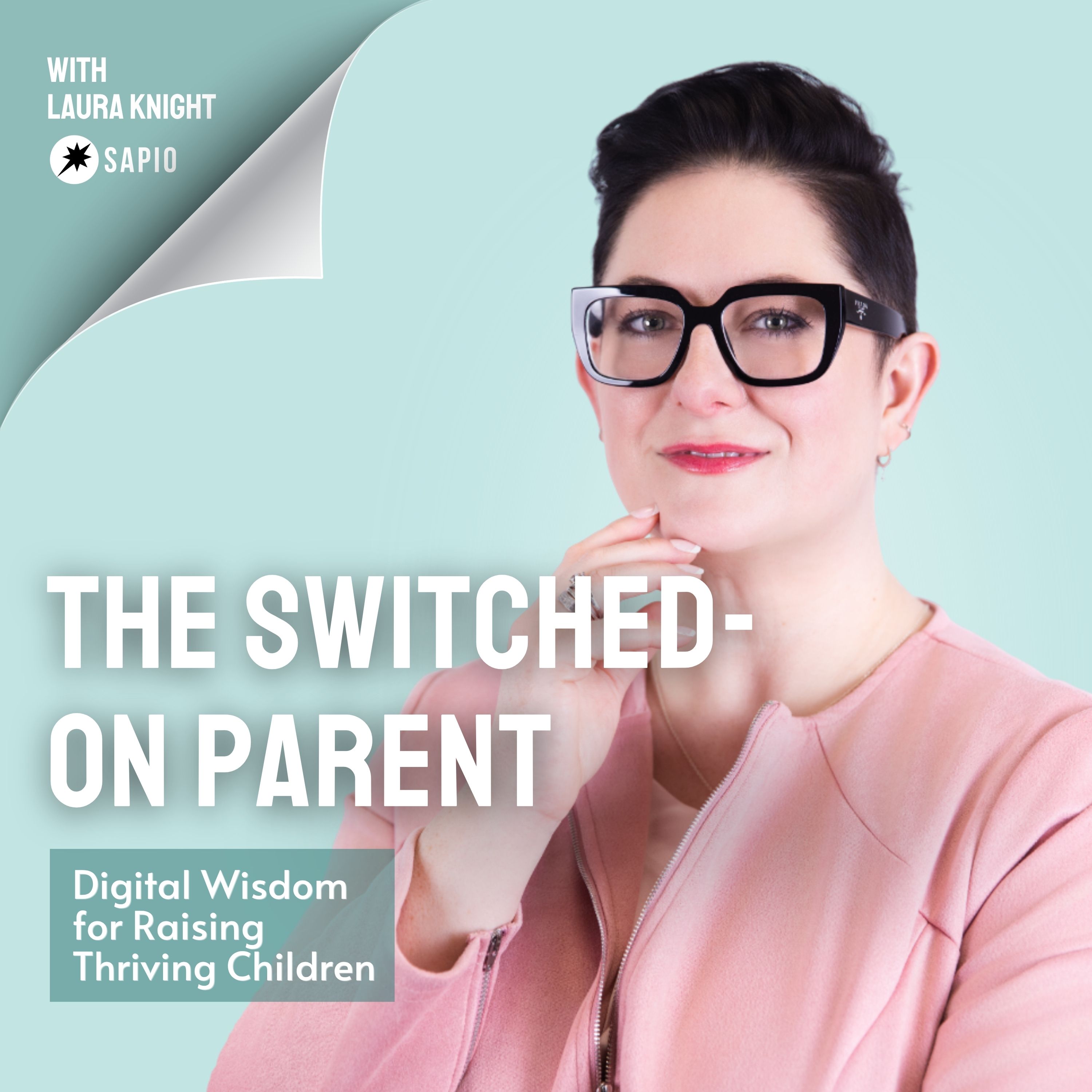
Artwork for The Switched On Parent
Kids & FamilyParentingEducationHow To

The Switched On Parent

Laura Knight

None of us grew up in the digital world our children are navigating today. I’m Laura Knight, and after two decades working as a teacher and digital leader in schools, I’m now asking many of the same questions as a parent around my own kitchen table. The Switched On Parent is here to help you understand what is shaping children online, decide what genuinely deserves your attention and respond when things go wrong. There will be no lectures or jargon, just thoughtful conversations, reliable information and practical support to help your family make confident choices with more wisdom and less panic.

Play
  • 14 episodes
  • weekly
  • Avg 26 min
  • English
  • #13
    Wednesday · 23 min

    The Social Media Ban: What It Can and Can't Fix

    A social media ban for under-16s sounds like a welcome relief for parents. But will it actually make our children safer? In this episode, I'm looking at what Australia's experience can teach us, from teenagers finding surprisingly creative ways around age checks to the unintended consequences of pushing children into less visible corners of the internet. I'm asking whether we're focusing too much on keeping children off certain apps and not enough on what makes those apps risky in the first place. And, importantly, I'm sharing four practical ways we can protect our children, whatever the law says. Highlights: (01:29) - Why I'm not quite celebrating the social media ban (04:38) - The strongest argument for a ban, and why it matters (07:20) - What Australia's teenagers are actually doing online (10:00) - The hidden costs of the cat-and-mouse game (15:14) - The worrying gap between what children do and what parents know (17:29) - Four things we can do that no law can do for us Connect with Laura: Book a Discovery Call Linkedin Website This podcast was lovingly produced by the humans at WAVEMAKERS AUDIO

  • #12
    October 20 · 35 min

    Your Child Is More Than Their Worst Online Moment

    We spend so much time talking about preventing things from going wrong online, but eventually something probably will. Your child might get hurt, hurt someone else, or find themselves somewhere in the messy middle. And when our hearts sink, it’s incredibly easy to react before we’ve understood the whole story. In this episode, I’m exploring what happens next. We’ll look at listening before judging, asking better questions, accountability without shame, meaningful consequences and why simply confiscating the phone can backfire. Most importantly, we’ll think about repair, because one difficult moment doesn’t define your child, and moving forwards together can strengthen the relationship rather than break it. Highlights: (04:35) - Before you react to the tip of the iceberg, make sure you understand what’s underneath it (09:02) - Don’t let one screenshot, group chat or mistake become your whole picture of your child (13:39) - Two little words that can completely change the conversation: “What else?” (17:49) - Understanding isn’t letting them off the hook, accountability and empathy can coexist (22:09) - Taking the phone away might feel like a consequence, but what is your child actually learning? (30:44) - When something goes wrong online, blaming the technology is only part of the story Connect with Laura: Book a Discovery Call Linkedin Website This podcast was lovingly produced by the humans at WAVEMAKERS AUDIO

  • #11
    October 13 · 34 min

    Group Chats: Friendship, Fallout and FOMO

    Group chats can be brilliant places for friendship, jokes and belonging. But they can also make exclusion painfully visible. A message left unanswered, a child repeatedly removed from a group, a screenshot shared elsewhere or simply discovering there’s another chat you weren’t invited to can suddenly feel enormous when you’re young. In this episode, I’m looking at the evidence around group chats, cyberbullying and FOMO, alongside the practical things we can do as parents. We’ll explore subtle online unkindness, why children find it so difficult to switch off, what bystanders can actually do, and how to decide whether your child is ready to join a group chat in the first place. Highlights: (04:46) - The good side of group chats, because they really can help children belong (09:42) - When “it’s just a joke” becomes exclusion, harassment or bullying (14:21) - Why an unhappy child might still feel unable to leave the group (18:47) - Parents’ WhatsApp groups... perhaps we need to look at our own behaviour too (23:28) - When staying silent in a group chat can feel like agreement (28:02) - Before you say yes to group chats, rehearse what could go wrong Connect with Laura: Book a Discovery Call Linkedin Website This podcast was lovingly produced by the humans at WAVEMAKERS AUDIO

  • #10
    October 6 · 33 min

    Deepfakes: What Every Parent Needs to Know

    Deepfakes have come a long way from paper fairies and hat pins. Today, a convincing fake can be created from an ordinary photo or a few seconds of someone’s voice, which means our children need more than a lesson in spotting dodgy hands and extra fingers. Those clues simply aren’t reliable anymore. In this episode, I’m looking at what deepfakes mean for children, from misinformation and voice scams to consent, bullying and sexual image abuse. I’ll also share my five Ps for navigating questionable content, plus practical ways to help children think critically, protect each other and, importantly, know they can always come to you when something goes wrong. Highlights: (05:10) - Forget counting fingers, why spotting a deepfake isn’t that simple anymore (10:04) - Plot twist: the fanciest fake isn’t necessarily the most convincing (15:11) - Why telling girls to disappear from online spaces is not a safety strategy (20:30) - Meet the five Ps: pause, place, proof, permission and protect (25:10) - That terrifying phone call might not be who you think it is (29:44) - Deepfake disaster? Here’s what to do without making things worse Connect with Laura: Book a Discovery Call Linkedin Website This podcast was lovingly produced by the humans at WAVEMAKERS AUDIO

  • #9
    September 29 · 29 min

    Parenting And The Uncomfortable Conversations We Can’t Avoid

    Pornography is one of those parenting topics that can feel incredibly awkward to talk about, but staying silent doesn’t make it disappear. In this episode, I’m looking beyond the panic to explore what the evidence actually tells us about young people, pornography and the messages they may absorb from what they see online. We’ll talk about accidental exposure, consent, body image, healthy relationships and why curiosity isn’t something to shame. I’ll also share how these conversations can change as children grow, why filters alone aren’t enough, and how staying calm can help us become the trusted adults our children need. Highlights: (04:50) - Why one accidental image doesn’t define a child’s future (07:18) - The important difference between seeing porn, watching it and struggling with it (10:40) - The hidden relationship scripts pornography can teach (16:48) - What healthy intimacy and consent actually look like (19:38) - How the conversation needs to change as our children grow (25:42) - Why staying calm matters when your child has seen something Connect with Laura: Book a Discovery Call Linkedin Website This podcast was lovingly produced by the humans at WAVEMAKERS AUDIO

  • #8
    September 22 · 30 min

    When Your Child Sees Something Disturbing Online

    In this episode, I’m talking about what to do when your child comes across sexual, violent, hateful or otherwise disturbing content online. The instinct can be to ask what they searched for or why they kept watching, but today’s digital world is shaped by recommendation systems, autoplay, group chats and peer pressure too. We’ll look at how to separate intention from influence, respond without rushing into blame, and decide what boundaries need to change. I also share how your approach can evolve as children get older, while keeping safety, honesty and trust at the centre of the conversation. Highlights: (03:32) - Why it’s too simplistic to say a child simply “chose” harmful content (05:02) - The better questions to ask before jumping to blame (10:10) - Why today’s children can encounter inappropriate content without actively searching for it (15:00) - How your response should change as your child gets older (19:44) - The questions that help you understand what actually happened (24:36) - How to reset boundaries, repair trust and make things safer without shame Connect with Laura: Book a Discovery Call Linkedin Website This podcast was lovingly produced by the humans at WAVEMAKERS AUDIO

  • #7
    September 15 · 27 min

    The Digital Babysitter: When Screens Help and When Habits Creep In

    In this episode, I’m talking about the digital babysitter, that moment when handing over a screen feels less like a parenting choice and more like an emergency service. Screens can genuinely help us through busy, exhausting or downright chaotic moments, and I want to take some of the shame out of that. But I’m also looking at what happens when helpful screen use quietly becomes the automatic answer. We explore what our children actually need, what screens might be replacing, why stopping can cause such huge reactions, and how our own phone habits fit into the picture too. Highlights: (03:35) - What job are we actually asking the screen to do? (05:21) - Three ways to spot helpful use, necessary relief and default habits (09:51) - Why screen time alone doesn’t tell us the whole story (12:07) - What children miss when screens become the only way to calm down (15:05) - Why difficult transitions don’t automatically mean addiction (24:45) - A simple way to notice what’s really happening before the screen comes out Connect with Laura: Book a Discovery Call Linkedin Website This podcast was lovingly produced by the humans at WAVEMAKERS AUDIO

  • #5
    September 10 · 26 min

    Connection, Courage and Choosing Integrity Online

    In this episode, I’m exploring what connection really means for children growing up online. We’ll look at why having hundreds of contacts, streaks, likes and messages does not necessarily mean feeling seen or supported, and why online friendships deserve to be taken just as seriously as the relationships happening face to face. I’ll also talk about helping children manage boundaries, disagreement and social pressure without losing themselves in the process. We’ll explore quieter forms of courage, what integrity looks like when everyone might be watching, and how parents can help children build relationships that feel secure rather than exhausting. Highlights: (01:30) - How can children be more connected than ever and still feel incredibly lonely? (04:44) - Why struggling with the pull of apps is not simply a lack of willpower (09:11) - Likes, streaks and group chats: when friendship starts feeling like something you have to perform (13:41) - Muting the chat is not rude: why healthy friendships need boundaries (18:13) - Courage online does not always mean publicly calling someone out (23:15) - Integrity when everyone is watching, and why small acts of courage really matter Connect with Laura: Book a Discovery Call Linkedin Website This podcast was lovingly produced by the humans at WAVEMAKERS AUDIO

  • #6
    September 10 · 30 min

    Rules and Routines that Really Work

    In this episode, I’m getting practical about digital routines, boundaries and what it really takes to make the rules in your home stick. We’ll talk about why parenting is not the same as negotiating with a friend, why consistency matters, and how giving children clear, age-appropriate reasons can reduce some of the conflict around devices, apps and screen time. I’ll also explore why fairness does not always mean identical rules, how different children and different platforms may need different boundaries, and why that first phone or tablet is such an important moment. And if you wish you had done things differently earlier, you are allowed to change your mind. Highlights: (01:42) - Setting the rule is one thing. Making it actually hold up is another. (04:07) - Why parenting cannot become one long negotiation where persistence eventually wins (07:38) - Fair does not mean getting your own way, but children do need to understand the why (13:14) - Why siblings do not always need exactly the same digital rules (19:05) - The first phone, tablet or console can set the pattern for everything that follows (24:13) - Changing your mind because you know more now is good judgement, not failed parenting Connect with Laura: Book a Discovery Call Linkedin Website This podcast was lovingly produced by the humans at WAVEMAKERS AUDIO

  • #3
    September 9 · 22 min

    Real, Fake and Everything In Between Raising Critical Thinkers Online

    In this episode, I’m looking behind the curtain at the design choices that make apps, games and online platforms so difficult to put down. From infinite scroll and autoplay to streaks, notifications and social rewards, we’ll explore how children’s attention is deliberately captured and why so many supposedly free digital experiences come with another kind of cost. I’ll also explain surveillance capitalism, data collection and why these platforms are not neutral spaces. Most importantly, we’ll look at how parents can help children recognise persuasion for themselves, make more informed choices and develop the critical thinking they need to become confident, capable digital citizens. Highlights: (01:30) - If an app is free, your attention might be part of what’s paying for it (05:11) - Infinite scroll, autoplay and streaks: why stopping can feel surprisingly hard (09:53) - That notification feels urgent, but is anyone actually trying to talk to you? (12:44) - Your child’s clicks, pauses and preferences are worth more than you might think (14:49) - Why banning everything is not the answer, but understanding the deal absolutely matters (19:47) - One simple question that can get children thinking differently about the apps they use Connect with Laura: Book a Discovery Call Linkedin Website This podcast was lovingly produced by the humans at WAVEMAKERS AUDIO

  • #4
    September 9 · 25 min

    Privacy, Secrecy and Trust Online

    In this episode, I’m looking at the difference between privacy and secrecy online, and why I believe younger children need much more visibility and supervision than we sometimes realise. We’ll explore passwords, hidden accounts, boundaries and how digital independence should grow gradually as a child’s judgement develops. I’ll also talk about what secrecy might be telling us, why a hidden account is a signal rather than simply bad behaviour, and how our first response can shape whether a child feels safe enough to tell us what is really going on. The goal is not constant surveillance. It is helping children build the judgement, trust and confidence they need to manage online spaces more safely as they grow. Highlights: (01:30) - Why online privacy for young children is not the same as a closed bedroom door (04:45) - Privacy, independence and secrecy: how to tell the difference (09:49) - Why digital freedom should grow alongside demonstrated judgement (14:41) - When secrecy may be coming from fear, pressure or something more serious (19:26) - Why your first reaction can determine whether your child tells you the truth (23:08) - Private, surprise or secret? A simple distinction every family can talk about Connect with Laura: Book a Discovery Call Linkedin Website This podcast was lovingly produced by the humans at WAVEMAKERS AUDIO

  • #1
    September 8 · 23 min

    It’s Not Just About Screen Time

    Screen time is one of those topics that can turn an ordinary family evening into a full-blown negotiation. In this first episode, I’m looking beyond the number of minutes children spend on devices and asking a more useful question: what are they actually doing with that time? We’ll explore the idea of a digital media diet, the risks parents really need to understand, and how online experiences can affect sleep, connection, creativity, habits and wellbeing. I’ll also share how to set boundaries that make sense for your individual child, why blanket bans can backfire, and why good digital parenting is less about perfect rules and more about helping children build judgement, awareness and resilience. Highlights: (01:39) - Why screen time alone is a pretty poor measure of what children are actually consuming (04:53) - The four key areas of online risk every parent should understand (08:09) - How to tell whether digital experiences are restorative, creative or simply draining (10:17) - Why I limit some YouTube content more than guitar tutorials and passion-led learning (14:59) - How to set boundaries around what really matters to your family (19:31) - Why good digital boundaries should be explainable, flexible and able to evolve Connect with Laura: Book a Discovery Call Linkedin Website This podcast was lovingly produced by the humans at WAVEMAKERS AUDIO

  • #2
    September 8 · 22 min

    Nothing Online Is Really Free - Understanding the Digital World

    In this episode, I’m looking at what really happens behind the screen when an app, game or platform appears to be free. We’ll explore the attention economy, persuasive design and the ways digital spaces are deliberately built to keep us clicking, scrolling and coming back for more. I’ll also explain why children’s attention and data have real commercial value, what surveillance capitalism actually means, and how parents can make more informed choices without assuming all technology is bad. Most importantly, we’ll look at how curiosity, better boundaries and honest conversations can help children become more confident and thoughtful digital citizens. Highlights: (01:30) - If the app is free, what exactly is being paid for? (05:11) - Infinite scroll, streaks and autoplay, the tricks designed to keep us coming back (10:01) - Why notifications feel personal even when no human is trying to reach you (14:56) - Your child’s attention plus their data equals something incredibly valuable (17:33) - Why the answer is not to ban everything and retreat into a tech-free cave (20:03) - The question every parent can ask their child about the apps they use Connect with Laura: Book a Discovery Call Linkedin Website This podcast was lovingly produced by the humans at WAVEMAKERS AUDIO

  • September 7 · 2 min

    TRAILER

    None of us grew up in the digital world our children are navigating today. I’m Laura Knight, and after two decades working as a teacher and digital leader in schools, I’m now asking many of the same questions as a parent around my own kitchen table. The Switched On Parent is here to help you understand what is shaping children online, decide what genuinely deserves your attention and respond when things go wrong. There will be no lectures or jargon, just thoughtful conversations, reliable information and practical support to help your family make confident choices with more wisdom and less panic. Connect with Laura: Book a Discovery Call Linkedin Website This podcast was lovingly produced by the humans at WAVEMAKERS AUDIO

Showing 1–14 of 14 episodes