Skip to content
Artwork for The Superposition Guy's Podcast

The Superposition Guy's Podcast

Yuval Boger

Yuval Boger, Chief Commercial Officer at QuEra, hosts thought leaders in quantum computing, quantum sensing, and quantum communications to discuss business and technical aspects that impact the quantum ecosystem. Full transcripts are available at podcast.yboger.com

Play
  • 21 episodes
  • fortnightly
  • Avg 30 min
  • English
Counted on this page — what you have heard stays on this device, so it is not something the list can be paged by.
  • Monday · 36 min

    Steve Orrin, Chief Technology Officer for Intel Federal

    In this episode, host Yuval Boger speaks with Steve Orrin, Chief Technology Officer for Intel Federal, about the sweeping post-quantum cryptography mandates confronting U.S. government agencies and their supply chains. Orrin breaks down the 2030-2031 migration deadlines, the January 2027 acquisition requirement for national security systems, and why a standard Windows laptop can contain 20,000 crypto assets — not all of which need immediate attention. The conversation covers Intel's multi-generational approach to embedding PQC in silicon, the importance of crypto agility for future algorithm changes, and practical advice for agencies beginning their cryptographic inventory, including the often-missed firmware and peripheral layers beneath the OS.
  • August 17 · 30 min

    Rob Jesudason, CEO and founder of Serendipity Capital

    Rob Jesudason, CEO and founder of Serendipity Capital — a $1.3 billion permanent capital vehicle focused on critical technologies — joins the podcast to discuss quantum investing across modalities, the SPAC versus IPO debate, and how governments should allocate quantum funding. Jesudason argues that the quantum industry has entered a new phase where managerial execution and engineering scale matter as much as the underlying science, and that future winners will likely be multimodality companies that can ship systems at scale. He offers a nuanced perspective on government investment strategy, suggesting that while leading nations should pick winners in partnership with the private sector, smaller countries should focus on being the fastest integrators of winning technologies into their economies rather than trying to build world-leading hardware from scratch.

  • August 3 · 28 min

    Stephen DiAdamo, co-founder and CTO of Qoro Quantum

    Stephen DiAdamo, co-founder and CTO of Qoro Quantum, is interviewed by Yuval Boger. DiAdamo discusses Qoro's position as a software middleware company that abstracts hardware away from applications, walking through the Divi SDK, circuit serialization and parallelization, and an orchestrator that automatically selects between 12 simulation methods on CPU and GPU or dispatches to QPUs from any vendor. They explore how Qoro plugs into HPC schedulers like SLURM rather than replacing them, the CESGA proof of concept built on the CUNQA platform, the "150,000 lines of code to 20" claim, and the argument that multi-QPU centers are needed today for fallback and resilience and for scaling applications. DiAdamo also reflects on developer experience for students learning QAOA and variational algorithms, and Qoro's two-year history.

  • July 20 · 23 min

    Julien Camirand Lemire, co-founder and CEO of Nord Quantique

    Julien Camirand Lemire, co-founder and CEO of Nord Quantique, is interviewed by Yuval Boger. Julien discusses Nord Quantique's bosonic code approach, which uses microwave photons in superconducting cavities to achieve quantum error correction without large qubit overhead, including their GKP and Tesseract code demonstrations and a quantum error correction gain that has more than doubled since 2024. They explore the company's roadmap toward 10^-7 to 10^-9 error rates by 2032, the four-qubit system entering operation this year, and how Quebec's Sherbrooke ecosystem has enabled a capital-efficient build. They also discuss high-rate codes, transmon-based scaling challenges, and much more.

  • July 6 · 35 min

    Corey O'Meara, Chief Quantum Scientist at E.ON Digital Technology

    Yuval Boger interviews Corey O'Meara, Chief Quantum Scientist at E.ON Digital Technology. They discuss how E.ON’s five-person quantum team works with business units to find high-value use cases, especially where classical methods may hit bottlenecks in optimization and machine learning. Corey describes the company’s work on peer-to-peer energy trading and other grid-related applications, and shares his perspective on cloud access, hybrid deployment, and the accelerating progress toward fault-tolerant quantum computing.

  • June 22 · 25 min

    Helmut Katzgraber, general partner at 55North

    Yuval Boger interviews Helmut Katzgraber, general partner at 55North and former quantum leader at AWS. They discuss Helmut’s view that the most promising near- to mid-term quantum applications are in quantum simulation for materials, chemicals, and pharma, rather than optimization. They also explore European competitiveness, venture opportunities across the quantum stack, cloud and on-prem deployment models, and the workforce and product skills needed to turn quantum ideas into successful companies.

  • June 15 · 28 min

    Mehmet Sanliol, managing director at Evercore

    Yuval Boger interviews Mehmet Sanliol, managing director at Evercore covering quantum technologies and semiconductors. They discuss how investors value public quantum companies, when private companies should consider IPOs or SPACs, and why consolidation may shape the next phase of the industry. Mehmet also shares his perspective on technical and market signals that could affect valuations, the outlook for quantum software, and the recent developments in quantum that caught his attention most.

  • June 8 · 21 min

    Robert Wille, Professor at TuM and CEO of Munich Quantum Software Company

    Yuval interviews Robert Wille, a computer scientist and co-founder focused on quantum computing software. They discuss the field’s transition from research to practical deployment, the need for heterogeneous and hardware-agnostic software stacks, and the integration of quantum into HPC environments. Robert explains the importance of design automation, open-source strategy, and AI-assisted development, arguing that quantum’s complex optimization challenges resemble those long solved in classical computing.

  • June 1 · 48 min

    Sebastian Hassinger, host of The New Quantum Era podcast and author of a new book by the same name

    Sebastian Hassinger, host of The New Quantum Era podcast and author of a new book by the same name, is interviewed by Yuval Boger. Sebastian and Yuval have much in common beyond their work in quantum: both are podcasters, neither holds a PhD, and both are authors of new books — Sebastian's The New Quantum Era and Yuval's Quantum Bits, the Comic Book Guide to Quantum Computing. In a conversation more symmetric than the typical episode, they compare notes on the motivation and process of writing these books, the challenge of explaining quantum computing to non-physicists, and debate Hassinger's modality forecast. They also discuss their hypothetical dinner guests from the quantum greats, and much more. Get the books at: www.QuantumBitsComics.com/buy www.TheNewQuantumEra.com

  • May 25 · 25 min

    Klea Dhmitri, Application Engineer, Hamamatsu Corporation

    Klea Dhmitri of Hamamatsu joins Yuval to discuss the company’s role as a photonic component provider for trapped-ion and neutral-atom quantum computers. She explains key technologies such as photomultiplier tubes (PMTs), SPADs, and quantitative CMOS cameras, and how scaling to larger qubit arrays changes requirements for speed, resolution, and integration. Klea also shares how customer demand is pushing product innovation, reflects on her unconventional path into quantum, and offers advice for those looking to build careers in photonics and quantum technologies.

  • May 18 · 24 min

    Brian Gaucher, co-chair of ERVA’s report on Engineering Research to Advance Quantum Technologies

    Yuval Boger interviews Brian Gaucher, an experienced engineer and IBM veteran who co-chaired ERVA’s report Engineering Research to Advance Quantum Technologies. Brian explains that while U.S. quantum science remains strong, global competition is accelerating and the key limiter is no longer physics discovery but engineering the path from “lab to fab”—scalable, manufacturable, reliable systems. They discuss why the U.S. should pursue a coordinated, semiconductor-like national strategy with shared pilot lines, standards, metrology, public-private investment, and a broader workforce—not just physicists. They also cover the report’s four pillars (materials, biology, computing, AI), the importance of domestic fabrication, and why biology and quantum sensing may deliver surprisingly near-term impact.

  • May 4 · 25 min

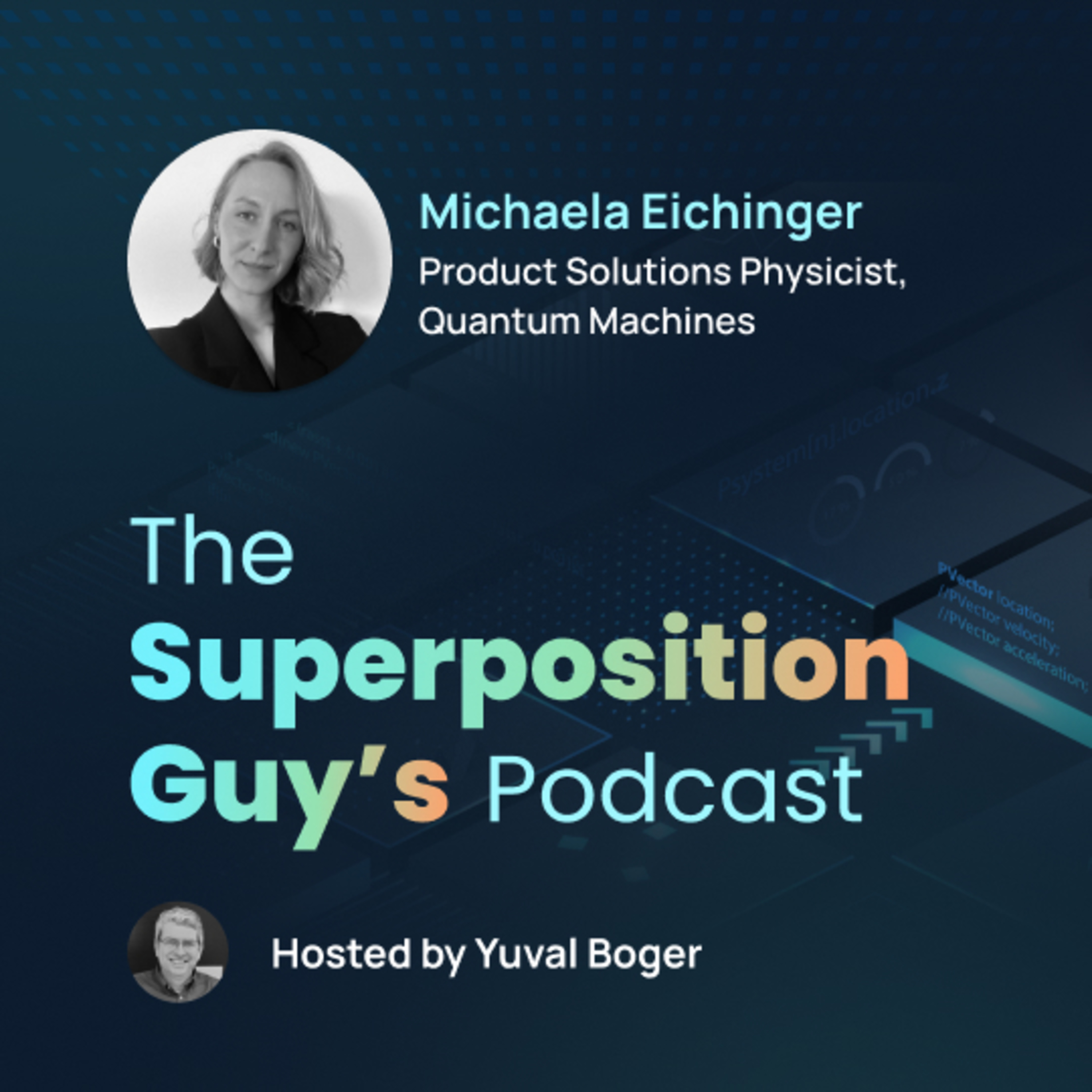
    Michaela Eichinger, a product solutions physicist at Quantum Machine

    Yuval Boger interviews Michaela Eichinger, a product solutions physicist at Quantum Machines and the author of a widely read quantum computing newsletter. They discuss her transition from academia to industry, her fascination with systems-level views of the quantum stack, and the role of communication in building the quantum ecosystem. The conversation covers the state of quantum computing in 2026, realistic metrics for progress, superconducting qubits, and why classical processing and HPC integration are becoming central to useful quantum computers.

  • April 27 · 28 min

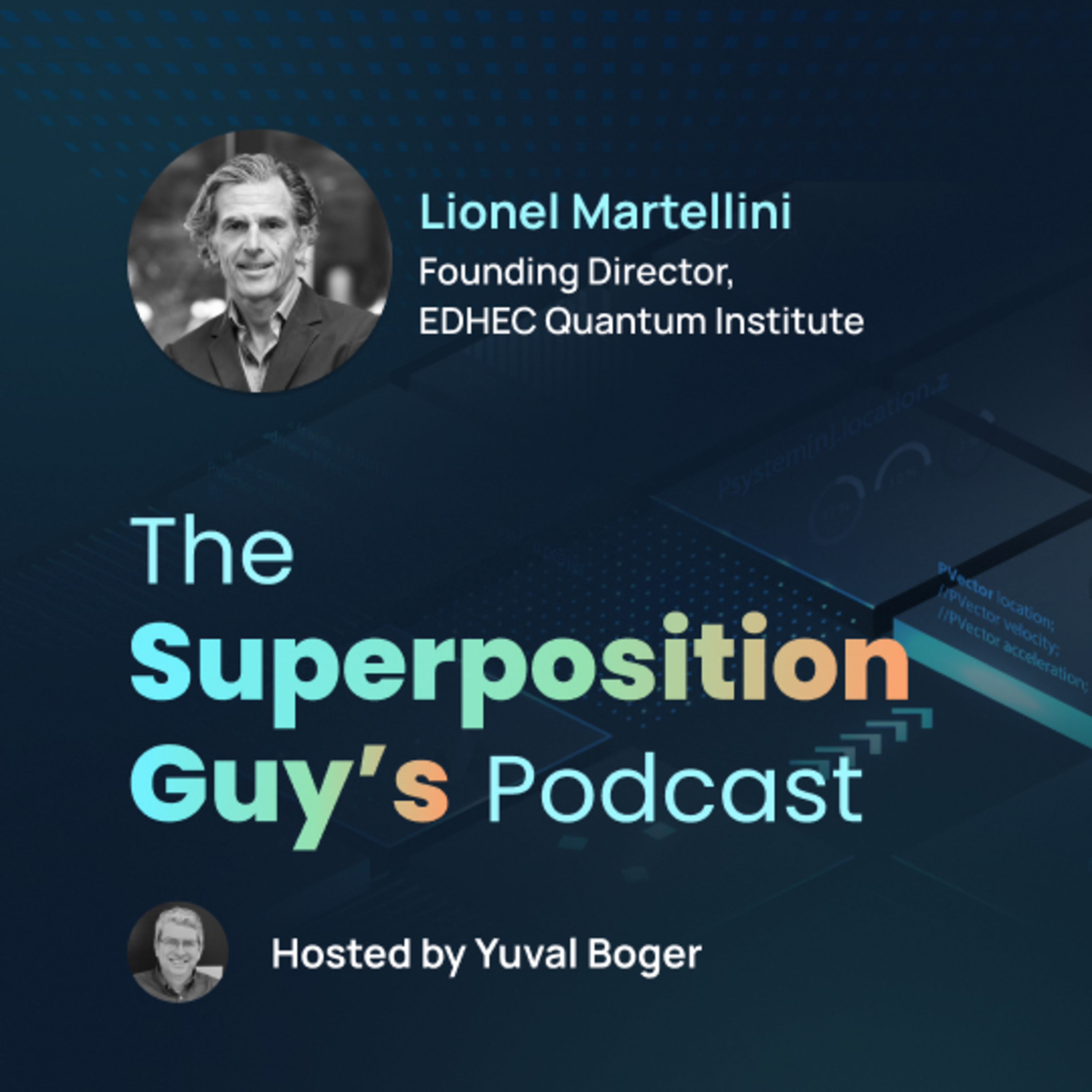
    Lionel Martellini, founding director of the EDHEC Quantum Institute

    Yuval Boger interviews Lionel Martellini, finance professor at the EDHEC and founding director of the EDHEC Quantum Institute. Lionel describes his unusual path from finance to astrophysics and why business schools should teach quantum awareness to future leaders. They discuss core quantum concepts, the danger of overhyping “quantum washing,” and the real prospects for quantum applications in finance. The conversation also explores executive education, practical use cases, and how businesses should prepare for quantum technologies.

  • April 20 · 27 min

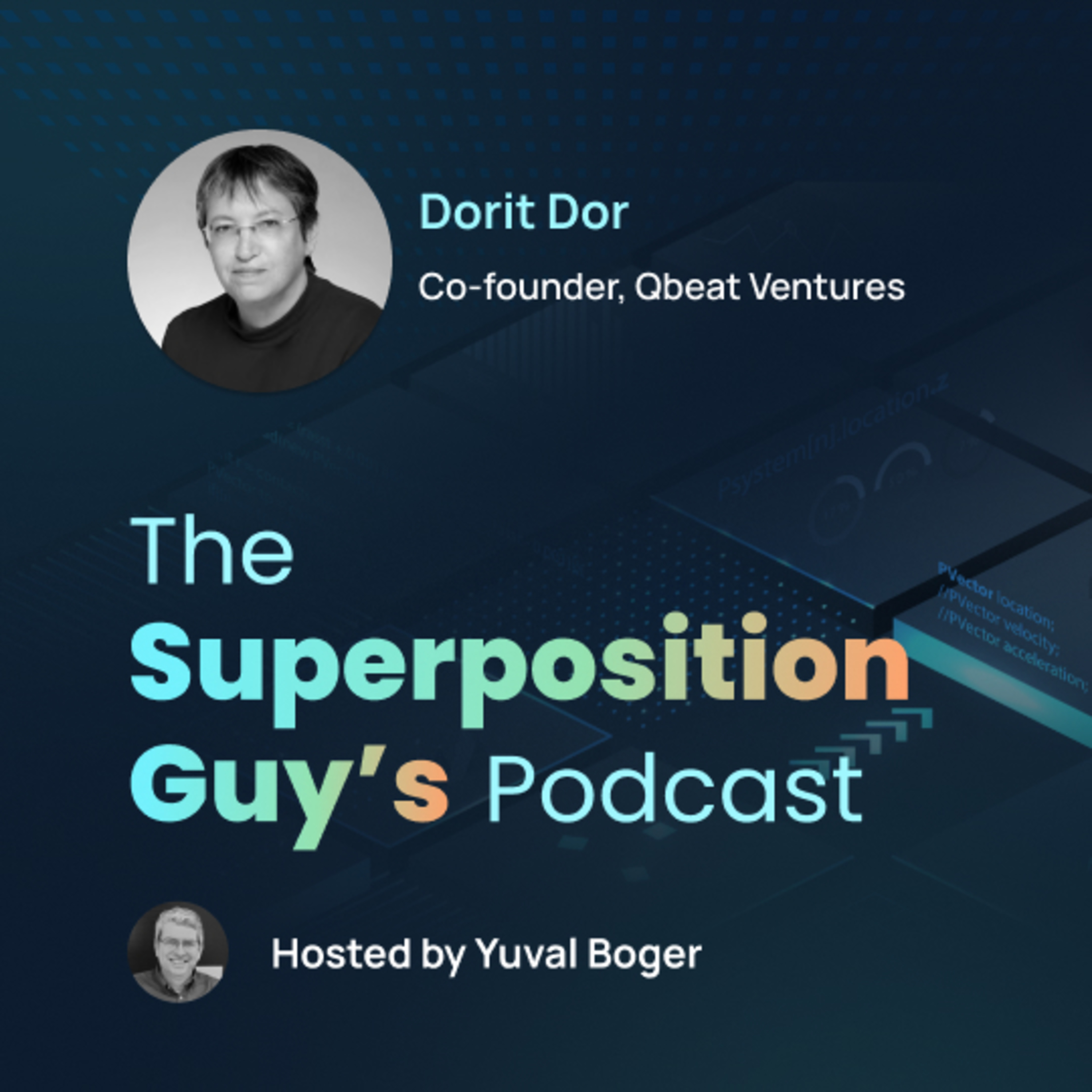
    Dorit Dor, co-founder of Qbeat Ventures

    Yuval Boger interviews Dorit Dor, co-founder of Qbeat Ventures and former senior executive at Check Point. They discuss lessons quantum startups can draw from the evolution of cybersecurity, including the importance of go-to-market strategy, focus, and adherence to standards. Dorit outlines her fund’s cross-stack investment strategy, compares different quantum modalities, comments on public market dynamics, and highlights the growing Israeli quantum ecosystem and its potential for future impact.

  • April 13 · 25 min

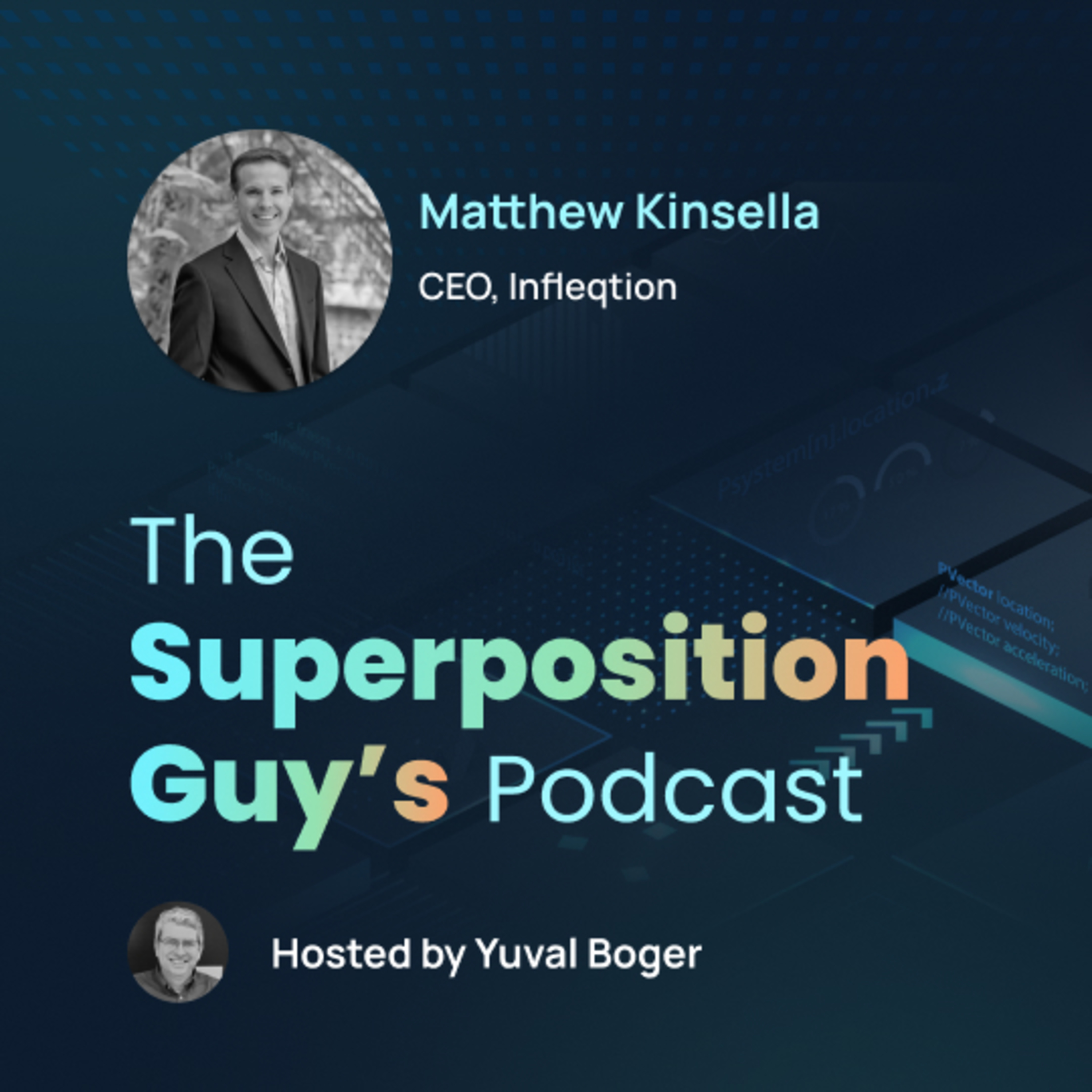
    Matt Kinsella, CEO of Infleqtion

    Yuval Boger interviews Matt Kinsella, CEO of Infleqtion. They discuss Infleqtion’s neutral-atom strategy, including its combination of quantum computing, sensing, and timing products, and why Matt believes that diversified approach strengthens both the business and the technology stack. Matt also shares his timeline for commercially useful quantum computing, his reaction to Google entering neutral atoms, and his perspective on capital, talent, and scaling the company as a newly public business.

  • April 6 · 30 min

    Skeptic mathematician Gil Kalai from Reichman University and the Hebrew University of Jerusalem

    Yuval Boger interviews mathematician Gil Kalai about his long-standing skepticism regarding scalable quantum computing. Kalai explains two main arguments behind his theory: correlated noise that may defeat quantum error correction and complexity-based limits on NISQ devices achieving quantum supremacy. They discuss experimental claims such as Google’s 2019 result, potential tests of Kalai’s conjectures, and the implications for the future of quantum research. The conversation also explores how Kalai hopes the community will evaluate bold claims and what scientific insights could emerge regardless of the outcome.

  • March 30 · 35 min

    Tom Darras, CEO and co-founder of Welinq

    Yuval Boger interviews Tom Darras, CEO and co-founder of Welinq. They discuss how quantum networking uses shared entanglement to interconnect quantum processors, enabling modular scale-out clusters and quantum-safe connectivity between data centers. Tom explains the technical building blocks—qubit-photon interfaces, optical networks, entangled photon sources, and especially quantum memories—as well as the performance metrics that matter most, like entanglement generation rate, fidelity, and memory lifetime. They also cover Welinq’s Arachne compiler for distributing circuits across multiple QPUs, why networking is becoming a consensus scaling strategy across modalities, and how “quantum-augmented data centers” are starting to become real initiatives.

  • March 23 · 35 min

    Bob Sorensen, Chief Quantum Analyst, Hyperion Research

    Yuval Boger interviews Bob Sorensen of Hyperion Research about the growing convergence of quantum computing and high-performance computing. They outline a problem-first adoption playbook for HPC centers: identify bottlenecks, benchmark classical options and costs, then evaluate quantum as an accelerator with clear ROI and procurement targets. Sorensen weighs cloud versus on‑prem tradeoffs, argues quantum hardware needs short lifecycles with upgrade paths, and explains why HPC managers mainly worry about seamless integration. They close with practical definitions of quantum advantage (speed, capability, and power), real-world case studies, and why error-correction-driven architecture is increasingly shaping modality decisions.

  • March 16 · 21 min

    Christian Weedbrook, founder and CEO of Xanadu

    Yuval Boger interviews Christian Weedbrook, founder and CEO of Xanadu. They discuss Xanadu’s photonic approach to gate-based quantum computing, the advantages of room-temperature operation, and the company’s plan to scale through optical networking. Christian also describes PennyLane, photonic error correction, customer engagements, and Xanadu’s target of building a 500-logical-qubit system by 2029–2030. The conversation also touches on partnerships, manufacturing, likely early applications in chemistry and materials, and much more.

  • March 2 · 50 min

    Prof. Scott Aaronson, UT Austin

    Yuval Boger interviews computer science professor known for his work on quantum computing theory. They explore the current state of quantum hardware, the narrowing case for quantum skepticism, and the realistic path toward fault-tolerant, useful quantum machines. The conversation also covers quantum algorithms, cryptography risks, ethics, hype in commercialization, and advice for the next generation of quantum researchers.

Showing 1–20 of 21 episodes