
Skip to content
Artwork for The Spotlight: A Lighthouse Podcast
BusinessManagement

The Spotlight: A Lighthouse Podcast

Lighthouse

The Spotlight is a podcast from Lighthouse where commercial strategy meets candid conversation. Designed for commercial leaders and revenue managers who want to stay sharp in a changing market, each episode brings you the trends, data and perspectives that matter most for driving performance. Hosted by Daniel Foreman and Blake Reiter, The Spotlight puts industry leaders and real-world insights in focus – giving you fresh ideas to bring to your team, practical takeaways you can act on today, and the bigger-picture perspective you need to lead with confidence.

Play
  • 20 episodes
  • weekly
  • Avg 8 min
  • English
  • #1
    Wednesday · 5 min· Video

    Lighthouse Quick Takes - Short term rentals absorb Ocean City's hotel demand

    Ocean City, Maryland topped Lighthouse's Market Demand Index for summer 2026, yet its hotels cut prices year over year. In this Lighthouse Quick Take, Blake Reiter unpacks the disconnect: short term rental supply in Ocean City grew more than 21%, while occupancy and gross ADR for those properties both climbed, absorbing demand that hotels expected to capture. The same pattern shows up in Rapid City, Myrtle Beach, Virginia Beach, and Destin. For commercial and revenue leaders, the lesson is that flat or falling hotel rates in a high demand market don't always signal weak demand. They may signal that guests are booking short term rentals instead. Explore more of Lighthouse's travel & hospitality research: mylh.co/spotlightinsights

  • #1
    September 16 · 5 min· Video

    Lighthouse Quick Takes - Why monthly occupancy forecast accuracy hides daily misses

    A hotel beats its monthly occupancy forecast by six tenths of a point, and the room celebrates. But averaging 30 days of forecasted and actual occupancy can hide daily misses of eight, twelve, even sixteen percentage points. In this Lighthouse Quick Take, Blake Reiter explains why over-forecasts and under-forecasts don't cancel out operationally, even when they cancel out on paper. Blake walks through how a 12-point over-forecast drives excess labor and food waste, while a 16-point under-forecast strains front desk and housekeeping staffing and can surface in guest reviews. The lesson: measure forecast accuracy in absolute terms, not net averages, and look for where daily misses cluster. Explore more of Lighthouse's travel & hospitality research: mylh.co/spotlightinsights

  • #1
    September 9 · 4 min· Video

    Lighthouse Quick Takes - Abilene hotel rates surge after Stargate AI project

    In this Lighthouse Quick Take, Blake explores what happened to hotel pricing in Abilene, Texas, home to Stargate, the $500 billion AI data center project announced by OpenAI, Oracle, and SoftBank in January 2025. Actualized pricing was flat in the low $90s through 2024, then climbed to a peak of $243 a night by March 2026, up about 126% comparing the first seven months of 2026 to the same stretch in 2024. Blake breaks down why a single mega-project can outweigh a market's traditional seasonality, and what revenue managers in similarly sized markets should watch for before the next big build lands. Explore more of Lighthouse's travel & hospitality research: mylh.co/spotlightinsights
  • #1
    September 2 · 3 min· Video

    Lighthouse Quick Takes - Average booking lead time hides 3 hotel guest segments

    A 44-day average booking lead time sounds like a clear signal, but it blends 3 completely different traveler types: corporate guests booking 8 days out, leisure guests booking 60 days out and groups booking 80 days or more. In this Lighthouse Quick Take, Blake explores why blended averages like lead time and length of stay can trigger the wrong pricing, marketing and staffing decisions. Using a hypothetical 200-room hotel, Blake shows how panicking over a 44-day pace gap can lead to discounting demand that was already on its way, and why segment level distributions, not blended averages, are where pricing and marketing decisions actually get made. Explore more of Lighthouse's travel & hospitality research: mylh.co/spotlightinsights
  • #1
    August 26 · 6 min· Video

    Lighthouse Quick Takes - Global hospitality pricing: H1 2026 recap, H2 outlook

    Advertised three-star hotel prices in North America are up 3.7% for the second half of 2026, while five-star prices are down 20.5%, a 24-point gap in the same region and months. In this Lighthouse Quick Take, Blake breaks down Lighthouse's newly released State of Global Hospitality Pricing report, covering the H1 2026 recap and H2 2026 outlook. Blake walks through regional pricing trends across Europe, Asia and North America, the widening gap between three-star and five-star hotels, independent hotels outperforming brands, and the destinations posting the sharpest gains and losses, including Vietnam's triple-digit growth and steep declines across the Gulf region and Japan. Hoteliers will come away with a clearer read on where pricing power sits heading into H2 2026. Explore more of Lighthouse's travel & hospitality research: mylh.co/spotlightinsights Music licensed through Soundstripe. Code: EGJ5PGTHEUGK7DJW

  • #1
    August 19 · 7 min· Video

    Lighthouse Quick Takes - Why Masters hotel prices fell 37%

    Golf's four majors had very different effects on hotel pricing in their host cities this year. The US Open at Shinnecock Hills sent Suffolk County, New York, hotel rates up 106% year over year, while the Open Championship in Liverpool rose 80% and the PGA Championship lifted Philadelphia 18%. The Masters in Augusta was the outlier, falling 37%, the only major to post a year-over-year decline. In this Lighthouse Quick Take, Blake Reiter explains why: Augusta National's crackdown on ticket resale removed buyers who previously relied on the secondary market, leaving corporate room blocks unsold and forcing hoteliers to cut prices. The takeaway for hoteliers: when access to an event changes structurally, historical booking pace stops being a reliable comp. Explore more of Lighthouse's travel & hospitality research: mylh.co/spotlightinsights
  • #1
    August 12 · 7 min· Video

    Lighthouse Quick Takes - World Cup host cities' pricing surge

    The World Cup's 104 matches across 16 host cities in the United States, Mexico, and Canada drove sharp swings in hotel and short-term rental pricing. Blake breaks down which cities saw the biggest year-over-year gains, why Guadalajara and Monterrey topped the charts despite starting as the lowest-priced markets in 2025, and how demand indices actually cooled between January 1 and June 1 even as kickoff approached. For commercial and revenue leaders, the insight is practical: value markets can absorb more rate growth than expected during marquee events, and demand signals matter more than the calendar when setting pricing strategy. Explore more of Lighthouse's travel & hospitality research: mylh.co/spotlightinsights

  • #1
    August 5 · 4 min· Video

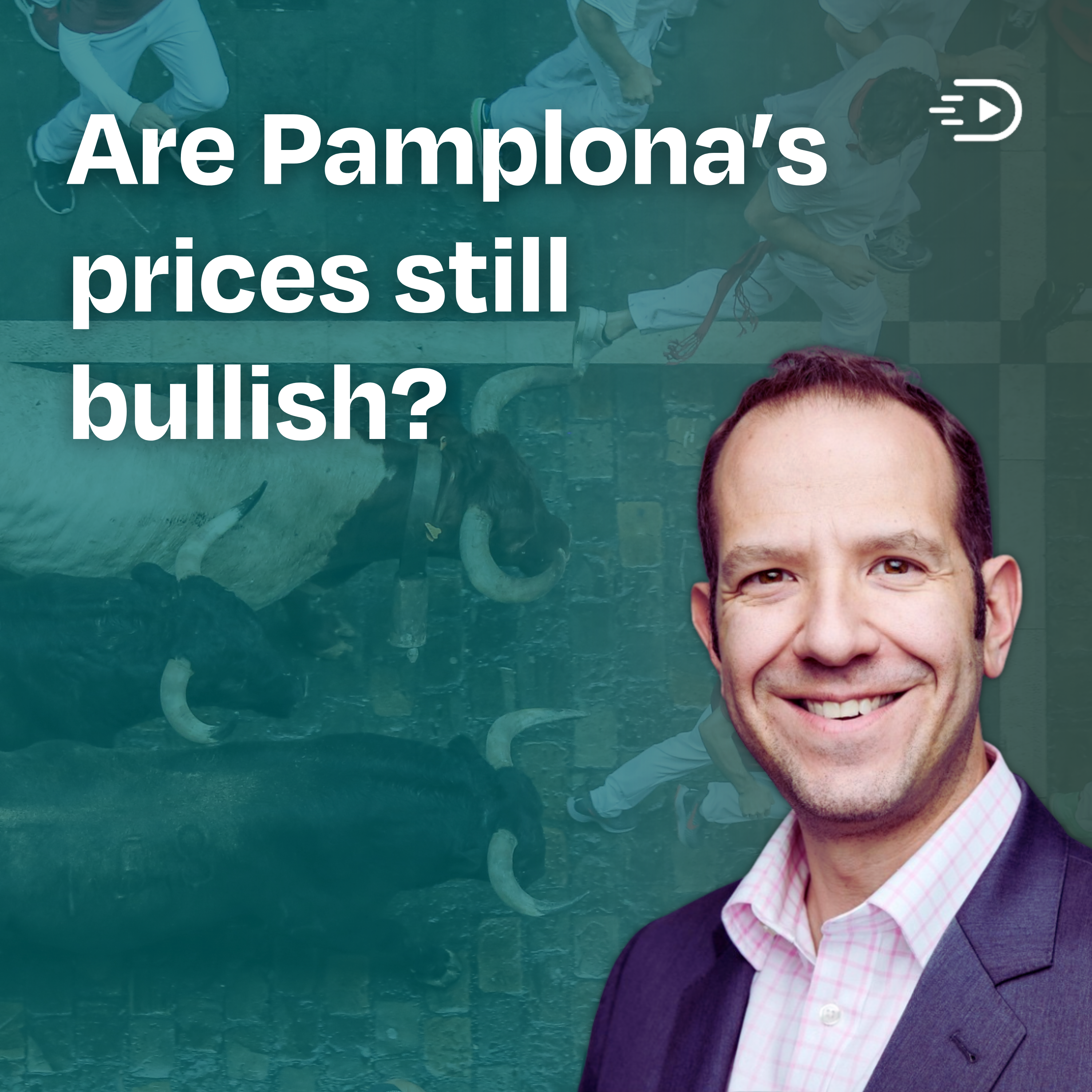
    Lighthouse Quick Takes - Pamplona hotel rates rise 3% in bull run week

    Every July, Pamplona's Running of the Bulls draws thousands of visitors during Spain's San Fermín Festival. In this Lighthouse Quick Take, Blake Reiter breaks down how hotel pricing moved this year, from a modest 3% citywide rate increase to a sharp divergence beneath it: independent hotels raised rates 5.4% while chains cut theirs 3.1%. He also looks at how short term rentals outpaced hotels on both rate and occupancy growth, and how pricing evolves differently depending on which day of the festival a hotel is filling. Explore more of Lighthouse's travel & hospitality research: mylh.co/spotlightinsights

  • #1
    July 29 · 4 min· Video

    Lighthouse Quick Takes - Wimbledon hotel pricing by tournament day

    In this Lighthouse Quick Take, Blake explores how hotel pricing power shifted across the two weeks of the 2026 Wimbledon championships. Week one delivered a 17% average year-over-year price gain, with every day posting positive growth, while week two averaged just 9%, with prices falling 12% below 2025 levels on final Sunday. Blake explains why the 2025 tournament carried a pricing premium tied to Carlos Alcaraz's bid for a third straight title, and why his absence in 2026 changed the benchmark. Listeners will understand why hoteliers need to track event narratives, not just calendars, when setting rates. Explore more of Lighthouse's travel & hospitality research: mylh.co/spotlightinsights
  • #1
    July 24 · 18 min· Video

    Live Episode - What an AI-powered hotel actually looks like

    AI in hospitality has moved past the buzzword stage. In this live episode of The Spotlight, recorded on stage at Lighthouse's Luminate conference, Daniel Foreman sits down with Kevin Patel, Vice President of Revenue Management at Scarlett Hotel Group, and Rob Spanos, Director of Asset Management at Noble Investment Group, to talk about what artificial intelligence actually looks like inside a hotel today. Kevin and Rob share how AI is already changing daily reporting, underwriting for acquisitions, and long-term investment decisions, and why asset managers have been the most cautious adopters given their fiduciary responsibilities. They also discuss where guest-facing personalization is heading, from luxury hotels to select service properties, and why the best AI rollout is one guests never notice. The conversation closes on this year's Luminate theme, Time to Act, and what it means to move from experimentation to execution. Explore more of Lighthouse's travel & hospitality research: mylh.co/spotlightinsights
  • #1
    July 23 · 20 min· Video

    Strategy Lab - Finding fresh revenue call insights with Ernest AI

    Revenue calls tend to default to the same weekly talking points, leaving little room to surface anything new under time pressure. In this Strategy Lab, Blake Reiter and Daniel Foreman use Ernest, Lighthouse's AI teammate, to generate three fresh topics for a hotel's upcoming revenue call in a matter of minutes. They then validate each recommendation inside the Lighthouse commercial platform, checking pricing restrictions, market demand, and event data. The workflow uncovers a length-of-stay restriction limiting weaker August Saturdays, a September demand surge tied to overlapping conferences, and a significant rate gap against the comp set during a period of event compression. The episode shows how commercial teams can pair AI-generated prompts with platform data to prepare faster and catch signals that a routine review might miss. Explore more of Lighthouse's travel & hospitality research: mylh.co/spotlightinsights

  • #1
    July 22 · 5 min· Video

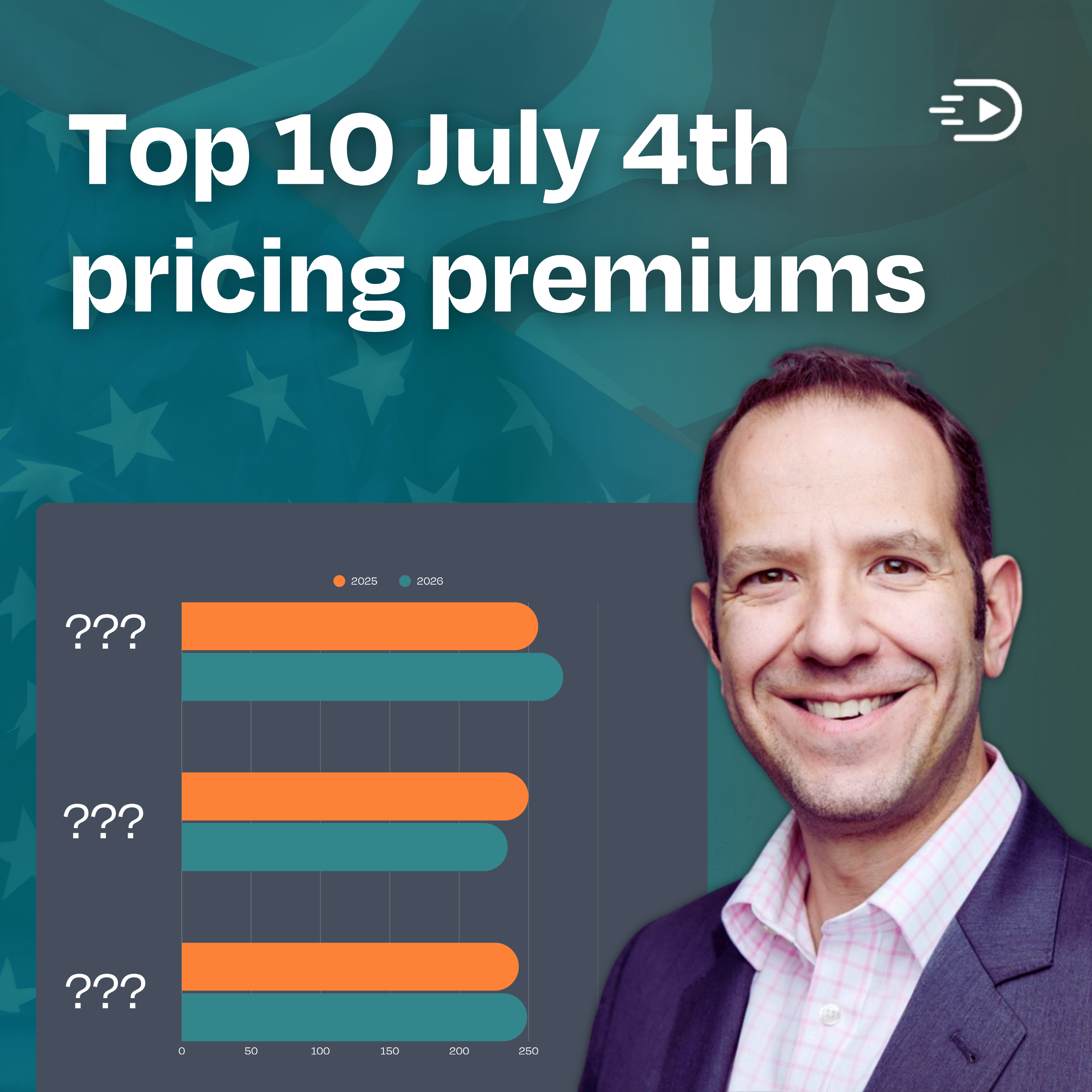
    Lighthouse Quick Takes - Which US markets saw the biggest July 4th premiums

    In this Lighthouse Quick Take, Blake Reiter explores which United States hotel markets captured the largest pricing premiums over July 4th weekend, comparing 2026 results to 2025 ahead of America's 250th Independence Day. Ocean City, Maryland led at 286% of its annual average pricing, followed by Traverse City, Michigan, boosted by its 100th National Cherry Festival, and South Padre Island, Texas. Rapid City, South Dakota also surged on America 250 tourism to Mount Rushmore, while Boulder, Colorado's premium fell after the city ended its fireworks display over wildfire risk. Blake breaks down what separates markets with strong holiday pricing power from those that lose it, and why understanding a market's demand drivers matters for commercial strategy. Explore more of Lighthouse's travel & hospitality research: mylh.co/spotlightinsights
  • #1
    July 15 · 4 min· Video

    Lighthouse Quick Takes - Santorini hotel rates surge as Mykonos softens

    Santorini and Mykonos sit in the same Cyclades archipelago, but their 2026 pricing trends have pulled sharply apart. Santorini hotel rates are up 35% in May and 31% in June year over year, with July advertised pricing up 16%. Mykonos hotel rates are down 3% in May, 8% in June, and 9% in July on the same basis. In this Lighthouse Quick Take, Blake Reiter examines what short-term rental data reveals about the split. Mykonos short-term rental gross ADR is growing and now runs more than double Mykonos hotel pricing, while Santorini hotels have overtaken short-term rentals on rate for the first time. The pattern points to a shift in traveler behavior rather than weaker overall demand, with direct implications for how hoteliers in each market think about pricing power. Explore more of Lighthouse's travel & hospitality research: mylh.co/spotlightinsights

  • #1
    July 8 · 4 min· Video

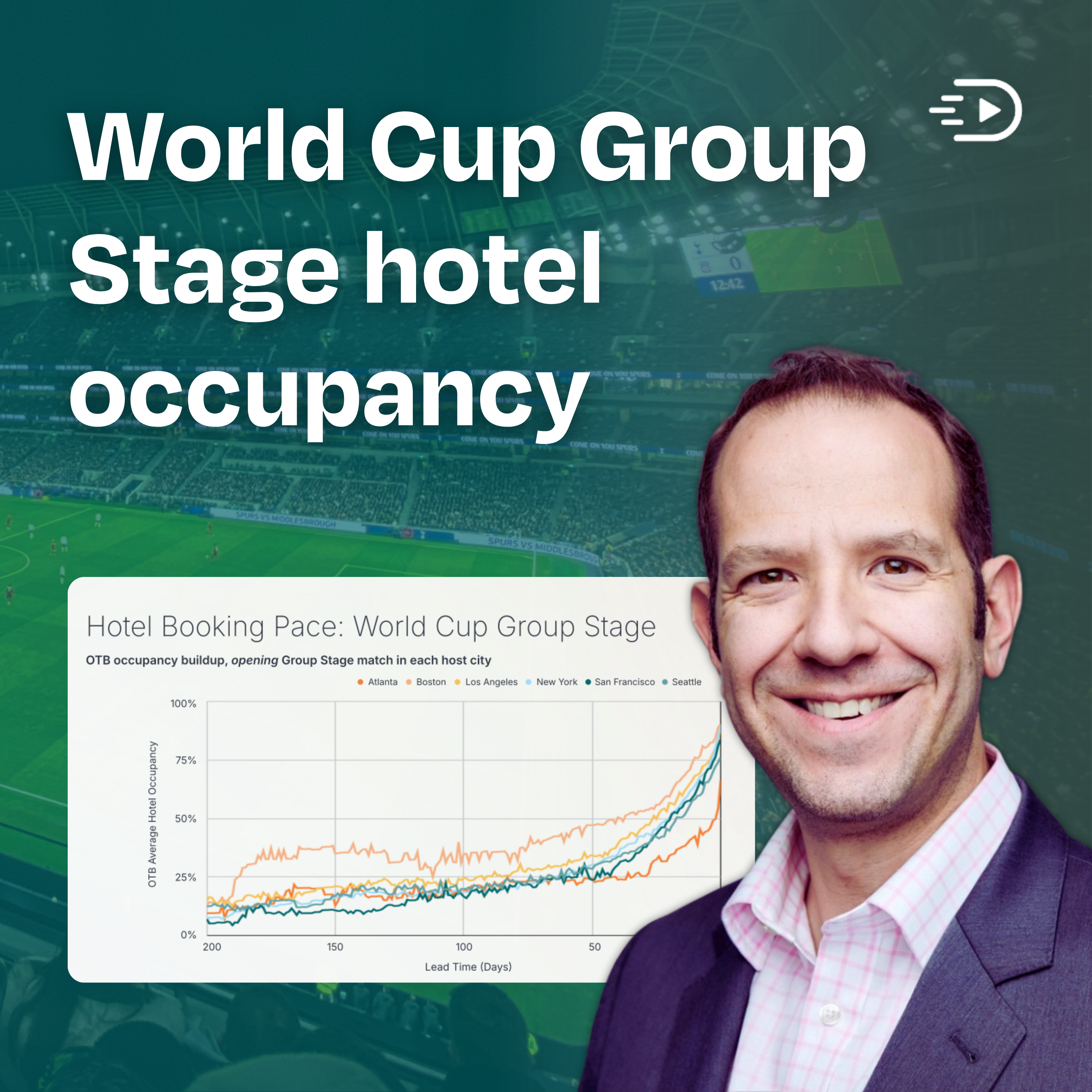
    Lighthouse Quick Takes - World Cup host cities see occupancy drop from overpricing

    The 2026 FIFA World Cup's group stage delivered a mixed picture for hotel occupancy across US host cities. Boston led the pack, building strong on-the-books occupancy as early as six months out, while Atlanta lagged behind due to a Monday kickoff and deeper hotel supply. By the closing group stage matchups, those early gaps narrowed sharply, with most cities reaching 85 percent occupancy or higher. Not every city benefited from World Cup demand, though. Seattle and Atlanta each saw occupancy fall compared to the same date a year earlier, driven by hotel rates that outpaced actual demand for lower-profile matchups. In this Lighthouse Quick Take, Blake explores what these shifts reveal about pricing discipline and demand signals for revenue managers. Explore more of Lighthouse's travel & hospitality research: mylh.co/spotlightinsights
  • #1
    July 1 · 3 min· Video

    Lighthouse Quick Takes - Booking windows vary widely across Asia Pacific

    Booking windows across Asia Pacific span from 20 days to 85 days, and that gap changes how hoteliers should plan their marketing calendar. In this Lighthouse Quick Take, Blake explores Lighthouse Benchmark data from 7 Asia Pacific destinations in 2025, comparing booking windows and search windows market by market. Tokyo travelers plan nearly 3 months ahead with almost no gap between searching and booking, while Jakarta travelers commit within about 20 days. Blake also breaks down the gap between search and booking windows in markets like Singapore and Bangkok, and what that gap means for retargeting strategy. Explore more of Lighthouse's travel & hospitality research: mylh.co/spotlightinsights

  • #1
    June 25 · 18 min· Video

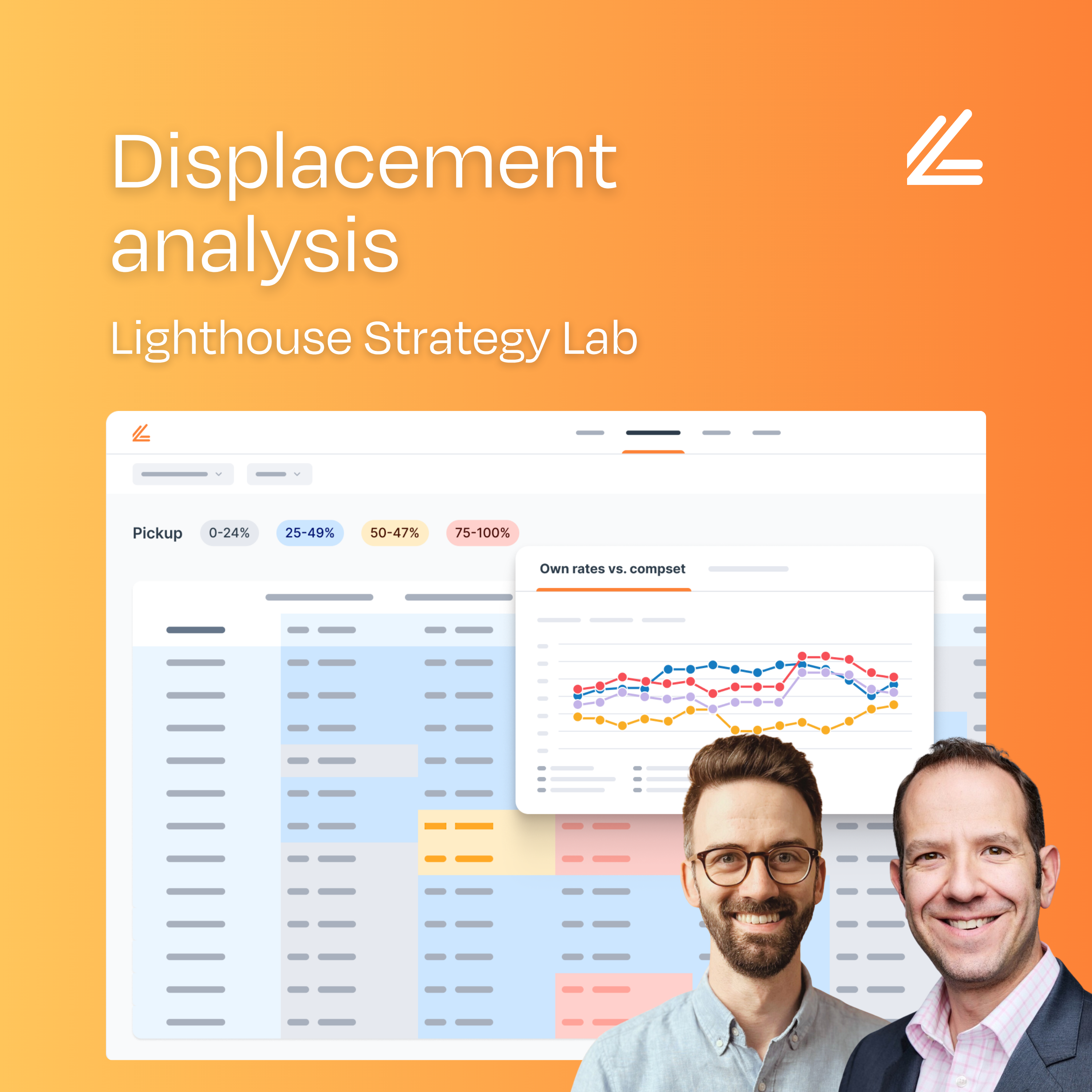
    Strategy Lab - Hotel group displacement analysis and minimum acceptable rate

    When performance metrics, pace insights, and market benchmarks live in separate tools, revenue teams struggle to agree on the right move. In this Strategy Lab, Blake Reiter and Daniel Foreman show how working from a shared data foundation speeds up group displacement decisions — using a fictional wedding block RFP as the example: 10 rooms for 2 nights on a weekend a 60-room boutique hotel is already forecasting to sell out. Using Lighthouse, they walk sales, revenue management, and operations through the same numbers at the same time: current pace, forecast validation, displaced revenue, and a minimum acceptable rate — then show how the same analysis runs in Ernest, Lighthouse's AI workspace, in a fraction of the time. Explore more of Lighthouse's travel & hospitality research: mylh.co/spotlightinsights

  • #1
    June 24 · 4 min· Video

    Lighthouse Quick Takes - 2026 Commonwealth Games: Glasgow hotel pricing and demand impact

    The 2026 Commonwealth Games in Glasgow are driving a 153% increase in advertised hotel pricing compared to the same dates in 2025. But the more significant shift is structural: the Games compress the normal weekly pricing curve, with the largest year-over-year lifts landing on days that were historically discounted. Midweek nights like Thursday, July 30 are advertising 213% above last year's rates. In this Lighthouse Quick Take, Blake Reiter breaks down what the pricing curve, occupancy buildup, and demand index data reveal about how major events restructure market opportunity for revenue managers. Explore more of Lighthouse's travel & hospitality research: mylh.co/spotlightinsights

  • #1
    June 17 · 4 min· Video

    Lighthouse Quick Takes - AI-driven direct traffic to hotel websites surged after May 7

    On May 7, ChatGPT began pushing more responses that included outbound links to hotel websites — and the traffic data shows it immediately. In this Lighthouse Quick Take, Blake Reiter walks through what the numbers look like before and after that date, including a 50%+ increase in AI-originated traffic as a share of organic search, jumping from roughly 2% to over 3%. The data makes clear that AI is becoming a distribution channel, and hotels that move to maximize visibility now stand to gain the most as the shift accelerates. Explore more of Lighthouse's travel & hospitality research: mylh.co/spotlightinsights

  • #1
    June 16 · 27 min· Video

    Live Episode - The AI visibility edge for hotel discovery

    ChatGPT now has 900 million users, and booking platforms are embedded in its ecosystem. A growing share of hotel decisions starts with an AI prompt, not a search engine. This episode presents original research from Lighthouse: 4,545 prompts across 9 global markets and 5 traveler personas, surfacing patterns in which hotels ChatGPT mentions, how often, and why. The data shows AI invisibility is the default for most hotels, with major cities seeing only 10-13% of properties mentioned at all. Chains significantly outpace their share of supply in almost every market, content language directly signals which travelers AI associates with a property, and most outbound AI traffic lands on hotel websites rather than OTAs. Explore more of Lighthouse's travel & hospitality research: mylh.co/spotlightinsights

  • #1
    June 11 · 5 min· Video

    Lighthouse Quick Takes - Sundance Film Festival shifts demand from Park City to Boulder

    The Sundance Film Festival's move from Park City, Utah to Boulder, Colorado is already reshaping hotel demand and pricing patterns ahead of its first year in its new home. Boulder hotel rates during the festival period are currently advertised more than 3 times higher than comparable dates a year earlier, while demand has more than doubled. In this Lighthouse Quick Take, Blake Reiter explores how the relocation is impacting both markets, what the data reveals about event-driven demand and why major cultural events can create pricing power that follows the event rather than the destination. Explore more of Lighthouse’s travel & hospitality research: mylh.co/spotlightinsights

Showing 1–20 of 20 episodes