Skip to content
Artwork for 🎙️ The Safety Edge Podcast
BusinessCareersEducationSelf-Improvement

🎙️ The Safety Edge Podcast

The Safety Edge Platform

The Safety Edge Podcast explores safety leadership and leadership development in high-risk environments. Through practical insights, real-world experience, and coaching-based reflective dialogue, each episode helps leaders think, decide, and act in complex situations across safety, operations, and organizational life. Produced by The Safety Edge Platform, an independent leadership and safety learning initiative. The show is independent and is not affiliated with or endorsed by other organizations using similar names.

Play
  • 24 episodes
  • Avg 18 min
  • English
Counted on this page — what you have heard stays on this device, so it is not something the list can be paged by.
  • S4 · E24
    November 7 · 1 hr 5 min

    Ep. 24: Leadership at Scale: Balancing Autonomy, Accountability, and Organizational Control.

    How do leaders maintain consistency, accountability, and performance across a global organization without creating unnecessary control or limiting the people expected to deliver results? In this episode of The Safety Edge Podcast, Charles Edgar speaks with Josh Gould, Group CEO of TheBigWord, about the realities of leading a global organization operating across more than 80 countries and 250 languages. Drawing on his leadership journey, Josh explores the balance between autonomy and governance, the importance of psychological safety, and why strong performance depends on more than individual talent. The conversation also examines how leaders make difficult decisions with incomplete information, encourage honest feedback, and maintain organizational focus through change. Key Takeaways Leadership under pressure: Making sound decisions when information is limited, and the stakes are high. Autonomy and accountability: Giving people authority to act while maintaining clear expectations and organizational guardrails. Psychological safety: Creating an environment where people can challenge decisions, raise concerns and disagree constructively. Performance and execution: Understanding why capable people do not always translate their potential into results. Leadership at scale: Maintaining strategic direction while respecting cultural and operational differences. Adaptation and innovation: Balancing AI, automation, and technology with human judgment and expertise. Why This Conversation Matters Leadership is tested not by the policies organizations establish, but by the decisions people make when circumstances become difficult. Josh offers practical perspectives on building organizations where people have the clarity, authority, and accountability to act effectively. For leaders operating in complex or high-risk environments, the conversation reinforces an important principle: you cannot expect people to take ownership if you do not give them the authority to make decisions. About the Guest Josh Gould is Group CEO of thebigword, a global language services and technology company providing translation, interpreting and related services across more than 80 countries and 250 languages. Its work supports sectors including healthcare, justice and government. Episode Chapters 00:00 – Introduction: Leading at Scale 01:38 – Personal Adversity and Leadership 05:21 – Thebigword and Breaking Communication Barriers 07:24 – Leading Across Cultures 13:31 – Autonomy, Governance and Accountability 20:31 – Difficult Decisions and Performance 26:58 – Psychological Safety and Constructive Challenge 32:26 – Building High-Performing Teams 41:42 – Honest Feedback and Organizational Learning 45:27 – Strategic Direction and Priorities 48:38 – AI, Automation and Human Expertise 54:14 – The Edge Question: Decisions Under Pressure 58:01 – Leaving the Family Business and Building Something New Join the Conversation What does effective leadership look like when people must make decisions without having all the answers? How do organizations balance trust, autonomy, and accountability? Share your thoughts and experiences. The Safety Edge Podcast Where Safety Leaders Sharpen Their Edge. Charles Edgar Your Safety Leadership Coach That is the Edge.

    • Transcript
  • S1 · E24
    November 1 · 1 min

    Ep. 24 Trailer | Leading at Scale: Balancing Autonomy, Accountability, and Control

    Ever felt paralysed by a difficult leadership decision when the stakes are high and the answers aren't clear? 🤔 I sat down with Josh Gould, Group CEO of The Big Word, for a thought-provoking conversation about leadership under pressure, strategic decision-making, and building organizational resilience. Drawing on his experience leading a global language services company operating across more than 80 countries, Josh shares valuable insights into: 🔹 Building leadership resilience when facing complex decisions. 🔹 Balancing local autonomy with organization-wide governance and accountability. 🔹 Evaluating people, encouraging candid feedback, and building effective leadership teams. 🔹 Navigating high-stakes decisions amid rapid AI-driven transformation. 🔹 Maintaining organizational alignment while allowing people the freedom to perform. One insight from our conversation particularly stood out: There are no perfect decisions. The pressure to make the right choice can be overwhelming, particularly when information is limited and the consequences are significant. But effective leadership is not simply about whether a decision turns out right or wrong. It is also about how leaders take ownership, respond to the consequences, and turn their decisions into successful outcomes. This is what leadership under pressure is really about. 🎙️ Look out for the full conversation with Josh Gould in the upcoming episode of The Safety Edge Podcast. Are you following us already? Join the conversation here: https://thesafetyedgepodcast.riverside.com/ #LeadershipUnderPressure #LeadershipResilience #DecisionMaking #StrategicLeadership #OrganizationalCulture #AITransformation #SafetyLeadership #TheBigWord #TheSafetyEdgePodcast

    • Transcript
  • S1 · E23
    October 23 · 1 hr 12 min

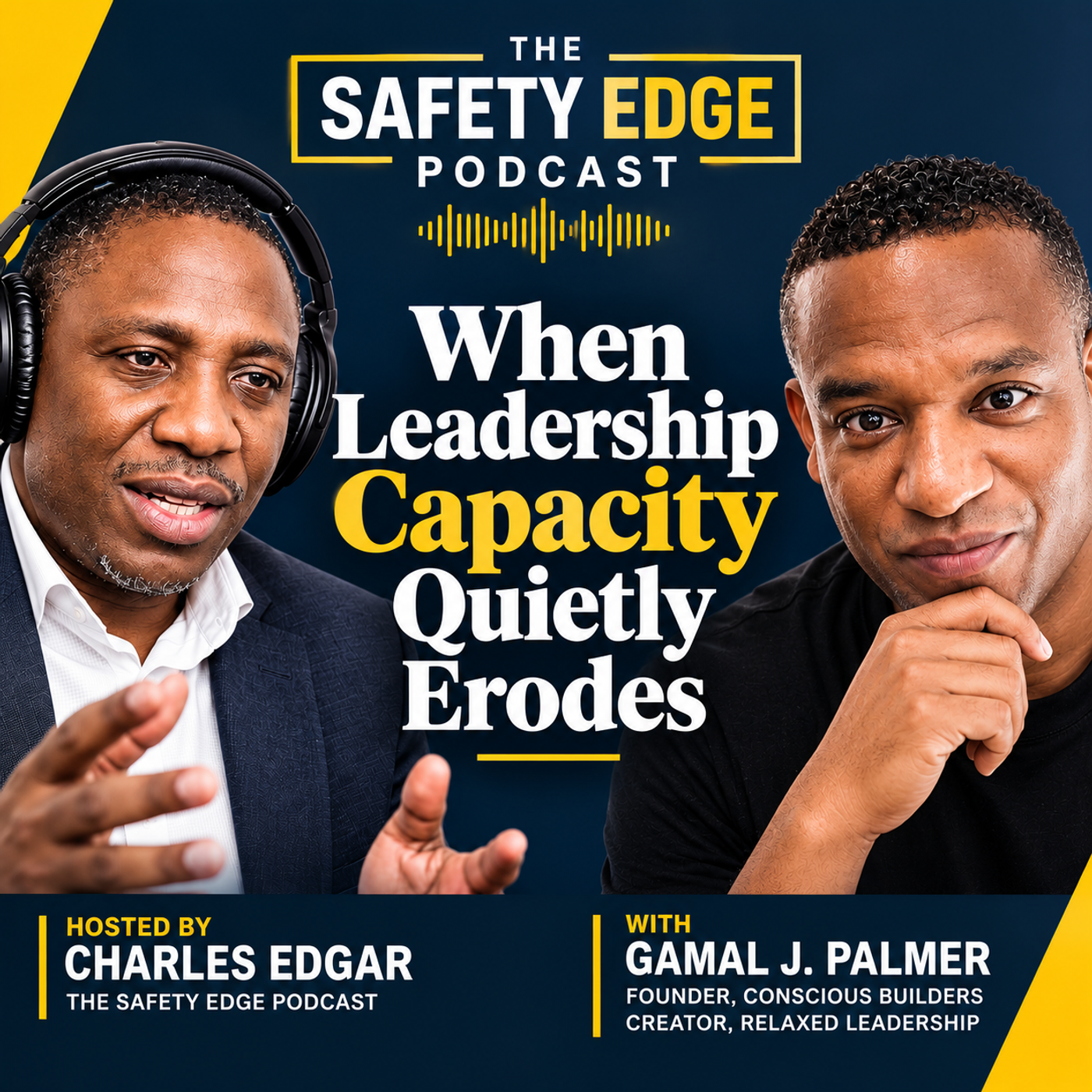
    Ep. 23: When Leadership Capacity Quietly Erodes

    What happens when leaders continue delivering results while their ability to think clearly, listen effectively, and recognize emerging risks begins to deteriorate? Without time for reflection and recovery, even experienced leaders can become less curious, less patient, and less receptive to others. The consequences can affect decision-making, psychological safety, team morale, and organizational culture. In this episode of The Safety Edge Podcast, Charles Edgar speaks with Gamal J. Palmer, founder of Conscious Builders and pioneer of the Relaxed Leadership Approach. Together, they explore how leaders can recognize declining capacity, understand their influence on organizational systems, and create environments where people feel safe to raise concerns and share bad news before problems escalate. Gamal also shares a difficult leadership experience involving repeated promotions of an underperforming employee, revealing the cost of delayed decisions and the importance of recognizing leadership blind spots. Key Takeaways Self-awareness: How a leader’s internal state shapes judgment and relationships. Leadership capacity: Recognizing declining curiosity, patience, and listening. People and systems: Why replacing one person may not solve systemic problems. Psychological safety: How silence and delayed bad news can reveal cultural weaknesses. Proactive leadership: How small changes can improve communication and performance. Accountability: Understanding the cost of avoiding difficult decisions. Leadership development: Why lasting change requires reflection, relationships, and consistent practice. Why This Conversation Matters In high-risk industries, leadership capacity influences how warning signals are interpreted, decisions are made, and concerns are heard. Gamal’s reminder that quiet is not necessarily calm challenges leaders to look beyond visible results and consider what people may be reluctant to say. For safety professionals, operational leaders, and executives, this conversation explores how leadership behaviour shapes organizational culture and risk. About the Guest Gamal J. Palmer founded Conscious Builders and pioneered the Relaxed Leadership Approach, helping leaders navigate complexity, strengthen relationships, and build trust-based workplace cultures. Learn more: https://www.gamalpalmer.com/ Episode Chapters 00:00 – Introduction: When Leaders Run on Empty 01:30 – Self-Awareness and Leadership Decisions 03:47 – Leadership Appointments, Trust, and Team Dynamics 07:21 – Are Leaders Born or Made? 10:40 – Relaxed Leadership and Managing Pressure 15:33 – Recognizing Leadership Strain 17:28 – Individual Behaviour and Systemic Failure 27:07 – Reflection and Better Decisions 32:12 – Somatic Leadership and Pressure 39:12 – Psychological Safety: Why Quiet Is Not Calm 44:34 – From Reactive to Proactive Leadership 51:30 – Retaining High Performers 59:03 – The Edge Question: Accountability and Difficult Decisions 01:07:24 – Making Leadership Learning Last Join the Conversation What early signs suggest a leader’s capacity is declining? When does supporting someone become a reason to delay a necessary decision? Share your thoughts in the comments. Thank you for listening to The Safety Edge Podcast — Where Safety Leaders Sharpen Their Edge.

    • Transcript
  • S4 · E23
    October 16 · 1 min

    Ep. 23 Trailer | When Leadership Capacity Quietly Erodes

    Lead Without Burnout: Relaxed Leadership, Psychological Safety & Culture | Episode Trailer Burnout doesn't always begin with collapse. Sometimes, it begins when curiosity disappears, patience diminishes, and leaders gradually lose their capacity to listen, reflect, and make sound decisions under pressure. In this episode trailer of The Safety Edge Podcast, Charles Edgar speaks with Gamal J. Palmer, founder of Conscious Builders and creator of the Relaxed Leadership approach, about what it takes to lead with clarity, calm, and purpose in demanding environments. Gamal challenges conventional leadership thinking, exploring why leaders can appear successful while their capacity to lead quietly erodes. What Is Relaxed Leadership? Relaxed leadership isn't about lowering standards or avoiding difficult decisions. It's about remaining composed, recognizing reality, and responding deliberately rather than allowing pressure to dictate how we lead. Key Themes Explored 🔑 • Recognizing the subtle warning signs of leadership burnout • Maintaining curiosity and sound judgment under pressure • Building psychological safety and encouraging people to speak up • Understanding why quiet teams aren't necessarily healthy teams • Looking beyond individuals to the systems that shape workplace behaviour • Creating cultures where people can challenge assumptions and contribute meaningfully • Making difficult leadership decisions before problems escalate Why This Matters for Leaders In high-risk industries, leadership effectiveness goes beyond technical competence and compliance. It depends on leaders who can recognize emerging risks, listen to uncomfortable truths, and create conditions where people feel safe to speak up. Gamal's perspective invites leaders to examine not only how they lead others, but also how pressure may be changing their own behaviour. 👤 Guest: Gamal J. Palmer 🌍 Organization: Conscious Builders 🎙️ Host: Charles Edgar 🎯 Topics: Relaxed Leadership | Burnout | Leadership Under Pressure | Psychological Safety | Organizational Culture | Team Dynamics | Leadership Effectiveness If you lead people, manage risk, or want to build a healthier and more effective workplace culture, this conversation offers a fresh perspective on what it means to lead under pressure. The Safety Edge Podcast — Where Safety Leaders Sharpen Their Edge. That is the Edge.

    • Transcript
  • S4 · E22
    October 10 · 41 min

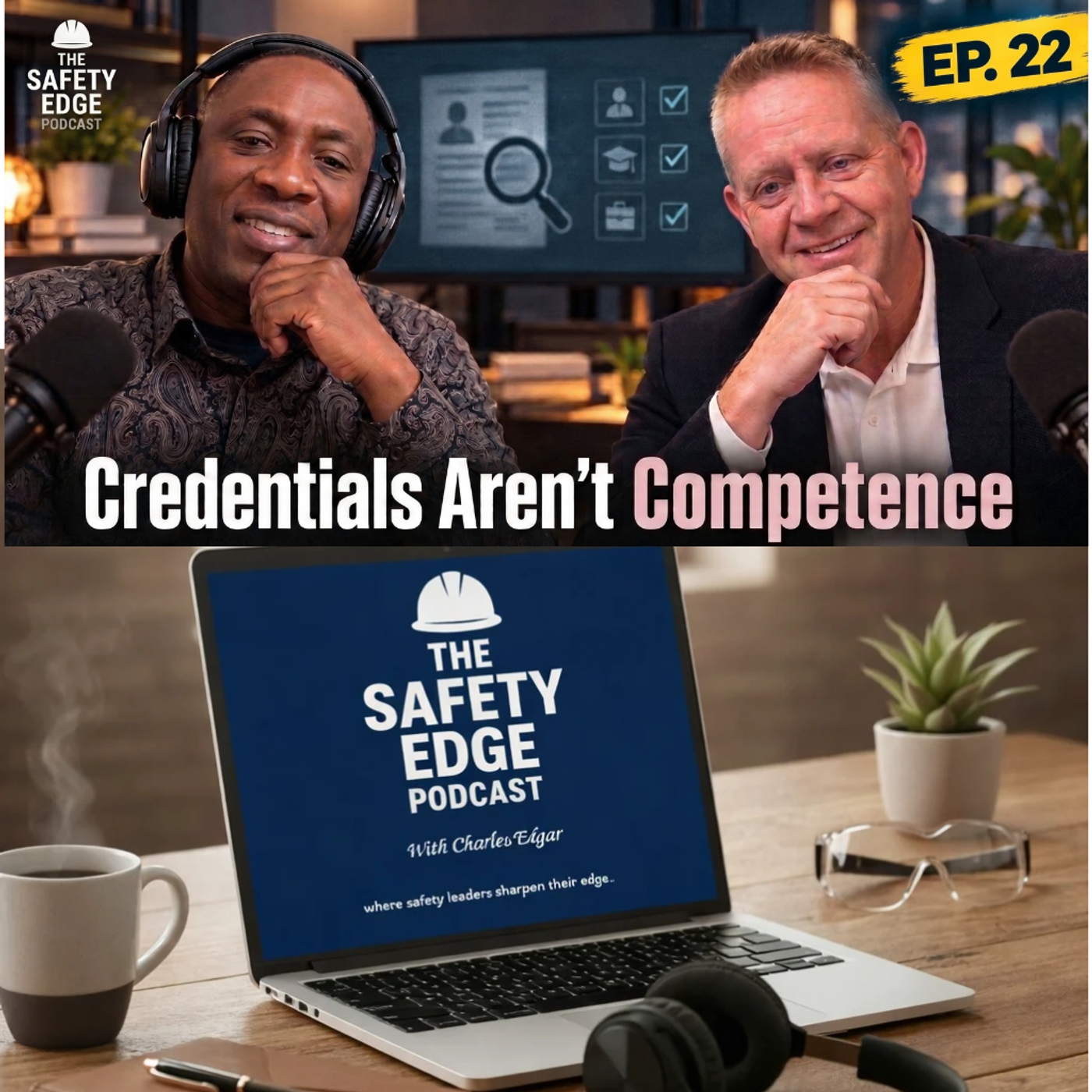
    Credentials Aren’t Competence: The Hidden Risk in AI-Enabled Hiring

    AI can make a CV look perfect in seconds, but it can also make the wrong person look trustworthy. If you hire, recruit, or lead in a safety-critical environment, this conversation with Thor Hesselberg of WorkID.ai is a wake-up call: trust is no longer enough, and verification has to move to the source. Charles Edgar and Thor unpack how AI is changing hiring, why polished profiles and synthetic resumes are making it harder to spot real competence, and why the old habit of checking credentials at the end of the process may now be too late. Thor explains why hiring is really an access decision, not just a recruitment decision, because every new hire may be granted access to people, systems, assets, information, and critical operations. You’ll discover: Why AI-generated resumes and profiles can overwhelm traditional screening How “AI fighting AI” inside ATS platforms can still miss the real problem Why good, honest candidates can be disadvantaged when others exaggerate their experience How WorkID.ai verifies identity, credentials, and work history earlier in the process Why portable, reusable verification could reduce waste for both candidates and employers Charles pushes the conversation into the real-world risk for leaders: what happens when a role that looks safe on paper turns out to be a mismatch in practice? Thor shares examples from recruitment, critical infrastructure, and global hiring that show how easily organizations can lose time, money, and trust when verification happens too late. Thor Hesselberg is the founder of WorkID.ai, building a more trusted way to verify professional identity, experience, and employment history before access is granted. Essential listening if you hire people, manage risk, or want a practical answer to one of AI’s most urgent workplace problems: how to know who is real before it matters.

    • Transcript
  • S4 · E22
    October 5 · 1 min

    Ep. 22 Trailer: Credentials Aren’t Competence: The Hidden Risk in AI-Enabled Hiring

    Hiring for Safety-Critical Roles Is More Than Checking Qualifications. It Is an Access Decision. What should an organization verify before placing someone in a safety-critical role? In this episode of The Safety Edge Podcast, Thor Hesselberg, Founder of WorkID.ai, offers a thought-provoking perspective: hiring is not simply about filling a position. It is about granting access. Just as an organization may conduct financial checks before entrusting someone with financial responsibilities, it should carefully consider the level of access and responsibility associated with safety-critical positions. That access may involve: • Critical infrastructure and physical assets • Operational systems and technology • High-risk processes and equipment • Decisions that directly affect workplace safety The deeper leadership question is this: What assurance do we have that the person we are trusting is genuinely prepared and qualified for the responsibility? Credentials and experience matter, but organizations must also consider how they verify competence, validate professional claims, and establish confidence in the people entrusted with critical responsibilities. Because in high-risk environments, a hiring decision is also a risk management decision. 🎙️ Watch out for this conversation with Thor Hesselberg of WorkID.ai on The Safety Edge Podcast, where we explore safety leadership, workforce assurance, and the decisions that shape operational risk. The Safety Edge Podcast. Where Safety Leaders Sharpen Their Edge!

    • Transcript
  • S2 · E21
    September 22 · 36 min

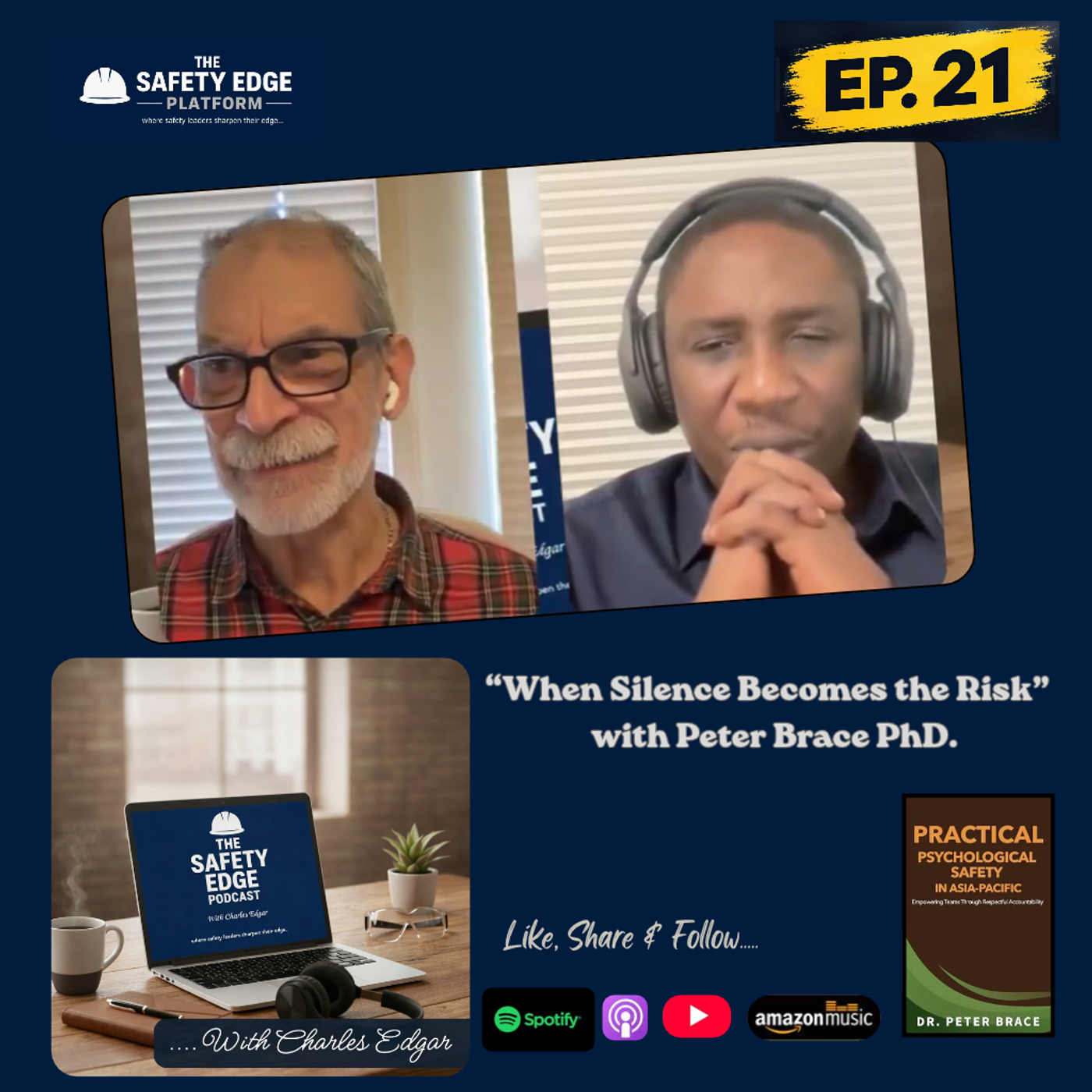
    When Silence Becomes the Risk

    Episode 21: When Silence Becomes the Risk Silence is rarely neutral at work; it's often the first sign that risk is building, trust is thinning, and leaders are missing what their teams most need to say. Dr. Peter Brace joins Charles Edgar to explore why psychological safety is not about being “nice,” but about creating the conditions for truth, challenge, and better decisions. You’ll hear why employees stay quiet even when they notice overwork, confusion, exclusion, or poor judgment, and why simply telling people to speak up is not enough. Peter explains the difference between feeling comfortable and feeling safe enough to question a leader. He also explores the invisible psychosocial hazards that can affect people very differently within the same team. The conversation covers: How autonomy, fairness, inclusion, respect, and belonging influence whether people speak up Why micromanagement and unfair treatment encourage silence How psychological safety and accountability work together Why leaders need to adapt their style when risk levels change How culture, hierarchy, and power distance influence workplace communication Why leaders should start with one team, measure the results, and build from evidence Peter introduces the idea of respectful accountability; showing how leaders can remain direct and decisive in high-risk situations without creating fear or shutting people down. If you lead people, manage risk, or want a workplace where problems surface early instead of going underground, this episode is essential listening. Dr. Peter Brace is the author of Practical Psychological Safety in Asia Pacific and a leading voice on the connection between psychological safety, psychosocial risk, performance, and organizational culture.

    • Transcript
  • S4 · E21
    September 20 · 1 min

    Ep. 21 Trailer: When Silence Becomes the Risk

    When Silence Becomes the Risk: Psychological Safety, Psychosocial Risk and Leadership Judgment Silence is rarely just silence. In this conversation, Charles Edgar and Dr. Peter Brace explore why people stay quiet when they see overload, confusion, exclusion, or danger, and how that silence can hide the very risks leaders need to hear about most. Peter explains why psychological safety is not about being comfortable, but about whether someone feels safe enough to challenge assumptions, question a decision, or say, “I don’t think we should do it this way.” He also breaks down psychosocial hazards that often go unnoticed, including overwork, underwork, unclear roles, and unfair treatment, and why different people respond to the same environment in completely different ways. You'll discover: Why silence is usually a social strategy, not a knowledge problem The difference between sharing an opinion and challenging the leader How to spot psychosocial risk when the warning signs are invisible The conditions that help people feel safe enough to speak honestly Why respect and accountability have to work together When direct command is necessary, and when collaboration creates better results Peter also shares why leaders should start with one team, prove the results, and let evidence build momentum across the organization. Higher innovation, better performance, stronger satisfaction, and lower absenteeism are all possible when people can tell the truth early enough to prevent bigger problems. Essential listening for leaders, managers, and safety professionals who want stronger teams, better decisions, and a culture where people speak up before risk turns into harm. Special thanks to Dr. Peter Brace, author of Practical Psychological Safety in Asia Pacific.

    • Transcript
  • S4 · E2
    September 13 · 1 min

    Ep. 20 Trailer: Becoming a Fully Resourced Leader

    🎙️ The Safety Edge Podcast What if the problem isn’t that leaders don’t know what to do? What if they aren’t fully resourced to do it when pressure hits? In my upcoming conversation with Rich Lohman, we explore the Fully Resourced Leader and what it takes to make better decisions when the stakes are high. This… is the Safety Edge! Where Safety Leaders Sharpen Their Edge. Join the Conversation! Coming soon!

    • Transcript
  • S4 · E20
    September 13 · 45 min

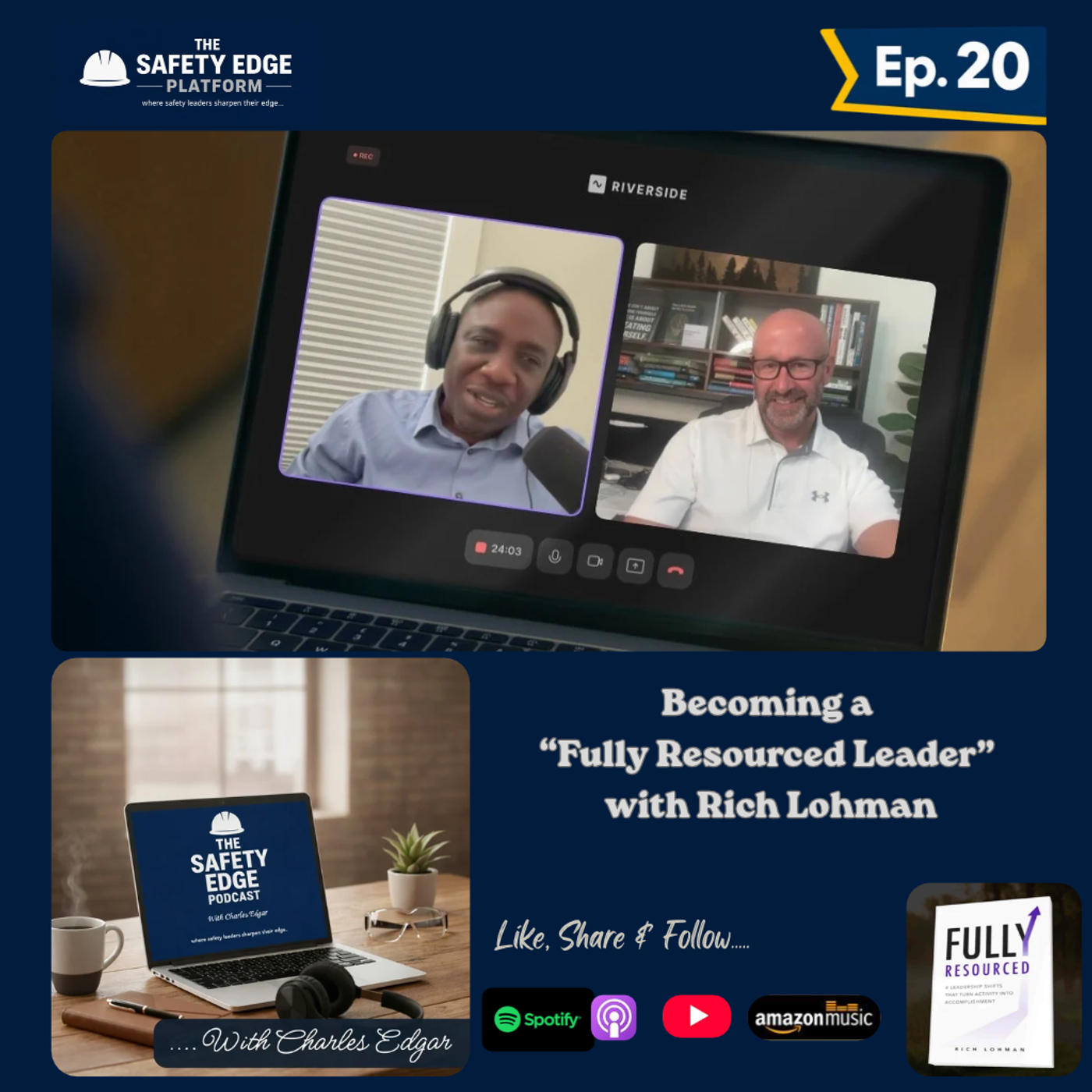
    Becoming a Fully Resourced Leaders with Rich Lohman

    What if your organization has all the resources it needs to succeed, but still struggles to perform at its best? In this episode, I’m joined by Rich Lohman to explore what it really means to be a fully resourced leader. We’ll look beyond simply having people, tools, and processes in place and examine the internal resources leaders need to think clearly, lead effectively, and perform under pressure. Because sometimes the missing resource isn’t outside you. It’s within you. This is... The Safety Edge Podcast.

    • Transcript
  • S4 · E19
    August 13 · 22 min

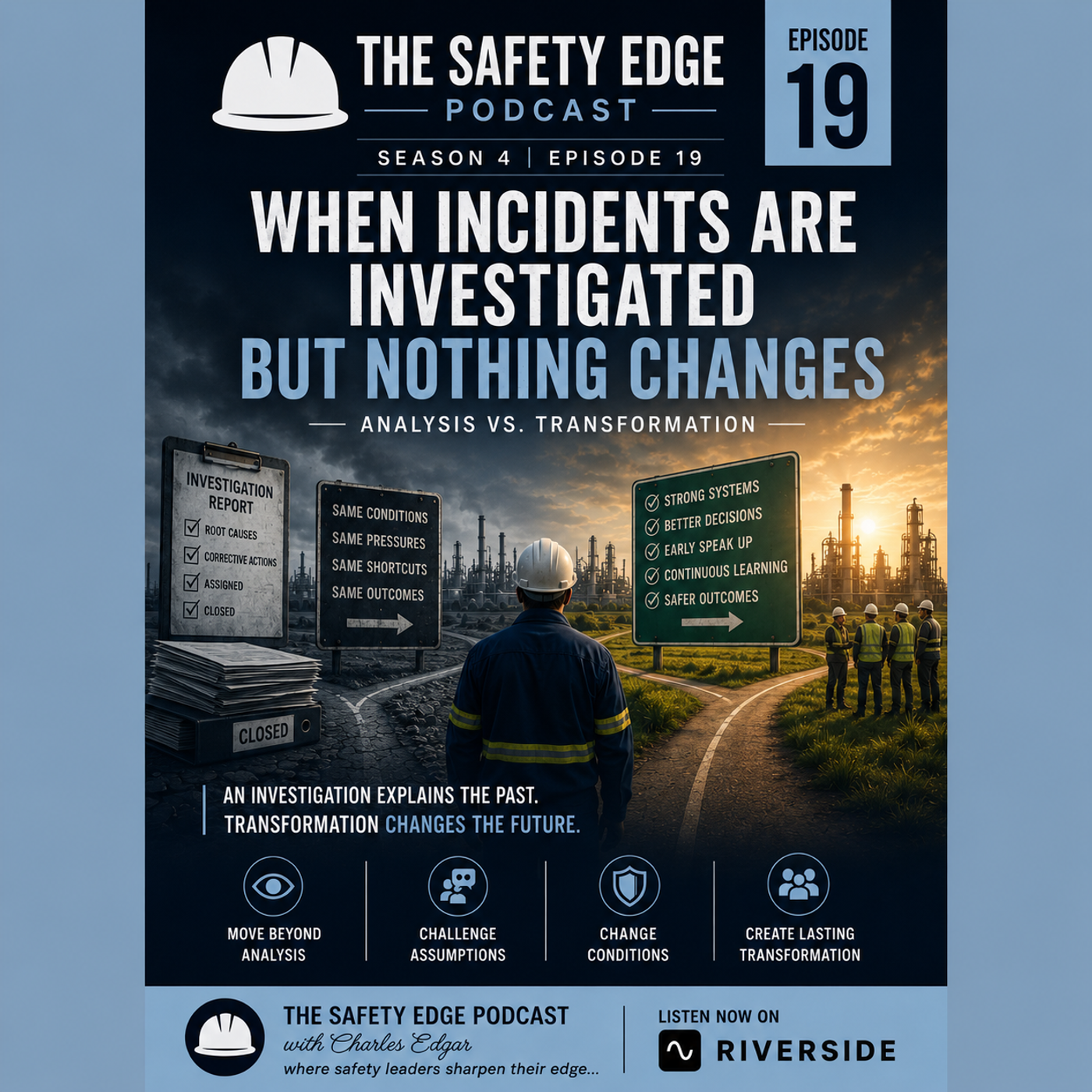
    When Incidents Are Investigated but Nothing Changes Analysis vs. Transformation

    An incident happens. An investigation follows. Causes are identified, corrective actions are assigned, and the report is closed. But what actually changes? In Episode 19 of The Safety Edge Podcast, we explore the difference between analysis and transformation, and why completing an investigation doesn't necessarily mean an organization has learned. Because an investigation explains the past. Transformation changes what happens next. 🎙️ The Safety Edge Podcast with Charles Edgar

    • Transcript
  • S4 · E18
    July 30 · 1 min

    Ep. 18 Trailer | Why Do Organizations Wait for Failure Before They Learn?

    An injury occurs. Investigations begin. Procedures are rewritten. Training is refreshed. We've become remarkably good at learning after failure. But here's the question: Why did it take someone getting hurt before we started asking the right questions? Welcome to The Safety Edge Podcast, where we explore how leaders can build organizations that learn before failure happens.

    • Transcript
  • S4 · E18
    July 26 · 16 min

    When Learning Only Happens After Someone Gets Hurt Reactive vs. Proactive Learning

    🎙️ New Episode Available: Episode 18 – When Learning Only Happens After Someone Gets Hurt Why do so many organizations only learn after someone gets hurt? An incident occurs, investigations begin, corrective actions are implemented, and lessons are documented. But what if the warning signs were already there long before the injury? What if the organization had the opportunity to learn—without paying the price of failure? In this episode of The Safety Edge Podcast, we explore the difference between reactive and proactive learning. We examine why organizations often wait for incidents before taking action, how weak signals and near misses are overlooked, and what effective safety leaders do to build a culture that learns before harm occurs. Because the strongest organizations don't wait for accidents to create urgency—they create learning before failure ever has the chance to teach the lesson. 🎧 Listen now on Riverside and join the conversation. #TheSafetyEdgePodcast #SafetyLeadership #LearningCulture #ProactiveSafety #ReactiveLearning #HumanFactors #OperationalExcellence #SafetyCulture #RiskManagement #LeadershipDevelopment #BeyondCompliance #HSE

    • Transcript
  • S4 · E17
    June 15 · 20 min

    When Drift Becomes the New Normal

    Overview In this episode, we explore how organizations gradually drift away from their own standards, not officially, but operationally. We examine why successful outcomes can sometimes hide emerging risks and what effective leaders do to recognize drift before incidents expose it. Keywords organizational drift, safety culture, leadership, risk management, operational standards Key Topics Organizational drift and its signs The role of leadership in safety culture How temporary fixes become permanent The importance of questioning routine practices Small signals of system weakening The psychology of normalization of deviance Key Takeaways Organizational drift occurs gradually through repeated compromises. Success can mask underlying risks until a failure occurs. Leaders should pay attention to small signals like routine shortcuts. Creating a culture where questioning normal practices is safe is crucial. Major incidents are often preceded by many small, overlooked signals. Sound bites "It started small, a temporary walk around." "Success can create blindness to risk." "Success can mask underlying risks." Chapters 00:00 Understanding Organizational Drift 07:51 The Hidden Dangers of Success 11:51 Effective Leadership Against Drift 17:00 Coaching Insights and Key Takeaways #TheSafetyEdgePodcast #SafetyLeadership #Safety #Speakup #Coaching #OrganizationalDrift #SafetyCulture #HumanFactors #OperationalExcellence #BeyondCompliance #HSE #RiskManagement #LearningCulture #CoachingConversations #LeadershipDevelopment

    • Transcript
  • S4 · E16
    May 26 · 15 min

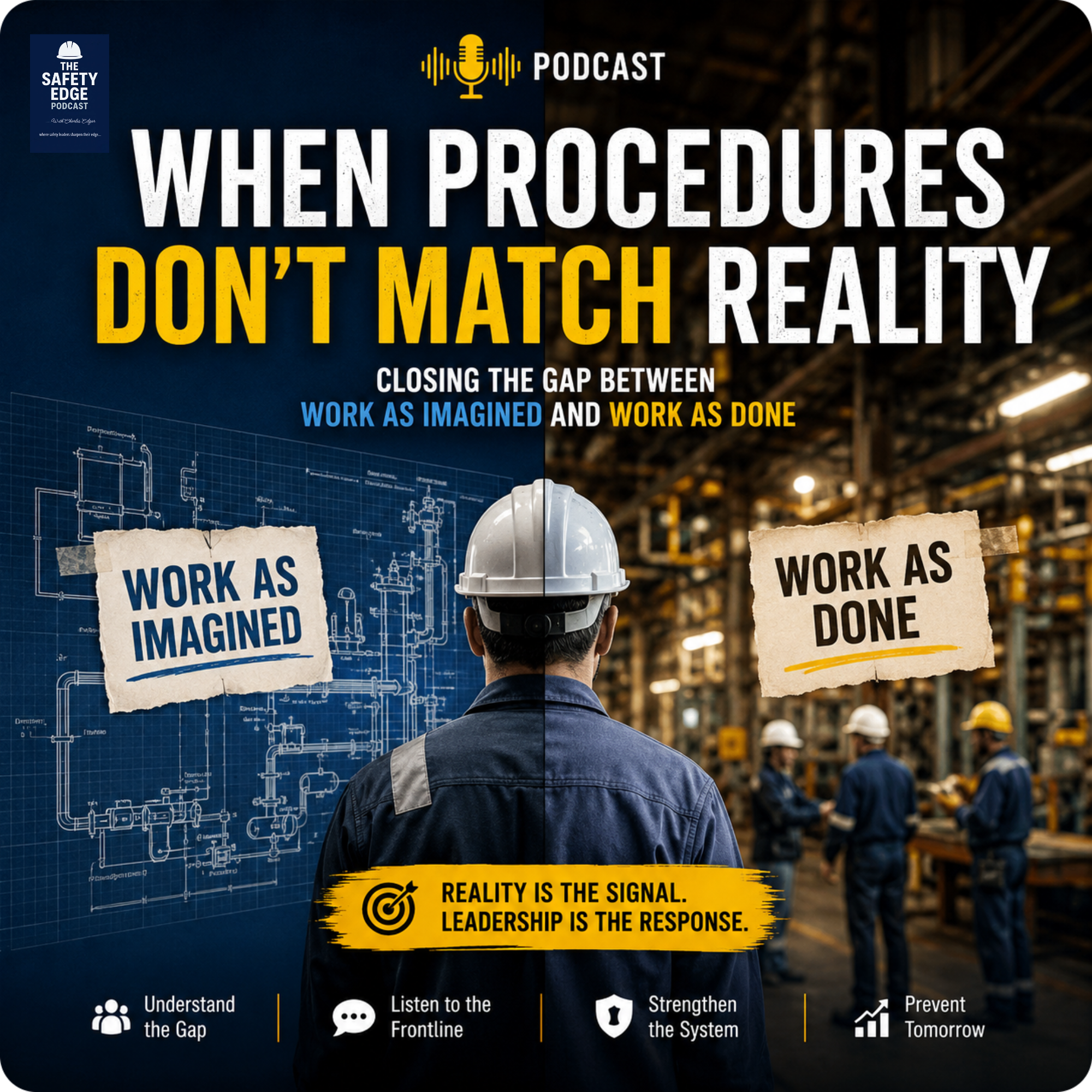
    When Procedures Don’t Match Reality

    When Procedures Don’t Match Reality | Work as Imagined vs. Work as Done Why do experienced workers sometimes adapt procedures or create unofficial ways of getting the job done? In this episode, we explore the gap between Work as Imagined and Work as Done — one of the most important concepts in modern safety and operational leadership. Procedures are designed to create consistency and control. But when operational realities change and systems fail to adapt, frontline workers often develop hidden adaptations just to keep work moving. The danger is not always the adaptation itself. The real risk begins when organizations stop learning from those adaptations. In this episode, we discuss: Why procedures lose credibility when they ignore operational reality How organizational drift becomes normalized Why hidden adaptations are signals, not just rule violations The danger of blaming workers instead of understanding the system How psychologically safe conversations improve learning The role of frontline supervisors in identifying weak signals before incidents occur How proactive organizations strengthen what is working before failure happens Key Takeaways Gap between work as imagined and work as done Adaptations create invisible risk Chapters 00:00 The Gap Between Procedure and Reality 06:10 Normalized Deviance and System Design 12:10 Normalization and Organizational Drift This episode is valuable for: ✔ Frontline Supervisors ✔ Safety Professionals ✔ Operations Leaders ✔ HSE Managers ✔ Industrial Workers ✔ Leadership Teams focused on operational excellence If this episode resonated with you, share it with your team, and start the conversation about where work as imagined may no longer match work as done. Because sometimes, the conversations that prevent the next incident begin with a simple moment of reflection. #SafetyCulture #IndustrialSafety #Leadership #FrontlineLeadership #HSE #OperationalExcellence #HumanFactors #WorkAsDone #SafetyLeadership #ProcessSafety #WorkplaceSafety #LearningCulture #RiskManagement #OilAndGas #Manufacturing

    • Transcript
  • S4 · E16
    May 26 · 1 min

    Trailer: Episode 16 “When Procedures Don’t Match Reality”

    The conversation explores the gap between how work is imagined and how work is actually done, highlighting the unexamined risks in safety leadership. Charles Ebger, the safety leadership coach, introduces the concept of the safety edge and its importance in safety leadership. Takeaways Gap between imagined work and actual work Importance of the safety edge in safety leadership Chapters 00:00 The Illusion of Control

    • Transcript
  • S3 · E15
    May 2 · 1 min

    Ep. 15 Trailer: When Safety Depends on Heroes

    When safety relies on heroes, the system is already under strain. This episode explores why repeated “save the day” moments often signal deeper gaps, and how strong individuals can unintentionally mask risk instead of removing it. The shift is simple but powerful Stop asking who fixed it Start asking why it needed fixing That is the Edge

    • Transcript
  • S3 · E15
    May 2 · 12 min

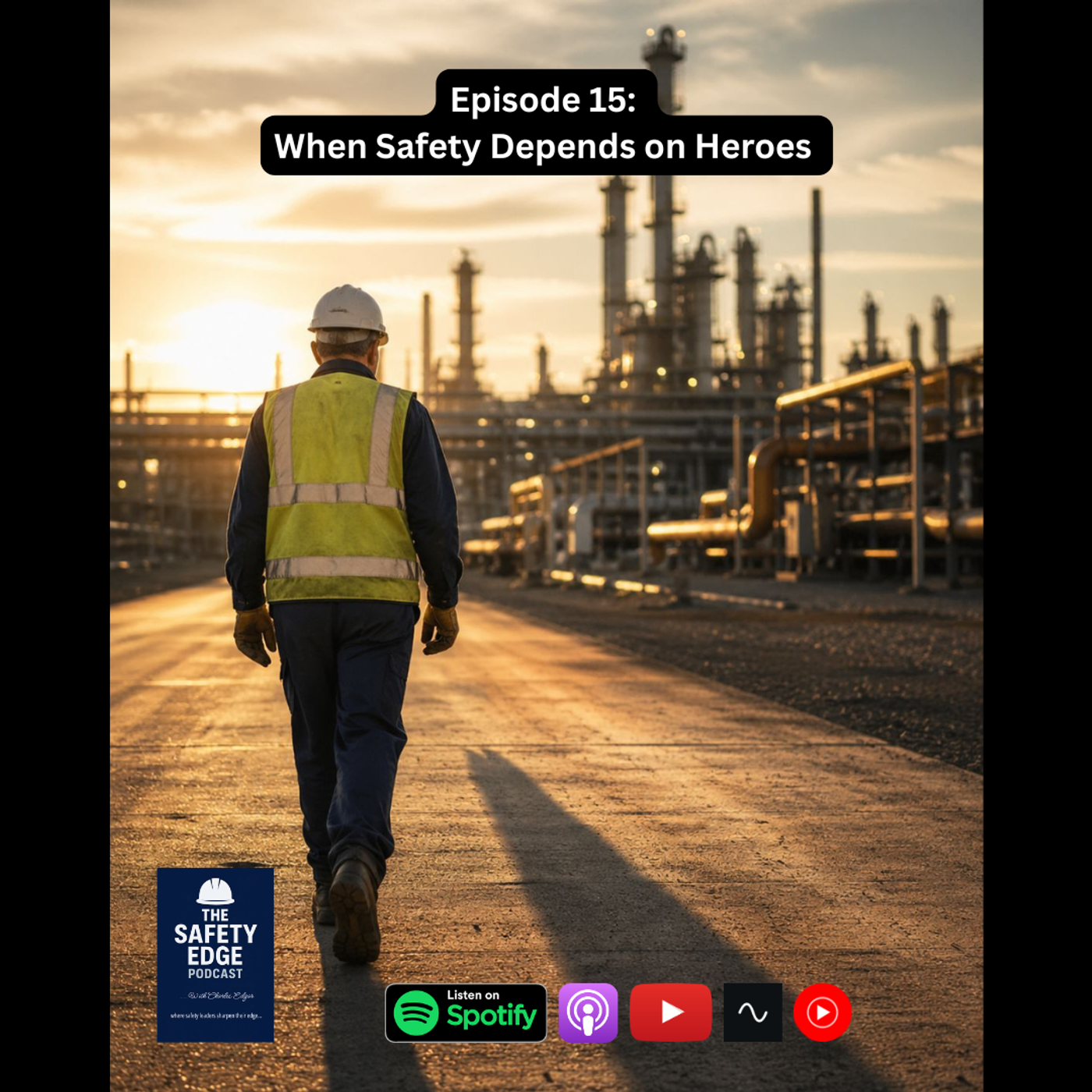
    When Safety Depends on Heroes

    The conversation explores the tension between individual efforts and system strength in the context of safety. It emphasizes the value of heroic effort but highlights the fragility of safety when it depends solely on individuals. The key focus is on building strong systems that reduce dependency on individuals and sustain safety through consistency. Takeaways Heroic effort is valuable, but it's not a control measure. Consistency, not brilliance, is what sustains safety. Strong systems are designed to reduce dependency on individuals. Chapters 00:00 The Moment of Choice: System Strength vs. Individual Efforts

    • Transcript
  • S3 · E14
    April 18 · 13 min

    When the Expert Becomes Untouchable: Authority vs. Challenge

    In high-stakes environments, experience is often trusted without question. But what happens when expertise goes unchallenged? In this episode, we take you inside a control room where a familiar situation unfolds. The senior engineer recognizes a pattern and moves quickly to act. The team follows. No hesitation. No discussion. But beneath the surface, something else is happening. Subtle signals. Unspoken concerns. Assumptions left untested. This episode explores the hidden risk not of expertise itself, but of untested expertise—and how easily teams can slip into silent alignment when confidence goes unquestioned. We unpack: Why experience can create blind spots How deference to authority can silence critical thinking The role of leaders in slowing down decisions to test assumptions How simple questions can surface risk before it escalates At the heart of it is a powerful shift: Not from trusting expertise… but from testing it together. Because when the expert becomes untouchable, the system becomes vulnerable. And in that moment—when someone chooses to ask the question that sparks curiosity— that is the edge.

    • Transcript
  • S3 · E14
    April 17 · 1 min

    Ep. 14 Trailer: When the Expert Becomes Untouchable

    This episode explores the hidden risk not of expertise itself, but of untested expertise—and how easily teams can slip into silent alignment when confidence goes unquestioned. We unpack: Why experience can create blind spots How deference to authority can silence critical thinking The role of leaders in slowing down decisions to test assumptions How simple questions can surface risk before it escalates At the heart of it is a powerful shift: Not from trusting expertise… but from testing it together. Because when the expert becomes untouchable, the system becomes vulnerable. And in that moment—when someone chooses to ask the question that sparks curiosity— that is the edge.

    • Transcript
Showing 1–20 of 24 episodes